Instructional Design Models Source:
Description: Instructional Design Models Source: http:info.shiftelearning.comblogtop-instructional-design-models-explained Kemps Design: 9 elements Identify instructional problems, and specify goals for designing an instructional program. Examine
Related Topics
Download Presentation
"Instructional Design Models Source:" is the property of its rightful owner. Permission is granted to download and print the materials on this website for personal, non-commercial use only, and to display it on your personal computer provided you do not modify the materials and that you retain all copyright notices contained in the materials. By downloading content from our website, you accept the terms of this agreement.
Presentation Transcript
slide1. Instructional Design Models Source: http://info.shiftelearning.com/blog/top-instructional-design-models-explained<br>
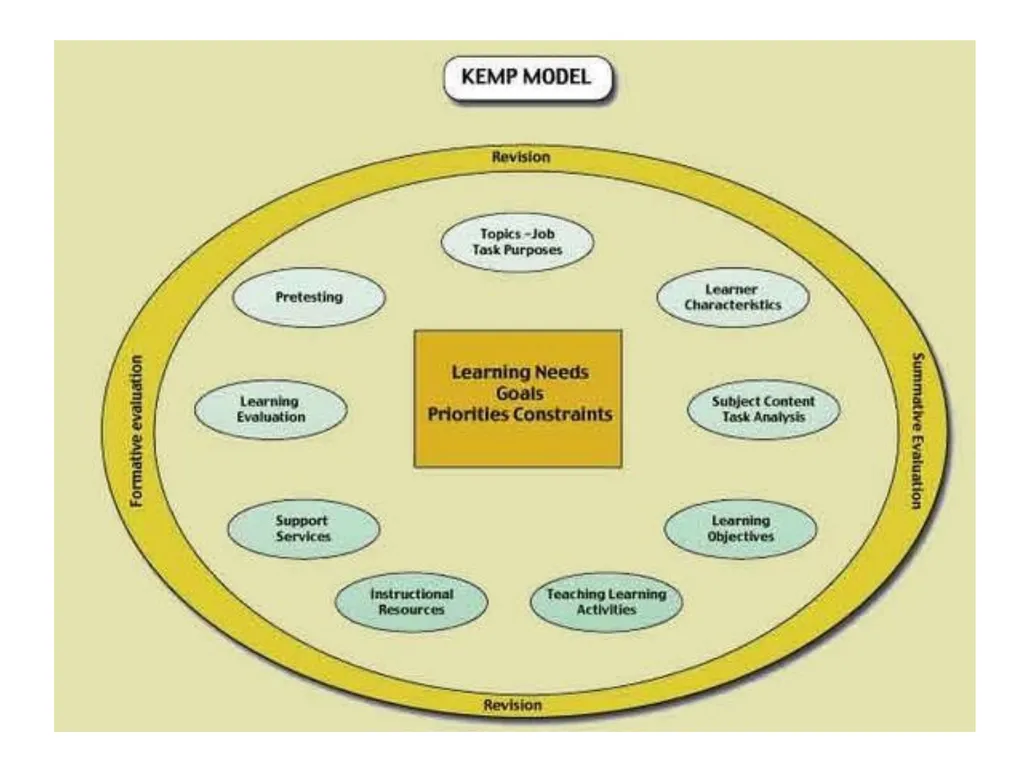
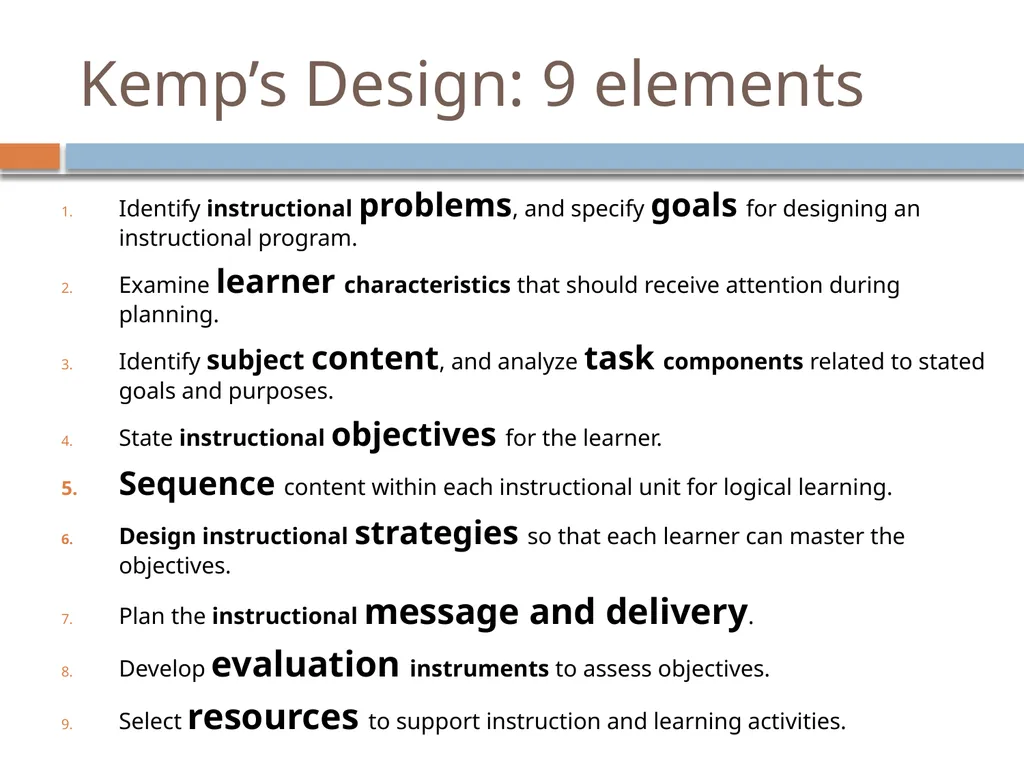
slide3. Kemp’s Design: 9 elements Identify instructional problems, and specify goals for designing an instructional program.
Examine learner characteristics that should receive attention during planning.
Identify subject content, and analyze task components related to stated goals and purposes.
State instructional objectives for the learner.
Sequence content within each instructional unit for logical learning.
Design instructional strategies so that each learner can master the objectives.
Plan the instructional message and delivery.
Develop evaluation instruments to assess objectives.
Select resources to support instruction and learning activities.<br>
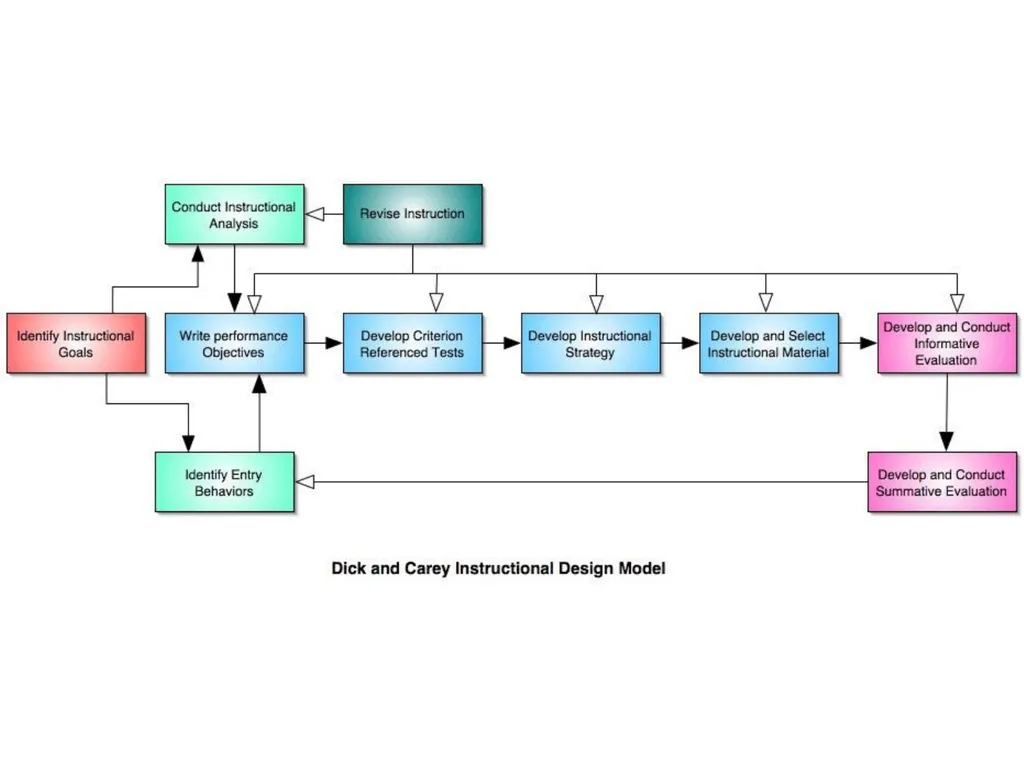
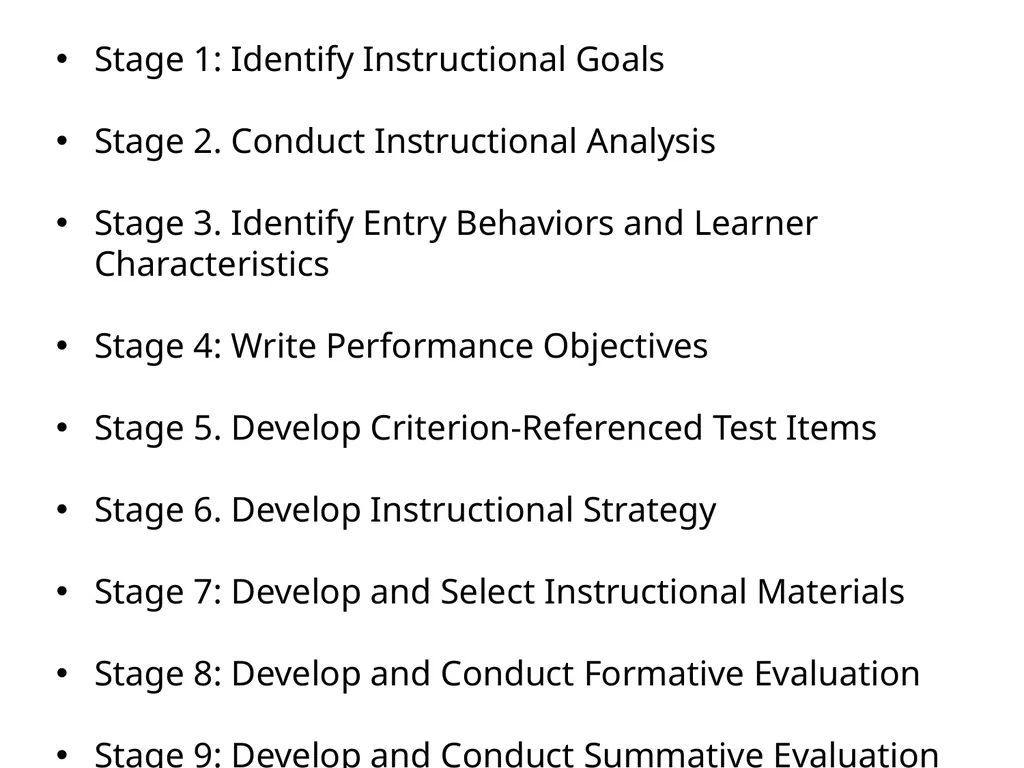
slide5. Stage 1: Identify Instructional Goals
Stage 2. Conduct Instructional Analysis
Stage 3. Identify Entry Behaviors and Learner Characteristics
Stage 4: Write Performance Objectives
Stage 5. Develop Criterion-Referenced Test Items
Stage 6. Develop Instructional Strategy
Stage 7: Develop and Select Instructional Materials
Stage 8: Develop and Conduct Formative Evaluation
Stage 9: Develop and Conduct Summative Evaluation<br>
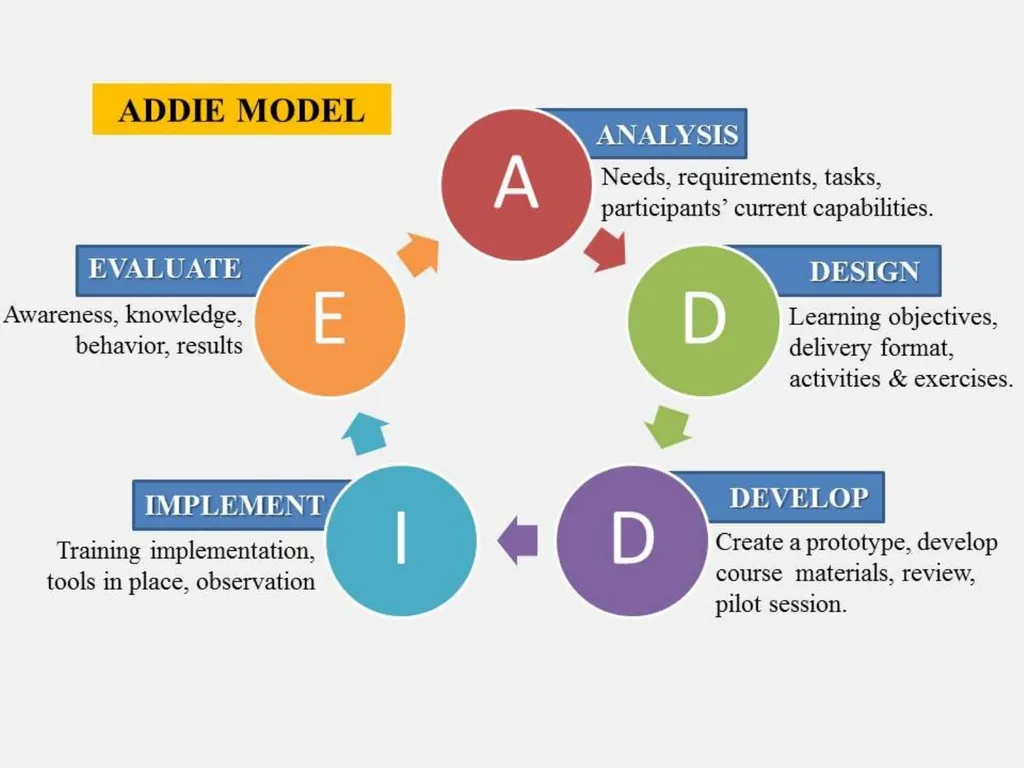
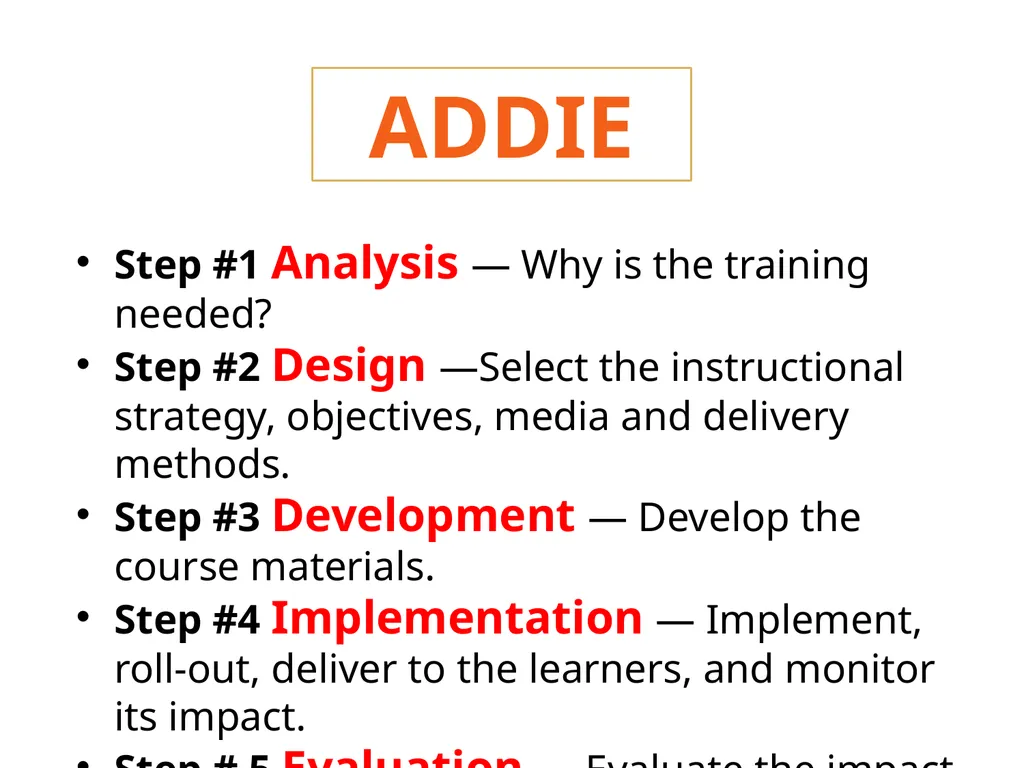
slide7. Step #1 Analysis — Why is the training needed?
Step #2 Design —Select the instructional strategy, objectives, media and delivery methods.
Step #3 Development — Develop the course materials.
Step #4 Implementation — Implement, roll-out, deliver to the learners, and monitor its impact.
Step # 5 Evaluation — Evaluate the impact based on learner feedback, surveys, and even analytics. ADDIE<br>
slide3. Kemp’s Design: 9 elements Identify instructional problems, and specify goals for designing an instructional program.
Examine learner characteristics that should receive attention during planning.
Identify subject content, and analyze task components related to stated goals and purposes.
State instructional objectives for the learner.
Sequence content within each instructional unit for logical learning.
Design instructional strategies so that each learner can master the objectives.
Plan the instructional message and delivery.
Develop evaluation instruments to assess objectives.
Select resources to support instruction and learning activities.<br>
slide5. Stage 1: Identify Instructional Goals
Stage 2. Conduct Instructional Analysis
Stage 3. Identify Entry Behaviors and Learner Characteristics
Stage 4: Write Performance Objectives
Stage 5. Develop Criterion-Referenced Test Items
Stage 6. Develop Instructional Strategy
Stage 7: Develop and Select Instructional Materials
Stage 8: Develop and Conduct Formative Evaluation
Stage 9: Develop and Conduct Summative Evaluation<br>
slide7. Step #1 Analysis — Why is the training needed?
Step #2 Design —Select the instructional strategy, objectives, media and delivery methods.
Step #3 Development — Develop the course materials.
Step #4 Implementation — Implement, roll-out, deliver to the learners, and monitor its impact.
Step # 5 Evaluation — Evaluate the impact based on learner feedback, surveys, and even analytics. ADDIE<br>