Integrated Pest Management Strategies for Suitable Control Measures in Sugarcane Presented By: Shehzad Sultan Sr. DGM (Cane) SHEIKHOO SUGAR MILLS LIMITED, KOT ADDU INTRODUCTION The increasing population of the world and increasing demands
"Integrated Pest Management Strategies for Suitable" is the property of its rightful owner. Permission is granted to
download and print the materials on this website for personal, non-commercial use only, and to display it
on your personal computer provided you do not modify the materials and that you retain all copyright
notices contained in the materials. By downloading content from our website, you accept the terms of this
agreement.
Presentation Transcript
01
Integrated Pest Management Strategies for Suitable Control Measures in Sugarcane Presented By: Shehzad Sultan
Sr. DGM (Cane)
SHEIKHOO SUGAR MILLS LIMITED, KOT ADDU<br>
02
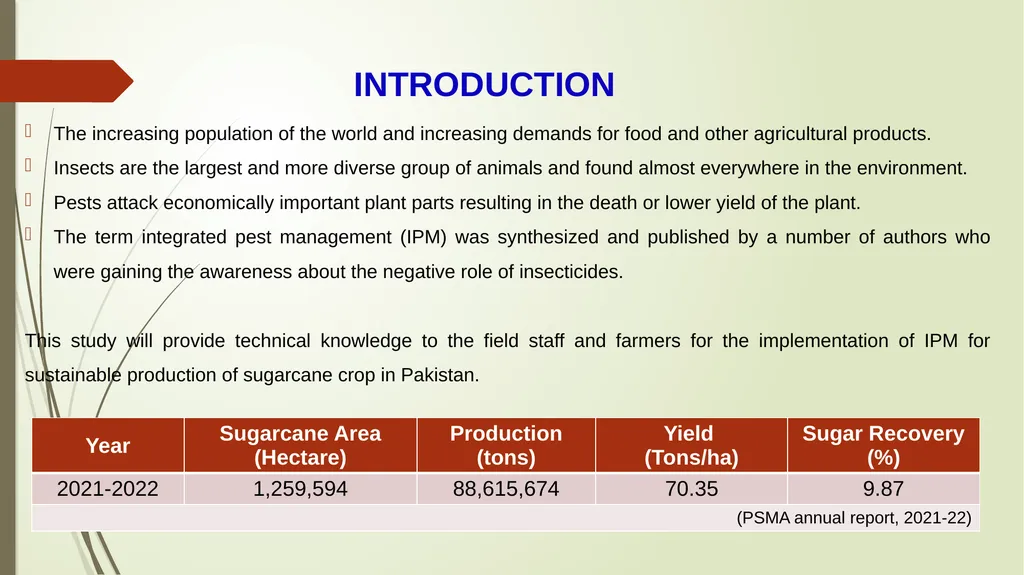
INTRODUCTION The increasing population of the world and increasing demands for food and other agricultural products.
Insects are the largest and more diverse group of animals and found almost everywhere in the environment.
Pests attack economically important plant parts resulting in the death or lower yield of the plant.
The term integrated pest management (IPM) was synthesized and published by a number of authors who were gaining the awareness about the negative role of insecticides.
This study will provide technical knowledge to the field staff and farmers for the implementation of IPM for sustainable production of sugarcane crop in Pakistan.<br>
03
WHAT IS INTEGRATED PEST MANAGEMENT (IPM)? Integrated Pest Management (IPM) is an approach to control pests that promotes the use of a combination of techniques to manage pest populations in a sustainable and environmentally-friendly manner.
The IPM approach takes into account the biology and behavior of pests, as well as their interactions with the environment and surrounding ecosystem.
IPM is an approach that is gaining popularity, particularly in the agriculture industry, as it reduces the reliance on chemical pesticides, which can have harmful effects on the environment, as well as on people and wildlife.
The goal of IPM is to manage pests in a way that is effective, economically feasible, and sustainable in the long term.<br>
04
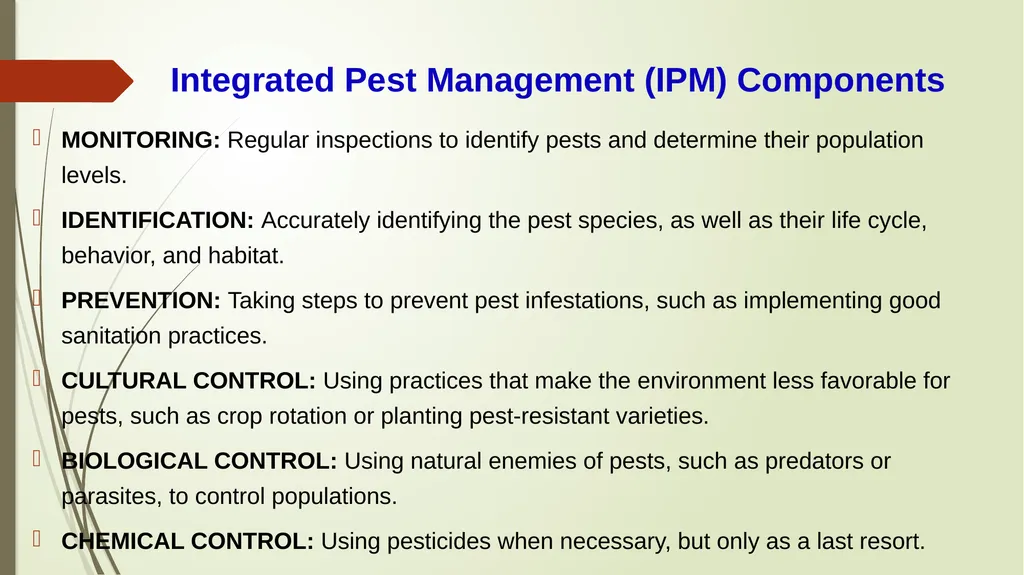
Integrated Pest Management (IPM) Components MONITORING: Regular inspections to identify pests and determine their population levels.
IDENTIFICATION: Accurately identifying the pest species, as well as their life cycle, behavior, and habitat.
PREVENTION: Taking steps to prevent pest infestations, such as implementing good sanitation practices.
CULTURAL CONTROL: Using practices that make the environment less favorable for pests, such as crop rotation or planting pest-resistant varieties.
BIOLOGICAL CONTROL: Using natural enemies of pests, such as predators or parasites, to control populations.
CHEMICAL CONTROL: Using pesticides when necessary, but only as a last resort.<br>
05
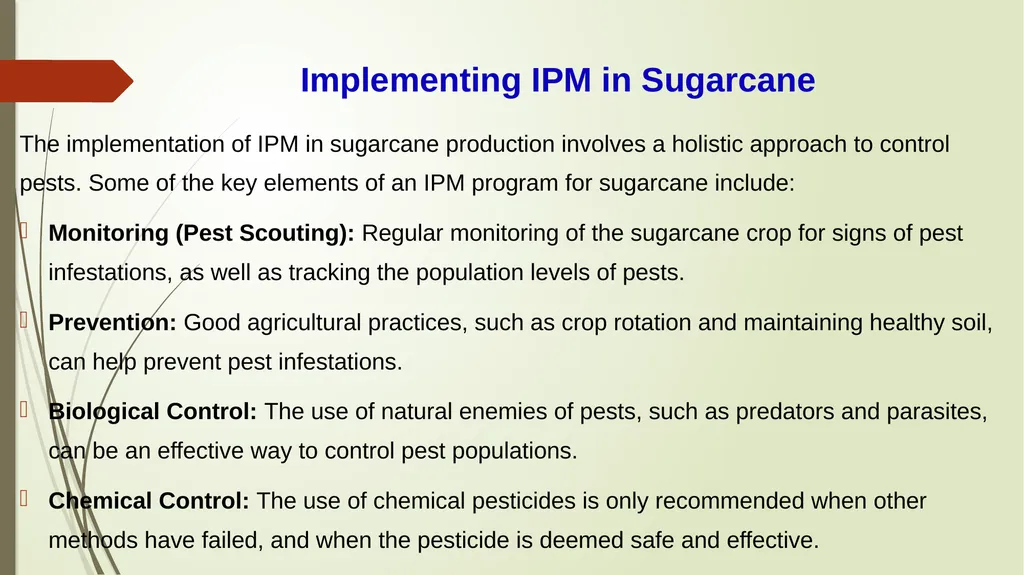
Implementing IPM in Sugarcane The implementation of IPM in sugarcane production involves a holistic approach to control pests. Some of the key elements of an IPM program for sugarcane include:
Monitoring (Pest Scouting): Regular monitoring of the sugarcane crop for signs of pest infestations, as well as tracking the population levels of pests.
Prevention: Good agricultural practices, such as crop rotation and maintaining healthy soil, can help prevent pest infestations.
Biological Control: The use of natural enemies of pests, such as predators and parasites, can be an effective way to control pest populations.
Chemical Control: The use of chemical pesticides is only recommended when other methods have failed, and when the pesticide is deemed safe and effective.<br>
06
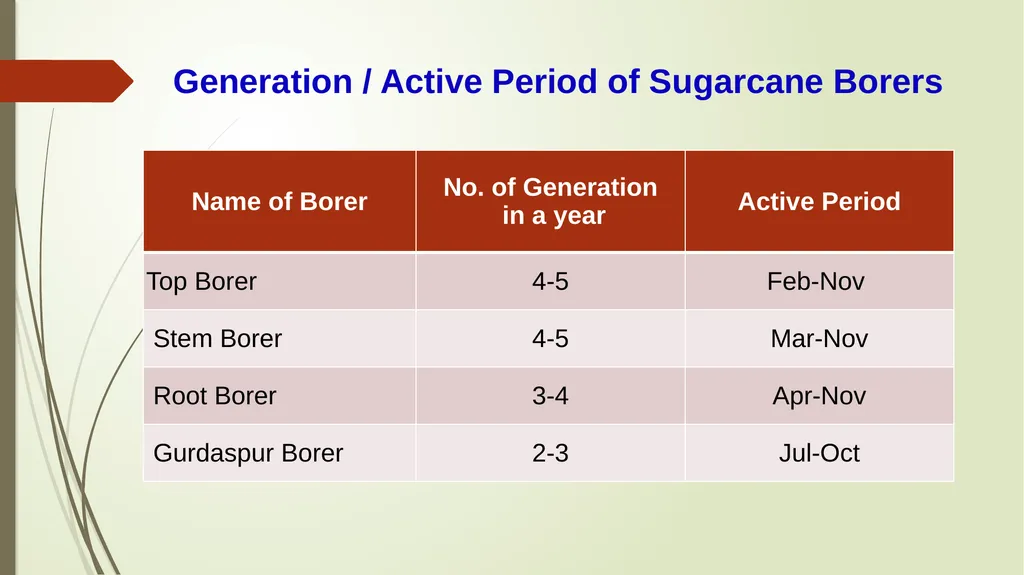
Generation / Active Period of Sugarcane Borers<br>
07
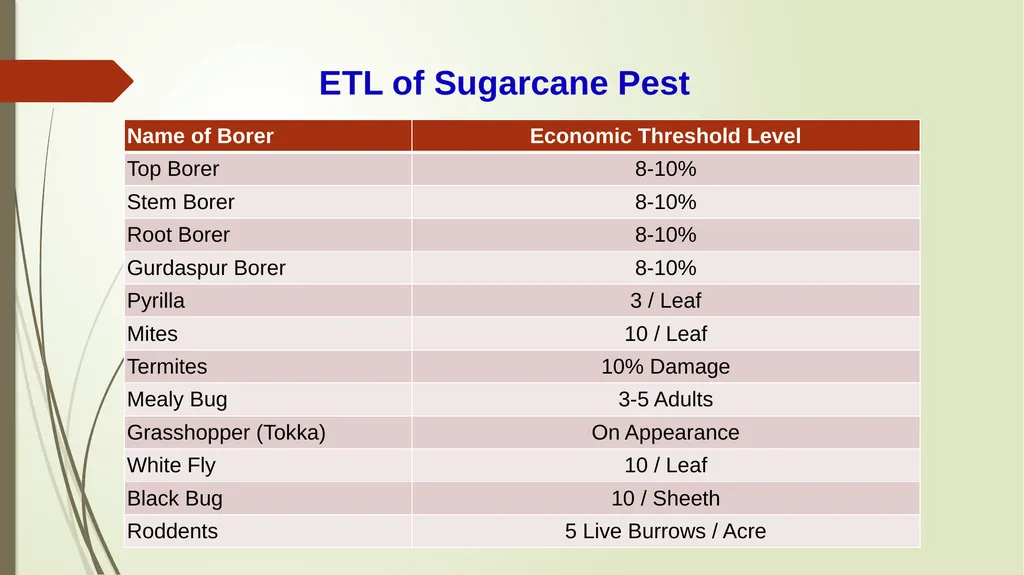
ETL of Sugarcane Pest<br>
08
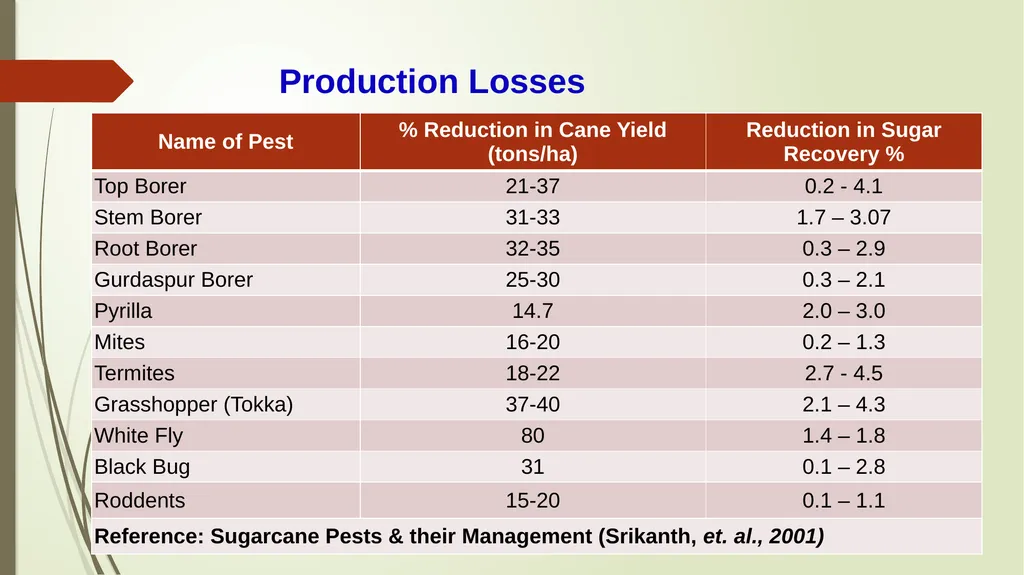
Production Losses<br>
09
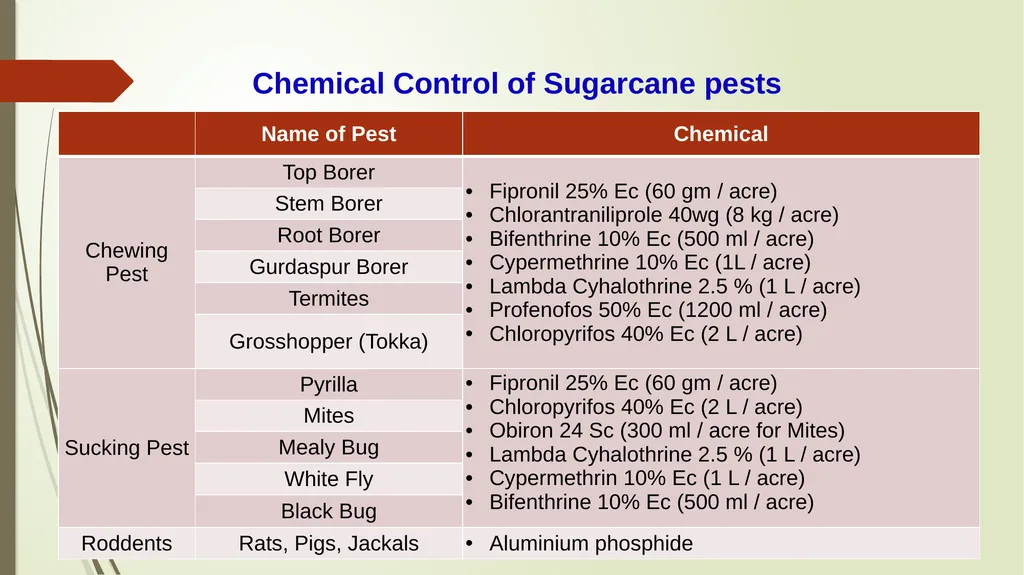
Chemical Control of Sugarcane pests<br>
10
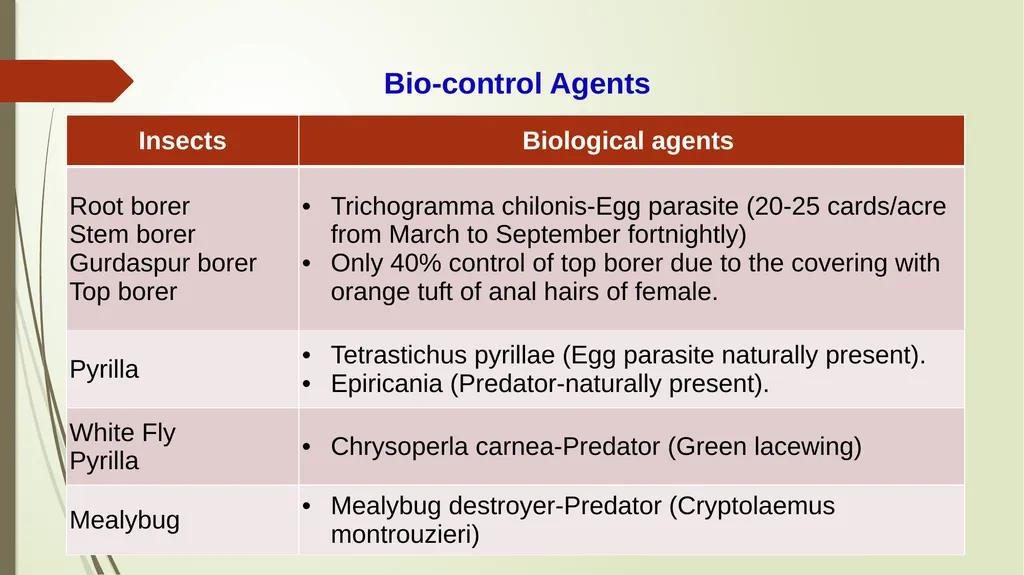
Bio-control Agents<br>
11
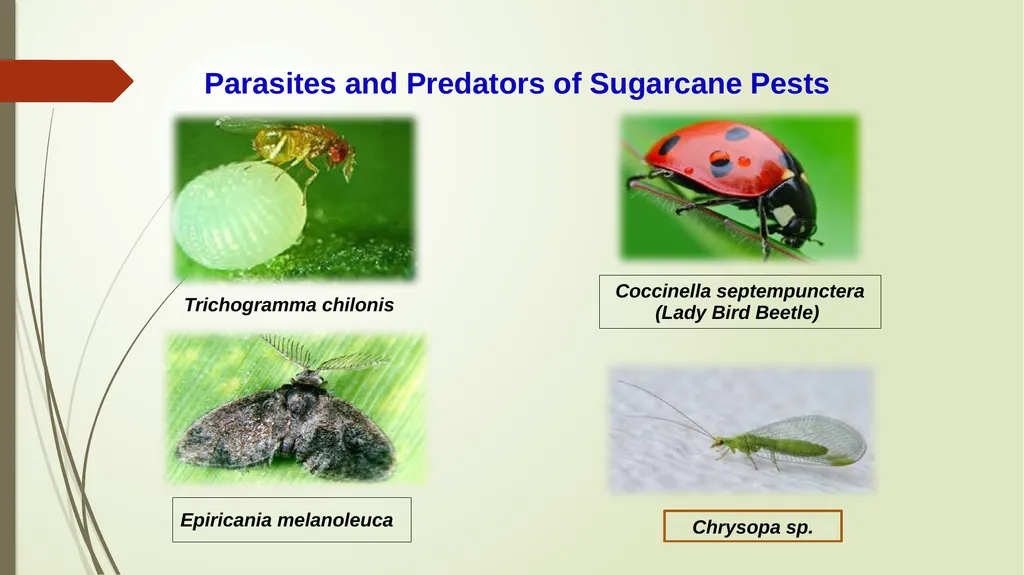
Chrysopa sp. Parasites and Predators of Sugarcane Pests<br>
12
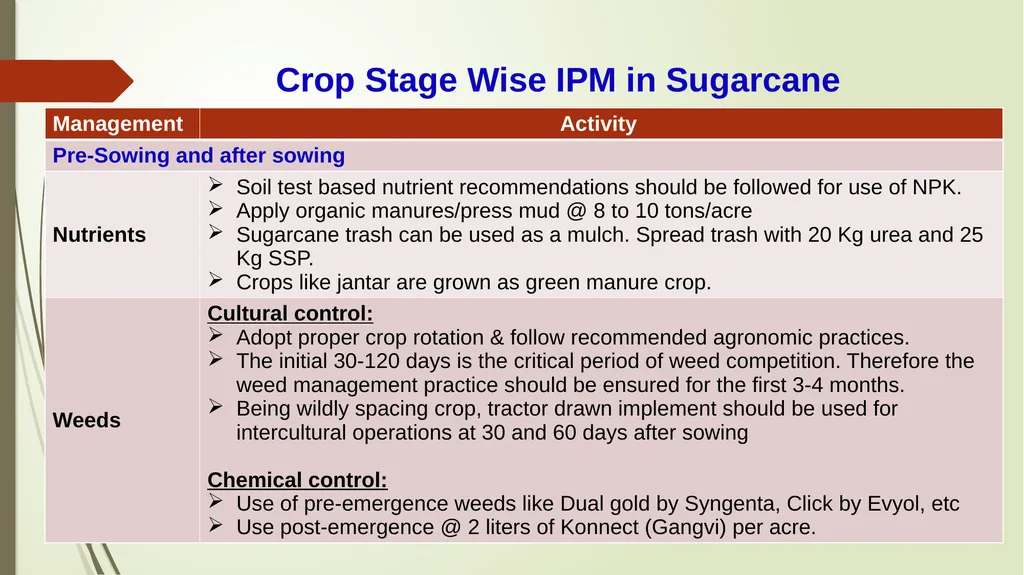
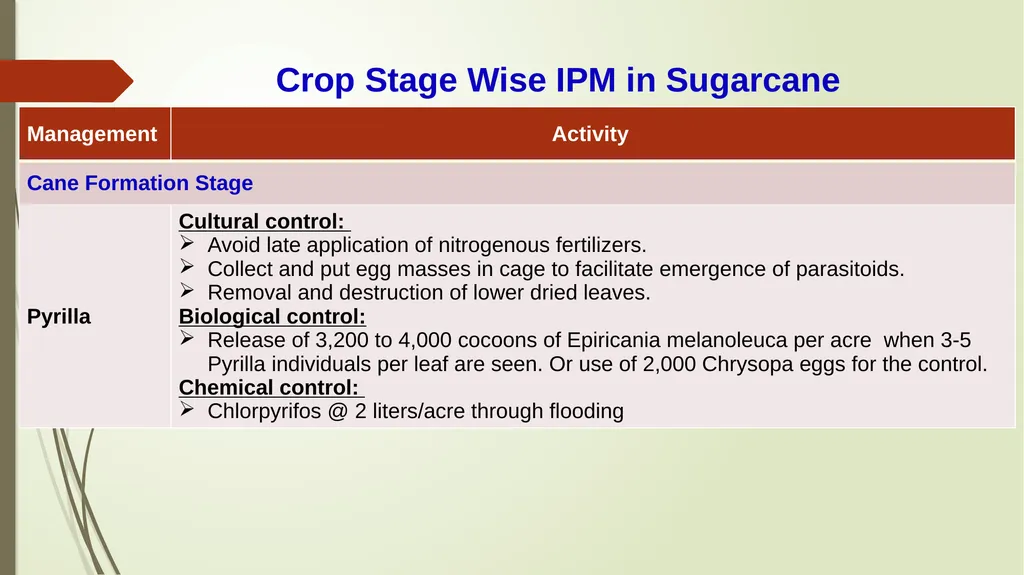
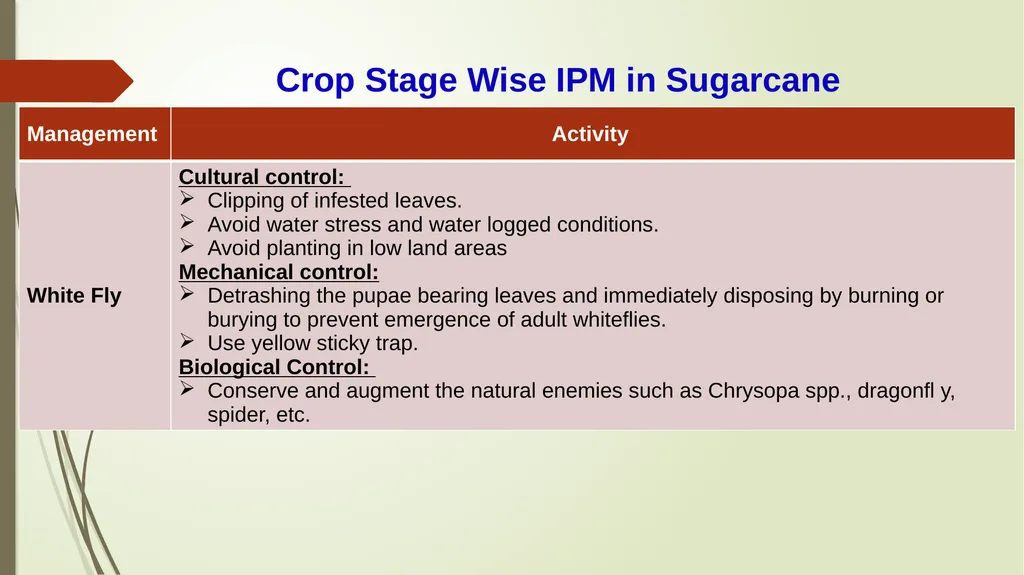
Crop Stage Wise IPM in Sugarcane<br>
13
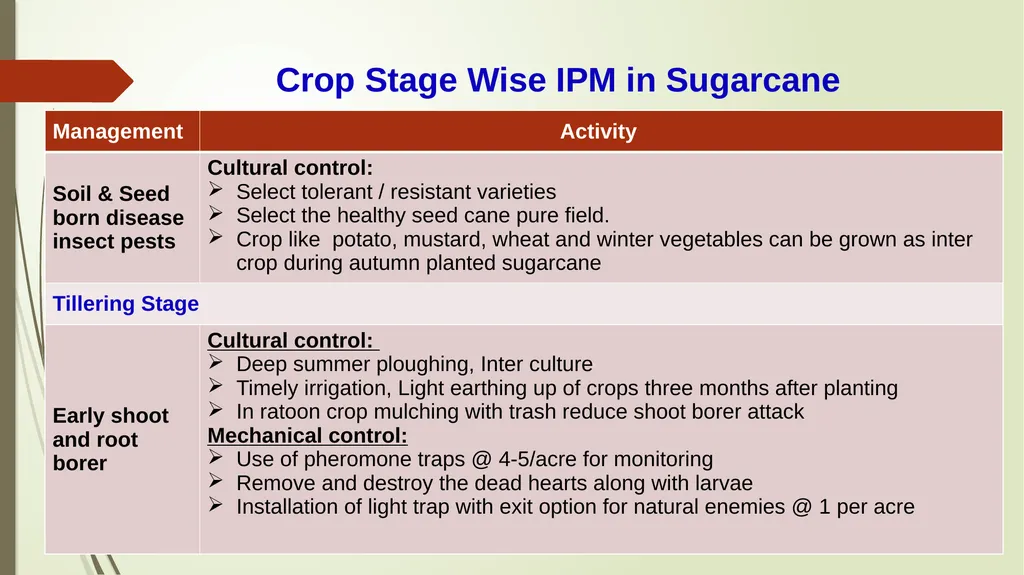
Crop Stage Wise IPM in Sugarcane<br>
14
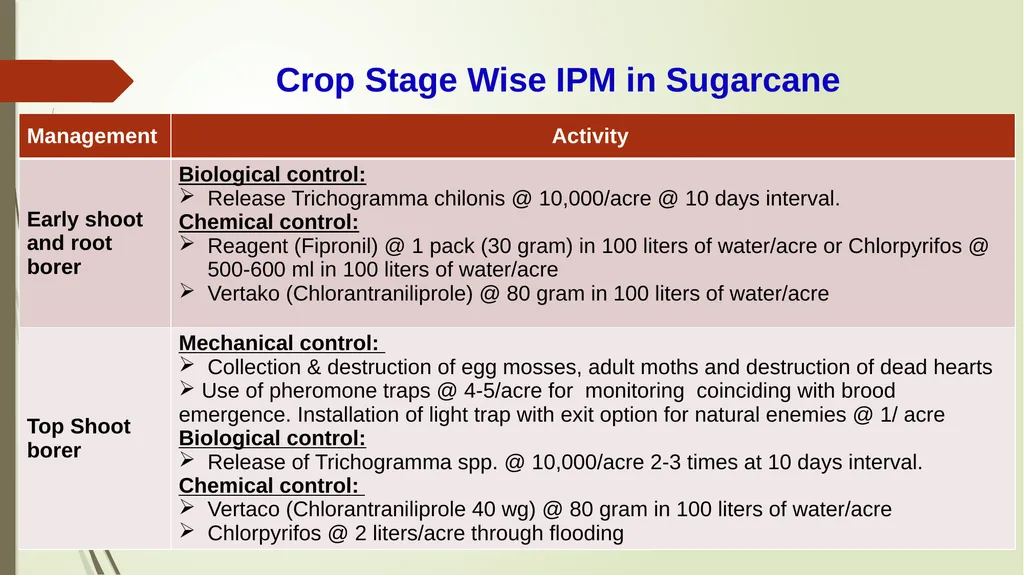
Crop Stage Wise IPM in Sugarcane<br>
15
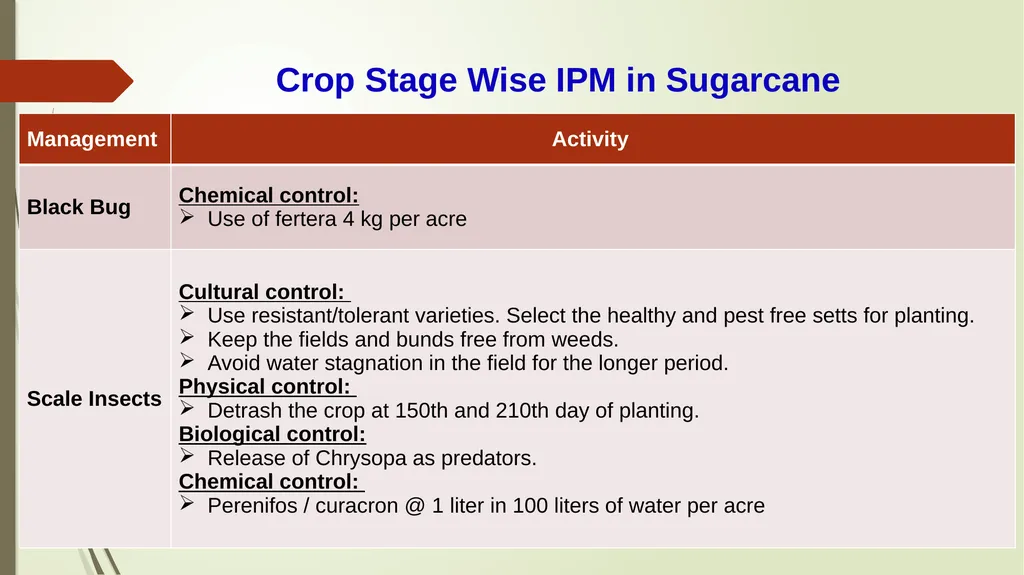
Crop Stage Wise IPM in Sugarcane<br>
16
Crop Stage Wise IPM in Sugarcane<br>
17
Crop Stage Wise IPM in Sugarcane<br>
18
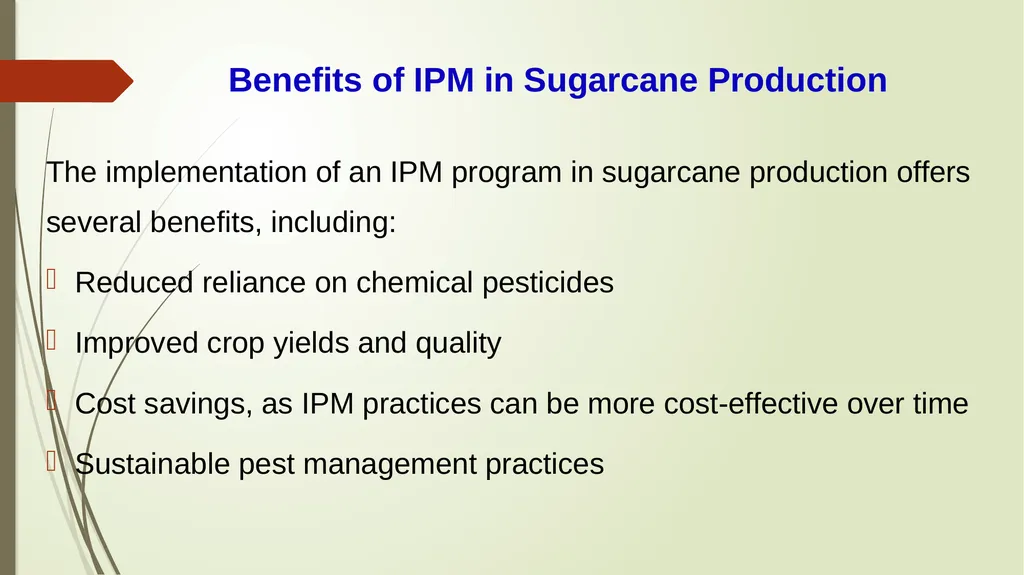
Benefits of IPM in Sugarcane Production The implementation of an IPM program in sugarcane production offers several benefits, including:
Reduced reliance on chemical pesticides
Improved crop yields and quality
Cost savings, as IPM practices can be more cost-effective over time
Sustainable pest management practices<br>
19
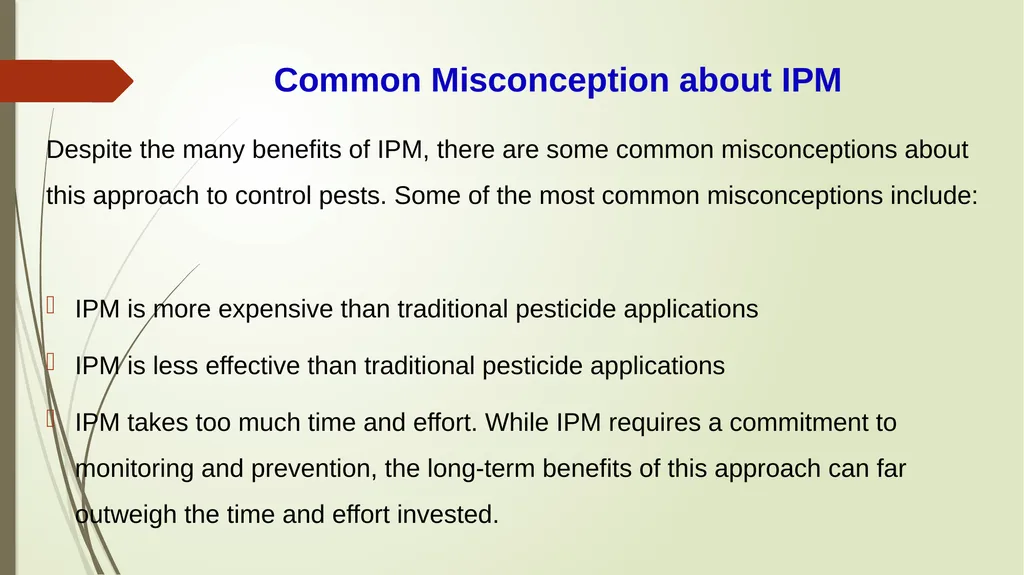
Common Misconception about IPM Despite the many benefits of IPM, there are some common misconceptions about this approach to control pests. Some of the most common misconceptions include:
IPM is more expensive than traditional pesticide applications
IPM is less effective than traditional pesticide applications
IPM takes too much time and effort. While IPM requires a commitment to monitoring and prevention, the long-term benefits of this approach can far outweigh the time and effort invested.<br>
20
Conclusion: the Benefits of IPM Integrated Pest Management is an approach to pest control that promotes the use of a combination of techniques to manage pest populations in a sustainable and environmentally-friendly manner.
Implementation of IPM in sugarcane production can offer many benefits, including reduced reliance on chemical pesticides, improved crop yields and quality, and cost savings.
By understanding the components of IPM and implementing these practices in sugarcane production, growers can promote a sustainable and profitable industry for years to come.<br>