
Interpersonal Communications in Job Hunting

Description: Interpersonal Communications in Job Hunting Chapter 13 Types of Interpersonal Communications in Job Hunting Information interviews Social Networking Job interviews Second interview or site visits Information Interviews Way to obtain insider
Related Topics
Download Presentation
"Interpersonal Communications in Job Hunting" is the property of its rightful owner. Permission is granted to download and print the materials on this website for personal, non-commercial use only, and to display it on your personal computer provided you do not modify the materials and that you retain all copyright notices contained in the materials. By downloading content from our website, you accept the terms of this agreement.
Presentation Transcript
slide1. Interpersonal Communications in Job Hunting Chapter 13<br>
slide2. Types of Interpersonal Communications in Job Hunting Information interviews
Social Networking
Job interviews
Second interview or site visits<br>
slide3. Information Interviews Way to obtain insider information
Preparing for information interviews
Researching career field, position or employer
Develop questions
Arranging/conducting information interviews
Follow up/evaluation afterwards What questions are useful to ask after information interviews?<br>
slide4. Social Networking What can social networking do for you?
Learn about jobs in hidden job market
Make valuable contacts
Knowledge about career fields/industries
Improving networking skills
Skill that can be learned & polished
Join professional associations even as a student
Get involved in alumni groups
Use self & options knowledge to guide networking activities What professional association groups could you network with?<br>
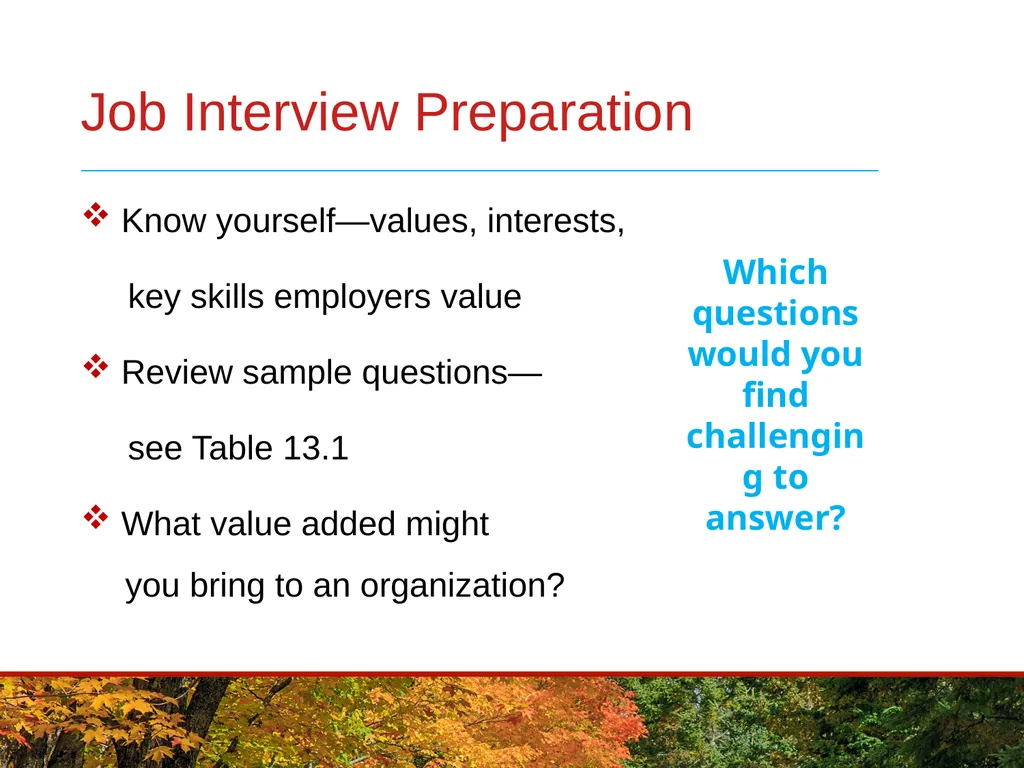
slide5. Job Interview Preparation Know yourself—values, interests,
key skills employers value
Review sample questions—
see Table 13.1
What value added might you bring to an organization? Which questions would you find challenging to answer?<br>
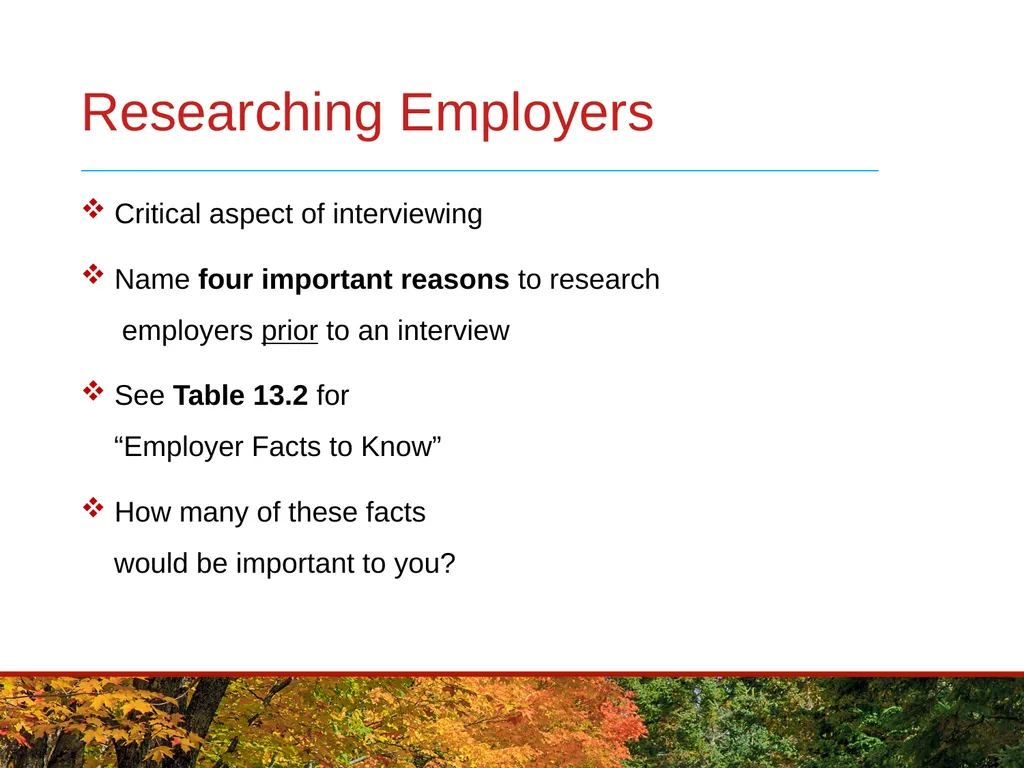
slide6. Researching Employers Critical aspect of interviewing
Name four important reasons to research employers prior to an interview
See Table 13.2 for “Employer Facts to Know”
How many of these facts would be important to you?<br>
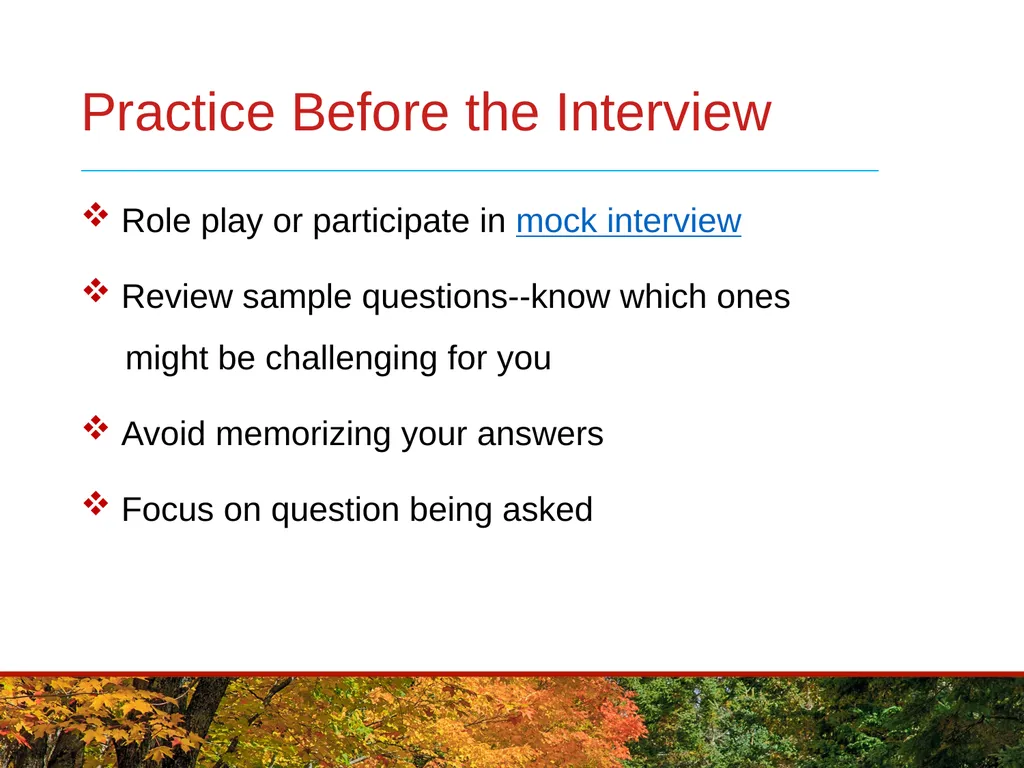
slide7. Practice Before the Interview Role play or participate in mock interview
Review sample questions--know which ones might be challenging for you
Avoid memorizing your answers
Focus on question being asked<br>
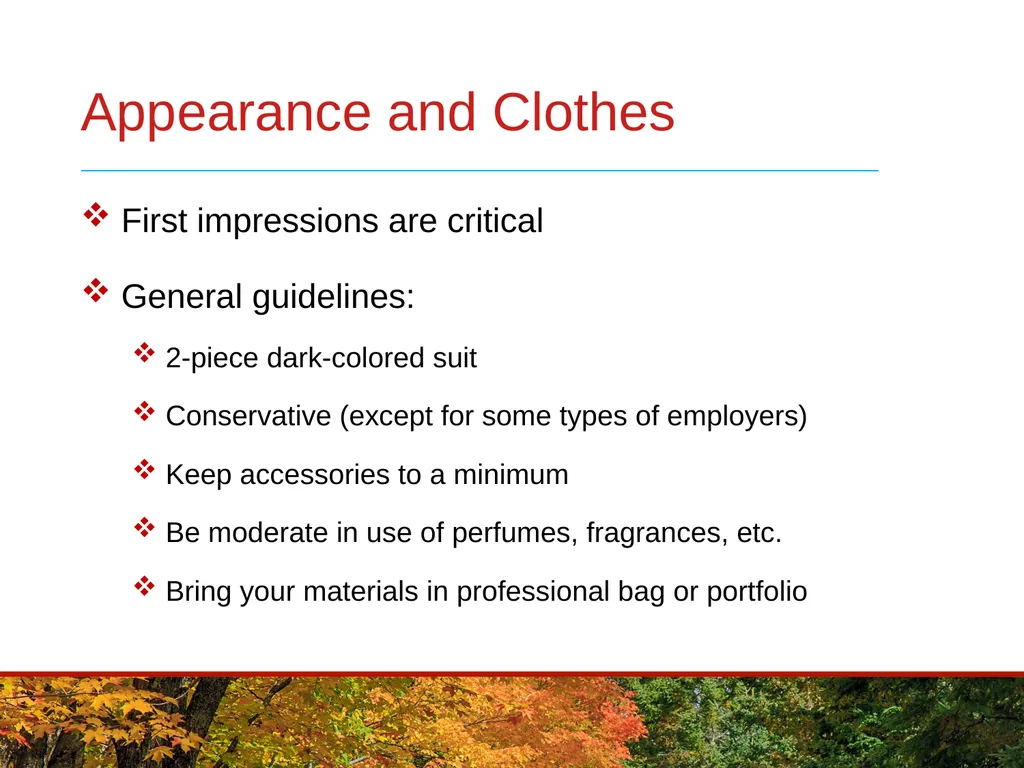
slide8. Appearance and Clothes First impressions are critical
General guidelines:
2-piece dark-colored suit
Conservative (except for some types of employers)
Keep accessories to a minimum
Be moderate in use of perfumes, fragrances, etc.
Bring your materials in professional bag or portfolio<br>
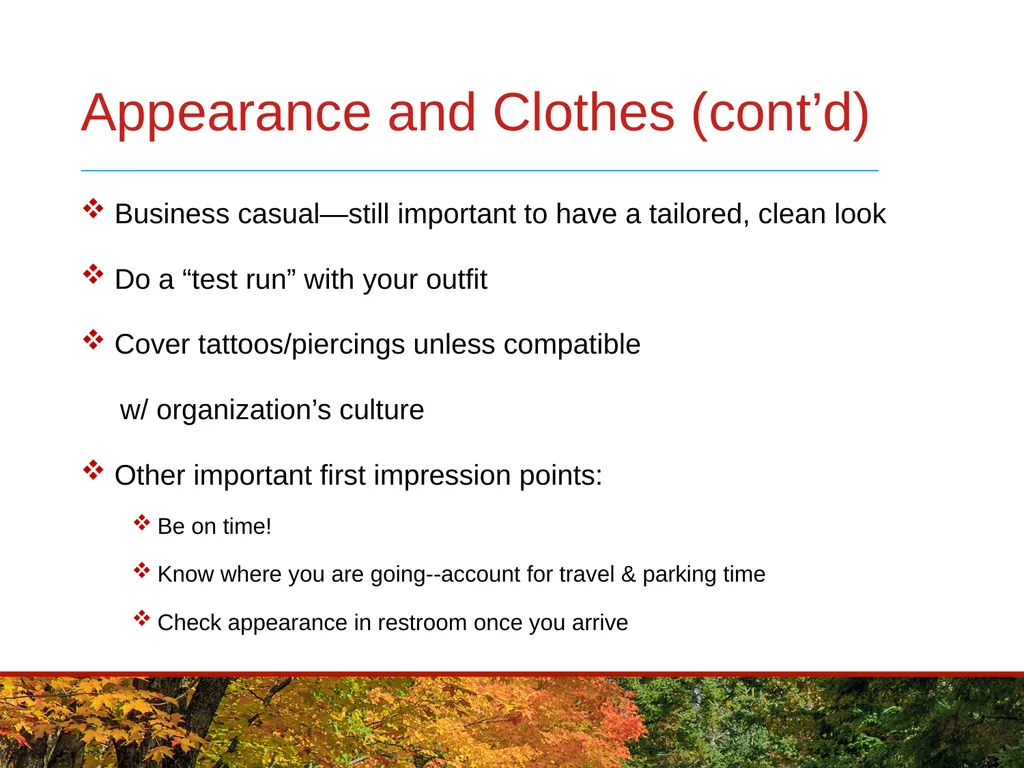
slide9. Appearance and Clothes (cont’d) Business casual—still important to have a tailored, clean look
Do a “test run” with your outfit
Cover tattoos/piercings unless compatible
w/ organization’s culture
Other important first impression points:
Be on time!
Know where you are going--account for travel & parking time
Check appearance in restroom once you arrive<br>
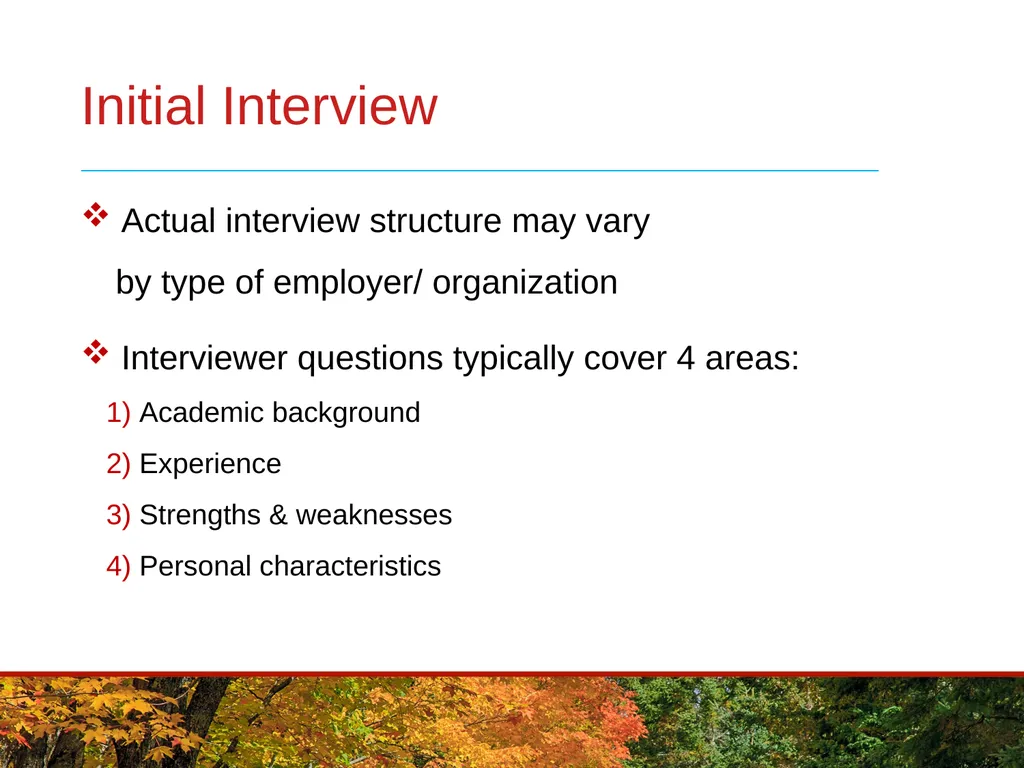
slide10. Initial Interview Actual interview structure may vary by type of employer/ organization
Interviewer questions typically cover 4 areas: 1) Academic background 2) Experience 3) Strengths & weaknesses 4) Personal characteristics<br>
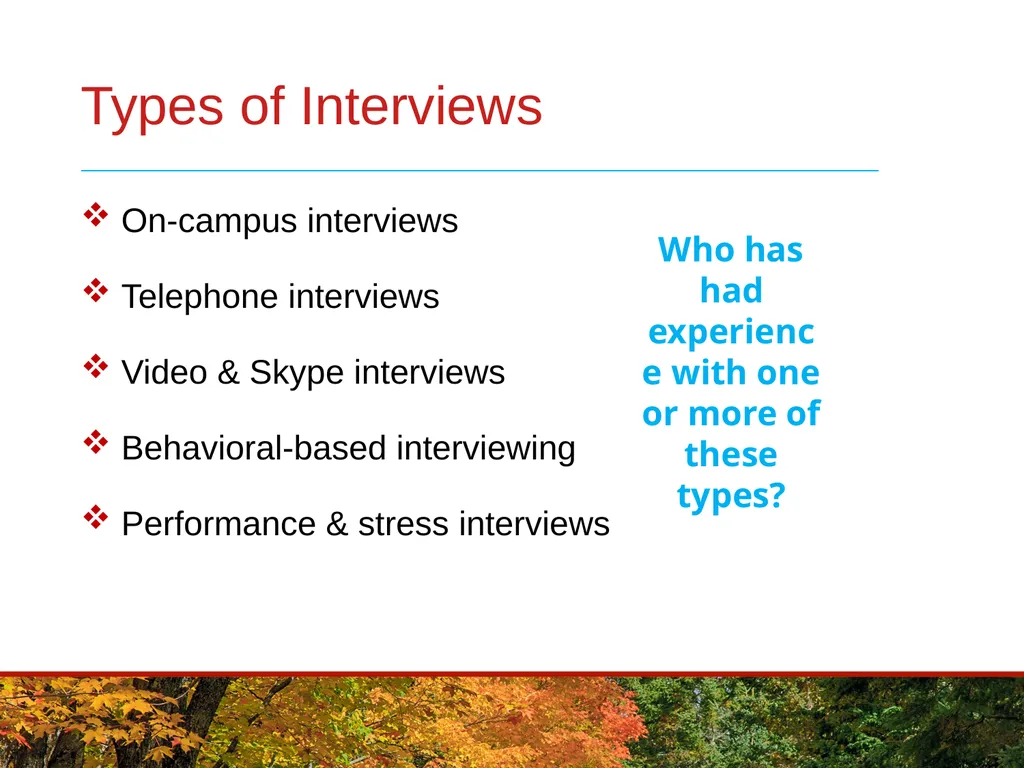
slide11. Types of Interviews On-campus interviews
Telephone interviews
Video & Skype interviews
Behavioral-based interviewing
Performance & stress interviews Who has had experience with one or more of these types?<br>
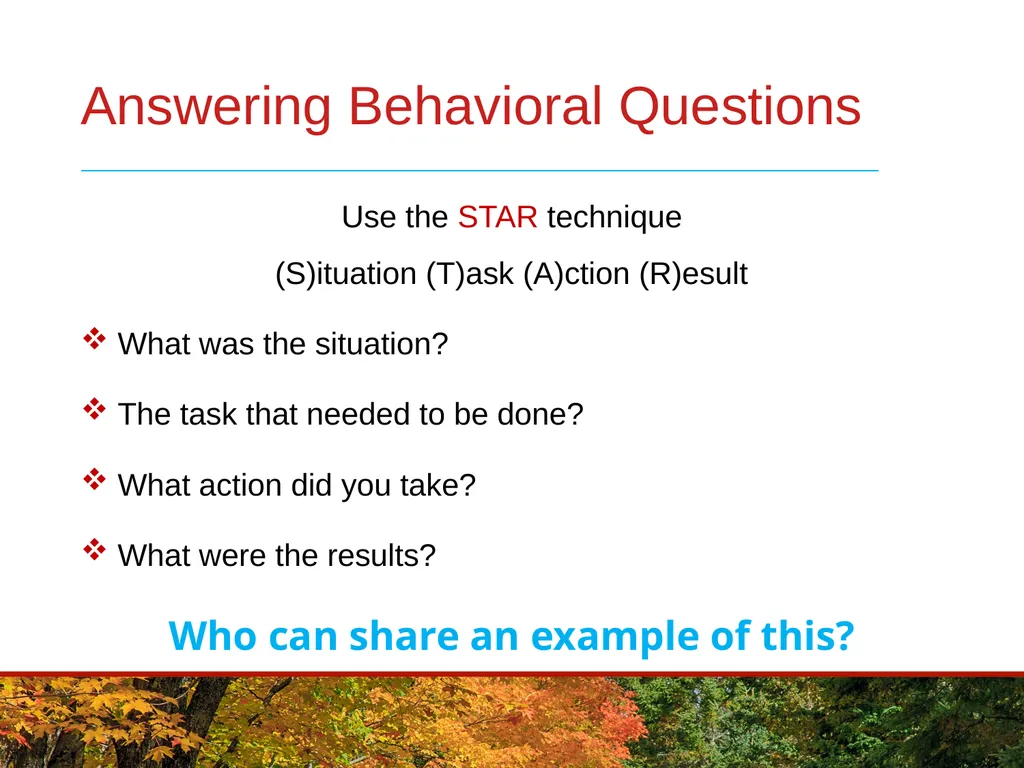
slide12. Answering Behavioral Questions Use the STAR technique (S)ituation (T)ask (A)ction (R)esult
What was the situation?
The task that needed to be done?
What action did you take?
What were the results?
Who can share an example of this?<br>
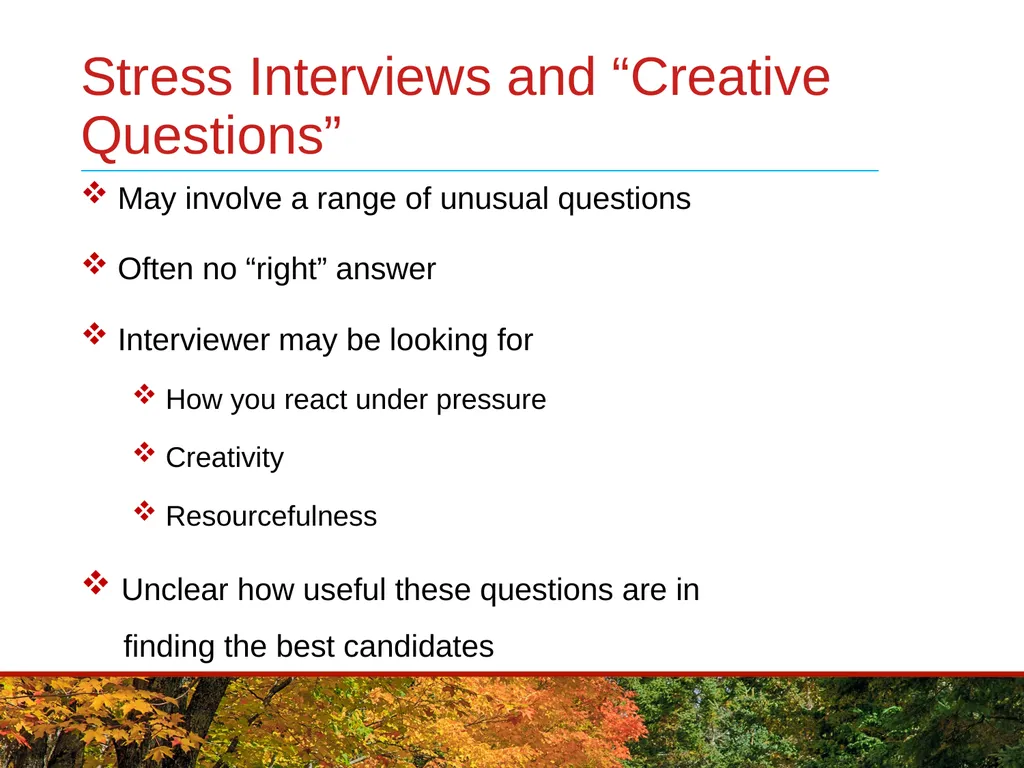
slide13. Stress Interviews and “Creative Questions” May involve a range of unusual questions
Often no “right” answer
Interviewer may be looking for
How you react under pressure
Creativity
Resourcefulness
Unclear how useful these questions are in finding the best candidates<br>
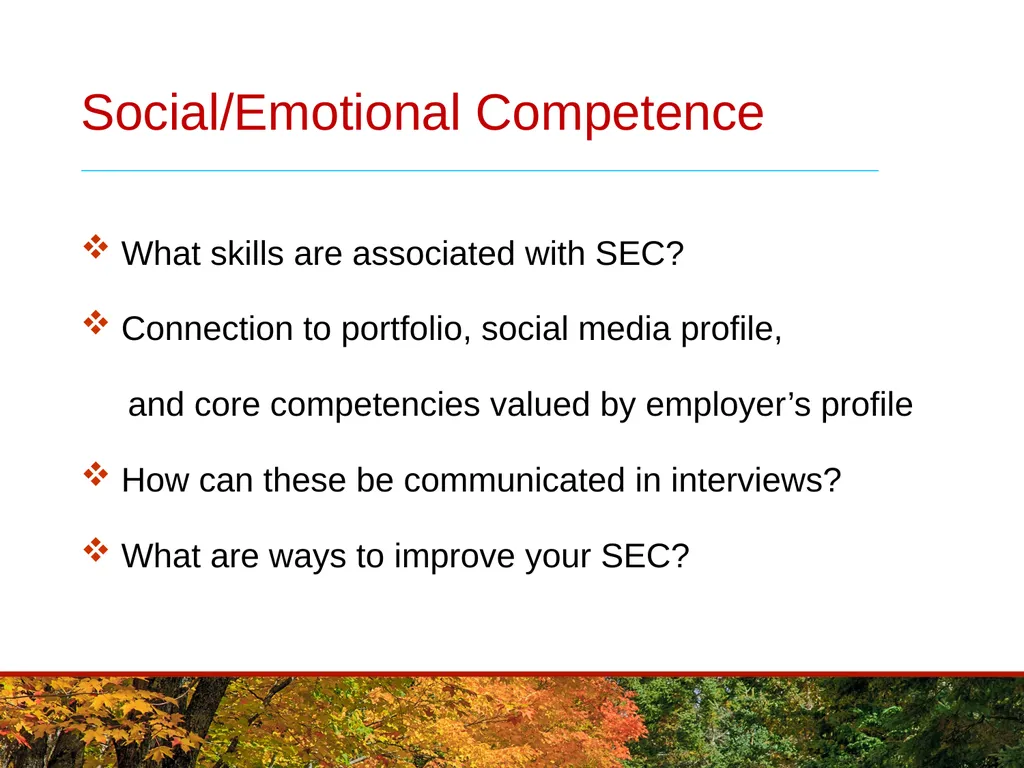
slide14. Social/Emotional Competence What skills are associated with SEC?
Connection to portfolio, social media profile,
and core competencies valued by employer’s profile
How can these be communicated in interviews?
What are ways to improve your SEC?<br>
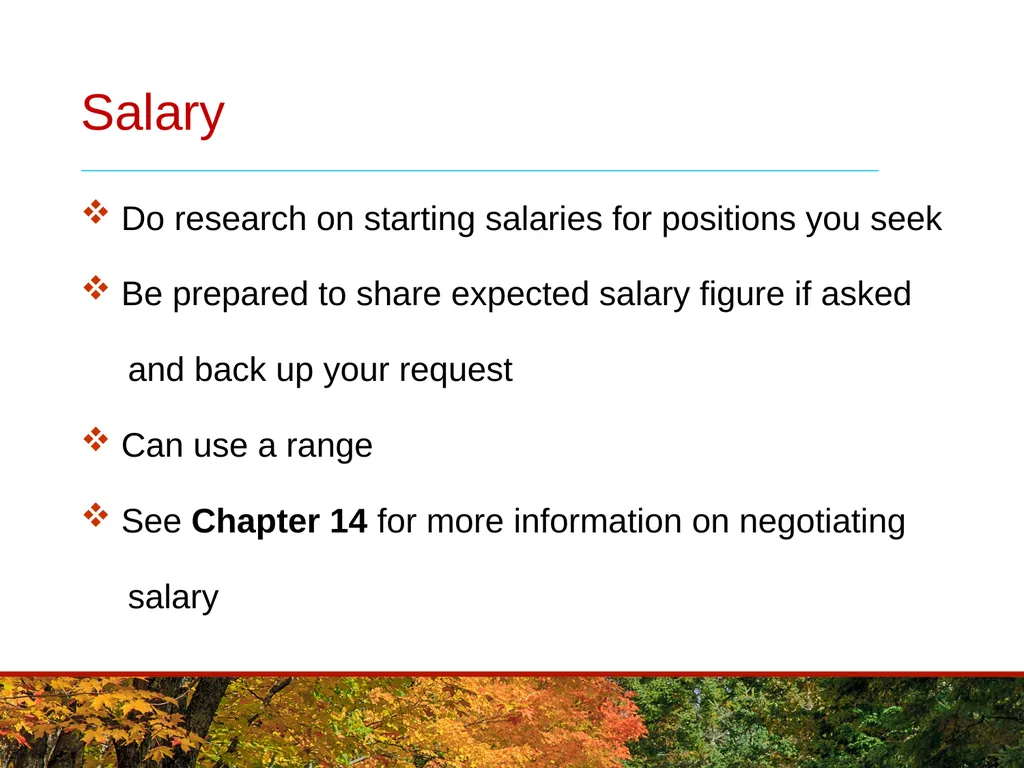
slide15. Salary Do research on starting salaries for positions you seek
Be prepared to share expected salary figure if asked
and back up your request
Can use a range
See Chapter 14 for more information on negotiating
salary<br>
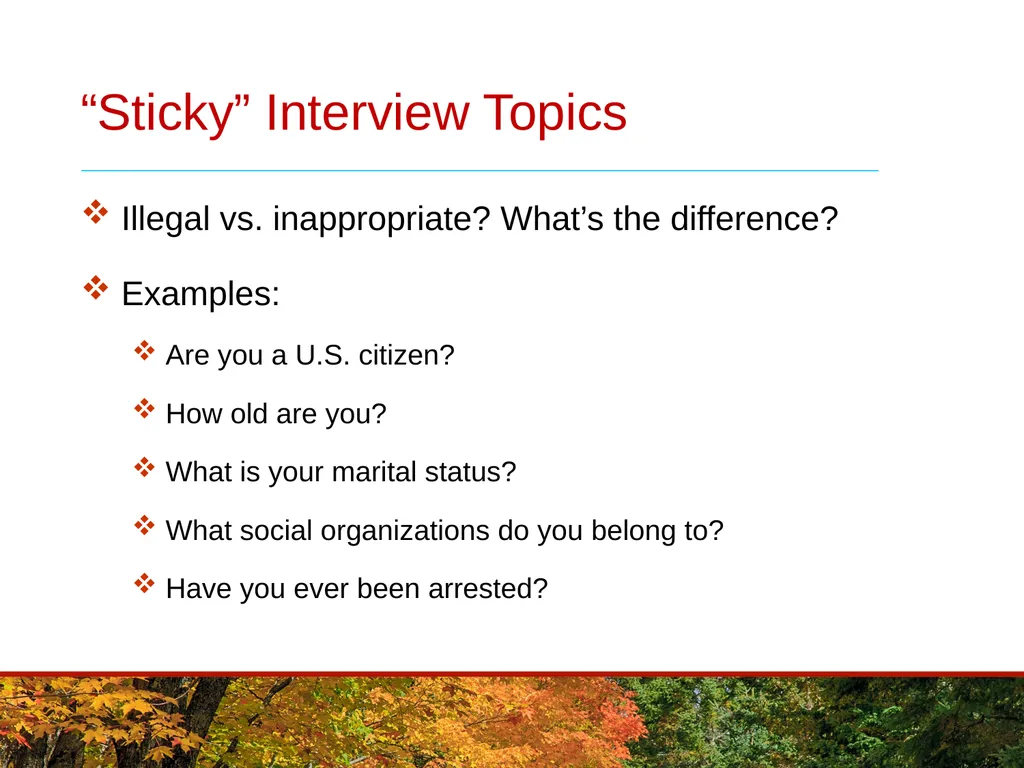
slide16. “Sticky” Interview Topics Illegal vs. inappropriate? What’s the difference?
Examples:
Are you a U.S. citizen?
How old are you?
What is your marital status?
What social organizations do you belong to?
Have you ever been arrested?<br>
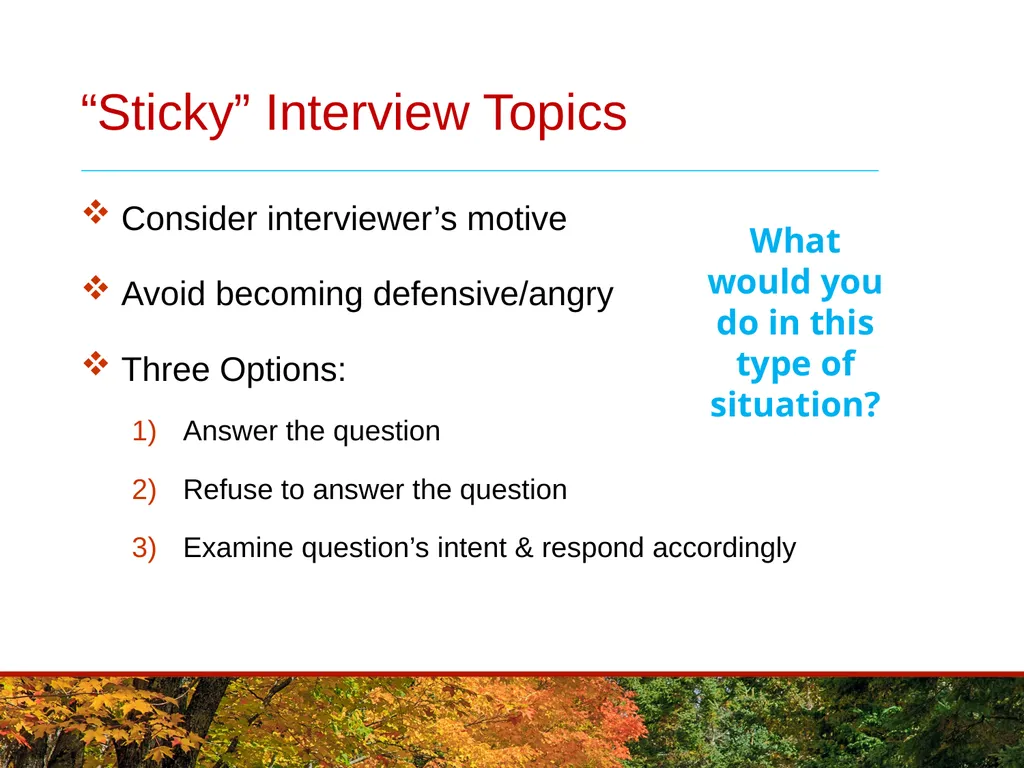
slide17. “Sticky” Interview Topics Consider interviewer’s motive
Avoid becoming defensive/angry
Three Options:
Answer the question
Refuse to answer the question
Examine question’s intent & respond accordingly What would you do in this type of situation?<br>
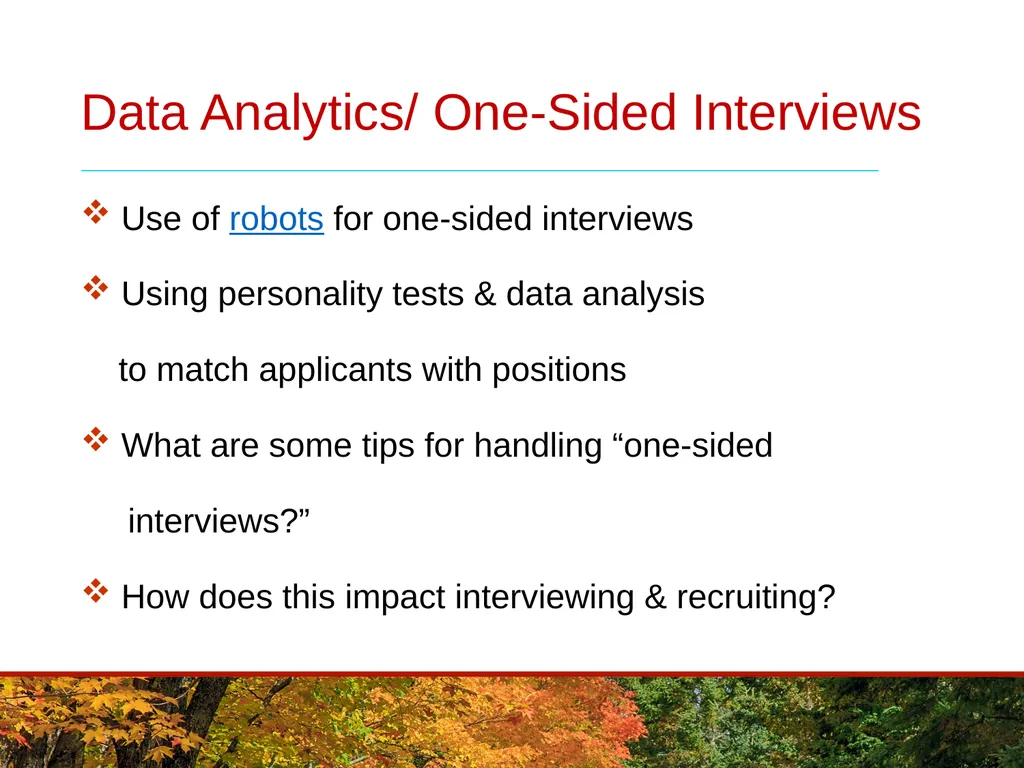
slide18. Data Analytics/ One-Sided Interviews Use of robots for one-sided interviews
Using personality tests & data analysis
to match applicants with positions
What are some tips for handling “one-sided
interviews?”
How does this impact interviewing & recruiting?<br>
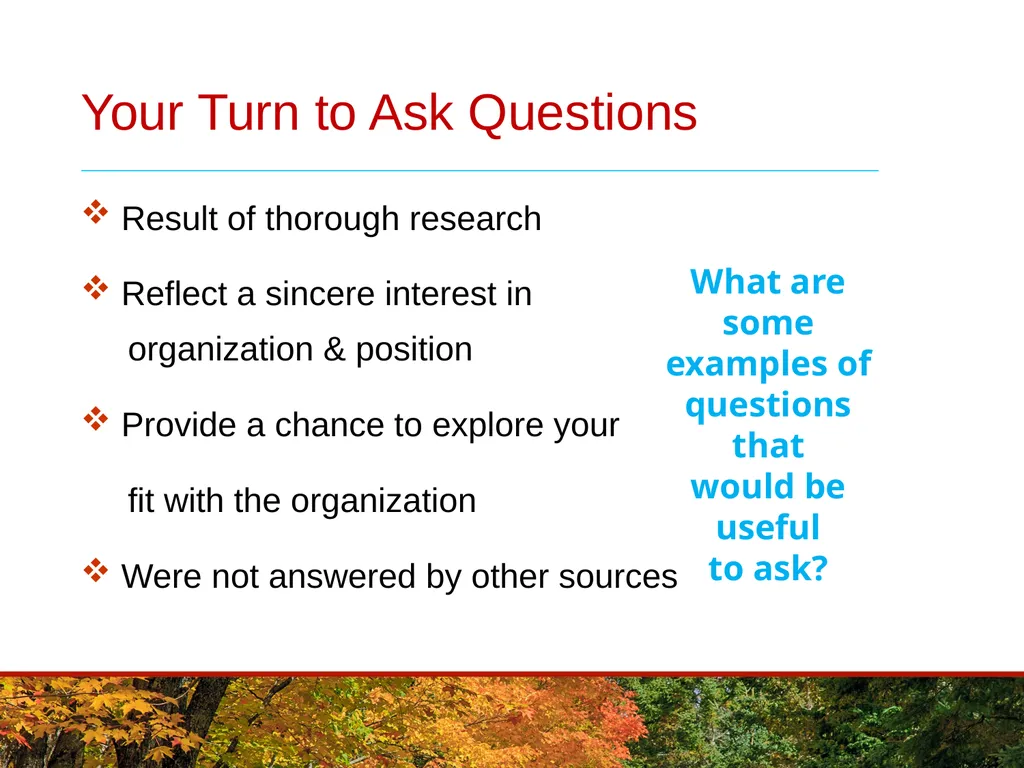
slide19. Your Turn to Ask Questions Result of thorough research
Reflect a sincere interest in
organization & position
Provide a chance to explore your
fit with the organization
Were not answered by other sources What are some examples of questions that would be useful to ask?<br>
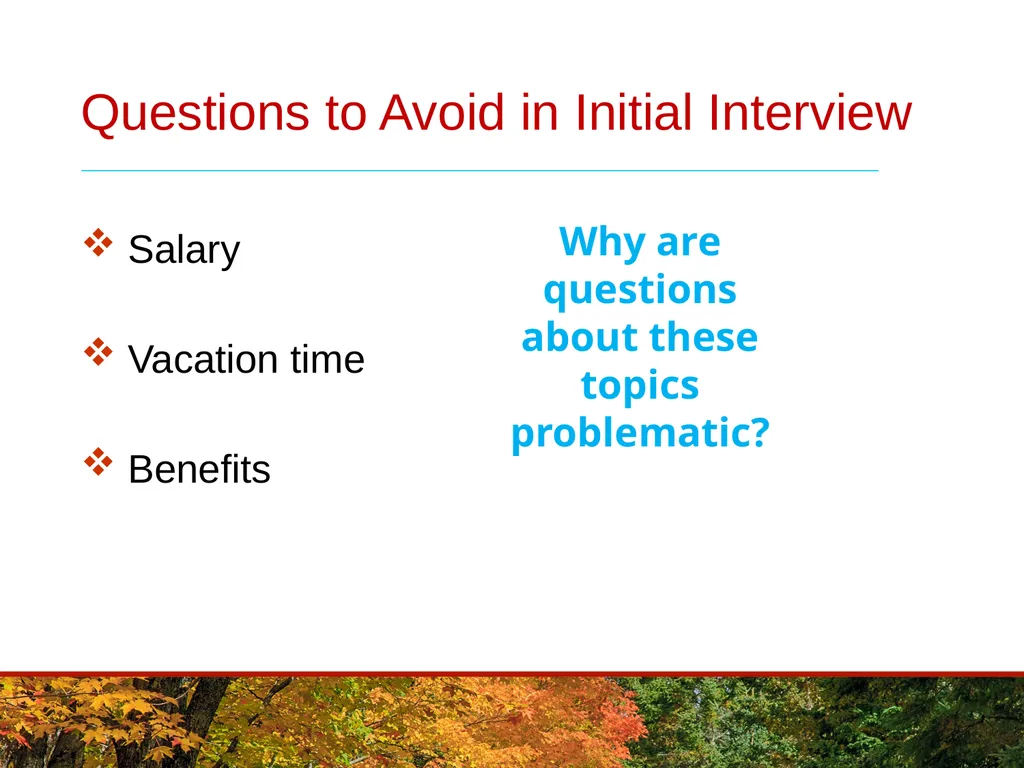
slide20. Questions to Avoid in Initial Interview Salary
Vacation time
Benefits Why are questions about these topics problematic?<br>
slide21. Closing Have awareness of interview length
Thank interviewers and ask for their business card
Check on next steps
Re-emphasize your interest, appreciation for being considered
Ask about following up to check on status of your application<br>
slide22. After the Interview One of the most overlooked steps
Importance of thank you notes after interviews
Reaffirm interest
Restate some of your qualifications
Chance to gain additional information to use in
decision- making<br>
slide23. After the Interview Self-Evaluation:
What points seemed to interest the employer?
How well did I present my qualifications?
Did I talk too much? too little?
What questions were difficult for me?
How can I improve for the next interview?<br>
slide24. Second Interview & Site Visits Usually final step before receiving an offer
Chance to view facilities, meet other employees, visit
local community
How well do you fit organizational culture?
Structured vs. unstructured 2nd interviews
How do they differ?<br>
slide25. Preparing for Second Interview Getting schedule of activities in advance
Know who will be involved in the process
Importance of ongoing employer research
Understand how expenses, travel, car rental
will be handled
Follow up with a thank you and submission of
any materials related to reimbursement<br>
slide26. CIP Perspective Self-Knowledge
Importance of self-knowledge in networking & interviewing
Option Knowledge
Role of networking, social media, and interviews in learning about job option
Decision Making
Social interactions provide important information for all CASVE cycle phases
Executive Processing
Importance of positive metacognitions in context of job search social interactions<br>
slide2. Types of Interpersonal Communications in Job Hunting Information interviews
Social Networking
Job interviews
Second interview or site visits<br>
slide3. Information Interviews Way to obtain insider information
Preparing for information interviews
Researching career field, position or employer
Develop questions
Arranging/conducting information interviews
Follow up/evaluation afterwards What questions are useful to ask after information interviews?<br>
slide4. Social Networking What can social networking do for you?
Learn about jobs in hidden job market
Make valuable contacts
Knowledge about career fields/industries
Improving networking skills
Skill that can be learned & polished
Join professional associations even as a student
Get involved in alumni groups
Use self & options knowledge to guide networking activities What professional association groups could you network with?<br>
slide5. Job Interview Preparation Know yourself—values, interests,
key skills employers value
Review sample questions—
see Table 13.1
What value added might you bring to an organization? Which questions would you find challenging to answer?<br>
slide6. Researching Employers Critical aspect of interviewing
Name four important reasons to research employers prior to an interview
See Table 13.2 for “Employer Facts to Know”
How many of these facts would be important to you?<br>
slide7. Practice Before the Interview Role play or participate in mock interview
Review sample questions--know which ones might be challenging for you
Avoid memorizing your answers
Focus on question being asked<br>
slide8. Appearance and Clothes First impressions are critical
General guidelines:
2-piece dark-colored suit
Conservative (except for some types of employers)
Keep accessories to a minimum
Be moderate in use of perfumes, fragrances, etc.
Bring your materials in professional bag or portfolio<br>
slide9. Appearance and Clothes (cont’d) Business casual—still important to have a tailored, clean look
Do a “test run” with your outfit
Cover tattoos/piercings unless compatible
w/ organization’s culture
Other important first impression points:
Be on time!
Know where you are going--account for travel & parking time
Check appearance in restroom once you arrive<br>
slide10. Initial Interview Actual interview structure may vary by type of employer/ organization
Interviewer questions typically cover 4 areas: 1) Academic background 2) Experience 3) Strengths & weaknesses 4) Personal characteristics<br>
slide11. Types of Interviews On-campus interviews
Telephone interviews
Video & Skype interviews
Behavioral-based interviewing
Performance & stress interviews Who has had experience with one or more of these types?<br>
slide12. Answering Behavioral Questions Use the STAR technique (S)ituation (T)ask (A)ction (R)esult
What was the situation?
The task that needed to be done?
What action did you take?
What were the results?
Who can share an example of this?<br>
slide13. Stress Interviews and “Creative Questions” May involve a range of unusual questions
Often no “right” answer
Interviewer may be looking for
How you react under pressure
Creativity
Resourcefulness
Unclear how useful these questions are in finding the best candidates<br>
slide14. Social/Emotional Competence What skills are associated with SEC?
Connection to portfolio, social media profile,
and core competencies valued by employer’s profile
How can these be communicated in interviews?
What are ways to improve your SEC?<br>
slide15. Salary Do research on starting salaries for positions you seek
Be prepared to share expected salary figure if asked
and back up your request
Can use a range
See Chapter 14 for more information on negotiating
salary<br>
slide16. “Sticky” Interview Topics Illegal vs. inappropriate? What’s the difference?
Examples:
Are you a U.S. citizen?
How old are you?
What is your marital status?
What social organizations do you belong to?
Have you ever been arrested?<br>
slide17. “Sticky” Interview Topics Consider interviewer’s motive
Avoid becoming defensive/angry
Three Options:
Answer the question
Refuse to answer the question
Examine question’s intent & respond accordingly What would you do in this type of situation?<br>
slide18. Data Analytics/ One-Sided Interviews Use of robots for one-sided interviews
Using personality tests & data analysis
to match applicants with positions
What are some tips for handling “one-sided
interviews?”
How does this impact interviewing & recruiting?<br>
slide19. Your Turn to Ask Questions Result of thorough research
Reflect a sincere interest in
organization & position
Provide a chance to explore your
fit with the organization
Were not answered by other sources What are some examples of questions that would be useful to ask?<br>
slide20. Questions to Avoid in Initial Interview Salary
Vacation time
Benefits Why are questions about these topics problematic?<br>
slide21. Closing Have awareness of interview length
Thank interviewers and ask for their business card
Check on next steps
Re-emphasize your interest, appreciation for being considered
Ask about following up to check on status of your application<br>
slide22. After the Interview One of the most overlooked steps
Importance of thank you notes after interviews
Reaffirm interest
Restate some of your qualifications
Chance to gain additional information to use in
decision- making<br>
slide23. After the Interview Self-Evaluation:
What points seemed to interest the employer?
How well did I present my qualifications?
Did I talk too much? too little?
What questions were difficult for me?
How can I improve for the next interview?<br>
slide24. Second Interview & Site Visits Usually final step before receiving an offer
Chance to view facilities, meet other employees, visit
local community
How well do you fit organizational culture?
Structured vs. unstructured 2nd interviews
How do they differ?<br>
slide25. Preparing for Second Interview Getting schedule of activities in advance
Know who will be involved in the process
Importance of ongoing employer research
Understand how expenses, travel, car rental
will be handled
Follow up with a thank you and submission of
any materials related to reimbursement<br>
slide26. CIP Perspective Self-Knowledge
Importance of self-knowledge in networking & interviewing
Option Knowledge
Role of networking, social media, and interviews in learning about job option
Decision Making
Social interactions provide important information for all CASVE cycle phases
Executive Processing
Importance of positive metacognitions in context of job search social interactions<br>