Intro to Rhetorical Analysis The Rhetorical Situation EXIGENCE What were the circumstances surrounding the original delivery of the speech andor publication of the piece? What happened or failed to happen? Why is one compelled to speak
"Intro to Rhetorical Analysis The Rhetorical" is the property of its rightful owner. Permission is granted to
download and print the materials on this website for personal, non-commercial use only, and to display it
on your personal computer provided you do not modify the materials and that you retain all copyright
notices contained in the materials. By downloading content from our website, you accept the terms of this
agreement.
Presentation Transcript
01
Intro to Rhetorical Analysis<br>
02
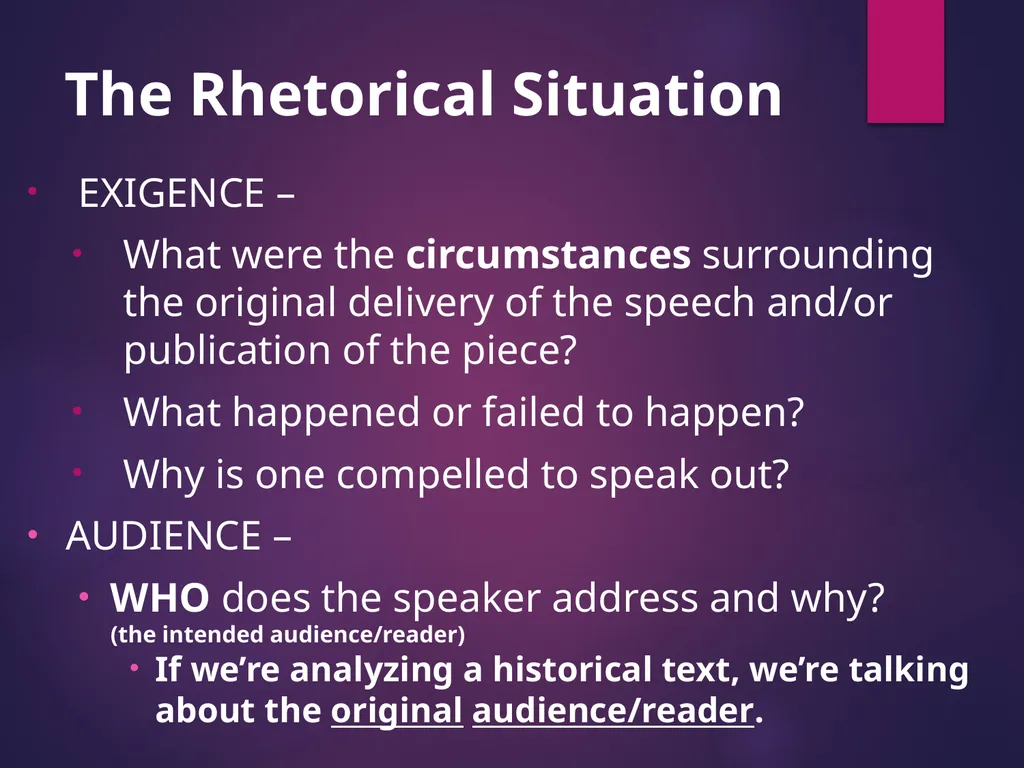
The Rhetorical Situation EXIGENCE –
What were the circumstances surrounding the original delivery of the speech and/or publication of the piece?
What happened or failed to happen?
Why is one compelled to speak out?
AUDIENCE –
WHO does the speaker address and why? (the intended audience/reader)
If we’re analyzing a historical text, we’re talking about the original audience/reader.<br>
03
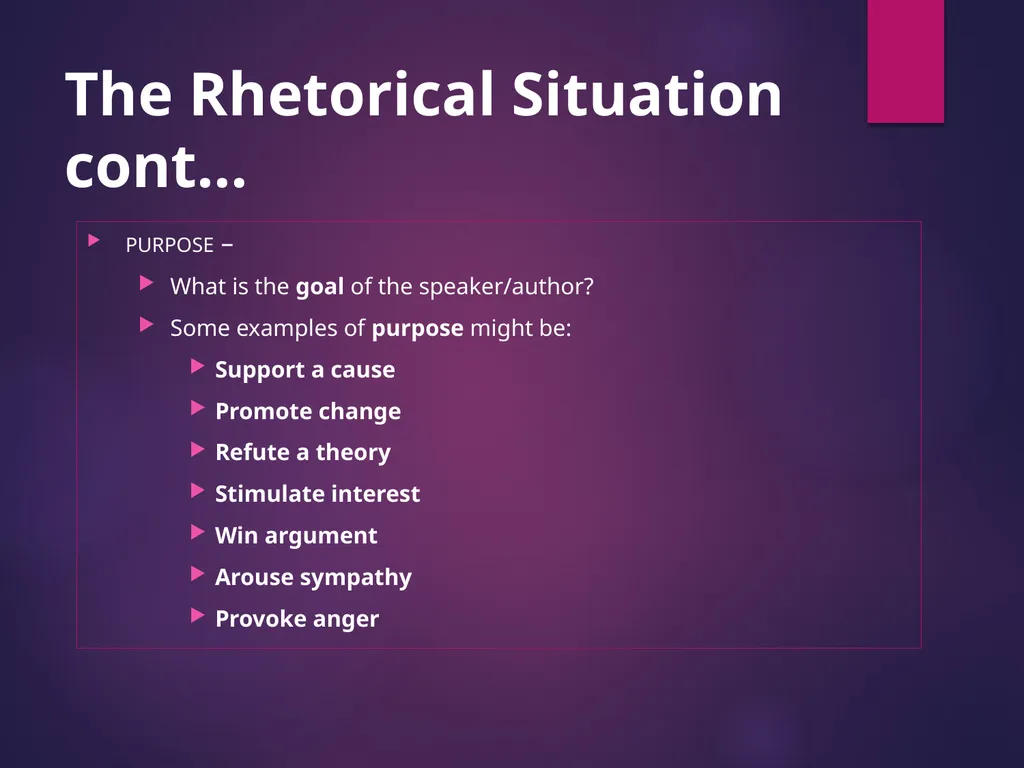
The Rhetorical Situation cont… PURPOSE –
What is the goal of the speaker/author?
Some examples of purpose might be:
Support a cause
Promote change
Refute a theory
Stimulate interest
Win argument
Arouse sympathy
Provoke anger<br>
04
What are Persuasive Appeals? There are 3 key ways writers can appeal to their audience:
Appeals of logic – LOGOS
Appeals of ethics – ETHOS
Appeals of emotion – PATHOS<br>
05
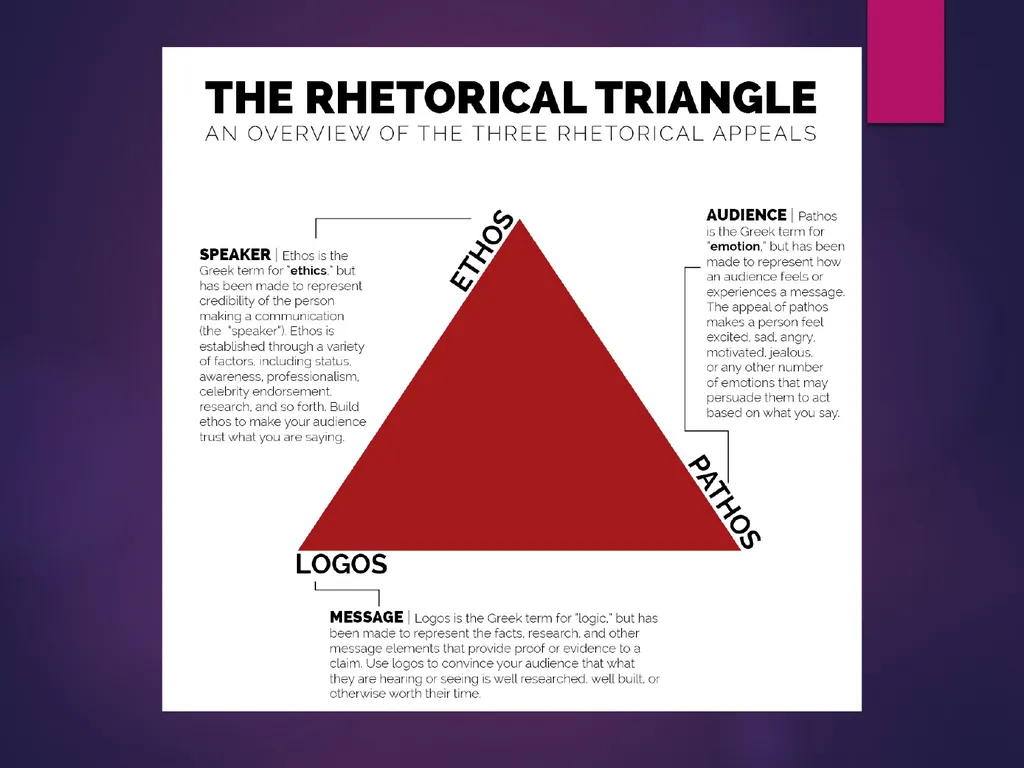
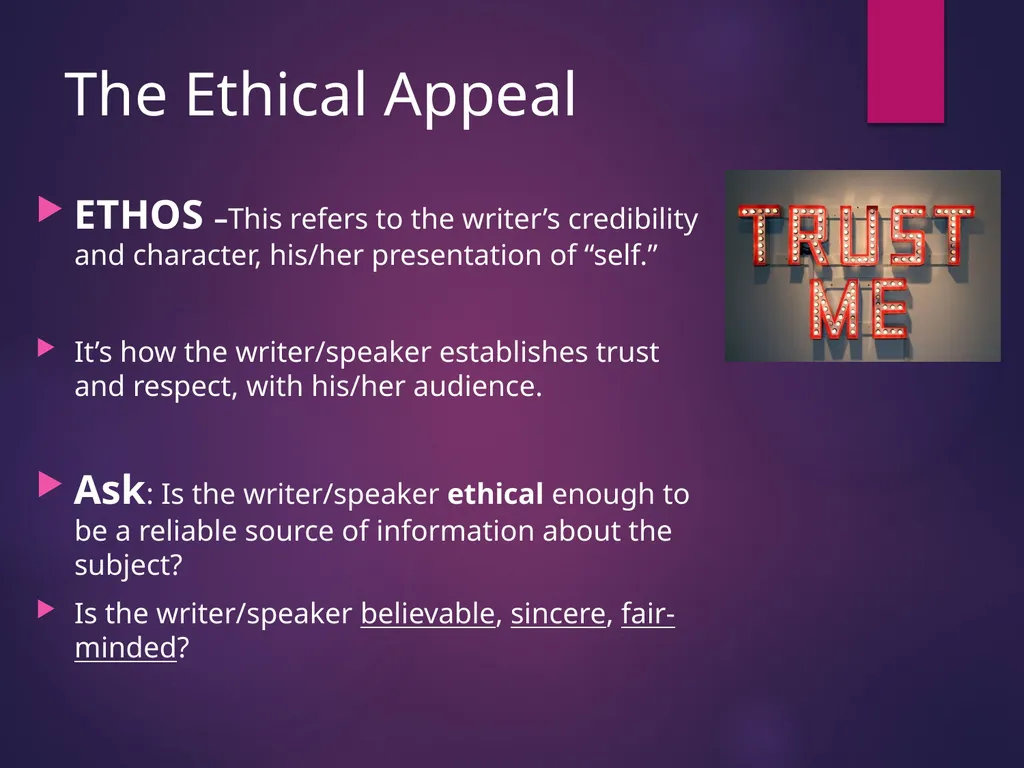
The Ethical Appeal ETHOS –This refers to the writer’s credibility and character, his/her presentation of “self.”
It’s how the writer/speaker establishes trust and respect, with his/her audience.
Ask: Is the writer/speaker ethical enough to be a reliable source of information about the subject?
Is the writer/speaker believable, sincere, fair-minded?<br>
06
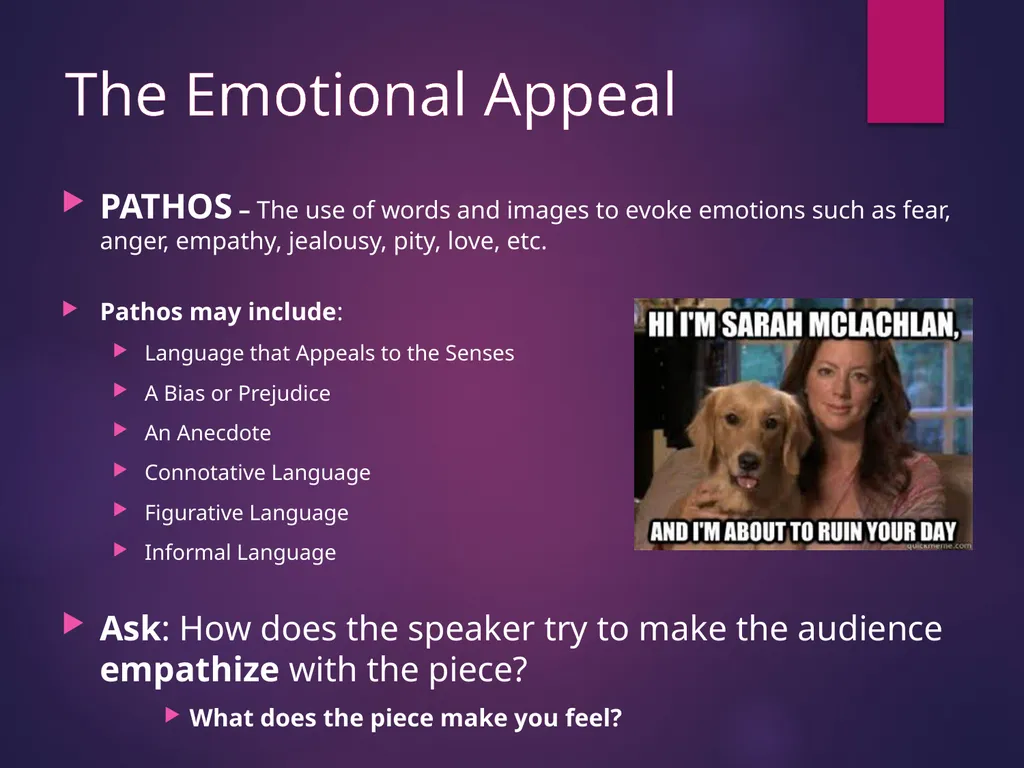
The Emotional Appeal PATHOS – The use of words and images to evoke emotions such as fear, anger, empathy, jealousy, pity, love, etc.
Pathos may include:
Language that Appeals to the Senses
A Bias or Prejudice
An Anecdote
Connotative Language
Figurative Language
Informal Language
Ask: How does the speaker try to make the audience empathize with the piece?
What does the piece make you feel?<br>
07
The Logical Appeal LOGOS – The use of research, facts, statistics, expert testimony, witnesses, scientific data, etc.
Does the argument make sense?
Does it evoke a cognitive, rational response?<br>
08
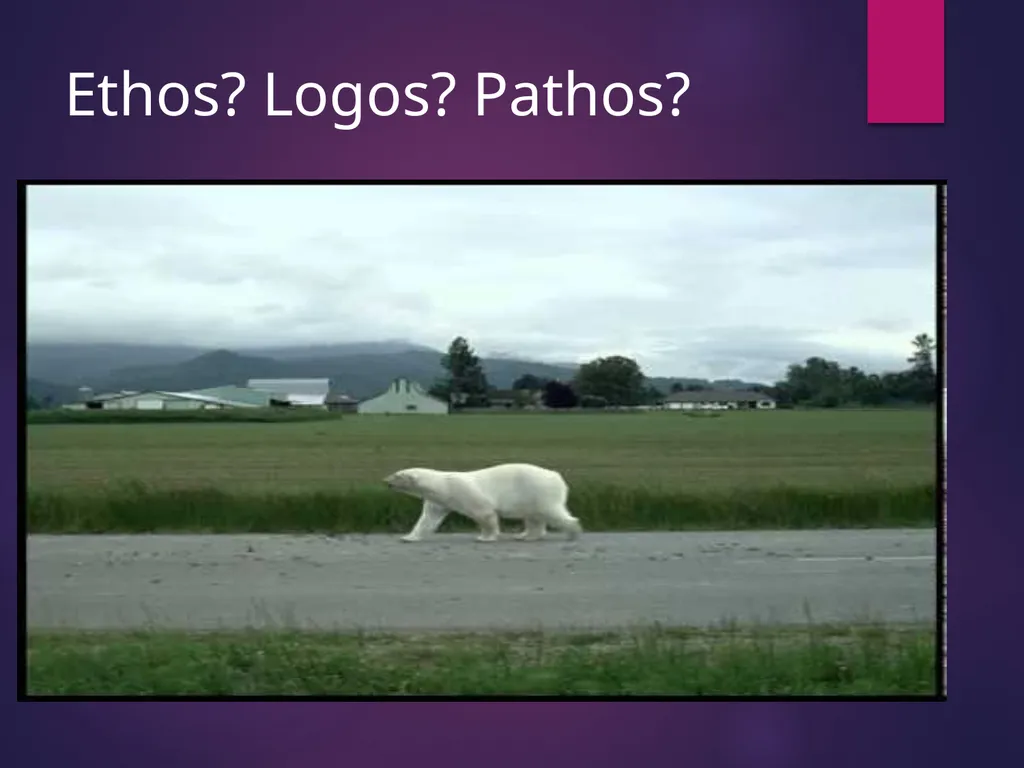
Ethos? Logos? Pathos?<br>
09
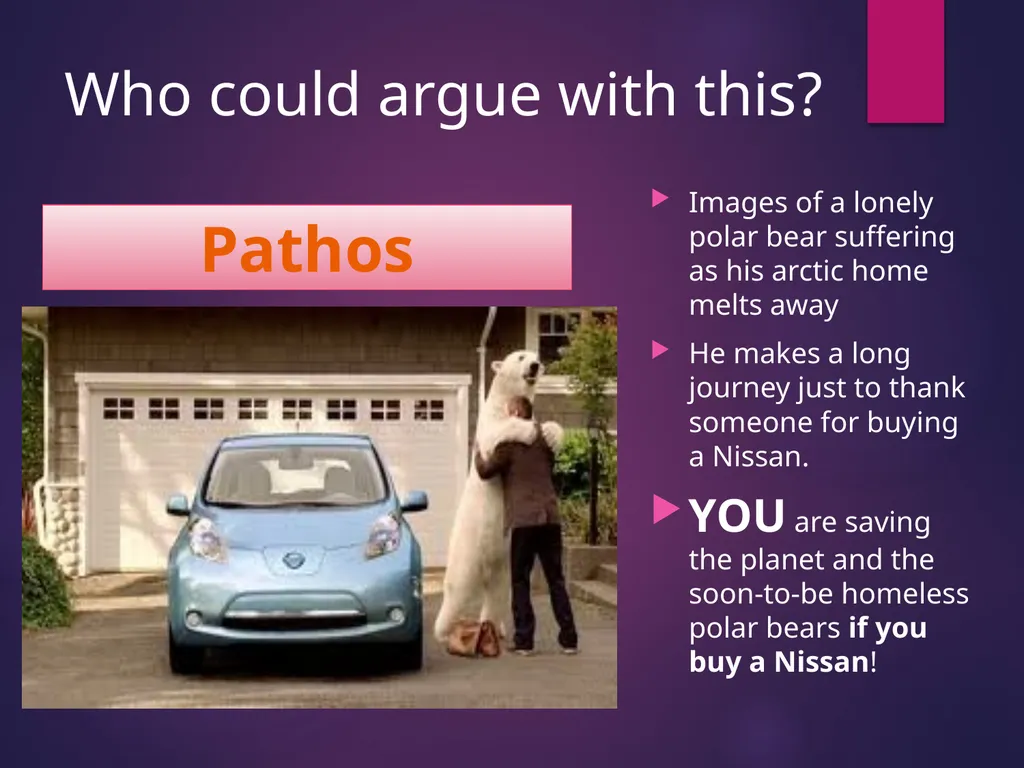
Who could argue with this? Images of a lonely polar bear suffering as his arctic home melts away
He makes a long journey just to thank someone for buying a Nissan.
YOU are saving the planet and the soon-to-be homeless polar bears if you buy a Nissan! Pathos<br>
10
Ethos? Logos? Pathos?<br>
11
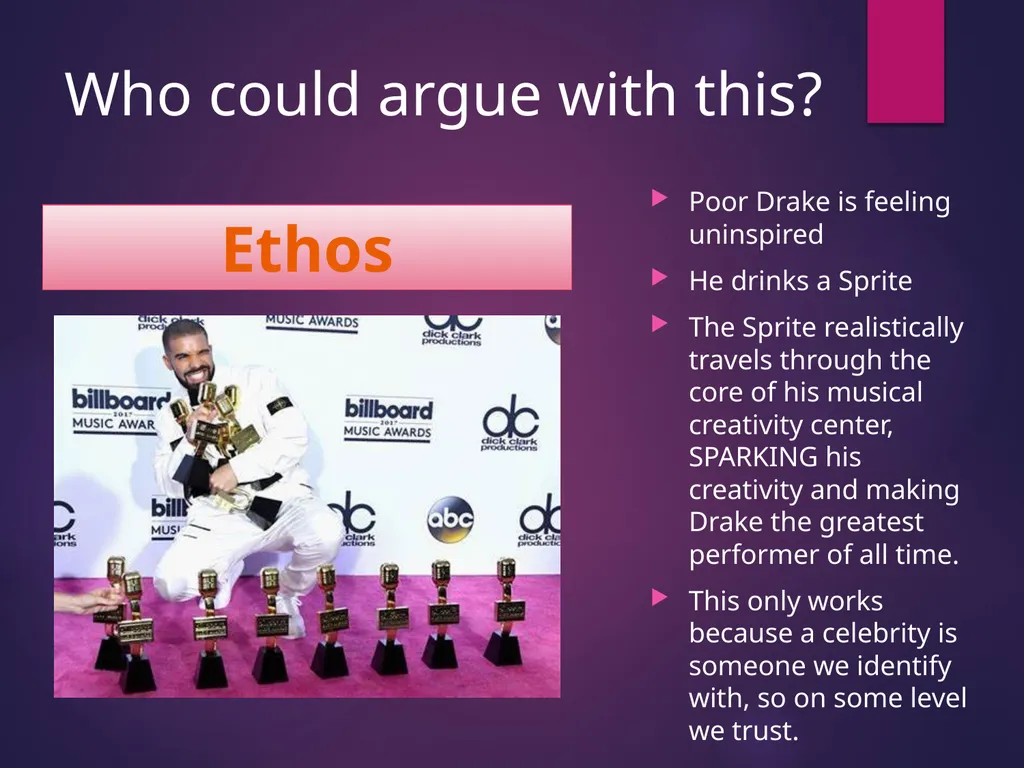
Who could argue with this? Poor Drake is feeling uninspired
He drinks a Sprite
The Sprite realistically travels through the core of his musical creativity center, SPARKING his creativity and making Drake the greatest performer of all time.
This only works because a celebrity is someone we identify with, so on some level we trust. Ethos<br>
12
Ethos, Logos, or Pathos?<br>
13
Statistics=Logos In the year 2030:
20% of adults will be overweight
We will be more and more sedentary
60% of the world’s population will live in cities
We will spend most of time sitting or lying down
20% of us will have trouble sleeping
60% of children will be unlikely to have seen a cow
Poor dietary habits will continue to increase
THIS is what our world will be like in the year 2030, according to statistics.
BUT, the only real statistic is that 100% of statistics are made by US.
And we are going to change them. Because Coke.<br>
Comparison/Contrast
Juxtaposing two things to highlight their similarities and differences
Narration of an event or Description
telling a story or recounting a series of events; chronological<br>
16
Structore, Organization or Arrangement Cause and Effect
Analyzing the causes that lead to a certain effect, or conversely, the effects that result from a cause
Rachel Carson’s Silent Spring
Process analysis or Definition
Explains how something works; how to; sequential
Exemplification
Providing a series of examples (facts, instances, specific cases, etc.)
Classification/Division
Sorting material or ideas into major categories (answers the questions, “What goes together and why?” to make connections between things that may otherwise seem related)<br>
17
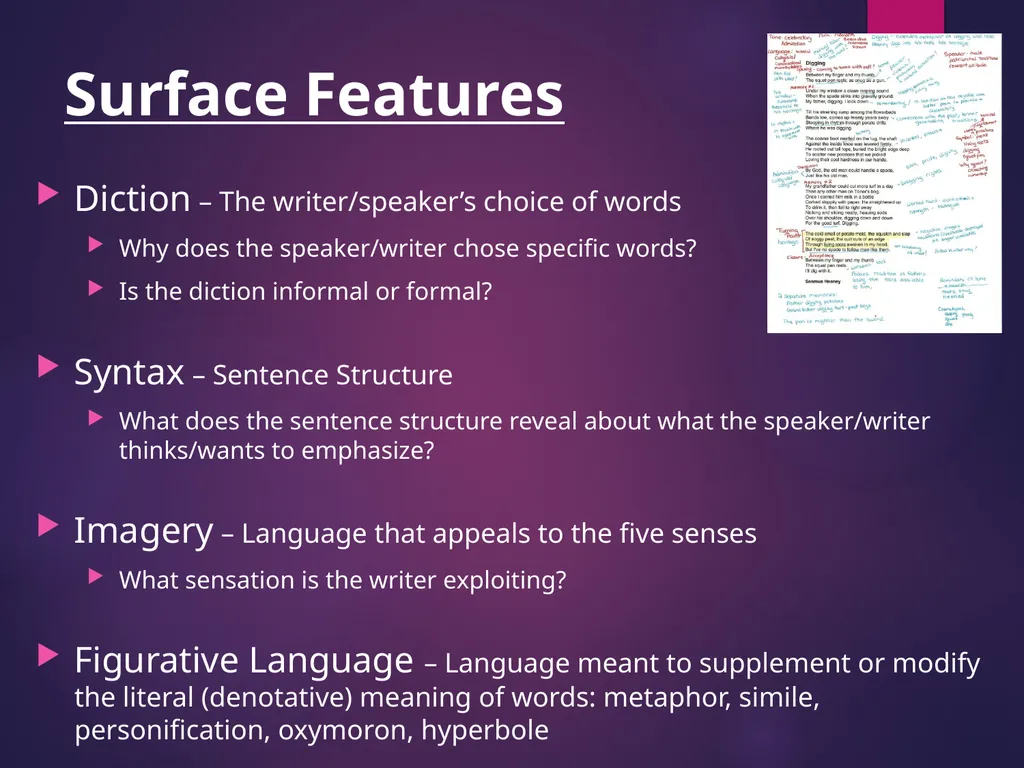
Surface Features Diction – The writer/speaker’s choice of words
Why does the speaker/writer chose specific words?
Is the diction informal or formal?
Syntax – Sentence Structure
What does the sentence structure reveal about what the speaker/writer thinks/wants to emphasize?
Imagery – Language that appeals to the five senses
What sensation is the writer exploiting?
Figurative Language – Language meant to supplement or modify the literal (denotative) meaning of words: metaphor, simile, personification, oxymoron, hyperbole<br>
18
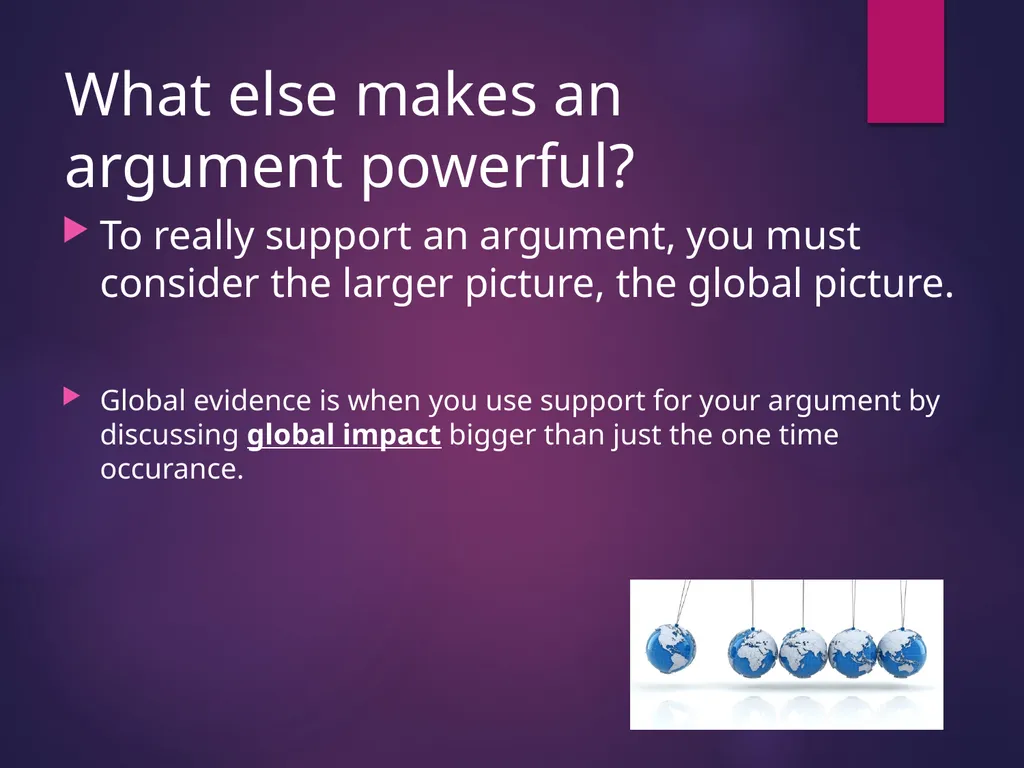
What else makes an argument powerful? To really support an argument, you must consider the larger picture, the global picture.
Global evidence is when you use support for your argument by discussing global impact bigger than just the one time occurance.<br>