Introduction Present by : Esraa Taher Literature: Is a body of written or spoken works that express ideas, emotions, and stories through creative or artistic language. It reflects human experiences, cultures, and thoughts across different
"Introduction Present by : Esraa Taher Literature:" is the property of its rightful owner. Permission is granted to
download and print the materials on this website for personal, non-commercial use only, and to display it
on your personal computer provided you do not modify the materials and that you retain all copyright
notices contained in the materials. By downloading content from our website, you accept the terms of this
agreement.
Presentation Transcript
01
Introduction Present by : Esraa Taher<br>
02
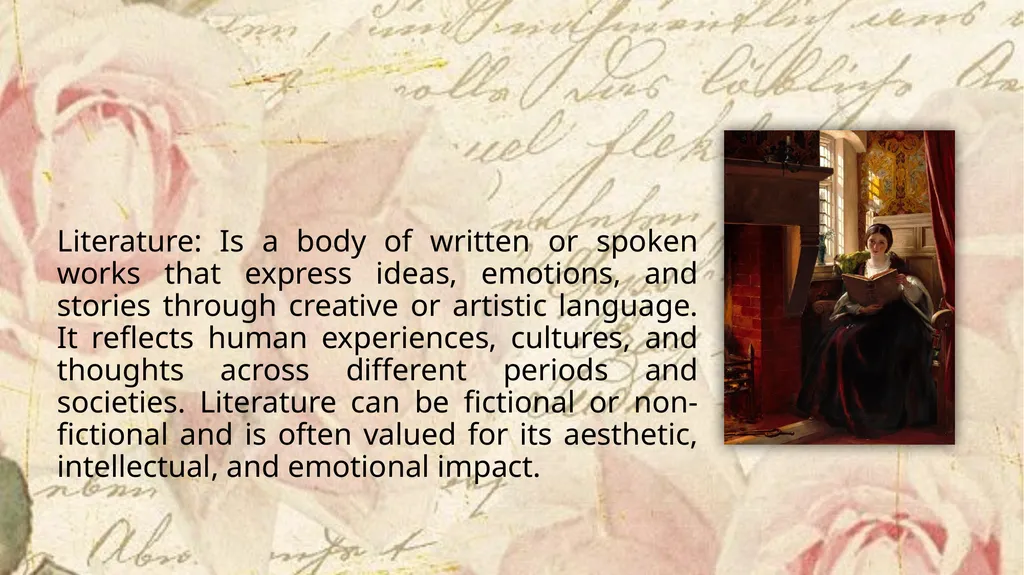
Literature: Is a body of written or spoken works that express ideas, emotions, and stories through creative or artistic language. It reflects human experiences, cultures, and thoughts across different periods and societies. Literature can be fictional or non-fictional and is often valued for its aesthetic, intellectual, and emotional impact.<br>
03
TYPES OF LITERTURE Literature is generally classified into two major categories:
Fiction (Imaginative/Creative Writing):Made-up stories, characters, and events. Examples: Novels, short stories, plays, poetry.
Non-Fiction (Factual Writing):
Based on real events, people, and facts. Examples: Biographies, essays, reports, histories. Genres within Fiction and Non-Fiction:
Prose: Novels, short stories, essays.
Poetry: Sonnets, epics, haikus.
Drama: Tragedy, comedy, melodrama.
Folk Literature: Myths, legends, folktales.<br>
04
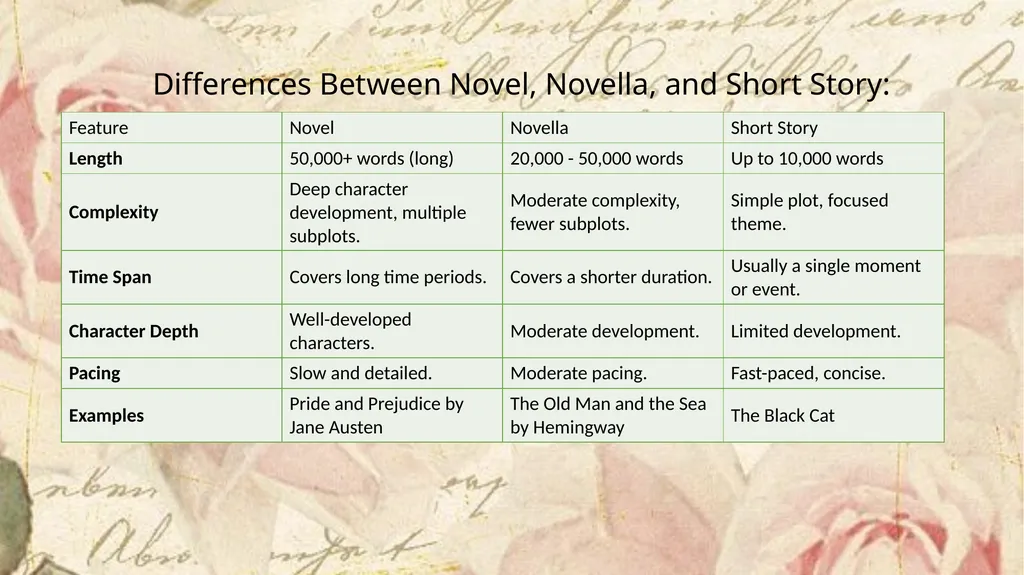
Novel , Novella & short story A novel is a long, fictional narrative that explores complex characters, multiple themes, and detailed settings. It typically consists of various subplots and provides in-depth character development over an extended period of time.
Example: Pride and Prejudice by Jane Austen<br>
05
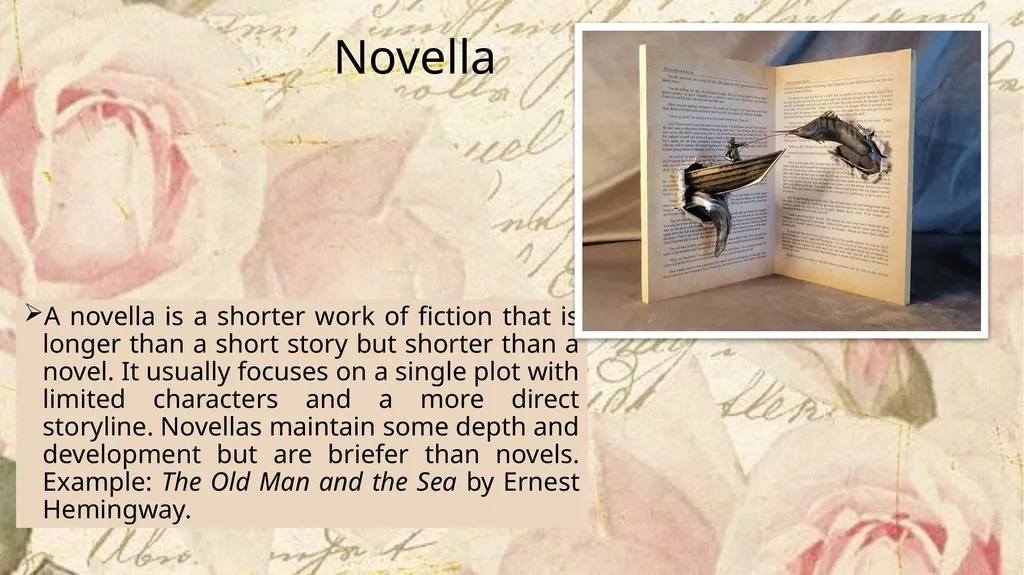
Novella A novella is a shorter work of fiction that is longer than a short story but shorter than a novel. It usually focuses on a single plot with limited characters and a more direct storyline. Novellas maintain some depth and development but are briefer than novels. Example: The Old Man and the Sea by Ernest Hemingway.<br>
06
A short story is a brief work of fiction that focuses on a single event, character, or theme. It is designed to be read in one sitting and often delivers a strong impact with minimal details and quick pacing.
Example: The Black Cat by Edgar Allan Poe. Short Story<br>
07
Differences Between Novel, Novella, and Short Story:<br>
08
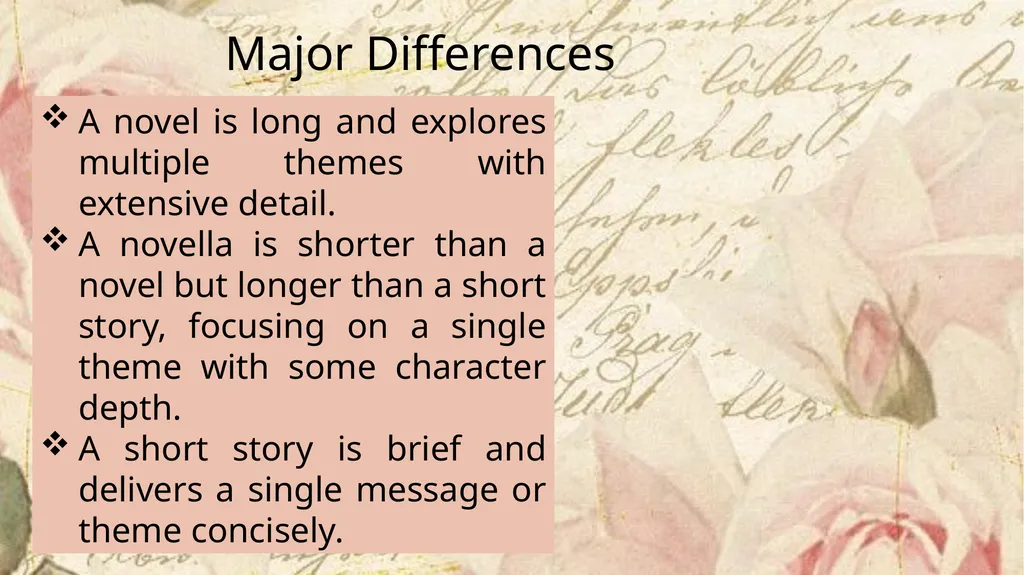
Major Differences A novel is long and explores multiple themes with extensive detail.
A novella is shorter than a novel but longer than a short story, focusing on a single theme with some character depth.
A short story is brief and delivers a single message or theme concisely.<br>
09
How we analysis Novels or short stories?<br>
10
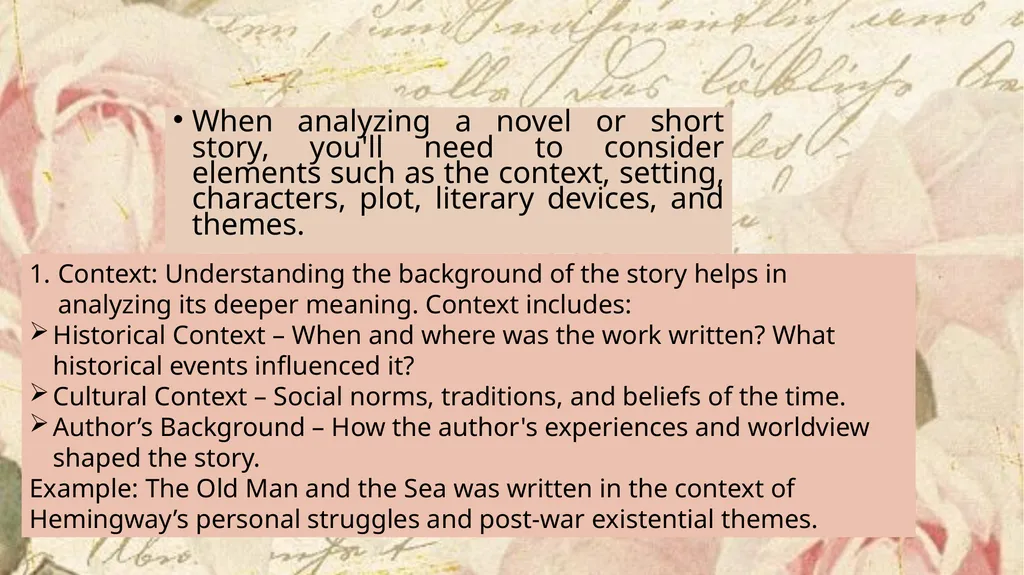
When analyzing a novel or short story, you'll need to consider elements such as the context, setting, characters, plot, literary devices, and themes. Context: Understanding the background of the story helps in analyzing its deeper meaning. Context includes:
Historical Context – When and where was the work written? What historical events influenced it?
Cultural Context – Social norms, traditions, and beliefs of the time.
Author’s Background – How the author's experiences and worldview shaped the story.
Example: The Old Man and the Sea was written in the context of Hemingway’s personal struggles and post-war existential themes.<br>
11
The setting The setting refers to where and when the story takes place, which can influence the mood and characters' actions. Consider:Time period – Past, present, future.Geographical location – City, countryside, desert, etc.Social environment – Class, politics, traditions, and societal expectations.Mood/Atmosphere – How the setting contributes to the emotional tone of the story.
Example: In The Old Man and the Sea, the sea is a physical setting<br>
12
Characters Characters drive the story and help convey its message. When analyzing characters, consider
Protagonist – The main character (e.g., Santiago in The Old Man and the Sea).
Antagonist – The opposing force (e.g., the sharks or even nature itself).
Static vs. Dynamic Characters – Do they change or remain the same?
Example: Santiago is the protagonist , he is also a dynamic character<br>
13
Plot The plot is the sequence of events in the story, usually structured as:
Exposition – Introduction of characters and setting.
Rising Action – The main conflict begins to build.
Climax – The turning point or most intense moment.
Falling Action – Consequences of the climax unfold.
Resolution – The story’s conclusion or message.
Example: The climax in The Old Man and the Sea occurs when Santiago finally catches the marlin after a long struggle.<br>
14
Literary Devices Literary Devices: Writers use literary devices to enhance the story’s meaning and engage the reader. Common devices include:
Symbolism – Objects or actions that represent deeper meanings (e.g., the marlin symbolizes Santiago’s dreams and challenges).
Imagery – Descriptive language that appeals to the senses. Metaphor/Simile – Comparisons to convey deeper meaning.
Foreshadowing – Hints about future events. Irony – When reality is different from expectations.
Example: Hemingway’s use of simple language hides deeper symbolic meanings beneath the surface.<br>
15
Themes Themes are the central ideas or messages of the story. Some themes in The Old Man and the Sea include:
Perseverance and Endurance – Santiago’s determination to keep fighting.
Isolation and Loneliness – Santiago’s solitary struggle against nature.
Man vs. Nature – The relationship between humans and the natural world.
Pride and Defeat – The balance between dignity and loss.<br>