
INTRODUCTION TO ALGAE Sukanya Sarma Assistant

INTRODUCTION TO ALGAE Sukanya Sarma Assistant
1 / 1
INTRODUCTION TO ALGAE Sukanya Sarma Assistant - slide 1 of 8 INTRODUCTION TO ALGAE Sukanya Sarma Assistant - slide 2 of 8 INTRODUCTION TO ALGAE Sukanya Sarma Assistant - slide 3 of 8 INTRODUCTION TO ALGAE Sukanya Sarma Assistant - slide 4 of 8 INTRODUCTION TO ALGAE Sukanya Sarma Assistant - slide 5 of 8 INTRODUCTION TO ALGAE Sukanya Sarma Assistant - slide 6 of 8 INTRODUCTION TO ALGAE Sukanya Sarma Assistant - slide 7 of 8 INTRODUCTION TO ALGAE Sukanya Sarma Assistant - slide 8 of 8

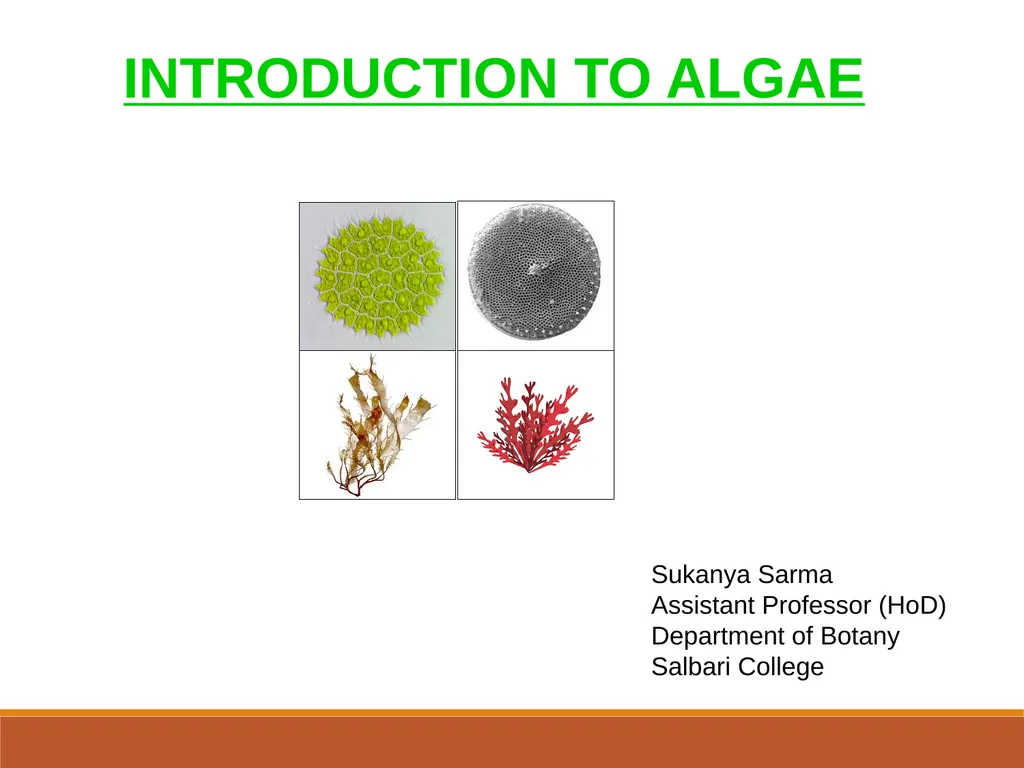
INTRODUCTION TO ALGAE Sukanya Sarma Assistant Professor (HoD) Department of Botany Salbari College ALGAE Alga is a name that characterizes a huge and varied group of eukaryotic photosynthetic organisms. They do not have the same ancestor,

Related Topics

Download this presentation From Below

"INTRODUCTION TO ALGAE Sukanya Sarma Assistant" is the property of its rightful owner. Permission is granted to download and print the materials on this website for personal, non-commercial use only, and to display it on your personal computer provided you do not modify the materials and that you retain all copyright notices contained in the materials. By downloading content from our website, you accept the terms of this agreement.

Presentation Transcript

01
INTRODUCTION TO ALGAE Sukanya Sarma
Assistant Professor (HoD)
Department of Botany
Salbari College<br>
02
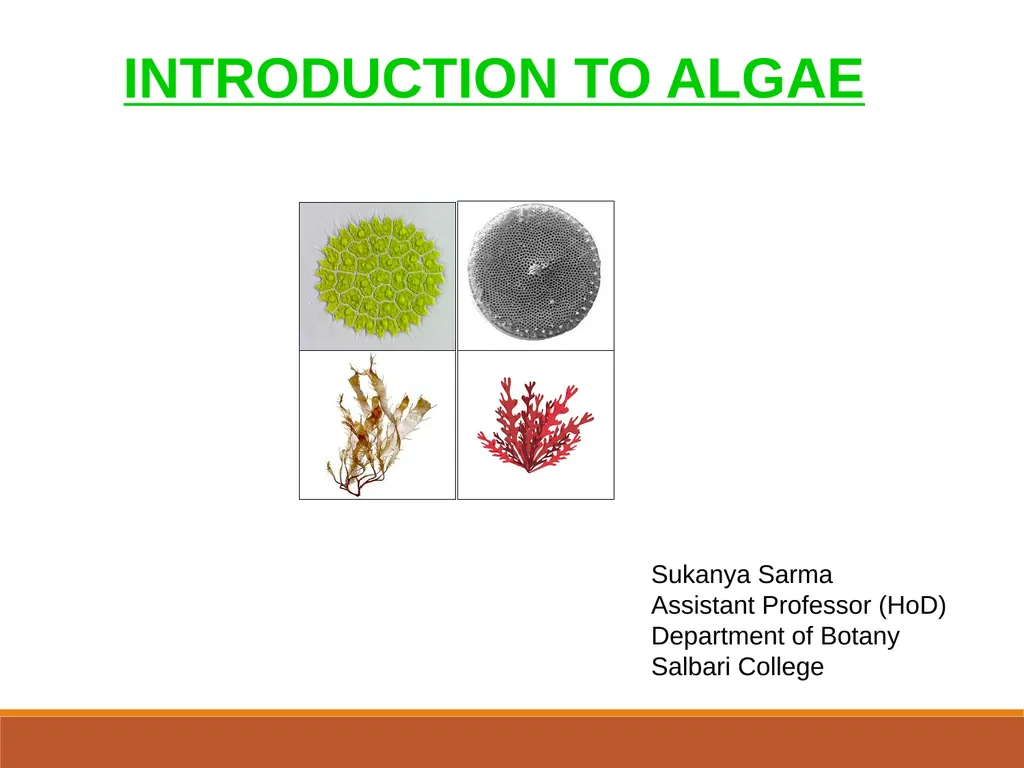
ALGAE Alga is a name that characterizes a huge and varied group of eukaryotic photosynthetic organisms. They do not have the same ancestor, and might not be related to one another. Good examples of multicellular algae are the massive kelp and brown algae. Euglenophyta, dinoflagellates and diatoms are good examples of unicellular algae.<br>
03
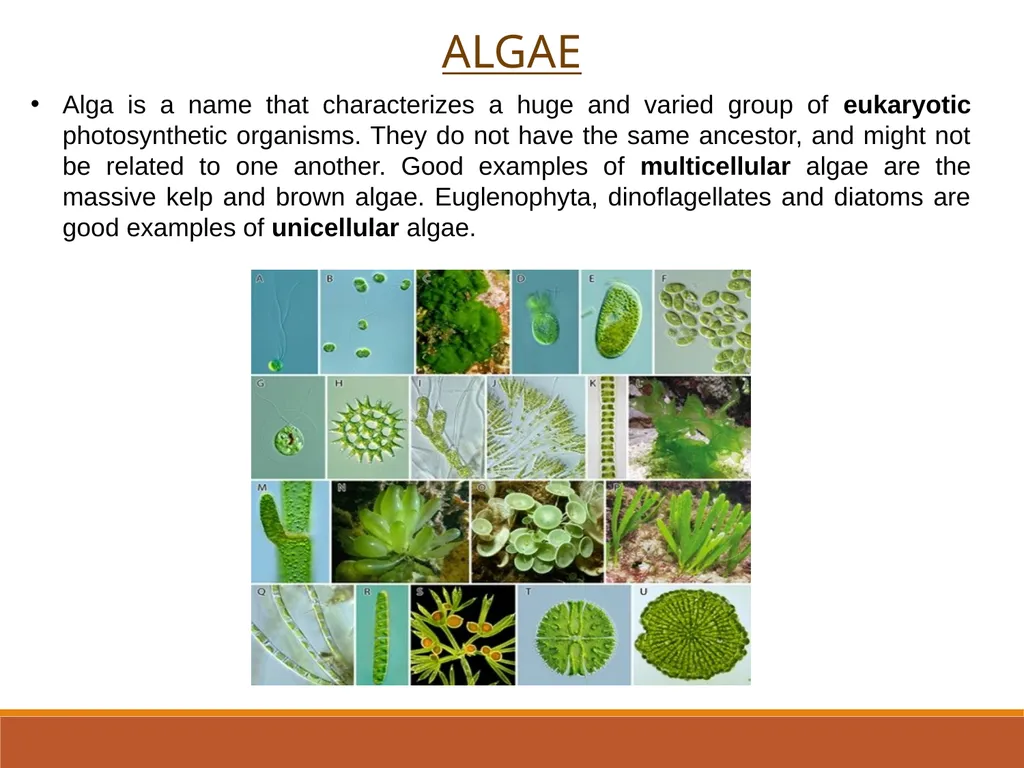
The majority of algae requires a humid or watery environment. Hence, they are prevalent in water bodies or near them. They are like another category of photosynthetic creatures anatomically similar to those that grow on land. Nevertheless, this is where the differences end, as algae do not have the structural components typical of plants, like the true stem, stems, and leaves.<br>