
Introduction to E-Learning Unit 1, Module 1, April

Description: Introduction to E-Learning Unit 1, Module 1, April 30 2020 Welcome and Introduction Welcome video - Session Objectives By the end of this session, you will be able to: Demonstrate need for e-learning across higher education institutions
Related Topics
Download Presentation
"Introduction to E-Learning Unit 1, Module 1, April" is the property of its rightful owner. Permission is granted to download and print the materials on this website for personal, non-commercial use only, and to display it on your personal computer provided you do not modify the materials and that you retain all copyright notices contained in the materials. By downloading content from our website, you accept the terms of this agreement.
Presentation Transcript
slide1. Introduction to E-Learning Unit 1, Module 1, April 30 2020<br>
slide2. Welcome and Introduction Welcome video -<br>
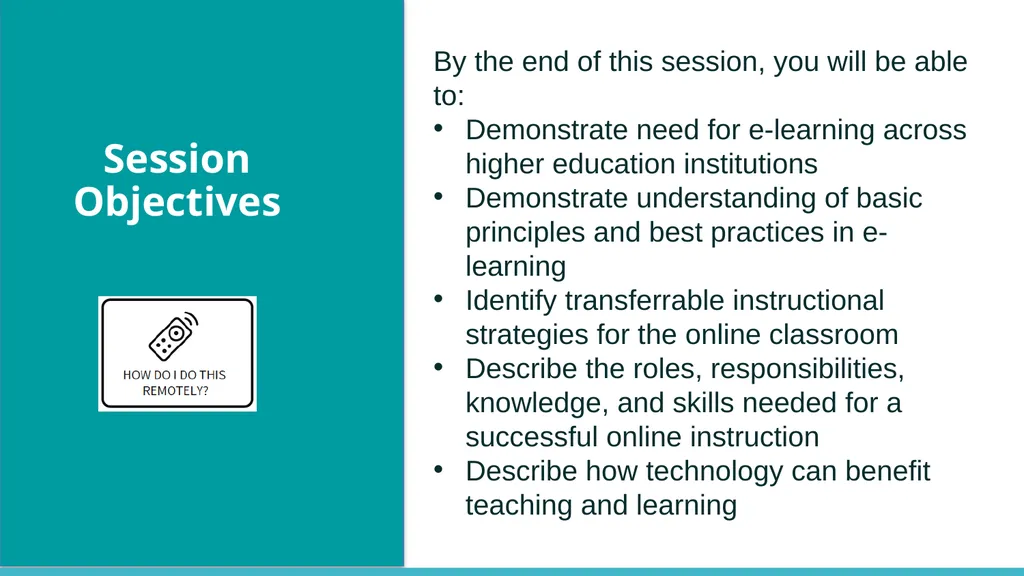
slide3. Session Objectives By the end of this session, you will be able to:
Demonstrate need for e-learning across higher education institutions
Demonstrate understanding of basic principles and best practices in e-learning
Identify transferrable instructional strategies for the online classroom
Describe the roles, responsibilities, knowledge, and skills needed for a successful online instruction
Describe how technology can benefit teaching and learning<br>
slide4. Poll Use ‘Thumbs Up or Thumbs Down’ to respond:
How many have participated as a student in an online class?
How many have led an online class or training as an instructor?<br>
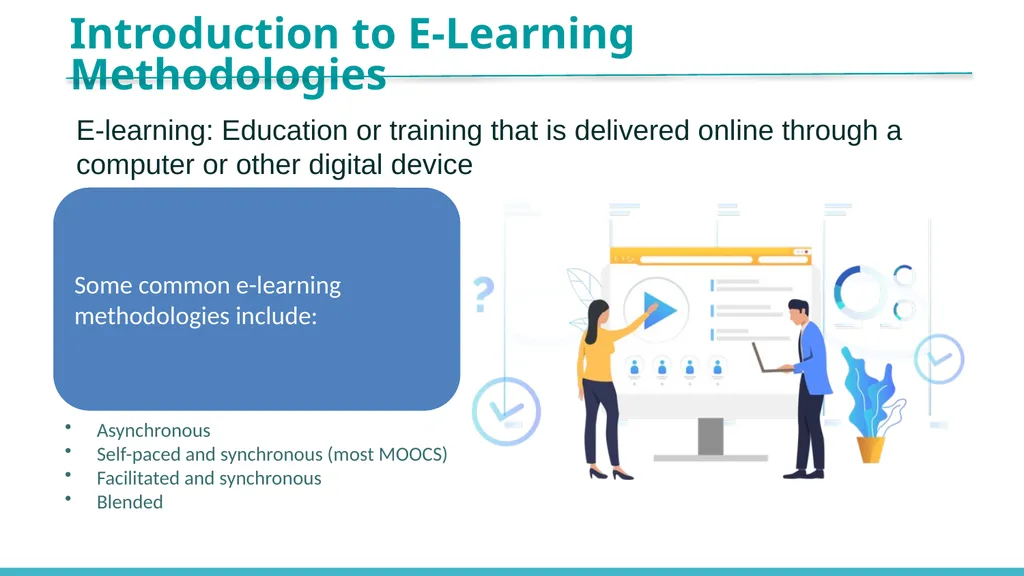
slide5. Introduction to E-Learning Methodologies E-learning: Education or training that is delivered online through a computer or other digital device<br>
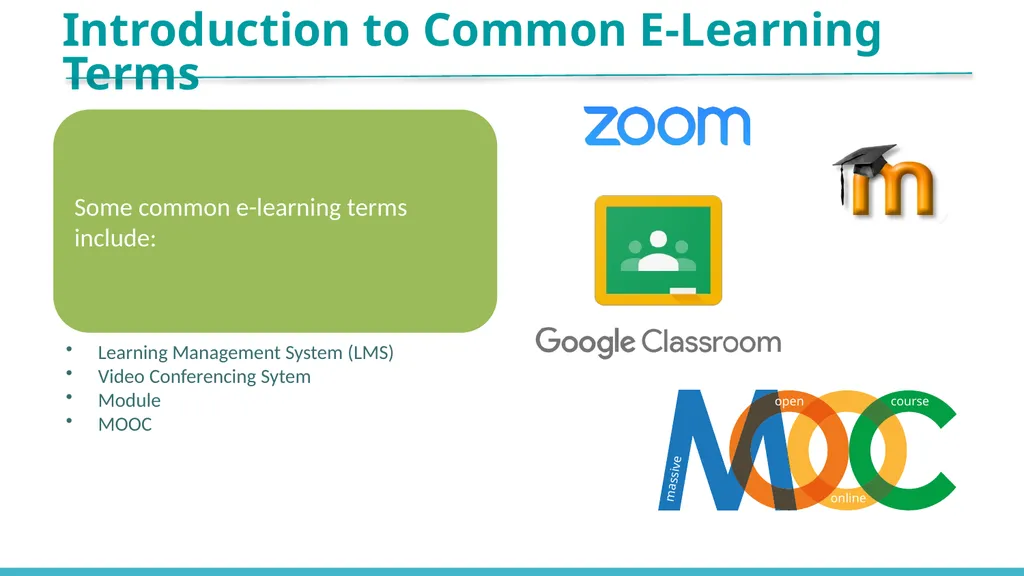
slide6. Introduction to Common E-Learning Terms<br>
slide7. Discuss Why is e-learning needed for higher education institutes in Iraq today?
Reflect for one minute, then write your answer in the chat box in Arabic or English!<br>
slide8. Current Need: E-learning in Iraq Essential for student progress-
New world of learning and teaching
Most efficient way to complete the academic year
Reach and Scale
A coordinated e-learning approach allows for reaching most students possible
Skills-building- 21st Century Skills
Opportunities for faculty and students to learn both content and digital skills more and more necessary in both educational and workplace settings
Constructive Engagement
While students are home, allows them the opportunity to continue to learn and interact with one another and faculty<br>
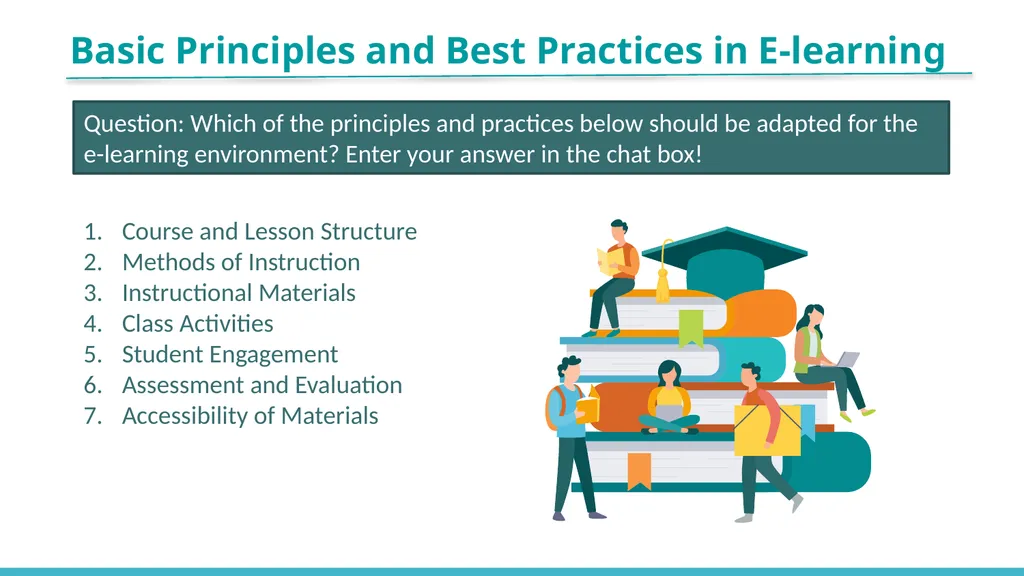
slide9. Basic Principles and Best Practices in E-learning Question: Which of the principles and practices below should be adapted for the e-learning environment? Enter your answer in the chat box! Course and Lesson Structure
Methods of Instruction
Instructional Materials
Class Activities
Student Engagement
Assessment and Evaluation
Accessibility of Materials<br>
slide10. Adapting to E-Learning:
Pause and Reflect Many of you are already trying e-learning. What have you already started adapting for e-learning and what are you currently doing?
What are the areas could you start to adapt now to prepare for teaching courses online? We will come back to this again later in the module!<br>
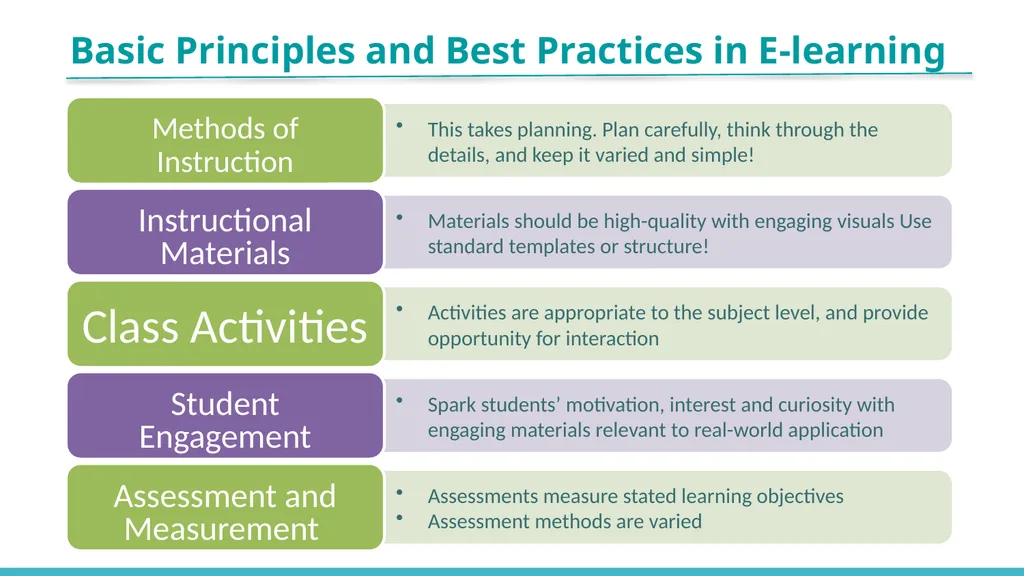
slide11. Basic Principles and Best Practices in E-learning<br>
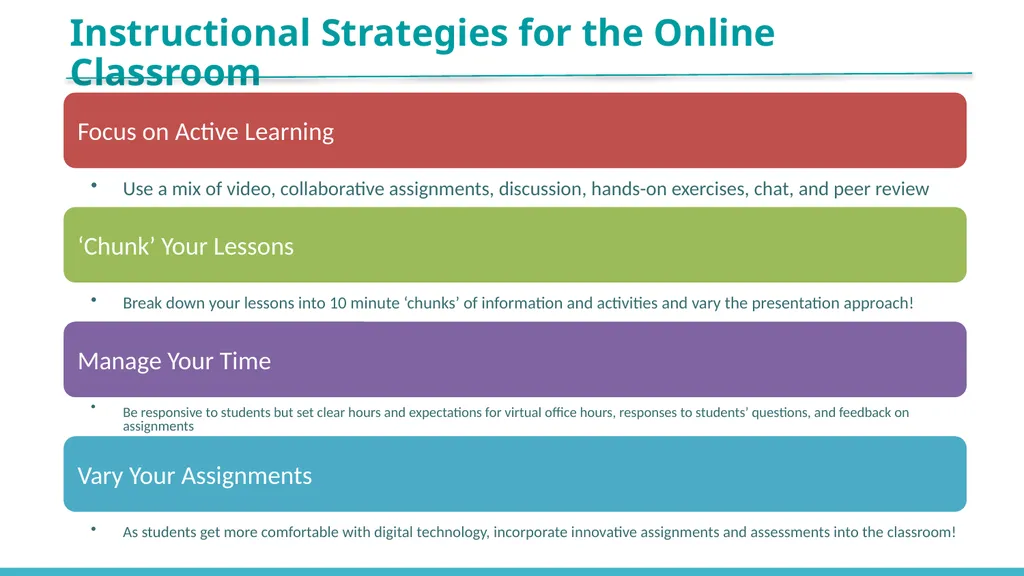
slide12. Instructional Strategies for the Online Classroom<br>
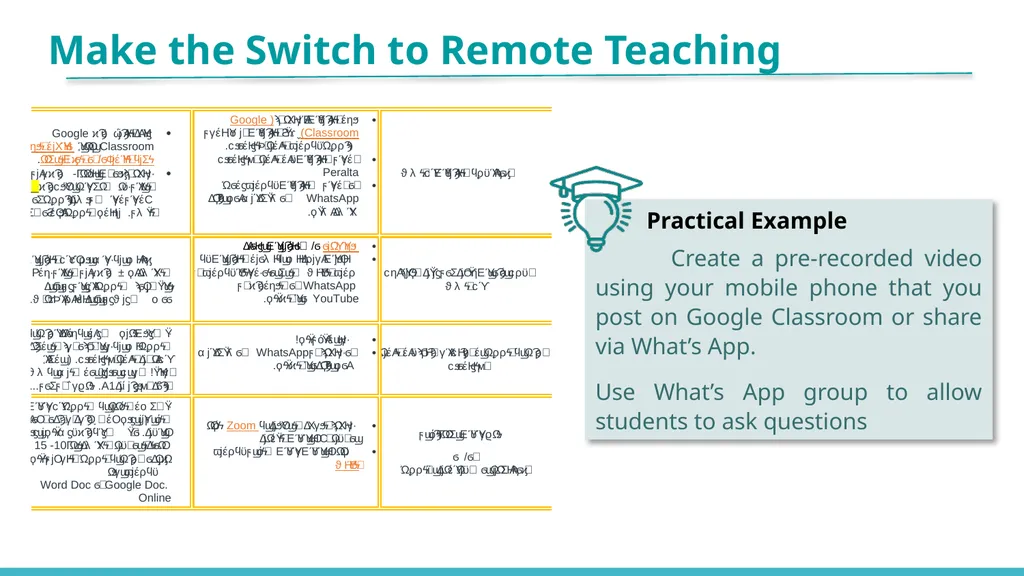
slide13. Make the Switch to Remote Teaching<br>
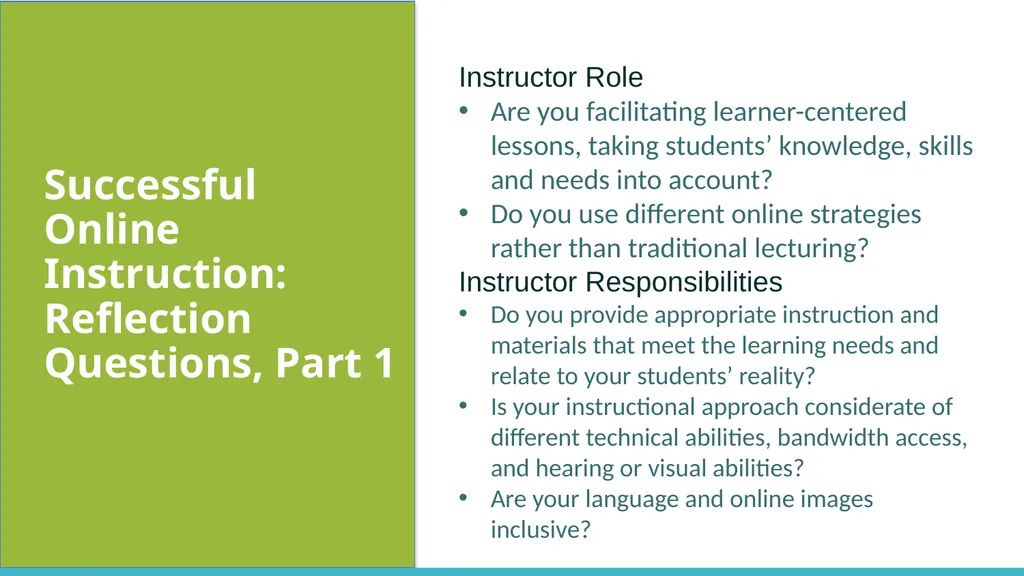
slide14. Successful Online Instruction:
Reflection Questions, Part 1 Instructor Role
Are you facilitating learner-centered lessons, taking students’ knowledge, skills and needs into account?
Do you use different online strategies rather than traditional lecturing?
Instructor Responsibilities
Do you provide appropriate instruction and materials that meet the learning needs and relate to your students’ reality?
Is your instructional approach considerate of different technical abilities, bandwidth access, and hearing or visual abilities?
Are your language and online images inclusive?<br>
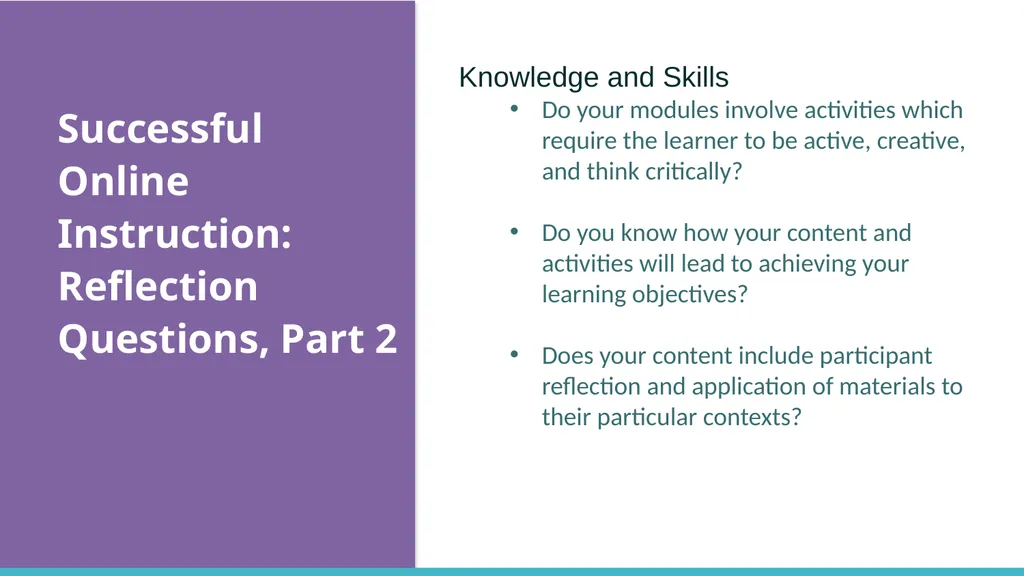
slide15. Successful Online Instruction: Reflection Questions, Part 2 Knowledge and Skills
Do your modules involve activities which require the learner to be active, creative, and think critically?
Do you know how your content and activities will lead to achieving your learning objectives?
Does your content include participant reflection and application of materials to their particular contexts?<br>
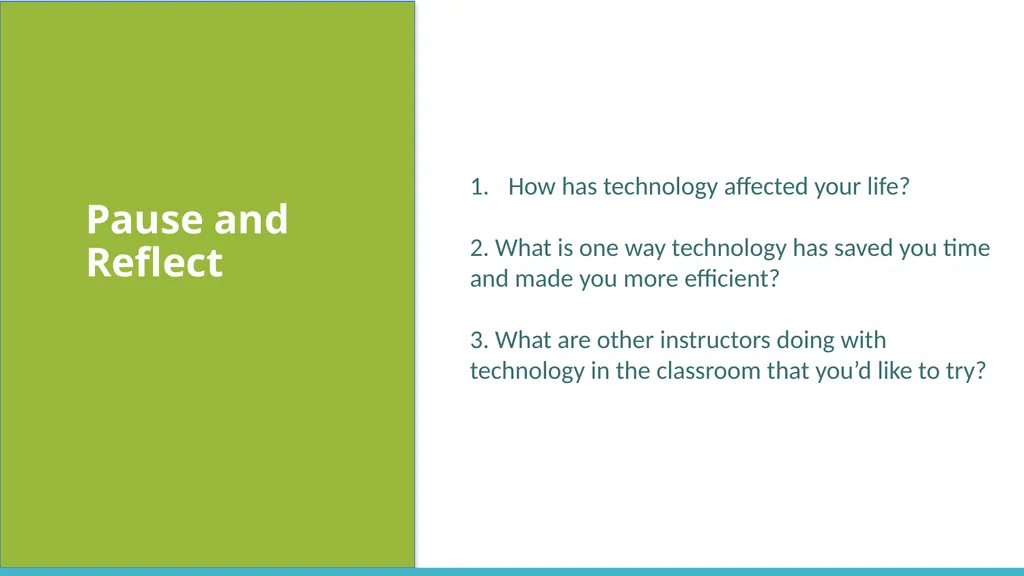
slide16. Pause and Reflect How has technology affected your life?
2. What is one way technology has saved you time and made you more efficient?
3. What are other instructors doing with technology in the classroom that you’d like to try?<br>
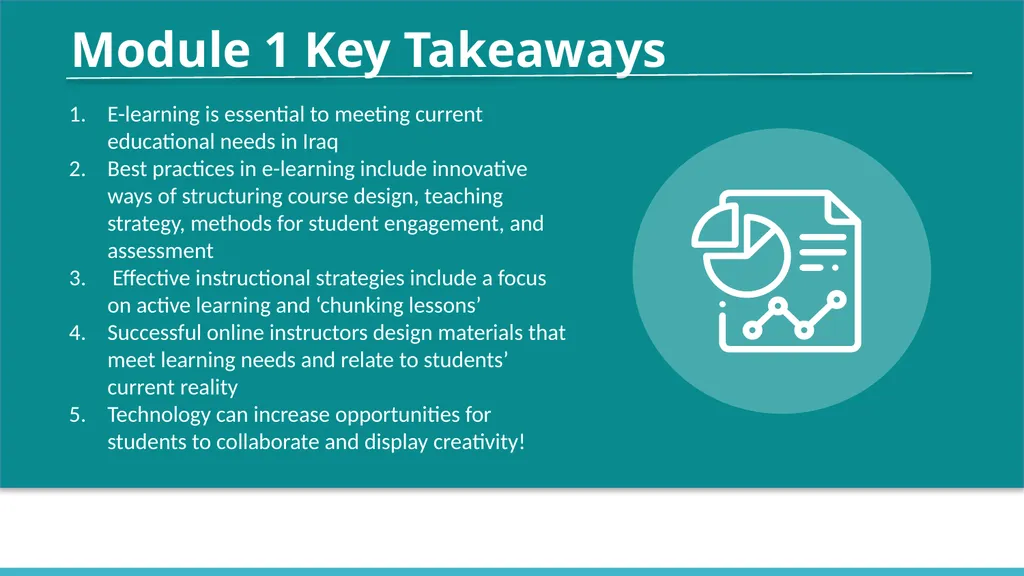
slide17. Module 1 Key Takeaways E-learning is essential to meeting current educational needs in Iraq
Best practices in e-learning include innovative ways of structuring course design, teaching strategy, methods for student engagement, and assessment
Effective instructional strategies include a focus on active learning and ‘chunking lessons’
Successful online instructors design materials that meet learning needs and relate to students’ current reality
Technology can increase opportunities for students to collaborate and display creativity!<br>
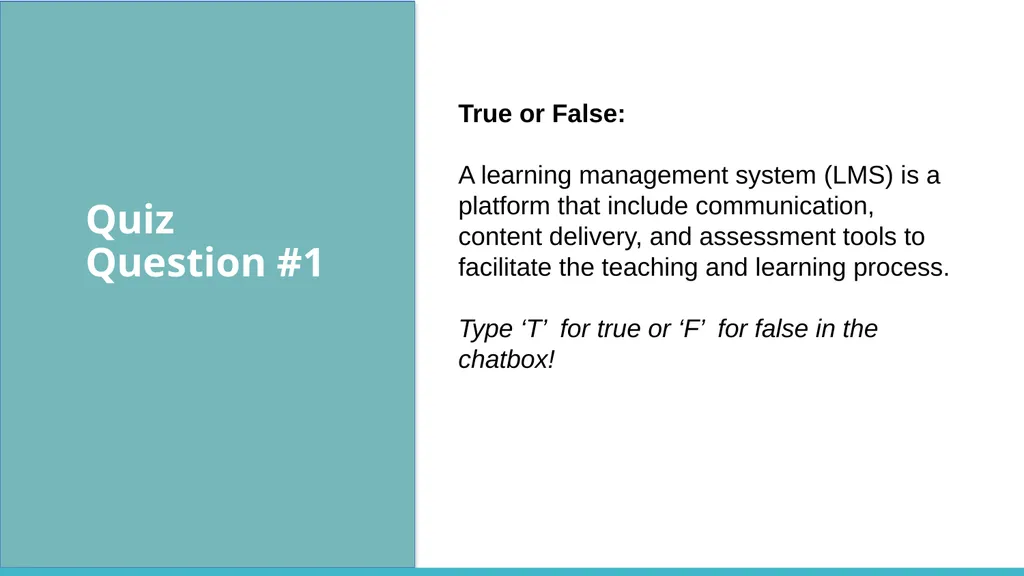
slide18. Quiz Question #1 True or False:
A learning management system (LMS) is a platform that include communication, content delivery, and assessment tools to facilitate the teaching and learning process.
Type ‘T’ for true or ‘F’ for false in the chatbox!<br>
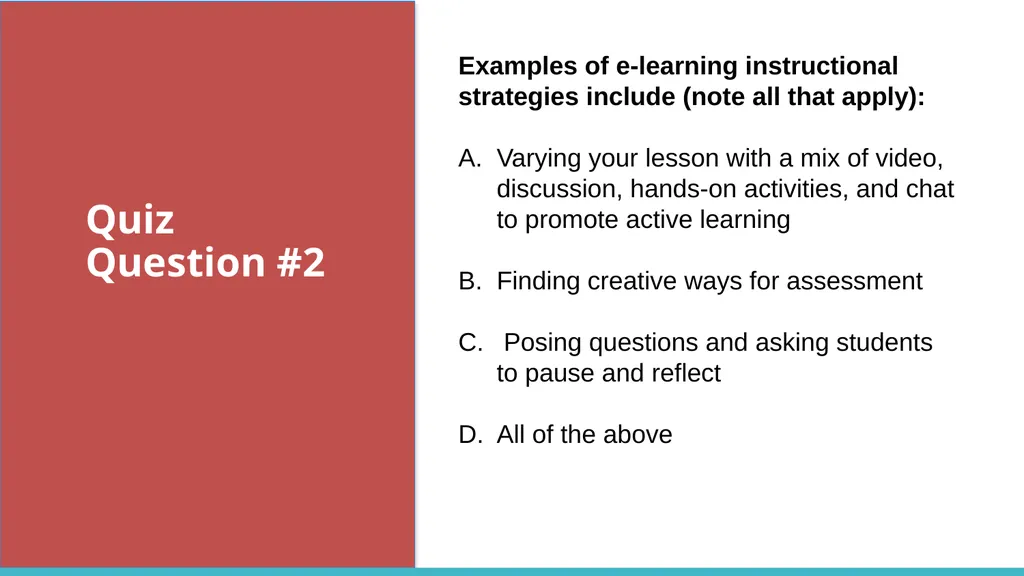
slide19. Quiz Question #2 Examples of e-learning instructional strategies include (note all that apply):
Varying your lesson with a mix of video, discussion, hands-on activities, and chat to promote active learning
Finding creative ways for assessment
Posing questions and asking students to pause and reflect
All of the above<br>
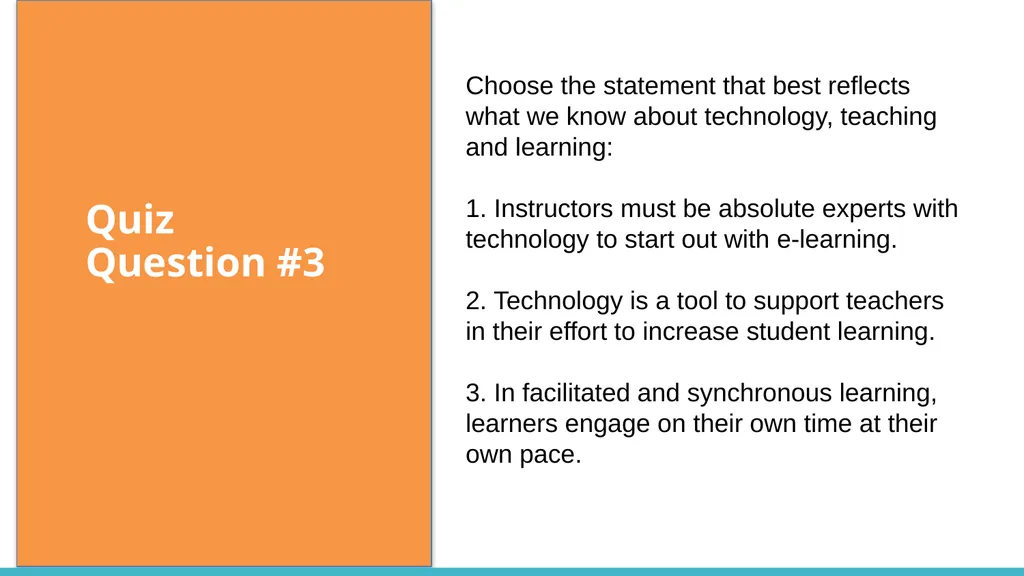
slide20. Quiz Question #3 Choose the statement that best reflects what we know about technology, teaching and learning:
1. Instructors must be absolute experts with technology to start out with e-learning.
2. Technology is a tool to support teachers in their effort to increase student learning.
3. In facilitated and synchronous learning, learners engage on their own time at their own pace.<br>
slide21. Please complete assignment by Sunday, May 3rd
Next module topic: Conceptual Framework for E-Learning Design
Questions and Answers What’s Next?<br>
slide22. Homework: E-Learning Best Practices Review the ‘Best Practices in E-Learning Checklist’ and the ‘Making the Switch to Remote Learning’ guide. Share your response in your Google Classroom (see Unit 1, Homework 1)
What areas have you have already adapted well to e-learning? How?
What 3 new areas will you use in teaching your online class? How will you incorporate this into your class?
What two areas are you excited to improve on through this training course? Why?<br>
slide2. Welcome and Introduction Welcome video -<br>
slide3. Session Objectives By the end of this session, you will be able to:
Demonstrate need for e-learning across higher education institutions
Demonstrate understanding of basic principles and best practices in e-learning
Identify transferrable instructional strategies for the online classroom
Describe the roles, responsibilities, knowledge, and skills needed for a successful online instruction
Describe how technology can benefit teaching and learning<br>
slide4. Poll Use ‘Thumbs Up or Thumbs Down’ to respond:
How many have participated as a student in an online class?
How many have led an online class or training as an instructor?<br>
slide5. Introduction to E-Learning Methodologies E-learning: Education or training that is delivered online through a computer or other digital device<br>
slide6. Introduction to Common E-Learning Terms<br>
slide7. Discuss Why is e-learning needed for higher education institutes in Iraq today?
Reflect for one minute, then write your answer in the chat box in Arabic or English!<br>
slide8. Current Need: E-learning in Iraq Essential for student progress-
New world of learning and teaching
Most efficient way to complete the academic year
Reach and Scale
A coordinated e-learning approach allows for reaching most students possible
Skills-building- 21st Century Skills
Opportunities for faculty and students to learn both content and digital skills more and more necessary in both educational and workplace settings
Constructive Engagement
While students are home, allows them the opportunity to continue to learn and interact with one another and faculty<br>
slide9. Basic Principles and Best Practices in E-learning Question: Which of the principles and practices below should be adapted for the e-learning environment? Enter your answer in the chat box! Course and Lesson Structure
Methods of Instruction
Instructional Materials
Class Activities
Student Engagement
Assessment and Evaluation
Accessibility of Materials<br>
slide10. Adapting to E-Learning:
Pause and Reflect Many of you are already trying e-learning. What have you already started adapting for e-learning and what are you currently doing?
What are the areas could you start to adapt now to prepare for teaching courses online? We will come back to this again later in the module!<br>
slide11. Basic Principles and Best Practices in E-learning<br>
slide12. Instructional Strategies for the Online Classroom<br>
slide13. Make the Switch to Remote Teaching<br>
slide14. Successful Online Instruction:
Reflection Questions, Part 1 Instructor Role
Are you facilitating learner-centered lessons, taking students’ knowledge, skills and needs into account?
Do you use different online strategies rather than traditional lecturing?
Instructor Responsibilities
Do you provide appropriate instruction and materials that meet the learning needs and relate to your students’ reality?
Is your instructional approach considerate of different technical abilities, bandwidth access, and hearing or visual abilities?
Are your language and online images inclusive?<br>
slide15. Successful Online Instruction: Reflection Questions, Part 2 Knowledge and Skills
Do your modules involve activities which require the learner to be active, creative, and think critically?
Do you know how your content and activities will lead to achieving your learning objectives?
Does your content include participant reflection and application of materials to their particular contexts?<br>
slide16. Pause and Reflect How has technology affected your life?
2. What is one way technology has saved you time and made you more efficient?
3. What are other instructors doing with technology in the classroom that you’d like to try?<br>
slide17. Module 1 Key Takeaways E-learning is essential to meeting current educational needs in Iraq
Best practices in e-learning include innovative ways of structuring course design, teaching strategy, methods for student engagement, and assessment
Effective instructional strategies include a focus on active learning and ‘chunking lessons’
Successful online instructors design materials that meet learning needs and relate to students’ current reality
Technology can increase opportunities for students to collaborate and display creativity!<br>
slide18. Quiz Question #1 True or False:
A learning management system (LMS) is a platform that include communication, content delivery, and assessment tools to facilitate the teaching and learning process.
Type ‘T’ for true or ‘F’ for false in the chatbox!<br>
slide19. Quiz Question #2 Examples of e-learning instructional strategies include (note all that apply):
Varying your lesson with a mix of video, discussion, hands-on activities, and chat to promote active learning
Finding creative ways for assessment
Posing questions and asking students to pause and reflect
All of the above<br>
slide20. Quiz Question #3 Choose the statement that best reflects what we know about technology, teaching and learning:
1. Instructors must be absolute experts with technology to start out with e-learning.
2. Technology is a tool to support teachers in their effort to increase student learning.
3. In facilitated and synchronous learning, learners engage on their own time at their own pace.<br>
slide21. Please complete assignment by Sunday, May 3rd
Next module topic: Conceptual Framework for E-Learning Design
Questions and Answers What’s Next?<br>
slide22. Homework: E-Learning Best Practices Review the ‘Best Practices in E-Learning Checklist’ and the ‘Making the Switch to Remote Learning’ guide. Share your response in your Google Classroom (see Unit 1, Homework 1)
What areas have you have already adapted well to e-learning? How?
What 3 new areas will you use in teaching your online class? How will you incorporate this into your class?
What two areas are you excited to improve on through this training course? Why?<br>