
Introduction to MACHINE GUARDING Introduction to






Description: Introduction to MACHINE GUARDING Introduction to Machinery and Machine Guarding Recognition of Machine Guarding Hazards in Manufacturing Evaluation of Machine Guarding Hazards in Manufacturing Abatement of Machine Guarding Hazards in
Related Topics
Download Presentation
"Introduction to MACHINE GUARDING Introduction to" is the property of its rightful owner. Permission is granted to download and print the materials on this website for personal, non-commercial use only, and to display it on your personal computer provided you do not modify the materials and that you retain all copyright notices contained in the materials. By downloading content from our website, you accept the terms of this agreement.
Presentation Transcript
slide1. Introduction to
MACHINE GUARDING<br>
slide2. Introduction to Machinery and Machine Guarding
Recognition of Machine Guarding Hazards in Manufacturing
Evaluation of Machine Guarding Hazards in Manufacturing
Abatement of Machine Guarding Hazards in Manufacturing
Specific Topics addressed in training:
General Machine Guarding, Lockout/Tagout, Case Study
Two Optional Topics: Chosen From Mechanical Power Presses, Woodworking, Robots, Grinders
Summary, Discussion, Final Comments Class Agenda and Objectives 2<br>
slide3. Machinery and machine guarding hazards can cause severe injuries:
Amputations
Contusions
Lacerations
Fractures/Broken Bones
To prevent these from occurring, hazardous parts of the equipment must be guarded to prevent contact:
In-running nip points
Moving Parts
Point of Operation Why Are We Here Today? 3<br>
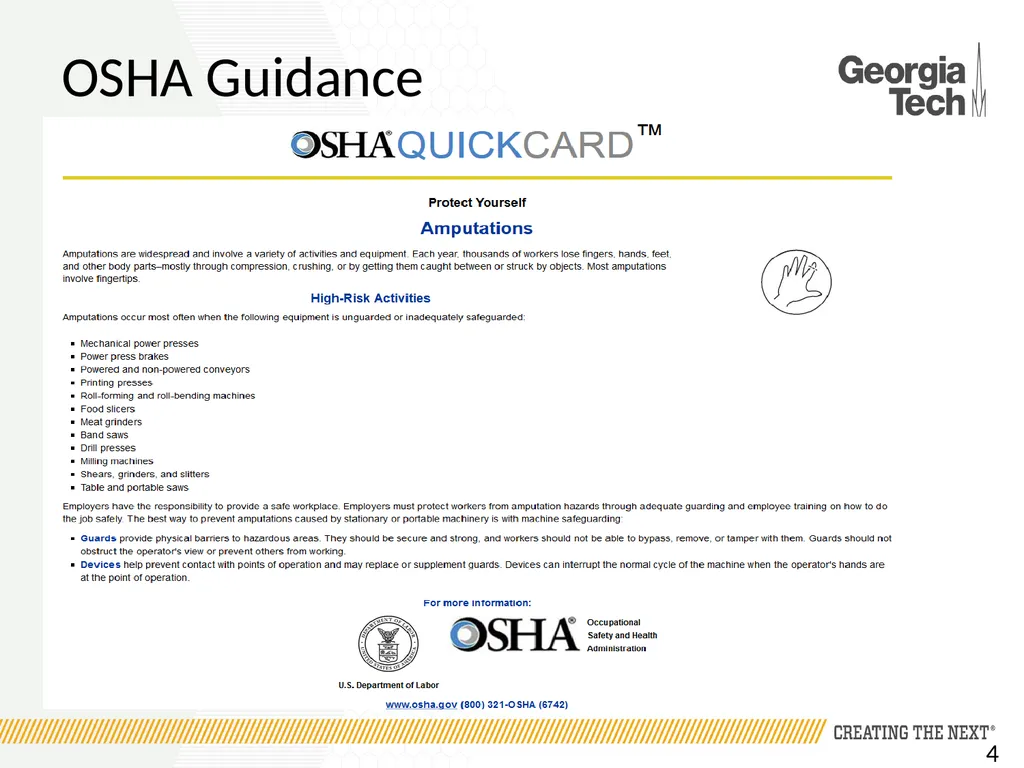
slide4. OSHA Guidance 4<br>
slide5. The purpose of the NEP on Amputations is
“to identify and reduce workplace machine and equipment hazards which are causing or likely to cause amputations.”
National Emphasis Program on Amputations: NEP on Amputations. OSHA’s National Emphasis Program (NEP) on Amputations 5<br>
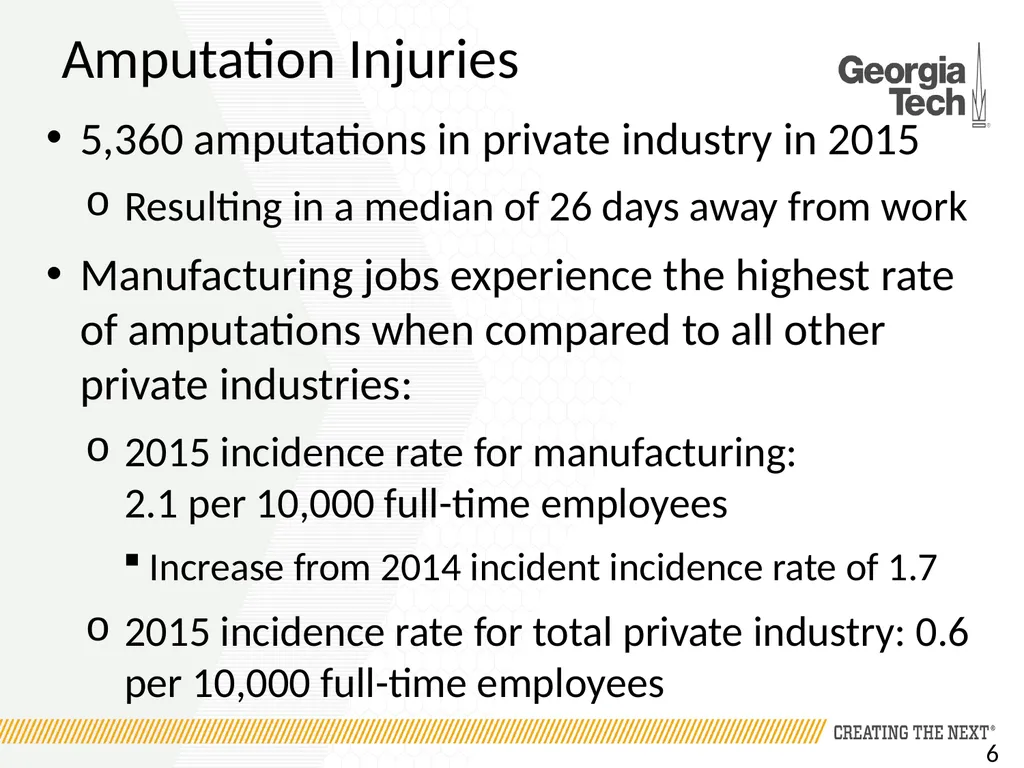
slide6. 5,360 amputations in private industry in 2015
Resulting in a median of 26 days away from work
Manufacturing jobs experience the highest rate of amputations when compared to all other private industries:
2015 incidence rate for manufacturing: 2.1 per 10,000 full-time employees
Increase from 2014 incident incidence rate of 1.7
2015 incidence rate for total private industry: 0.6 per 10,000 full-time employees Amputation Injuries 6<br>
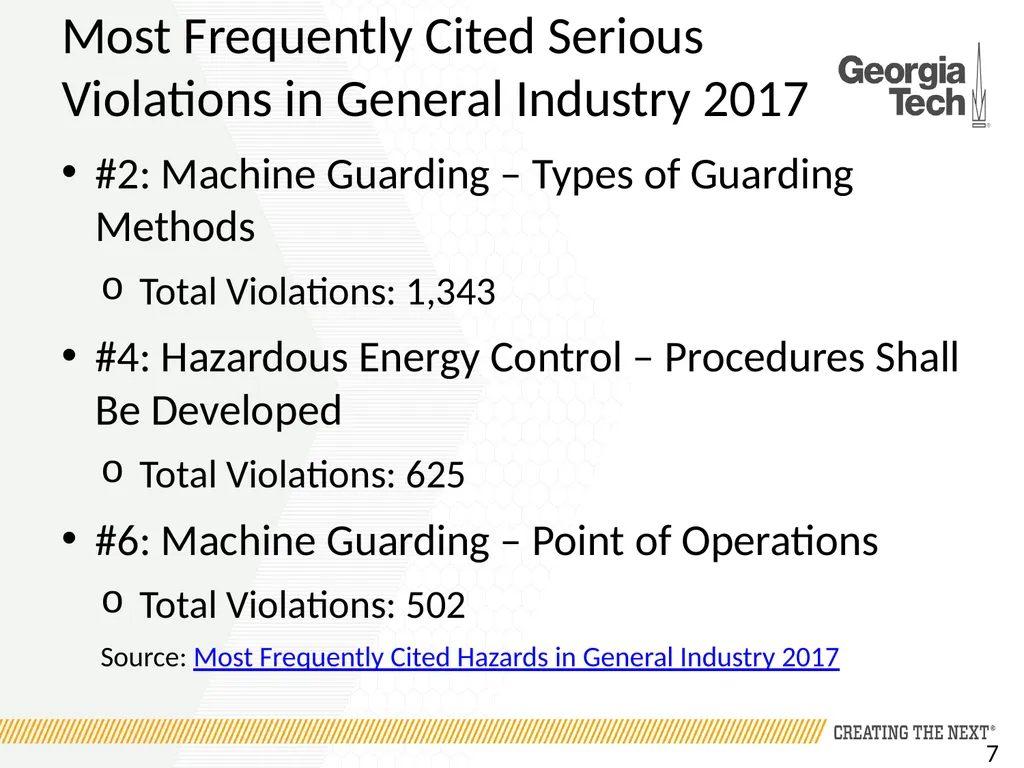
slide7. #2: Machine Guarding – Types of Guarding Methods
Total Violations: 1,343
#4: Hazardous Energy Control – Procedures Shall Be Developed
Total Violations: 625
#6: Machine Guarding – Point of Operations
Total Violations: 502
Source: Most Frequently Cited Hazards in General Industry 2017 Most Frequently Cited Serious Violations in General Industry 2017 7<br>
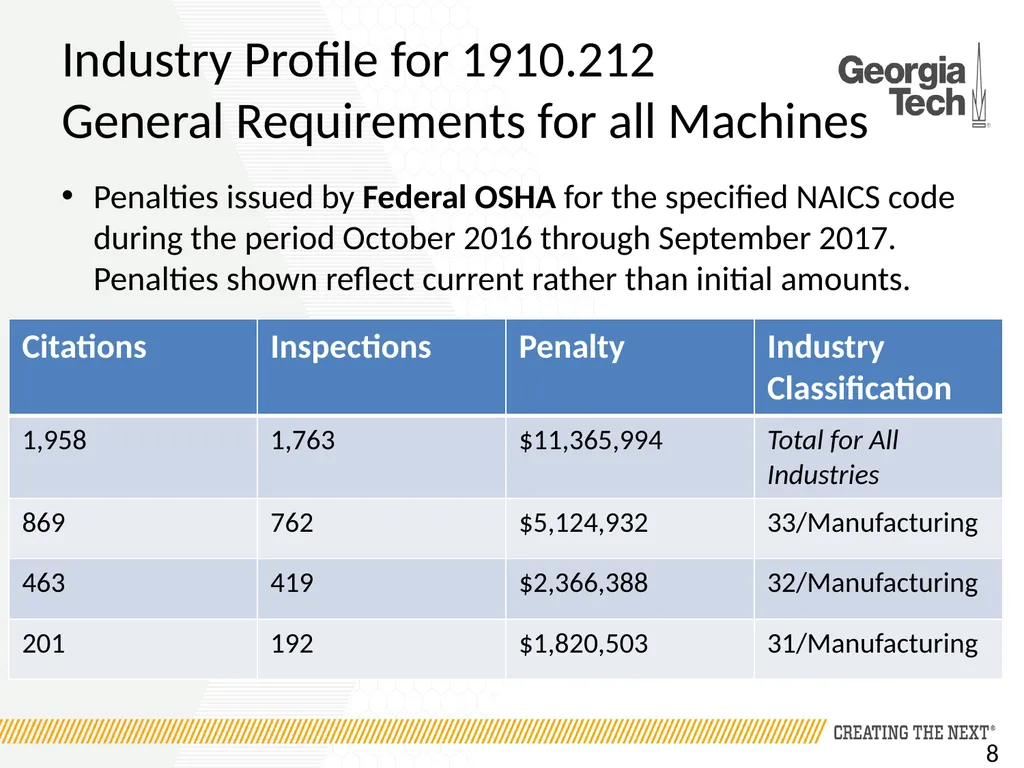
slide8. Penalties issued by Federal OSHA for the specified NAICS code during the period October 2016 through September 2017. Penalties shown reflect current rather than initial amounts. Industry Profile for 1910.212 General Requirements for all Machines 8<br>
slide9. OSHA BACKGROUND 9<br>
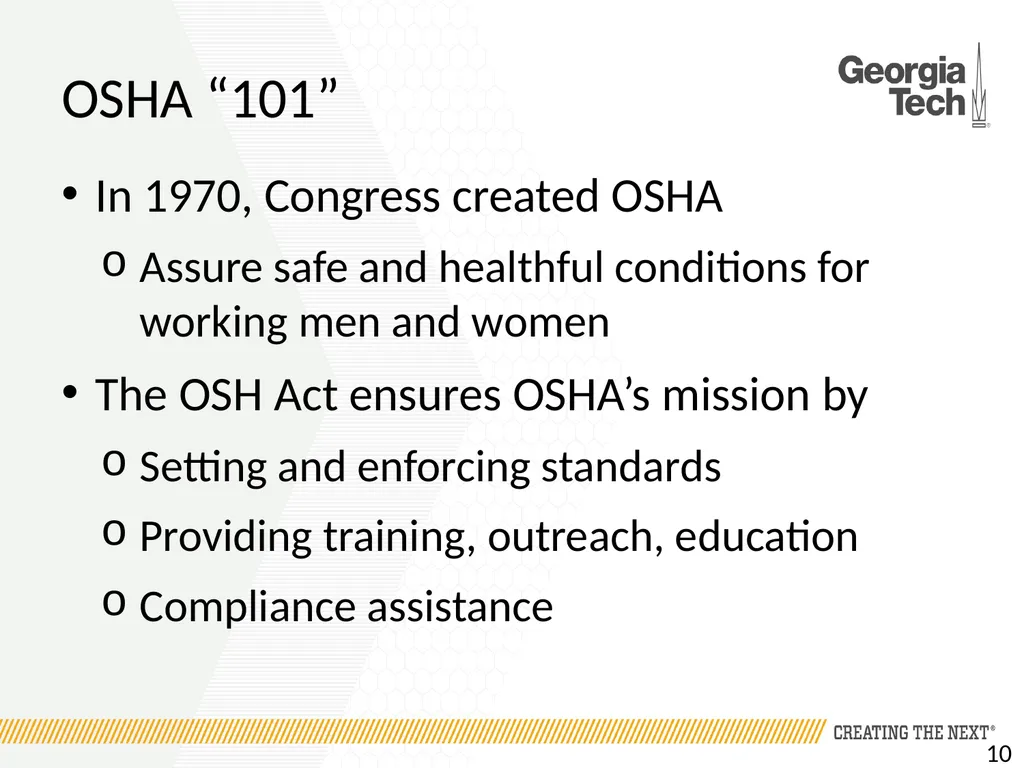
slide10. In 1970, Congress created OSHA
Assure safe and healthful conditions for working men and women
The OSH Act ensures OSHA’s mission by
Setting and enforcing standards
Providing training, outreach, education
Compliance assistance OSHA “101” 10<br>
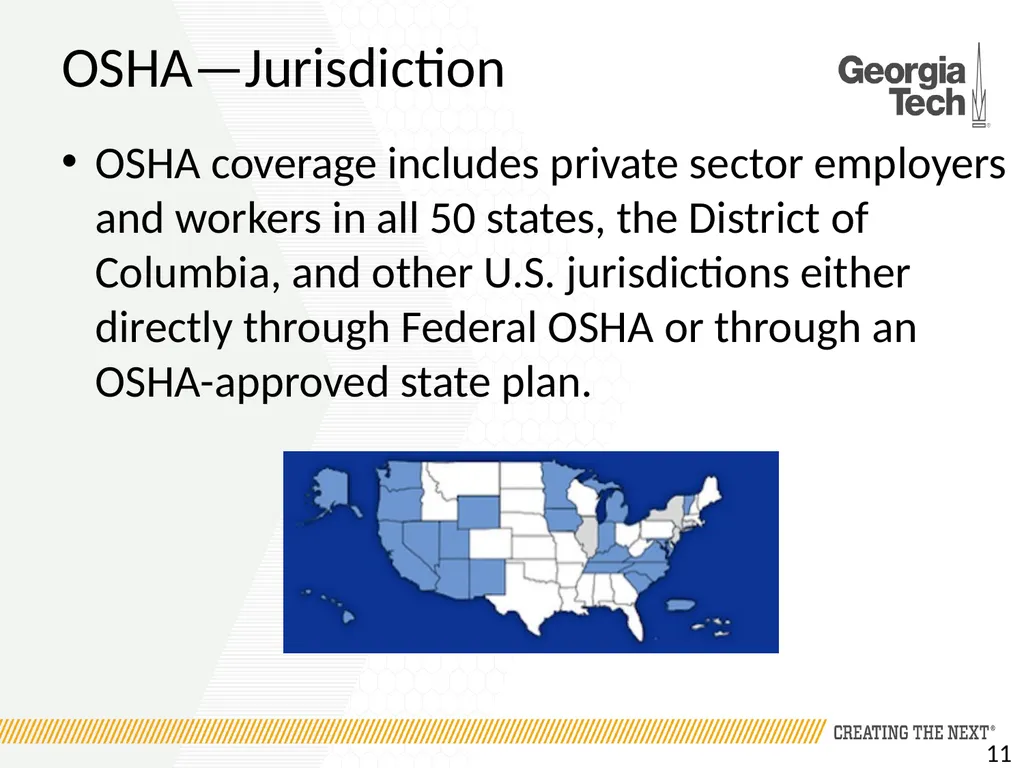
slide11. OSHA coverage includes private sector employers and workers in all 50 states, the District of Columbia, and other U.S. jurisdictions either directly through Federal OSHA or through an OSHA-approved state plan. OSHA—Jurisdiction 11<br>
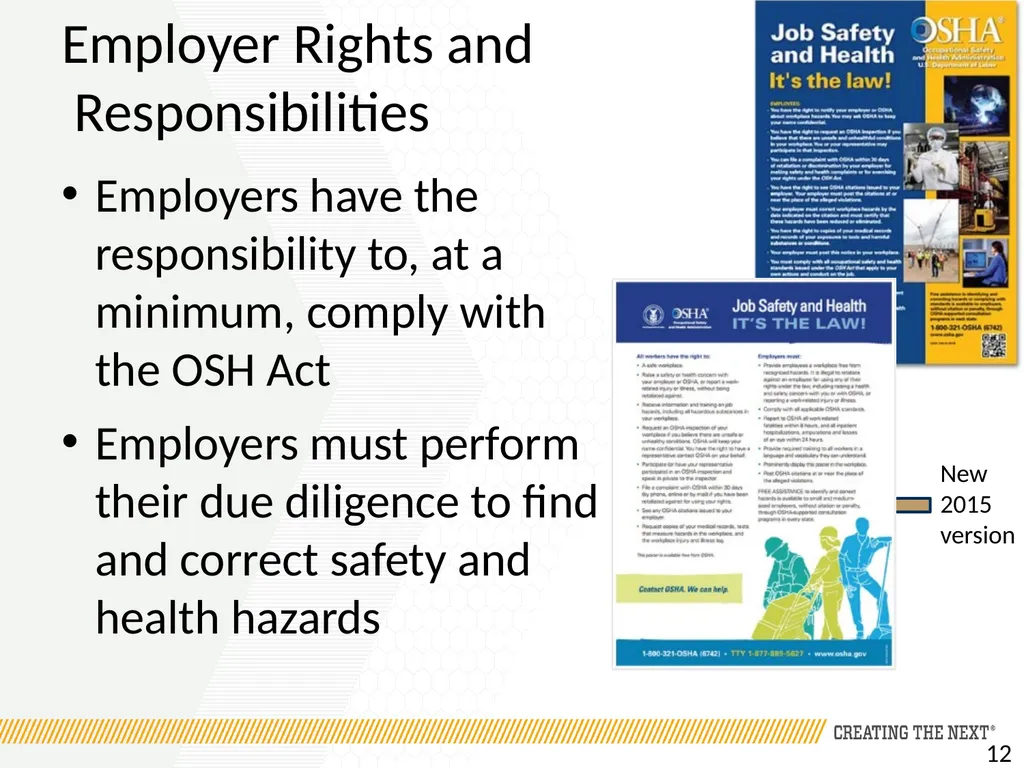
slide12. New 2015 version Employers have the responsibility to, at a minimum, comply with the OSH Act
Employers must perform their due diligence to find and correct safety and health hazards Employer Rights and Responsibilities 12<br>
slide13. Workplace free of recognized hazards
Report safety and health concerns and/or injuries and illnesses without retaliation
File a discrimination complaint under Section 11 (c) of the OSH Act, which prohibits discharge or discrimination by “any person” against any employee for OSHA-related activity;
File a complaint if punished or discriminated against for acting as a “whistleblower” under the additional federal laws for which OSHA has jurisdiction.
Receive appropriate training in a language and vocabulary that workers understand Worker Rights 13<br>
slide14. Request an OSHA inspection at your facility (confidential)
Participate in an OSHA inspection
Speak to OSHA inspector in private
See OSHA citations
Request medical records, tests that measure hazards and injury/illness log Workers’ Rights (Continued) 14<br>
slide15. Temp workers are entitled to the same protections as all other covered workers
Employers and Staffing Agency are responsible & can be held accountable for
Exposing workers to hazards
Retaliating against workers for reporting hazardous conditions
Protected activities: report injuries, raise concerns to employer/OSHA/other government agencies about unsafe/unhealthful working conditions Whistleblower Protection 15<br>
slide16. Employers of 11 or more employees must maintain records of occupational injuries and illnesses as they occur.
Employers with 10 or fewer employees are exempt from recordkeeping unless selected by BLS to participate in the Annual Survey.
Certain low-hazard employers (e.g., retail trade, finance, insurance, real estate) are not required to keep records. Recordkeeping Requirements 24<br>
slide17. All employers must
Comply with OSHA standards
Display the OSHA poster
Report to OSHA:
Within 8 hours: Any accident that results in a fatality
Within 24 hours: Amputations, loss of an eye, or hospitalization of 1 or more employees Recordkeeping and Reporting 17<br>
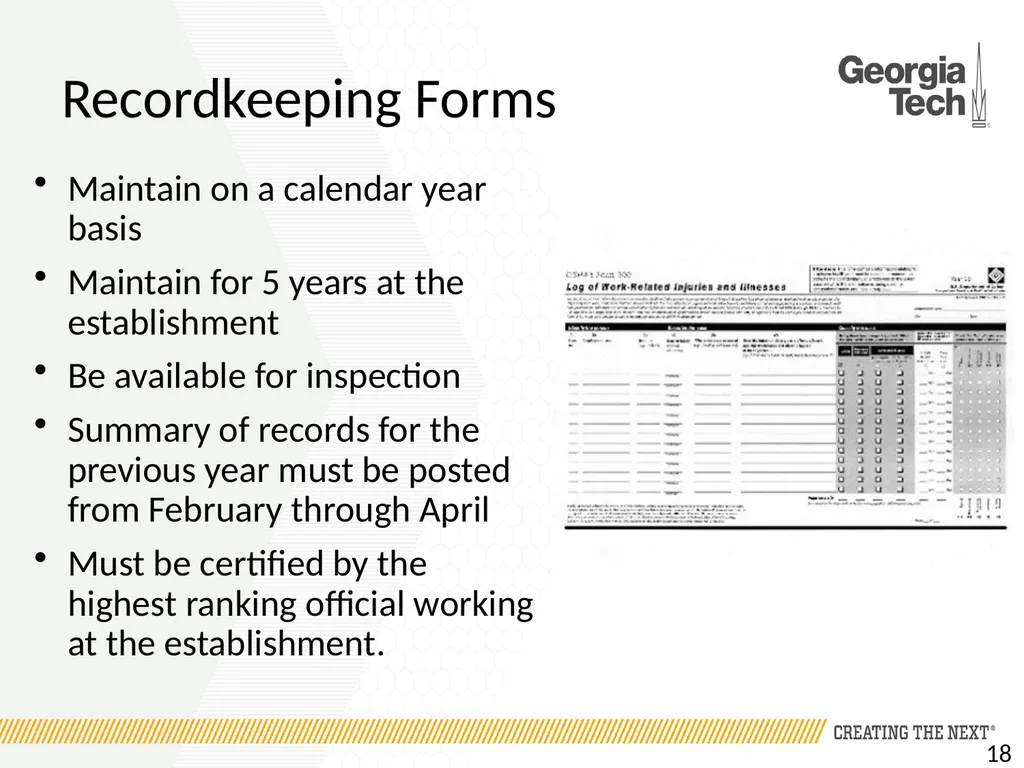
slide18. Maintain on a calendar year basis
Maintain for 5 years at the establishment
Be available for inspection
Summary of records for the previous year must be posted from February through April
Must be certified by the highest ranking official working at the establishment. Recordkeeping Forms 18<br>
slide19. OSHA's Website
E-tools, standards, presentations, etc.
Georgia Tech’s Safety and Health Consultation Program
Free, on-site safety and health consultation
Completely confidential from OSHA Sources for Reference 19<br>
slide2. Introduction to Machinery and Machine Guarding
Recognition of Machine Guarding Hazards in Manufacturing
Evaluation of Machine Guarding Hazards in Manufacturing
Abatement of Machine Guarding Hazards in Manufacturing
Specific Topics addressed in training:
General Machine Guarding, Lockout/Tagout, Case Study
Two Optional Topics: Chosen From Mechanical Power Presses, Woodworking, Robots, Grinders
Summary, Discussion, Final Comments Class Agenda and Objectives 2<br>
slide3. Machinery and machine guarding hazards can cause severe injuries:
Amputations
Contusions
Lacerations
Fractures/Broken Bones
To prevent these from occurring, hazardous parts of the equipment must be guarded to prevent contact:
In-running nip points
Moving Parts
Point of Operation Why Are We Here Today? 3<br>
slide4. OSHA Guidance 4<br>
slide5. The purpose of the NEP on Amputations is
“to identify and reduce workplace machine and equipment hazards which are causing or likely to cause amputations.”
National Emphasis Program on Amputations: NEP on Amputations. OSHA’s National Emphasis Program (NEP) on Amputations 5<br>
slide6. 5,360 amputations in private industry in 2015
Resulting in a median of 26 days away from work
Manufacturing jobs experience the highest rate of amputations when compared to all other private industries:
2015 incidence rate for manufacturing: 2.1 per 10,000 full-time employees
Increase from 2014 incident incidence rate of 1.7
2015 incidence rate for total private industry: 0.6 per 10,000 full-time employees Amputation Injuries 6<br>
slide7. #2: Machine Guarding – Types of Guarding Methods
Total Violations: 1,343
#4: Hazardous Energy Control – Procedures Shall Be Developed
Total Violations: 625
#6: Machine Guarding – Point of Operations
Total Violations: 502
Source: Most Frequently Cited Hazards in General Industry 2017 Most Frequently Cited Serious Violations in General Industry 2017 7<br>
slide8. Penalties issued by Federal OSHA for the specified NAICS code during the period October 2016 through September 2017. Penalties shown reflect current rather than initial amounts. Industry Profile for 1910.212 General Requirements for all Machines 8<br>
slide9. OSHA BACKGROUND 9<br>
slide10. In 1970, Congress created OSHA
Assure safe and healthful conditions for working men and women
The OSH Act ensures OSHA’s mission by
Setting and enforcing standards
Providing training, outreach, education
Compliance assistance OSHA “101” 10<br>
slide11. OSHA coverage includes private sector employers and workers in all 50 states, the District of Columbia, and other U.S. jurisdictions either directly through Federal OSHA or through an OSHA-approved state plan. OSHA—Jurisdiction 11<br>
slide12. New 2015 version Employers have the responsibility to, at a minimum, comply with the OSH Act
Employers must perform their due diligence to find and correct safety and health hazards Employer Rights and Responsibilities 12<br>
slide13. Workplace free of recognized hazards
Report safety and health concerns and/or injuries and illnesses without retaliation
File a discrimination complaint under Section 11 (c) of the OSH Act, which prohibits discharge or discrimination by “any person” against any employee for OSHA-related activity;
File a complaint if punished or discriminated against for acting as a “whistleblower” under the additional federal laws for which OSHA has jurisdiction.
Receive appropriate training in a language and vocabulary that workers understand Worker Rights 13<br>
slide14. Request an OSHA inspection at your facility (confidential)
Participate in an OSHA inspection
Speak to OSHA inspector in private
See OSHA citations
Request medical records, tests that measure hazards and injury/illness log Workers’ Rights (Continued) 14<br>
slide15. Temp workers are entitled to the same protections as all other covered workers
Employers and Staffing Agency are responsible & can be held accountable for
Exposing workers to hazards
Retaliating against workers for reporting hazardous conditions
Protected activities: report injuries, raise concerns to employer/OSHA/other government agencies about unsafe/unhealthful working conditions Whistleblower Protection 15<br>
slide16. Employers of 11 or more employees must maintain records of occupational injuries and illnesses as they occur.
Employers with 10 or fewer employees are exempt from recordkeeping unless selected by BLS to participate in the Annual Survey.
Certain low-hazard employers (e.g., retail trade, finance, insurance, real estate) are not required to keep records. Recordkeeping Requirements 24<br>
slide17. All employers must
Comply with OSHA standards
Display the OSHA poster
Report to OSHA:
Within 8 hours: Any accident that results in a fatality
Within 24 hours: Amputations, loss of an eye, or hospitalization of 1 or more employees Recordkeeping and Reporting 17<br>
slide18. Maintain on a calendar year basis
Maintain for 5 years at the establishment
Be available for inspection
Summary of records for the previous year must be posted from February through April
Must be certified by the highest ranking official working at the establishment. Recordkeeping Forms 18<br>
slide19. OSHA's Website
E-tools, standards, presentations, etc.
Georgia Tech’s Safety and Health Consultation Program
Free, on-site safety and health consultation
Completely confidential from OSHA Sources for Reference 19<br>