INTRODUCTION TO PARASITOLOGY and Lab Safety Common terminology: Parasite Host Definitive host Intermediate host Infective stage Diagnostic stage Vector Life cycle Practical classification of parasites of medical importance: Protozoa:
"INTRODUCTION TO PARASITOLOGY and Lab Safety Common" is the property of its rightful owner. Permission is granted to
download and print the materials on this website for personal, non-commercial use only, and to display it
on your personal computer provided you do not modify the materials and that you retain all copyright
notices contained in the materials. By downloading content from our website, you accept the terms of this
agreement.
Presentation Transcript
01
INTRODUCTION TO PARASITOLOGY and Lab Safety<br>
02
Common terminology: Parasite
Host
Definitive host
Intermediate host
Infective stage
Diagnostic stage
Vector
Life cycle<br>
03
Practical classification of parasites of medical importance: Protozoa: single-celled organisms “Multiply in human host”
Helminthes: multicellular worms “Do not normally multiply in human host”<br>
04
Protozoa: Amoeba:
Entamoeba histolytica
Acanthamoeba Species
Naegleria Species
Flagellates:
Giardia lamlia
Trichomonas vaginalis
Trypanosoma species
Leishmania species<br>
05
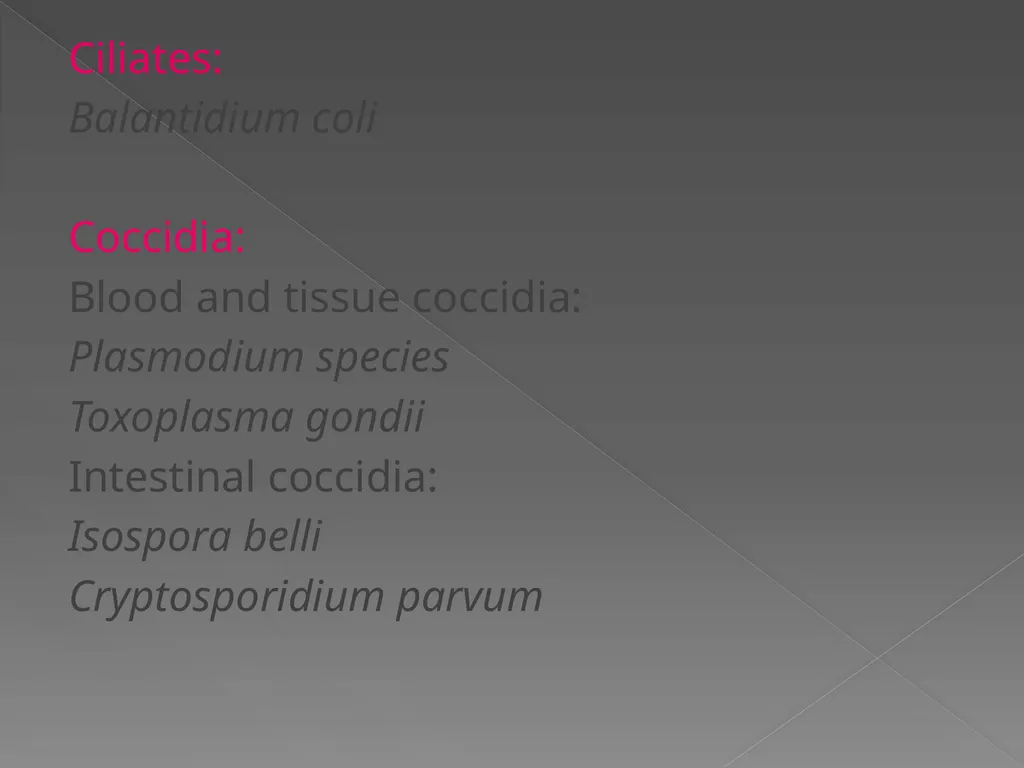
Ciliates:
Balantidium coli
Coccidia:
Blood and tissue coccidia:
Plasmodium species
Toxoplasma gondii
Intestinal coccidia:
Isospora belli
Cryptosporidium parvum<br>
06
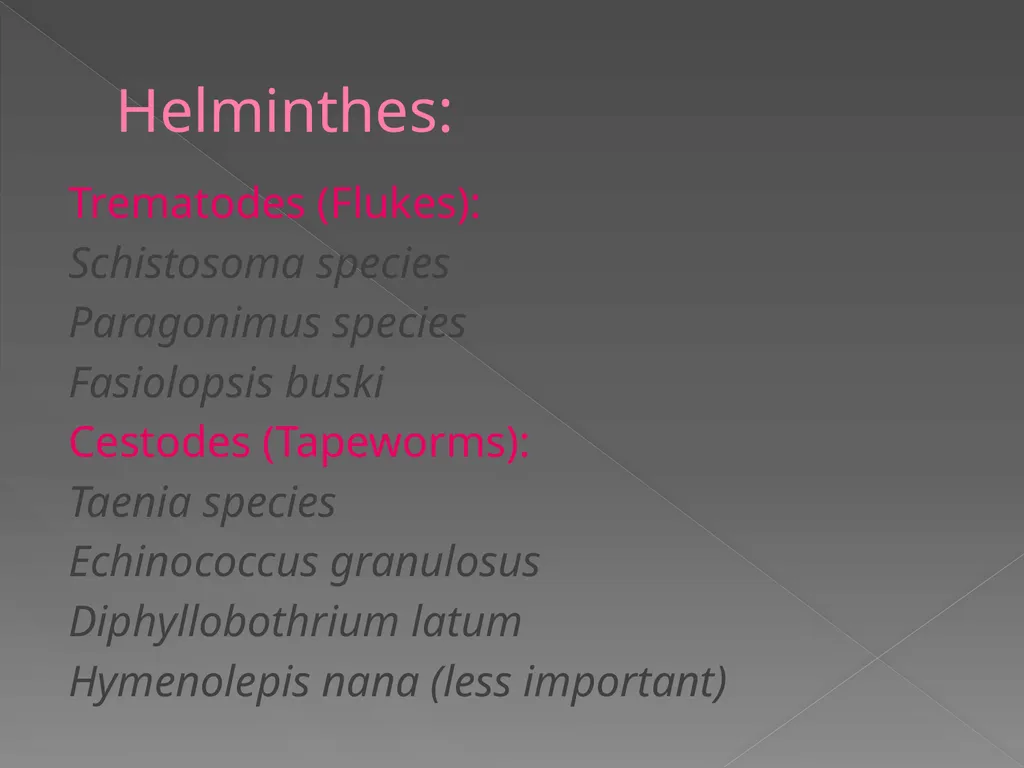
Helminthes: Trematodes (Flukes):
Schistosoma species
Paragonimus species
Fasiolopsis buski
Cestodes (Tapeworms):
Taenia species
Echinococcus granulosus
Diphyllobothrium latum
Hymenolepis nana (less important)<br>
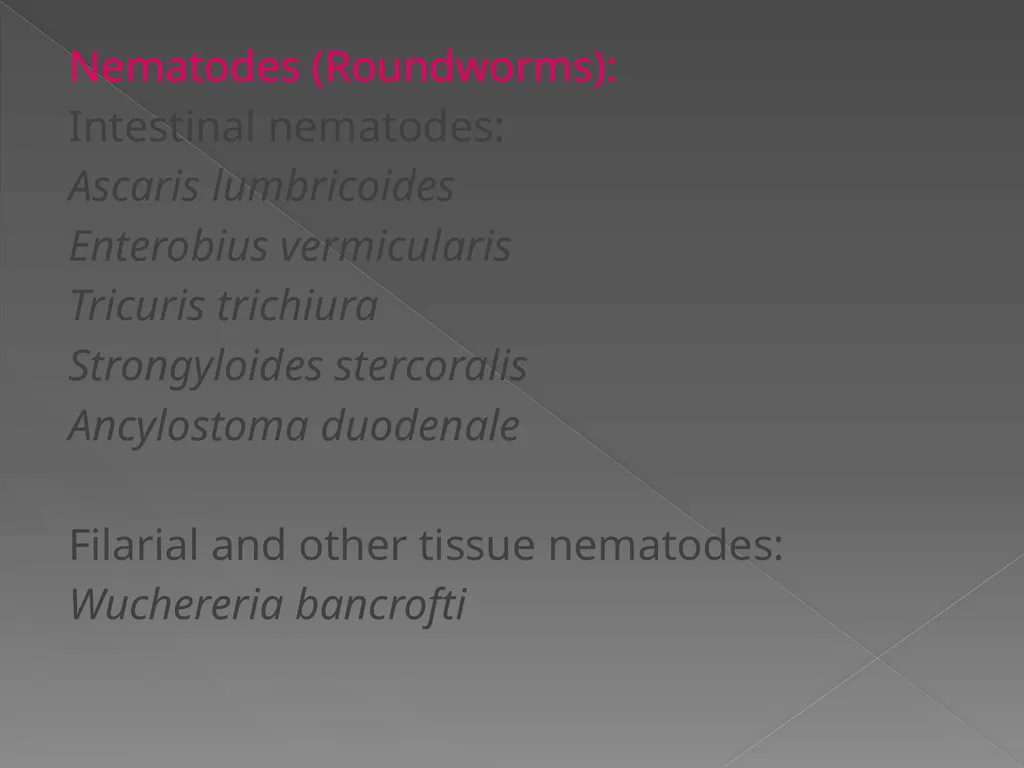
Filarial and other tissue nematodes:
Wuchereria bancrofti<br>
08
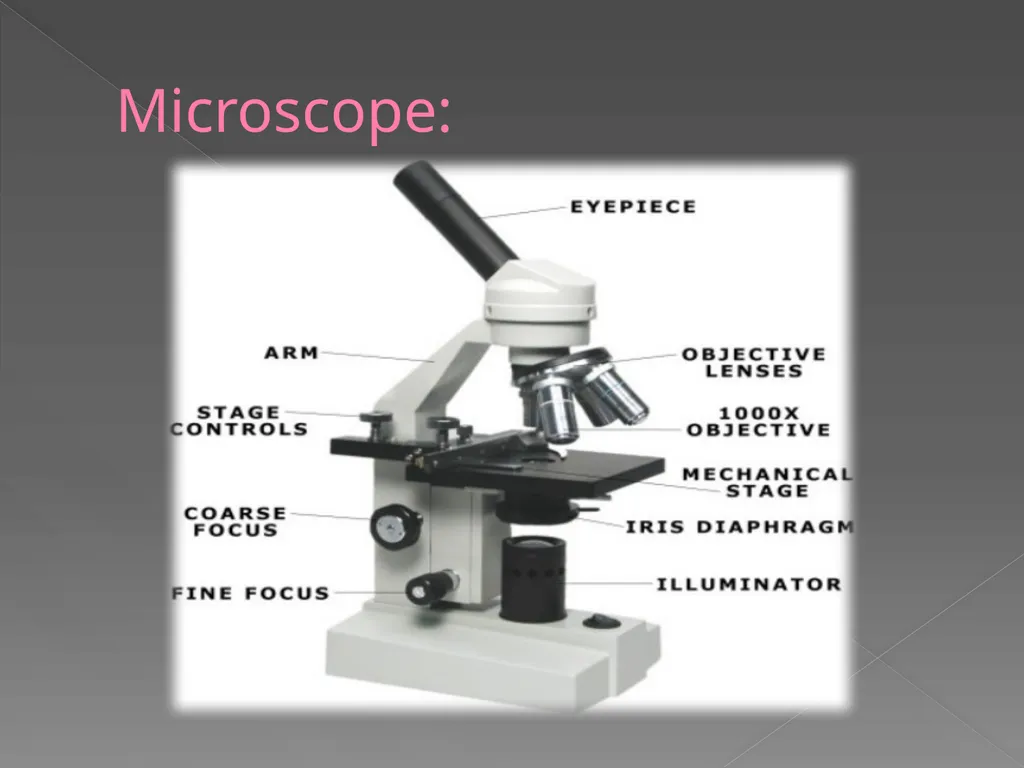
Microscope:<br>
09
Lab Safety: General lab. Safety:
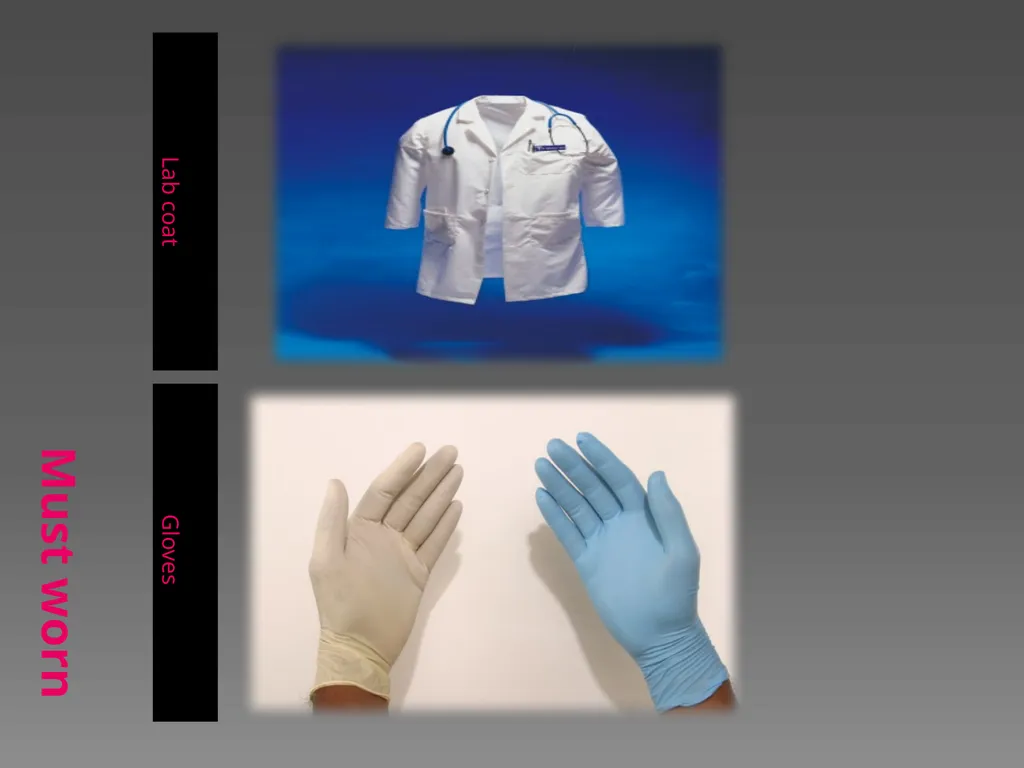
1- Wear lab coats, gloves,
2- Don’t eat or drink
3- Carefully handle the samples, because it’s contagious
4- Containers must be labeled probably and after used closed very well
5- How to dispose wastes
6- Cleaning
7- Safety equipments<br>
10
Must worn Lab coat Gloves<br>
11
Samples used in parasitology lab: Mainly we deal with stool as a general specimen
We can receive also :
1- urine, in case of S.haematobium,
S.mansoni , T.vaginalis.
2- Blood, in case of Plasmodium spp, trypanosoma, W.bancrofti.
3- Vaginal discharge, in case of T.vaginalis.
4- Sputum, in case of Paragonimus spp.<br>
12
5- CSF, in case of Trypanosoma spp, Naegleria.
6- Bone Marrow, in case of L.donovani.
7- Lymph Gland Aspirate, in case of Trypanosoma spp, L. donovani.
8- Liver Aspirate, in case of E.histolytica, L. donovani.
9- Biopsies: - Skin, in case of Leishmania spp, D. medinensis.
- Muscles, in case of Trichinella.
10- Duodenal Aspirate, in case of G. lamblia, S. stercoralis.
11- Rectal Scraping, in case of E.histolytica, Schistosoma spp.<br>
13
How to collect stool samples: Precautions
Containers
Request form
Time of examination
Macroscopic examination
Microscopic examination<br>
14
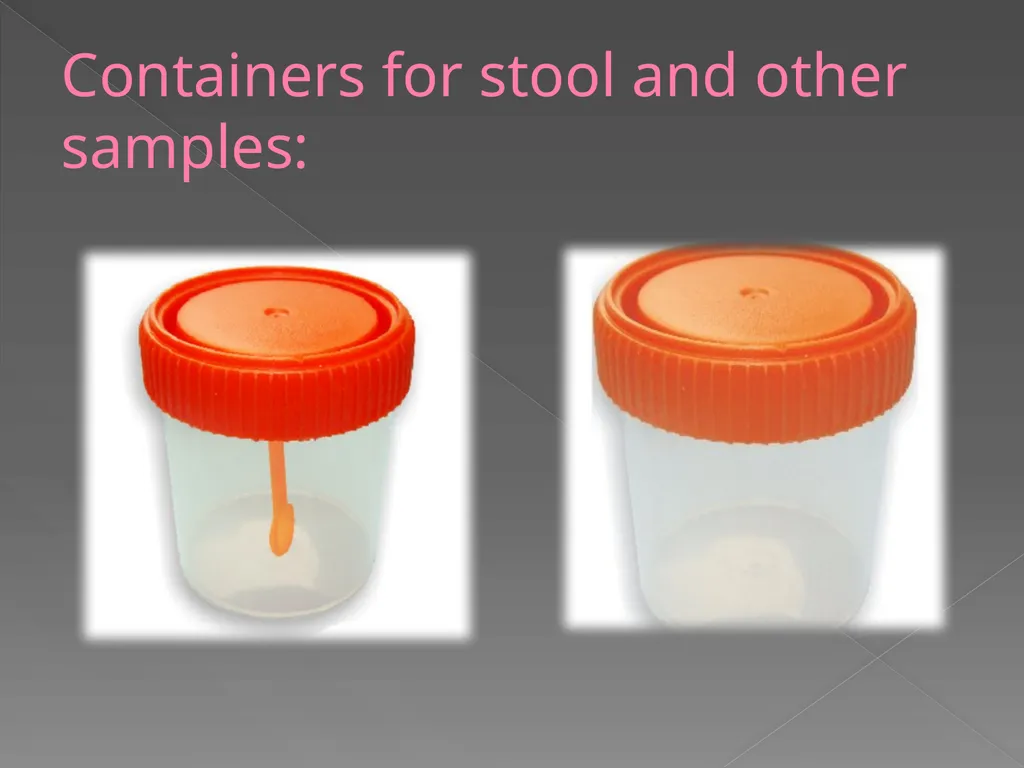
Containers for stool and other samples:<br>
15
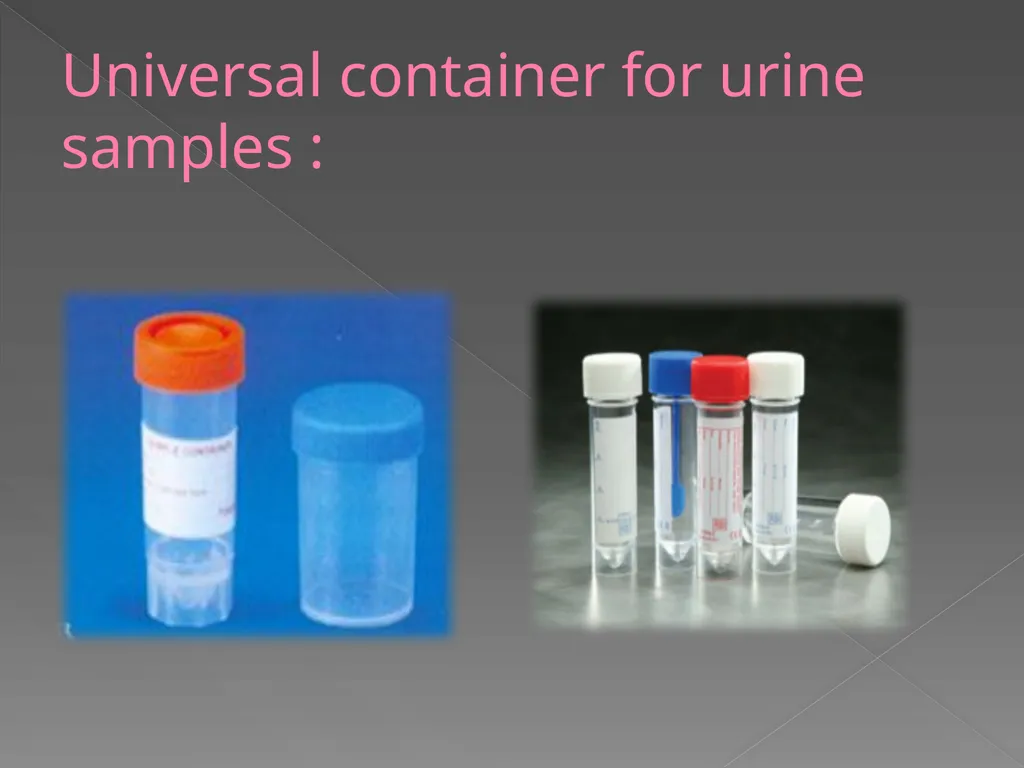
Universal container for urine samples :<br>
16
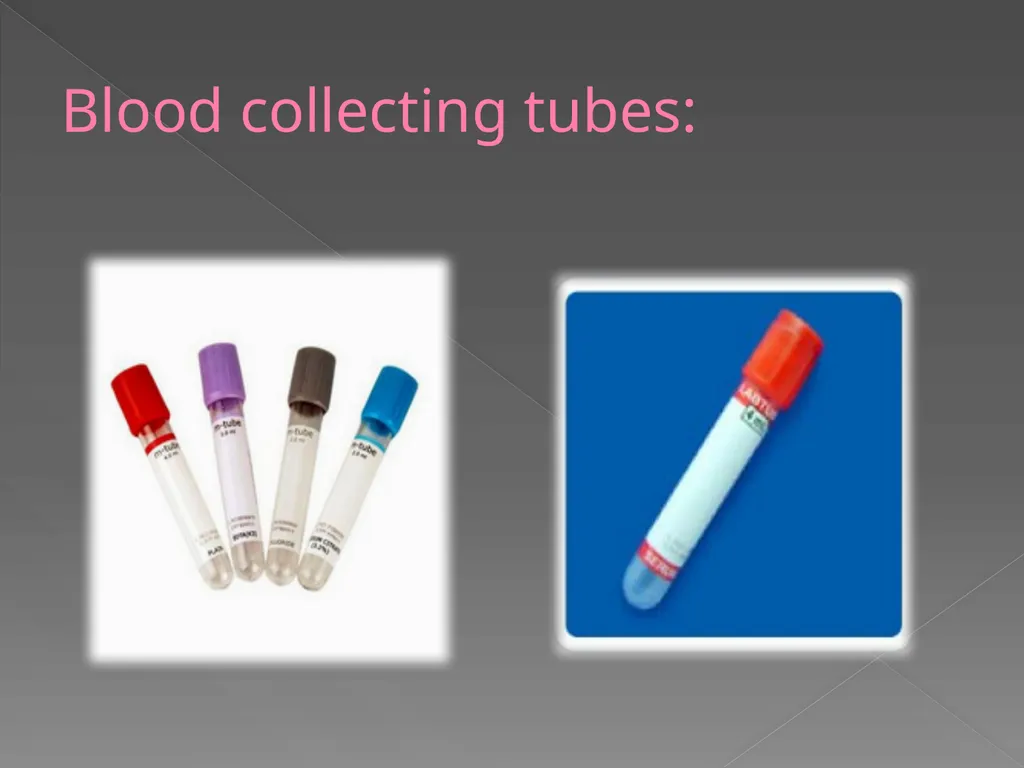
Blood collecting tubes:<br>
17
Request form :<br>
18
Macroscopic examination: Color : normally brown not pale or dark.
Consistency: whether formed, semi formed, unformed, watery.
Composition: Presence of mucus, blood and or Pus
Odor
Whether the specimen contains worms, part of the worm(segments), larva.<br>
19
Microscopic examination: Wet mount :
Either saline or iodine: usually we see the Cyst stage, we loose the trophozoite because it’s a fragile stage.
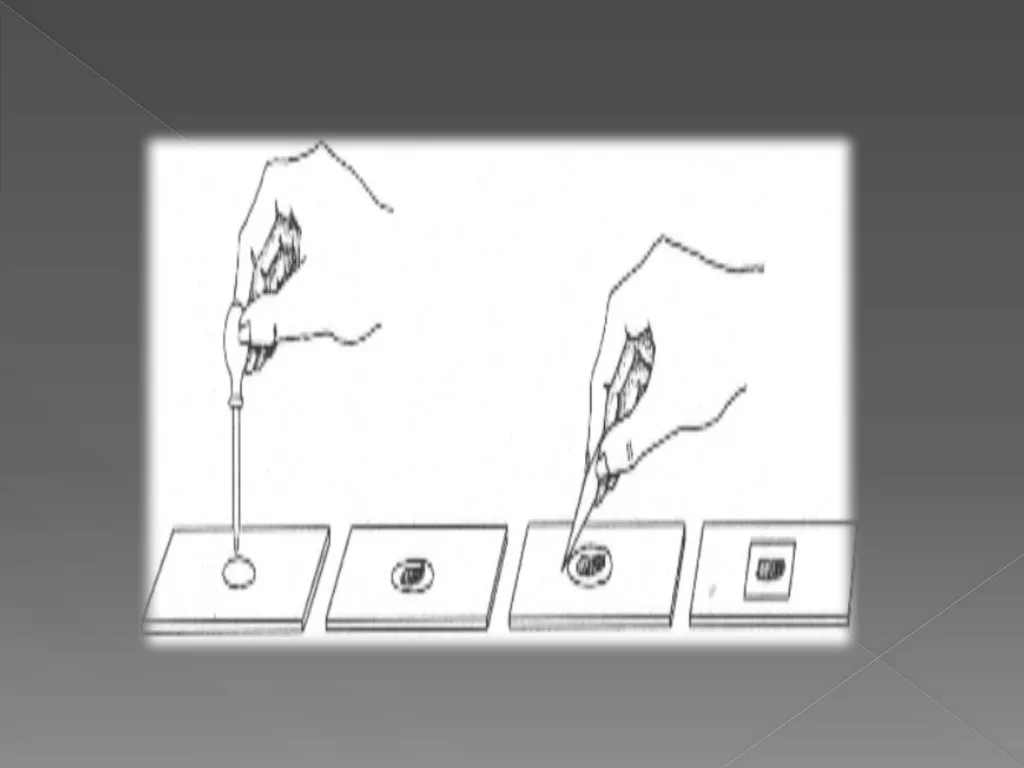
We use 2 clean glass slides: in the first 1 drop of saline and in the other drop of iodine then by wooden stick take a small part of sample mix, cover then examine after removing your gloves .<br>
20
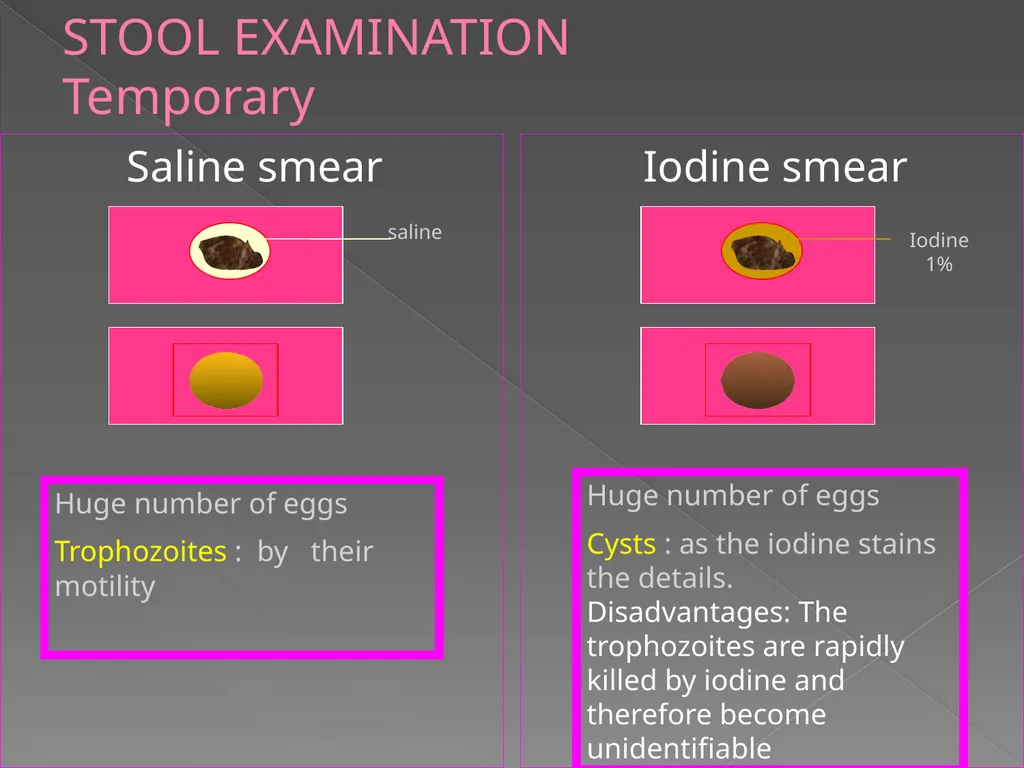
STOOL EXAMINATION Temporary Saline smear Iodine smear saline Iodine 1% Huge number of eggs
Trophozoites : by their motility Huge number of eggs
Cysts : as the iodine stains the details.
Disadvantages: The trophozoites are rapidly killed by iodine and therefore become unidentifiable<br>
21
Other examinations of samples in parasitology lab: Serological tests: ELISA, Passive haemoagglutination test: these tests deals with serum Ag and Ab’s.
Molecular tests: PCR, most commonly used in researches.<br>