ISO 14001:2015 Identifying Aspects And Impacts Overview Definitions of Aspect Impact Significant aspect Recognise the significance of significant aspects to the environmental management system Learn about aspect identification Prevention
"ISO 14001:2015 Identifying Aspects And Impacts" is the property of its rightful owner. Permission is granted to
download and print the materials on this website for personal, non-commercial use only, and to display it
on your personal computer provided you do not modify the materials and that you retain all copyright
notices contained in the materials. By downloading content from our website, you accept the terms of this
agreement.
Presentation Transcript
01
ISO 14001:2015 Identifying Aspects And Impacts<br>
02
Overview Definitions of
Aspect
Impact
Significant aspect
Recognise the significance of significant aspects to the environmental management system
Learn about aspect identification<br>
03
Prevention rather than corrective Manage “how” the business interacts with environment
Rather than manage “what” the business has done to the environment
EMS is built around
identifying,
prioritizing,
controlling, and
improving upon, those elements of the organization that interact with the environment<br>
04
Benefits Prompts organizations to identify issues not typically managed; particularly non-regulated issues
Integrates environmental issues into operations<br>
05
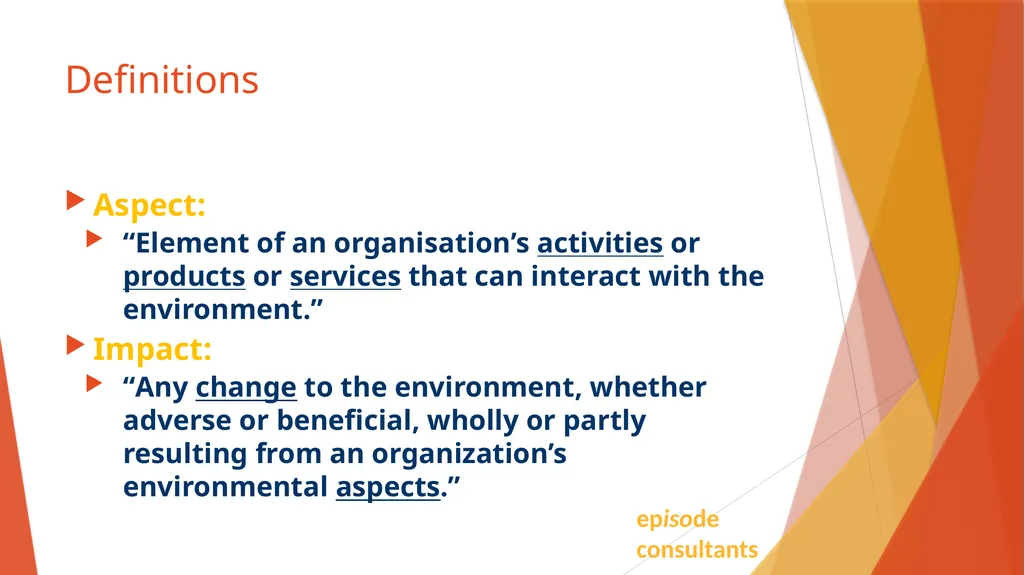
Definitions Aspect:
“Element of an organisation’s activities or products or services that can interact with the environment.”
Impact:
“Any change to the environment, whether adverse or beneficial, wholly or partly resulting from an organization’s environmental aspects.”<br>
06
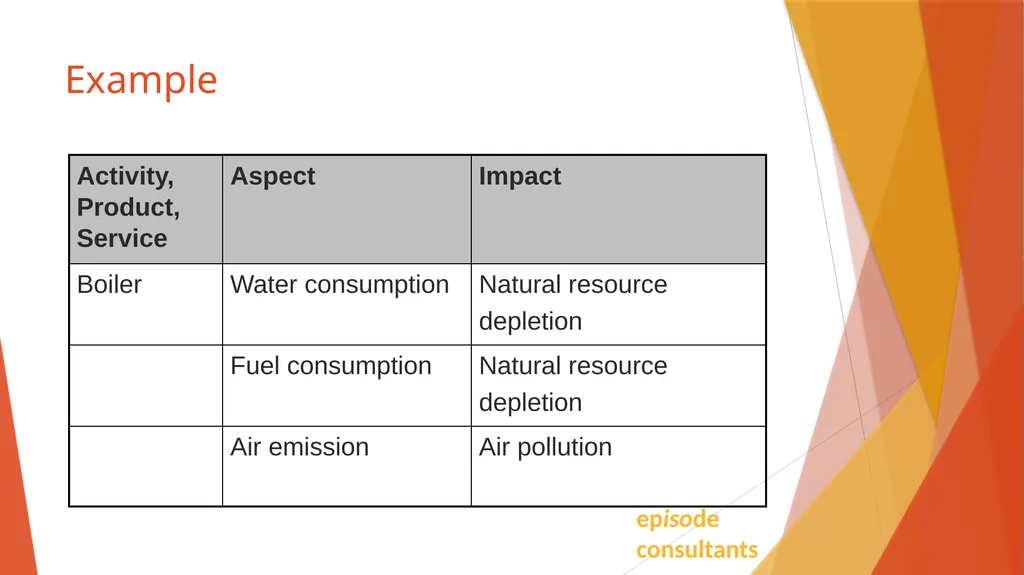
Example<br>
07
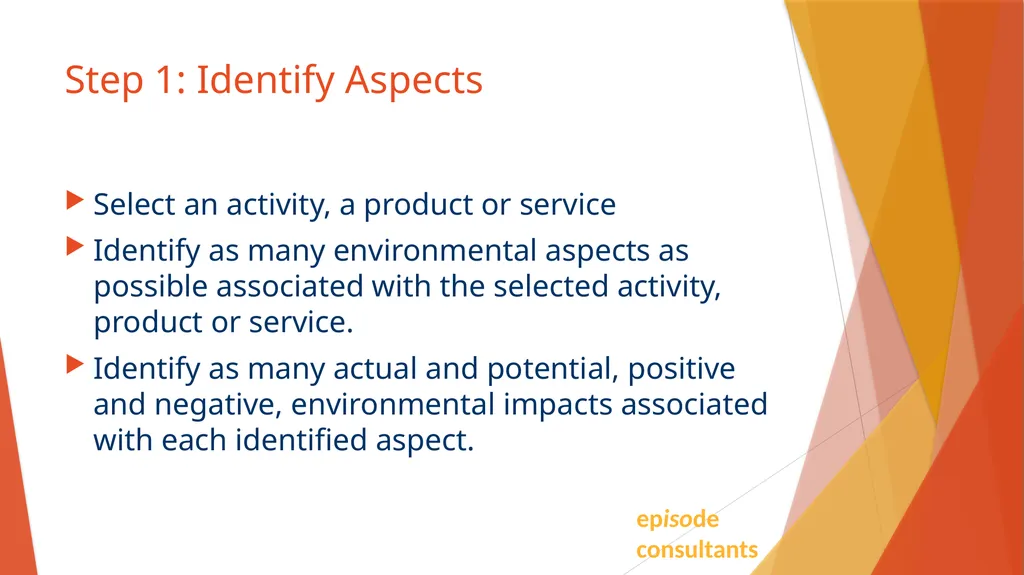
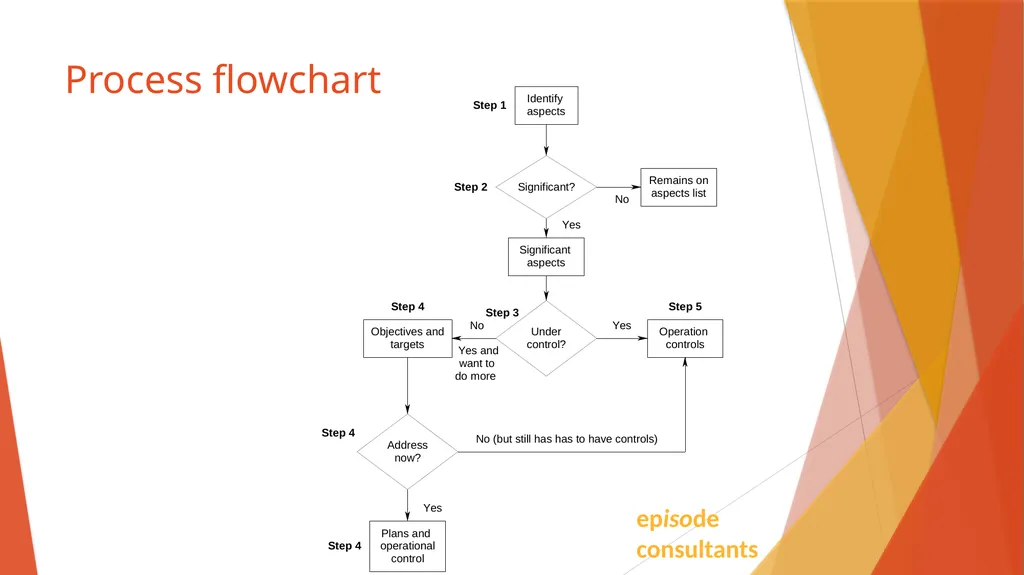
Step 1: Identify Aspects Select an activity, a product or service
Identify as many environmental aspects as possible associated with the selected activity, product or service.
Identify as many actual and potential, positive and negative, environmental impacts associated with each identified aspect.<br>
08
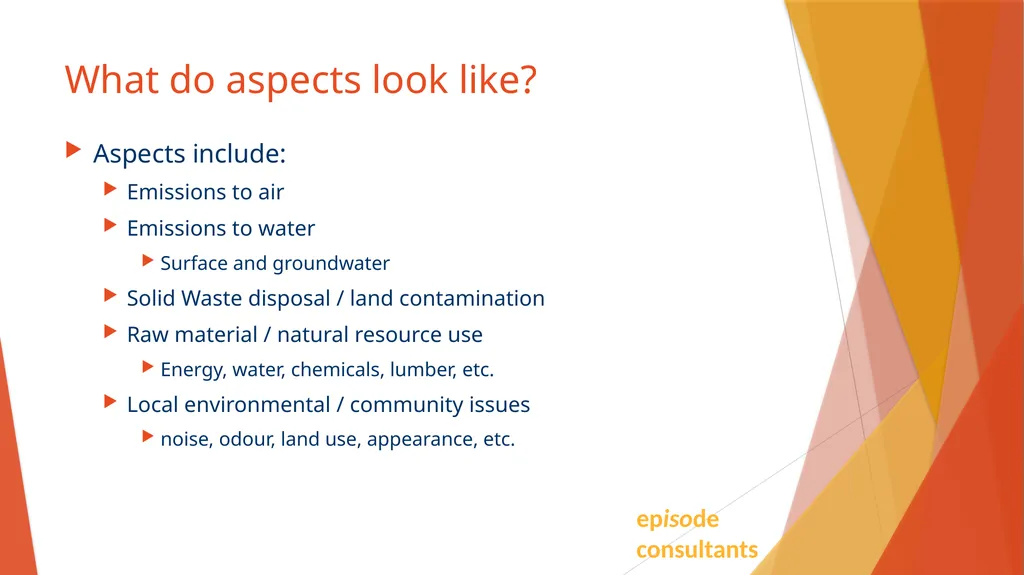
What do aspects look like? Aspects include:
Emissions to air
Emissions to water
Surface and groundwater
Solid Waste disposal / land contamination
Raw material / natural resource use
Energy, water, chemicals, lumber, etc.
Local environmental / community issues
noise, odour, land use, appearance, etc.<br>
09
What aspects are not! Improve air quality – this is an objective
Vehicle maintenance – this is a activity
Water pollution – this is an impact<br>
10
Where to find information? Process flow diagrams
Interviews with supervisors, managers, staff
Hazardous material inventories
Hazardous waste records
Records from emergency planning, accident reports, emergency incidents
Water and energy consumption records<br>
11
Step 2: Determine Significant Aspects Significant aspect is one that has or can have a significant impact on the environment
Criteria for significance rating and cut-off value
Significance can be determined by numeric cut-off value or subjective assessment based on yes/no answers<br>
12
Why significant aspects and impacts? ISO 14001 uses significant aspects and impacts as basis for developing objectives and preparing programs.
Once significant, the EMS must address the aspect.<br>
13
Aspects and Impacts Understanding Be comprehensive
Do not pre-judge!
Sort by activity, product, or service; and identify impacts
“Aspect” is considered significant although environmental impact is used to make significance determination
Aspects not considered significant will not be carried through the system
Significant aspects affect and drive all other parts of system! “If you must control, it must be significant”.<br>