Jam, Jelly Marmalade B.K.Singh, Dairy Technology Fruit Jam As per FSSAI, Jam means the product prepared from sound, ripe, fresh, dehydrated, frozen or previously packed fruits including fruit juices, fruit pulp, fruit juice concentrate or
"Jam, Jelly & Marmalade B.K.Singh, Dairy Technology" is the property of its rightful owner. Permission is granted to
download and print the materials on this website for personal, non-commercial use only, and to display it
on your personal computer provided you do not modify the materials and that you retain all copyright
notices contained in the materials. By downloading content from our website, you accept the terms of this
agreement.
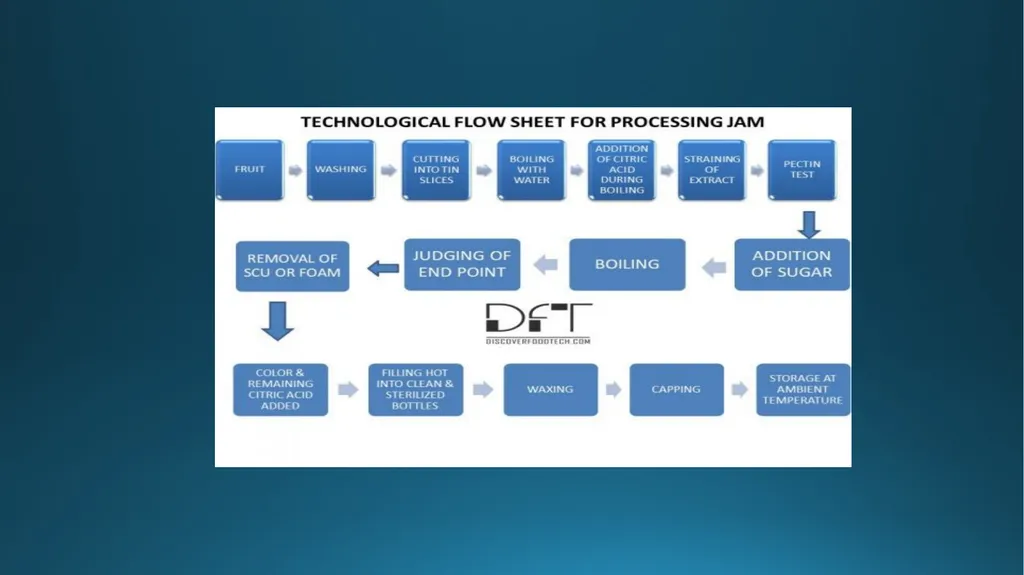
Fruit Jam As per FSSAI, Jam means the product prepared from sound, ripe, fresh, dehydrated, frozen or previously packed fruits including fruit juices, fruit pulp, fruit juice concentrate or dry fruit by boiling its pieces or pulp or puree with nutritive sweeteners namely sugar, dextrose, invert sugar or liquid glucose to a suitable consistency. It may also contain fruit pieces and any other ingredients suitable to the products. It may be prepared from any of the suitable fruits, singly or in combination. It shall have the flavour of the original fruit(s) and shall be free from burnt or objectionable flavours and crystallization.<br>
03
Fruit Cheese As per FSSAI, Fruit cheese means the product prepared from pulp/puree of sound, ripe fruit (s), whether fresh, frozen or previously preserved or dry fruits, by cooking with salt, nutritive sweeteners to attain a thick consistency so that it sets on cooling. The fruit cheese shall be neither too soft nor too hard to chew. It may be prepared from any of the suitable fruits, singly or in combination. It shall have the flavour of the original fruit(s) and shall be free from burnt of objectionable flavours and crystallization.<br>
04
Salient characteristics of Jam The amount of pectin in the gel is quite small (< 1.0% of the weight of jam); sugar content is very high (60- 70%). Of the remainder, the bulk is water with a small amount of fibrous matter and seeds. For a chunky texture, some pieces of fruit are added about 5 minutes before the cooking is finished. If a stiffer or sweeter jam is desired, more thickener or pectin, honey or sugar may be added.<br>
05
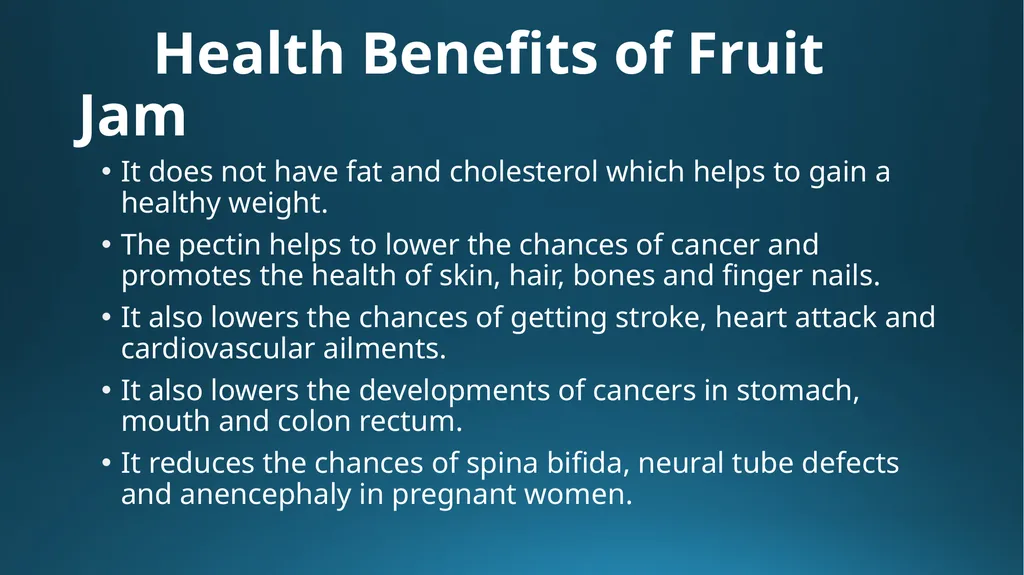
Health Benefits of Fruit Jam It does not have fat and cholesterol which helps to gain a healthy weight.
The pectin helps to lower the chances of cancer and promotes the health of skin, hair, bones and finger nails.
It also lowers the chances of getting stroke, heart attack and cardiovascular ailments.
It also lowers the developments of cancers in stomach, mouth and colon rectum.
It reduces the chances of spina bifida, neural tube defects and anencephaly in pregnant women.<br>
06
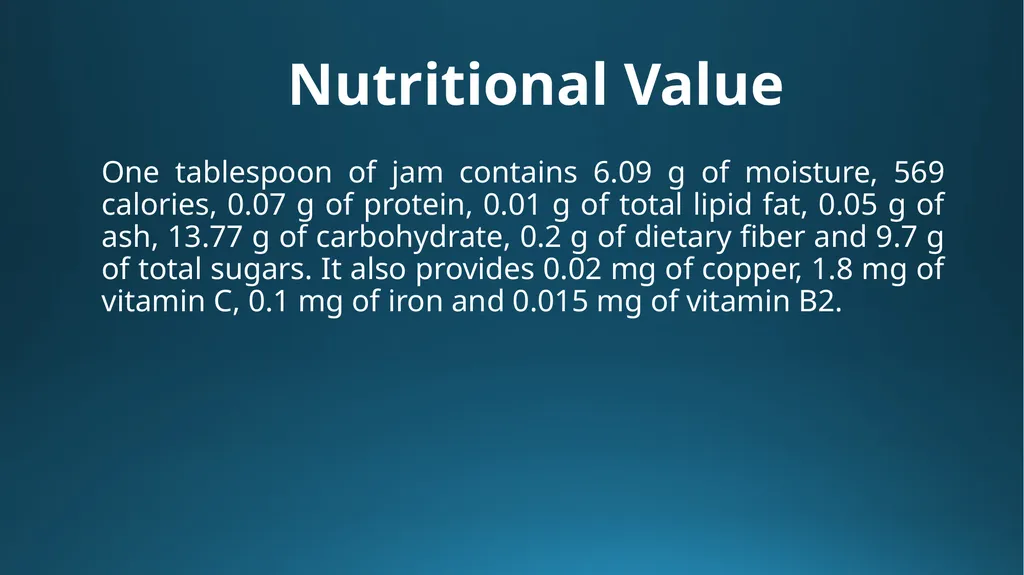
Nutritional Value One tablespoon of jam contains 6.09 g of moisture, 569 calories, 0.07 g of protein, 0.01 g of total lipid fat, 0.05 g of ash, 13.77 g of carbohydrate, 0.2 g of dietary fiber and 9.7 g of total sugars. It also provides 0.02 mg of copper, 1.8 mg of vitamin C, 0.1 mg of iron and 0.015 mg of vitamin B2.<br>
07
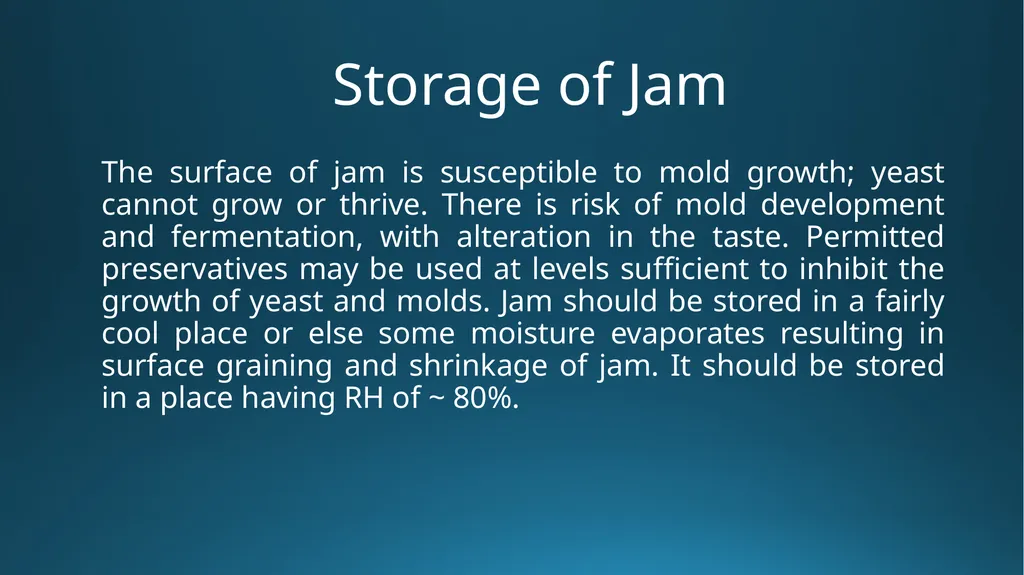
Storage of Jam The surface of jam is susceptible to mold growth; yeast cannot grow or thrive. There is risk of mold development and fermentation, with alteration in the taste. Permitted preservatives may be used at levels sufficient to inhibit the growth of yeast and molds. Jam should be stored in a fairly cool place or else some moisture evaporates resulting in surface graining and shrinkage of jam. It should be stored in a place having RH of ~ 80%.<br>
08
Judging the end-point Determining the boiling point with thermometer
Hydrometers
Refractometer
Sheeting or Ladle test
Weighing<br>
09
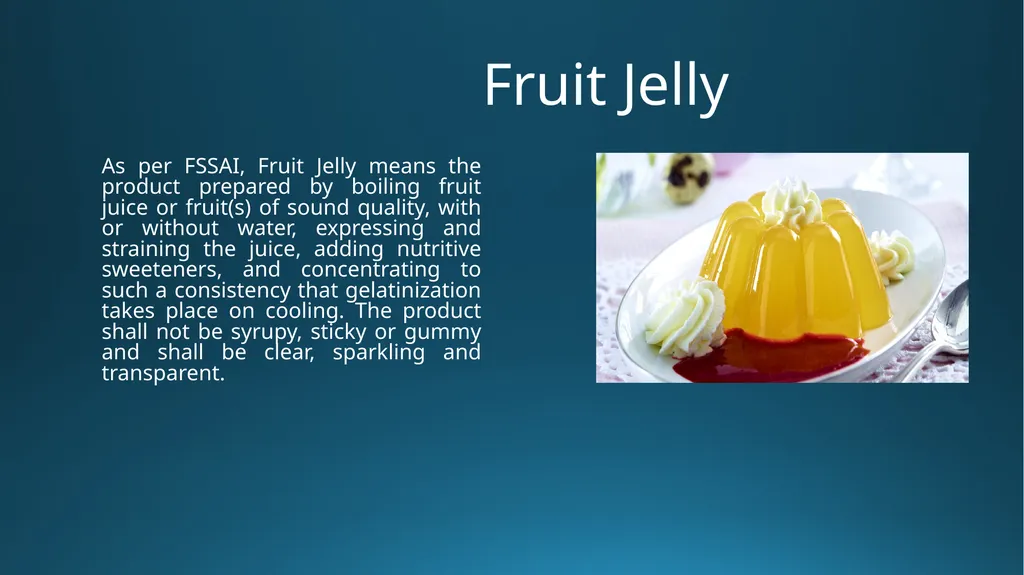
Fruit Jelly As per FSSAI, Fruit Jelly means the product prepared by boiling fruit juice or fruit(s) of sound quality, with or without water, expressing and straining the juice, adding nutritive sweeteners, and concentrating to such a consistency that gelatinization takes place on cooling. The product shall not be syrupy, sticky or gummy and shall be clear, sparkling and transparent.<br>
10
Nutritional Value of Royal Jelly Royal jelly contains a rich variety of nutrients including minerals like calcium, copper, iron, phosphorous, silicon, sulfur, and potassium, as well as a wealth of B-family vitamins, biotin, inositol, folate, nucleic acids, gamma globulin, and 17 different amino acids, including the 8 essential amino acids that the human body cannot produce, and must, therefore, get from their diet.<br>
11
Health Benefits of Royal Jelly Regulates Blood Pressure
Balances Cholesterol Levels
Treats Infertility Issues
Anticancer Potential
Can Reduce the Effects of Chemotherapy
Reduces Inflammation
Prevents Premature Aging
Weight Loss
Boosts Metabolism<br>
12
Defects in Jelly Crystals in Jelly
Cloudy jelly
Failure to gel
Tough Jelly<br>
13
Marmalade Marmalade is a fruit preserve made from the juice and peel of citrus fruits boiled with sugar and water. The best-known version is made from bitter orange, but it is also made from lemons, limes, grapefruits, mandarins, sweet oranges, bergamots, and other citrus fruits, or a combination.
As per FSSAI, Marmalade means a product prepared by boiling sound fruits with peel, pulp and juice, with or without water, added nutritive sweeteners and concentrating to such a consistency that gelatinization takes place on cooling of the product. It shall not be syrupy, sticky or gummy and shall be clear and transparent.<br>
14
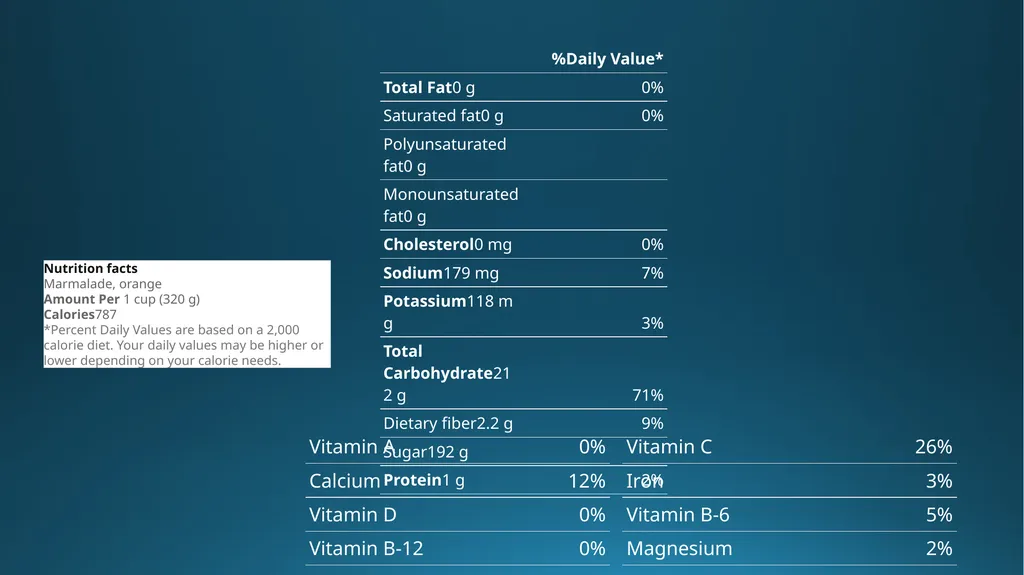
Nutrition facts
Marmalade, orange
Amount Per 1 cup (320 g)
Calories787
*Percent Daily Values are based on a 2,000 calorie diet. Your daily values may be higher or lower depending on your calorie needs.<br>
15
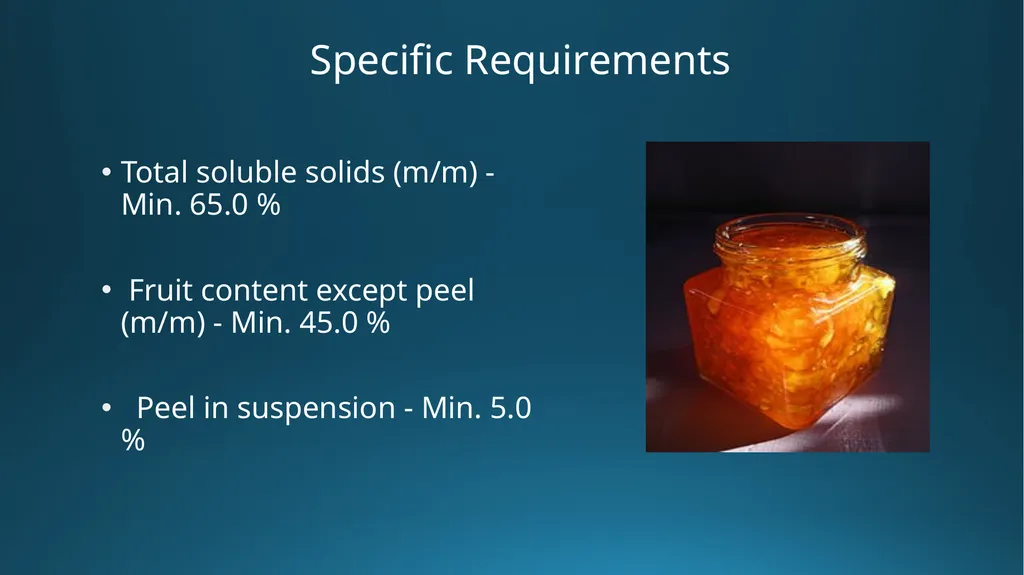
Specific Requirements Total soluble solids (m/m) - Min. 65.0 %
Fruit content except peel (m/m) - Min. 45.0 %
Peel in suspension - Min. 5.0 %<br>
16
Antique marmalade cutter, used to cut citrus fruit peel into thin slices Marmalade spread on bread<br>