Jayna Vossler, MS, CRA, RHIA Research program
Description: Jayna Vossler, MS, CRA, RHIA Research program manager Conducting a Research Project in the Department of Family Medicine Fears of Being Involved in Research Do I have enough time? Where do I begin? How do I find a mentor? I dont know what
Related Topics
Download Presentation
"Jayna Vossler, MS, CRA, RHIA Research program" is the property of its rightful owner. Permission is granted to download and print the materials on this website for personal, non-commercial use only, and to display it on your personal computer provided you do not modify the materials and that you retain all copyright notices contained in the materials. By downloading content from our website, you accept the terms of this agreement.
Presentation Transcript
slide1. Jayna Vossler, MS, CRA, RHIA
Research program manager Conducting a Research Project in the Department of Family Medicine<br>
slide2. Fears of Being Involved in Research Do I have enough time?
Where do I begin?
How do I find a mentor?
I don’t know what my research interests are yet<br>
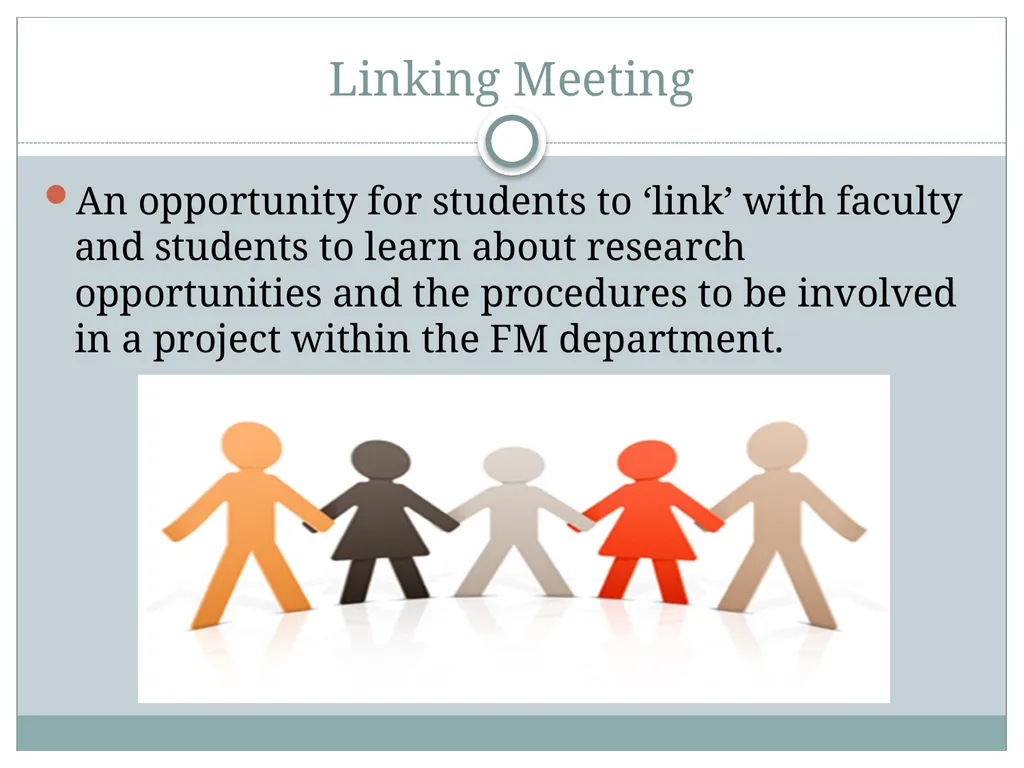
slide3. Linking Meeting An opportunity for students to ‘link’ with faculty and students to learn about research opportunities and the procedures to be involved in a project within the FM department.<br>
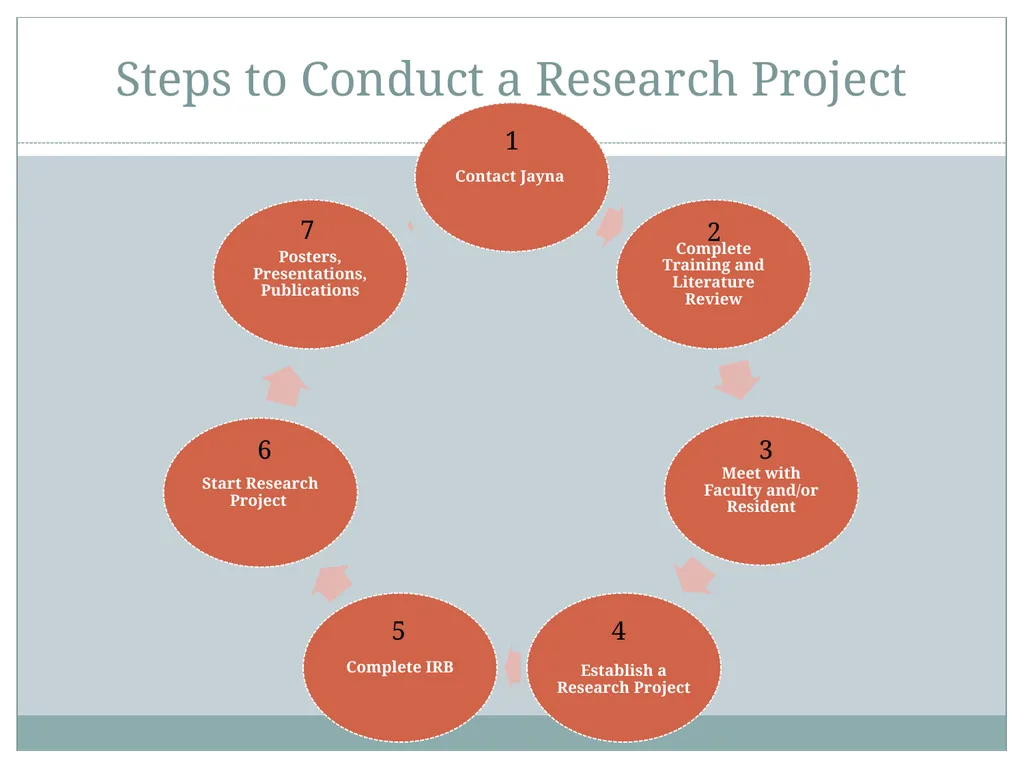
slide4. Steps to Conduct a Research Project 1 2 5 4 3 6 7<br>
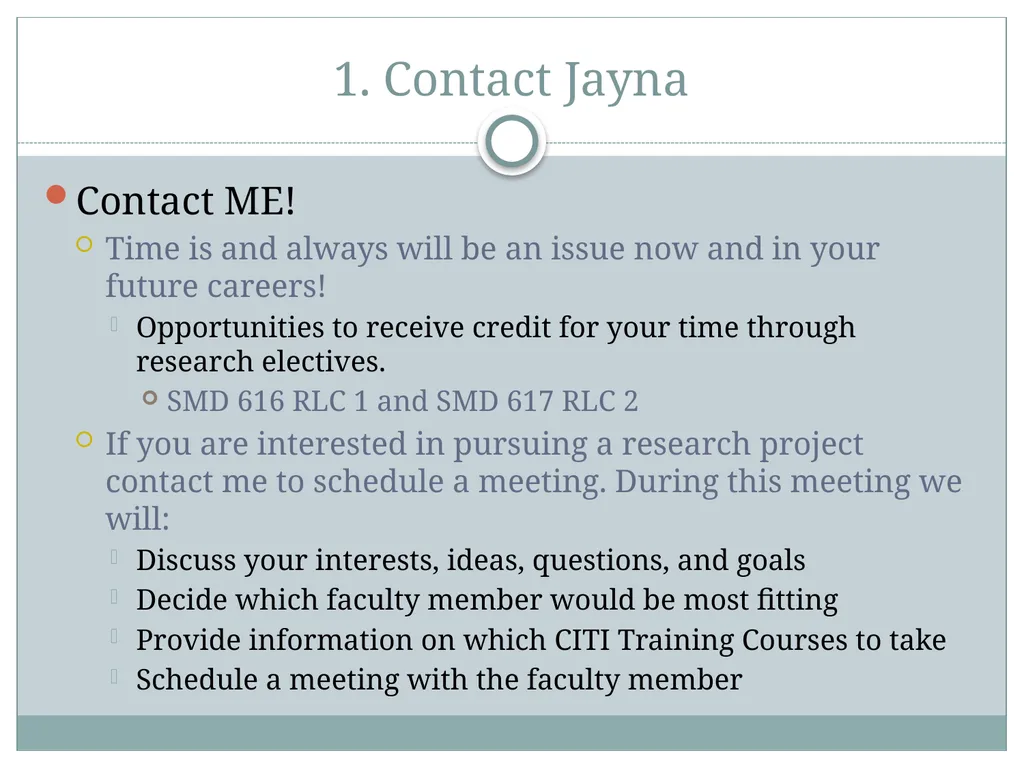
slide5. 1. Contact Jayna Contact ME!
Time is and always will be an issue now and in your future careers!
Opportunities to receive credit for your time through research electives.
SMD 616 RLC 1 and SMD 617 RLC 2
If you are interested in pursuing a research project contact me to schedule a meeting. During this meeting we will:
Discuss your interests, ideas, questions, and goals
Decide which faculty member would be most fitting
Provide information on which CITI Training Courses to take
Schedule a meeting with the faculty member<br>
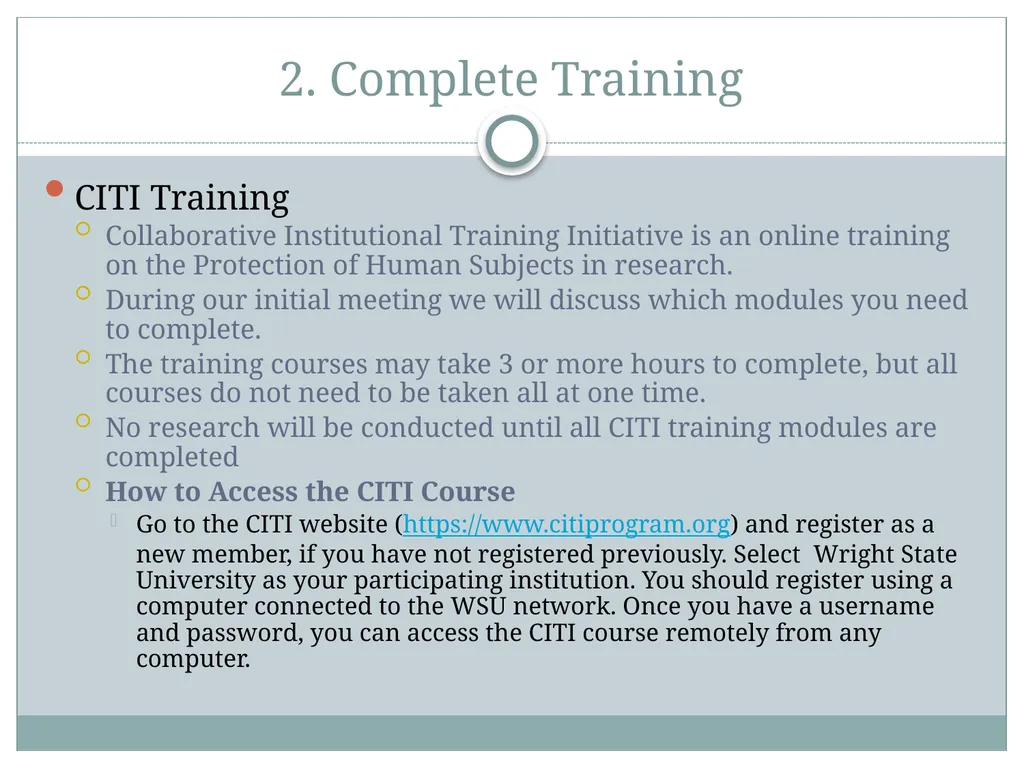
slide6. 2. Complete Training CITI Training
Collaborative Institutional Training Initiative is an online training on the Protection of Human Subjects in research.
During our initial meeting we will discuss which modules you need to complete.
The training courses may take 3 or more hours to complete, but all courses do not need to be taken all at one time.
No research will be conducted until all CITI training modules are completed
How to Access the CITI Course
Go to the CITI website (https://www.citiprogram.org) and register as a new member, if you have not registered previously. Select Wright State University as your participating institution. You should register using a computer connected to the WSU network. Once you have a username and password, you can access the CITI course remotely from any computer.<br>
slide7. 2. Complete Literature Review Prior to scheduling a meeting with a faculty member be prepared!
Review publications on a topic area of interest
Have questions written down about the topic area that you would like to further explore<br>
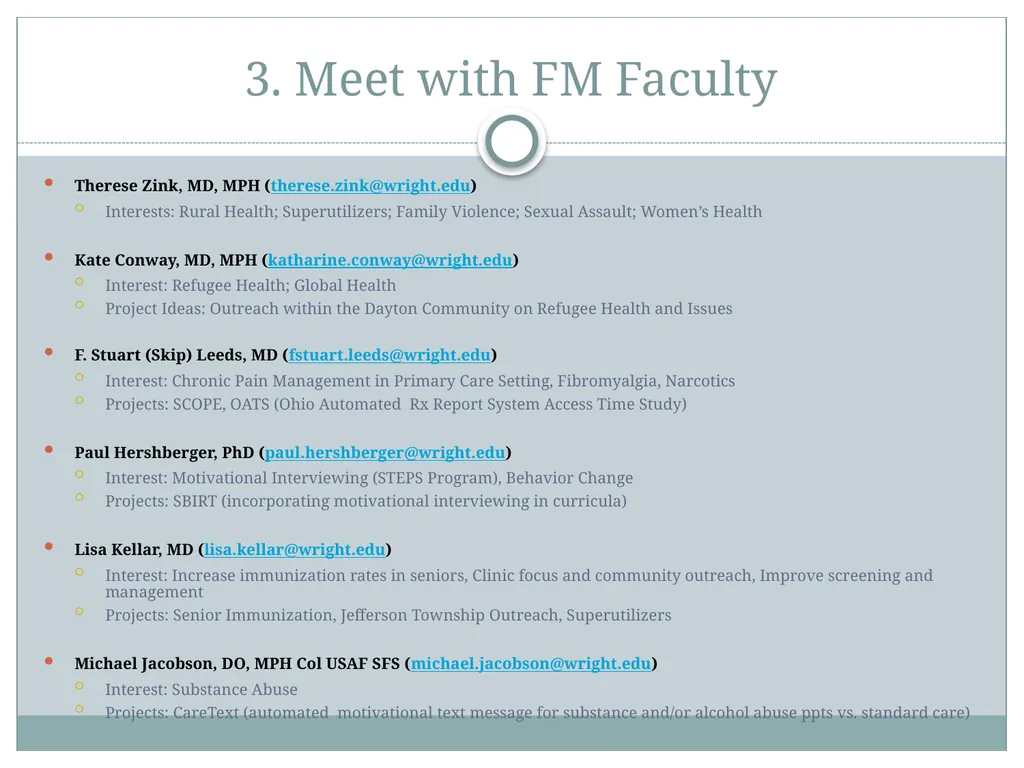
slide8. 3. Meet with FM Faculty Therese Zink, MD, MPH (therese.zink@wright.edu)
Interests: Rural Health; Superutilizers; Family Violence; Sexual Assault; Women’s Health
Kate Conway, MD, MPH (katharine.conway@wright.edu)
Interest: Refugee Health; Global Health
Project Ideas: Outreach within the Dayton Community on Refugee Health and Issues
Â
F. Stuart (Skip) Leeds, MD (fstuart.leeds@wright.edu)
Interest: Chronic Pain Management in Primary Care Setting, Fibromyalgia, Narcotics
Projects: SCOPE, OATS (Ohio Automated Rx Report System Access Time Study)
Paul Hershberger, PhD (paul.hershberger@wright.edu)
Interest: Motivational Interviewing (STEPS Program), Behavior Change
Projects: SBIRT (incorporating motivational interviewing in curricula)
Lisa Kellar, MD (lisa.kellar@wright.edu)
Interest: Increase immunization rates in seniors, Clinic focus and community outreach, Improve screening and management
Projects: Senior Immunization, Jefferson Township Outreach, Superutilizers
Michael Jacobson, DO, MPH Col USAF SFS (michael.jacobson@wright.edu)
Interest: Substance Abuse
Projects: CareText (automated motivational text message for substance and/or alcohol abuse ppts vs. standard care)<br>
slide9. Josephine Wilson, DDS, PhD (Josephine.wilson@wright.edu )
Interest: Substance Abuse
Projects: SARDI (Substance Abuse Resources and Disability Issues) Program; CareText (automated motivational text message for substance and/or alcohol abuse patients vs. standard care); SBIRT (incorporating motivational interviewing in curricula)
Donald Clark, MD (Donald.clark@wright.edu)
Interest: Quality Improvement; Patient Center Medical Home (PCMH); Behavioral Health Integration ; HPV Improvement Rates
Anne Proulx, DO (anne.proulx@wright.edu)
Interest: Decision tool for cardiac risk reduction, Obesity
Â
Lisa Righter, MD (lisa.righter@wright.edu)
Interest: Quality Improvement
Colon cancer, flu/pneumonia, hypertension, diabetes, smoking cessation, alcohol/drug, obesity
Katie McMenamin, CNP (Katie.McMenamin@wrightstatephysicians.org)
Interest: Relationship between NP and Medical Students with Faculty
Project: Million Hearts Campaign (Hypertension)
Â
Scott Newman, CNP (scott.newman@wright.edu)
Interest: Quality Improvement
Project: Good Catch Project (Promote Safety in the clinic)
Robert Brandt, MD (Robert.brandt@wright.edu)
Interest: PharmD, HIV<br>
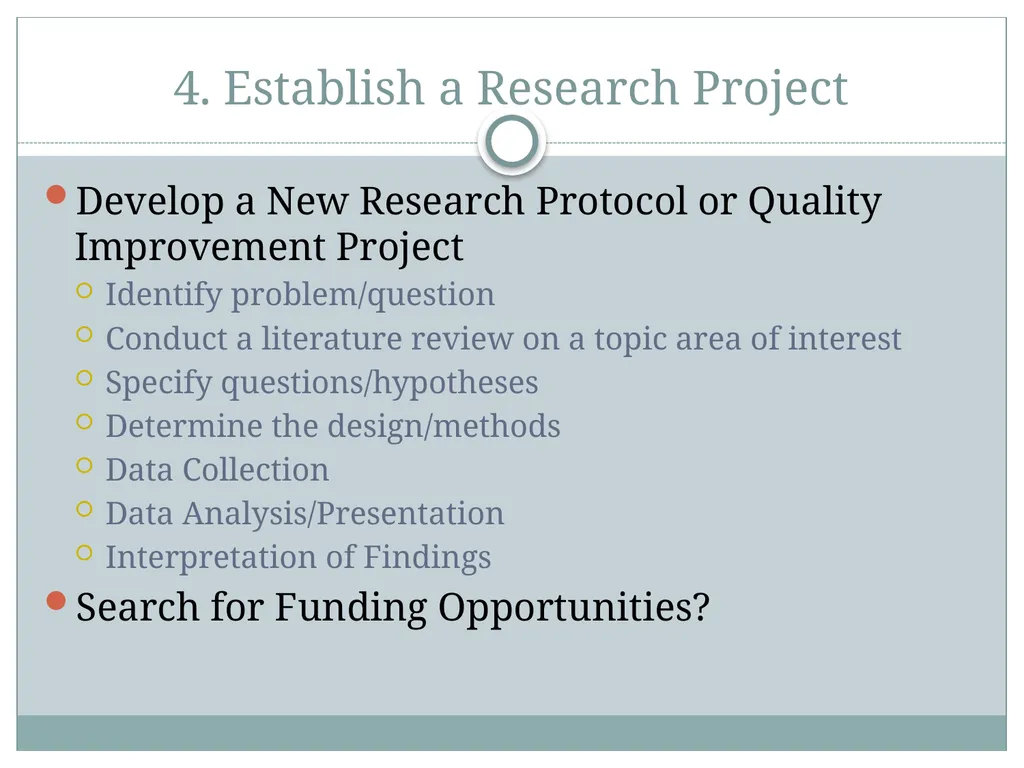
slide10. 4. Establish a Research Project Develop a New Research Protocol or Quality Improvement Project
Identify problem/question
Conduct a literature review on a topic area of interest
Specify questions/hypotheses
Determine the design/methods
Data Collection
Data Analysis/Presentation
Interpretation of Findings
Search for Funding Opportunities?<br>
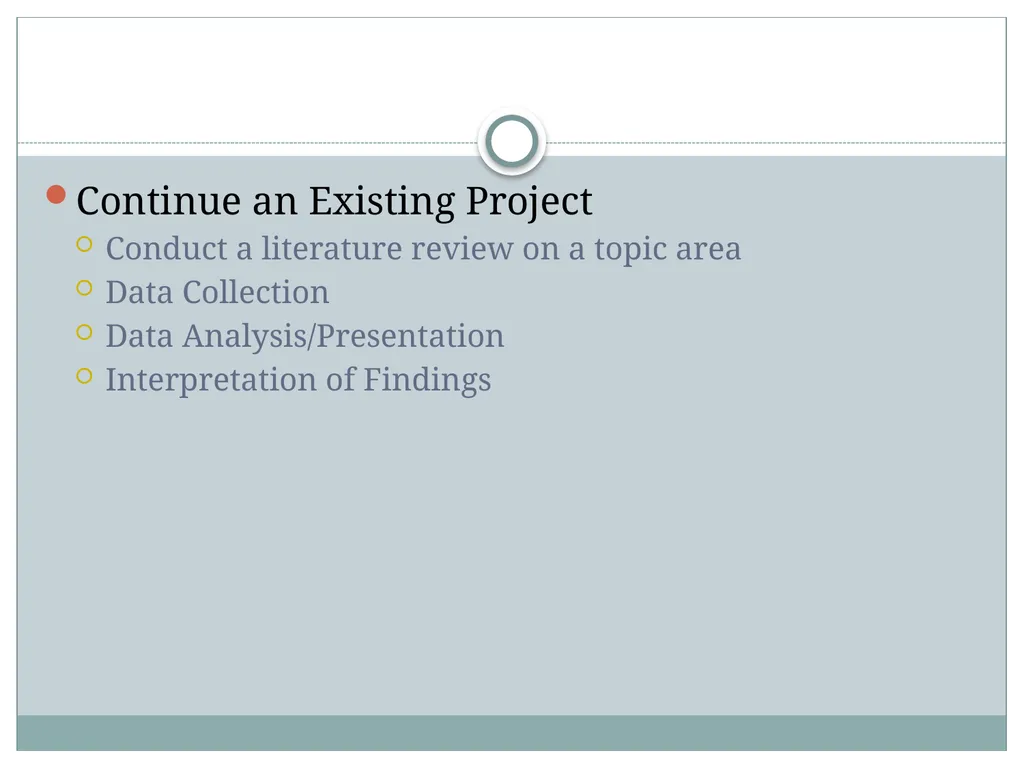
slide11. Continue an Existing Project
Conduct a literature review on a topic area
Data Collection
Data Analysis/Presentation
Interpretation of Findings<br>
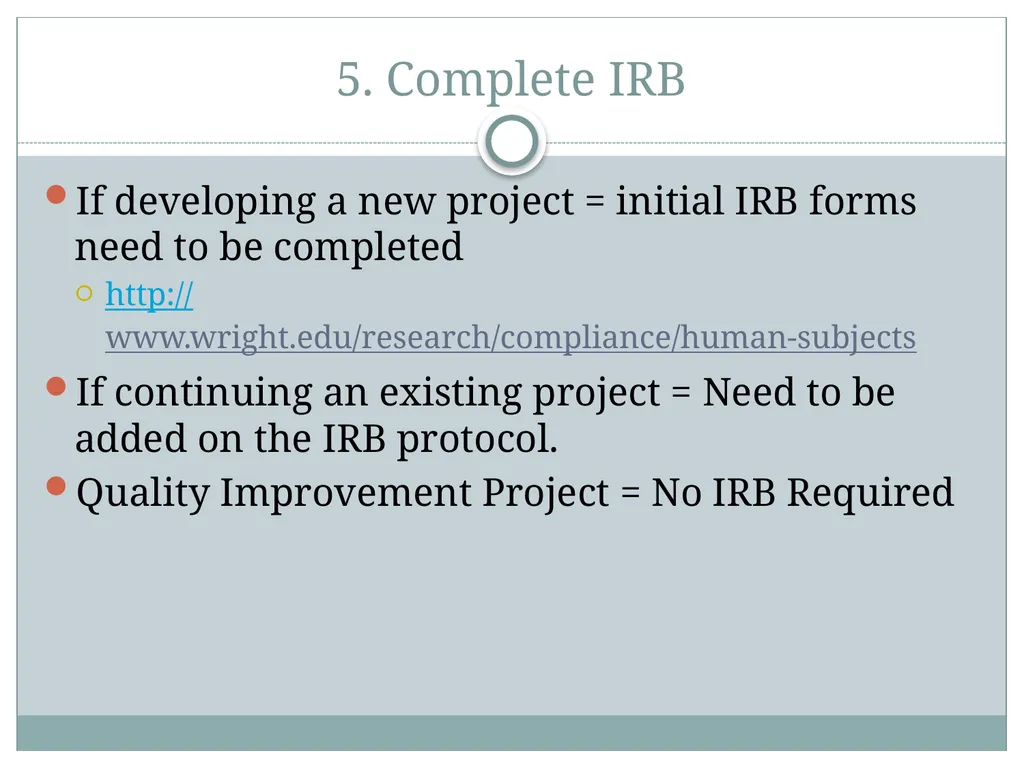
slide12. 5. Complete IRB If developing a new project = initial IRB forms need to be completed
http://www.wright.edu/research/compliance/human-subjects
If continuing an existing project = Need to be added on the IRB protocol.
Quality Improvement Project = No IRB Required<br>
slide13. 6. Start Research Project Develop a project timeline, schedule, and goals<br>
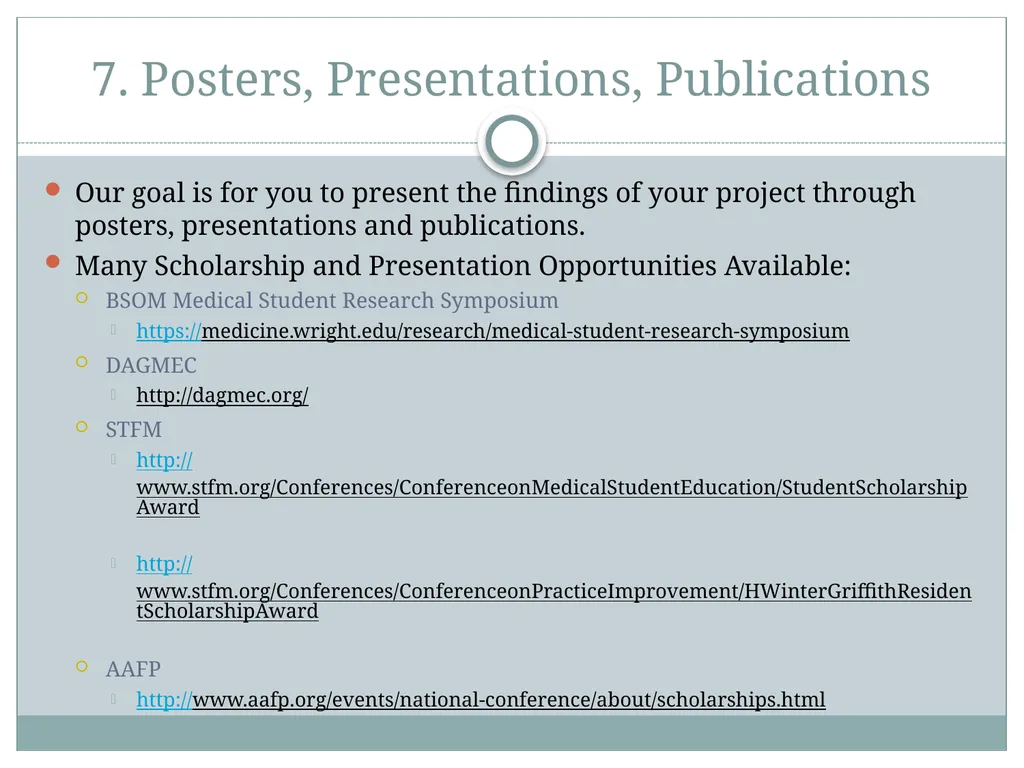
slide14. 7. Posters, Presentations, Publications Our goal is for you to present the findings of your project through posters, presentations and publications.
Many Scholarship and Presentation Opportunities Available:
BSOM Medical Student Research Symposium
https://medicine.wright.edu/research/medical-student-research-symposium
DAGMEC
http://dagmec.org/
STFM
http://www.stfm.org/Conferences/ConferenceonMedicalStudentEducation/StudentScholarshipAward
http://www.stfm.org/Conferences/ConferenceonPracticeImprovement/HWinterGriffithResidentScholarshipAward
AAFP
http://www.aafp.org/events/national-conference/about/scholarships.html<br>
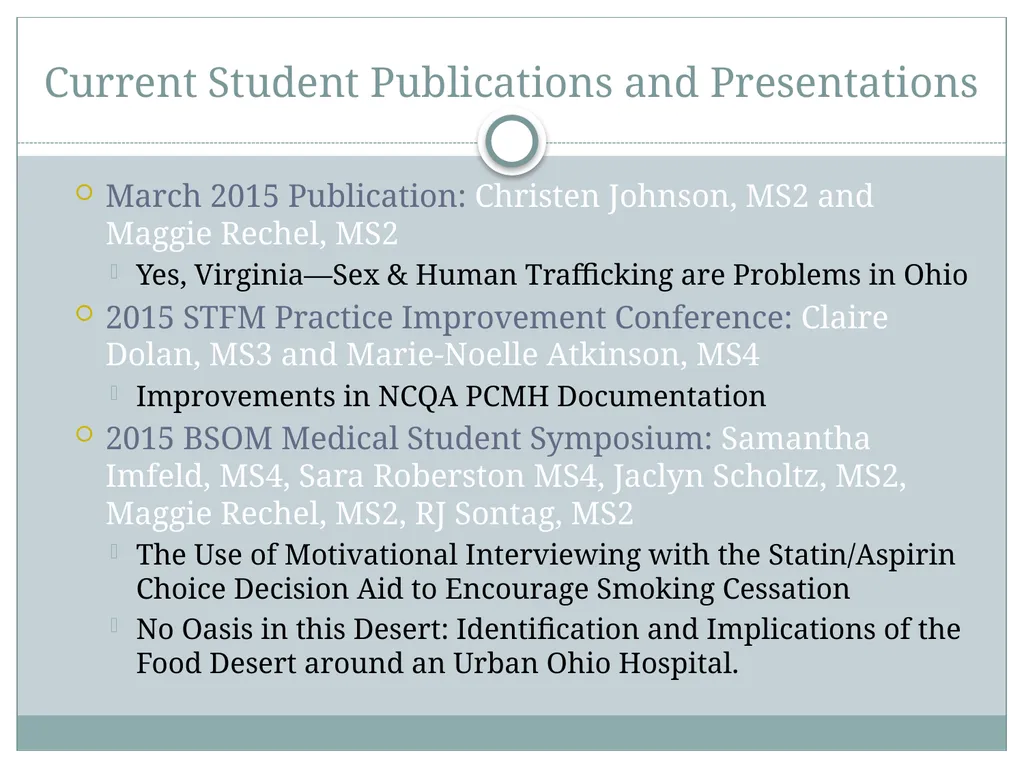
slide15. Current Student Publications and Presentations March 2015 Publication: Christen Johnson, MS2 and Maggie Rechel, MS2
Yes, Virginia—Sex & Human Trafficking are Problems in Ohio
2015 STFM Practice Improvement Conference: Claire Dolan, MS3 and Marie-Noelle Atkinson, MS4
Improvements in NCQA PCMH Documentation
2015 BSOM Medical Student Symposium: Samantha Imfeld, MS4, Sara Roberston MS4, Jaclyn Scholtz, MS2, Maggie Rechel, MS2, RJ Sontag, MS2
The Use of Motivational Interviewing with the Statin/Aspirin Choice Decision Aid to Encourage Smoking Cessation
No Oasis in this Desert: Identification and Implications of the Food Desert around an Urban Ohio Hospital.<br>
slide16. Why be Involved in Research? To learn something new
Hone your problem solving skills
Challenge yourself
Pursue your interests
Add to your CV!<br>
slide17. Contact Information I am here to help you through these steps! Never be afraid to contact me!<br>
slide18. BSOM Research Opportunities Amber N. McCurdy, B.A.
Medical Student Research Coordinator
White Hall 290, 3640 Colonel Glenn Hwy, Dayton, OH 45435
937-775-3814 amber.mccurdy@wright.edu
Research Funding and Electives are Available
http://medicine.wright.edu/research/research-learning-community<br>

Research program manager Conducting a Research Project in the Department of Family Medicine<br>
slide2. Fears of Being Involved in Research Do I have enough time?
Where do I begin?
How do I find a mentor?
I don’t know what my research interests are yet<br>
slide3. Linking Meeting An opportunity for students to ‘link’ with faculty and students to learn about research opportunities and the procedures to be involved in a project within the FM department.<br>
slide4. Steps to Conduct a Research Project 1 2 5 4 3 6 7<br>
slide5. 1. Contact Jayna Contact ME!
Time is and always will be an issue now and in your future careers!
Opportunities to receive credit for your time through research electives.
SMD 616 RLC 1 and SMD 617 RLC 2
If you are interested in pursuing a research project contact me to schedule a meeting. During this meeting we will:
Discuss your interests, ideas, questions, and goals
Decide which faculty member would be most fitting
Provide information on which CITI Training Courses to take
Schedule a meeting with the faculty member<br>
slide6. 2. Complete Training CITI Training
Collaborative Institutional Training Initiative is an online training on the Protection of Human Subjects in research.
During our initial meeting we will discuss which modules you need to complete.
The training courses may take 3 or more hours to complete, but all courses do not need to be taken all at one time.
No research will be conducted until all CITI training modules are completed
How to Access the CITI Course
Go to the CITI website (https://www.citiprogram.org) and register as a new member, if you have not registered previously. Select Wright State University as your participating institution. You should register using a computer connected to the WSU network. Once you have a username and password, you can access the CITI course remotely from any computer.<br>
slide7. 2. Complete Literature Review Prior to scheduling a meeting with a faculty member be prepared!
Review publications on a topic area of interest
Have questions written down about the topic area that you would like to further explore<br>
slide8. 3. Meet with FM Faculty Therese Zink, MD, MPH (therese.zink@wright.edu)
Interests: Rural Health; Superutilizers; Family Violence; Sexual Assault; Women’s Health
Kate Conway, MD, MPH (katharine.conway@wright.edu)
Interest: Refugee Health; Global Health
Project Ideas: Outreach within the Dayton Community on Refugee Health and Issues
Â
F. Stuart (Skip) Leeds, MD (fstuart.leeds@wright.edu)
Interest: Chronic Pain Management in Primary Care Setting, Fibromyalgia, Narcotics
Projects: SCOPE, OATS (Ohio Automated Rx Report System Access Time Study)
Paul Hershberger, PhD (paul.hershberger@wright.edu)
Interest: Motivational Interviewing (STEPS Program), Behavior Change
Projects: SBIRT (incorporating motivational interviewing in curricula)
Lisa Kellar, MD (lisa.kellar@wright.edu)
Interest: Increase immunization rates in seniors, Clinic focus and community outreach, Improve screening and management
Projects: Senior Immunization, Jefferson Township Outreach, Superutilizers
Michael Jacobson, DO, MPH Col USAF SFS (michael.jacobson@wright.edu)
Interest: Substance Abuse
Projects: CareText (automated motivational text message for substance and/or alcohol abuse ppts vs. standard care)<br>
slide9. Josephine Wilson, DDS, PhD (Josephine.wilson@wright.edu )
Interest: Substance Abuse
Projects: SARDI (Substance Abuse Resources and Disability Issues) Program; CareText (automated motivational text message for substance and/or alcohol abuse patients vs. standard care); SBIRT (incorporating motivational interviewing in curricula)
Donald Clark, MD (Donald.clark@wright.edu)
Interest: Quality Improvement; Patient Center Medical Home (PCMH); Behavioral Health Integration ; HPV Improvement Rates
Anne Proulx, DO (anne.proulx@wright.edu)
Interest: Decision tool for cardiac risk reduction, Obesity
Â
Lisa Righter, MD (lisa.righter@wright.edu)
Interest: Quality Improvement
Colon cancer, flu/pneumonia, hypertension, diabetes, smoking cessation, alcohol/drug, obesity
Katie McMenamin, CNP (Katie.McMenamin@wrightstatephysicians.org)
Interest: Relationship between NP and Medical Students with Faculty
Project: Million Hearts Campaign (Hypertension)
Â
Scott Newman, CNP (scott.newman@wright.edu)
Interest: Quality Improvement
Project: Good Catch Project (Promote Safety in the clinic)
Robert Brandt, MD (Robert.brandt@wright.edu)
Interest: PharmD, HIV<br>
slide10. 4. Establish a Research Project Develop a New Research Protocol or Quality Improvement Project
Identify problem/question
Conduct a literature review on a topic area of interest
Specify questions/hypotheses
Determine the design/methods
Data Collection
Data Analysis/Presentation
Interpretation of Findings
Search for Funding Opportunities?<br>
slide11. Continue an Existing Project
Conduct a literature review on a topic area
Data Collection
Data Analysis/Presentation
Interpretation of Findings<br>
slide12. 5. Complete IRB If developing a new project = initial IRB forms need to be completed
http://www.wright.edu/research/compliance/human-subjects
If continuing an existing project = Need to be added on the IRB protocol.
Quality Improvement Project = No IRB Required<br>
slide13. 6. Start Research Project Develop a project timeline, schedule, and goals<br>
slide14. 7. Posters, Presentations, Publications Our goal is for you to present the findings of your project through posters, presentations and publications.
Many Scholarship and Presentation Opportunities Available:
BSOM Medical Student Research Symposium
https://medicine.wright.edu/research/medical-student-research-symposium
DAGMEC
http://dagmec.org/
STFM
http://www.stfm.org/Conferences/ConferenceonMedicalStudentEducation/StudentScholarshipAward
http://www.stfm.org/Conferences/ConferenceonPracticeImprovement/HWinterGriffithResidentScholarshipAward
AAFP
http://www.aafp.org/events/national-conference/about/scholarships.html<br>
slide15. Current Student Publications and Presentations March 2015 Publication: Christen Johnson, MS2 and Maggie Rechel, MS2
Yes, Virginia—Sex & Human Trafficking are Problems in Ohio
2015 STFM Practice Improvement Conference: Claire Dolan, MS3 and Marie-Noelle Atkinson, MS4
Improvements in NCQA PCMH Documentation
2015 BSOM Medical Student Symposium: Samantha Imfeld, MS4, Sara Roberston MS4, Jaclyn Scholtz, MS2, Maggie Rechel, MS2, RJ Sontag, MS2
The Use of Motivational Interviewing with the Statin/Aspirin Choice Decision Aid to Encourage Smoking Cessation
No Oasis in this Desert: Identification and Implications of the Food Desert around an Urban Ohio Hospital.<br>
slide16. Why be Involved in Research? To learn something new
Hone your problem solving skills
Challenge yourself
Pursue your interests
Add to your CV!<br>
slide17. Contact Information I am here to help you through these steps! Never be afraid to contact me!<br>
slide18. BSOM Research Opportunities Amber N. McCurdy, B.A.
Medical Student Research Coordinator
White Hall 290, 3640 Colonel Glenn Hwy, Dayton, OH 45435
937-775-3814 amber.mccurdy@wright.edu
Research Funding and Electives are Available
http://medicine.wright.edu/research/research-learning-community<br>