Karen C. Timberlake Lecture Presentation Chapter 2 Chemistry and Measurements Chapter 2 Chemistry and Measurements In addition to assisting physicians, registered nurses work to promote patient health and prevent and treat disease. Chapter
"Karen C. Timberlake Lecture Presentation Chapter 2" is the property of its rightful owner. Permission is granted to
download and print the materials on this website for personal, non-commercial use only, and to display it
on your personal computer provided you do not modify the materials and that you retain all copyright
notices contained in the materials. By downloading content from our website, you accept the terms of this
agreement.
Presentation Transcript
01
Karen C. Timberlake Lecture Presentation Chapter 2 Chemistry and Measurements<br>
02
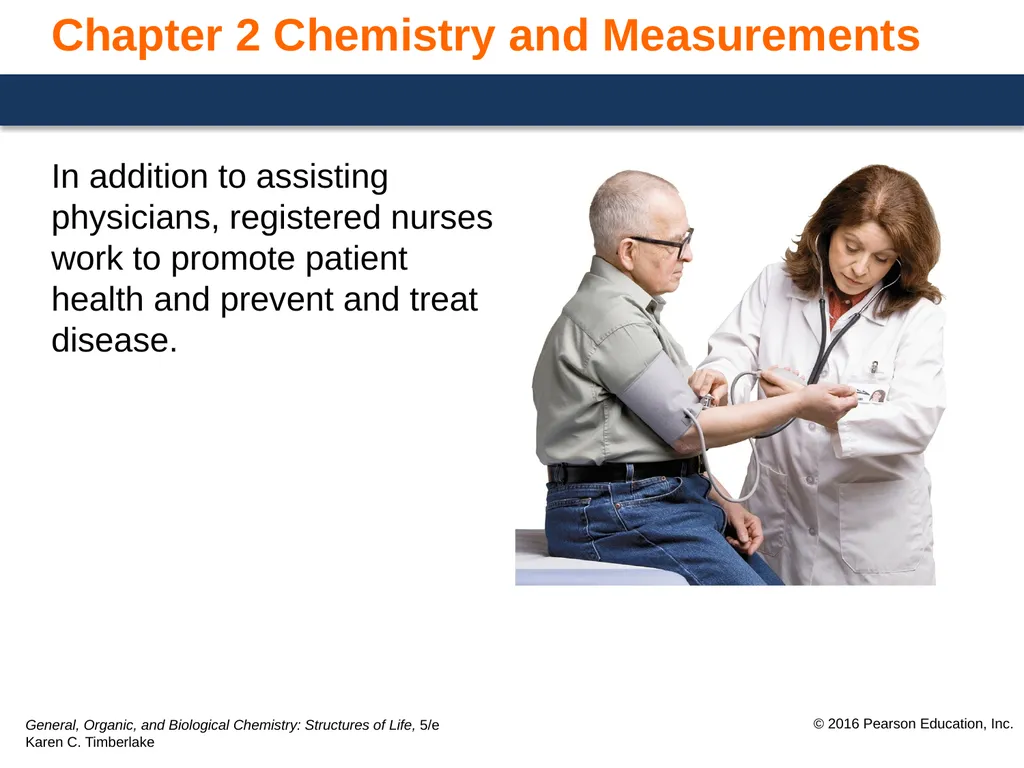
Chapter 2 Chemistry and Measurements In addition to assisting physicians, registered nurses work to promote patient health and prevent and treat disease.<br>
03
Chapter 2 Readiness Key Math Skills
Identifying Place Values (1.4A)
Using Positive and Negative Numbers in Calculations (1.4B)
Calculating Percentages (1.4C)
Writing Numbers in Scientific Notation (1.4F)<br>
04
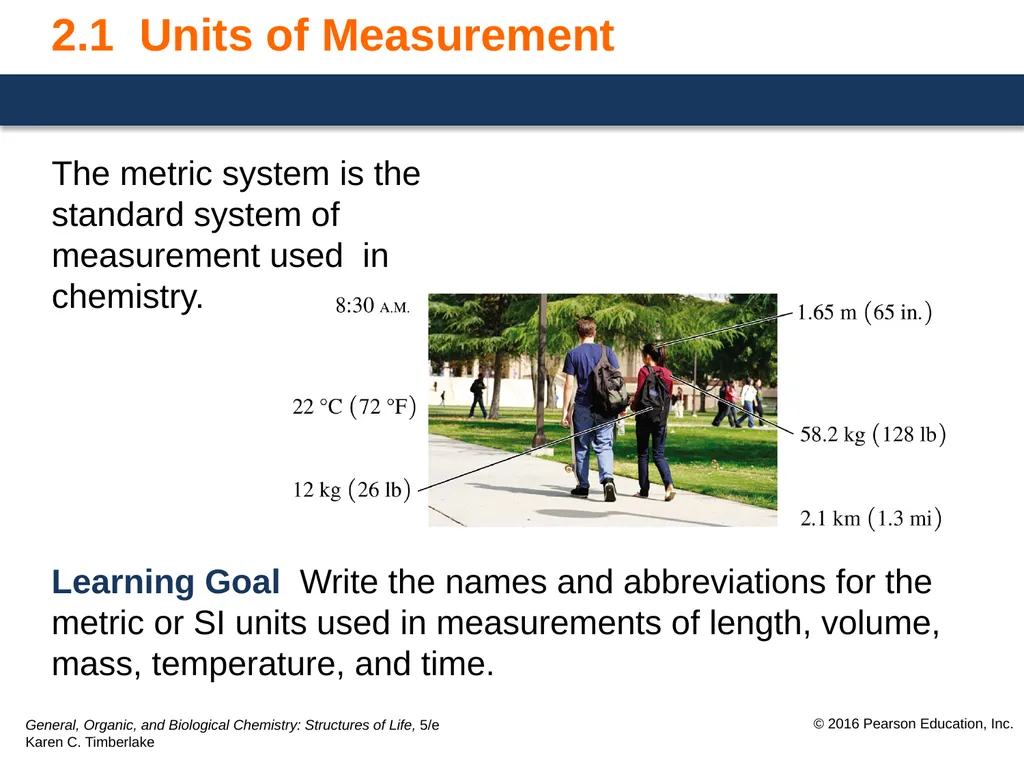
2.1 Units of Measurement The metric system is the standard system of measurement used in chemistry. Learning Goal Write the names and abbreviations for the metric or SI units used in measurements of length, volume, mass, temperature, and time.<br>
05
Units of Measurement Scientists use the metric system of measurement and have adopted a modification of the metric system called the International System of Units as a worldwide standard.
The International System of Units (SI) is an official system of measurement used throughout the world for units of length, volume, mass, temperature, and time.<br>
06
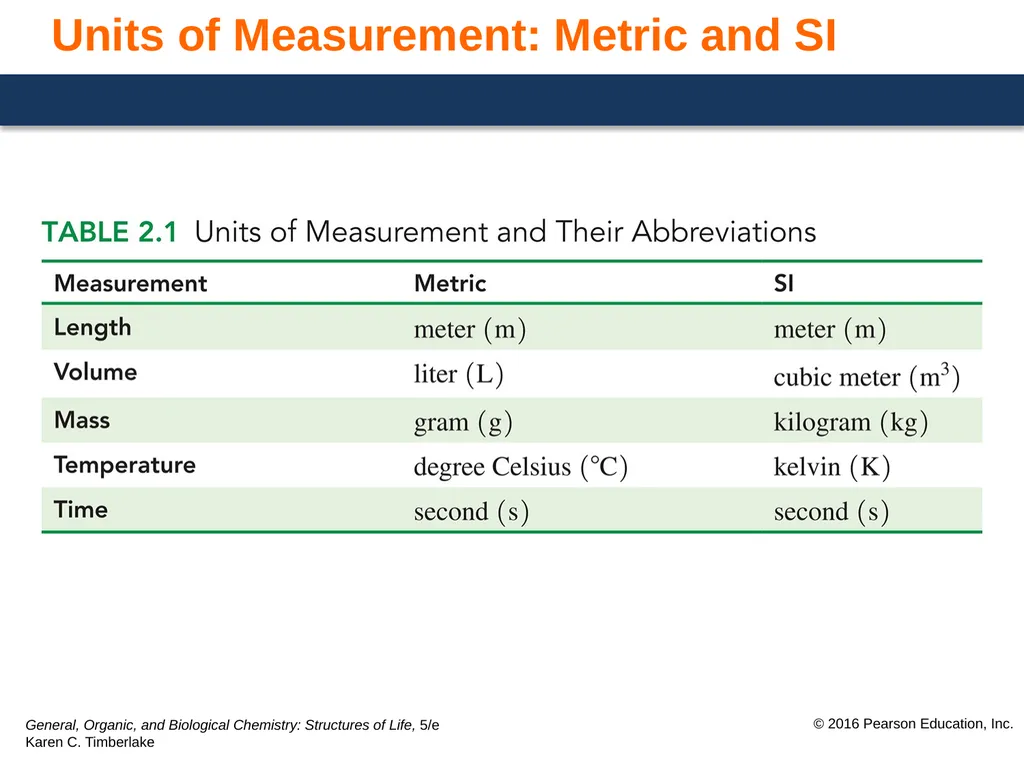
Units of Measurement: Metric and SI<br>
07
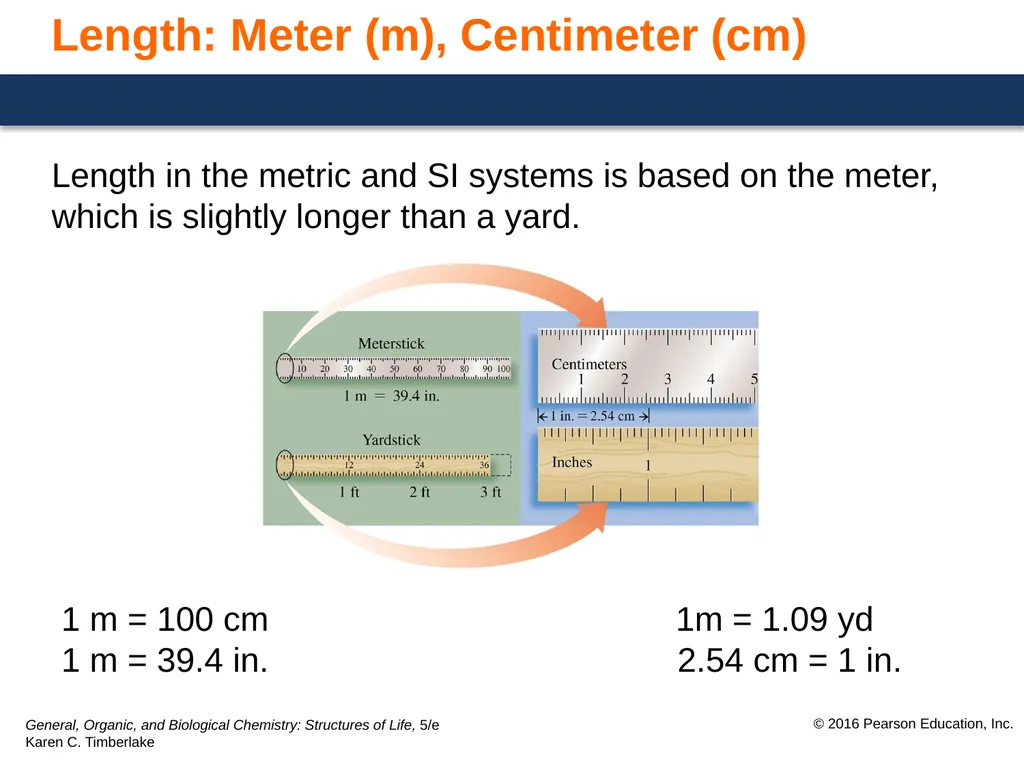
Length: Meter (m), Centimeter (cm) Length in the metric and SI systems is based on the meter, which is slightly longer than a yard. 1 m = 100 cm 1m = 1.09 yd
1 m = 39.4 in. 2.54 cm = 1 in.<br>
08
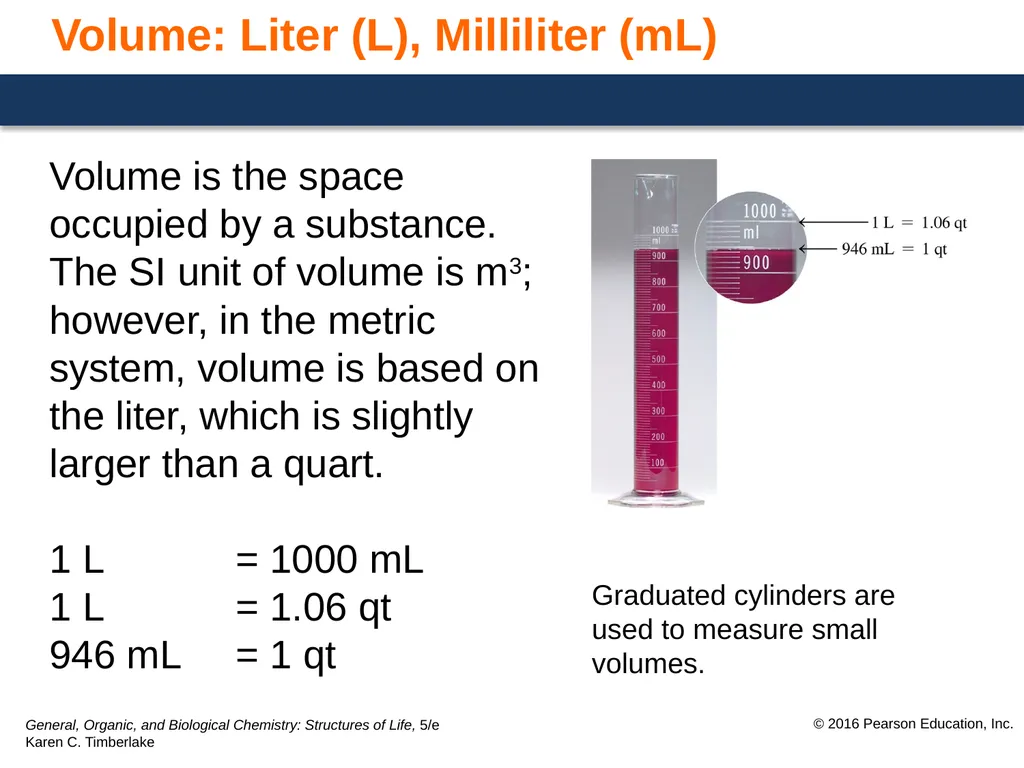
Volume: Liter (L), Milliliter (mL) Volume is the space occupied by a substance. The SI unit of volume is m3; however, in the metric system, volume is based on the liter, which is slightly larger than a quart.
1 L = 1000 mL
1 L = 1.06 qt
946 mL = 1 qt Graduated cylinders are used to measure small volumes.<br>
09
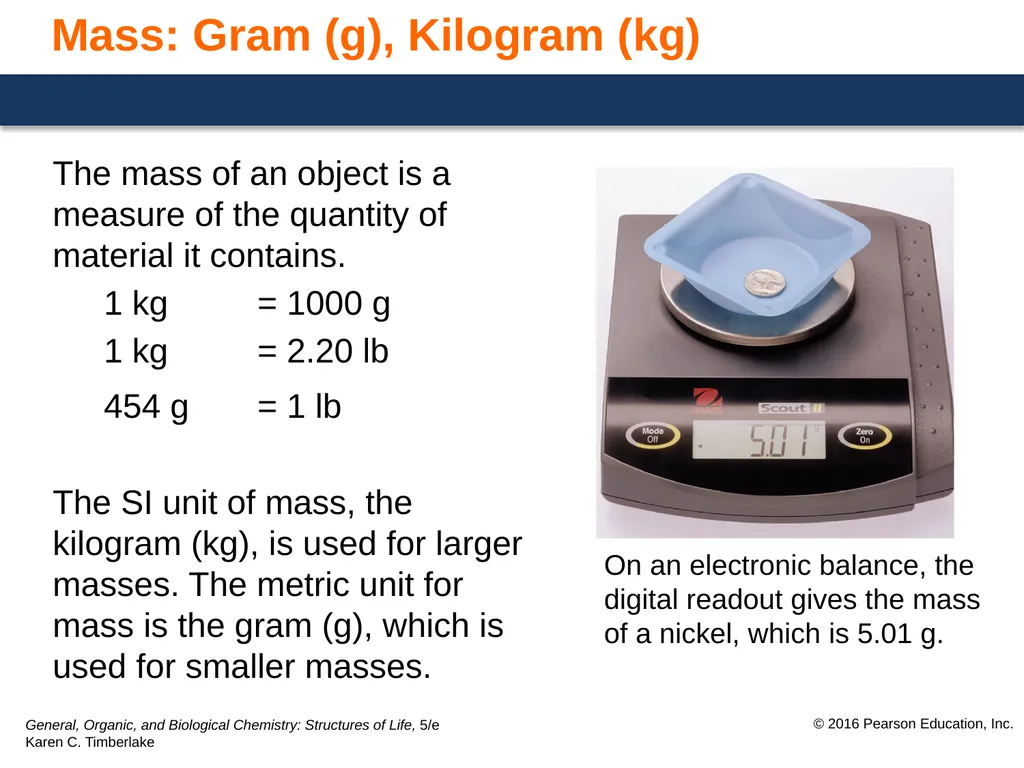
Mass: Gram (g), Kilogram (kg) The mass of an object is a measure of the quantity of material it contains.
1 kg = 1000 g
1 kg = 2.20 lb
454 g = 1 lb
The SI unit of mass, the kilogram (kg), is used for larger masses. The metric unit for mass is the gram (g), which is used for smaller masses. On an electronic balance, the
digital readout gives the mass
of a nickel, which is 5.01 g.<br>
10
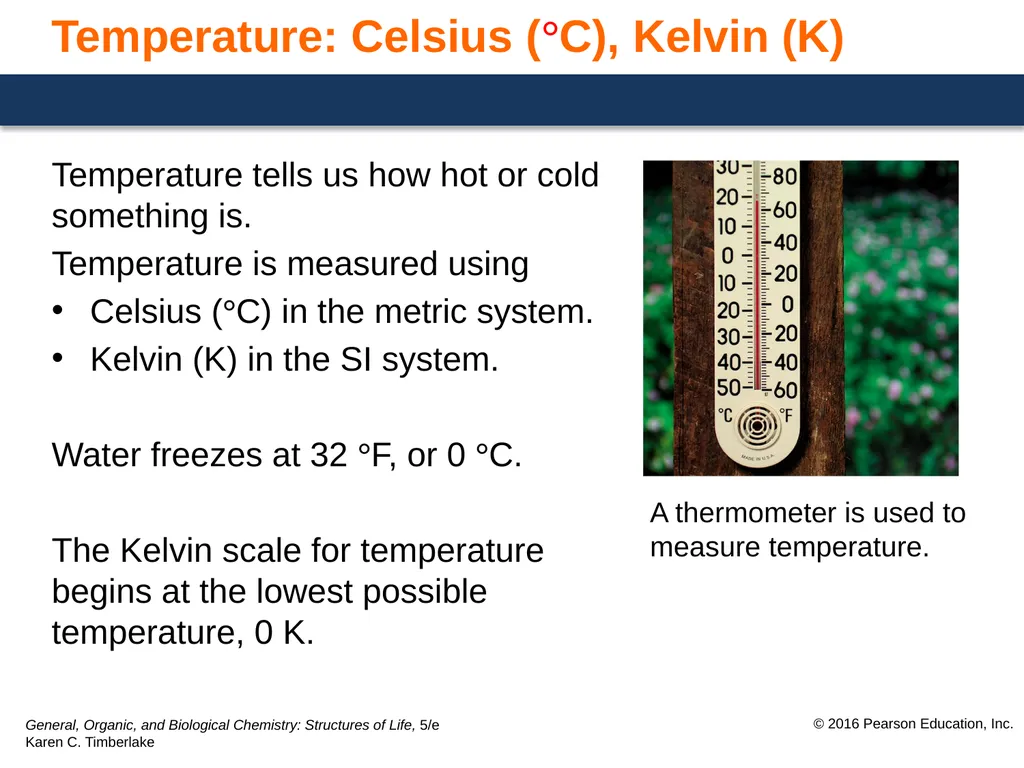
Temperature: Celsius (°C), Kelvin (K) Temperature tells us how hot or cold something is.
Temperature is measured using
Celsius (°C) in the metric system.
Kelvin (K) in the SI system.
Water freezes at 32 °F, or 0 °C.
The Kelvin scale for temperature begins at the lowest possible temperature, 0 K. A thermometer is used to measure temperature.<br>
11
Time: Second (s) Time is measured in units such as the following:
years (yr)
days
hours (h)
minutes (min)
seconds (s)
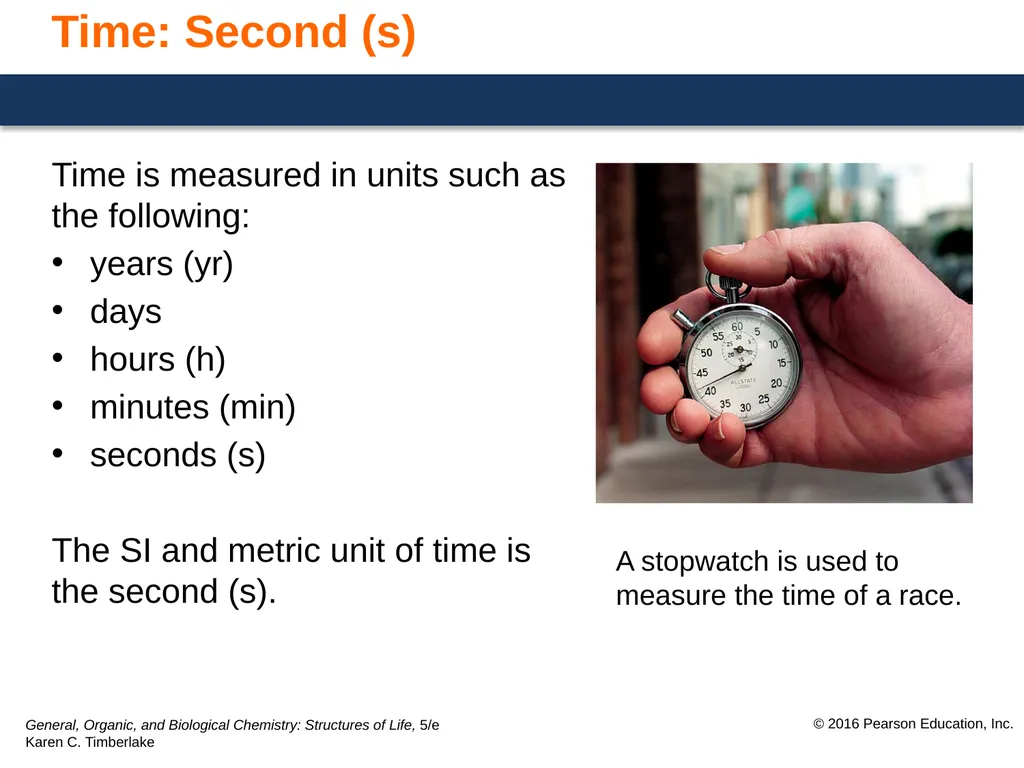
The SI and metric unit of time is the second (s). A stopwatch is used to measure the time of a race.<br>
12
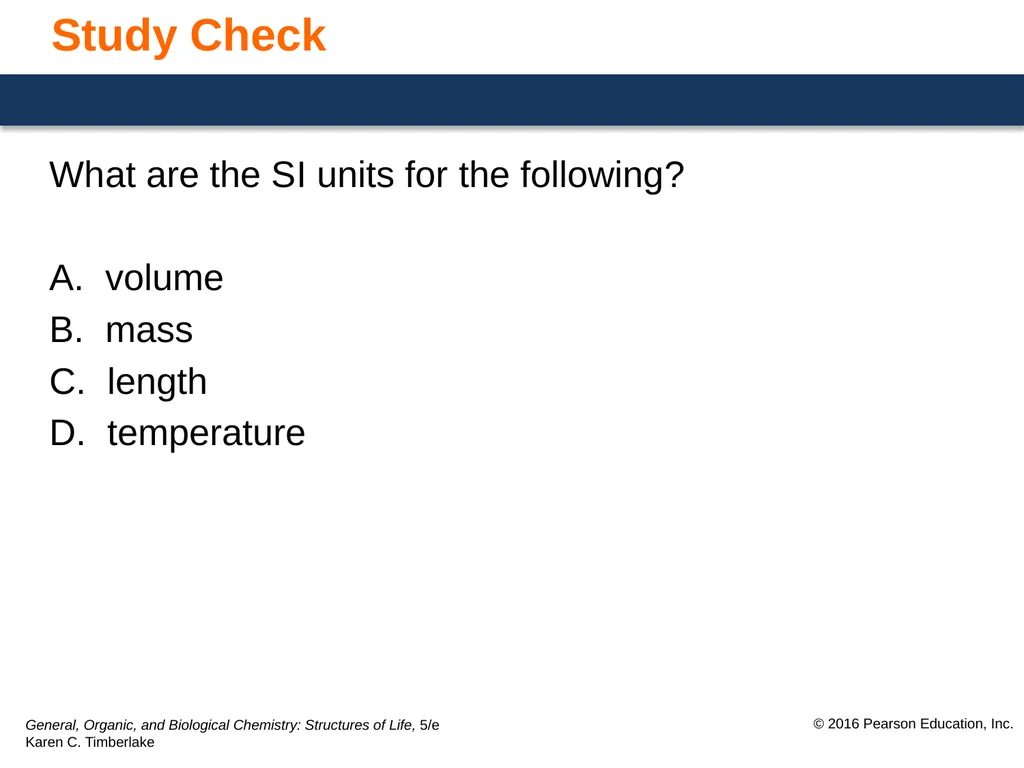
Study Check What are the SI units for the following?
A. volume
B. mass
C. length
D. temperature<br>
13
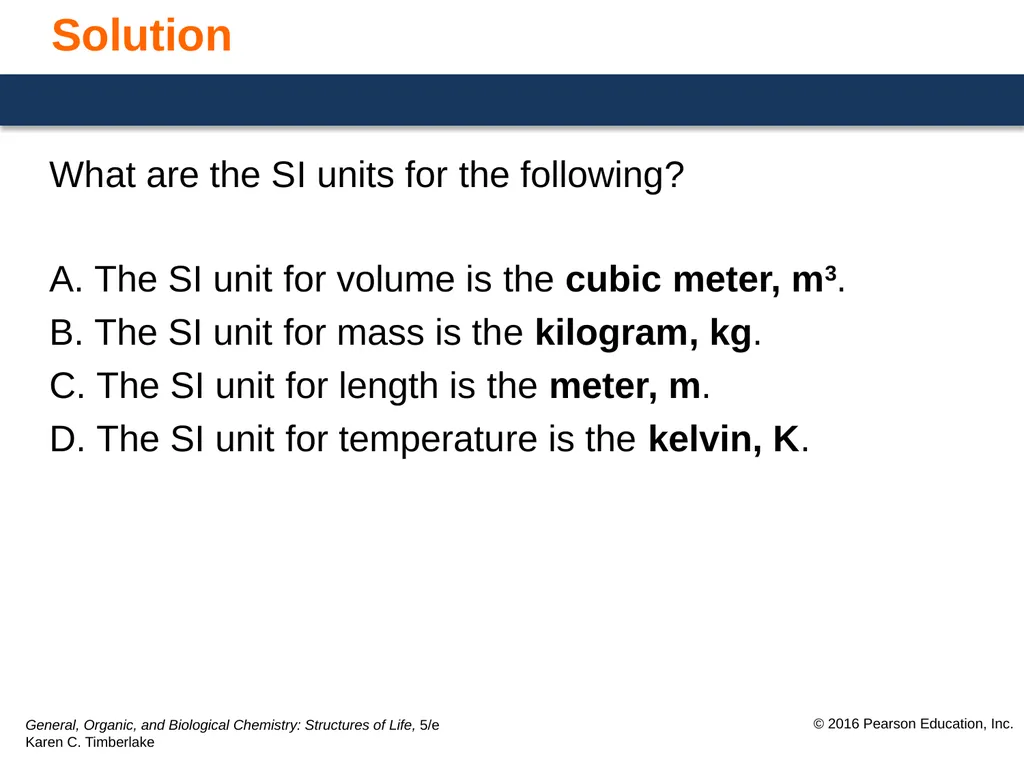
Solution What are the SI units for the following?
A. The SI unit for volume is the cubic meter, m3.
B. The SI unit for mass is the kilogram, kg.
C. The SI unit for length is the meter, m.
D. The SI unit for temperature is the kelvin, K.<br>