"KS3 Science: 9 Ecosystems 9.1 Interdependence" is the property of its rightful owner. Permission is granted to
download and print the materials on this website for personal, non-commercial use only, and to display it
on your personal computer provided you do not modify the materials and that you retain all copyright
notices contained in the materials. By downloading content from our website, you accept the terms of this
agreement.
Date unit started: _____________________________________<br>
02
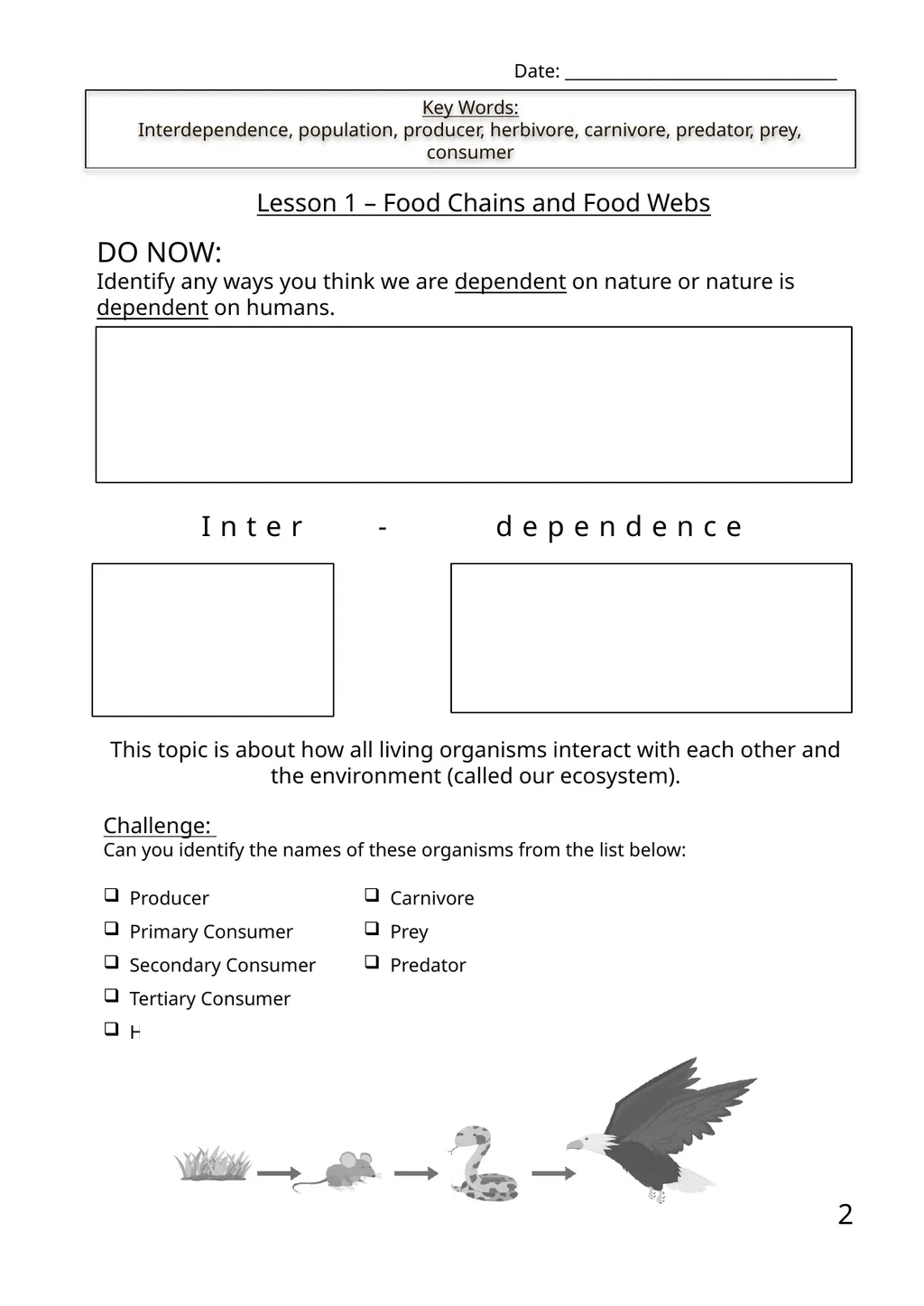
2 Lesson 1 – Food Chains and Food Webs Date: _________________________________ Key Words:
Interdependence, population, producer, herbivore, carnivore, predator, prey, consumer DO NOW:
Identify any ways you think we are dependent on nature or nature is dependent on humans. Inter - dependence This topic is about how all living organisms interact with each other and the environment (called our ecosystem). Challenge: Can you identify the names of these organisms from the list below: Producer
Primary Consumer
Secondary Consumer
Tertiary Consumer
Herbivore
Carnivore
Prey
Predator<br>
03
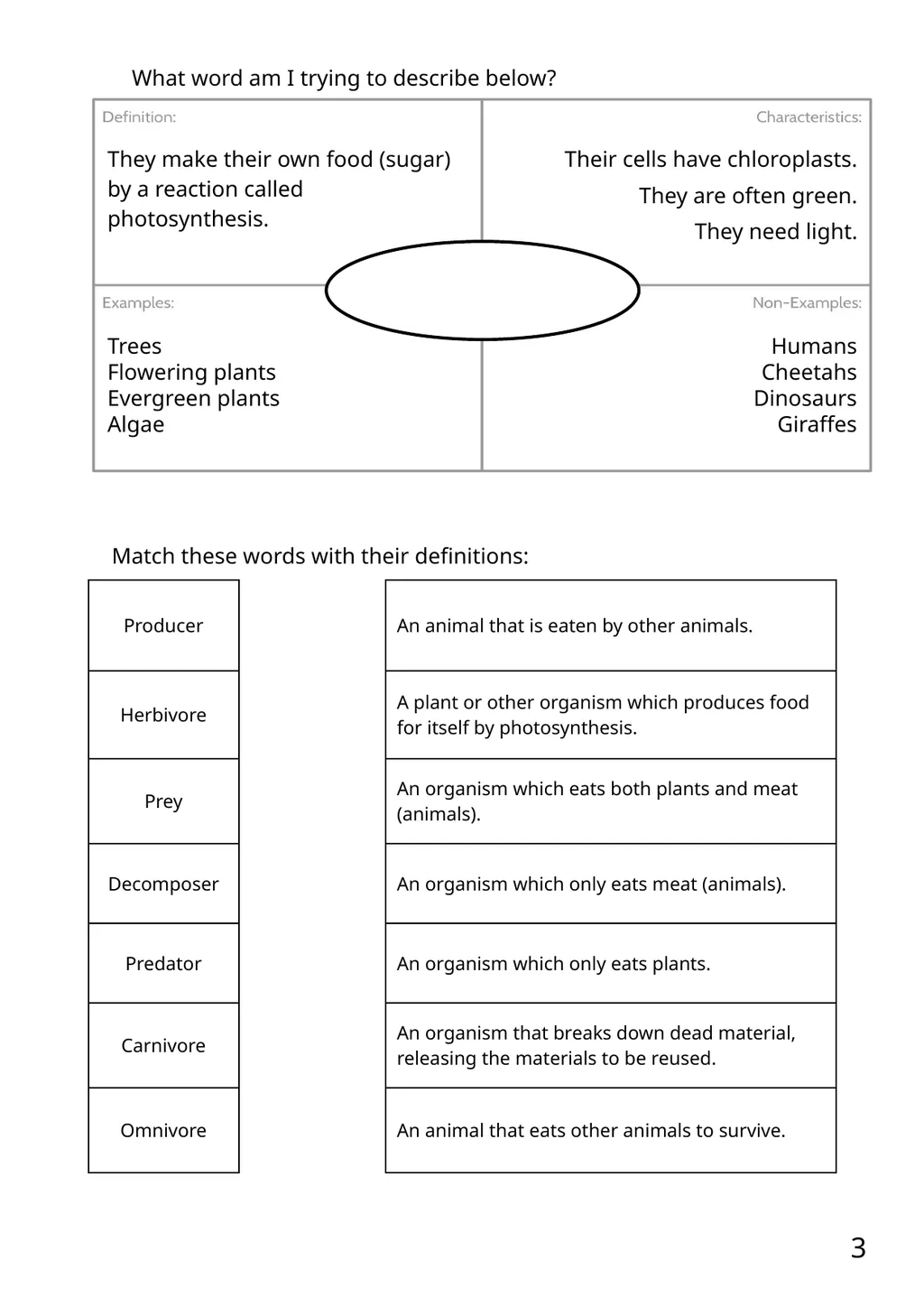
3 They make their own food (sugar) by a reaction called photosynthesis. Their cells have chloroplasts.
They are often green.
They need light. Trees
Flowering plants
Evergreen plants
Algae Humans
Cheetahs
Dinosaurs
Giraffes What word am I trying to describe below? Match these words with their definitions:<br>
04
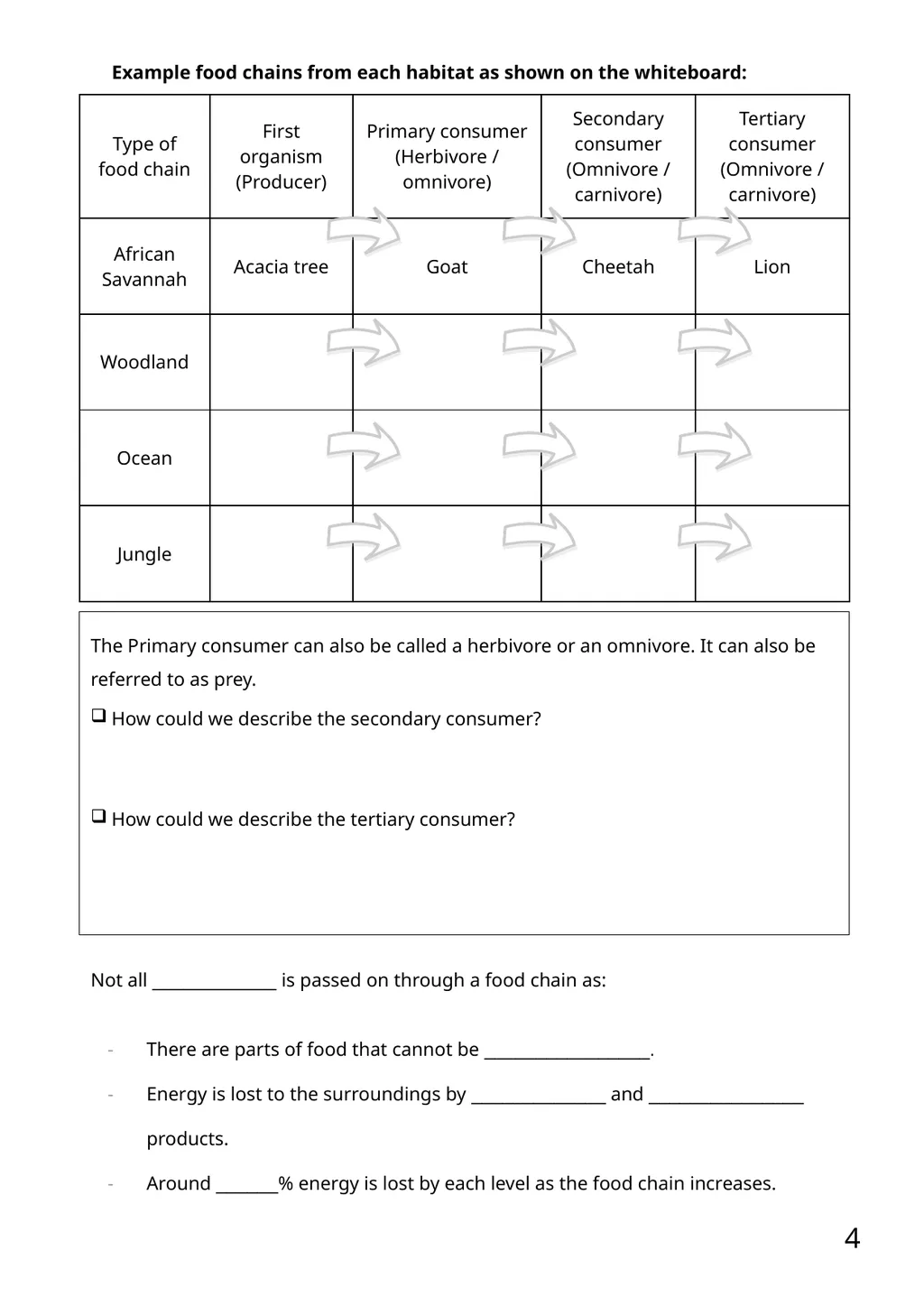
4 The Primary consumer can also be called a herbivore or an omnivore. It can also be referred to as prey.
How could we describe the secondary consumer?
How could we describe the tertiary consumer? Example food chains from each habitat as shown on the whiteboard: Not all ____________ is passed on through a food chain as:
There are parts of food that cannot be ________________.
Energy is lost to the surroundings by _____________ and _______________ products.
Around ______% energy is lost by each level as the food chain increases.<br>
05
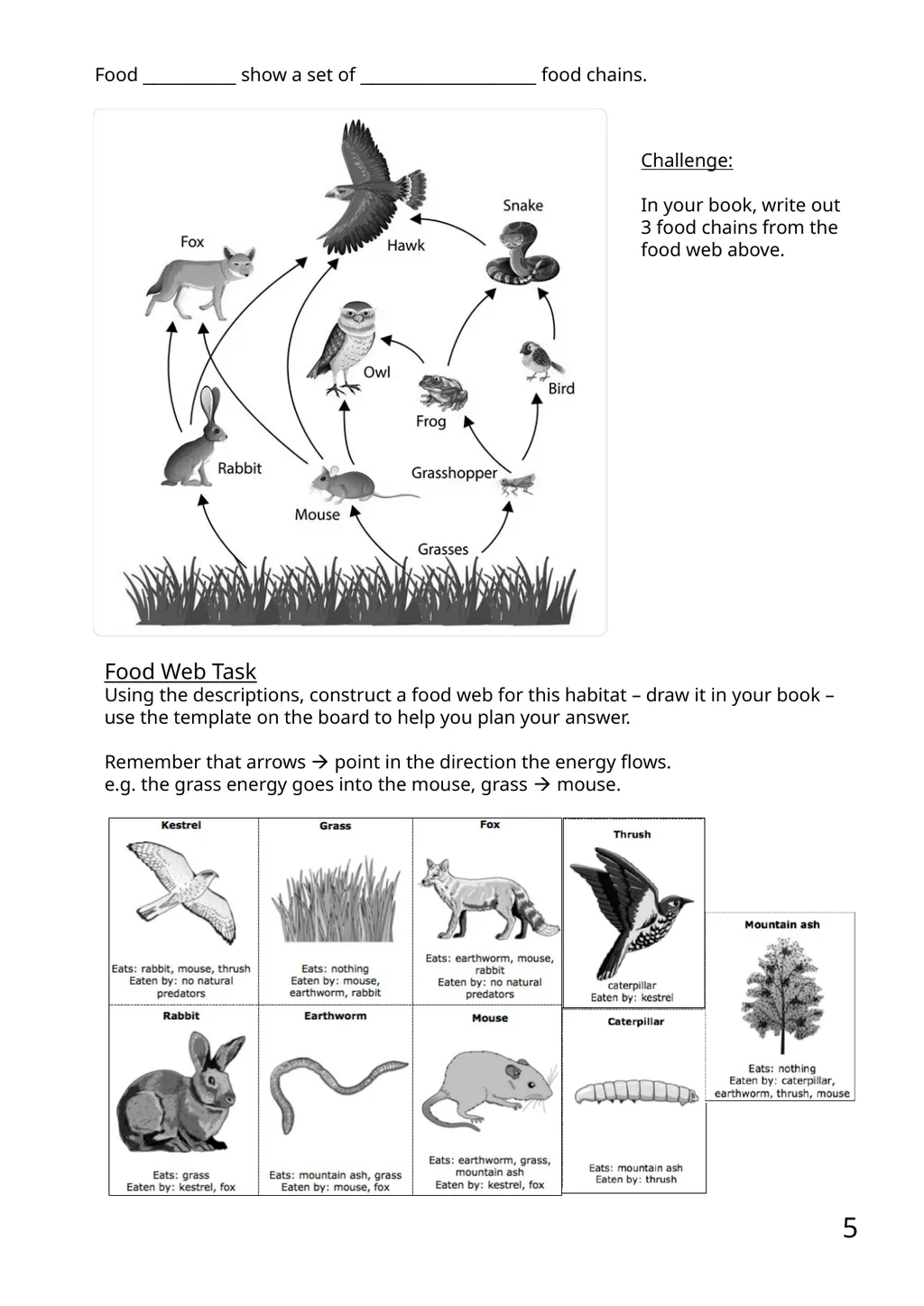
5 Food _________ show a set of _________________ food chains. Challenge:
In your book, write out 3 food chains from the food web above. Food Web Task
Using the descriptions, construct a food web for this habitat – draw it in your book – use the template on the board to help you plan your answer.
Remember that arrows point in the direction the energy flows.
e.g. the grass energy goes into the mouse, grass mouse.<br>
06
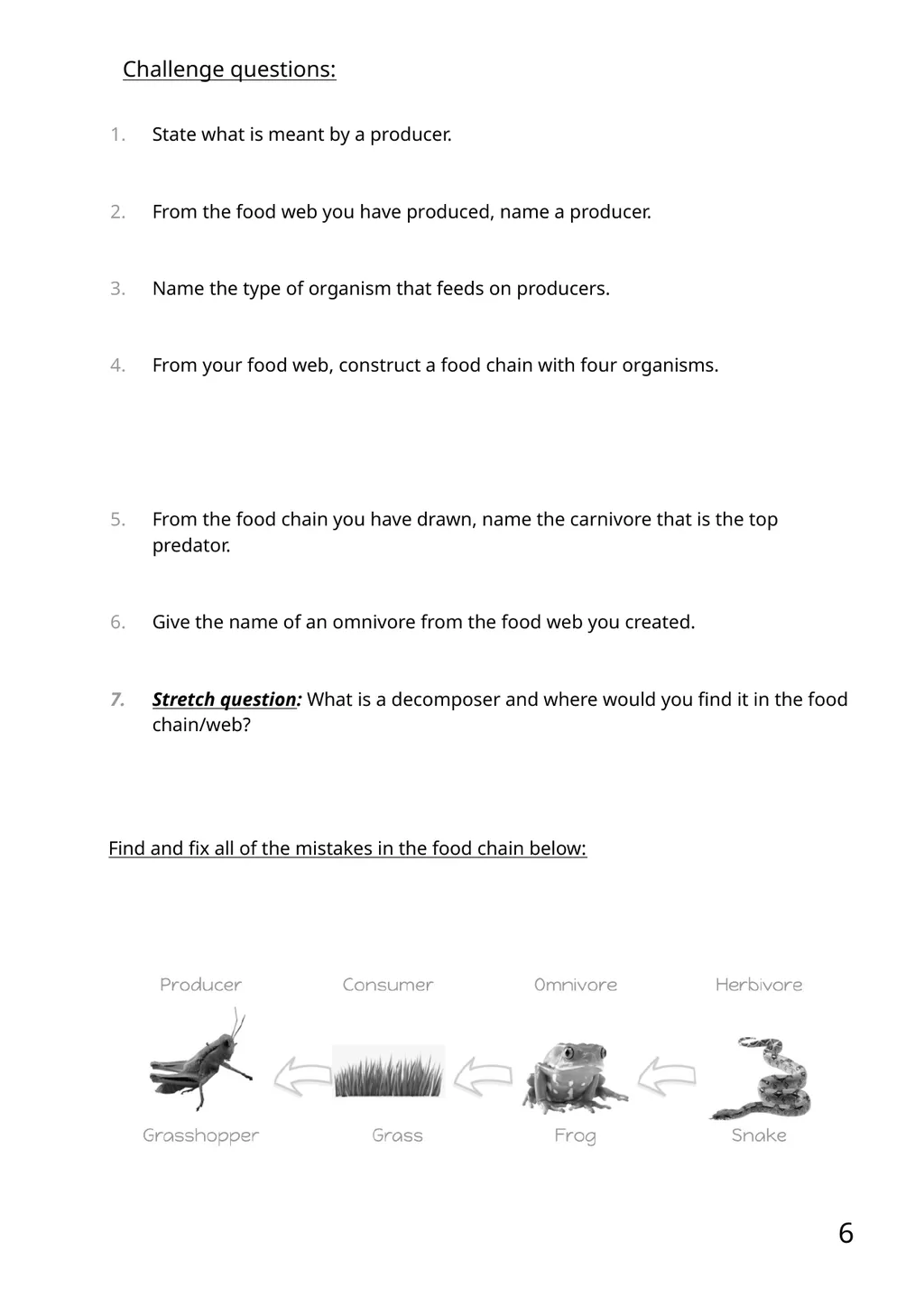
6 State what is meant by a producer.
From the food web you have produced, name a producer.
Name the type of organism that feeds on producers.
From your food web, construct a food chain with four organisms.
From the food chain you have drawn, name the carnivore that is the top predator.
Give the name of an omnivore from the food web you created.
Stretch question: What is a decomposer and where would you find it in the food chain/web? Find and fix all of the mistakes in the food chain below: Challenge questions:<br>
07
7 Lesson 2 – Disruption to Food Chains and Webs Date: _________________________________ Key Words:
Interdependence, population, bioaccumulation, competition DO NOW:
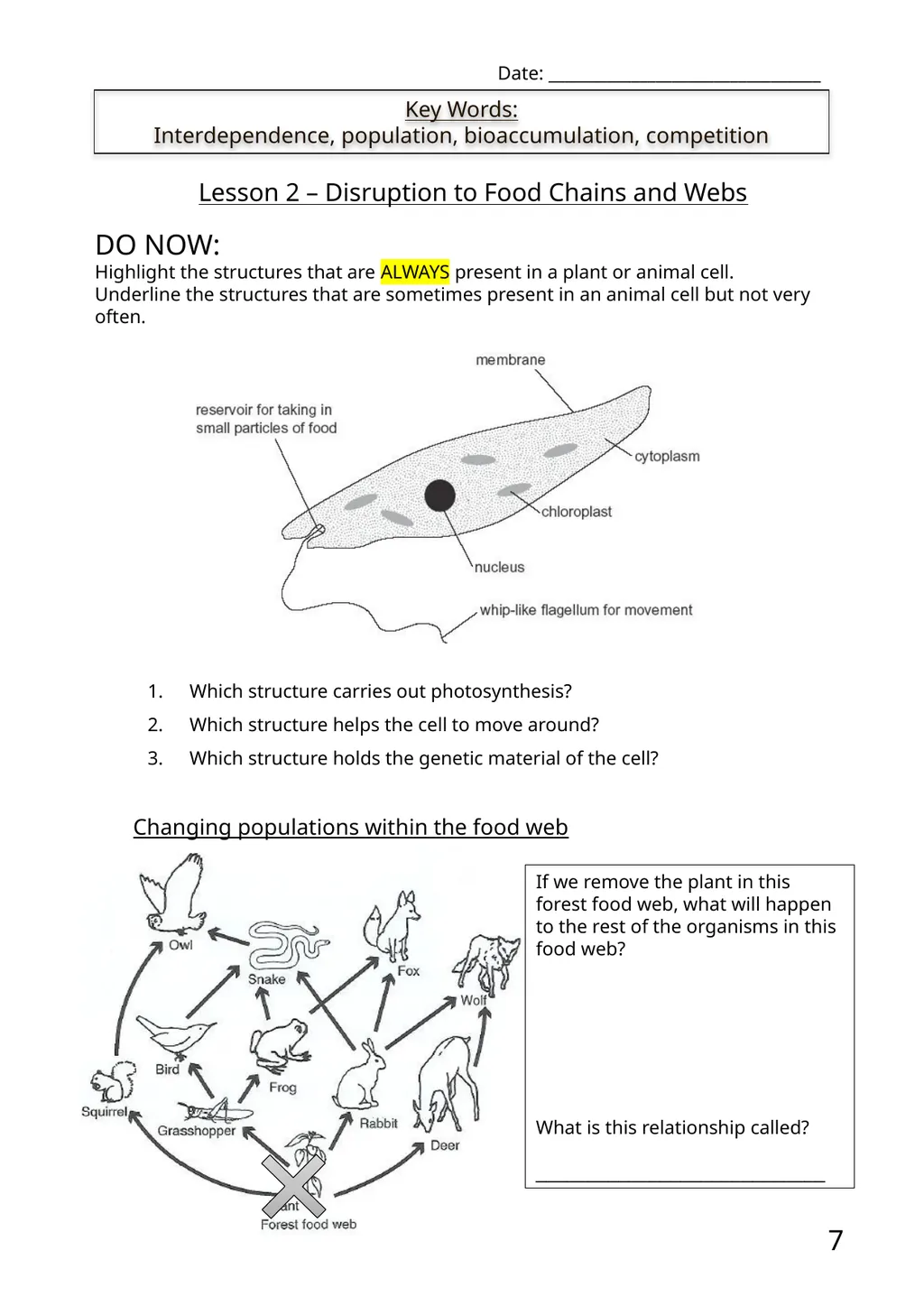
Highlight the structures that are ALWAYS present in a plant or animal cell. Underline the structures that are sometimes present in an animal cell but not very often. Which structure carries out photosynthesis?
Which structure helps the cell to move around?
Which structure holds the genetic material of the cell? Changing populations within the food web If we remove the plant in this forest food web, what will happen to the rest of the organisms in this food web?
What is this relationship called?
____________________________<br>
08
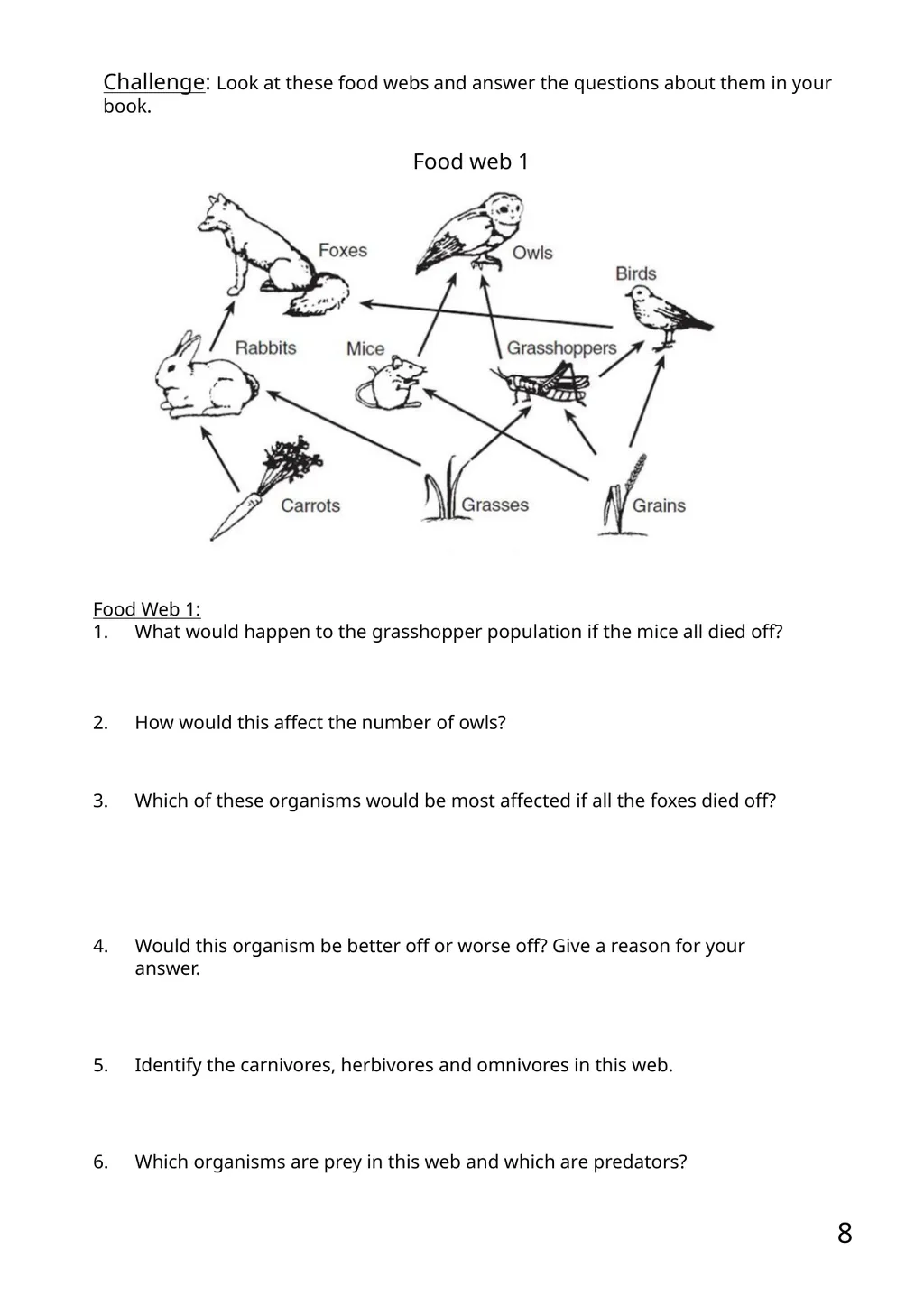
8 Challenge: Look at these food webs and answer the questions about them in your book. Would this organism be better off or worse off? Give a reason for your answer.
Identify the carnivores, herbivores and omnivores in this web.
Which organisms are prey in this web and which are predators? Food web 1 Food Web 1:
What would happen to the grasshopper population if the mice all died off?
How would this affect the number of owls?
Which of these organisms would be most affected if all the foxes died off?<br>
09
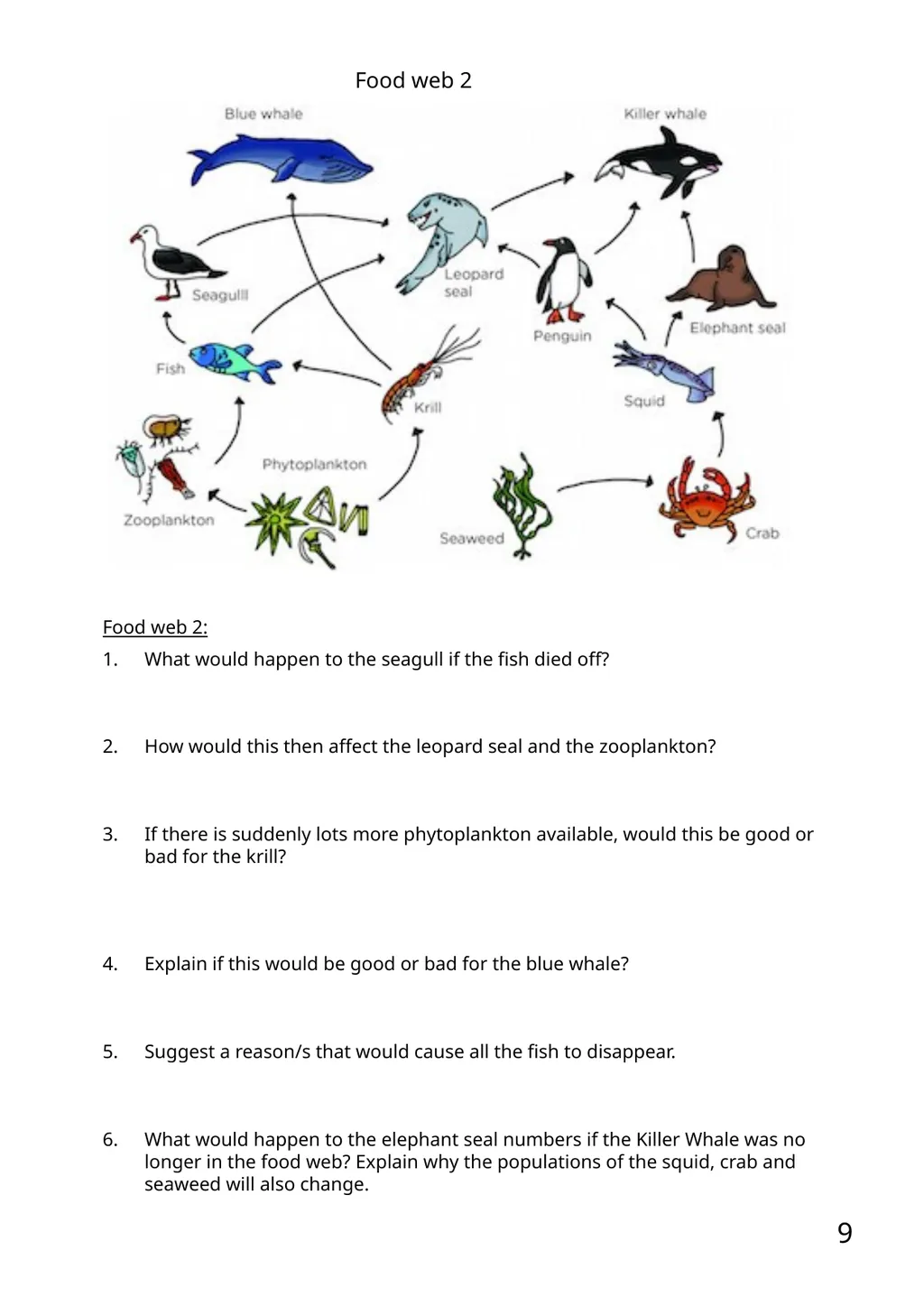
9 Food web 2 Food web 2:
What would happen to the seagull if the fish died off?
How would this then affect the leopard seal and the zooplankton?
If there is suddenly lots more phytoplankton available, would this be good or bad for the krill? Explain if this would be good or bad for the blue whale?
Suggest a reason/s that would cause all the fish to disappear.
What would happen to the elephant seal numbers if the Killer Whale was no longer in the food web? Explain why the populations of the squid, crab and seaweed will also change.<br>
10
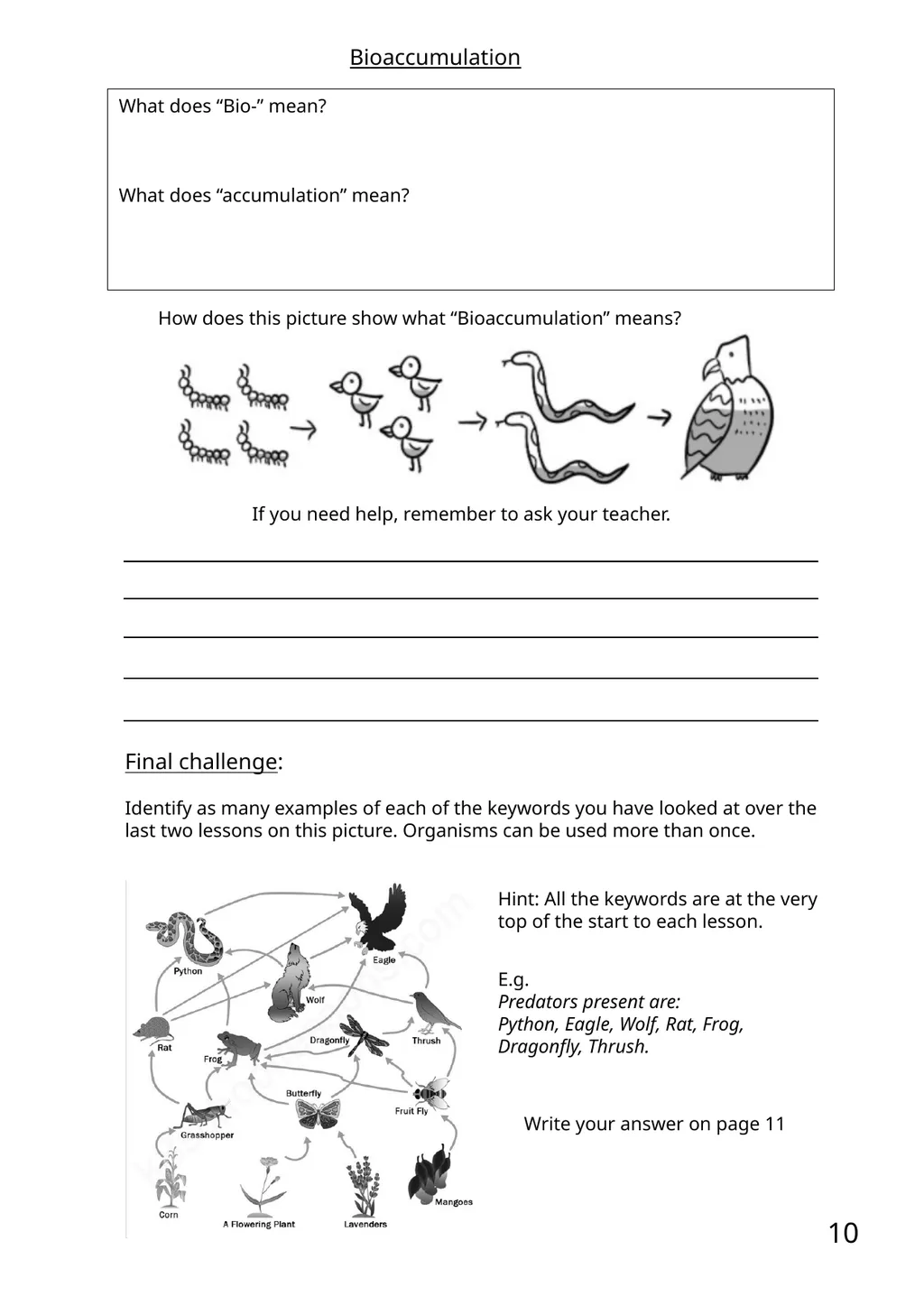
10 Bioaccumulation What does “Bio-” mean?
What does “accumulation” mean? How does this picture show what “Bioaccumulation” means? If you need help, remember to ask your teacher. Final challenge:
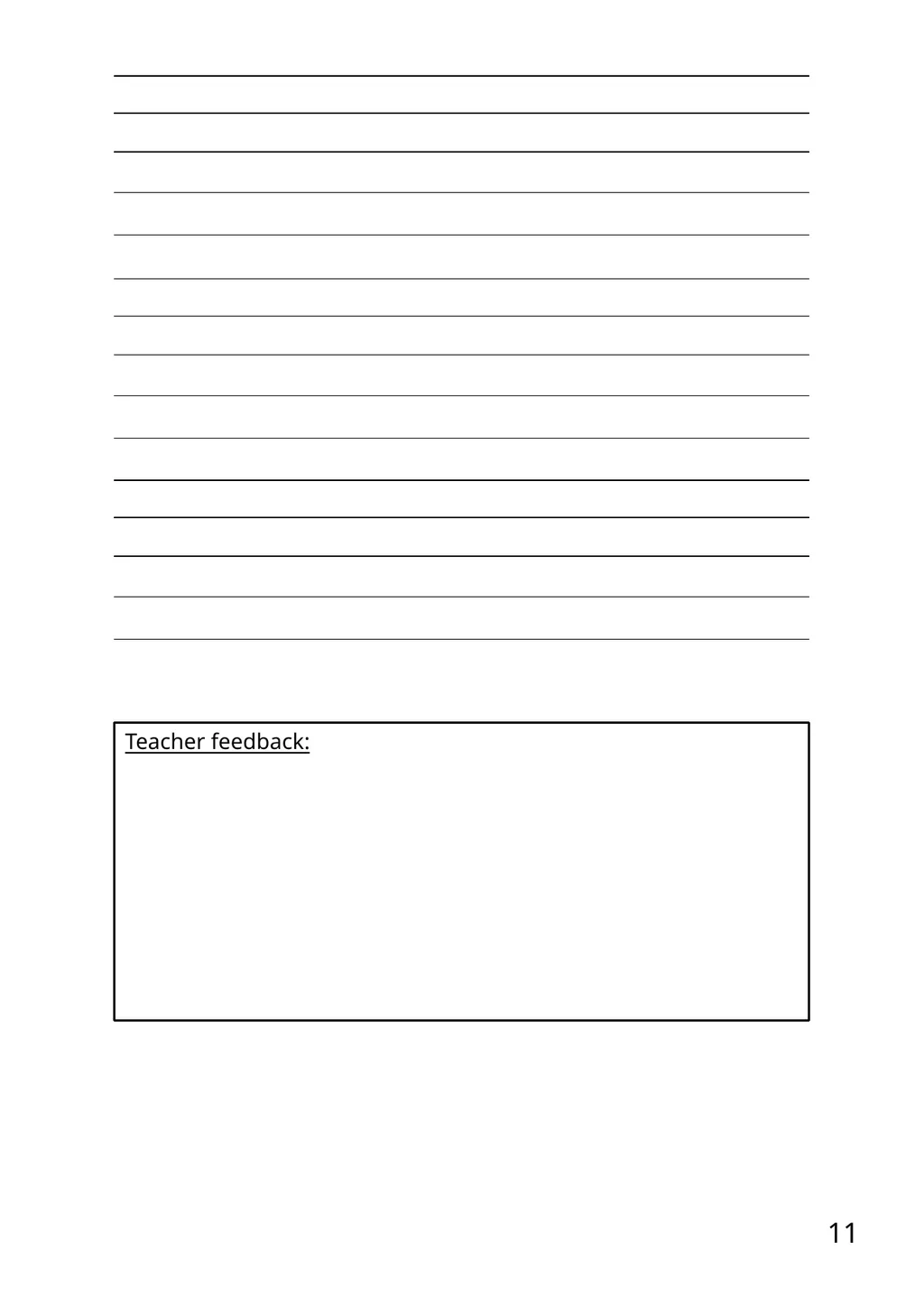
Identify as many examples of each of the keywords you have looked at over the last two lessons on this picture. Organisms can be used more than once. Hint: All the keywords are at the very top of the start to each lesson. E.g.
Predators present are:
Python, Eagle, Wolf, Rat, Frog, Dragonfly, Thrush. Write your answer on page 11<br>
11
11 Teacher feedback:<br>
12
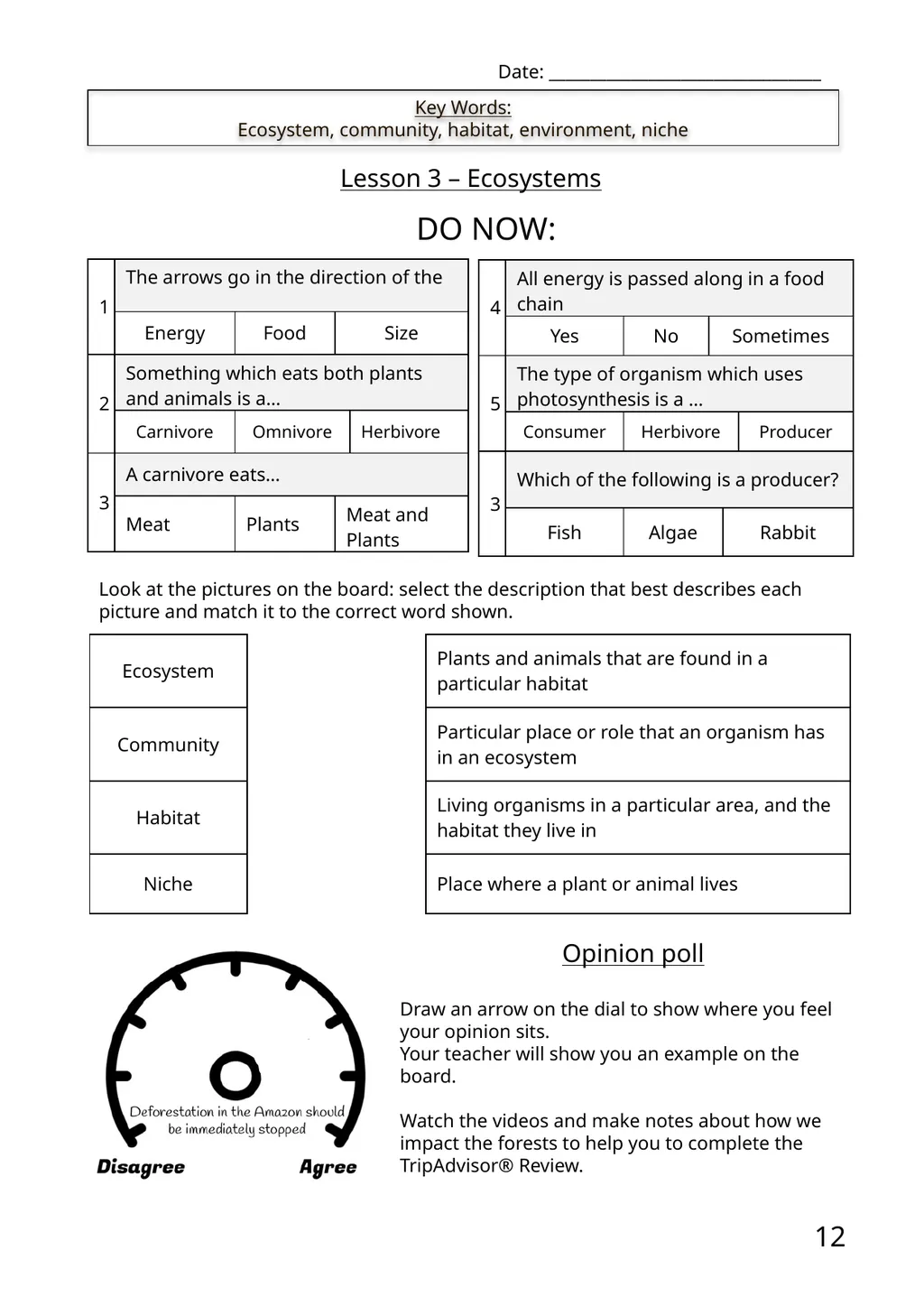
12 Lesson 3 – Ecosystems Date: _________________________________ Key Words:
Ecosystem, community, habitat, environment, niche Look at the pictures on the board: select the description that best describes each picture and match it to the correct word shown. Opinion poll Draw an arrow on the dial to show where you feel your opinion sits.
Your teacher will show you an example on the board.
Watch the videos and make notes about how we impact the forests to help you to complete the TripAdvisor® Review. DO NOW:<br>
13
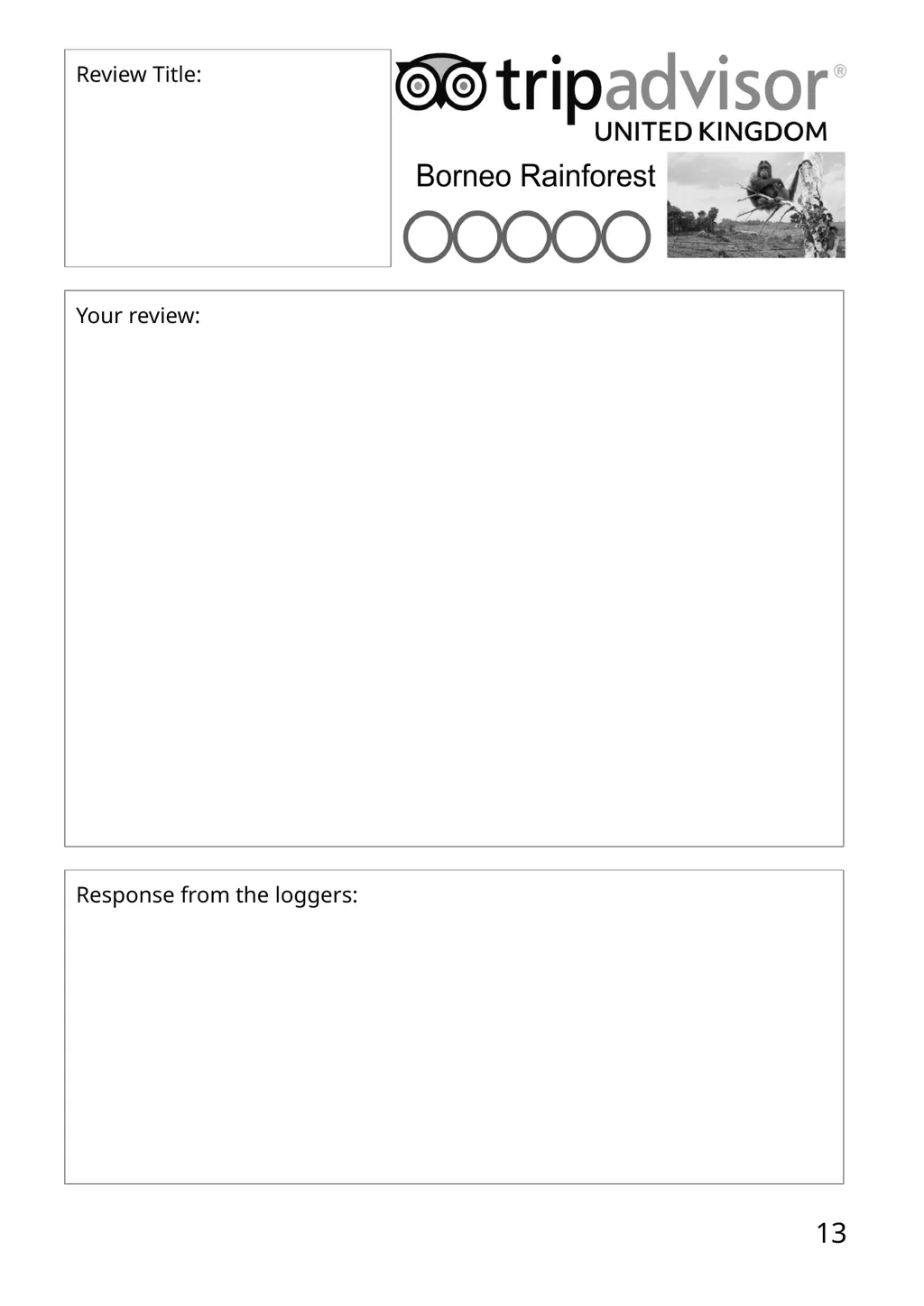
13 Review Title: Your review: Response from the loggers:<br>
14
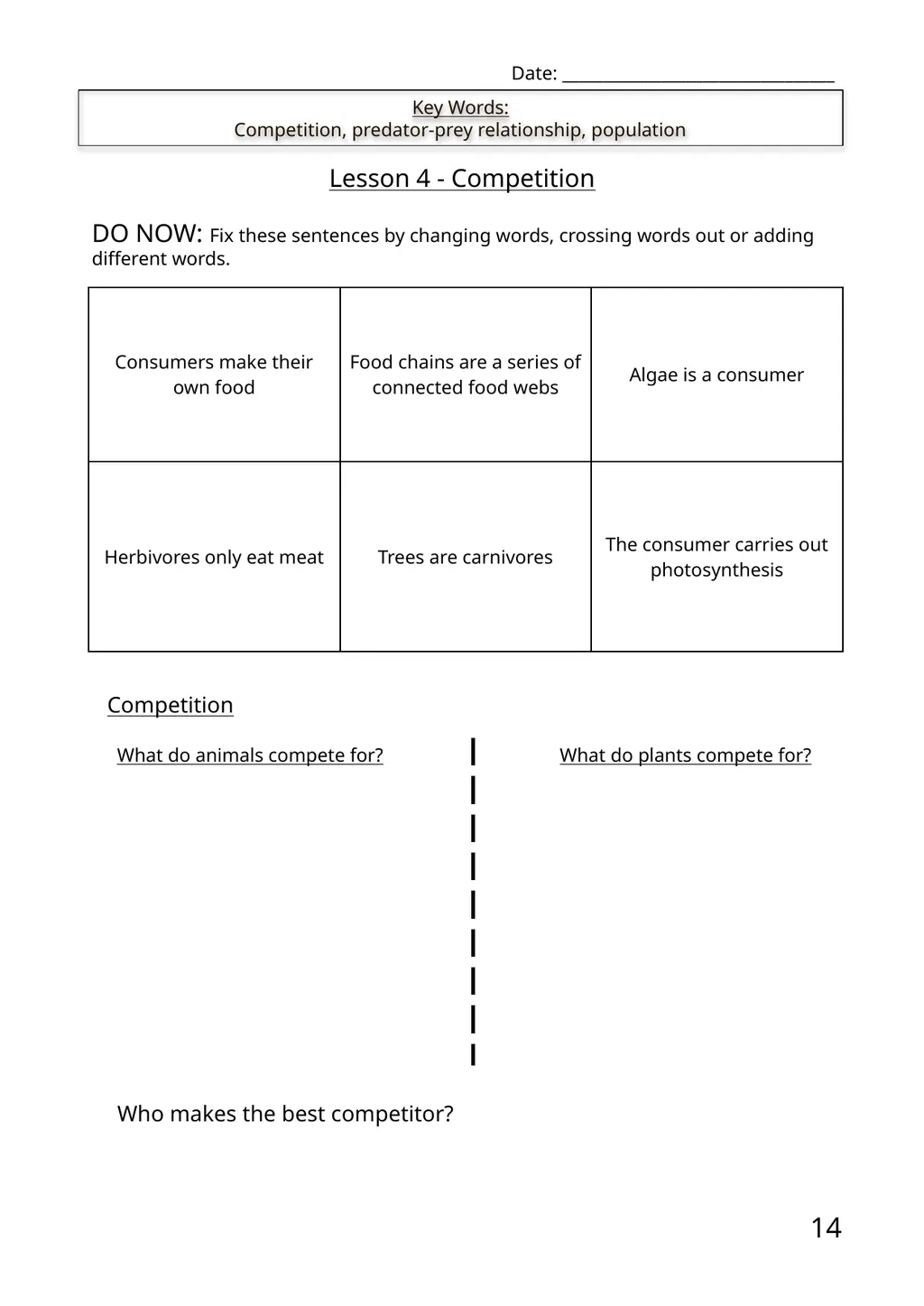
14 Lesson 4 - Competition Date: _________________________________ Key Words:
Competition, predator-prey relationship, population DO NOW: Fix these sentences by changing words, crossing words out or adding different words. Competition What do animals compete for? What do plants compete for? Who makes the best competitor?<br>
15
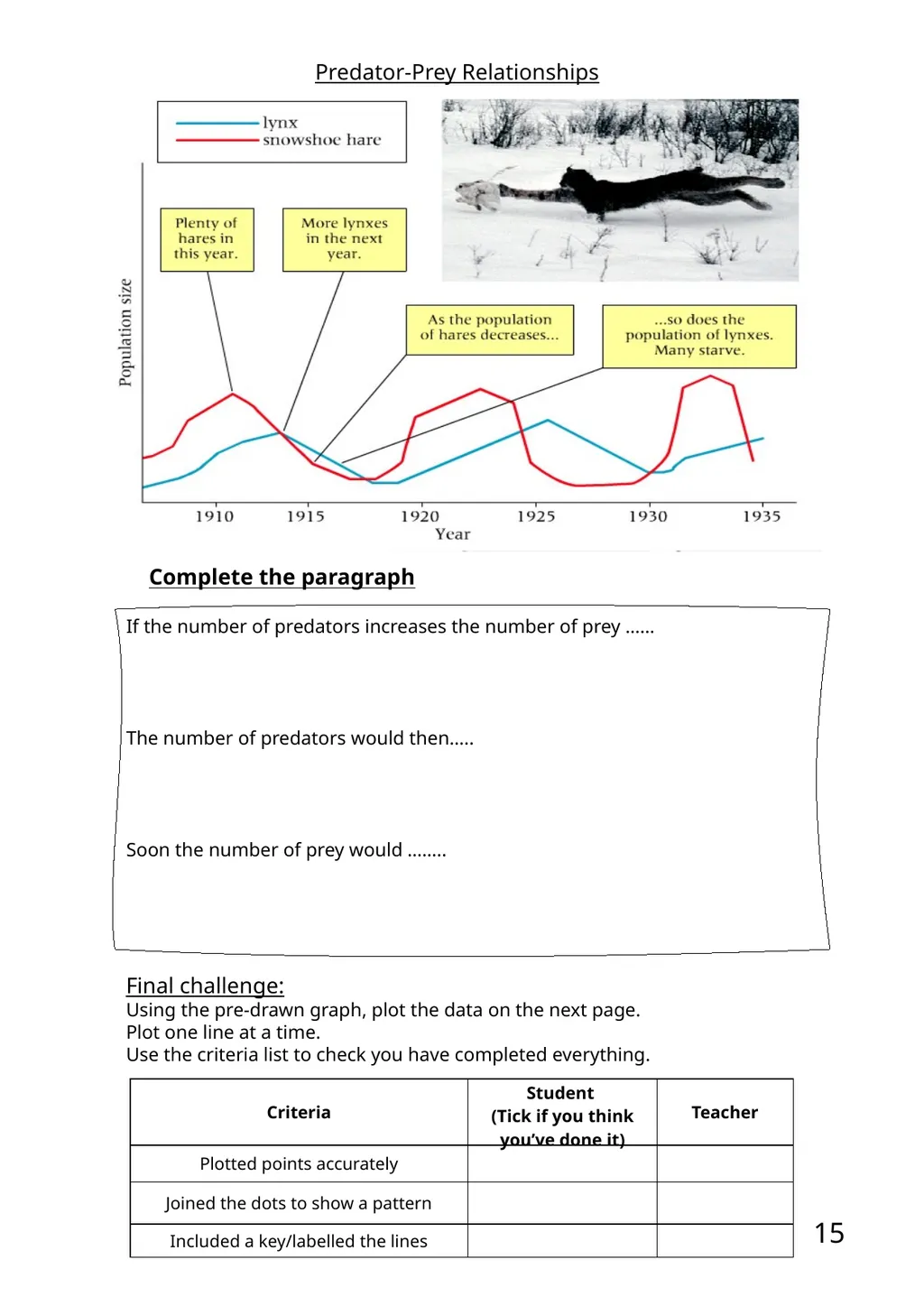
15 If the number of predators increases the number of prey ……
The number of predators would then…..
Soon the number of prey would …….. Complete the paragraph Predator-Prey Relationships Final challenge:
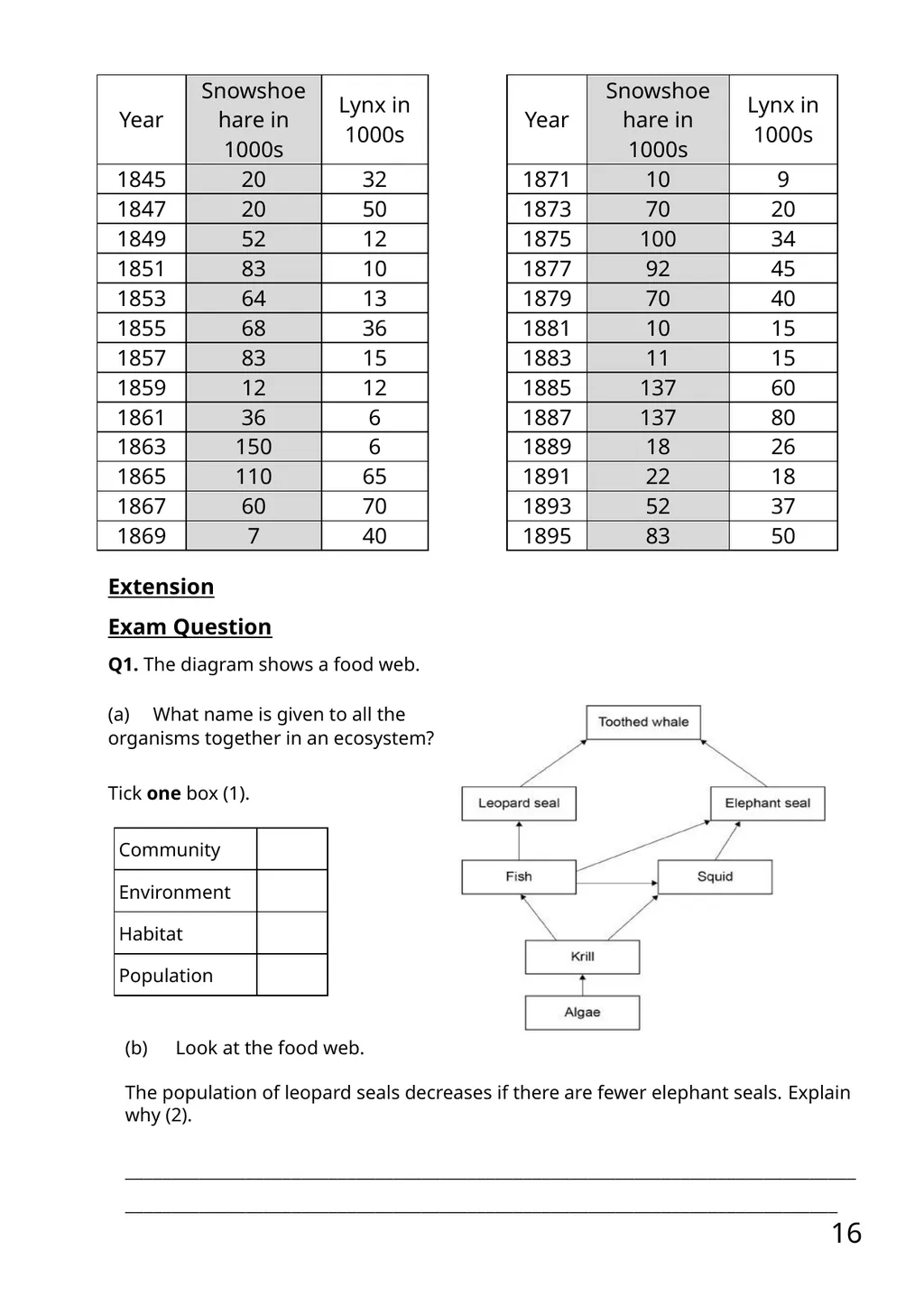
Using the pre-drawn graph, plot the data on the next page.
Plot one line at a time.
Use the criteria list to check you have completed everything.<br>
16
16 Extension
Exam Question
Q1. The diagram shows a food web. (a) What name is given to all the organisms together in an ecosystem?
Tick one box (1). (b) Look at the food web.
The population of leopard seals decreases if there are fewer elephant seals. Explain why (2).