
LAB 3: Covering or Lining Epithelium: Lining
Description: LAB 3: Covering or Lining Epithelium: Lining Epithelium is classified according to the number of layers of cells: Single layer: Simple and Multilayers: Stratified Epithelium Lining Epithelium is also classified according to the shape of the
Related Topics
Download Presentation
"LAB 3: Covering or Lining Epithelium: Lining" is the property of its rightful owner. Permission is granted to download and print the materials on this website for personal, non-commercial use only, and to display it on your personal computer provided you do not modify the materials and that you retain all copyright notices contained in the materials. By downloading content from our website, you accept the terms of this agreement.
Presentation Transcript
slide1. LAB 3: Covering or Lining Epithelium:
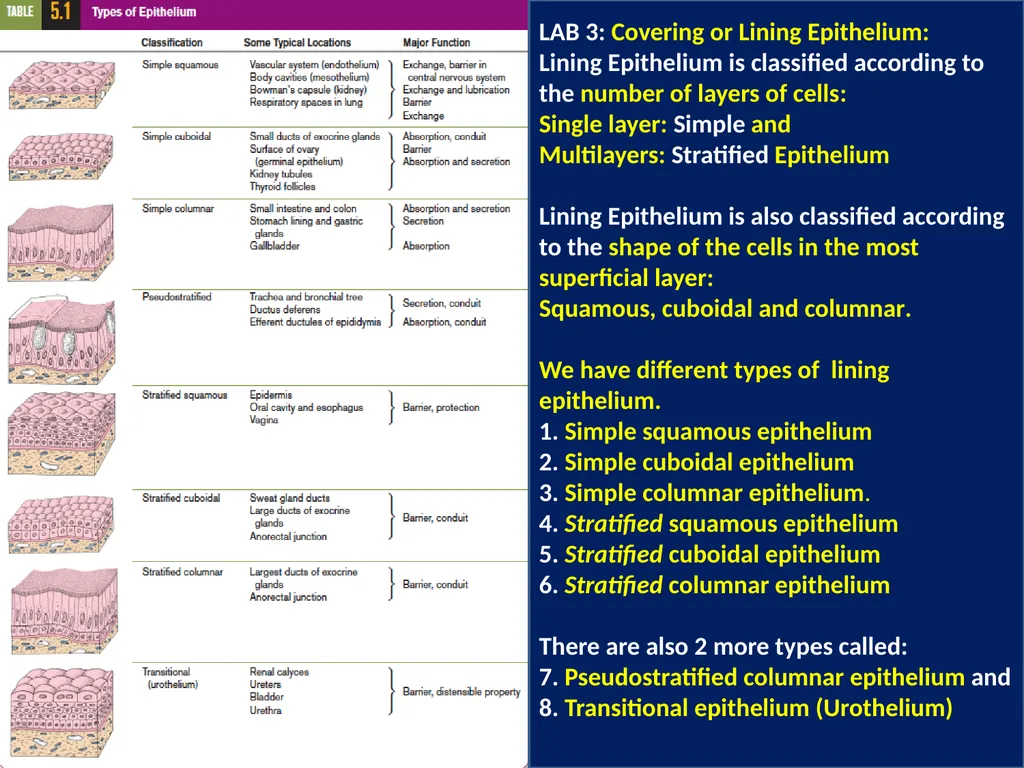
Lining Epithelium is classified according to the number of layers of cells:
Single layer: Simple and
Multilayers: Stratified Epithelium
Lining Epithelium is also classified according to the shape of the cells in the most superficial layer:
Squamous, cuboidal and columnar.
We have different types of lining epithelium.
1. Simple squamous epithelium
2. Simple cuboidal epithelium
3. Simple columnar epithelium.
4. Stratified squamous epithelium
5. Stratified cuboidal epithelium
6. Stratified columnar epithelium
There are also 2 more types called:
7. Pseudostratified columnar epithelium and
8. Transitional epithelium (Urothelium)<br>
slide2. LAB 3: Epithelial Tissue (Lining or Covering Epithelium)
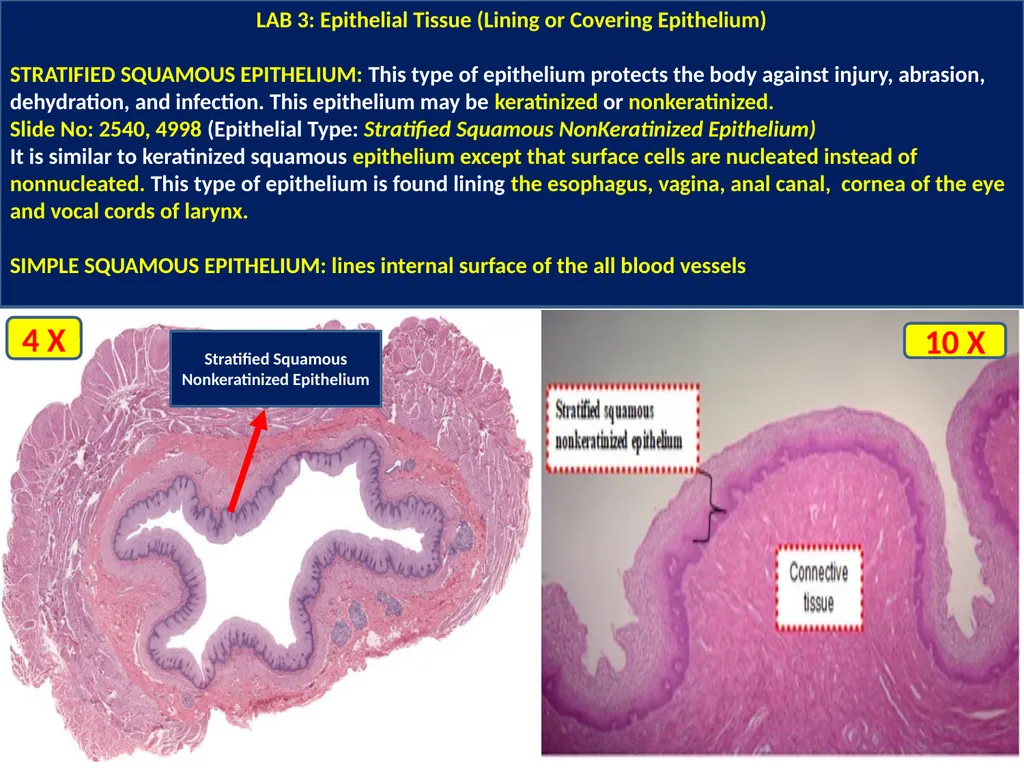
STRATIFIED SQUAMOUS EPITHELIUM: This type of epithelium protects the body against injury, abrasion, dehydration, and infection. This epithelium may be keratinized or nonkeratinized.
Slide No: 2540, 4998 (Epithelial Type: Stratified Squamous NonKeratinized Epithelium)
It is similar to keratinized squamous epithelium except that surface cells are nucleated instead of nonnucleated. This type of epithelium is found lining the esophagus, vagina, anal canal, cornea of the eye and vocal cords of larynx.
SIMPLE SQUAMOUS EPITHELIUM: lines internal surface of the all blood vessels 4 X Stratified Squamous Nonkeratinized Epithelium 10 X<br>
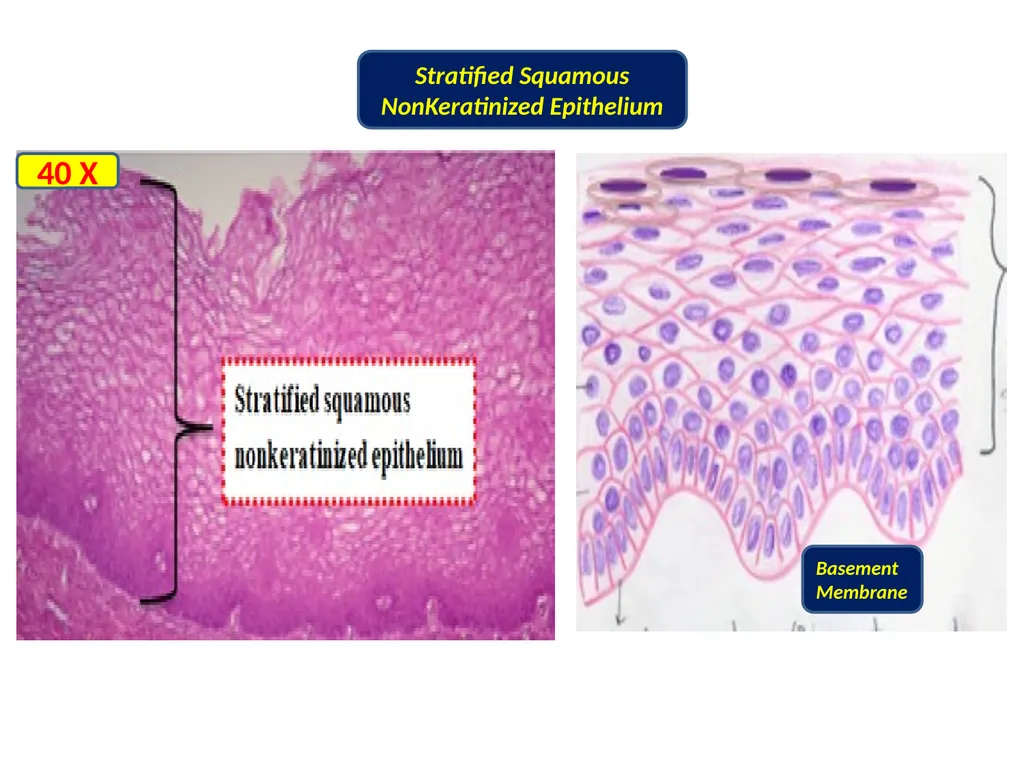
slide3. Stratified Squamous NonKeratinized Epithelium Basement Membrane 40 X<br>
slide4. LAB 3: Epithelial Tissue (Lining or Covering Epithelium)
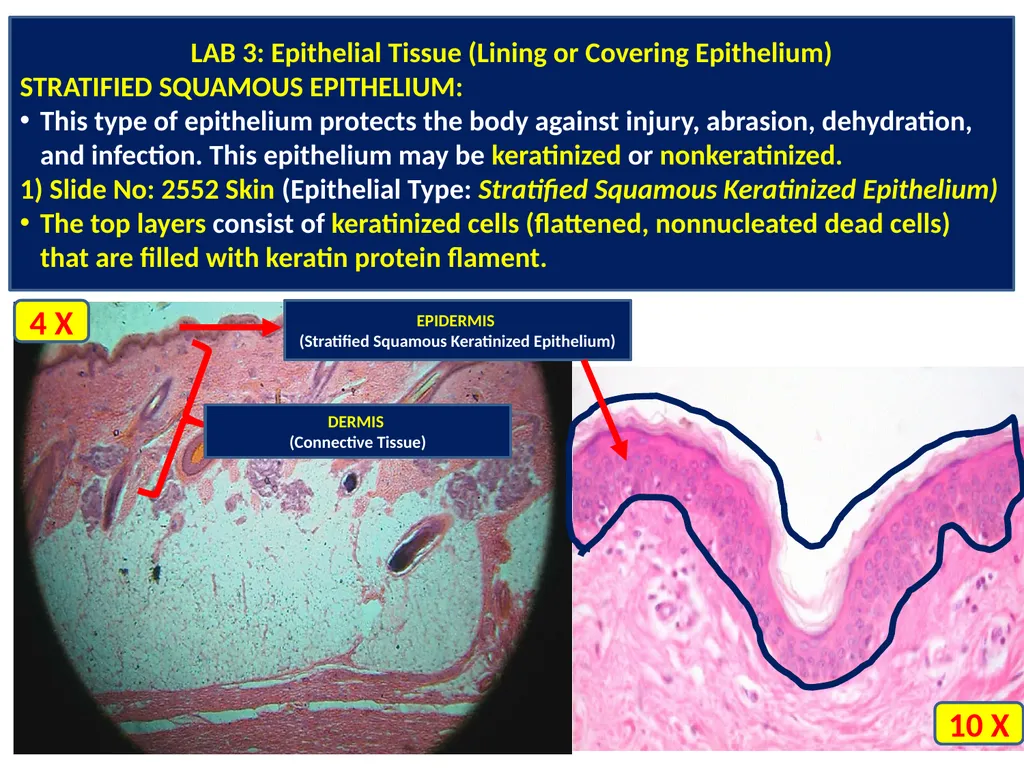
STRATIFIED SQUAMOUS EPITHELIUM:
This type of epithelium protects the body against injury, abrasion, dehydration, and infection. This epithelium may be keratinized or nonkeratinized.
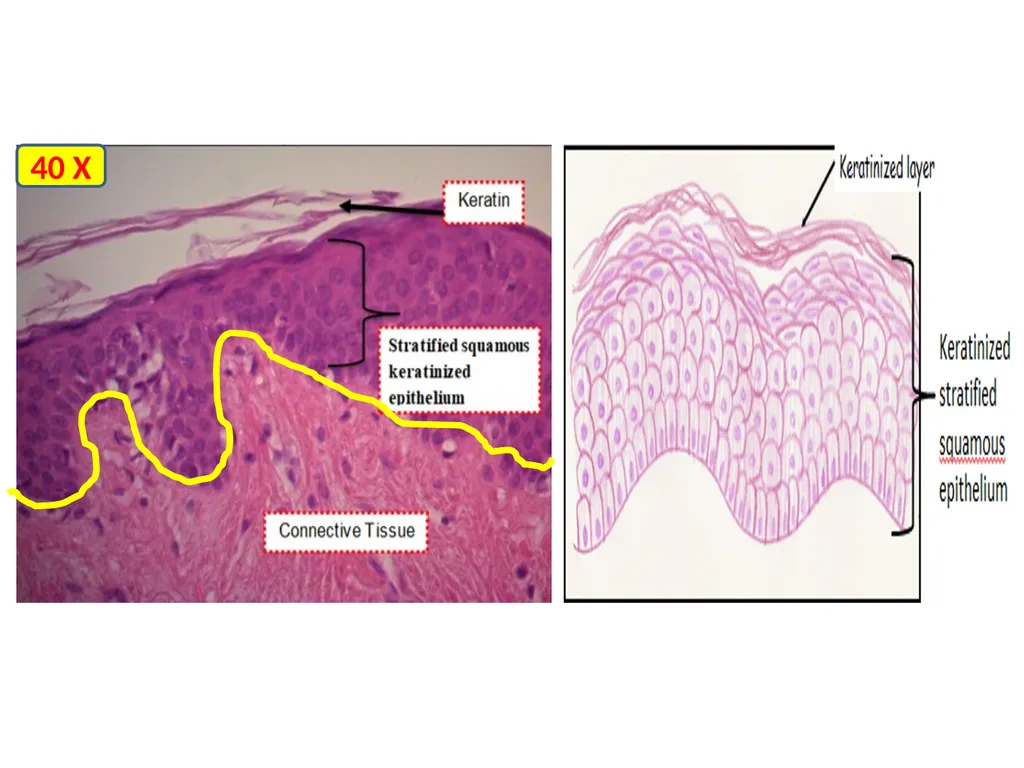
1) Slide No: 2552 Skin (Epithelial Type: Stratified Squamous Keratinized Epithelium)
The top layers consist of keratinized cells (flattened, nonnucleated dead cells) that are filled with keratin protein flament. EPIDERMIS
(Stratified Squamous Keratinized Epithelium) DERMIS
(Connective Tissue) 4 X 10 X<br>
slide5. 40 X<br>
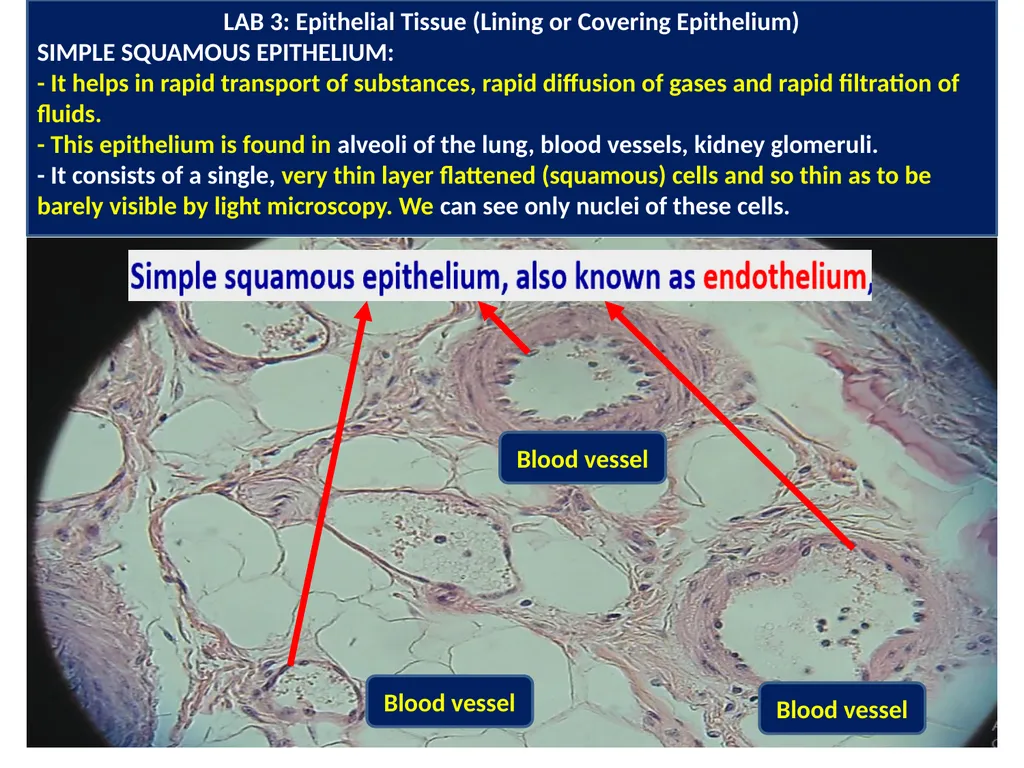
slide6. Blood vessel Blood vessel Blood vessel LAB 3: Epithelial Tissue (Lining or Covering Epithelium)
SIMPLE SQUAMOUS EPITHELIUM:
- It helps in rapid transport of substances, rapid diffusion of gases and rapid filtration of fluids.
- This epithelium is found in alveoli of the lung, blood vessels, kidney glomeruli.
- It consists of a single, very thin layer flattened (squamous) cells and so thin as to be barely visible by light microscopy. We can see only nuclei of these cells.<br>
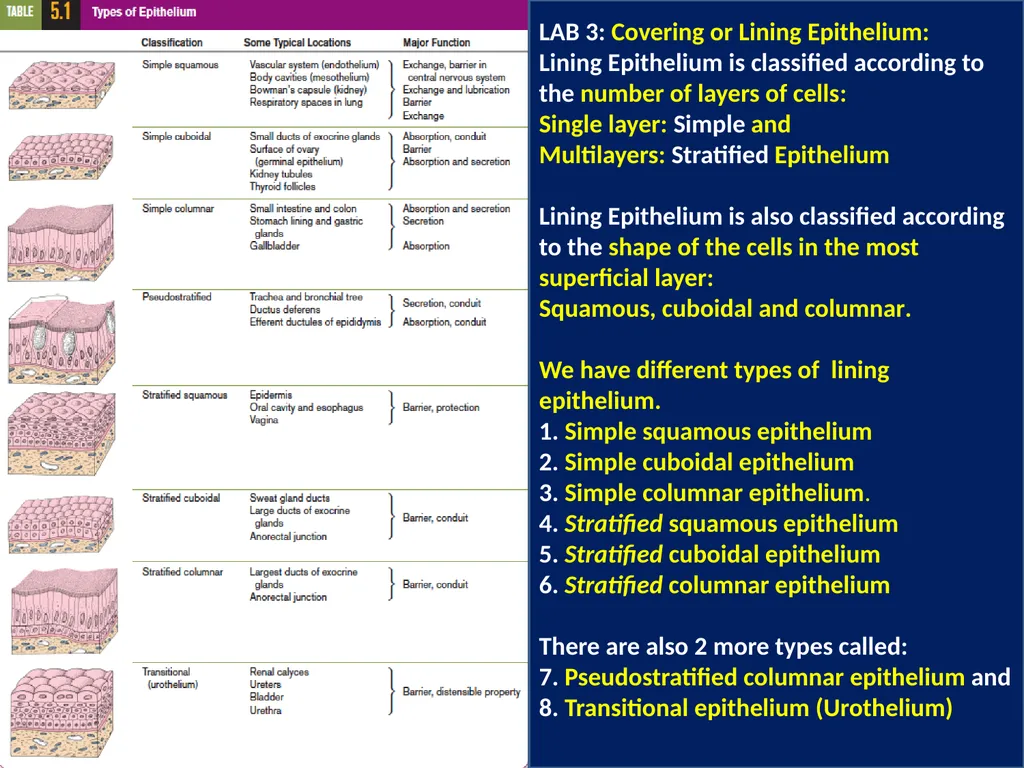
Lining Epithelium is classified according to the number of layers of cells:
Single layer: Simple and
Multilayers: Stratified Epithelium
Lining Epithelium is also classified according to the shape of the cells in the most superficial layer:
Squamous, cuboidal and columnar.
We have different types of lining epithelium.
1. Simple squamous epithelium
2. Simple cuboidal epithelium
3. Simple columnar epithelium.
4. Stratified squamous epithelium
5. Stratified cuboidal epithelium
6. Stratified columnar epithelium
There are also 2 more types called:
7. Pseudostratified columnar epithelium and
8. Transitional epithelium (Urothelium)<br>
slide2. LAB 3: Epithelial Tissue (Lining or Covering Epithelium)
STRATIFIED SQUAMOUS EPITHELIUM: This type of epithelium protects the body against injury, abrasion, dehydration, and infection. This epithelium may be keratinized or nonkeratinized.
Slide No: 2540, 4998 (Epithelial Type: Stratified Squamous NonKeratinized Epithelium)
It is similar to keratinized squamous epithelium except that surface cells are nucleated instead of nonnucleated. This type of epithelium is found lining the esophagus, vagina, anal canal, cornea of the eye and vocal cords of larynx.
SIMPLE SQUAMOUS EPITHELIUM: lines internal surface of the all blood vessels 4 X Stratified Squamous Nonkeratinized Epithelium 10 X<br>
slide3. Stratified Squamous NonKeratinized Epithelium Basement Membrane 40 X<br>
slide4. LAB 3: Epithelial Tissue (Lining or Covering Epithelium)
STRATIFIED SQUAMOUS EPITHELIUM:
This type of epithelium protects the body against injury, abrasion, dehydration, and infection. This epithelium may be keratinized or nonkeratinized.
1) Slide No: 2552 Skin (Epithelial Type: Stratified Squamous Keratinized Epithelium)
The top layers consist of keratinized cells (flattened, nonnucleated dead cells) that are filled with keratin protein flament. EPIDERMIS
(Stratified Squamous Keratinized Epithelium) DERMIS
(Connective Tissue) 4 X 10 X<br>
slide5. 40 X<br>
slide6. Blood vessel Blood vessel Blood vessel LAB 3: Epithelial Tissue (Lining or Covering Epithelium)
SIMPLE SQUAMOUS EPITHELIUM:
- It helps in rapid transport of substances, rapid diffusion of gases and rapid filtration of fluids.
- This epithelium is found in alveoli of the lung, blood vessels, kidney glomeruli.
- It consists of a single, very thin layer flattened (squamous) cells and so thin as to be barely visible by light microscopy. We can see only nuclei of these cells.<br>