LABORATORY BIOSAFETY Objectives • Biosafety
Description: LABORATORY BIOSAFETY Objectives Biosafety overview Background Principles Containment Risk Assessment Blood borne Pathogens What is Biosafety? The principles, practices, procedures, and containment measures designed to prevent
Related Topics
Download Presentation
"LABORATORY BIOSAFETY Objectives • Biosafety" is the property of its rightful owner. Permission is granted to download and print the materials on this website for personal, non-commercial use only, and to display it on your personal computer provided you do not modify the materials and that you retain all copyright notices contained in the materials. By downloading content from our website, you accept the terms of this agreement.
Presentation Transcript
slide1. LABORATORY BIOSAFETY<br>
slide2. Objectives • Biosafety overview
• Background
• Principles
• Containment
• Risk Assessment
• Blood borne Pathogens<br>
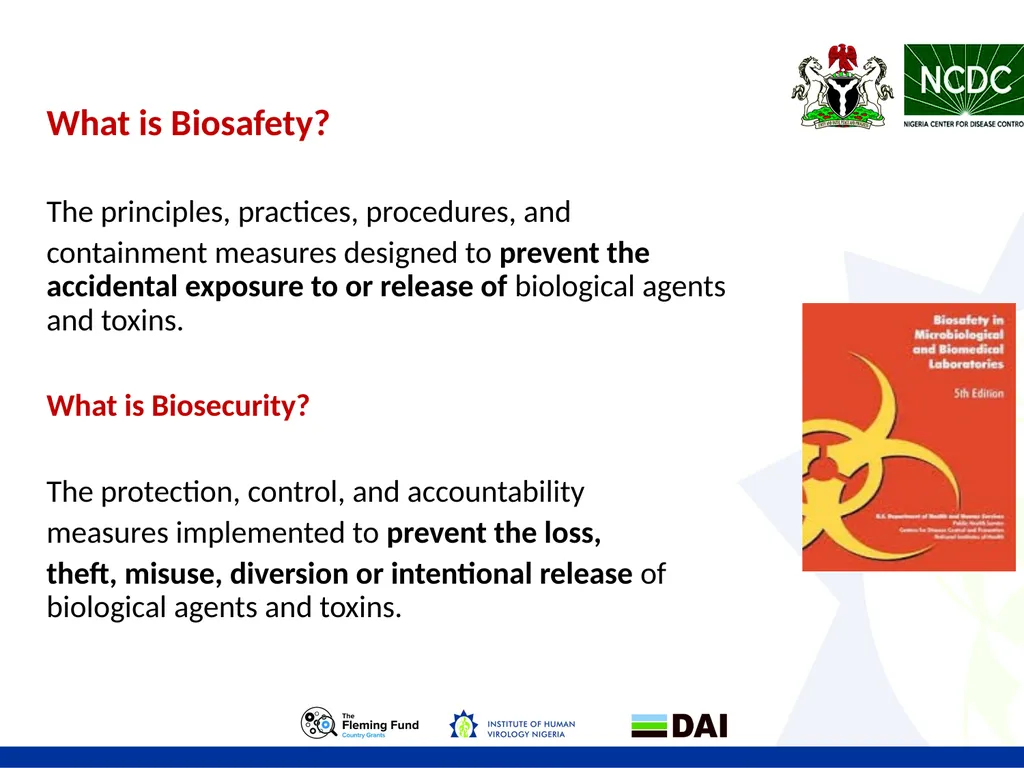
slide3. What is Biosafety?
The principles, practices, procedures, and
containment measures designed to prevent the accidental exposure to or release of biological agents and toxins.
What is Biosecurity?
The protection, control, and accountability
measures implemented to prevent the loss,
theft, misuse, diversion or intentional release of biological agents and toxins.<br>
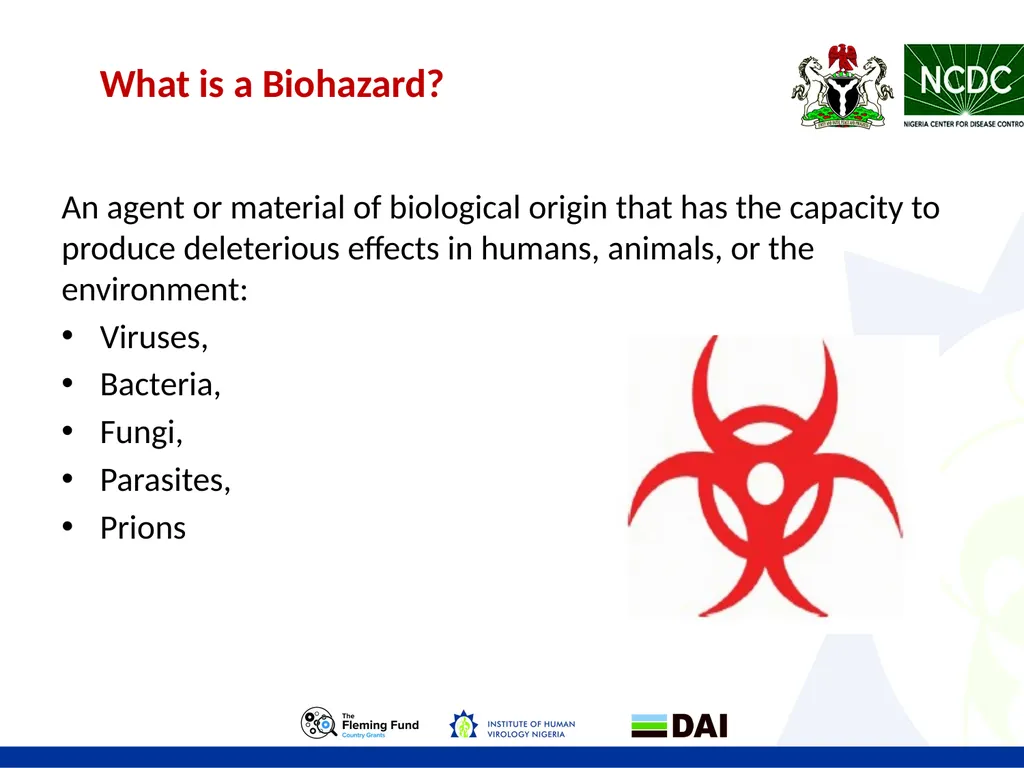
slide4. What is a Biohazard? An agent or material of biological origin that has the capacity to produce deleterious effects in humans, animals, or the environment:
Viruses,
Bacteria,
Fungi,
Parasites,
Prions<br>
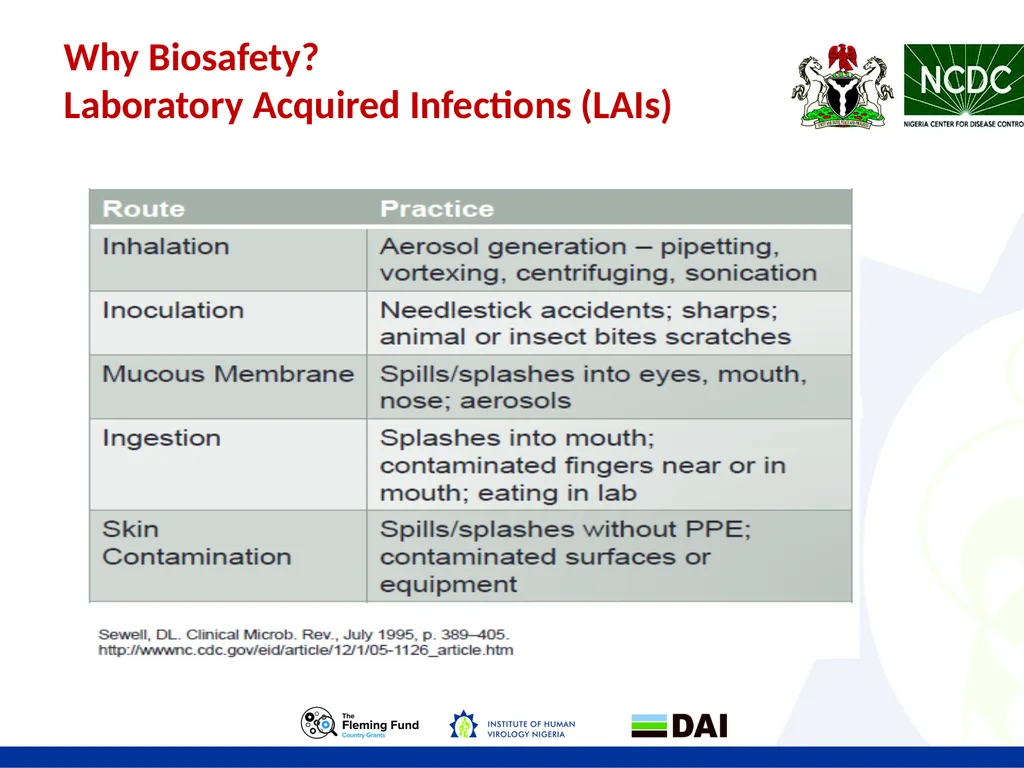
slide5. Why Biosafety?Laboratory Acquired Infections (LAIs)<br>
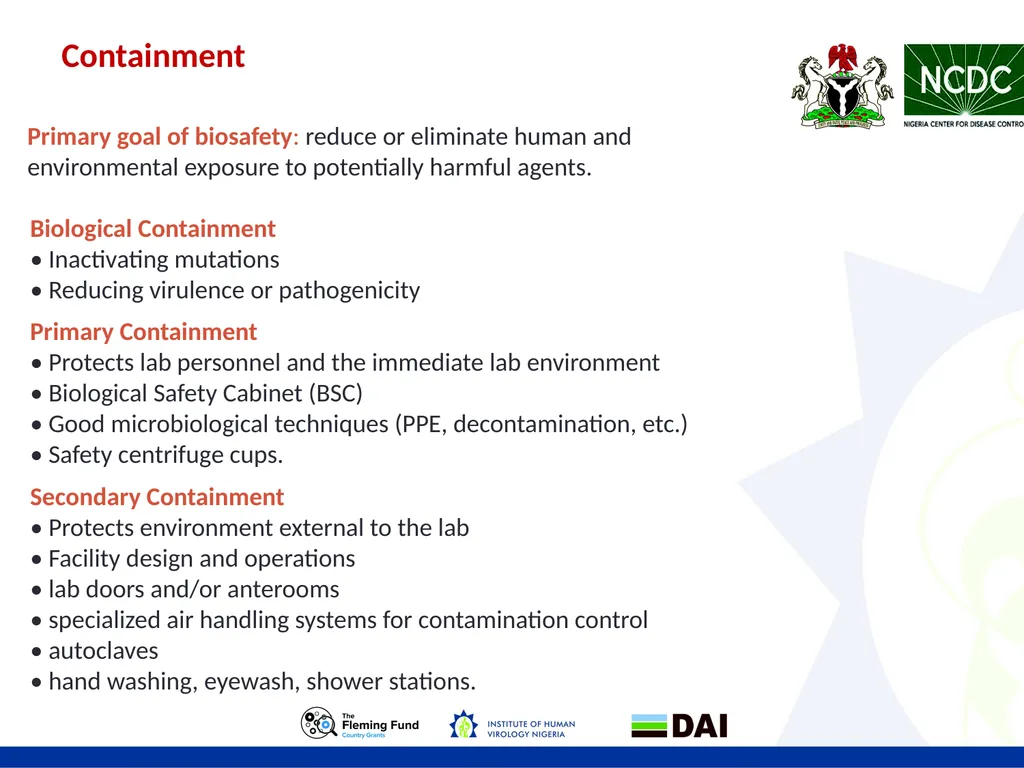
slide6. Containment Primary goal of biosafety: reduce or eliminate human and environmental exposure to potentially harmful agents. Biological Containment
• Inactivating mutations
• Reducing virulence or pathogenicity Primary Containment
• Protects lab personnel and the immediate lab environment
• Biological Safety Cabinet (BSC)
• Good microbiological techniques (PPE, decontamination, etc.)
• Safety centrifuge cups. Secondary Containment
• Protects environment external to the lab
• Facility design and operations
• lab doors and/or anterooms
• specialized air handling systems for contamination control
• autoclaves
• hand washing, eyewash, shower stations.<br>
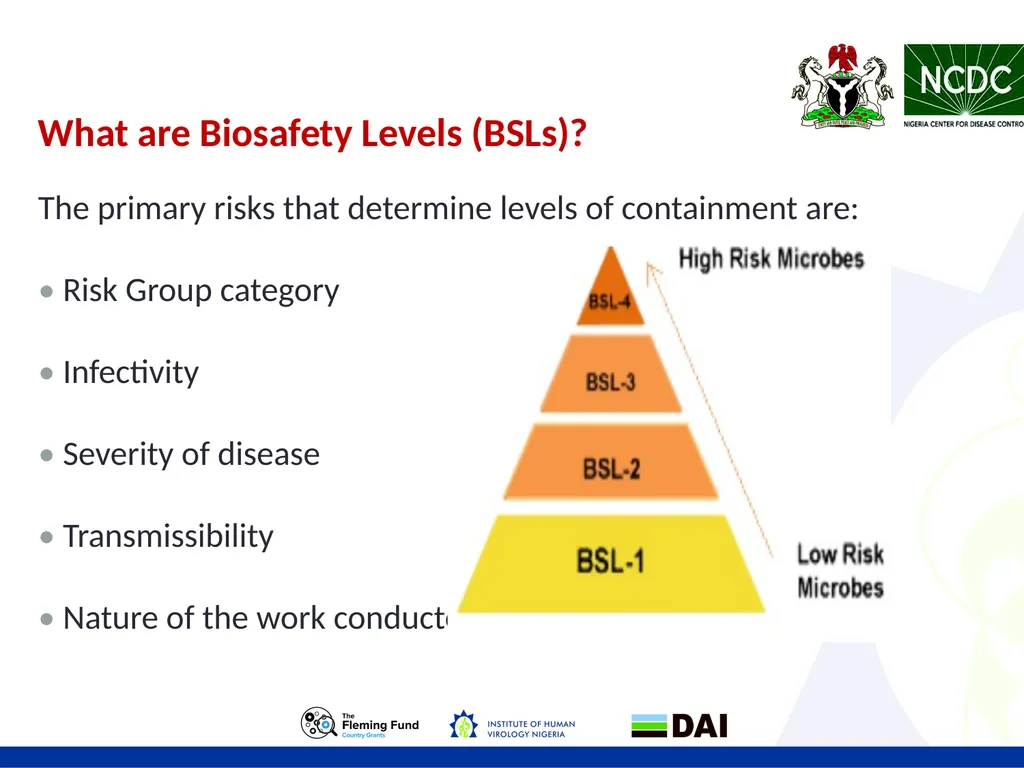
slide8. What are Biosafety Levels (BSLs)?
The primary risks that determine levels of containment are:
• Risk Group category
• Infectivity
• Severity of disease
• Transmissibility
• Nature of the work conducted<br>
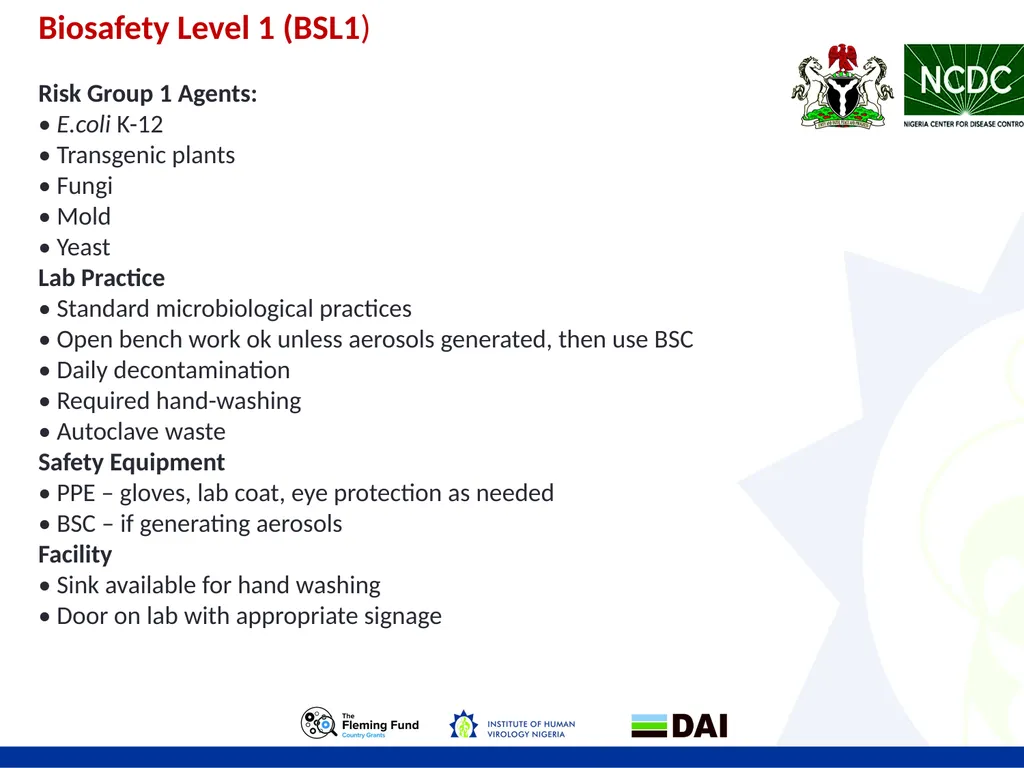
slide9. Biosafety Level 1 (BSL1)
Risk Group 1 Agents:
• E.coli K-12
• Transgenic plants
• Fungi
• Mold
• Yeast
Lab Practice
• Standard microbiological practices
• Open bench work ok unless aerosols generated, then use BSC
• Daily decontamination
• Required hand-washing
• Autoclave waste
Safety Equipment
• PPE – gloves, lab coat, eye protection as needed
• BSC – if generating aerosols
Facility
• Sink available for hand washing
• Door on lab with appropriate signage<br>
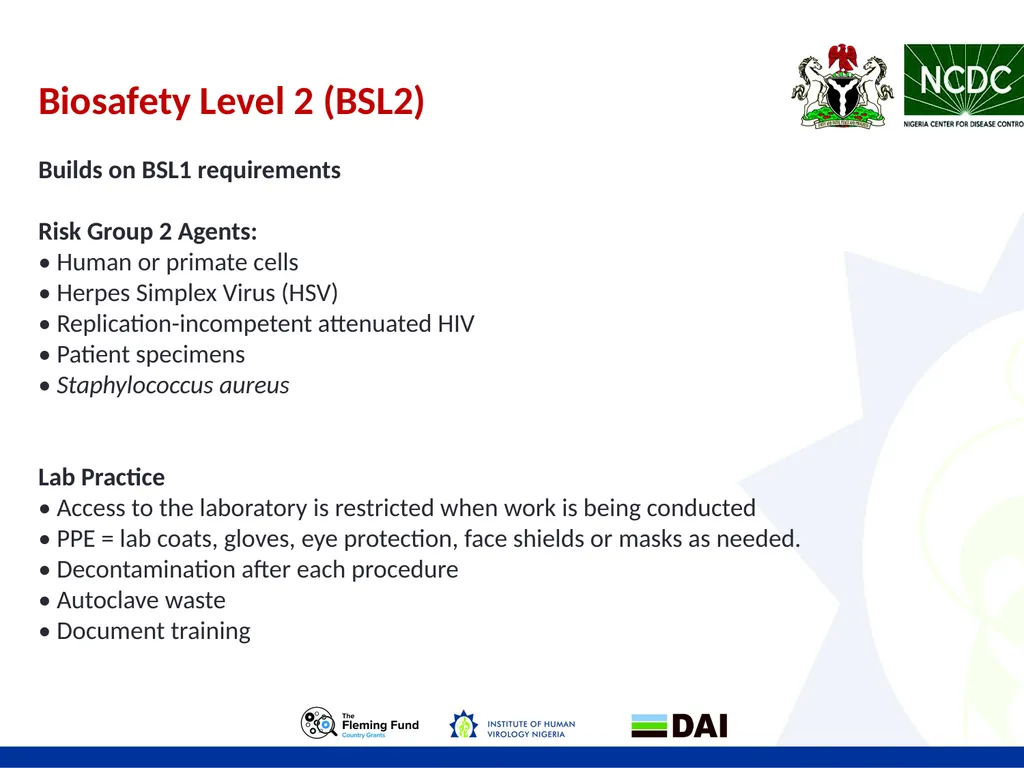
slide10. Biosafety Level 2 (BSL2)
Builds on BSL1 requirements
Risk Group 2 Agents:
• Human or primate cells
• Herpes Simplex Virus (HSV)
• Replication-incompetent attenuated HIV
• Patient specimens
• Staphylococcus aureus
Lab Practice
• Access to the laboratory is restricted when work is being conducted
• PPE = lab coats, gloves, eye protection, face shields or masks as needed.
• Decontamination after each procedure
• Autoclave waste
• Document training<br>
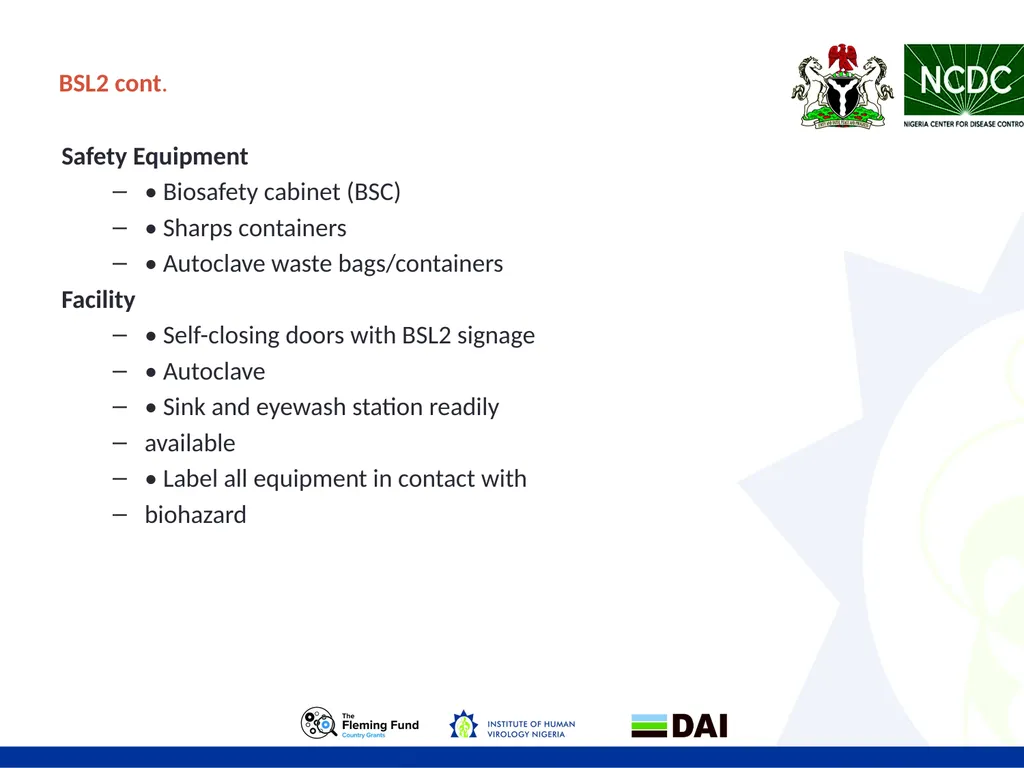
slide11. BSL2 cont. Safety Equipment
• Biosafety cabinet (BSC)
• Sharps containers
• Autoclave waste bags/containers
Facility
• Self-closing doors with BSL2 signage
• Autoclave
• Sink and eyewash station readily
available
• Label all equipment in contact with
biohazard<br>
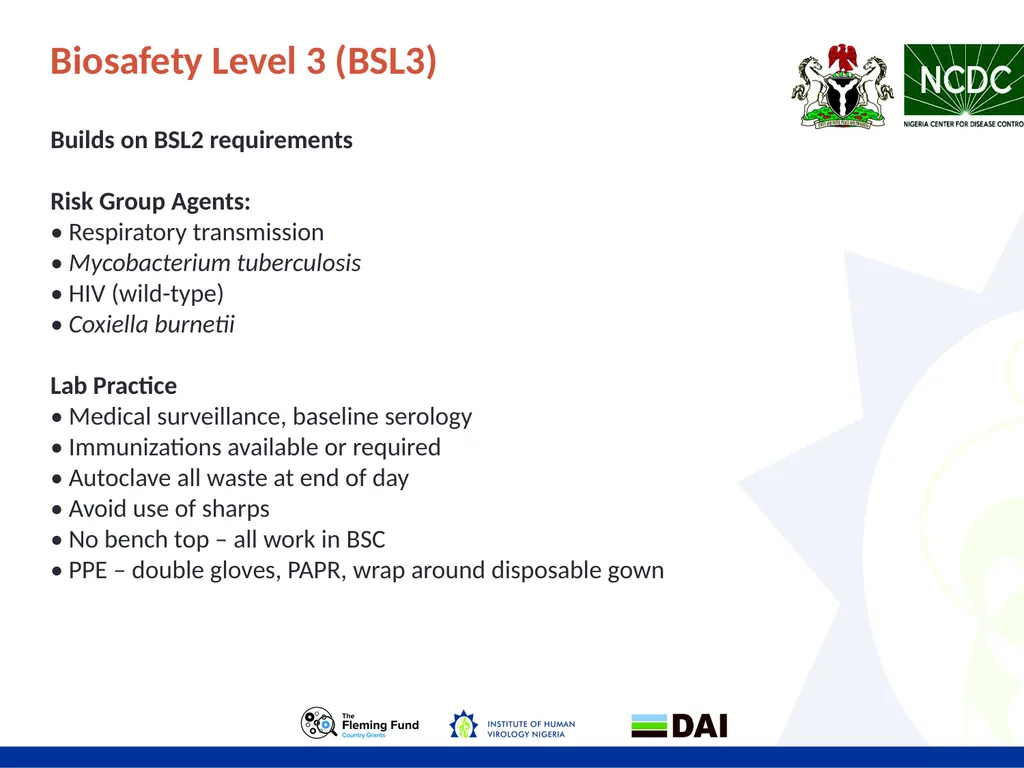
slide12. Biosafety Level 3 (BSL3)
Builds on BSL2 requirements
Risk Group Agents:
• Respiratory transmission
• Mycobacterium tuberculosis
• HIV (wild-type)
• Coxiella burnetii
Lab Practice
• Medical surveillance, baseline serology
• Immunizations available or required
• Autoclave all waste at end of day
• Avoid use of sharps
• No bench top – all work in BSC
• PPE – double gloves, PAPR, wrap around disposable gown<br>
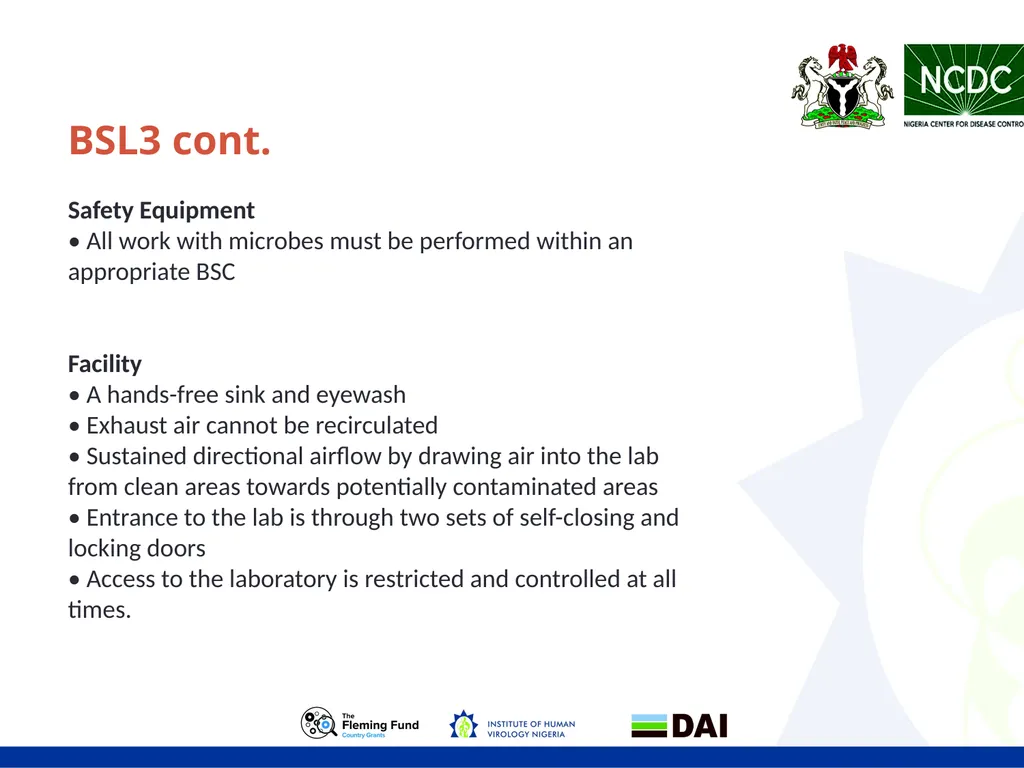
slide13. BSL3 cont.
Safety Equipment
• All work with microbes must be performed within an
appropriate BSC
Facility
• A hands-free sink and eyewash
• Exhaust air cannot be recirculated
• Sustained directional airflow by drawing air into the lab
from clean areas towards potentially contaminated areas
• Entrance to the lab is through two sets of self-closing and
locking doors
• Access to the laboratory is restricted and controlled at all
times.<br>
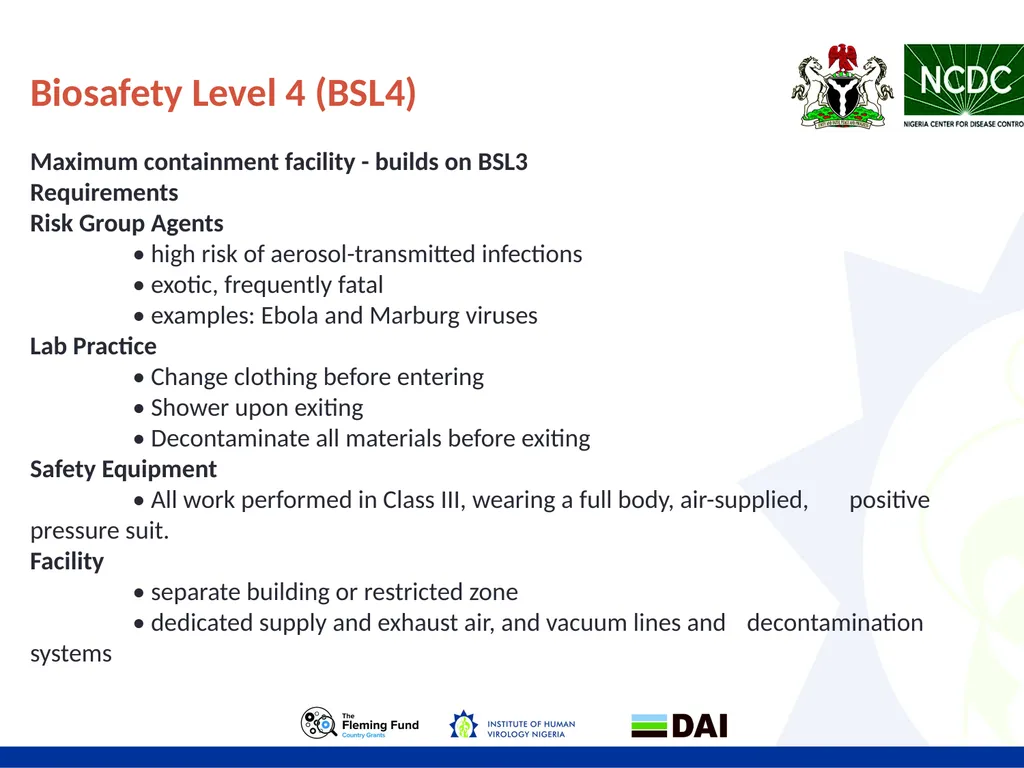
slide14. Biosafety Level 4 (BSL4)
Maximum containment facility - builds on BSL3
Requirements
Risk Group Agents
• high risk of aerosol-transmitted infections
• exotic, frequently fatal
• examples: Ebola and Marburg viruses
Lab Practice
• Change clothing before entering
• Shower upon exiting
• Decontaminate all materials before exiting
Safety Equipment
• All work performed in Class III, wearing a full body, air-supplied, positive pressure suit.
Facility
• separate building or restricted zone
• dedicated supply and exhaust air, and vacuum lines and decontamination systems<br>
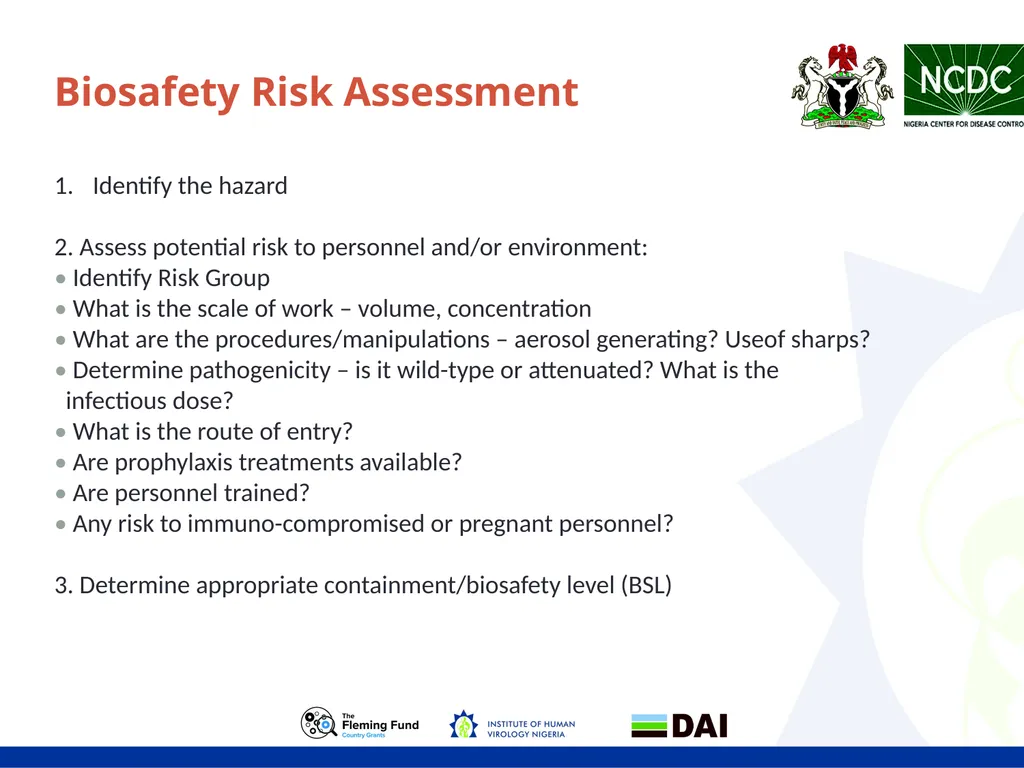
slide15. Biosafety Risk Assessment
Identify the hazard
2. Assess potential risk to personnel and/or environment:
• Identify Risk Group
• What is the scale of work – volume, concentration
• What are the procedures/manipulations – aerosol generating? Useof sharps?
• Determine pathogenicity – is it wild-type or attenuated? What is the
infectious dose?
• What is the route of entry?
• Are prophylaxis treatments available?
• Are personnel trained?
• Any risk to immuno-compromised or pregnant personnel?

3. Determine appropriate containment/biosafety level (BSL)<br>
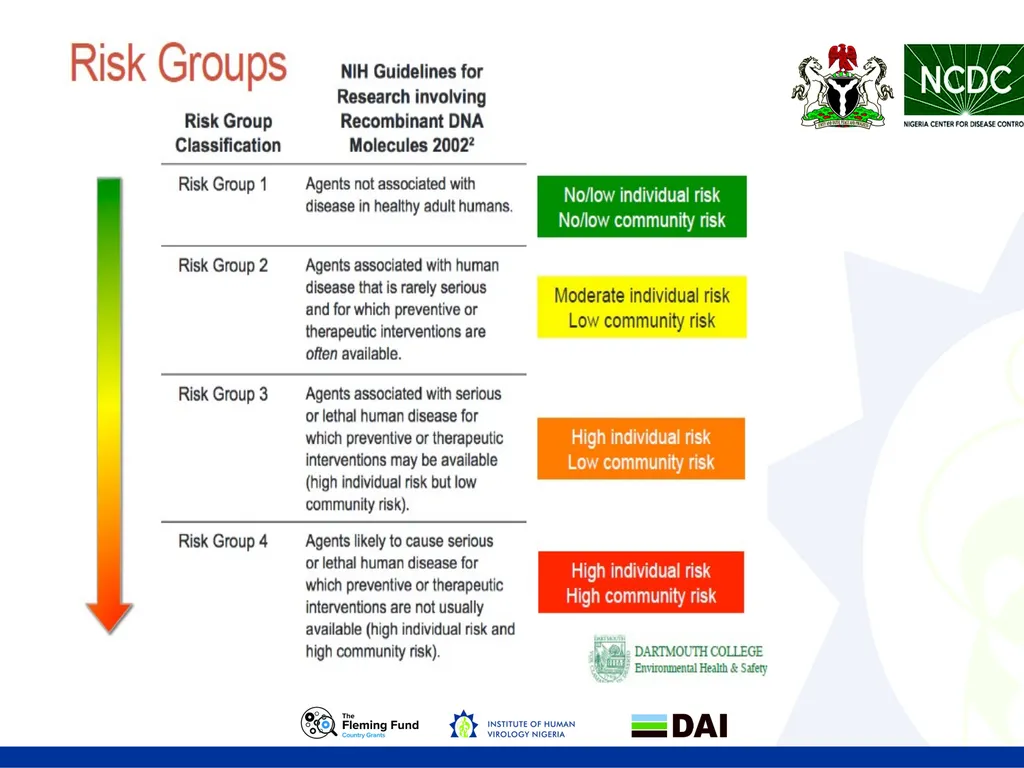
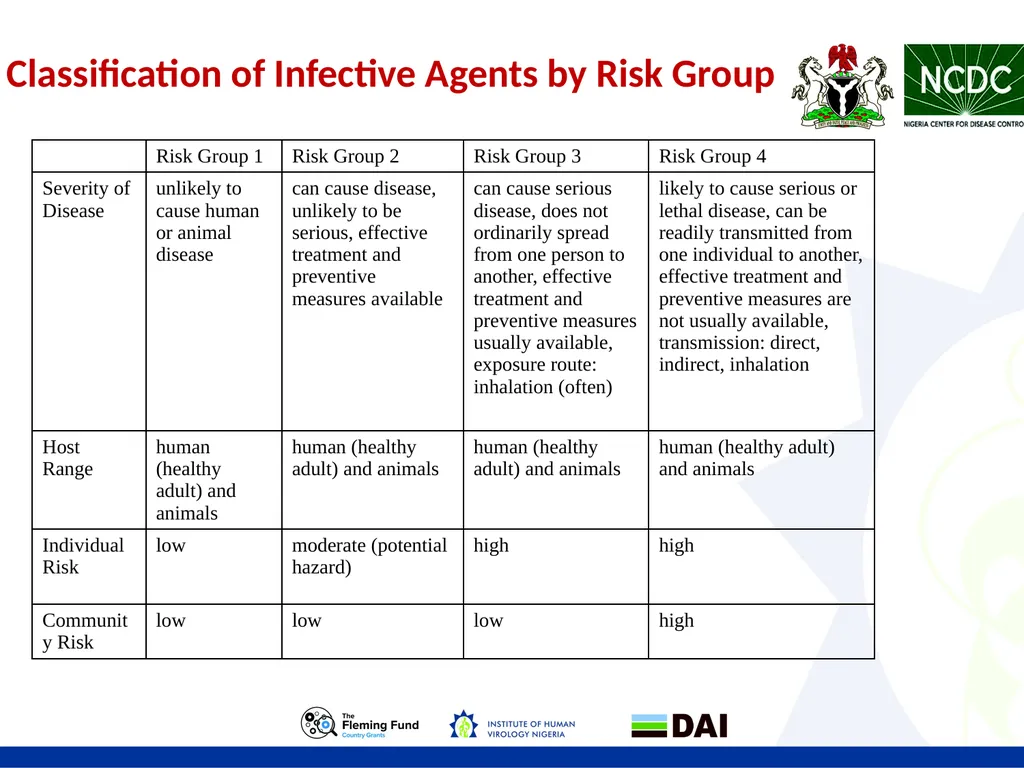
slide16. Classification of Infective Agents by Risk Group<br>
slide17. Thank You<br>
slide2. Objectives • Biosafety overview
• Background
• Principles
• Containment
• Risk Assessment
• Blood borne Pathogens<br>
slide3. What is Biosafety?
The principles, practices, procedures, and
containment measures designed to prevent the accidental exposure to or release of biological agents and toxins.
What is Biosecurity?
The protection, control, and accountability
measures implemented to prevent the loss,
theft, misuse, diversion or intentional release of biological agents and toxins.<br>
slide4. What is a Biohazard? An agent or material of biological origin that has the capacity to produce deleterious effects in humans, animals, or the environment:
Viruses,
Bacteria,
Fungi,
Parasites,
Prions<br>
slide5. Why Biosafety?Laboratory Acquired Infections (LAIs)<br>
slide6. Containment Primary goal of biosafety: reduce or eliminate human and environmental exposure to potentially harmful agents. Biological Containment
• Inactivating mutations
• Reducing virulence or pathogenicity Primary Containment
• Protects lab personnel and the immediate lab environment
• Biological Safety Cabinet (BSC)
• Good microbiological techniques (PPE, decontamination, etc.)
• Safety centrifuge cups. Secondary Containment
• Protects environment external to the lab
• Facility design and operations
• lab doors and/or anterooms
• specialized air handling systems for contamination control
• autoclaves
• hand washing, eyewash, shower stations.<br>
slide8. What are Biosafety Levels (BSLs)?
The primary risks that determine levels of containment are:
• Risk Group category
• Infectivity
• Severity of disease
• Transmissibility
• Nature of the work conducted<br>
slide9. Biosafety Level 1 (BSL1)
Risk Group 1 Agents:
• E.coli K-12
• Transgenic plants
• Fungi
• Mold
• Yeast
Lab Practice
• Standard microbiological practices
• Open bench work ok unless aerosols generated, then use BSC
• Daily decontamination
• Required hand-washing
• Autoclave waste
Safety Equipment
• PPE – gloves, lab coat, eye protection as needed
• BSC – if generating aerosols
Facility
• Sink available for hand washing
• Door on lab with appropriate signage<br>
slide10. Biosafety Level 2 (BSL2)
Builds on BSL1 requirements
Risk Group 2 Agents:
• Human or primate cells
• Herpes Simplex Virus (HSV)
• Replication-incompetent attenuated HIV
• Patient specimens
• Staphylococcus aureus
Lab Practice
• Access to the laboratory is restricted when work is being conducted
• PPE = lab coats, gloves, eye protection, face shields or masks as needed.
• Decontamination after each procedure
• Autoclave waste
• Document training<br>
slide11. BSL2 cont. Safety Equipment
• Biosafety cabinet (BSC)
• Sharps containers
• Autoclave waste bags/containers
Facility
• Self-closing doors with BSL2 signage
• Autoclave
• Sink and eyewash station readily
available
• Label all equipment in contact with
biohazard<br>
slide12. Biosafety Level 3 (BSL3)
Builds on BSL2 requirements
Risk Group Agents:
• Respiratory transmission
• Mycobacterium tuberculosis
• HIV (wild-type)
• Coxiella burnetii
Lab Practice
• Medical surveillance, baseline serology
• Immunizations available or required
• Autoclave all waste at end of day
• Avoid use of sharps
• No bench top – all work in BSC
• PPE – double gloves, PAPR, wrap around disposable gown<br>
slide13. BSL3 cont.
Safety Equipment
• All work with microbes must be performed within an
appropriate BSC
Facility
• A hands-free sink and eyewash
• Exhaust air cannot be recirculated
• Sustained directional airflow by drawing air into the lab
from clean areas towards potentially contaminated areas
• Entrance to the lab is through two sets of self-closing and
locking doors
• Access to the laboratory is restricted and controlled at all
times.<br>
slide14. Biosafety Level 4 (BSL4)
Maximum containment facility - builds on BSL3
Requirements
Risk Group Agents
• high risk of aerosol-transmitted infections
• exotic, frequently fatal
• examples: Ebola and Marburg viruses
Lab Practice
• Change clothing before entering
• Shower upon exiting
• Decontaminate all materials before exiting
Safety Equipment
• All work performed in Class III, wearing a full body, air-supplied, positive pressure suit.
Facility
• separate building or restricted zone
• dedicated supply and exhaust air, and vacuum lines and decontamination systems<br>
slide15. Biosafety Risk Assessment
Identify the hazard
2. Assess potential risk to personnel and/or environment:
• Identify Risk Group
• What is the scale of work – volume, concentration
• What are the procedures/manipulations – aerosol generating? Useof sharps?
• Determine pathogenicity – is it wild-type or attenuated? What is the
infectious dose?
• What is the route of entry?
• Are prophylaxis treatments available?
• Are personnel trained?
• Any risk to immuno-compromised or pregnant personnel?
3. Determine appropriate containment/biosafety level (BSL)<br>
slide16. Classification of Infective Agents by Risk Group<br>
slide17. Thank You<br>