Language in the Non-Language Classroom By Walter
Description: Language in the Non-Language Classroom By Walter Lorenz Lecturer in Arabic Jennifer Lane Ph.D Candidate, Department of Education Emily Hodge Ph.D Candidate, Department of Education Purpose of Presentation This session will explore the use
Related Topics
Download Presentation
"Language in the Non-Language Classroom By Walter" is the property of its rightful owner. Permission is granted to download and print the materials on this website for personal, non-commercial use only, and to display it on your personal computer provided you do not modify the materials and that you retain all copyright notices contained in the materials. By downloading content from our website, you accept the terms of this agreement.
Presentation Transcript
slide1. Language in the Non-Language Classroom By Walter Lorenz
Lecturer in Arabic
Jennifer Lane
Ph.D Candidate, Department of Education
Emily Hodge
Ph.D Candidate, Department of Education<br>
slide2. Purpose of Presentation This session will explore the use and misuse of certain “hot words” of the Arabic language that are commonly found in the U.S. media. The meaning of their linguistic roots, daily usage and the perspective taken by the U.S. media will be discussed.<br>
slide3. Topics to be Discussed Introducing the Arabic Language
Defining “hot words”
Arabic loanwords into English<br>
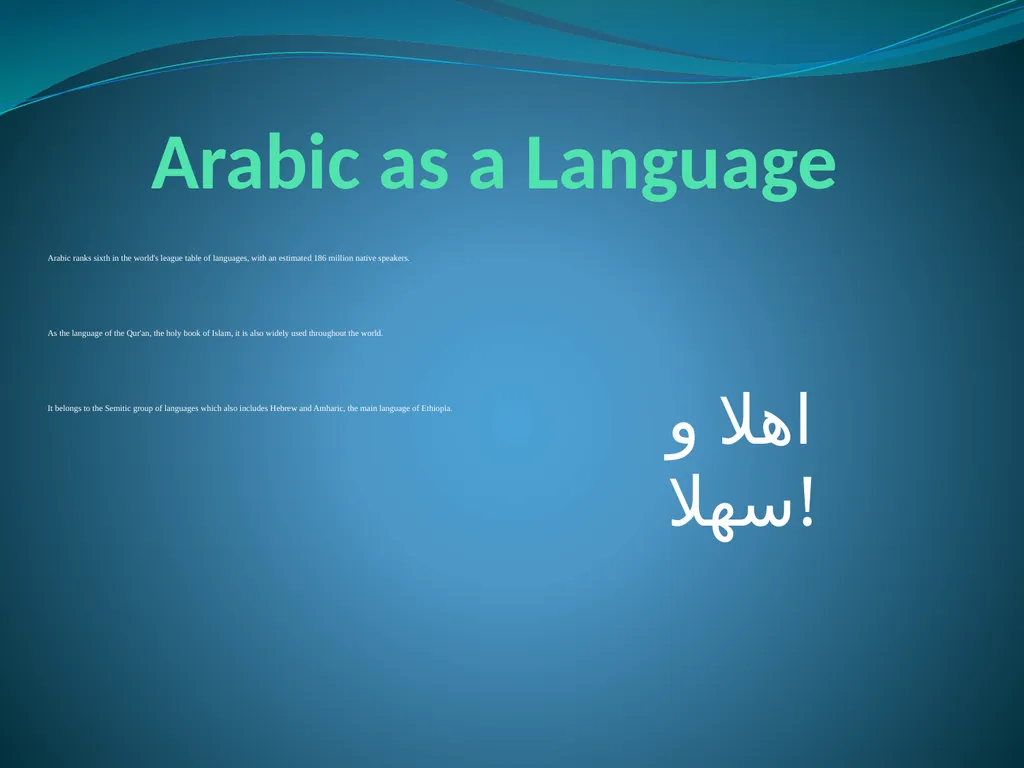
slide4. Arabic as a Language Arabic ranks sixth in the world's league table of languages, with an estimated 186 million native speakers.
As the language of the Qur'an, the holy book of Islam, it is also widely used throughout the world.
It belongs to the Semitic group of languages which also includes Hebrew and Amharic, the main language of Ethiopia. اهلا و سهلا!<br>
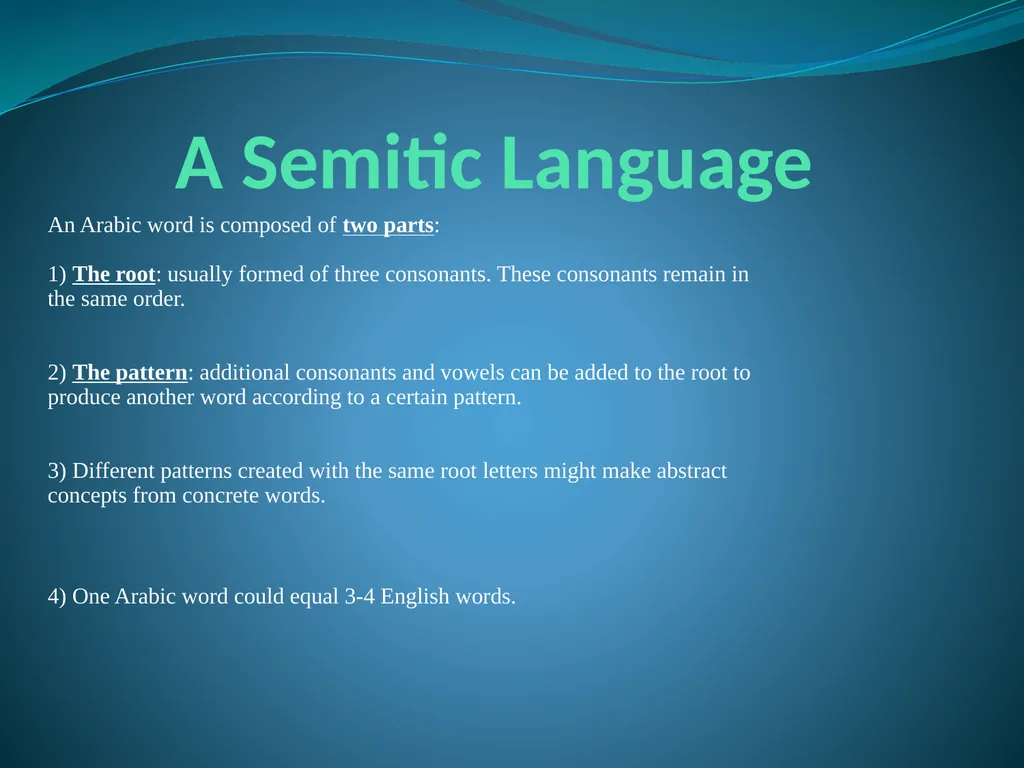
slide5. A Semitic Language An Arabic word is composed of two parts: 1) The root: usually formed of three consonants. These consonants remain in the same order.2) The pattern: additional consonants and vowels can be added to the root to produce another word according to a certain pattern.
3) Different patterns created with the same root letters might make abstract concepts from concrete words.
4) One Arabic word could equal 3-4 English words.<br>
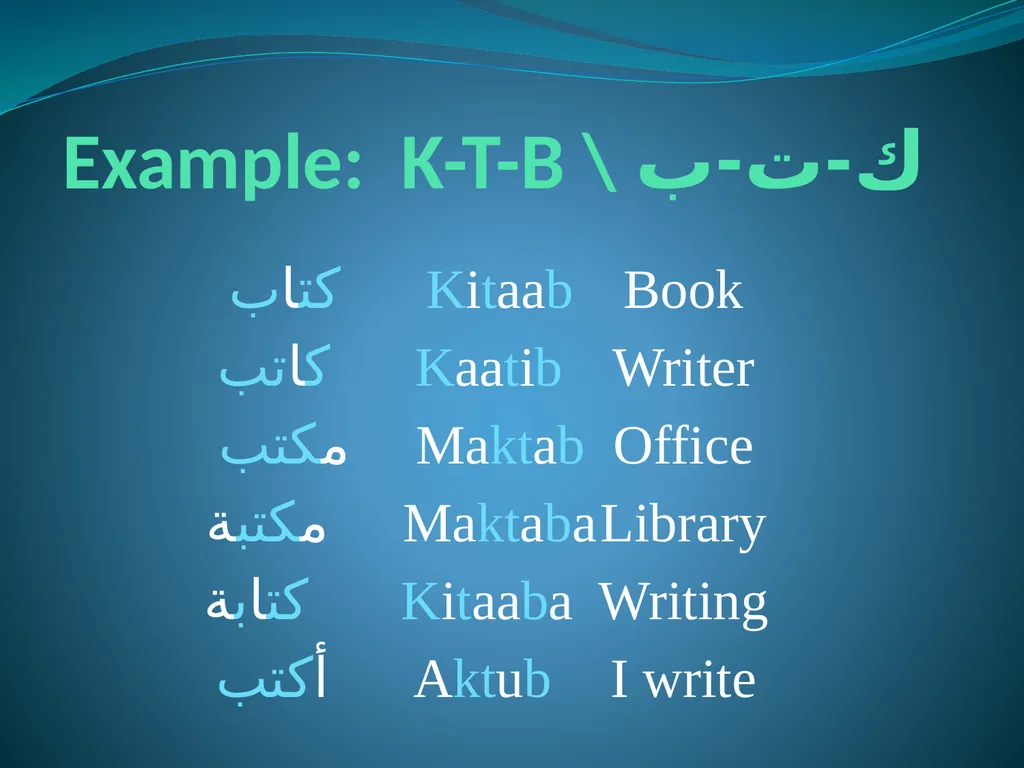
slide6. Example: K-T-B \ ك-ت-ب كتاب Kitaab Book
كاتب Kaatib Writer
مكتب Maktab Office
مكتبة Maktaba Library
كتابة Kitaaba Writing
أكتب Aktub I write<br>
slide7. Hot Words Question?
What are some “Hot words” of the Arabic language that are commonly found in the US media?<br>
slide8. Some Hot Words Islam
Muslim
Allah
Sharia
Jihad
Qur’an<br>
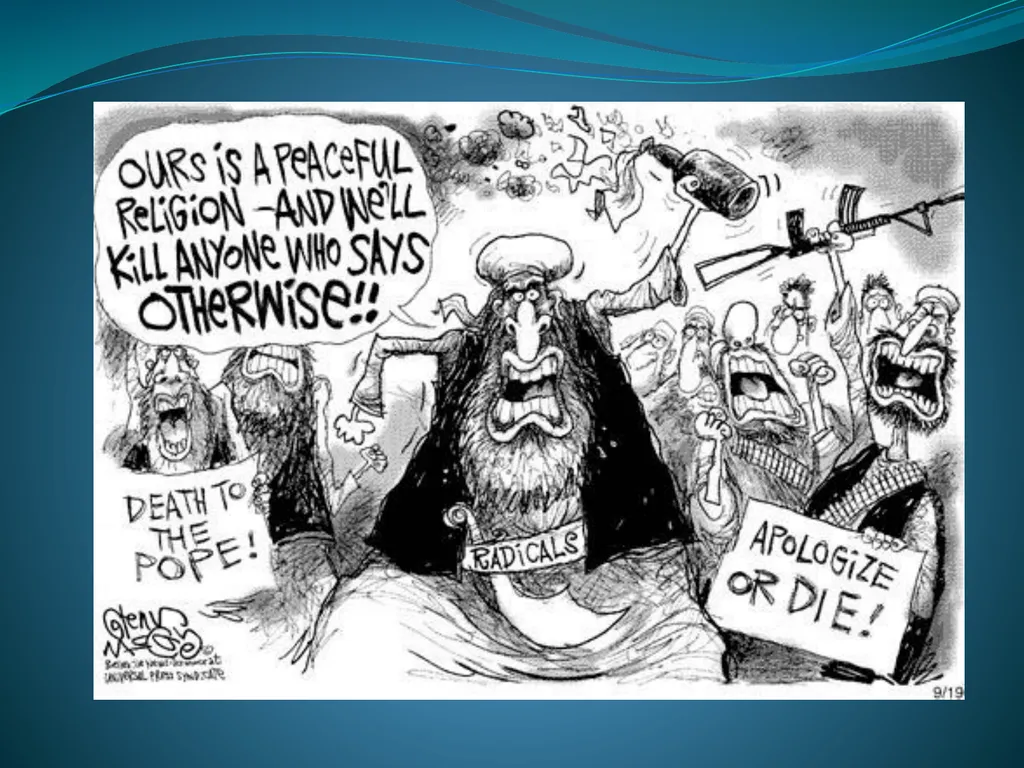
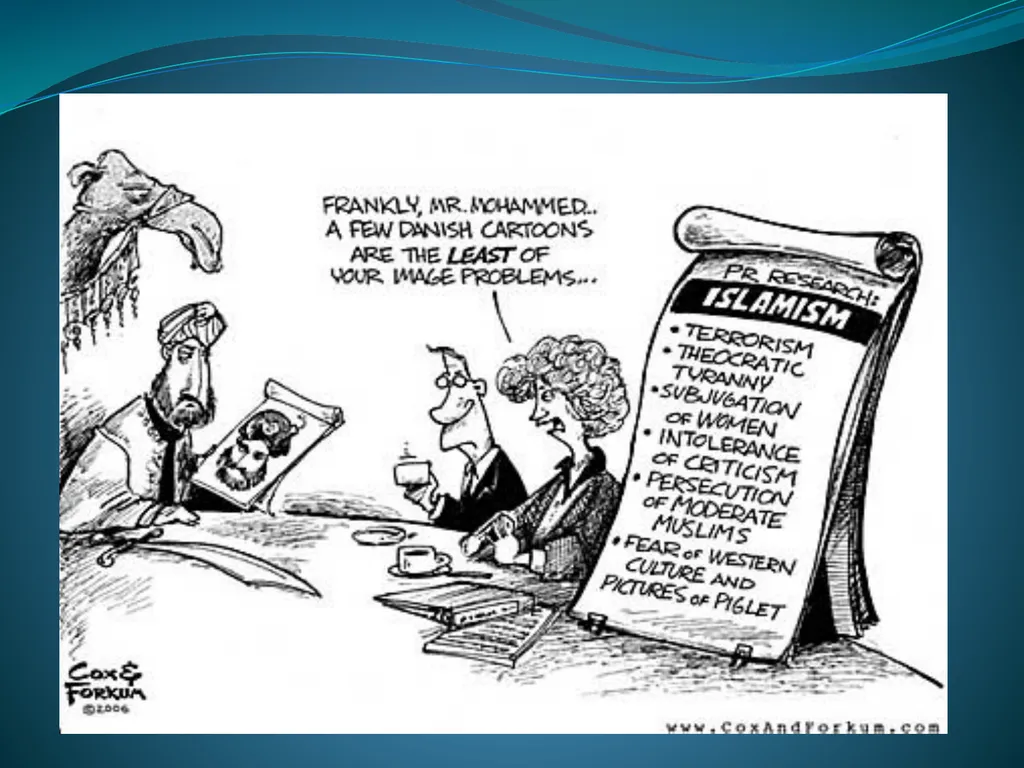
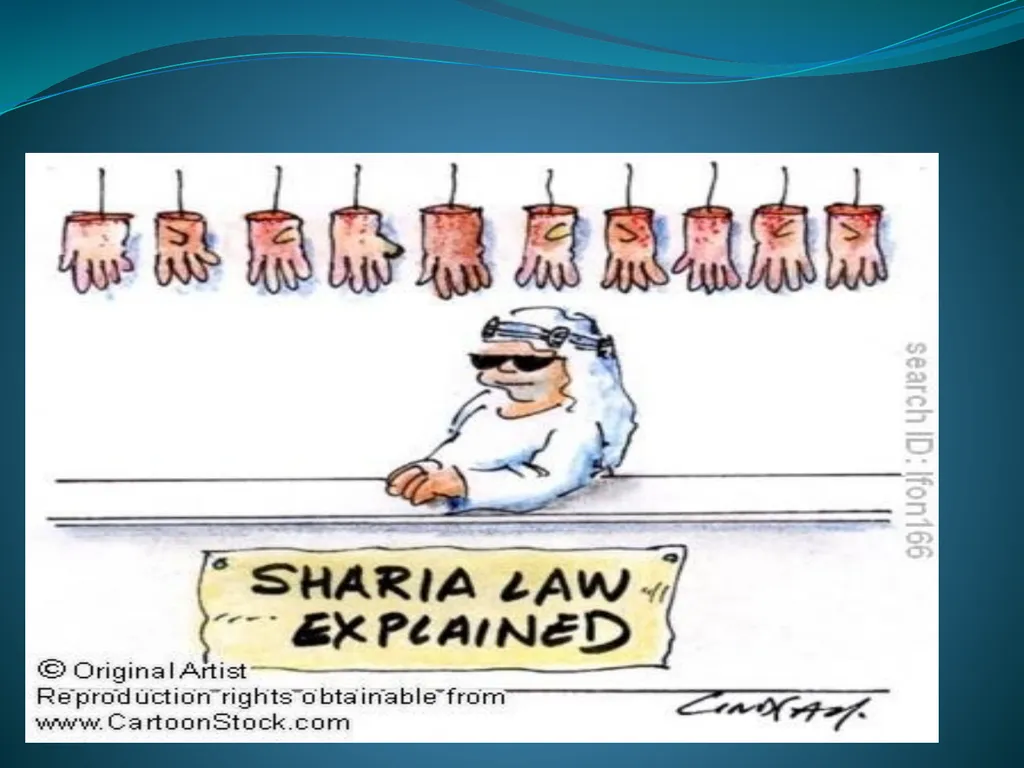
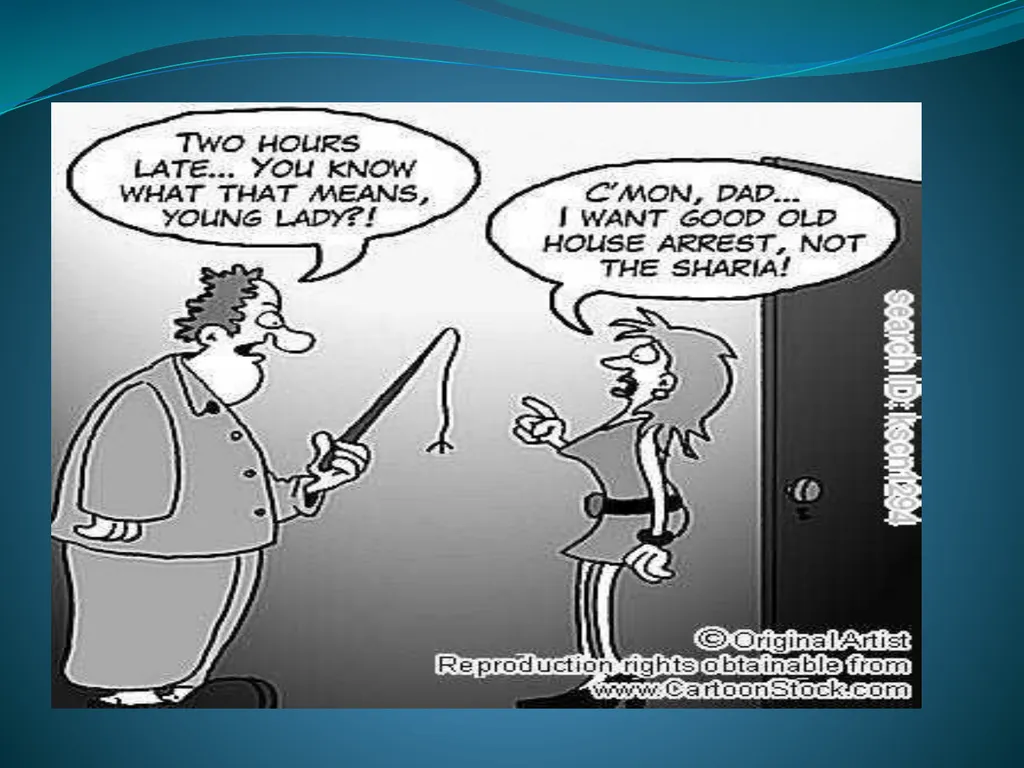
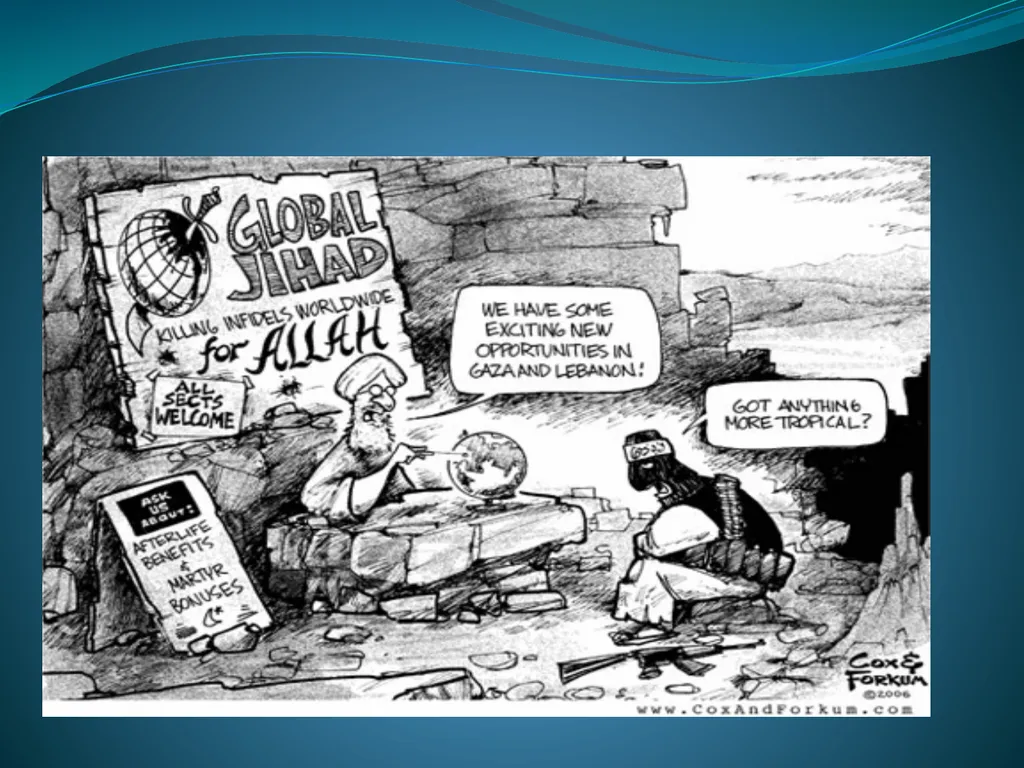
slide9. Activity… Political Cartoons<br>
slide16. Islam Monotheistic religion practiced by millions around the world.
Meaning: Submission, resignation, reconciliation (to the will of God).
Can you guess the roots?
Hint: Three consonants.<br>
slide17. Islam Roots: S – L – M
Other words that may have these roots:
Muslim - An adherent of Islam (One who submits)
Salaam – Peace, Safety, Security
Saalim – Safe, Secure, Intact
Tasliim – surrender, delivery of goods<br>
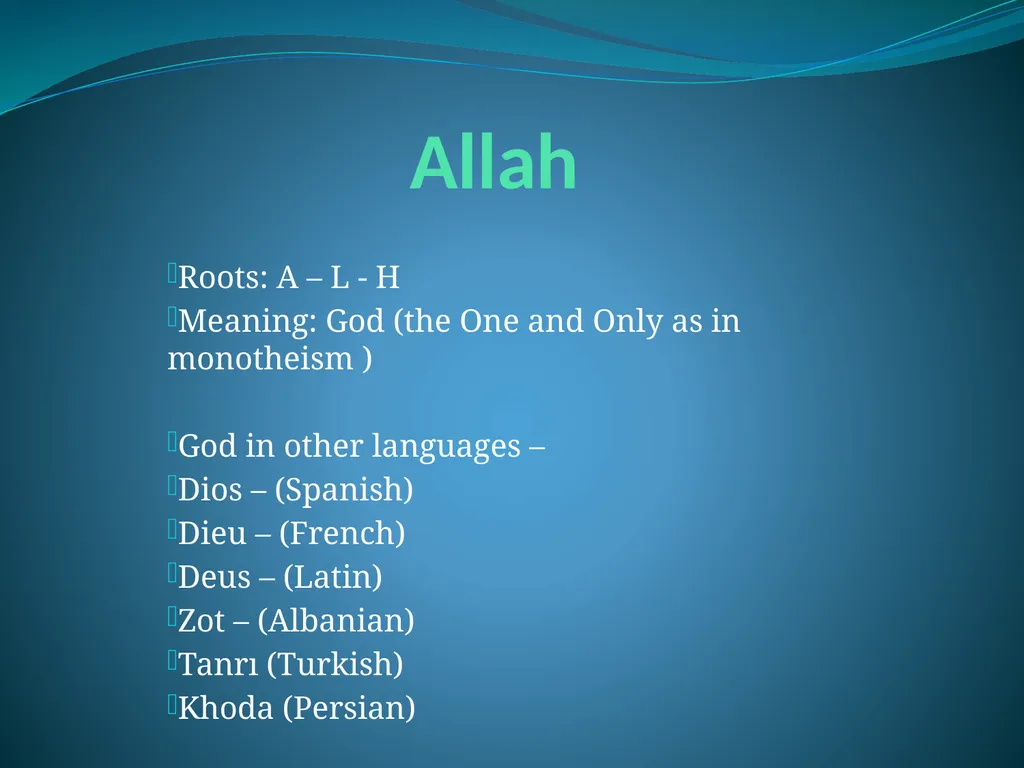
slide18. Allah Roots: A – L - H
Meaning: God (the One and Only as in monotheism )
God in other languages –
Dios – (Spanish)
Dieu – (French)
Deus – (Latin)
Zot – (Albanian)
Tanrı (Turkish)
Khoda (Persian)<br>
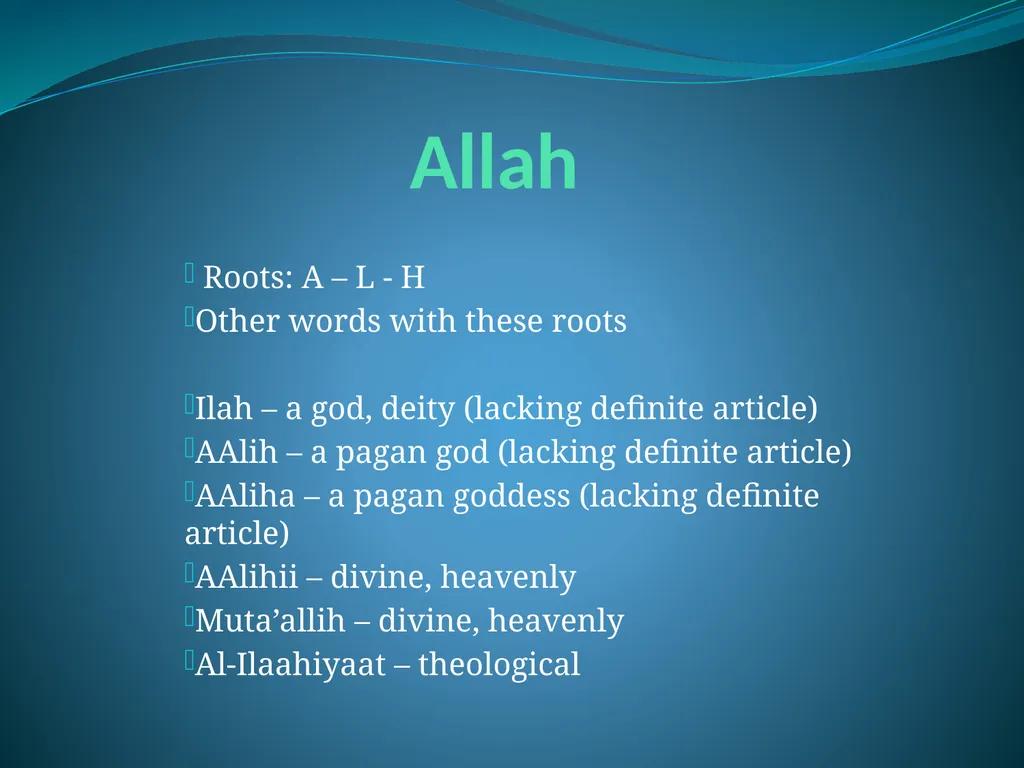
slide19. Allah Roots: A – L - H
Other words with these roots
Ilah – a god, deity (lacking definite article)
AAlih – a pagan god (lacking definite article)
AAliha – a pagan goddess (lacking definite article)
AAlihii – divine, heavenly
Muta’allih – divine, heavenly
Al-Ilaahiyaat – theological<br>
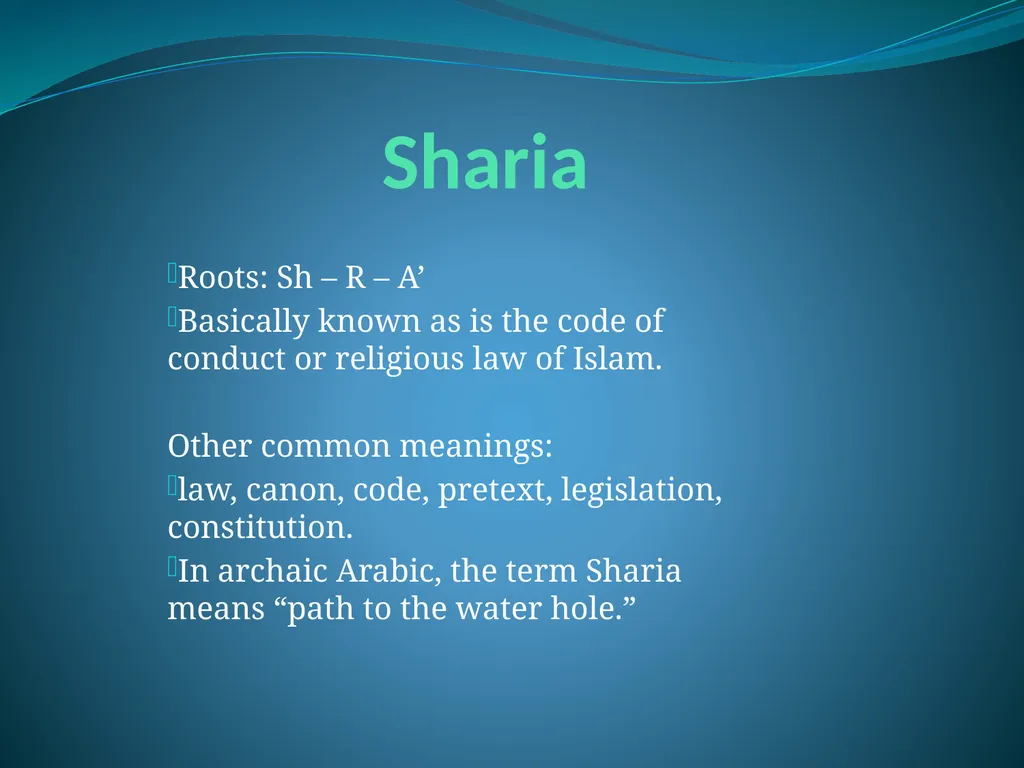
slide20. Sharia Roots: Sh – R – A’
Basically known as is the code of conduct or religious law of Islam.
Other common meanings:
law, canon, code, pretext, legislation, constitution.
In archaic Arabic, the term Sharia means “path to the water hole.”<br>
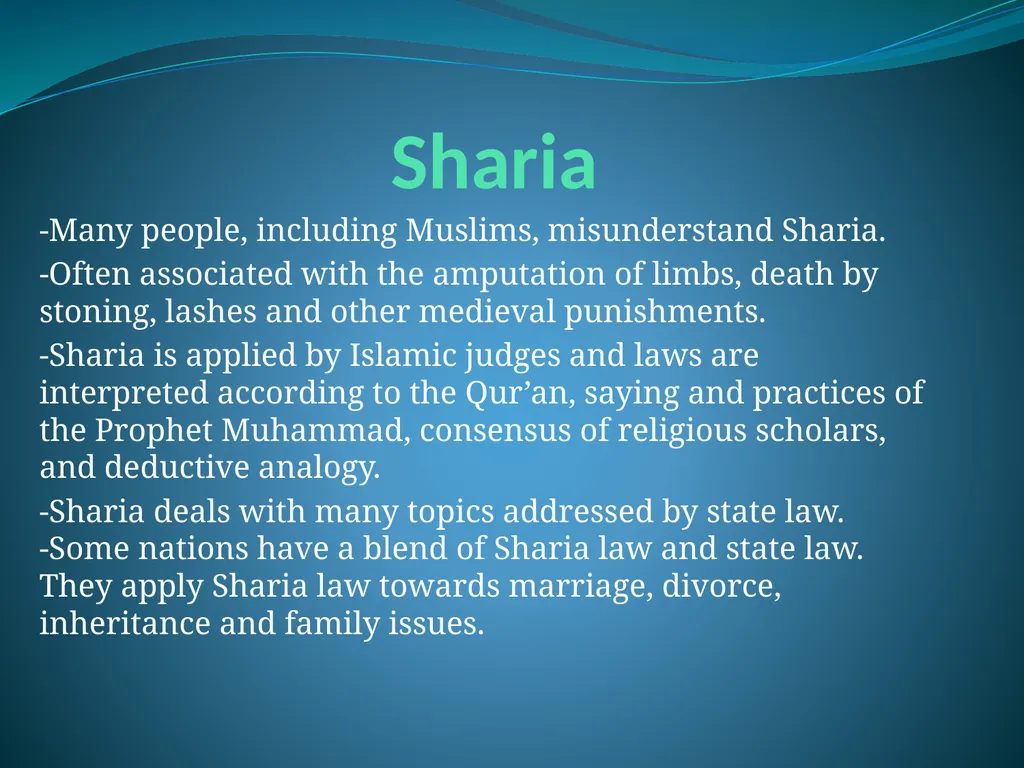
slide21. Sharia -Many people, including Muslims, misunderstand Sharia.
-Often associated with the amputation of limbs, death by stoning, lashes and other medieval punishments.
-Sharia is applied by Islamic judges and laws are interpreted according to the Qur’an, saying and practices of the Prophet Muhammad, consensus of religious scholars, and deductive analogy.
-Sharia deals with many topics addressed by state law.-Some nations have a blend of Sharia law and state law. They apply Sharia law towards marriage, divorce, inheritance and family issues.<br>
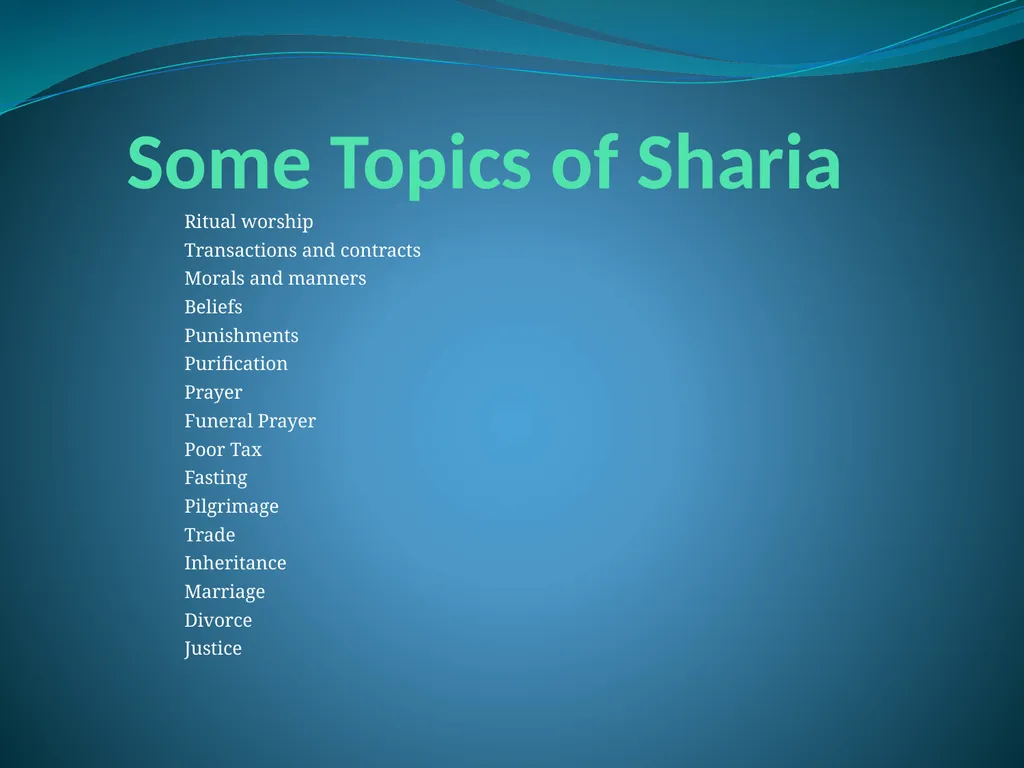
slide22. Some Topics of Sharia Ritual worship
Transactions and contracts
Morals and manners
Beliefs
Punishments
Purification
Prayer
Funeral Prayer
Poor Tax
Fasting
Pilgrimage
Trade
Inheritance
Marriage
Divorce
Justice<br>
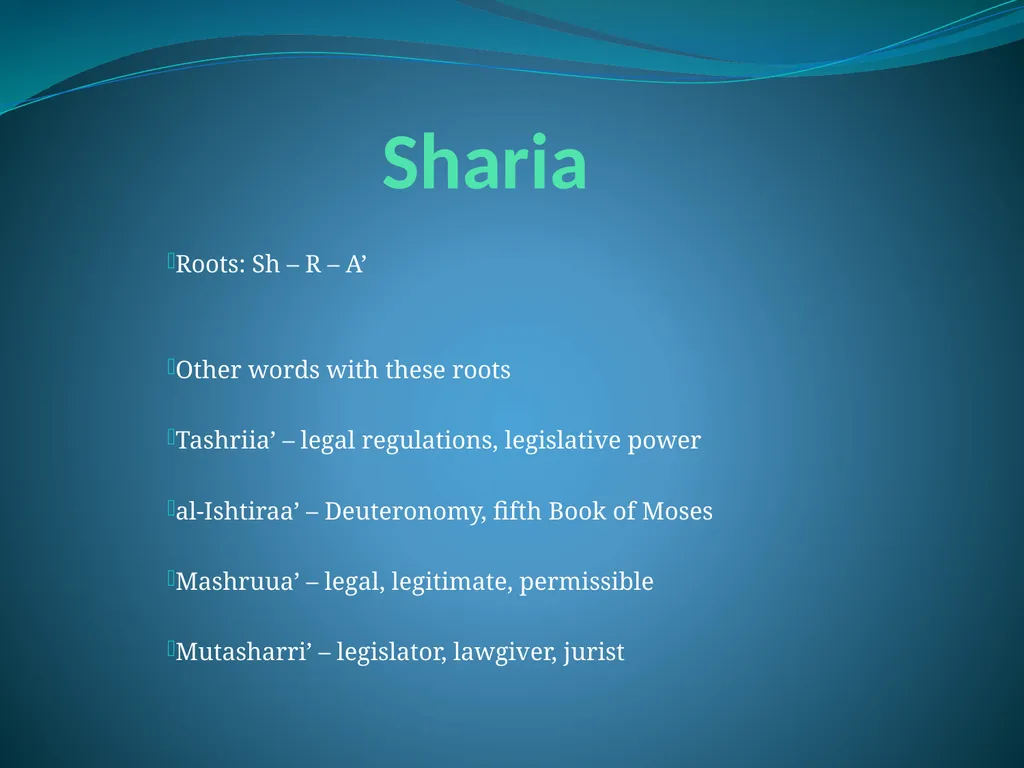
slide23. Sharia Roots: Sh – R – A’
Other words with these roots
Tashriia’ – legal regulations, legislative power
al-Ishtiraa’ – Deuteronomy, fifth Book of Moses
Mashruua’ – legal, legitimate, permissible
Mutasharri’ – legislator, lawgiver, jurist<br>
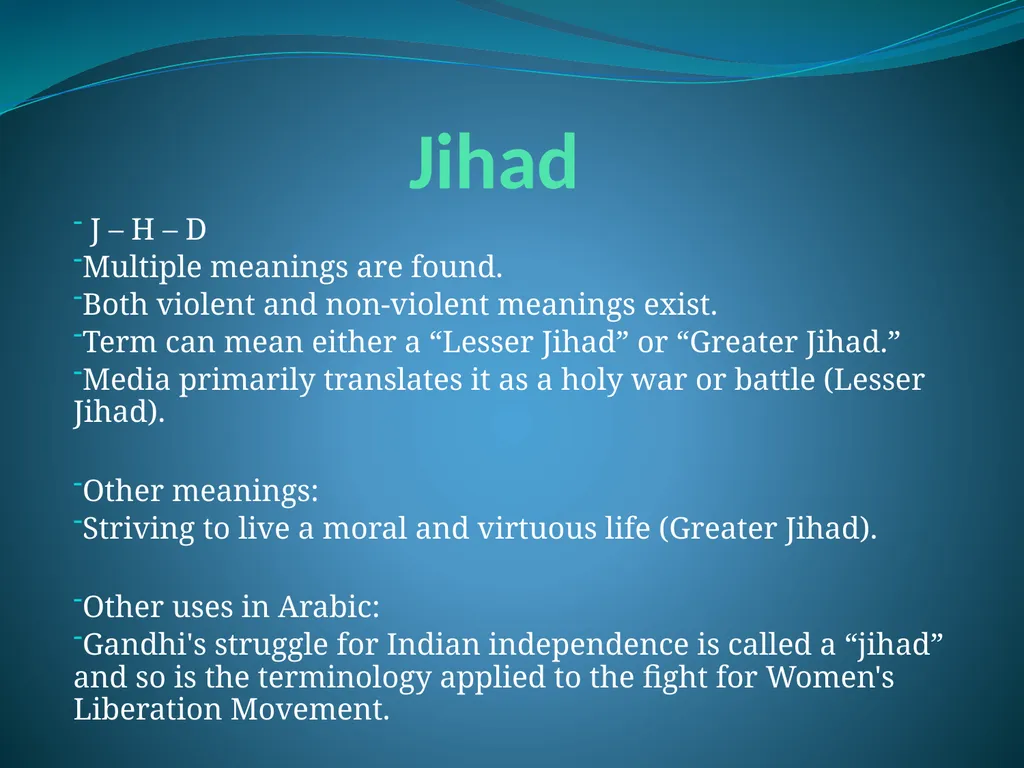
slide24. Jihad J – H – D
Multiple meanings are found.
Both violent and non-violent meanings exist.
Term can mean either a “Lesser Jihad” or “Greater Jihad.”
Media primarily translates it as a holy war or battle (Lesser Jihad).
Other meanings:
Striving to live a moral and virtuous life (Greater Jihad).
Other uses in Arabic:
Gandhi's struggle for Indian independence is called a “jihad” and so is the terminology applied to the fight for Women's Liberation Movement.<br>
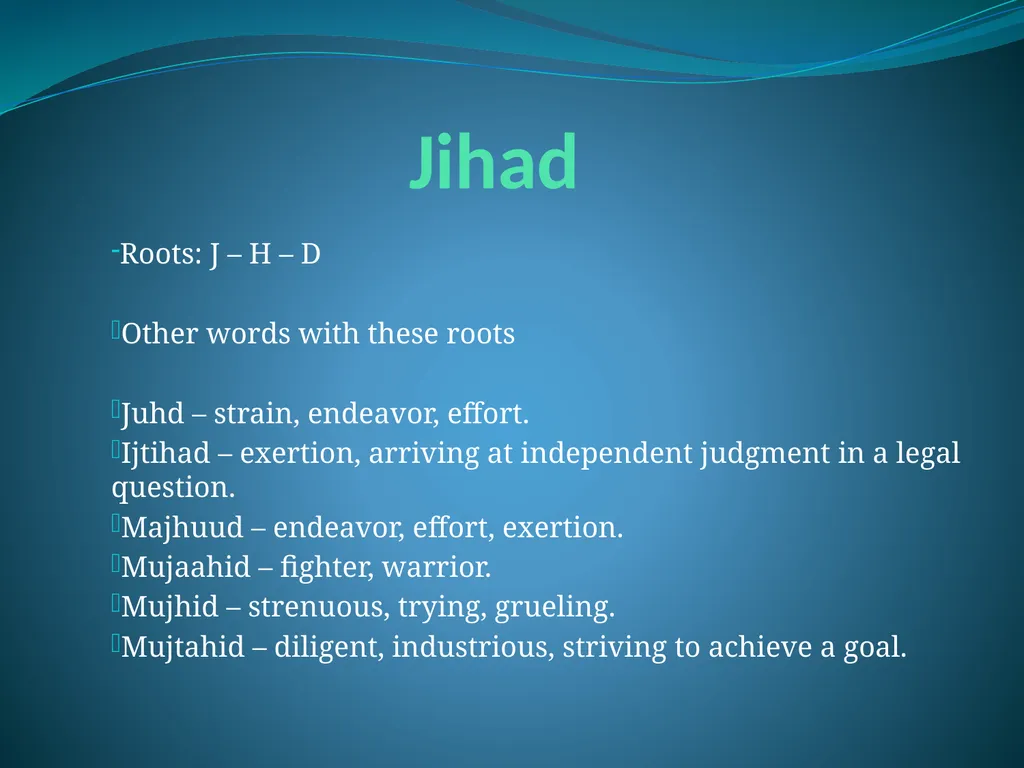
slide25. Jihad Roots: J – H – D
Other words with these roots
Juhd – strain, endeavor, effort.
Ijtihad – exertion, arriving at independent judgment in a legal question.
Majhuud – endeavor, effort, exertion.
Mujaahid – fighter, warrior.
Mujhid – strenuous, trying, grueling.
Mujtahid – diligent, industrious, striving to achieve a goal.<br>
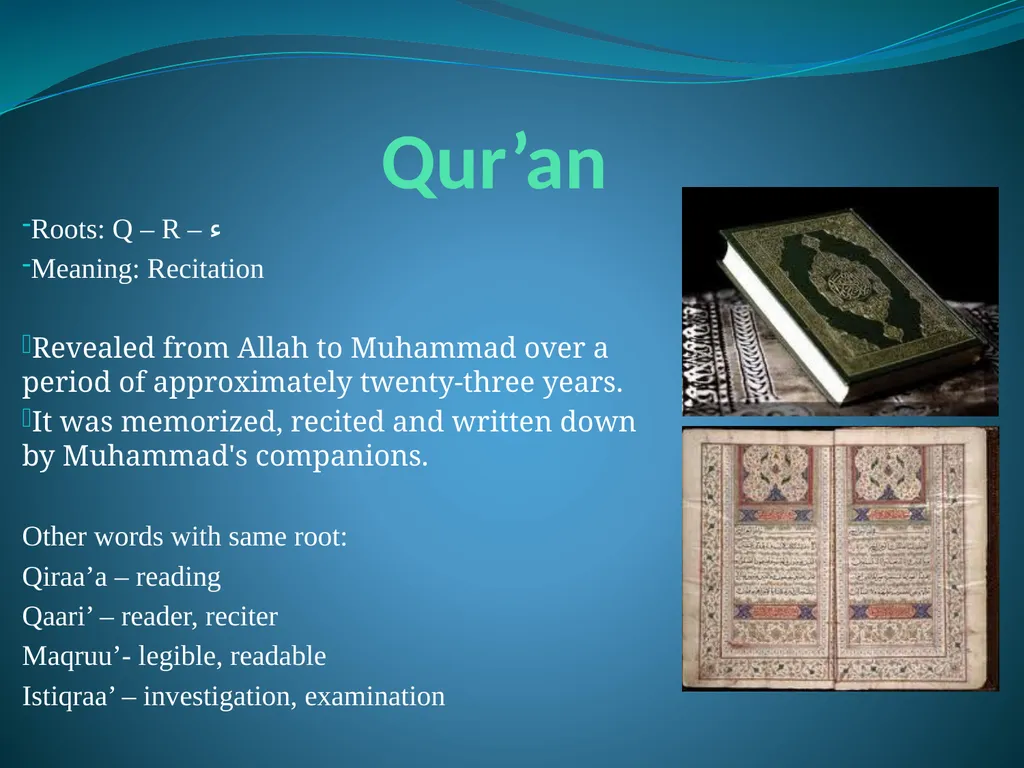
slide26. Qur’an Roots: Q – R – ء
Meaning: Recitation
Revealed from Allah to Muhammad over a period of approximately twenty-three years.
It was memorized, recited and written down by Muhammad's companions.
Other words with same root:
Qiraa’a – reading
Qaari’ – reader, reciter
Maqruu’- legible, readable
Istiqraa’ – investigation, examination<br>
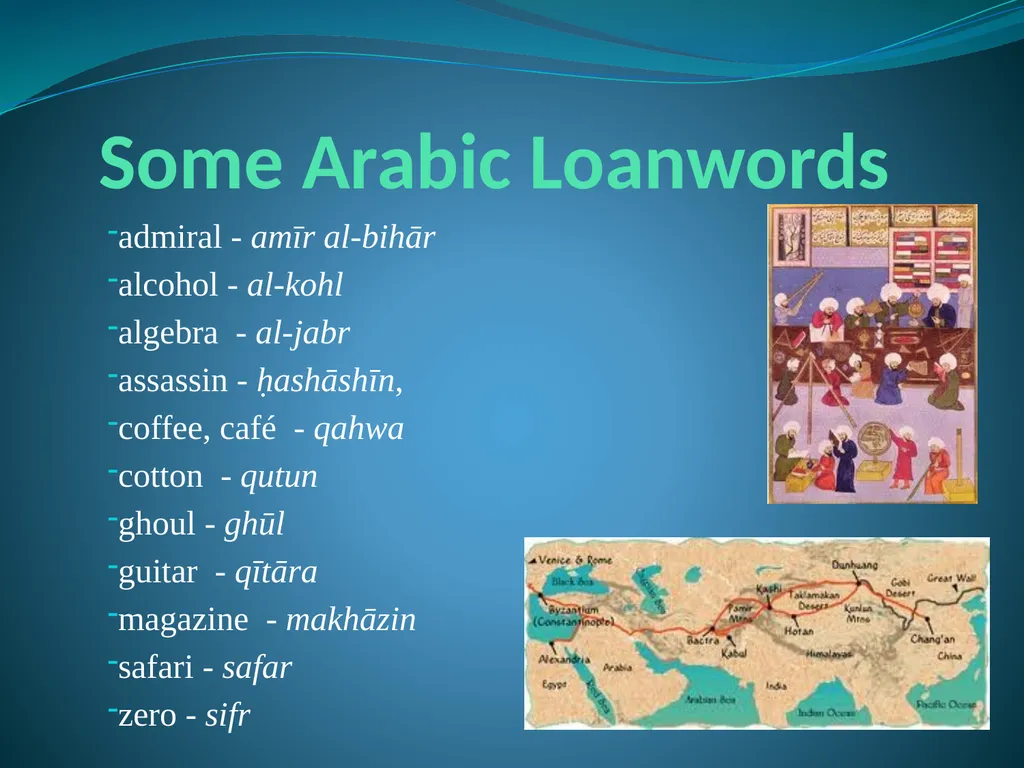
slide27. Some Arabic Loanwords admiral - amīr al-bihār
alcohol - al-kohl
algebra - al-jabr
assassin - ḥashāshīn,
coffee, café - qahwa
cotton - qutun
ghoul - ghūl
guitar - qītāra
magazine - makhāzin
safari - safar
zero - sifr<br>
slide28. Something to Consider Certain Arabic words are transformed into “hot words” by the U.S. media.
These words possess a variety of meanings, but are overshadowed by stereotypes created by the media and film industry.
Is this popular portrayal in the media accurate? Is it fair?
Since the media propagates the popular portrayal of these words, how can we redefine them?<br>

slide29. Thank You<br>
Lecturer in Arabic
Jennifer Lane
Ph.D Candidate, Department of Education
Emily Hodge
Ph.D Candidate, Department of Education<br>
slide2. Purpose of Presentation This session will explore the use and misuse of certain “hot words” of the Arabic language that are commonly found in the U.S. media. The meaning of their linguistic roots, daily usage and the perspective taken by the U.S. media will be discussed.<br>
slide3. Topics to be Discussed Introducing the Arabic Language
Defining “hot words”
Arabic loanwords into English<br>
slide4. Arabic as a Language Arabic ranks sixth in the world's league table of languages, with an estimated 186 million native speakers.
As the language of the Qur'an, the holy book of Islam, it is also widely used throughout the world.
It belongs to the Semitic group of languages which also includes Hebrew and Amharic, the main language of Ethiopia. اهلا و سهلا!<br>
slide5. A Semitic Language An Arabic word is composed of two parts: 1) The root: usually formed of three consonants. These consonants remain in the same order.2) The pattern: additional consonants and vowels can be added to the root to produce another word according to a certain pattern.
3) Different patterns created with the same root letters might make abstract concepts from concrete words.
4) One Arabic word could equal 3-4 English words.<br>
slide6. Example: K-T-B \ ك-ت-ب كتاب Kitaab Book
كاتب Kaatib Writer
مكتب Maktab Office
مكتبة Maktaba Library
كتابة Kitaaba Writing
أكتب Aktub I write<br>
slide7. Hot Words Question?
What are some “Hot words” of the Arabic language that are commonly found in the US media?<br>
slide8. Some Hot Words Islam
Muslim
Allah
Sharia
Jihad
Qur’an<br>
slide9. Activity… Political Cartoons<br>
slide16. Islam Monotheistic religion practiced by millions around the world.
Meaning: Submission, resignation, reconciliation (to the will of God).
Can you guess the roots?
Hint: Three consonants.<br>
slide17. Islam Roots: S – L – M
Other words that may have these roots:
Muslim - An adherent of Islam (One who submits)
Salaam – Peace, Safety, Security
Saalim – Safe, Secure, Intact
Tasliim – surrender, delivery of goods<br>
slide18. Allah Roots: A – L - H
Meaning: God (the One and Only as in monotheism )
God in other languages –
Dios – (Spanish)
Dieu – (French)
Deus – (Latin)
Zot – (Albanian)
Tanrı (Turkish)
Khoda (Persian)<br>
slide19. Allah Roots: A – L - H
Other words with these roots
Ilah – a god, deity (lacking definite article)
AAlih – a pagan god (lacking definite article)
AAliha – a pagan goddess (lacking definite article)
AAlihii – divine, heavenly
Muta’allih – divine, heavenly
Al-Ilaahiyaat – theological<br>
slide20. Sharia Roots: Sh – R – A’
Basically known as is the code of conduct or religious law of Islam.
Other common meanings:
law, canon, code, pretext, legislation, constitution.
In archaic Arabic, the term Sharia means “path to the water hole.”<br>
slide21. Sharia -Many people, including Muslims, misunderstand Sharia.
-Often associated with the amputation of limbs, death by stoning, lashes and other medieval punishments.
-Sharia is applied by Islamic judges and laws are interpreted according to the Qur’an, saying and practices of the Prophet Muhammad, consensus of religious scholars, and deductive analogy.
-Sharia deals with many topics addressed by state law.-Some nations have a blend of Sharia law and state law. They apply Sharia law towards marriage, divorce, inheritance and family issues.<br>
slide22. Some Topics of Sharia Ritual worship
Transactions and contracts
Morals and manners
Beliefs
Punishments
Purification
Prayer
Funeral Prayer
Poor Tax
Fasting
Pilgrimage
Trade
Inheritance
Marriage
Divorce
Justice<br>
slide23. Sharia Roots: Sh – R – A’
Other words with these roots
Tashriia’ – legal regulations, legislative power
al-Ishtiraa’ – Deuteronomy, fifth Book of Moses
Mashruua’ – legal, legitimate, permissible
Mutasharri’ – legislator, lawgiver, jurist<br>
slide24. Jihad J – H – D
Multiple meanings are found.
Both violent and non-violent meanings exist.
Term can mean either a “Lesser Jihad” or “Greater Jihad.”
Media primarily translates it as a holy war or battle (Lesser Jihad).
Other meanings:
Striving to live a moral and virtuous life (Greater Jihad).
Other uses in Arabic:
Gandhi's struggle for Indian independence is called a “jihad” and so is the terminology applied to the fight for Women's Liberation Movement.<br>
slide25. Jihad Roots: J – H – D
Other words with these roots
Juhd – strain, endeavor, effort.
Ijtihad – exertion, arriving at independent judgment in a legal question.
Majhuud – endeavor, effort, exertion.
Mujaahid – fighter, warrior.
Mujhid – strenuous, trying, grueling.
Mujtahid – diligent, industrious, striving to achieve a goal.<br>
slide26. Qur’an Roots: Q – R – ء
Meaning: Recitation
Revealed from Allah to Muhammad over a period of approximately twenty-three years.
It was memorized, recited and written down by Muhammad's companions.
Other words with same root:
Qiraa’a – reading
Qaari’ – reader, reciter
Maqruu’- legible, readable
Istiqraa’ – investigation, examination<br>
slide27. Some Arabic Loanwords admiral - amīr al-bihār
alcohol - al-kohl
algebra - al-jabr
assassin - ḥashāshīn,
coffee, café - qahwa
cotton - qutun
ghoul - ghūl
guitar - qītāra
magazine - makhāzin
safari - safar
zero - sifr<br>
slide28. Something to Consider Certain Arabic words are transformed into “hot words” by the U.S. media.
These words possess a variety of meanings, but are overshadowed by stereotypes created by the media and film industry.
Is this popular portrayal in the media accurate? Is it fair?
Since the media propagates the popular portrayal of these words, how can we redefine them?<br>
slide29. Thank You<br>