
Lead in Construction Training on the hazards of
MT
Published · 43 slides · 0 views
1 / 1


Description
Lead in Construction Training on the hazards of lead at construction worksites Updated by the Division of Occupational Safety Health (DOSH) for employee training November, 2016 Lead in Construction We will cover the following topics:
Related Topics
Share
Embed code
Download this presentation From Below
"Lead in Construction Training on the hazards of" is the property of its rightful owner. Permission is granted to download and print the materials on this website for personal, non-commercial use only, and to display it on your personal computer provided you do not modify the materials and that you retain all copyright notices contained in the materials. By downloading content from our website, you accept the terms of this agreement.
Presentation Transcript
01
Lead in Construction Training on the hazards of lead at construction worksites Updated by the Division of Occupational Safety & Health (DOSH) for employee training
November, 2016<br>
November, 2016<br>
02
Lead in Construction We will cover the following topics:
Health hazards of lead
How you are exposed to lead
How to control your lead exposure
Respiratory protection
Medical monitoring
Medical removal
DOSH Lead standards<br>
Health hazards of lead
How you are exposed to lead
How to control your lead exposure
Respiratory protection
Medical monitoring
Medical removal
DOSH Lead standards<br>
03
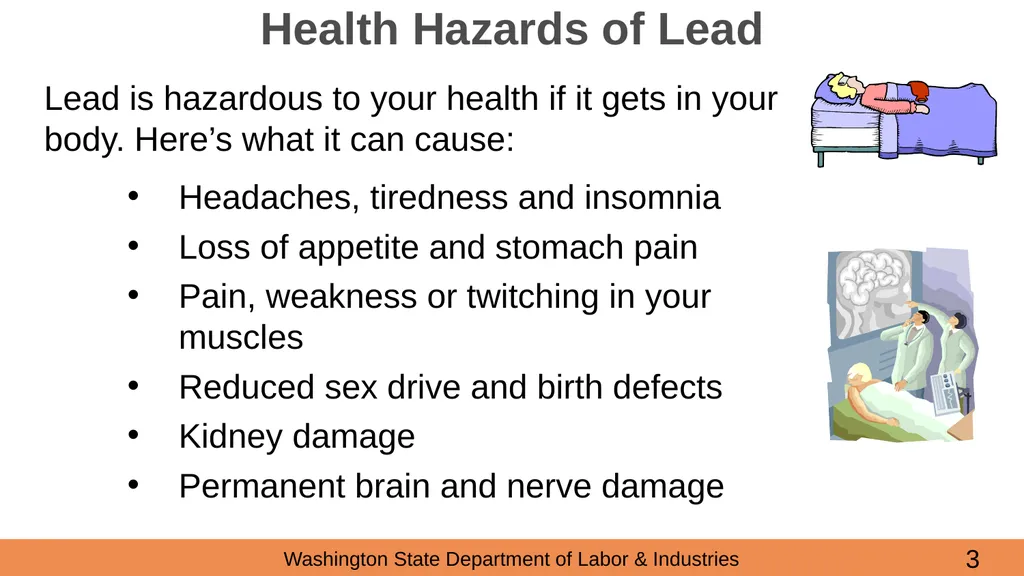
Health Hazards of Lead Lead is hazardous to your health if it gets in your body. Here’s what it can cause:
Headaches, tiredness and insomnia
Loss of appetite and stomach pain
Pain, weakness or twitching in your muscles
Reduced sex drive and birth defects
Kidney damage
Permanent brain and nerve damage<br>
Headaches, tiredness and insomnia
Loss of appetite and stomach pain
Pain, weakness or twitching in your muscles
Reduced sex drive and birth defects
Kidney damage
Permanent brain and nerve damage<br>
04
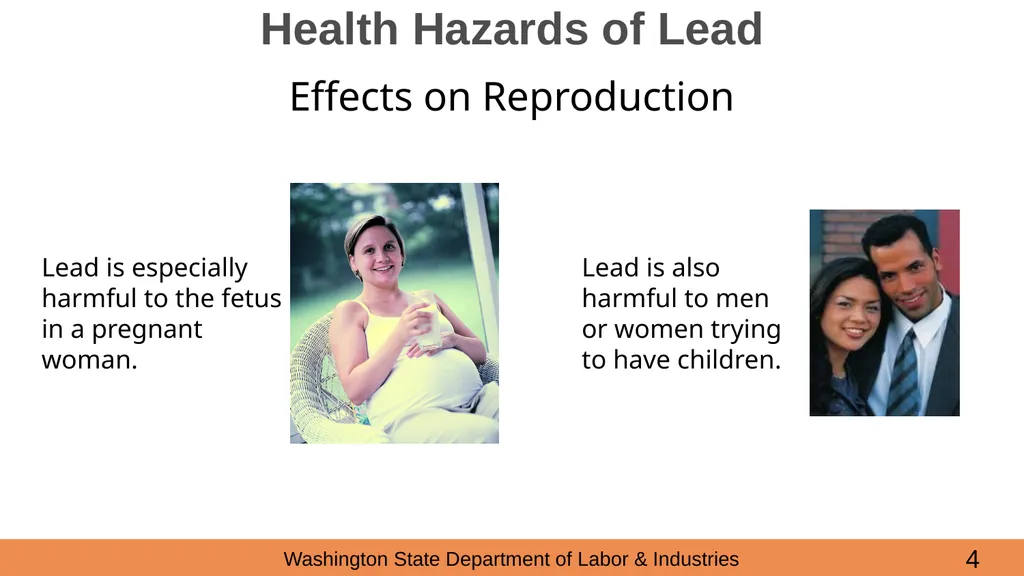
Health Hazards of Lead Effects on Reproduction Lead is especially harmful to the fetus in a pregnant woman. Lead is also harmful to men or women trying to have children.<br>
05
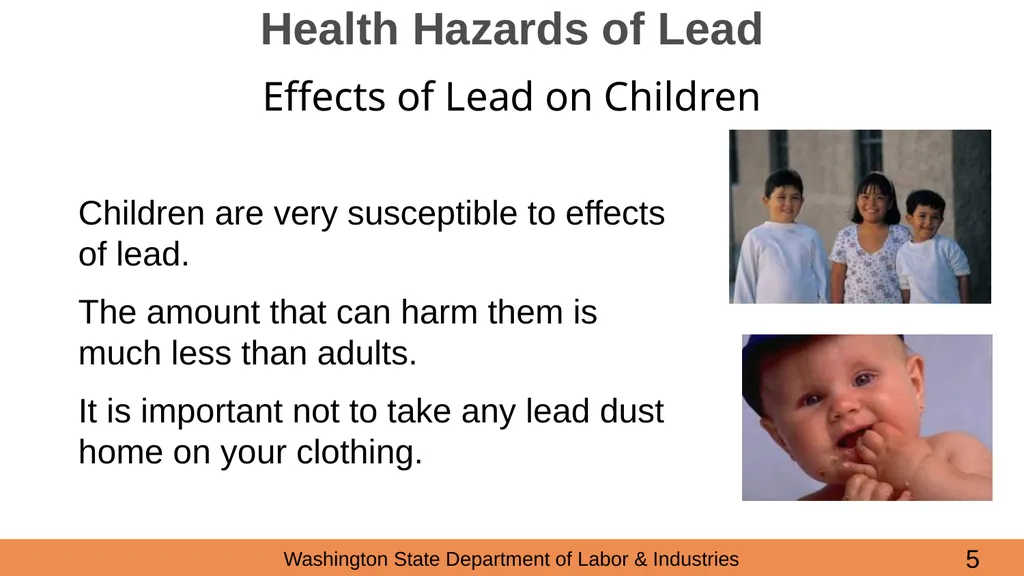
Health Hazards of Lead Effects of Lead on Children Children are very susceptible to effects of lead.
The amount that can harm them is much less than adults.
It is important not to take any lead dust home on your clothing.<br>
The amount that can harm them is much less than adults.
It is important not to take any lead dust home on your clothing.<br>
06
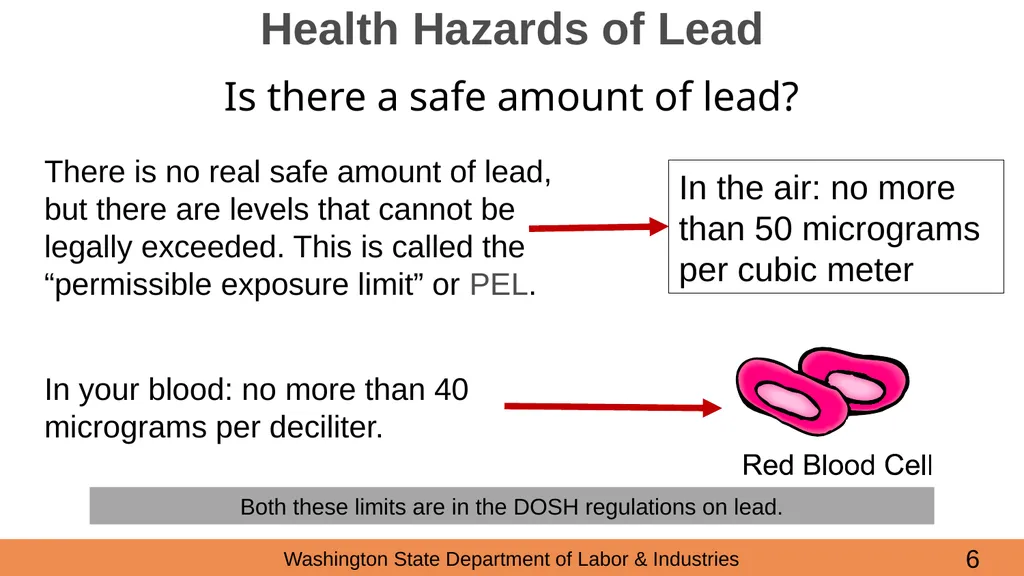
Health Hazards of Lead Is there a safe amount of lead? There is no real safe amount of lead, but there are levels that cannot be legally exceeded. This is called the “permissible exposure limit” or PEL. In the air: no more than 50 micrograms per cubic meter In your blood: no more than 40 micrograms per deciliter. Both these limits are in the DOSH regulations on lead.<br>
07
Lead “Action Level” When the amount of lead in the air is above the “action level” of 30 micrograms per cubic meter, we are required to: - Conduct air monitoring
- Provide medical surveillance
- Provide training The Action Level is 60% of the permissible exposure limit (PEL)<br>
- Provide medical surveillance
- Provide training The Action Level is 60% of the permissible exposure limit (PEL)<br>
08
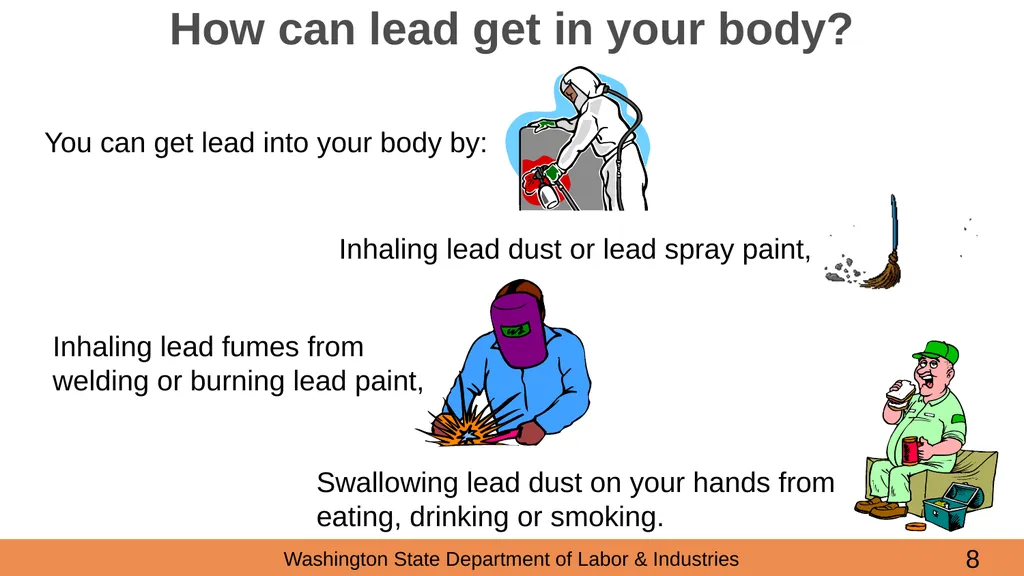
How can lead get in your body? You can get lead into your body by: Inhaling lead dust or lead spray paint, Inhaling lead fumes from welding or burning lead paint, Swallowing lead dust on your hands from eating, drinking or smoking.<br>
09
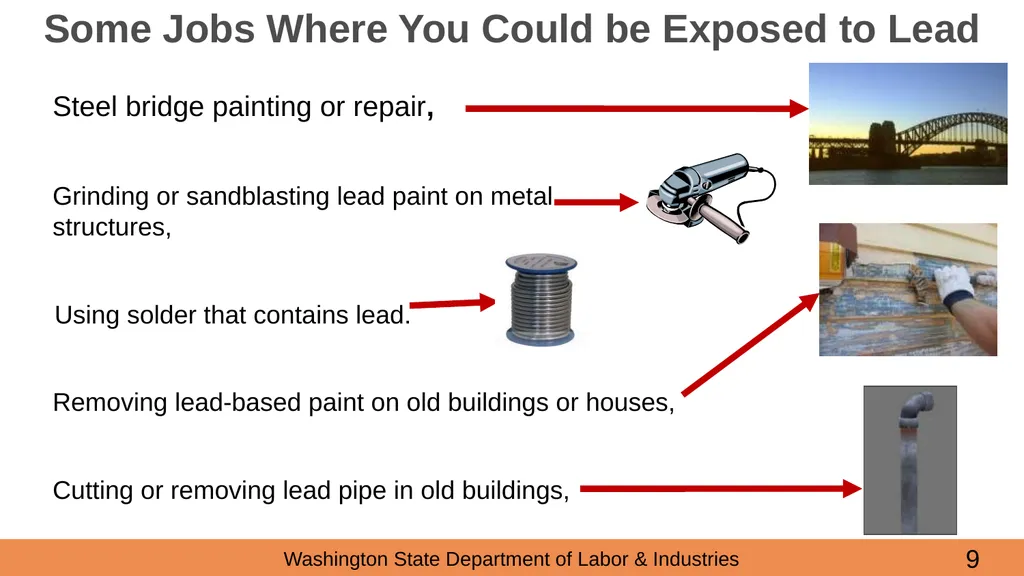
Some Jobs Where You Could be Exposed to Lead Steel bridge painting or repair, Grinding or sandblasting lead paint on metal structures, Using solder that contains lead. Removing lead-based paint on old buildings or houses, Cutting or removing lead pipe in old buildings,<br>
10
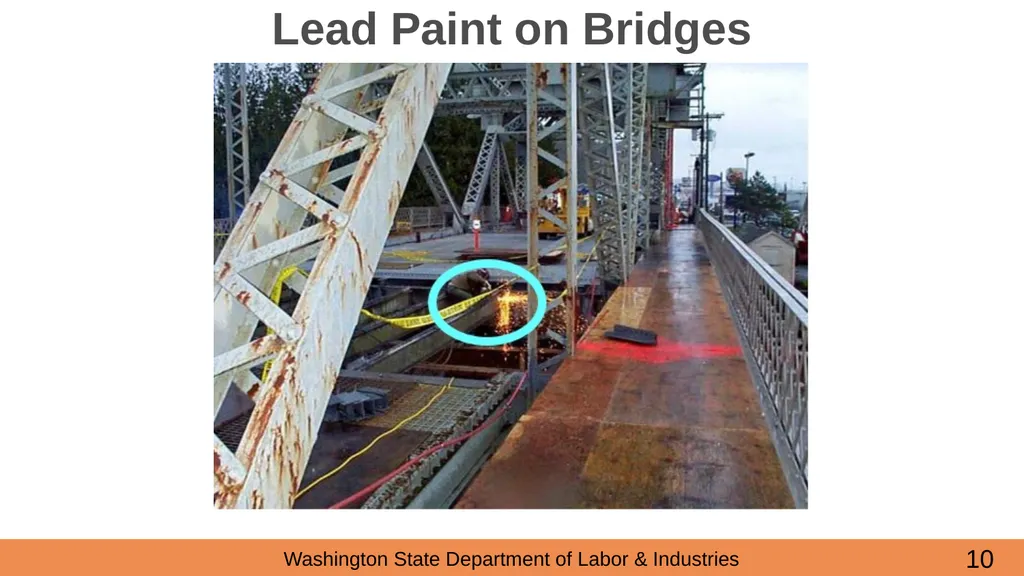
Lead Paint on Bridges<br>
11
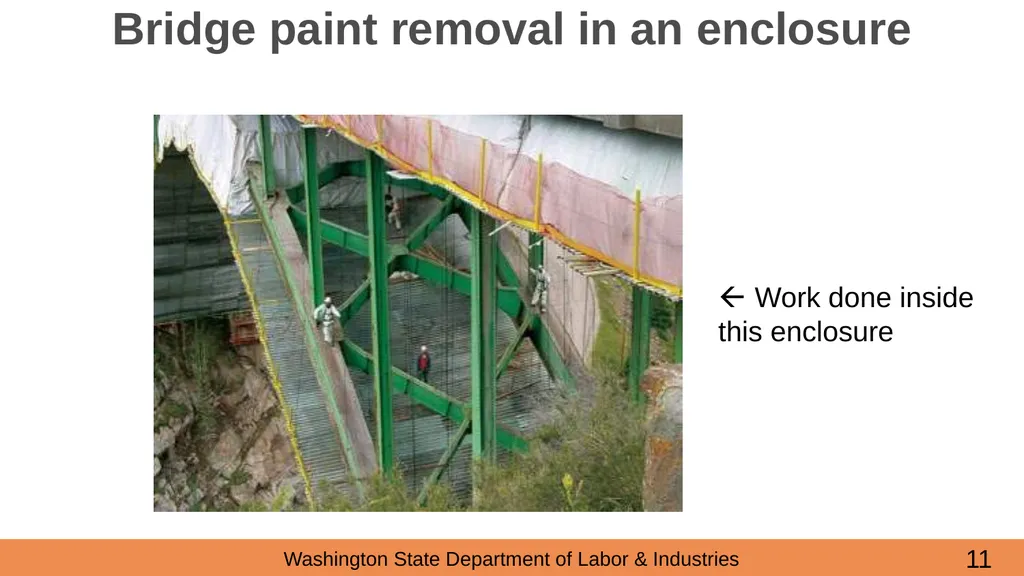
Bridge paint removal in an enclosure Work done inside this enclosure<br>
12
You work around lead at this jobsite in the following activities or locations: [Describe or list specific jobs or activities where employees are or may be exposed to lead at your worksite here.]<br>
13
13 The following products used or objects found on this worksite contain lead: [Describe or list specific products or objects that may be contain lead at your worksite here.]<br>
14
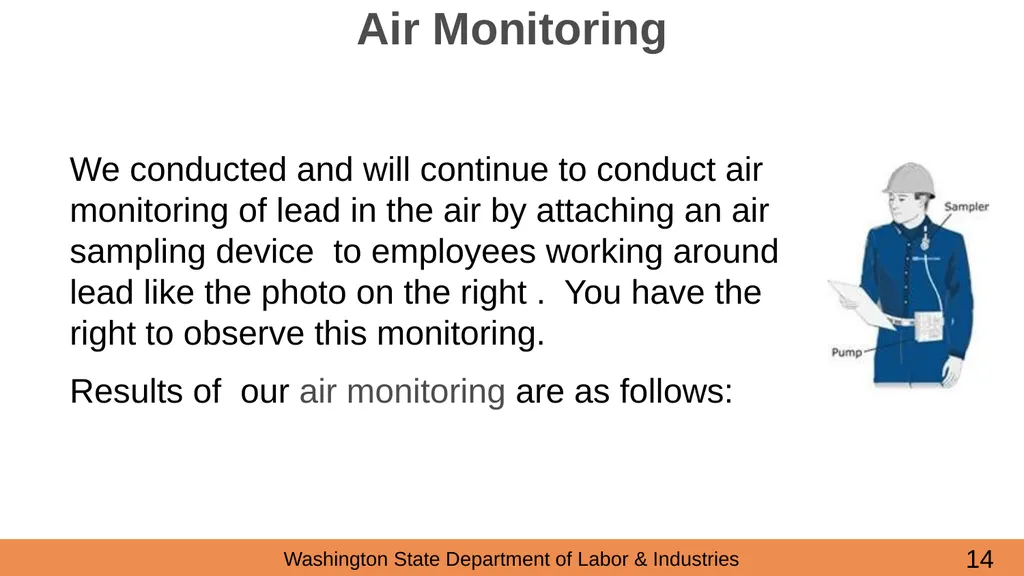
Air Monitoring We conducted and will continue to conduct air monitoring of lead in the air by attaching an air sampling device to employees working around lead like the photo on the right . You have the right to observe this monitoring.
Results of our air monitoring are as follows:<br>
Results of our air monitoring are as follows:<br>
15
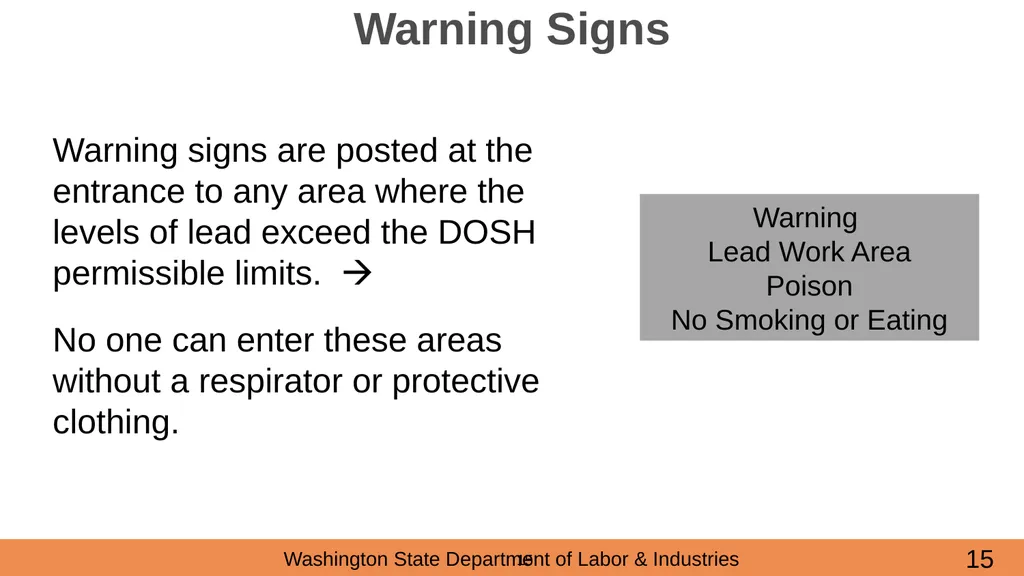
Warning signs are posted at the entrance to any area where the levels of lead exceed the DOSH permissible limits.
No one can enter these areas without a respirator or protective clothing. Warning
Lead Work Area
Poison
No Smoking or Eating 15 Warning Signs<br>
No one can enter these areas without a respirator or protective clothing. Warning
Lead Work Area
Poison
No Smoking or Eating 15 Warning Signs<br>
16
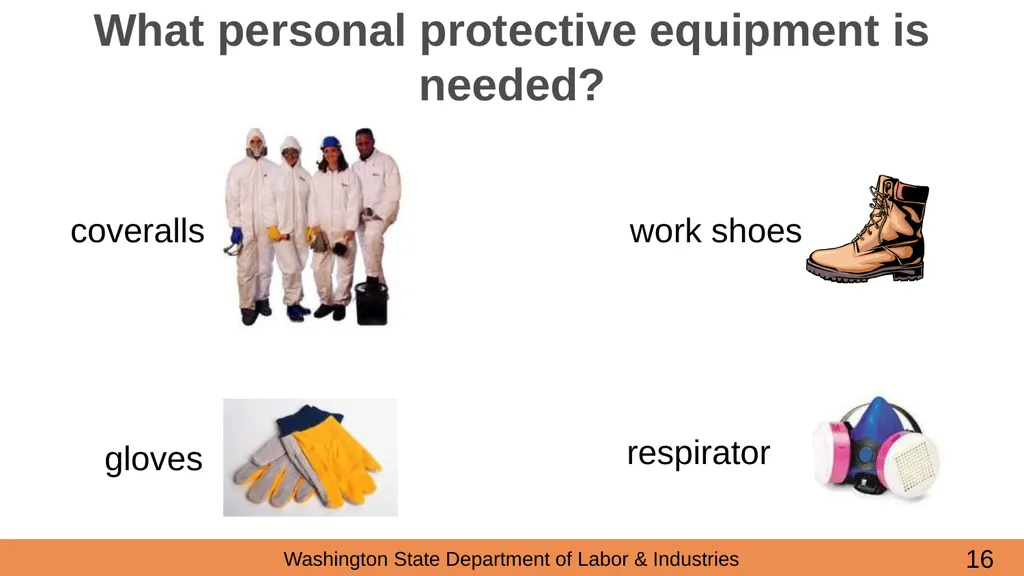
What personal protective equipment is needed? coveralls work shoes gloves respirator<br>
17
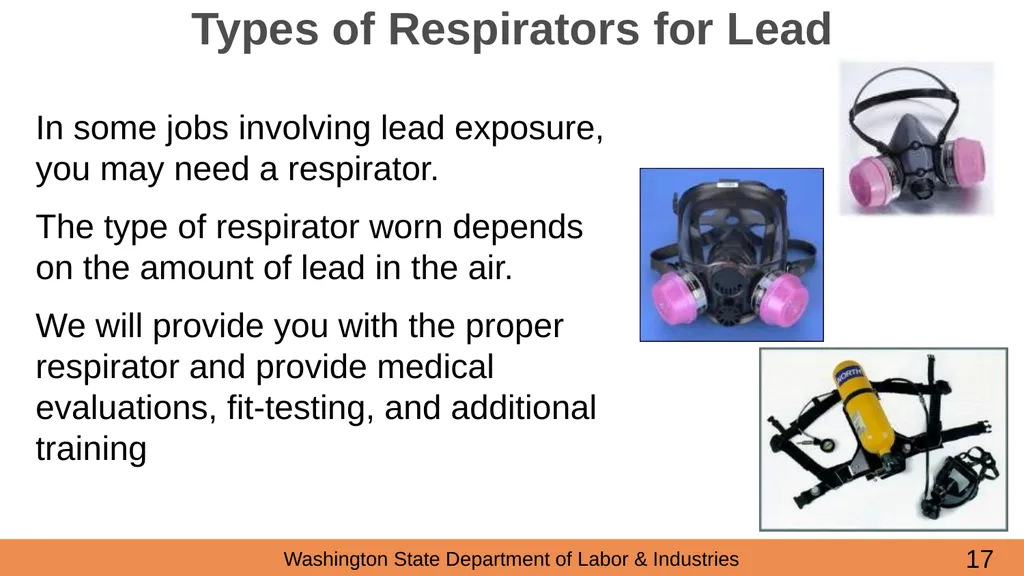
Types of Respirators for Lead In some jobs involving lead exposure, you may need a respirator.
The type of respirator worn depends on the amount of lead in the air.
We will provide you with the proper respirator and provide medical evaluations, fit-testing, and additional training<br>
The type of respirator worn depends on the amount of lead in the air.
We will provide you with the proper respirator and provide medical evaluations, fit-testing, and additional training<br>
18
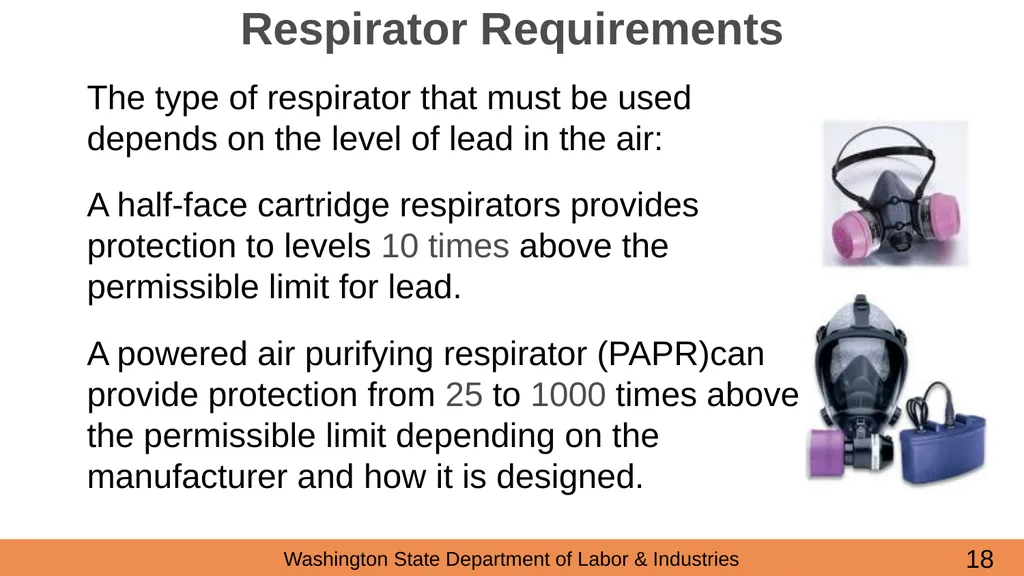
Respirator Requirements The type of respirator that must be used depends on the level of lead in the air:
A half-face cartridge respirators provides protection to levels 10 times above the permissible limit for lead.
A powered air purifying respirator (PAPR)can provide protection from 25 to 1000 times above the permissible limit depending on the manufacturer and how it is designed.<br>
A half-face cartridge respirators provides protection to levels 10 times above the permissible limit for lead.
A powered air purifying respirator (PAPR)can provide protection from 25 to 1000 times above the permissible limit depending on the manufacturer and how it is designed.<br>
19
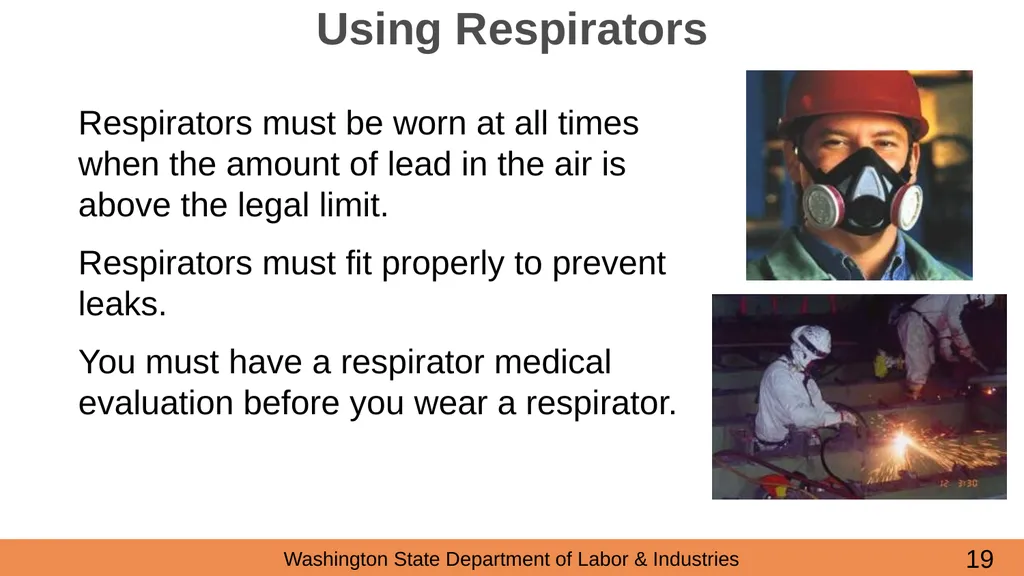
Using Respirators Respirators must be worn at all times when the amount of lead in the air is above the legal limit.
Respirators must fit properly to prevent leaks.
You must have a respirator medical evaluation before you wear a respirator.<br>
Respirators must fit properly to prevent leaks.
You must have a respirator medical evaluation before you wear a respirator.<br>
20
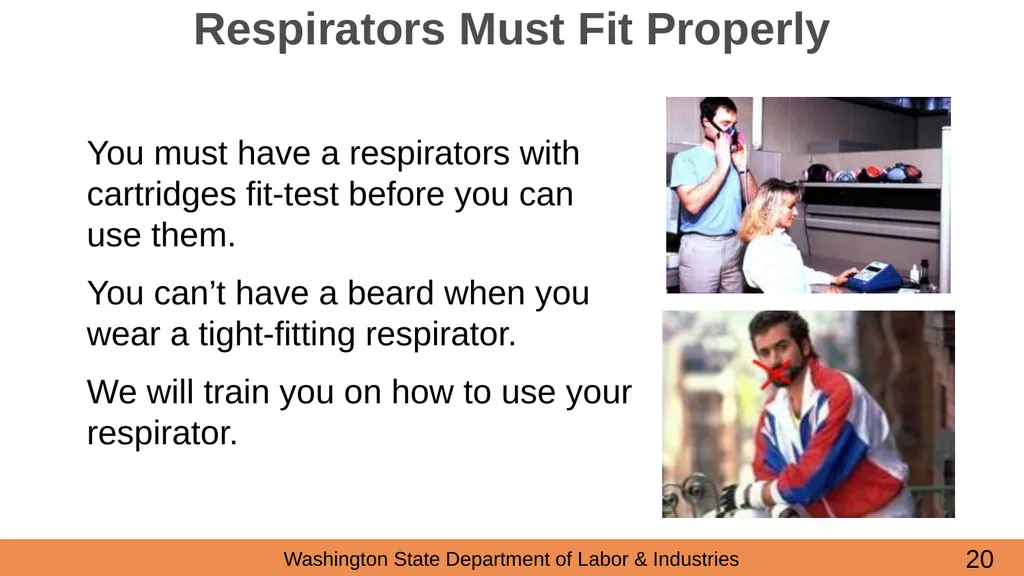
Respirators Must Fit Properly You must have a respirators with cartridges fit-test before you can use them.
You can’t have a beard when you wear a tight-fitting respirator.
We will train you on how to use your respirator.<br>
You can’t have a beard when you wear a tight-fitting respirator.
We will train you on how to use your respirator.<br>
21
[Describe or show the respirators required here.] 21 Respirators required at this jobsite<br>
22
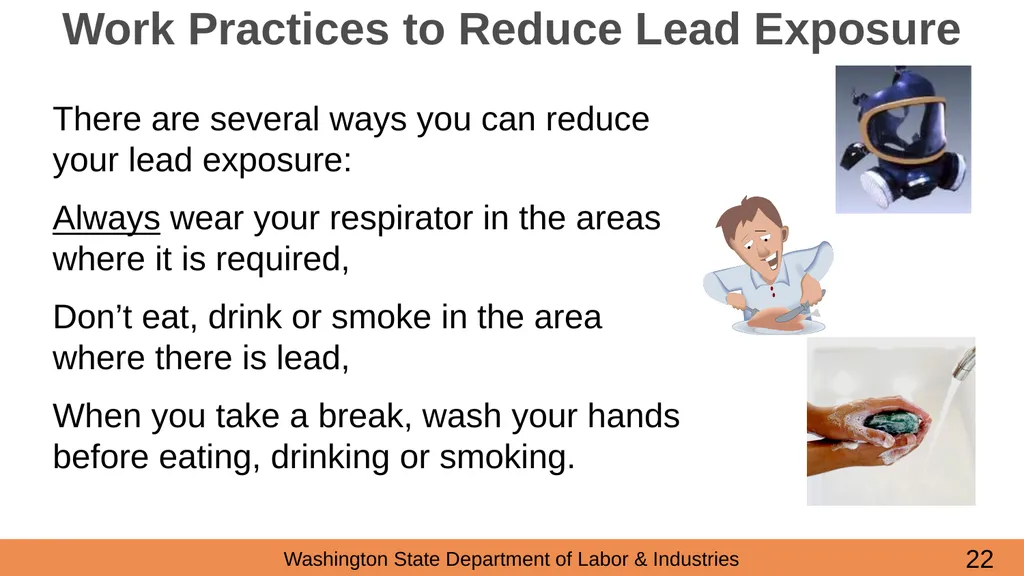
Work Practices to Reduce Lead Exposure There are several ways you can reduce your lead exposure:
Always wear your respirator in the areas where it is required,
Don’t eat, drink or smoke in the area where there is lead,
When you take a break, wash your hands before eating, drinking or smoking.<br>
Always wear your respirator in the areas where it is required,
Don’t eat, drink or smoke in the area where there is lead,
When you take a break, wash your hands before eating, drinking or smoking.<br>
23
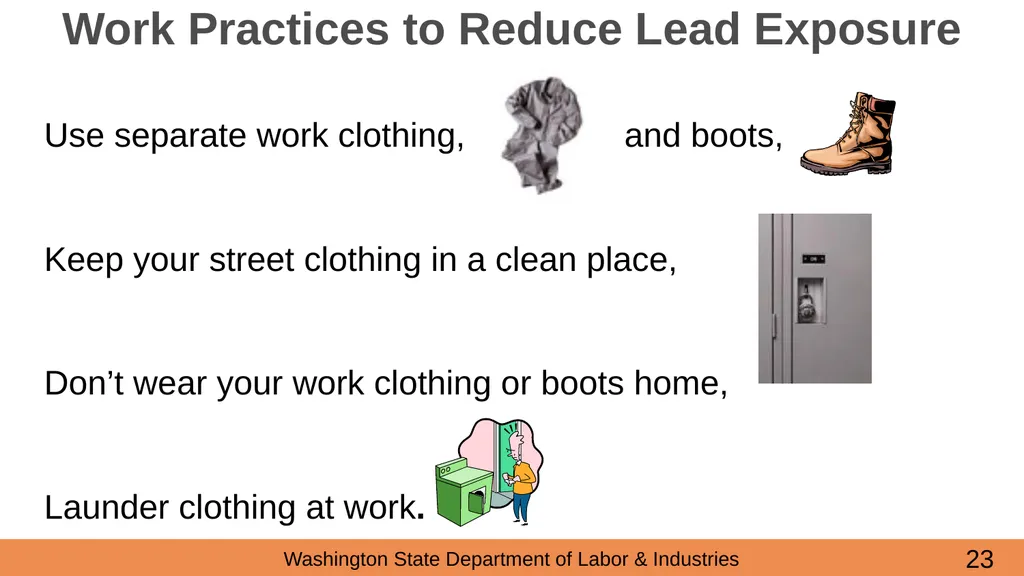
Work Practices to Reduce Lead Exposure Use separate work clothing, and boots, Keep your street clothing in a clean place, Don’t wear your work clothing or boots home, Launder clothing at work.<br>
24
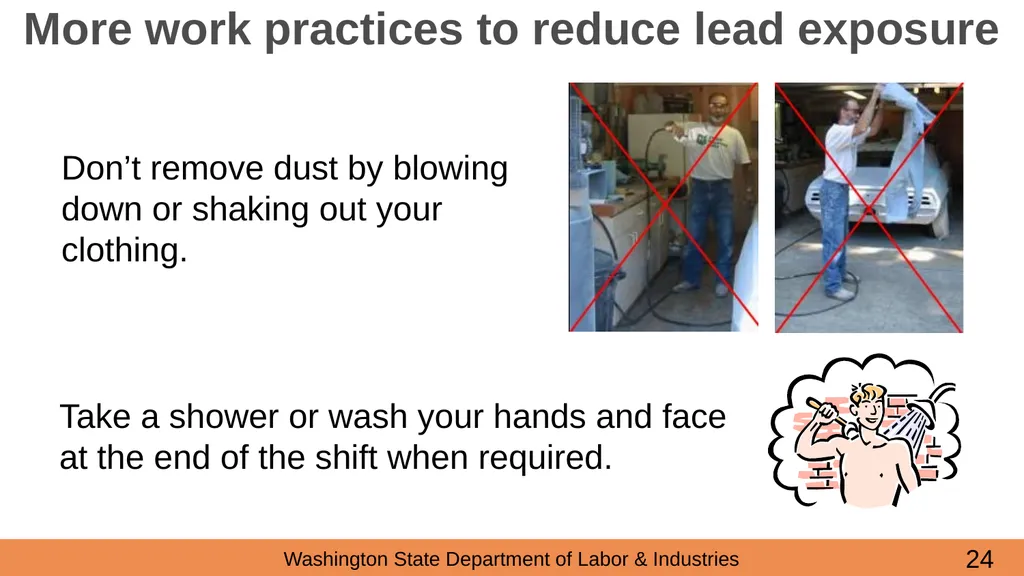
More work practices to reduce lead exposure Don’t remove dust by blowing down or shaking out your clothing. Take a shower or wash your hands and face at the end of the shift when required.<br>
25
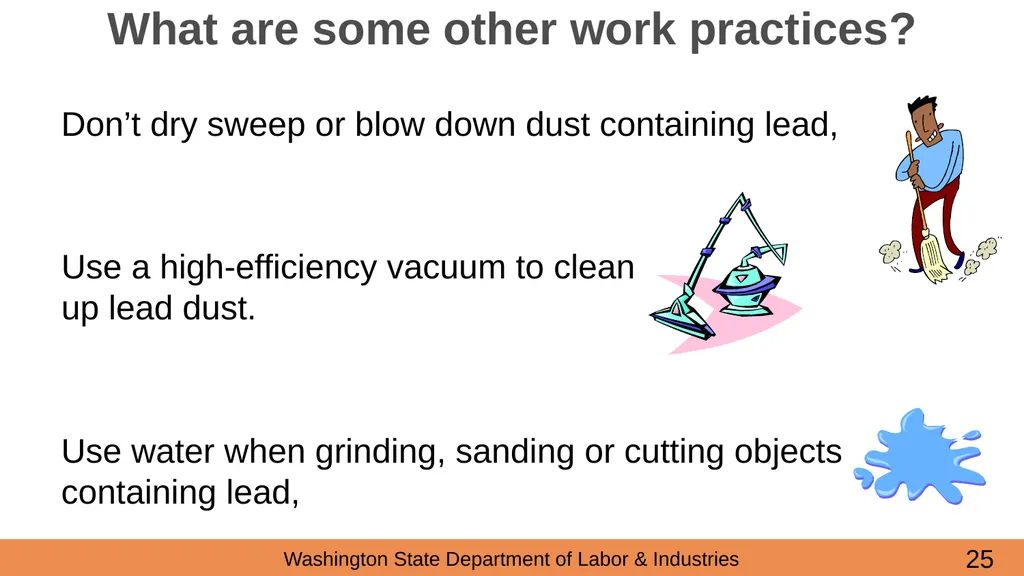
What are some other work practices? Don’t dry sweep or blow down dust containing lead, Use a high-efficiency vacuum to clean up lead dust. Use water when grinding, sanding or cutting objects containing lead,<br>
26
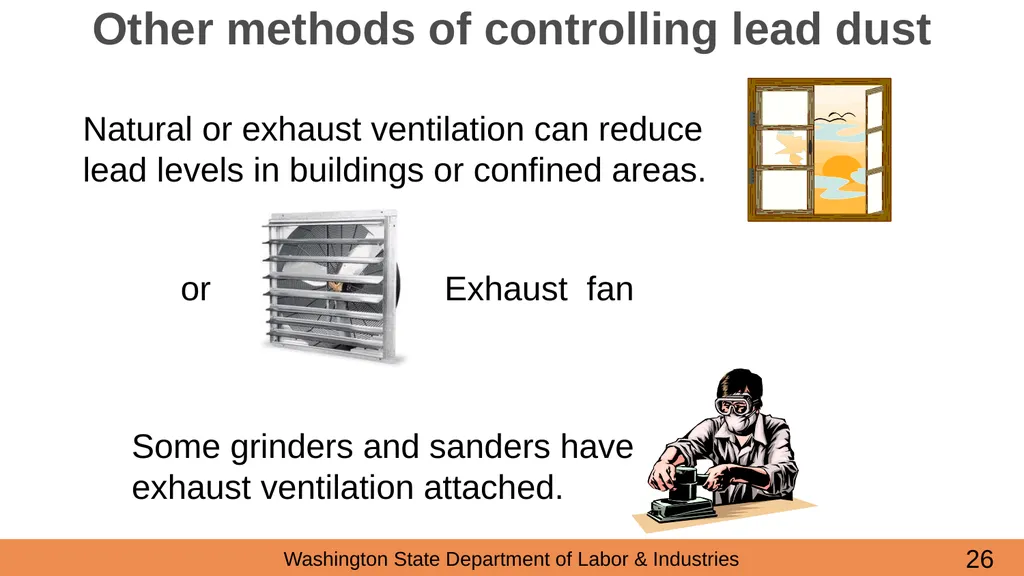
Other methods of controlling lead dust Natural or exhaust ventilation can reduce lead levels in buildings or confined areas. or Exhaust fan Some grinders and sanders have exhaust ventilation attached.<br>
27
What controls and work practices we use to reduce your lead exposure [List specific jobsite controls and work practices here]<br>
28
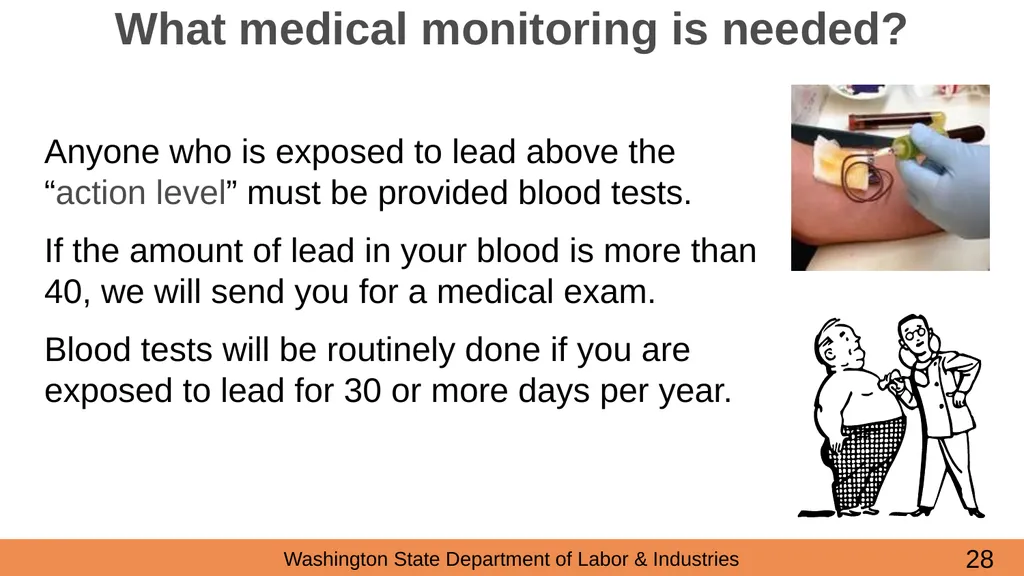
What medical monitoring is needed? Anyone who is exposed to lead above the “action level” must be provided blood tests.
If the amount of lead in your blood is more than 40, we will send you for a medical exam.
Blood tests will be routinely done if you are exposed to lead for 30 or more days per year.<br>
If the amount of lead in your blood is more than 40, we will send you for a medical exam.
Blood tests will be routinely done if you are exposed to lead for 30 or more days per year.<br>
29
More about blood sampling After the first blood sample is taken, we must take more 3 more blood samples for the next 6 months – every two months.
After that, we must take blood samples once every 6 months.
If the level in your blood exceeds 40, we must continue to take blood samples every two months until it drops below 40.
Blood samples are taken at no cost to you and you will be notified of the results.<br>
After that, we must take blood samples once every 6 months.
If the level in your blood exceeds 40, we must continue to take blood samples every two months until it drops below 40.
Blood samples are taken at no cost to you and you will be notified of the results.<br>
30
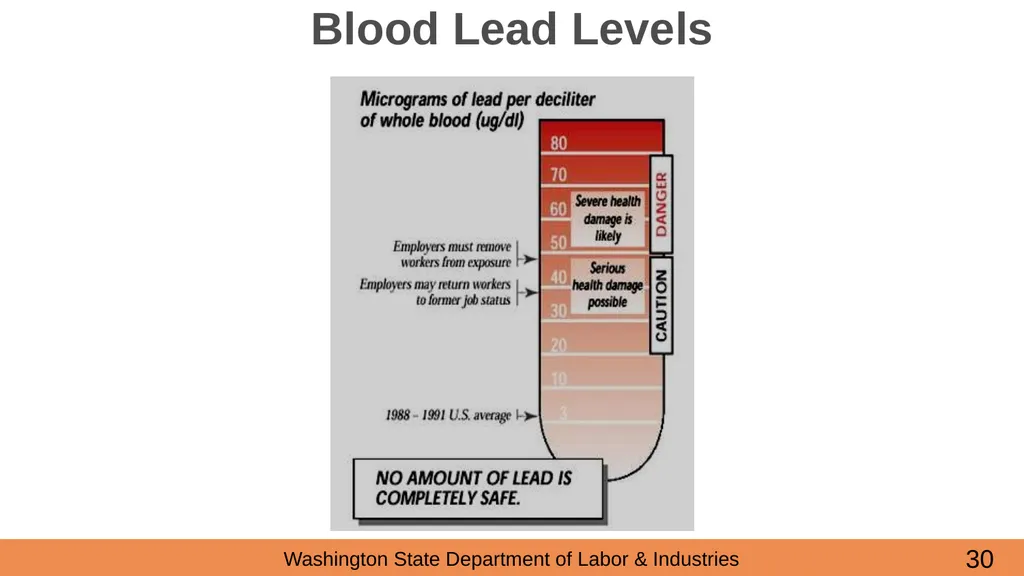
Blood Lead Levels<br>
31
More about medical exams If the amount of lead in your blood exceeds 40, you will provided with complete medical exams by a doctor, annually.
You can request an exam or review of the findings by a second doctor.
We do not see the entire medical exam report, only the blood test results and whether or not you have a medical condition that precludes you from working around lead or wearing a respirator.<br>
You can request an exam or review of the findings by a second doctor.
We do not see the entire medical exam report, only the blood test results and whether or not you have a medical condition that precludes you from working around lead or wearing a respirator.<br>
32
Our Medical Surveillance Program Describe the details of your specific medical surveillance program here<br>
33
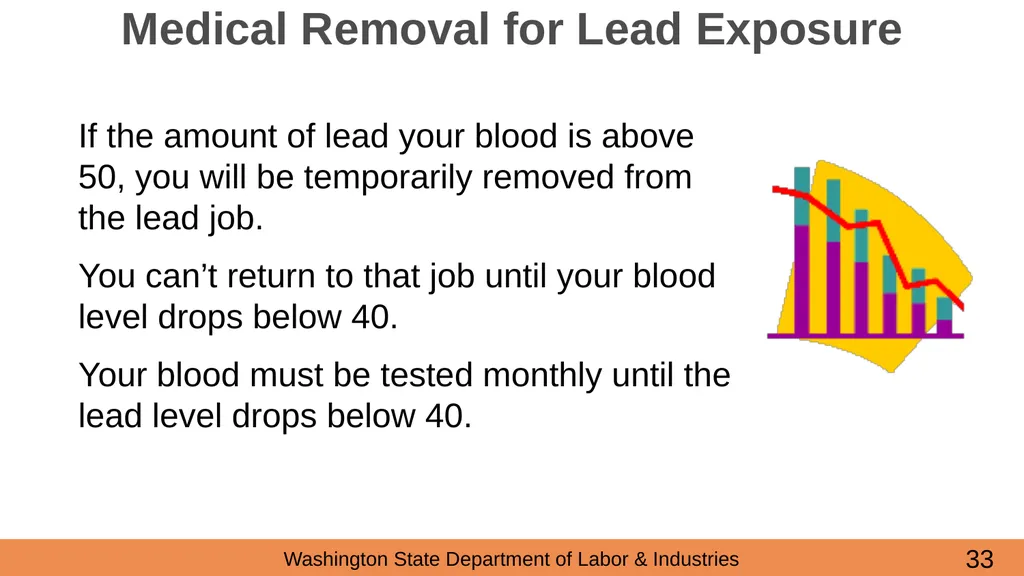
Medical Removal for Lead Exposure If the amount of lead your blood is above 50, you will be temporarily removed from the lead job.
You can’t return to that job until your blood level drops below 40.
Your blood must be tested monthly until the lead level drops below 40.<br>
You can’t return to that job until your blood level drops below 40.
Your blood must be tested monthly until the lead level drops below 40.<br>
34
Medical Removal Why is medical removal required? Medical removal is required is because of the serious health effects of lead.
Your body will gradually rid itself of lead over time.
You do not lose any earnings, seniority or benefits and you can return to former job status when blood lead levels drop.<br>
Your body will gradually rid itself of lead over time.
You do not lose any earnings, seniority or benefits and you can return to former job status when blood lead levels drop.<br>
35
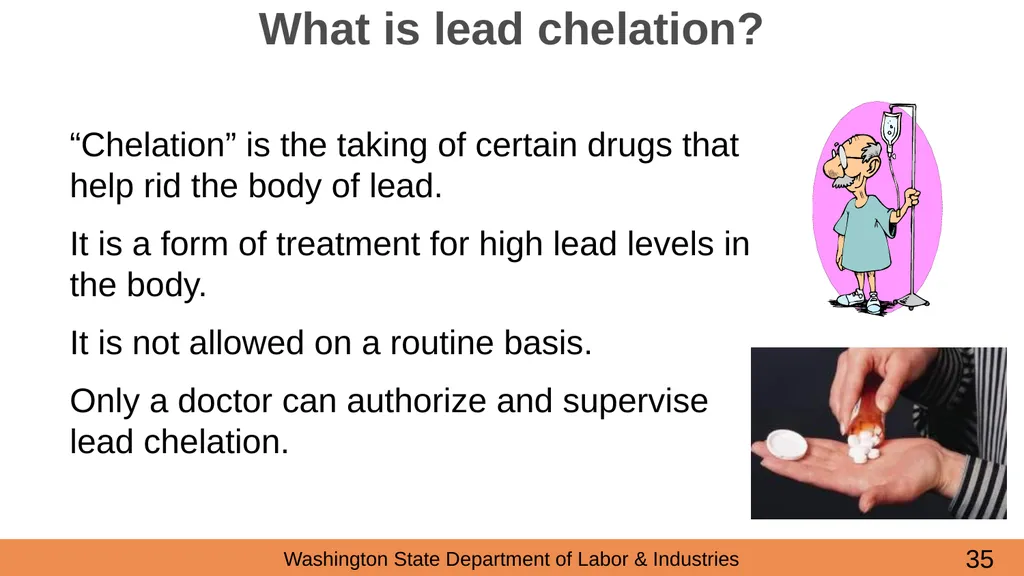
What is lead chelation? “Chelation” is the taking of certain drugs that help rid the body of lead.
It is a form of treatment for high lead levels in the body.
It is not allowed on a routine basis.
Only a doctor can authorize and supervise lead chelation.<br>
It is a form of treatment for high lead levels in the body.
It is not allowed on a routine basis.
Only a doctor can authorize and supervise lead chelation.<br>
36
Medical and Air Sampling Records You have the right to see any of your medical records related to lead.
You also have the right to see results of our air sampling for lead.<br>
You also have the right to see results of our air sampling for lead.<br>
37
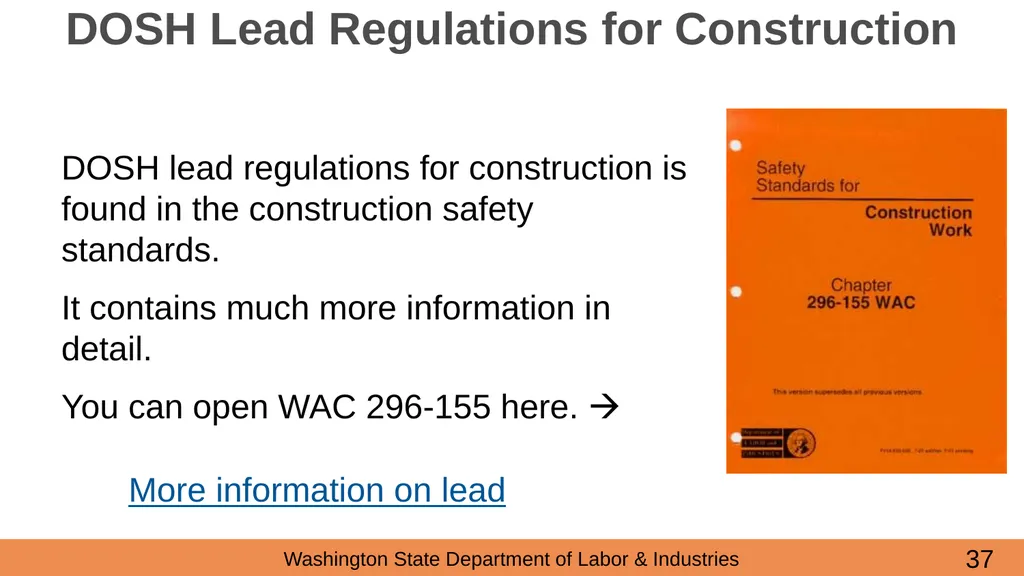
DOSH Lead Regulations for Construction DOSH lead regulations for construction is found in the construction safety standards.
It contains much more information in detail.
You can open WAC 296-155 here. More information on lead<br>
It contains much more information in detail.
You can open WAC 296-155 here. More information on lead<br>
38
Lead in Construction The next 5 slides are optional quiz questions.<br>
39
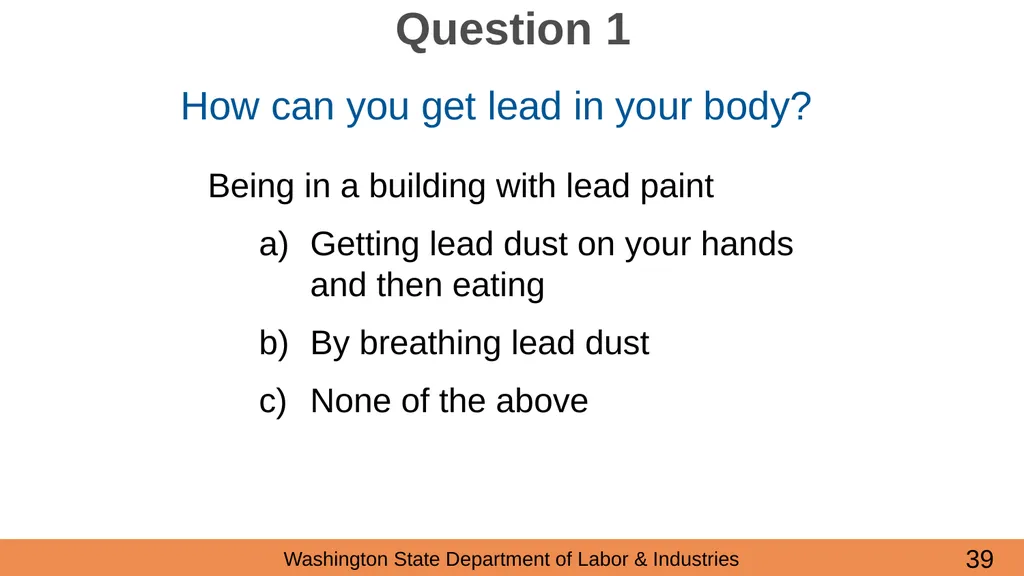
Question 1 How can you get lead in your body? Being in a building with lead paint
Getting lead dust on your hands and then eating
By breathing lead dust
None of the above<br>
Getting lead dust on your hands and then eating
By breathing lead dust
None of the above<br>
40
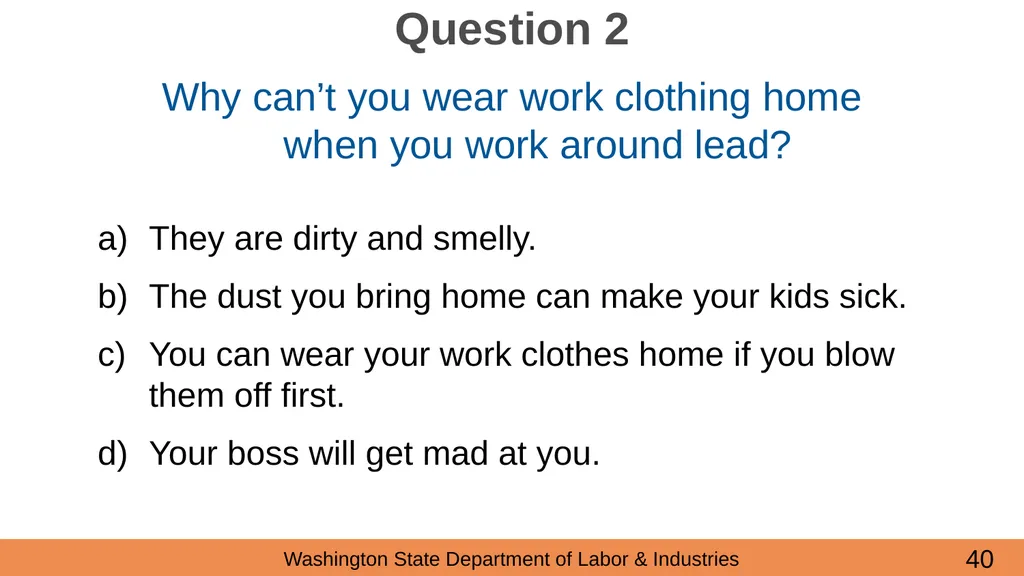
Question 2 Why can’t you wear work clothing home when you work around lead? They are dirty and smelly.
The dust you bring home can make your kids sick.
You can wear your work clothes home if you blow them off first.
Your boss will get mad at you.<br>
The dust you bring home can make your kids sick.
You can wear your work clothes home if you blow them off first.
Your boss will get mad at you.<br>
41
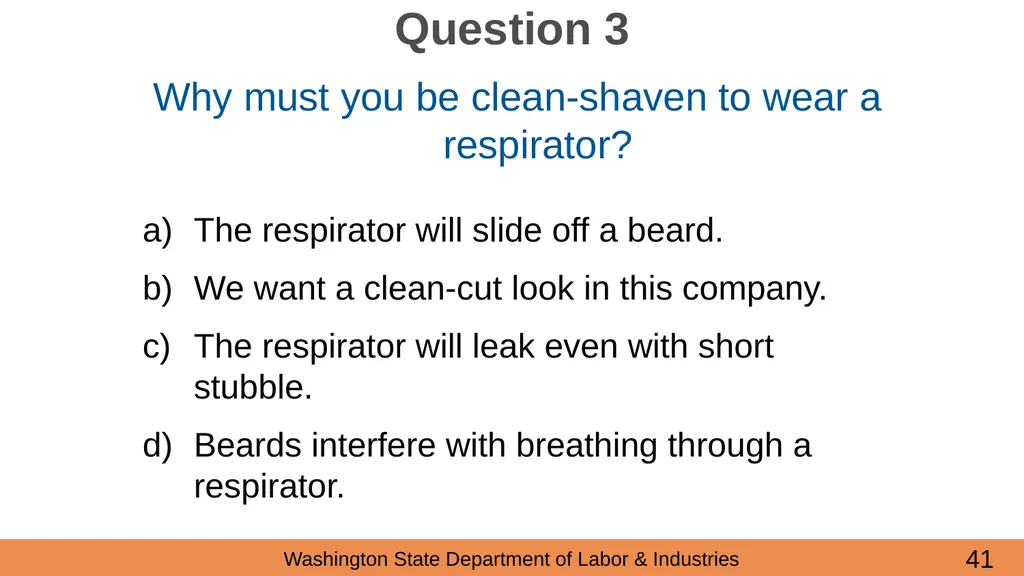
Question 3 Why must you be clean-shaven to wear a respirator? The respirator will slide off a beard.
We want a clean-cut look in this company.
The respirator will leak even with short stubble.
Beards interfere with breathing through a respirator.<br>
We want a clean-cut look in this company.
The respirator will leak even with short stubble.
Beards interfere with breathing through a respirator.<br>
42
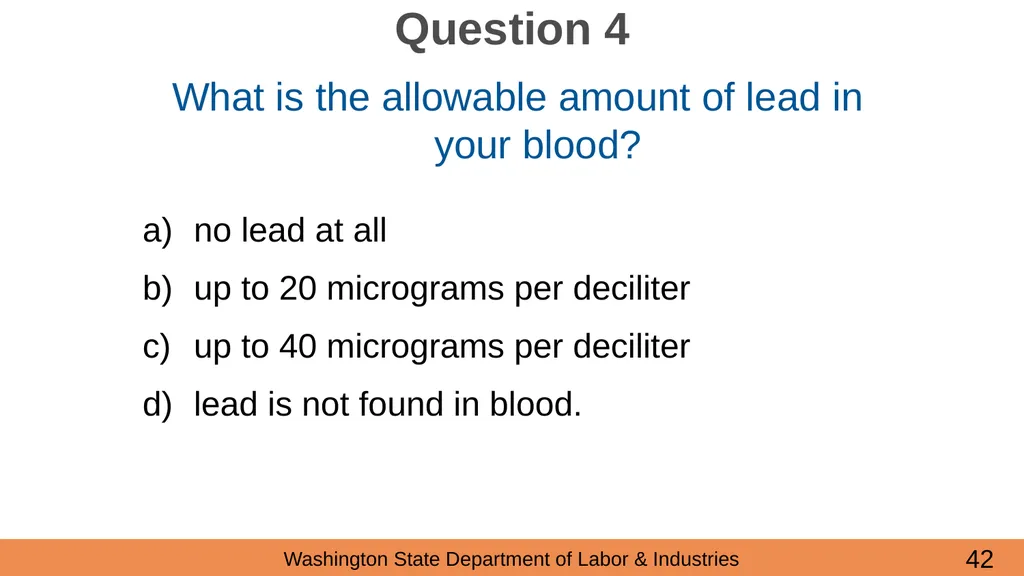
Question 4 What is the allowable amount of lead in your blood? no lead at all
up to 20 micrograms per deciliter
up to 40 micrograms per deciliter
lead is not found in blood.<br>
up to 20 micrograms per deciliter
up to 40 micrograms per deciliter
lead is not found in blood.<br>
43
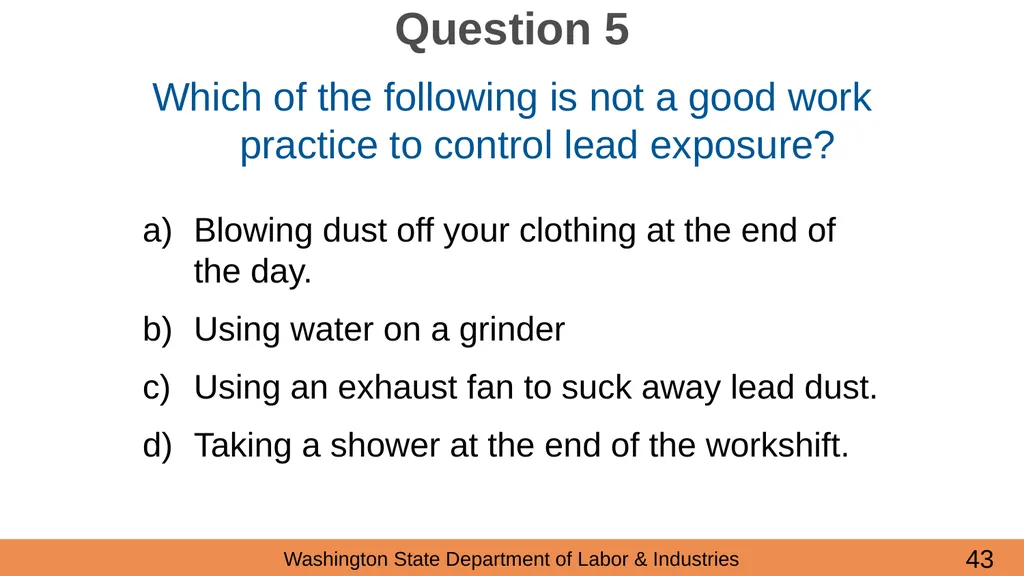
Question 5 Which of the following is not a good work practice to control lead exposure? Blowing dust off your clothing at the end of the day.
Using water on a grinder
Using an exhaust fan to suck away lead dust.
Taking a shower at the end of the workshift.<br>
Using water on a grinder
Using an exhaust fan to suck away lead dust.
Taking a shower at the end of the workshift.<br>