
Learning: Concept, Nature and Factors Influencing
Description: Learning: Concept, Nature and Factors Influencing Dr.K.M.Zaidi Assistant Professor Department of Education Shia P.G. College Definition of Learning Skinner- Progressive behavior adoption Crow Crow-Acquisition of habits, knowledge and
Related Topics
Download Presentation
"Learning: Concept, Nature and Factors Influencing" is the property of its rightful owner. Permission is granted to download and print the materials on this website for personal, non-commercial use only, and to display it on your personal computer provided you do not modify the materials and that you retain all copyright notices contained in the materials. By downloading content from our website, you accept the terms of this agreement.
Presentation Transcript
slide1. Learning: Concept, Nature and Factors Influencing Dr.K.M.Zaidi
Assistant Professor
Department of Education
Shia P.G. College<br>
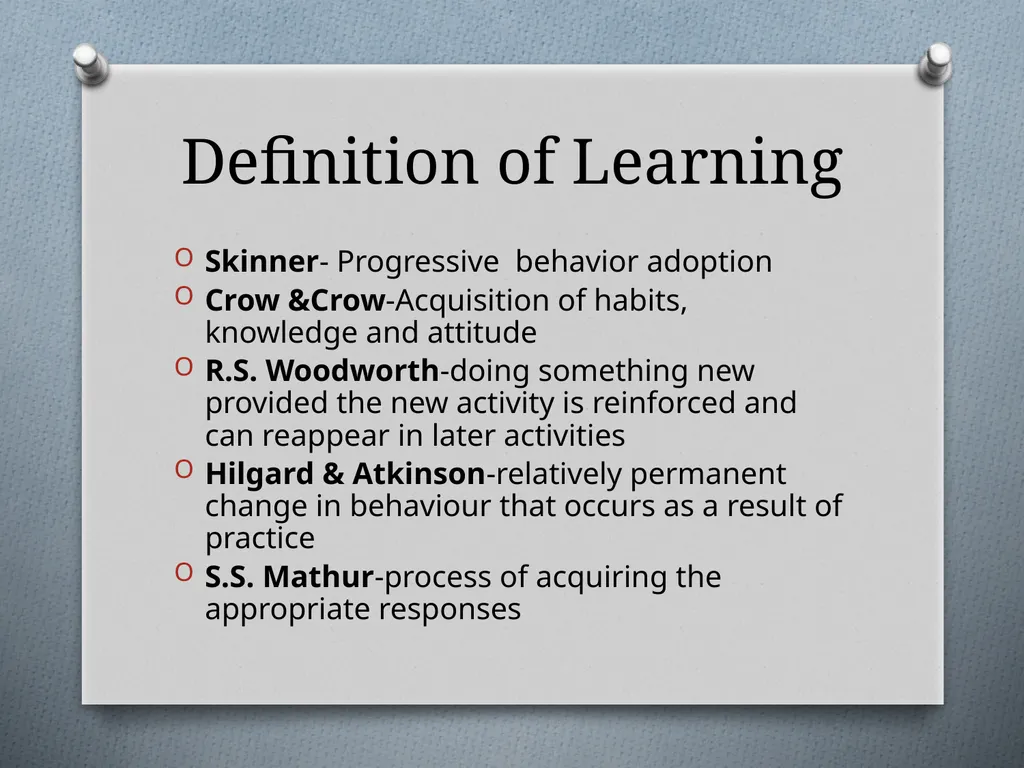
slide2. Definition of Learning Skinner- Progressive behavior adoption
Crow &Crow-Acquisition of habits, knowledge and attitude
R.S. Woodworth-doing something new provided the new activity is reinforced and can reappear in later activities
Hilgard & Atkinson-relatively permanent change in behaviour that occurs as a result of practice
S.S. Mathur-process of acquiring the appropriate responses<br>
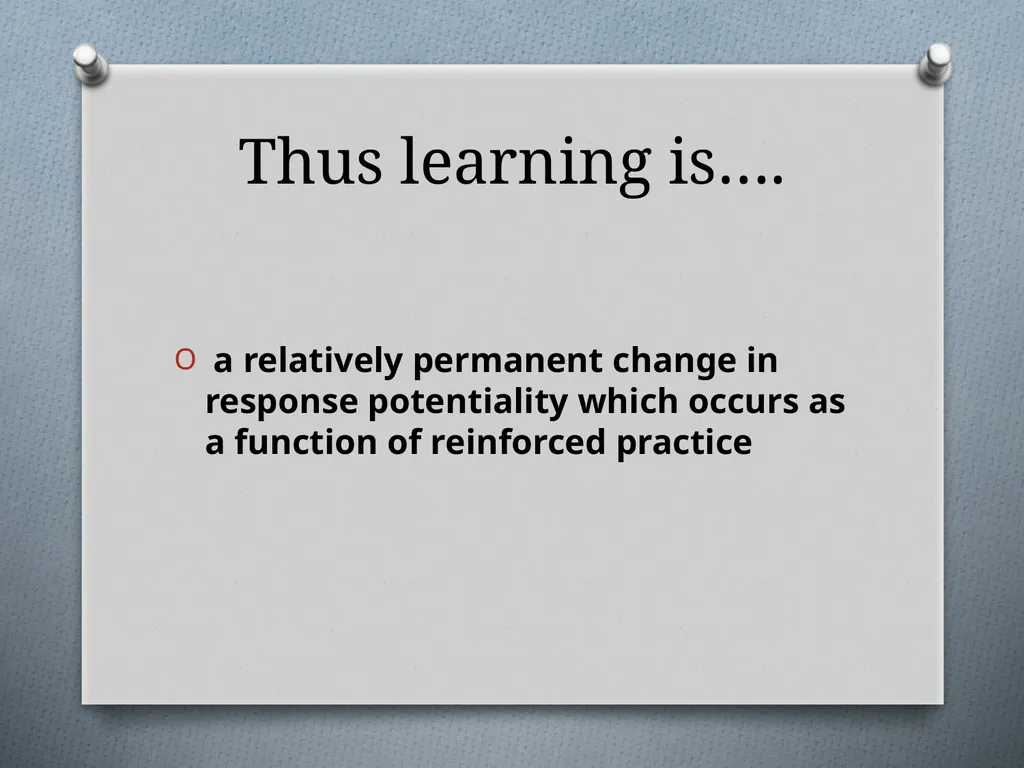
slide3. Thus learning is…. a relatively permanent change in response potentiality which occurs as a function of reinforced practice<br>
slide4. Learning and Related concepts Learning and reflex action
Learning and imprinting
Learning and maturation
Learning and performance<br>
slide5. General Characteristics of Learning It is an enduring change in behaviour
It involves cumulative experience
It is dynamic
Influences all aspects of human development-social, emotional and cognitive
It is based on incentives
It is target oriented
Byproduct of maturation and experience<br>
slide6. Types of Learning 1-Cognitive Learning
2-Psychomotor Learning
3-Affective Learning
4-Concomitant Learning
5-Discrimination Learning
6-Principle Learning<br>
slide7. 1-Cognitive Learning Gaining of information, memorization, ability to perceive relationships between different ideas ,explaining phenomenon in different ways etc.
Cognitive learning enables us to function at high levels of complexity and efficiency<br>
slide8. 2-Psychomotor Learning Riding a bicycle ,stitching ,playing badminton etc. which involves muscular co-ordination and physical skills
Learning of skills that have large physical or motor components<br>
slide9. 3-Affective Learning Affective learning is largely an outcome of socio-cultural and emotional atmosphere surrounding us
Fear ,love, passion and dislikes illustrate learning involving emotions and feelings<br>
slide10. 4-Concomitant Learning Learning unconsciously from environment certain attitudes, values, likes, dislikes for some people or things
Behavior related to moral values, nationalism, truthfulness etc. are largely the outcome of collateral or concomitant learning<br>
slide11. 5-Discrimination Learning In learning of discrimination the focus is on one or more similar or related concepts to finely outline the differences
Generalization of concepts is attained through attribute analysis ,selection and comparison<br>
slide12. 6-Principle Learning Common features are identified and generalized in discrimination learning common relationships are noted and generalized in principle learning
Principles have applicability and are used in problem solving and have scope for transfer to parallel situation<br>
slide13. Factors affecting Learning 1-Learner related factors
2-Teacher related factors
3-Task related factors
4-Environment related factors<br>
slide14. 1-Learner Related Factors Maturation
Motivation
Self-Concept
Goals
Levels of aspiration
Interests
Attention
Study habits<br>
slide15. 2-Teacher Related Factors Teacher’s personality
Communication
Leadership style
Interpersonal relationship of teacher and learner
Teaching style<br>
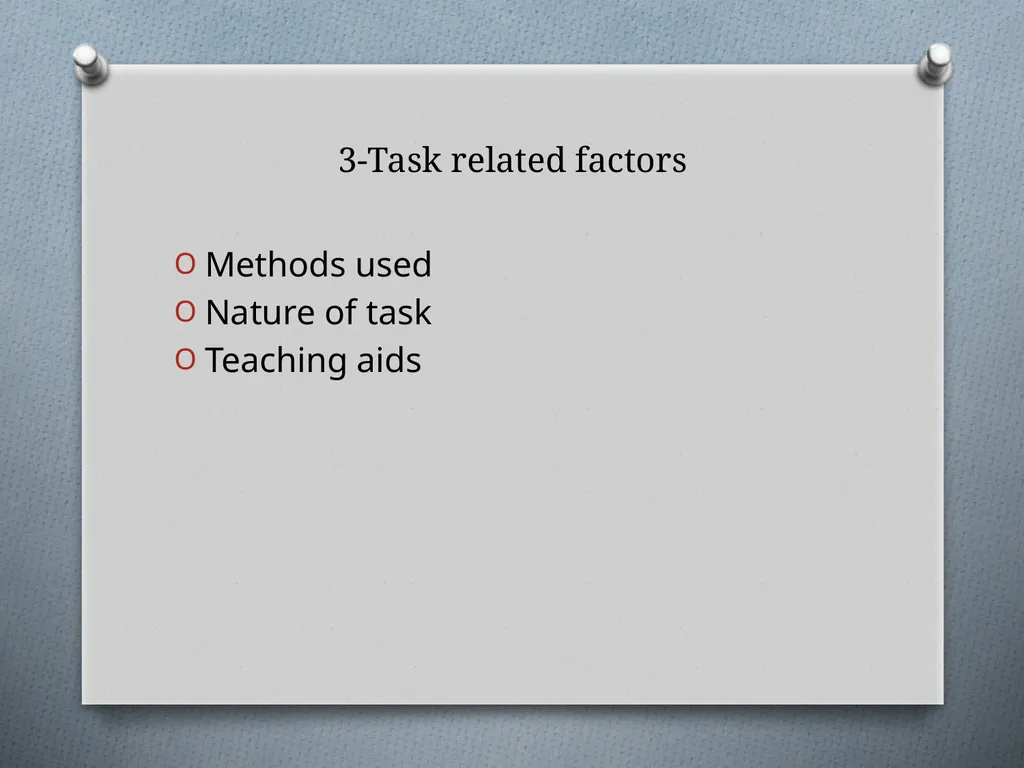
slide16. 3-Task related factors Methods used
Nature of task
Teaching aids<br>
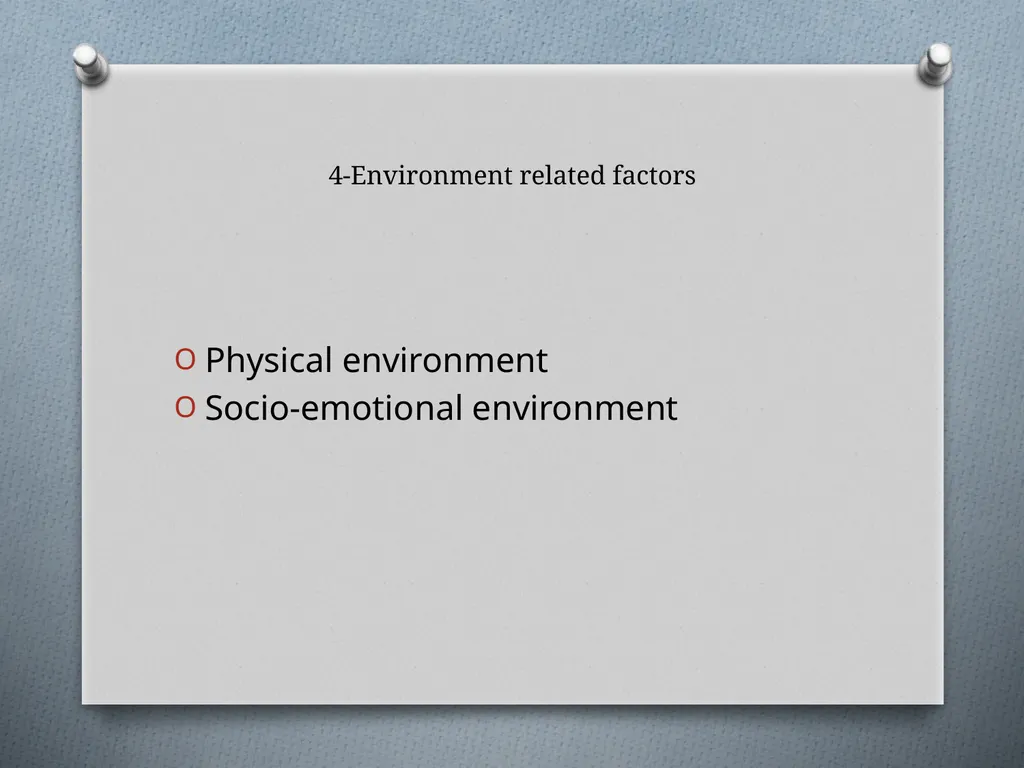
slide17. 4-Environment related factors Physical environment
Socio-emotional environment<br>
Assistant Professor
Department of Education
Shia P.G. College<br>
slide2. Definition of Learning Skinner- Progressive behavior adoption
Crow &Crow-Acquisition of habits, knowledge and attitude
R.S. Woodworth-doing something new provided the new activity is reinforced and can reappear in later activities
Hilgard & Atkinson-relatively permanent change in behaviour that occurs as a result of practice
S.S. Mathur-process of acquiring the appropriate responses<br>
slide3. Thus learning is…. a relatively permanent change in response potentiality which occurs as a function of reinforced practice<br>
slide4. Learning and Related concepts Learning and reflex action
Learning and imprinting
Learning and maturation
Learning and performance<br>
slide5. General Characteristics of Learning It is an enduring change in behaviour
It involves cumulative experience
It is dynamic
Influences all aspects of human development-social, emotional and cognitive
It is based on incentives
It is target oriented
Byproduct of maturation and experience<br>
slide6. Types of Learning 1-Cognitive Learning
2-Psychomotor Learning
3-Affective Learning
4-Concomitant Learning
5-Discrimination Learning
6-Principle Learning<br>
slide7. 1-Cognitive Learning Gaining of information, memorization, ability to perceive relationships between different ideas ,explaining phenomenon in different ways etc.
Cognitive learning enables us to function at high levels of complexity and efficiency<br>
slide8. 2-Psychomotor Learning Riding a bicycle ,stitching ,playing badminton etc. which involves muscular co-ordination and physical skills
Learning of skills that have large physical or motor components<br>
slide9. 3-Affective Learning Affective learning is largely an outcome of socio-cultural and emotional atmosphere surrounding us
Fear ,love, passion and dislikes illustrate learning involving emotions and feelings<br>
slide10. 4-Concomitant Learning Learning unconsciously from environment certain attitudes, values, likes, dislikes for some people or things
Behavior related to moral values, nationalism, truthfulness etc. are largely the outcome of collateral or concomitant learning<br>
slide11. 5-Discrimination Learning In learning of discrimination the focus is on one or more similar or related concepts to finely outline the differences
Generalization of concepts is attained through attribute analysis ,selection and comparison<br>
slide12. 6-Principle Learning Common features are identified and generalized in discrimination learning common relationships are noted and generalized in principle learning
Principles have applicability and are used in problem solving and have scope for transfer to parallel situation<br>
slide13. Factors affecting Learning 1-Learner related factors
2-Teacher related factors
3-Task related factors
4-Environment related factors<br>
slide14. 1-Learner Related Factors Maturation
Motivation
Self-Concept
Goals
Levels of aspiration
Interests
Attention
Study habits<br>
slide15. 2-Teacher Related Factors Teacher’s personality
Communication
Leadership style
Interpersonal relationship of teacher and learner
Teaching style<br>
slide16. 3-Task related factors Methods used
Nature of task
Teaching aids<br>
slide17. 4-Environment related factors Physical environment
Socio-emotional environment<br>