
Learning Through Art: Primary Language Resource
AM
Published · 24 slides · 0 views
1 / 1
Description
Learning Through Art: Primary Language Resource Pack Sinéad Hall Introduction Learning through art is at the heart of the National Gallery of Irelands primary school programme. Art helps us to understand the world and can be used in the
Related Topics
Share
Embed code
Download this presentation From Below
"Learning Through Art: Primary Language Resource" is the property of its rightful owner. Permission is granted to download and print the materials on this website for personal, non-commercial use only, and to display it on your personal computer provided you do not modify the materials and that you retain all copyright notices contained in the materials. By downloading content from our website, you accept the terms of this agreement.
Presentation Transcript
01
Learning Through Art:
Primary Language Resource Pack Sinéad Hall<br>
02
Introduction Learning through art is at the heart of the National Gallery of Ireland’s primary school programme. Art helps us to understand the world and can be used in the classroom to engage with themes and subjects across the curriculum. Our series of Learning Through Art resources are designed as practical toolkits to enable you to use artworks as primary sources and inspiration for lessons in other core curriculum areas.
Contents
How to use this resource ……………………………..…… 3
Learning Objectives …………………….......................... 4
The Workshop ………………………………………….………. 5
Additional Activities ……………….………………….……. 15
Resources …………………........................................... 16
Worksheets ………………………………………..…….……. 17
Contact us …………... ……......................................... 24 2 About the author
Sinéad Hall BA, PGD ED, CRS, MA ED is a classically-trained pianist, and passionate educator with nearly two decades of experience teaching in Irish and American classrooms. Sinéad has earned degrees in Music, Human Development, Gaeilge, a Postgrad in Education, and a Masters in Leadership and Management. She teaches 5th class in Ratoath SNS, is a Visual Arts tutor and a research supervisor for the Primary Masters of Education with Hibernia College. Her passions include playing the piano, art, watersports, her two children, her Schnauzer dogs, good coffee and music. Sinéad is active in the community and in her free time can be found scouting, teaching in her art club
and surfing.<br>
Contents
How to use this resource ……………………………..…… 3
Learning Objectives …………………….......................... 4
The Workshop ………………………………………….………. 5
Additional Activities ……………….………………….……. 15
Resources …………………........................................... 16
Worksheets ………………………………………..…….……. 17
Contact us …………... ……......................................... 24 2 About the author
Sinéad Hall BA, PGD ED, CRS, MA ED is a classically-trained pianist, and passionate educator with nearly two decades of experience teaching in Irish and American classrooms. Sinéad has earned degrees in Music, Human Development, Gaeilge, a Postgrad in Education, and a Masters in Leadership and Management. She teaches 5th class in Ratoath SNS, is a Visual Arts tutor and a research supervisor for the Primary Masters of Education with Hibernia College. Her passions include playing the piano, art, watersports, her two children, her Schnauzer dogs, good coffee and music. Sinéad is active in the community and in her free time can be found scouting, teaching in her art club
and surfing.<br>
03
How to use this resource This is part of a series of practical guides to teaching different curriculum areas through art.
Each resource provides you with:
A PowerPoint slide show for you and your class to read through
Images of a key artwork from the Gallery’s collection
Information about the painting and the artist
Looking and responding questions to ask your class
Discussion points
Curriculum-linked lessons based on the work 3 Worksheets to print out and use along with the lessons
A resource list of additional websites that you can use for further research and reading
Additional lesson ideas for other subjects<br>
Each resource provides you with:
A PowerPoint slide show for you and your class to read through
Images of a key artwork from the Gallery’s collection
Information about the painting and the artist
Looking and responding questions to ask your class
Discussion points
Curriculum-linked lessons based on the work 3 Worksheets to print out and use along with the lessons
A resource list of additional websites that you can use for further research and reading
Additional lesson ideas for other subjects<br>
04
Learning Objectives The child should be enabled to:
look at and talk about the work of artists
describe what is happening in the painting;
the colours and tones chosen
the lines, shapes, textures and pattern created
how they are arranged in the painting
how colour was used and effects created
what he/she or the artist was trying to express
what he/she likes best about the painting
respond to the work of artists through designed lessons 4<br>
look at and talk about the work of artists
describe what is happening in the painting;
the colours and tones chosen
the lines, shapes, textures and pattern created
how they are arranged in the painting
how colour was used and effects created
what he/she or the artist was trying to express
what he/she likes best about the painting
respond to the work of artists through designed lessons 4<br>
05
The Workshop
Also available as an adaptable PowerPoint slideshow 5<br>
06
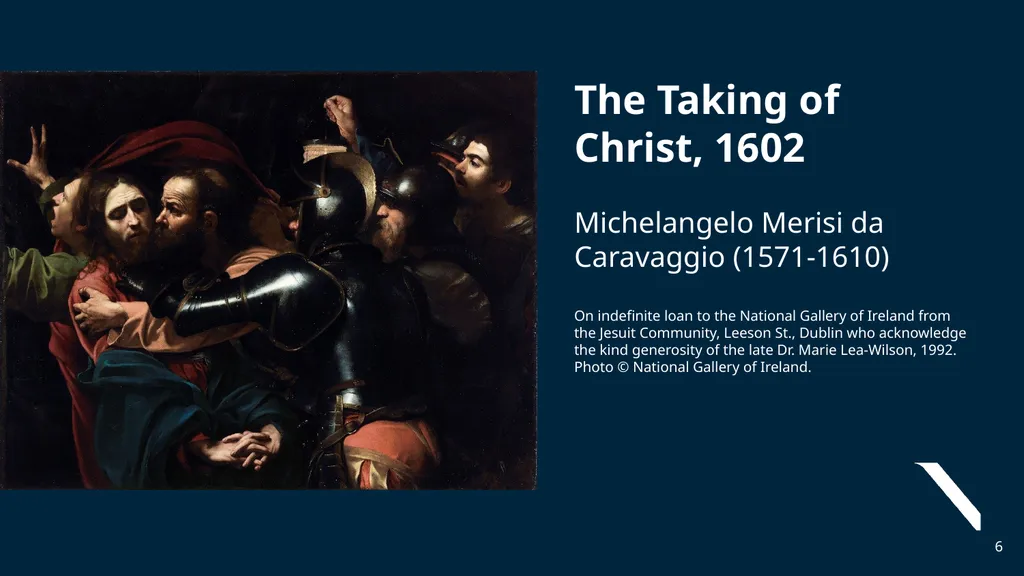
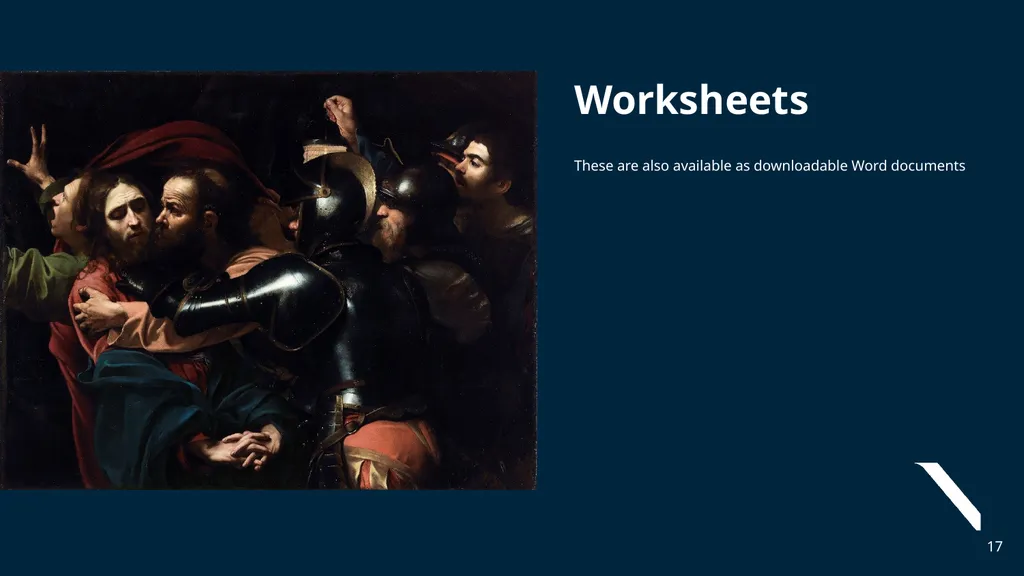
The Taking of Christ, 1602
Michelangelo Merisi da Caravaggio (1571-1610)
On indefinite loan to the National Gallery of Ireland from the Jesuit Community, Leeson St., Dublin who acknowledge the kind generosity of the late Dr. Marie Lea-Wilson, 1992. Photo © National Gallery of Ireland. 6<br>
07
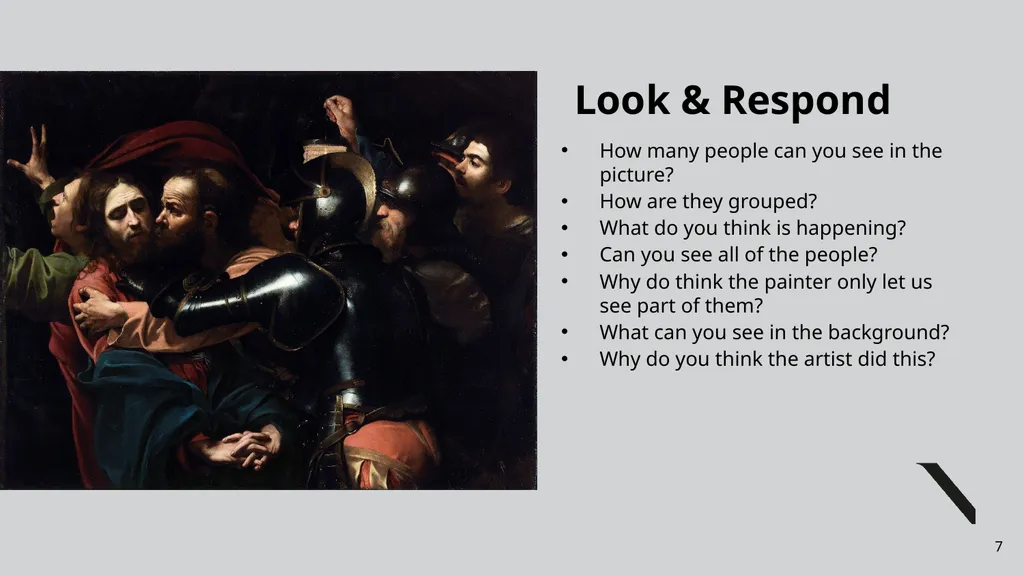
7 Look & Respond How many people can you see in the picture?
How are they grouped?
What do you think is happening?
Can you see all of the people?
Why do think the painter only let us see part of them?
What can you see in the background?
Why do you think the artist did this?<br>
How are they grouped?
What do you think is happening?
Can you see all of the people?
Why do think the painter only let us see part of them?
What can you see in the background?
Why do you think the artist did this?<br>
08
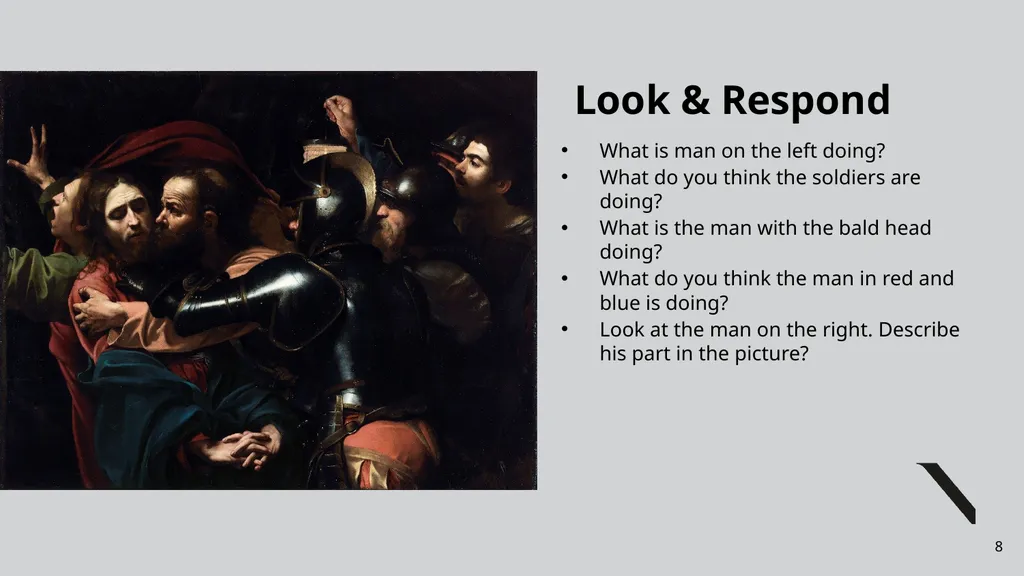
8 Look & Respond What is man on the left doing?
What do you think the soldiers are doing?
What is the man with the bald head doing?
What do you think the man in red and blue is doing?
Look at the man on the right. Describe his part in the picture?<br>
What do you think the soldiers are doing?
What is the man with the bald head doing?
What do you think the man in red and blue is doing?
Look at the man on the right. Describe his part in the picture?<br>
09
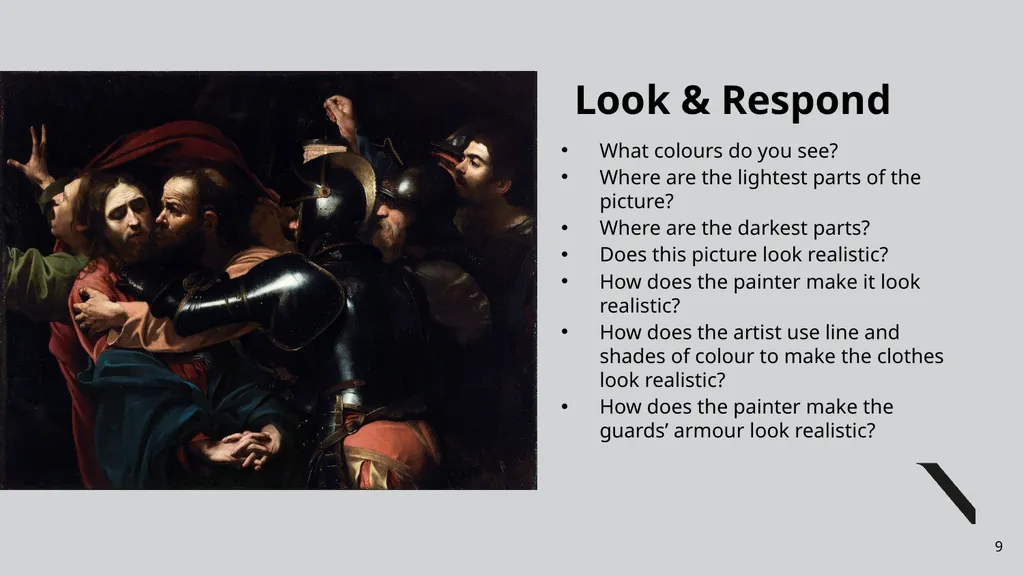
9 Look & Respond What colours do you see?
Where are the lightest parts of the picture?
Where are the darkest parts?
Does this picture look realistic?
How does the painter make it look realistic?
How does the artist use line and shades of colour to make the clothes look realistic?
How does the painter make the guards’ armour look realistic?<br>
Where are the lightest parts of the picture?
Where are the darkest parts?
Does this picture look realistic?
How does the painter make it look realistic?
How does the artist use line and shades of colour to make the clothes look realistic?
How does the painter make the guards’ armour look realistic?<br>
10
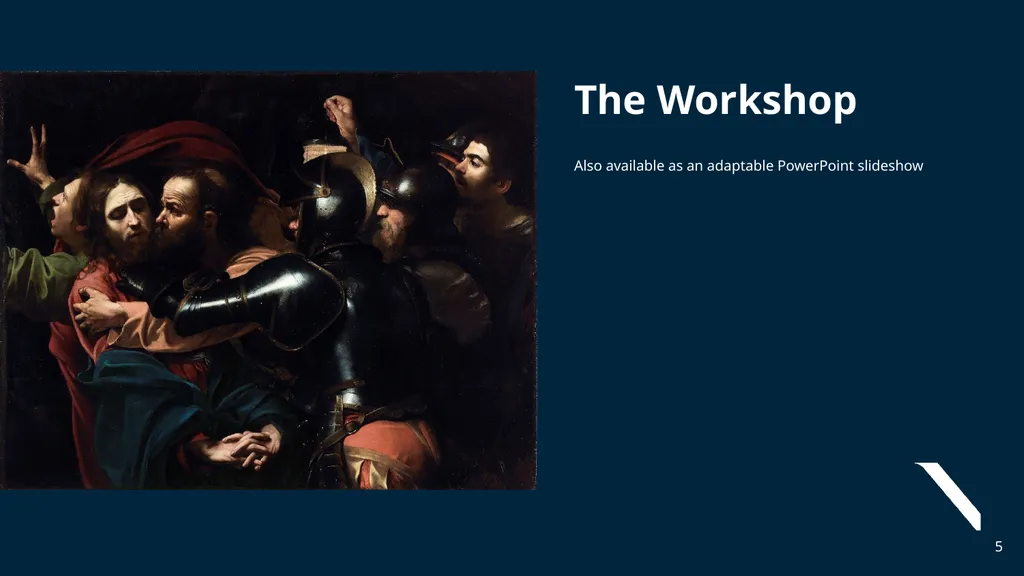
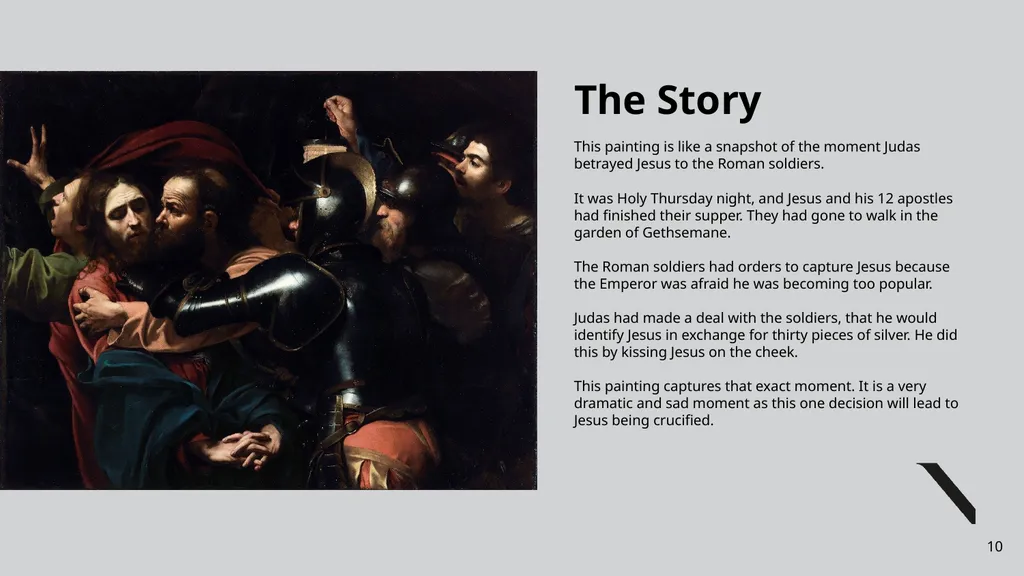
10 The Story This painting is like a snapshot of the moment Judas betrayed Jesus to the Roman soldiers.
It was Holy Thursday night, and Jesus and his 12 apostles had finished their supper. They had gone to walk in the garden of Gethsemane.
The Roman soldiers had orders to capture Jesus because the Emperor was afraid he was becoming too popular.
Judas had made a deal with the soldiers, that he would identify Jesus in exchange for thirty pieces of silver. He did this by kissing Jesus on the cheek.
This painting captures that exact moment. It is a very dramatic and sad moment as this one decision will lead to Jesus being crucified.<br>
It was Holy Thursday night, and Jesus and his 12 apostles had finished their supper. They had gone to walk in the garden of Gethsemane.
The Roman soldiers had orders to capture Jesus because the Emperor was afraid he was becoming too popular.
Judas had made a deal with the soldiers, that he would identify Jesus in exchange for thirty pieces of silver. He did this by kissing Jesus on the cheek.
This painting captures that exact moment. It is a very dramatic and sad moment as this one decision will lead to Jesus being crucified.<br>
11
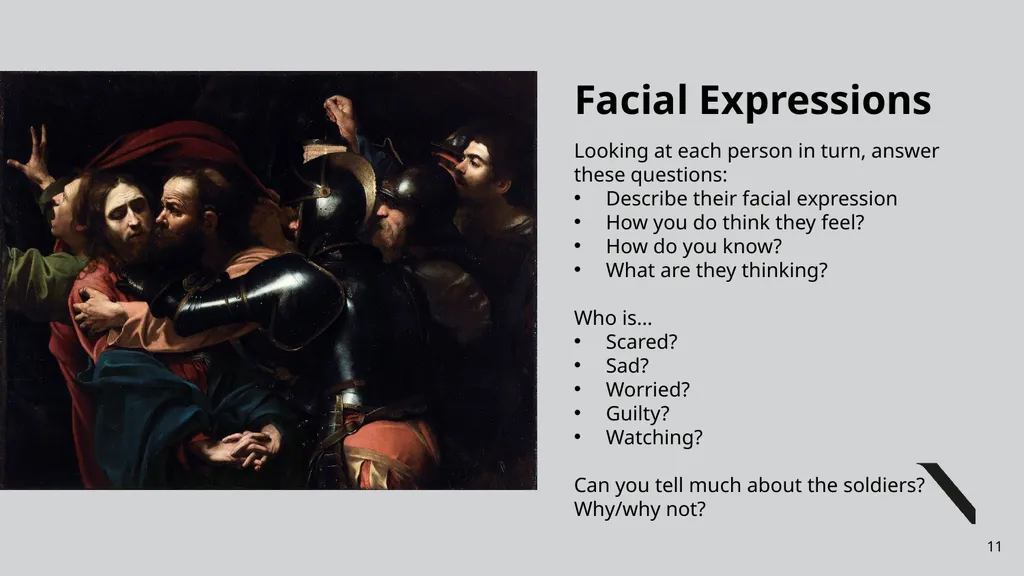
11 Facial Expressions Looking at each person in turn, answer these questions:
Describe their facial expression
How you do think they feel?
How do you know?
What are they thinking?
Who is…
Scared?
Sad?
Worried?
Guilty?
Watching?
Can you tell much about the soldiers?
Why/why not?<br>
Describe their facial expression
How you do think they feel?
How do you know?
What are they thinking?
Who is…
Scared?
Sad?
Worried?
Guilty?
Watching?
Can you tell much about the soldiers?
Why/why not?<br>
12
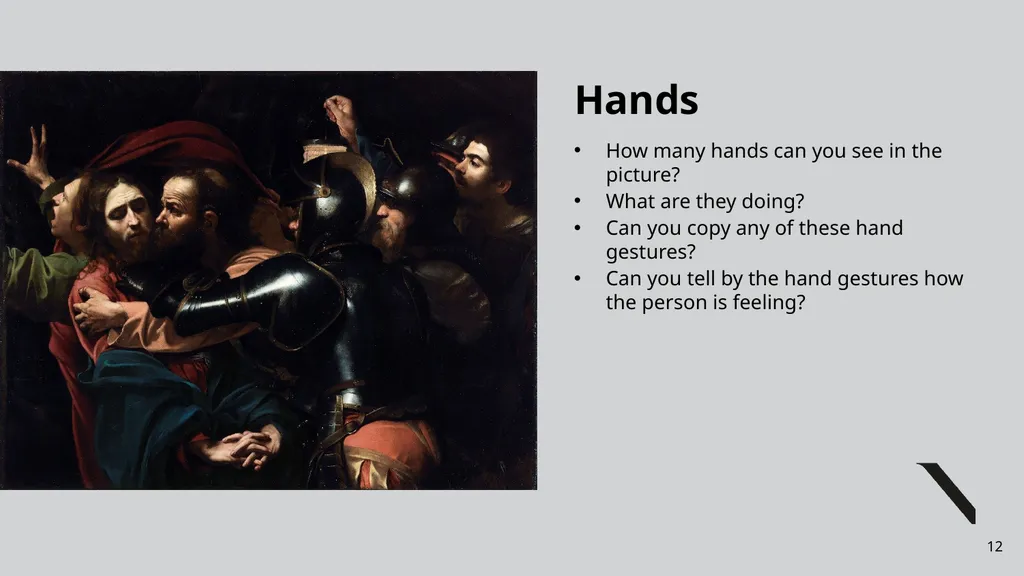
12 Hands How many hands can you see in the picture?
What are they doing?
Can you copy any of these hand gestures?
Can you tell by the hand gestures how the person is feeling?<br>
What are they doing?
Can you copy any of these hand gestures?
Can you tell by the hand gestures how the person is feeling?<br>
13
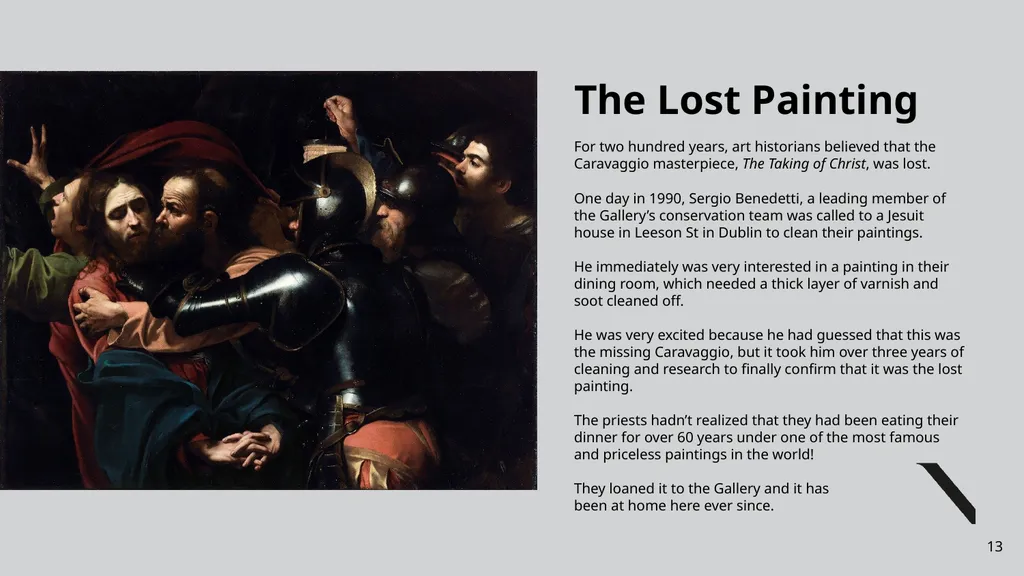
13 The Lost Painting For two hundred years, art historians believed that the Caravaggio masterpiece, The Taking of Christ, was lost.
One day in 1990, Sergio Benedetti, a leading member of the Gallery’s conservation team was called to a Jesuit house in Leeson St in Dublin to clean their paintings.
He immediately was very interested in a painting in their dining room, which needed a thick layer of varnish and soot cleaned off.
He was very excited because he had guessed that this was the missing Caravaggio, but it took him over three years of cleaning and research to finally confirm that it was the lost painting.
The priests hadn’t realized that they had been eating their dinner for over 60 years under one of the most famous and priceless paintings in the world!
They loaned it to the Gallery and it has
been at home here ever since.<br>
One day in 1990, Sergio Benedetti, a leading member of the Gallery’s conservation team was called to a Jesuit house in Leeson St in Dublin to clean their paintings.
He immediately was very interested in a painting in their dining room, which needed a thick layer of varnish and soot cleaned off.
He was very excited because he had guessed that this was the missing Caravaggio, but it took him over three years of cleaning and research to finally confirm that it was the lost painting.
The priests hadn’t realized that they had been eating their dinner for over 60 years under one of the most famous and priceless paintings in the world!
They loaned it to the Gallery and it has
been at home here ever since.<br>
14
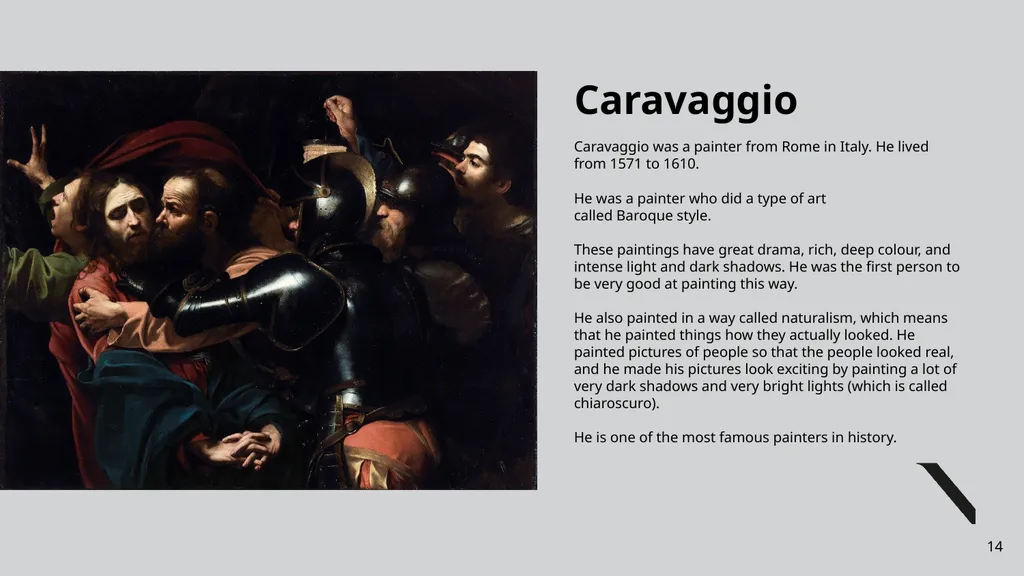
14 Caravaggio Caravaggio was a painter from Rome in Italy. He lived from 1571 to 1610.
He was a painter who did a type of art called Baroque style.
These paintings have great drama, rich, deep colour, and intense light and dark shadows. He was the first person to be very good at painting this way.
He also painted in a way called naturalism, which means that he painted things how they actually looked. He painted pictures of people so that the people looked real, and he made his pictures look exciting by painting a lot of very dark shadows and very bright lights (which is called chiaroscuro).
He is one of the most famous painters in history.<br>
He was a painter who did a type of art called Baroque style.
These paintings have great drama, rich, deep colour, and intense light and dark shadows. He was the first person to be very good at painting this way.
He also painted in a way called naturalism, which means that he painted things how they actually looked. He painted pictures of people so that the people looked real, and he made his pictures look exciting by painting a lot of very dark shadows and very bright lights (which is called chiaroscuro).
He is one of the most famous painters in history.<br>
15
Additional Activities Primary Language - Oral / Writing / Reading
Tell this story in 3 parts
What happened just before this action
Describe what’s happening in the painting
Predict what will happen next
I found an old painting in my attic and brought it to the Gallery…
History
Timeline of events – write out the order of events in the story
Research about the Baroque period in art
Caravaggio – find out about his life
Art
Drawing faces and facial expressions
Fabric and Fibre montage of the scene
Construction Diorama of the story
Exploring tone in colour or in black and white – see worksheet 15 Drama
Freeze Frame the picture and photograph this for the Gallery - ask pupils to depict the sequence of events through a series of scenes, each representing a character at this significant moment.
Conscience Alley - see worksheet
Dramatize each part of your written story
SPHE
Emotions – recognising facial expressions – look at the faces in the painting; how do you think they were feeling? Explore how we use our faces to show how we feel.
Empathic response – how do you feel about what happened to Jesus that day? Was it fair?
Religion
The story of Jesus<br>
Tell this story in 3 parts
What happened just before this action
Describe what’s happening in the painting
Predict what will happen next
I found an old painting in my attic and brought it to the Gallery…
History
Timeline of events – write out the order of events in the story
Research about the Baroque period in art
Caravaggio – find out about his life
Art
Drawing faces and facial expressions
Fabric and Fibre montage of the scene
Construction Diorama of the story
Exploring tone in colour or in black and white – see worksheet 15 Drama
Freeze Frame the picture and photograph this for the Gallery - ask pupils to depict the sequence of events through a series of scenes, each representing a character at this significant moment.
Conscience Alley - see worksheet
Dramatize each part of your written story
SPHE
Emotions – recognising facial expressions – look at the faces in the painting; how do you think they were feeling? Explore how we use our faces to show how we feel.
Empathic response – how do you feel about what happened to Jesus that day? Was it fair?
Religion
The story of Jesus<br>
16
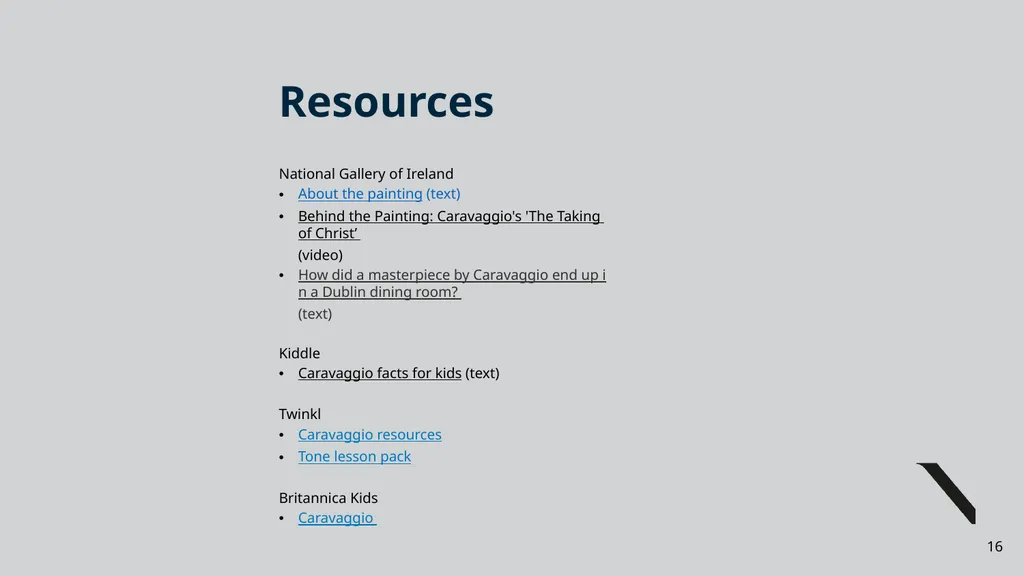
Resources National Gallery of Ireland
About the painting (text)
Behind the Painting: Caravaggio's 'The Taking of Christ’ (video)
How did a masterpiece by Caravaggio end up in a Dublin dining room? (text)
Kiddle
Caravaggio facts for kids (text)
Twinkl
Caravaggio resources
Tone lesson pack
Britannica Kids
Caravaggio 16<br>
About the painting (text)
Behind the Painting: Caravaggio's 'The Taking of Christ’ (video)
How did a masterpiece by Caravaggio end up in a Dublin dining room? (text)
Kiddle
Caravaggio facts for kids (text)
Twinkl
Caravaggio resources
Tone lesson pack
Britannica Kids
Caravaggio 16<br>
17
Worksheets
These are also available as downloadable Word documents 17<br>
18
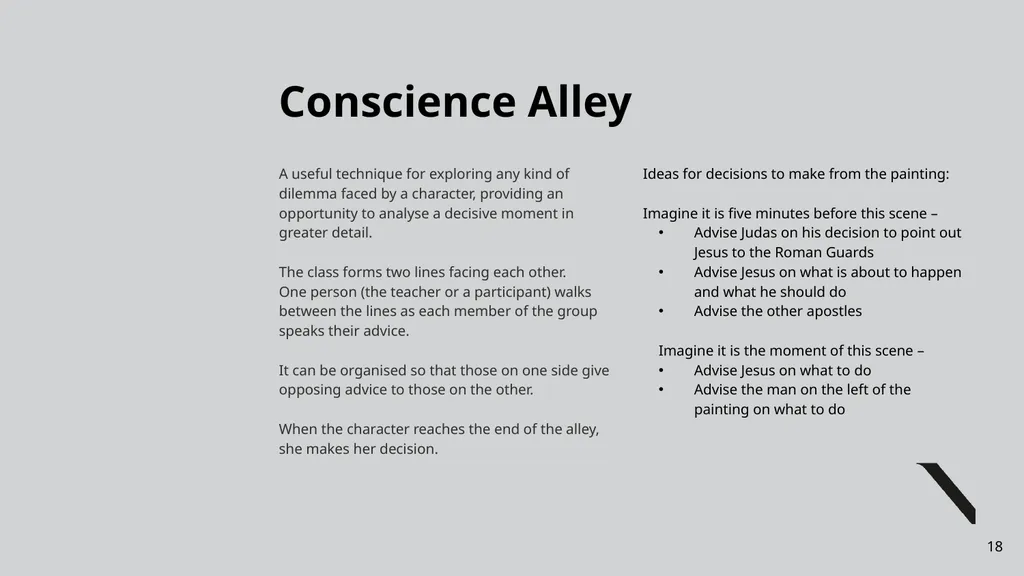
Conscience Alley A useful technique for exploring any kind of dilemma faced by a character, providing an opportunity to analyse a decisive moment in greater detail.
The class forms two lines facing each other.
One person (the teacher or a participant) walks between the lines as each member of the group speaks their advice.
It can be organised so that those on one side give opposing advice to those on the other.
When the character reaches the end of the alley, she makes her decision. 18 Ideas for decisions to make from the painting:
Imagine it is five minutes before this scene –
Advise Judas on his decision to point out Jesus to the Roman Guards
Advise Jesus on what is about to happen and what he should do
Advise the other apostles
Imagine it is the moment of this scene –
Advise Jesus on what to do
Advise the man on the left of the painting on what to do<br>
The class forms two lines facing each other.
One person (the teacher or a participant) walks between the lines as each member of the group speaks their advice.
It can be organised so that those on one side give opposing advice to those on the other.
When the character reaches the end of the alley, she makes her decision. 18 Ideas for decisions to make from the painting:
Imagine it is five minutes before this scene –
Advise Judas on his decision to point out Jesus to the Roman Guards
Advise Jesus on what is about to happen and what he should do
Advise the other apostles
Imagine it is the moment of this scene –
Advise Jesus on what to do
Advise the man on the left of the painting on what to do<br>
19
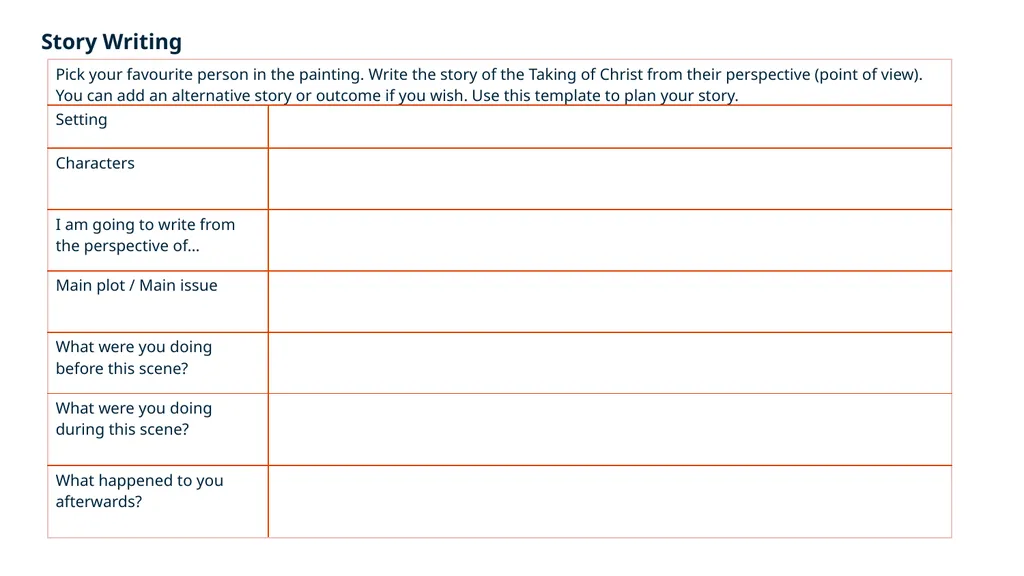
Story Writing<br>
20
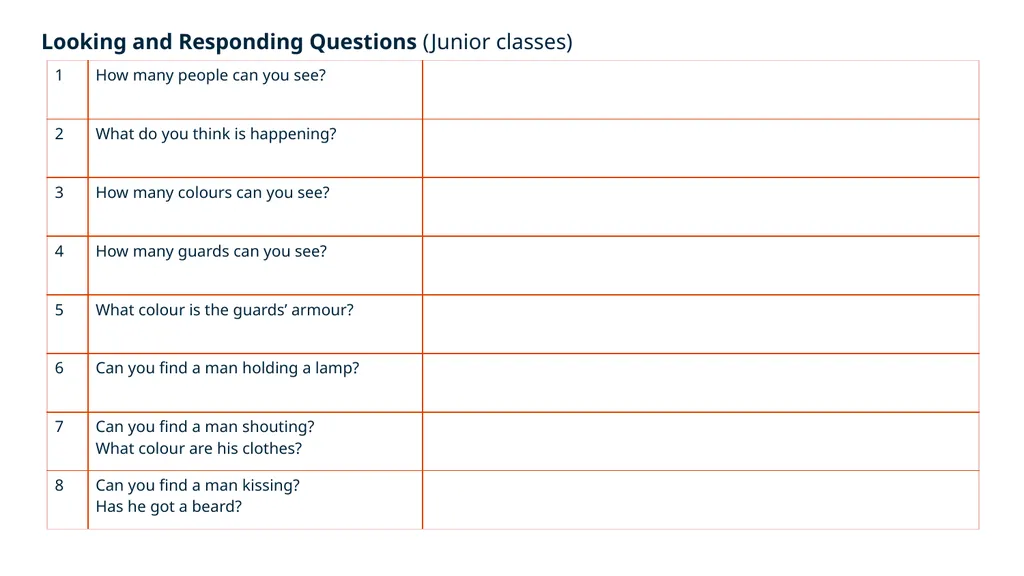
Looking and Responding Questions (Junior classes)<br>
21
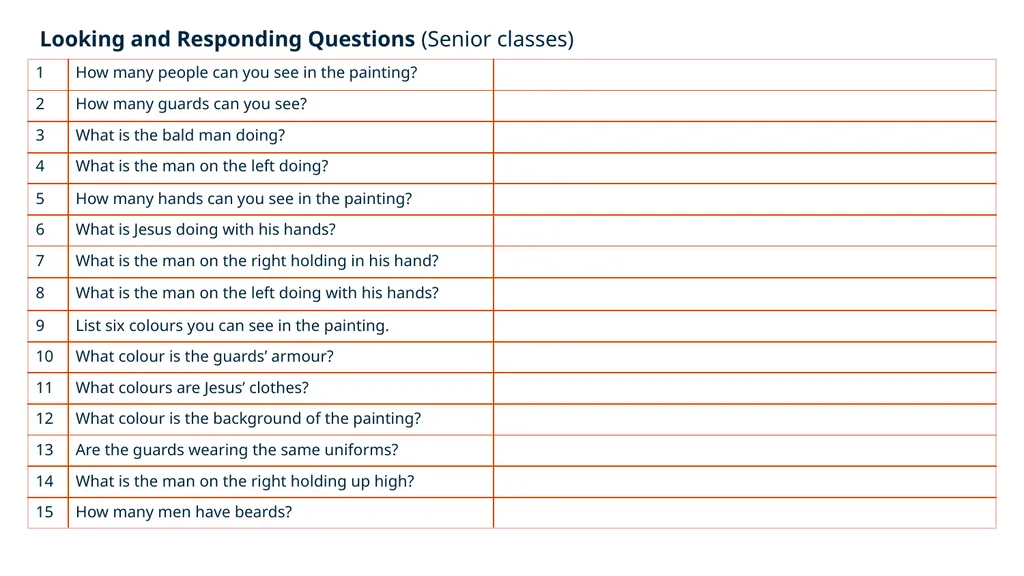
Looking and Responding Questions (Senior classes)<br>
22
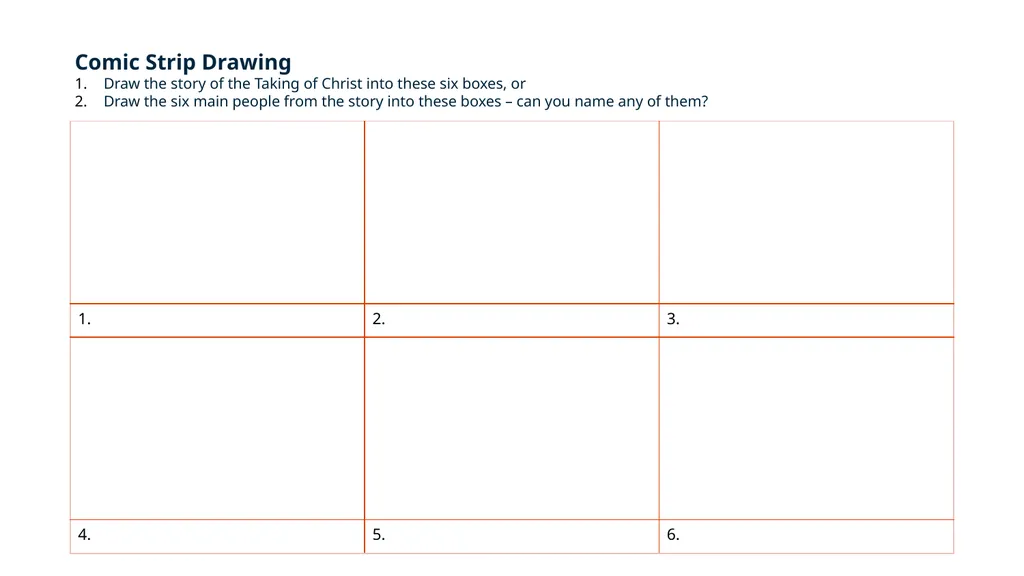
Comic Strip Drawing
Draw the story of the Taking of Christ into these six boxes, or
Draw the six main people from the story into these boxes – can you name any of them?<br>
Draw the story of the Taking of Christ into these six boxes, or
Draw the six main people from the story into these boxes – can you name any of them?<br>
23
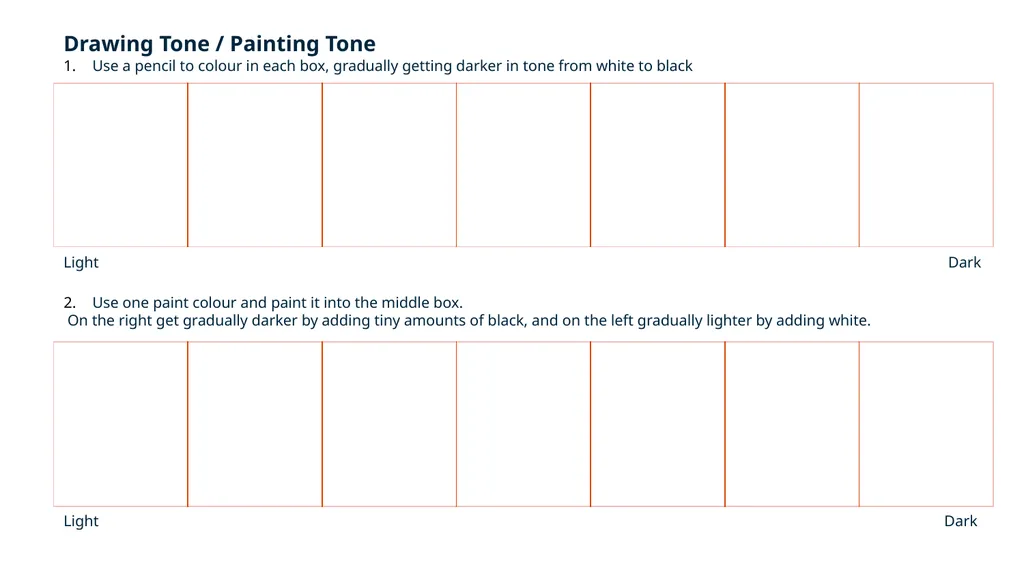
Drawing Tone / Painting Tone
Use a pencil to colour in each box, gradually getting darker in tone from white to black Use one paint colour and paint it into the middle box.
On the right get gradually darker by adding tiny amounts of black, and on the left gradually lighter by adding white. Light Dark Light Dark<br>
Use a pencil to colour in each box, gradually getting darker in tone from white to black Use one paint colour and paint it into the middle box.
On the right get gradually darker by adding tiny amounts of black, and on the left gradually lighter by adding white. Light Dark Light Dark<br>
24
24 Contact us Sign up to the Teachers & Schools email newsletter to be regularly updated with new ideas and resources.
Catherine O’Donnell
Education Officer
With responsibility for Teachers, Schools & Youth
T: +353 (0) 1 663 3579
E: codonnell@ngi.ie<br>
Catherine O’Donnell
Education Officer
With responsibility for Teachers, Schools & Youth
T: +353 (0) 1 663 3579
E: codonnell@ngi.ie<br>