Leaving Certificate Biology New Specification September 2025 Overview and Structure Four Strands Unifying Strand The Nature of Science Three contextual strands The Organisation of Life The Structures and Processes of Life The Interactions
"Leaving Certificate Biology – New Specification" is the property of its rightful owner. Permission is granted to
download and print the materials on this website for personal, non-commercial use only, and to display it
on your personal computer provided you do not modify the materials and that you retain all copyright
notices contained in the materials. By downloading content from our website, you accept the terms of this
agreement.
Presentation Transcript
01
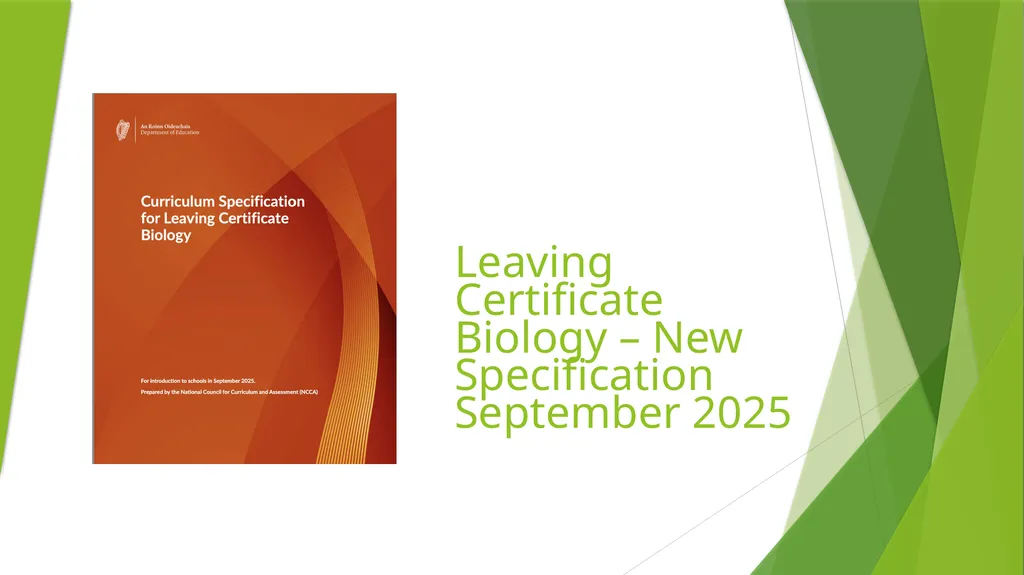
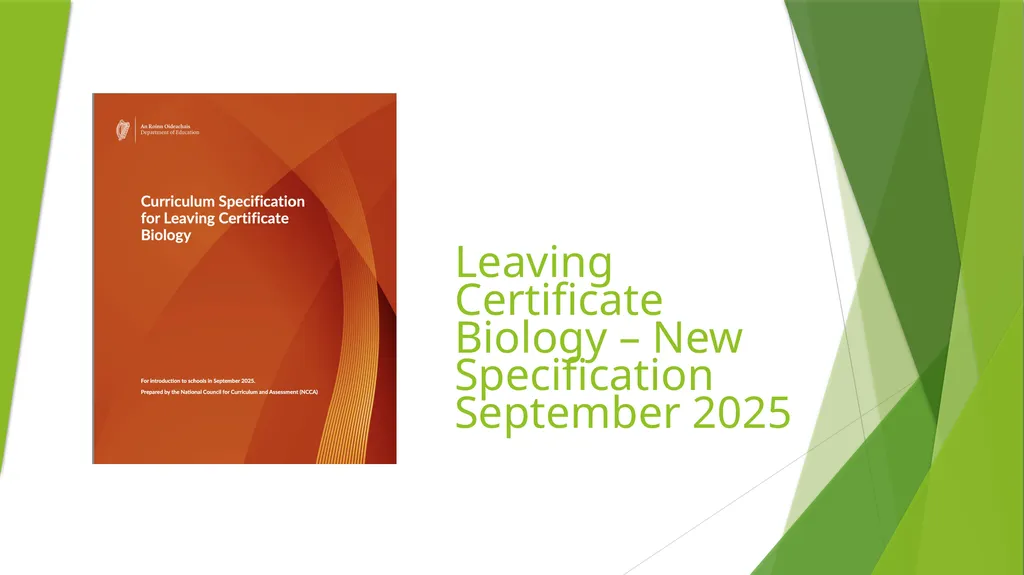
Leaving Certificate Biology – New Specification September 2025<br>
02
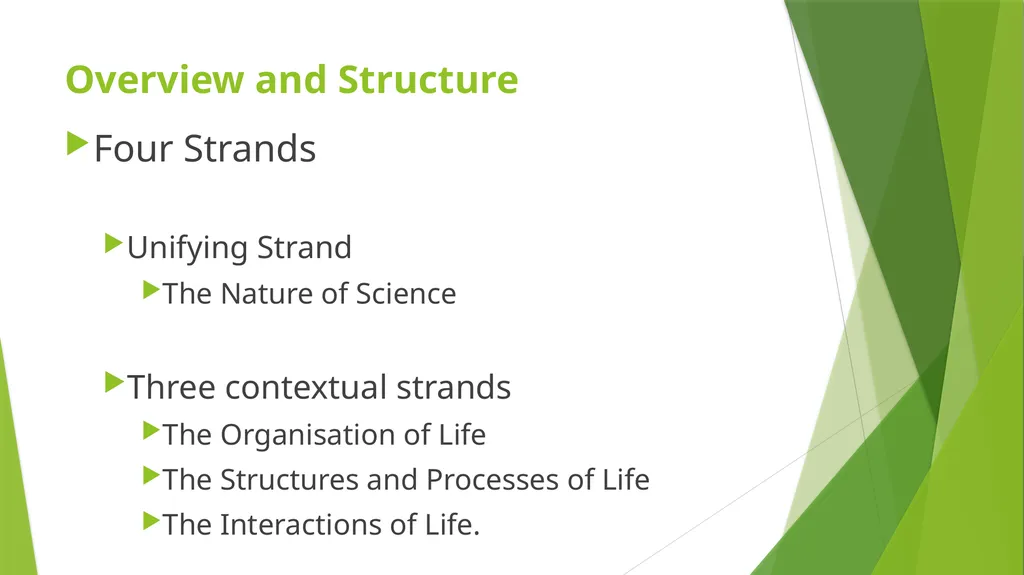
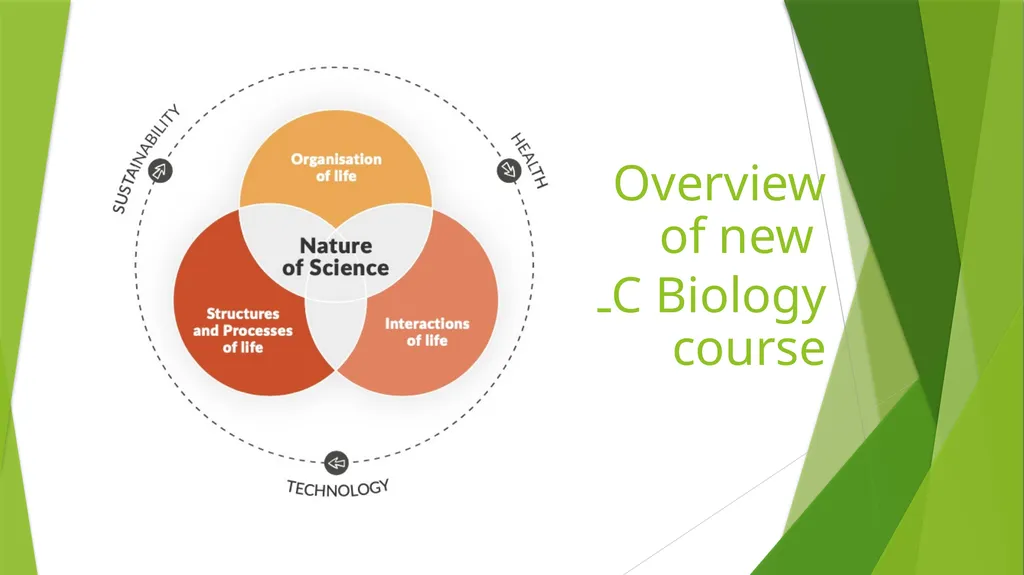
Overview and Structure Four Strands
Unifying Strand
The Nature of Science
Three contextual strands
The Organisation of Life
The Structures and Processes of Life
The Interactions of Life.<br>
03
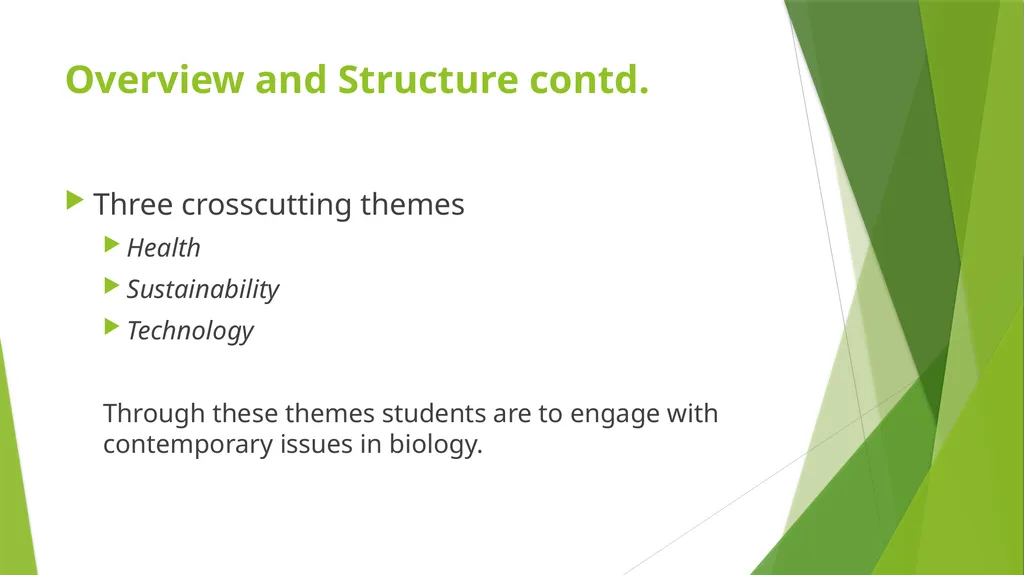
Overview and Structure contd. Three crosscutting themes
Health
Sustainability
Technology
Through these themes students are to engage with contemporary issues in biology.<br>
04
Overview of new
LC Biology course<br>
05
Strands of study and learning outcomes<br>
06
Unifying Strand: The Nature of Science This strand builds on the unifying strand from Junior Cycle Science and continues to bring to life the practices and norms underpinning the facts, concepts, laws, and theories of science.<br>
07
Learning Outcomes U1 Scientific knowledge
U2 Investigating in Science
U3 Science in society
U4 Biological reasoning<br>
08
Strand 1: The Organisation of Life In this strand students gain knowledge and understanding of a number of core concepts to explain the organisation and diversity of life. They learn about life’s characteristics, cellular basis, chemicals, genetic information and origins.<br>
09
Learning Outcomes 1.1 The Characteristics of Life
1.2 The chemicals of life: biomolecules
1.3 The unit of life – cells
1.4 The information of life- genetic inheritance
1.5 The origins of life – evolution<br>
10
Strand 2: The Structures and Processes of Life In this strand students learn how the unique and diverse structures within living things allow life to function through a number of processes taking place within cells, organs and systems. As students investigate the structures and processes of living things, they appreciate that all life depends on the transfer of energy and matter through these processes. They recognise that all organisms store information and rely on proteins in their cells, including enzymes, to carry out specific functions. They learn about the cellular processes of photosynthesis, respiration, cell division and protein synthesis as fundamental for transference of energy, matter and information through the living world.<br>
11
Learning Outcomes 2.1 Enzymes
2.2 Cellular processes - photosynthesis and respiration
2.3 Information of life - cell division, protein synthesis
2.4 Response
2.5 Reproduction
2.6 Transport and transfer (physiological processes)<br>
12
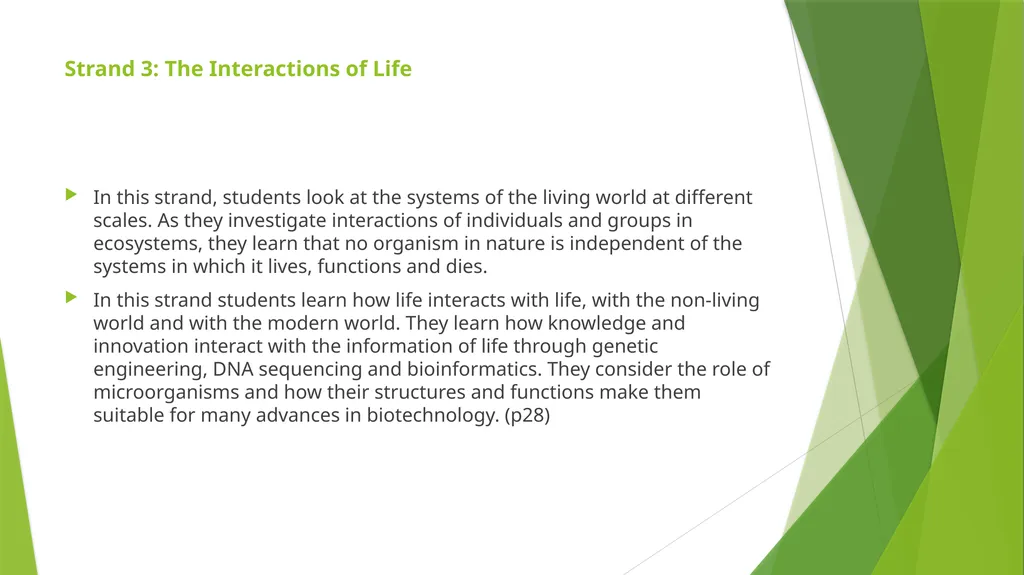
Strand 3: The Interactions of Life In this strand, students look at the systems of the living world at different scales. As they investigate interactions of individuals and groups in ecosystems, they learn that no organism in nature is independent of the systems in which it lives, functions and dies.
In this strand students learn how life interacts with life, with the non-living world and with the modern world. They learn how knowledge and innovation interact with the information of life through genetic engineering, DNA sequencing and bioinformatics. They consider the role of microorganisms and how their structures and functions make them suitable for many advances in biotechnology. (p28)<br>
13
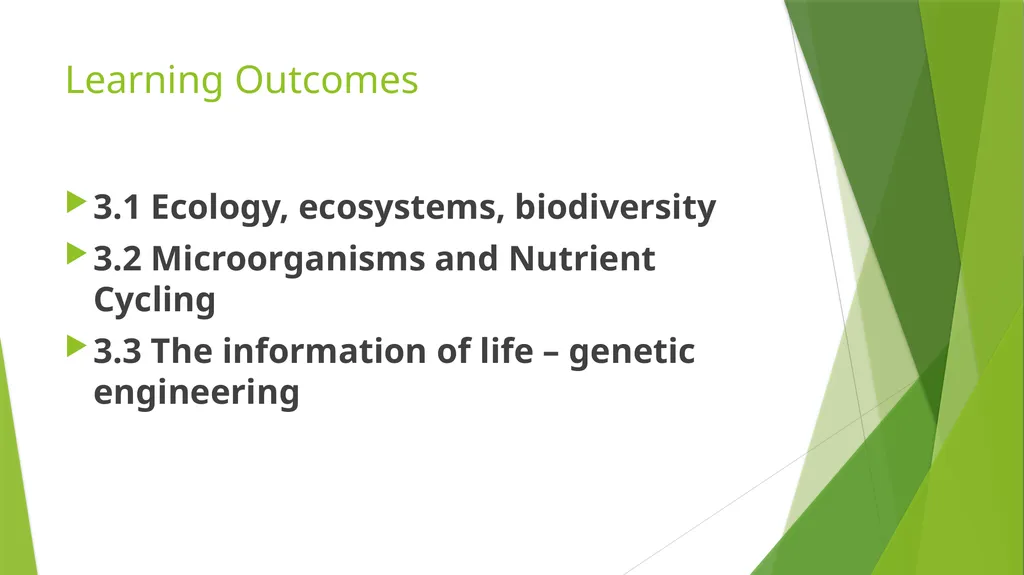
Learning Outcomes 3.1 Ecology, ecosystems, biodiversity
3.2 Microorganisms and Nutrient Cycling
3.3 The information of life – genetic engineering<br>
14
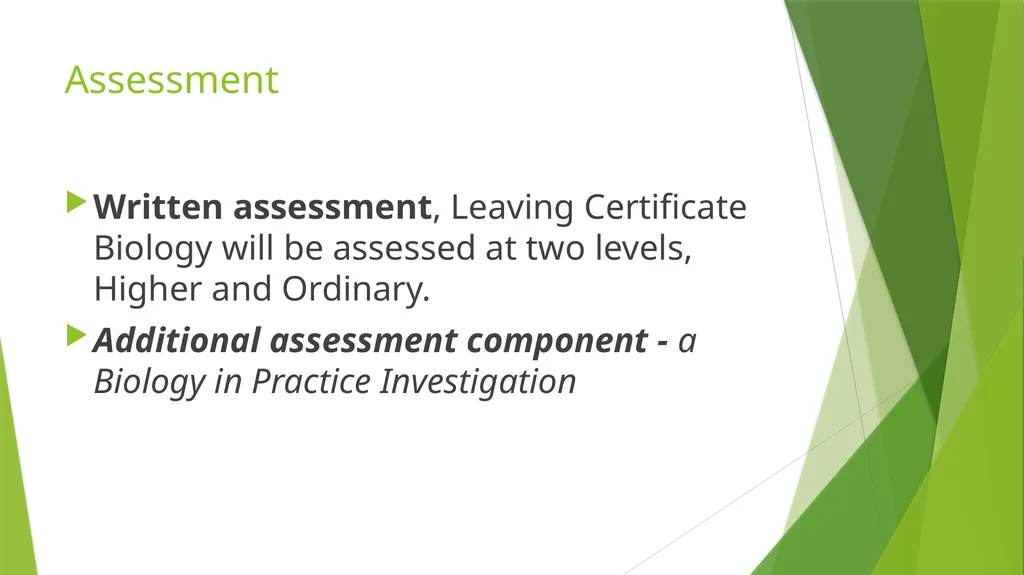
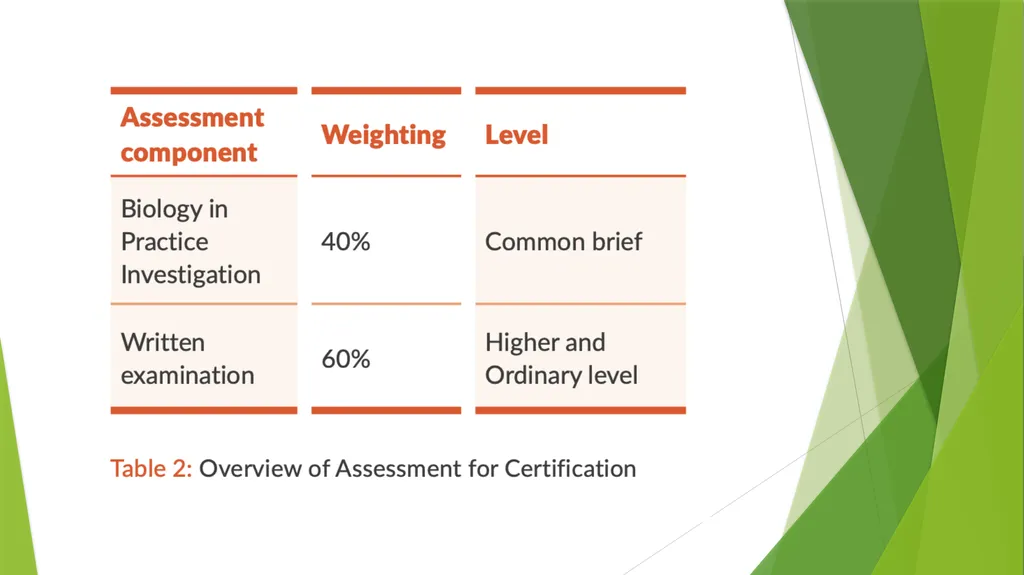
Assessment Written assessment, Leaving Certificate Biology will be assessed at two levels, Higher and Ordinary.
Additional assessment component - a Biology in Practice Investigation<br>
15
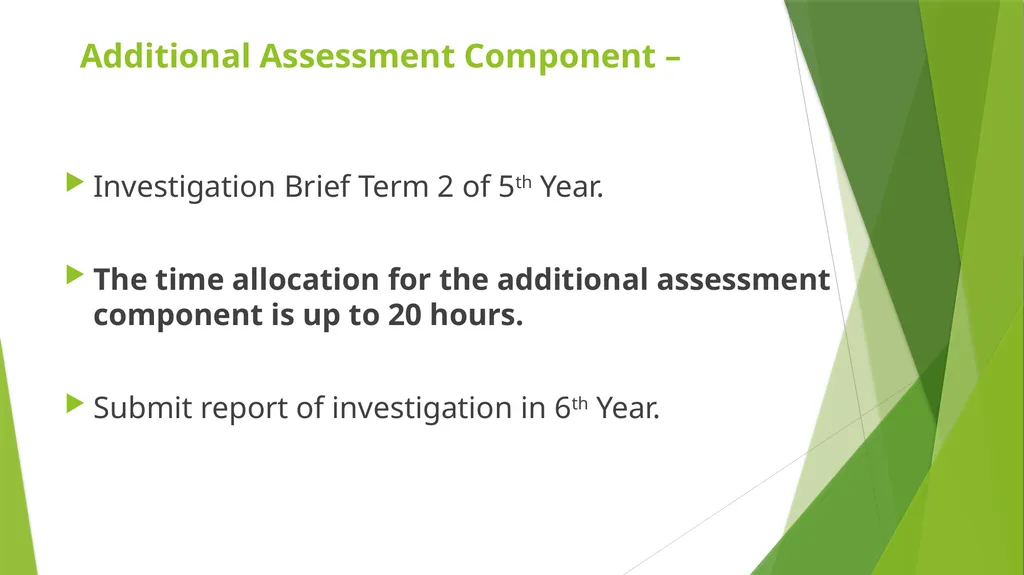
Investigation Brief Term 2 of 5th Year.
The time allocation for the additional assessment component is up to 20 hours.
Submit report of investigation in 6th Year. Additional Assessment Component –<br>
16
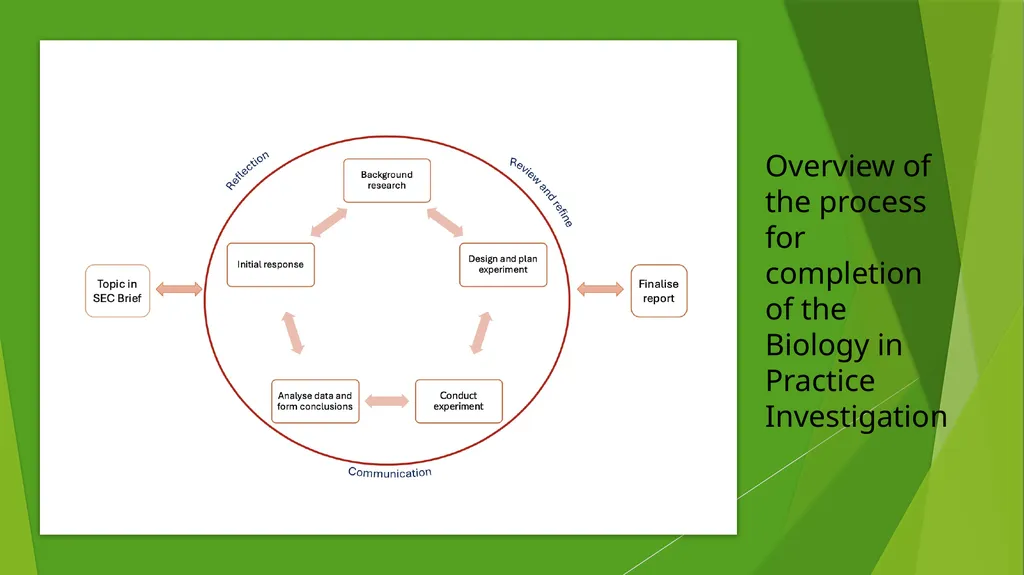
Overview of the process for completion of the Biology in Practice Investigation<br>