Lesson 7.2 Properties of Parallelograms Learning
Description: Lesson 7.2 Properties of Parallelograms Learning Target: Prove and use properties of parallelograms. Success Criteria: I can prove properties of parallelograms. I can use properties of parallelograms. I can solve problems involving
Related Topics
Download Presentation
"Lesson 7.2 Properties of Parallelograms Learning" is the property of its rightful owner. Permission is granted to download and print the materials on this website for personal, non-commercial use only, and to display it on your personal computer provided you do not modify the materials and that you retain all copyright notices contained in the materials. By downloading content from our website, you accept the terms of this agreement.
Presentation Transcript
slide1. Lesson 7.2 Properties of Parallelograms<br>
slide2. Learning Target:
Prove and use properties of parallelograms. Success Criteria:
I can prove properties of parallelograms.
I can use properties of parallelograms.
I can solve problems involving parallelograms in the coordinate plane.<br>
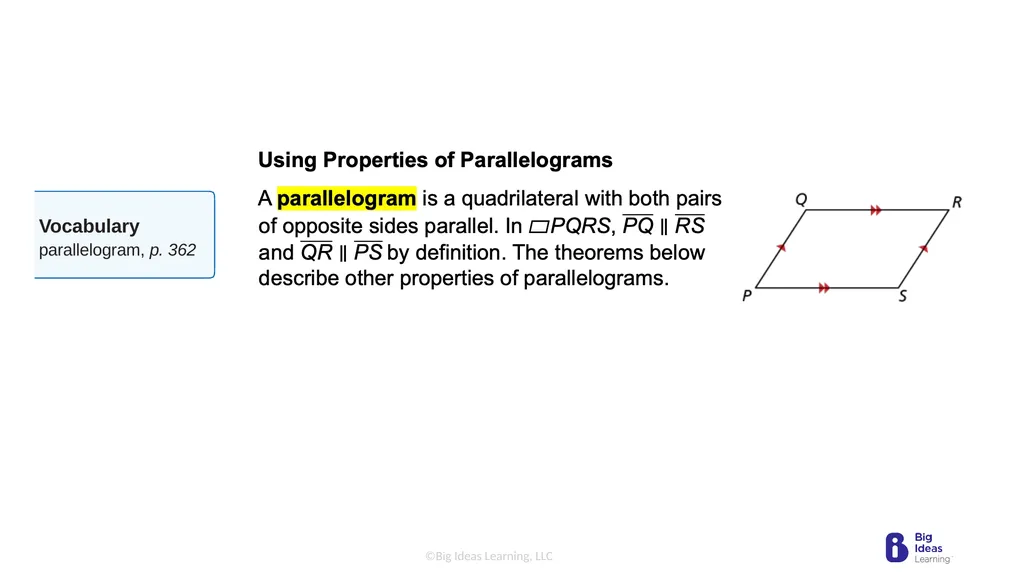
slide3. Vocabulary
parallelogram, p. 362<br>
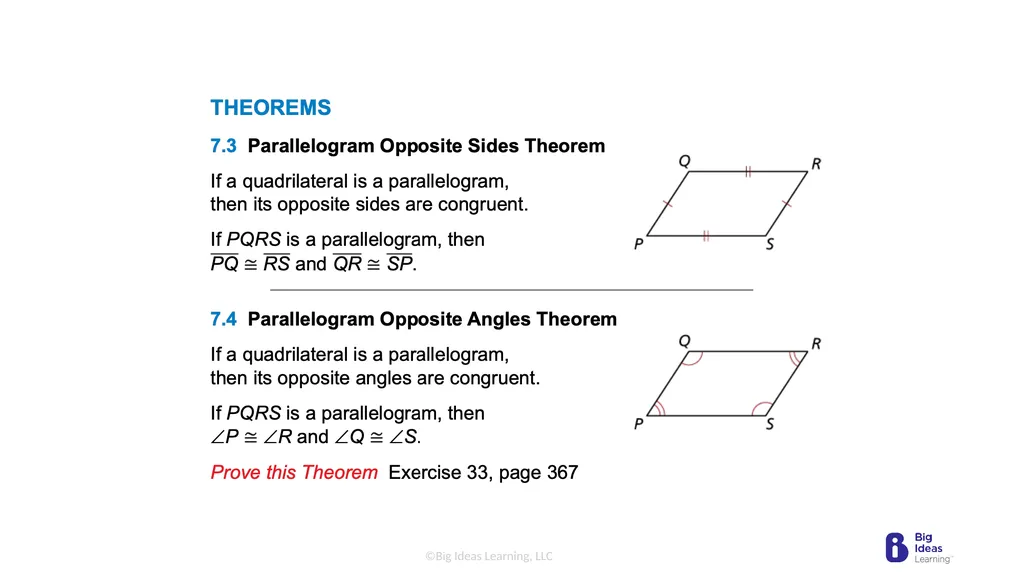
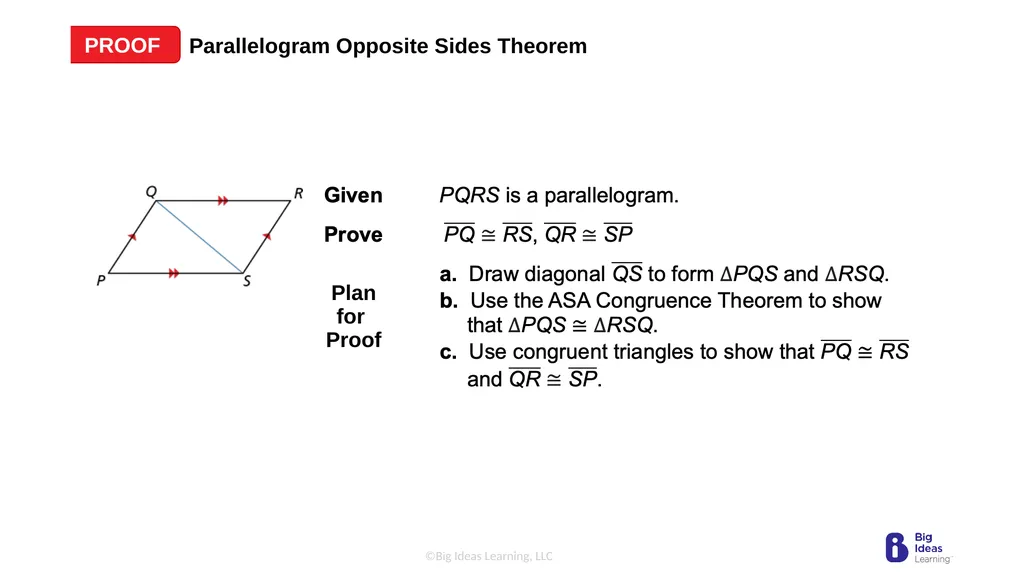
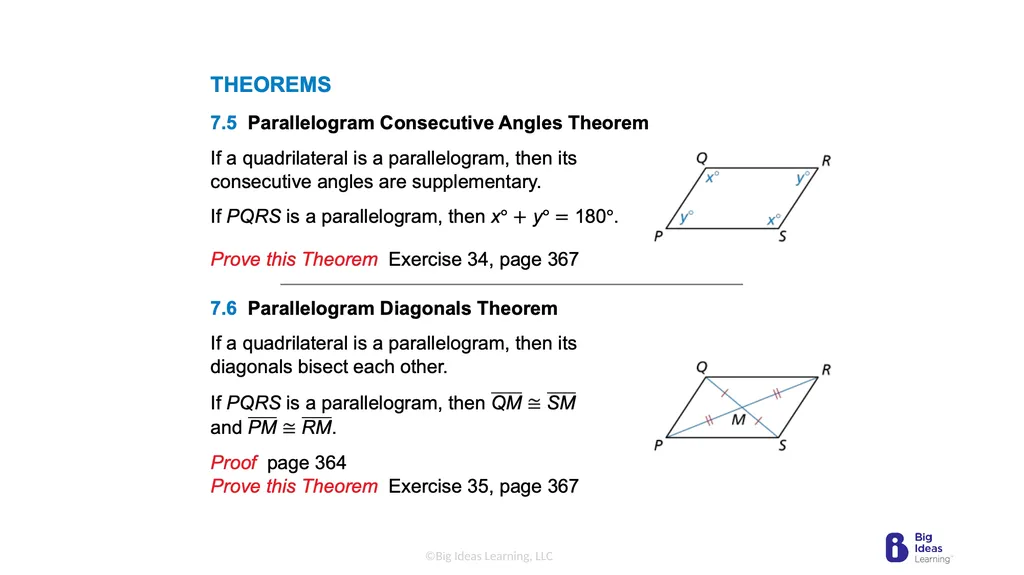
slide5. Parallelogram Opposite Sides Theorem<br>
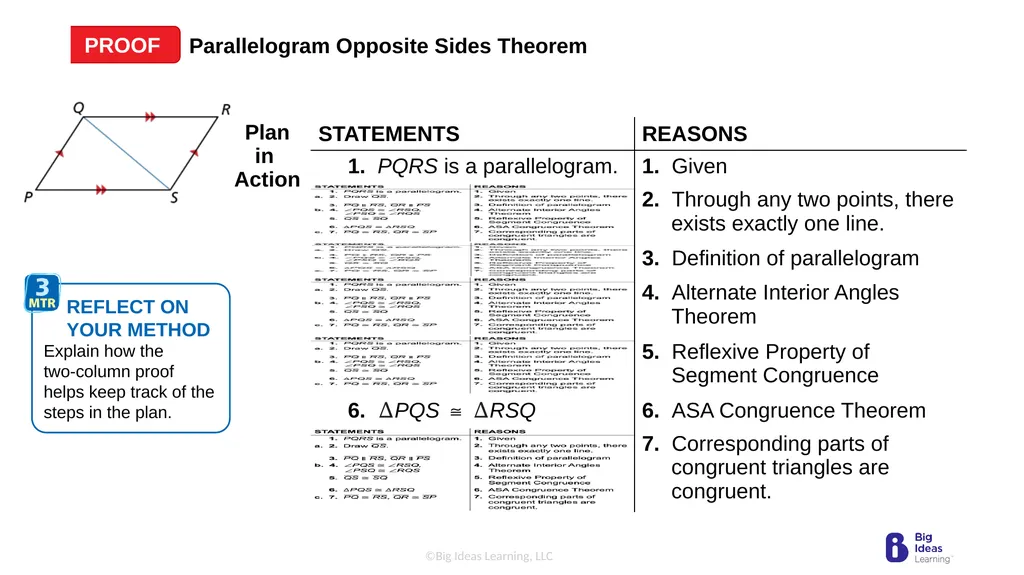
slide6. Parallelogram Opposite Sides Theorem Planin Action<br>
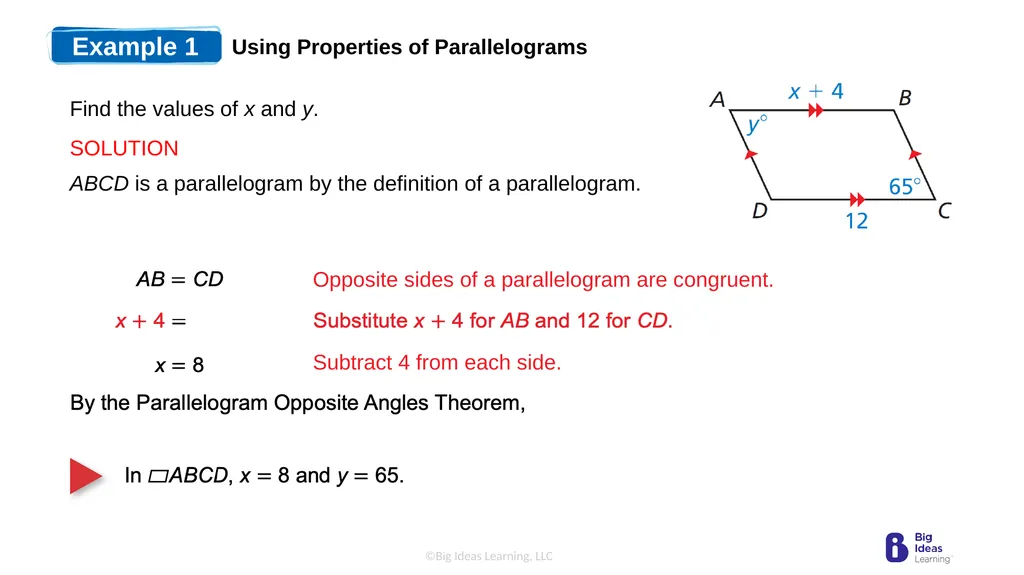
slide7. Example 1 Using Properties of Parallelograms Find the values of x and y. ABCD is a parallelogram by the definition of a parallelogram.
Use the Parallelogram Opposite Sides Theorem to find the
value of x. Opposite sides of a parallelogram are congruent. Subtract 4 from each side. SOLUTION<br>
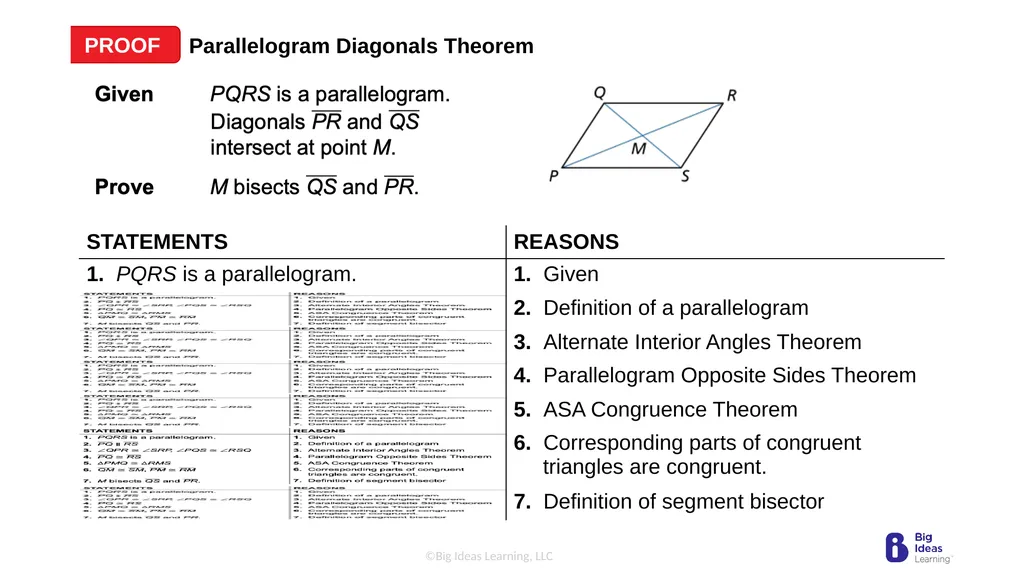
slide10. Parallelogram Diagonals Theorem<br>
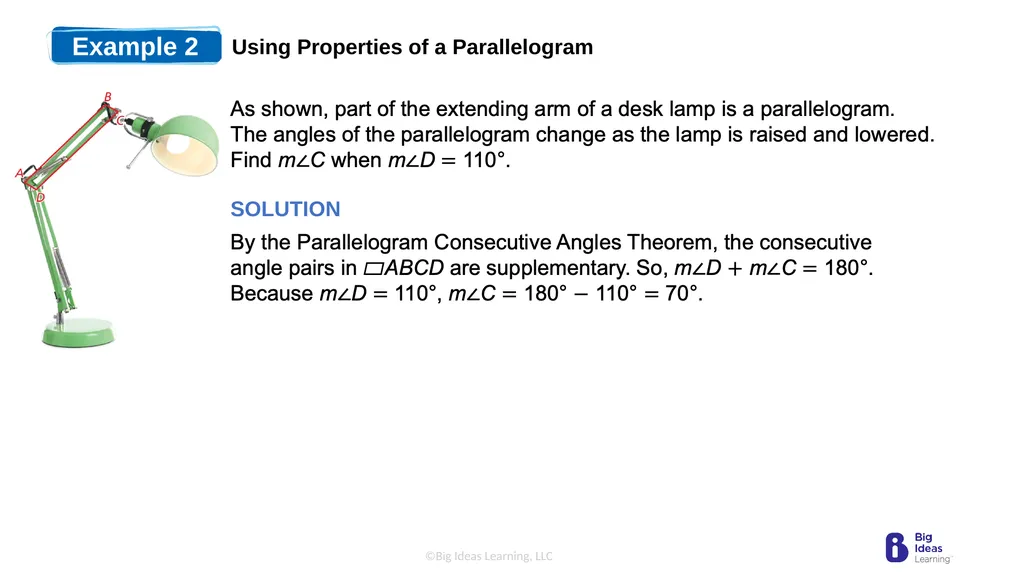
slide11. Example 2 Using Properties of a Parallelogram SOLUTION<br>
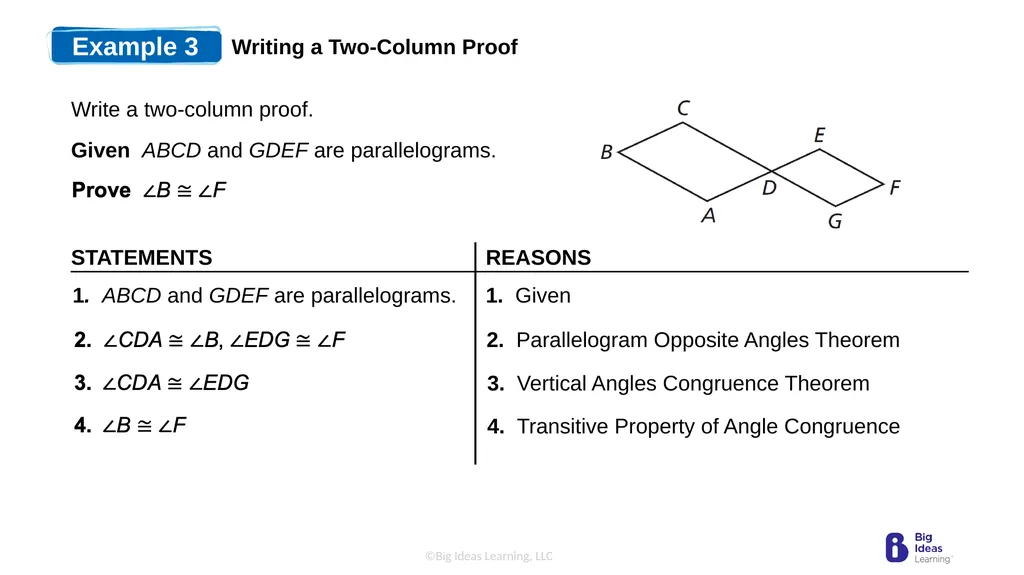
slide12. Example 3 Writing a Two-Column Proof Write a two-column proof. Given ABCD and GDEF are parallelograms. 1. ABCD and GDEF are parallelograms. 1. Given 2. Parallelogram Opposite Angles Theorem 3. Vertical Angles Congruence Theorem 4. Transitive Property of Angle Congruence STATEMENTS REASONS<br>
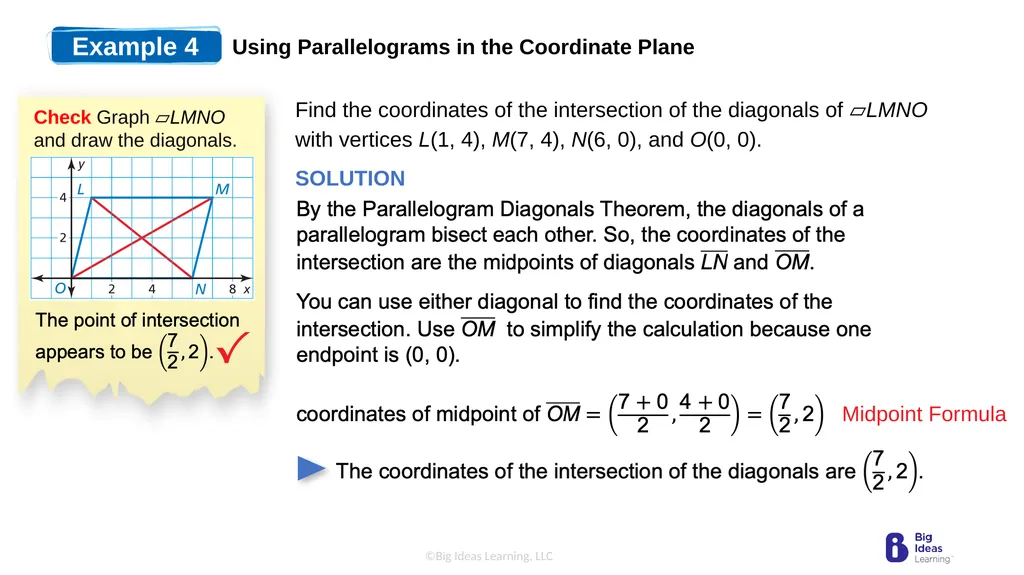
slide13. Example 4 Using Parallelograms in the Coordinate Plane Find the coordinates of the intersection of the diagonals of ▱LMNO
with vertices L(1, 4), M(7, 4), N(6, 0), and O(0, 0). Midpoint Formula SOLUTION Check Graph ▱LMNO
and draw the diagonals. ✓<br>
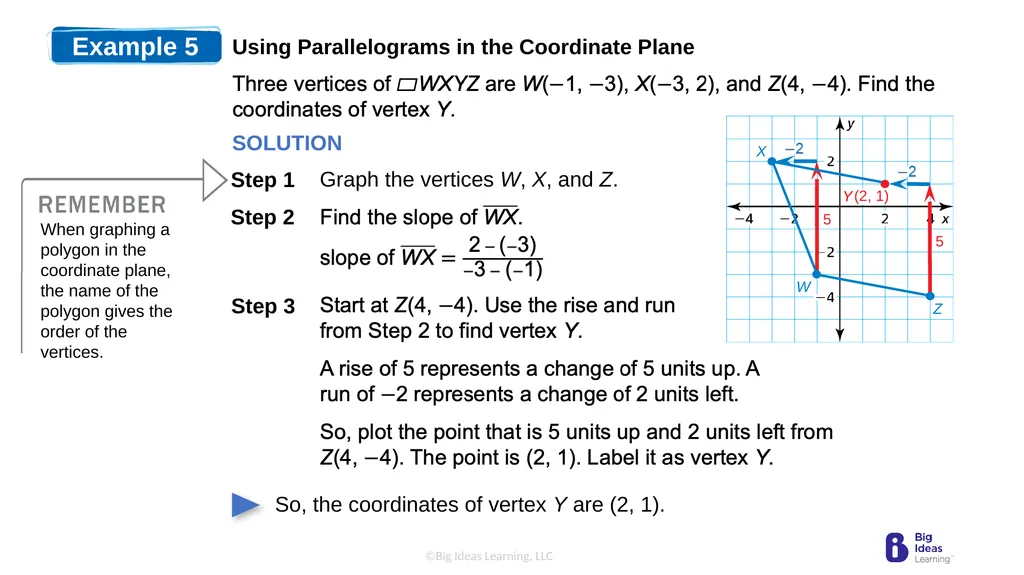
slide14. Example 5 Using Parallelograms in the Coordinate Plane Step 2 Step 3 Step 1 Graph the vertices W, X, and Z. SOLUTION So, the coordinates of vertex Y are (2, 1). 5 5 Y<br>
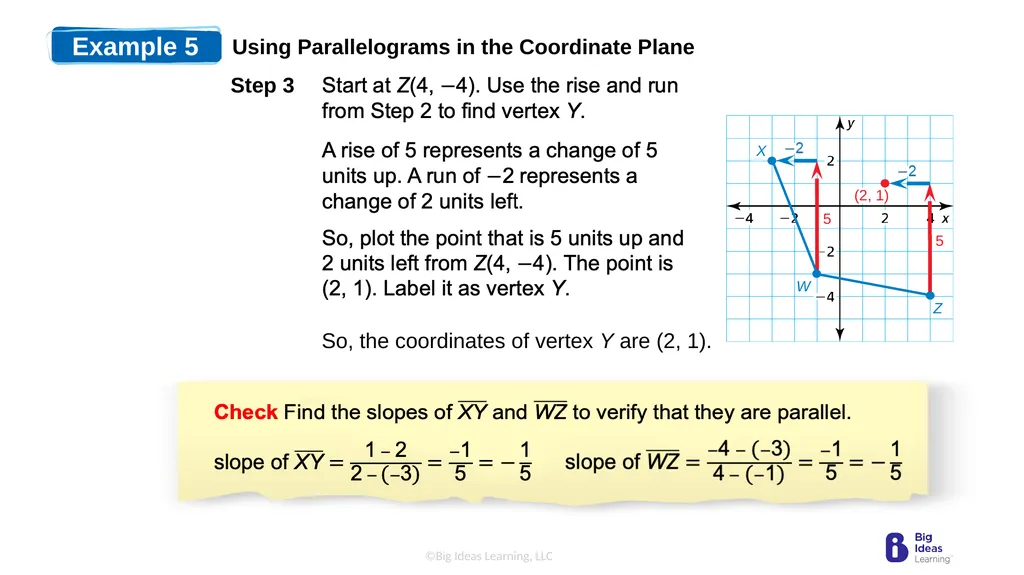
slide15. Example 5 Using Parallelograms in the Coordinate Plane So, the coordinates of vertex Y are (2, 1). Step 3<br>
slide2. Learning Target:
Prove and use properties of parallelograms. Success Criteria:
I can prove properties of parallelograms.
I can use properties of parallelograms.
I can solve problems involving parallelograms in the coordinate plane.<br>
slide3. Vocabulary
parallelogram, p. 362<br>
slide5. Parallelogram Opposite Sides Theorem<br>
slide6. Parallelogram Opposite Sides Theorem Planin Action<br>
slide7. Example 1 Using Properties of Parallelograms Find the values of x and y. ABCD is a parallelogram by the definition of a parallelogram.
Use the Parallelogram Opposite Sides Theorem to find the
value of x. Opposite sides of a parallelogram are congruent. Subtract 4 from each side. SOLUTION<br>
slide10. Parallelogram Diagonals Theorem<br>
slide11. Example 2 Using Properties of a Parallelogram SOLUTION<br>
slide12. Example 3 Writing a Two-Column Proof Write a two-column proof. Given ABCD and GDEF are parallelograms. 1. ABCD and GDEF are parallelograms. 1. Given 2. Parallelogram Opposite Angles Theorem 3. Vertical Angles Congruence Theorem 4. Transitive Property of Angle Congruence STATEMENTS REASONS<br>
slide13. Example 4 Using Parallelograms in the Coordinate Plane Find the coordinates of the intersection of the diagonals of ▱LMNO
with vertices L(1, 4), M(7, 4), N(6, 0), and O(0, 0). Midpoint Formula SOLUTION Check Graph ▱LMNO
and draw the diagonals. ✓<br>
slide14. Example 5 Using Parallelograms in the Coordinate Plane Step 2 Step 3 Step 1 Graph the vertices W, X, and Z. SOLUTION So, the coordinates of vertex Y are (2, 1). 5 5 Y<br>
slide15. Example 5 Using Parallelograms in the Coordinate Plane So, the coordinates of vertex Y are (2, 1). Step 3<br>