
Lessons learned from Gold Coast 2018 and what






Description: Lessons learned from Gold Coast 2018 and what might they mean to WAs State Sporting Associations ? by Brian Miller May 2018 BMs involvement in Commonwealth Games 1982 Brisbane with English Athletics Various editions up to and including
Related Topics
Download Presentation
"Lessons learned from Gold Coast 2018 and what" is the property of its rightful owner. Permission is granted to download and print the materials on this website for personal, non-commercial use only, and to display it on your personal computer provided you do not modify the materials and that you retain all copyright notices contained in the materials. By downloading content from our website, you accept the terms of this agreement.
Presentation Transcript
slide1. Lessons learned from Gold Coast 2018 and what might they mean to WA’s State Sporting Associations ? by
Brian Miller
May 2018<br>
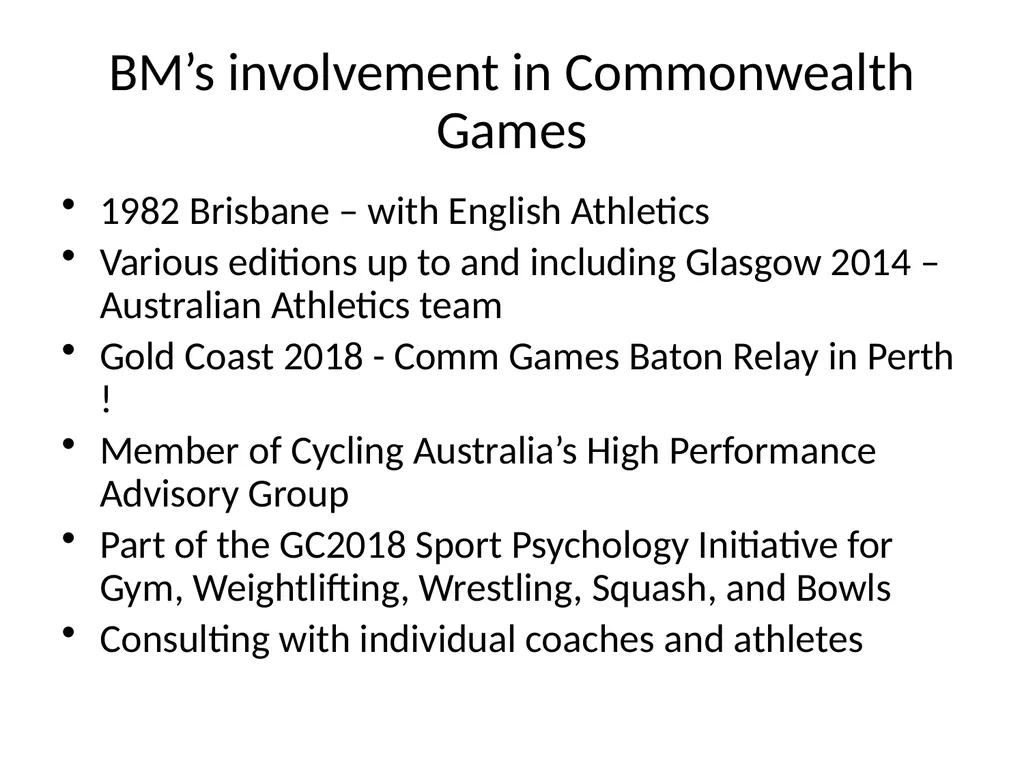
slide2. BM’s involvement in Commonwealth Games 1982 Brisbane – with English Athletics
Various editions up to and including Glasgow 2014 – Australian Athletics team
Gold Coast 2018 - Comm Games Baton Relay in Perth !
Member of Cycling Australia’s High Performance Advisory Group
Part of the GC2018 Sport Psychology Initiative for Gym, Weightlifting, Wrestling, Squash, and Bowls
Consulting with individual coaches and athletes<br>
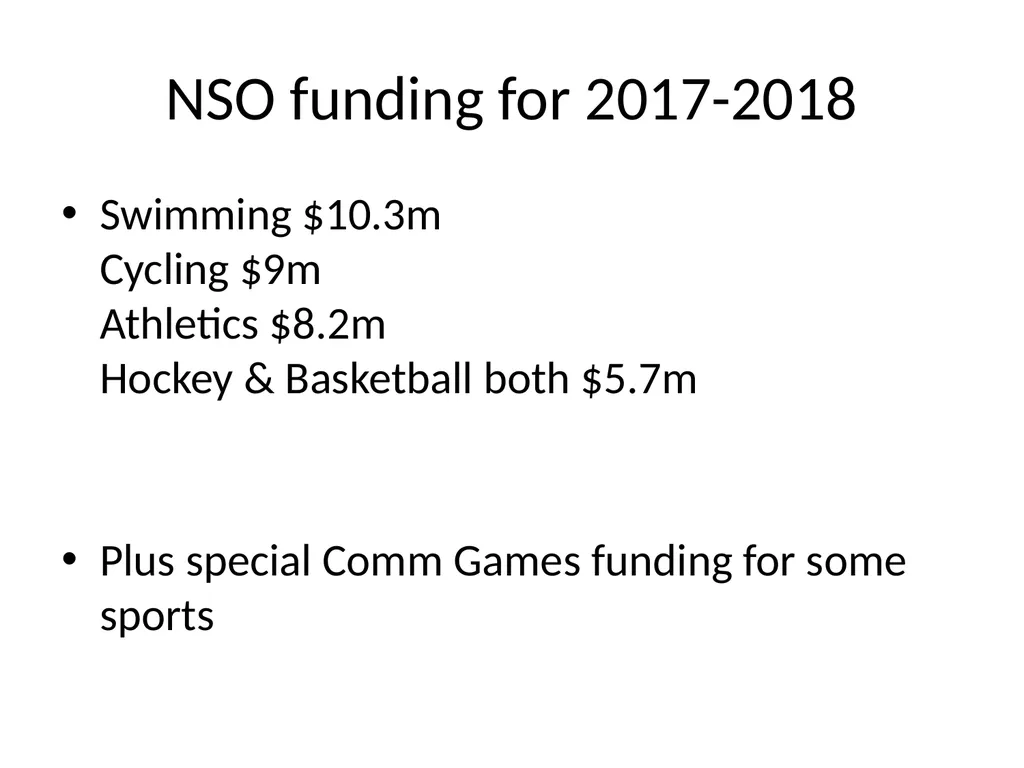
slide3. NSO funding for 2017-2018 Swimming $10.3m Cycling $9m Athletics $8.2m Hockey & Basketball both $5.7m
Plus special Comm Games funding for some sports<br>
slide4. Lessons learned from Glasgow 2014 and what might they mean to WA’s State Sporting Associations ? by
Brian Miller
DSR Presentation, September 2014<br>
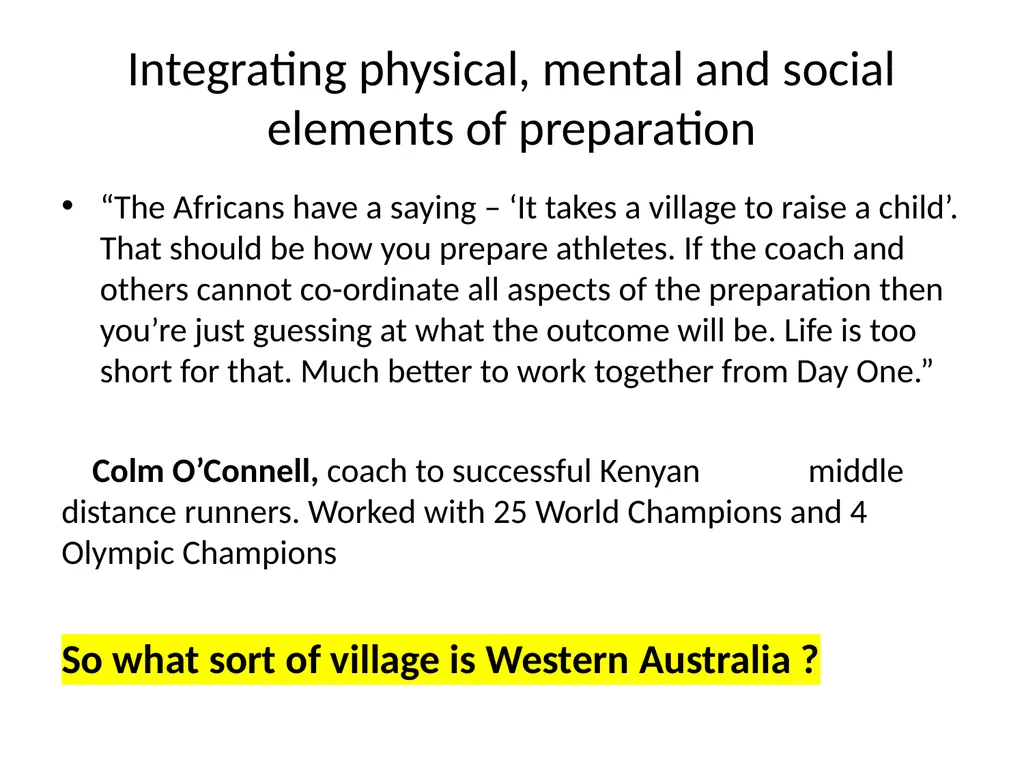
slide5. Integrating physical, mental and social elements of preparation “The Africans have a saying – ‘It takes a village to raise a child’. That should be how you prepare athletes. If the coach and others cannot co-ordinate all aspects of the preparation then you’re just guessing at what the outcome will be. Life is too short for that. Much better to work together from Day One.”
Colm O’Connell, coach to successful Kenyan middle distance runners. Worked with 25 World Champions and 4 Olympic Champions
So what sort of village is Western Australia ?<br>
slide6. A few statistics from Glasgow 2014 England 58G 59S 57B
Australia 49 42 46
Canada 32 16 34<br>
slide7. A few statistics from Glasgow 2014 Australian Team Membership
33 HQ Staff 0 born in WA
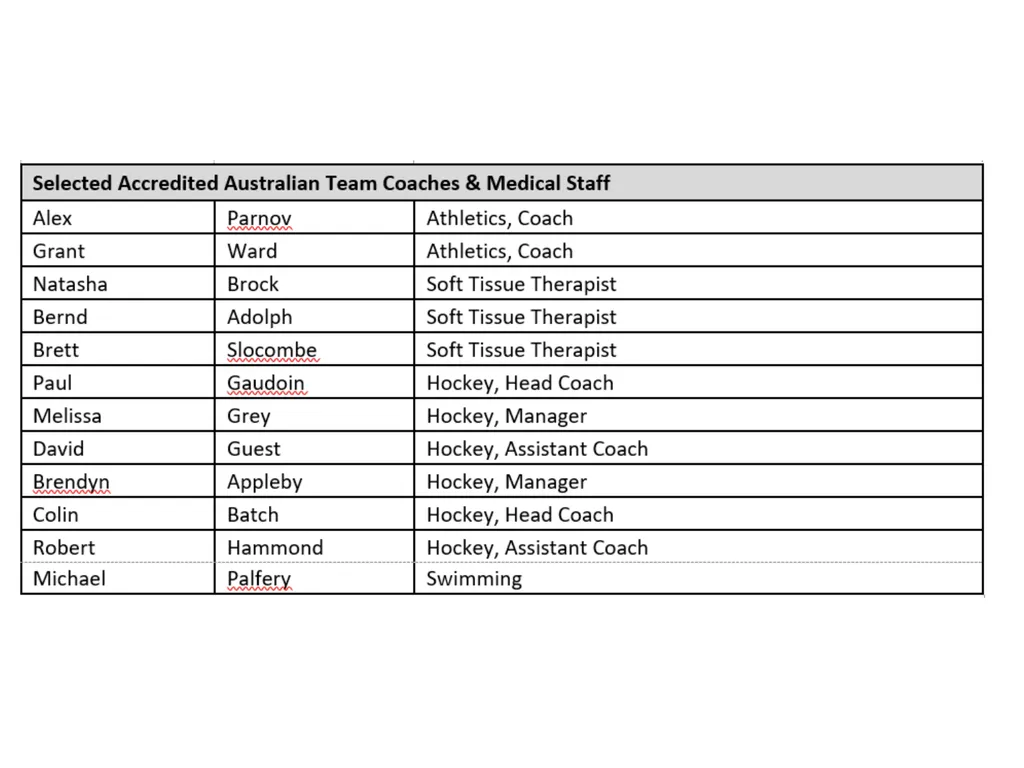
27 Athletics “staff” 1 born in WA
99 Athletics “athletes” 3 born in WA<br>
slide8. A few statistics from Glasgow 2014 118 “staff” from the other 17 sports.
3 were born in WA - 1 in Gym, 2 Hockey.<br>
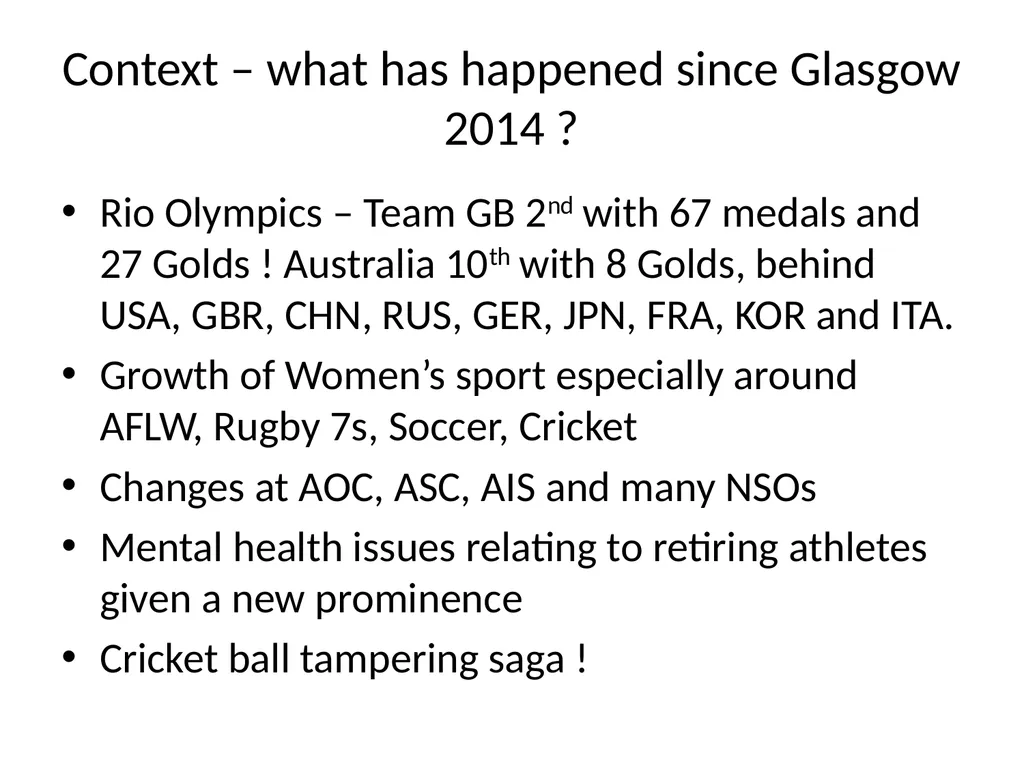
slide9. Context – what has happened since Glasgow 2014 ? Rio Olympics – Team GB 2nd with 67 medals and 27 Golds ! Australia 10th with 8 Golds, behind USA, GBR, CHN, RUS, GER, JPN, FRA, KOR and ITA.
Growth of Women’s sport especially around AFLW, Rugby 7s, Soccer, Cricket
Changes at AOC, ASC, AIS and many NSOs
Mental health issues relating to retiring athletes given a new prominence
Cricket ball tampering saga !<br>
slide10. So just how good were the Gold Coast 2018 Commonwealth Games ?<br>
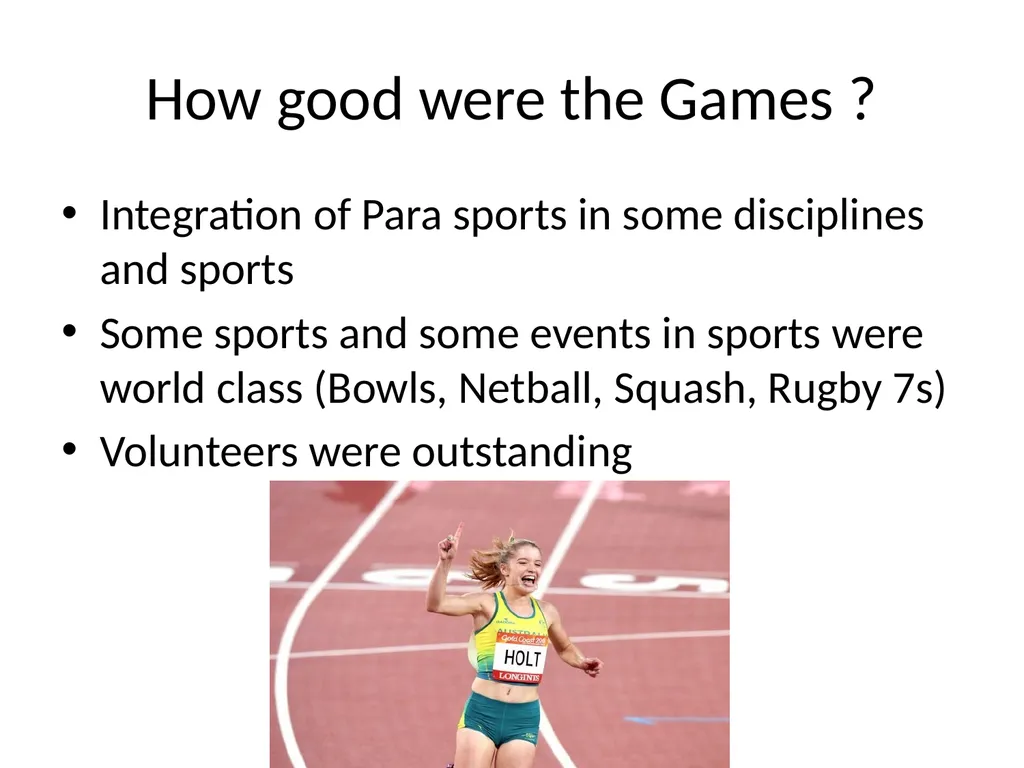
slide15. How good were the Games ? Integration of Para sports in some disciplines and sports
Some sports and some events in sports were world class (Bowls, Netball, Squash, Rugby 7s)
Volunteers were outstanding<br>
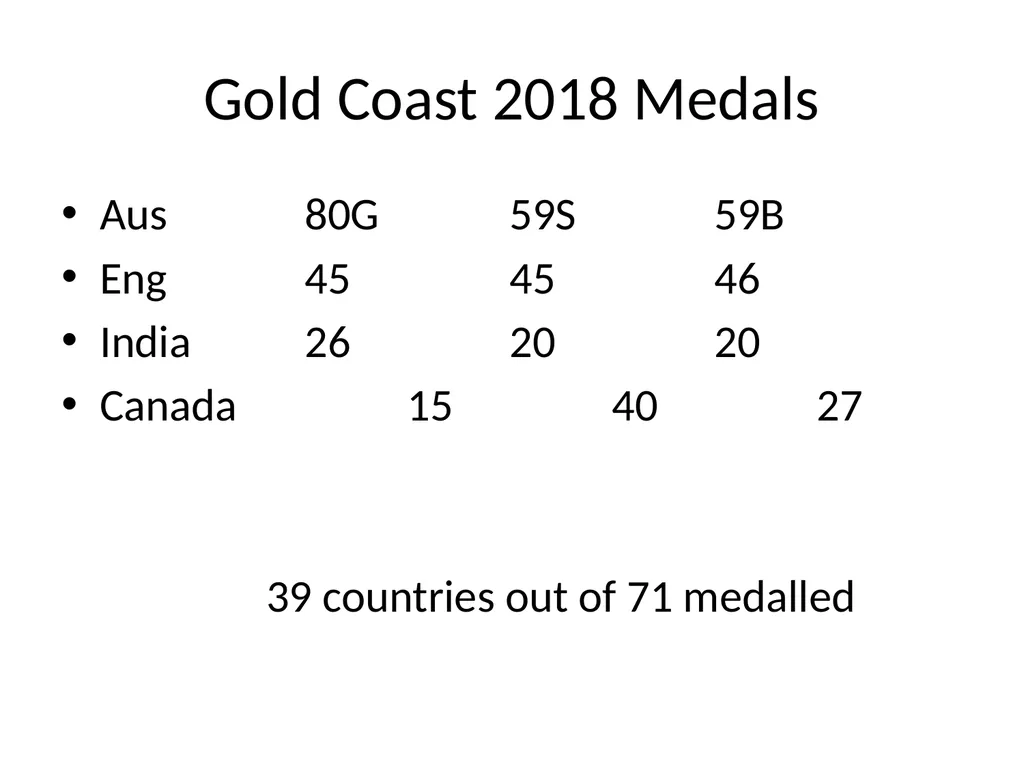
slide16. Gold Coast 2018 Medals Aus 80G 59S 59B
Eng 45 45 46
India 26 20 20
Canada 15 40 27
39 countries out of 71 medalled<br>
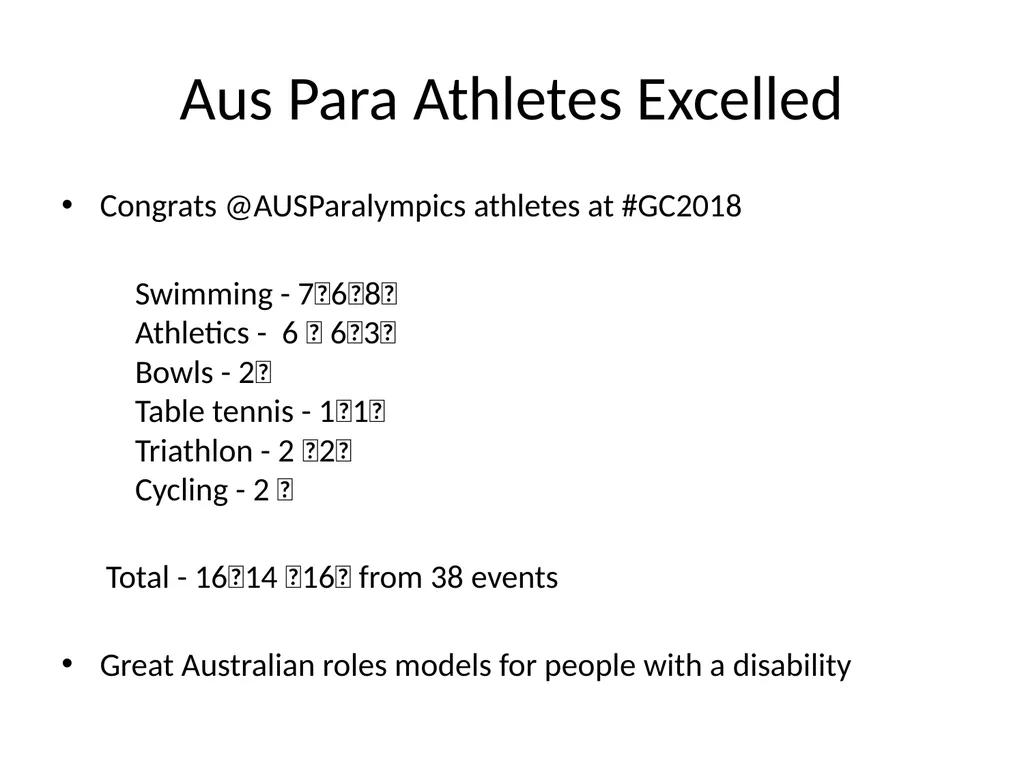
slide17. Aus Para Athletes Excelled Congrats @AUSParalympics athletes at #GC2018
Swimming - 7🥉6🥈8🥇 Athletics - 6 🥇 6🥈3🥉 Bowls - 2🥇 Table tennis - 1🥇1🥉 Triathlon - 2 🥈2🥉 Cycling - 2 🥉
Total - 16🥇14 🥈16🥉 from 38 events
Great Australian roles models for people with a disability<br>
slide18. Athletics at the Gold Coast More than 50% of the medallists from the 2017 World Champs were there.
16 countries won Golds
22 countries won medals (21 in Glasgow)
Australia finishes top with more than double the number of Golds (13) than Jamaica who finished 2nd.<br>
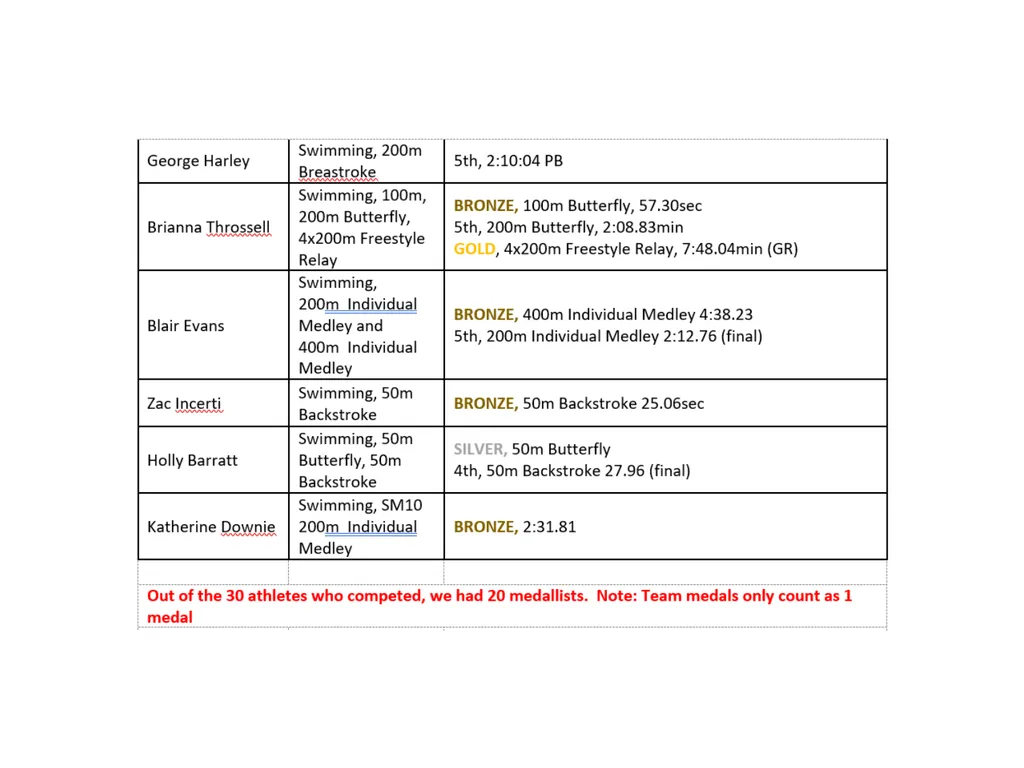
slide19. Swimming at Gold Coast Australia top with 28 Golds, almost 4 times as many as England in 2nd place
Seven countries won Gold
Ten won a medal of any colour, same as Glasgow 2014<br>
slide20. Cycling at Gold Coast Australia wins with 10 golds from Scotland with 4.
Only six countries won medals (9 in Glasgow)<br>
slide21. Gymnastics at Gold Coast England wins with 6 Golds
Australia 3rd with 2 Golds
Only seven countries win medals (10 in 2014)<br>
slide22. So what is happening in the sporting world which we need to be aware of ?<br>
slide23. The Growth of “Pracademics” in UK Sport Think of practical academics – people who bring all the knowledge from theory, then use the rigorous approaches that characterise good science but also focus on coming up with practical and really useful answers. Well that’s what we do, as shown by the triangle model which we use in our key messaging
As a key underpinning, we make sure that we really KNOW the science around a problem.<br>
slide24. The Growth of Data in UK Sport EIS has appointed data scientists to review trends and use predictive Key Performance Indicators. “Moneyball” ?
Evidence-based approach to integrating injury and illness trends and respective training loads.
There is a new position – Head of Sport Intelligence who is tasked with delivering the High Performance System Data Strategy<br>
slide25. Sharing Good Practice Initiative in UK In the last 5 years a new approach to borrowing ideas from the different sports e.g tapering and periodisation, or recovery strategies
British NSOs sharing good practice between themselves.
In March, a session took place amongst Olympic Team Sports called the “Perfect Warm-down After Training”
We’re about to start something similar here in WA.<br>
slide26. Serial Winning Coaches UK study- between 2012 and 2016, 17 “super” coaches from 10 sports and 10 countries. Also interviewed 23 of their athletes.
Summary ? A lot of variation but common theme was Driven Benevolence – “the relentless pursuit of excellence balanced with a genuine desire to compassionately support athletes and oneself”
The athlete seen as a compass
High moral stance
Relative work-life balance<br>
slide27. Medal-Winning Leadership Canadian research -12 Winter Olympic medallists from 2010 and their 10 coaches.
“How were the medals won & what qualities do the coaches have ?”
Demanding Leadership – directive coaching and decisive conducting
Relational Leadership – coach/athlete relationship and role modelling
Solution-focused Leadership – vision, learning culture, role clarity and analytic tenacity<br>
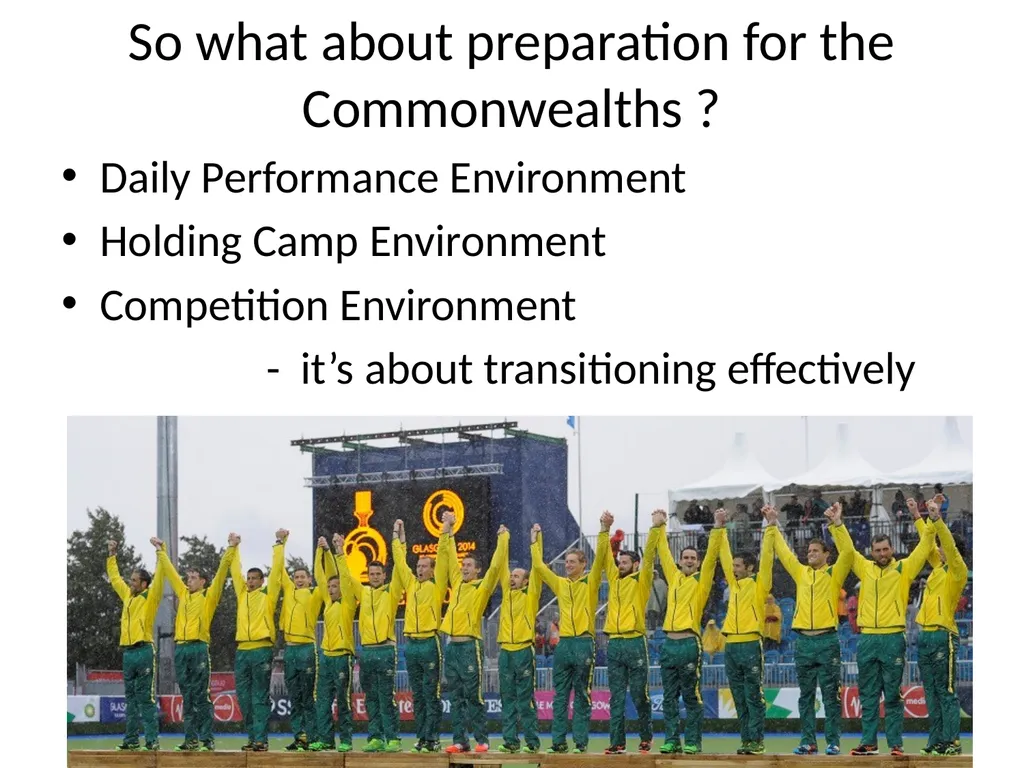
slide28. So what about preparation for the Commonwealths ? Daily Performance Environment
Holding Camp Environment
Competition Environment
- it’s about transitioning effectively<br>
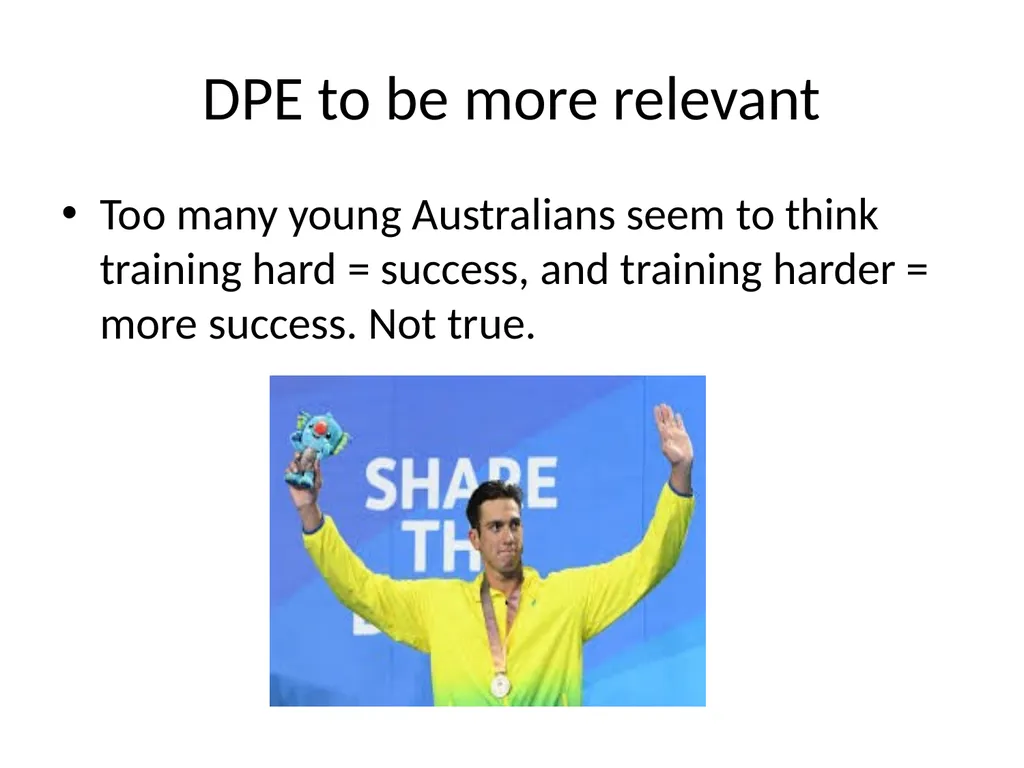
slide29. DPE to be more relevant Too many young Australians seem to think training hard = success, and training harder = more success. Not true.<br>
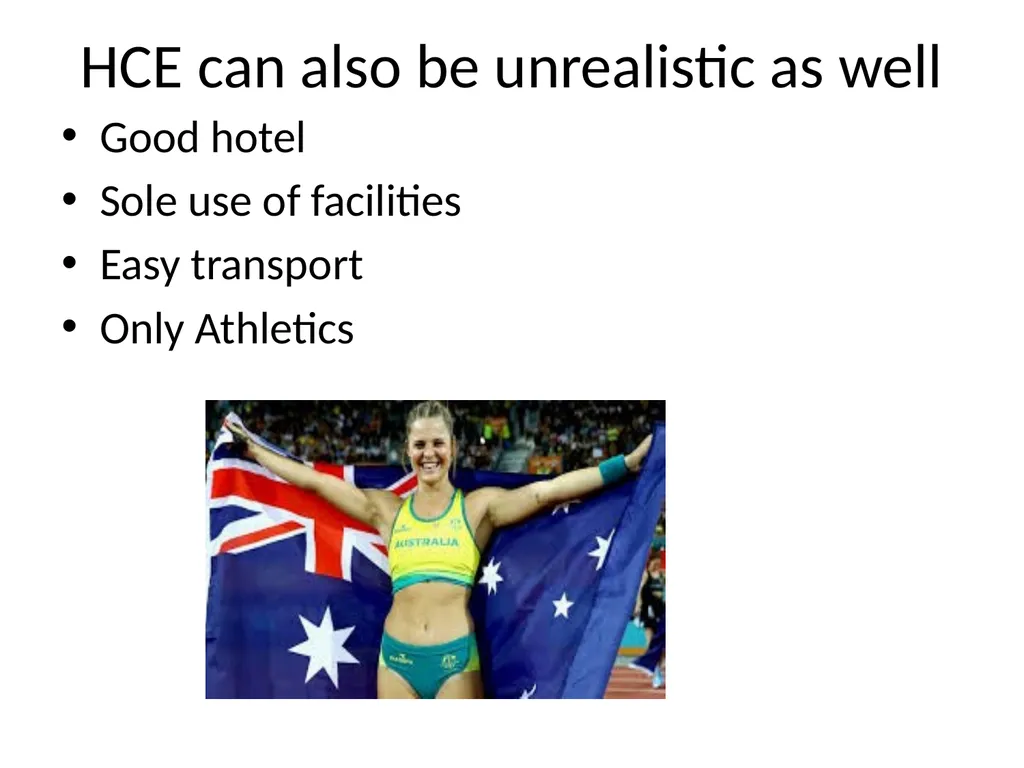
slide30. HCE can also be unrealistic as well Good hotel
Sole use of facilities
Easy transport
Only Athletics<br>
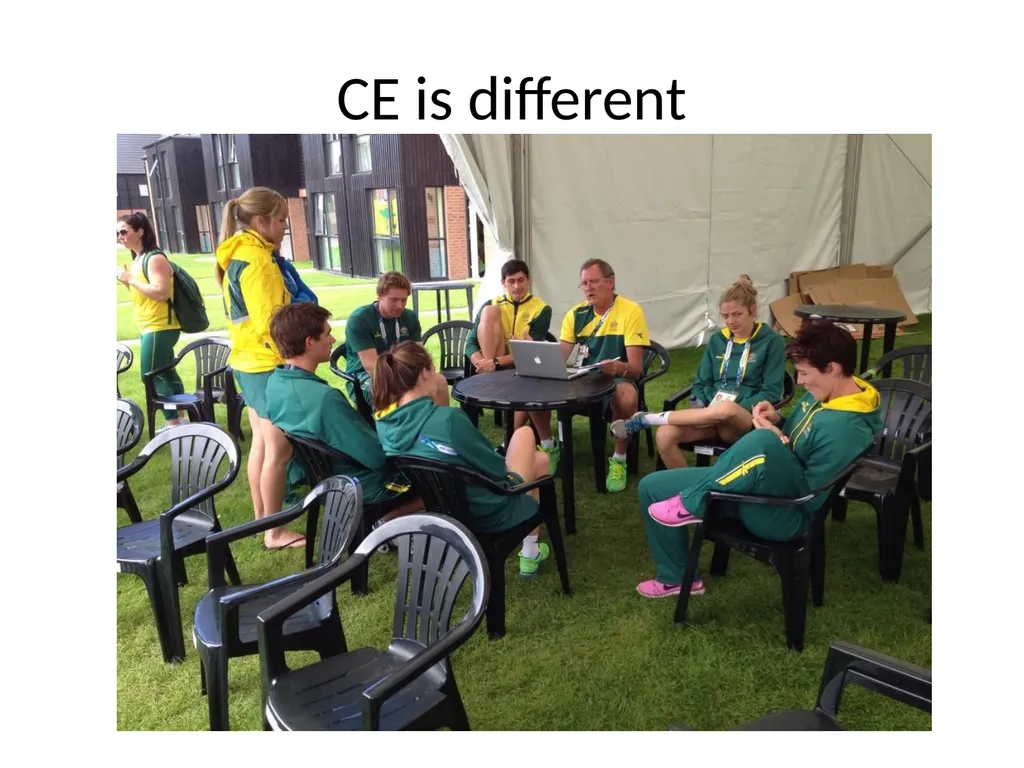
slide31. CE is different<br>
slide32. So what could/should we do to ensure greater WA representation at Tokyo 2020 and Birmingham 2022 and how will we ensure better performances from those athletes and staff once they are there ?<br>
Brian Miller
May 2018<br>
slide2. BM’s involvement in Commonwealth Games 1982 Brisbane – with English Athletics
Various editions up to and including Glasgow 2014 – Australian Athletics team
Gold Coast 2018 - Comm Games Baton Relay in Perth !
Member of Cycling Australia’s High Performance Advisory Group
Part of the GC2018 Sport Psychology Initiative for Gym, Weightlifting, Wrestling, Squash, and Bowls
Consulting with individual coaches and athletes<br>
slide3. NSO funding for 2017-2018 Swimming $10.3m Cycling $9m Athletics $8.2m Hockey & Basketball both $5.7m
Plus special Comm Games funding for some sports<br>
slide4. Lessons learned from Glasgow 2014 and what might they mean to WA’s State Sporting Associations ? by
Brian Miller
DSR Presentation, September 2014<br>
slide5. Integrating physical, mental and social elements of preparation “The Africans have a saying – ‘It takes a village to raise a child’. That should be how you prepare athletes. If the coach and others cannot co-ordinate all aspects of the preparation then you’re just guessing at what the outcome will be. Life is too short for that. Much better to work together from Day One.”
Colm O’Connell, coach to successful Kenyan middle distance runners. Worked with 25 World Champions and 4 Olympic Champions
So what sort of village is Western Australia ?<br>
slide6. A few statistics from Glasgow 2014 England 58G 59S 57B
Australia 49 42 46
Canada 32 16 34<br>
slide7. A few statistics from Glasgow 2014 Australian Team Membership
33 HQ Staff 0 born in WA
27 Athletics “staff” 1 born in WA
99 Athletics “athletes” 3 born in WA<br>
slide8. A few statistics from Glasgow 2014 118 “staff” from the other 17 sports.
3 were born in WA - 1 in Gym, 2 Hockey.<br>
slide9. Context – what has happened since Glasgow 2014 ? Rio Olympics – Team GB 2nd with 67 medals and 27 Golds ! Australia 10th with 8 Golds, behind USA, GBR, CHN, RUS, GER, JPN, FRA, KOR and ITA.
Growth of Women’s sport especially around AFLW, Rugby 7s, Soccer, Cricket
Changes at AOC, ASC, AIS and many NSOs
Mental health issues relating to retiring athletes given a new prominence
Cricket ball tampering saga !<br>
slide10. So just how good were the Gold Coast 2018 Commonwealth Games ?<br>
slide15. How good were the Games ? Integration of Para sports in some disciplines and sports
Some sports and some events in sports were world class (Bowls, Netball, Squash, Rugby 7s)
Volunteers were outstanding<br>
slide16. Gold Coast 2018 Medals Aus 80G 59S 59B
Eng 45 45 46
India 26 20 20
Canada 15 40 27
39 countries out of 71 medalled<br>
slide17. Aus Para Athletes Excelled Congrats @AUSParalympics athletes at #GC2018
Swimming - 7🥉6🥈8🥇 Athletics - 6 🥇 6🥈3🥉 Bowls - 2🥇 Table tennis - 1🥇1🥉 Triathlon - 2 🥈2🥉 Cycling - 2 🥉
Total - 16🥇14 🥈16🥉 from 38 events
Great Australian roles models for people with a disability<br>
slide18. Athletics at the Gold Coast More than 50% of the medallists from the 2017 World Champs were there.
16 countries won Golds
22 countries won medals (21 in Glasgow)
Australia finishes top with more than double the number of Golds (13) than Jamaica who finished 2nd.<br>
slide19. Swimming at Gold Coast Australia top with 28 Golds, almost 4 times as many as England in 2nd place
Seven countries won Gold
Ten won a medal of any colour, same as Glasgow 2014<br>
slide20. Cycling at Gold Coast Australia wins with 10 golds from Scotland with 4.
Only six countries won medals (9 in Glasgow)<br>
slide21. Gymnastics at Gold Coast England wins with 6 Golds
Australia 3rd with 2 Golds
Only seven countries win medals (10 in 2014)<br>
slide22. So what is happening in the sporting world which we need to be aware of ?<br>
slide23. The Growth of “Pracademics” in UK Sport Think of practical academics – people who bring all the knowledge from theory, then use the rigorous approaches that characterise good science but also focus on coming up with practical and really useful answers. Well that’s what we do, as shown by the triangle model which we use in our key messaging
As a key underpinning, we make sure that we really KNOW the science around a problem.<br>
slide24. The Growth of Data in UK Sport EIS has appointed data scientists to review trends and use predictive Key Performance Indicators. “Moneyball” ?
Evidence-based approach to integrating injury and illness trends and respective training loads.
There is a new position – Head of Sport Intelligence who is tasked with delivering the High Performance System Data Strategy<br>
slide25. Sharing Good Practice Initiative in UK In the last 5 years a new approach to borrowing ideas from the different sports e.g tapering and periodisation, or recovery strategies
British NSOs sharing good practice between themselves.
In March, a session took place amongst Olympic Team Sports called the “Perfect Warm-down After Training”
We’re about to start something similar here in WA.<br>
slide26. Serial Winning Coaches UK study- between 2012 and 2016, 17 “super” coaches from 10 sports and 10 countries. Also interviewed 23 of their athletes.
Summary ? A lot of variation but common theme was Driven Benevolence – “the relentless pursuit of excellence balanced with a genuine desire to compassionately support athletes and oneself”
The athlete seen as a compass
High moral stance
Relative work-life balance<br>
slide27. Medal-Winning Leadership Canadian research -12 Winter Olympic medallists from 2010 and their 10 coaches.
“How were the medals won & what qualities do the coaches have ?”
Demanding Leadership – directive coaching and decisive conducting
Relational Leadership – coach/athlete relationship and role modelling
Solution-focused Leadership – vision, learning culture, role clarity and analytic tenacity<br>
slide28. So what about preparation for the Commonwealths ? Daily Performance Environment
Holding Camp Environment
Competition Environment
- it’s about transitioning effectively<br>
slide29. DPE to be more relevant Too many young Australians seem to think training hard = success, and training harder = more success. Not true.<br>
slide30. HCE can also be unrealistic as well Good hotel
Sole use of facilities
Easy transport
Only Athletics<br>
slide31. CE is different<br>
slide32. So what could/should we do to ensure greater WA representation at Tokyo 2020 and Birmingham 2022 and how will we ensure better performances from those athletes and staff once they are there ?<br>