
Lessons Learned: SPL Data Challenges within
TA
Published · 33 slides · 0 views
1 / 1
Description
Lessons Learned: SPL Data Challenges within MedGuide Extraction Monday, October 28, 2013 Ed Millikan, Pharm.D. SPL Jamboree National Library of Medicine American Society of Health-System Pharmacists (ASHP) Objectives Learn about sourcing
Related Topics
Share
Embed code
Download this presentation From Below
"Lessons Learned: SPL Data Challenges within" is the property of its rightful owner. Permission is granted to download and print the materials on this website for personal, non-commercial use only, and to display it on your personal computer provided you do not modify the materials and that you retain all copyright notices contained in the materials. By downloading content from our website, you accept the terms of this agreement.
Presentation Transcript
01
Lessons Learned:
SPL Data Challenges within MedGuide Extraction Monday, October 28, 2013
Ed Millikan, Pharm.D.
SPL Jamboree
National Library of Medicine
American Society of Health-System Pharmacists (ASHP)<br>
Ed Millikan, Pharm.D.
SPL Jamboree
National Library of Medicine
American Society of Health-System Pharmacists (ASHP)<br>
02
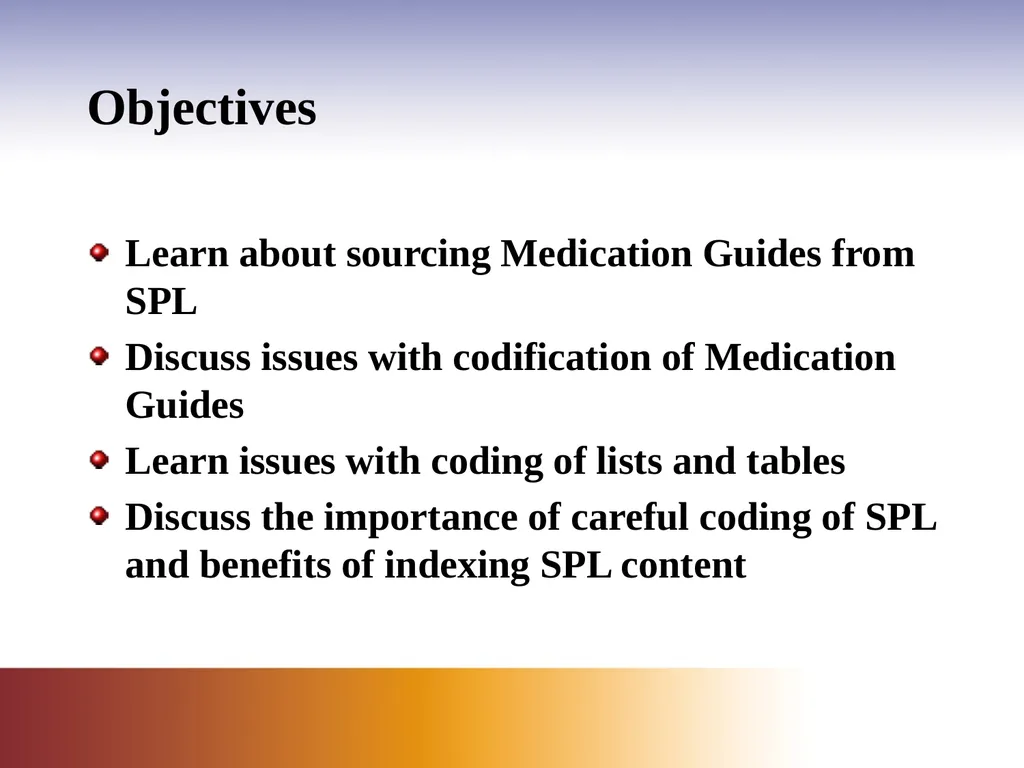
Objectives Learn about sourcing Medication Guides from SPL
Discuss issues with codification of Medication Guides
Learn issues with coding of lists and tables
Discuss the importance of careful coding of SPL and benefits of indexing SPL content<br>
Discuss issues with codification of Medication Guides
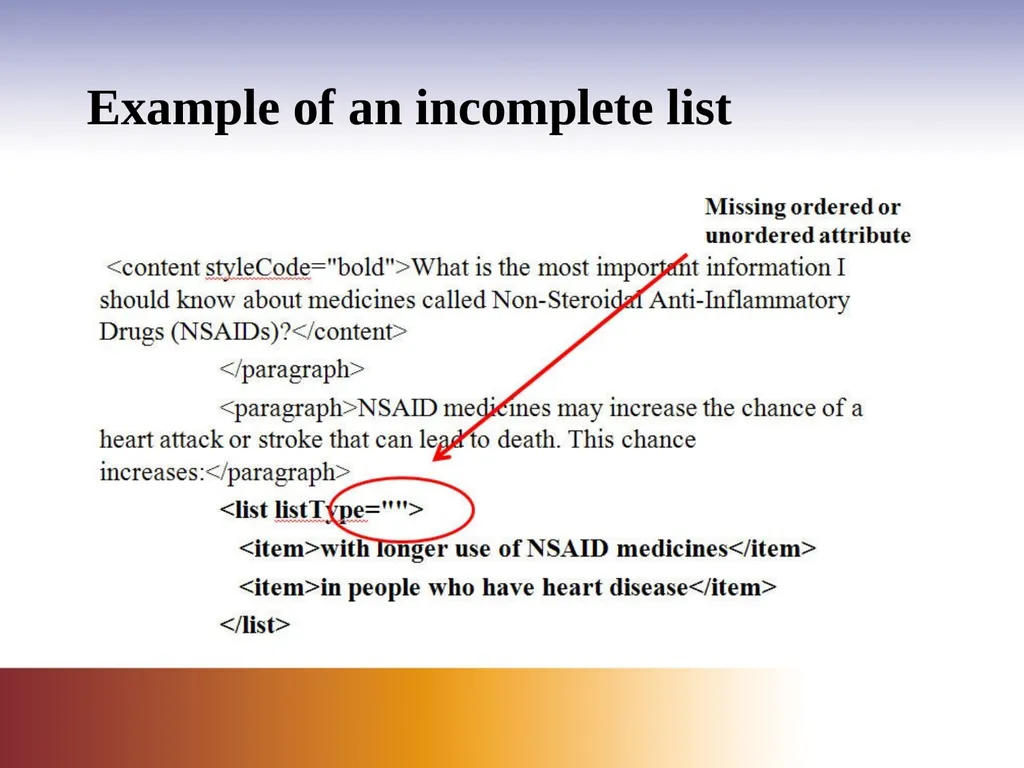
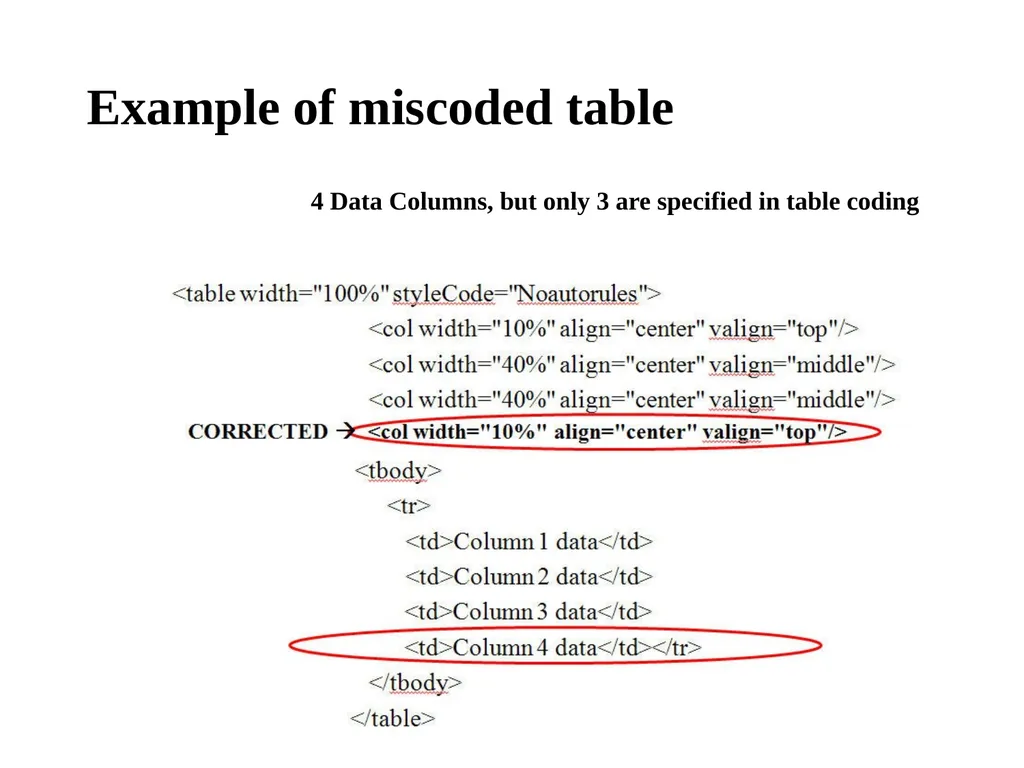
Learn issues with coding of lists and tables
Discuss the importance of careful coding of SPL and benefits of indexing SPL content<br>
03
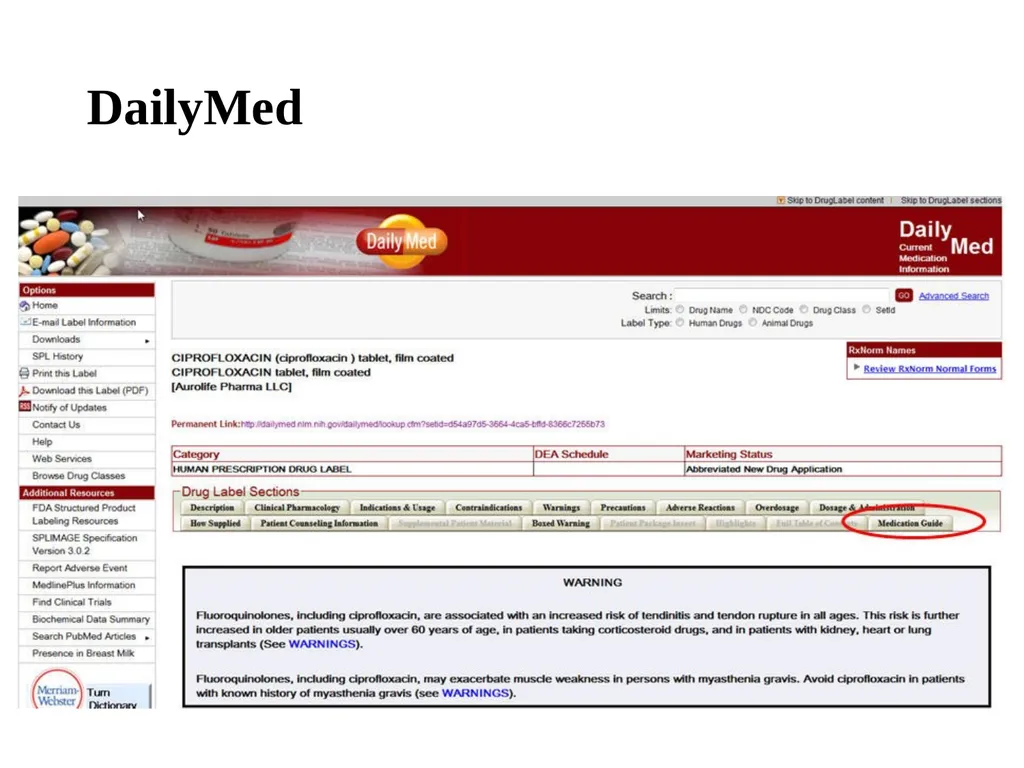
DailyMed<br>
04
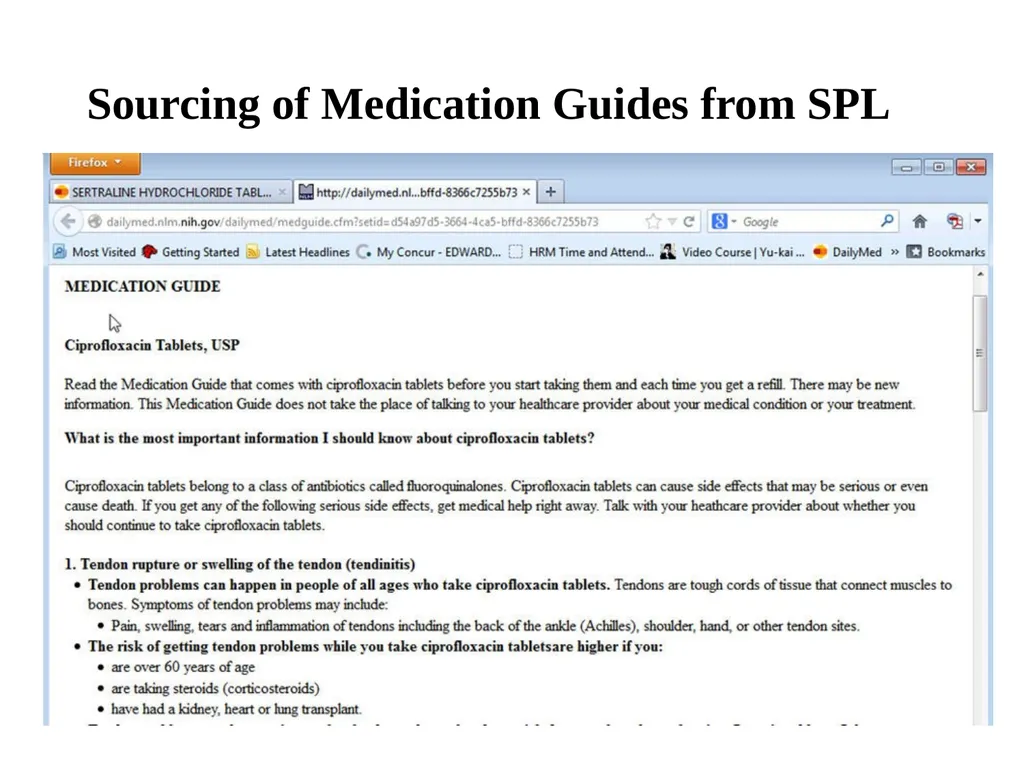
Sourcing of Medication Guides from SPL<br>
05
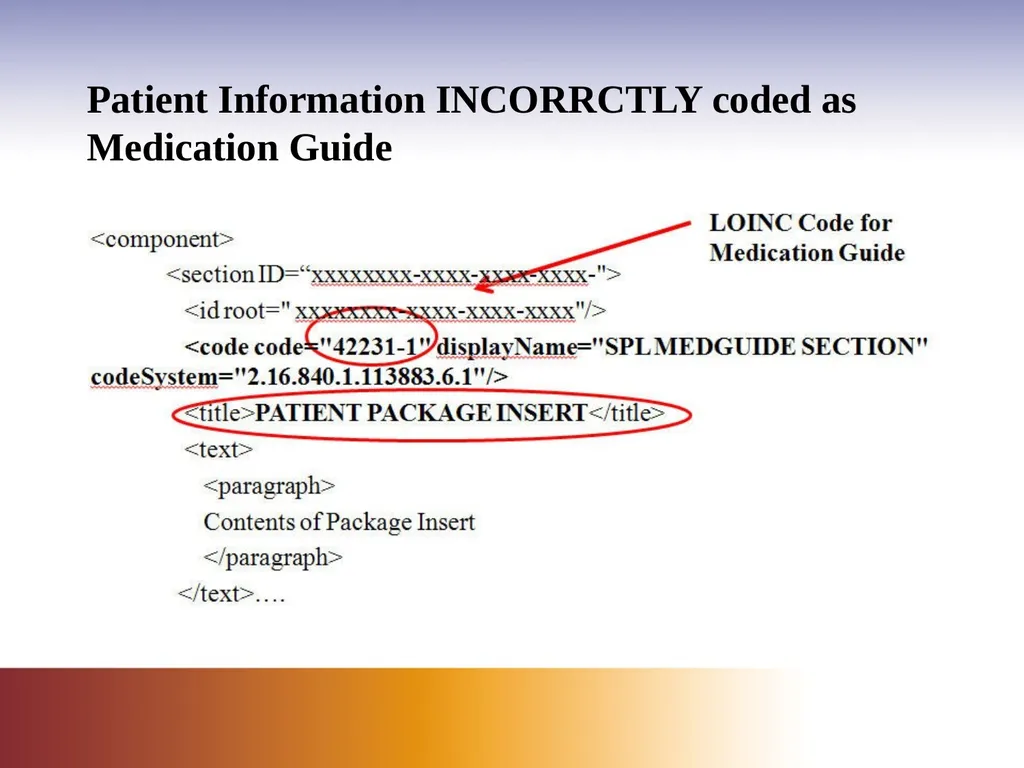
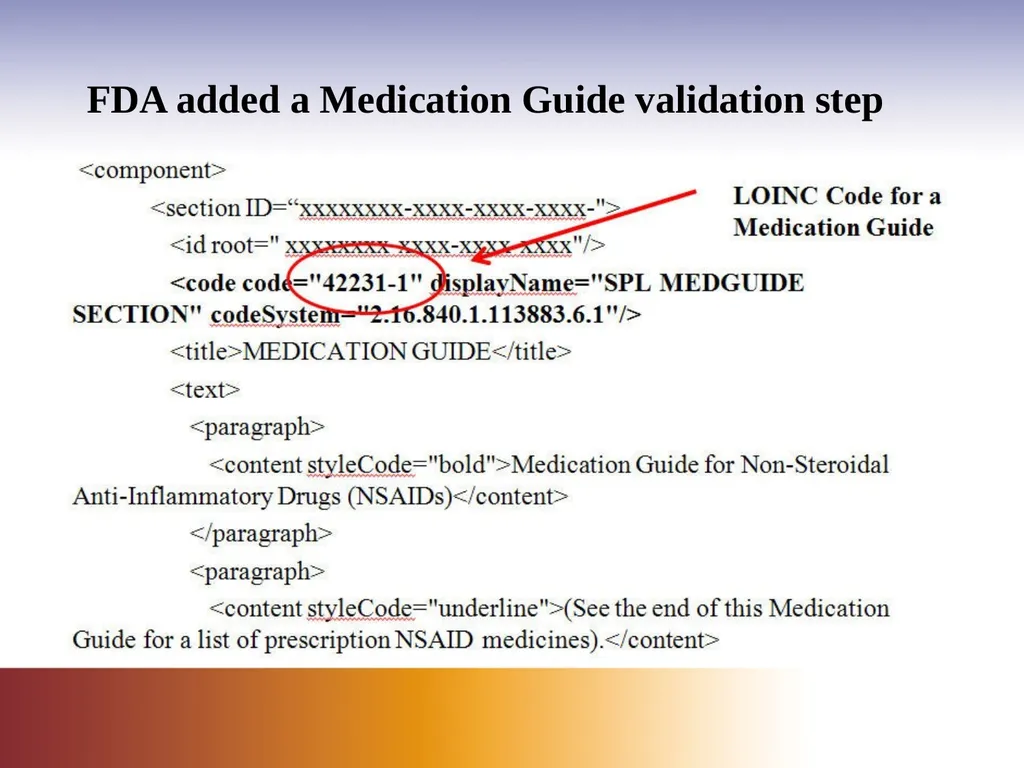
Coding a Medication Guide and SPL Missing or incorrect coding is mainly an issue with repackagers (but getting better)
Monitoring since 2010
Codification of SPL is JUST as important as the content of labeling
In some instances, codification is more useful than the text of labeling for data mining purposes<br>
Monitoring since 2010
Codification of SPL is JUST as important as the content of labeling
In some instances, codification is more useful than the text of labeling for data mining purposes<br>
06
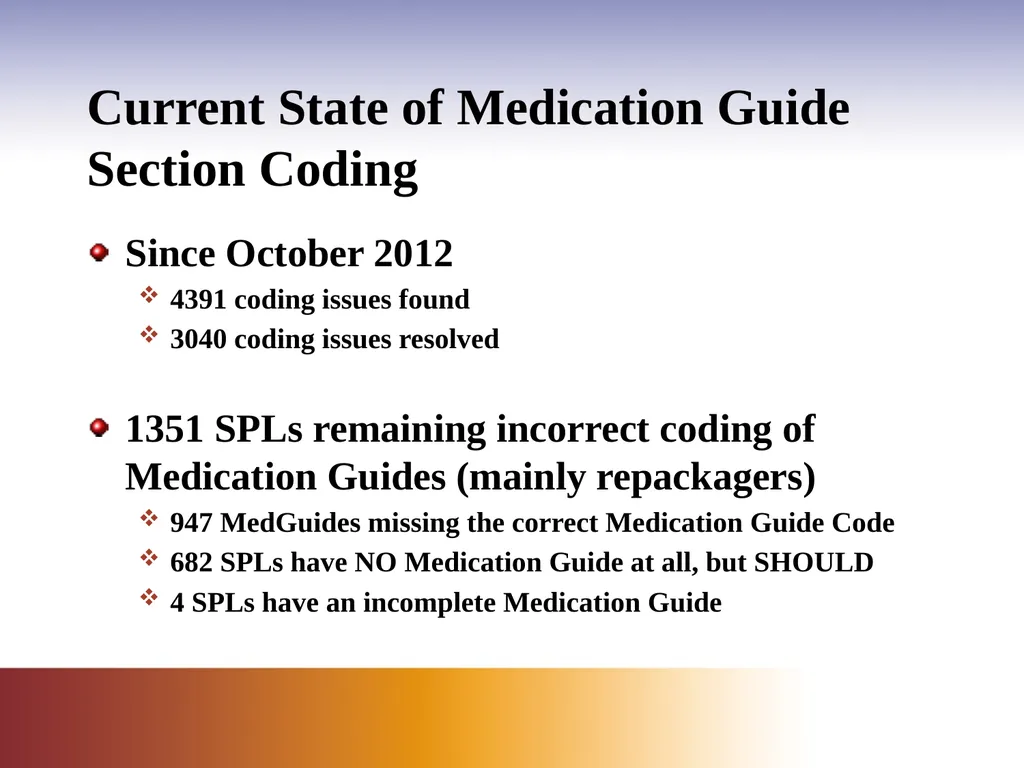
Current State of Medication Guide Section Coding Since October 2012
4391 coding issues found
3040 coding issues resolved
1351 SPLs remaining incorrect coding of Medication Guides (mainly repackagers)
947 MedGuides missing the correct Medication Guide Code
682 SPLs have NO Medication Guide at all, but SHOULD
4 SPLs have an incomplete Medication Guide<br>
4391 coding issues found
3040 coding issues resolved
1351 SPLs remaining incorrect coding of Medication Guides (mainly repackagers)
947 MedGuides missing the correct Medication Guide Code
682 SPLs have NO Medication Guide at all, but SHOULD
4 SPLs have an incomplete Medication Guide<br>
07
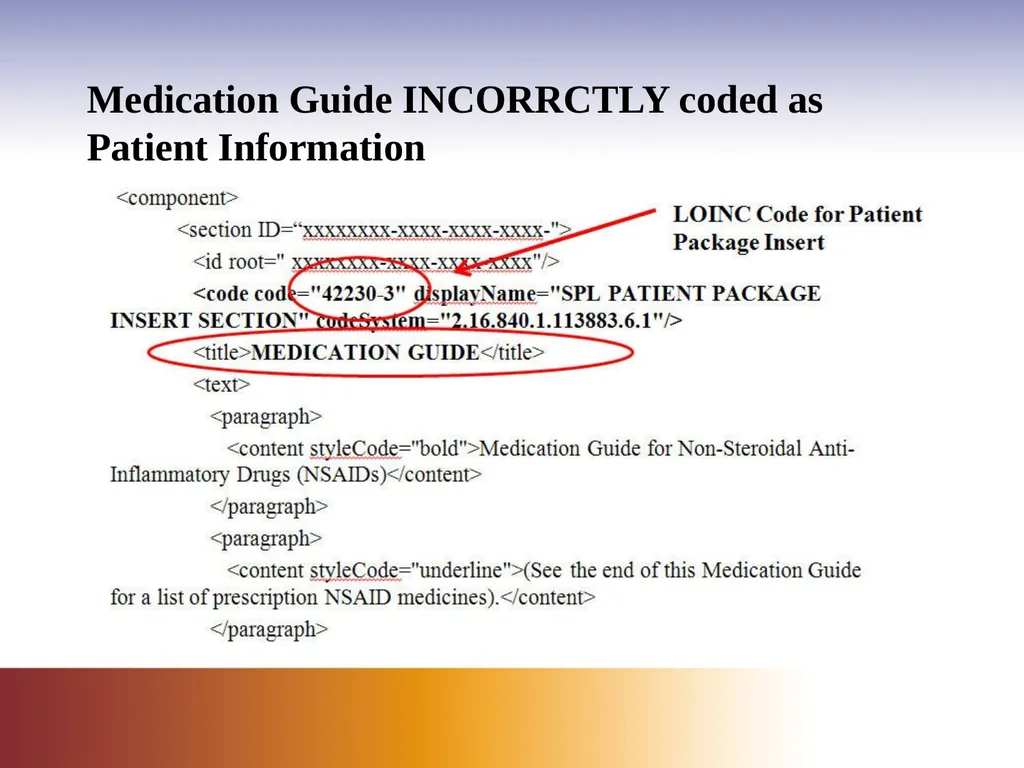
Medication Guide INCORRCTLY coded as Patient Information<br>
08
Patient Information INCORRCTLY coded as Medication Guide<br>
09
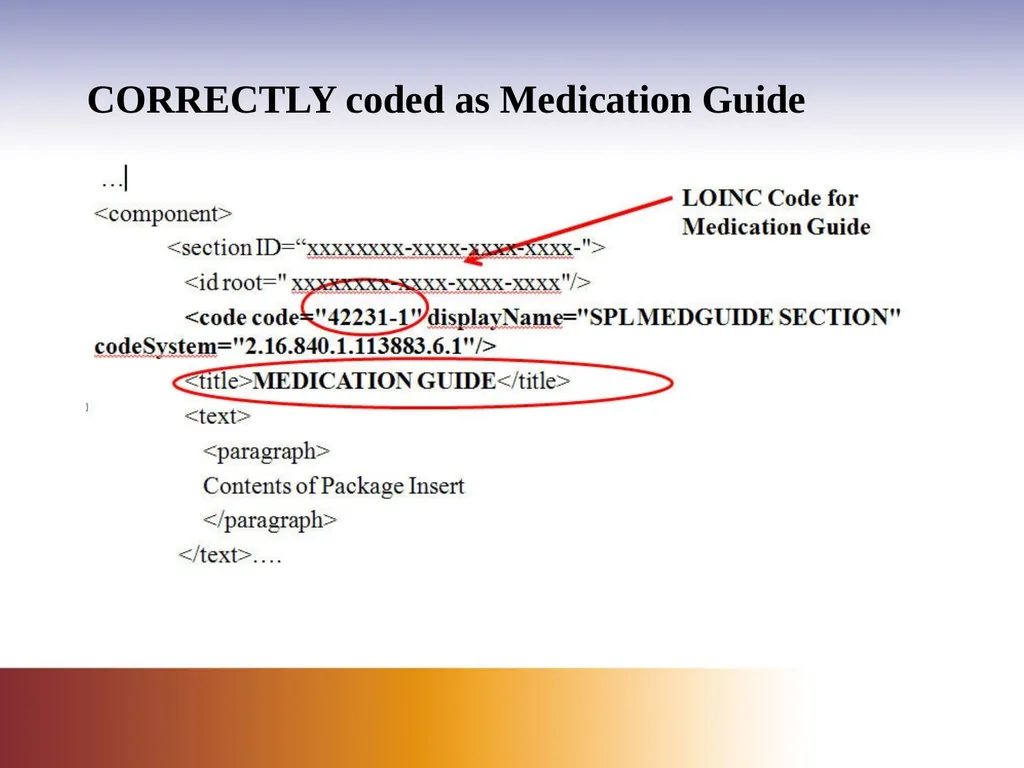
CORRECTLY coded as Medication Guide<br>
10
Example of an incomplete list<br>
11
Example of miscoded table 4 Data Columns, but only 3 are specified in table coding<br>
12
FDA added a Medication Guide validation step<br>
13
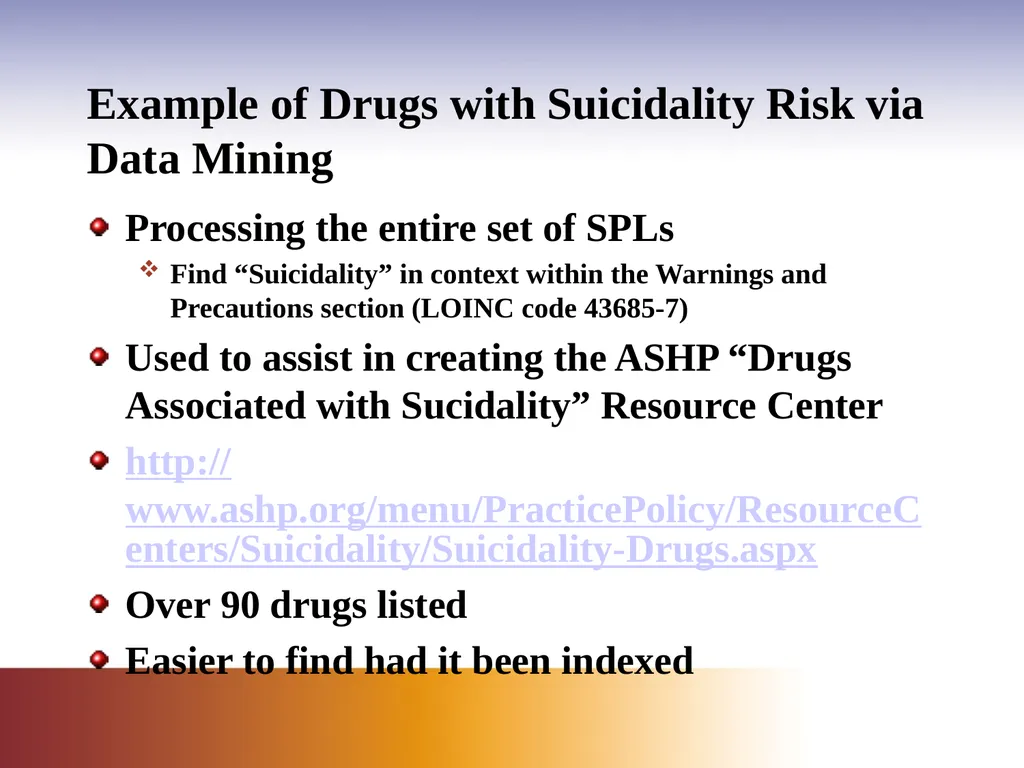
Example of Drugs with Suicidality Risk via Data Mining Processing the entire set of SPLs
Find “Suicidality” in context within the Warnings and Precautions section (LOINC code 43685-7)
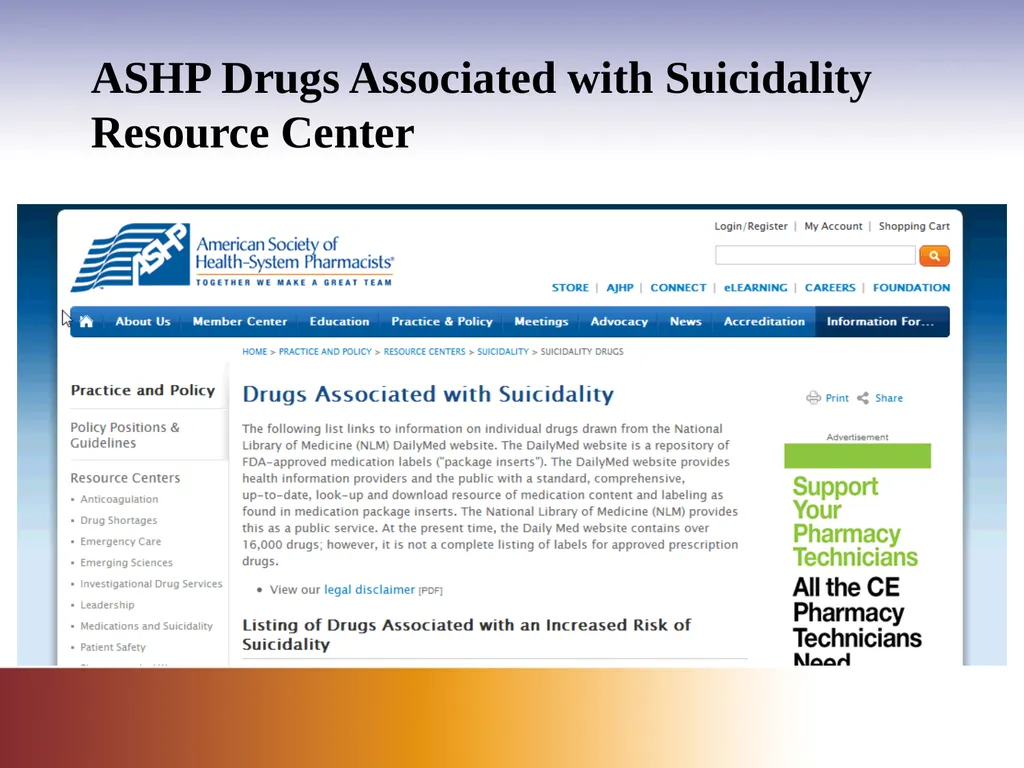
Used to assist in creating the ASHP “Drugs Associated with Sucidality” Resource Center
http://www.ashp.org/menu/PracticePolicy/ResourceCenters/Suicidality/Suicidality-Drugs.aspx
Over 90 drugs listed
Easier to find had it been indexed<br>
Find “Suicidality” in context within the Warnings and Precautions section (LOINC code 43685-7)
Used to assist in creating the ASHP “Drugs Associated with Sucidality” Resource Center
http://www.ashp.org/menu/PracticePolicy/ResourceCenters/Suicidality/Suicidality-Drugs.aspx
Over 90 drugs listed
Easier to find had it been indexed<br>
14
ASHP Drugs Associated with Suicidality Resource Center<br>
15
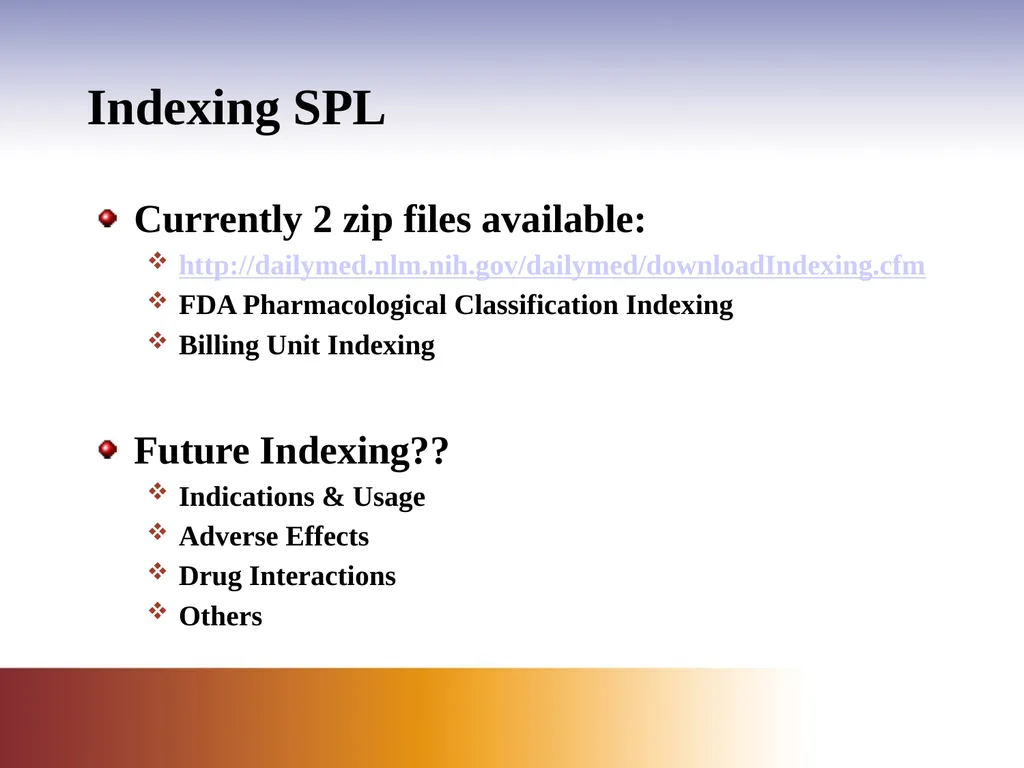
Indexing SPL Currently 2 zip files available:
http://dailymed.nlm.nih.gov/dailymed/downloadIndexing.cfm
FDA Pharmacological Classification Indexing
Billing Unit Indexing
Future Indexing??
Indications & Usage
Adverse Effects
Drug Interactions
Others<br>
http://dailymed.nlm.nih.gov/dailymed/downloadIndexing.cfm
FDA Pharmacological Classification Indexing
Billing Unit Indexing
Future Indexing??
Indications & Usage
Adverse Effects
Drug Interactions
Others<br>
16
Reliability of NLM Website When the government shutdown…
The SPL data updating shutdown…
This must be corrected for the future for clinicians to be able to reliably depend upon current SPL data
The law uses “Safety” as one of the conditions that a Federal agency like FDA and NLM can apply in establishing essential work and employees during a furlough<br>
The SPL data updating shutdown…
This must be corrected for the future for clinicians to be able to reliably depend upon current SPL data
The law uses “Safety” as one of the conditions that a Federal agency like FDA and NLM can apply in establishing essential work and employees during a furlough<br>
17
The Future… SPL as the single document used in the FDA drug approval process from “cradle to grave”
Single source document allows for faster updating to FDA, NLM, and clinicians
SPL is in XML format and can be output into numerous other formats (e.g., PDF, MS Word, HTML, etc)
Indexing content within SPL (e.g. indications, adverse events, etc)<br>
Single source document allows for faster updating to FDA, NLM, and clinicians
SPL is in XML format and can be output into numerous other formats (e.g., PDF, MS Word, HTML, etc)
Indexing content within SPL (e.g. indications, adverse events, etc)<br>
18
SPL Resources DailyMed
http://dailymed.nlm.nih.gov/dailymed/about.cfm
FDA
http://www.fda.gov/ForIndustry/DataStandards/StructuredProductLabeling/default.htm
SPL-work-group wiki
http://spl-work-group.wikispaces.com/Bibliography+-+Articles+containing+SPL<br>
http://dailymed.nlm.nih.gov/dailymed/about.cfm
FDA
http://www.fda.gov/ForIndustry/DataStandards/StructuredProductLabeling/default.htm
SPL-work-group wiki
http://spl-work-group.wikispaces.com/Bibliography+-+Articles+containing+SPL<br>
19
Conclusion “Precise, careful codification of SPL is JUST as important, if not in some cases, MORE important, than the precise text within labeling.”
-Ed Millikan, Pharm.D.
October 28, 2013<br>
-Ed Millikan, Pharm.D.
October 28, 2013<br>
20
REMS Standardization & SPL
Status Update Gerald McEvoy
SPL Jamboree
National Library of Medicine
2013 October 28<br>
SPL Jamboree
National Library of Medicine
2013 October 28<br>
21
NCPDP Leads National Initiative 11/2010 NCPDP proposes SPL as means for REMS standardization
WG2 SPL Activities Task Group begins developing stakeholder support
FDA
NLM
Pharmaceutical Industry
SPL experts and infrastructure industry
NCPDP member groups<br>
WG2 SPL Activities Task Group begins developing stakeholder support
FDA
NLM
Pharmaceutical Industry
SPL experts and infrastructure industry
NCPDP member groups<br>
22
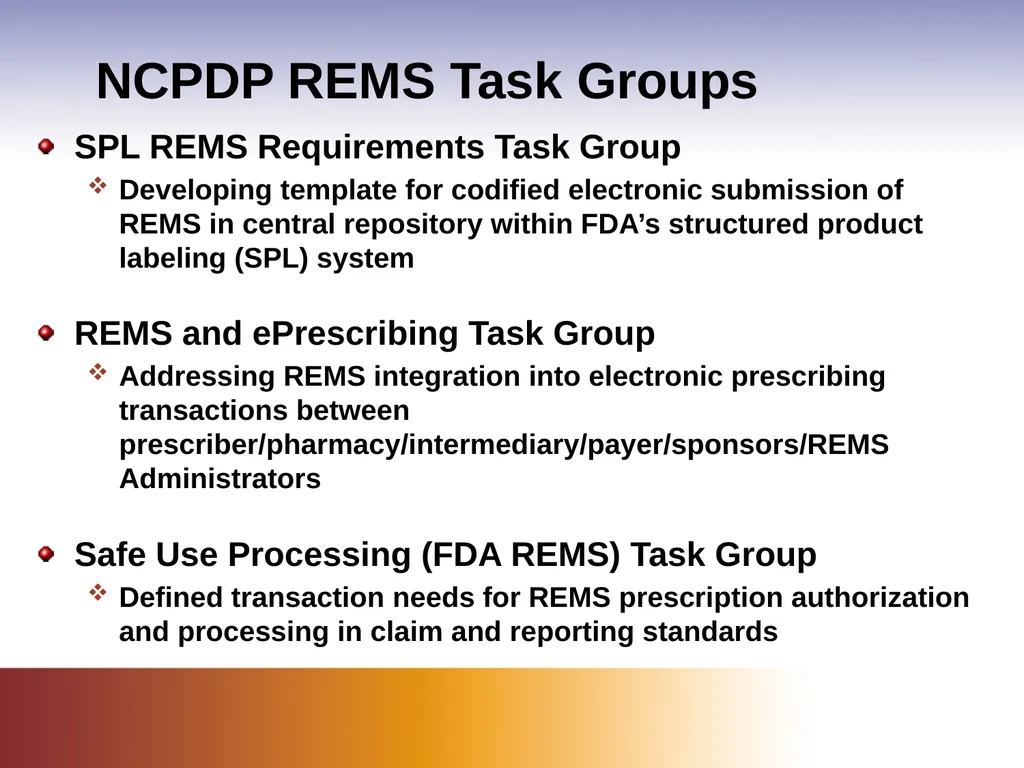
NCPDP REMS Task Groups SPL REMS Requirements Task Group
Developing template for codified electronic submission of REMS in central repository within FDA’s structured product labeling (SPL) system
REMS and ePrescribing Task Group
Addressing REMS integration into electronic prescribing transactions between prescriber/pharmacy/intermediary/payer/sponsors/REMS Administrators
Safe Use Processing (FDA REMS) Task Group
Defined transaction needs for REMS prescription authorization and processing in claim and reporting standards<br>
Developing template for codified electronic submission of REMS in central repository within FDA’s structured product labeling (SPL) system
REMS and ePrescribing Task Group
Addressing REMS integration into electronic prescribing transactions between prescriber/pharmacy/intermediary/payer/sponsors/REMS Administrators
Safe Use Processing (FDA REMS) Task Group
Defined transaction needs for REMS prescription authorization and processing in claim and reporting standards<br>
23
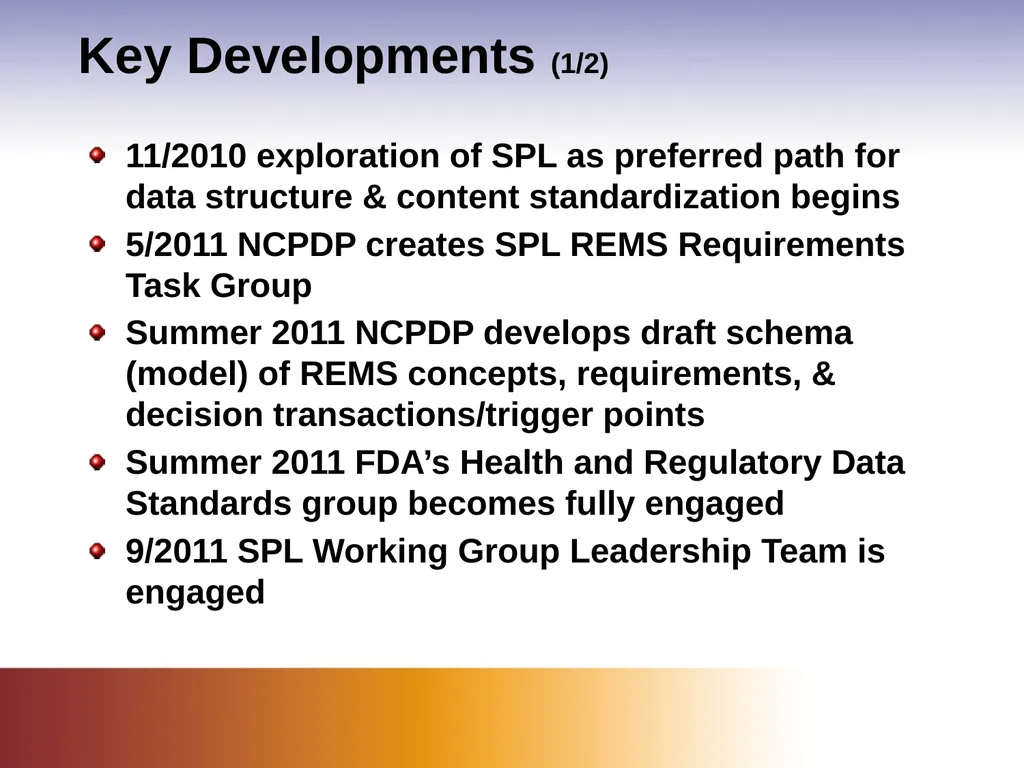
Key Developments (1/2) 11/2010 exploration of SPL as preferred path for data structure & content standardization begins
5/2011 NCPDP creates SPL REMS Requirements Task Group
Summer 2011 NCPDP develops draft schema (model) of REMS concepts, requirements, & decision transactions/trigger points
Summer 2011 FDA’s Health and Regulatory Data Standards group becomes fully engaged
9/2011 SPL Working Group Leadership Team is engaged<br>
5/2011 NCPDP creates SPL REMS Requirements Task Group
Summer 2011 NCPDP develops draft schema (model) of REMS concepts, requirements, & decision transactions/trigger points
Summer 2011 FDA’s Health and Regulatory Data Standards group becomes fully engaged
9/2011 SPL Working Group Leadership Team is engaged<br>
24
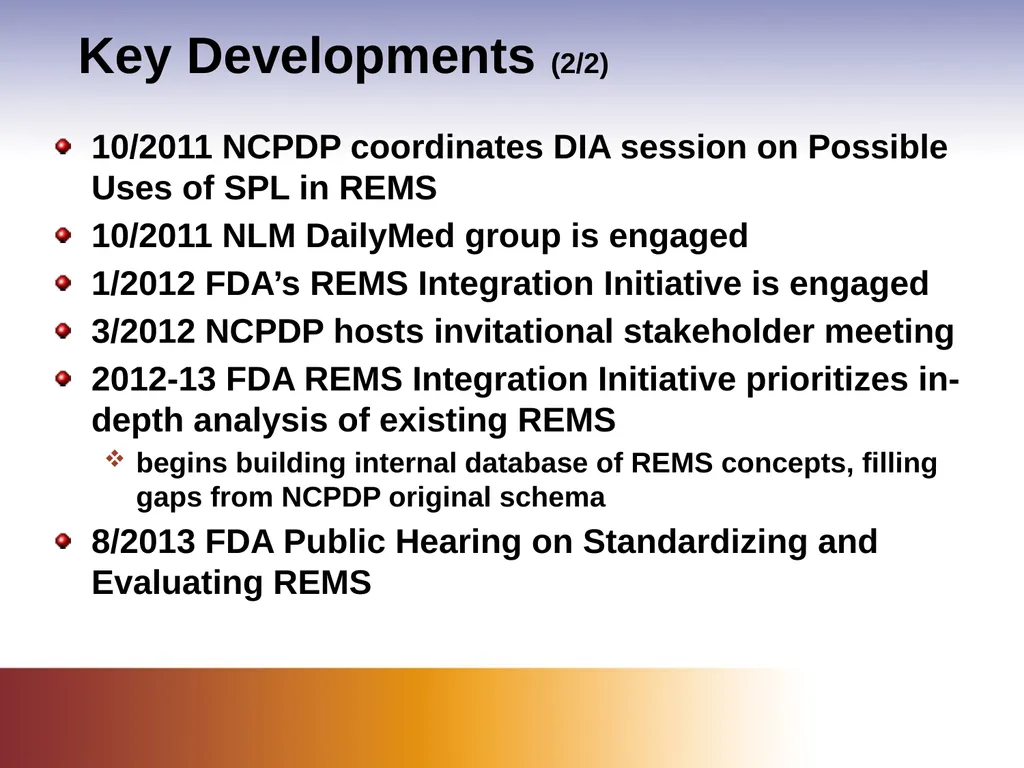
Key Developments (2/2) 10/2011 NCPDP coordinates DIA session on Possible Uses of SPL in REMS
10/2011 NLM DailyMed group is engaged
1/2012 FDA’s REMS Integration Initiative is engaged
3/2012 NCPDP hosts invitational stakeholder meeting
2012-13 FDA REMS Integration Initiative prioritizes in-depth analysis of existing REMS
begins building internal database of REMS concepts, filling gaps from NCPDP original schema
8/2013 FDA Public Hearing on Standardizing and Evaluating REMS<br>
10/2011 NLM DailyMed group is engaged
1/2012 FDA’s REMS Integration Initiative is engaged
3/2012 NCPDP hosts invitational stakeholder meeting
2012-13 FDA REMS Integration Initiative prioritizes in-depth analysis of existing REMS
begins building internal database of REMS concepts, filling gaps from NCPDP original schema
8/2013 FDA Public Hearing on Standardizing and Evaluating REMS<br>
25
Why Use SPL for REMS? (1/2) Need for incorporation into workflow & to minimize burden for prescribers, pharmacies, sponsors, and others
Need for a reliable, standardized source (SPL document) with required elements to safely and effectively use a medication
REMS information can be extracted easily, automatically, and electronically from an SPL document<br>
Need for a reliable, standardized source (SPL document) with required elements to safely and effectively use a medication
REMS information can be extracted easily, automatically, and electronically from an SPL document<br>
26
Why Use SPL for REMS? (2/2) SPL is an existing, adaptable standard already in use for exchanging meaningful medication information electronically
It is well suited for highly granular data like REMS
SPL formatting allows a mix of coding & text
Highly adaptable substructure
Existing mechanisms for addressing issues, best practices, standards, & future development
Effective publically accessible data repository exists via DailyMed
Existing expertise & infrastructure to support
Sponsors have extensive experience in submitting SPL data electronically to central repository<br>
It is well suited for highly granular data like REMS
SPL formatting allows a mix of coding & text
Highly adaptable substructure
Existing mechanisms for addressing issues, best practices, standards, & future development
Effective publically accessible data repository exists via DailyMed
Existing expertise & infrastructure to support
Sponsors have extensive experience in submitting SPL data electronically to central repository<br>
27
NCPDP Recommendations Adopt SPL as the means for standardizing and providing central access to REMS data
Designate development and implementation of SPL standardization of REMS as one of the 4 PDUFA V priority projects
All downstream REMS prescription transactions critically depend on timely achievement to greatly reduce health-system burden
Designate NCPDP & NLM as collaborators
Integration into existing e-prescribing & prescription processing standards
Leverage existing drug information data repository
Property of NCPDP<br>
Designate development and implementation of SPL standardization of REMS as one of the 4 PDUFA V priority projects
All downstream REMS prescription transactions critically depend on timely achievement to greatly reduce health-system burden
Designate NCPDP & NLM as collaborators
Integration into existing e-prescribing & prescription processing standards
Leverage existing drug information data repository
Property of NCPDP<br>
28
Standardizing REMS
(Adam Kroetsch - July 25, 2013) Adam Kroetsch
Operations Research Analyst
Office of Program and Strategic Analysis
US Food and Drug Administration
(July 25, 2013 Presentation)<br>
Operations Research Analyst
Office of Program and Strategic Analysis
US Food and Drug Administration
(July 25, 2013 Presentation)<br>
29
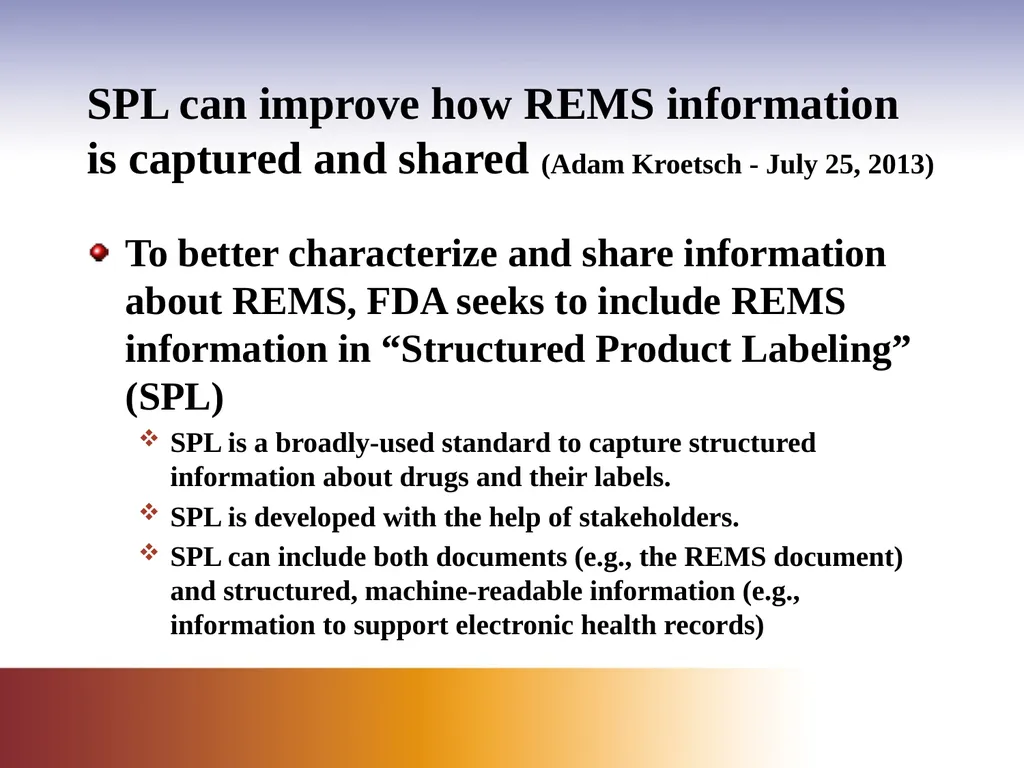
SPL can improve how REMS information is captured and shared (Adam Kroetsch - July 25, 2013) To better characterize and share information about REMS, FDA seeks to include REMS information in “Structured Product Labeling” (SPL)
SPL is a broadly-used standard to capture structured information about drugs and their labels.
SPL is developed with the help of stakeholders.
SPL can include both documents (e.g., the REMS document) and structured, machine-readable information (e.g., information to support electronic health records)<br>
SPL is a broadly-used standard to capture structured information about drugs and their labels.
SPL is developed with the help of stakeholders.
SPL can include both documents (e.g., the REMS document) and structured, machine-readable information (e.g., information to support electronic health records)<br>
30
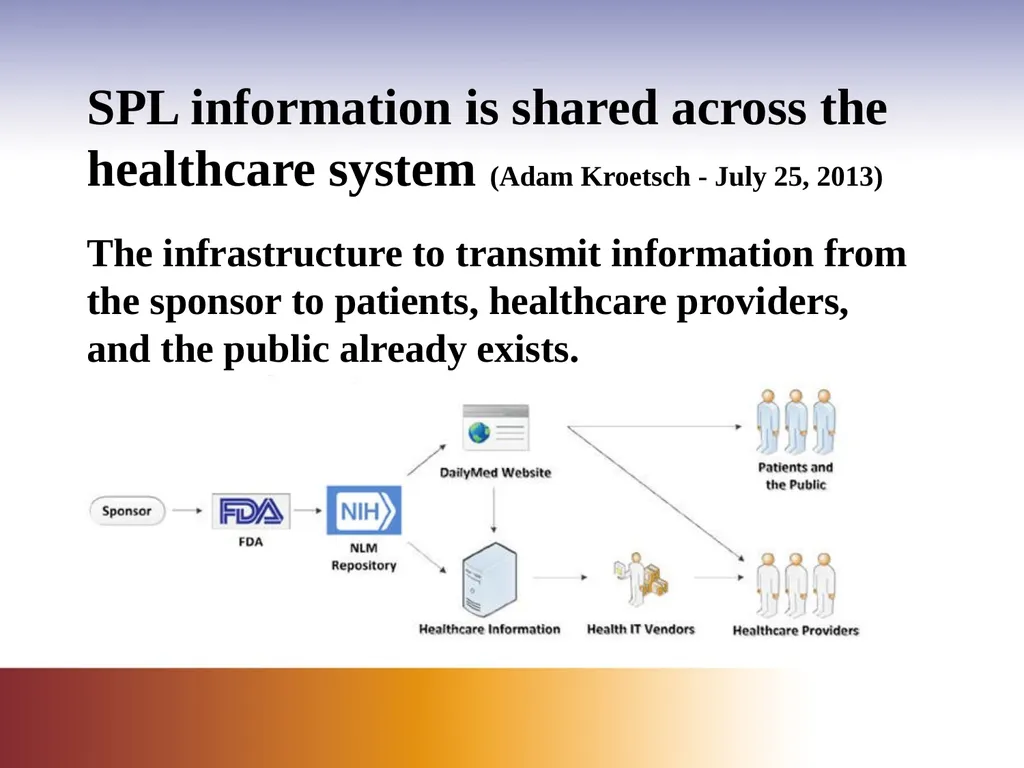
SPL information is shared across the healthcare system (Adam Kroetsch - July 25, 2013) The infrastructure to transmit information from the sponsor to patients, healthcare providers, and the public already exists.<br>
31
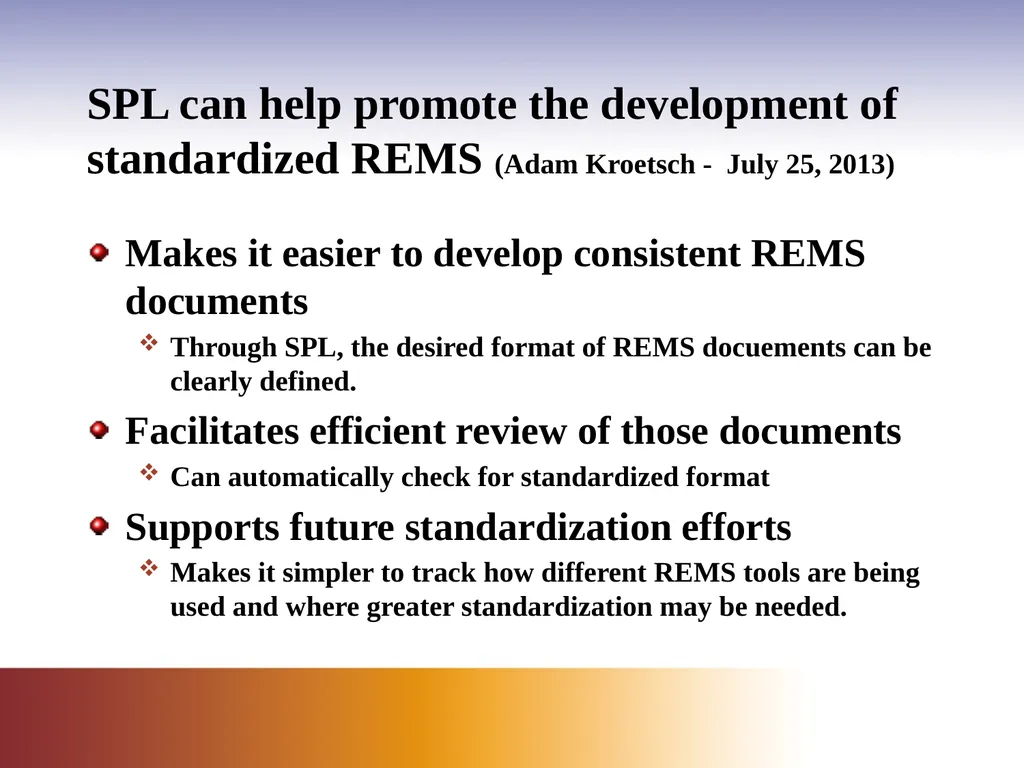
SPL can help promote the development of standardized REMS (Adam Kroetsch - July 25, 2013) Makes it easier to develop consistent REMS documents
Through SPL, the desired format of REMS docuements can be clearly defined.
Facilitates efficient review of those documents
Can automatically check for standardized format
Supports future standardization efforts
Makes it simpler to track how different REMS tools are being used and where greater standardization may be needed.<br>
Through SPL, the desired format of REMS docuements can be clearly defined.
Facilitates efficient review of those documents
Can automatically check for standardized format
Supports future standardization efforts
Makes it simpler to track how different REMS tools are being used and where greater standardization may be needed.<br>
32
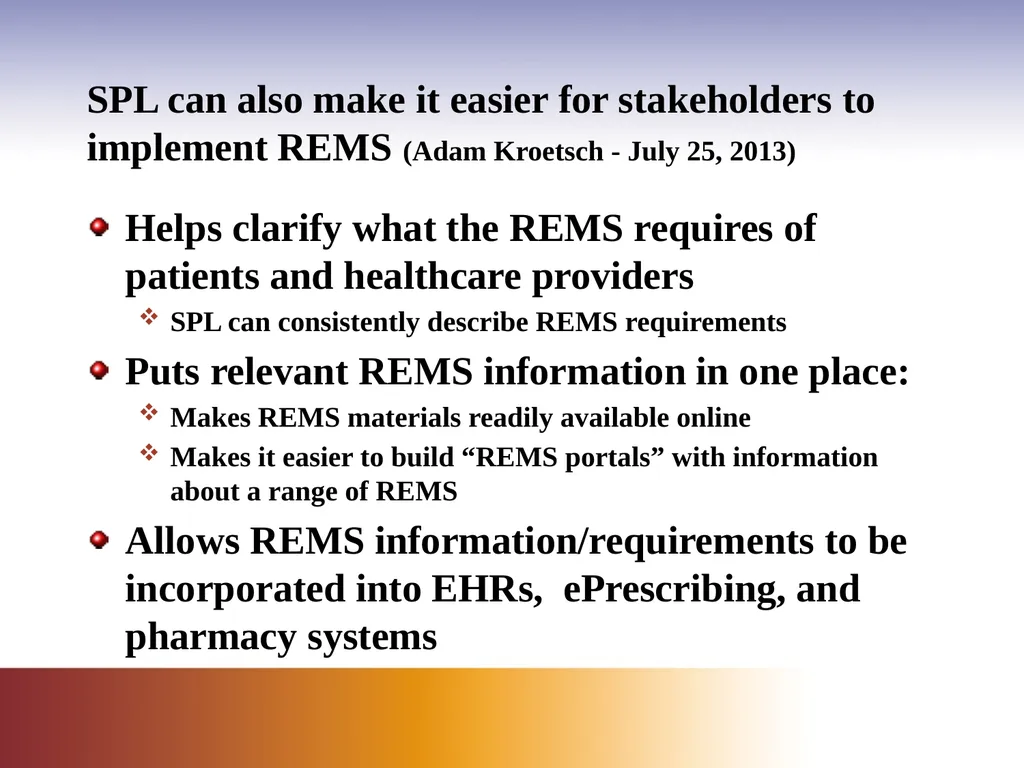
SPL can also make it easier for stakeholders to implement REMS (Adam Kroetsch - July 25, 2013) Helps clarify what the REMS requires of patients and healthcare providers
SPL can consistently describe REMS requirements
Puts relevant REMS information in one place:
Makes REMS materials readily available online
Makes it easier to build “REMS portals” with information about a range of REMS
Allows REMS information/requirements to be incorporated into EHRs, ePrescribing, and pharmacy systems<br>
SPL can consistently describe REMS requirements
Puts relevant REMS information in one place:
Makes REMS materials readily available online
Makes it easier to build “REMS portals” with information about a range of REMS
Allows REMS information/requirements to be incorporated into EHRs, ePrescribing, and pharmacy systems<br>
33
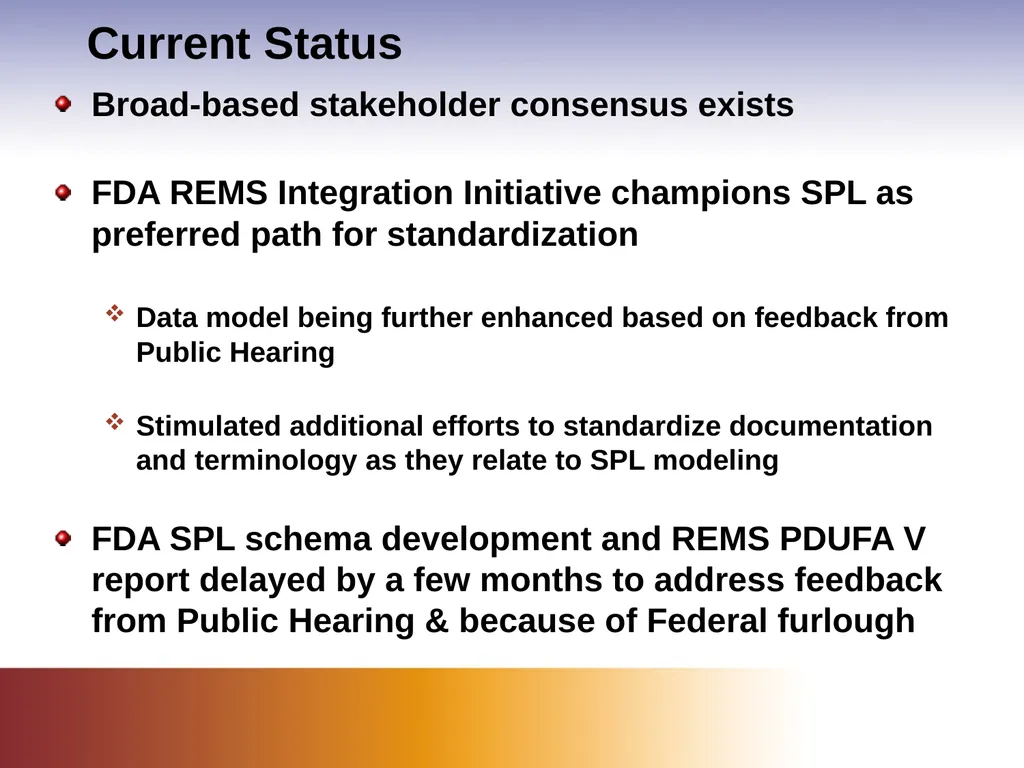
Current Status Broad-based stakeholder consensus exists
FDA REMS Integration Initiative champions SPL as preferred path for standardization
Data model being further enhanced based on feedback from Public Hearing
Stimulated additional efforts to standardize documentation and terminology as they relate to SPL modeling
FDA SPL schema development and REMS PDUFA V report delayed by a few months to address feedback from Public Hearing & because of Federal furlough<br>
FDA REMS Integration Initiative champions SPL as preferred path for standardization
Data model being further enhanced based on feedback from Public Hearing
Stimulated additional efforts to standardize documentation and terminology as they relate to SPL modeling
FDA SPL schema development and REMS PDUFA V report delayed by a few months to address feedback from Public Hearing & because of Federal furlough<br>