
Life Orientation: Life Skills NQF 2 Explain


Description: Life Orientation: Life Skills NQF 2 Explain ethical behaviour at college in your personal life Module 12 Think about it What would life be like without any regard for ethics morals? How can study funds be managed responsibly? How can
Related Topics
Download Presentation
"Life Orientation: Life Skills NQF 2 Explain" is the property of its rightful owner. Permission is granted to download and print the materials on this website for personal, non-commercial use only, and to display it on your personal computer provided you do not modify the materials and that you retain all copyright notices contained in the materials. By downloading content from our website, you accept the terms of this agreement.
Presentation Transcript
slide1. Life Orientation: Life Skills NQF 2<br>
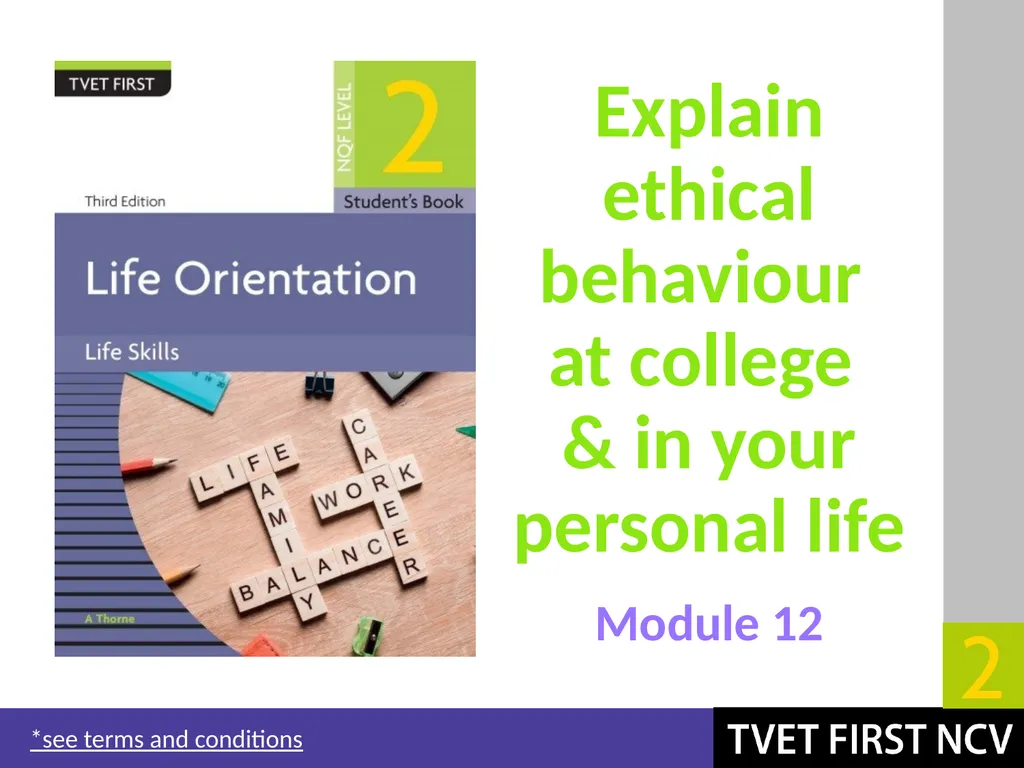
slide2. Explain ethical behaviour at college & in your personal life Module 12<br>
slide3. Think about it… What would life be like without any regard for ethics & morals?
How can study funds be managed responsibly?
How can you know for sure what is right & wrong behaviour?<br>
slide4. Ethical & moral behaviour Unit 12.1<br>
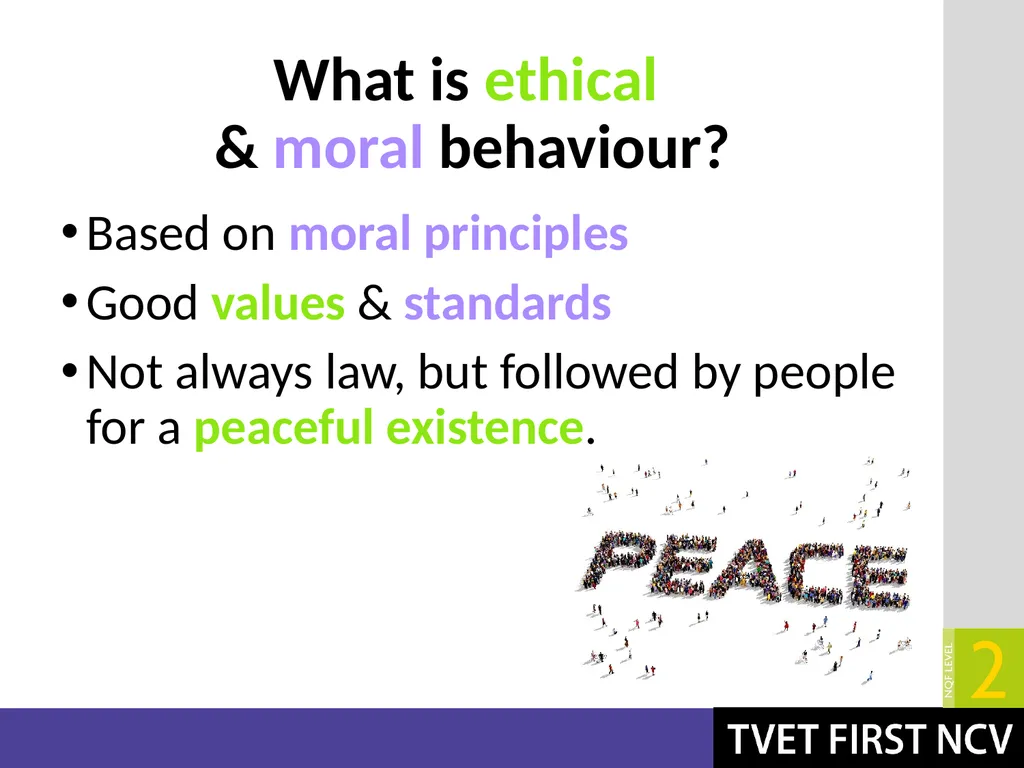
slide5. What is ethical & moral behaviour? Based on moral principles
Good values & standards
Not always law, but followed by people for a peaceful existence.<br>
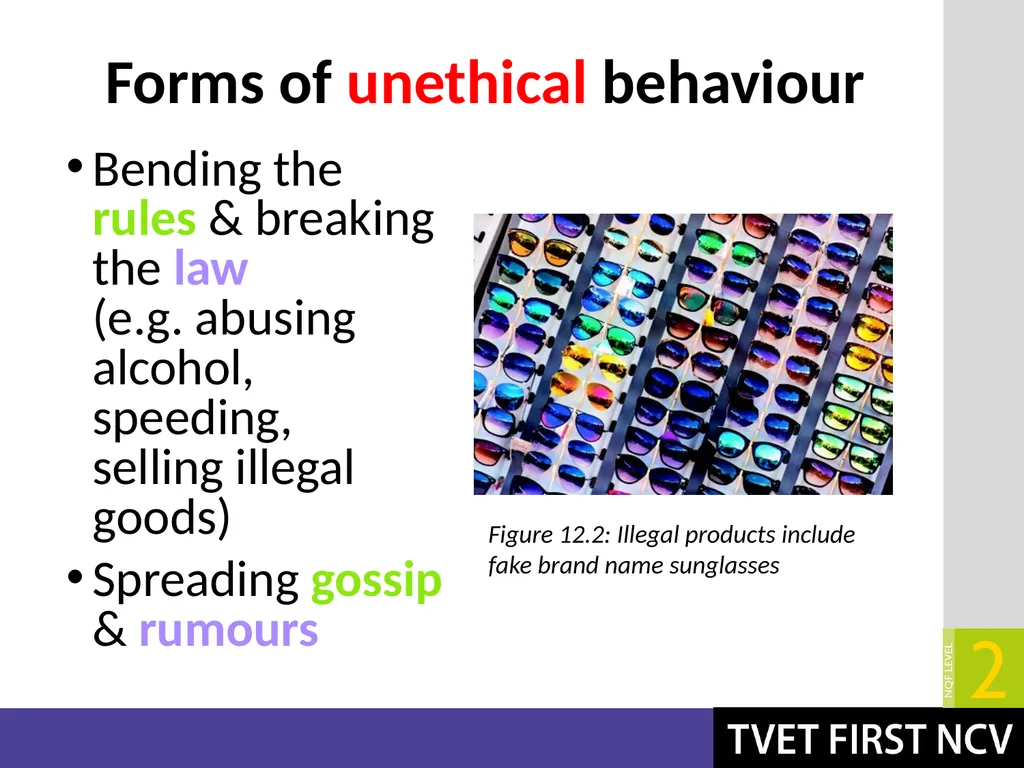
slide6. Forms of unethical behaviour Bending the rules & breaking the law (e.g. abusing alcohol, speeding, selling illegal goods)
Spreading gossip & rumours Figure 12.2: Illegal products include fake brand name sunglasses<br>
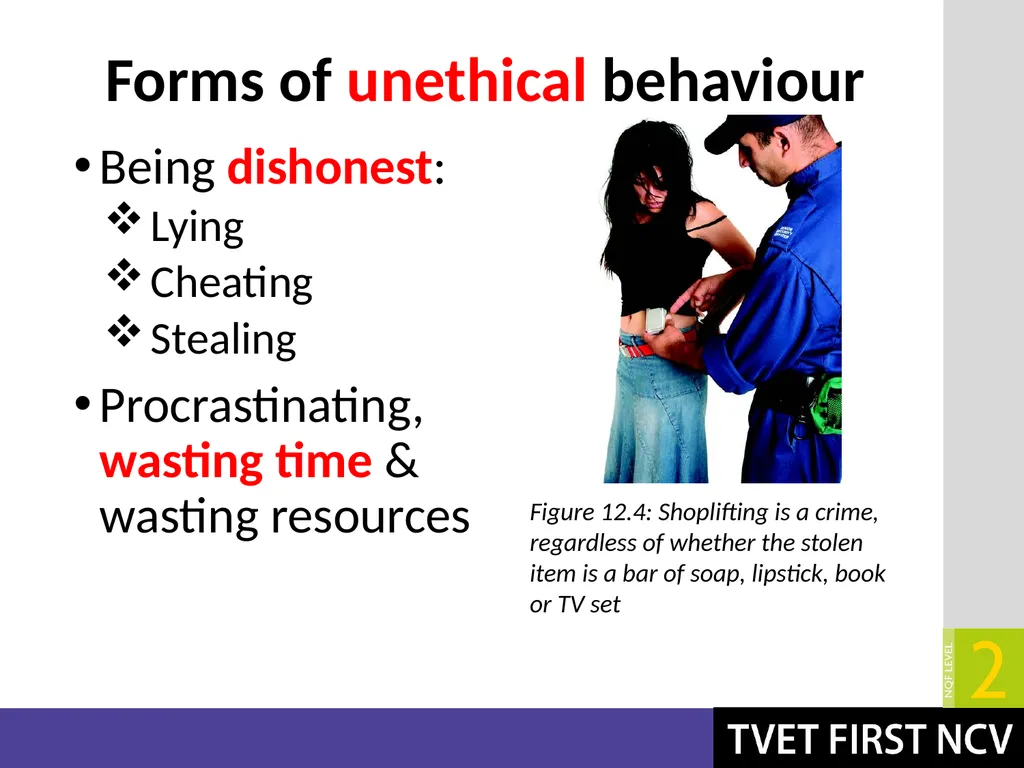
slide7. Forms of unethical behaviour Being dishonest:
Lying
Cheating
Stealing
Procrastinating, wasting time & wasting resources Figure 12.4: Shoplifting is a crime, regardless of whether the stolen item is a bar of soap, lipstick, book
or TV set<br>
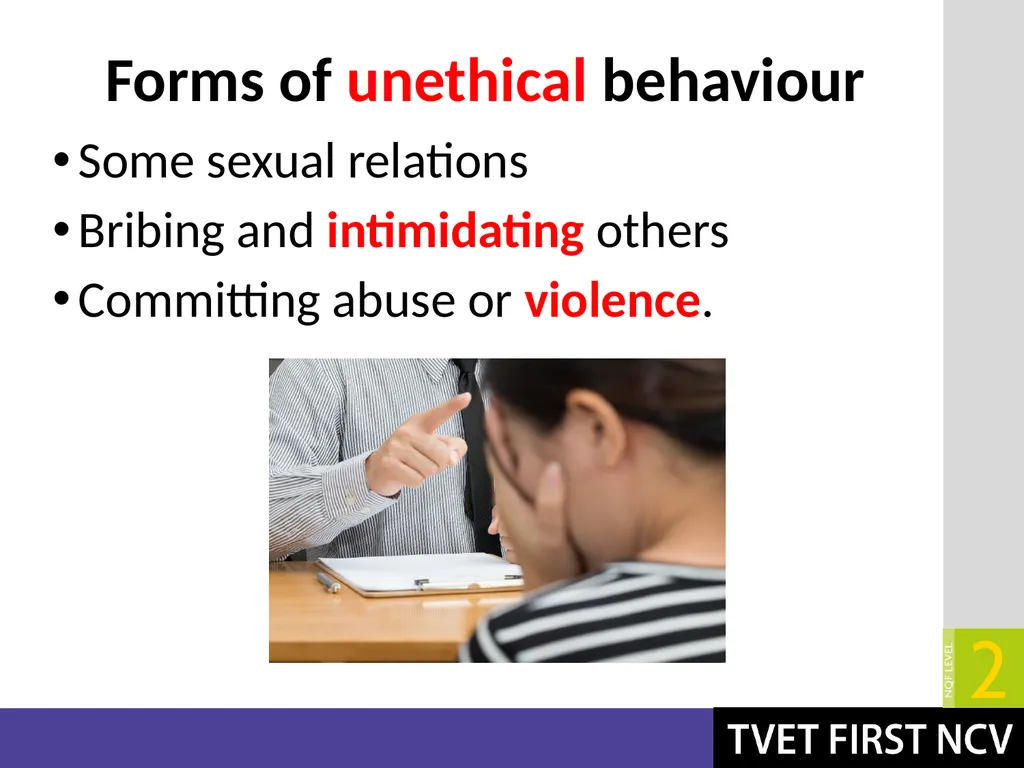
slide8. Some sexual relations
Bribing and intimidating others
Committing abuse or violence. Forms of unethical behaviour<br>
slide9. Refer to Examples 12.1 to 12.5 in your Student’s Book for more information about unethical behaviour. Forms of unethical behaviour<br>
slide10. Module 12 Learning activity 12.1 Test your knowledge of this unit by completing Learning activity 12.1 in your Student’s Book.<br>
slide11. Responsibilities & duties regarding study funding Unit 12.2<br>
slide12. Sources of study funding Bursaries:
Money to help pay for studies
Based on financial need & academic performance
Paid by companies, trust funds, charities & NGOs
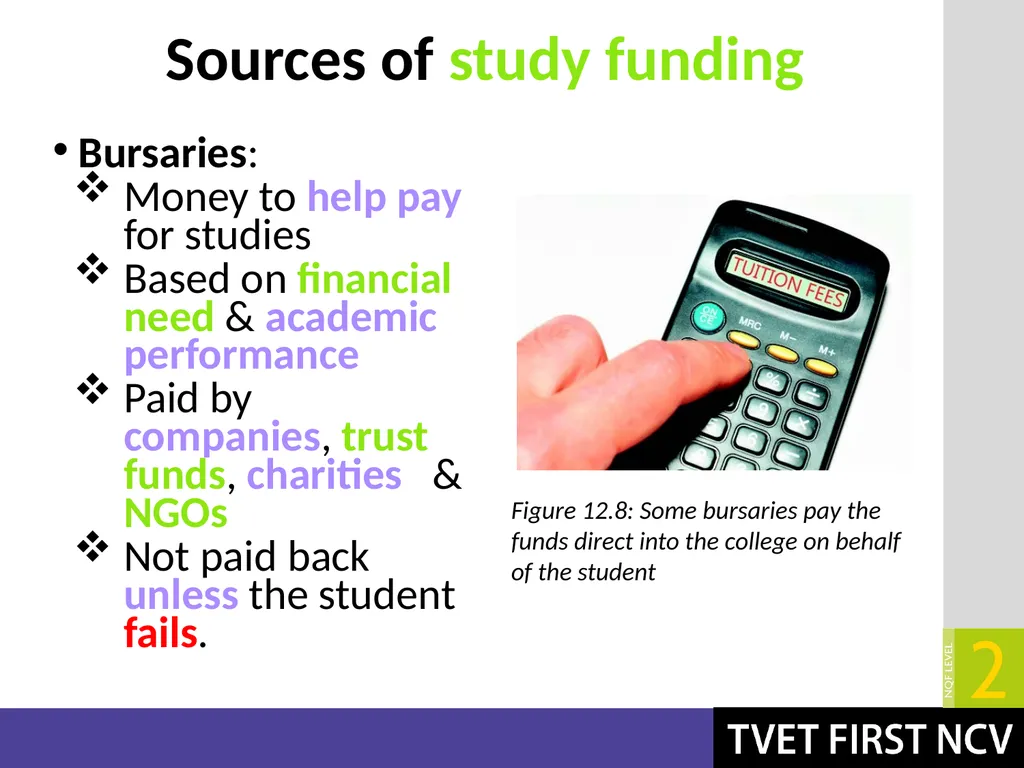
Not paid back unless the student fails. Figure 12.8: Some bursaries pay the funds direct into the college on behalf of the student<br>
slide13. Scholarships:
Type of bursary
Based on academic or sport performance
Conditions to be met.
Loans:
Offered by: NSFAS, colleges & banks
Interest payable. Sources of study funding<br>
slide14. Study policies:
Savings plan
Started when children are young.
Awards:
Prize for best student
Covers fees for a year or for all years of study. Sources of study funding<br>
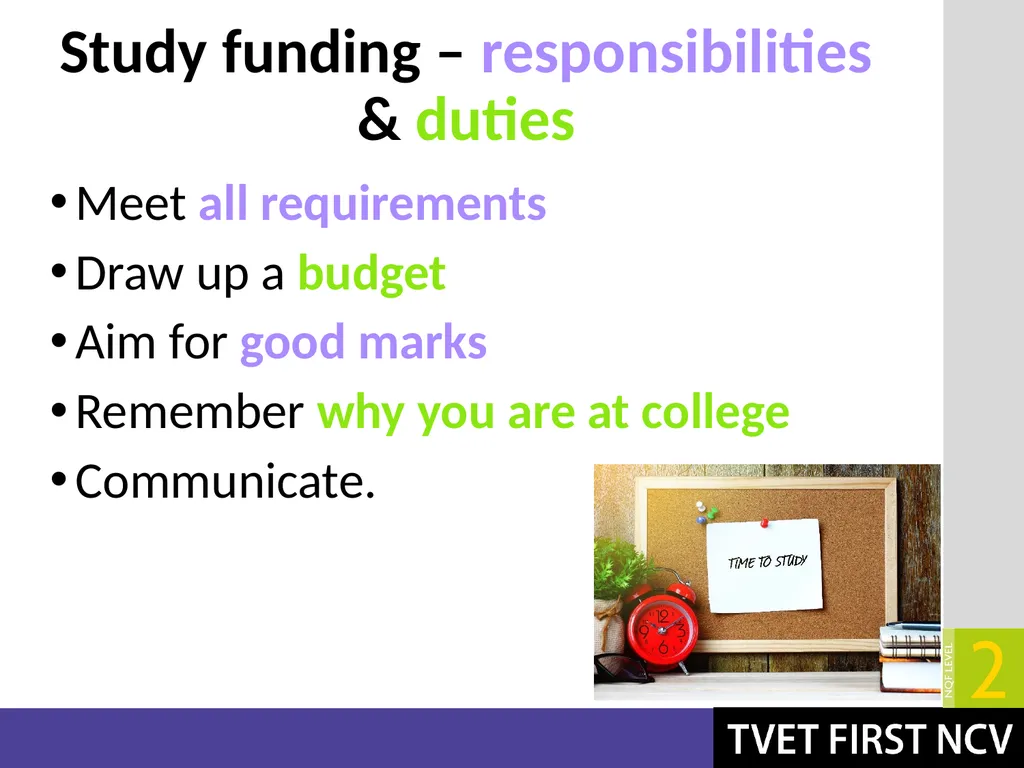
slide15. Meet all requirements
Draw up a budget
Aim for good marks
Remember why you are at college
Communicate. Study funding – responsibilities & duties<br>
slide16. Module 12 Learning activity 12.2 Test your knowledge of this section – and look at your budget – by completing Learning activity 12.2 in your Student’s Book.<br>
slide17. Your own ethical values & behaviour at college Unit 12.3<br>
slide18. Your ethical values & behaviour Ethical choices need to be made every day.
Remember:
Ethics = moral correctness
Values = principles that guide your ethical & moral behaviour; what is important
Moral behaviour = acceptable actions.<br>
slide19. Module 12 Learning activity 12.3 Test your knowledge of this section – and analyse your ethical values – by completing Learning activity 12.3 in your Student’s Book.<br>
slide20. Module 12 Learning activity 12.4 Test your knowledge of this unit – and interview a role model for ethical behaviour – by completing Learning activity 12.4 in your Student’s Book.<br>
slide21. Module 12 Test your knowledge of this module by completing the Summative assessment of Module 12 in your Student’s Book.<br>
slide2. Explain ethical behaviour at college & in your personal life Module 12<br>
slide3. Think about it… What would life be like without any regard for ethics & morals?
How can study funds be managed responsibly?
How can you know for sure what is right & wrong behaviour?<br>
slide4. Ethical & moral behaviour Unit 12.1<br>
slide5. What is ethical & moral behaviour? Based on moral principles
Good values & standards
Not always law, but followed by people for a peaceful existence.<br>
slide6. Forms of unethical behaviour Bending the rules & breaking the law (e.g. abusing alcohol, speeding, selling illegal goods)
Spreading gossip & rumours Figure 12.2: Illegal products include fake brand name sunglasses<br>
slide7. Forms of unethical behaviour Being dishonest:
Lying
Cheating
Stealing
Procrastinating, wasting time & wasting resources Figure 12.4: Shoplifting is a crime, regardless of whether the stolen item is a bar of soap, lipstick, book
or TV set<br>
slide8. Some sexual relations
Bribing and intimidating others
Committing abuse or violence. Forms of unethical behaviour<br>
slide9. Refer to Examples 12.1 to 12.5 in your Student’s Book for more information about unethical behaviour. Forms of unethical behaviour<br>
slide10. Module 12 Learning activity 12.1 Test your knowledge of this unit by completing Learning activity 12.1 in your Student’s Book.<br>
slide11. Responsibilities & duties regarding study funding Unit 12.2<br>
slide12. Sources of study funding Bursaries:
Money to help pay for studies
Based on financial need & academic performance
Paid by companies, trust funds, charities & NGOs
Not paid back unless the student fails. Figure 12.8: Some bursaries pay the funds direct into the college on behalf of the student<br>
slide13. Scholarships:
Type of bursary
Based on academic or sport performance
Conditions to be met.
Loans:
Offered by: NSFAS, colleges & banks
Interest payable. Sources of study funding<br>
slide14. Study policies:
Savings plan
Started when children are young.
Awards:
Prize for best student
Covers fees for a year or for all years of study. Sources of study funding<br>
slide15. Meet all requirements
Draw up a budget
Aim for good marks
Remember why you are at college
Communicate. Study funding – responsibilities & duties<br>
slide16. Module 12 Learning activity 12.2 Test your knowledge of this section – and look at your budget – by completing Learning activity 12.2 in your Student’s Book.<br>
slide17. Your own ethical values & behaviour at college Unit 12.3<br>
slide18. Your ethical values & behaviour Ethical choices need to be made every day.
Remember:
Ethics = moral correctness
Values = principles that guide your ethical & moral behaviour; what is important
Moral behaviour = acceptable actions.<br>
slide19. Module 12 Learning activity 12.3 Test your knowledge of this section – and analyse your ethical values – by completing Learning activity 12.3 in your Student’s Book.<br>
slide20. Module 12 Learning activity 12.4 Test your knowledge of this unit – and interview a role model for ethical behaviour – by completing Learning activity 12.4 in your Student’s Book.<br>
slide21. Module 12 Test your knowledge of this module by completing the Summative assessment of Module 12 in your Student’s Book.<br>