
Liver transplantation Clinical Practice Guidelines











Description: Liver transplantation Clinical Practice Guidelines About these slides These slides give a comprehensive overview of the EASL clinical practice guidelines on liver transplantation The guidelines were published in full in the February 2016
Related Topics
Download Presentation
"Liver transplantation Clinical Practice Guidelines" is the property of its rightful owner. Permission is granted to download and print the materials on this website for personal, non-commercial use only, and to display it on your personal computer provided you do not modify the materials and that you retain all copyright notices contained in the materials. By downloading content from our website, you accept the terms of this agreement.
Presentation Transcript
slide1. Liver transplantation Clinical Practice Guidelines<br>
slide2. About these slides These slides give a comprehensive overview of the EASL clinical practice guidelines on liver transplantation
The guidelines were published in full in the February 2016 issue of the Journal of Hepatology
The full publication can be downloaded from the Clinical Practice Guidelines section of the EASL website
Please cite the published article as: European Association for the Study of the Liver. EASL Clinical Practice Guidelines: Liver transplantation. J Hepatol 2016;64:433–85
Please feel free to use, adapt, and share these slides for your own personal use; however, please acknowledge EASL as the source<br>
slide3. About these slides Definitions of all abbreviations shown in these slides are provided within the slide notes
When you see a home symbol like this one: , you can click on this to return to the outline or topics pages, depending on which section you are in
Please send any feedback to: slidedeck_feedback@easloffice.eu These slides are intended for use as an educational resource and should not be used in isolation to make patient management decisions. All information included should be verified before treating patients or using any therapies described in these materials<br>
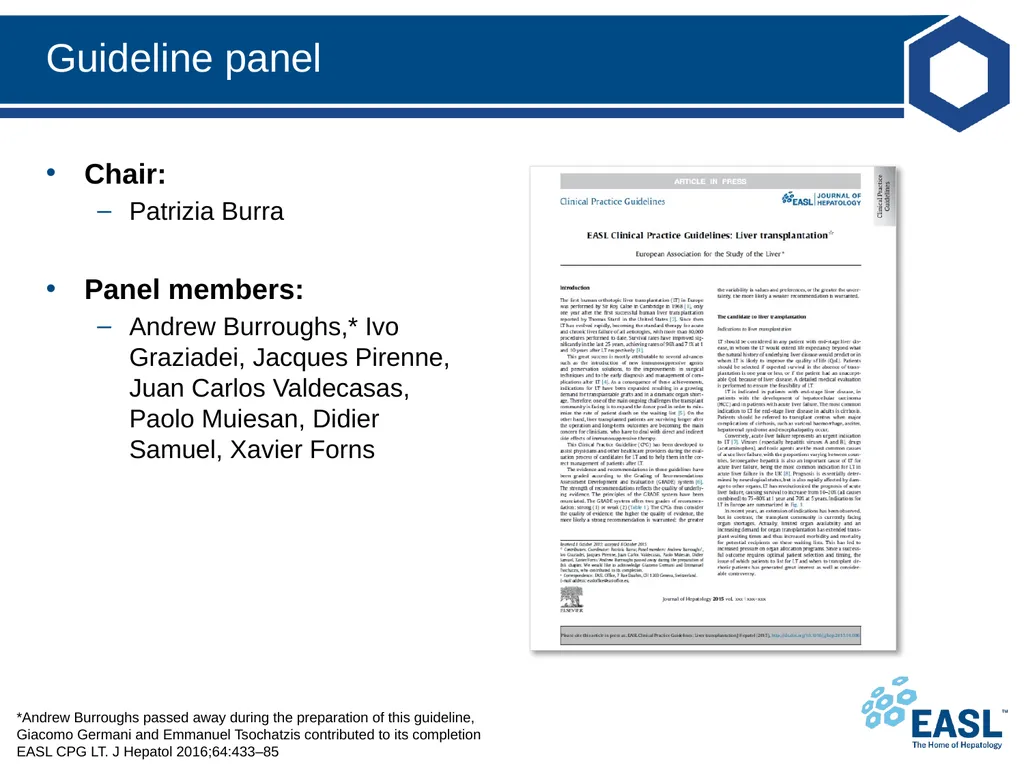
slide4. Chair:
Patrizia Burra
Panel members:
Andrew Burroughs,* Ivo Graziadei, Jacques Pirenne, Juan Carlos Valdecasas, Paolo Muiesan, Didier Samuel, Xavier Forns Guideline panel *Andrew Burroughs passed away during the preparation of this guideline, Giacomo Germani and Emmanuel Tsochatzis contributed to its completion
EASL CPG LT. J Hepatol 2016;64:433–85<br>
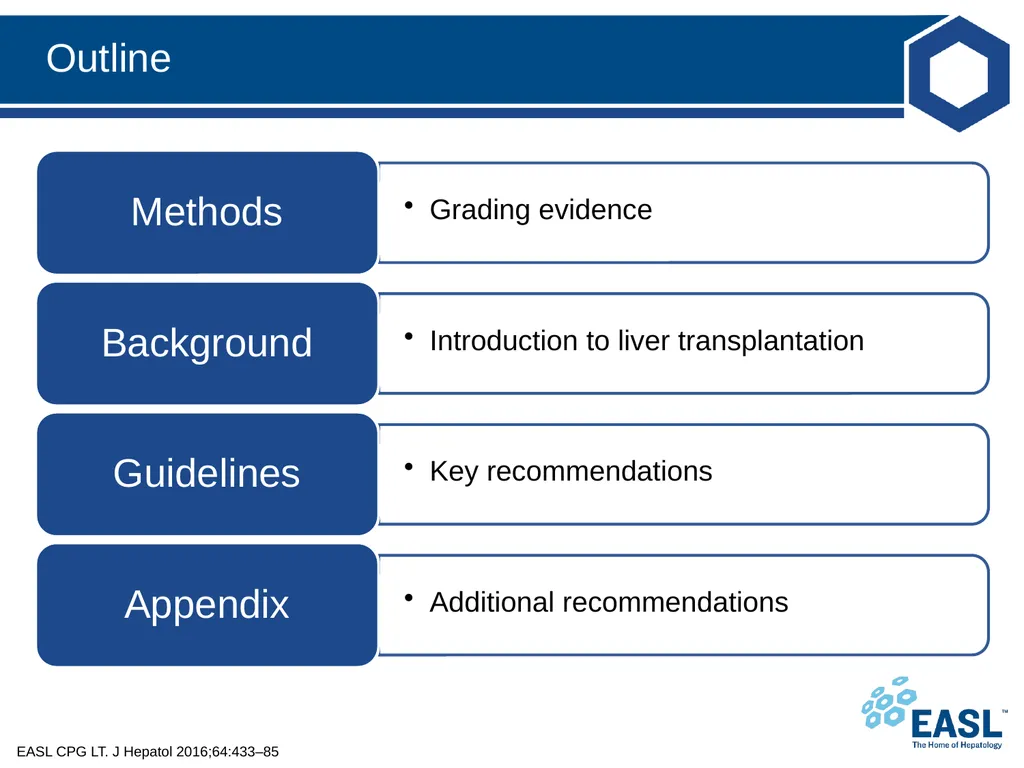
slide5. Outline EASL CPG LT. J Hepatol 2016;64:433–85<br>
slide6. Methods Grading evidence<br>
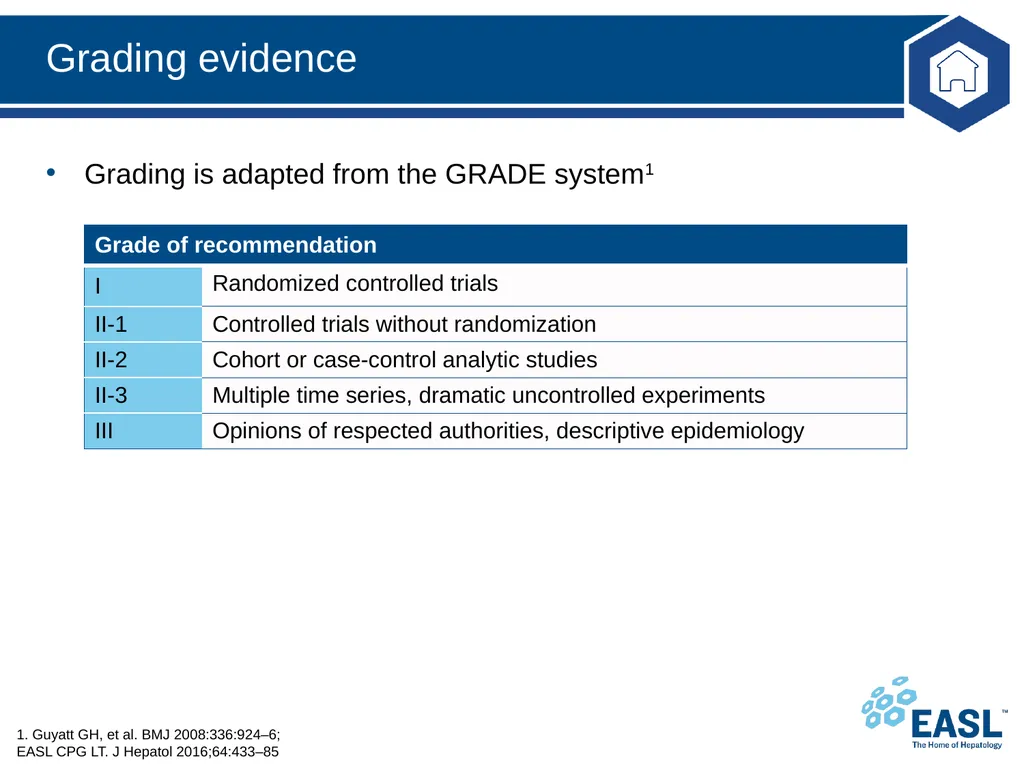
slide7. Grading evidence 1. Guyatt GH, et al. BMJ 2008:336:924–6;
EASL CPG LT. J Hepatol 2016;64:433–85 Grading is adapted from the GRADE system1<br>
slide8. Background Introduction to liver transplantation<br>
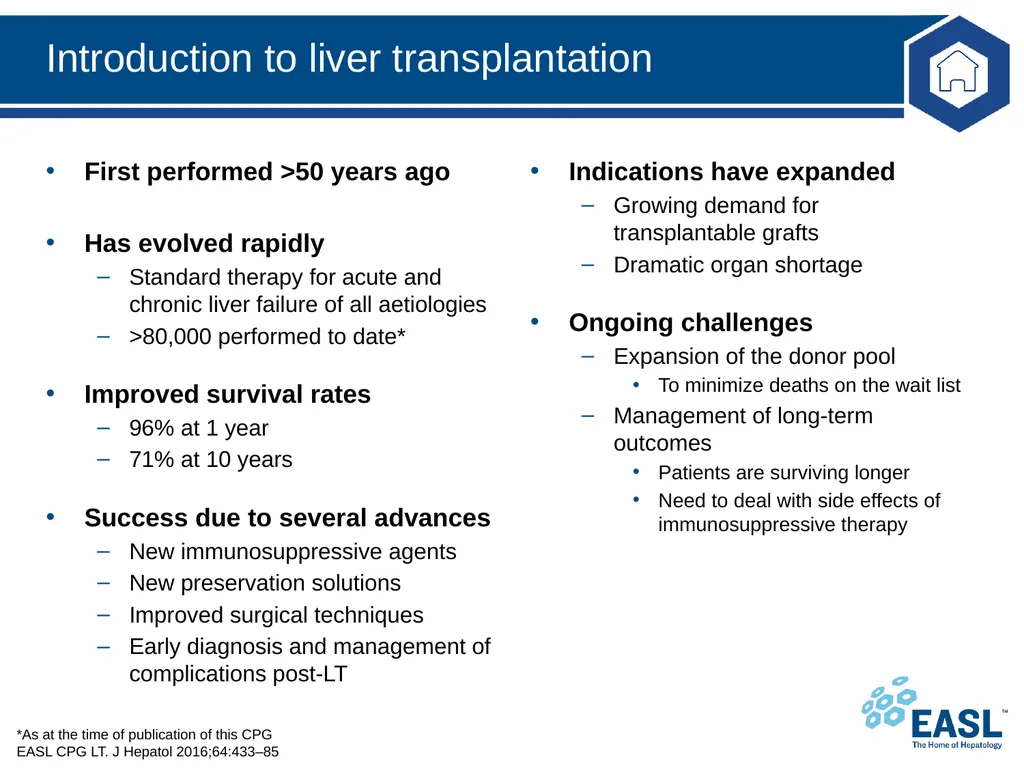
slide9. First performed >50 years ago
Has evolved rapidly
Standard therapy for acute and chronic liver failure of all aetiologies
>80,000 performed to date*
Improved survival rates
96% at 1 year
71% at 10 years
Success due to several advances
New immunosuppressive agents
New preservation solutions
Improved surgical techniques
Early diagnosis and management of complications post-LT Indications have expanded
Growing demand for transplantable grafts
Dramatic organ shortage
Ongoing challenges
Expansion of the donor pool
To minimize deaths on the wait list
Management of long-term outcomes
Patients are surviving longer
Need to deal with side effects of immunosuppressive therapy Introduction to liver transplantation *As at the time of publication of this CPG
EASL CPG LT. J Hepatol 2016;64:433–85<br>
slide10. Guidelines Key recommendations<br>
slide11. Topics The candidate for liver transplantation
Organ donation
Liver transplantation
Immunosuppression
Medical complications
Lifestyle in long-term follow-up Click on a topic to skip to that section<br>
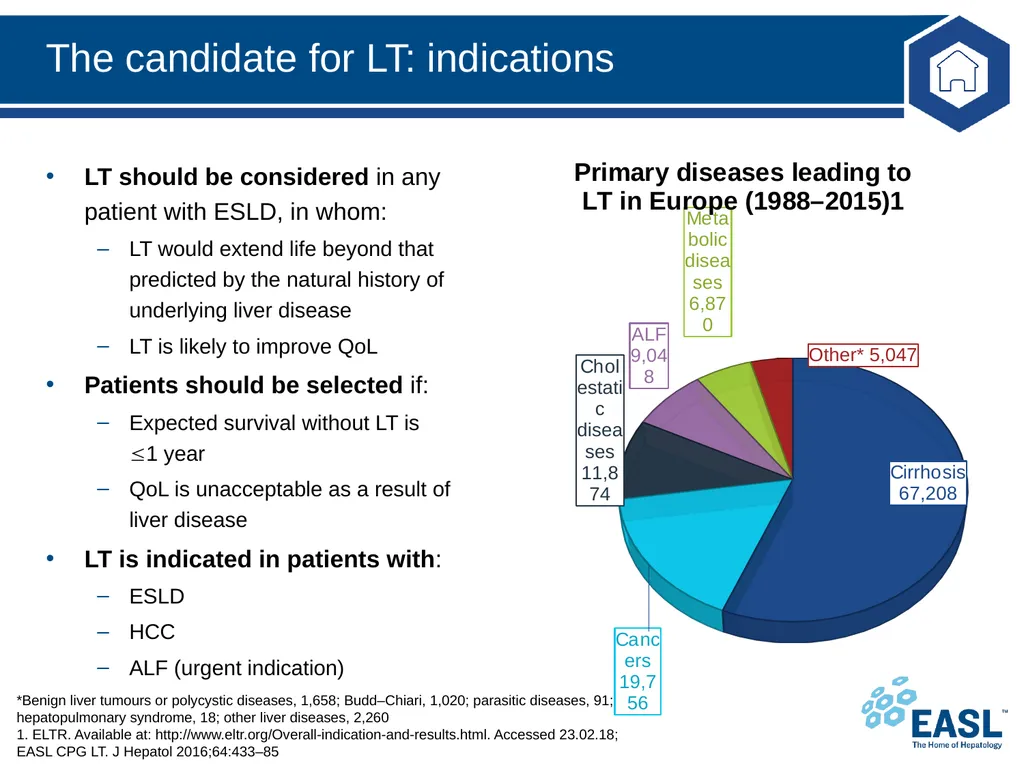
slide12. LT should be considered in any patient with ESLD, in whom:
LT would extend life beyond that predicted by the natural history of underlying liver disease
LT is likely to improve QoL
Patients should be selected if:
Expected survival without LT is 1 year
QoL is unacceptable as a result of liver disease
LT is indicated in patients with:
ESLD
HCC
ALF (urgent indication) The candidate for LT: indications *Benign liver tumours or polycystic diseases, 1,658; Budd–Chiari, 1,020; parasitic diseases, 91; hepatopulmonary syndrome, 18; other liver diseases, 2,260 1. ELTR. Available at: http://www.eltr.org/Overall-indication-and-results.html. Accessed 23.02.18;
EASL CPG LT. J Hepatol 2016;64:433–85<br>
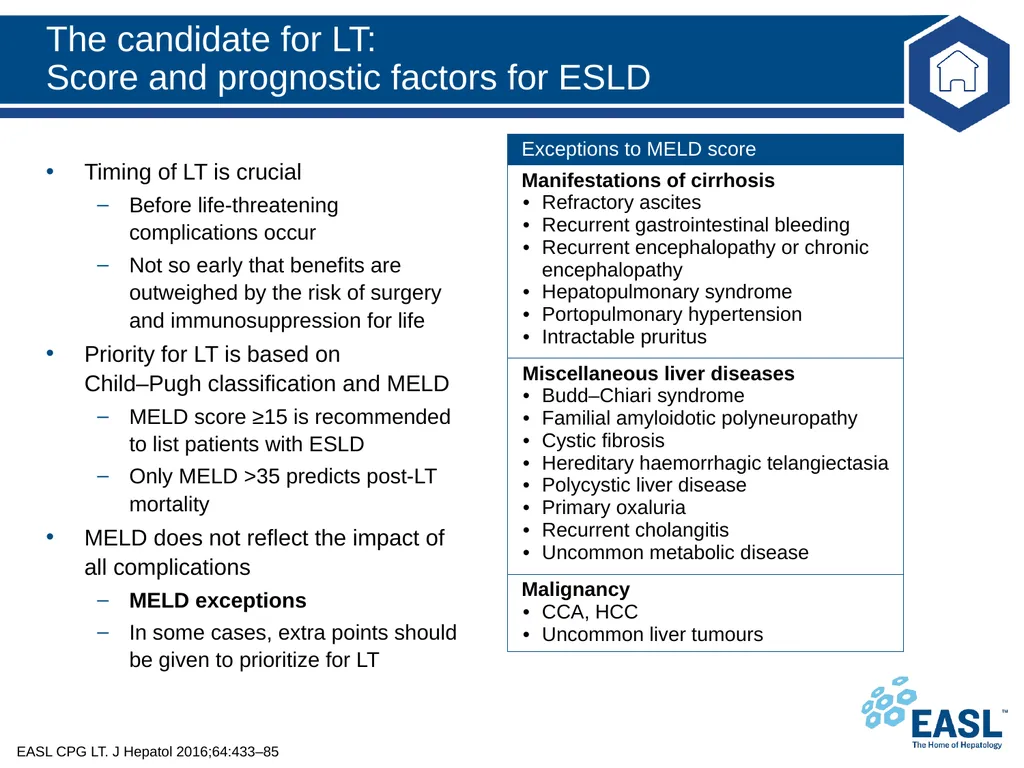
slide13. The candidate for LT: Score and prognostic factors for ESLD EASL CPG LT. J Hepatol 2016;64:433–85 Timing of LT is crucial
Before life-threatening complications occur
Not so early that benefits are outweighed by the risk of surgery and immunosuppression for life
Priority for LT is based on Child–Pugh classification and MELD
MELD score ≥15 is recommended to list patients with ESLD
Only MELD >35 predicts post-LT mortality
MELD does not reflect the impact of all complications
MELD exceptions
In some cases, extra points should be given to prioritize for LT<br>
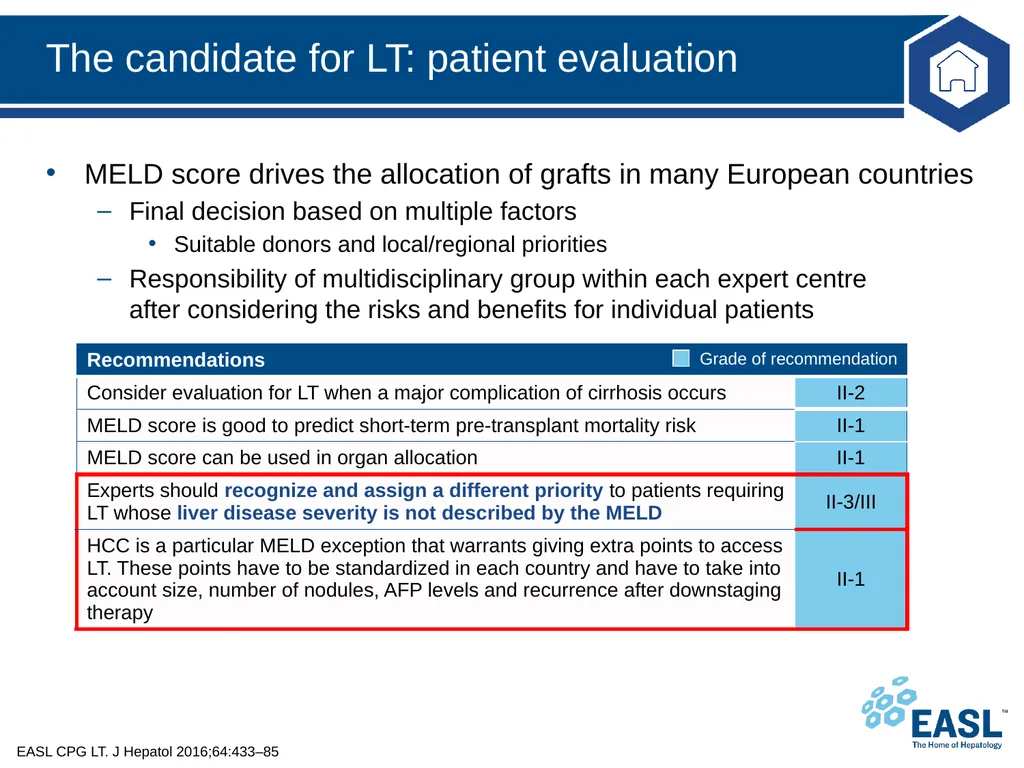
slide14. The candidate for LT: patient evaluation EASL CPG LT. J Hepatol 2016;64:433–85 MELD score drives the allocation of grafts in many European countries
Final decision based on multiple factors
Suitable donors and local/regional priorities
Responsibility of multidisciplinary group within each expert centre after considering the risks and benefits for individual patients<br>
slide15. Management of patients with liver cirrhosis* *Without HCC
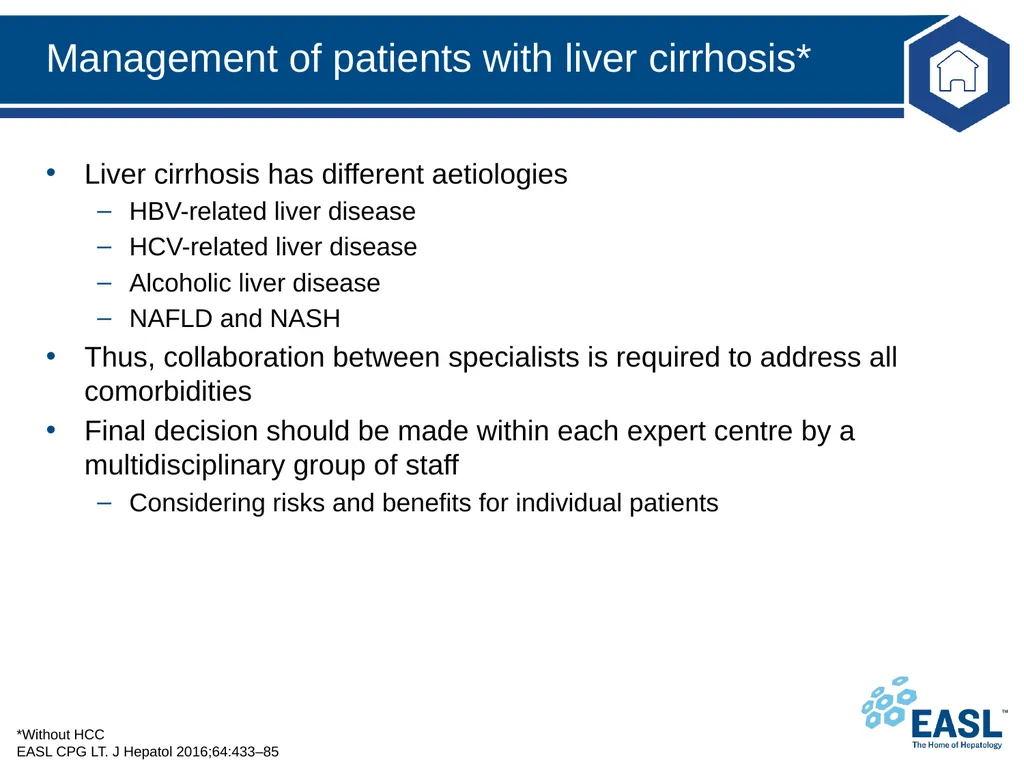
EASL CPG LT. J Hepatol 2016;64:433–85 Liver cirrhosis has different aetiologies
HBV-related liver disease
HCV-related liver disease
Alcoholic liver disease
NAFLD and NASH
Thus, collaboration between specialists is required to address all comorbidities
Final decision should be made within each expert centre by a multidisciplinary group of staff
Considering risks and benefits for individual patients<br>
slide16. HBV-related liver disease *New treatment options are now available that were approved after the publication of this CPG. Recommendation from EASL HBV CPG: Patients with decompensated cirrhosis should be immediately treated with an NA with a high barrier to resistance (ETV, TDF, or tenofovir alafenamide), irrespective of the level of HBV replication, and should be assessed for LT (evidence level II-2, grade of recommendation 1); †Other treatments are available
EASL CPG LT. J Hepatol 2016;64:433–85 Indication for LT similar to other causes of cirrhosis
Start ETV or TDF as soon as possible if HBV DNA is detectable
To improve liver function
To decrease risk of HBV recurrence after transplantation<br>
slide17. HCV-related liver disease *New treatment options are now available that were approved after the publication of this CPG. Recommendation from EASL HCV CPG: Patients with decompensated cirrhosis awaiting LT with a MELD score <18–20 can be treated with SOF/LDV (GT 1, 4, 5 or 6) or SOF/VEL (all GT) + weight-based RBV for 12 weeks. Those unable to take RBV should receive SOF/LDV (GT 1, 4, 5 or 6) or SOF/VEL (all GT) for 24 weeks without RBV. Protease inhibitor-containing regimens are contraindicated in patients with decompensated cirrhosis (evidence level A, grade of recommendation 1); †Other treatments are available
EASL CPG LT J Hepatol 2016;64:433–85 Goals of antiviral treatment prior to LT
Prevent HCV infection of the new liver
Improve liver function to avoid need for LT
HCV replication at time of LT is not a contraindication
Antiviral treatment will be necessary post-LT<br>
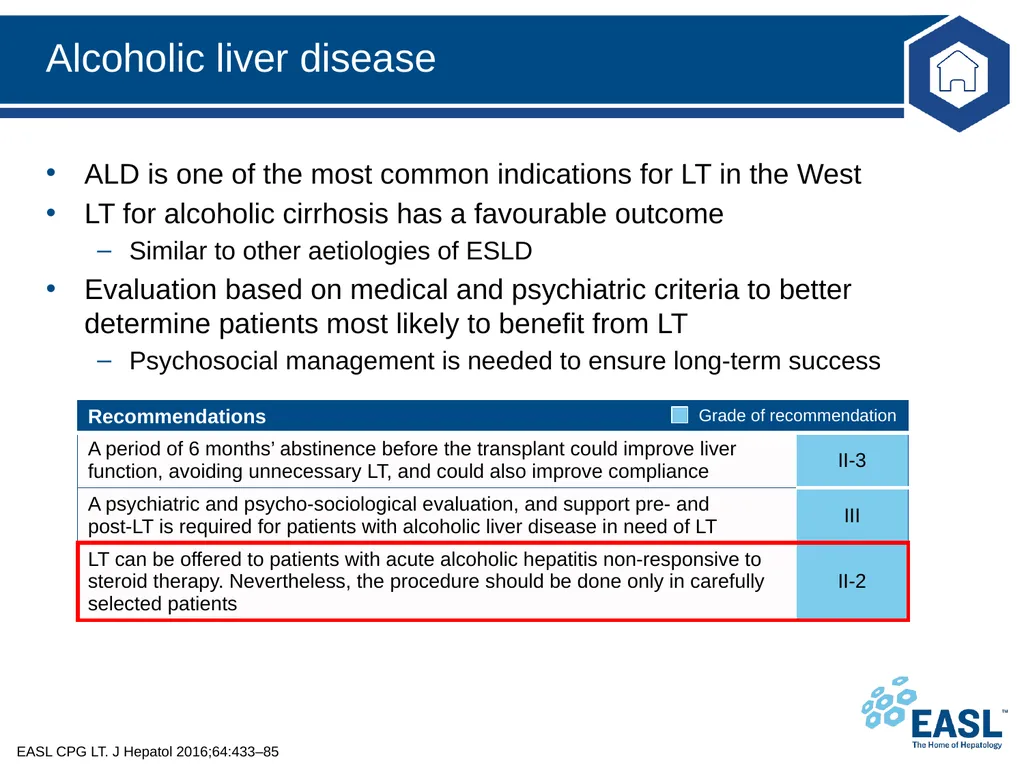
slide18. Alcoholic liver disease EASL CPG LT. J Hepatol 2016;64:433–85 ALD is one of the most common indications for LT in the West
LT for alcoholic cirrhosis has a favourable outcome
Similar to other aetiologies of ESLD
Evaluation based on medical and psychiatric criteria to better determine patients most likely to benefit from LT
Psychosocial management is needed to ensure long-term success<br>
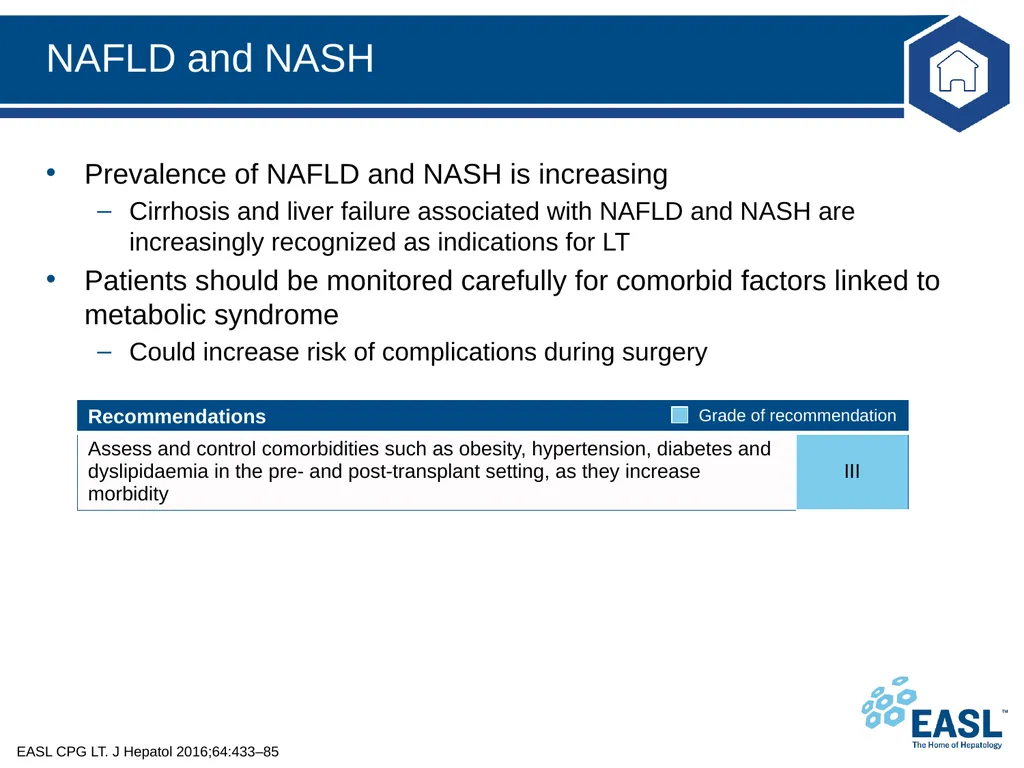
slide19. NAFLD and NASH EASL CPG LT. J Hepatol 2016;64:433–85 Prevalence of NAFLD and NASH is increasing
Cirrhosis and liver failure associated with NAFLD and NASH are increasingly recognized as indications for LT
Patients should be monitored carefully for comorbid factors linked to metabolic syndrome
Could increase risk of complications during surgery<br>
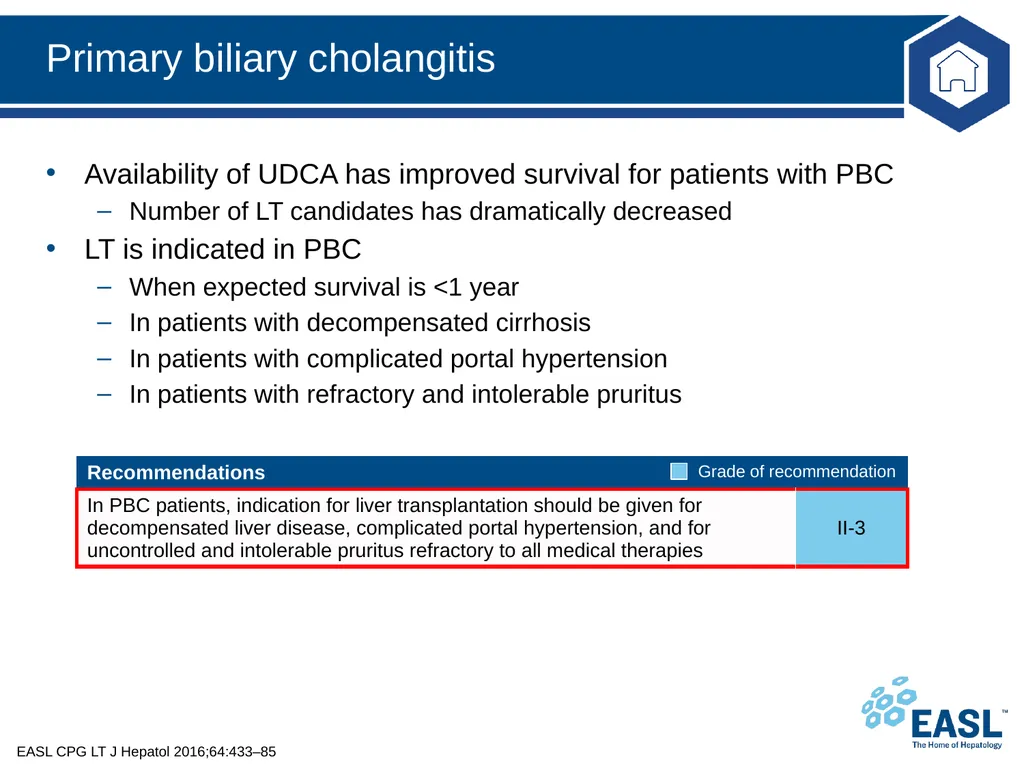
slide20. Primary biliary cholangitis EASL CPG LT J Hepatol 2016;64:433–85 Availability of UDCA has improved survival for patients with PBC
Number of LT candidates has dramatically decreased
LT is indicated in PBC
When expected survival is <1 year
In patients with decompensated cirrhosis
In patients with complicated portal hypertension
In patients with refractory and intolerable pruritus<br>
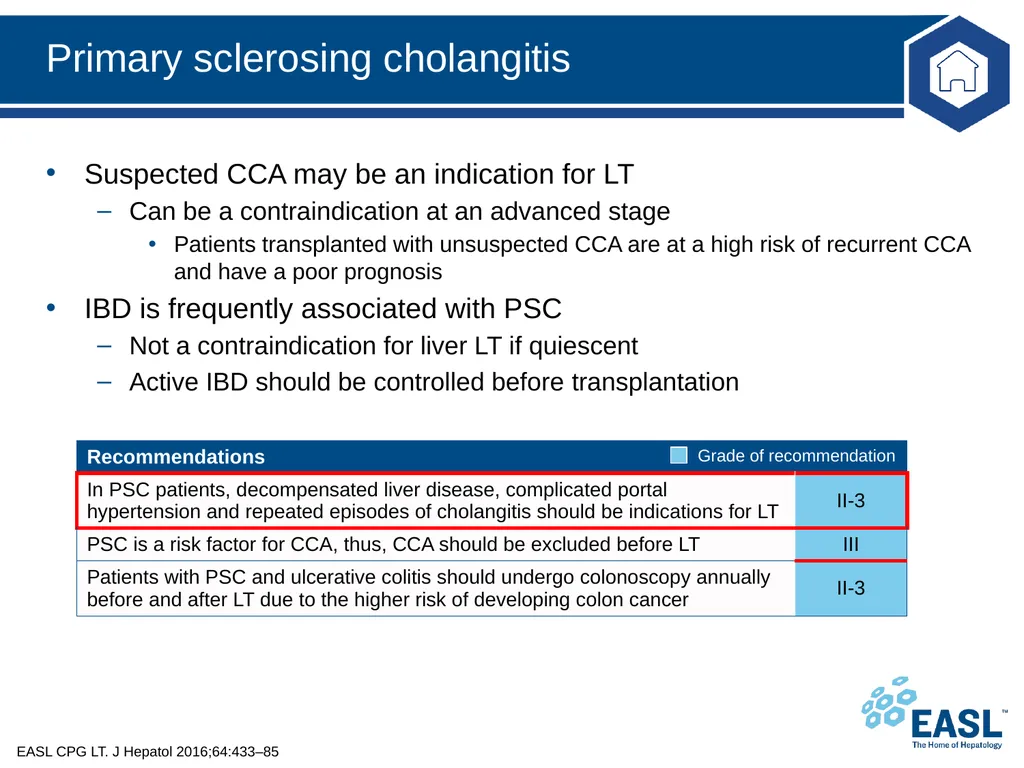
slide21. Primary sclerosing cholangitis EASL CPG LT. J Hepatol 2016;64:433–85 Suspected CCA may be an indication for LT
Can be a contraindication at an advanced stage
Patients transplanted with unsuspected CCA are at a high risk of recurrent CCA and have a poor prognosis
IBD is frequently associated with PSC
Not a contraindication for liver LT if quiescent
Active IBD should be controlled before transplantation<br>
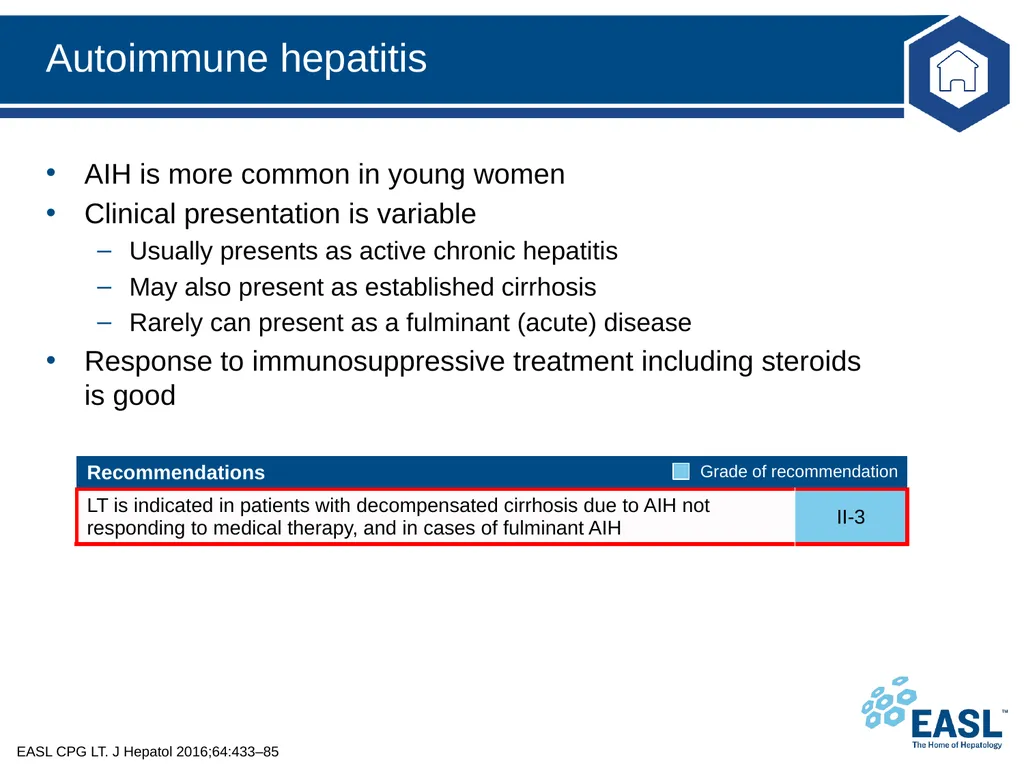
slide22. Autoimmune hepatitis EASL CPG LT. J Hepatol 2016;64:433–85 AIH is more common in young women
Clinical presentation is variable
Usually presents as active chronic hepatitis
May also present as established cirrhosis
Rarely can present as a fulminant (acute) disease
Response to immunosuppressive treatment including steroids is good<br>
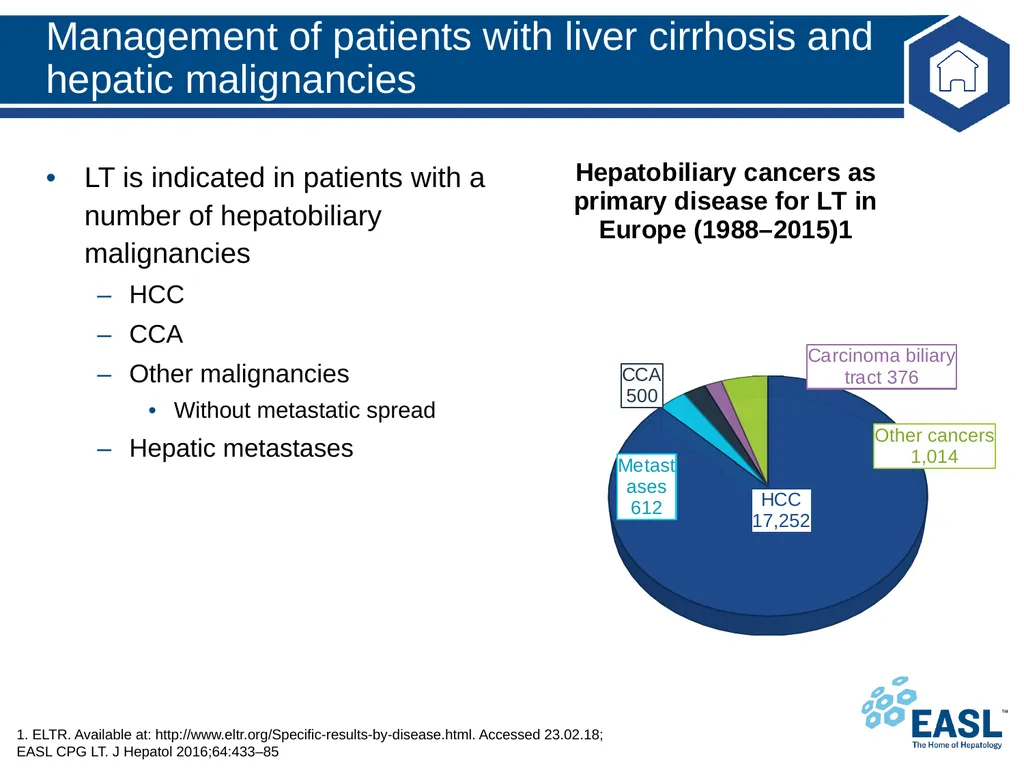
slide23. LT is indicated in patients with a number of hepatobiliary malignancies
HCC
CCA
Other malignancies
Without metastatic spread
Hepatic metastases Management of patients with liver cirrhosis and hepatic malignancies 1. ELTR. Available at: http://www.eltr.org/Specific-results-by-disease.html. Accessed 23.02.18;
EASL CPG LT. J Hepatol 2016;64:433–85<br>
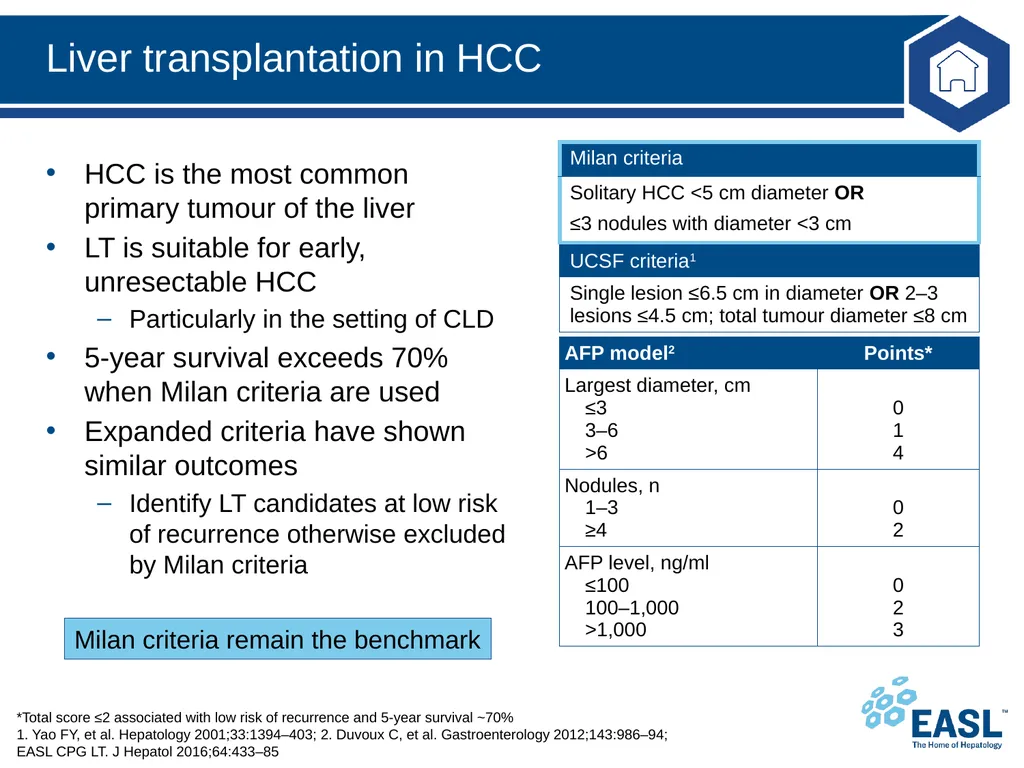
slide24. HCC is the most common primary tumour of the liver
LT is suitable for early, unresectable HCC
Particularly in the setting of CLD
5-year survival exceeds 70% when Milan criteria are used
Expanded criteria have shown similar outcomes
Identify LT candidates at low risk of recurrence otherwise excluded by Milan criteria Liver transplantation in HCC *Total score ≤2 associated with low risk of recurrence and 5-year survival ~70%
1. Yao FY, et al. Hepatology 2001;33:1394–403; 2. Duvoux C, et al. Gastroenterology 2012;143:986–94;
EASL CPG LT. J Hepatol 2016;64:433–85 Milan criteria remain the benchmark<br>
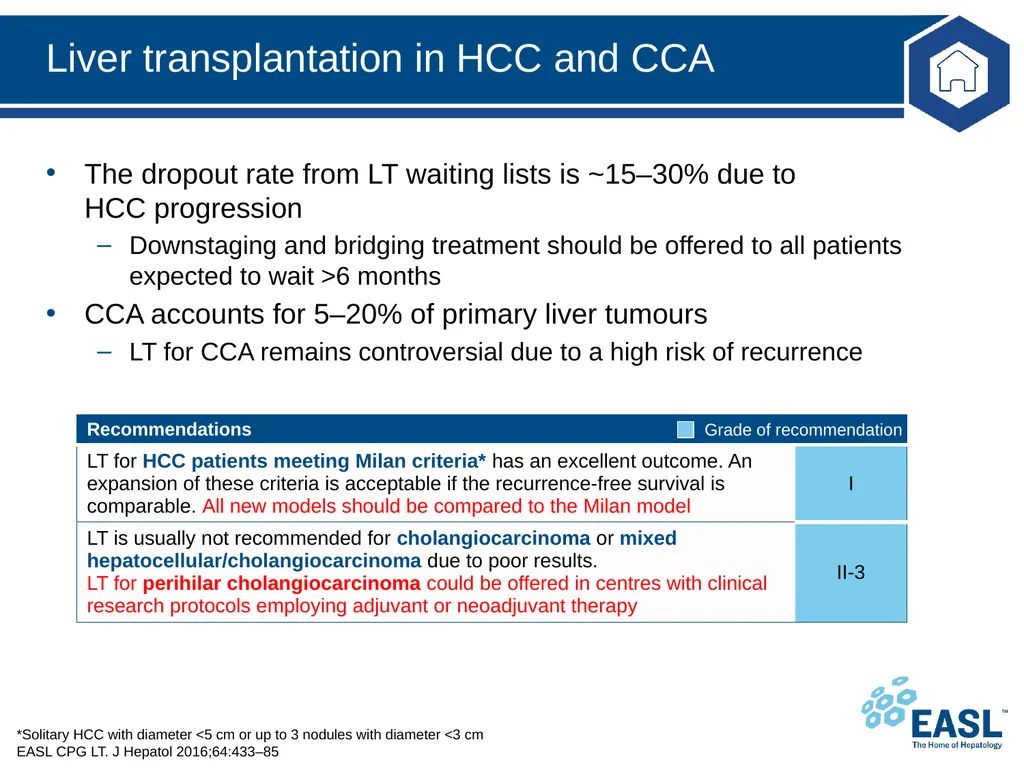
slide25. Liver transplantation in HCC and CCA *Solitary HCC with diameter <5 cm or up to 3 nodules with diameter <3 cm
EASL CPG LT. J Hepatol 2016;64:433–85 The dropout rate from LT waiting lists is ~15–30% due to HCC progression
Downstaging and bridging treatment should be offered to all patients expected to wait >6 months
CCA accounts for 5–20% of primary liver tumours
LT for CCA remains controversial due to a high risk of recurrence<br>
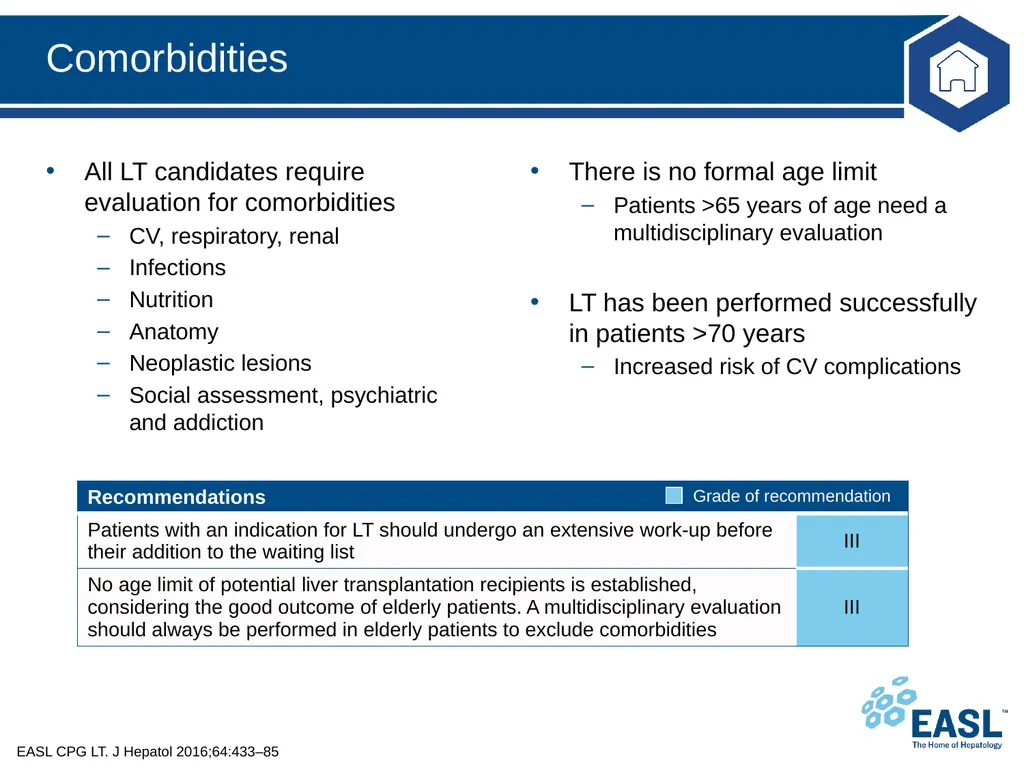
slide26. All LT candidates require evaluation for comorbidities
CV, respiratory, renal
Infections
Nutrition
Anatomy
Neoplastic lesions
Social assessment, psychiatric and addiction There is no formal age limit
Patients >65 years of age need a multidisciplinary evaluation
LT has been performed successfully in patients >70 years
Increased risk of CV complications Comorbidities EASL CPG LT. J Hepatol 2016;64:433–85<br>
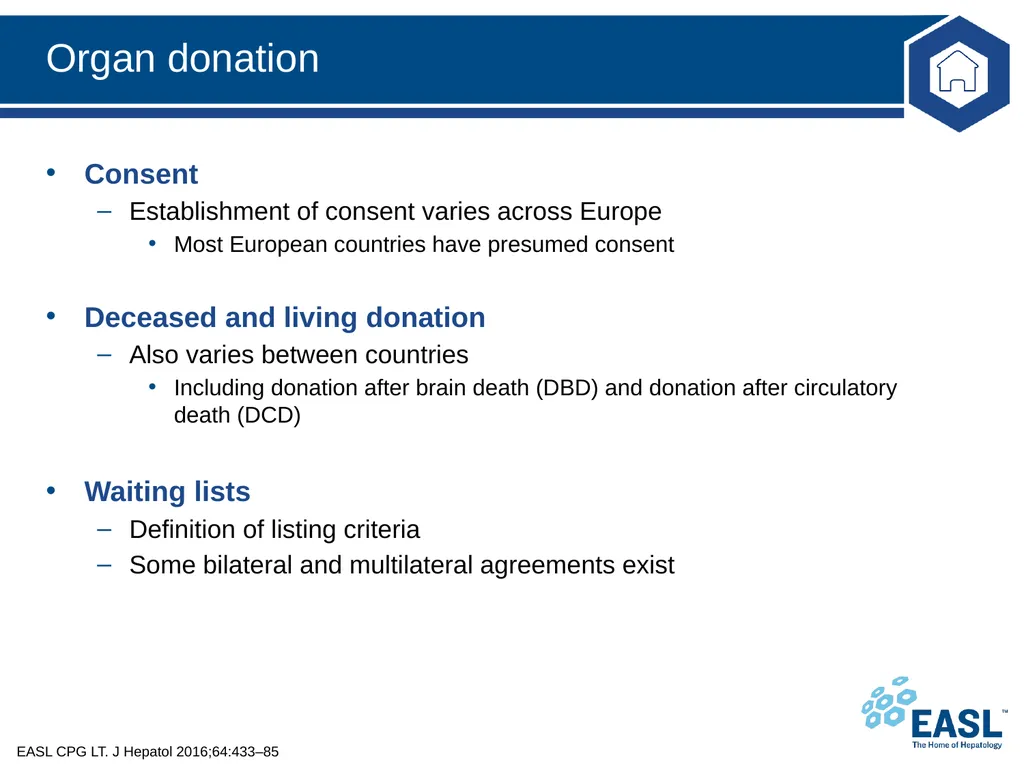
slide27. Organ donation EASL CPG LT. J Hepatol 2016;64:433–85 Consent
Establishment of consent varies across Europe
Most European countries have presumed consent
Deceased and living donation
Also varies between countries
Including donation after brain death (DBD) and donation after circulatory death (DCD)
Waiting lists
Definition of listing criteria
Some bilateral and multilateral agreements exist<br>
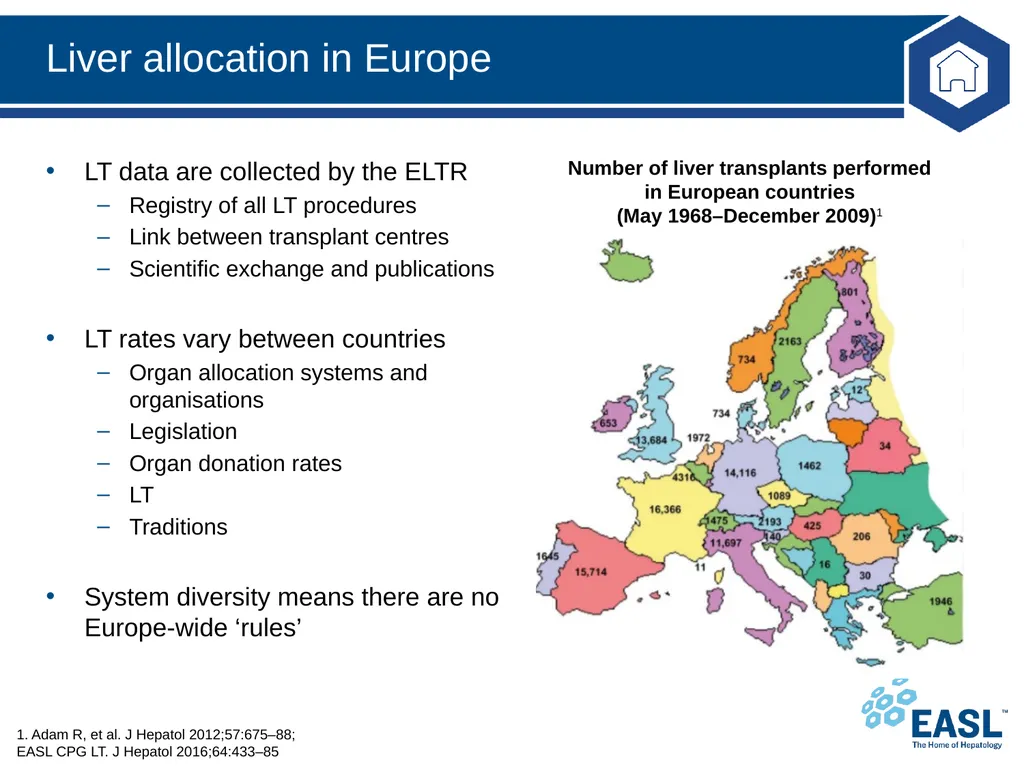
slide28. Liver allocation in Europe 1. Adam R, et al. J Hepatol 2012;57:675–88;
EASL CPG LT. J Hepatol 2016;64:433–85 LT data are collected by the ELTR
Registry of all LT procedures
Link between transplant centres
Scientific exchange and publications
LT rates vary between countries
Organ allocation systems and organisations
Legislation
Organ donation rates
LT
Traditions
System diversity means there are no Europe-wide ‘rules’ Number of liver transplants performed in European countries (May 1968–December 2009)1<br>
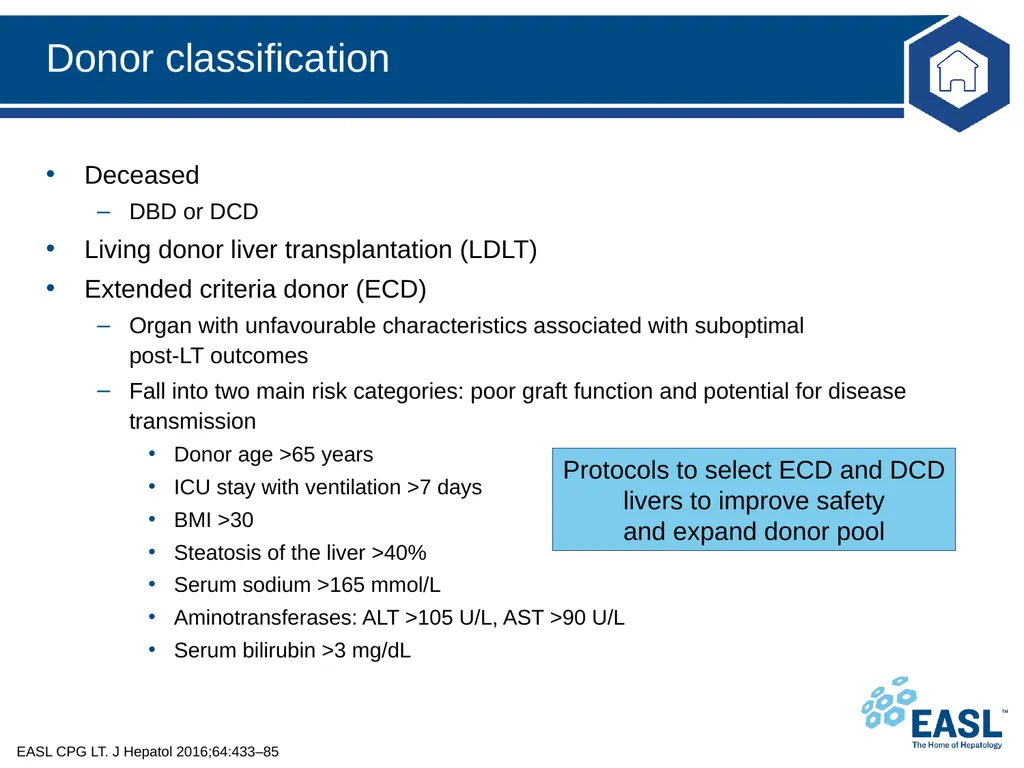
slide29. Donor classification EASL CPG LT. J Hepatol 2016;64:433–85 Deceased
DBD or DCD
Living donor liver transplantation (LDLT)
Extended criteria donor (ECD)
Organ with unfavourable characteristics associated with suboptimal post-LT outcomes
Fall into two main risk categories: poor graft function and potential for disease transmission
Donor age >65 years
ICU stay with ventilation >7 days
BMI >30
Steatosis of the liver >40%
Serum sodium >165 mmol/L
Aminotransferases: ALT >105 U/L, AST >90 U/L
Serum bilirubin >3 mg/dL Protocols to select ECD and DCD livers to improve safety and expand donor pool<br>
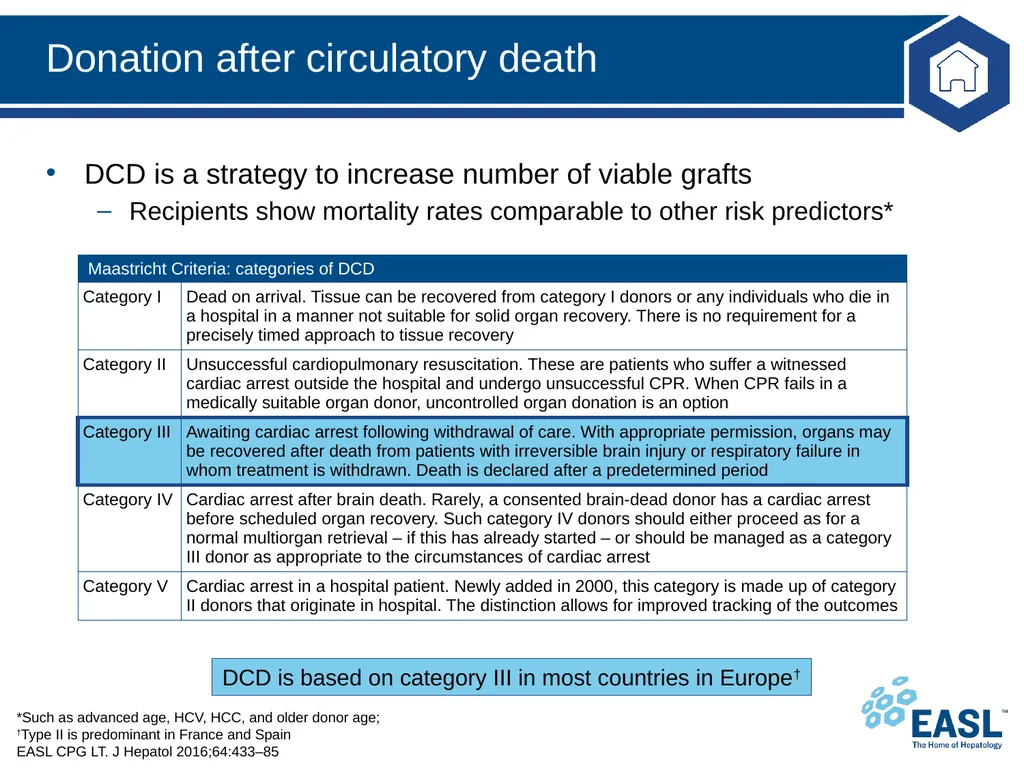
slide30. Donation after circulatory death *Such as advanced age, HCV, HCC, and older donor age;
†Type II is predominant in France and Spain
EASL CPG LT. J Hepatol 2016;64:433–85 DCD is a strategy to increase number of viable grafts
Recipients show mortality rates comparable to other risk predictors* DCD is based on category III in most countries in Europe†<br>
slide31. ECD: older donors and donors with diabetes mellitus EASL CPG LT. J Hepatol 2016;64:433–85 Recipients of livers from older donors are at increased risk of graft failure and mortality
Increased vulnerability to ischaemia and diminished regeneration
Recipients of livers from diabetes mellitus donors have poorer 1- and 5-year graft survival<br>
slide32. ECD: donors with graft steatosis EASL CPG LT. J Hepatol 2016;64:433–85 Hepatic steatosis is associated with a range of post-LT complications
Poor graft function in particular
Steatosis is classified as mild, moderate or severe
Mild (1030% steatosis): suitable for transplantation
Moderate (3060%): acceptable outcomes in select DR combinations
Severe (>60%): unacceptable risk of graft failure, AKI, biliary complications and mortality<br>
slide33. ECD: anti-HBc-positive donors EASL CPG LT. J Hepatol 2016;64:433–85 Anti-HBc-positive grafts are common in countries with endemic HBV infection
Outcomes are better if transplanted into HBeAg-positive rather than HBeAg-negative individuals
Viral replication may increase with post-LT immunosuppression
Due to frequent occult HBV infection in the graft<br>
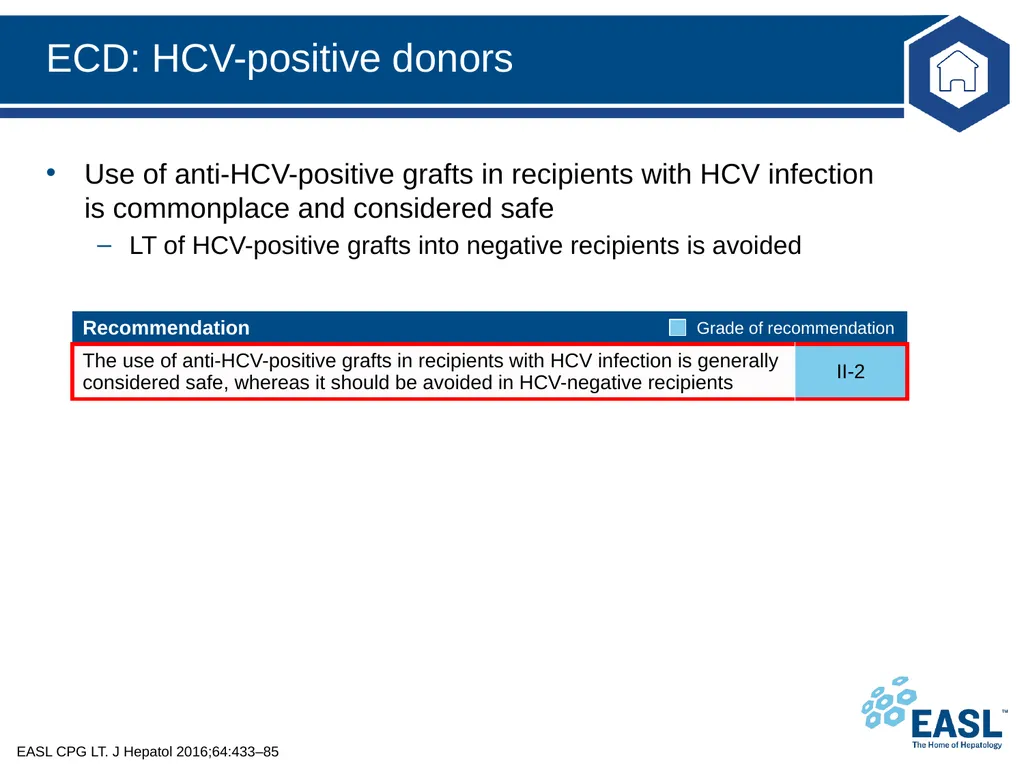
slide34. ECD: HCV-positive donors EASL CPG LT. J Hepatol 2016;64:433–85 Use of anti-HCV-positive grafts in recipients with HCV infection is commonplace and considered safe
LT of HCV-positive grafts into negative recipients is avoided<br>
slide35. Liver transplantation EASL CPG LT. J Hepatol 2016;64:433–85 To overcome a shortage of grafts, alternative strategies need to be developed
Europe and USA: most common LT is ‘conventional’ or ‘standard’: Whole liver grafts
Asia: partial grafts from living donors
Whole liver grafts
Techniques differ depending on whether recipient IVC is preserved
Partial graft transplants
Auxiliary LT
Split LT
Living donor LT<br>
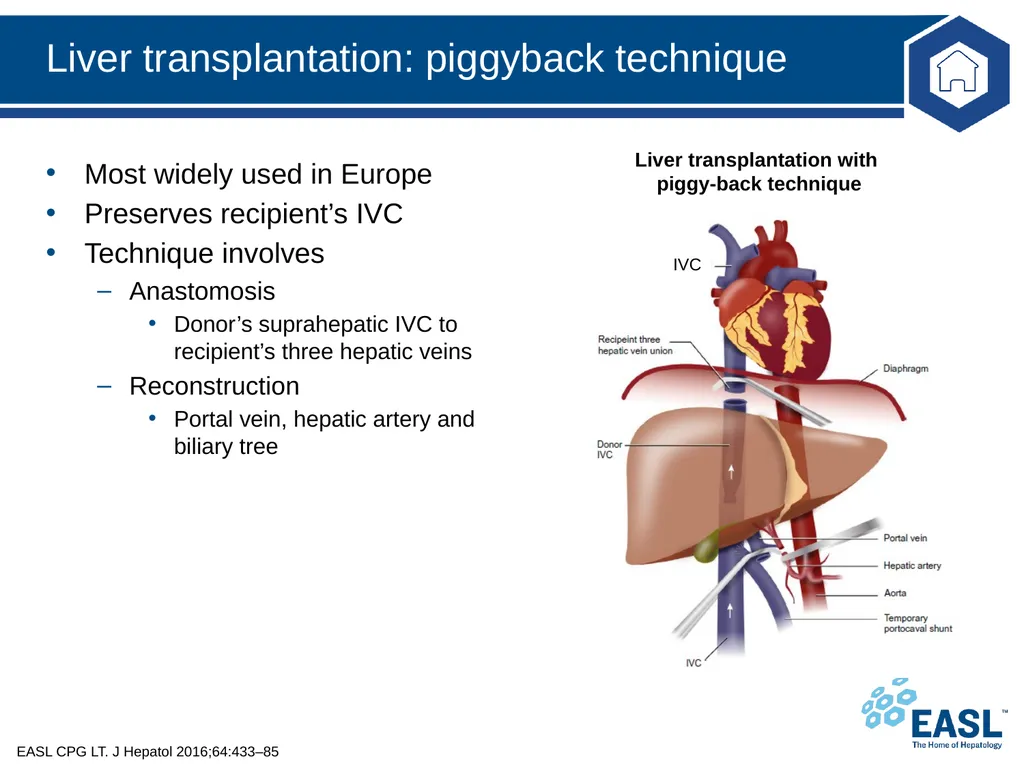
slide36. Most widely used in Europe
Preserves recipient’s IVC
Technique involves
Anastomosis
Donor’s suprahepatic IVC to recipient’s three hepatic veins
Reconstruction
Portal vein, hepatic artery and biliary tree Liver transplantation: piggyback technique EASL CPG LT. J Hepatol 2016;64:433–85 Liver transplantation with piggy-back technique IVC<br>
slide37. Partial graft transplant: auxiliary LT EASL CPG LT. J Hepatol 2016;64:433–85 Auxiliary LT may be performed orthotopically or heterotopically and provides an alternative in two situations:
Patients with ALF
Provide support to patient’s diseased liver while it recovers
When native liver functions normally, graft is removed and immunosuppression is withdrawn
Patients with functional congenital or metabolic disorders affecting a normal liver
Allows correction of the metabolic disorder while avoiding a full LT
Poorer outcomes are obtained in Budd–Chiari syndrome and Wilson disease
Acute hepatitis B is a controversial indication
Risk of graft reinfection<br>
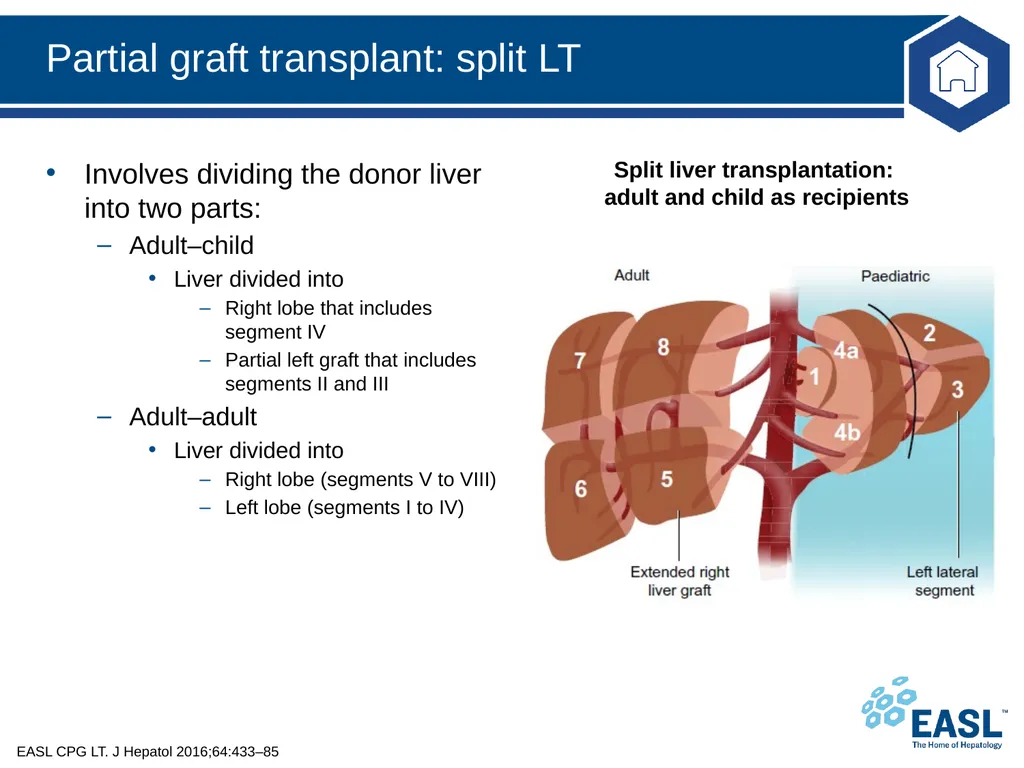
slide38. Involves dividing the donor liver into two parts:
Adult–child
Liver divided into
Right lobe that includes segment IV
Partial left graft that includes segments II and III
Adult–adult
Liver divided into
Right lobe (segments V to VIII)
Left lobe (segments I to IV) Partial graft transplant: split LT EASL CPG LT. J Hepatol 2016;64:433–85 Split liver transplantation: adult and child as recipients<br>
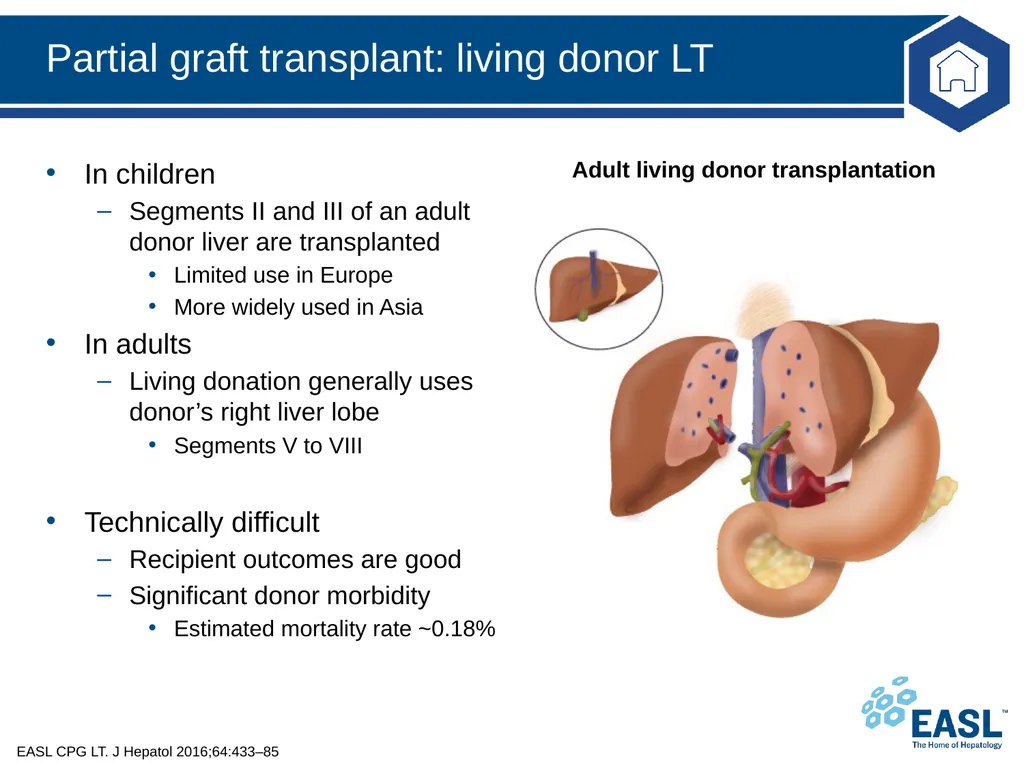
slide39. In children
Segments II and III of an adult donor liver are transplanted
Limited use in Europe
More widely used in Asia
In adults
Living donation generally uses donor’s right liver lobe
Segments V to VIII
Technically difficult
Recipient outcomes are good
Significant donor morbidity
Estimated mortality rate ~0.18% Adult living donor transplantation Partial graft transplant: living donor LT EASL CPG LT. J Hepatol 2016;64:433–85<br>
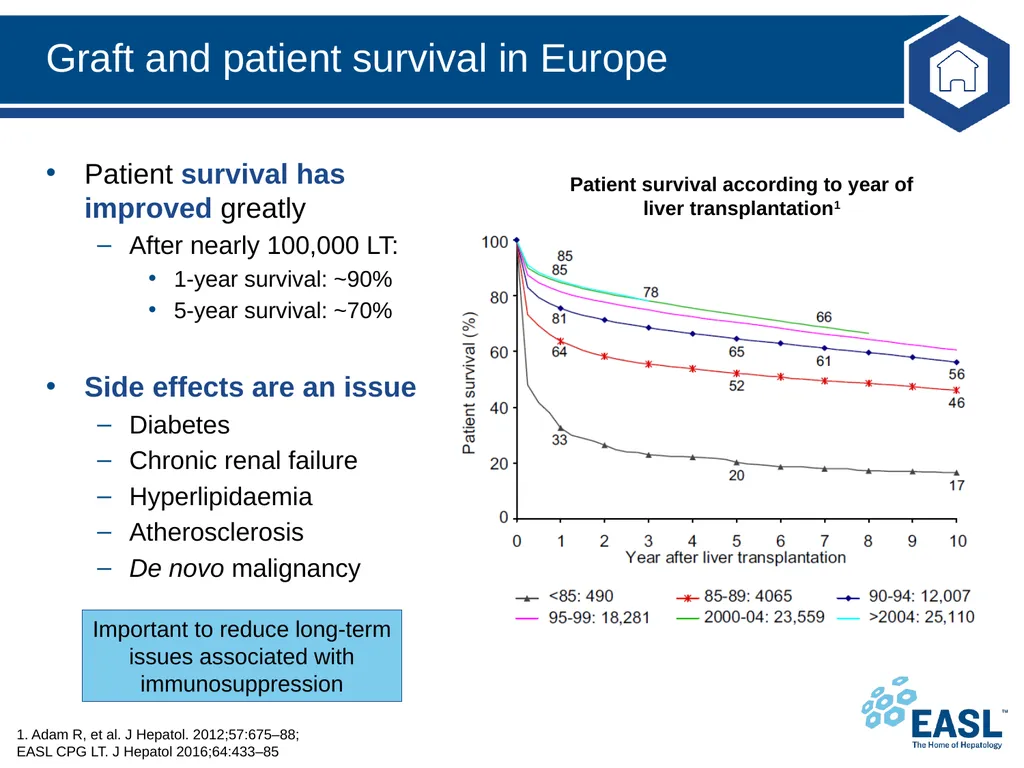
slide40. Patient survival has improved greatly
After nearly 100,000 LT:
1-year survival: ~90%
5-year survival: ~70%
Side effects are an issue
Diabetes
Chronic renal failure
Hyperlipidaemia
Atherosclerosis
De novo malignancy Graft and patient survival in Europe 1. Adam R, et al. J Hepatol. 2012;57:675–88;
EASL CPG LT. J Hepatol 2016;64:433–85 Patient survival according to year of liver transplantation1 Important to reduce long-term issues associated with immunosuppression<br>
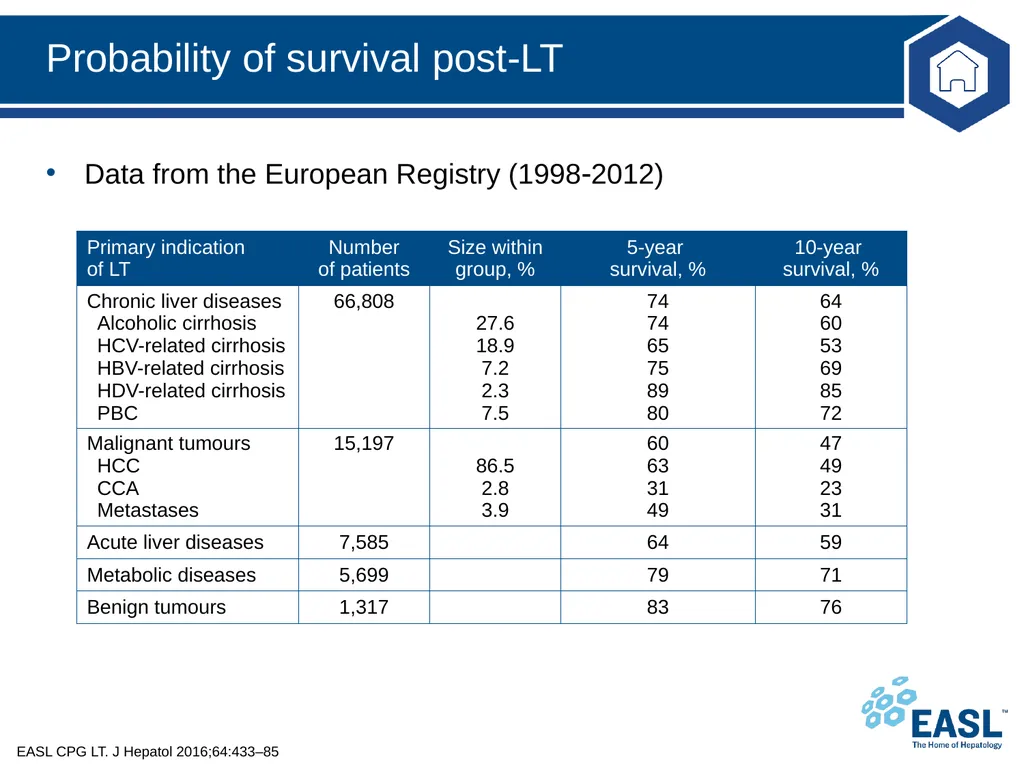
slide41. Probability of survival post-LT EASL CPG LT. J Hepatol 2016;64:433–85 Data from the European Registry (19982012)<br>
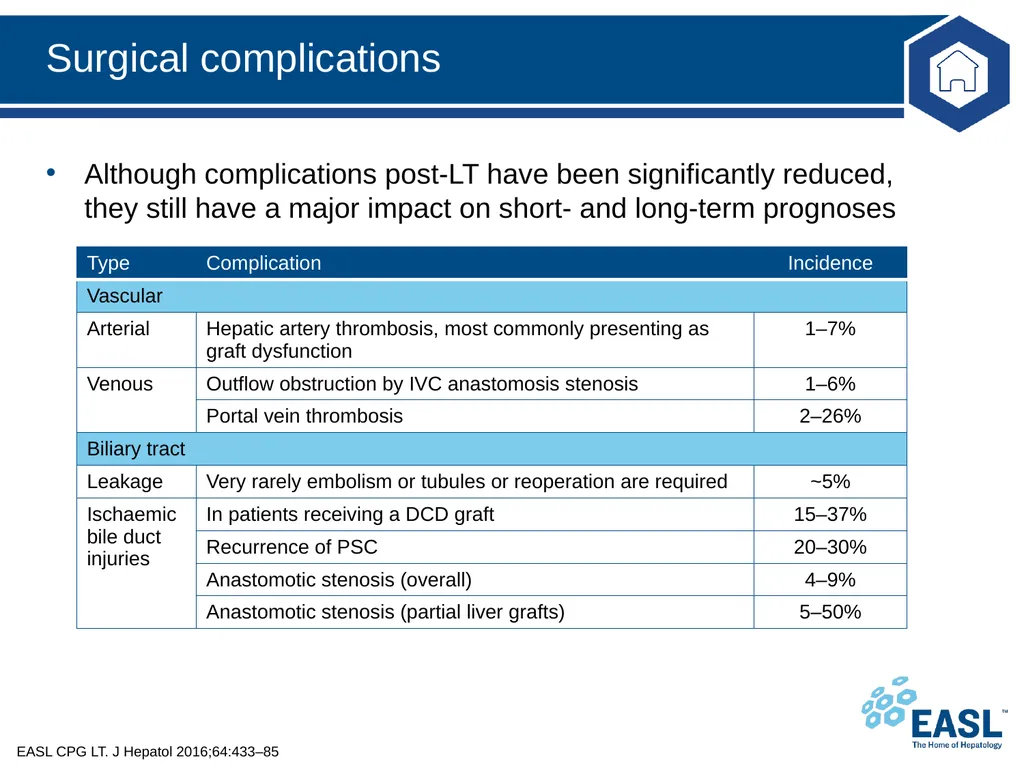
slide42. Surgical complications EASL CPG LT. J Hepatol 2016;64:433–85 Although complications post-LT have been significantly reduced, they still have a major impact on short- and long-term prognoses<br>
slide43. Graft loss in 7–10% of adults
Two types:
Early
Hepatic artery thrombosis or primary graft non-function
Late
IC, chronic rejection or primary disease recurrence
Re-transplantation is the only option
High morbidity and mortality compared with initial LT
Significantly lower patient and graft survival1 Re-transplantation 1. Adapted from ELTR. Available at: http://www.eltr.org/Mortality-and-retransplantation.html. Accessed 26.01.18; EASL CPG LT. J Hepatol 2016;64:433–85<br>
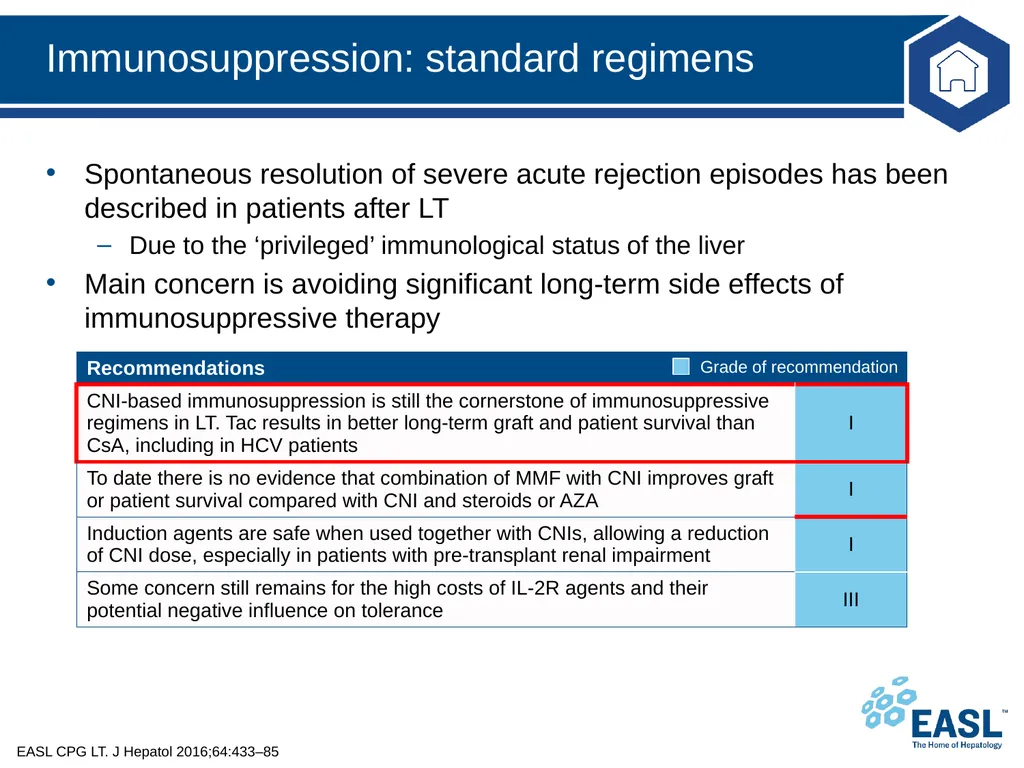
slide44. Immunosuppression: standard regimens EASL CPG LT. J Hepatol 2016;64:433–85 Spontaneous resolution of severe acute rejection episodes has been described in patients after LT
Due to the ‘privileged’ immunological status of the liver
Main concern is avoiding significant long-term side effects of immunosuppressive therapy<br>
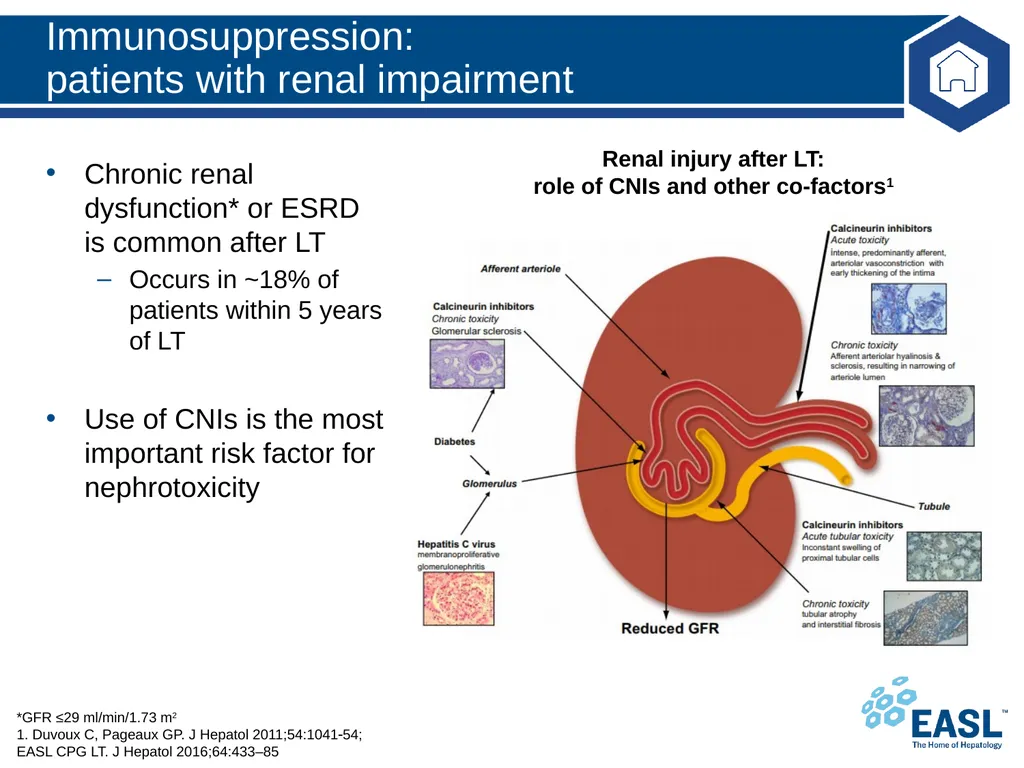
slide45. Chronic renal dysfunction* or ESRD is common after LT
Occurs in ~18% of patients within 5 years of LT
Use of CNIs is the most important risk factor for nephrotoxicity Immunosuppression: patients with renal impairment *GFR ≤29 ml/min/1.73 m2
1. Duvoux C, Pageaux GP. J Hepatol 2011;54:104154;
EASL CPG LT. J Hepatol 2016;64:433–85 Renal injury after LT:
role of CNIs and other co-factors1<br>
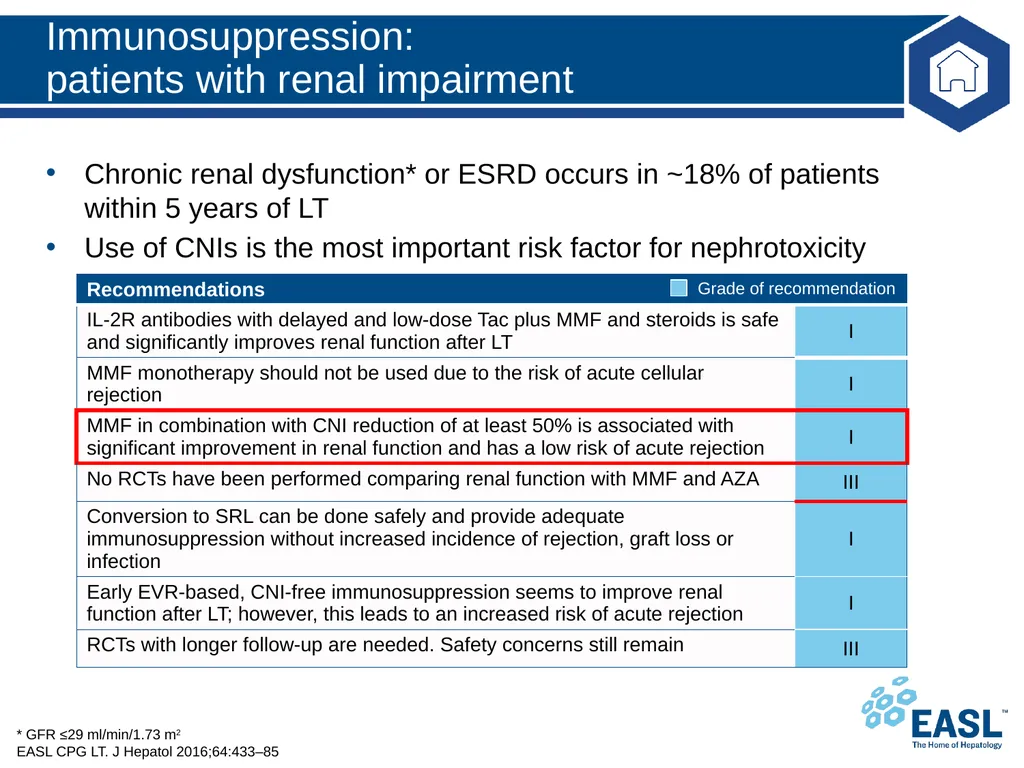
slide46. Immunosuppression: patients with renal impairment * GFR ≤29 ml/min/1.73 m2
EASL CPG LT. J Hepatol 2016;64:433–85 Chronic renal dysfunction* or ESRD occurs in ~18% of patients within 5 years of LT
Use of CNIs is the most important risk factor for nephrotoxicity<br>
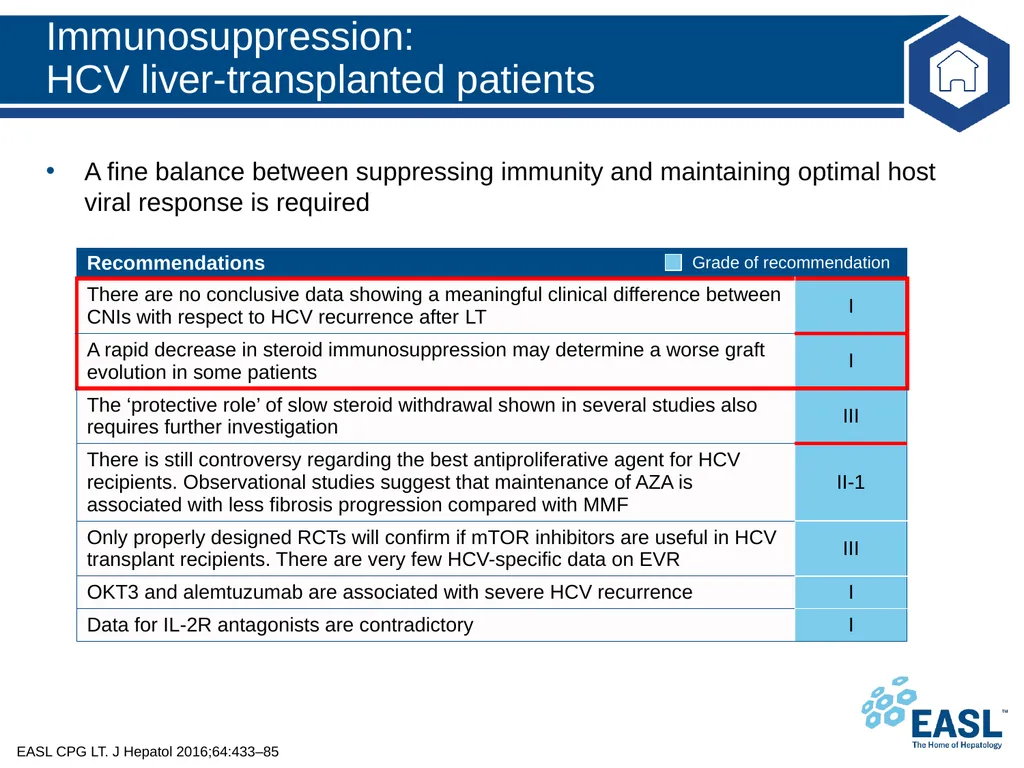
slide47. Immunosuppression: HCV liver-transplanted patients EASL CPG LT. J Hepatol 2016;64:433–85 A fine balance between suppressing immunity and maintaining optimal host viral response is required<br>
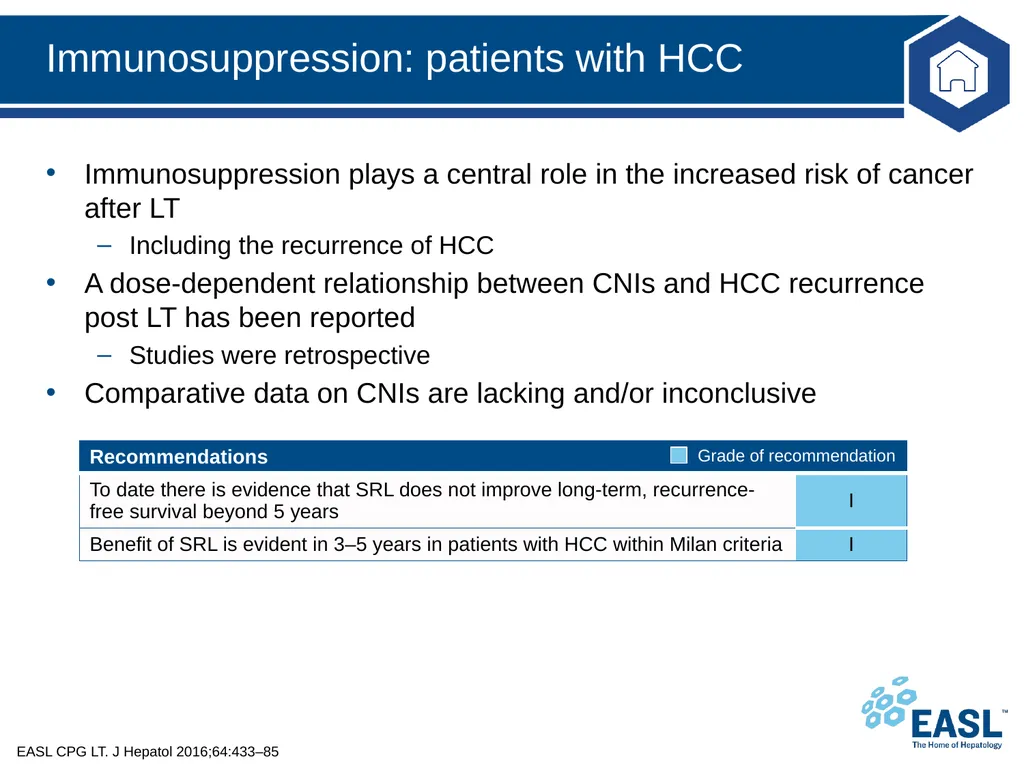
slide48. Immunosuppression: patients with HCC EASL CPG LT. J Hepatol 2016;64:433–85 Immunosuppression plays a central role in the increased risk of cancer after LT
Including the recurrence of HCC
A dose-dependent relationship between CNIs and HCC recurrence post LT has been reported
Studies were retrospective
Comparative data on CNIs are lacking and/or inconclusive<br>
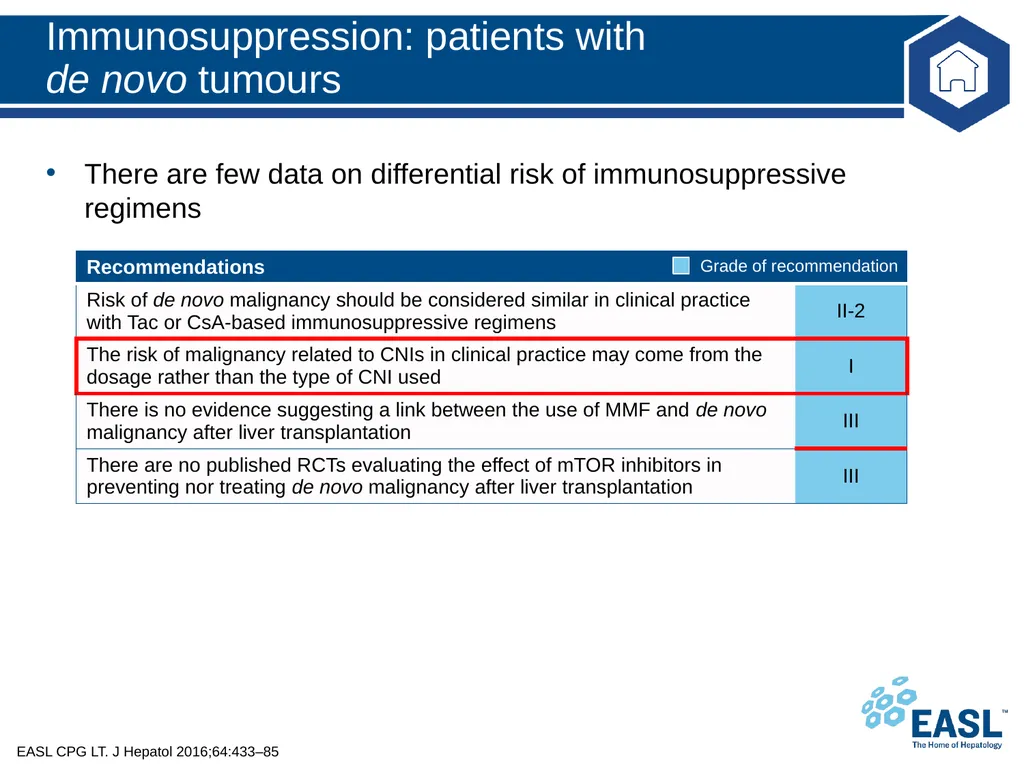
slide49. Immunosuppression: patients with de novo tumours EASL CPG LT. J Hepatol 2016;64:433–85 There are few data on differential risk of immunosuppressive regimens<br>
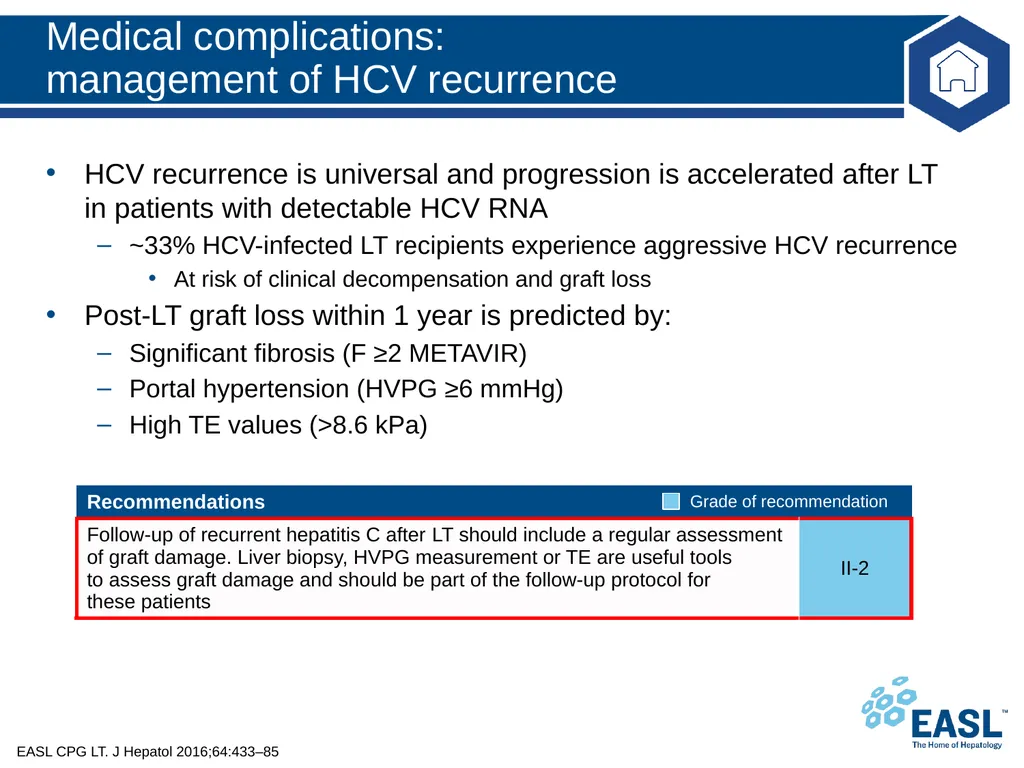
slide50. Medical complications: management of HCV recurrence EASL CPG LT. J Hepatol 2016;64:433–85 HCV recurrence is universal and progression is accelerated after LT in patients with detectable HCV RNA
~33% HCV-infected LT recipients experience aggressive HCV recurrence
At risk of clinical decompensation and graft loss
Post-LT graft loss within 1 year is predicted by:
Significant fibrosis (F ≥2 METAVIR)
Portal hypertension (HVPG ≥6 mmHg)
High TE values (>8.6 kPa)<br>
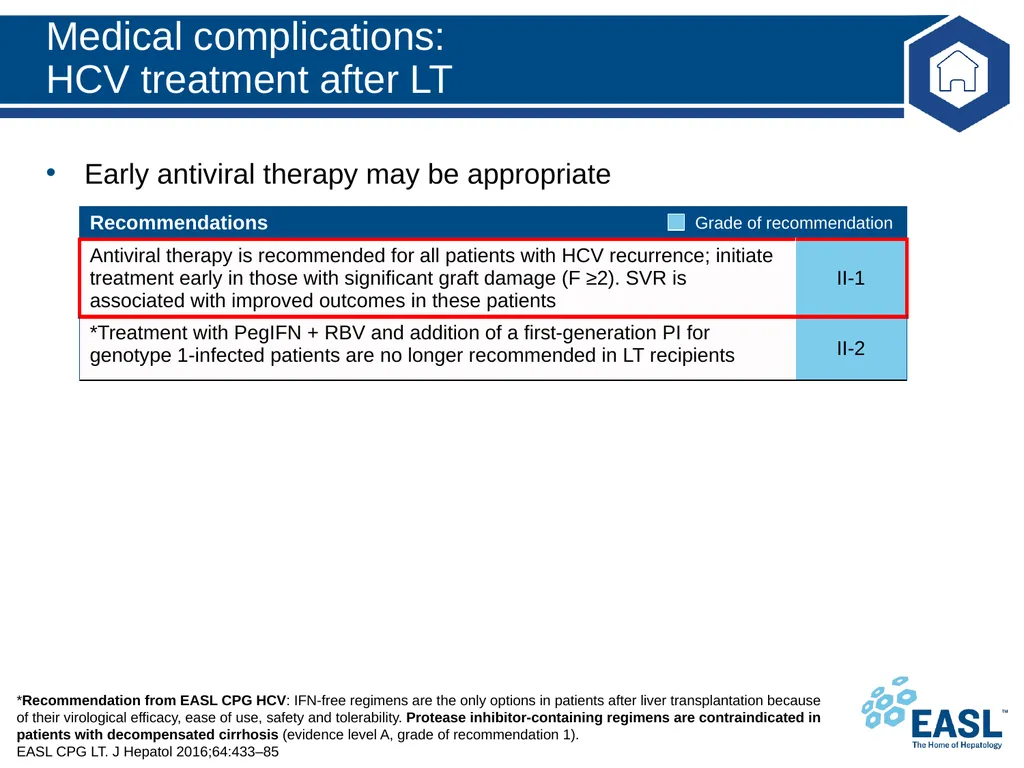
slide51. Medical complications: HCV treatment after LT *Recommendation from EASL CPG HCV: IFN-free regimens are the only options in patients after liver transplantation because of their virological efficacy, ease of use, safety and tolerability. Protease inhibitor-containing regimens are contraindicated in patients with decompensated cirrhosis (evidence level A, grade of recommendation 1).
EASL CPG LT. J Hepatol 2016;64:433–85 Early antiviral therapy may be appropriate<br>
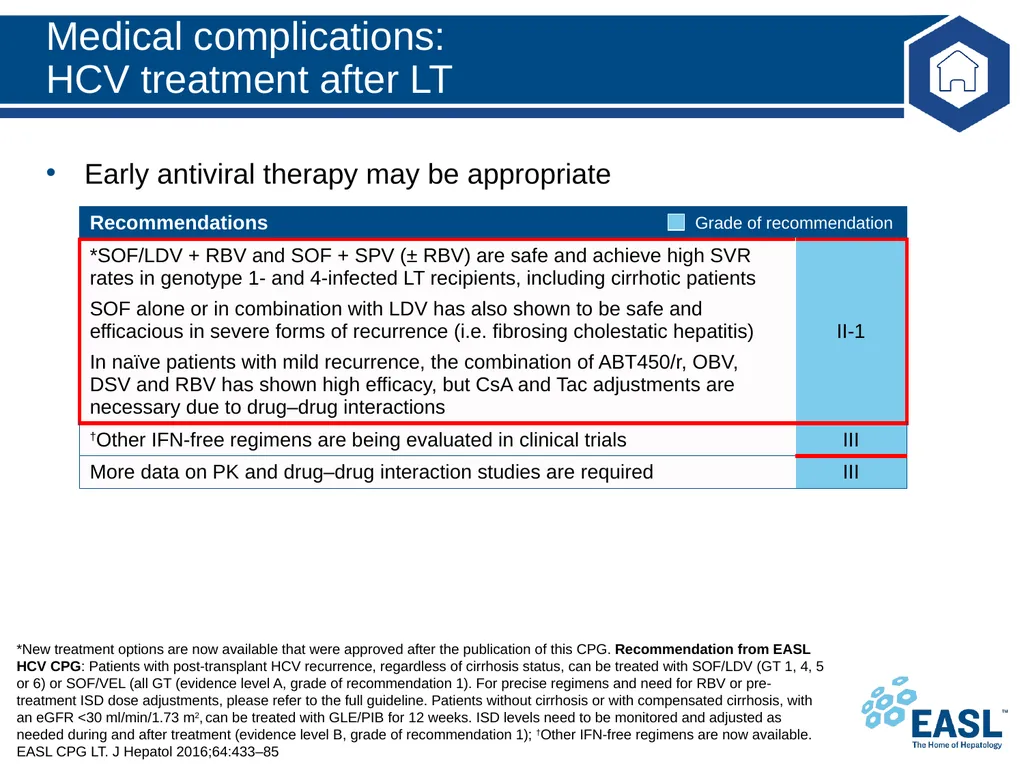
slide52. Medical complications: HCV treatment after LT *New treatment options are now available that were approved after the publication of this CPG. Recommendation from EASL HCV CPG: Patients with post-transplant HCV recurrence, regardless of cirrhosis status, can be treated with SOF/LDV (GT 1, 4, 5 or 6) or SOF/VEL (all GT (evidence level A, grade of recommendation 1). For precise regimens and need for RBV or pre-treatment ISD dose adjustments, please refer to the full guideline. Patients without cirrhosis or with compensated cirrhosis, with an eGFR <30 ml/min/1.73 m2, can be treated with GLE/PIB for 12 weeks. ISD levels need to be monitored and adjusted as needed during and after treatment (evidence level B, grade of recommendation 1); †Other IFN-free regimens are now available.
EASL CPG LT. J Hepatol 2016;64:433–85 Early antiviral therapy may be appropriate<br>
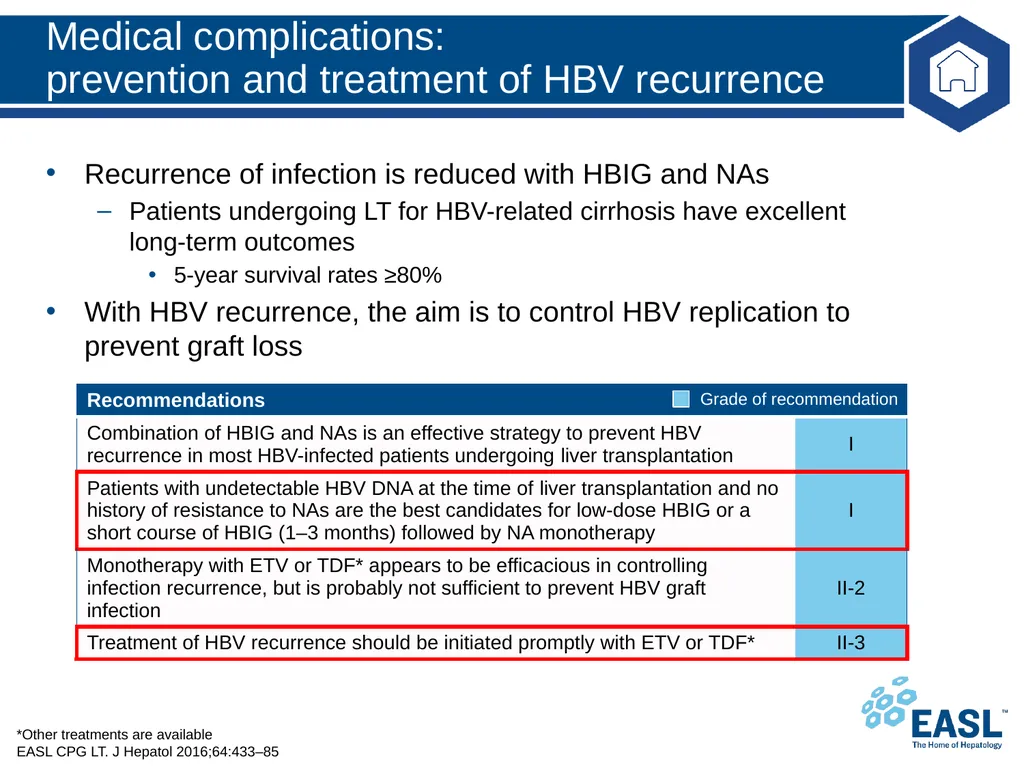
slide53. Medical complications: prevention and treatment of HBV recurrence *Other treatments are available
EASL CPG LT. J Hepatol 2016;64:433–85 Recurrence of infection is reduced with HBIG and NAs
Patients undergoing LT for HBV-related cirrhosis have excellent long-term outcomes
5-year survival rates ≥80%
With HBV recurrence, the aim is to control HBV replication to prevent graft loss<br>
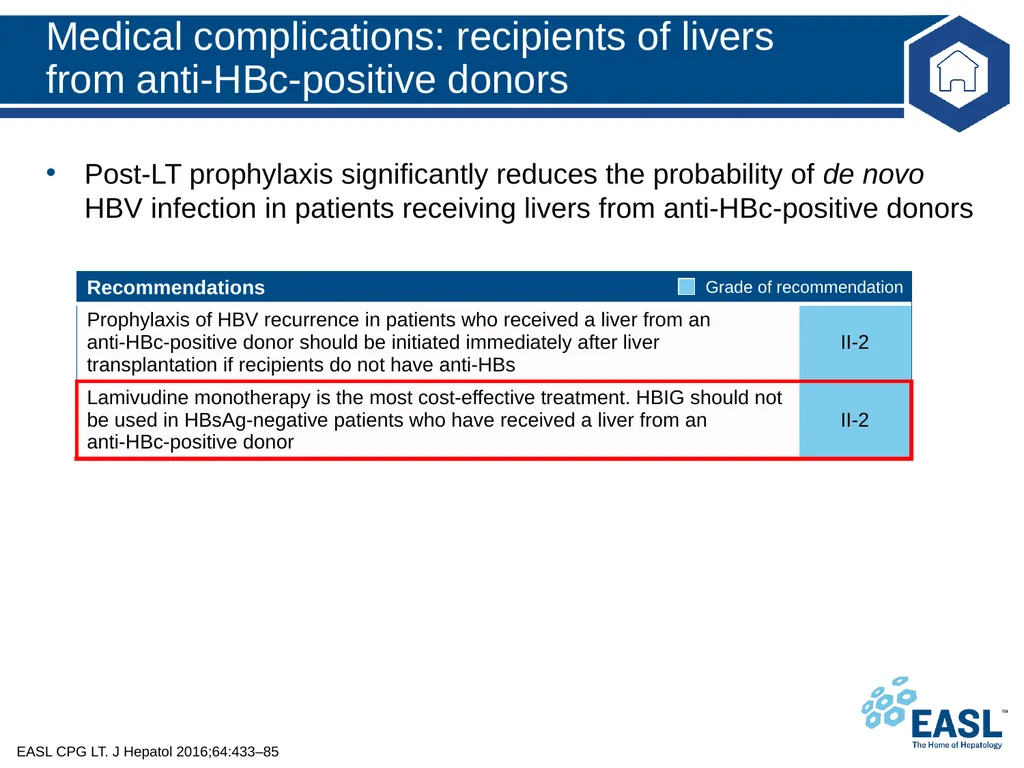
slide54. Medical complications: recipients of livers from anti-HBc-positive donors EASL CPG LT. J Hepatol 2016;64:433–85 Post-LT prophylaxis significantly reduces the probability of de novo HBV infection in patients receiving livers from anti-HBc-positive donors<br>
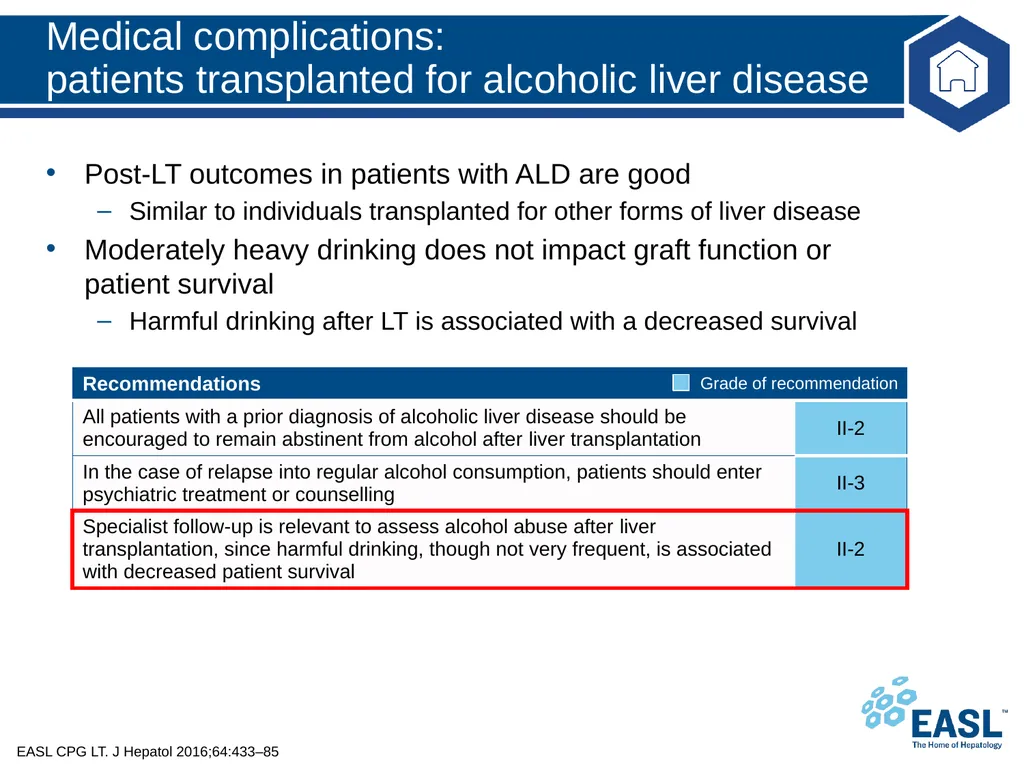
slide55. Medical complications: patients transplanted for alcoholic liver disease EASL CPG LT. J Hepatol 2016;64:433–85 Post-LT outcomes in patients with ALD are good
Similar to individuals transplanted for other forms of liver disease
Moderately heavy drinking does not impact graft function or patient survival
Harmful drinking after LT is associated with a decreased survival<br>
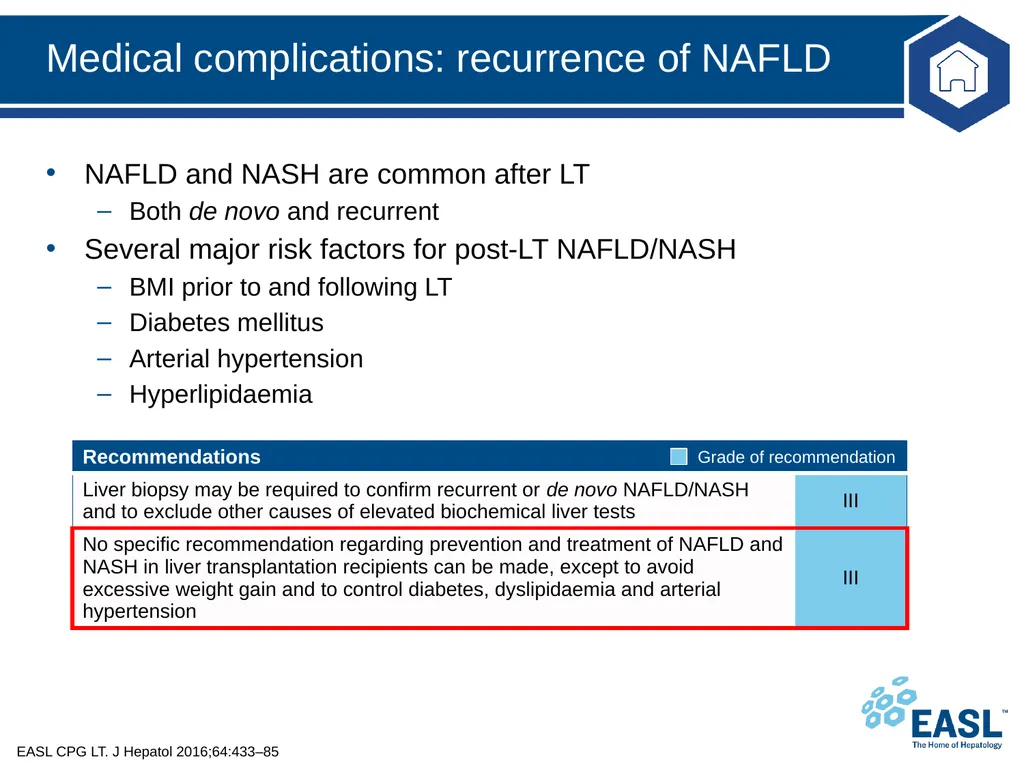
slide56. Medical complications: recurrence of NAFLD EASL CPG LT. J Hepatol 2016;64:433–85 NAFLD and NASH are common after LT
Both de novo and recurrent
Several major risk factors for post-LT NAFLD/NASH
BMI prior to and following LT
Diabetes mellitus
Arterial hypertension
Hyperlipidaemia<br>
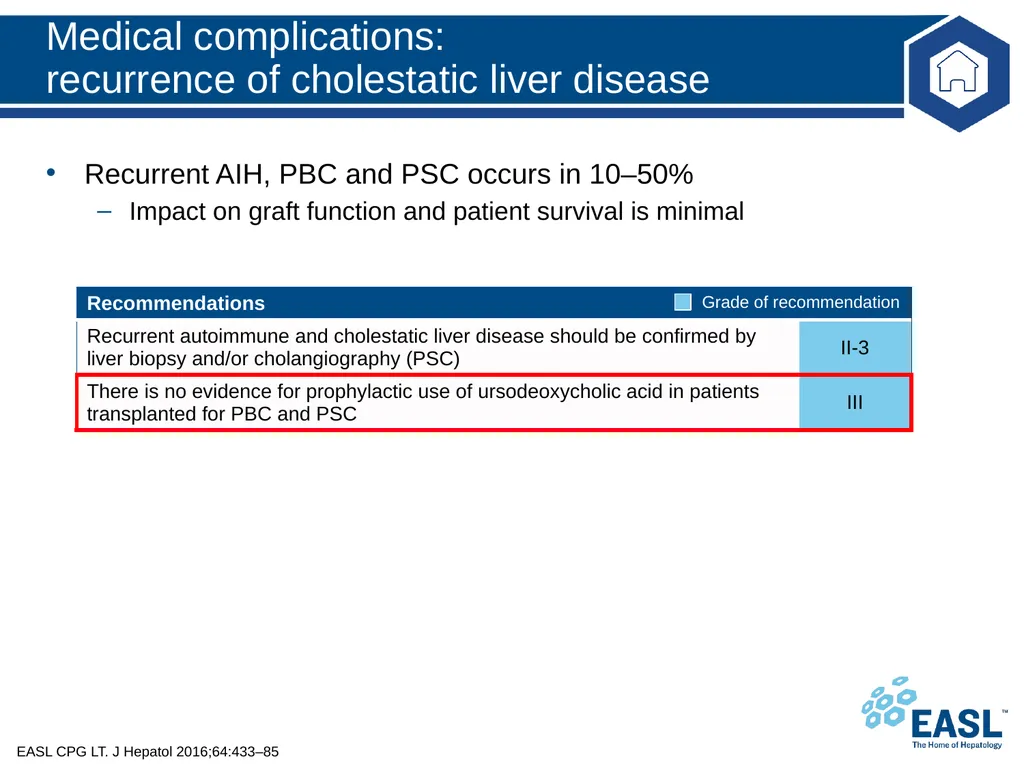
slide57. Medical complications: recurrence of cholestatic liver disease EASL CPG LT. J Hepatol 2016;64:433–85 Recurrent AIH, PBC and PSC occurs in 10–50%
Impact on graft function and patient survival is minimal<br>
slide58. Medical complications: management of HCC recurrence *When technically possible
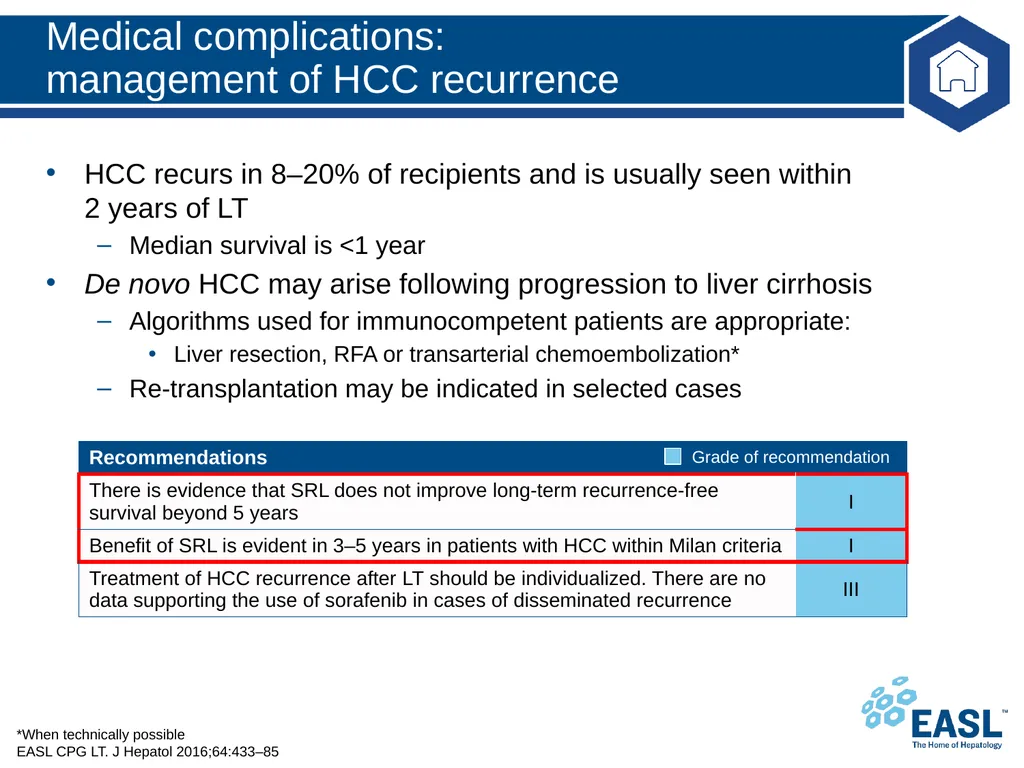
EASL CPG LT. J Hepatol 2016;64:433–85 HCC recurs in 8–20% of recipients and is usually seen within 2 years of LT
Median survival is <1 year
De novo HCC may arise following progression to liver cirrhosis
Algorithms used for immunocompetent patients are appropriate:
Liver resection, RFA or transarterial chemoembolization*
Re-transplantation may be indicated in selected cases<br>
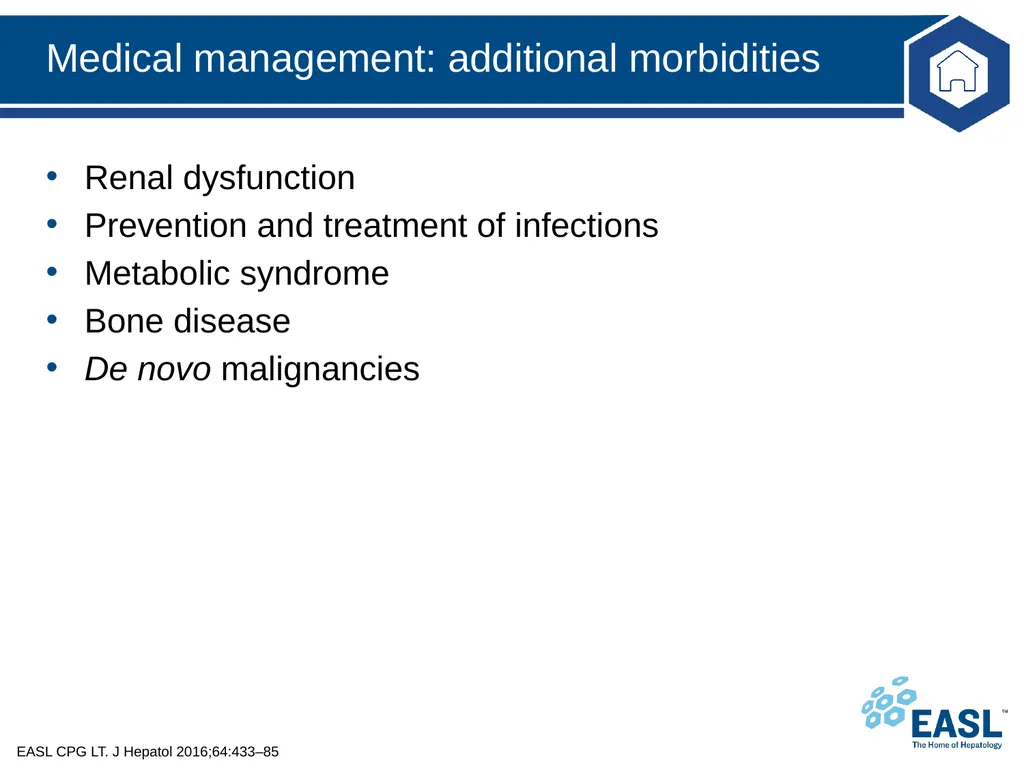
slide59. Medical management: additional morbidities EASL CPG LT. J Hepatol 2016;64:433–85 Renal dysfunction
Prevention and treatment of infections
Metabolic syndrome
Bone disease
De novo malignancies<br>
slide60. Long-term follow-up: lifestyle EASL CPG LT. J Hepatol 2016;64:433–85 LT should allow patients to enjoy the same state of health as they did prior to the disease
Goal should be to balance graft functioning, and patient psychological and physical well-being
Also need to consider:
Medication adherence
Employment
Sexual functioning and pregnancy
Physical activity and weight control<br>
slide61. Appendix Additional recommendations<br>
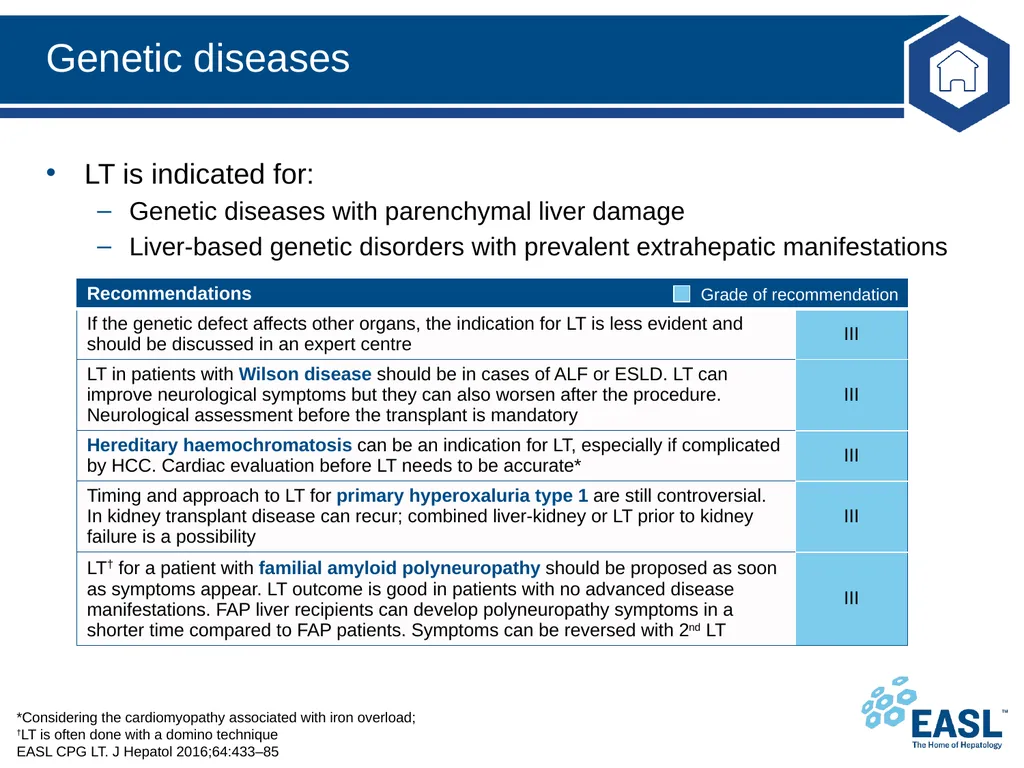
slide62. Genetic diseases *Considering the cardiomyopathy associated with iron overload;
†LT is often done with a domino technique
EASL CPG LT. J Hepatol 2016;64:433–85 LT is indicated for:
Genetic diseases with parenchymal liver damage
Liver-based genetic disorders with prevalent extrahepatic manifestations<br>
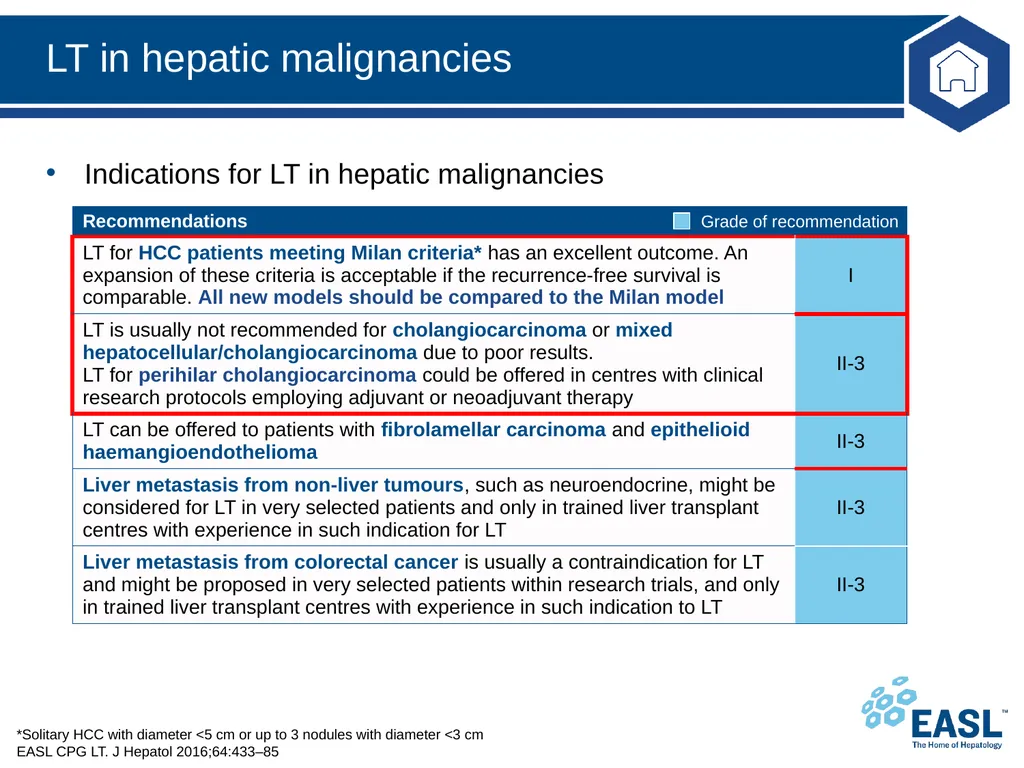
slide63. LT in hepatic malignancies *Solitary HCC with diameter <5 cm or up to 3 nodules with diameter <3 cm
EASL CPG LT. J Hepatol 2016;64:433–85 Indications for LT in hepatic malignancies<br>
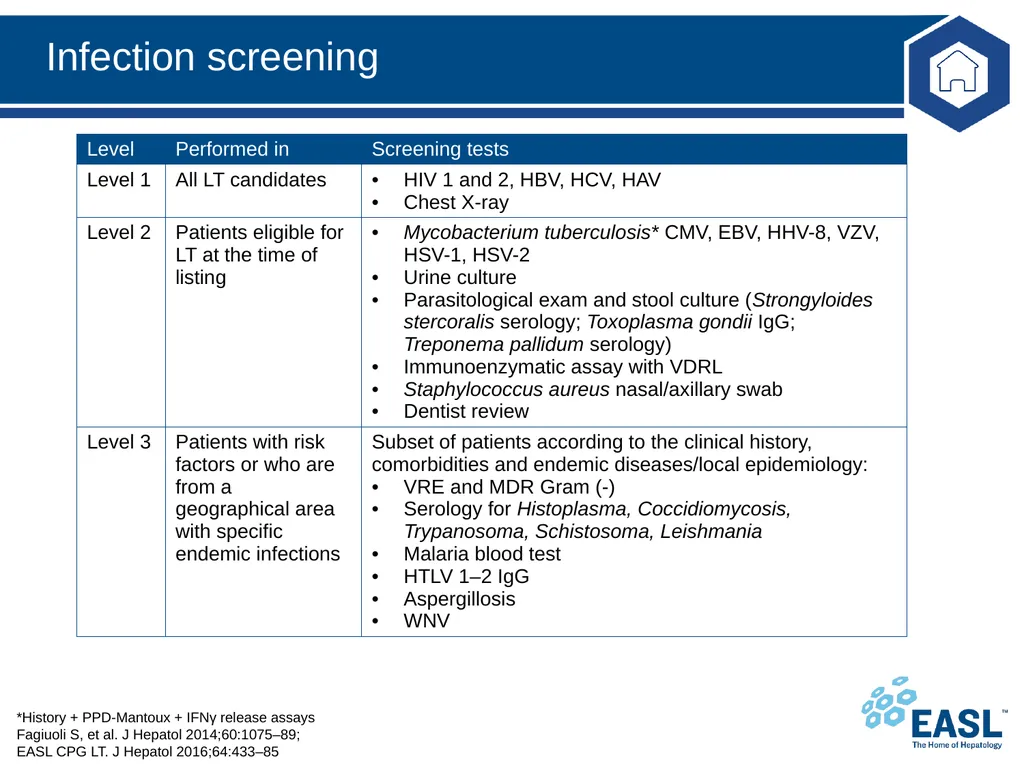
slide64. Infection screening *History + PPD-Mantoux + IFNγ release assays
Fagiuoli S, et al. J Hepatol 2014;60:1075–89; EASL CPG LT. J Hepatol 2016;64:433–85<br>
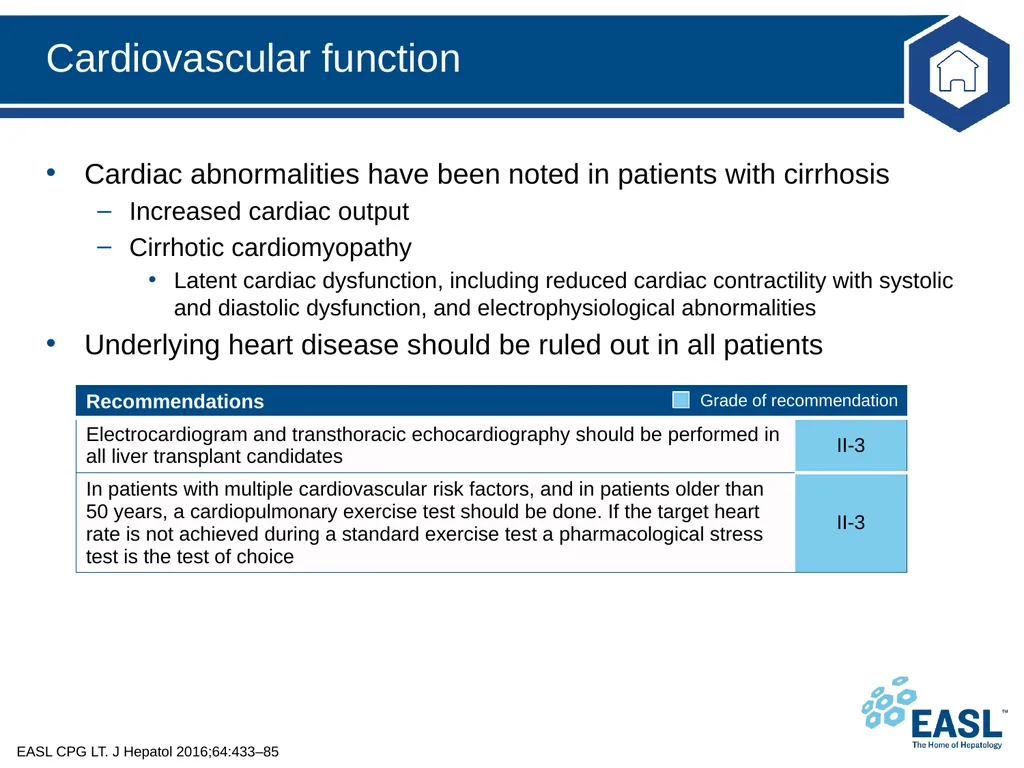
slide65. Cardiovascular function EASL CPG LT. J Hepatol 2016;64:433–85 Cardiac abnormalities have been noted in patients with cirrhosis
Increased cardiac output
Cirrhotic cardiomyopathy
Latent cardiac dysfunction, including reduced cardiac contractility with systolic and diastolic dysfunction, and electrophysiological abnormalities
Underlying heart disease should be ruled out in all patients<br>
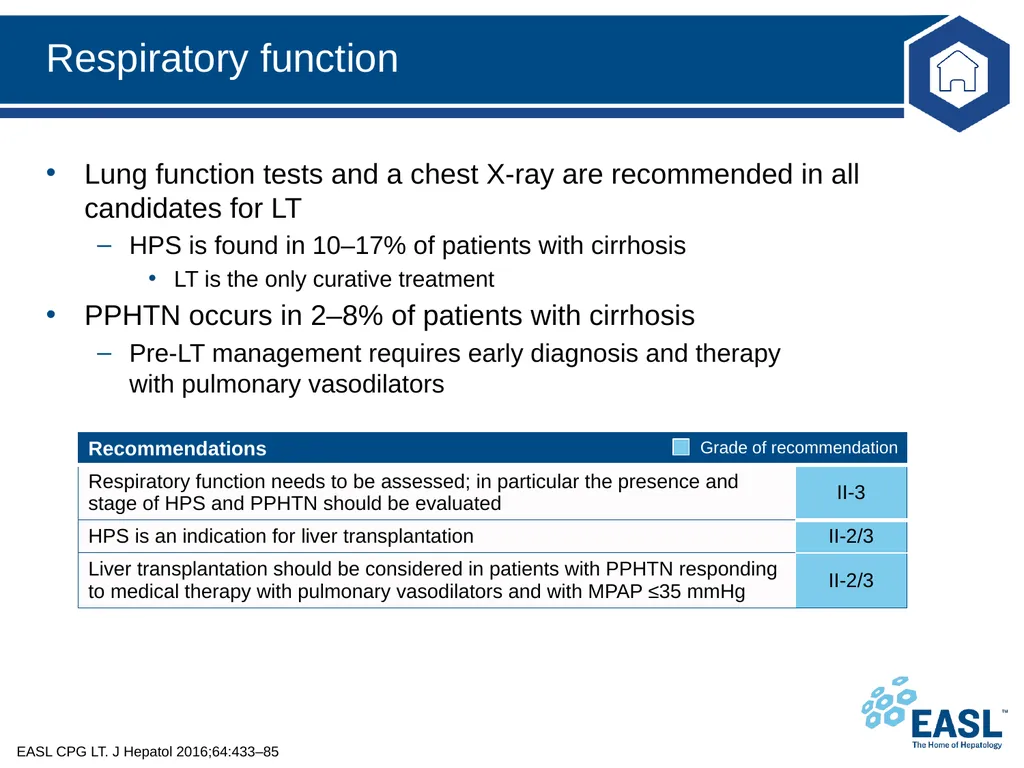
slide66. Respiratory function EASL CPG LT. J Hepatol 2016;64:433–85 Lung function tests and a chest X-ray are recommended in all candidates for LT
HPS is found in 10–17% of patients with cirrhosis
LT is the only curative treatment
PPHTN occurs in 2–8% of patients with cirrhosis
Pre-LT management requires early diagnosis and therapy with pulmonary vasodilators<br>
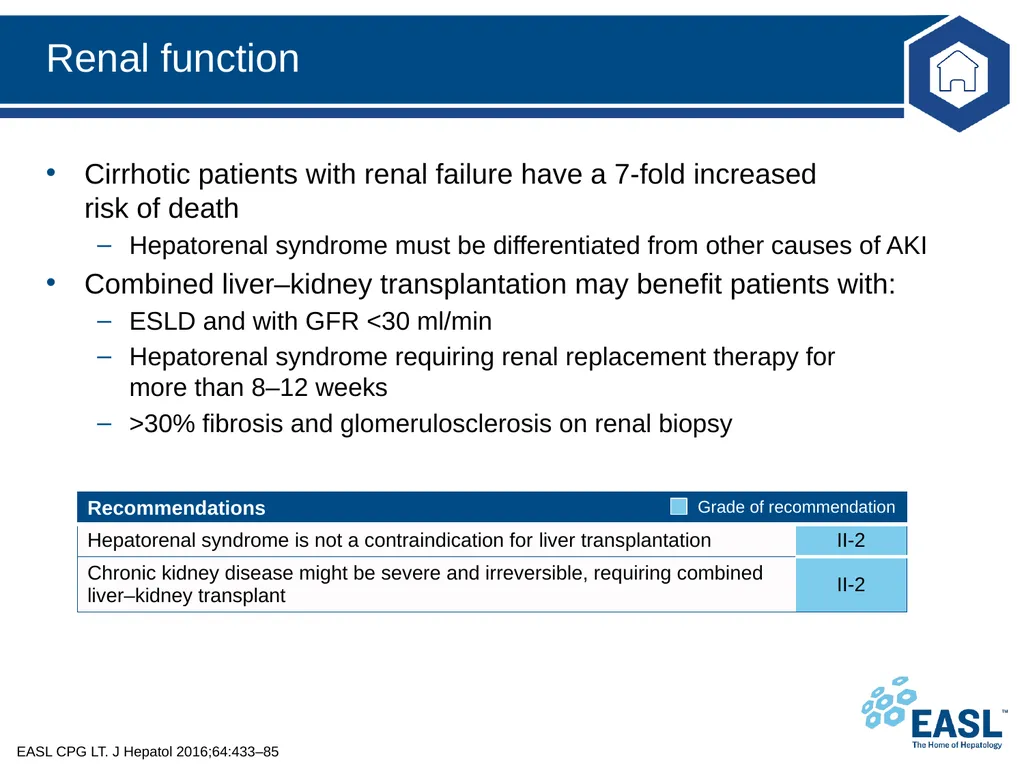
slide67. Renal function EASL CPG LT. J Hepatol 2016;64:433–85 Cirrhotic patients with renal failure have a 7-fold increased risk of death
Hepatorenal syndrome must be differentiated from other causes of AKI
Combined liver–kidney transplantation may benefit patients with:
ESLD and with GFR <30 ml/min
Hepatorenal syndrome requiring renal replacement therapy for more than 8–12 weeks
>30% fibrosis and glomerulosclerosis on renal biopsy<br>
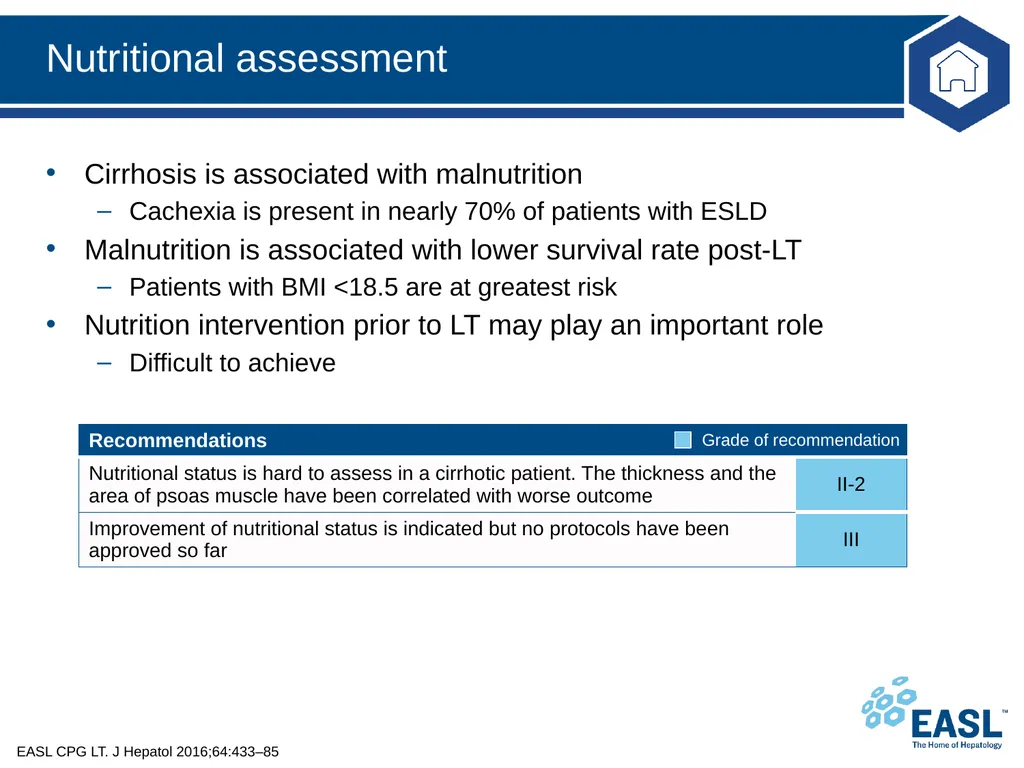
slide68. Nutritional assessment EASL CPG LT. J Hepatol 2016;64:433–85 Cirrhosis is associated with malnutrition
Cachexia is present in nearly 70% of patients with ESLD
Malnutrition is associated with lower survival rate post-LT
Patients with BMI <18.5 are at greatest risk
Nutrition intervention prior to LT may play an important role
Difficult to achieve<br>
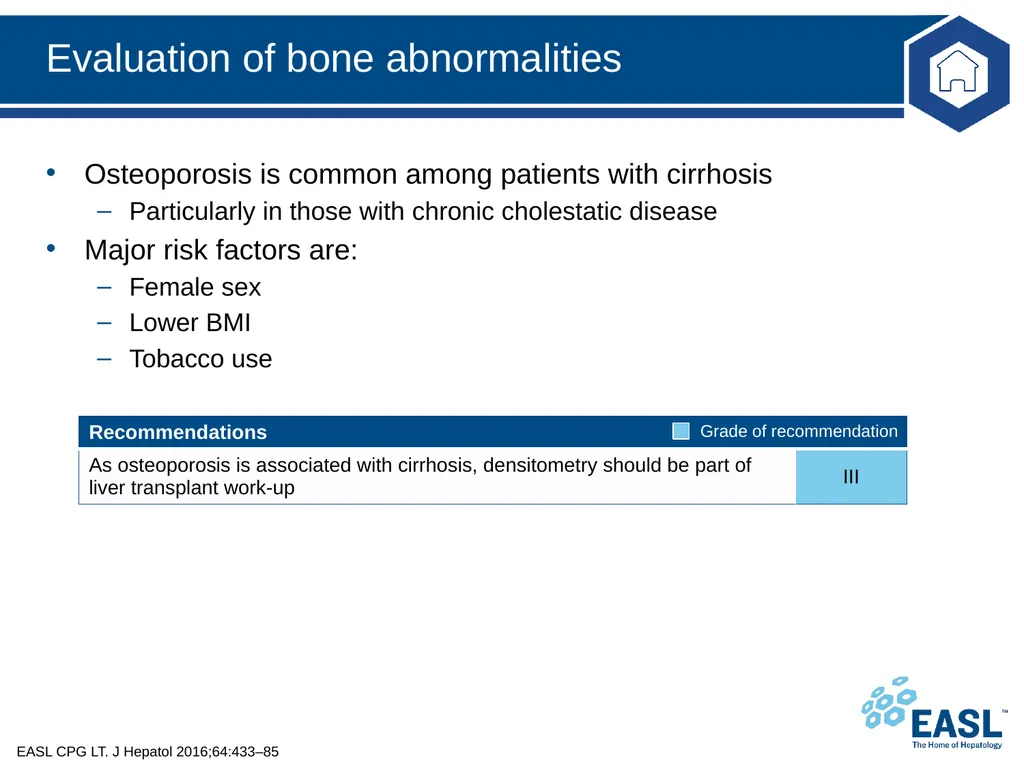
slide69. Evaluation of bone abnormalities EASL CPG LT. J Hepatol 2016;64:433–85 Osteoporosis is common among patients with cirrhosis
Particularly in those with chronic cholestatic disease
Major risk factors are:
Female sex
Lower BMI
Tobacco use<br>
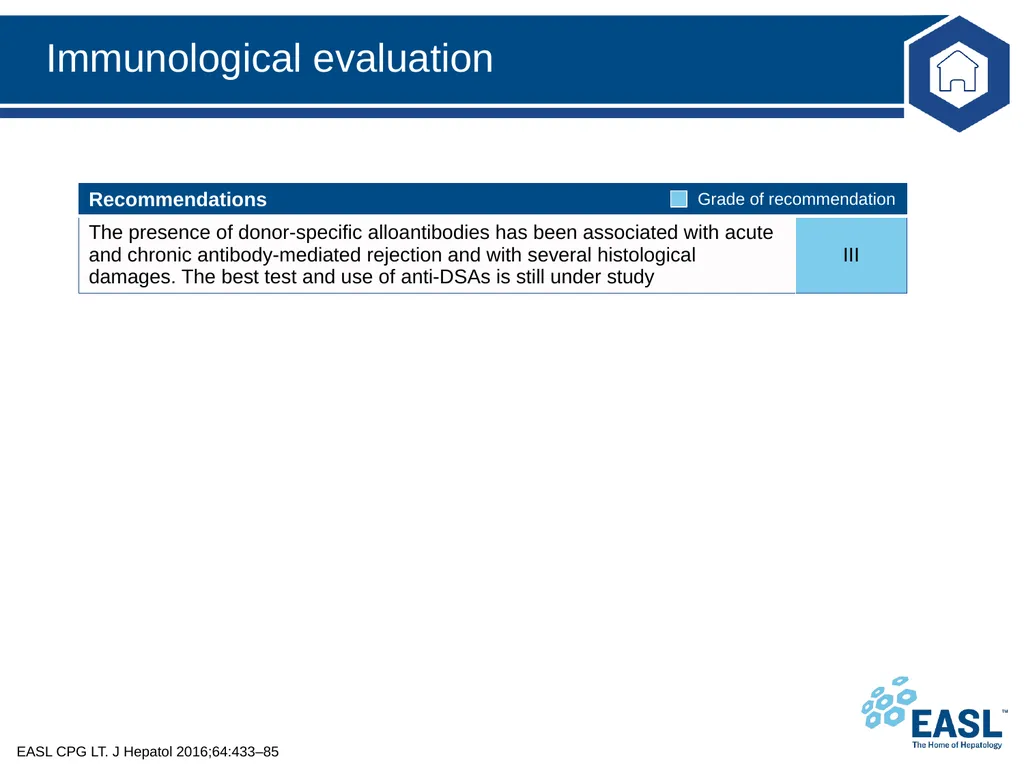
slide70. Immunological evaluation EASL CPG LT. J Hepatol 2016;64:433–85<br>
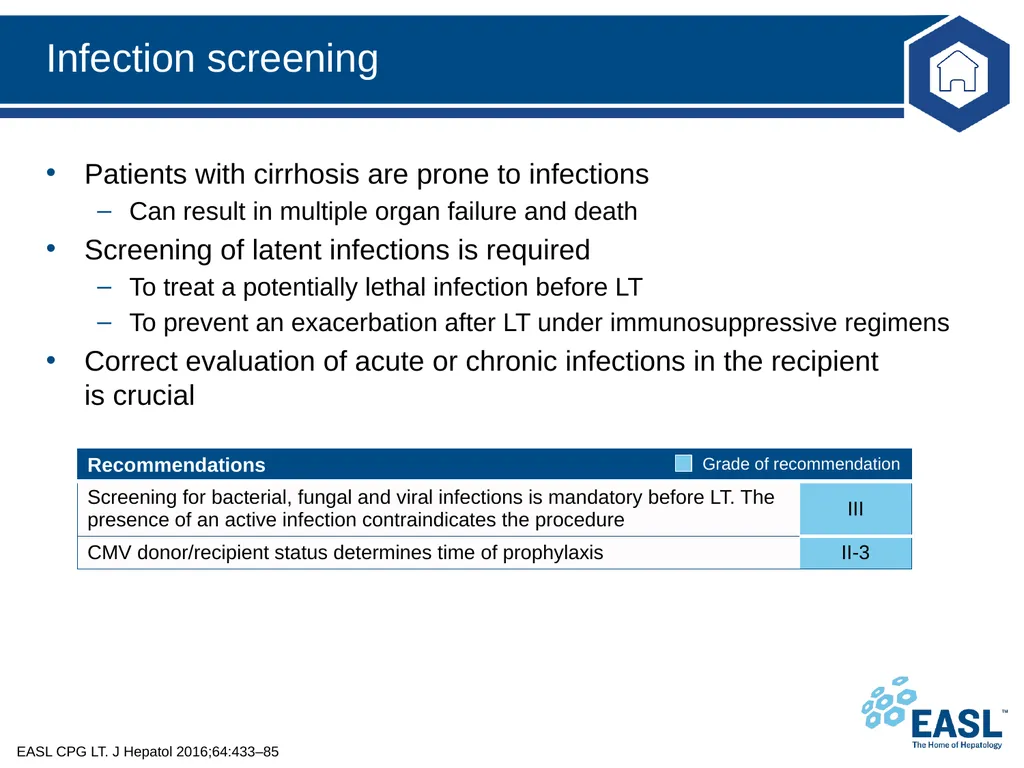
slide71. Infection screening EASL CPG LT. J Hepatol 2016;64:433–85 Patients with cirrhosis are prone to infections
Can result in multiple organ failure and death
Screening of latent infections is required
To treat a potentially lethal infection before LT
To prevent an exacerbation after LT under immunosuppressive regimens
Correct evaluation of acute or chronic infections in the recipient is crucial<br>
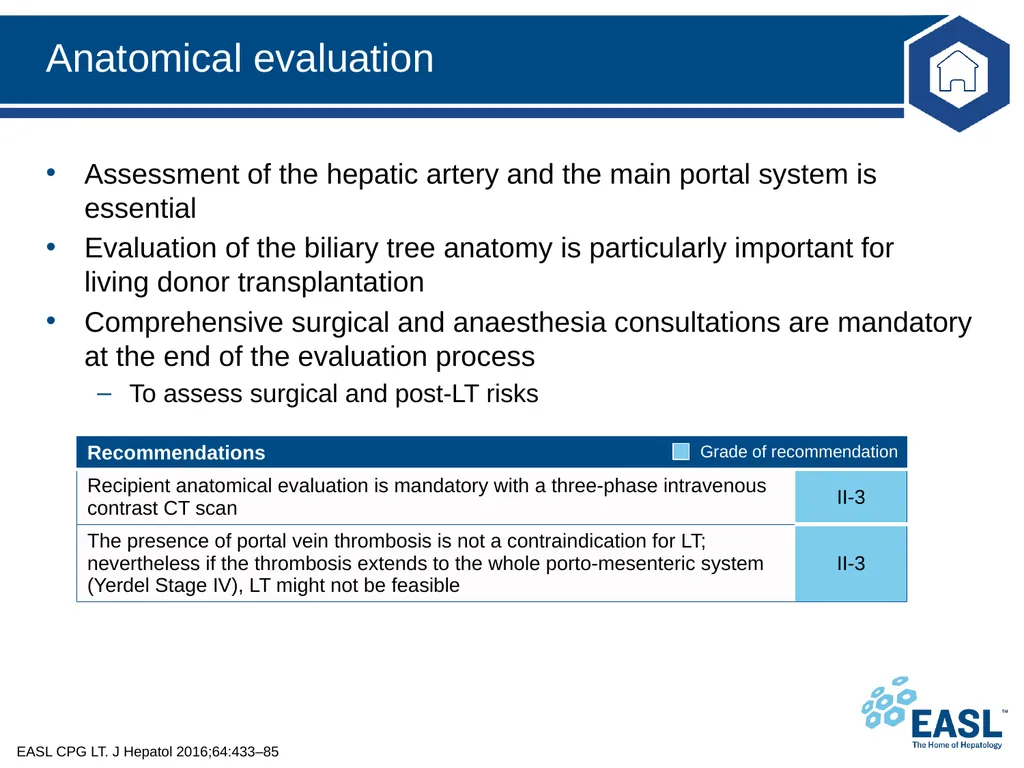
slide72. Anatomical evaluation EASL CPG LT. J Hepatol 2016;64:433–85 Assessment of the hepatic artery and the main portal system is essential
Evaluation of the biliary tree anatomy is particularly important for living donor transplantation
Comprehensive surgical and anaesthesia consultations are mandatory at the end of the evaluation process
To assess surgical and post-LT risks<br>
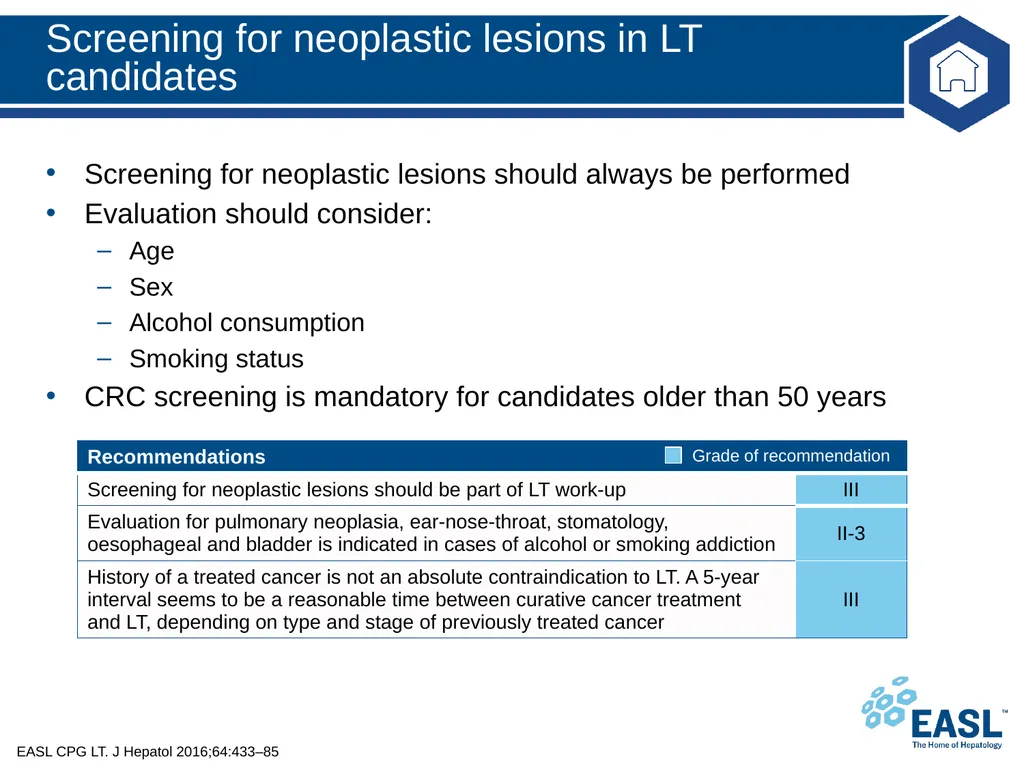
slide73. Screening for neoplastic lesions in LT candidates EASL CPG LT. J Hepatol 2016;64:433–85 Screening for neoplastic lesions should always be performed
Evaluation should consider:
Age
Sex
Alcohol consumption
Smoking status
CRC screening is mandatory for candidates older than 50 years<br>
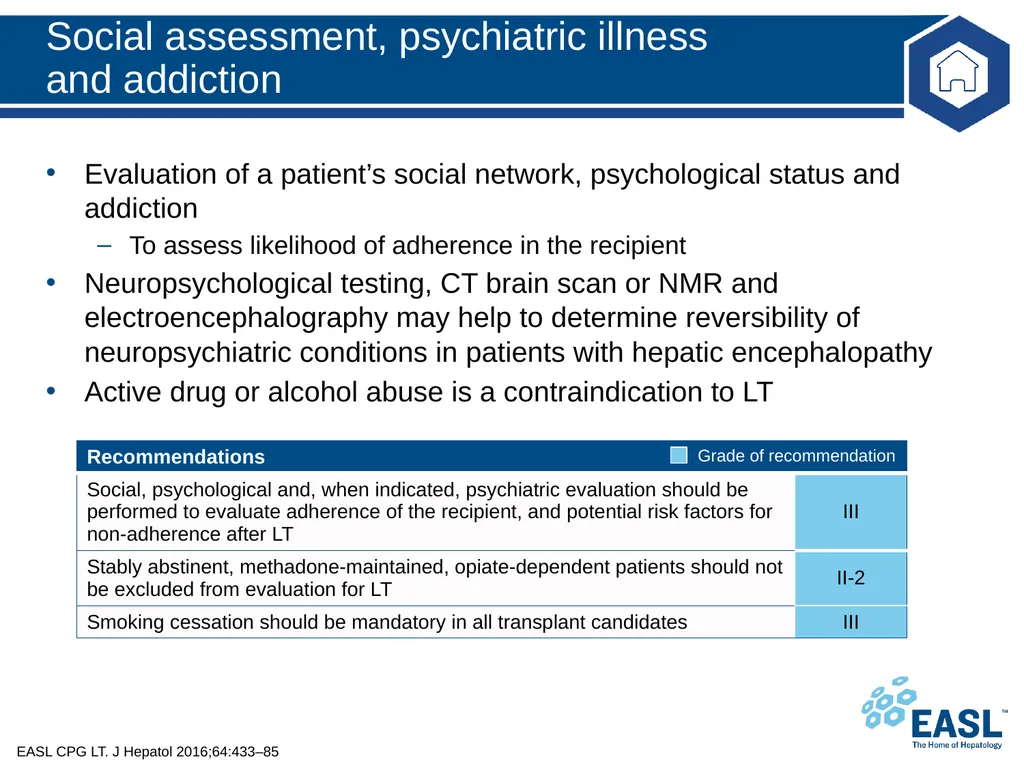
slide74. Social assessment, psychiatric illness and addiction EASL CPG LT. J Hepatol 2016;64:433–85 Evaluation of a patient’s social network, psychological status and addiction
To assess likelihood of adherence in the recipient
Neuropsychological testing, CT brain scan or NMR and electroencephalography may help to determine reversibility of neuropsychiatric conditions in patients with hepatic encephalopathy
Active drug or alcohol abuse is a contraindication to LT<br>
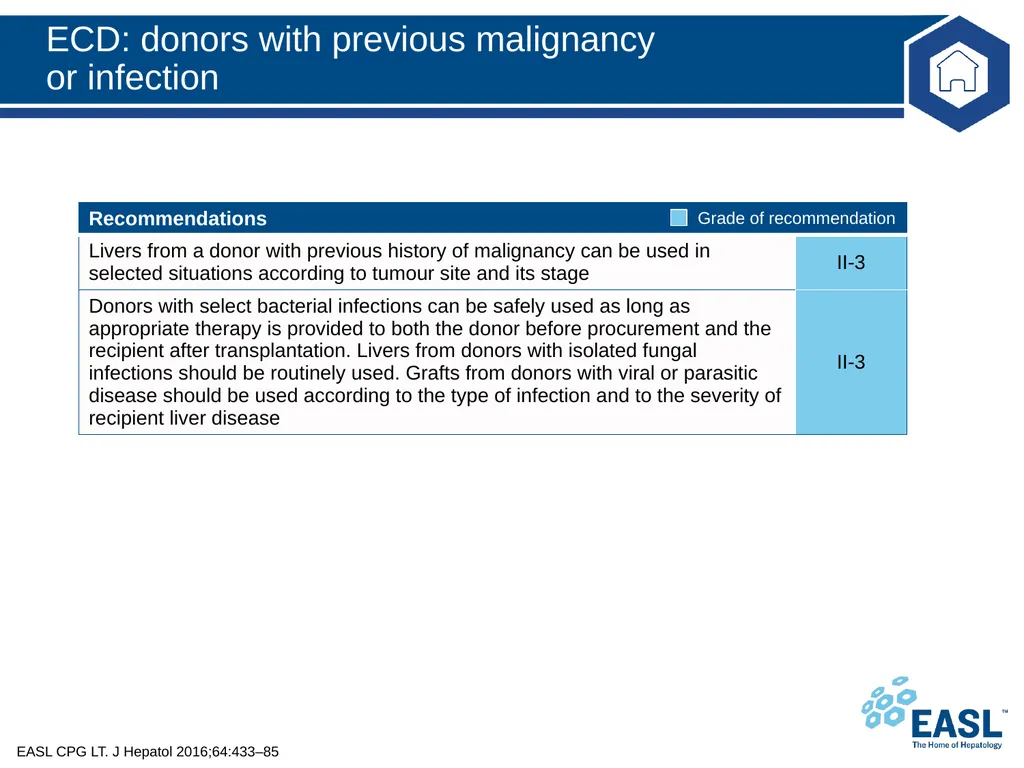
slide75. ECD: donors with previous malignancy or infection EASL CPG LT. J Hepatol 2016;64:433–85<br>
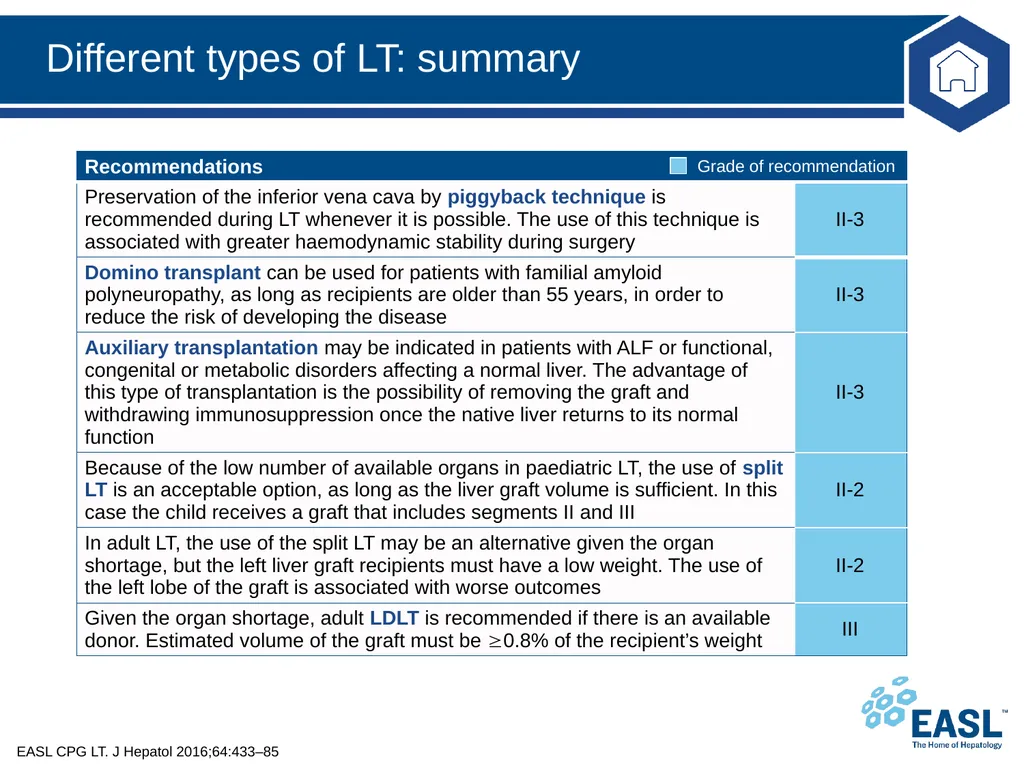
slide76. Different types of LT: summary EASL CPG LT. J Hepatol 2016;64:433–85<br>
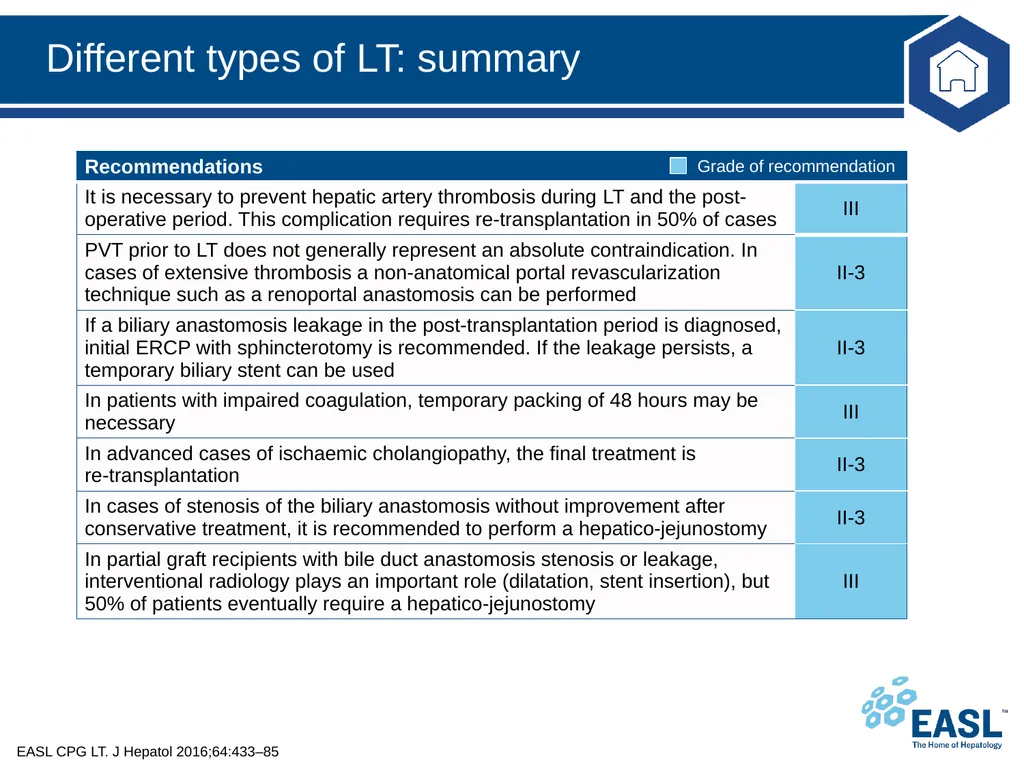
slide77. Different types of LT: summary EASL CPG LT. J Hepatol 2016;64:433–85<br>
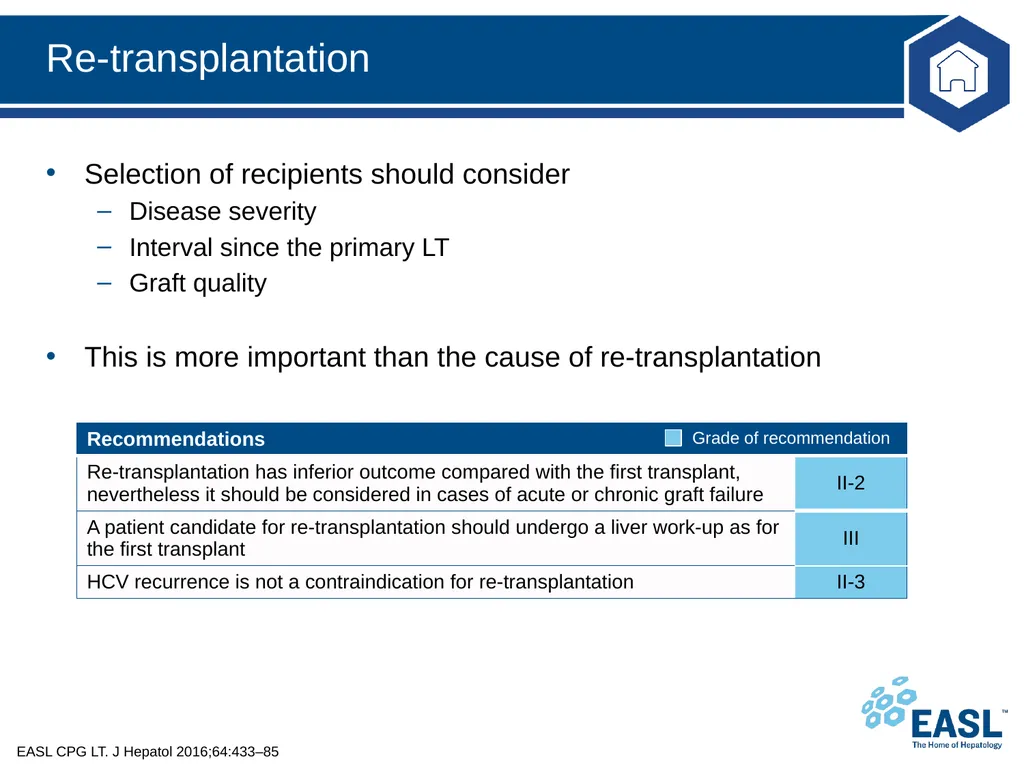
slide78. Re-transplantation EASL CPG LT. J Hepatol 2016;64:433–85 Selection of recipients should consider
Disease severity
Interval since the primary LT
Graft quality
This is more important than the cause of re-transplantation<br>
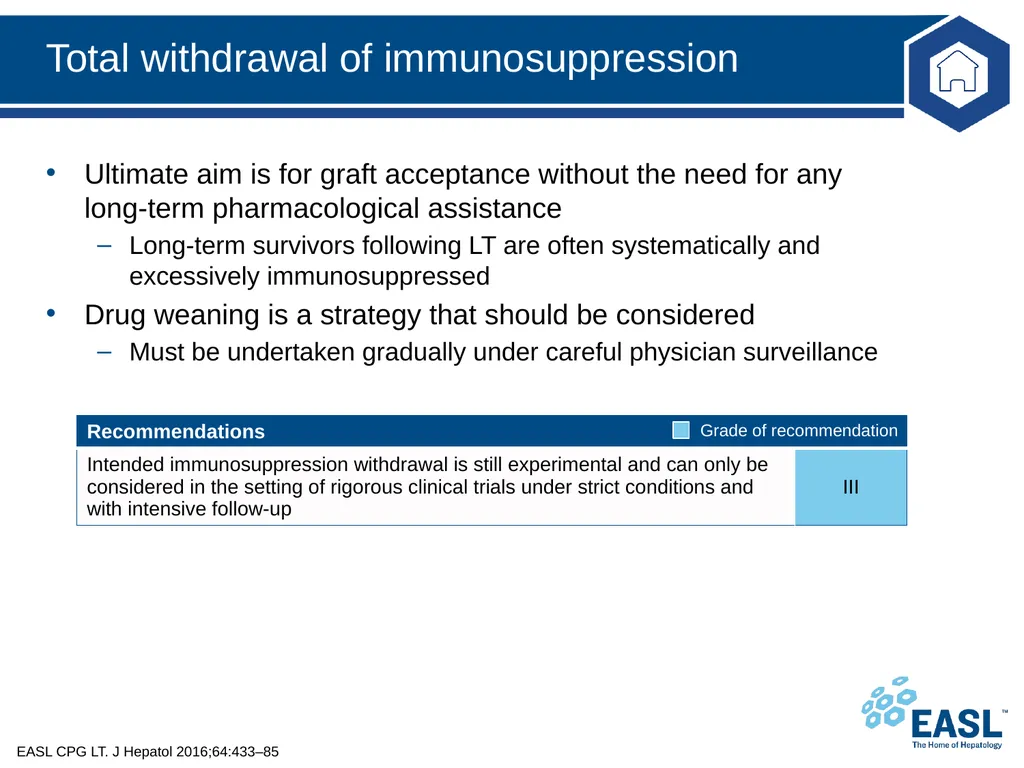
slide79. Total withdrawal of immunosuppression EASL CPG LT. J Hepatol 2016;64:433–85 Ultimate aim is for graft acceptance without the need for any long-term pharmacological assistance
Long-term survivors following LT are often systematically and excessively immunosuppressed
Drug weaning is a strategy that should be considered
Must be undertaken gradually under careful physician surveillance<br>
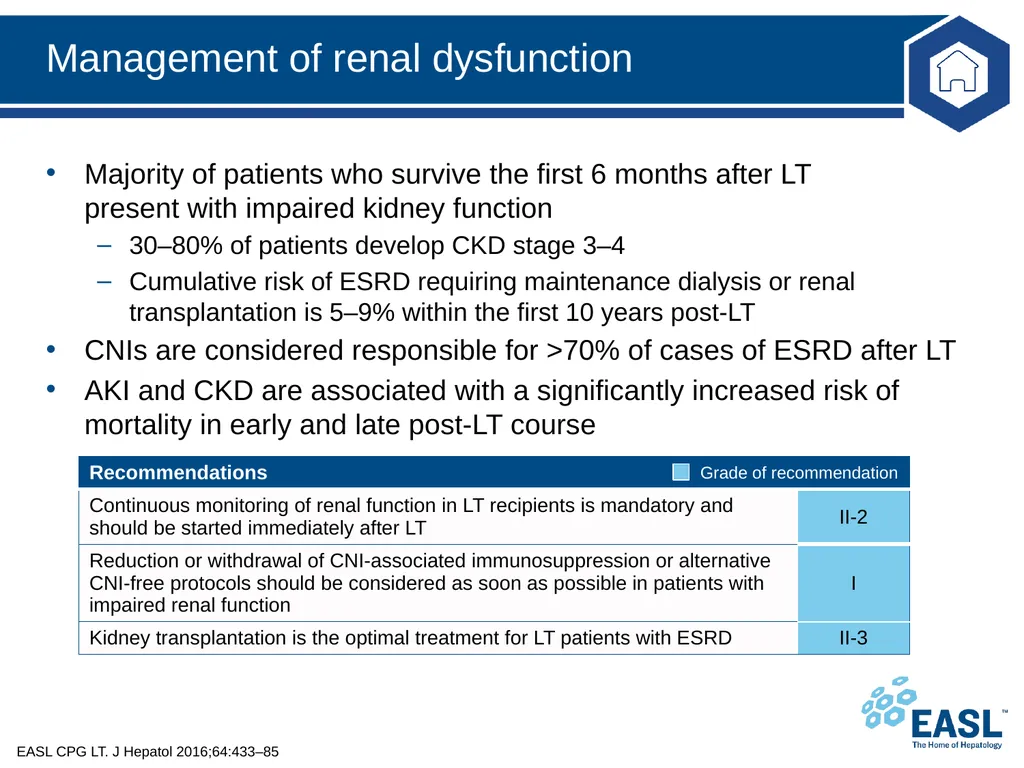
slide80. Management of renal dysfunction EASL CPG LT. J Hepatol 2016;64:433–85 Majority of patients who survive the first 6 months after LT present with impaired kidney function
30–80% of patients develop CKD stage 3–4
Cumulative risk of ESRD requiring maintenance dialysis or renal transplantation is 5–9% within the first 10 years post-LT
CNIs are considered responsible for >70% of cases of ESRD after LT
AKI and CKD are associated with a significantly increased risk of mortality in early and late post-LT course<br>
slide81. Prevention and treatment of infections EASL CPG LT. J Hepatol 2016;64:433–85 Infectious complications are a major cause of morbidity and mortality following transplantation<br>
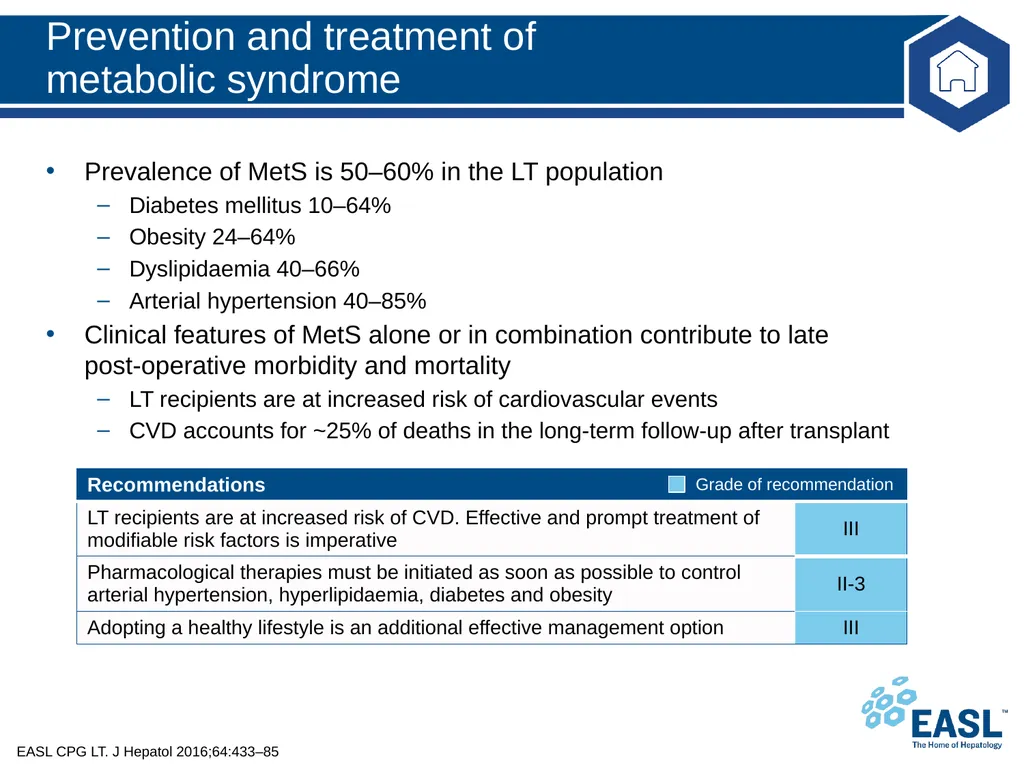
slide82. Prevention and treatment of metabolic syndrome EASL CPG LT. J Hepatol 2016;64:433–85 Prevalence of MetS is 50–60% in the LT population
Diabetes mellitus 10–64%
Obesity 24–64%
Dyslipidaemia 40–66%
Arterial hypertension 40–85%
Clinical features of MetS alone or in combination contribute to late post-operative morbidity and mortality
LT recipients are at increased risk of cardiovascular events
CVD accounts for ~25% of deaths in the long-term follow-up after transplant<br>
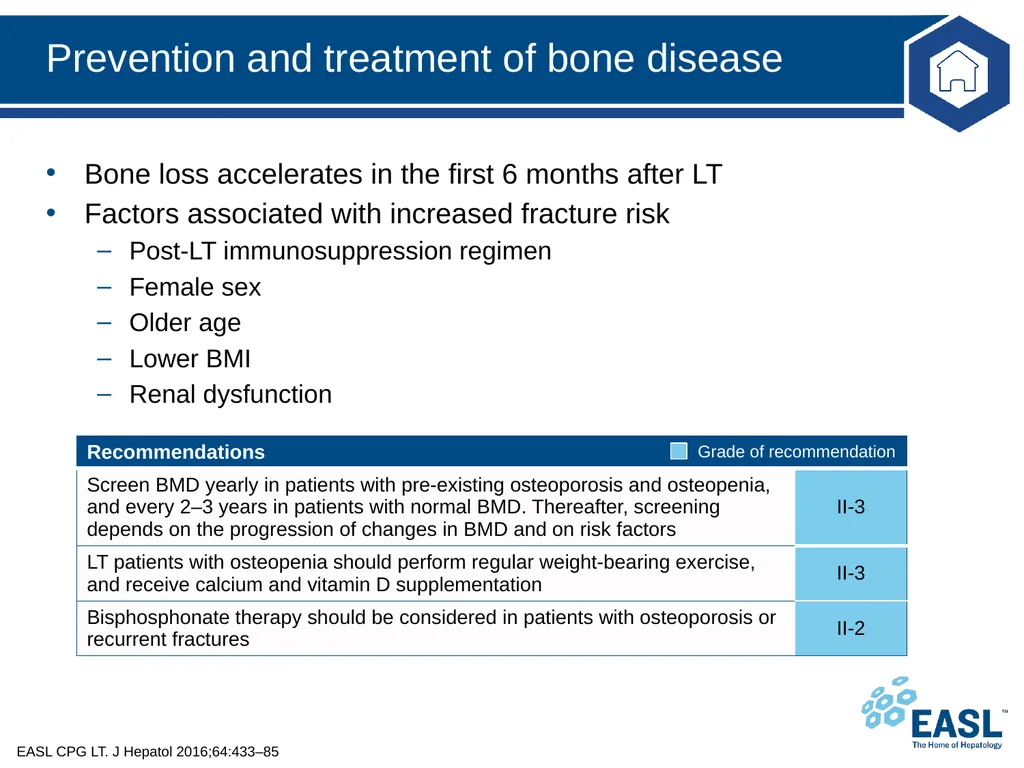
slide83. Prevention and treatment of bone disease EASL CPG LT. J Hepatol 2016;64:433–85 Bone loss accelerates in the first 6 months after LT
Factors associated with increased fracture risk
Post-LT immunosuppression regimen
Female sex
Older age
Lower BMI
Renal dysfunction<br>
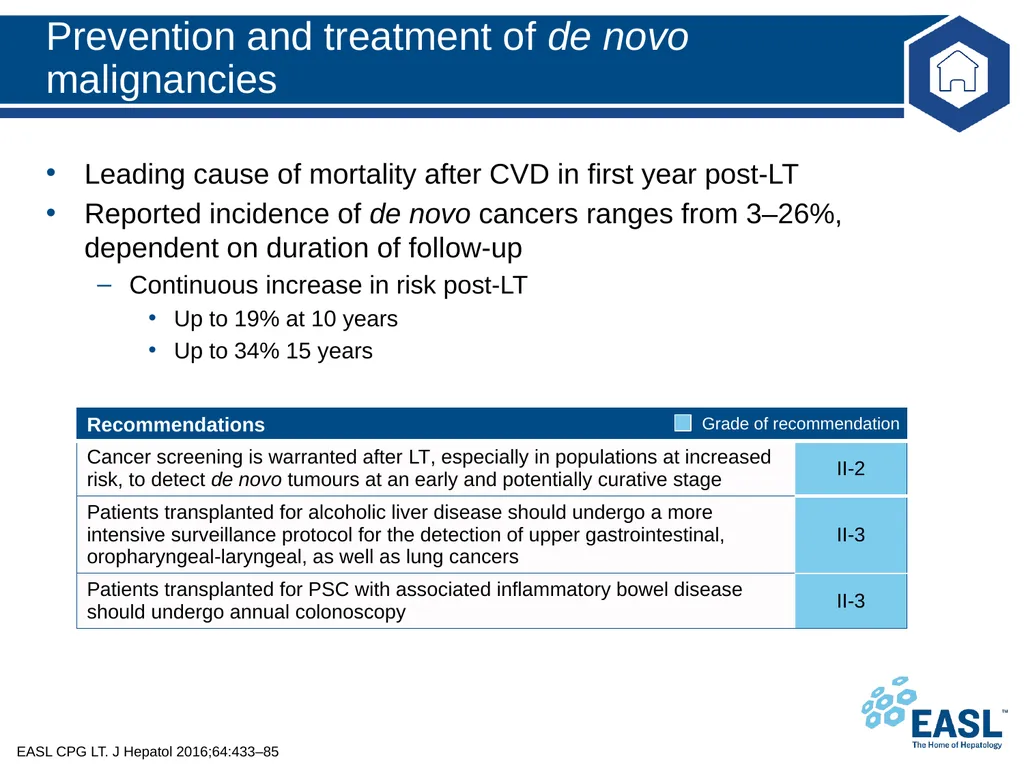
slide84. Prevention and treatment of de novo malignancies EASL CPG LT. J Hepatol 2016;64:433–85 Leading cause of mortality after CVD in first year post-LT
Reported incidence of de novo cancers ranges from 3–26%, dependent on duration of follow-up
Continuous increase in risk post-LT
Up to 19% at 10 years
Up to 34% 15 years<br>
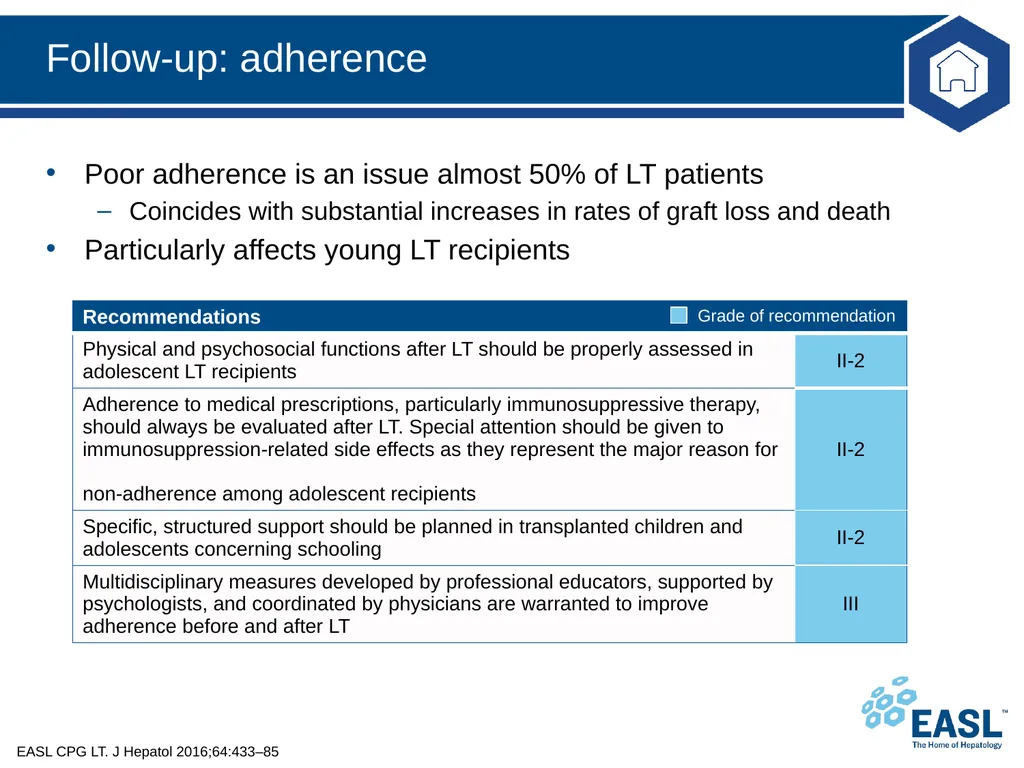
slide85. Follow-up: adherence EASL CPG LT. J Hepatol 2016;64:433–85 Poor adherence is an issue almost 50% of LT patients
Coincides with substantial increases in rates of graft loss and death
Particularly affects young LT recipients<br>
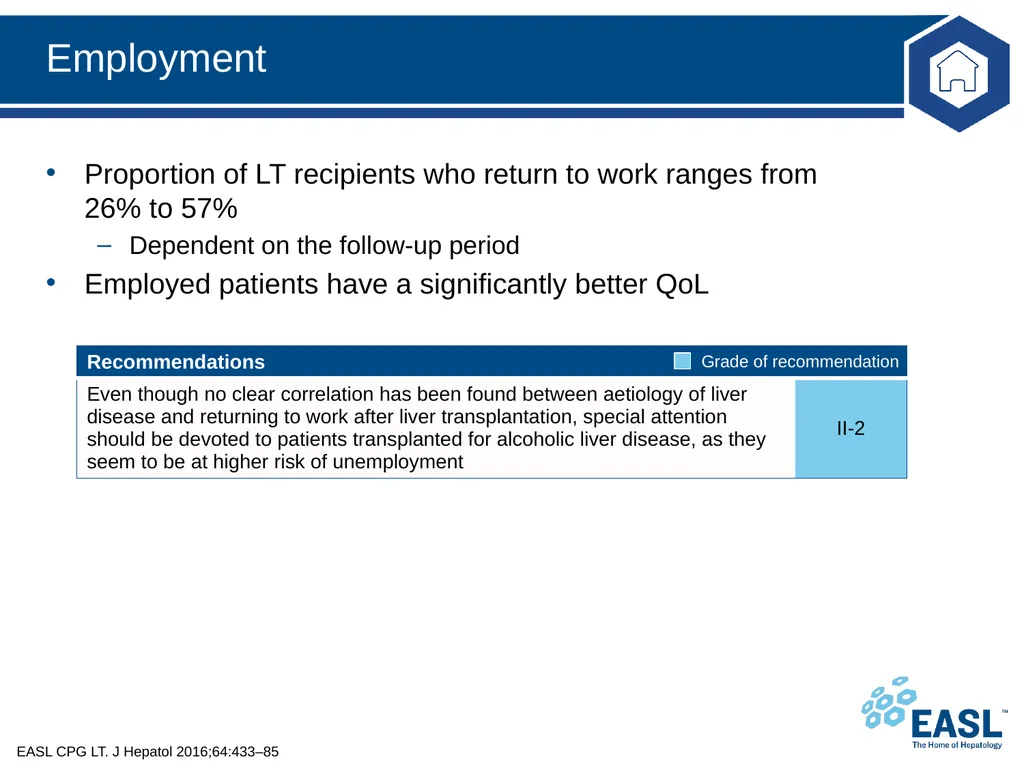
slide86. Employment EASL CPG LT. J Hepatol 2016;64:433–85 Proportion of LT recipients who return to work ranges from 26% to 57%
Dependent on the follow-up period
Employed patients have a significantly better QoL<br>
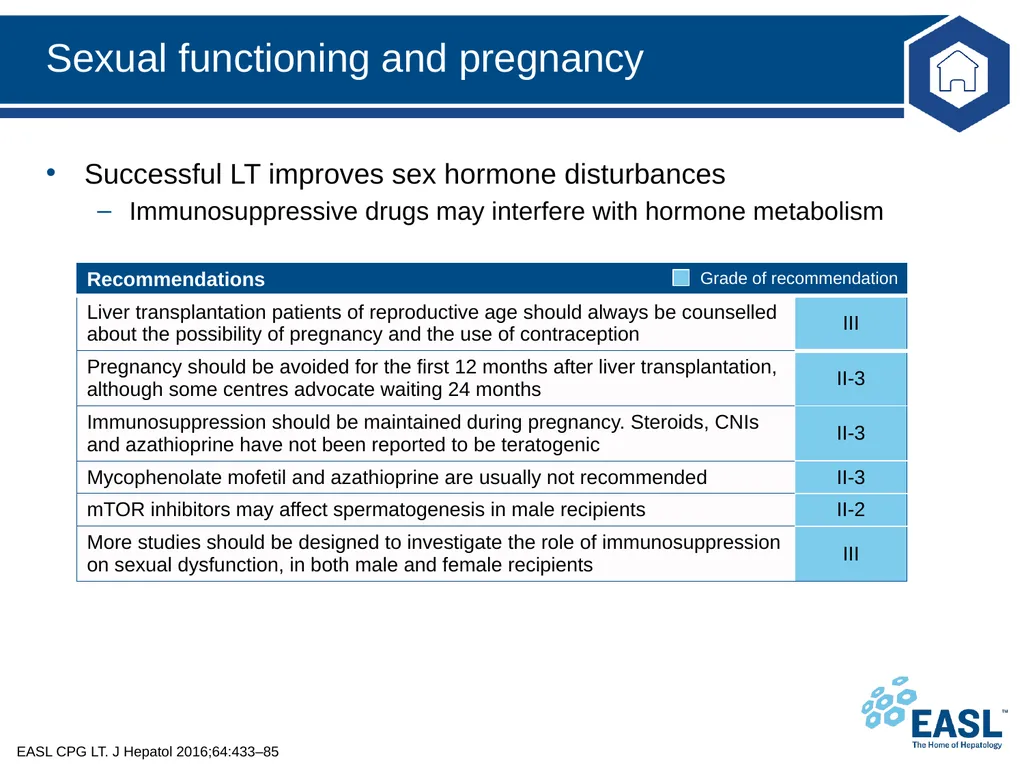
slide87. Sexual functioning and pregnancy EASL CPG LT. J Hepatol 2016;64:433–85 Successful LT improves sex hormone disturbances
Immunosuppressive drugs may interfere with hormone metabolism<br>
slide2. About these slides These slides give a comprehensive overview of the EASL clinical practice guidelines on liver transplantation
The guidelines were published in full in the February 2016 issue of the Journal of Hepatology
The full publication can be downloaded from the Clinical Practice Guidelines section of the EASL website
Please cite the published article as: European Association for the Study of the Liver. EASL Clinical Practice Guidelines: Liver transplantation. J Hepatol 2016;64:433–85
Please feel free to use, adapt, and share these slides for your own personal use; however, please acknowledge EASL as the source<br>
slide3. About these slides Definitions of all abbreviations shown in these slides are provided within the slide notes
When you see a home symbol like this one: , you can click on this to return to the outline or topics pages, depending on which section you are in
Please send any feedback to: slidedeck_feedback@easloffice.eu These slides are intended for use as an educational resource and should not be used in isolation to make patient management decisions. All information included should be verified before treating patients or using any therapies described in these materials<br>
slide4. Chair:
Patrizia Burra
Panel members:
Andrew Burroughs,* Ivo Graziadei, Jacques Pirenne, Juan Carlos Valdecasas, Paolo Muiesan, Didier Samuel, Xavier Forns Guideline panel *Andrew Burroughs passed away during the preparation of this guideline, Giacomo Germani and Emmanuel Tsochatzis contributed to its completion
EASL CPG LT. J Hepatol 2016;64:433–85<br>
slide5. Outline EASL CPG LT. J Hepatol 2016;64:433–85<br>
slide6. Methods Grading evidence<br>
slide7. Grading evidence 1. Guyatt GH, et al. BMJ 2008:336:924–6;
EASL CPG LT. J Hepatol 2016;64:433–85 Grading is adapted from the GRADE system1<br>
slide8. Background Introduction to liver transplantation<br>
slide9. First performed >50 years ago
Has evolved rapidly
Standard therapy for acute and chronic liver failure of all aetiologies
>80,000 performed to date*
Improved survival rates
96% at 1 year
71% at 10 years
Success due to several advances
New immunosuppressive agents
New preservation solutions
Improved surgical techniques
Early diagnosis and management of complications post-LT Indications have expanded
Growing demand for transplantable grafts
Dramatic organ shortage
Ongoing challenges
Expansion of the donor pool
To minimize deaths on the wait list
Management of long-term outcomes
Patients are surviving longer
Need to deal with side effects of immunosuppressive therapy Introduction to liver transplantation *As at the time of publication of this CPG
EASL CPG LT. J Hepatol 2016;64:433–85<br>
slide10. Guidelines Key recommendations<br>
slide11. Topics The candidate for liver transplantation
Organ donation
Liver transplantation
Immunosuppression
Medical complications
Lifestyle in long-term follow-up Click on a topic to skip to that section<br>
slide12. LT should be considered in any patient with ESLD, in whom:
LT would extend life beyond that predicted by the natural history of underlying liver disease
LT is likely to improve QoL
Patients should be selected if:
Expected survival without LT is 1 year
QoL is unacceptable as a result of liver disease
LT is indicated in patients with:
ESLD
HCC
ALF (urgent indication) The candidate for LT: indications *Benign liver tumours or polycystic diseases, 1,658; Budd–Chiari, 1,020; parasitic diseases, 91; hepatopulmonary syndrome, 18; other liver diseases, 2,260 1. ELTR. Available at: http://www.eltr.org/Overall-indication-and-results.html. Accessed 23.02.18;
EASL CPG LT. J Hepatol 2016;64:433–85<br>
slide13. The candidate for LT: Score and prognostic factors for ESLD EASL CPG LT. J Hepatol 2016;64:433–85 Timing of LT is crucial
Before life-threatening complications occur
Not so early that benefits are outweighed by the risk of surgery and immunosuppression for life
Priority for LT is based on Child–Pugh classification and MELD
MELD score ≥15 is recommended to list patients with ESLD
Only MELD >35 predicts post-LT mortality
MELD does not reflect the impact of all complications
MELD exceptions
In some cases, extra points should be given to prioritize for LT<br>
slide14. The candidate for LT: patient evaluation EASL CPG LT. J Hepatol 2016;64:433–85 MELD score drives the allocation of grafts in many European countries
Final decision based on multiple factors
Suitable donors and local/regional priorities
Responsibility of multidisciplinary group within each expert centre after considering the risks and benefits for individual patients<br>
slide15. Management of patients with liver cirrhosis* *Without HCC
EASL CPG LT. J Hepatol 2016;64:433–85 Liver cirrhosis has different aetiologies
HBV-related liver disease
HCV-related liver disease
Alcoholic liver disease
NAFLD and NASH
Thus, collaboration between specialists is required to address all comorbidities
Final decision should be made within each expert centre by a multidisciplinary group of staff
Considering risks and benefits for individual patients<br>
slide16. HBV-related liver disease *New treatment options are now available that were approved after the publication of this CPG. Recommendation from EASL HBV CPG: Patients with decompensated cirrhosis should be immediately treated with an NA with a high barrier to resistance (ETV, TDF, or tenofovir alafenamide), irrespective of the level of HBV replication, and should be assessed for LT (evidence level II-2, grade of recommendation 1); †Other treatments are available
EASL CPG LT. J Hepatol 2016;64:433–85 Indication for LT similar to other causes of cirrhosis
Start ETV or TDF as soon as possible if HBV DNA is detectable
To improve liver function
To decrease risk of HBV recurrence after transplantation<br>
slide17. HCV-related liver disease *New treatment options are now available that were approved after the publication of this CPG. Recommendation from EASL HCV CPG: Patients with decompensated cirrhosis awaiting LT with a MELD score <18–20 can be treated with SOF/LDV (GT 1, 4, 5 or 6) or SOF/VEL (all GT) + weight-based RBV for 12 weeks. Those unable to take RBV should receive SOF/LDV (GT 1, 4, 5 or 6) or SOF/VEL (all GT) for 24 weeks without RBV. Protease inhibitor-containing regimens are contraindicated in patients with decompensated cirrhosis (evidence level A, grade of recommendation 1); †Other treatments are available
EASL CPG LT J Hepatol 2016;64:433–85 Goals of antiviral treatment prior to LT
Prevent HCV infection of the new liver
Improve liver function to avoid need for LT
HCV replication at time of LT is not a contraindication
Antiviral treatment will be necessary post-LT<br>
slide18. Alcoholic liver disease EASL CPG LT. J Hepatol 2016;64:433–85 ALD is one of the most common indications for LT in the West
LT for alcoholic cirrhosis has a favourable outcome
Similar to other aetiologies of ESLD
Evaluation based on medical and psychiatric criteria to better determine patients most likely to benefit from LT
Psychosocial management is needed to ensure long-term success<br>
slide19. NAFLD and NASH EASL CPG LT. J Hepatol 2016;64:433–85 Prevalence of NAFLD and NASH is increasing
Cirrhosis and liver failure associated with NAFLD and NASH are increasingly recognized as indications for LT
Patients should be monitored carefully for comorbid factors linked to metabolic syndrome
Could increase risk of complications during surgery<br>
slide20. Primary biliary cholangitis EASL CPG LT J Hepatol 2016;64:433–85 Availability of UDCA has improved survival for patients with PBC
Number of LT candidates has dramatically decreased
LT is indicated in PBC
When expected survival is <1 year
In patients with decompensated cirrhosis
In patients with complicated portal hypertension
In patients with refractory and intolerable pruritus<br>
slide21. Primary sclerosing cholangitis EASL CPG LT. J Hepatol 2016;64:433–85 Suspected CCA may be an indication for LT
Can be a contraindication at an advanced stage
Patients transplanted with unsuspected CCA are at a high risk of recurrent CCA and have a poor prognosis
IBD is frequently associated with PSC
Not a contraindication for liver LT if quiescent
Active IBD should be controlled before transplantation<br>
slide22. Autoimmune hepatitis EASL CPG LT. J Hepatol 2016;64:433–85 AIH is more common in young women
Clinical presentation is variable
Usually presents as active chronic hepatitis
May also present as established cirrhosis
Rarely can present as a fulminant (acute) disease
Response to immunosuppressive treatment including steroids is good<br>
slide23. LT is indicated in patients with a number of hepatobiliary malignancies
HCC
CCA
Other malignancies
Without metastatic spread
Hepatic metastases Management of patients with liver cirrhosis and hepatic malignancies 1. ELTR. Available at: http://www.eltr.org/Specific-results-by-disease.html. Accessed 23.02.18;
EASL CPG LT. J Hepatol 2016;64:433–85<br>
slide24. HCC is the most common primary tumour of the liver
LT is suitable for early, unresectable HCC
Particularly in the setting of CLD
5-year survival exceeds 70% when Milan criteria are used
Expanded criteria have shown similar outcomes
Identify LT candidates at low risk of recurrence otherwise excluded by Milan criteria Liver transplantation in HCC *Total score ≤2 associated with low risk of recurrence and 5-year survival ~70%
1. Yao FY, et al. Hepatology 2001;33:1394–403; 2. Duvoux C, et al. Gastroenterology 2012;143:986–94;
EASL CPG LT. J Hepatol 2016;64:433–85 Milan criteria remain the benchmark<br>
slide25. Liver transplantation in HCC and CCA *Solitary HCC with diameter <5 cm or up to 3 nodules with diameter <3 cm
EASL CPG LT. J Hepatol 2016;64:433–85 The dropout rate from LT waiting lists is ~15–30% due to HCC progression
Downstaging and bridging treatment should be offered to all patients expected to wait >6 months
CCA accounts for 5–20% of primary liver tumours
LT for CCA remains controversial due to a high risk of recurrence<br>
slide26. All LT candidates require evaluation for comorbidities
CV, respiratory, renal
Infections
Nutrition
Anatomy
Neoplastic lesions
Social assessment, psychiatric and addiction There is no formal age limit
Patients >65 years of age need a multidisciplinary evaluation
LT has been performed successfully in patients >70 years
Increased risk of CV complications Comorbidities EASL CPG LT. J Hepatol 2016;64:433–85<br>
slide27. Organ donation EASL CPG LT. J Hepatol 2016;64:433–85 Consent
Establishment of consent varies across Europe
Most European countries have presumed consent
Deceased and living donation
Also varies between countries
Including donation after brain death (DBD) and donation after circulatory death (DCD)
Waiting lists
Definition of listing criteria
Some bilateral and multilateral agreements exist<br>
slide28. Liver allocation in Europe 1. Adam R, et al. J Hepatol 2012;57:675–88;
EASL CPG LT. J Hepatol 2016;64:433–85 LT data are collected by the ELTR
Registry of all LT procedures
Link between transplant centres
Scientific exchange and publications
LT rates vary between countries
Organ allocation systems and organisations
Legislation
Organ donation rates
LT
Traditions
System diversity means there are no Europe-wide ‘rules’ Number of liver transplants performed in European countries (May 1968–December 2009)1<br>
slide29. Donor classification EASL CPG LT. J Hepatol 2016;64:433–85 Deceased
DBD or DCD
Living donor liver transplantation (LDLT)
Extended criteria donor (ECD)
Organ with unfavourable characteristics associated with suboptimal post-LT outcomes
Fall into two main risk categories: poor graft function and potential for disease transmission
Donor age >65 years
ICU stay with ventilation >7 days
BMI >30
Steatosis of the liver >40%
Serum sodium >165 mmol/L
Aminotransferases: ALT >105 U/L, AST >90 U/L
Serum bilirubin >3 mg/dL Protocols to select ECD and DCD livers to improve safety and expand donor pool<br>
slide30. Donation after circulatory death *Such as advanced age, HCV, HCC, and older donor age;
†Type II is predominant in France and Spain
EASL CPG LT. J Hepatol 2016;64:433–85 DCD is a strategy to increase number of viable grafts
Recipients show mortality rates comparable to other risk predictors* DCD is based on category III in most countries in Europe†<br>
slide31. ECD: older donors and donors with diabetes mellitus EASL CPG LT. J Hepatol 2016;64:433–85 Recipients of livers from older donors are at increased risk of graft failure and mortality
Increased vulnerability to ischaemia and diminished regeneration
Recipients of livers from diabetes mellitus donors have poorer 1- and 5-year graft survival<br>
slide32. ECD: donors with graft steatosis EASL CPG LT. J Hepatol 2016;64:433–85 Hepatic steatosis is associated with a range of post-LT complications
Poor graft function in particular
Steatosis is classified as mild, moderate or severe
Mild (1030% steatosis): suitable for transplantation
Moderate (3060%): acceptable outcomes in select DR combinations
Severe (>60%): unacceptable risk of graft failure, AKI, biliary complications and mortality<br>
slide33. ECD: anti-HBc-positive donors EASL CPG LT. J Hepatol 2016;64:433–85 Anti-HBc-positive grafts are common in countries with endemic HBV infection
Outcomes are better if transplanted into HBeAg-positive rather than HBeAg-negative individuals
Viral replication may increase with post-LT immunosuppression
Due to frequent occult HBV infection in the graft<br>
slide34. ECD: HCV-positive donors EASL CPG LT. J Hepatol 2016;64:433–85 Use of anti-HCV-positive grafts in recipients with HCV infection is commonplace and considered safe
LT of HCV-positive grafts into negative recipients is avoided<br>
slide35. Liver transplantation EASL CPG LT. J Hepatol 2016;64:433–85 To overcome a shortage of grafts, alternative strategies need to be developed
Europe and USA: most common LT is ‘conventional’ or ‘standard’: Whole liver grafts
Asia: partial grafts from living donors
Whole liver grafts
Techniques differ depending on whether recipient IVC is preserved
Partial graft transplants
Auxiliary LT
Split LT
Living donor LT<br>
slide36. Most widely used in Europe
Preserves recipient’s IVC
Technique involves
Anastomosis
Donor’s suprahepatic IVC to recipient’s three hepatic veins
Reconstruction
Portal vein, hepatic artery and biliary tree Liver transplantation: piggyback technique EASL CPG LT. J Hepatol 2016;64:433–85 Liver transplantation with piggy-back technique IVC<br>
slide37. Partial graft transplant: auxiliary LT EASL CPG LT. J Hepatol 2016;64:433–85 Auxiliary LT may be performed orthotopically or heterotopically and provides an alternative in two situations:
Patients with ALF
Provide support to patient’s diseased liver while it recovers
When native liver functions normally, graft is removed and immunosuppression is withdrawn
Patients with functional congenital or metabolic disorders affecting a normal liver
Allows correction of the metabolic disorder while avoiding a full LT
Poorer outcomes are obtained in Budd–Chiari syndrome and Wilson disease
Acute hepatitis B is a controversial indication
Risk of graft reinfection<br>
slide38. Involves dividing the donor liver into two parts:
Adult–child
Liver divided into
Right lobe that includes segment IV
Partial left graft that includes segments II and III
Adult–adult
Liver divided into
Right lobe (segments V to VIII)
Left lobe (segments I to IV) Partial graft transplant: split LT EASL CPG LT. J Hepatol 2016;64:433–85 Split liver transplantation: adult and child as recipients<br>
slide39. In children
Segments II and III of an adult donor liver are transplanted
Limited use in Europe
More widely used in Asia
In adults
Living donation generally uses donor’s right liver lobe
Segments V to VIII
Technically difficult
Recipient outcomes are good
Significant donor morbidity
Estimated mortality rate ~0.18% Adult living donor transplantation Partial graft transplant: living donor LT EASL CPG LT. J Hepatol 2016;64:433–85<br>
slide40. Patient survival has improved greatly
After nearly 100,000 LT:
1-year survival: ~90%
5-year survival: ~70%
Side effects are an issue
Diabetes
Chronic renal failure
Hyperlipidaemia
Atherosclerosis
De novo malignancy Graft and patient survival in Europe 1. Adam R, et al. J Hepatol. 2012;57:675–88;
EASL CPG LT. J Hepatol 2016;64:433–85 Patient survival according to year of liver transplantation1 Important to reduce long-term issues associated with immunosuppression<br>
slide41. Probability of survival post-LT EASL CPG LT. J Hepatol 2016;64:433–85 Data from the European Registry (19982012)<br>
slide42. Surgical complications EASL CPG LT. J Hepatol 2016;64:433–85 Although complications post-LT have been significantly reduced, they still have a major impact on short- and long-term prognoses<br>
slide43. Graft loss in 7–10% of adults
Two types:
Early
Hepatic artery thrombosis or primary graft non-function
Late
IC, chronic rejection or primary disease recurrence
Re-transplantation is the only option
High morbidity and mortality compared with initial LT
Significantly lower patient and graft survival1 Re-transplantation 1. Adapted from ELTR. Available at: http://www.eltr.org/Mortality-and-retransplantation.html. Accessed 26.01.18; EASL CPG LT. J Hepatol 2016;64:433–85<br>
slide44. Immunosuppression: standard regimens EASL CPG LT. J Hepatol 2016;64:433–85 Spontaneous resolution of severe acute rejection episodes has been described in patients after LT
Due to the ‘privileged’ immunological status of the liver
Main concern is avoiding significant long-term side effects of immunosuppressive therapy<br>
slide45. Chronic renal dysfunction* or ESRD is common after LT
Occurs in ~18% of patients within 5 years of LT
Use of CNIs is the most important risk factor for nephrotoxicity Immunosuppression: patients with renal impairment *GFR ≤29 ml/min/1.73 m2
1. Duvoux C, Pageaux GP. J Hepatol 2011;54:104154;
EASL CPG LT. J Hepatol 2016;64:433–85 Renal injury after LT:
role of CNIs and other co-factors1<br>
slide46. Immunosuppression: patients with renal impairment * GFR ≤29 ml/min/1.73 m2
EASL CPG LT. J Hepatol 2016;64:433–85 Chronic renal dysfunction* or ESRD occurs in ~18% of patients within 5 years of LT
Use of CNIs is the most important risk factor for nephrotoxicity<br>
slide47. Immunosuppression: HCV liver-transplanted patients EASL CPG LT. J Hepatol 2016;64:433–85 A fine balance between suppressing immunity and maintaining optimal host viral response is required<br>
slide48. Immunosuppression: patients with HCC EASL CPG LT. J Hepatol 2016;64:433–85 Immunosuppression plays a central role in the increased risk of cancer after LT
Including the recurrence of HCC
A dose-dependent relationship between CNIs and HCC recurrence post LT has been reported
Studies were retrospective
Comparative data on CNIs are lacking and/or inconclusive<br>
slide49. Immunosuppression: patients with de novo tumours EASL CPG LT. J Hepatol 2016;64:433–85 There are few data on differential risk of immunosuppressive regimens<br>
slide50. Medical complications: management of HCV recurrence EASL CPG LT. J Hepatol 2016;64:433–85 HCV recurrence is universal and progression is accelerated after LT in patients with detectable HCV RNA
~33% HCV-infected LT recipients experience aggressive HCV recurrence
At risk of clinical decompensation and graft loss
Post-LT graft loss within 1 year is predicted by:
Significant fibrosis (F ≥2 METAVIR)
Portal hypertension (HVPG ≥6 mmHg)
High TE values (>8.6 kPa)<br>
slide51. Medical complications: HCV treatment after LT *Recommendation from EASL CPG HCV: IFN-free regimens are the only options in patients after liver transplantation because of their virological efficacy, ease of use, safety and tolerability. Protease inhibitor-containing regimens are contraindicated in patients with decompensated cirrhosis (evidence level A, grade of recommendation 1).
EASL CPG LT. J Hepatol 2016;64:433–85 Early antiviral therapy may be appropriate<br>
slide52. Medical complications: HCV treatment after LT *New treatment options are now available that were approved after the publication of this CPG. Recommendation from EASL HCV CPG: Patients with post-transplant HCV recurrence, regardless of cirrhosis status, can be treated with SOF/LDV (GT 1, 4, 5 or 6) or SOF/VEL (all GT (evidence level A, grade of recommendation 1). For precise regimens and need for RBV or pre-treatment ISD dose adjustments, please refer to the full guideline. Patients without cirrhosis or with compensated cirrhosis, with an eGFR <30 ml/min/1.73 m2, can be treated with GLE/PIB for 12 weeks. ISD levels need to be monitored and adjusted as needed during and after treatment (evidence level B, grade of recommendation 1); †Other IFN-free regimens are now available.
EASL CPG LT. J Hepatol 2016;64:433–85 Early antiviral therapy may be appropriate<br>
slide53. Medical complications: prevention and treatment of HBV recurrence *Other treatments are available
EASL CPG LT. J Hepatol 2016;64:433–85 Recurrence of infection is reduced with HBIG and NAs
Patients undergoing LT for HBV-related cirrhosis have excellent long-term outcomes
5-year survival rates ≥80%
With HBV recurrence, the aim is to control HBV replication to prevent graft loss<br>
slide54. Medical complications: recipients of livers from anti-HBc-positive donors EASL CPG LT. J Hepatol 2016;64:433–85 Post-LT prophylaxis significantly reduces the probability of de novo HBV infection in patients receiving livers from anti-HBc-positive donors<br>
slide55. Medical complications: patients transplanted for alcoholic liver disease EASL CPG LT. J Hepatol 2016;64:433–85 Post-LT outcomes in patients with ALD are good
Similar to individuals transplanted for other forms of liver disease
Moderately heavy drinking does not impact graft function or patient survival
Harmful drinking after LT is associated with a decreased survival<br>
slide56. Medical complications: recurrence of NAFLD EASL CPG LT. J Hepatol 2016;64:433–85 NAFLD and NASH are common after LT
Both de novo and recurrent
Several major risk factors for post-LT NAFLD/NASH
BMI prior to and following LT
Diabetes mellitus
Arterial hypertension
Hyperlipidaemia<br>
slide57. Medical complications: recurrence of cholestatic liver disease EASL CPG LT. J Hepatol 2016;64:433–85 Recurrent AIH, PBC and PSC occurs in 10–50%
Impact on graft function and patient survival is minimal<br>
slide58. Medical complications: management of HCC recurrence *When technically possible
EASL CPG LT. J Hepatol 2016;64:433–85 HCC recurs in 8–20% of recipients and is usually seen within 2 years of LT
Median survival is <1 year
De novo HCC may arise following progression to liver cirrhosis
Algorithms used for immunocompetent patients are appropriate:
Liver resection, RFA or transarterial chemoembolization*
Re-transplantation may be indicated in selected cases<br>
slide59. Medical management: additional morbidities EASL CPG LT. J Hepatol 2016;64:433–85 Renal dysfunction
Prevention and treatment of infections
Metabolic syndrome
Bone disease
De novo malignancies<br>
slide60. Long-term follow-up: lifestyle EASL CPG LT. J Hepatol 2016;64:433–85 LT should allow patients to enjoy the same state of health as they did prior to the disease
Goal should be to balance graft functioning, and patient psychological and physical well-being
Also need to consider:
Medication adherence
Employment
Sexual functioning and pregnancy
Physical activity and weight control<br>
slide61. Appendix Additional recommendations<br>
slide62. Genetic diseases *Considering the cardiomyopathy associated with iron overload;
†LT is often done with a domino technique
EASL CPG LT. J Hepatol 2016;64:433–85 LT is indicated for:
Genetic diseases with parenchymal liver damage
Liver-based genetic disorders with prevalent extrahepatic manifestations<br>
slide63. LT in hepatic malignancies *Solitary HCC with diameter <5 cm or up to 3 nodules with diameter <3 cm
EASL CPG LT. J Hepatol 2016;64:433–85 Indications for LT in hepatic malignancies<br>
slide64. Infection screening *History + PPD-Mantoux + IFNγ release assays
Fagiuoli S, et al. J Hepatol 2014;60:1075–89; EASL CPG LT. J Hepatol 2016;64:433–85<br>
slide65. Cardiovascular function EASL CPG LT. J Hepatol 2016;64:433–85 Cardiac abnormalities have been noted in patients with cirrhosis
Increased cardiac output
Cirrhotic cardiomyopathy
Latent cardiac dysfunction, including reduced cardiac contractility with systolic and diastolic dysfunction, and electrophysiological abnormalities
Underlying heart disease should be ruled out in all patients<br>
slide66. Respiratory function EASL CPG LT. J Hepatol 2016;64:433–85 Lung function tests and a chest X-ray are recommended in all candidates for LT
HPS is found in 10–17% of patients with cirrhosis
LT is the only curative treatment
PPHTN occurs in 2–8% of patients with cirrhosis
Pre-LT management requires early diagnosis and therapy with pulmonary vasodilators<br>
slide67. Renal function EASL CPG LT. J Hepatol 2016;64:433–85 Cirrhotic patients with renal failure have a 7-fold increased risk of death
Hepatorenal syndrome must be differentiated from other causes of AKI
Combined liver–kidney transplantation may benefit patients with:
ESLD and with GFR <30 ml/min
Hepatorenal syndrome requiring renal replacement therapy for more than 8–12 weeks
>30% fibrosis and glomerulosclerosis on renal biopsy<br>
slide68. Nutritional assessment EASL CPG LT. J Hepatol 2016;64:433–85 Cirrhosis is associated with malnutrition
Cachexia is present in nearly 70% of patients with ESLD
Malnutrition is associated with lower survival rate post-LT
Patients with BMI <18.5 are at greatest risk
Nutrition intervention prior to LT may play an important role
Difficult to achieve<br>
slide69. Evaluation of bone abnormalities EASL CPG LT. J Hepatol 2016;64:433–85 Osteoporosis is common among patients with cirrhosis
Particularly in those with chronic cholestatic disease
Major risk factors are:
Female sex
Lower BMI
Tobacco use<br>
slide70. Immunological evaluation EASL CPG LT. J Hepatol 2016;64:433–85<br>
slide71. Infection screening EASL CPG LT. J Hepatol 2016;64:433–85 Patients with cirrhosis are prone to infections
Can result in multiple organ failure and death
Screening of latent infections is required
To treat a potentially lethal infection before LT
To prevent an exacerbation after LT under immunosuppressive regimens
Correct evaluation of acute or chronic infections in the recipient is crucial<br>
slide72. Anatomical evaluation EASL CPG LT. J Hepatol 2016;64:433–85 Assessment of the hepatic artery and the main portal system is essential
Evaluation of the biliary tree anatomy is particularly important for living donor transplantation
Comprehensive surgical and anaesthesia consultations are mandatory at the end of the evaluation process
To assess surgical and post-LT risks<br>
slide73. Screening for neoplastic lesions in LT candidates EASL CPG LT. J Hepatol 2016;64:433–85 Screening for neoplastic lesions should always be performed
Evaluation should consider:
Age
Sex
Alcohol consumption
Smoking status
CRC screening is mandatory for candidates older than 50 years<br>
slide74. Social assessment, psychiatric illness and addiction EASL CPG LT. J Hepatol 2016;64:433–85 Evaluation of a patient’s social network, psychological status and addiction
To assess likelihood of adherence in the recipient
Neuropsychological testing, CT brain scan or NMR and electroencephalography may help to determine reversibility of neuropsychiatric conditions in patients with hepatic encephalopathy
Active drug or alcohol abuse is a contraindication to LT<br>
slide75. ECD: donors with previous malignancy or infection EASL CPG LT. J Hepatol 2016;64:433–85<br>
slide76. Different types of LT: summary EASL CPG LT. J Hepatol 2016;64:433–85<br>
slide77. Different types of LT: summary EASL CPG LT. J Hepatol 2016;64:433–85<br>
slide78. Re-transplantation EASL CPG LT. J Hepatol 2016;64:433–85 Selection of recipients should consider
Disease severity
Interval since the primary LT
Graft quality
This is more important than the cause of re-transplantation<br>
slide79. Total withdrawal of immunosuppression EASL CPG LT. J Hepatol 2016;64:433–85 Ultimate aim is for graft acceptance without the need for any long-term pharmacological assistance
Long-term survivors following LT are often systematically and excessively immunosuppressed
Drug weaning is a strategy that should be considered
Must be undertaken gradually under careful physician surveillance<br>
slide80. Management of renal dysfunction EASL CPG LT. J Hepatol 2016;64:433–85 Majority of patients who survive the first 6 months after LT present with impaired kidney function
30–80% of patients develop CKD stage 3–4
Cumulative risk of ESRD requiring maintenance dialysis or renal transplantation is 5–9% within the first 10 years post-LT
CNIs are considered responsible for >70% of cases of ESRD after LT
AKI and CKD are associated with a significantly increased risk of mortality in early and late post-LT course<br>
slide81. Prevention and treatment of infections EASL CPG LT. J Hepatol 2016;64:433–85 Infectious complications are a major cause of morbidity and mortality following transplantation<br>
slide82. Prevention and treatment of metabolic syndrome EASL CPG LT. J Hepatol 2016;64:433–85 Prevalence of MetS is 50–60% in the LT population
Diabetes mellitus 10–64%
Obesity 24–64%
Dyslipidaemia 40–66%
Arterial hypertension 40–85%
Clinical features of MetS alone or in combination contribute to late post-operative morbidity and mortality
LT recipients are at increased risk of cardiovascular events
CVD accounts for ~25% of deaths in the long-term follow-up after transplant<br>
slide83. Prevention and treatment of bone disease EASL CPG LT. J Hepatol 2016;64:433–85 Bone loss accelerates in the first 6 months after LT
Factors associated with increased fracture risk
Post-LT immunosuppression regimen
Female sex
Older age
Lower BMI
Renal dysfunction<br>
slide84. Prevention and treatment of de novo malignancies EASL CPG LT. J Hepatol 2016;64:433–85 Leading cause of mortality after CVD in first year post-LT
Reported incidence of de novo cancers ranges from 3–26%, dependent on duration of follow-up
Continuous increase in risk post-LT
Up to 19% at 10 years
Up to 34% 15 years<br>
slide85. Follow-up: adherence EASL CPG LT. J Hepatol 2016;64:433–85 Poor adherence is an issue almost 50% of LT patients
Coincides with substantial increases in rates of graft loss and death
Particularly affects young LT recipients<br>
slide86. Employment EASL CPG LT. J Hepatol 2016;64:433–85 Proportion of LT recipients who return to work ranges from 26% to 57%
Dependent on the follow-up period
Employed patients have a significantly better QoL<br>
slide87. Sexual functioning and pregnancy EASL CPG LT. J Hepatol 2016;64:433–85 Successful LT improves sex hormone disturbances
Immunosuppressive drugs may interfere with hormone metabolism<br>