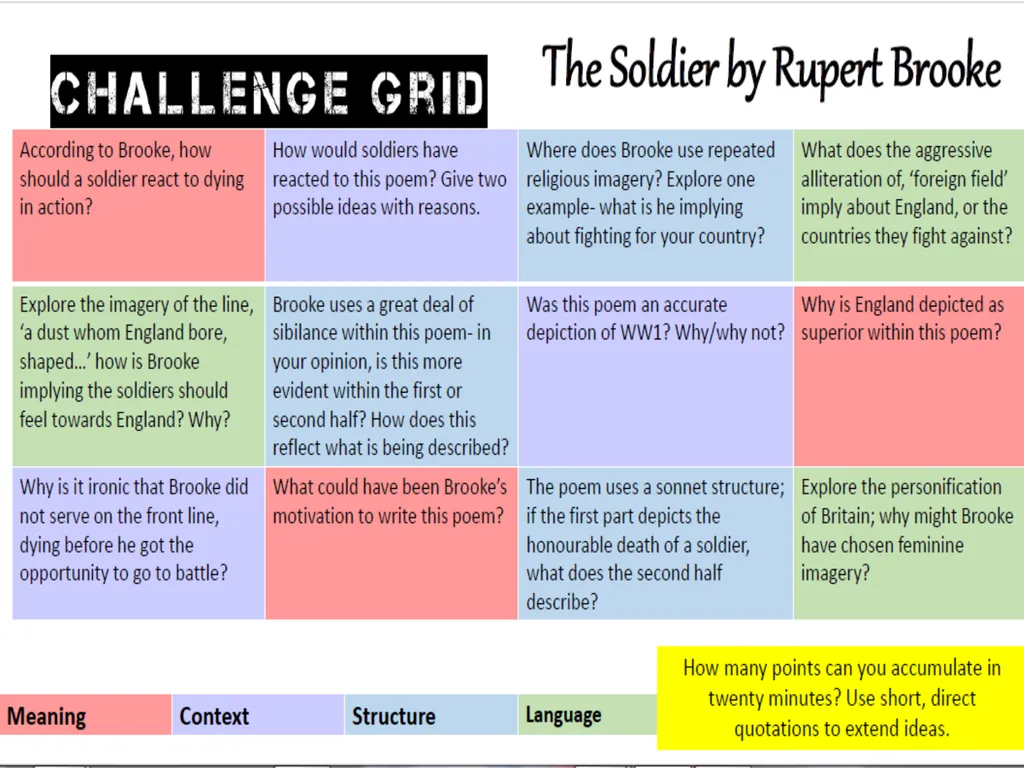
LO: To develop poetry analysis skills. ST: I can understand writers methods and use subject terminology. Learning Objective: AO2: Analyse the language, form and structure used by a writer to create meanings and effects, using relevant
"LO: To develop poetry analysis skills. ST: I can" is the property of its rightful owner. Permission is granted to
download and print the materials on this website for personal, non-commercial use only, and to display it
on your personal computer provided you do not modify the materials and that you retain all copyright
notices contained in the materials. By downloading content from our website, you accept the terms of this
agreement.
Presentation Transcript
01
LO: To develop poetry analysis skills. ST: I can understand writers’ methods and use subject terminology. Learning Objective:
AO2: Analyse the language, form and structure used by a writer to create meanings and effects, using relevant subject terminology where appropriate. ‘War Poems’
The Soldier<br>
02
‘Washed by the rivers’
‘blest by suns of home’
‘all evil shed away’ Learning Objective:
AO2: Analyse the language, form and structure used by a writer to create meanings and effects, using relevant subject terminology where appropriate. What do these THREE words make you think of? Key Words:
Colon
Comma
Structure
Sonnet
Octave
Sestet<br>
03
Learning Objective:
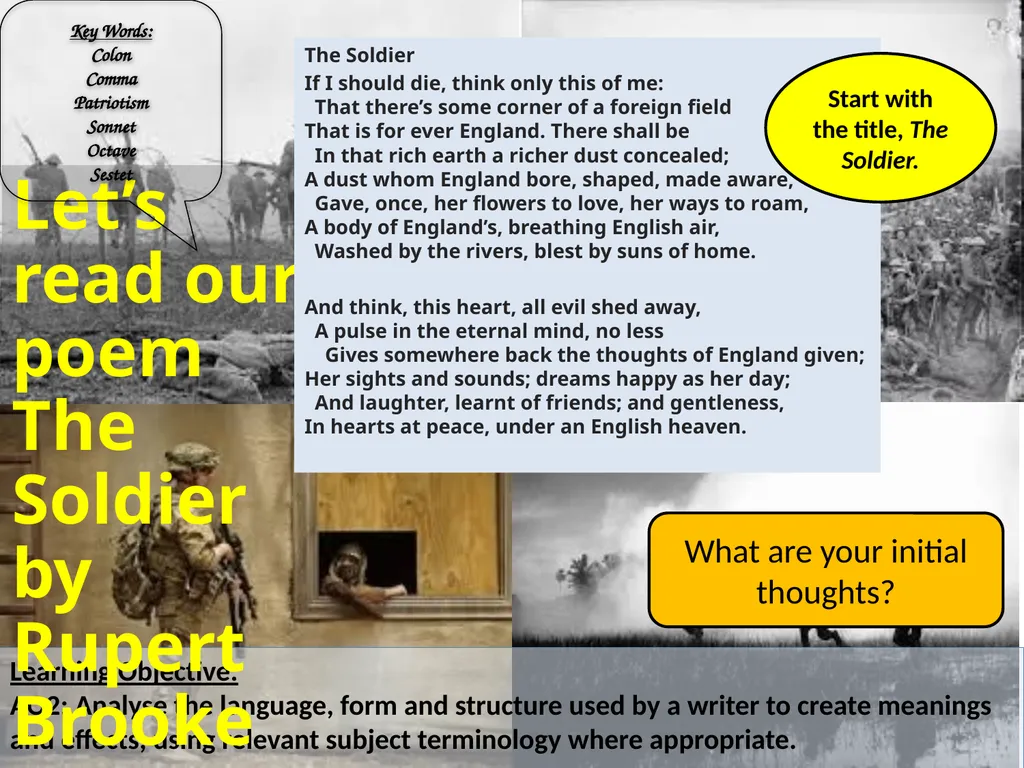
AO2: Analyse the language, form and structure used by a writer to create meanings and effects, using relevant subject terminology where appropriate. Let’s read our poem The Soldier by Rupert Brooke The Soldier
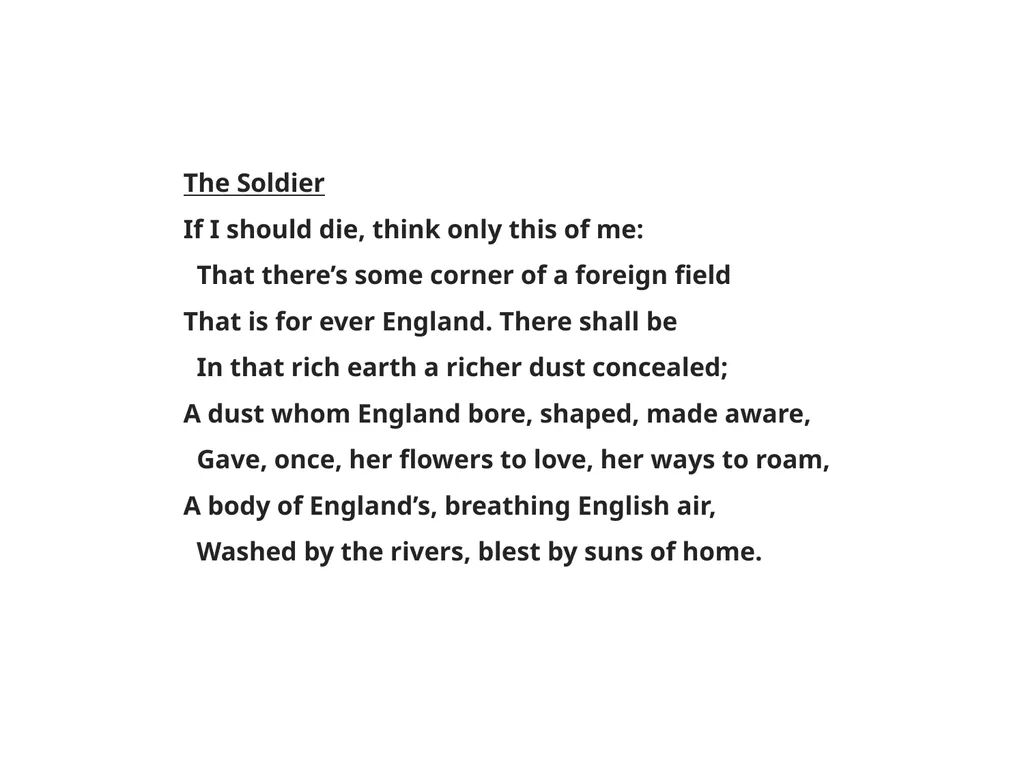
If I should die, think only this of me: That there’s some corner of a foreign field That is for ever England. There shall be In that rich earth a richer dust concealed; A dust whom England bore, shaped, made aware, Gave, once, her flowers to love, her ways to roam, A body of England’s, breathing English air, Washed by the rivers, blest by suns of home.
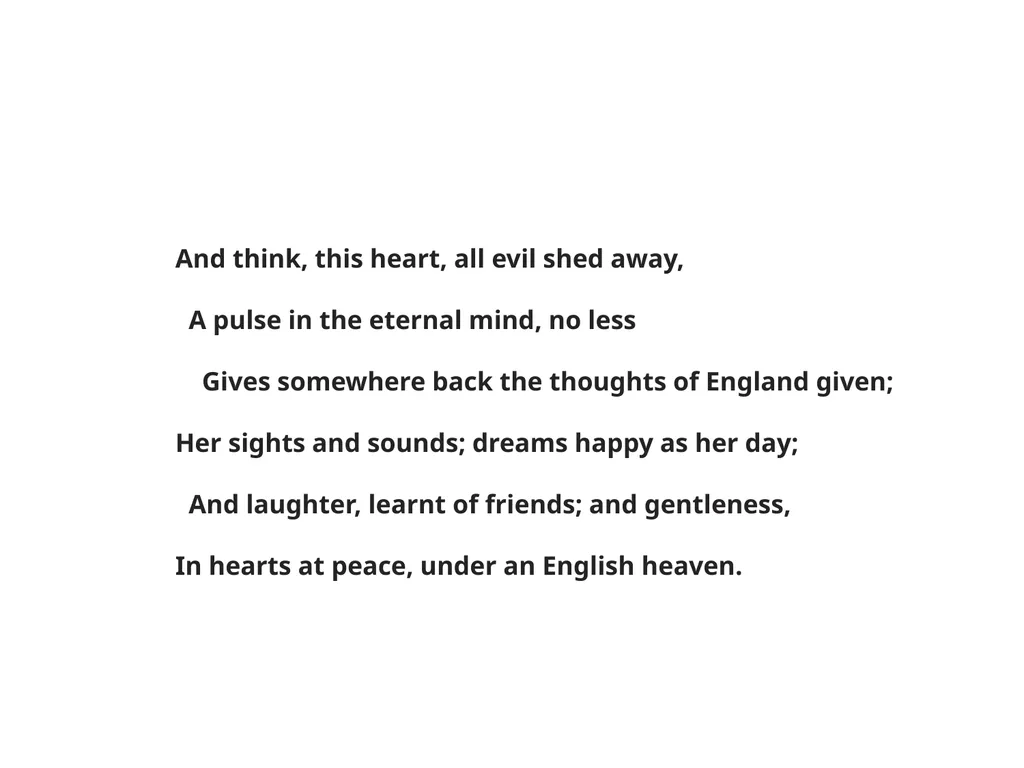
And think, this heart, all evil shed away, A pulse in the eternal mind, no less Gives somewhere back the thoughts of England given; Her sights and sounds; dreams happy as her day; And laughter, learnt of friends; and gentleness, In hearts at peace, under an English heaven. What are your initial thoughts? Start with the title, The Soldier. Key Words:
Colon
Comma
Patriotism
Sonnet
Octave
Sestet<br>
04
The Soldier
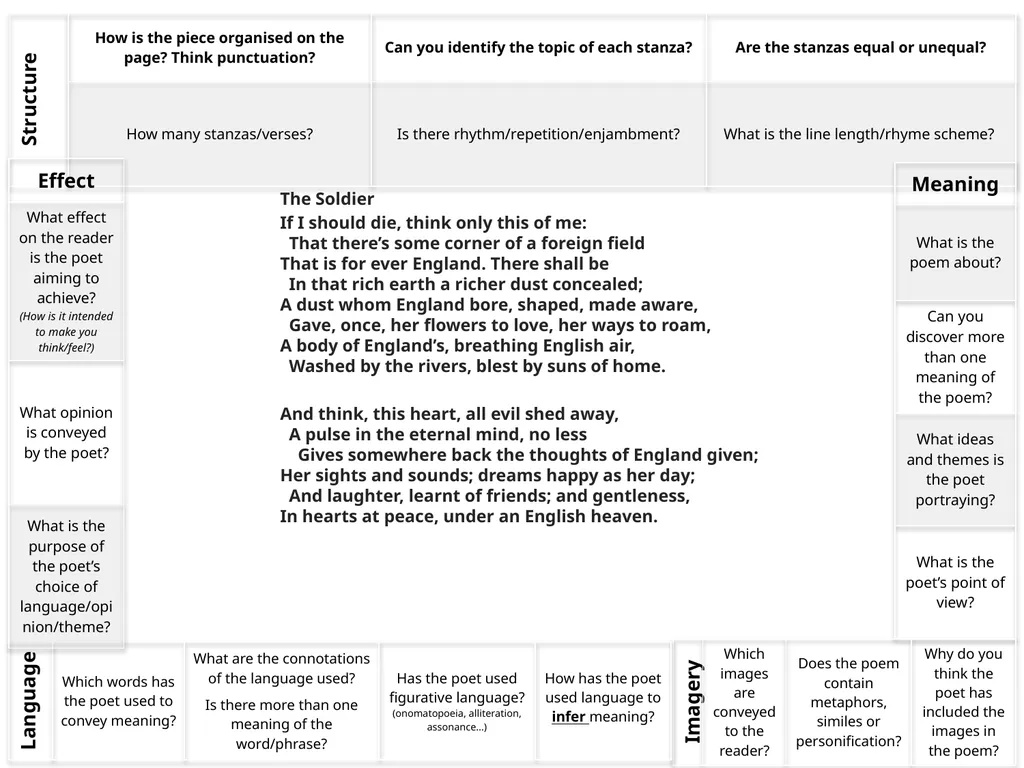
If I should die, think only this of me: That there’s some corner of a foreign field That is for ever England. There shall be In that rich earth a richer dust concealed; A dust whom England bore, shaped, made aware, Gave, once, her flowers to love, her ways to roam, A body of England’s, breathing English air, Washed by the rivers, blest by suns of home.
And think, this heart, all evil shed away, A pulse in the eternal mind, no less Gives somewhere back the thoughts of England given; Her sights and sounds; dreams happy as her day; And laughter, learnt of friends; and gentleness, In hearts at peace, under an English heaven.<br>
05
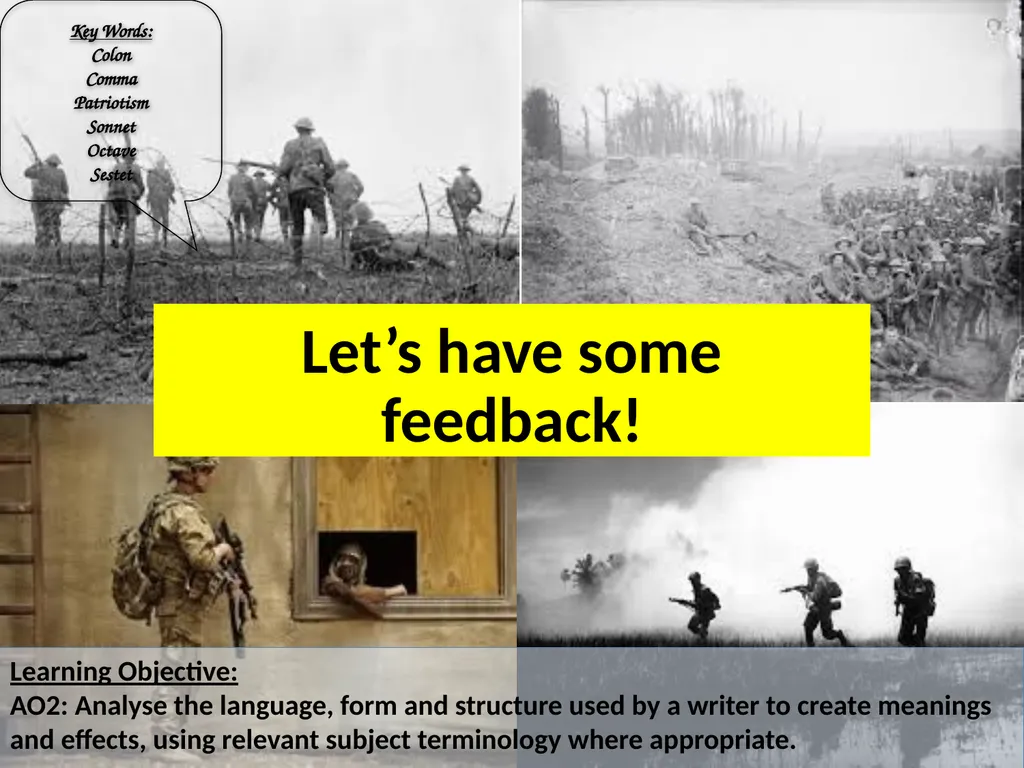
Let’s have some feedback! Learning Objective:
AO2: Analyse the language, form and structure used by a writer to create meanings and effects, using relevant subject terminology where appropriate. Key Words:
Colon
Comma
Patriotism
Sonnet
Octave
Sestet<br>
06
The Soldier
If I should die, think only this of me: That there’s some corner of a foreign field That is for ever England. There shall be In that rich earth a richer dust concealed; A dust whom England bore, shaped, made aware, Gave, once, her flowers to love, her ways to roam, A body of England’s, breathing English air, Washed by the rivers, blest by suns of home.<br>
07
And think, this heart, all evil shed away, A pulse in the eternal mind, no less Gives somewhere back the thoughts of England given; Her sights and sounds; dreams happy as her day; And laughter, learnt of friends; and gentleness, In hearts at peace, under an English heaven.<br>
08
Context Learning Objective:
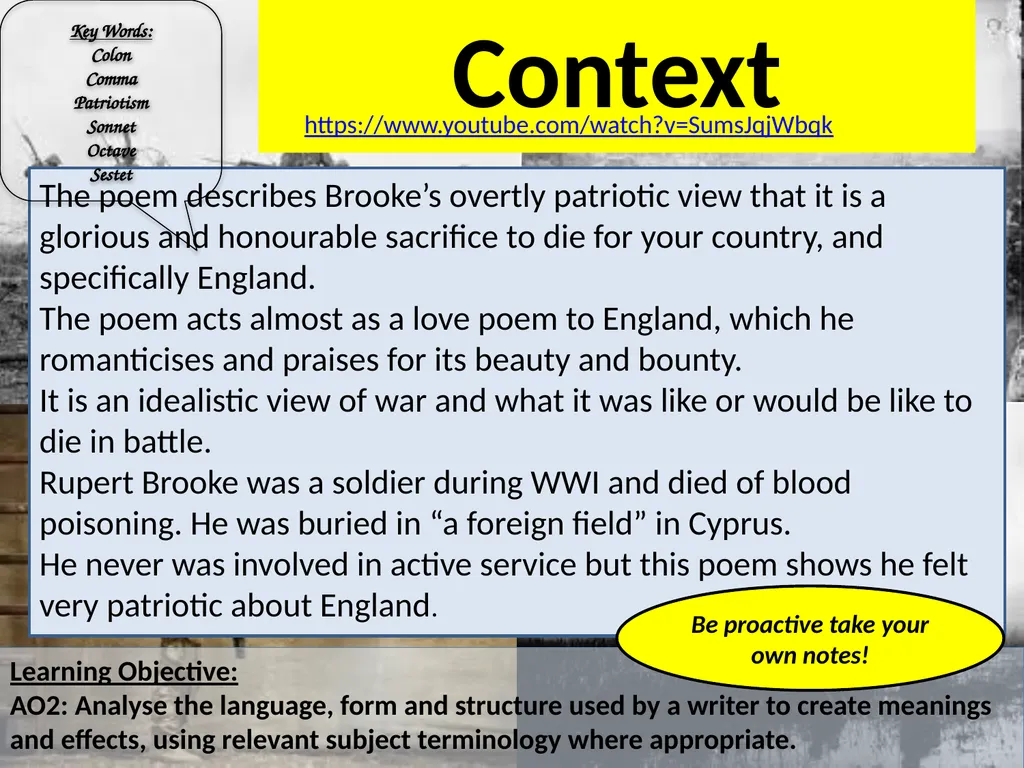
AO2: Analyse the language, form and structure used by a writer to create meanings and effects, using relevant subject terminology where appropriate. The poem describes Brooke’s overtly patriotic view that it is a glorious and honourable sacrifice to die for your country, and specifically England.
The poem acts almost as a love poem to England, which he romanticises and praises for its beauty and bounty.
It is an idealistic view of war and what it was like or would be like to die in battle.
Rupert Brooke was a soldier during WWI and died of blood poisoning. He was buried in “a foreign field” in Cyprus.
He never was involved in active service but this poem shows he felt very patriotic about England. Be proactive take your own notes! https://www.youtube.com/watch?v=SumsJqjWbqk Key Words:
Colon
Comma
Patriotism
Sonnet
Octave
Sestet<br>
09
Structure Learning Objective:
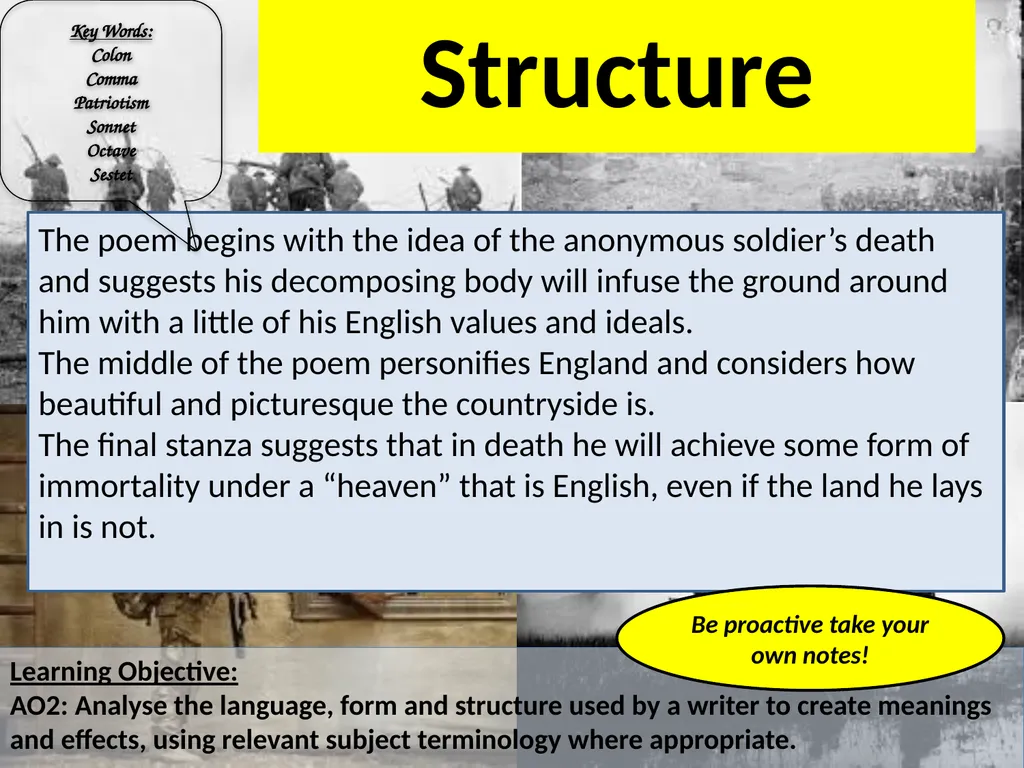
AO2: Analyse the language, form and structure used by a writer to create meanings and effects, using relevant subject terminology where appropriate. The poem begins with the idea of the anonymous soldier’s death and suggests his decomposing body will infuse the ground around him with a little of his English values and ideals.
The middle of the poem personifies England and considers how beautiful and picturesque the countryside is.
The final stanza suggests that in death he will achieve some form of immortality under a “heaven” that is English, even if the land he lays in is not. Be proactive take your own notes! Key Words:
Colon
Comma
Patriotism
Sonnet
Octave
Sestet<br>
10
The Soldier
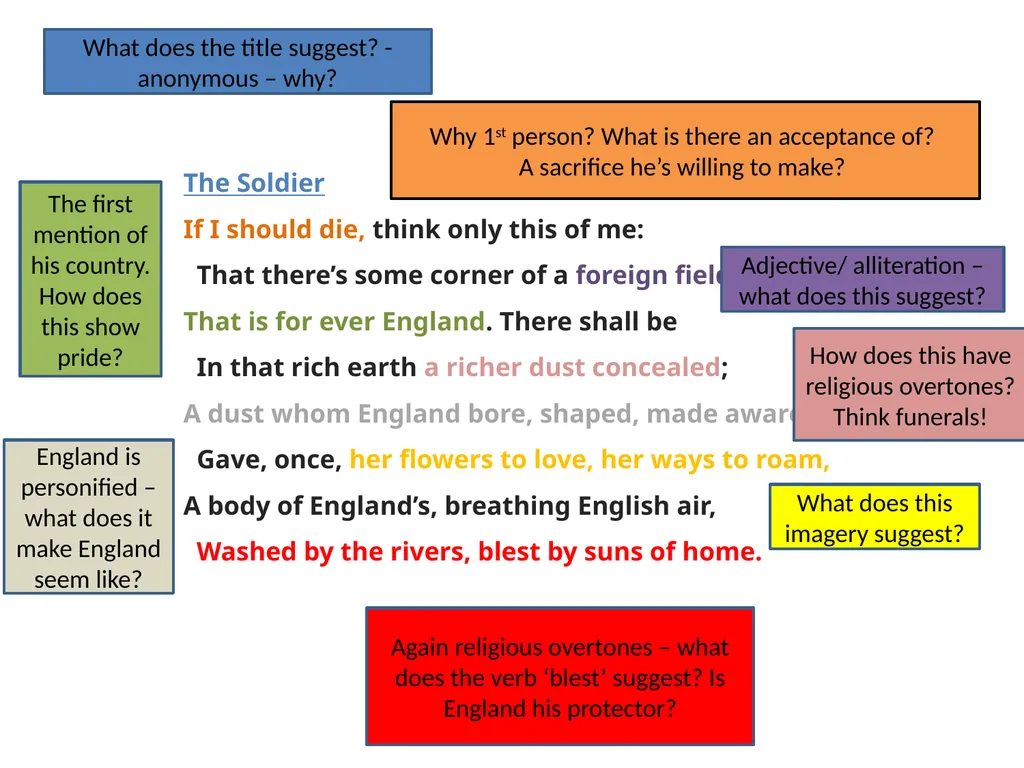
If I should die, think only this of me: That there’s some corner of a foreign field That is for ever England. There shall be In that rich earth a richer dust concealed; A dust whom England bore, shaped, made aware, Gave, once, her flowers to love, her ways to roam, A body of England’s, breathing English air, Washed by the rivers, blest by suns of home. What does the title suggest? - anonymous – why? Why 1st person? What is there an acceptance of?
A sacrifice he’s willing to make? Adjective/ alliteration – what does this suggest? The first mention of his country. How does this show pride? How does this have religious overtones? Think funerals! England is personified – what does it make England seem like? What does this imagery suggest? Again religious overtones – what does the verb ‘blest’ suggest? Is England his protector?<br>
11
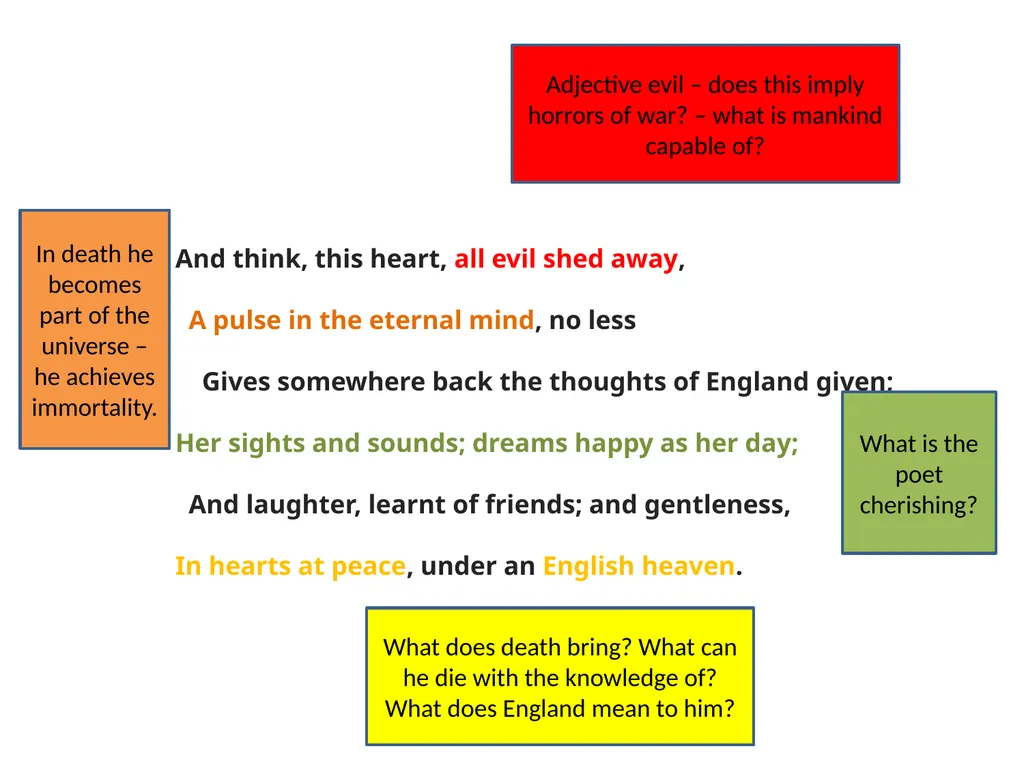
And think, this heart, all evil shed away, A pulse in the eternal mind, no less Gives somewhere back the thoughts of England given; Her sights and sounds; dreams happy as her day; And laughter, learnt of friends; and gentleness, In hearts at peace, under an English heaven. Adjective evil – does this imply horrors of war? – what is mankind capable of? In death he becomes part of the universe – he achieves immortality. What is the poet cherishing? What does death bring? What can he die with the knowledge of? What does England mean to him?<br>
12
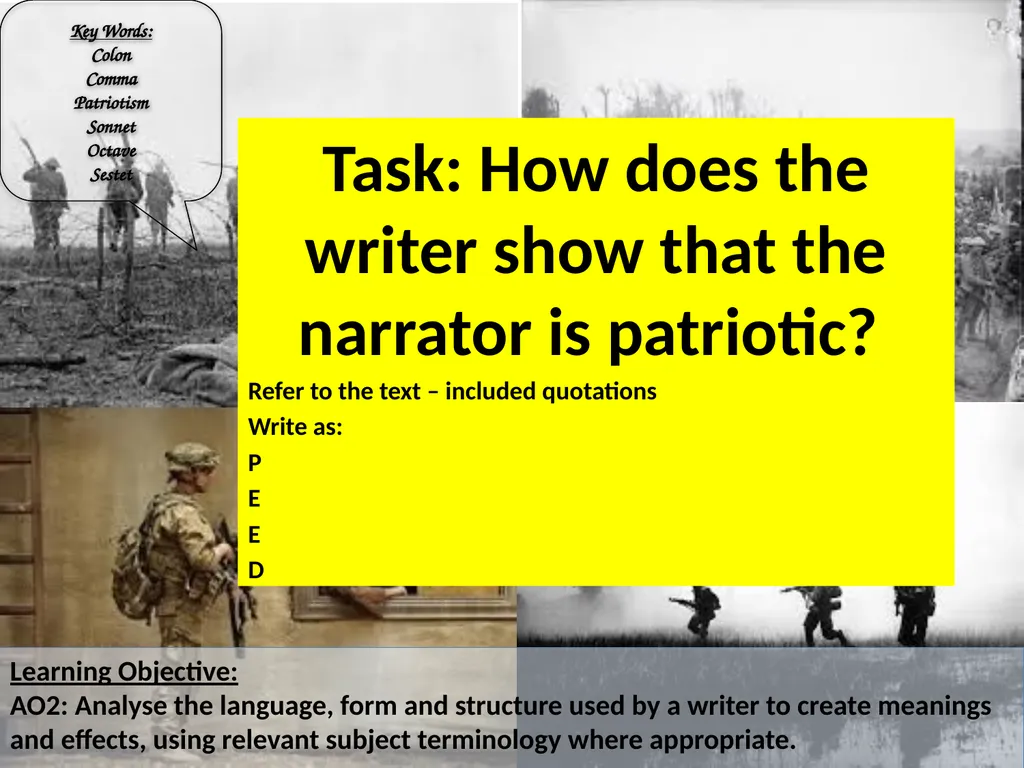
Task: How does the writer show that the narrator is patriotic?
Refer to the text – included quotations
Write as:
P
E
E
D Learning Objective:
AO2: Analyse the language, form and structure used by a writer to create meanings and effects, using relevant subject terminology where appropriate. Key Words:
Colon
Comma
Patriotism
Sonnet
Octave
Sestet<br>
13
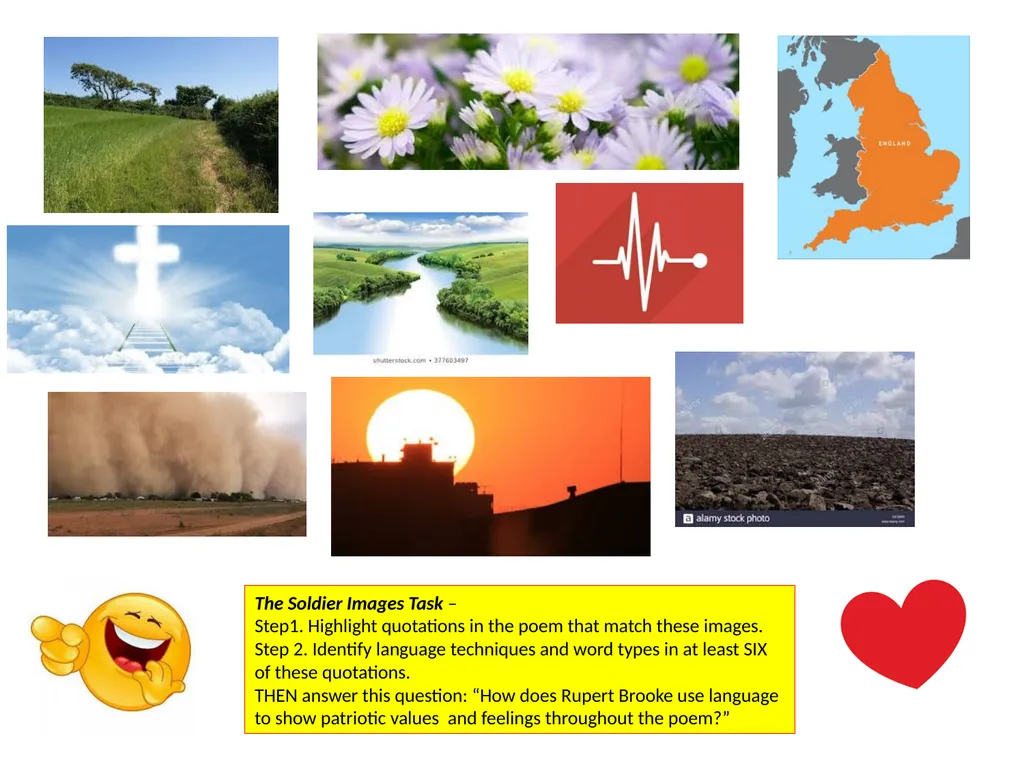
The Soldier Images Task –
Step1. Highlight quotations in the poem that match these images.
Step 2. Identify language techniques and word types in at least SIX of these quotations.
THEN answer this question: “How does Rupert Brooke use language to show patriotic values and feelings throughout the poem?”<br>