02
Sponsorship - Disclaimer Department of Labor
Occupational Health and Safety Administration (OSHA)
Susan Harwood Training Grant
This material was produced by the SPI-OSHA Alliance, and distributed by the Occupational Safety and Health Administration, U.S. Department of Labor. The contents in this presentation do not necessarily reflect the views or policies of the U.S. Department of Labor, nor does the mention of trade names, commercial products, or organizations imply endorsement by the U.S. Government.
Revisions were made to this material under grant number SH-05059-SH8 from the Occupational Safety and Health Administration, U.S. Department of Labor.<br>
04
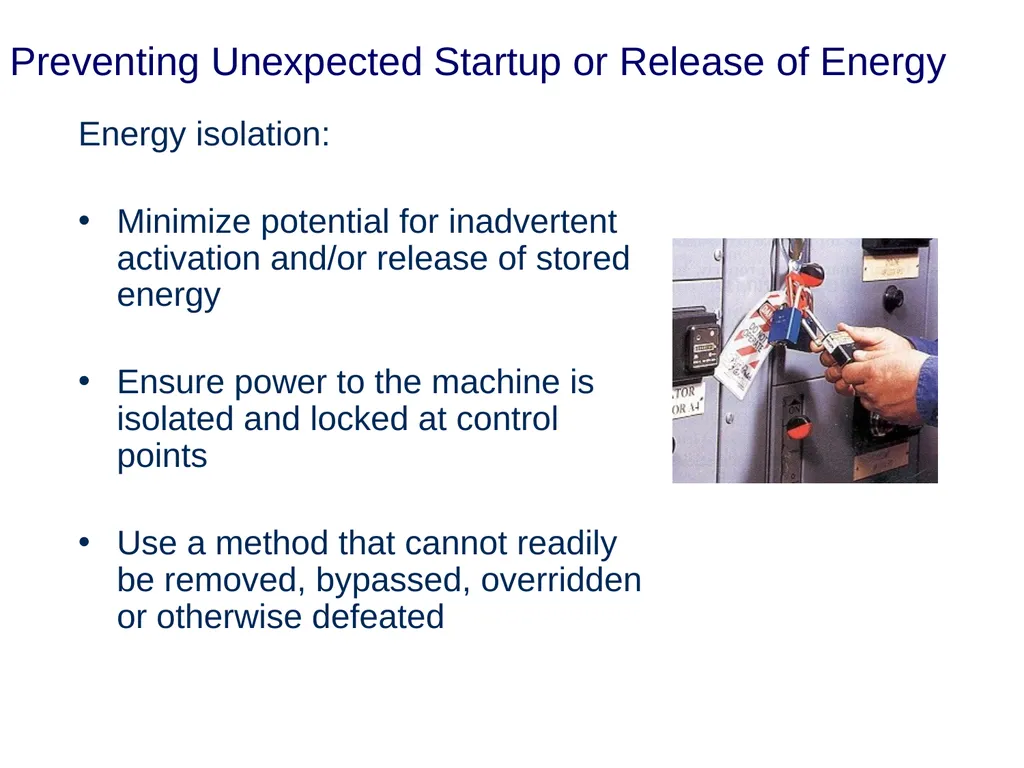
Preventing Unexpected Startup or Release of Energy Energy isolation:
Minimize potential for inadvertent activation and/or release of stored energy
Ensure power to the machine is isolated and locked at control points
Use a method that cannot readily be removed, bypassed, overridden or otherwise defeated<br>
05
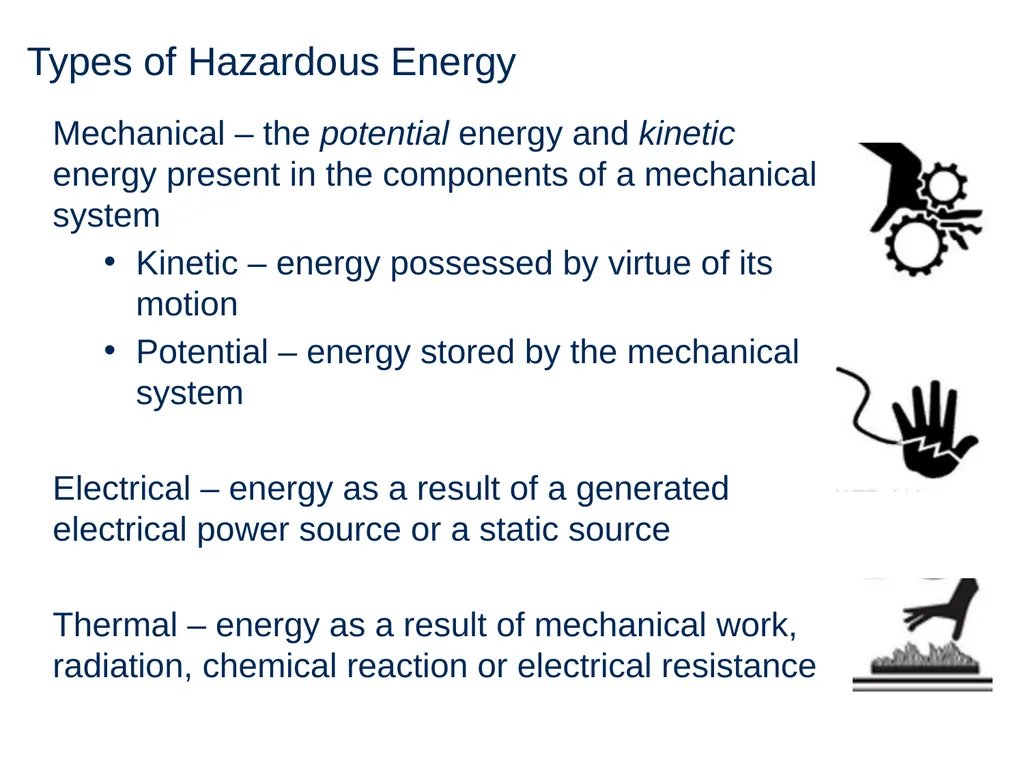
Types of Hazardous Energy Mechanical – the potential energy and kinetic energy present in the components of a mechanical system
Kinetic – energy possessed by virtue of its motion
Potential – energy stored by the mechanical system
Electrical – energy as a result of a generated electrical power source or a static source
Thermal – energy as a result of mechanical work, radiation, chemical reaction or electrical resistance<br>
06
Types of Hazardous Energy, continued Chemical – energy released as a result of chemical reactions
Hydraulic – energy released as a result liquids under pressure
Pneumatic – energy released as a result of compressed gasses under pressure<br>
07
Definitions Servicing and/or maintenance where employees may be exposed to unexpected start-up or release of hazardous energy
Construction
Installing and setting up
Adjusting, inspecting, modifying
Lubricating, cleaning or unjamming
Tool changes<br>
08
Definitions (continued) Set-up - Work to prepare a machine to perform its normal production operation
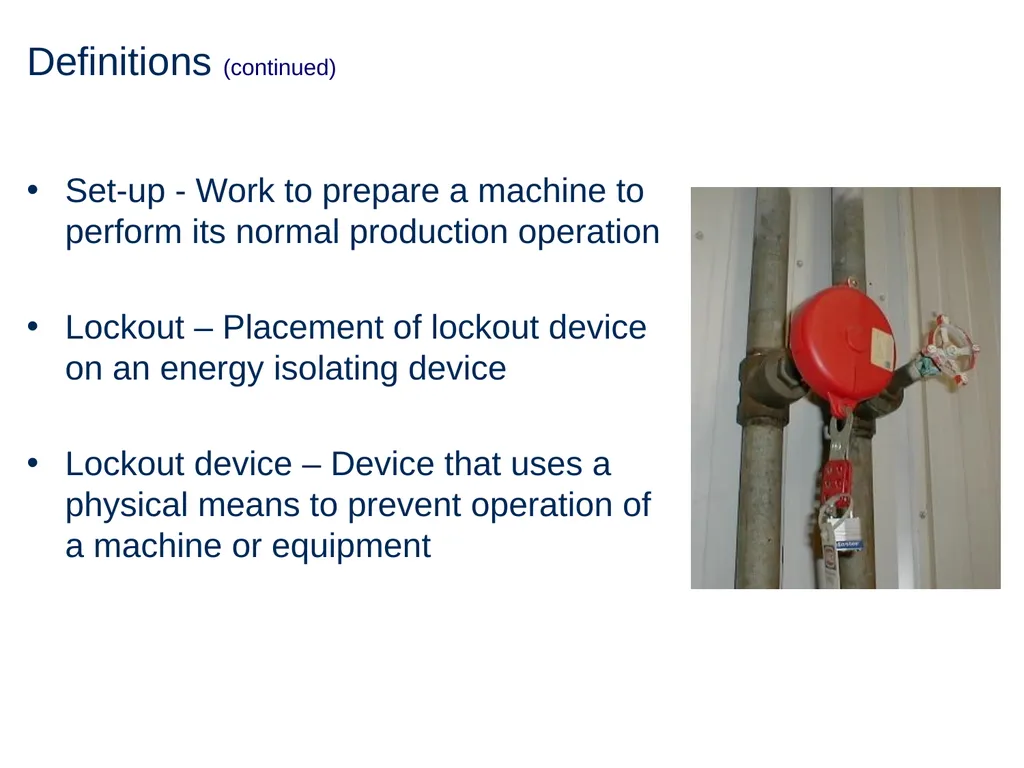
Lockout – Placement of lockout device on an energy isolating device
Lockout device – Device that uses a physical means to prevent operation of a machine or equipment<br>
09
Definitions (cont’d) Energized - Connected to an energy source, or containing residual or stored energy
Energy isolating device - A mechanical device that physically prevents the transmission or release of energy
Energy source - Any source of electrical, mechanical, hydraulic, pneumatic, chemical, thermal, or other energy<br>
10
LOTO applies when: Employees are performing servicing or maintenance and there is a potential for injury from unexpected start-up or release of stored energy
Service and maintenance that takes place during normal production if the employee:
Must remove or bypass a guard or safety device
Must place any part of their body into the danger zone<br>
11
Exception to LOTO Minor servicing activities that takes place during normal production when alternative effective protection is used<br>
12
Minor Servicing during Normal Production Operations Routine
Repetitive
Integral to the use of the equipment for production<br>
13
Alternative effective protection such as: Remote lubricators or other remote devices
Interlocked gates and barriers
Other effective guarding devices as described in OSHA’s Subpart O and the most current ANSI B 151.1 standard<br>
14
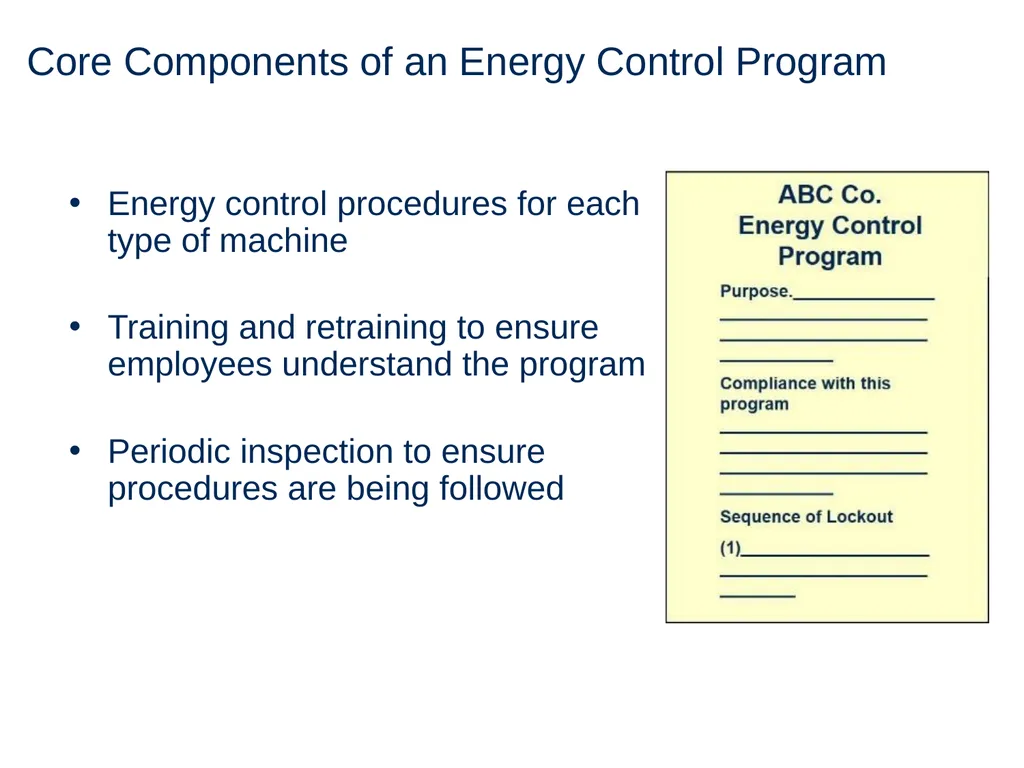
Core Components of an Energy Control Program Energy control procedures for each type of machine
Training and retraining to ensure employees understand the program
Periodic inspection to ensure procedures are being followed<br>
15
Energy Control Procedures Must be specific to each type of machine and equipment you are working on
Must include
Statement of intended use of the procedure
Steps for shutting down and securing machines and equipment
Steps for placing, removing, and transferring of lockout devices
Requirements for testing and verifying effectiveness of lockout devices<br>
16
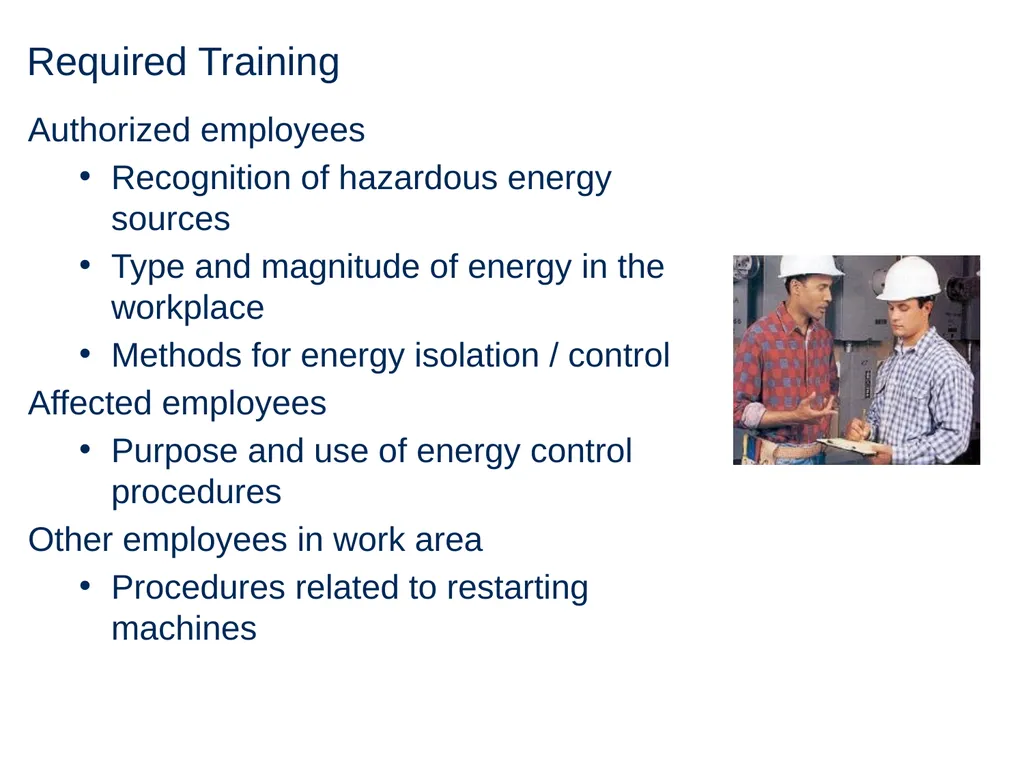
Required Training Authorized employees
Recognition of hazardous energy sources
Type and magnitude of energy in the workplace
Methods for energy isolation / control
Affected employees
Purpose and use of energy control procedures
Other employees in work area
Procedures related to restarting machines<br>
17
Retraining Requirements Retraining is required if:
Change in job assignments
Change in machines
Change in energy control procedures
Equipment or processes present new hazards
Inspections reveal deficiencies in employee's knowledge of energy control procedures
Retraining must reestablish employee proficiency<br>
18
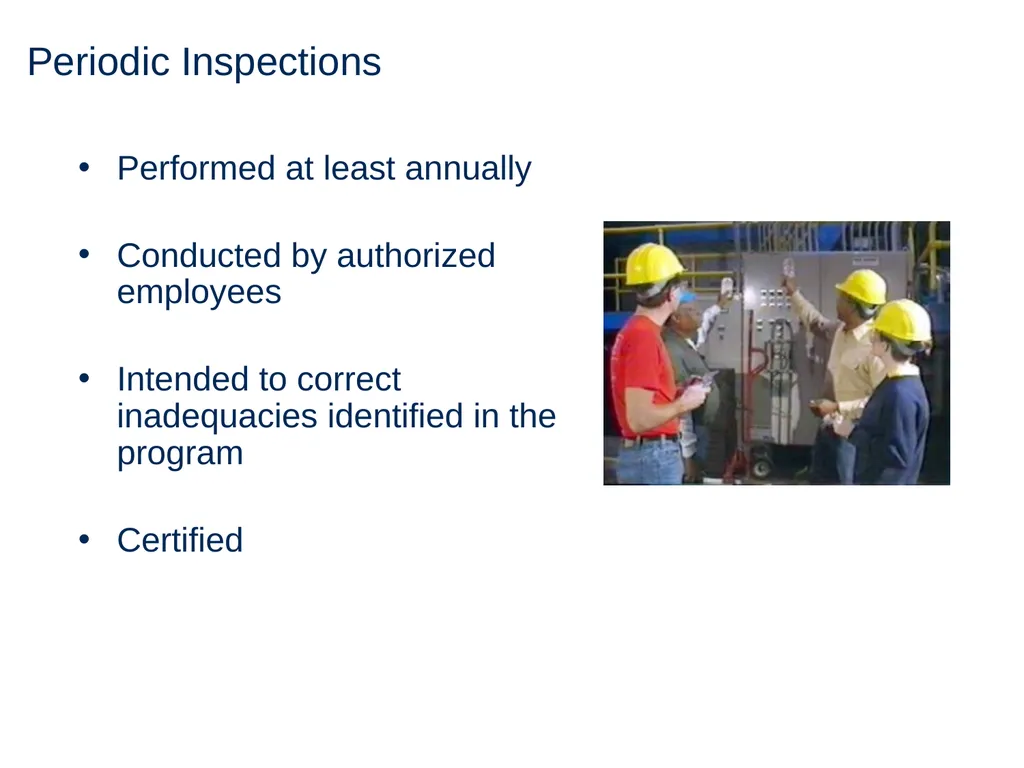
Periodic Inspections Performed at least annually
Conducted by authorized employees
Intended to correct inadequacies identified in the program
Certified<br>
19
Certification Requirements Identification of equipment or machinery
Date of inspection
Names of employees involved in the inspection
Name of person(s) performing inspection<br>
20
Steps of Lockout Procedure Prepare for shutdown
Shut down equipment
Isolate all energy sources
Apply locks & tags
Release stored energy
Verify equipment isolation
Perform the task
Release from Lockout<br>
21
Step 1: Prepare for Shutdown Understand equipment hazards
Notify other workers of shutdown<br>
22
Step 2: Shut down equipment Use the normal shutdown procedures
Turn all switches to Off or Neutral<br>
23
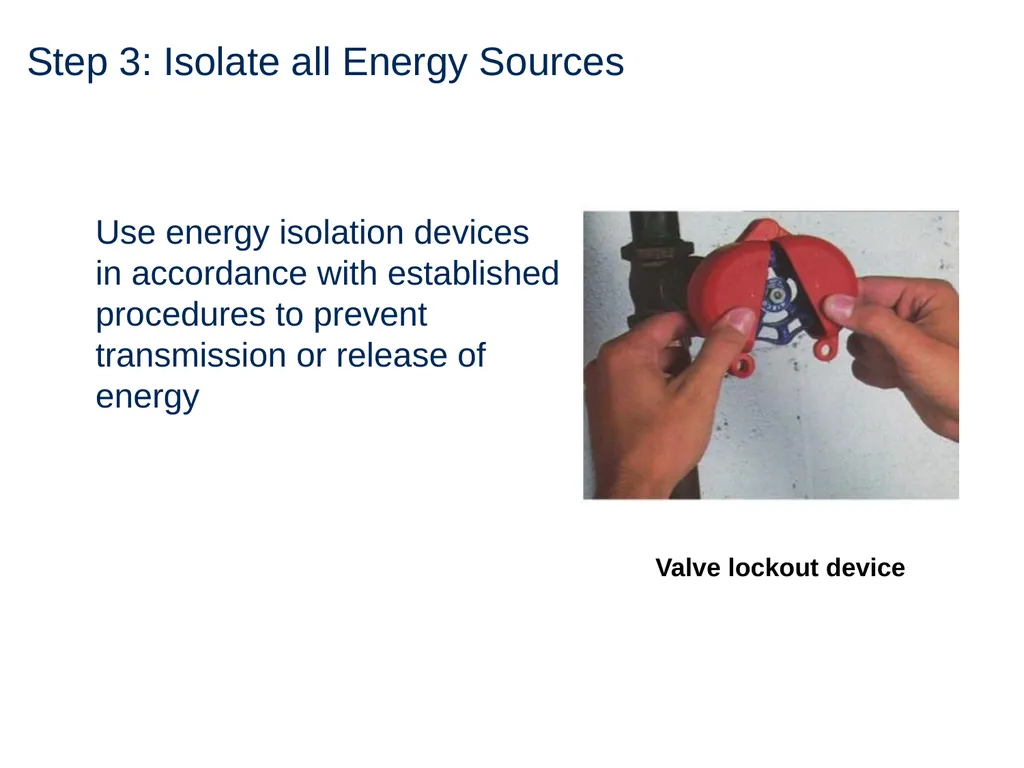
Step 3: Isolate all Energy Sources Use energy isolation devices in accordance with established procedures to prevent transmission or release of energy Valve lockout device<br>
24
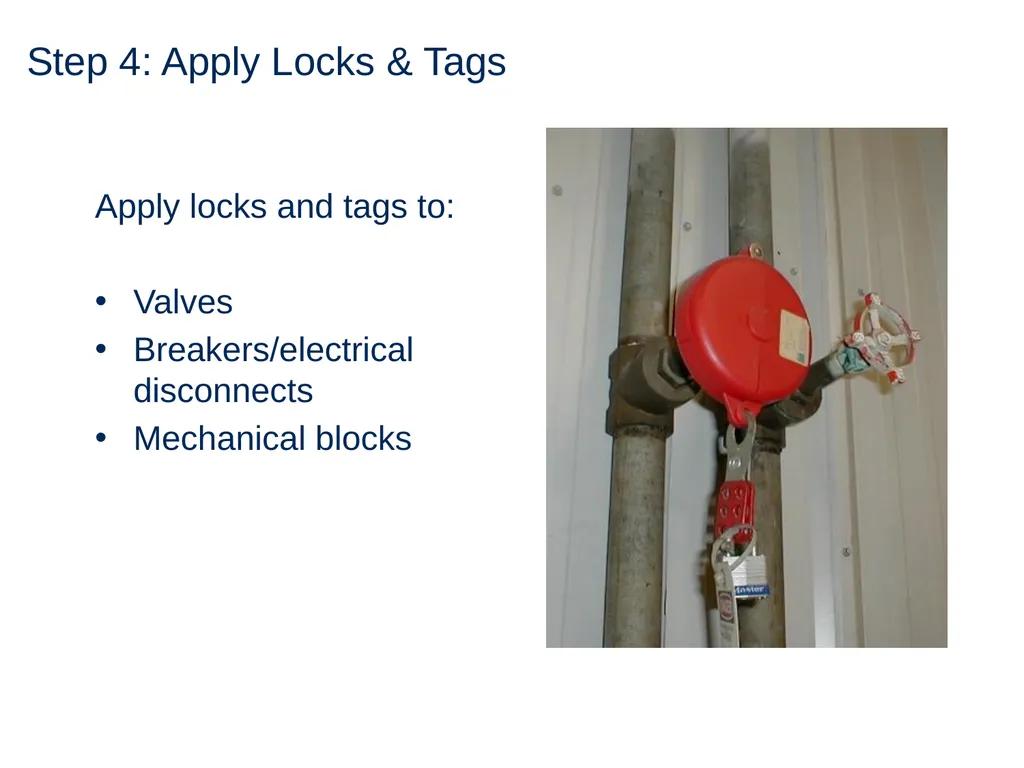
Step 4: Apply Locks & Tags Apply locks and tags to:
Valves
Breakers/electrical disconnects
Mechanical blocks<br>
25
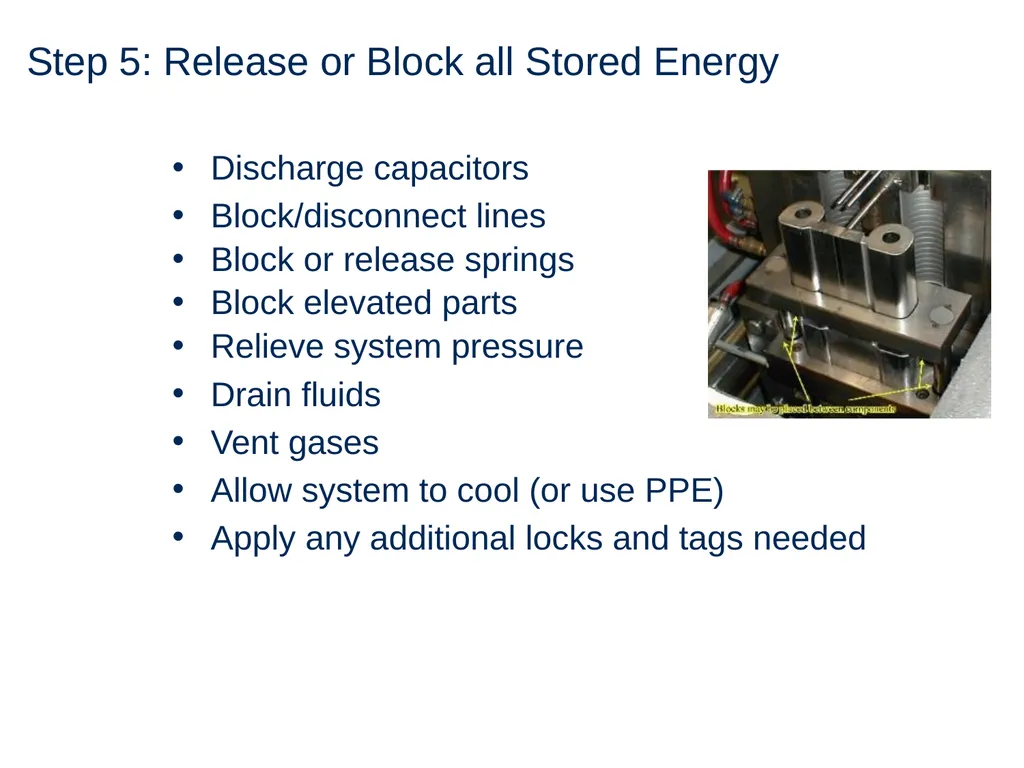
Step 5: Release or Block all Stored Energy Discharge capacitors
Block/disconnect lines
Block or release springs
Block elevated parts
Relieve system pressure
Drain fluids
Vent gases
Allow system to cool (or use PPE)
Apply any additional locks and tags needed<br>
26
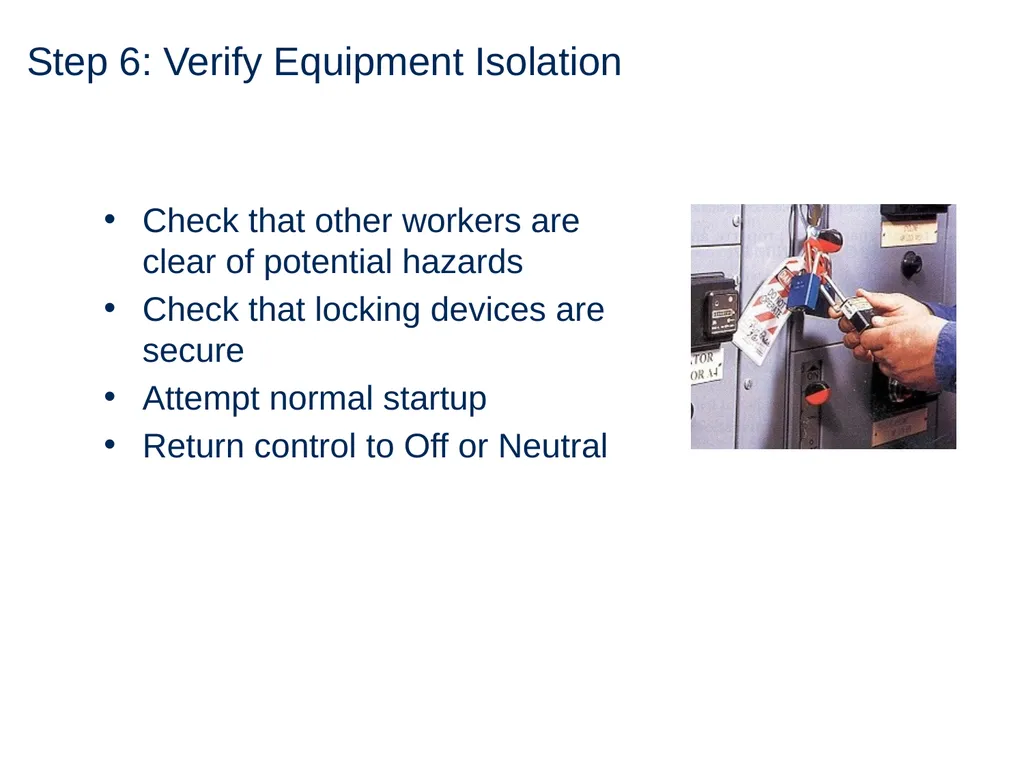
Step 6: Verify Equipment Isolation Check that other workers are clear of potential hazards
Check that locking devices are secure
Attempt normal startup
Return control to Off or Neutral<br>
27
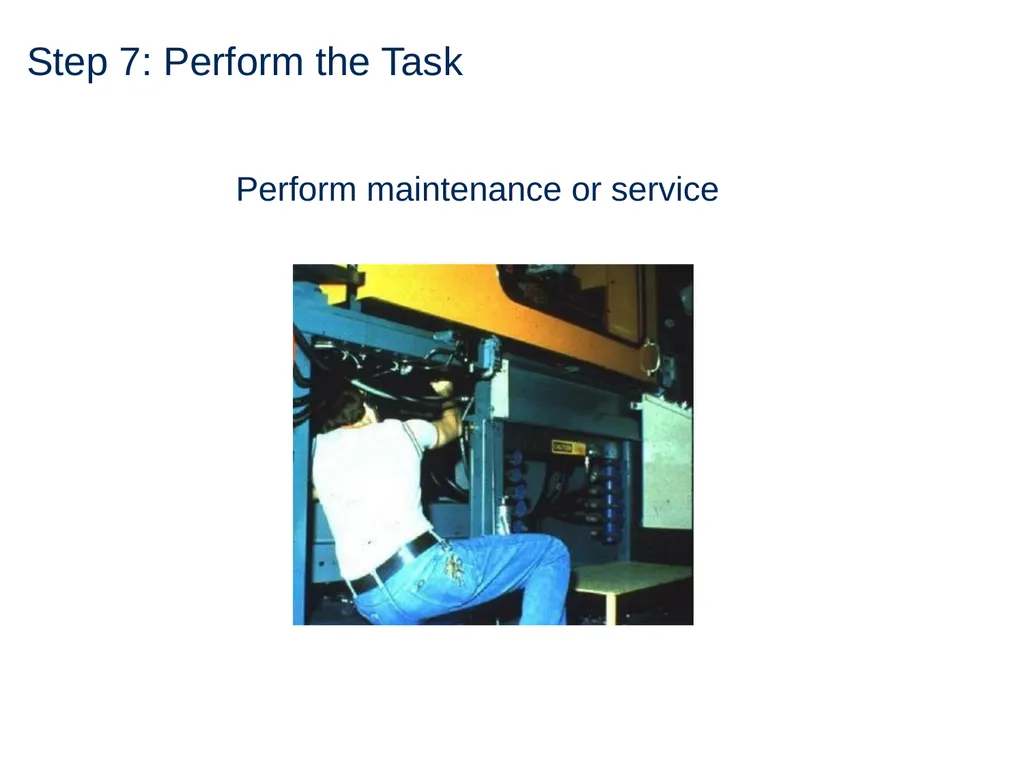
Step 7: Perform the Task Perform maintenance or service<br>
28
Step 8: Release from Lockout Ensure machinery is properly assembled and all tools removed
Ensure that employees are outside of danger zones and are notified that devices are being removed
Remove LOTO devices
Must be removed by authorized employee who applied it<br>
29
Summary Lockout-Tagout prevents energy from accidentally being released while a machine or equipment is being serviced
There are 6 types of hazardous energy common to most work environments – Mechanical, Electrical, Thermal, Chemical, Hydraulic and Pneumatic
Most injuries and fatalities are a result of improper hazardous energy control procedures
If an energy-isolating device is capable of being locked out, a lock out system MUST be used
General energy control procedures follow an 8-step process
Only the authorized employee may attach and remove the logout / tagout device
Affected employees or any other employees should NEVER remove or tamper with a logout / tagout device<br>