
Lymphatic Disorders References Therapeutic












Description: Lymphatic Disorders References Therapeutic Exercise: Foundations and Techniques by Kisner and Colby. 5th Edition, Pages 834 - 847. Goodman and Snyder, page 315. Reference: Therapeutic Modalities in Rehabilitation, 3rd Edition, by William
Related Topics
Download Presentation
"Lymphatic Disorders References Therapeutic" is the property of its rightful owner. Permission is granted to download and print the materials on this website for personal, non-commercial use only, and to display it on your personal computer provided you do not modify the materials and that you retain all copyright notices contained in the materials. By downloading content from our website, you accept the terms of this agreement.
Presentation Transcript
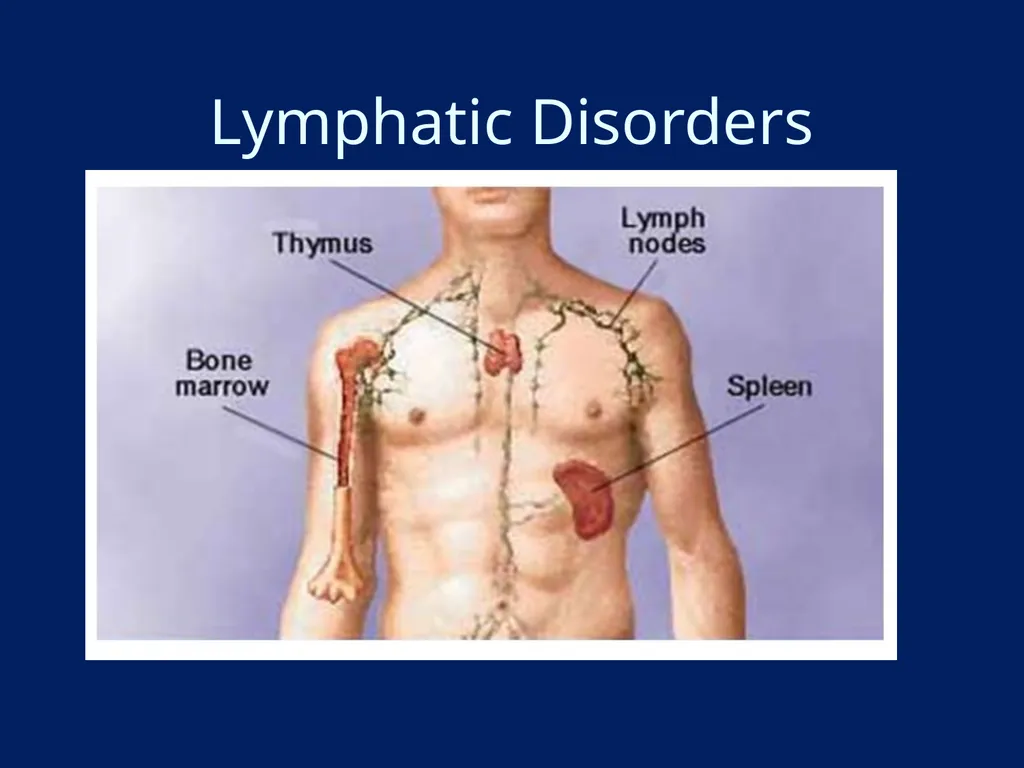
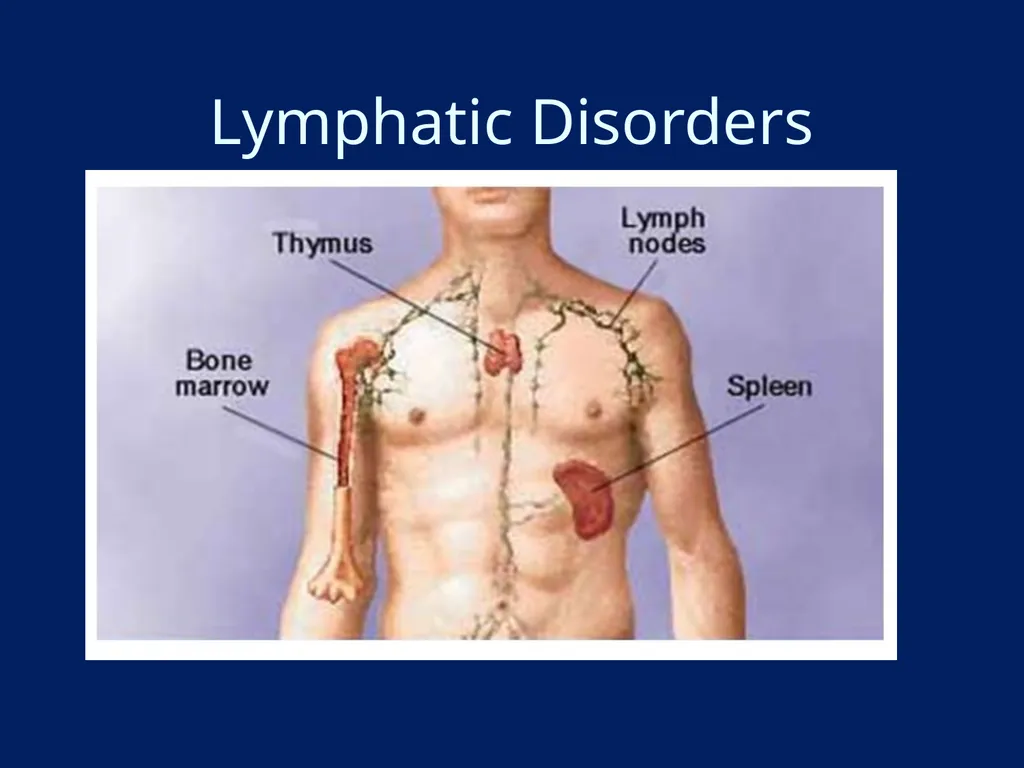
slide1. Lymphatic Disorders<br>
slide2. References Therapeutic Exercise: Foundations and Techniques by Kisner and Colby. 5th Edition, Pages 834 - 847.
Goodman and Snyder, page 315. Reference: Therapeutic Modalities in Rehabilitation, 3rd Edition, by William Prentice, pages 490 – 496.
Reference: Modalities for Therapeutic Intervention, 4th Edition, by Susan Michlovitz and Thomas Nolan, pages 174 – 179.<br>
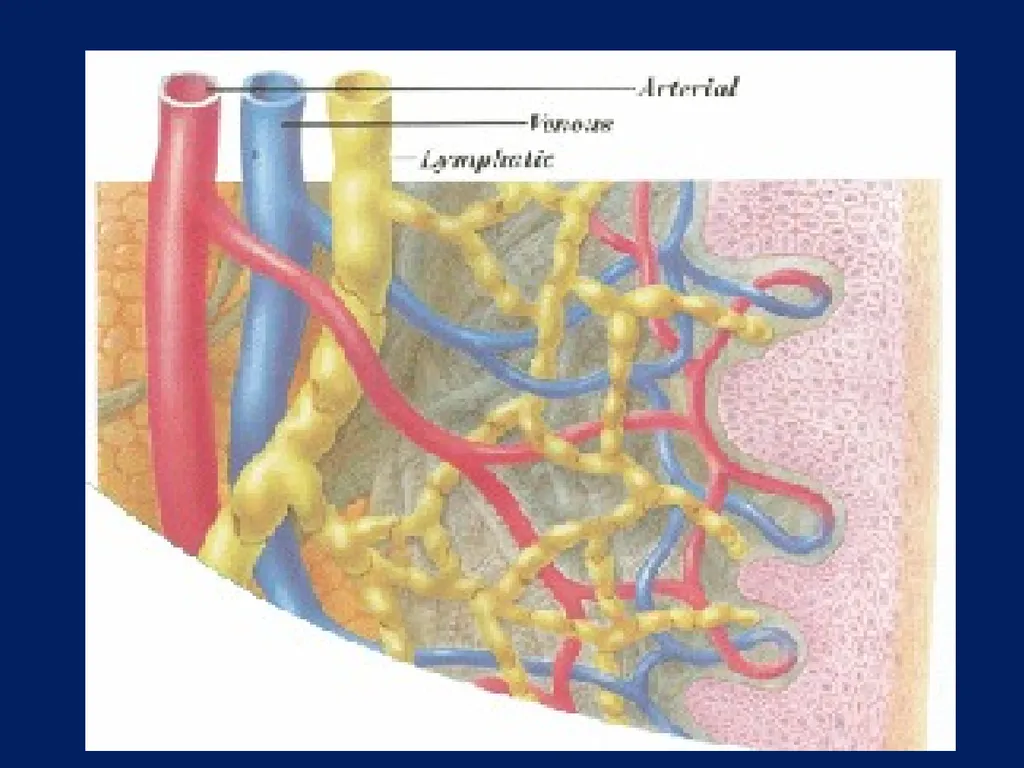
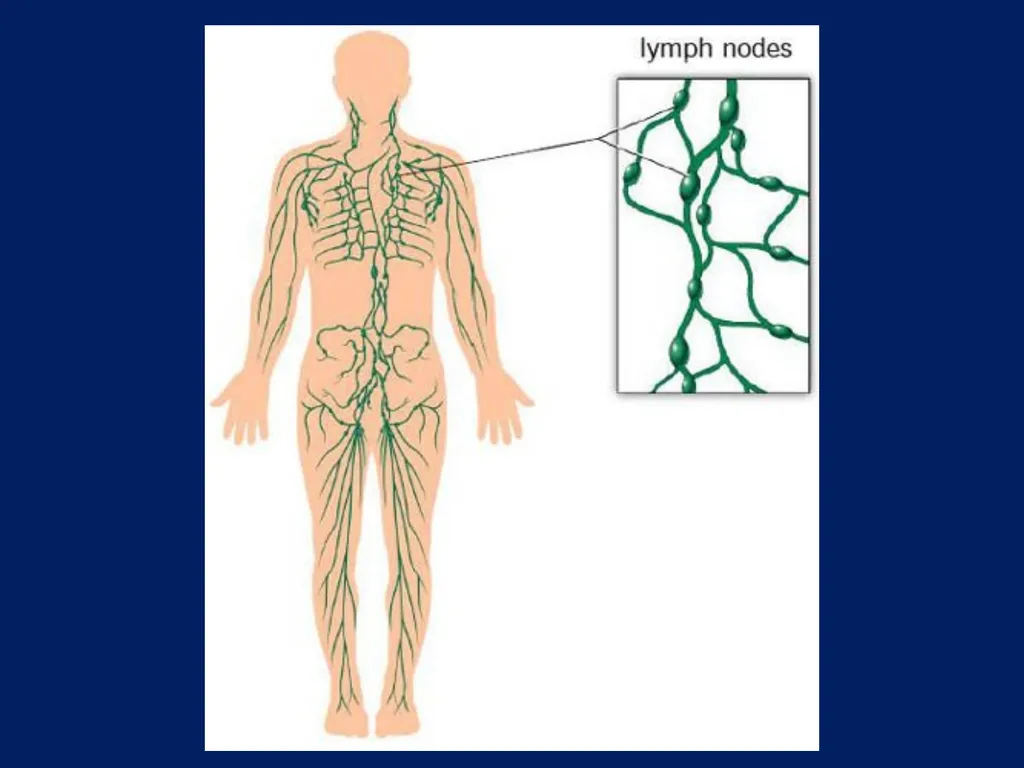
slide5. Lymphedema Excessive and persistent accumulation of extravascular and extracellular fluid and proteins in tissue spaces
Caused by a disturbance of the water and protein balance across the capillary membrane
Increased concentration of proteins draws greater amount of water into interstitial spaces
Exceeds transport capacity of the lymphatic system, leading to lymphedema<br>
slide6. Lymphedema
Also develops when lymph vessels or lymph nodes are missing, impaired, damaged or removed<br>
slide7. Primary lymphedema –rare,caused by absent lymph vessels at birth, or caused by abnormal lymphatic vessels.
Secondary lymphedema –due to blockage or interruption that alters the lymphatic system.<br>
slide8. Secondary lymphedema
can develop from infection, malignancy, surgery, scar tissue formation, trauma, deep vein thrombosis (DVT), radiation or other cancer treatment.<br>
slide9. Disorders of the Lymphatic System Leading to Lymphatic Insufficiency Congenital Malformation
Infection and Inflammation
Obstruction or Fibrosis
Trauma, Surgery, Neoplasms
Radiation Therapy
Surgical Dissection of Lymph Nodes
Chronic Venous Insufficiency<br>
slide10. Clinical Signs and Symptoms of Lymphedema Edema of the dorsum of the foot or hand
Decreased range of motion, flexibility and function
Usually unilateral
Worse after prolonged dependency
No discomfort or a dull, heavy sensation; sense of fullness
Reference: Goodman and Snyder, page 315.<br>
slide11. Clinical Manifestations of Lymphatic Disorders Lymphedema
Increased girth and weight of the limb
Sensory disturbances
Stiffness and limited range of motion
Decreased resistance to infection<br>
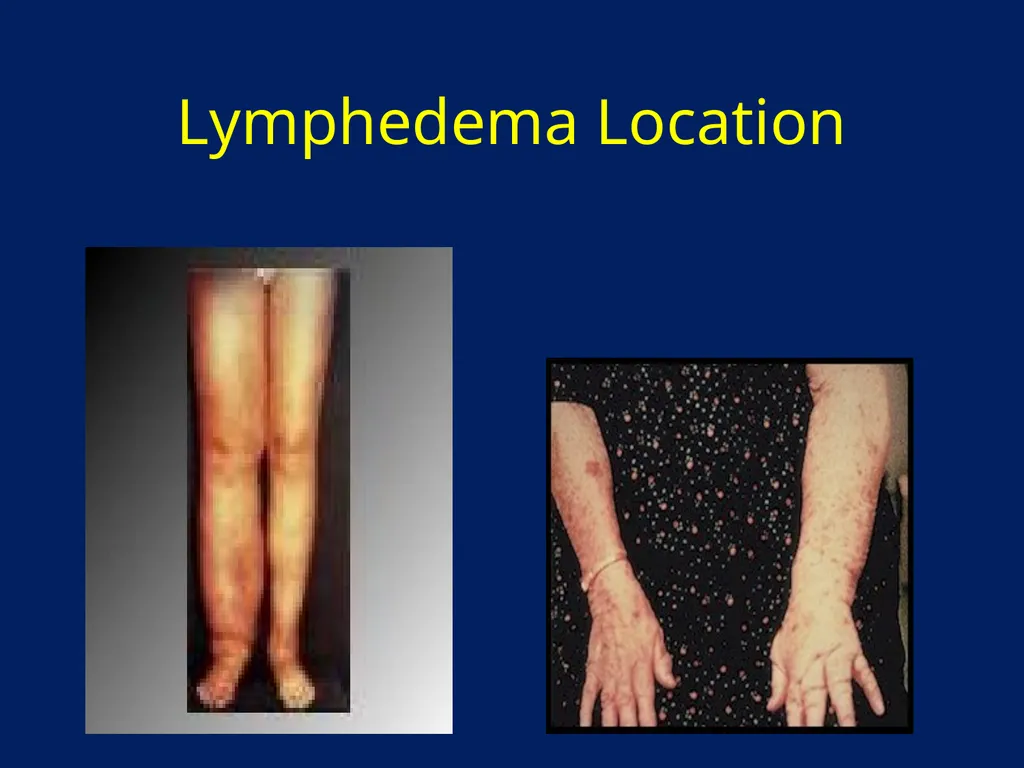
slide12. Lymphedema Location<br>
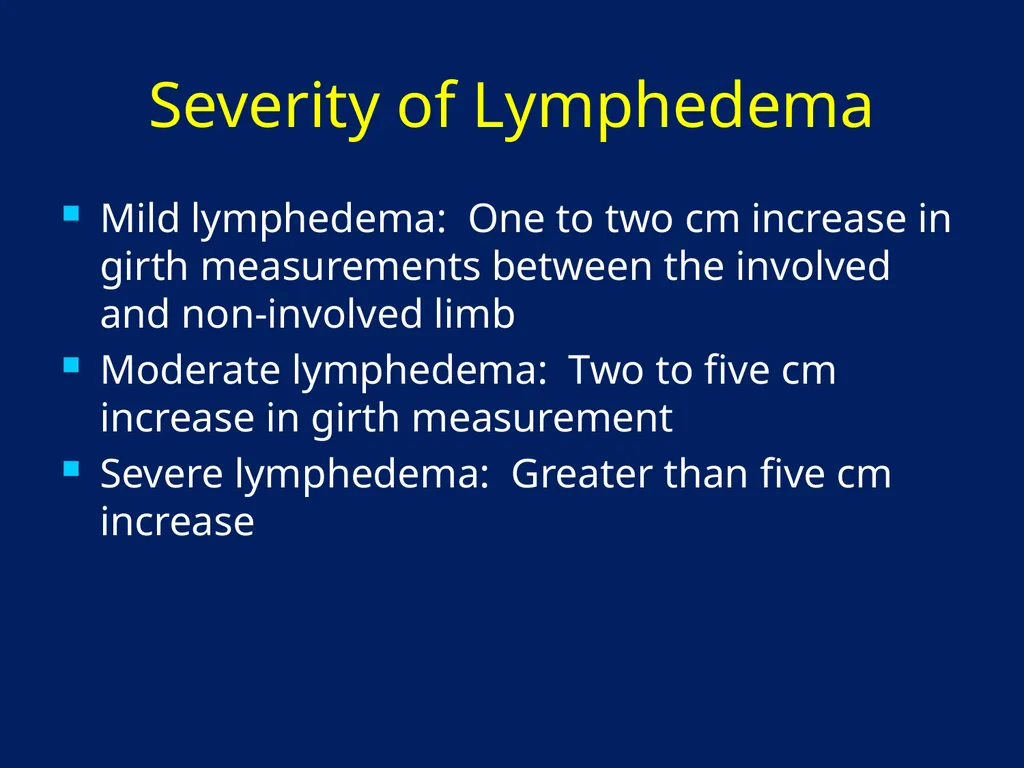
slide13. Severity of Lymphedema Mild lymphedema: One to two cm increase in girth measurements between the involved and non-involved limb
Moderate lymphedema: Two to five cm increase in girth measurement
Severe lymphedema: Greater than five cm increase<br>
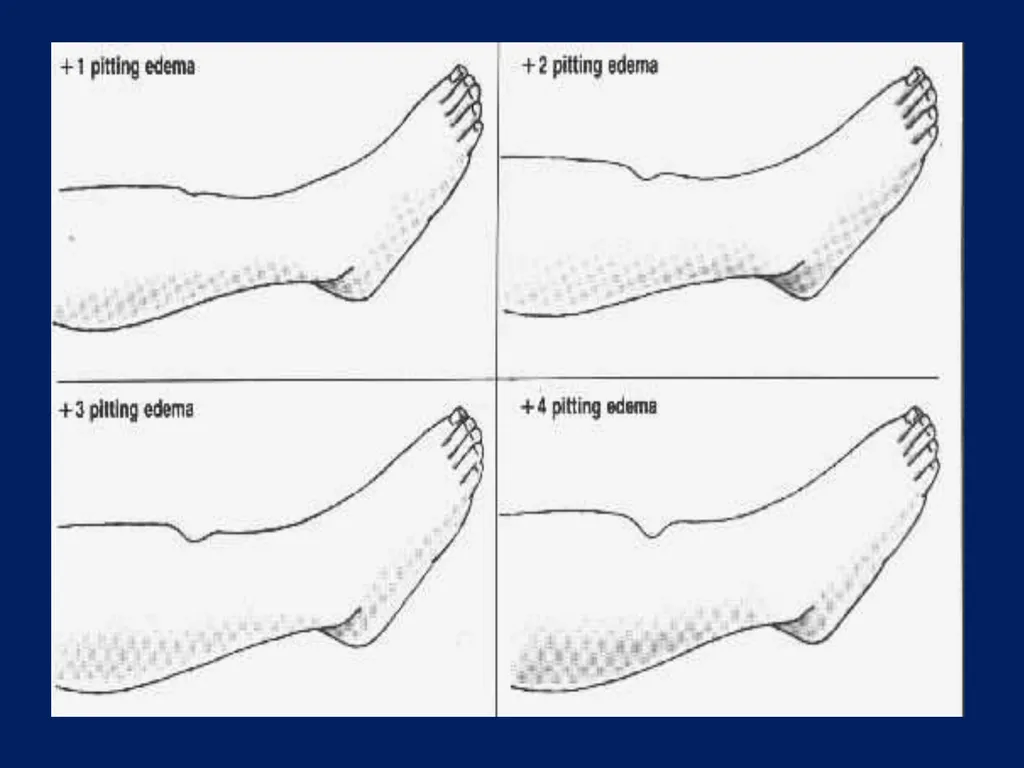
slide14. Types of Lymphedema Pitting edema
Short duration edema
Finger indentation of the skin
Brawny edema
Tissue feels hard upon palpation
Indicates fibrotic changes
Weeping
Fluid leaks, wound healing is impaired
Occurs mostly in the lower extremities<br>
slide16. Examination and Evaluation of Lymphatic Function Special Considerations
History, systems review
Daily activities and position of limb
Functional assessment
Skin integrity
Girth measurements
Volume measurements<br>
slide17. Components of a Decongestive Lymphatic Therapy Program Elevation
Manual lymphatic drainage
Compression
Exercise
Skin care
Daily living precautions<br>
slide18. Elevation Elevate the involved limb when using a sequential compression pump
Elevate limb when sleeping, resting, and during sedentary activities
Compressive bandages or garment should be worn during periods of elevation<br>
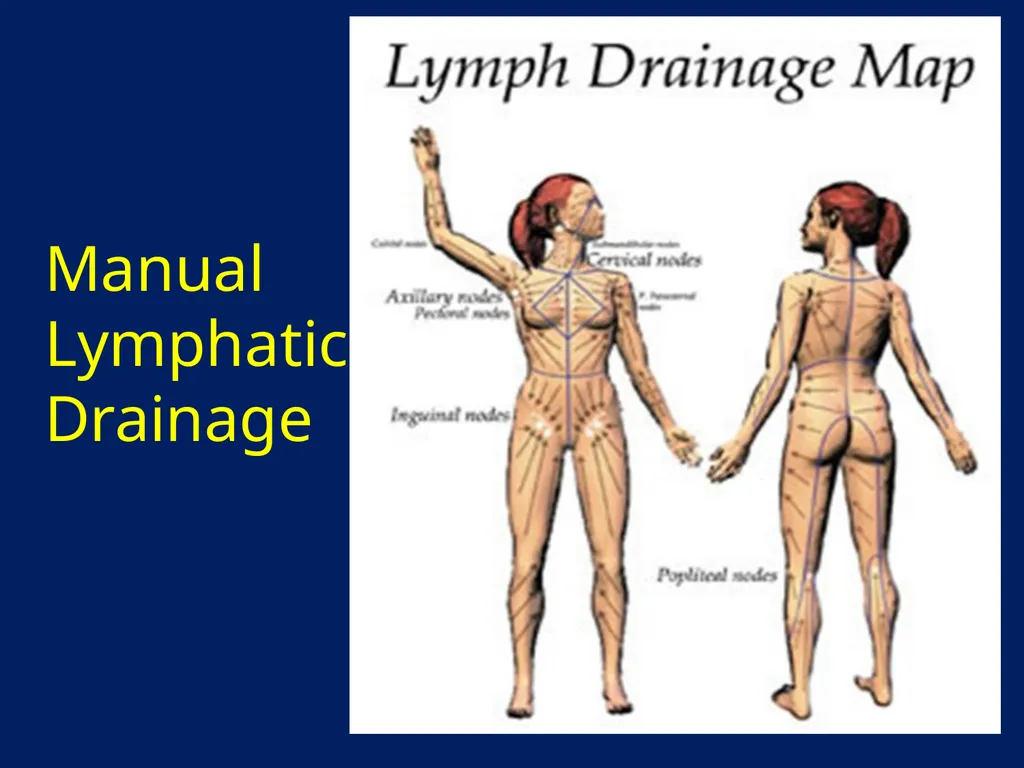
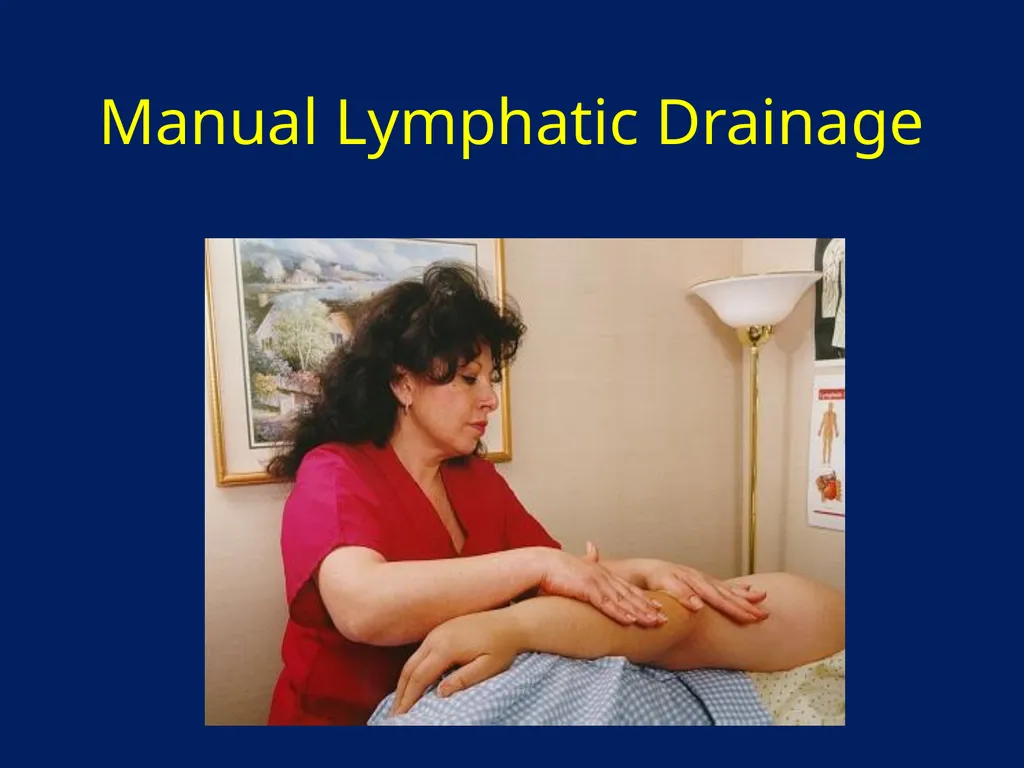
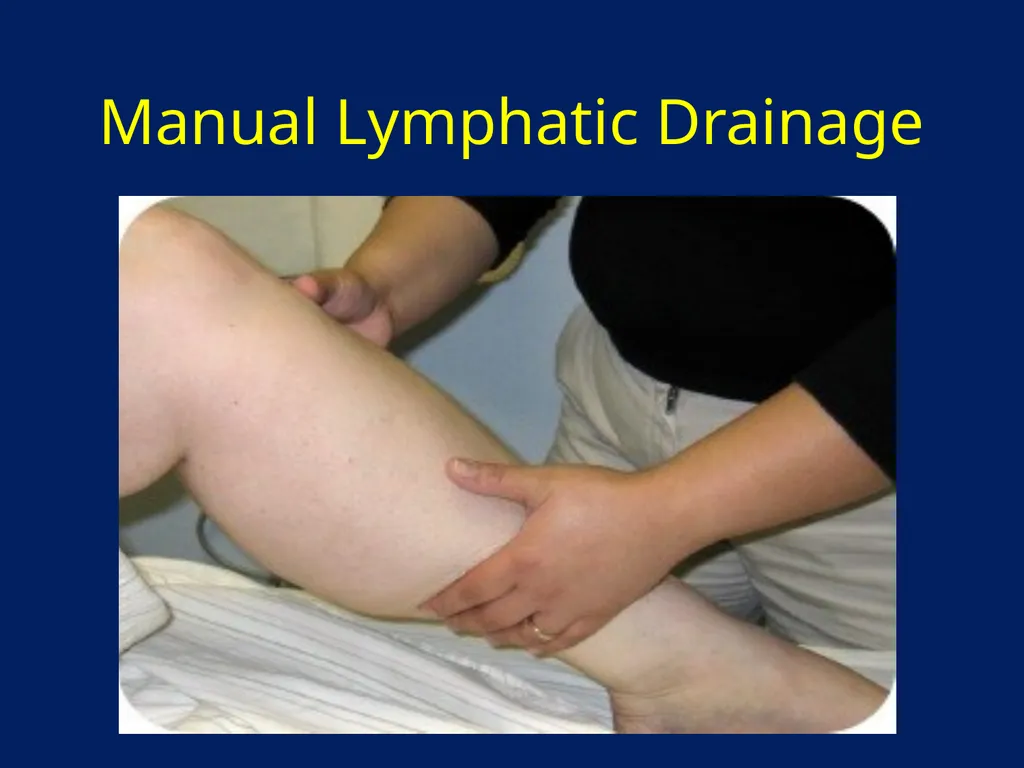
slide19. Manual Lymphatic Drainage Slow, very light, repetitive stroking and circular massage movements performed in a specific sequence, limb elevated whenever possible
Proximal congestion in the trunk, groin, buttock, or axilla is cleared first
Direction of massage is towards specific lymph nodes
Usually involves distal to proximal stroking<br>
slide20. Manual Lymphatic Drainage<br>
slide21. Manual Lymphatic Drainage Labor and time intensive
Specialized training needed
Continuing education
Certification<br>
slide22. Manual Lymphatic Drainage<br>
slide23. Manual Lymphatic Drainage<br>
slide24. Exercise Active range of motion, stretching, and low-intensity resistance exercise is incorporated with manual drainage techniques
Exercises should be performed with compressive bandages or garment<br>
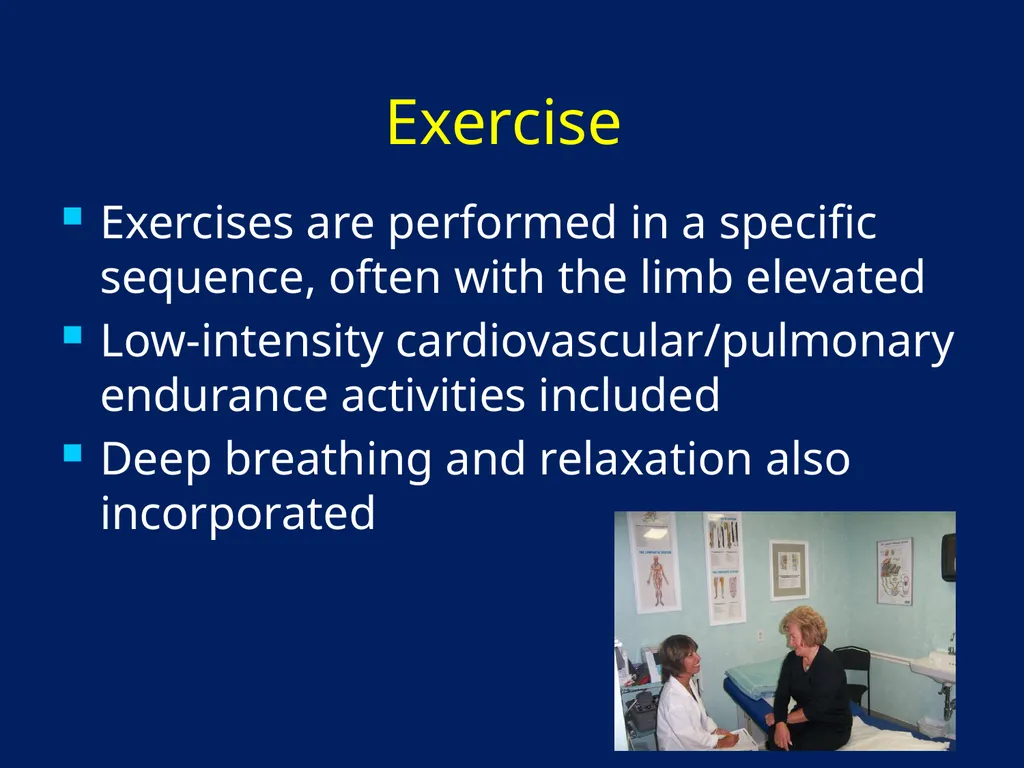
slide25. Exercise Exercises are performed in a specific sequence, often with the limb elevated
Low-intensity cardiovascular/pulmonary endurance activities included
Deep breathing and relaxation also incorporated<br>
slide26. Exercise Exercises performed in a specific sequence can assist lymph flow
Awareness of other medical conditions
Patient education<br>
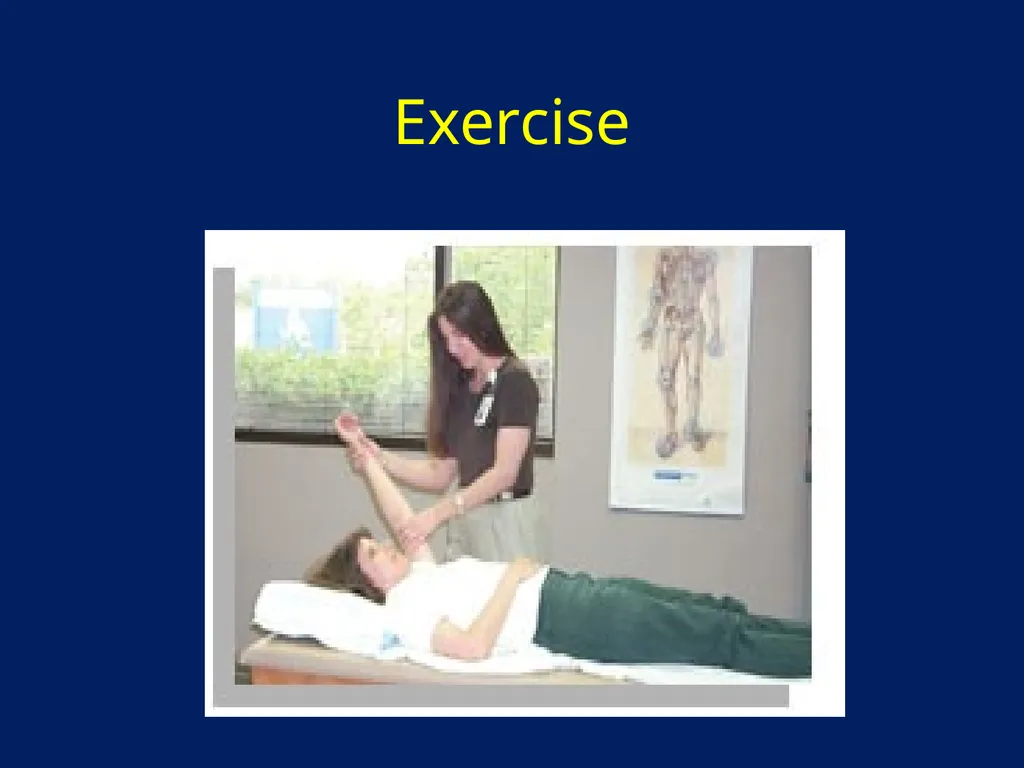
slide27. Exercise<br>
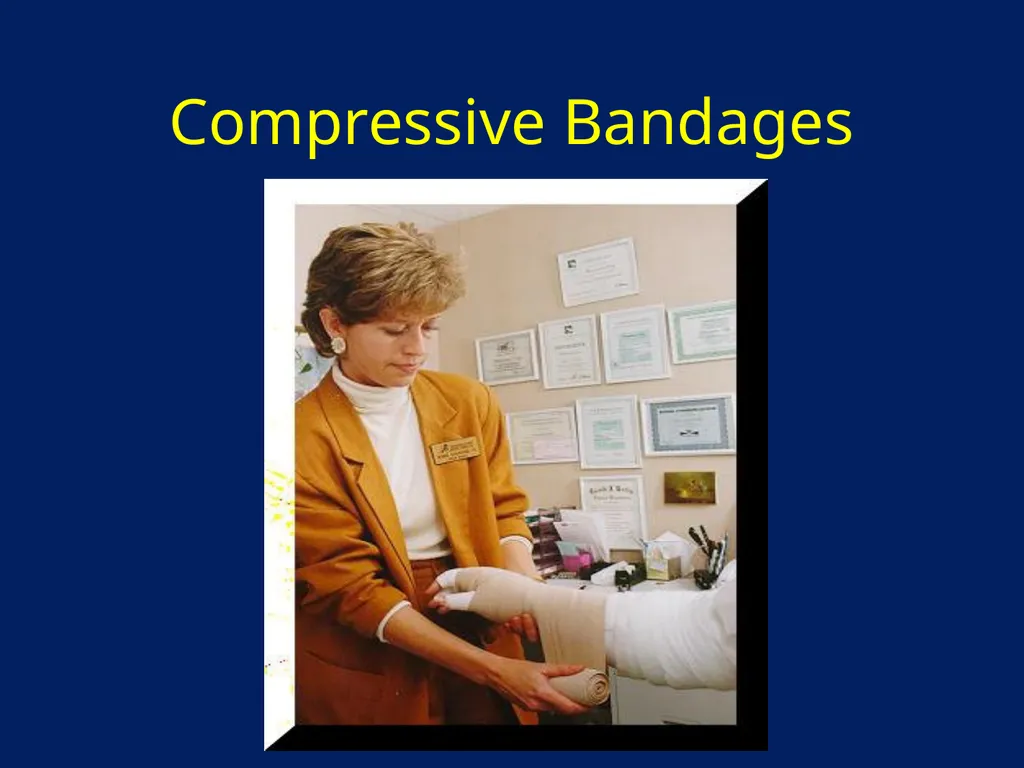
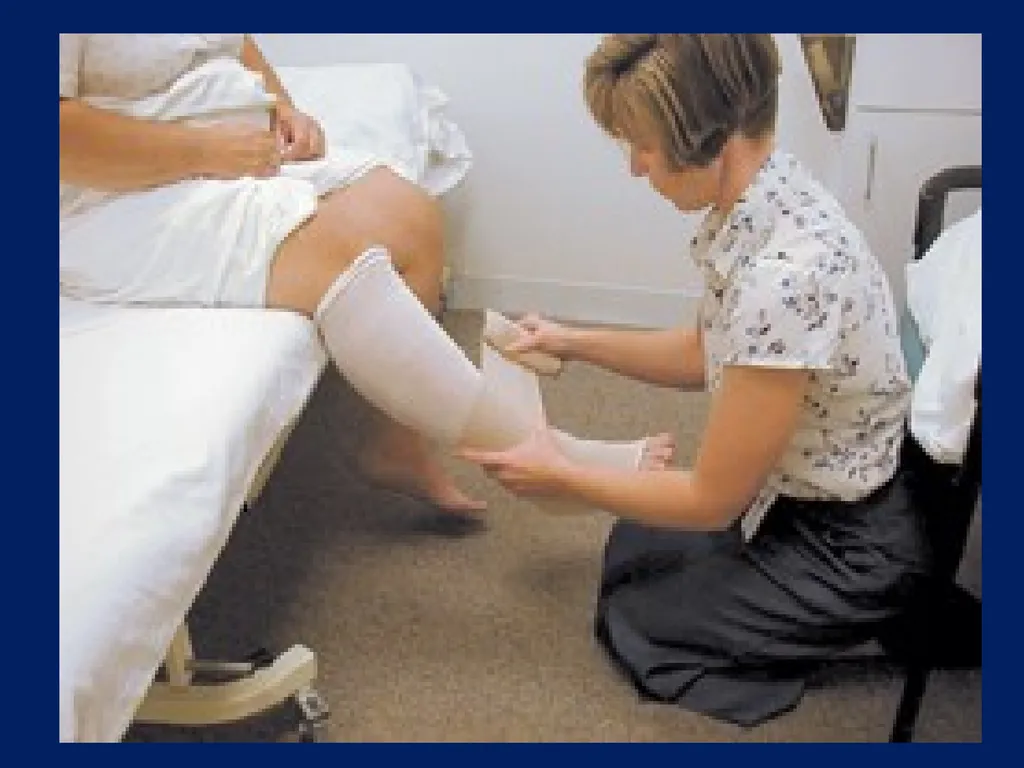
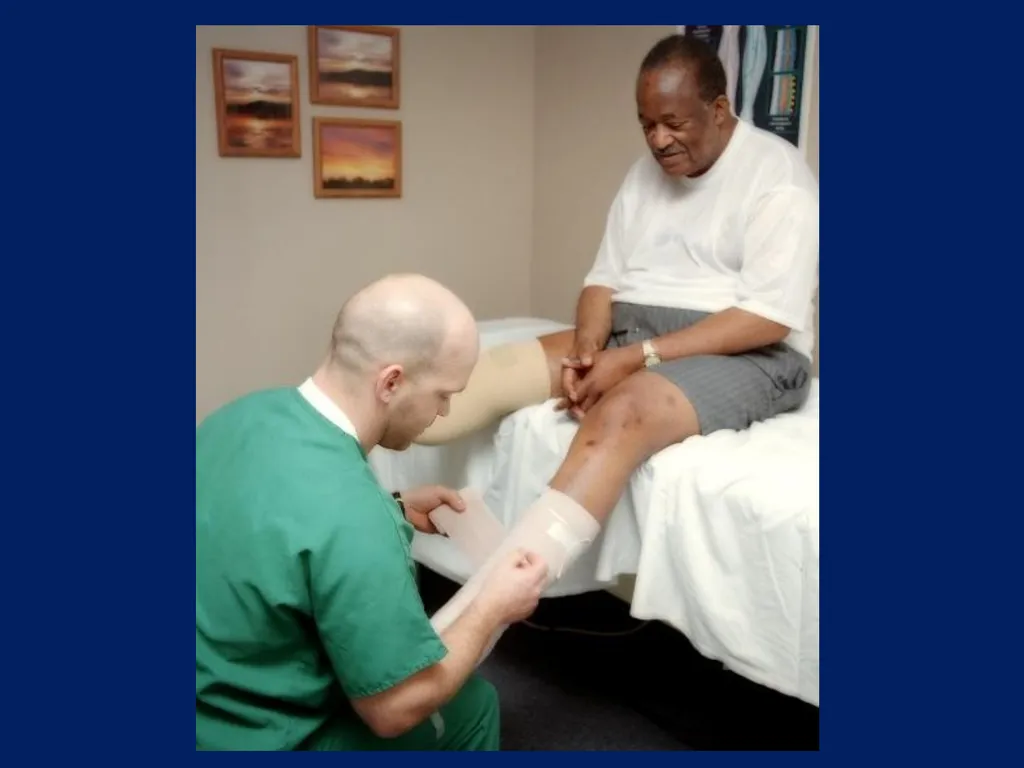
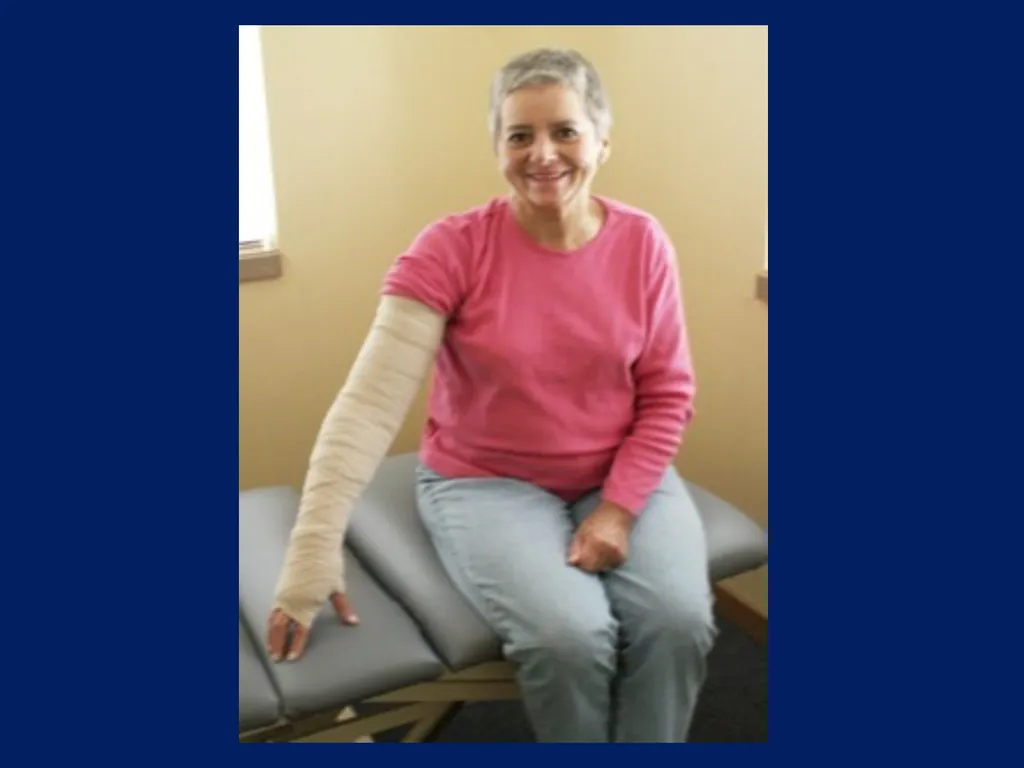
slide28. Compression No-stretch, non-elastic or low-stretch elastic bandages are used
Sports bandages, such as ACE wraps, are NOT recommended in the treatment of lymphedema
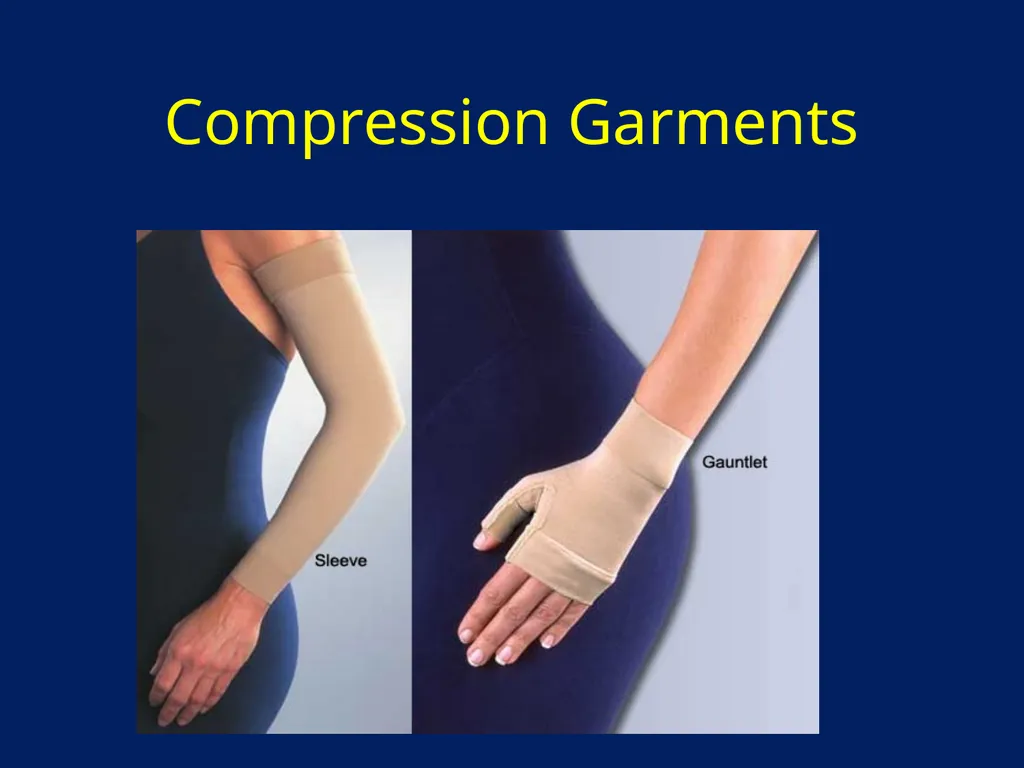
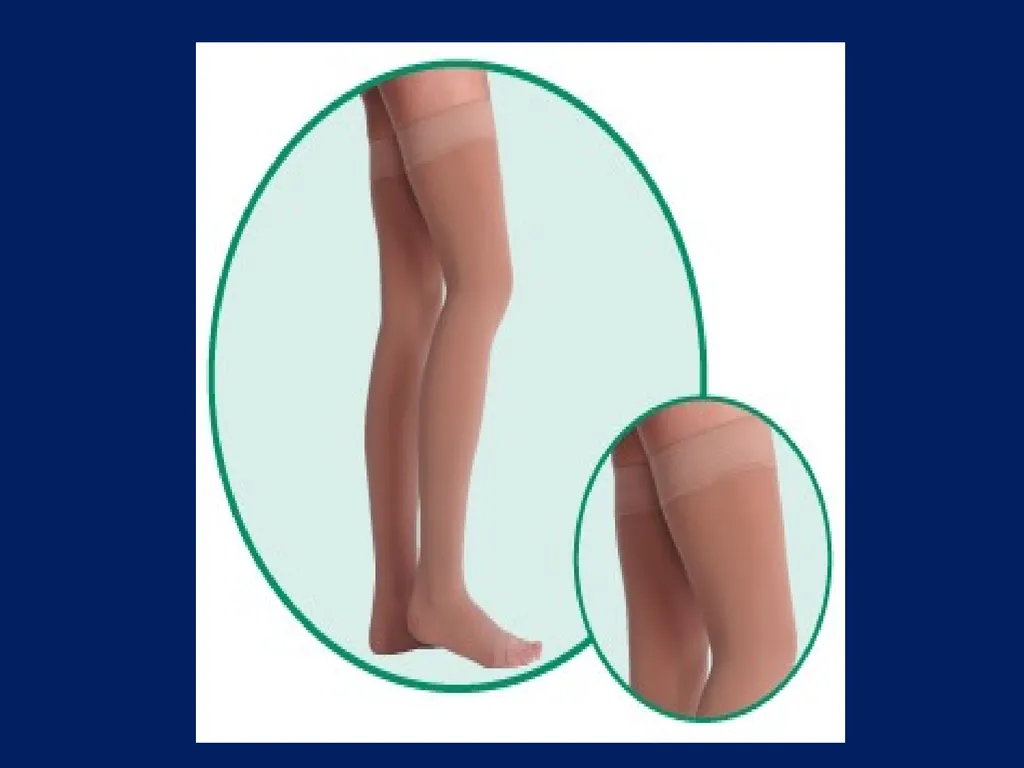
Compressive garments are available
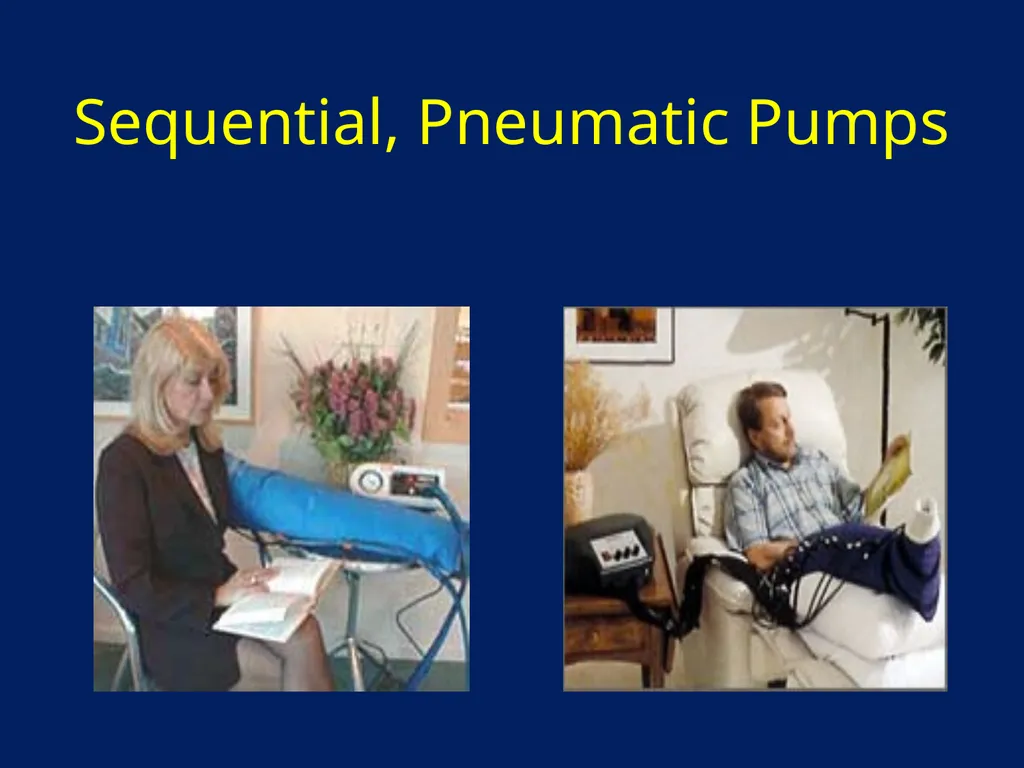
Use of a sequential, pneumatic compression pump on a daily basis may be recommended<br>
slide29. Bandages<br>
slide30. Compressive Bandages<br>
slide34. Compression Garments<br>
slide36. Sequential, Pneumatic Pumps<br>
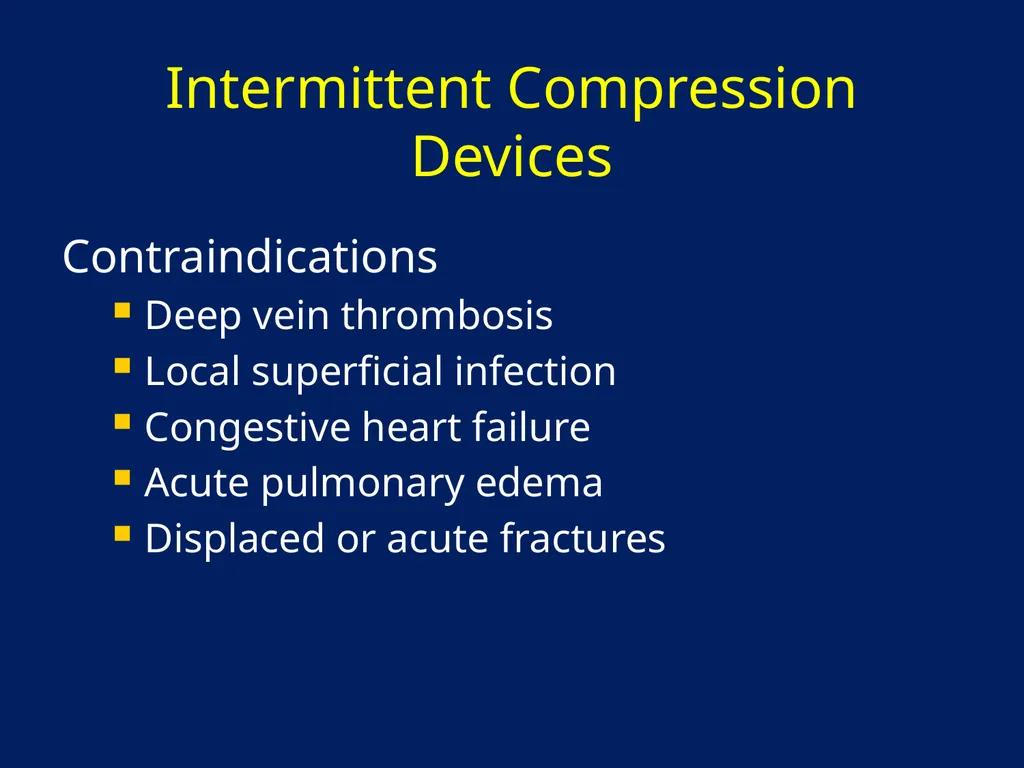
slide37. Intermittent Compression Devices Contraindications
Deep vein thrombosis
Local superficial infection
Congestive heart failure
Acute pulmonary edema
Displaced or acute fractures<br>
slide38. Intermittent Compression Devices Reference: Therapeutic Modalities in Rehabilitation, 3rd Edition, by William Prentice, pages 490 – 496.
Reference: Modalities for Therapeutic Intervention, 4th Edition, by Susan Michlovitz and Thomas Nolan, pages 174 – 179.<br>
slide39. Skin Care and Hygiene Lymphedema increases risk of skin breakdown, infection, and delayed wound healing
Proper skin care
Inspection
Protection<br>
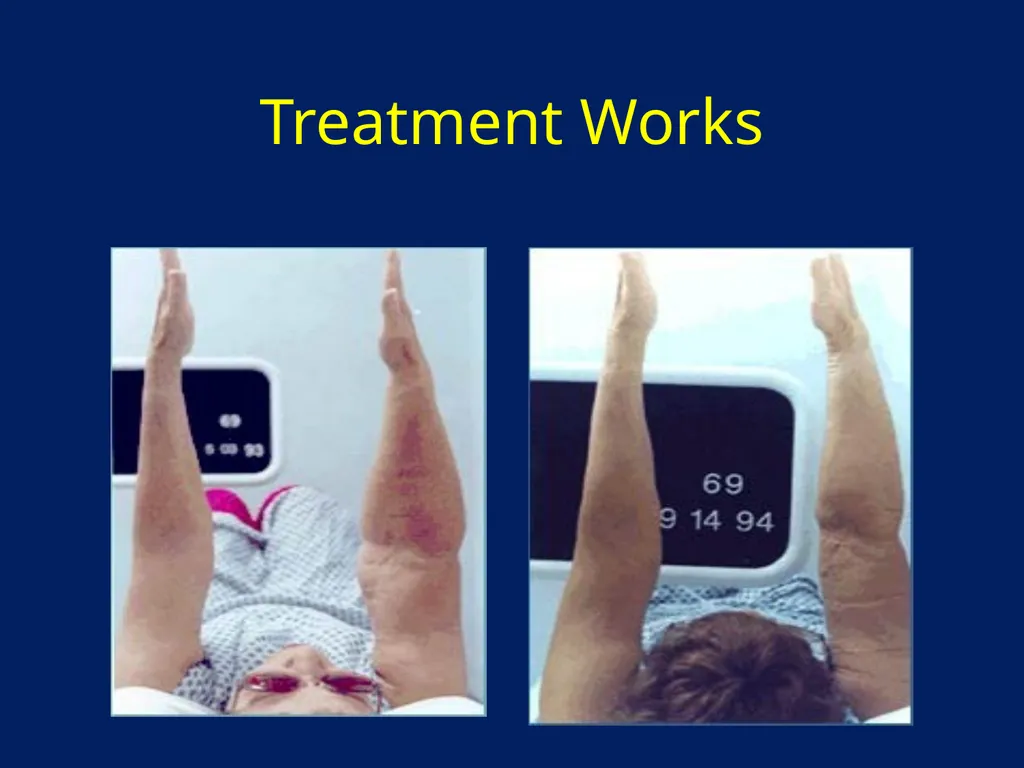
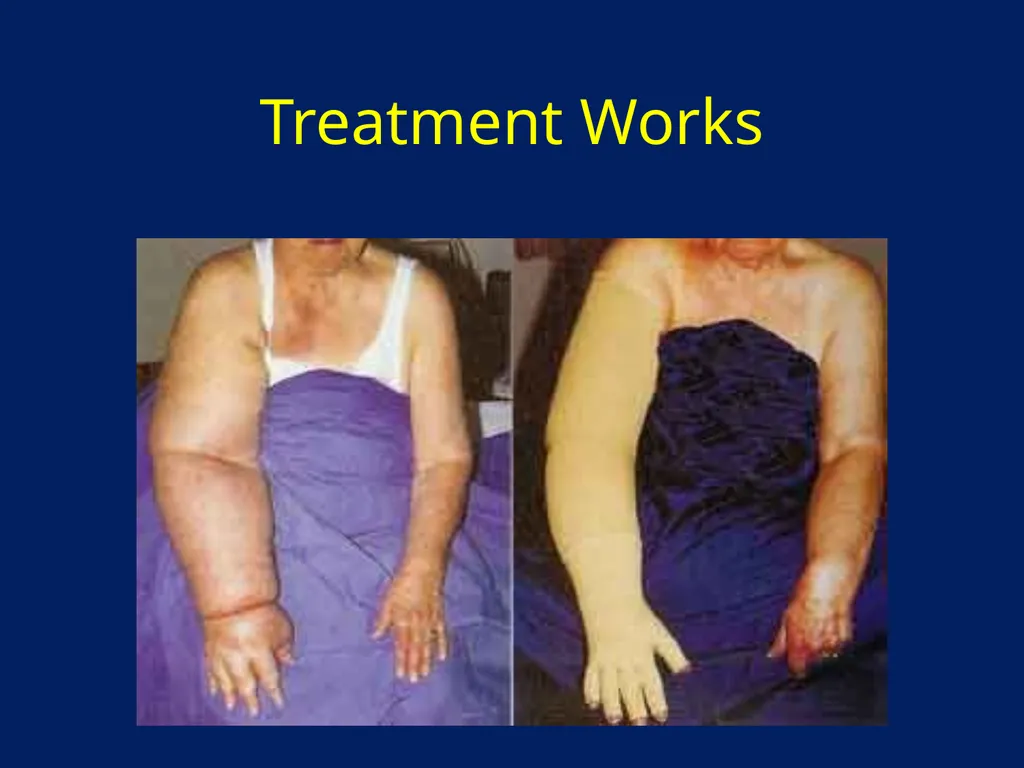
slide40. Treatment Works<br>
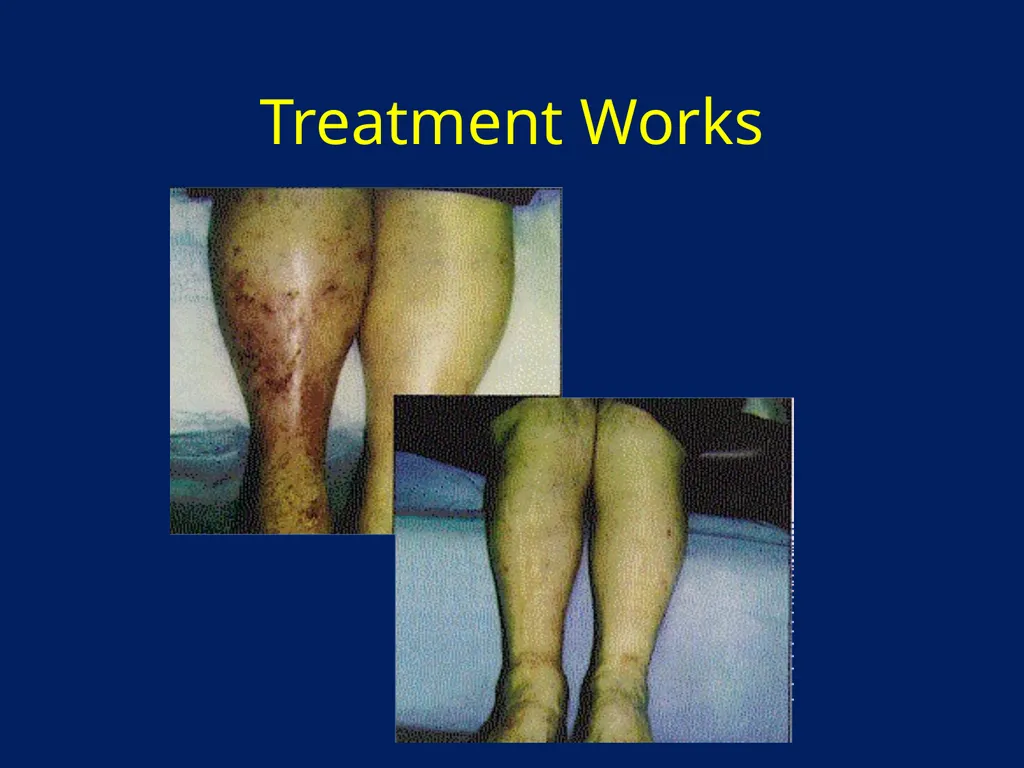
slide41. Treatment Works<br>
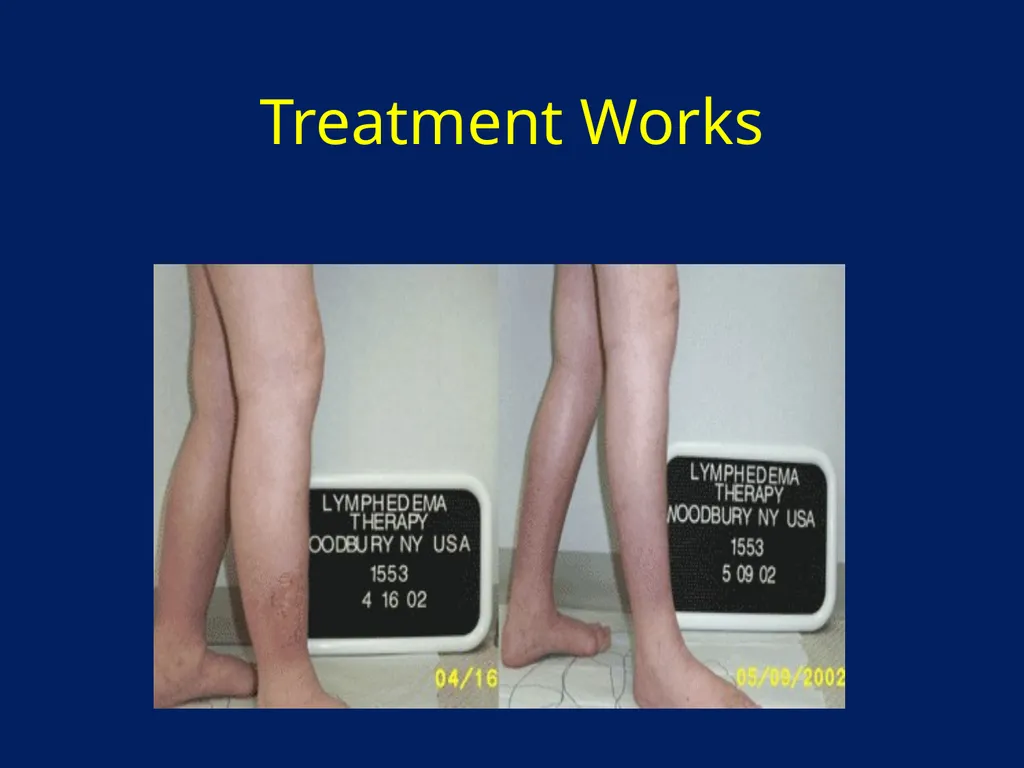
slide42. Treatment Works<br>
slide43. Treatment Works<br>
slide44. THE END<br>
slide2. References Therapeutic Exercise: Foundations and Techniques by Kisner and Colby. 5th Edition, Pages 834 - 847.
Goodman and Snyder, page 315. Reference: Therapeutic Modalities in Rehabilitation, 3rd Edition, by William Prentice, pages 490 – 496.
Reference: Modalities for Therapeutic Intervention, 4th Edition, by Susan Michlovitz and Thomas Nolan, pages 174 – 179.<br>
slide5. Lymphedema Excessive and persistent accumulation of extravascular and extracellular fluid and proteins in tissue spaces
Caused by a disturbance of the water and protein balance across the capillary membrane
Increased concentration of proteins draws greater amount of water into interstitial spaces
Exceeds transport capacity of the lymphatic system, leading to lymphedema<br>
slide6. Lymphedema
Also develops when lymph vessels or lymph nodes are missing, impaired, damaged or removed<br>
slide7. Primary lymphedema –rare,caused by absent lymph vessels at birth, or caused by abnormal lymphatic vessels.
Secondary lymphedema –due to blockage or interruption that alters the lymphatic system.<br>
slide8. Secondary lymphedema
can develop from infection, malignancy, surgery, scar tissue formation, trauma, deep vein thrombosis (DVT), radiation or other cancer treatment.<br>
slide9. Disorders of the Lymphatic System Leading to Lymphatic Insufficiency Congenital Malformation
Infection and Inflammation
Obstruction or Fibrosis
Trauma, Surgery, Neoplasms
Radiation Therapy
Surgical Dissection of Lymph Nodes
Chronic Venous Insufficiency<br>
slide10. Clinical Signs and Symptoms of Lymphedema Edema of the dorsum of the foot or hand
Decreased range of motion, flexibility and function
Usually unilateral
Worse after prolonged dependency
No discomfort or a dull, heavy sensation; sense of fullness
Reference: Goodman and Snyder, page 315.<br>
slide11. Clinical Manifestations of Lymphatic Disorders Lymphedema
Increased girth and weight of the limb
Sensory disturbances
Stiffness and limited range of motion
Decreased resistance to infection<br>
slide12. Lymphedema Location<br>
slide13. Severity of Lymphedema Mild lymphedema: One to two cm increase in girth measurements between the involved and non-involved limb
Moderate lymphedema: Two to five cm increase in girth measurement
Severe lymphedema: Greater than five cm increase<br>
slide14. Types of Lymphedema Pitting edema
Short duration edema
Finger indentation of the skin
Brawny edema
Tissue feels hard upon palpation
Indicates fibrotic changes
Weeping
Fluid leaks, wound healing is impaired
Occurs mostly in the lower extremities<br>
slide16. Examination and Evaluation of Lymphatic Function Special Considerations
History, systems review
Daily activities and position of limb
Functional assessment
Skin integrity
Girth measurements
Volume measurements<br>
slide17. Components of a Decongestive Lymphatic Therapy Program Elevation
Manual lymphatic drainage
Compression
Exercise
Skin care
Daily living precautions<br>
slide18. Elevation Elevate the involved limb when using a sequential compression pump
Elevate limb when sleeping, resting, and during sedentary activities
Compressive bandages or garment should be worn during periods of elevation<br>
slide19. Manual Lymphatic Drainage Slow, very light, repetitive stroking and circular massage movements performed in a specific sequence, limb elevated whenever possible
Proximal congestion in the trunk, groin, buttock, or axilla is cleared first
Direction of massage is towards specific lymph nodes
Usually involves distal to proximal stroking<br>
slide20. Manual Lymphatic Drainage<br>
slide21. Manual Lymphatic Drainage Labor and time intensive
Specialized training needed
Continuing education
Certification<br>
slide22. Manual Lymphatic Drainage<br>
slide23. Manual Lymphatic Drainage<br>
slide24. Exercise Active range of motion, stretching, and low-intensity resistance exercise is incorporated with manual drainage techniques
Exercises should be performed with compressive bandages or garment<br>
slide25. Exercise Exercises are performed in a specific sequence, often with the limb elevated
Low-intensity cardiovascular/pulmonary endurance activities included
Deep breathing and relaxation also incorporated<br>
slide26. Exercise Exercises performed in a specific sequence can assist lymph flow
Awareness of other medical conditions
Patient education<br>
slide27. Exercise<br>
slide28. Compression No-stretch, non-elastic or low-stretch elastic bandages are used
Sports bandages, such as ACE wraps, are NOT recommended in the treatment of lymphedema
Compressive garments are available
Use of a sequential, pneumatic compression pump on a daily basis may be recommended<br>
slide29. Bandages<br>
slide30. Compressive Bandages<br>
slide34. Compression Garments<br>
slide36. Sequential, Pneumatic Pumps<br>
slide37. Intermittent Compression Devices Contraindications
Deep vein thrombosis
Local superficial infection
Congestive heart failure
Acute pulmonary edema
Displaced or acute fractures<br>
slide38. Intermittent Compression Devices Reference: Therapeutic Modalities in Rehabilitation, 3rd Edition, by William Prentice, pages 490 – 496.
Reference: Modalities for Therapeutic Intervention, 4th Edition, by Susan Michlovitz and Thomas Nolan, pages 174 – 179.<br>
slide39. Skin Care and Hygiene Lymphedema increases risk of skin breakdown, infection, and delayed wound healing
Proper skin care
Inspection
Protection<br>
slide40. Treatment Works<br>
slide41. Treatment Works<br>
slide42. Treatment Works<br>
slide43. Treatment Works<br>
slide44. THE END<br>