05
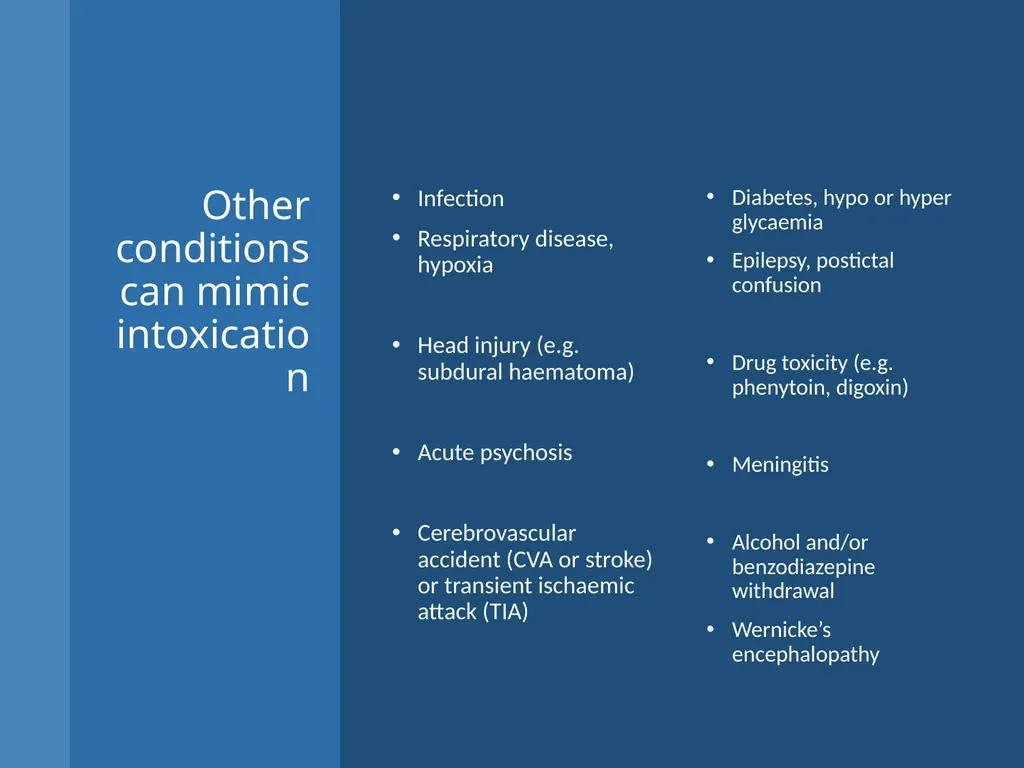
Other conditions can mimic intoxication Infection
Respiratory disease, hypoxia
Head injury (e.g. subdural haematoma)
Acute psychosis
Cerebrovascular accident (CVA or stroke) or transient ischaemic attack (TIA) Diabetes, hypo or hyper glycaemia
Epilepsy, postictal confusion
Drug toxicity (e.g. phenytoin, digoxin)
Meningitis
Alcohol and/or benzodiazepine withdrawal
Wernicke’s encephalopathy<br>
06
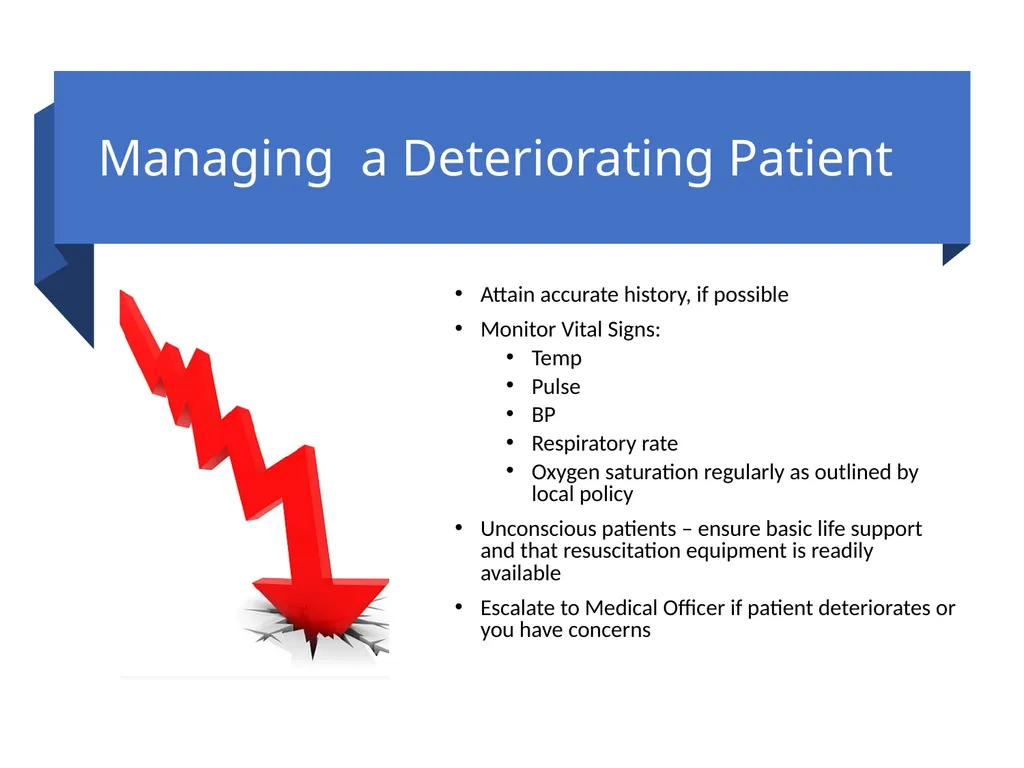
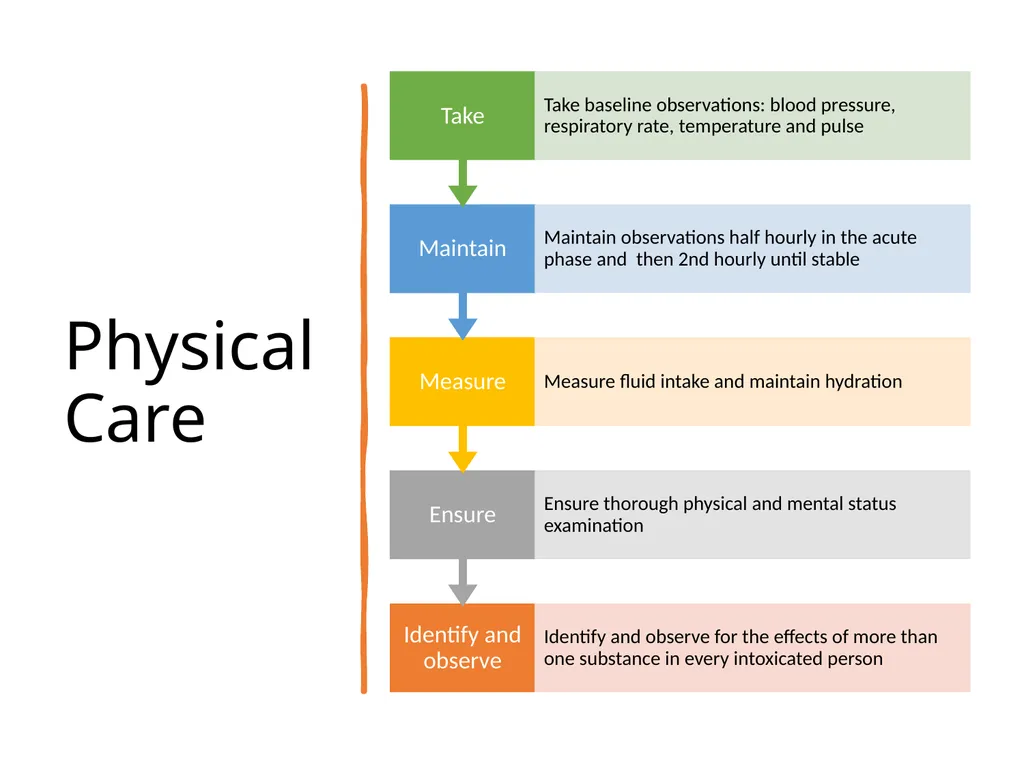
Managing a Deteriorating Patient Attain accurate history, if possible
Monitor Vital Signs:
Temp
Pulse
BP
Respiratory rate
Oxygen saturation regularly as outlined by local policy
Unconscious patients – ensure basic life support and that resuscitation equipment is readily available
Escalate to Medical Officer if patient deteriorates or you have concerns<br>
07
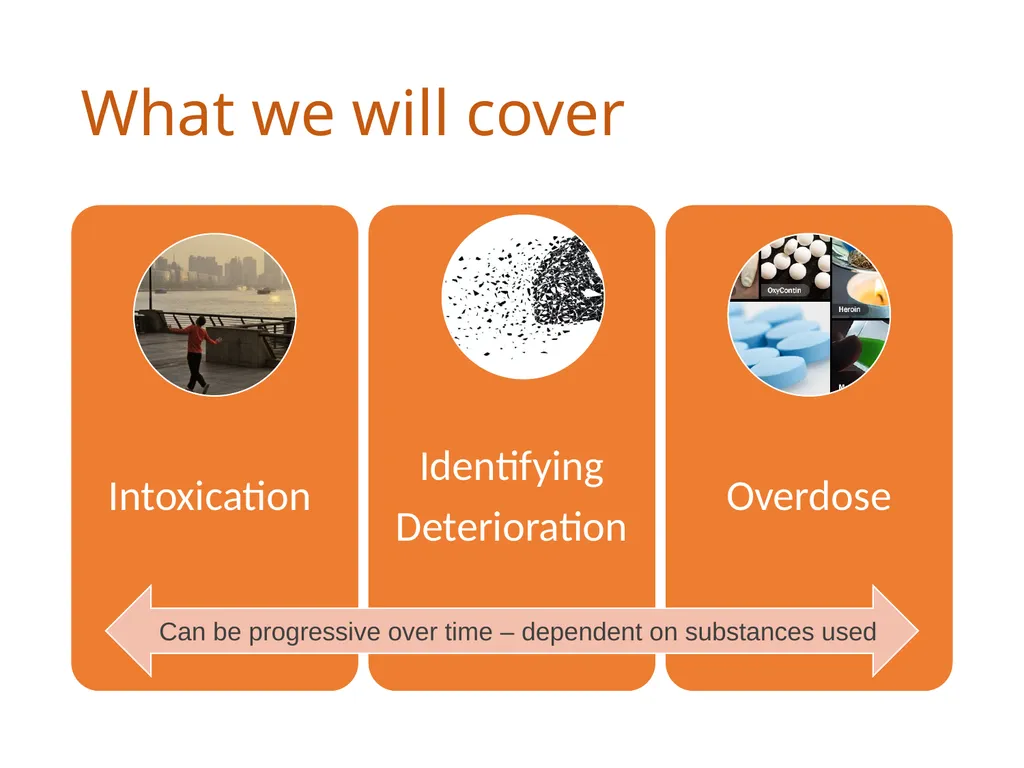
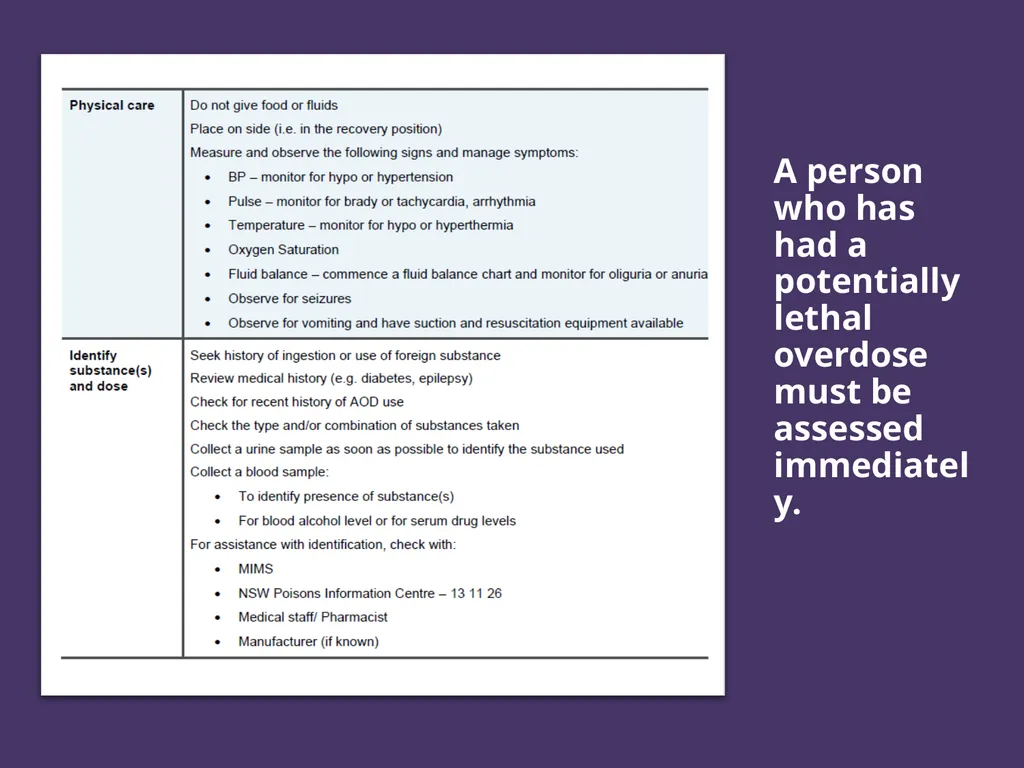
A person who has had a potentially lethal overdose must be assessed immediately.<br>
08
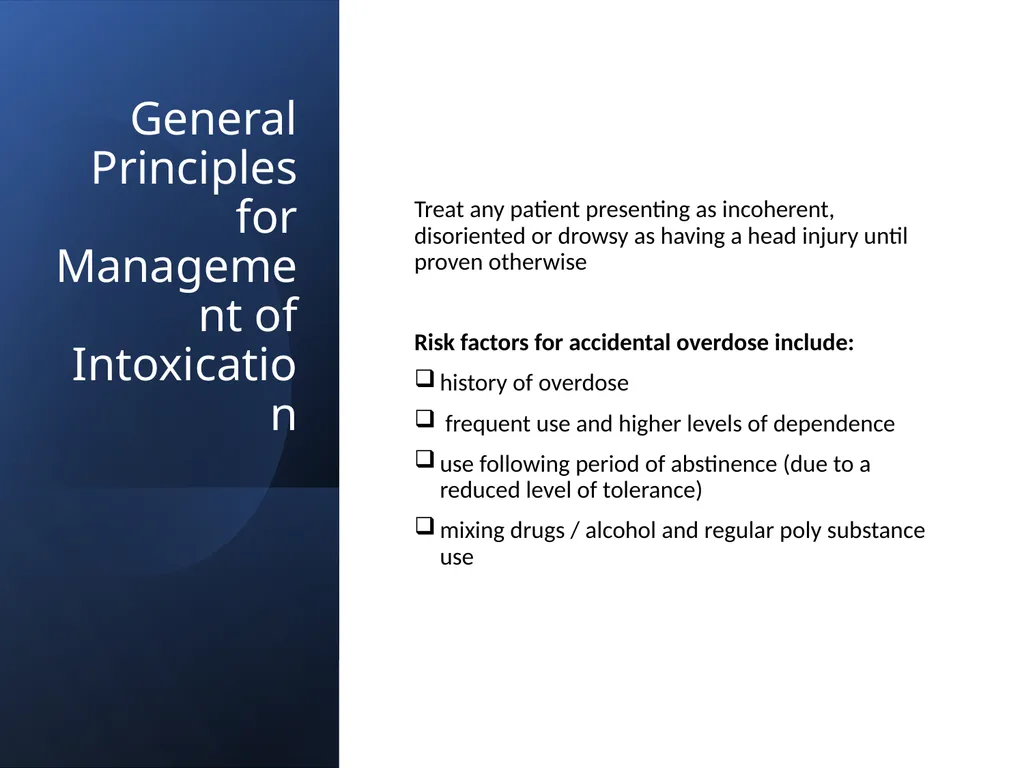
General Principles for Management of Intoxication Treat any patient presenting as incoherent, disoriented or drowsy as having a head injury until proven otherwise
Risk factors for accidental overdose include:
history of overdose
frequent use and higher levels of dependence
use following period of abstinence (due to a reduced level of tolerance)
mixing drugs / alcohol and regular poly substance use<br>
11
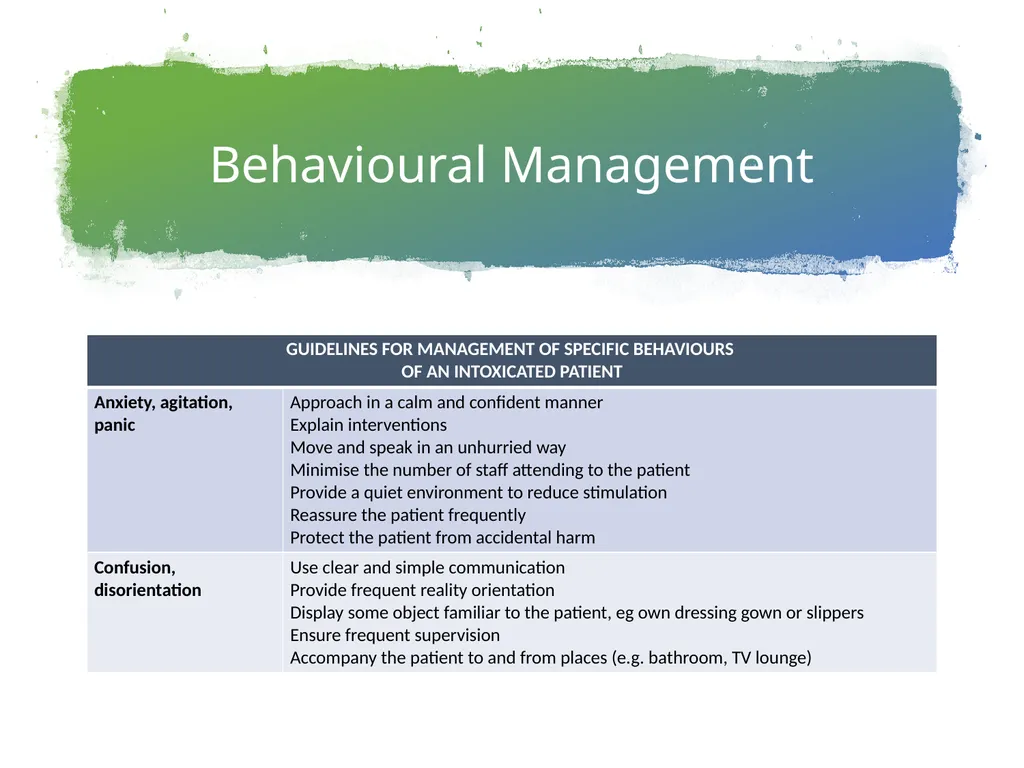
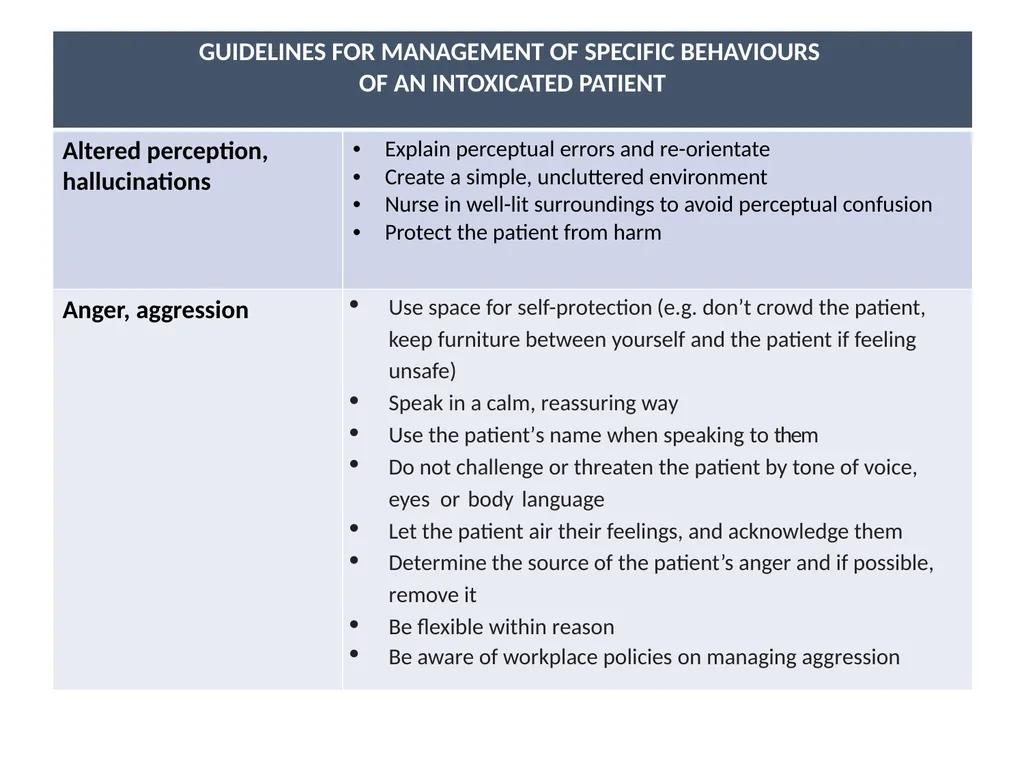
Behavioural Management<br>
12
Signs & Symptoms of Intoxication and Overdose<br>
13
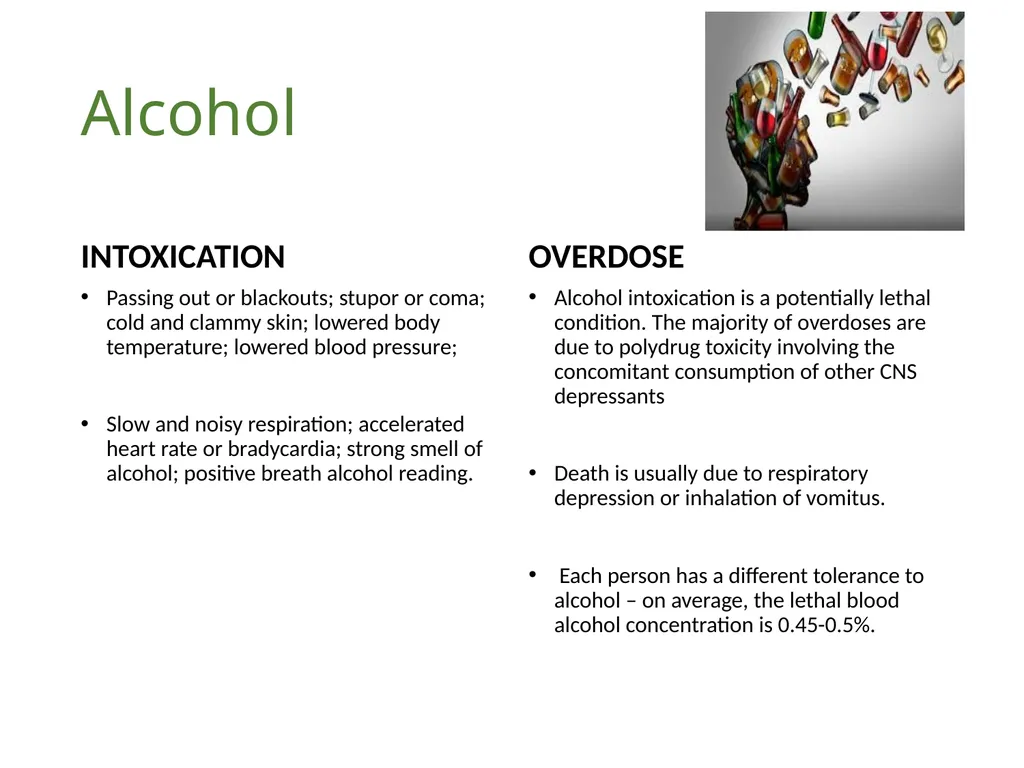
Alcohol INTOXICATION Passing out or blackouts; stupor or coma; cold and clammy skin; lowered body temperature; lowered blood pressure;
Slow and noisy respiration; accelerated heart rate or bradycardia; strong smell of alcohol; positive breath alcohol reading. OVERDOSE Alcohol intoxication is a potentially lethal condition. The majority of overdoses are due to polydrug toxicity involving the concomitant consumption of other CNS depressants
Death is usually due to respiratory depression or inhalation of vomitus.
Each person has a different tolerance to alcohol – on average, the lethal blood alcohol concentration is 0.45-0.5%.<br>
14
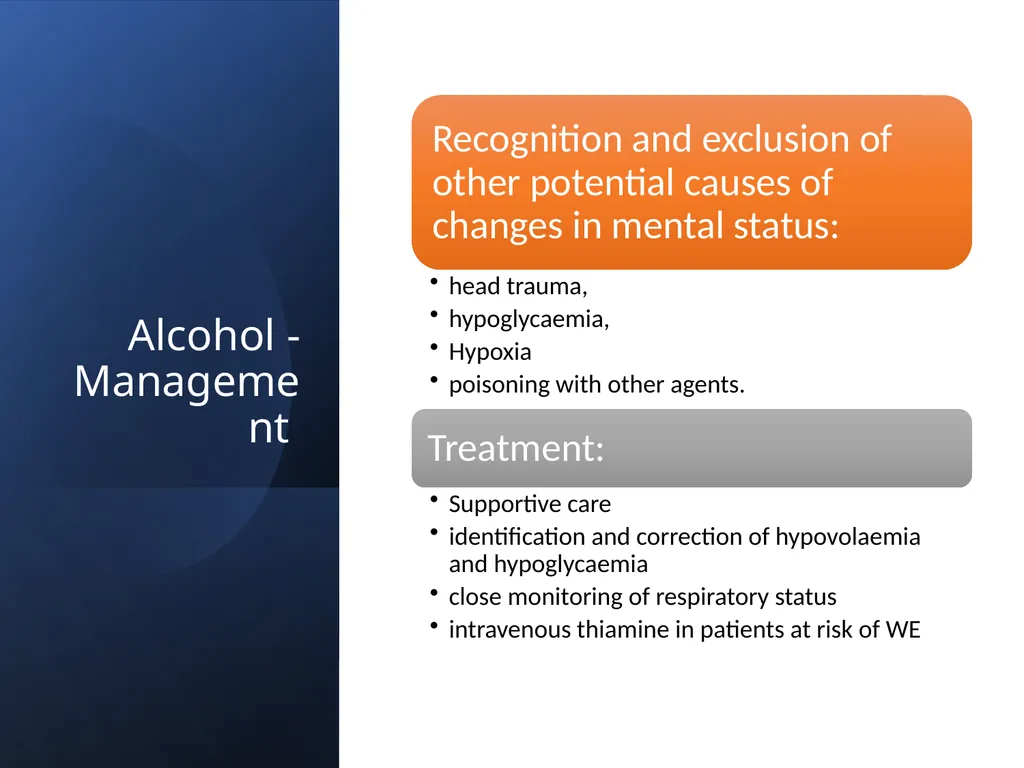
Alcohol - Management<br>
15
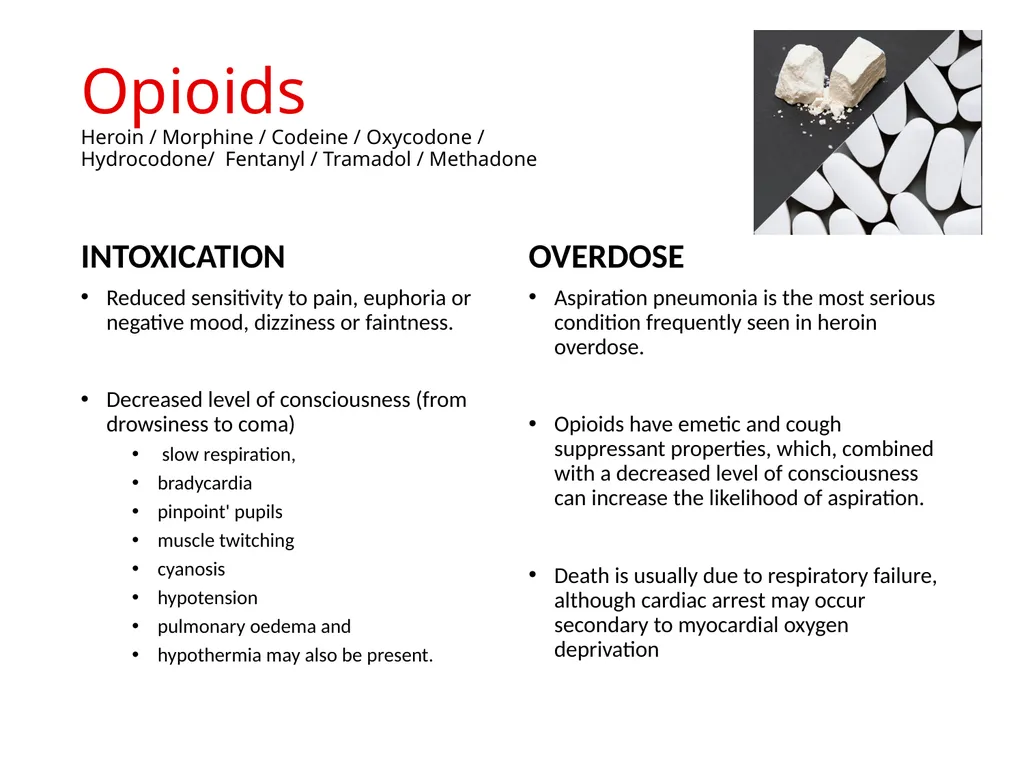
Opioids �Heroin / Morphine / Codeine / Oxycodone /�Hydrocodone/ Fentanyl / Tramadol / Methadone INTOXICATION Reduced sensitivity to pain, euphoria or negative mood, dizziness or faintness.
Decreased level of consciousness (from drowsiness to coma)
slow respiration,
bradycardia
pinpoint' pupils
muscle twitching
cyanosis
hypotension
pulmonary oedema and
hypothermia may also be present. OVERDOSE Aspiration pneumonia is the most serious condition frequently seen in heroin overdose.
Opioids have emetic and cough suppressant properties, which, combined with a decreased level of consciousness can increase the likelihood of aspiration.
Death is usually due to respiratory failure, although cardiac arrest may occur secondary to myocardial oxygen deprivation<br>
16
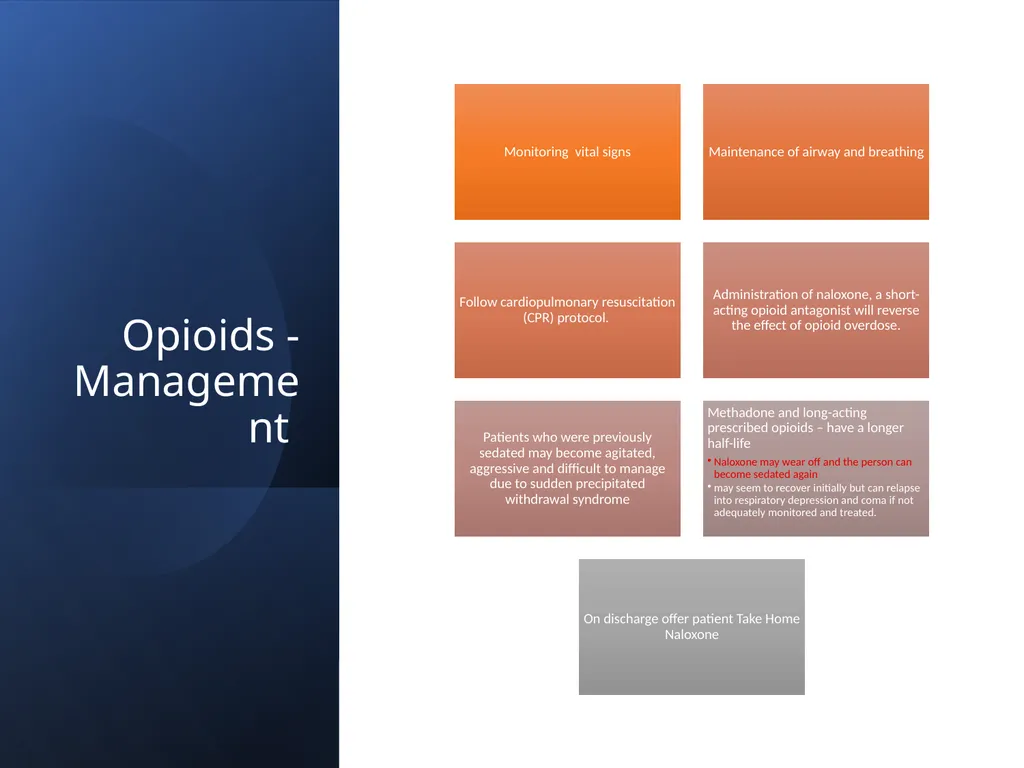
Opioids - Management<br>
17
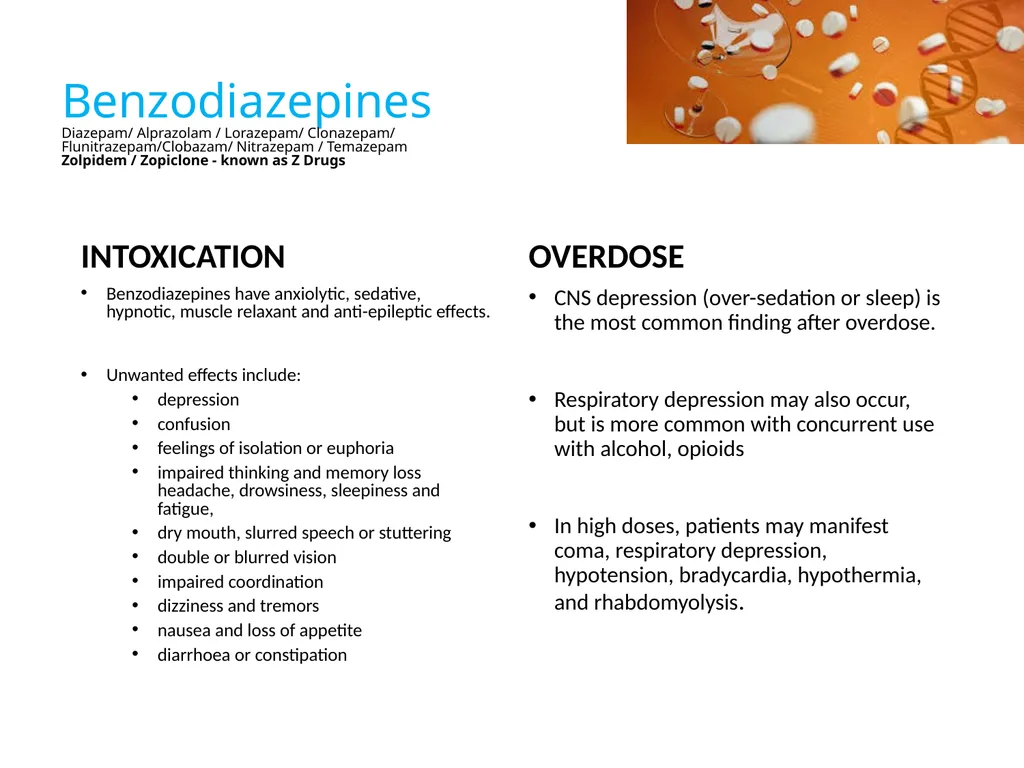
Benzodiazepines�Diazepam/ Alprazolam / Lorazepam/ Clonazepam/�Flunitrazepam/Clobazam/ Nitrazepam / Temazepam�Zolpidem / Zopiclone - known as Z Drugs INTOXICATION Benzodiazepines have anxiolytic, sedative, hypnotic, muscle relaxant and anti-epileptic effects.
Unwanted effects include:
depression
confusion
feelings of isolation or euphoria
impaired thinking and memory loss headache, drowsiness, sleepiness and fatigue,
dry mouth, slurred speech or stuttering
double or blurred vision
impaired coordination
dizziness and tremors
nausea and loss of appetite
diarrhoea or constipation OVERDOSE CNS depression (over-sedation or sleep) is the most common finding after overdose.
Respiratory depression may also occur, but is more common with concurrent use with alcohol, opioids
In high doses, patients may manifest coma, respiratory depression, hypotension, bradycardia, hypothermia, and rhabdomyolysis.<br>
18
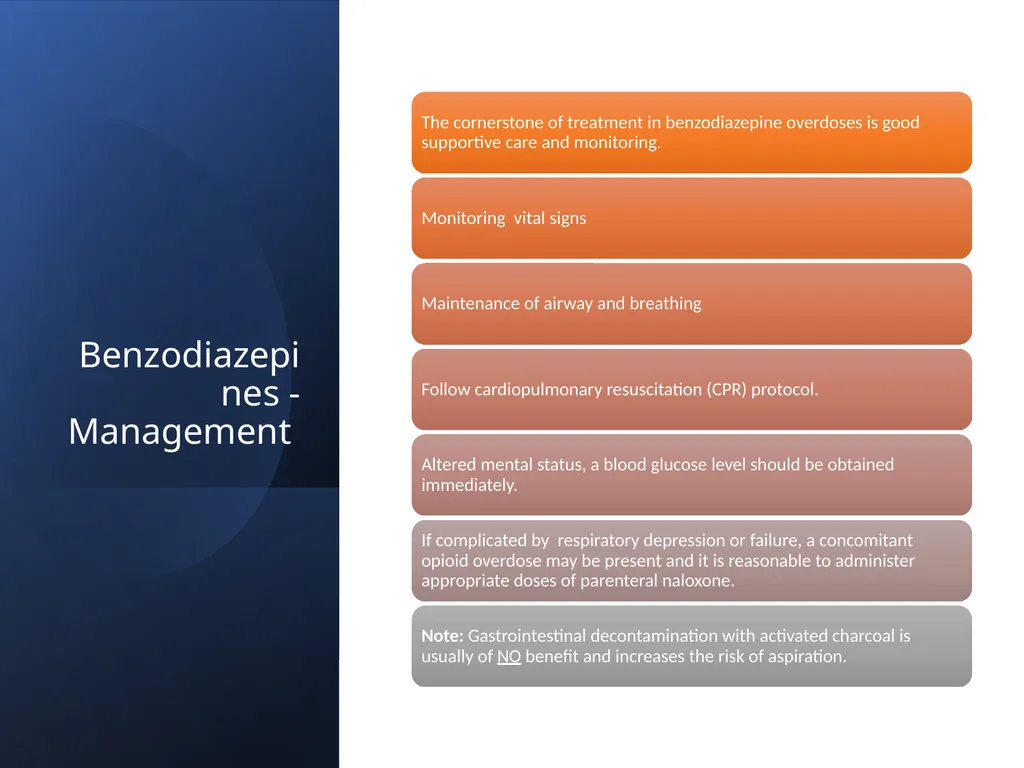
Benzodiazepines - Management<br>
19
Psychostimulants�“Ritalin” / “Concerta” / Dexamphetamine/ Lis dexamphetamine / Cocaine /� Amphetamine/ Methamphetamine and MDMA “Ecstasy” INTOXICATION Euphoria, increased sense of wellbeing, increased energy, more confidence or over-confidence, improved cognitive and psychomotor performance, suppression of appetite and reduced sleep. OVERDOSE Increased heart rate and respiration, nausea and vomiting, dilated pupils, hot and cold flushes, sweating, headaches, pallor, jaw clenching, paranoia, anxiousness, panic attacks, difficulty sleeping, moodiness, irritability and agitation.
Secondary complications can involve the kidneys, skeletal muscles and gastrointestinal system.
The most common causes of death related to amphetamine toxicity are arrhythmia, hyperthermia and intracerebral haemorrhage.<br>
20
Psychostimulants -Management<br>
21
Hallucinogens�Lysergic acid diethylamide (LSD) / phencyclidine (PCP, Angel dust)/�psilocybin (magic mushrooms) and dimethyl tryptamine (DMT). INTOXICATION Euphoria and wellbeing, dilation of pupils, seeing and hearing things that aren’t there (hallucinations), confusion and trouble concentrating, depersonalisation, derealisation, headaches, nausea, fast or irregular heartbeat, increased body temperature, breathing quickly, vomiting, facial flushes, sweating and chills.
Psychiatric disturbances such as prolonged psychosis, depression, personality disruption and post-hallucinogen perceptual disorder have been attributed to prolonged use. OVERDOSE Many patients intoxicated with hallucinogens are awake, aware that their symptoms are drug-induced, and able to provide a history of recreational hallucinogen use.
Seizure and rhabdomyolysis have been reported in extreme cases.
Severe injury or death (e.g. from drowning) more commonly occur as a result of impaired judgment and warped sense of distance, time and reality while intoxicated.<br>
22
Hallucinogens -Management Uncomplicated intoxication may only require observation and supportive care
Monitoring in a quiet environment until symptoms subside.
Symptoms of intoxications are self-limited and not usually severe a conservative approach is preferred unless there is evidence of severe toxicity (e.g. hyperthermia and severe agitation).
Benzodiazepines are first-line therapy for acute agitation and dysphoria. If psychotic symptoms persist (e.g. after agitation subsides), neuroleptics such as haloperidol may be titrated with careful monitoring.<br>
23
Cannabis�Herbal Cannabis ( Marijuana) / Cannabis resin( Hashish) / �Cannabis oil (Hashish oil) / Cannabis products - Nabiximols INTOXICATION Complications associated with inhalation of cannabis include acute exacerbations and poor symptom control in patients with:
asthma;
chest pain,
subcutaneous emphysemas caused by deep inhalation with breath holding and
rarely, angina and myocardial infarction. OVERDOSE Signs of cannabis intoxication in adolescents and adults may include:
tachycardia;
increased blood pressure or orthostatic hypotension
increased respiratory rate
conjunctival injection (red eye)
dry mouth
increased appetite
Nystagmus
ataxia and
slurred speech.<br>
24
Cannabis -Management Recreational cannabis intake to achieve psychoactive effects can often result in adverse effects because there is no clear indication of doses that achieve symptoms desired by the user and noxious effects.
Monitoring vital signs
Asymptomatic treatment as effects of cannabis also vary between people and may even be different for the same person at different times.<br>
25
Reflection Questions What are the illnesses or injuries that can mimic intoxication?
What is the key principle for managing anyone who is disorientated, drowsy or confused?
How would you recognize if a patient was progressing from intoxication to overdose?
What are the core elements of care when providing support to an intoxicated person?
What are your local protocols for management of intoxication & overdose? Where might you locate these?<br>