
Mandated Reporting Policies for Perinatal
Description: Mandated Reporting Policies for Perinatal Substance Use: A Systematic Review of the Literature Keinada Andereas, BS Sandra A. Appiah, BA; Christina Bodison, MD; Aviva K. OlsavSky, MD The Psychiatry Undergraduate Research Program And
Related Topics
Download Presentation
"Mandated Reporting Policies for Perinatal" is the property of its rightful owner. Permission is granted to download and print the materials on this website for personal, non-commercial use only, and to display it on your personal computer provided you do not modify the materials and that you retain all copyright notices contained in the materials. By downloading content from our website, you accept the terms of this agreement.
Presentation Transcript
slide1. Mandated Reporting Policies for Perinatal Substance Use: A Systematic Review of the Literature Keinada Andereas, BS
Sandra A. Appiah, BA; Christina Bodison, MD; Aviva K. OlsavSky, MD
The Psychiatry Undergraduate Research Program And Learning Experience (PURPLE)<br>
slide2. Qualitative Quotes
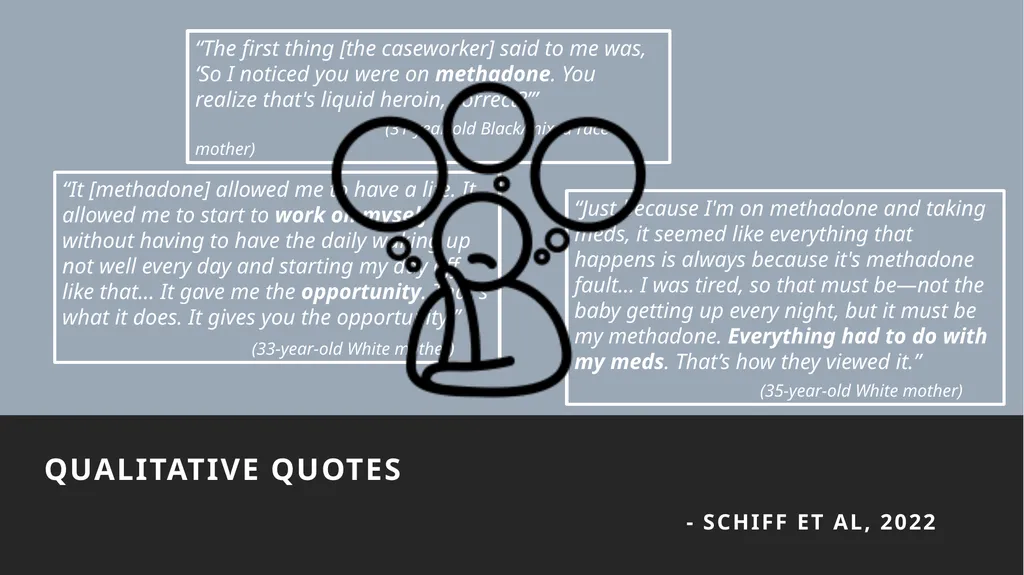
- Schiff et al, 2022 “The first thing [the caseworker] said to me was, ‘So I noticed you were on methadone. You realize that's liquid heroin, correct?’”
(31-year-old Black/mixed race mother) “It [methadone] allowed me to have a life. It allowed me to start to work on myself without having to have the daily waking up not well every day and starting my day off like that... It gave me the opportunity. That's what it does. It gives you the opportunity.”
(33-year-old White mother) “Just because I'm on methadone and taking meds, it seemed like everything that happens is always because it's methadone fault… I was tired, so that must be—not the baby getting up every night, but it must be my methadone. Everything had to do with my meds. That’s how they viewed it.”
(35-year-old White mother)<br>
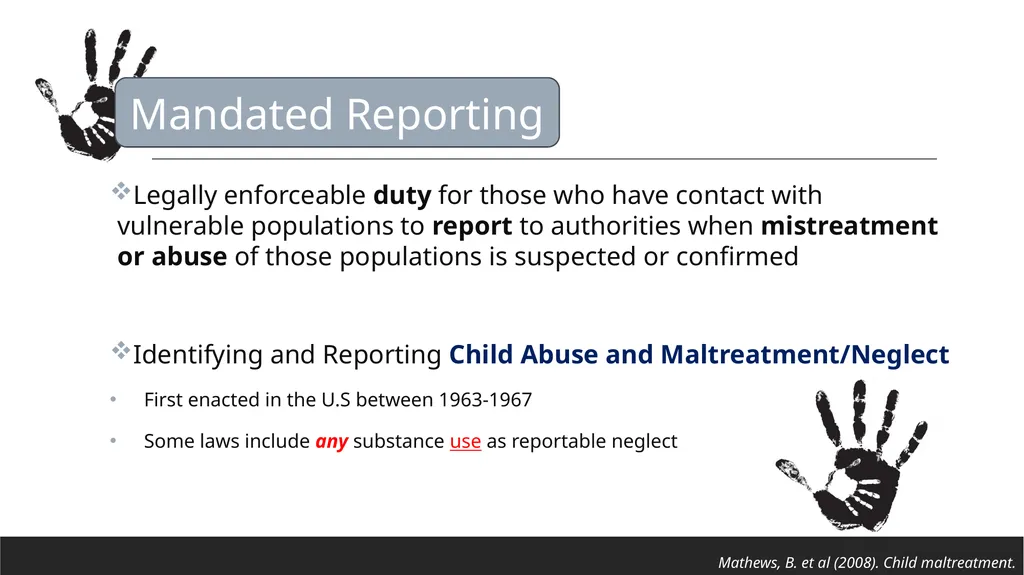
slide3. Legally enforceable duty for those who have contact with vulnerable populations to report to authorities when mistreatment or abuse of those populations is suspected or confirmed
Identifying and Reporting Child Abuse and Maltreatment/Neglect
First enacted in the U.S between 1963-1967
Some laws include any substance use as reportable neglect Mathews, B. et al (2008). Child maltreatment. Mandated Reporting<br>
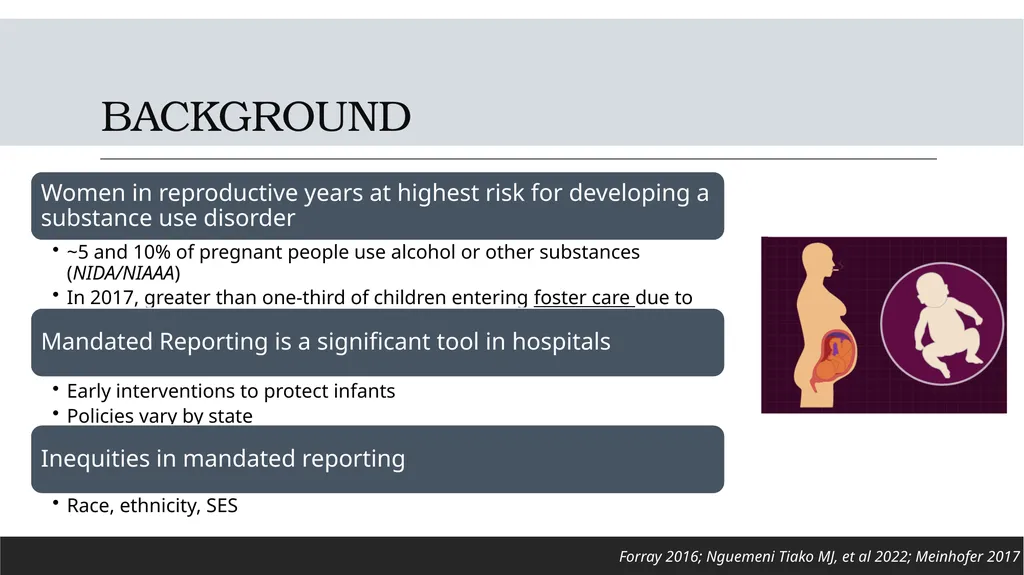
slide4. BACKGROUND Forray 2016; Nguemeni Tiako MJ, et al 2022; Meinhofer 2017<br>
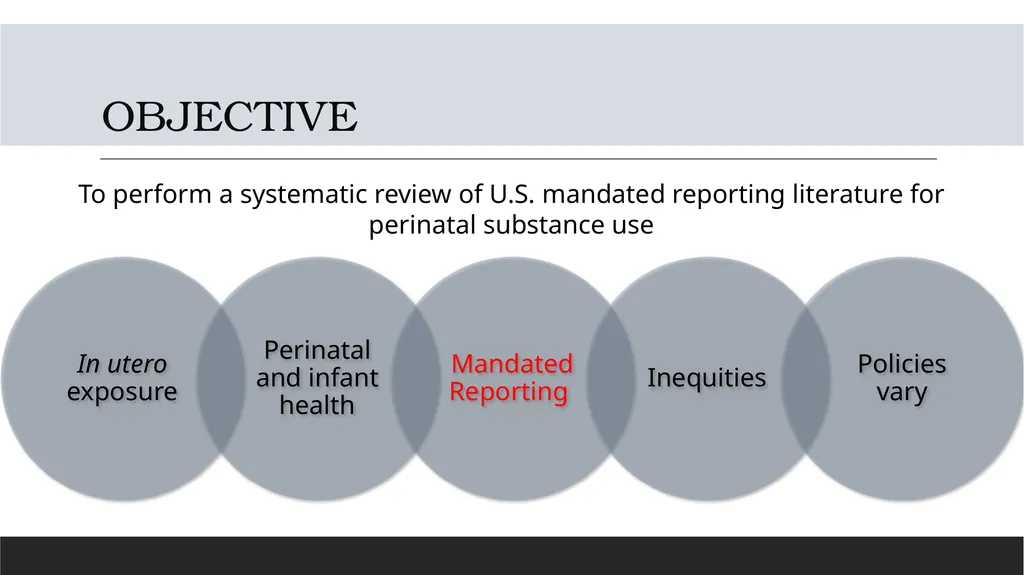
slide5. To perform a systematic review of U.S. mandated reporting literature for perinatal substance use OBJECTIVE<br>
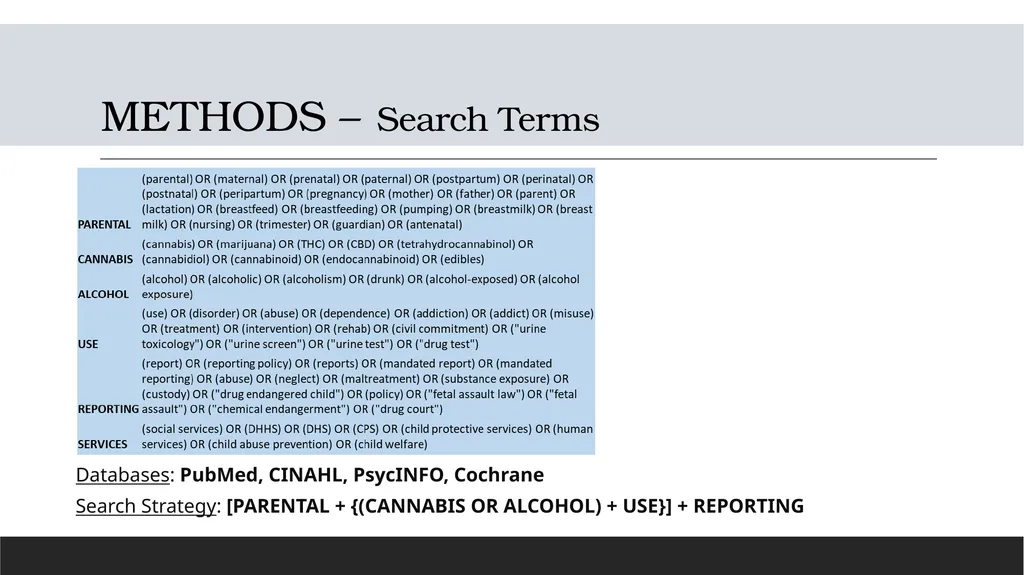
slide6. METHODS – Search Terms Databases: PubMed, CINAHL, PsycINFO, Cochrane
Search Strategy: [PARENTAL + {(CANNABIS OR ALCOHOL) + USE}] + REPORTING<br>
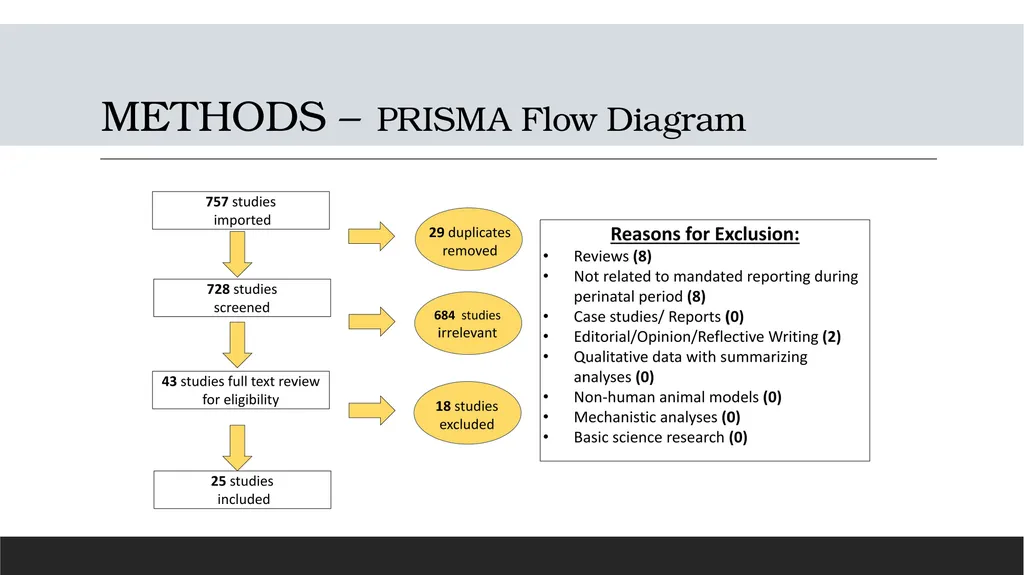
slide7. METHODS – PRISMA Flow Diagram<br>
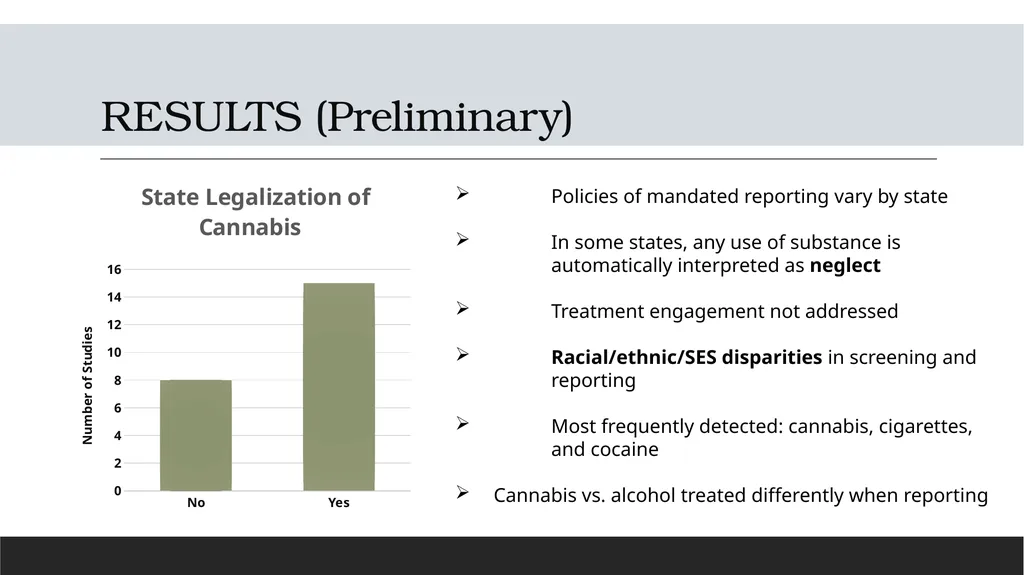
slide8. RESULTS (Preliminary) Policies of mandated reporting vary by state
In some states, any use of substance is automatically interpreted as neglect
Treatment engagement not addressed
Racial/ethnic/SES disparities in screening and reporting
Most frequently detected: cannabis, cigarettes, and cocaine
Cannabis vs. alcohol treated differently when reporting<br>
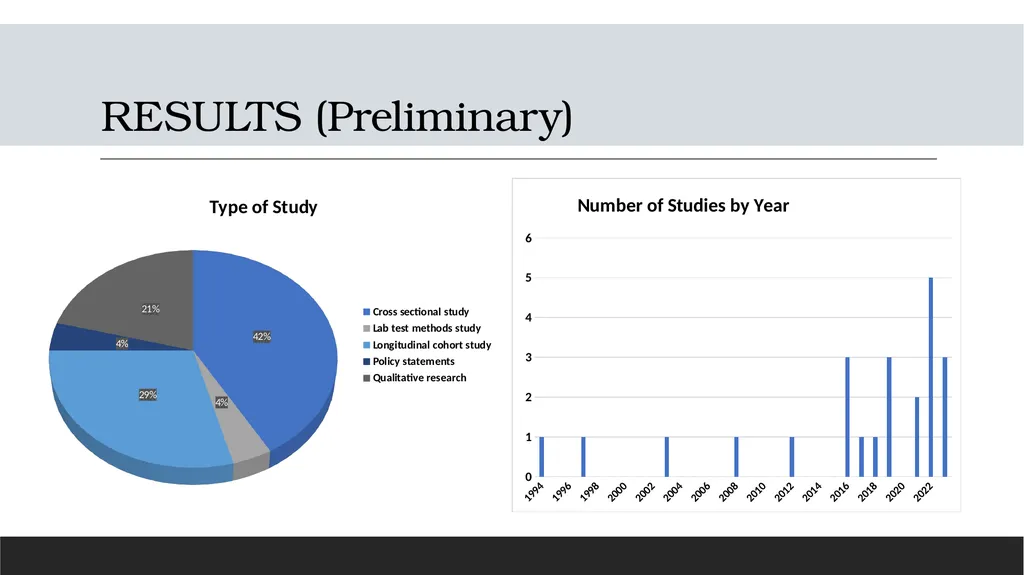
slide9. RESULTS (Preliminary)<br>
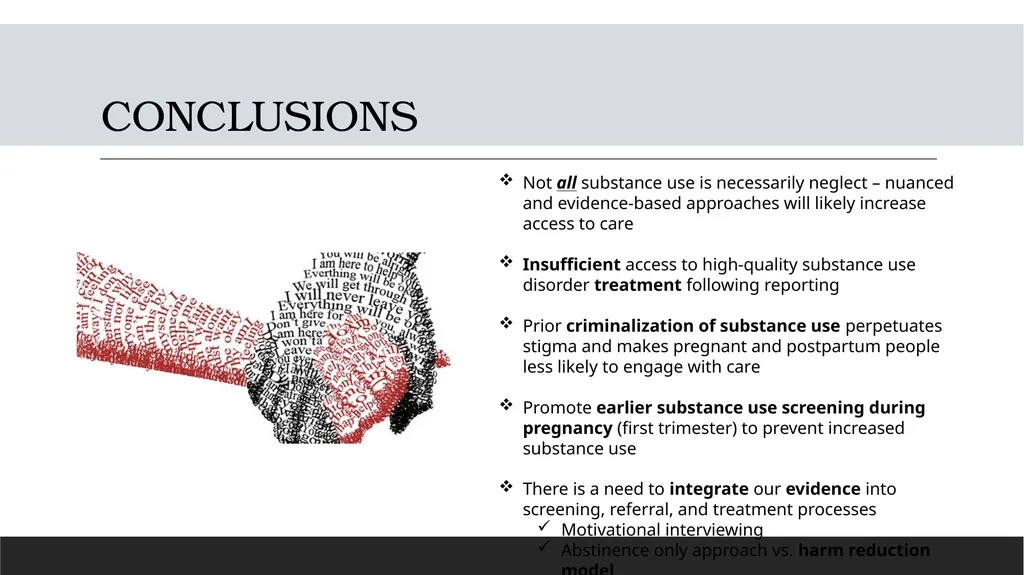
slide10. CONCLUSIONS Not all substance use is necessarily neglect – nuanced and evidence-based approaches will likely increase access to care
Insufficient access to high-quality substance use disorder treatment following reporting
Prior criminalization of substance use perpetuates stigma and makes pregnant and postpartum people less likely to engage with care
Promote earlier substance use screening during pregnancy (first trimester) to prevent increased substance use
There is a need to integrate our evidence into screening, referral, and treatment processes
Motivational interviewing
Abstinence only approach vs. harm reduction model<br>
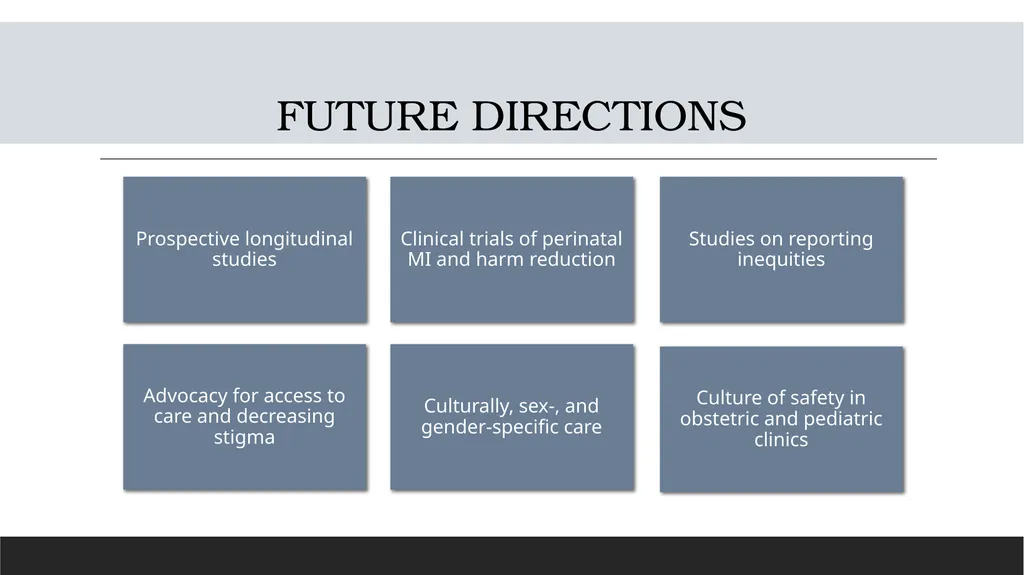
slide11. FUTURE DIRECTIONS<br>
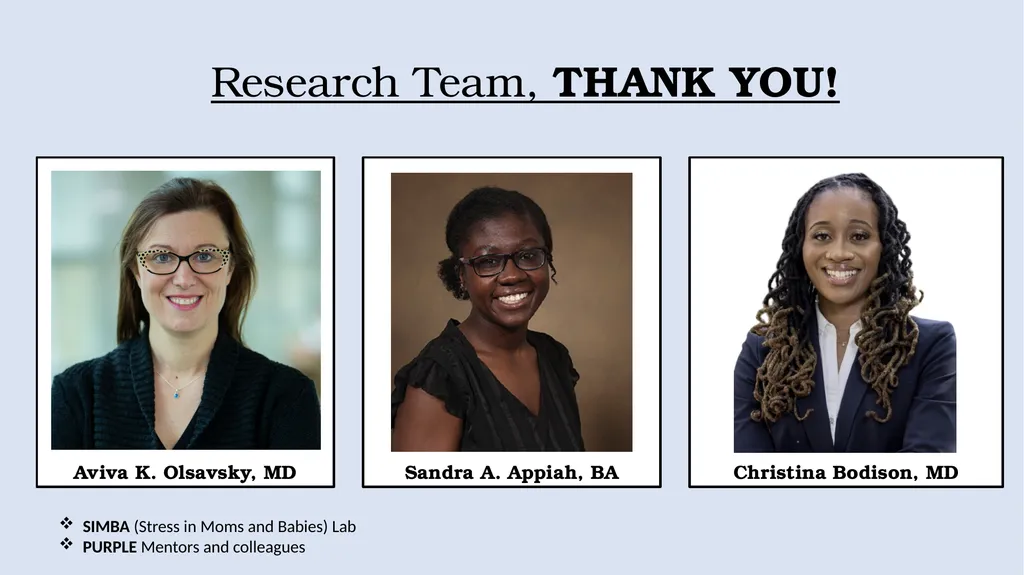
slide12. Research Team, THANK YOU! Aviva K. Olsavsky, MD Sandra A. Appiah, BA Christina Bodison, MD SIMBA (Stress in Moms and Babies) Lab
PURPLE Mentors and colleagues<br>
slide13. QUESTIONS?<br>
slide14. REFERENCES Forray A. Substance use during pregnancy. F1000Res. 2016 May 13;5:F1000 Faculty Rev-887. doi: 10.12688/f1000research.7645.1. PMID: 27239283; PMCID: PMC4870985.
Mathews, B., & Kenny, M. C. (2008). Mandatory Reporting Legislation in the United States, Canada, and Australia: A Cross-Jurisdictional Review of Key Features, Differences, and Issues. Child Maltreatment, 13(1), 50–63. https://doi.org/10.1177/1077559507310613
Meinhofer A, Anglero-Diaz Y. Trends in Foster Care Entry Among Children Removed From Their Homes Because of Parental Drug Use, 2000 to 2017. JAMA Pediatr. 2019;173:881-883.
Nguemeni Tiako, M. J., & Sweeney, L. (2022). The government’s involvement in prenatal drug testing may be toxic. Maternal and child health journal, 26(4), 761-763.
Schiff, D. M., Work, E. C., Muftu, S., Partridge, S., MacMillan, K. D. L., Gray, J. R., ... & Bernstein, J. (2022). “You have to take this medication, but then you get punished for taking it:” lack of agency, choice, and fear of medications to treat opioid use disorder across the perinatal period. Journal of substance abuse treatment, 139, 108765<br>
Sandra A. Appiah, BA; Christina Bodison, MD; Aviva K. OlsavSky, MD
The Psychiatry Undergraduate Research Program And Learning Experience (PURPLE)<br>
slide2. Qualitative Quotes
- Schiff et al, 2022 “The first thing [the caseworker] said to me was, ‘So I noticed you were on methadone. You realize that's liquid heroin, correct?’”
(31-year-old Black/mixed race mother) “It [methadone] allowed me to have a life. It allowed me to start to work on myself without having to have the daily waking up not well every day and starting my day off like that... It gave me the opportunity. That's what it does. It gives you the opportunity.”
(33-year-old White mother) “Just because I'm on methadone and taking meds, it seemed like everything that happens is always because it's methadone fault… I was tired, so that must be—not the baby getting up every night, but it must be my methadone. Everything had to do with my meds. That’s how they viewed it.”
(35-year-old White mother)<br>
slide3. Legally enforceable duty for those who have contact with vulnerable populations to report to authorities when mistreatment or abuse of those populations is suspected or confirmed
Identifying and Reporting Child Abuse and Maltreatment/Neglect
First enacted in the U.S between 1963-1967
Some laws include any substance use as reportable neglect Mathews, B. et al (2008). Child maltreatment. Mandated Reporting<br>
slide4. BACKGROUND Forray 2016; Nguemeni Tiako MJ, et al 2022; Meinhofer 2017<br>
slide5. To perform a systematic review of U.S. mandated reporting literature for perinatal substance use OBJECTIVE<br>
slide6. METHODS – Search Terms Databases: PubMed, CINAHL, PsycINFO, Cochrane
Search Strategy: [PARENTAL + {(CANNABIS OR ALCOHOL) + USE}] + REPORTING<br>
slide7. METHODS – PRISMA Flow Diagram<br>
slide8. RESULTS (Preliminary) Policies of mandated reporting vary by state
In some states, any use of substance is automatically interpreted as neglect
Treatment engagement not addressed
Racial/ethnic/SES disparities in screening and reporting
Most frequently detected: cannabis, cigarettes, and cocaine
Cannabis vs. alcohol treated differently when reporting<br>
slide9. RESULTS (Preliminary)<br>
slide10. CONCLUSIONS Not all substance use is necessarily neglect – nuanced and evidence-based approaches will likely increase access to care
Insufficient access to high-quality substance use disorder treatment following reporting
Prior criminalization of substance use perpetuates stigma and makes pregnant and postpartum people less likely to engage with care
Promote earlier substance use screening during pregnancy (first trimester) to prevent increased substance use
There is a need to integrate our evidence into screening, referral, and treatment processes
Motivational interviewing
Abstinence only approach vs. harm reduction model<br>
slide11. FUTURE DIRECTIONS<br>
slide12. Research Team, THANK YOU! Aviva K. Olsavsky, MD Sandra A. Appiah, BA Christina Bodison, MD SIMBA (Stress in Moms and Babies) Lab
PURPLE Mentors and colleagues<br>
slide13. QUESTIONS?<br>
slide14. REFERENCES Forray A. Substance use during pregnancy. F1000Res. 2016 May 13;5:F1000 Faculty Rev-887. doi: 10.12688/f1000research.7645.1. PMID: 27239283; PMCID: PMC4870985.
Mathews, B., & Kenny, M. C. (2008). Mandatory Reporting Legislation in the United States, Canada, and Australia: A Cross-Jurisdictional Review of Key Features, Differences, and Issues. Child Maltreatment, 13(1), 50–63. https://doi.org/10.1177/1077559507310613
Meinhofer A, Anglero-Diaz Y. Trends in Foster Care Entry Among Children Removed From Their Homes Because of Parental Drug Use, 2000 to 2017. JAMA Pediatr. 2019;173:881-883.
Nguemeni Tiako, M. J., & Sweeney, L. (2022). The government’s involvement in prenatal drug testing may be toxic. Maternal and child health journal, 26(4), 761-763.
Schiff, D. M., Work, E. C., Muftu, S., Partridge, S., MacMillan, K. D. L., Gray, J. R., ... & Bernstein, J. (2022). “You have to take this medication, but then you get punished for taking it:” lack of agency, choice, and fear of medications to treat opioid use disorder across the perinatal period. Journal of substance abuse treatment, 139, 108765<br>