Marek Dabrowski Fellow at CASE, Non-Resident
Description: Marek Dabrowski Fellow at CASE, Non-Resident Fellow at Bruegel Eastern European economies amidst the global and regional shock Presentation at the Bruegel event on Economic dynamics in the former Soviet Union countries amidst global
Related Topics
Download Presentation
"Marek Dabrowski Fellow at CASE, Non-Resident" is the property of its rightful owner. Permission is granted to download and print the materials on this website for personal, non-commercial use only, and to display it on your personal computer provided you do not modify the materials and that you retain all copyright notices contained in the materials. By downloading content from our website, you accept the terms of this agreement.
Presentation Transcript
slide1. Marek DabrowskiFellow at CASE, Non-Resident Fellow at BruegelEastern European economies amidst the global and regional shock Presentation at the Bruegel event on ‘Economic dynamics in the former Soviet Union countries amidst global shocks’,
Brussels, 26 February 2025<br>
slide2. Presentation’s background, purpose and content A regional report of the OSF funded project on “Increasing economic resilience of Armenia, Georgia and Moldova” carried out by CASE – Center for Social and Economic Research in Warsaw, and three partner institutes (Modex, Yerevan, EPRC, Tbilisi, and Expert-Group, Chisinau);
It covers the period of 2007-2023/2024, with special focus on 2020-2023/2024 and seven countries: Armenia, Azerbaijan, Belarus, Georgia, Moldova, Russia, and Ukraine
It covers four policy areas: macroeconomic stability, financial stability , external economic relations, and energy sector, plus political and geopolitical background<br>
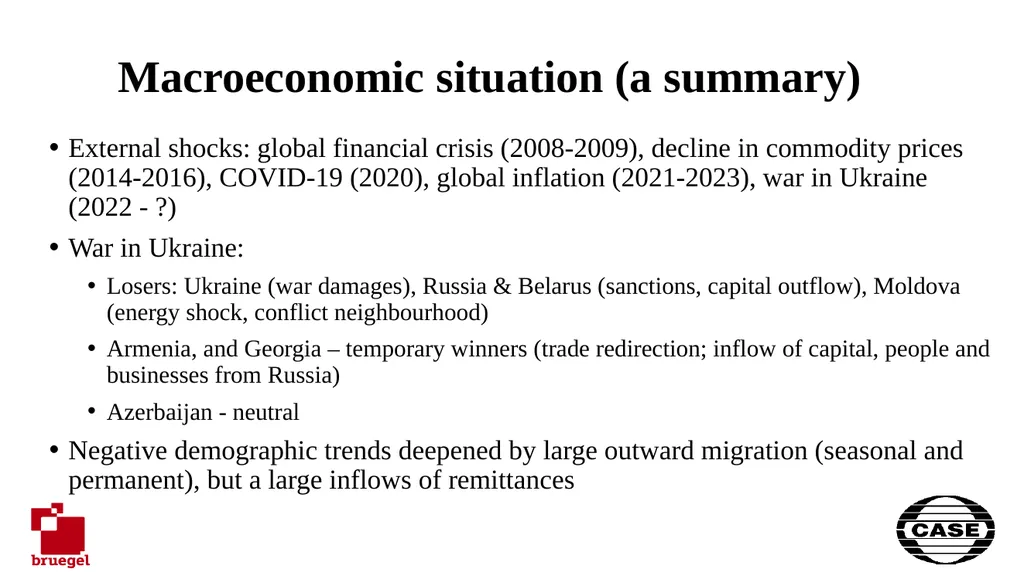
slide3. Macroeconomic situation (a summary) External shocks: global financial crisis (2008-2009), decline in commodity prices (2014-2016), COVID-19 (2020), global inflation (2021-2023), war in Ukraine (2022 - ?)
War in Ukraine:
Losers: Ukraine (war damages), Russia & Belarus (sanctions, capital outflow), Moldova (energy shock, conflict neighbourhood)
Armenia, and Georgia – temporary winners (trade redirection; inflow of capital, people and businesses from Russia)
Azerbaijan - neutral
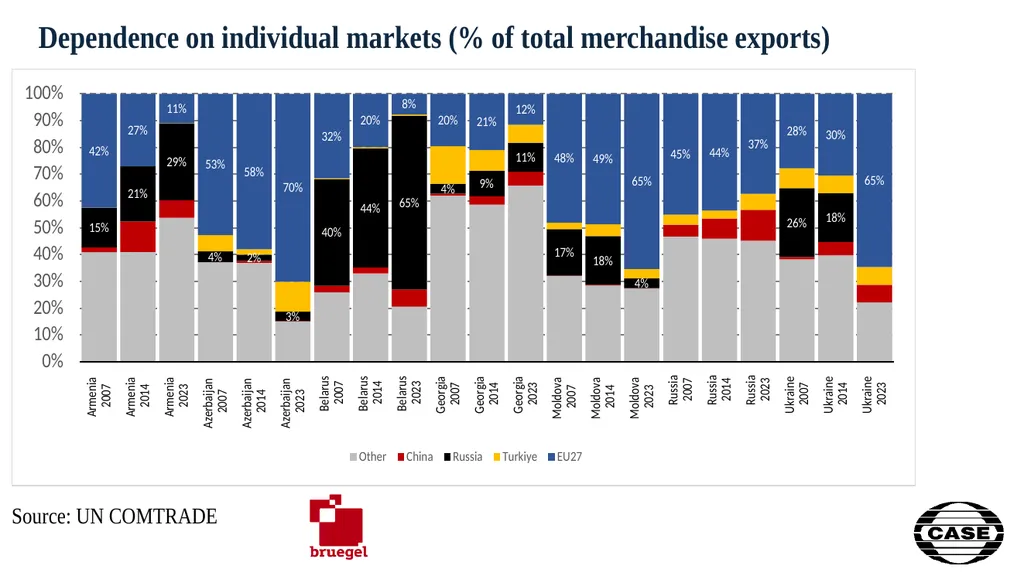
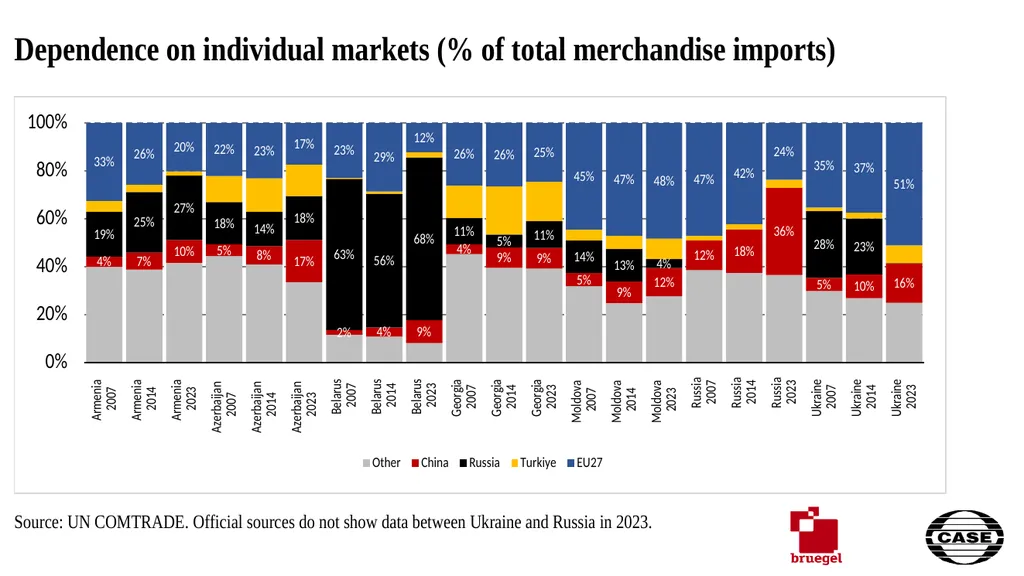
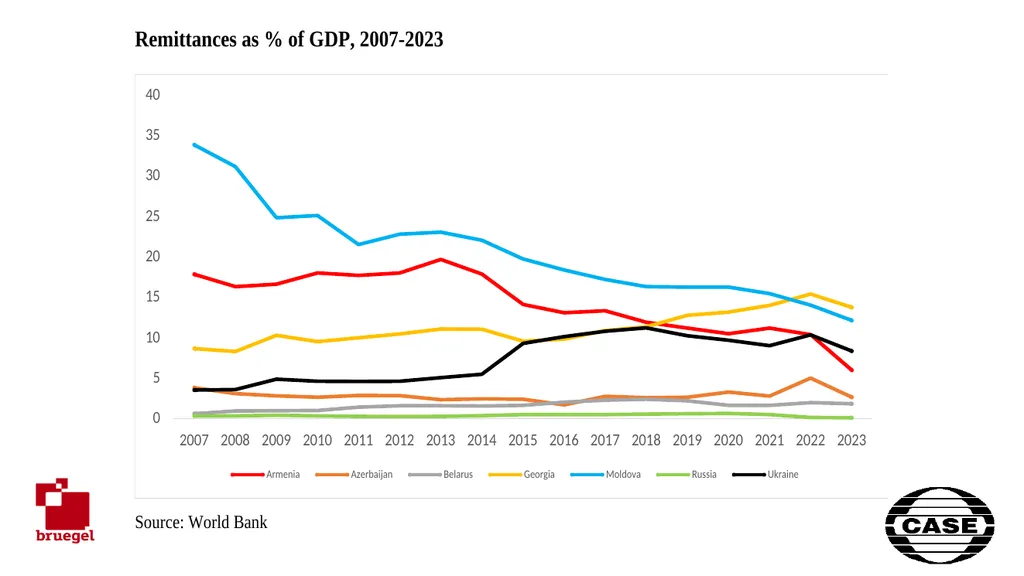
Negative demographic trends deepened by large outward migration (seasonal and permanent), but a large inflows of remittances<br>
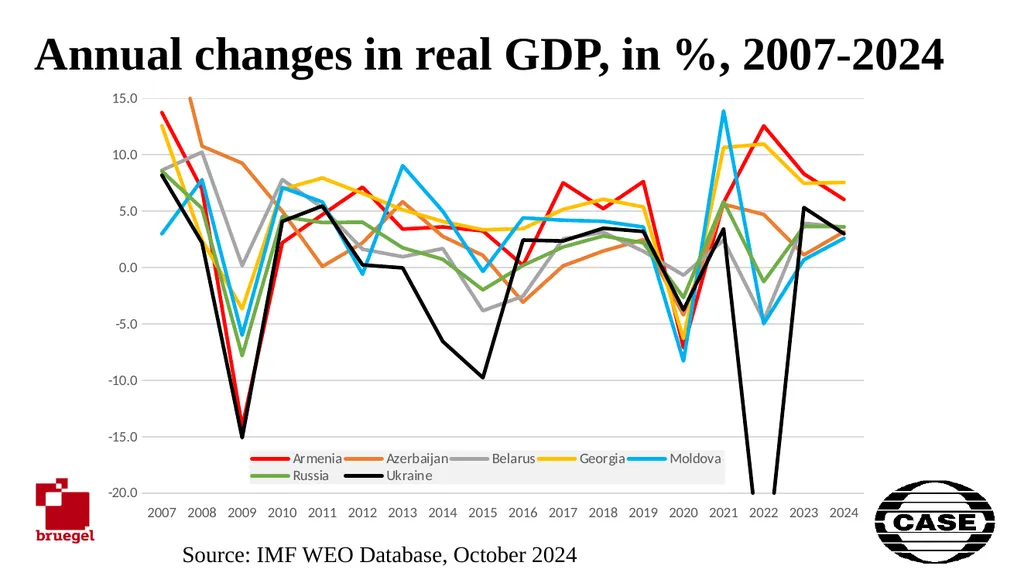
slide4. Annual changes in real GDP, in %, 2007-2024 Source: IMF WEO Database, October 2024<br>
slide5. BRUEGEL Body<br>
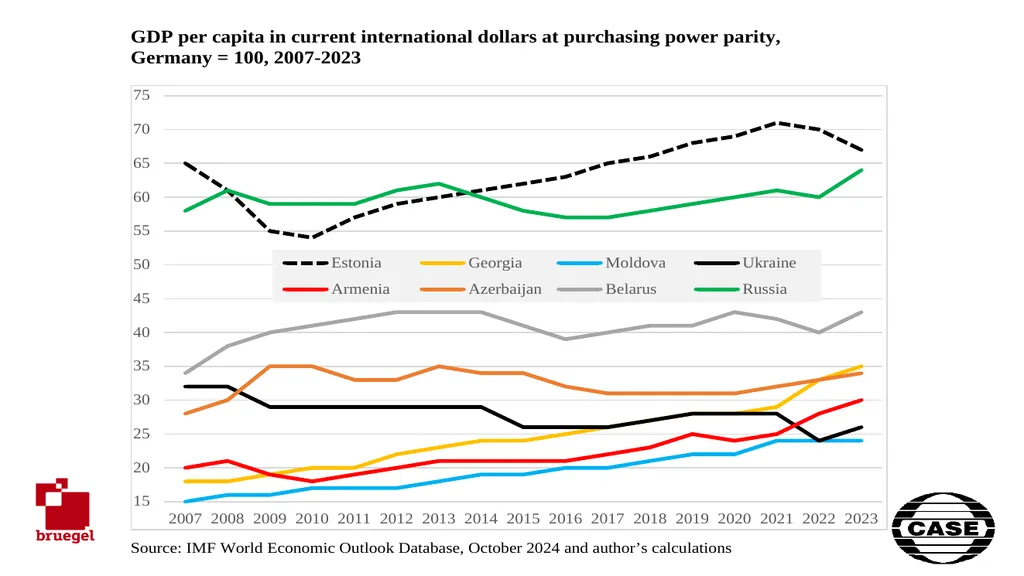
slide6. Source: IMF WEO Database, October 2024<br>
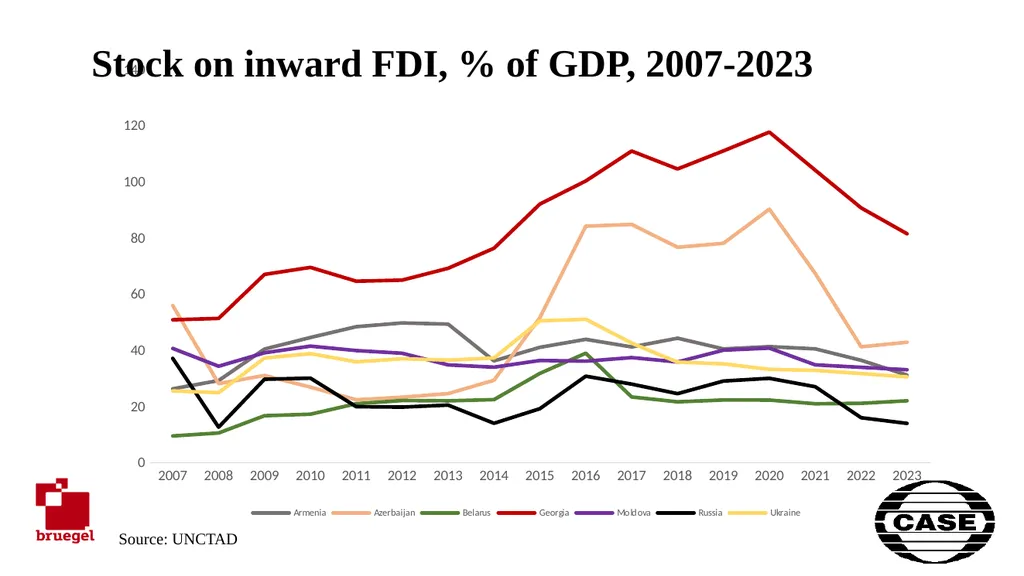
slide11. Stock on inward FDI, % of GDP, 2007-2023<br>
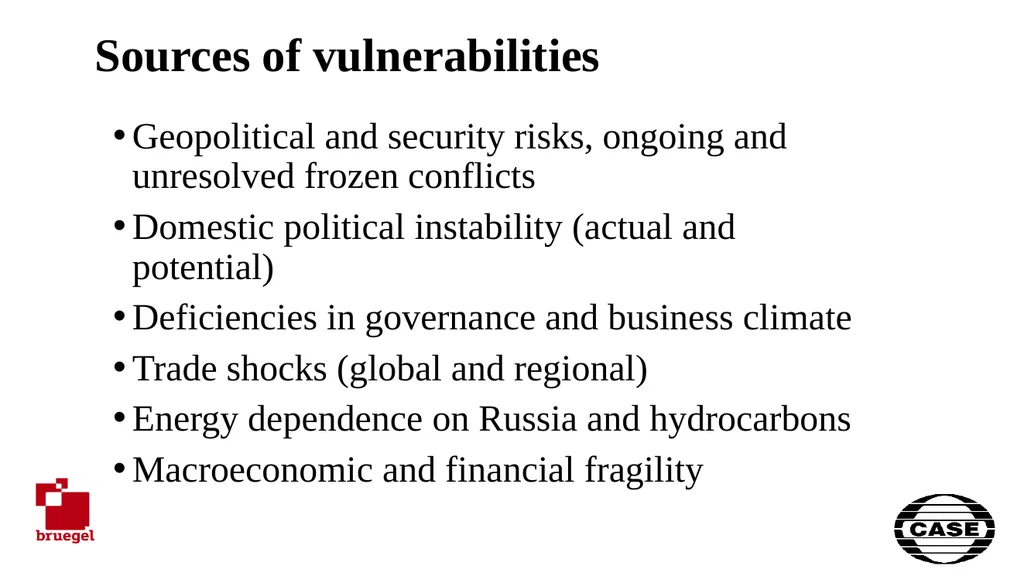
slide13. Sources of vulnerabilities Geopolitical and security risks, ongoing and unresolved frozen conflicts
Domestic political instability (actual and potential)
Deficiencies in governance and business climate
Trade shocks (global and regional)
Energy dependence on Russia and hydrocarbons
Macroeconomic and financial fragility<br>
Brussels, 26 February 2025<br>
slide2. Presentation’s background, purpose and content A regional report of the OSF funded project on “Increasing economic resilience of Armenia, Georgia and Moldova” carried out by CASE – Center for Social and Economic Research in Warsaw, and three partner institutes (Modex, Yerevan, EPRC, Tbilisi, and Expert-Group, Chisinau);
It covers the period of 2007-2023/2024, with special focus on 2020-2023/2024 and seven countries: Armenia, Azerbaijan, Belarus, Georgia, Moldova, Russia, and Ukraine
It covers four policy areas: macroeconomic stability, financial stability , external economic relations, and energy sector, plus political and geopolitical background<br>
slide3. Macroeconomic situation (a summary) External shocks: global financial crisis (2008-2009), decline in commodity prices (2014-2016), COVID-19 (2020), global inflation (2021-2023), war in Ukraine (2022 - ?)
War in Ukraine:
Losers: Ukraine (war damages), Russia & Belarus (sanctions, capital outflow), Moldova (energy shock, conflict neighbourhood)
Armenia, and Georgia – temporary winners (trade redirection; inflow of capital, people and businesses from Russia)
Azerbaijan - neutral
Negative demographic trends deepened by large outward migration (seasonal and permanent), but a large inflows of remittances<br>
slide4. Annual changes in real GDP, in %, 2007-2024 Source: IMF WEO Database, October 2024<br>
slide5. BRUEGEL Body<br>
slide6. Source: IMF WEO Database, October 2024<br>
slide11. Stock on inward FDI, % of GDP, 2007-2023<br>
slide13. Sources of vulnerabilities Geopolitical and security risks, ongoing and unresolved frozen conflicts
Domestic political instability (actual and potential)
Deficiencies in governance and business climate
Trade shocks (global and regional)
Energy dependence on Russia and hydrocarbons
Macroeconomic and financial fragility<br>