
Marx’s Capital – ‘scientifically erroneous and
BR
Published · 41 slides · 0 views

1 / 1

Description
Marxs Capital scientifically erroneous and without application to the modern world by Michael Roberts HM Conference, London November 2017 Keynes on Marx Marxs Capital scientifically erroneous and without application to the modern
Related Topics
Share
Embed code
Download this presentation From Below
"Marx’s Capital – ‘scientifically erroneous and" is the property of its rightful owner. Permission is granted to download and print the materials on this website for personal, non-commercial use only, and to display it on your personal computer provided you do not modify the materials and that you retain all copyright notices contained in the materials. By downloading content from our website, you accept the terms of this agreement.
Presentation Transcript
01
Marx’s Capital –
‘scientifically erroneous and without application to the modern world’ by Michael Roberts
HM Conference, London November 2017<br>
HM Conference, London November 2017<br>
02
Keynes on Marx Marx’s Capital – ‘scientifically erroneous and without application to the modern world’
“How can I accept the [Communist] doctrine,” Keynes wrote, “which sets up as its bible, above and beyond criticism, an obsolete textbook which I know not only to be scientifically erroneous but without interest or application to the modern world?
“How can I adopt a creed which, preferring the mud to the fish, exalts the boorish proletariat above the bourgeoisie and the intelligentsia, who with all their faults, are the quality of life and surely carry the seeds of all human achievement?
“Even if we need a religion, how can we find it in the turbid rubbish of the red bookshop? It is hard for an educated, decent, intelligent son of Western Europe to find his ideals here, unless he has first suffered some strange and horrid process of conversion which has changed all his values.”
(Keynes, Laissez-Faire and Communism, quoted in Hunt 1979: 377).<br>
“How can I accept the [Communist] doctrine,” Keynes wrote, “which sets up as its bible, above and beyond criticism, an obsolete textbook which I know not only to be scientifically erroneous but without interest or application to the modern world?
“How can I adopt a creed which, preferring the mud to the fish, exalts the boorish proletariat above the bourgeoisie and the intelligentsia, who with all their faults, are the quality of life and surely carry the seeds of all human achievement?
“Even if we need a religion, how can we find it in the turbid rubbish of the red bookshop? It is hard for an educated, decent, intelligent son of Western Europe to find his ideals here, unless he has first suffered some strange and horrid process of conversion which has changed all his values.”
(Keynes, Laissez-Faire and Communism, quoted in Hunt 1979: 377).<br>
03
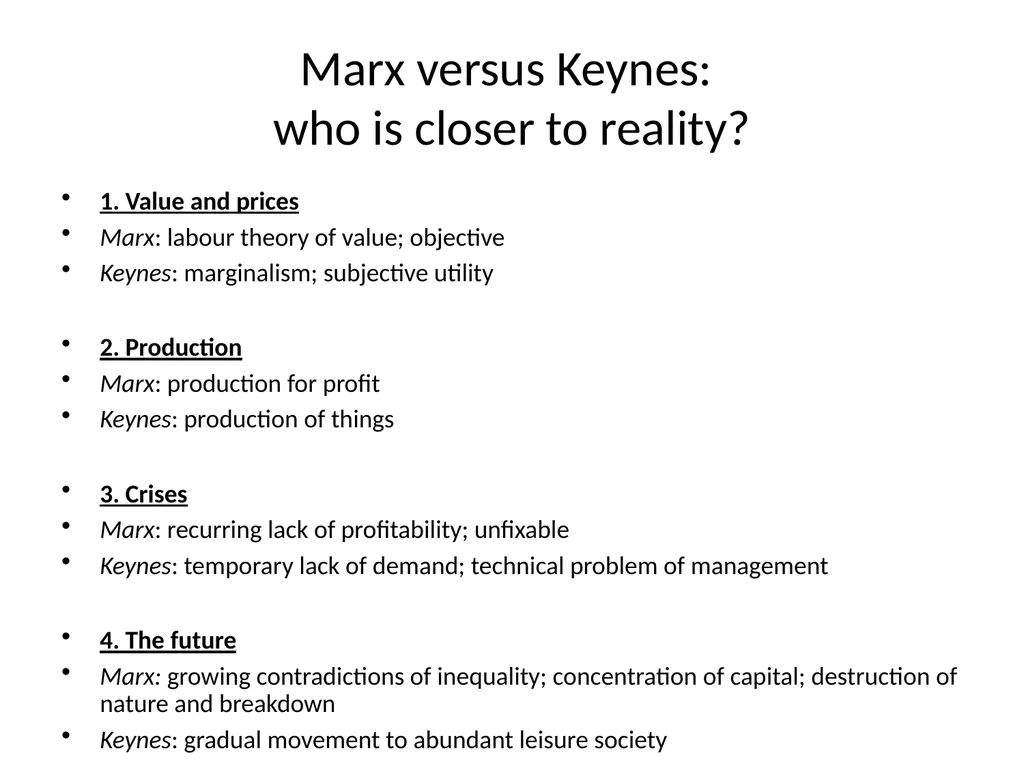
Marx versus Keynes:
who is closer to reality? 1. Value and prices
Marx: labour theory of value; objective
Keynes: marginalism; subjective utility
2. Production
Marx: production for profit
Keynes: production of things
3. Crises
Marx: recurring lack of profitability; unfixable
Keynes: temporary lack of demand; technical problem of management
4. The future
Marx: growing contradictions of inequality; concentration of capital; destruction of nature and breakdown
Keynes: gradual movement to abundant leisure society<br>
Marx: labour theory of value; objective
Keynes: marginalism; subjective utility
2. Production
Marx: production for profit
Keynes: production of things
3. Crises
Marx: recurring lack of profitability; unfixable
Keynes: temporary lack of demand; technical problem of management
4. The future
Marx: growing contradictions of inequality; concentration of capital; destruction of nature and breakdown
Keynes: gradual movement to abundant leisure society<br>
04
1. A theory of value and prices Marx – The labour theory of value
Keynes - marginalism<br>
Keynes - marginalism<br>
05
1. Ricardo – it’s 200 years! “I have endeavoured to explain more fully than in the past, my opinion on the difficult subject of VALUE.” …The value of a commodity, or the quantity of any other commodity for which it will exchange, depends on the relative quantity of labour which is necessary for its production, and not on the greater or less compensation which is paid for that labour.”
D. Ricardo, Principles of Political Economy and Taxation, p.55, 1817.<br>
D. Ricardo, Principles of Political Economy and Taxation, p.55, 1817.<br>
06
1. Self-evident “Every child knows that any nation that stopped working, not for a year, but let us say, just for a few weeks, would perish”, explained Marx. Broadly speaking, the things we need have to be produced in certain quantities and then distributed according to the requirements of society. This constitutes the economic laws of all societies, including capitalism… And every child knows, too, that the amounts of products corresponding to the differing amounts of needs, demand differing and quantitatively determined amounts of society’s aggregate labour”,
Letter from Marx to Kugelmann, 11 July 1868, MECW, vol.43, pp.68-69.<br>
Letter from Marx to Kugelmann, 11 July 1868, MECW, vol.43, pp.68-69.<br>
07
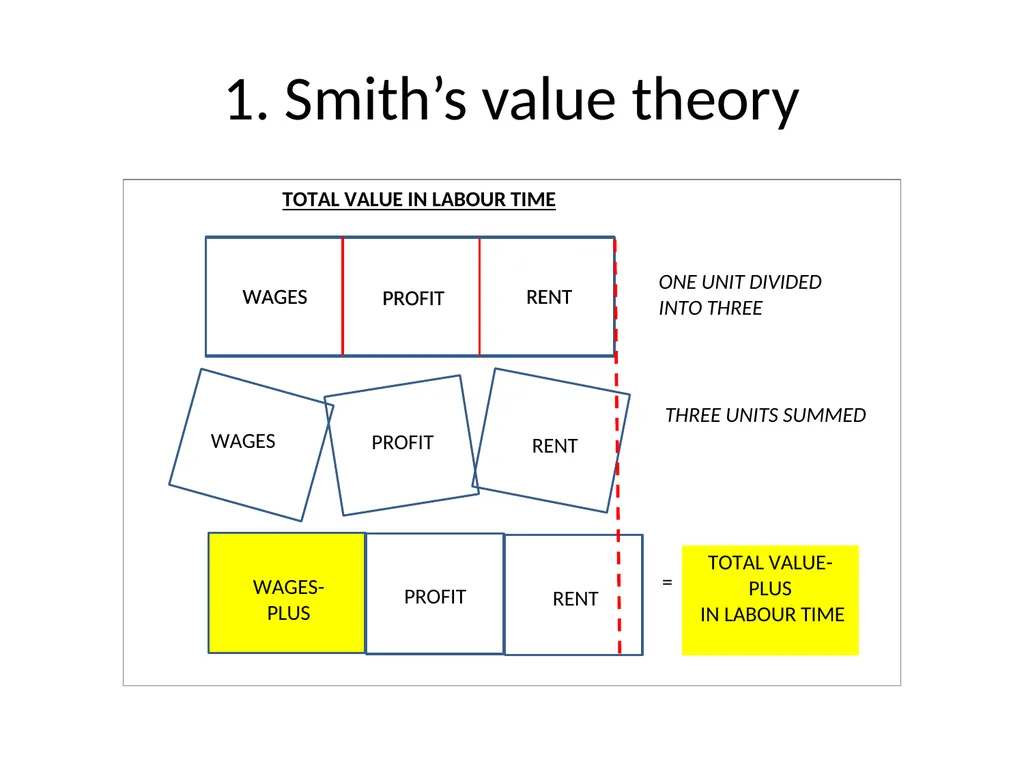
1. Marx on Smith “If I define the length of three straight lines independently and then make these lines ‘components’ of a fourth straight line equal in length to their sum, this is no way the same procedure as if I start with a given straight line and divide this for some purpose or other – ‘resolve’ it so to speak – into three parts. The length of the line in the first case invariably changes with the length of the three lines whose sum it forms; in the latter case the length of the three segments is limited from the beginning by their forming parts of a line of given size. (Vol 1 383)<br>
08
1. Smith’s value theory<br>
09
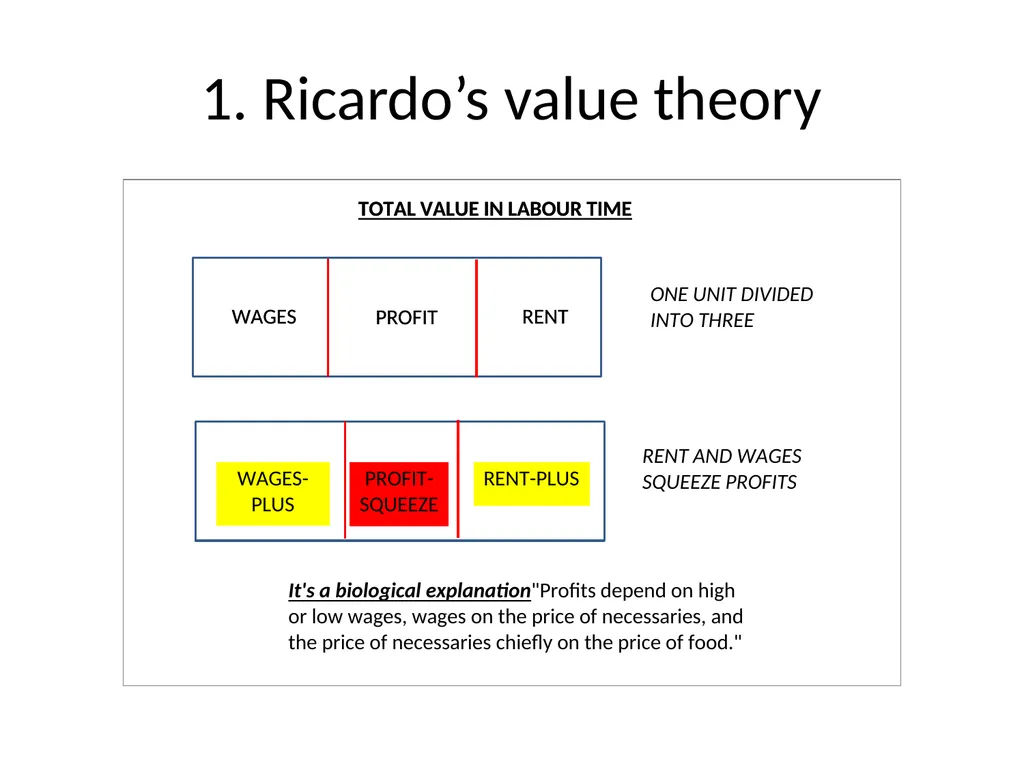
1. Ricardo’s value theory<br>
10
1. Marx’s Theory of Labour-Value 1) Living labour, directly involved in producing commodities, is the sole source of new ‘value’. Under capitalism, economic value appears as a social relation of people to people, not a relation of things to things, nor a relation of people to things. It is a reflection of the social division of living labour.
2) Value exists as a definite quantitative magnitude that sets parametric limits on prices, profits, wages, interest, etc.
3) The substance of value is abstract social labour; its measure is socially-necessary labour time; and its necessary form of appearance is money.<br>
2) Value exists as a definite quantitative magnitude that sets parametric limits on prices, profits, wages, interest, etc.
3) The substance of value is abstract social labour; its measure is socially-necessary labour time; and its necessary form of appearance is money.<br>
11
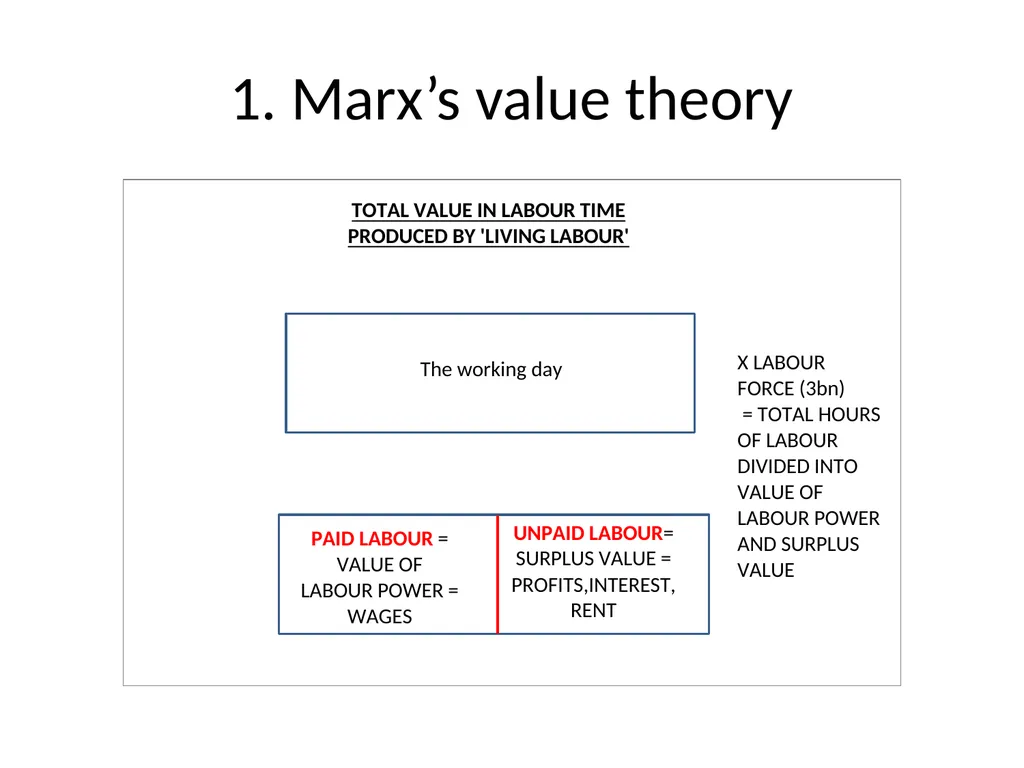
1. Marx’s value theory<br>
12
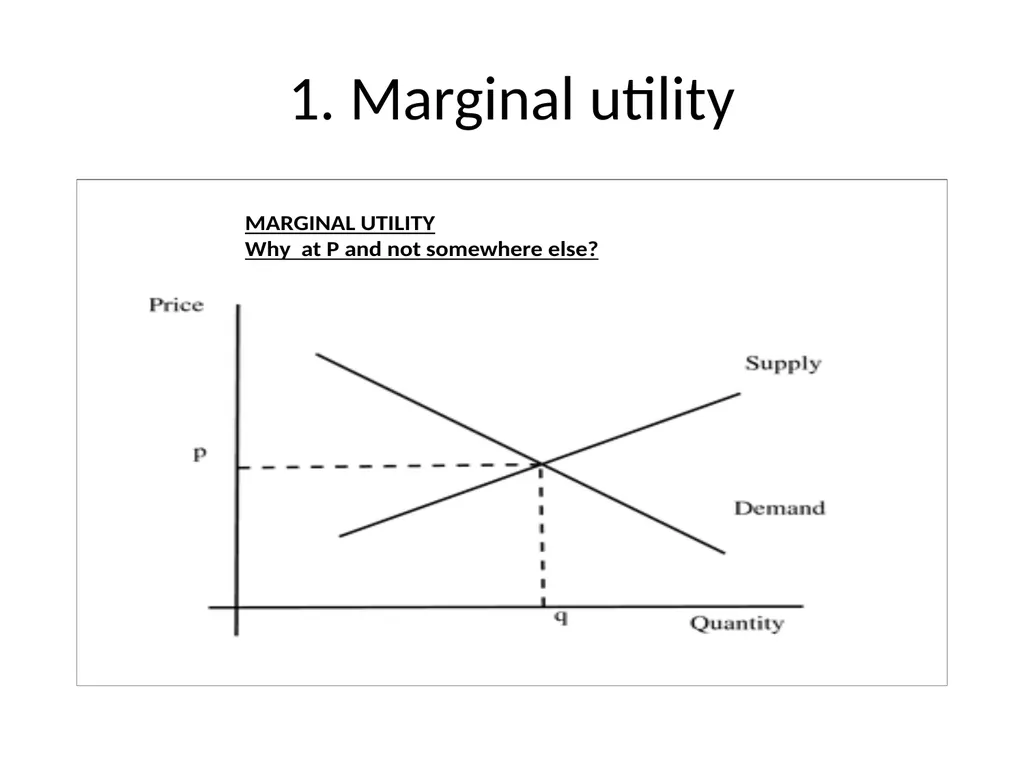
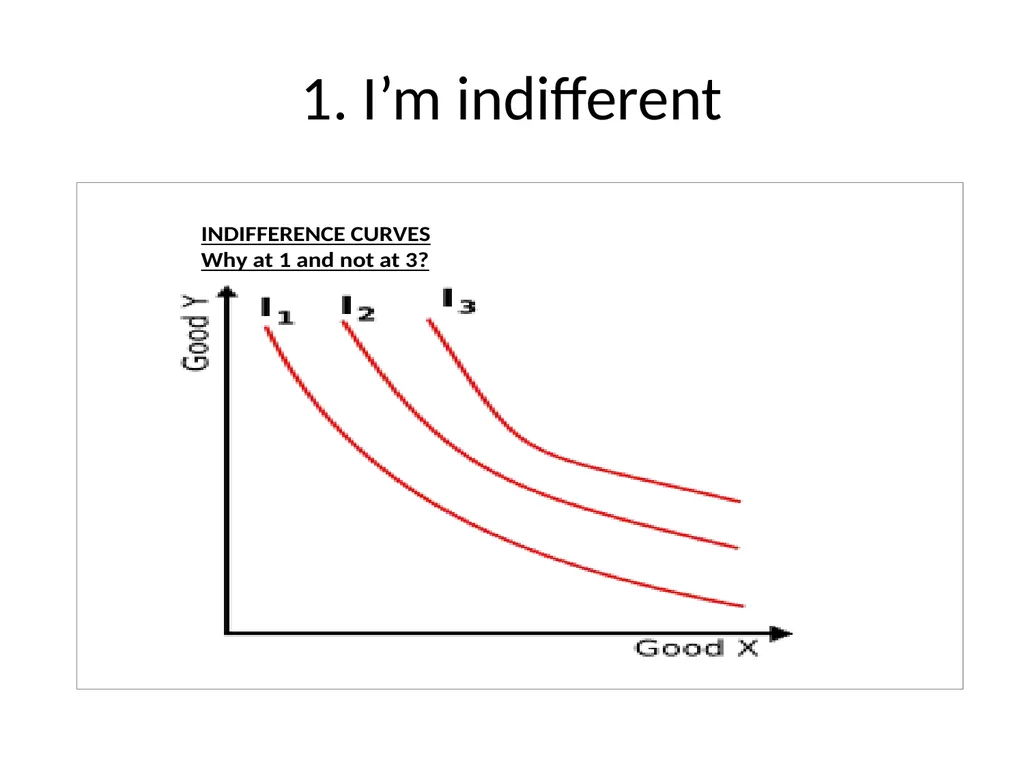
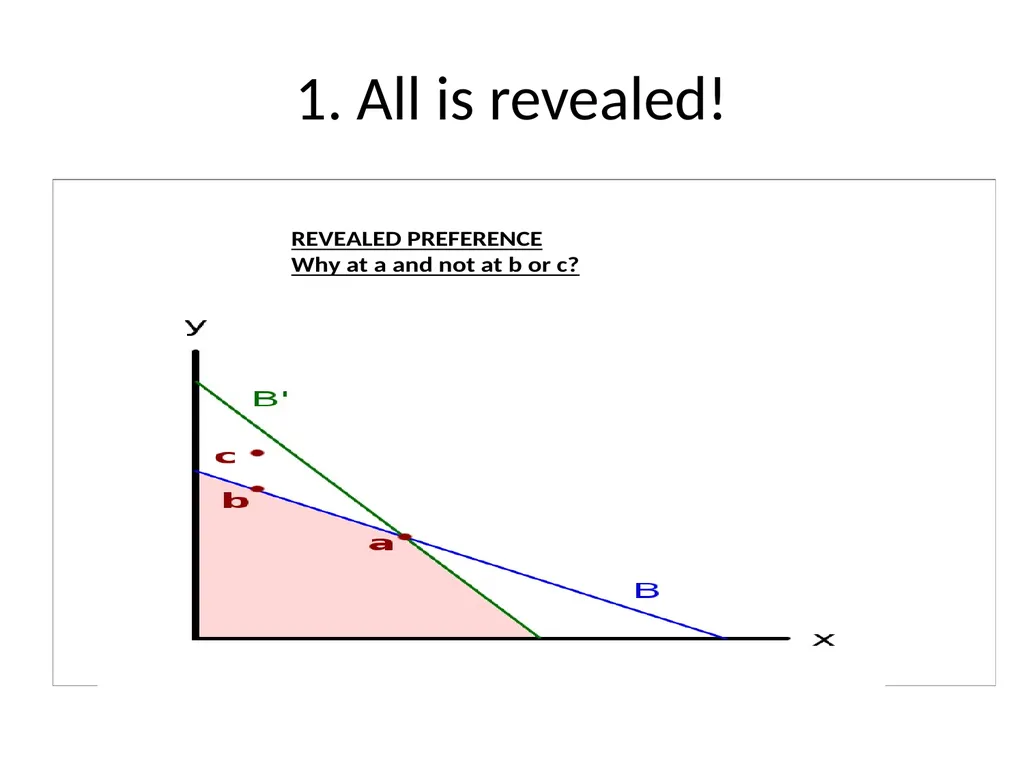
1. Marginal utility “Repeated reflection and enquiry has led me to the somewhat novel opinion that value depends entirely upon utility…. If someone wants something badly, it has considerable utility for that person; the more he wants it, the more he is willing to pay for it. …Labour once spent has no influence on the future value of any article” Jevons<br>
13
1. Marginal utility<br>
14
1. I’m indifferent<br>
15
1. All is revealed!<br>
16
1. Vulgar economy “The fashionable theory just now here is that of Stanley Jevons, according to which value is determined by utility and on the other hand by the limit of supply (i.e. the cost of production), which is merely a confused and circuitous way of saying that value is determined by supply and demand. Vulgar Economy everywhere!” Engels, 22 MECW, vol.48, p.136<br>
17
1. Incommensurable “two incommensurable collections of miscellaneous objects cannot in themselves provide the material for a quantitative analysis” Keynes.
But “this need not, of course, prevent us from making approximate statistical comparisons”. As if two incommensurable quantities could be “approximately” measured and compared! They cannot, either exactly or approximately<br>
But “this need not, of course, prevent us from making approximate statistical comparisons”. As if two incommensurable quantities could be “approximately” measured and compared! They cannot, either exactly or approximately<br>
18
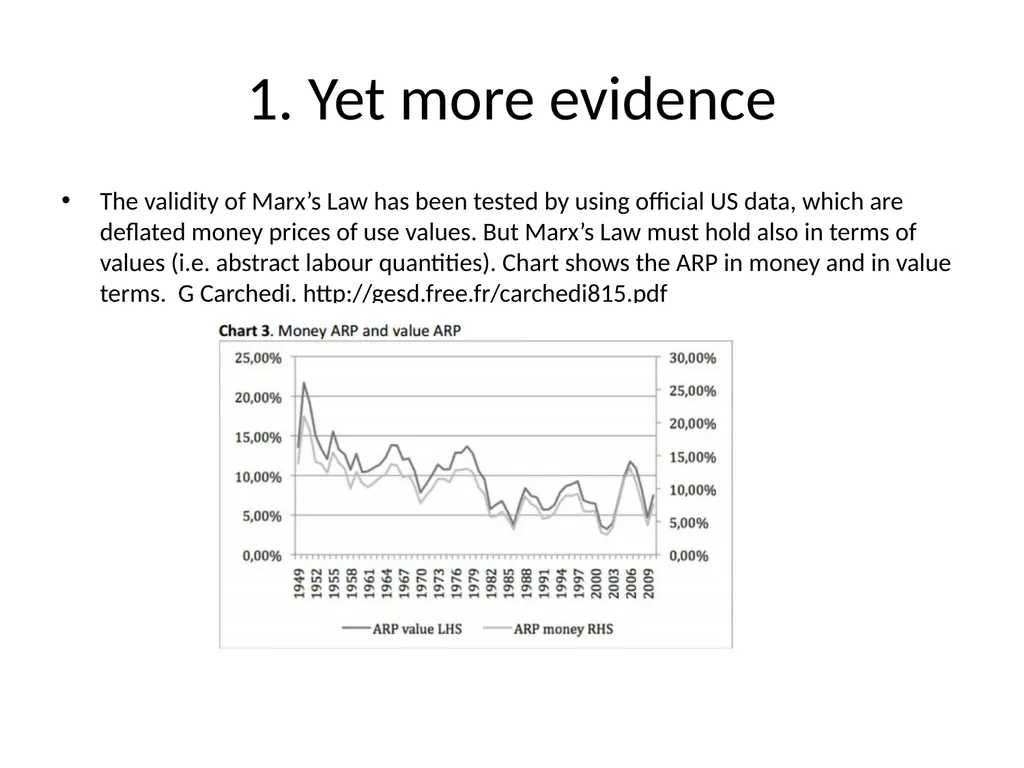
1. Yet more evidence The validity of Marx’s Law has been tested by using official US data, which are deflated money prices of use values. But Marx’s Law must hold also in terms of values (i.e. abstract labour quantities). Chart shows the ARP in money and in value terms. G Carchedi. http://gesd.free.fr/carchedi815.pdf<br>
19
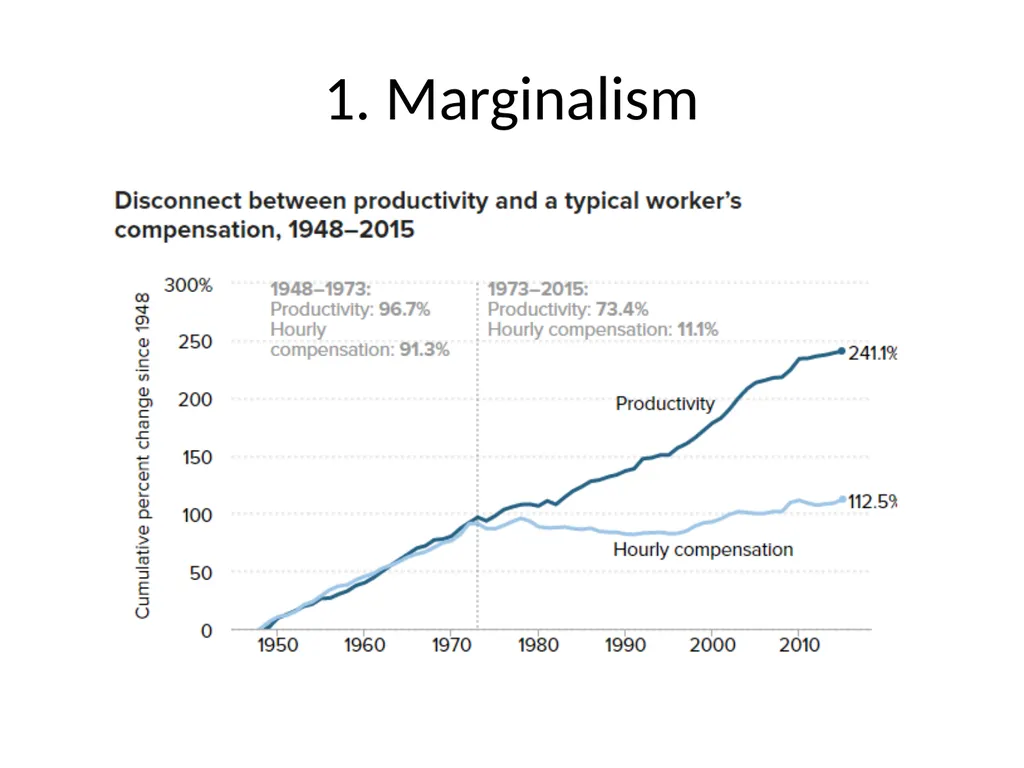
1. Marginalism<br>
20
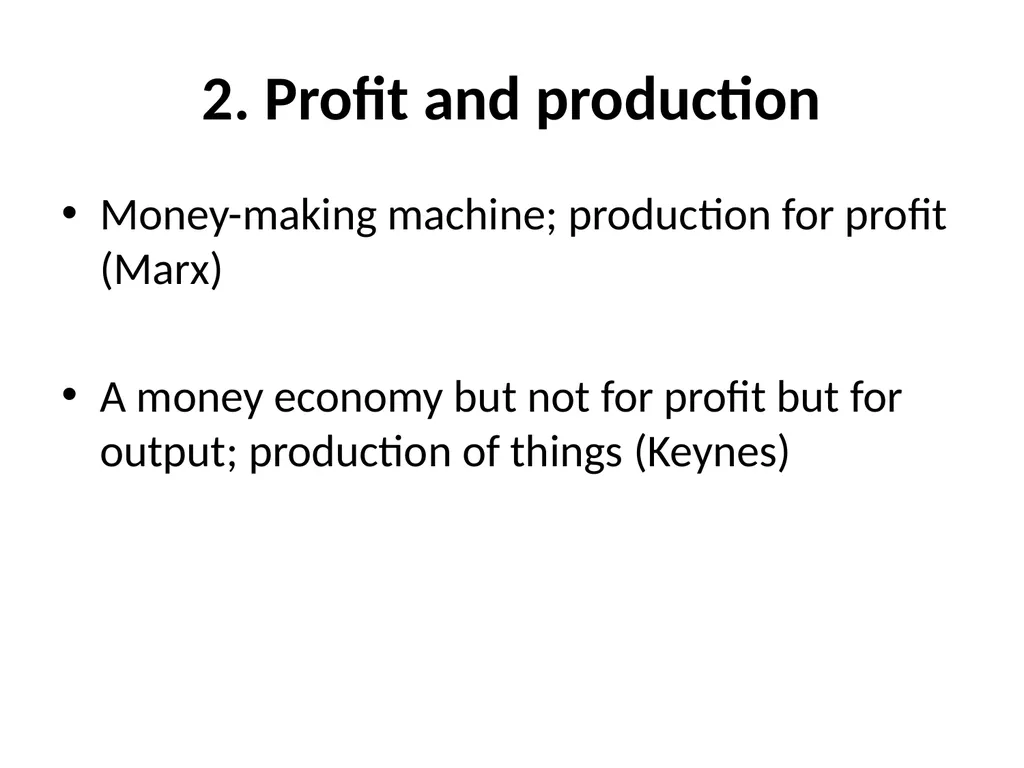
2. Profit and production Money-making machine; production for profit (Marx)
A money economy but not for profit but for output; production of things (Keynes)<br>
A money economy but not for profit but for output; production of things (Keynes)<br>
21
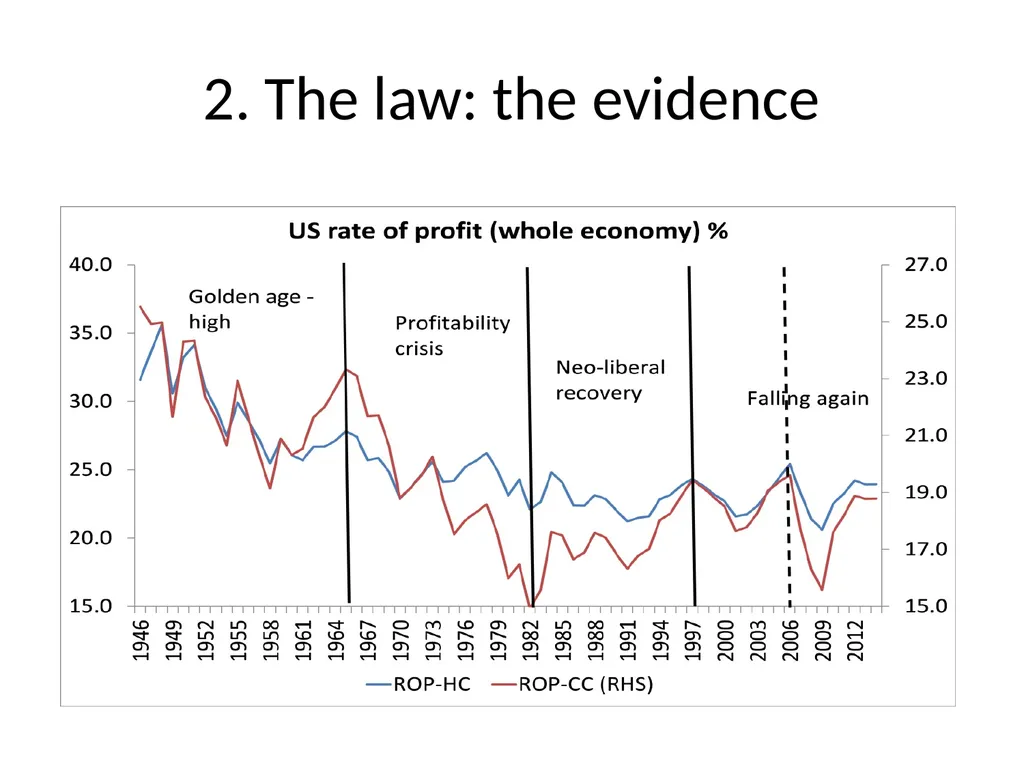
2. The law: the evidence<br>
22
2. Scarcity theory of capital –
Marginal efficiency While for the physicalist approach crises are determined by falling capital productivity, for Marx crises are determined by rising labour productivity, i.e. by the shedding of labour inherent in greater labour productivity.
Since only labour produces value, a growing output of use values per unit of labour contains a decreasing quantity of value and surplus value. The correlation between labour productivity and profitability is thus negative, not positive.<br>
Since only labour produces value, a growing output of use values per unit of labour contains a decreasing quantity of value and surplus value. The correlation between labour productivity and profitability is thus negative, not positive.<br>
23
3. Crisis: profit versus demand Marx:
Profits call the tune; regular and re-occuring lack of profitability
Or Keynes:
Temporary shocks to aggregate demand caused by lack of animal spirits and rush to cash<br>
Profits call the tune; regular and re-occuring lack of profitability
Or Keynes:
Temporary shocks to aggregate demand caused by lack of animal spirits and rush to cash<br>
24
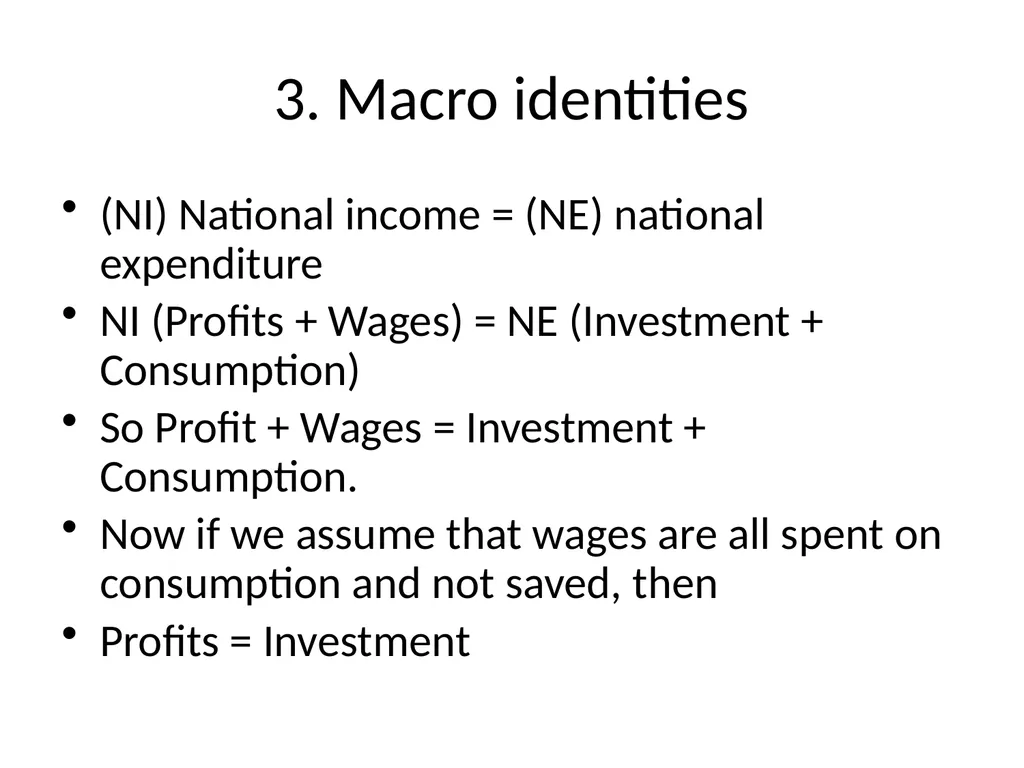
3. Macro identities (NI) National income = (NE) national expenditure
NI (Profits + Wages) = NE (Investment + Consumption)
So Profit + Wages = Investment + Consumption.
Now if we assume that wages are all spent on consumption and not saved, then
Profits = Investment<br>
NI (Profits + Wages) = NE (Investment + Consumption)
So Profit + Wages = Investment + Consumption.
Now if we assume that wages are all spent on consumption and not saved, then
Profits = Investment<br>
25
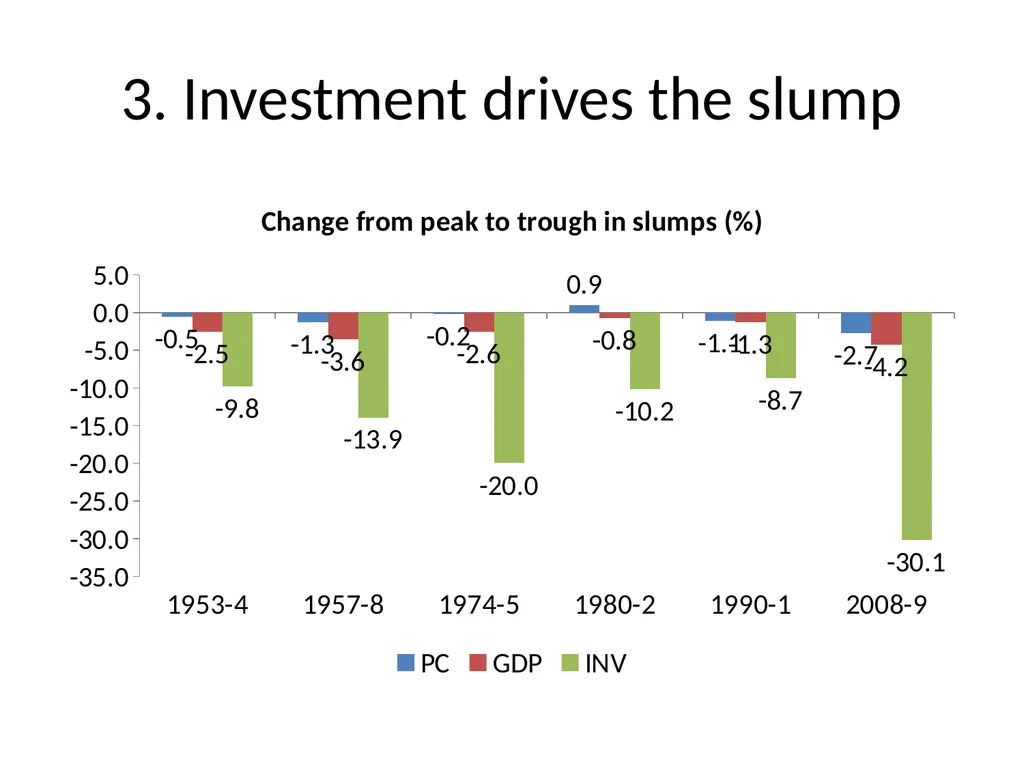
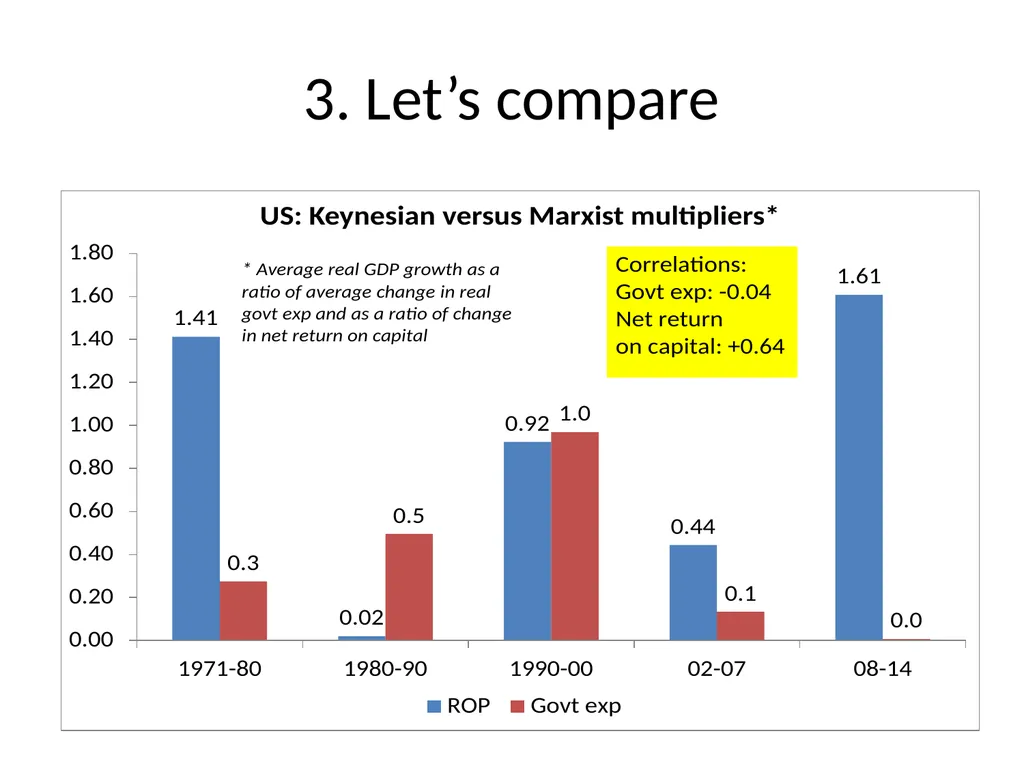
3. Back to Front Profits depend on investment - Keynesian
Investment depends on profit - Marxist
And profit depends on the exploitation of labour power and its appropriation by capital.
An objective causal analysis based on a specific form of class society (Marx)
or individual behaviour (Keynes)<br>
Investment depends on profit - Marxist
And profit depends on the exploitation of labour power and its appropriation by capital.
An objective causal analysis based on a specific form of class society (Marx)
or individual behaviour (Keynes)<br>
26
3. Investment drives the slump<br>
27
3. Let’s compare<br>
28
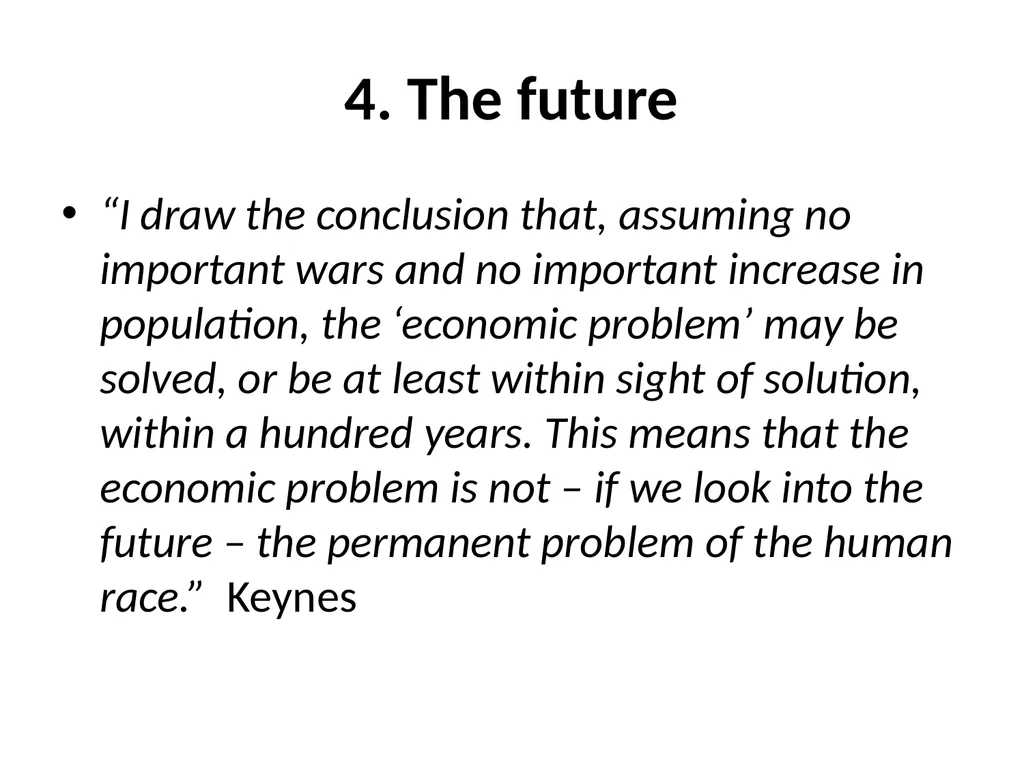
4. The future “I draw the conclusion that, assuming no important wars and no important increase in population, the ‘economic problem’ may be solved, or be at least within sight of solution, within a hundred years. This means that the economic problem is not – if we look into the future – the permanent problem of the human race.” Keynes<br>
29
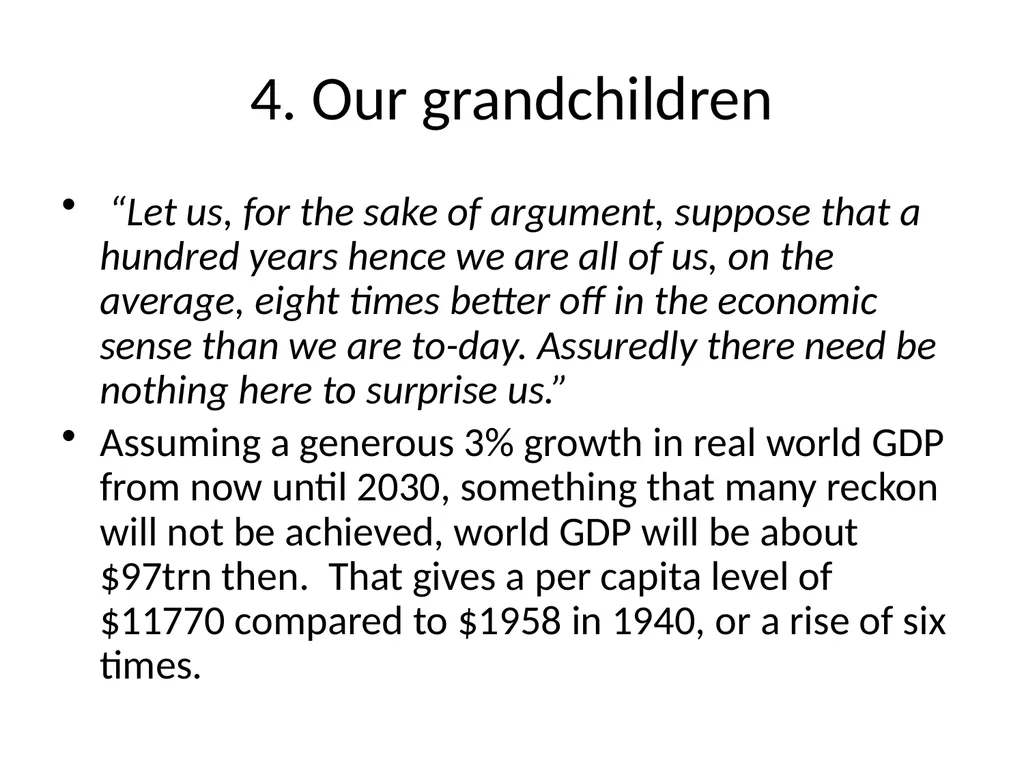
4. Our grandchildren “Let us, for the sake of argument, suppose that a hundred years hence we are all of us, on the average, eight times better off in the economic sense than we are to-day. Assuredly there need be nothing here to surprise us.”
Assuming a generous 3% growth in real world GDP from now until 2030, something that many reckon will not be achieved, world GDP will be about $97trn then. That gives a per capita level of $11770 compared to $1958 in 1940, or a rise of six times.<br>
Assuming a generous 3% growth in real world GDP from now until 2030, something that many reckon will not be achieved, world GDP will be about $97trn then. That gives a per capita level of $11770 compared to $1958 in 1940, or a rise of six times.<br>
30
4. Our grandchildren UK GDP is currently below four times the 1930 level of output. To hit Keynes’ target, it has to double again in the next 15 years, to $80,000. The chances of this are slim. Even if GDP per head grows as fast as it did between 1992 and 2008, it would still take until around 2054.<br>
31
4. The future: leisure or toil? “for the first time since his creation man will be faced with his real, his permanent problem – how to use his freedom from pressing economic cares, how to occupy the leisure, which science and compound interest will have won for him, to live wisely and agreeably and well.” Keynes 15 –hour week
1930: average working life: 100,000 hours
2015: average working life: 100,000 hours<br>
1930: average working life: 100,000 hours
2015: average working life: 100,000 hours<br>
32
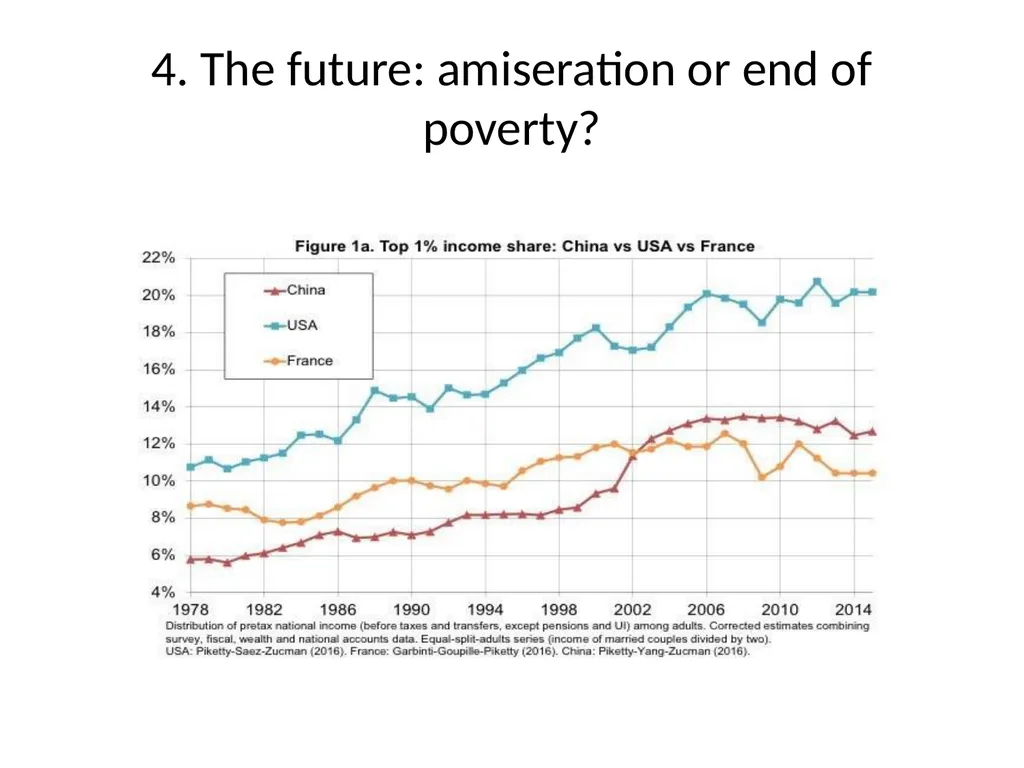
4. The future: amiseration or end of poverty?<br>
33
4. Management not control “It is not the ownership of the instruments of production which it is important for the State to assume. If the State is able to determine the aggregate amount of resources devoted to augmenting the instruments and the basic rate of reward to those who own them, it will have accomplished all that is necessary.”
Keynes GT<br>
Keynes GT<br>
34
4. The important difference “In the old days, the mill owner owned the mill and decided what went on [there]. Today, you and I own the mill. But who decides what goes on? It’s not us. That’s the important difference.”
“inequality has not always risen. The main feature has been a growing concentration and centralisation of wealth, not income. And it has been in the wealth held in means of production and not just household wealth”
Anthony Atkinson<br>
“inequality has not always risen. The main feature has been a growing concentration and centralisation of wealth, not income. And it has been in the wealth held in means of production and not just household wealth”
Anthony Atkinson<br>
35
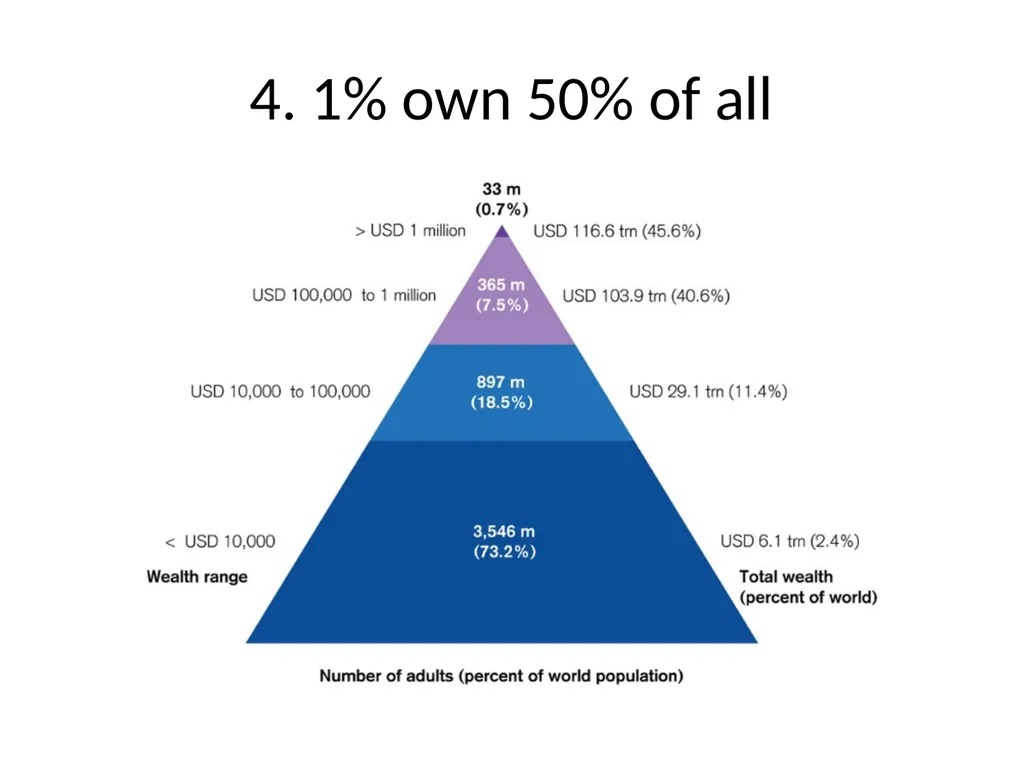
4. 1% own 50% of all<br>
36
4. The future:
financialisation or euthanasia? a dominant core of 147 firms through interlocking stakes in others together control 40% of the wealth in the GLOBAL network. A total of 737 companies control 80% of it all. This is the inequality that matters for the functioning of capitalism – the concentrated power of capital.
The Swiss Federal Institute of Technology<br>
The Swiss Federal Institute of Technology<br>
37
4. Keynes: defence of capital “the class war will find me on the side of the educated bourgeoisie.”
Socialism “is, in fact, little better than a dusty survival of a plan to meet the problems of fifty years ago, based on a misunderstanding of what someone said a hundred years ago.”<br>
Socialism “is, in fact, little better than a dusty survival of a plan to meet the problems of fifty years ago, based on a misunderstanding of what someone said a hundred years ago.”<br>
38
Capitalism is best “For the most part, I think that Capitalism, wisely managed, can probably be made more efficient for attaining economic ends than any alternative system yet in sight, but that in itself it is in many ways extremely objectionable. Our problem is to work out a social organisation which shall be as efficient as possible without offending our notions of a satisfactory way of life.” Keynes<br>
39
4. Obsolescence of capitalism “Beyond a certain point, the development of the powers of production becomes a barrier for capital; hence the capital relation a barrier for the development of the productive powers of labour … The growing incompatibility between the productive development of society and its hitherto existing relations of production expresses itself in bitter contradictions, crises, spasms. The violent destruction of capital not by relations external to it, but rather as a condition of its self-preservation, is the most striking form in which advice is given to it to be gone and to give room to a higher state of social production.” (Marx, Grundrisse, 1857)<br>
40
4. Transient The monopoly of capital becomes a fetter upon the mode of production, which has sprung up and flourished along with, and under it. Centralization of the means of production and socialization of labour at last reach a point where they become incompatible with their capitalist integument. This integument is burst asunder. The knell of capitalist private property sounds. The expropriators are expropriated.”
(Ch. 32: “Historical Tendency of Capitalist Accumulation”)<br>
(Ch. 32: “Historical Tendency of Capitalist Accumulation”)<br>
41
4. The future: the climate “What cared the Spanish planters in Cuba, who burned down forests on the slopes of the mountains and obtained from the ashes sufficient fertilizer for one generation of very highly profitable coffee trees–what cared they that the heavy tropical rainfall afterwards washed away the unprotected upper stratum of the soil, leaving behind only bare rock!” Engels<br>