
Maternal & Child Health Indicator Prof. Dr. Rabea






Description: Maternal Child Health Indicator Prof. Dr. Rabea M. Ali 1.Reduction in maternal, perinatal, infant and childhood Mortality Morbidity. 2.Promotion of reproductive health. 3.Promotion of physical and psychological development of child and
Related Topics
Download Presentation
"Maternal & Child Health Indicator Prof. Dr. Rabea" is the property of its rightful owner. Permission is granted to download and print the materials on this website for personal, non-commercial use only, and to display it on your personal computer provided you do not modify the materials and that you retain all copyright notices contained in the materials. By downloading content from our website, you accept the terms of this agreement.
Presentation Transcript
slide1. Maternal & Child
Health Indicator
Prof. Dr. Rabea M. Ali<br>
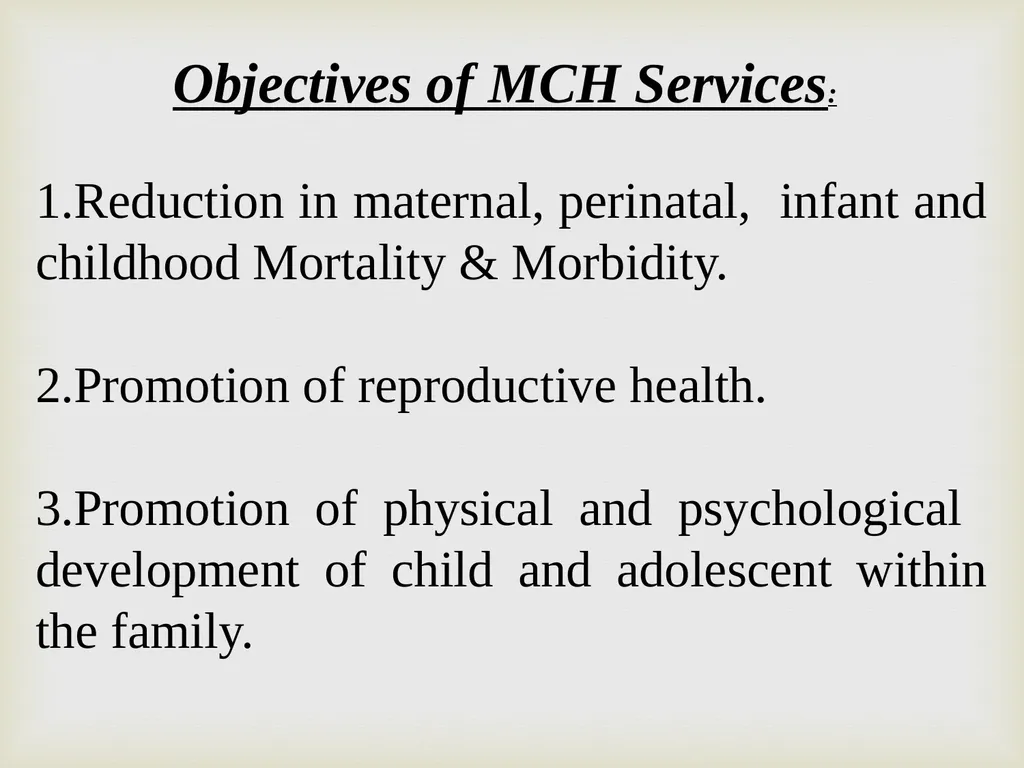
slide2. 1.Reduction in maternal, perinatal, infant and childhood Mortality & Morbidity.
2.Promotion of reproductive health.
3.Promotion of physical and psychological development of child and adolescent within the family. Objectives of MCH Services:<br>
slide3. Maternal and child health indicator:
1. Mortality indicators
2. Morbidity indicators<br>
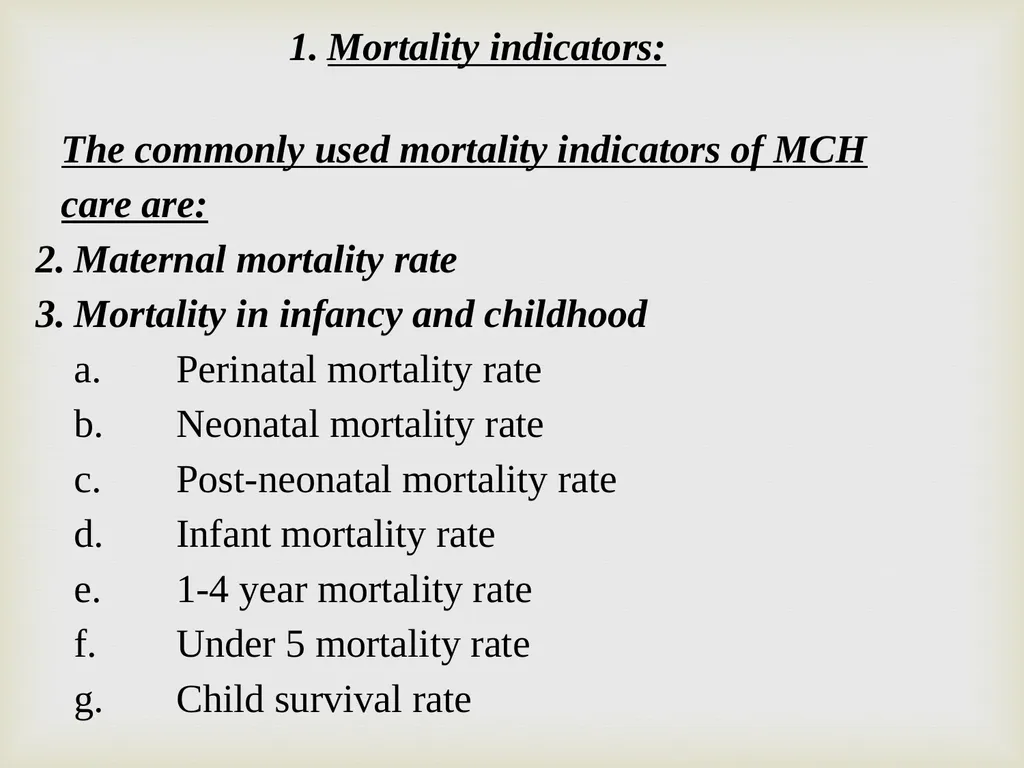
slide4. Mortality indicators:
The commonly used mortality indicators of MCH care are:
Maternal mortality rate
Mortality in infancy and childhood a. Perinatal mortality rate b. Neonatal mortality rate c. Post-neonatal mortality rate d. Infant mortality rate e. 1-4 year mortality rate f. Under 5 mortality rate g. Child survival rate<br>
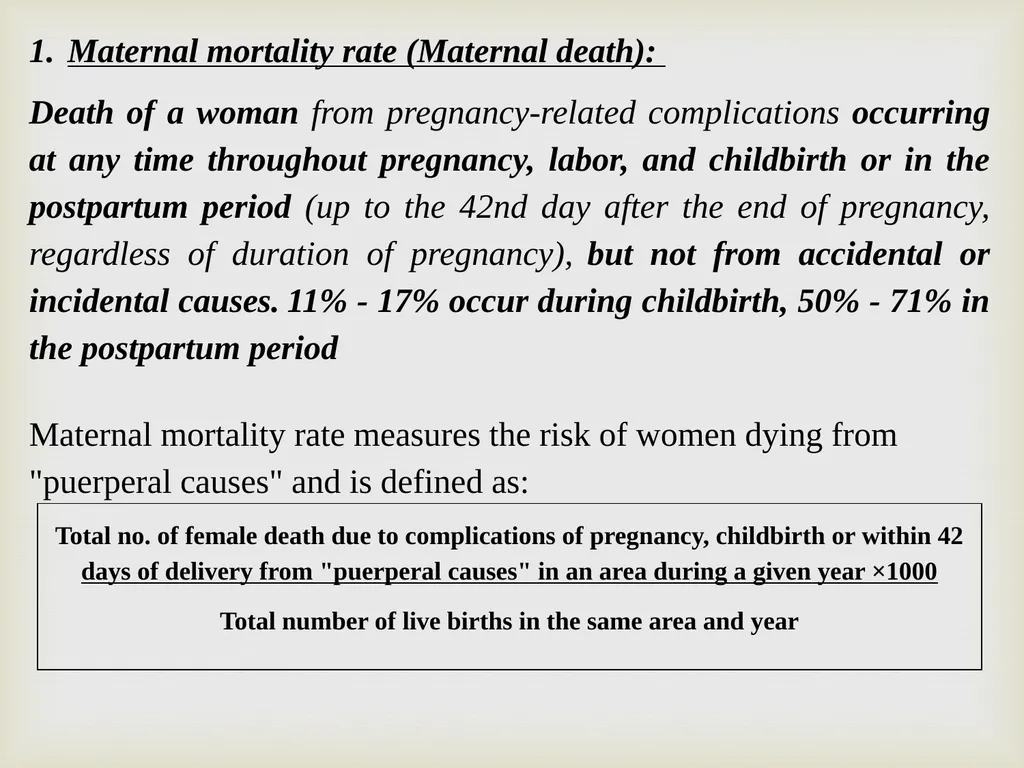
slide5. Maternal mortality rate (Maternal death):
Death of a woman from pregnancy-related complications occurring at any time throughout pregnancy, labor, and childbirth or in the postpartum period (up to the 42nd day after the end of pregnancy, regardless of duration of pregnancy), but not from accidental or incidental causes. 11% - 17% occur during childbirth, 50% - 71% in the postpartum period Maternal mortality rate measures the risk of women dying from "puerperal causes" and is defined as:
Total no. of female death due to complications of pregnancy, childbirth or within 42 days of delivery from "puerperal causes" in an area during a given year ×1000
Total number of live births in the same area and year<br>
slide6. Other definitions
Late maternal death: is the death of a woman from direct or indirect obstetric causes more than 42 days but less than one year after termination of pregnancy.
Pregnancy-related death: is the death of a woman while pregnant or within 42 days of termination of pregnancy, irrespective of the cause of death<br>
slide7. The International Classification of Diseases (ICD) has recommended that maternal deaths may be aggregated into two groups:
Direct obstetric deaths: those resulting from obstetric complications of the pregnant state (pregnancy, labor and puerperium), from interventions, omissions, incorrect treatment.
2. Indirect obstetric deaths: those resulting from previous existing disease or disease that developed during pregnancy and which was not due to direct obstetric causes, but which was aggravated by physiological effects of pregnancy.<br>
slide8. Causes of Maternal mortality (MM)
1-Obstetric causes:
Toxemias of pregnancy
Hemorrhage
Infection
Obstructed labor
Abortion
2-Non –obstetric causes:
Anemia
Associated diseases e.g cardiac, renal ,infectious
Malignancy
accidents<br>
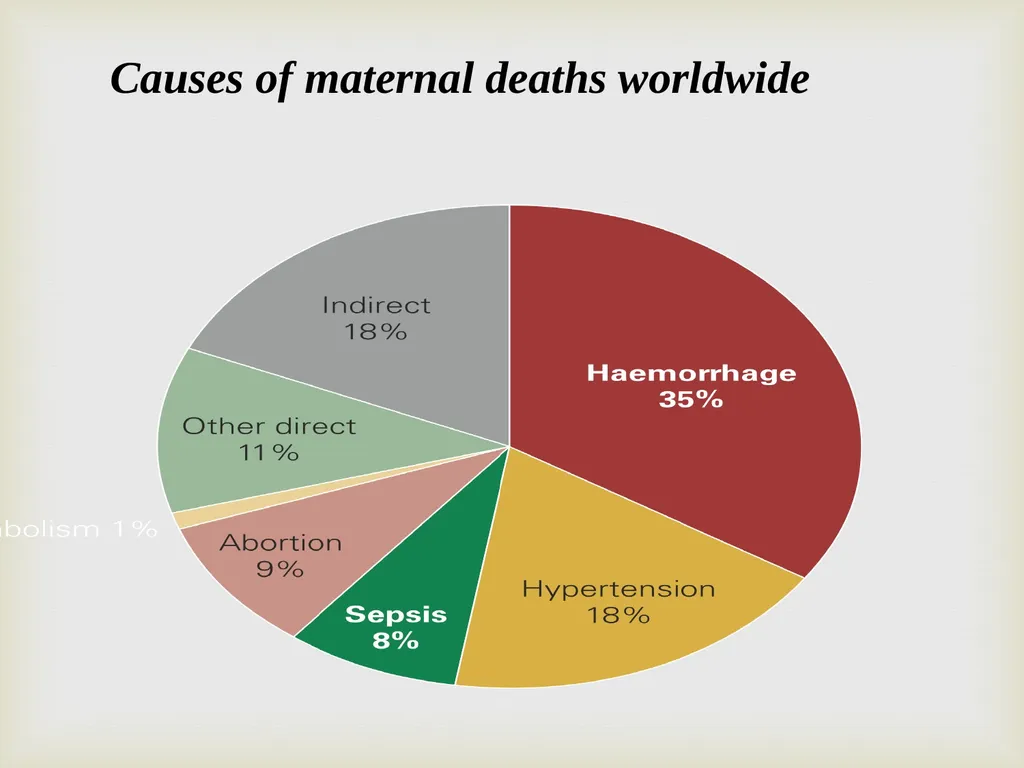
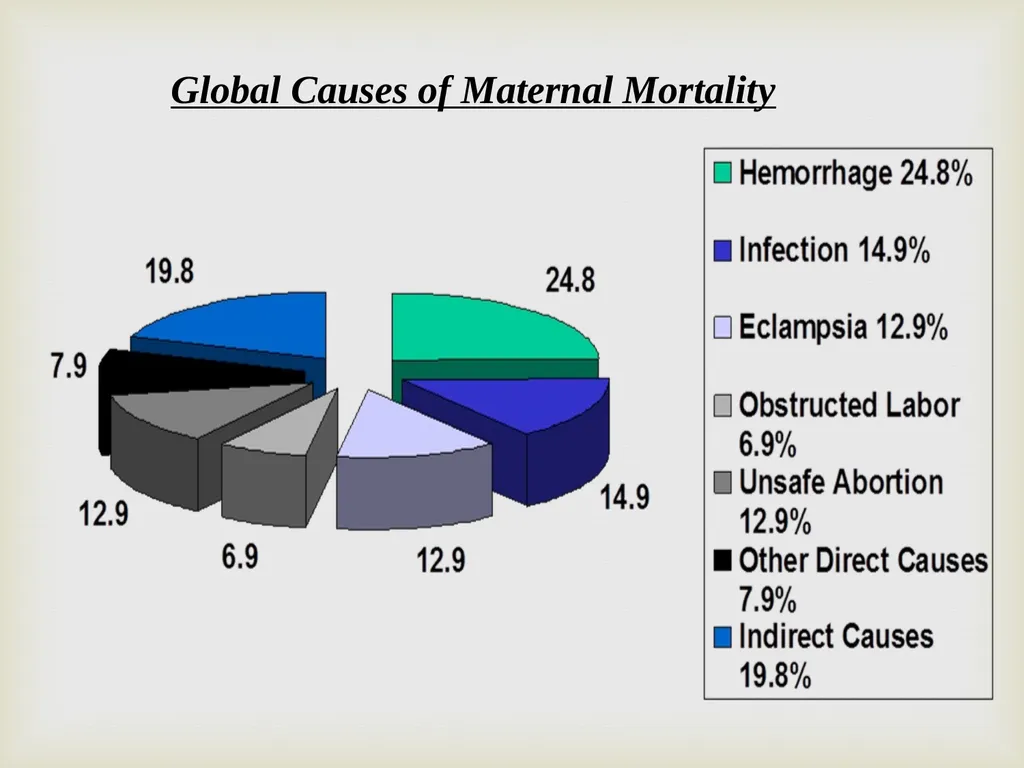
slide9. Causes of maternal deaths worldwide<br>
slide10. Global Causes of Maternal Mortality<br>
slide11. Social factors of MM:
Age at child birth
Shortage of health manpower
Delivery by untrained midwives
Poor communications
Social customs Too close pregnancies
Family size
Malnutrition
Poverty
Illiteracy
Ignorance
Lack of maternity services<br>
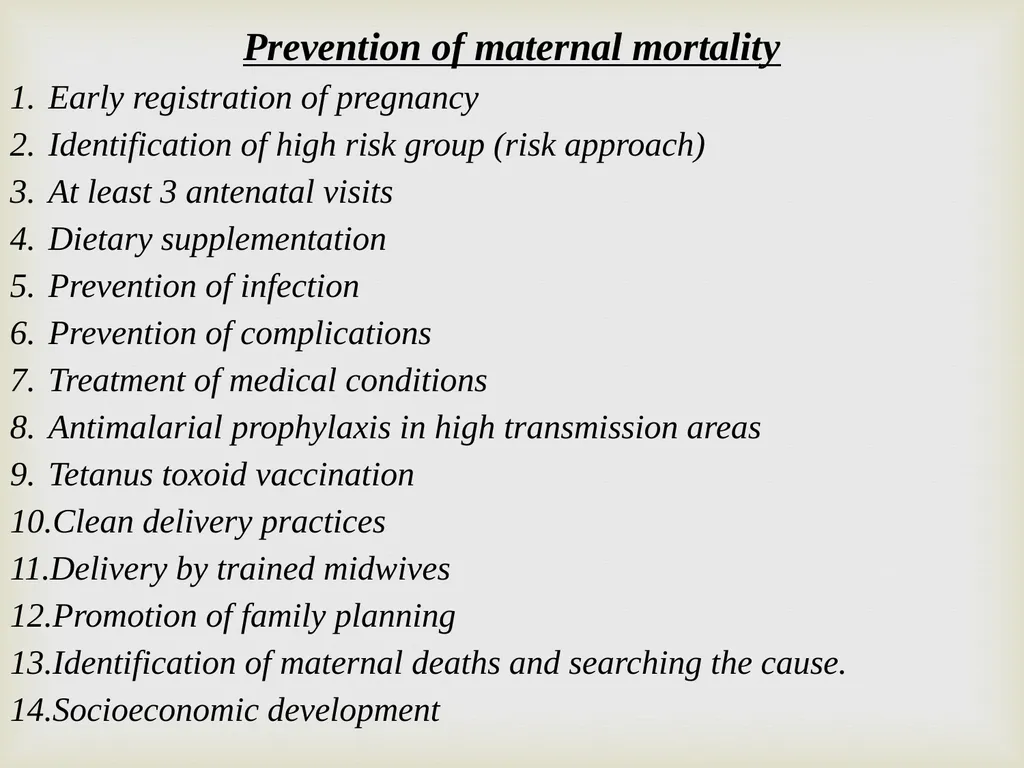
slide12. Prevention of maternal mortality
Early registration of pregnancy
Identification of high risk group (risk approach)
At least 3 antenatal visits
Dietary supplementation
Prevention of infection
Prevention of complications
Treatment of medical conditions
Antimalarial prophylaxis in high transmission areas
Tetanus toxoid vaccination
Clean delivery practices
Delivery by trained midwives
Promotion of family planning
Identification of maternal deaths and searching the cause.
Socioeconomic development<br>
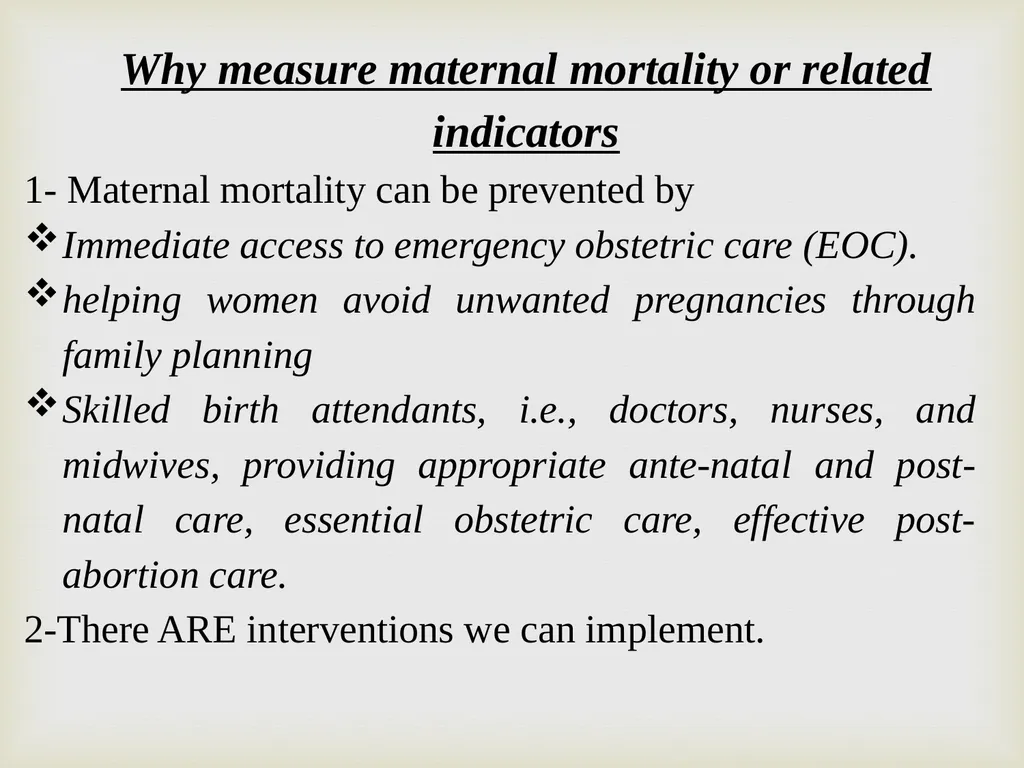
slide13. Why measure maternal mortality or related indicators
1- Maternal mortality can be prevented by
Immediate access to emergency obstetric care (EOC).
helping women avoid unwanted pregnancies through family planning
Skilled birth attendants, i.e., doctors, nurses, and midwives, providing appropriate ante-natal and post-natal care, essential obstetric care, effective post-abortion care.
2-There ARE interventions we can implement.<br>
slide14. WHY a woman dies during pregnancy
Multiple factors affect why a woman dies during pregnancy Three Delays Model 1. Delay in decision to seek care
Lack of understanding of complications
Acceptance of maternal death
Low status of women
Socio-cultural barriers to seeking care
2. Delay in reaching care
Mountains, islands, rivers — poor organization
3. Delay in receiving care
Supplies, personnel
Poorly trained personnel with punitive attitude
Finances<br>
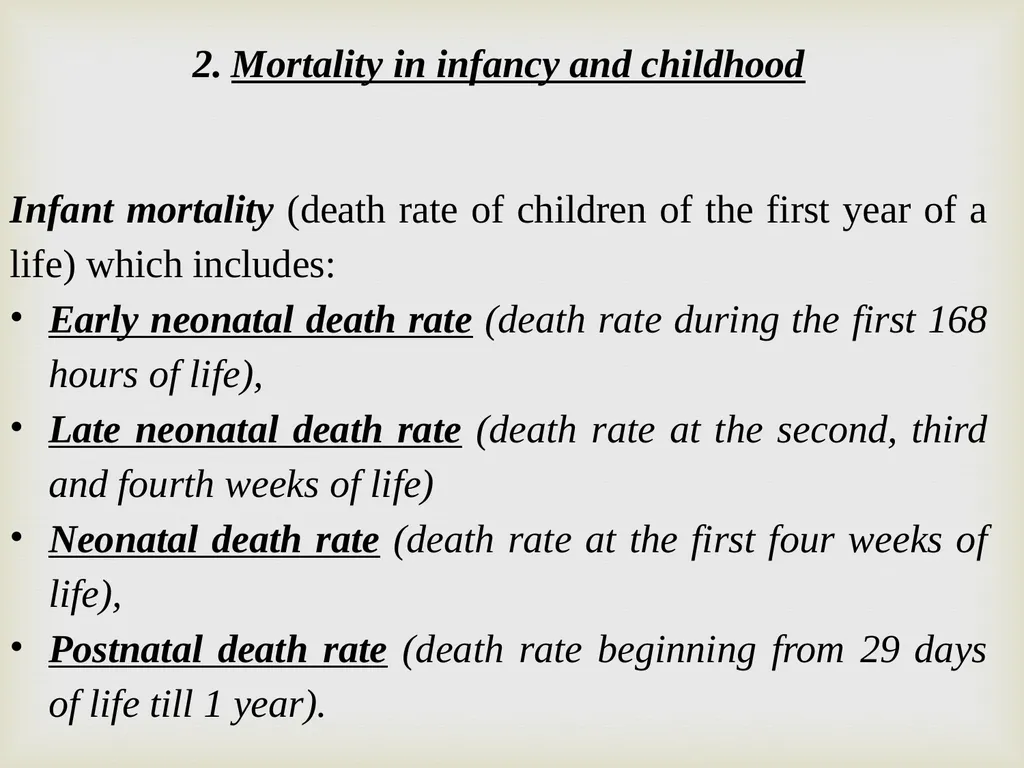
slide15. Mortality in infancy and childhood
Infant mortality (death rate of children of the first year of a life) which includes:
Early neonatal death rate (death rate during the first 168 hours of life),
Late neonatal death rate (death rate at the second, third and fourth weeks of life)
Neonatal death rate (death rate at the first four weeks of life),
Postnatal death rate (death rate beginning from 29 days of life till 1 year).<br>
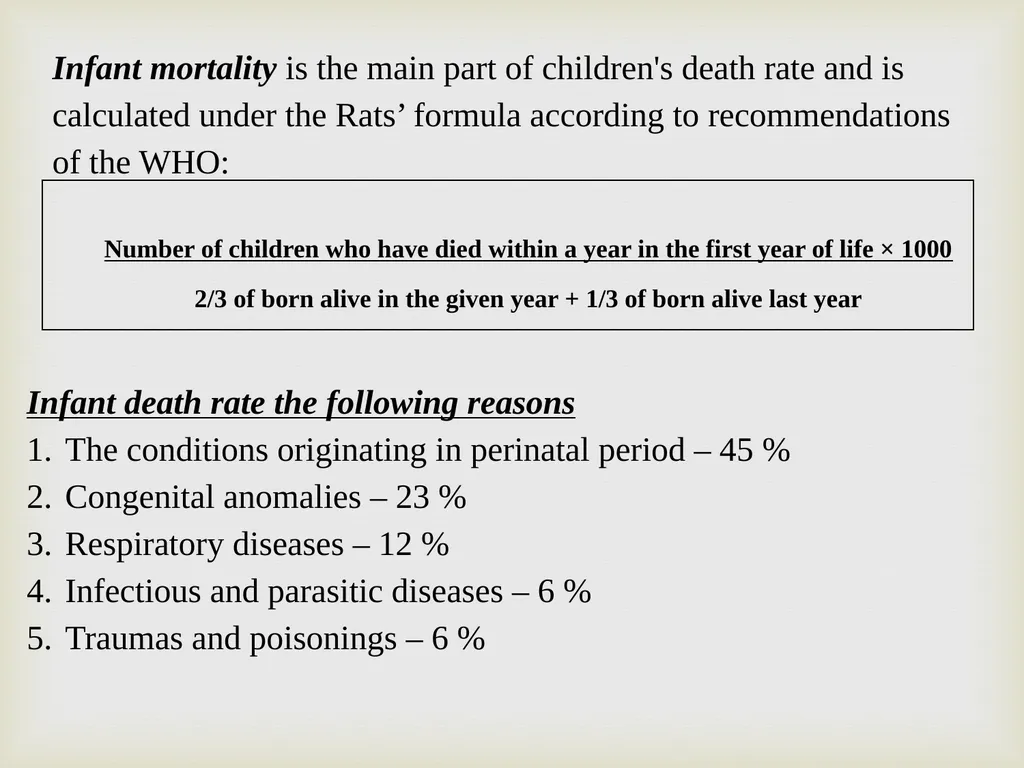
slide16. Infant mortality is the main part of children's death rate and is calculated under the Rats’ formula according to recommendations of the WHO:
Number of children who have died within a year in the first year of life × 1000
2/3 of born alive in the given year + 1/3 of born alive last year
Infant death rate the following reasons
The conditions originating in perinatal period – 45 %
Congenital anomalies – 23 %
Respiratory diseases – 12 %
Infectious and parasitic diseases – 6 %
Traumas and poisonings – 6 %<br>
slide17. Perinatal death rate
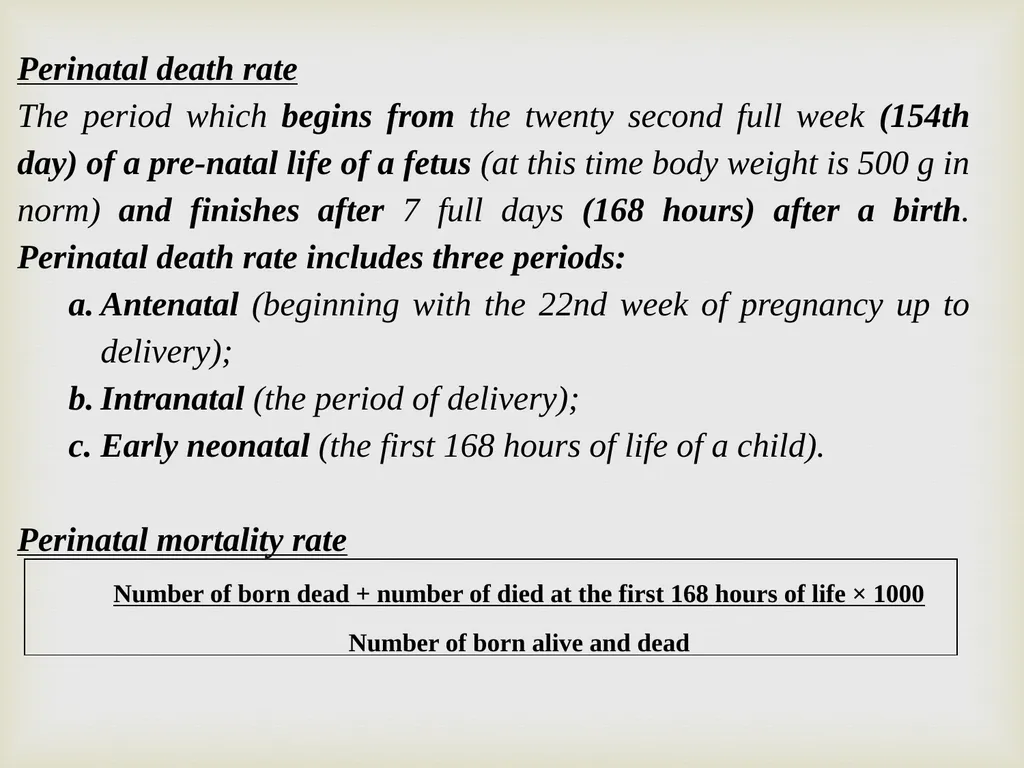
The period which begins from the twenty second full week (154th day) of a pre-natal life of a fetus (at this time body weight is 500 g in norm) and finishes after 7 full days (168 hours) after a birth. Perinatal death rate includes three periods:
Antenatal (beginning with the 22nd week of pregnancy up to delivery);
Intranatal (the period of delivery);
Early neonatal (the first 168 hours of life of a child).
Perinatal mortality rate
Number of born dead + number of died at the first 168 hours of life × 1000
Number of born alive and dead<br>
slide18. Causes of Perinatal Mortality
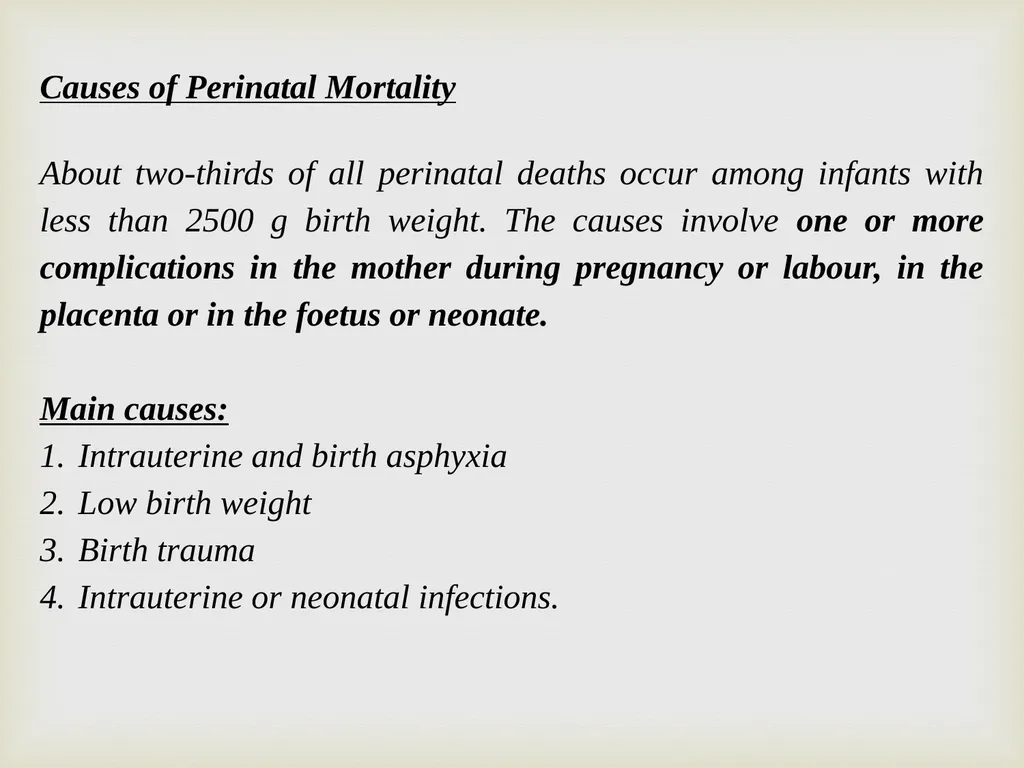
About two-thirds of all perinatal deaths occur among infants with less than 2500 g birth weight. The causes involve one or more complications in the mother during pregnancy or labour, in the placenta or in the foetus or neonate.
Main causes:
Intrauterine and birth asphyxia
Low birth weight
Birth trauma
Intrauterine or neonatal infections.<br>
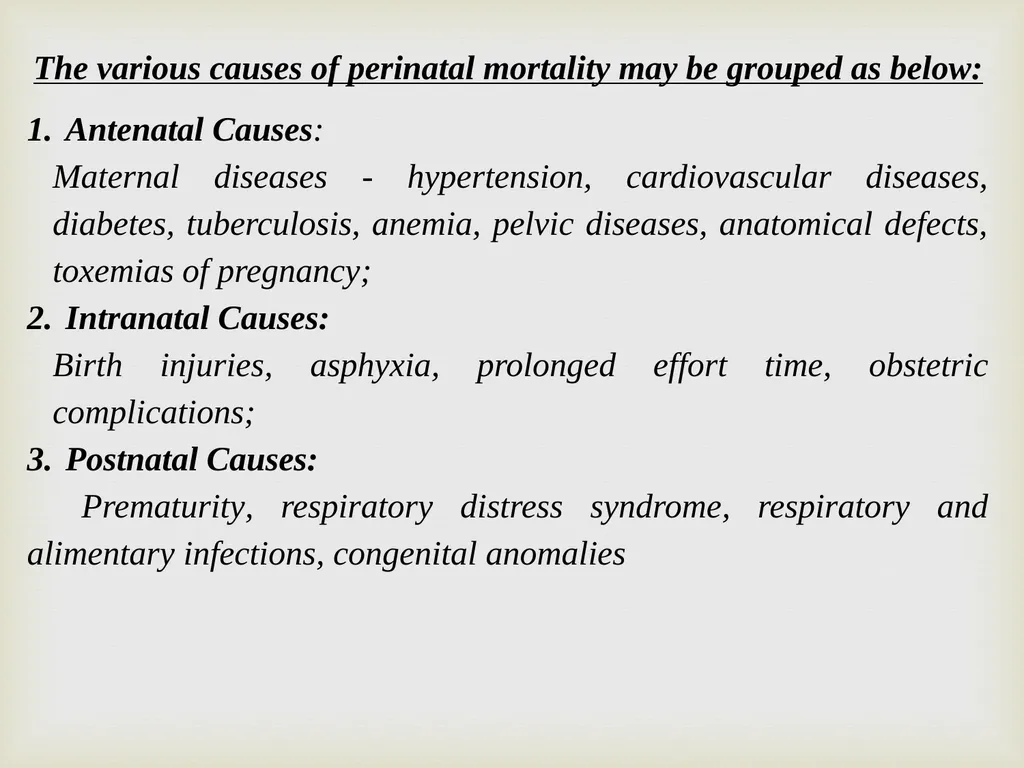
slide19. The various causes of perinatal mortality may be grouped as below:
Antenatal Causes:
Maternal diseases - hypertension, cardiovascular diseases, diabetes, tuberculosis, anemia, pelvic diseases, anatomical defects, toxemias of pregnancy;
Intranatal Causes:
Birth injuries, asphyxia, prolonged effort time, obstetric complications;
Postnatal Causes:
Prematurity, respiratory distress syndrome, respiratory and alimentary infections, congenital anomalies<br>
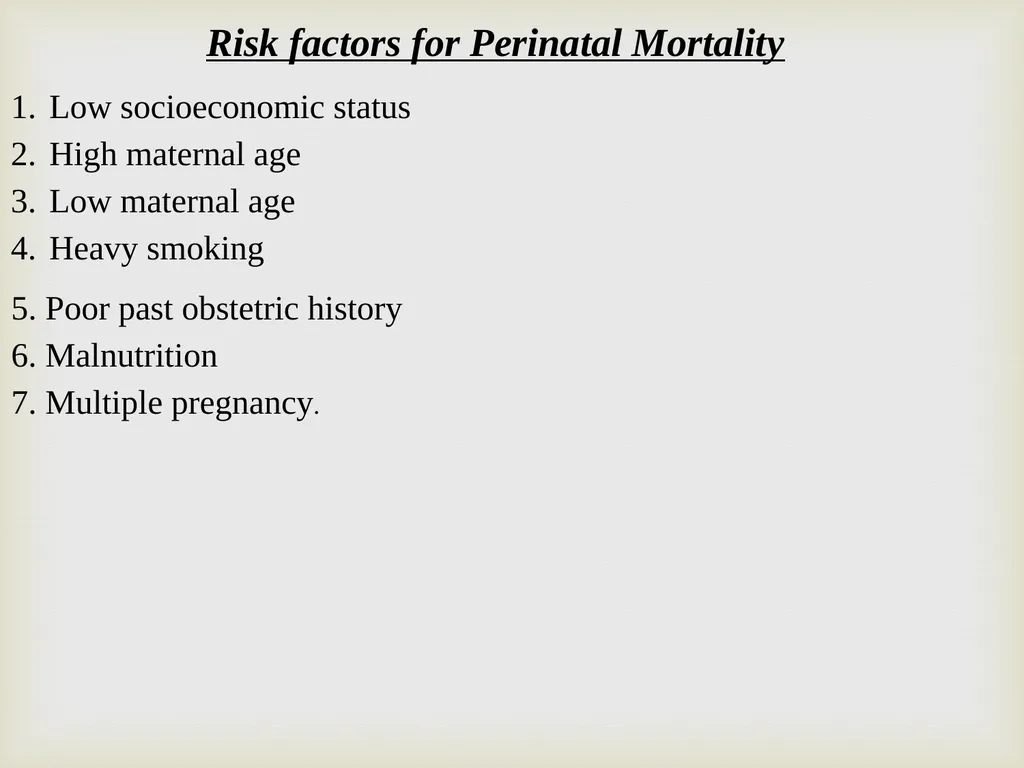
slide20. Risk factors for Perinatal Mortality
Low socioeconomic status
High maternal age
Low maternal age
Heavy smoking 5. Poor past obstetric history
6. Malnutrition
7. Multiple pregnancy.<br>
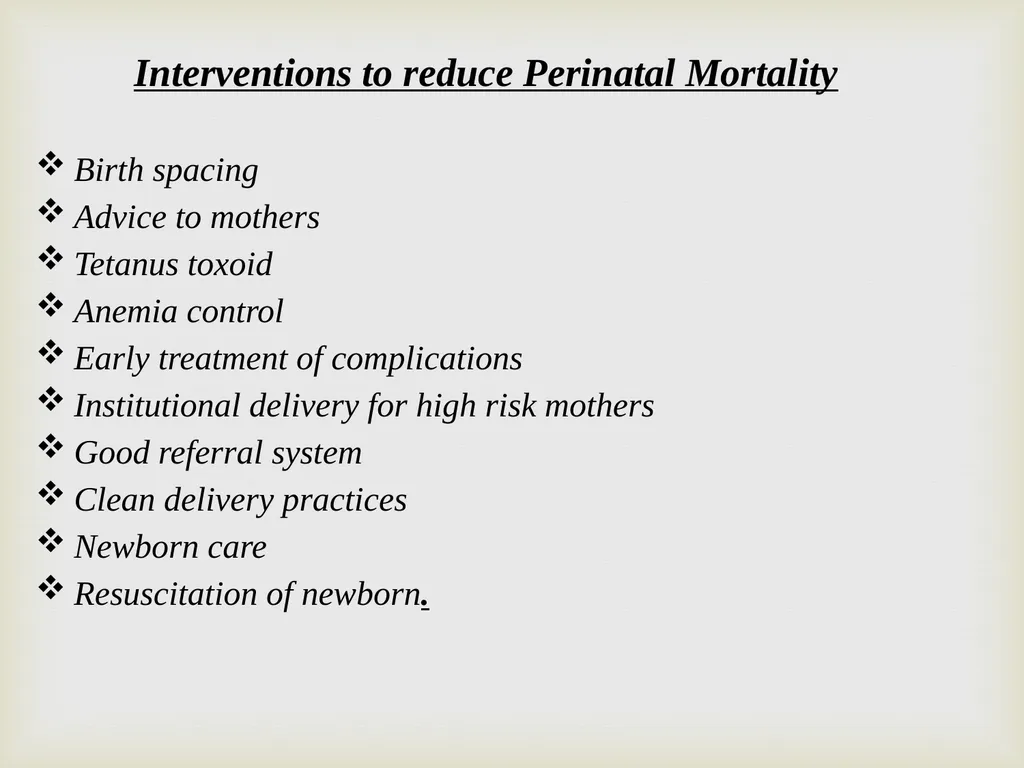
slide21. Interventions to reduce Perinatal Mortality
Birth spacing
Advice to mothers
Tetanus toxoid
Anemia control
Early treatment of complications
Institutional delivery for high risk mothers
Good referral system
Clean delivery practices
Newborn care
Resuscitation of newborn.<br>
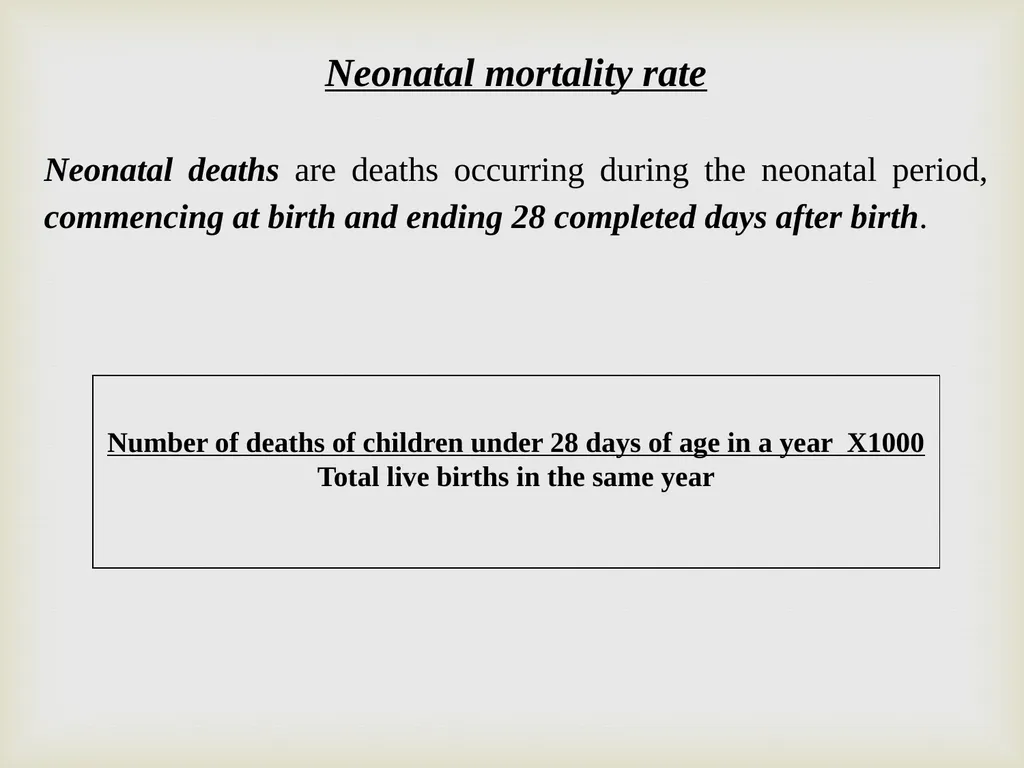
slide22. Neonatal mortality rate
Neonatal deaths are deaths occurring during the neonatal period, commencing at birth and ending 28 completed days after birth.
Number of deaths of children under 28 days of age in a year X1000
Total live births in the same year<br>
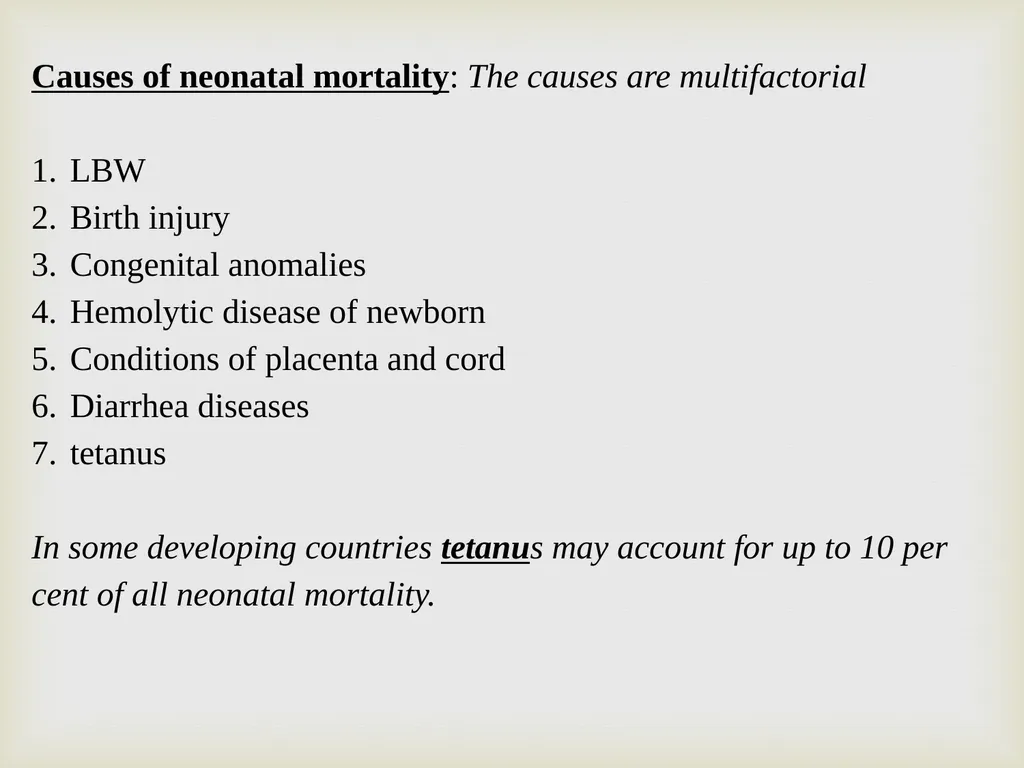
slide23. Causes of neonatal mortality: The causes are multifactorial
LBW
Birth injury
Congenital anomalies
Hemolytic disease of newborn
Conditions of placenta and cord
Diarrhea diseases
tetanus
In some developing countries tetanus may account for up to 10 per cent of all neonatal mortality.<br>
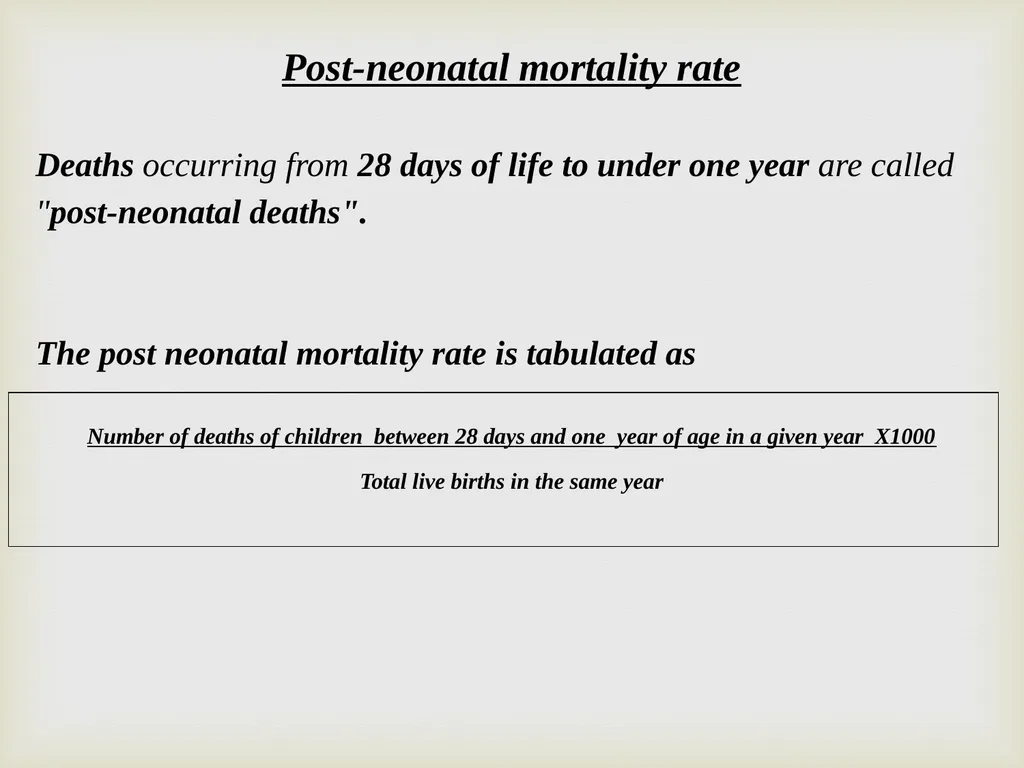
slide24. Post-neonatal mortality rate
Deaths occurring from 28 days of life to under one year are called "post-neonatal deaths".
The post neonatal mortality rate is tabulated as
Number of deaths of children between 28 days and one year of age in a given year X1000
Total live births in the same year<br>
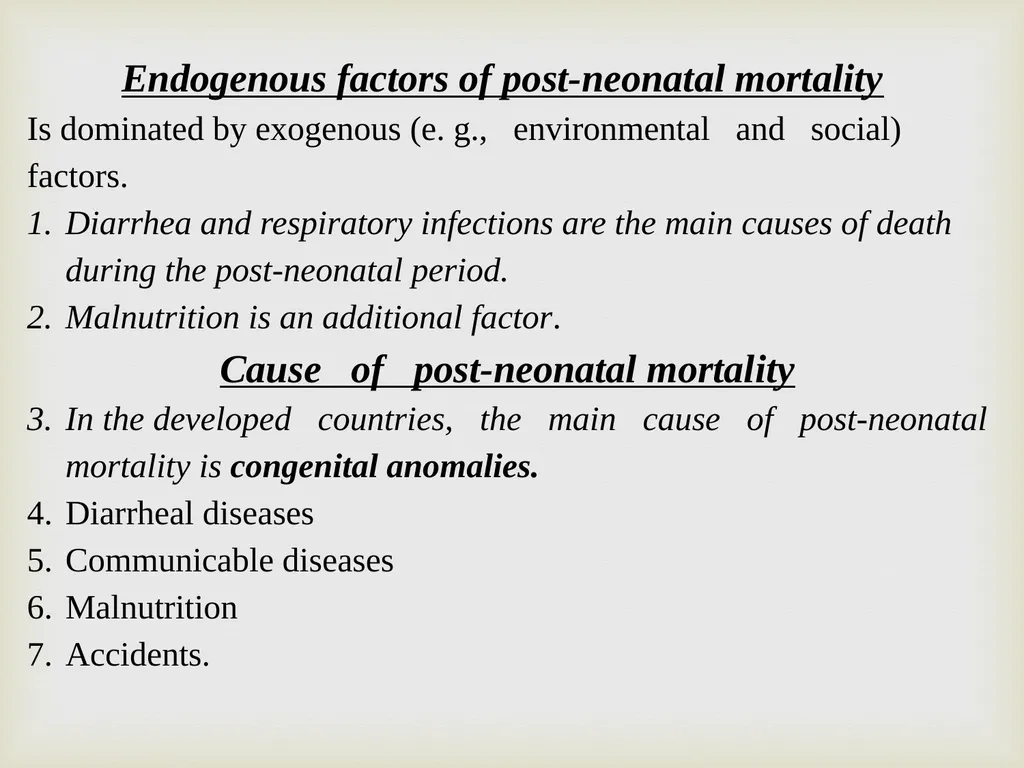
slide25. Endogenous factors of post-neonatal mortality
Is dominated by exogenous (e. g., environmental and social) factors.
Diarrhea and respiratory infections are the main causes of death during the post-neonatal period.
Malnutrition is an additional factor.
Cause of post-neonatal mortality
In the developed countries, the main cause of post-neonatal mortality is congenital anomalies.
Diarrheal diseases
Communicable diseases
Malnutrition
Accidents.<br>
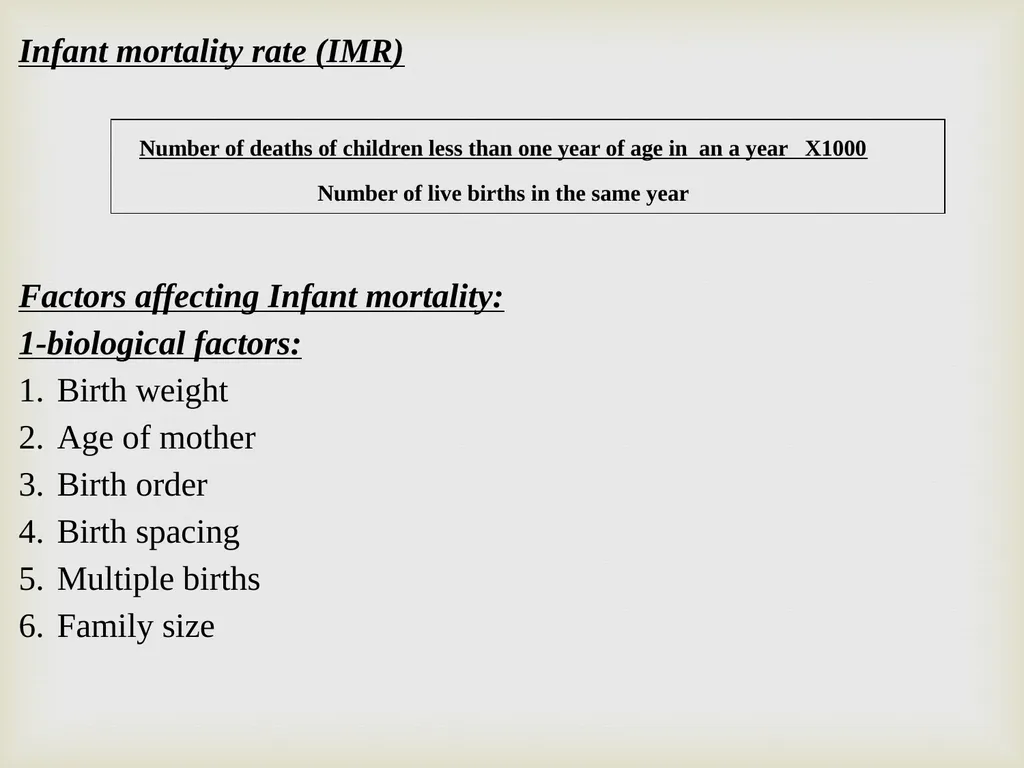
slide26. Infant mortality rate (IMR)
Number of deaths of children less than one year of age in an a year X1000
Number of live births in the same year
Factors affecting Infant mortality:
1-biological factors:
Birth weight
Age of mother
Birth order
Birth spacing
Multiple births
Family size<br>
slide27. 2-economic factors
3-cultural and social factors
breast feeding
early marriage
quality of mothering
maternal education
quality of health care
illegitimate babies
untrained midwives
bad environmental sanitation<br>
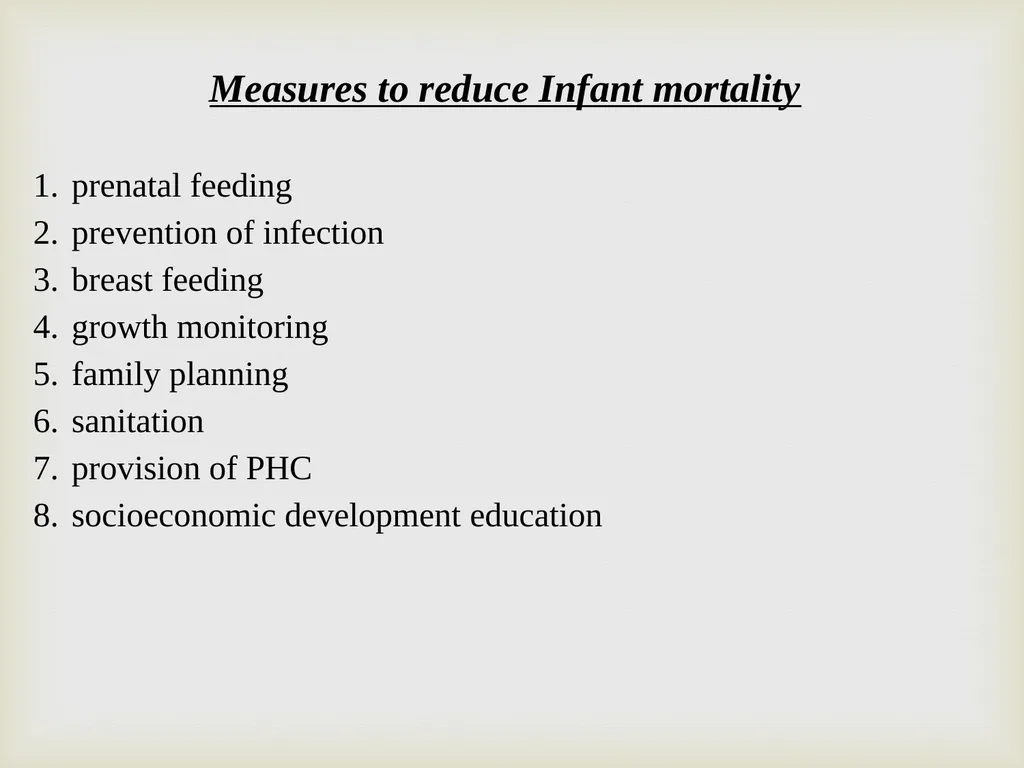
slide28. Measures to reduce Infant mortality
prenatal feeding
prevention of infection
breast feeding
growth monitoring
family planning
sanitation
provision of PHC
socioeconomic development education<br>
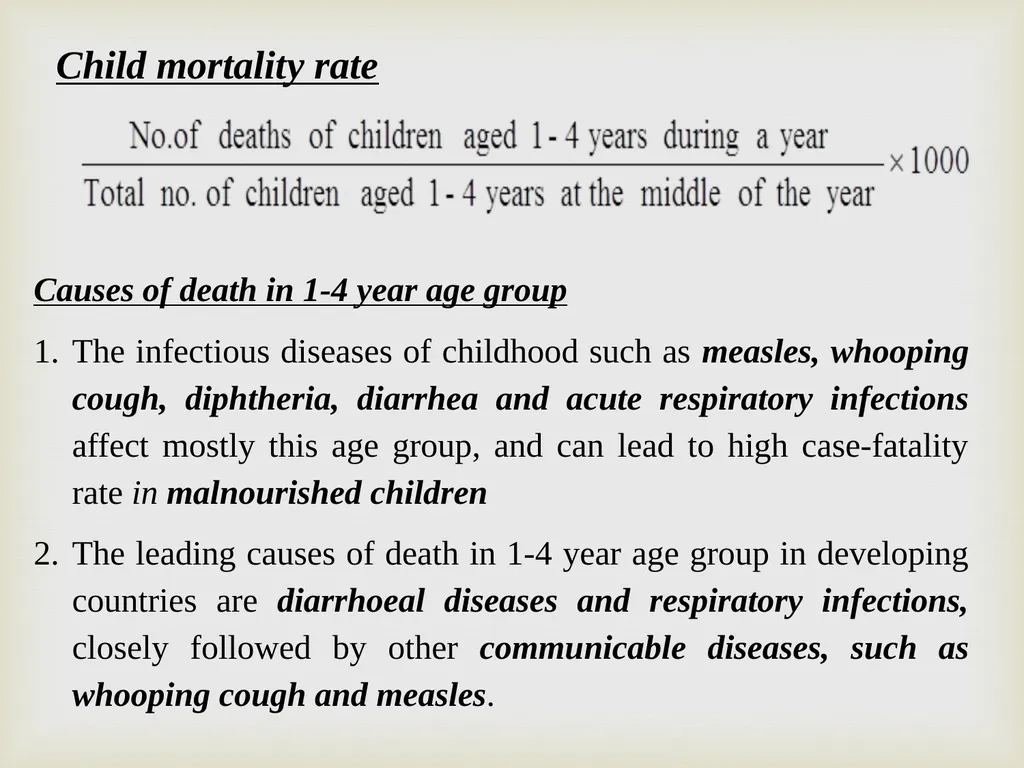
slide29. Child mortality rate Causes of death in 1-4 year age group
The infectious diseases of childhood such as measles, whooping cough, diphtheria, diarrhea and acute respiratory infections affect mostly this age group, and can lead to high case-fatality rate in malnourished children
The leading causes of death in 1-4 year age group in developing countries are diarrhoeal diseases and respiratory infections, closely followed by other communicable diseases, such as whooping cough and measles.<br>
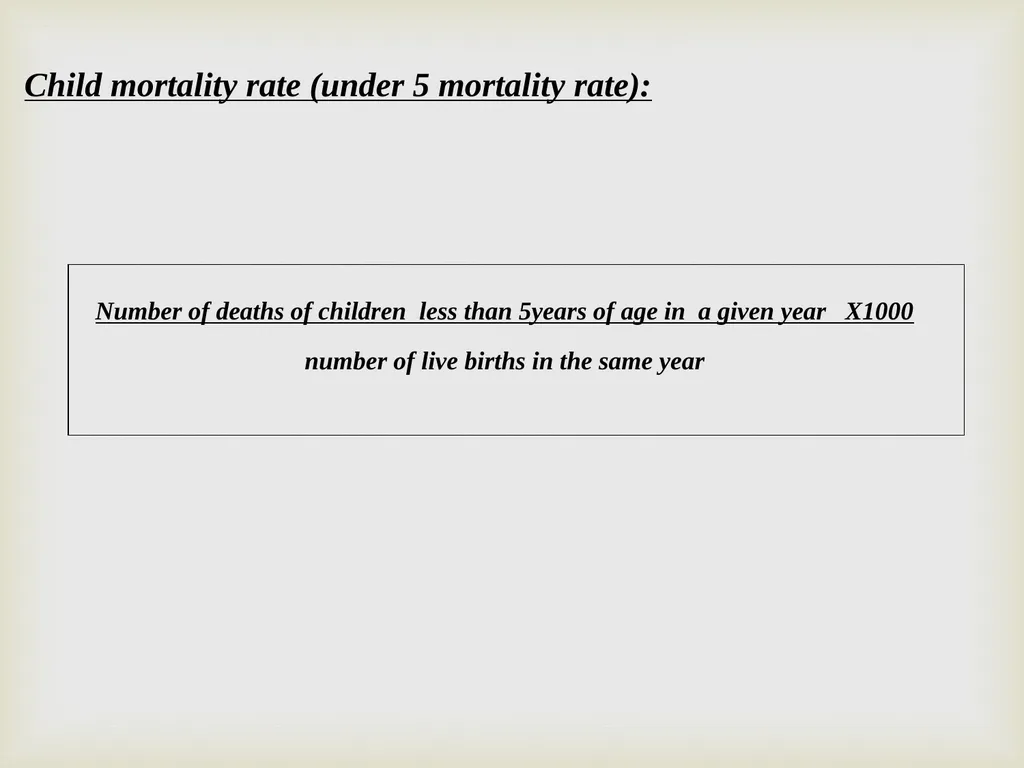
slide30. Child mortality rate (under 5 mortality rate):
Number of deaths of children less than 5years of age in a given year X1000
number of live births in the same year<br>
slide31. Thank you<br>
Health Indicator
Prof. Dr. Rabea M. Ali<br>
slide2. 1.Reduction in maternal, perinatal, infant and childhood Mortality & Morbidity.
2.Promotion of reproductive health.
3.Promotion of physical and psychological development of child and adolescent within the family. Objectives of MCH Services:<br>
slide3. Maternal and child health indicator:
1. Mortality indicators
2. Morbidity indicators<br>
slide4. Mortality indicators:
The commonly used mortality indicators of MCH care are:
Maternal mortality rate
Mortality in infancy and childhood a. Perinatal mortality rate b. Neonatal mortality rate c. Post-neonatal mortality rate d. Infant mortality rate e. 1-4 year mortality rate f. Under 5 mortality rate g. Child survival rate<br>
slide5. Maternal mortality rate (Maternal death):
Death of a woman from pregnancy-related complications occurring at any time throughout pregnancy, labor, and childbirth or in the postpartum period (up to the 42nd day after the end of pregnancy, regardless of duration of pregnancy), but not from accidental or incidental causes. 11% - 17% occur during childbirth, 50% - 71% in the postpartum period Maternal mortality rate measures the risk of women dying from "puerperal causes" and is defined as:
Total no. of female death due to complications of pregnancy, childbirth or within 42 days of delivery from "puerperal causes" in an area during a given year ×1000
Total number of live births in the same area and year<br>
slide6. Other definitions
Late maternal death: is the death of a woman from direct or indirect obstetric causes more than 42 days but less than one year after termination of pregnancy.
Pregnancy-related death: is the death of a woman while pregnant or within 42 days of termination of pregnancy, irrespective of the cause of death<br>
slide7. The International Classification of Diseases (ICD) has recommended that maternal deaths may be aggregated into two groups:
Direct obstetric deaths: those resulting from obstetric complications of the pregnant state (pregnancy, labor and puerperium), from interventions, omissions, incorrect treatment.
2. Indirect obstetric deaths: those resulting from previous existing disease or disease that developed during pregnancy and which was not due to direct obstetric causes, but which was aggravated by physiological effects of pregnancy.<br>
slide8. Causes of Maternal mortality (MM)
1-Obstetric causes:
Toxemias of pregnancy
Hemorrhage
Infection
Obstructed labor
Abortion
2-Non –obstetric causes:
Anemia
Associated diseases e.g cardiac, renal ,infectious
Malignancy
accidents<br>
slide9. Causes of maternal deaths worldwide<br>
slide10. Global Causes of Maternal Mortality<br>
slide11. Social factors of MM:
Age at child birth
Shortage of health manpower
Delivery by untrained midwives
Poor communications
Social customs Too close pregnancies
Family size
Malnutrition
Poverty
Illiteracy
Ignorance
Lack of maternity services<br>
slide12. Prevention of maternal mortality
Early registration of pregnancy
Identification of high risk group (risk approach)
At least 3 antenatal visits
Dietary supplementation
Prevention of infection
Prevention of complications
Treatment of medical conditions
Antimalarial prophylaxis in high transmission areas
Tetanus toxoid vaccination
Clean delivery practices
Delivery by trained midwives
Promotion of family planning
Identification of maternal deaths and searching the cause.
Socioeconomic development<br>
slide13. Why measure maternal mortality or related indicators
1- Maternal mortality can be prevented by
Immediate access to emergency obstetric care (EOC).
helping women avoid unwanted pregnancies through family planning
Skilled birth attendants, i.e., doctors, nurses, and midwives, providing appropriate ante-natal and post-natal care, essential obstetric care, effective post-abortion care.
2-There ARE interventions we can implement.<br>
slide14. WHY a woman dies during pregnancy
Multiple factors affect why a woman dies during pregnancy Three Delays Model 1. Delay in decision to seek care
Lack of understanding of complications
Acceptance of maternal death
Low status of women
Socio-cultural barriers to seeking care
2. Delay in reaching care
Mountains, islands, rivers — poor organization
3. Delay in receiving care
Supplies, personnel
Poorly trained personnel with punitive attitude
Finances<br>
slide15. Mortality in infancy and childhood
Infant mortality (death rate of children of the first year of a life) which includes:
Early neonatal death rate (death rate during the first 168 hours of life),
Late neonatal death rate (death rate at the second, third and fourth weeks of life)
Neonatal death rate (death rate at the first four weeks of life),
Postnatal death rate (death rate beginning from 29 days of life till 1 year).<br>
slide16. Infant mortality is the main part of children's death rate and is calculated under the Rats’ formula according to recommendations of the WHO:
Number of children who have died within a year in the first year of life × 1000
2/3 of born alive in the given year + 1/3 of born alive last year
Infant death rate the following reasons
The conditions originating in perinatal period – 45 %
Congenital anomalies – 23 %
Respiratory diseases – 12 %
Infectious and parasitic diseases – 6 %
Traumas and poisonings – 6 %<br>
slide17. Perinatal death rate
The period which begins from the twenty second full week (154th day) of a pre-natal life of a fetus (at this time body weight is 500 g in norm) and finishes after 7 full days (168 hours) after a birth. Perinatal death rate includes three periods:
Antenatal (beginning with the 22nd week of pregnancy up to delivery);
Intranatal (the period of delivery);
Early neonatal (the first 168 hours of life of a child).
Perinatal mortality rate
Number of born dead + number of died at the first 168 hours of life × 1000
Number of born alive and dead<br>
slide18. Causes of Perinatal Mortality
About two-thirds of all perinatal deaths occur among infants with less than 2500 g birth weight. The causes involve one or more complications in the mother during pregnancy or labour, in the placenta or in the foetus or neonate.
Main causes:
Intrauterine and birth asphyxia
Low birth weight
Birth trauma
Intrauterine or neonatal infections.<br>
slide19. The various causes of perinatal mortality may be grouped as below:
Antenatal Causes:
Maternal diseases - hypertension, cardiovascular diseases, diabetes, tuberculosis, anemia, pelvic diseases, anatomical defects, toxemias of pregnancy;
Intranatal Causes:
Birth injuries, asphyxia, prolonged effort time, obstetric complications;
Postnatal Causes:
Prematurity, respiratory distress syndrome, respiratory and alimentary infections, congenital anomalies<br>
slide20. Risk factors for Perinatal Mortality
Low socioeconomic status
High maternal age
Low maternal age
Heavy smoking 5. Poor past obstetric history
6. Malnutrition
7. Multiple pregnancy.<br>
slide21. Interventions to reduce Perinatal Mortality
Birth spacing
Advice to mothers
Tetanus toxoid
Anemia control
Early treatment of complications
Institutional delivery for high risk mothers
Good referral system
Clean delivery practices
Newborn care
Resuscitation of newborn.<br>
slide22. Neonatal mortality rate
Neonatal deaths are deaths occurring during the neonatal period, commencing at birth and ending 28 completed days after birth.
Number of deaths of children under 28 days of age in a year X1000
Total live births in the same year<br>
slide23. Causes of neonatal mortality: The causes are multifactorial
LBW
Birth injury
Congenital anomalies
Hemolytic disease of newborn
Conditions of placenta and cord
Diarrhea diseases
tetanus
In some developing countries tetanus may account for up to 10 per cent of all neonatal mortality.<br>
slide24. Post-neonatal mortality rate
Deaths occurring from 28 days of life to under one year are called "post-neonatal deaths".
The post neonatal mortality rate is tabulated as
Number of deaths of children between 28 days and one year of age in a given year X1000
Total live births in the same year<br>
slide25. Endogenous factors of post-neonatal mortality
Is dominated by exogenous (e. g., environmental and social) factors.
Diarrhea and respiratory infections are the main causes of death during the post-neonatal period.
Malnutrition is an additional factor.
Cause of post-neonatal mortality
In the developed countries, the main cause of post-neonatal mortality is congenital anomalies.
Diarrheal diseases
Communicable diseases
Malnutrition
Accidents.<br>
slide26. Infant mortality rate (IMR)
Number of deaths of children less than one year of age in an a year X1000
Number of live births in the same year
Factors affecting Infant mortality:
1-biological factors:
Birth weight
Age of mother
Birth order
Birth spacing
Multiple births
Family size<br>
slide27. 2-economic factors
3-cultural and social factors
breast feeding
early marriage
quality of mothering
maternal education
quality of health care
illegitimate babies
untrained midwives
bad environmental sanitation<br>
slide28. Measures to reduce Infant mortality
prenatal feeding
prevention of infection
breast feeding
growth monitoring
family planning
sanitation
provision of PHC
socioeconomic development education<br>
slide29. Child mortality rate Causes of death in 1-4 year age group
The infectious diseases of childhood such as measles, whooping cough, diphtheria, diarrhea and acute respiratory infections affect mostly this age group, and can lead to high case-fatality rate in malnourished children
The leading causes of death in 1-4 year age group in developing countries are diarrhoeal diseases and respiratory infections, closely followed by other communicable diseases, such as whooping cough and measles.<br>
slide30. Child mortality rate (under 5 mortality rate):
Number of deaths of children less than 5years of age in a given year X1000
number of live births in the same year<br>
slide31. Thank you<br>