Meaningful Conversations A program for TLs Meaningful Conversations TO BE VIEWED IN SLIDESHOW MODE Objective The objective of this program is to equip Team Leaders with skills to conduct meaningful conversations with their team members in
"Meaningful Conversations – A program for TLs" is the property of its rightful owner. Permission is granted to
download and print the materials on this website for personal, non-commercial use only, and to display it
on your personal computer provided you do not modify the materials and that you retain all copyright
notices contained in the materials. By downloading content from our website, you accept the terms of this
agreement.
Presentation Transcript
01
Meaningful Conversations – A program for TLs Meaningful Conversations TO BE VIEWED IN SLIDESHOW MODE<br>
02
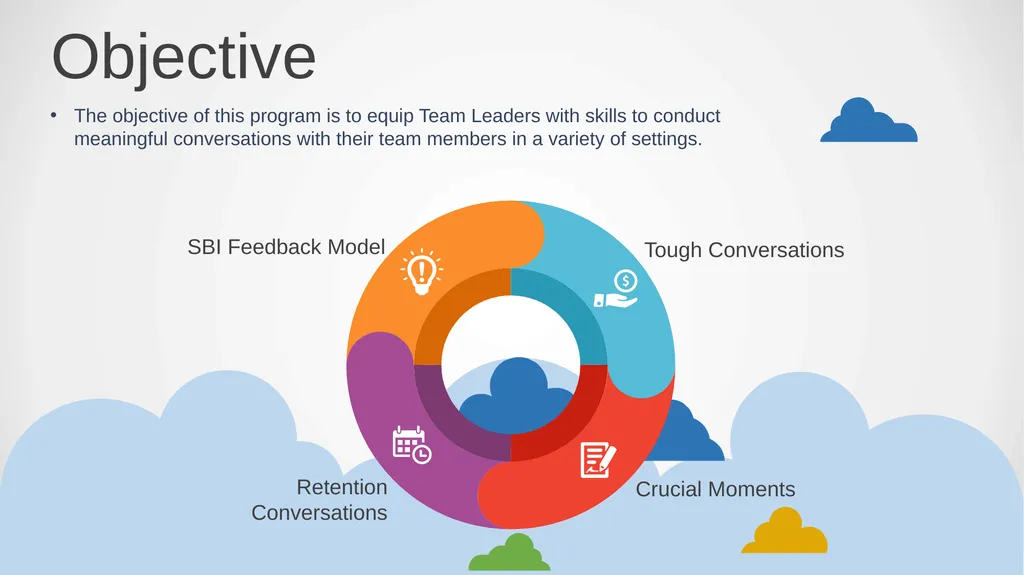
Objective The objective of this program is to equip Team Leaders with skills to conduct meaningful conversations with their team members in a variety of settings.<br>
03
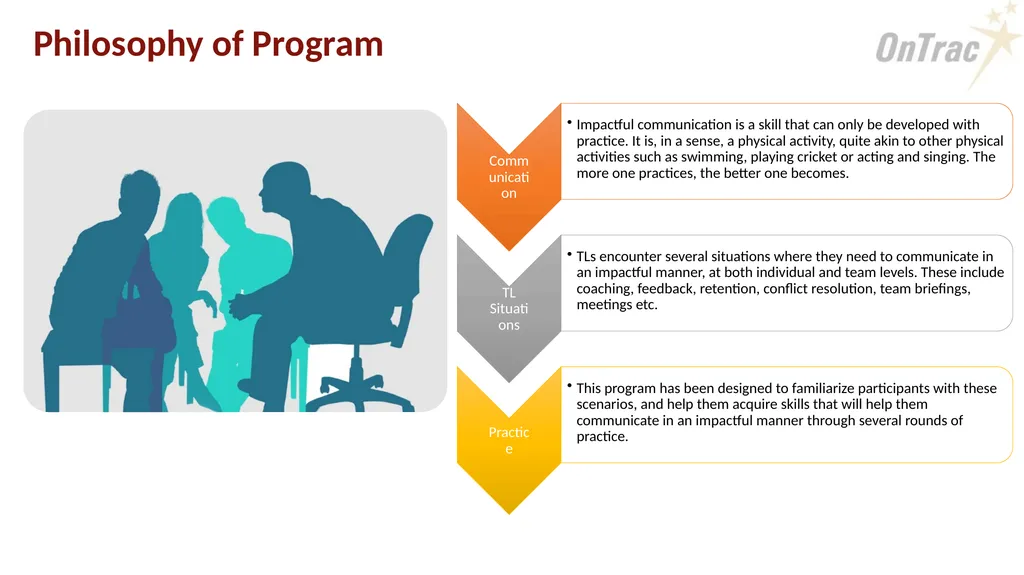
Philosophy of Program<br>
04
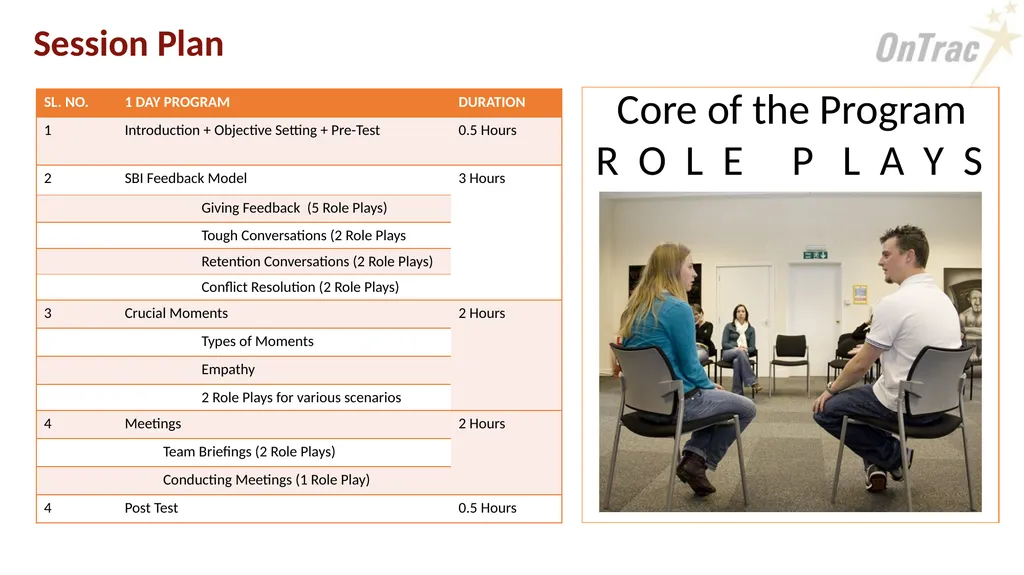
Session Plan<br>
05
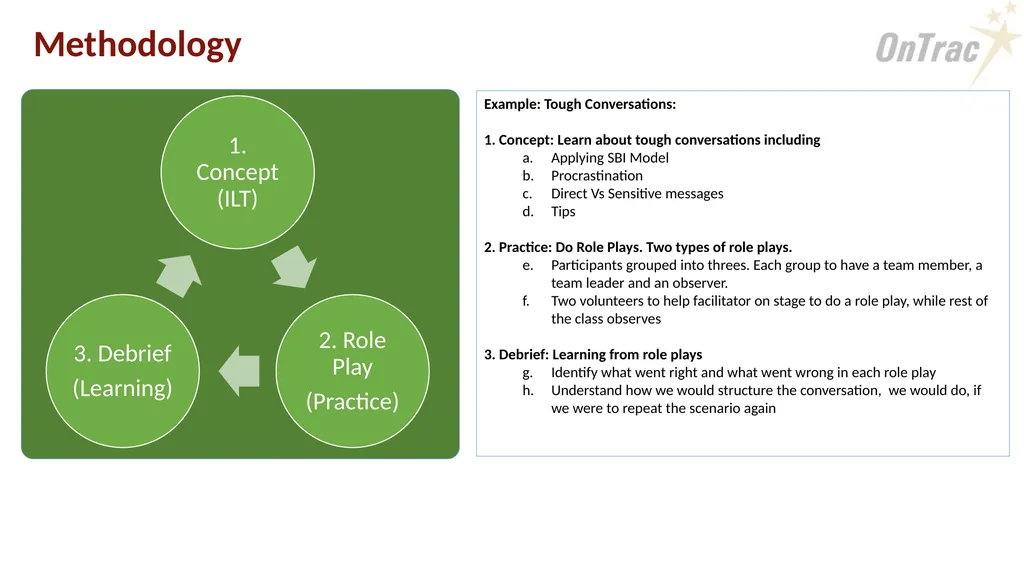
Methodology Example: Tough Conversations:
1. Concept: Learn about tough conversations including
Applying SBI Model
Procrastination
Direct Vs Sensitive messages
Tips
2. Practice: Do Role Plays. Two types of role plays.
Participants grouped into threes. Each group to have a team member, a team leader and an observer.
Two volunteers to help facilitator on stage to do a role play, while rest of the class observes
3. Debrief: Learning from role plays
Identify what went right and what went wrong in each role play
Understand how we would structure the conversation, we would do, if we were to repeat the scenario again<br>
06
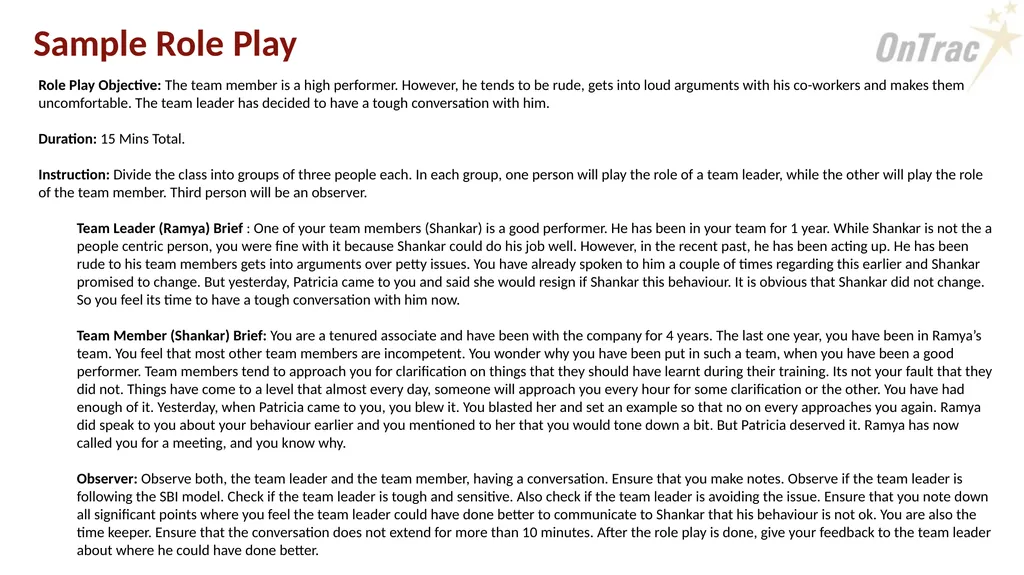
Sample Role Play Role Play Objective: The team member is a high performer. However, he tends to be rude, gets into loud arguments with his co-workers and makes them uncomfortable. The team leader has decided to have a tough conversation with him.
Duration: 15 Mins Total.
Instruction: Divide the class into groups of three people each. In each group, one person will play the role of a team leader, while the other will play the role of the team member. Third person will be an observer.
Team Leader (Ramya) Brief : One of your team members (Shankar) is a good performer. He has been in your team for 1 year. While Shankar is not the a people centric person, you were fine with it because Shankar could do his job well. However, in the recent past, he has been acting up. He has been rude to his team members gets into arguments over petty issues. You have already spoken to him a couple of times regarding this earlier and Shankar promised to change. But yesterday, Patricia came to you and said she would resign if Shankar this behaviour. It is obvious that Shankar did not change. So you feel its time to have a tough conversation with him now.
Team Member (Shankar) Brief: You are a tenured associate and have been with the company for 4 years. The last one year, you have been in Ramya’s team. You feel that most other team members are incompetent. You wonder why you have been put in such a team, when you have been a good performer. Team members tend to approach you for clarification on things that they should have learnt during their training. Its not your fault that they did not. Things have come to a level that almost every day, someone will approach you every hour for some clarification or the other. You have had enough of it. Yesterday, when Patricia came to you, you blew it. You blasted her and set an example so that no on every approaches you again. Ramya did speak to you about your behaviour earlier and you mentioned to her that you would tone down a bit. But Patricia deserved it. Ramya has now called you for a meeting, and you know why.
Observer: Observe both, the team leader and the team member, having a conversation. Ensure that you make notes. Observe if the team leader is following the SBI model. Check if the team leader is tough and sensitive. Also check if the team leader is avoiding the issue. Ensure that you note down all significant points where you feel the team leader could have done better to communicate to Shankar that his behaviour is not ok. You are also the time keeper. Ensure that the conversation does not extend for more than 10 minutes. After the role play is done, give your feedback to the team leader about where he could have done better.<br>