
Media organization • • • Unit I Media Organization






Description: Media organization Unit I Media Organization and Design: Some Conceptual Issues. Media as Business and Social Institution. Media entrepreneurship, Greiners Development Model of a company. Unit II Behavior in media Organization and
Related Topics
Download Presentation
"Media organization • • • Unit I Media Organization" is the property of its rightful owner. Permission is granted to download and print the materials on this website for personal, non-commercial use only, and to display it on your personal computer provided you do not modify the materials and that you retain all copyright notices contained in the materials. By downloading content from our website, you accept the terms of this agreement.
Presentation Transcript
slide1. Media organization<br>
slide2. • • • Unit I
Media Organization and Design: Some Conceptual Issues. Media as Business and Social Institution. Media entrepreneurship, Greiner's Development Model of a company.
Unit II
Behavior in media Organization and Organizational Behavior. Nature and Structure of different Media Organizations-AIR/DD, Private Satellite Channels, Production Houses, employment opportunities in Indian Media industry, Group Behavior, Innovation and Creativity, Culture of organization
Unit III
Economics of Media-Relationship between supplier and buyer, Leisure time activity, Cost Factors, Revenue Models, Market Factors, State of the Industry today.
Unit IV
Project Management in Media-Production Project Cycle (PPC), Management themes in production Process, Project Planning, Production Strategies, PPC in Practice-Initiation (Ideas, Evaluation and Assessment), Risk and Impact Assessment, Pre-production, Production Team, Project Specification, Project work plan, Sources of Funds, Budgeting (tols etc.) Project Responsibility, Production Process (status Report, Assessment, Negotiation, Completion, Follow-up.
Unit V
Programming Strategies, Audience Rating-Analyzing Programming and Audience Trends Marketing Programs arid selling space and time. Different kinds of contracts and legal arrangements, Project Management. Syllabus<br>
slide3. UNIT I Media Organization and Design: Some Conceptual Issues. Media as Business and Social Institution. Media entrepreneurship, Greiner's Development Model of a company.<br>
slide4. MASS MEDIA Mass media is a term used to denote the section of the media specifically conceived and designed to reach a very large audience such as the population of a nation state. It was coined in the 1920s with the advent of nationwide radio networks, mass-circulation newspapers and magazines
Media (the plural of "medium") refers to those organized means of dissemination of fact, opinion, entertainment, and other information, such as newspapers, magazines, out-of-home advertising, cinema films, radio, television, the World Wide Web, books, CDs, DVDs, videocassettes, computer games and other forms of publishing<br>
slide5. ORGANISATION An organization is a social arrangement which pursues collective goals, which controls its own performance, and which has a boundary separating it from its environment. The word itself is derived from the Greek word “organon” meaning tool.
"organization" is understood as planned, coordinated and purposeful action of human beings to construct or compile a common tangible or intangible product. This action is usually framed by formal membership and form (institutional rules).<br>
slide6. Some views of organisation:
Organisation is a system of structures and function.
Organisation is structure in action over time.
Organisation is an input/output system.
Organisation is a cultural product.
Organisation is a processing system.
Organisation is a structure of sub-groups.
Organisation is an exchange agent with its environment.<br>
slide7. MEDIA ORGANISATION The organisation involved in production, distribution and exhibition of content through mass media constitute a media organisation
It could be film production unit, television production company, advertising agency, PR agency, News paper agency, television channels, web portals etc.
These organisations are mainly involved in producing content for their audiences.<br>
slide8. Types of media Based on technology
electronic media, print media, new media
Based on reach National, regional, local
Based on function
News, entertainment, advertising<br>
slide9. WHO CONTROLS MEDIA ORGANIZATION
Media owners
The state and the law
Self regulation by media
Economic determinants
Advertisers
Audience
Media personals
Media sourses<br>
slide10. • MEDIA OWNERSHIP
Cross media ownership
different media(TV + Radio + News paper) owned by one owner( Eg: sun network – sun TV, Suryan FM, Dinakaran, Kungumam.)
Horizontal concentration
same media( Eg: news papers, magazines) owned by the same owner( Eg: times of india + economic times + navbharath times etc.) Vertical concentration
Where ownership control various media institutions like production houses, channels and distribution channels( Zee TV, Zee Telefilms, Zee City-cable)<br>
slide11. ORGANIZATION DESIGN
The term organizational design refers to the different parts of the organization and the separate elements that are brought together to create it, and considers how these fit together and ways in which they may be analyzed and improved. The design aspects include how the organization is structured the typed and numbers of jobs, and the process and procedures used to:
handle and pass information.
Make decisions.
Produce results.
Manage quality.
Communicate information.
Plan, develop and manage resources.
Innovate and handle crisis.<br>
slide12. Internal structure and dynamics
There are different sources of division within the boundaries of the organization.
One impact is the diversity of function like news, entertainment or advertising. Each section has different interests and they compete for status and finance.
Secondly, the personnel of M.O belong to different socio – economic backgrounds.<br>
slide13. Media organizational relationship
The M.O has some kind of relationship with the following
Society
With owners, suppliers and clients
Pressure groups (religious, political bodies)
Internal public
audience<br>
slide14. MEDIA AS BUSINESS OR SOCIAL INSTITUTION
Utilitarian organizations aims to produce or provide material goods or services for financial ends
Normative organizations aims to advance some value or achieve a valued condition, based on the voluntary commitment of its participants.<br>
slide15. Organization structure • Structure refers to the way the organization is organized and in particular to the grouping of function and lines of communication and control. It is the frame work which explain how an organizations resources are allocated and managed. These are usually shown as lines on an organization chart, commonly called a ‘family tree’ or an ‘organ gram’. This formal structure lays down who has the authority to make decisions and to whom individuals report. The informal structure is what happens in practice. Individuals may sometimes bypass the person they are supposed to report to or vice versa. The main purpose of the structure is to ensure that the organization is designed in the best way to achieve its goal and objectives. While structure exists in organization of all sizes, issues relating to its design become significant when a certain size and complexity are reached, this can happen even at a very early stage.<br>
slide16. Purpose of the organization structure
To support the organizations strategy.
To organize resources in the most efficient and effective way.
To provide for the effective division of tasks and accountabilities among individuals and groups.
To ensure effective coordination of the organization’s activity and classify the decision making processes.
To enhance the clarity of the lines of communication up, down and across the organization.
To allow for the effective monitoring and review of the organization activities.
To provide mechanism for coping with change in markets products and the intervals external environment.
To facilitate the handling of crisis and problems.
To help to motivate, manage and give job satisfaction to individual members of the organization.
To provide for management succession.<br>
slide17. Effects of poor organization structure:
Poor motivation and morale.
Ineffective decision – making
A lack of co-ordination and control.
No adherence to corporate objectives
Poor communication
Divisiveness & lack of co-ordination, with everyone trying to protect their own domains.
Higher costs and inefficiency
An ability to respond effectively to changing conditions or to innovate
Duplication of certain activities & possibly failure to undertake others.
Failure to provide suitable opportunities for the development of future manager.<br>
slide18. Media organization levels of analysis:
The main levels and associated sources of influence are:
Supra national (international, multinational)
Society(Govt, social institution)
Media industry (competing media business)
Intra organizational (departments in organization)
Individual (role, social background, attitude, gender)<br>
slide19. MEDIA AS BUSINESS Media organisations are established mainly to make money by the following ways:
Selling space and time
Through circulation and distribution
By creating content for media
Through advertisements and advertorials
By creating the advertisements itself<br>
slide20. Media As Social Institution
The social institutional aspect of media is concerned with the distribution of power in society and the domination of certain interests over others. Clearly, the media are a major player in this ideological struggle.
Most critical communication theories are concerned with mass media primarily because of the media’s potential for disseminating dominant ideologies and theirs potential for expressing alternative and oppositional ones. For some critical theorists, media are part of a culture industry that literally creates symbols and images that can oppress marginalized groups.<br>
slide21. OBJECTIVES OF MEDIA AS A SOCIAL INSTITUTION Promoting national integration
Safeguarding citizens rights
Paying special attention to field of education
Contributing to the growth of agriculture
Providing environmental exposure
Adequate coverage to Rural development
Health and family welfare
Science and technology
Culture and heritage
Empowerment of marginalized communities<br>
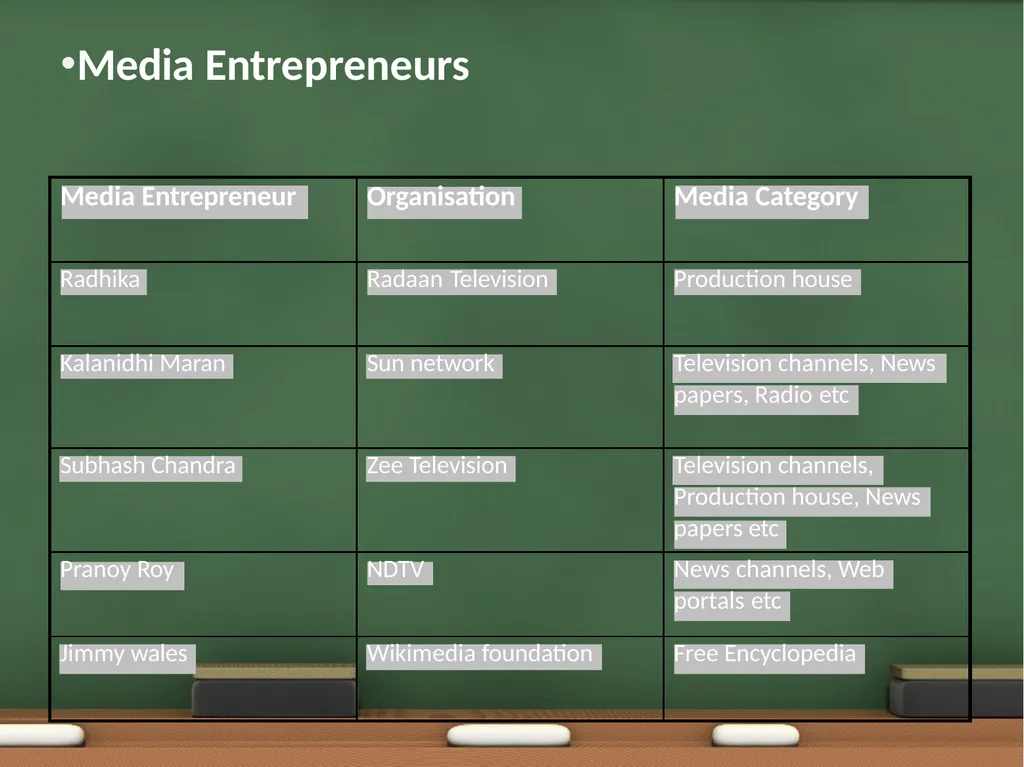
slide22. Media entrepreneurship
Media entrepreneurship is “the creation and ownership of a small enterprise or organization whose activity adds at least one voice or innovation to the media marketplace.”
The basic notion is that entrepreneurs entering media markets cause media innovation and ensure a diversity of viewpoints, a key element in the “marketplace of ideas.”
In measuring the incidence of media entrepreneurship, in comparison to other industries, media often enjoyed greater rates of entrepreneurship over time<br>
slide23. Media Entrepreneurs<br>
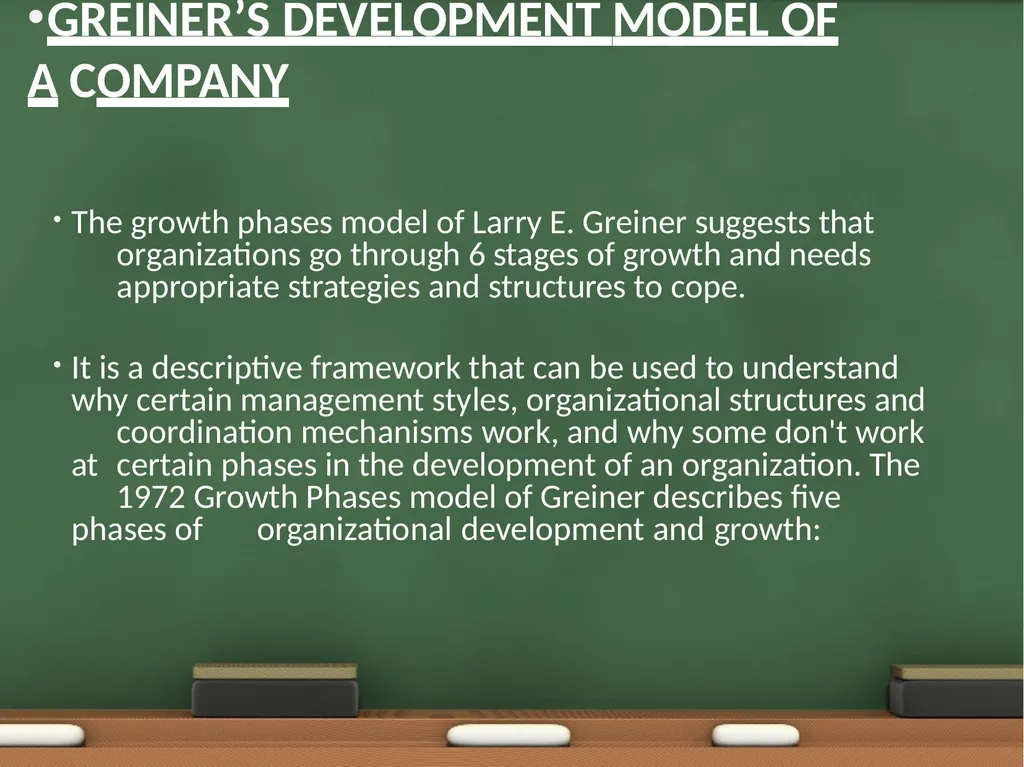
slide24. GREINER’S DEVELOPMENT MODEL OF A COMPANY
The growth phases model of Larry E. Greiner suggests that organizations go through 6 stages of growth and needs appropriate strategies and structures to cope.
It is a descriptive framework that can be used to understand why certain management styles, organizational structures and coordination mechanisms work, and why some don't work at certain phases in the development of an organization. The 1972 Growth Phases model of Greiner describes five phases of organizational development and growth:<br>
slide25. Greiner’S 6 phases of organizational development and growth: • • • 1. Growth through creativity. Start-up company, entrepreneurial, informal communication, hard work and low earnings.
2. Growth through direction. Sustained growth, functional organization structure, accounting, capital management, incentives, budgets, standardized processes.
Growth through delegation. Decentralized organizational structure, operational and market level responsibility, profit centers, financial incentives, decision making is based on periodic reviews, top management acts by exception, formal communication.
Growth through coordination and monitoring. Formation of product groups, thorough review of formal planning, centralization of support functions, corporate staff oversees coordination, corporate capital expenditures, motivation through lower-level profit sharing.
Growth through collaboration. New evolutionary path, team action for problem solving, cross-functional task teams, decentralized support staff, matrix organization, simplified control mechanisms, team behavior education programs, advanced information systems, team incentives. More recently Greiner added a sixth phase to his Growth Phases model:
6. Growth through extra-organizational solutions (mergers, holdings, networks of organizations)<br>
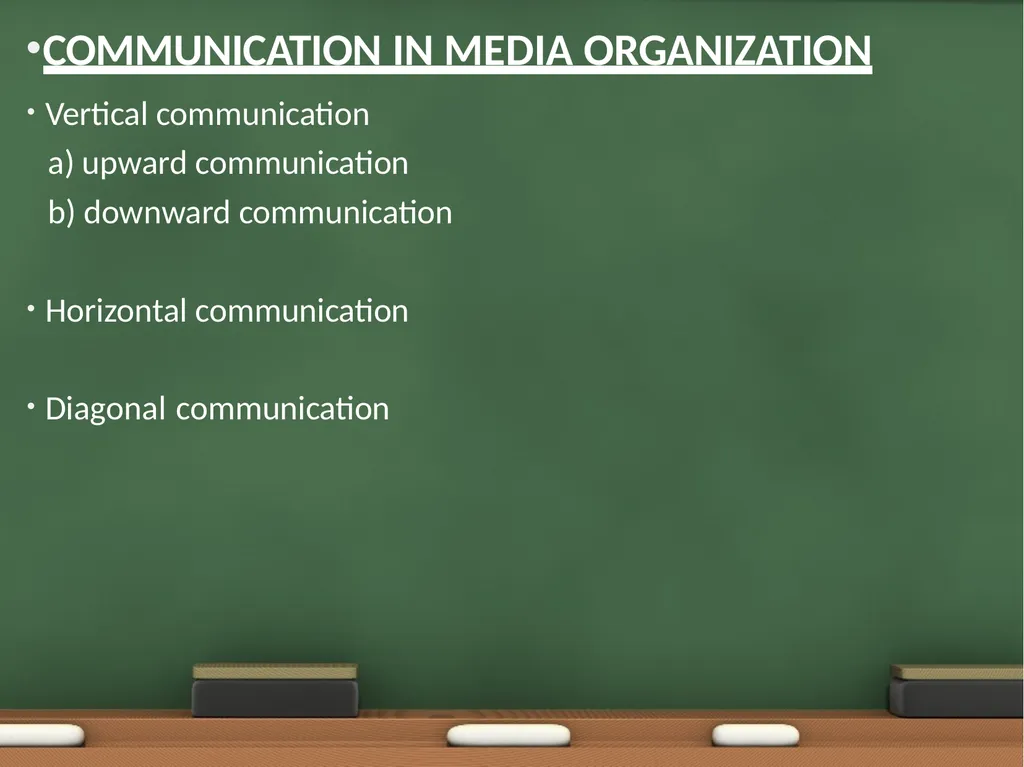
slide26. COMMUNICATION IN MEDIA ORGANIZATION
Vertical communication
upward communication
downward communication
Horizontal communication
Diagonal communication<br>
slide27. UNIT II<br>
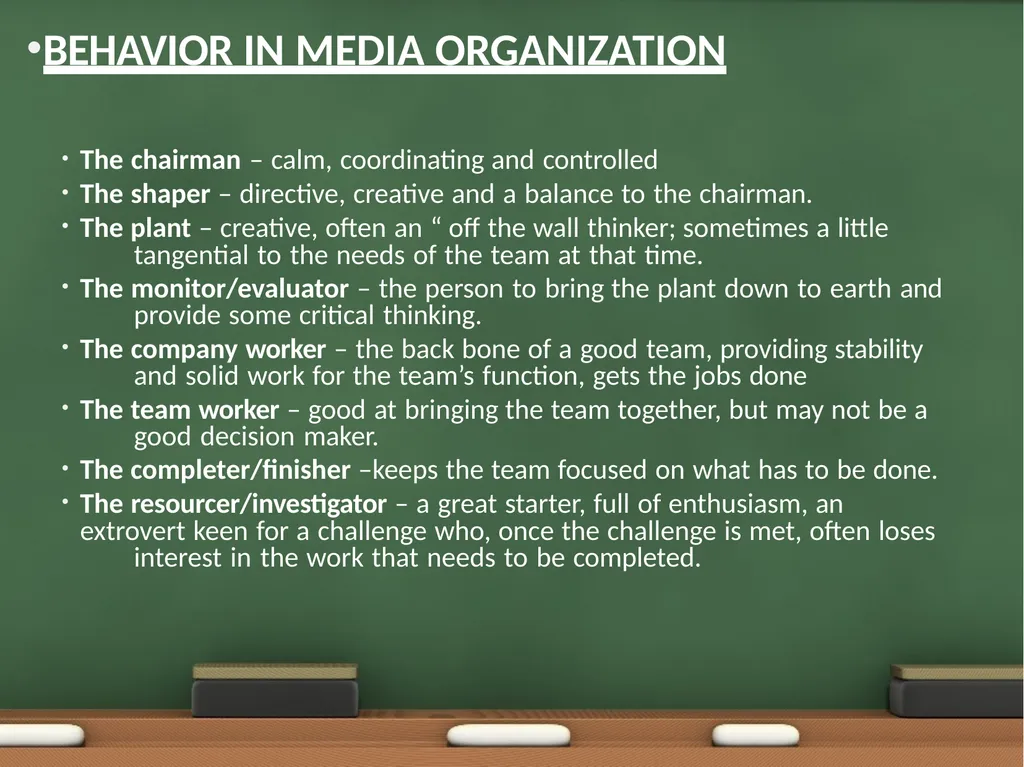
slide28. BEHAVIOR IN MEDIA ORGANIZATION
The chairman – calm, coordinating and controlled
The shaper – directive, creative and a balance to the chairman.
The plant – creative, often an “ off the wall thinker; sometimes a little tangential to the needs of the team at that time.
The monitor/evaluator – the person to bring the plant down to earth and provide some critical thinking.
The company worker – the back bone of a good team, providing stability and solid work for the team’s function, gets the jobs done
The team worker – good at bringing the team together, but may not be a good decision maker.
The completer/finisher –keeps the team focused on what has to be done.
The resourcer/investigator – a great starter, full of enthusiasm, an extrovert keen for a challenge who, once the challenge is met, often loses interest in the work that needs to be completed.<br>
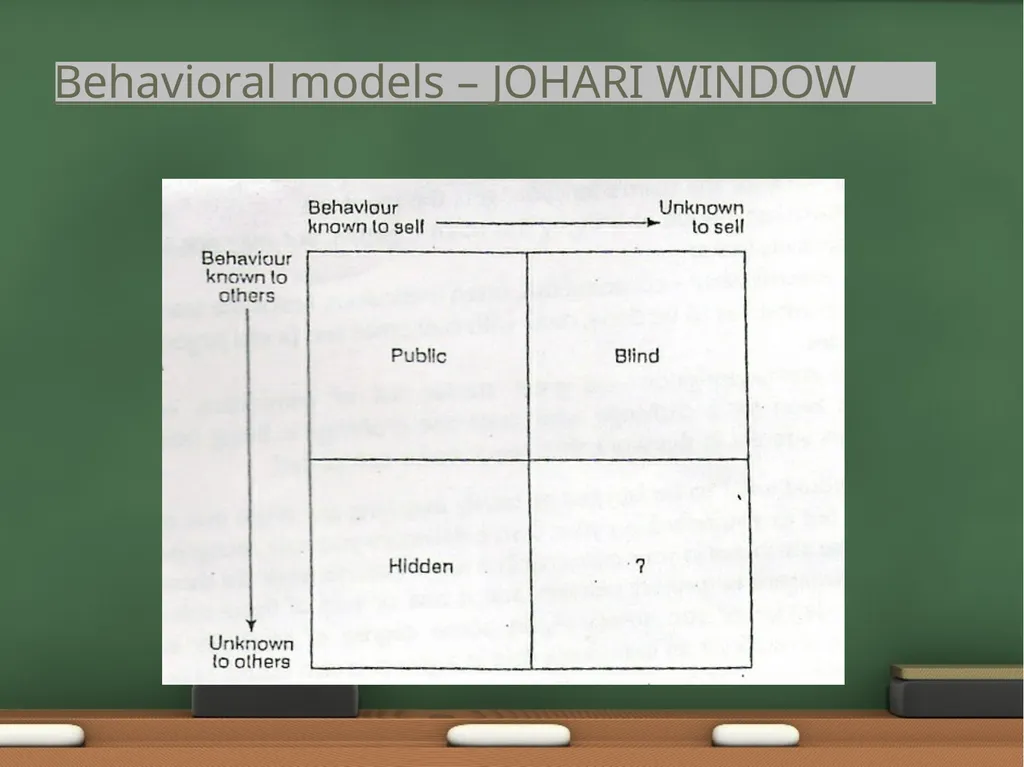
slide29. Behavioral models – JOHARI WINDOW<br>
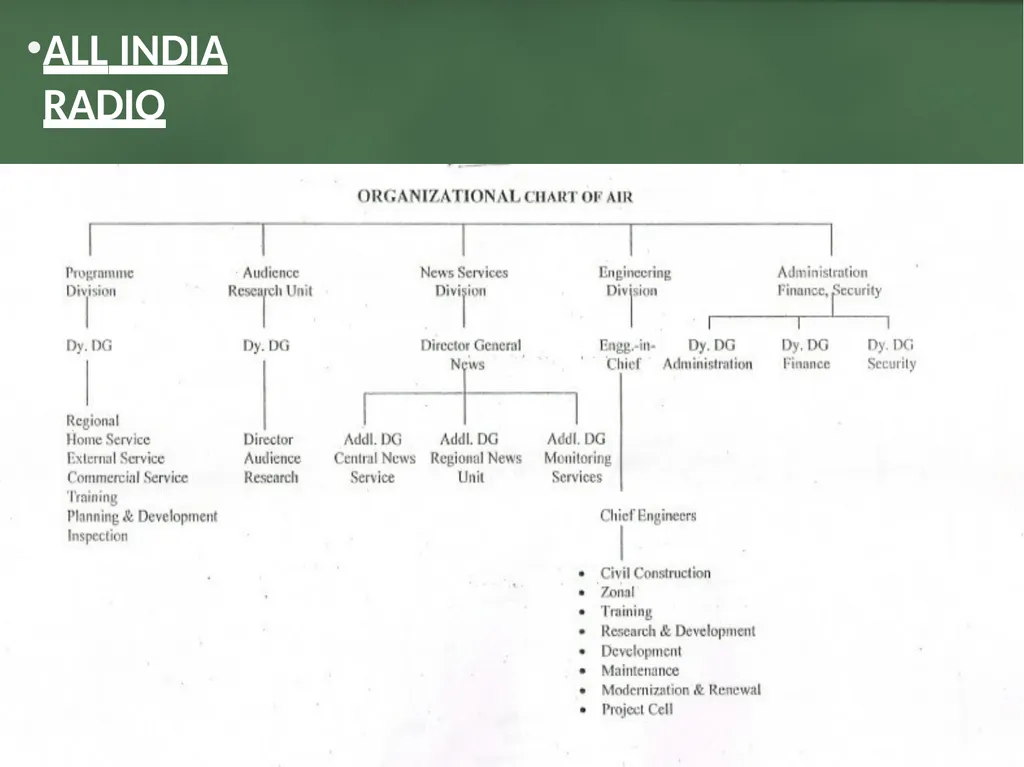
slide30. ALL INDIA RADIO<br>
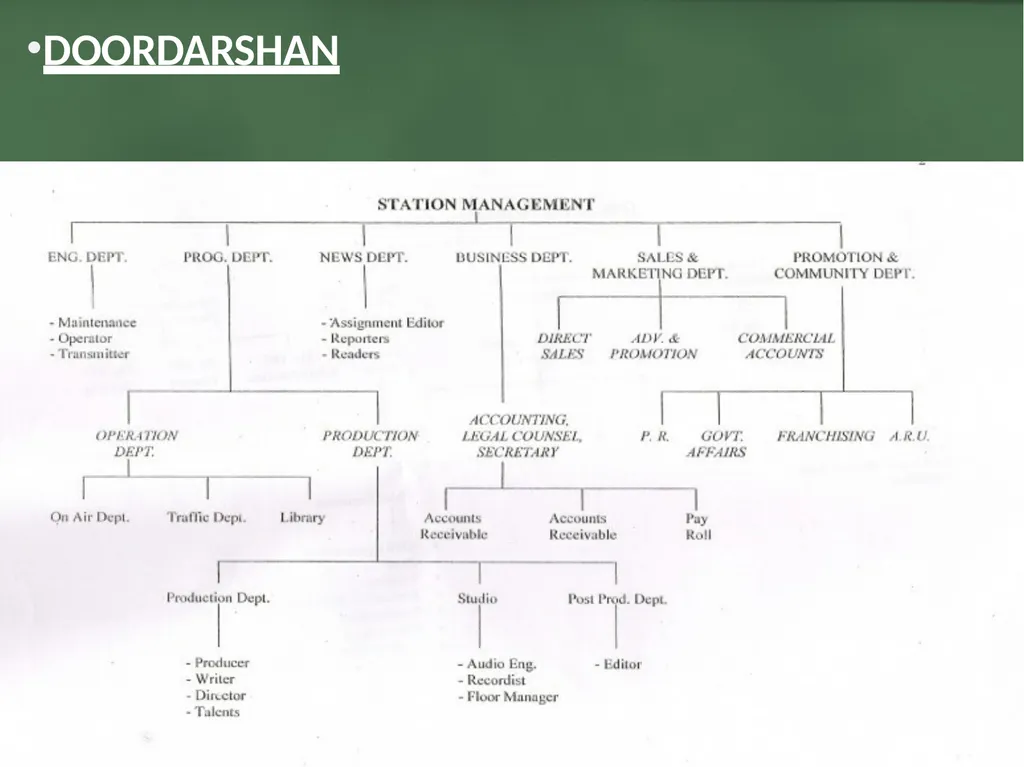
slide31. DOORDARSHAN<br>
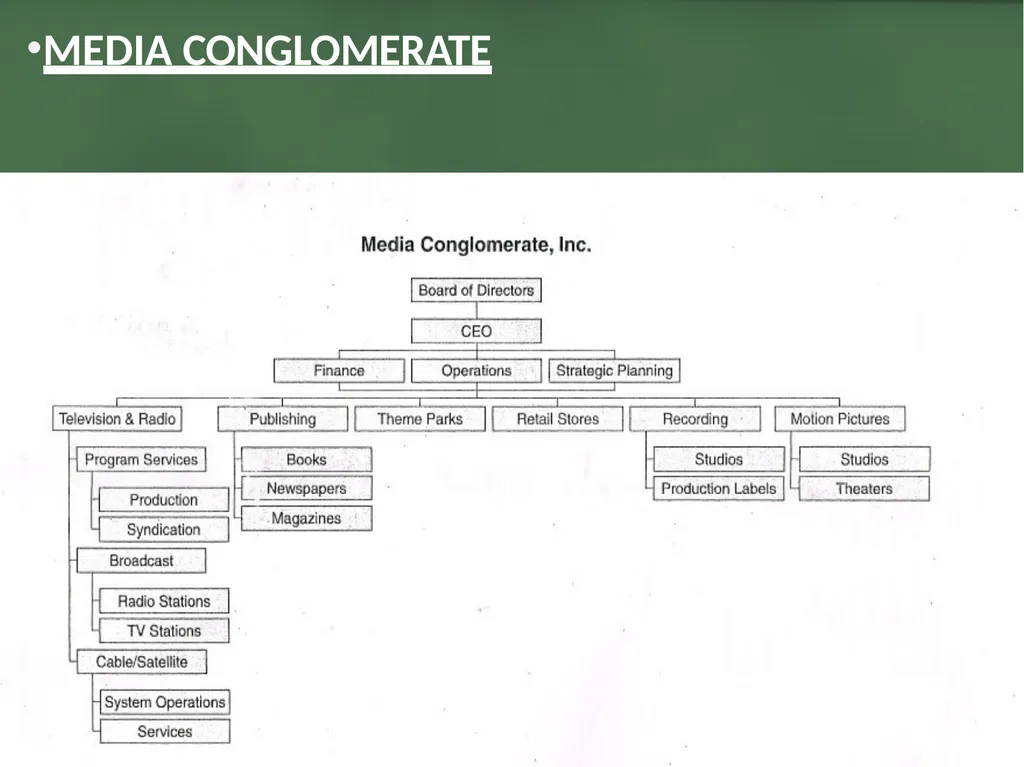
slide32. MEDIA CONGLOMERATE<br>
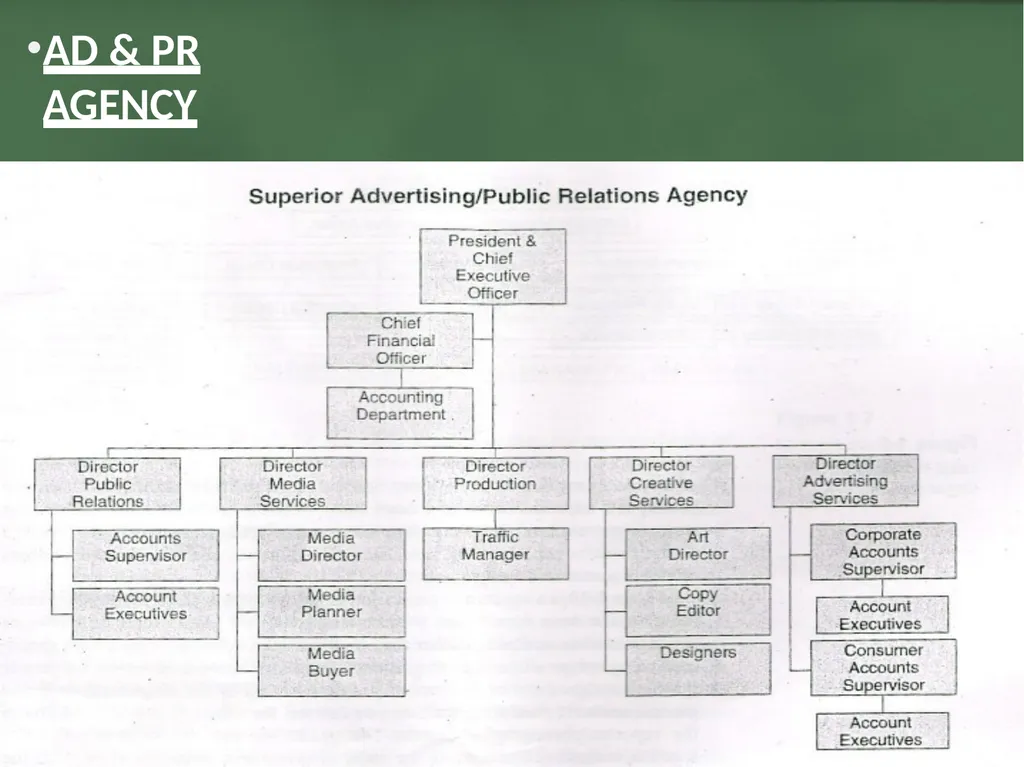
slide33. AD & PR AGENCY<br>
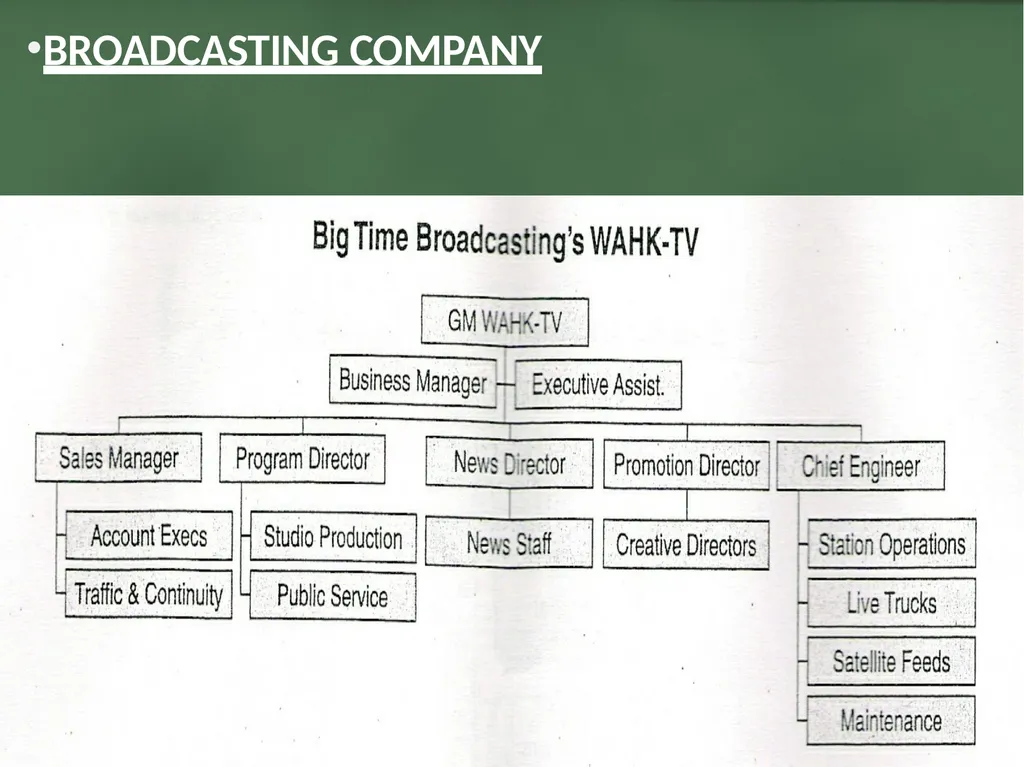
slide34. BROADCASTING COMPANY<br>
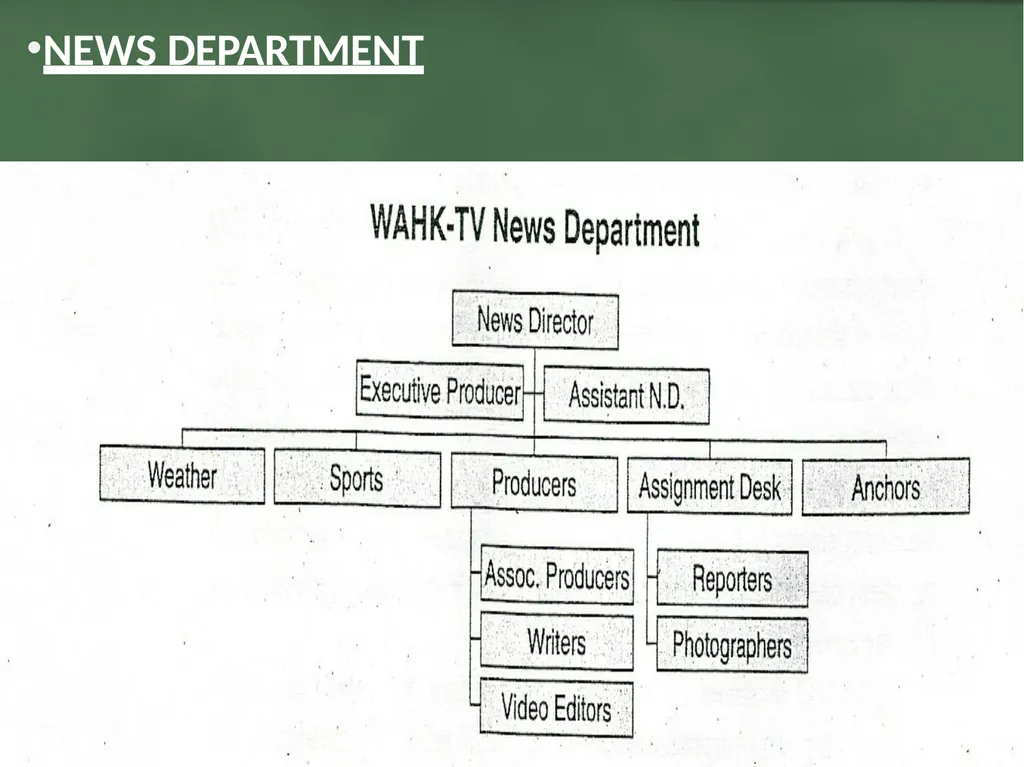
slide35. NEWS DEPARTMENT<br>
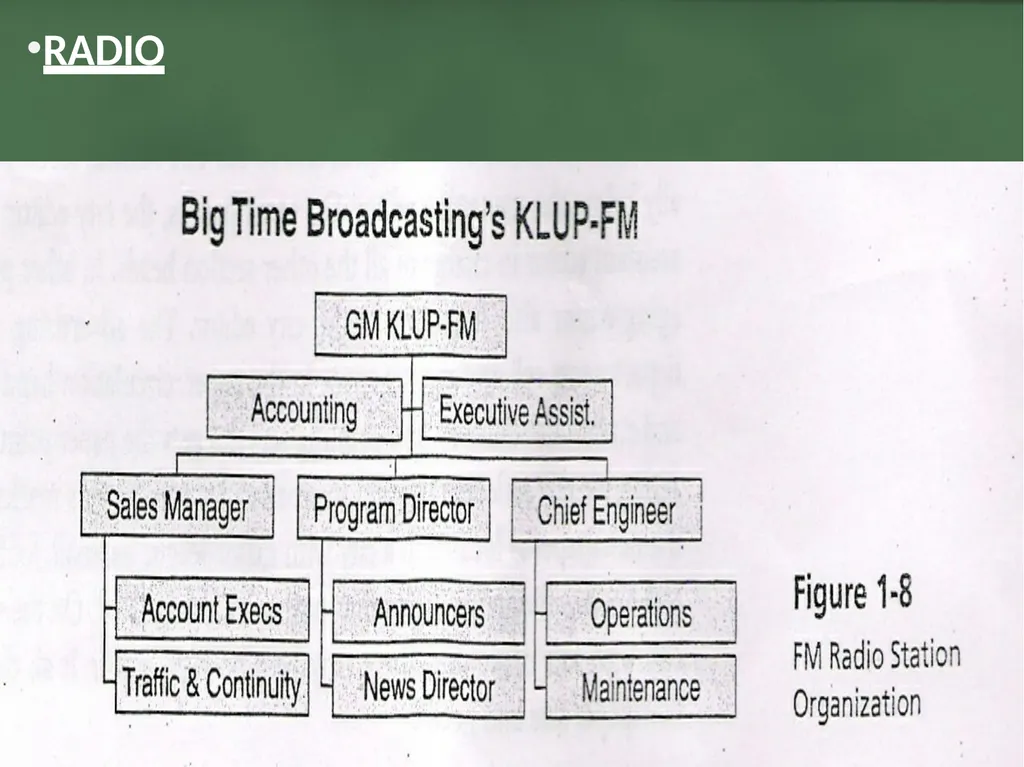
slide36. RADIO<br>
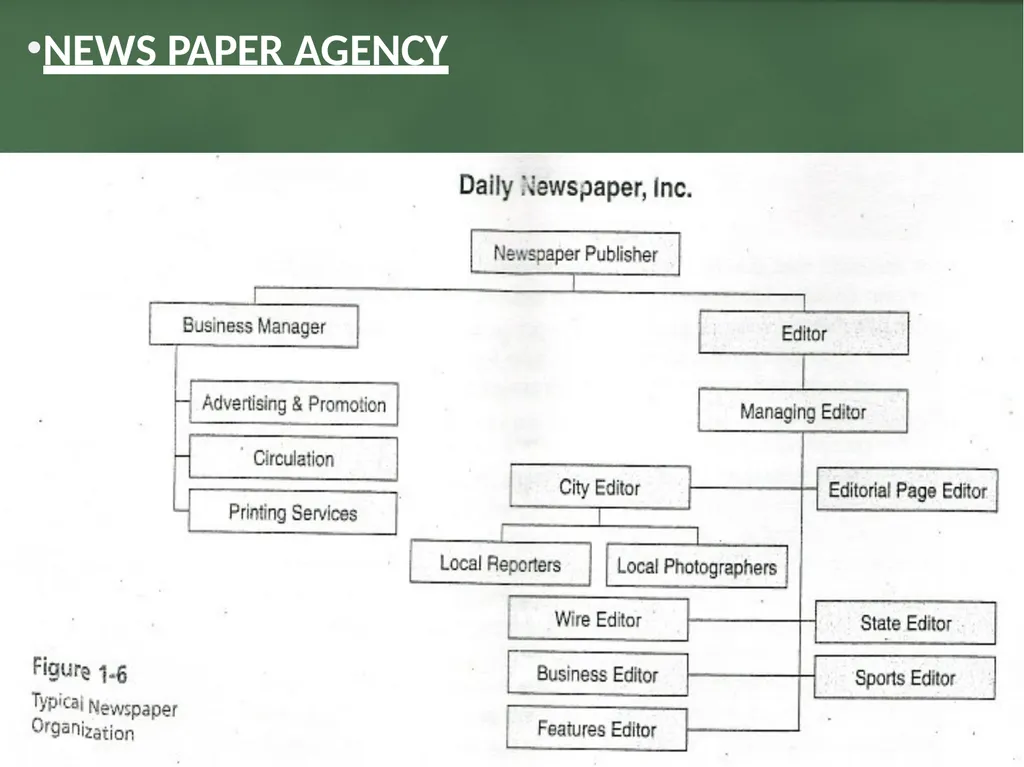
slide37. NEWS PAPER AGENCY<br>
slide38. INNOVATION AND CREATIVITY
The members should be given opportunity to work in an innovative and creative environment.
One major threat to innovation is a sense of job security and lack of safety at work.
Not all the members are ready to take risk. The entrepreneur could be seen as the individual who manages the risk on behalf of the creative team.
They do different things and most of the time do things differently.<br>
slide39. ROLE OF THE INNOVATOR • It might be suggested that the role of the entrepreneur / proxy / project manager / producer in fostering innovation is; To identify the staff who are likely to be innovative
To establish an innovative climate
To promote innovation amongst all staff
To promote innovation among teams<br>
slide40. THE CULTURE OF THE ORGANISATION
Organizations have a definable culture
In addition to any national, regional, social culture there is a unique business culture relating to that organization
The behavior, the dress code, the rules, the code of ethics, the communication system, the policies, the objectives, the working atmosphere of the organization etc., determines the culture of that organization.<br>
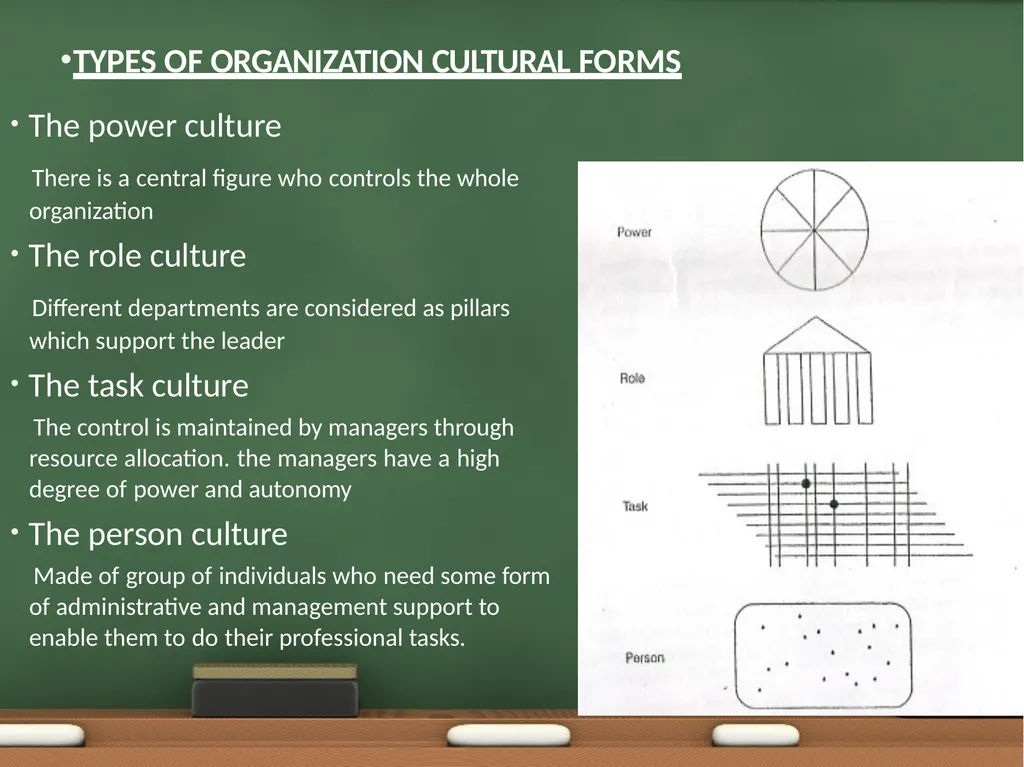
slide41. TYPES OF ORGANIZATION CULTURAL FORMS
The power culture
There is a central figure who controls the whole organization
The role culture
Different departments are considered as pillars which support the leader
The task culture
The control is maintained by managers through resource allocation. the managers have a high degree of power and autonomy
The person culture
Made of group of individuals who need some form of administrative and management support to enable them to do their professional tasks.<br>
slide42. UNIT III<br>
slide43. MEDIA ECONOMICS Media economics are the economic polices and practices of media companies and disciples including journalism and the news industry, film production, entertainment programs, print, broadcast, mobile communications, Internet, advertising and public relations.
Deregulation of media, media ownership and concentration, market share, intellectual property rights, competitive economic strategies, company economics, "media tax" and other issues are considered parts of the field.
Media economics has social, cultural, and economic implications.<br>
slide44. Pressures on media
Media institutions are at the centre of three overlapping kinds of pulls and pushes Media institutions economics technology politics<br>
slide45. ECONOMICS OF FILMS
Ticket sales
network TV rights
foreign distribution
sales to independent TV stations
pay and pay-per-view TV rights
airline rights for in-flight movies
college rights for campus screenings
music sales for film soundtracks
film-related merchandise (toys, etc.)
book publishing rights (when a book follows the movie)
and product placement (money received for clearly showing certain products in scenes.)<br>
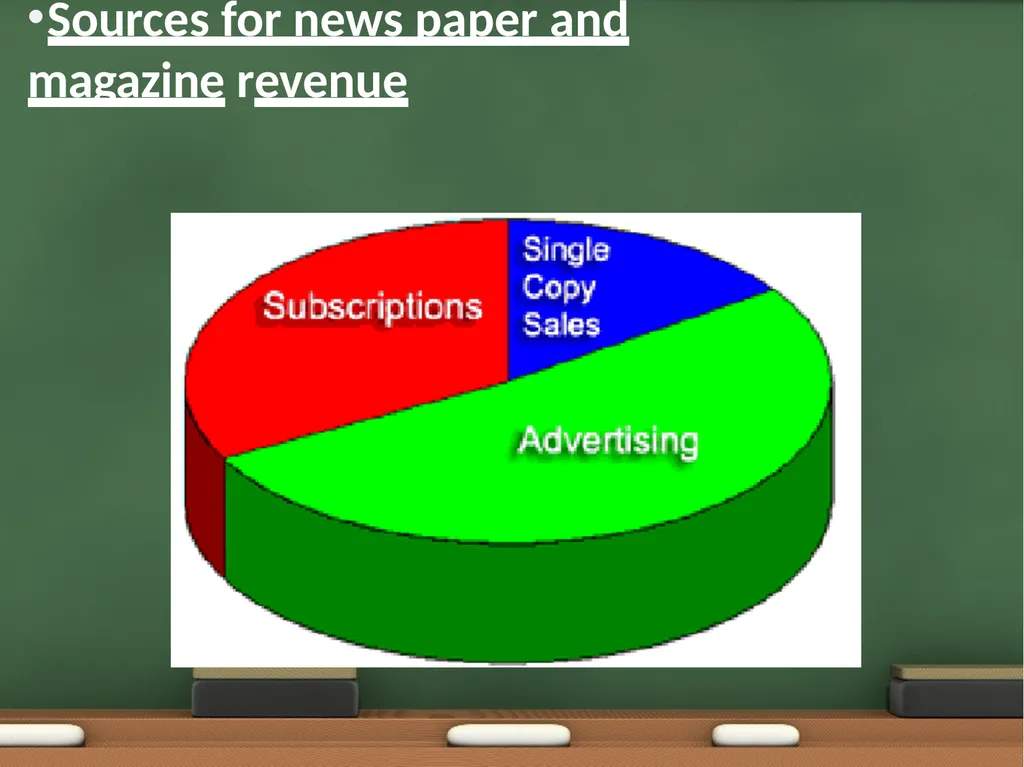
slide46. Sources for news paper and magazine revenue<br>
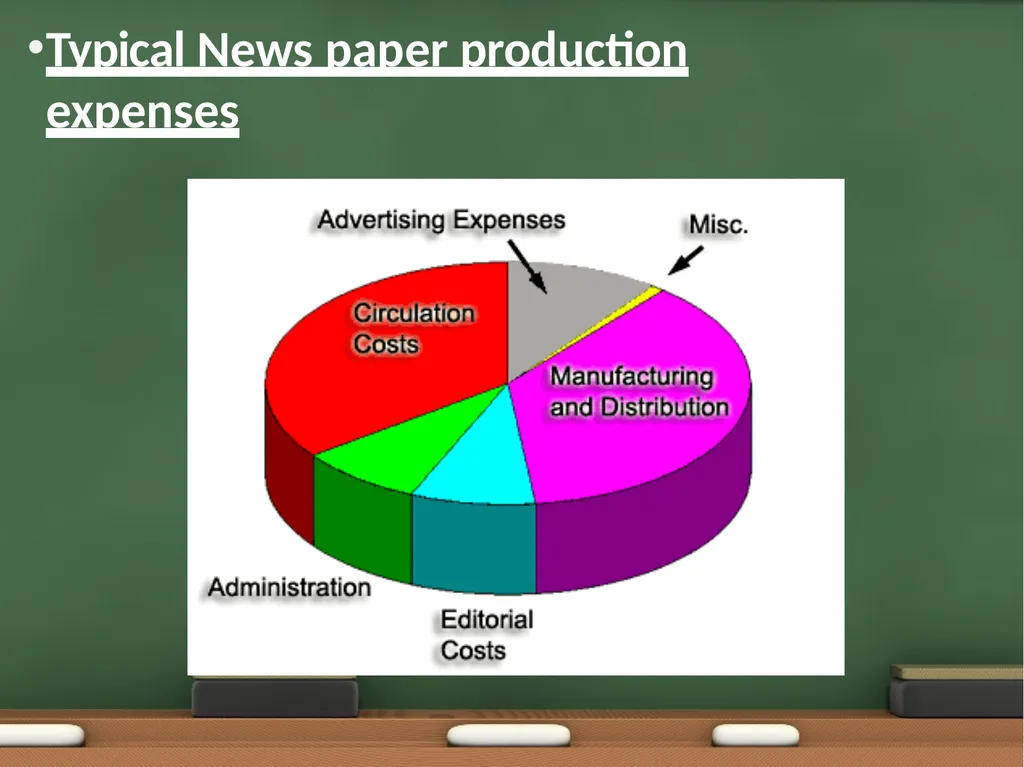
slide47. Typical News paper production expenses<br>
slide48. Expenses for television production Traditionally, the expenses as falling into two broad areas: above-the-line and below-the-line.
Above-the-Line and Below-the-Line
Although the "line" blurs at times, above-the-line expenses generally relate to the performing and producing elements: talent, script, music, and others.
Below-the-line elements refer to two broad areas:
the physical elements: sets, props, make-up, wardrobe, graphics, transportation, production equipment, studio facilities, and editing
the technical personnel: stage manager, engineering personnel, video recording operators, audio operators, and general labor<br>
slide49. SUPPLIER – BUYER RELATIONSHIP WITH REFERENCE TO INNOVATION
innovation and R&D-employment intensity will decline in buyer concentration if supplier markets are low concentrated,
buyers' pressure on input prices reduces suppliers' innovation expenditures and their incentive to develop new products,
a small number of competitors in domestic and foreign suppliers markets and a large stock of customers stimulates innovative behavior,
small and medium sized suppliers invest more in their innovation activities but have lower probabilities to realize innovations than larger firms, and
higher technological capabilities lead to a higher innovation input and output transaction between buyer and supplier.<br>
slide50. LEISURE TIME ACTIVITIES The importance of leisure-time activities in the psychological, cognitive and physical development of young people is recognized in all societies.
Leisure-time activities include
games,
sports,
cultural events,
entertainment and community service.
Excursions
Appropriate leisure programmes for youth are elements of any measure aimed at fighting social ills such as drug abuse, dowry system, untouchability
While leisure programmes can contribute greatly to the development of the physical, intellectual and emotional potential of young people, they should be designed with due care and concern so that they are not used as a means for excluding youth from participating in other aspects of social life<br>
slide51. COST FACTORS
Film production expenses
1. script and general preproduction costs
2. location scouting/travel expenses
3. studio and office rental
4. sets and set construction
5. on-location site expenses
6. equipment rental
7. film stock and processing
8. production crew
9. producer, director, and associated personnel
10. actors and extras
11. makeup and hair
12. clothes and costumes
13. insurance, shooting permits, contingencies, etc.
14. editing and special effects
15. food/catering
16. police, safety, watchmen and crowd control
17. materials, supplies, and miscellaneous expenses<br>
slide52. Costing out a production 1. preproduction costs
2. location scouting and related travel expenses
3. studio rental
4. sets and set construction
5. on-location expenses
6. equipment rental
7. videotapes and videotape duplication
8. production crew costs
9. producer, director, writer, creative fees
10. on-camera talent costs
11. insurance, shooting permits, contingencies, etc.
12. on-line and off-line editing
13. advertising, promotion, and publicity
14. research and follow-up
15. materials, supplies, and miscellaneous expenses<br>
slide53. Revenue models
The time or space is sold to a programme producer as per the rates, and the producer takes the advertisement revenue.
The time is given for free to the producer and the media takes the advertisement revenue.
The media pays the producer for the programme and takes the advertisement revenue<br>
slide54. UNIT IV<br>
slide55. Project: • • • • • • Normally a project is a task which is a tiny part of a magazine, newspapers, radio or television. Too many small and completed projects form a newspapers issue, or a days radio or television programme
As we know a days issue of a normal newspaper contains at least 10 to 12 pages and almost all the radio stations and television channels have 24 hours non stopping broadcasting everyday.
To make the articles for the news paper or to produce program for the radio/ television for a day is not an easy job. It needs proper planning and execution to ‘run’’ the media.
The skillful planning for the making of various segments to the print media or electronic media is known as ‘project management’.
As we described earlier not the entire pages are formed by a single man or a single group and also not al the 24 hours programme are produced by a single unit.
The tasks of making materials or programmes are classified and the responsibilities of making the parts are given to different people and units.
Planning, organising, directing and overall making of the projects are done after Departmentation.
The projects are classified in to (a) topic wise, (b) page wise (c) theme wise (d)time wise (e) day wise and so on…<br>
slide56. STEPS INVOLVED IN VIDEO PROJECT MANAGEMENT
1.Clearly identify the goals and purposes of the production.
2. Identify and analyze your target audience.
3. Check out similar productions done in the past
4. Determine the overall value of the production
5. Develop a treatment or a production proposal
6. Develop A production schedule
7. Select key production personnel
8. Decide on locations
9.Decide on talent, wardrobe and sets
10.Decide on the remaining
11.Production personnel
12.Obtain permits, insurance and clearances
13.Select video inserts,
14.Still photos and graphics
15.Moving to rehearsals and shooting
16.The editing phase
17.Do postproduction follow-up<br>
slide57. PRODUCTION PROJECT CYCLE • • • • In print media as well as in electronic media, since the publication of news papers and magazines , radio and television programmes are non stopping in their publishing and telecast respectively the plan and making the materials need to be a cyclic one.
Most of the media Organisations have particular topic for a particular time or particular day for its publication or telecast.
So the organisations plan to make these projects continuously. Hence their infrastructure and day to day activities are designed in such a way to produce the programmes to be published for all the 365 days in a year.
So the script writers, sub editors, column writers, producers and all the creative crew repeatedly produce programmes allotted to them.
Other then the ‘hot news’ or ‘the current affairs’ topics of all other programmes are planned well in advance and made in such a way so that the editorial department can have too many episodes in their hand as ‘ready to fit’ the space of the book publication or telecast of electronic media.
PPC- production project cycle keeps an organisation active and it is a continues process which yields employment to too many.<br>
slide58. PRODUCTION STRATEGIES AND WORK PLAN • • • ‘Strategy’ is defined as ‘skillful planning’.
Programmes are planned according to the expectation of readers or viewers. Programmes are planned on basis of viewers age group, states, inherent time of publication, day of publication, season of publication and so on. For example in a well planned TV channel, mid day programmes are planned for house wife’s and elders; the evening time programmes are meant for children and late evening and late night programmes for adults and grown ups respectively.
Production strategy also includes cost cutting and making programmes. Eg: a creative crew sent for the coverage of a current affairs programme may do some short stories as bi-products.
Like wise a huge set and settings which are made for a expensive show may be used for some other programmes after having a slight modification.
By planning (PPC) production product cycle properly the efficiency in production can be achieved.
Spending comparatively a lesser amount of money and man power for proper planning, achieving good results is called efficiency in production.
Efficiency at all the three levels of production namely pre production, production and post production means production strategy altogether.<br>
slide59. PROGRAMME STRATEGIES • • • • • • Though the media is making programmes for the common public the readership or viewer ship differs according to the content of the project. Elders like to see more of news, current affairs and spiritual programmes where as youth like mostly entertainment.
So programmes must be planned according to the audience viewerships at a particular time. The opinion poll and audience survey (television rating points) TRP give us the need of the mass or response of the public.
As said earlier skill planning while programming, increases the viewerships, then the flow of advertisements and the revenue of organisation ultimately.
Continous marketing survey and TRP rating are carefully monitored and discussed to plan the importance in existing programmes, and to form new suitable concepts for the new programmes
Utilizing the current style and fashion, programmes are designed to create a sensation which will make a swap and be a box office hit. While marketing the programmes the audience and the advertiser views to be considered and adopted to make programmes of new trend.
Inserted of planning too-many programmes, concentration and efforts must be focused on a selective few programmes, so that the presentation can be ‘complete at perfect’.<br>
slide60. Approaches to Attributing Costs Once the cost for a production is figured out, you may need to justify it, either in terms of expected results or cost effectiveness.
There are three bases to measure cost effectiveness: cost per minute, cost per viewer, and cost vs. measured benefits.
Cost Per Minute
The cost per minute is relatively easy to determine; you simply divide the final production cost by the duration of the finished product. For example, if a 30-minute production costs 120,000, the cost per minute would be 4,000.
Cost Per Viewer
Cost per viewer is also relatively simple to figure out; you simply divide the total production costs by the actual or anticipated audience.
Cost Per Measured Results
The last category, cost per measured results, is the most difficult to determine.
For this we must measure production costs against intended results. In commercial television we might sell 300,000 packages of razor blades after airing one 60-second commercial. If our profit on 300,000 packages was 3 lakhs and we spent 2lakhs producing and airing the commercial, we might question whether it was a good investment.
Of course, once produced, most ads are aired more than once. (Sometimes endlessly, it seems!) This means that the cost of future airings simply centers on buying air time. If the cost of TV time was<br>
slide61. 1) MEDIA PLANNING
A systematic method of determining which media to use
how to use
when to use
where to use
To ensure cost effectiveness, more reach, efficient usage of media and effective delivery of message or information.<br>
slide62. Managing costs Some tips Stay on schedule
Simplify the design
Keep a close eye on animation and special effects costs
Reduce the complexity of editing and other post production activities
Reduce the amount of film or video shot.
Proper budgeting<br>
slide63. What affects the content The structure, policy and working condition in a media organization will affect the content.
* constraint Vs autonomy
* routine production Vs creativity
* commerce Vs art
* profit Vs social purpose<br>
slide64. Types of budget
Excess budget
Anticipating additional expenses and quoting extra amount.
Deficit budget
Quoting less than the expected amount and working towards cutting down the costs
Zero budget
Professional way of making budget where the actual expenses will be the same as that of the expected one<br>
slide65. PROJECT RESPONSIBILITY AND PRODUCTION PROCESS • • • • • A project is normally proposed by the management of the organisation.
A project after being developed by a creative team, adding all the needs of the marketing team and updating according to the audience taste is taken for the production process.
Since making a project is a long process of different peoples contribution to the overall completion and betterment, a great responsibility is needed at all the levels of its formations.
Care should be taken to bring the original ‘aroma’ even if we continuously change the color and shape of the project.
Budgeting and planning should be proper and should accommodate each and every tiny segment that is going to shape the form.
Quality control at every level must be monitored for the unique and standard presentation.
The talents and technical crew must be taken care for their needs concerned with the product.
Genuine and standard materials should be used to get the accuracy in the appearance.
Manpower and mechanism should be blended to yield good results. A good presentation with the clear cut content message in the correct format will make the production process a successful one.<br>
slide66. according to Production process
Status report / proposal
Assessment / budgeting
Negotiation / client meet
Completion / finished product
Follow – up / response, changes the feedback<br>
slide67. UNIT V<br>
slide68. TELEVISION AUDIENCE MEASUREMENT Methodologies
Telephone – making calls to the viewers and recording/documenting the response
Diary – all the persons in a household keep a record of their viewing habits. But now it is very difficult to do in a multichannel television scenario
The household meter (audimeter)
The viewers should input the details everytime
People meters – somebody has to program them before starting to watch. Then the machine will record what is being watched, who watches, and the duration of each session.
Passive people meters – a sensor will automatically begin to record the viewing details.
For radio a device similar to people meter called as ARM Actual Radio Measurement and diaries are used for listener ship surveys.
In case of printmedia its very easy because the audience measurment can be done with the circulation details. For minute details like demographics can be had by conducting readership surveys and audience surveys.
Some agencies like ABC, IMRB etc conducts the study for the media<br>
slide69. Audience rating
TRP = Television Rating Points
Program rating = households tuned to the program
total TV households in the Market
( AT A GIVEN TIME )
Example; TRP = 5,142,250 = .14 = 14
36,630,000<br>
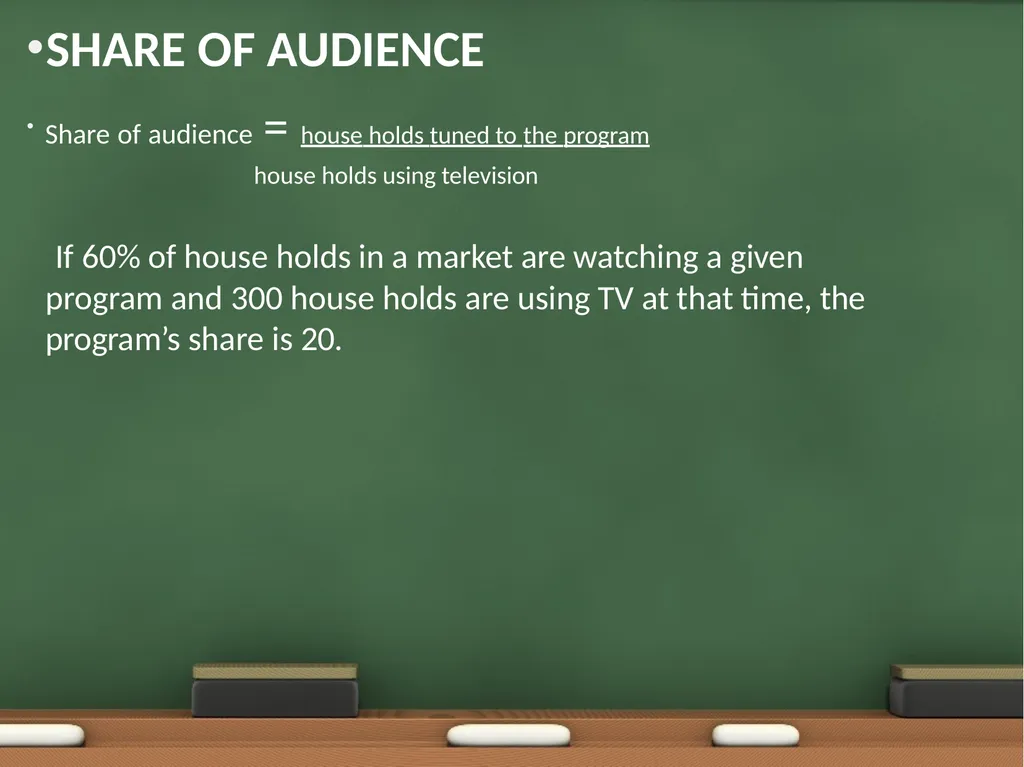
slide70. SHARE OF AUDIENCE
Share of audience = house holds tuned to the program
house holds using television
If 60% of house holds in a market are watching a given program and 300 house holds are using TV at that time, the program’s share is 20.<br>
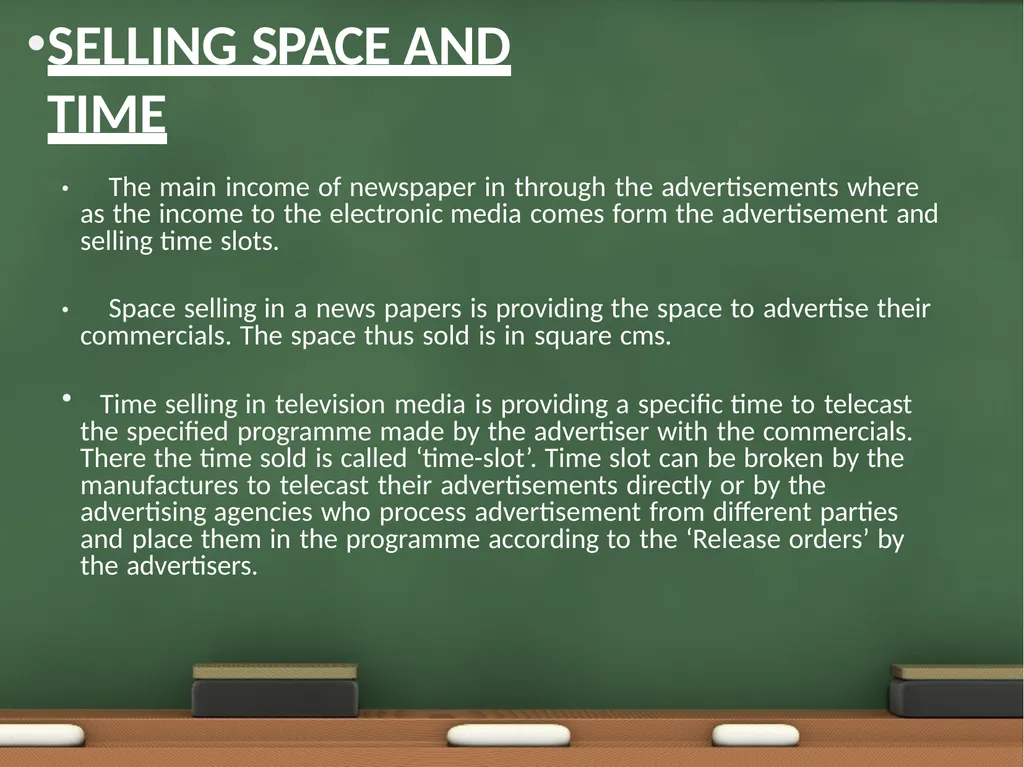
slide71. SELLING SPACE AND TIME • • The main income of newspaper in through the advertisements where as the income to the electronic media comes form the advertisement and selling time slots. Space selling in a news papers is providing the space to advertise their commercials. The space thus sold is in square cms. Time selling in television media is providing a specific time to telecast the specified programme made by the advertiser with the commercials. There the time sold is called ‘time-slot’. Time slot can be broken by the manufactures to telecast their advertisements directly or by the advertising agencies who process advertisement from different parties and place them in the programme according to the ‘Release orders’ by the advertisers.<br>
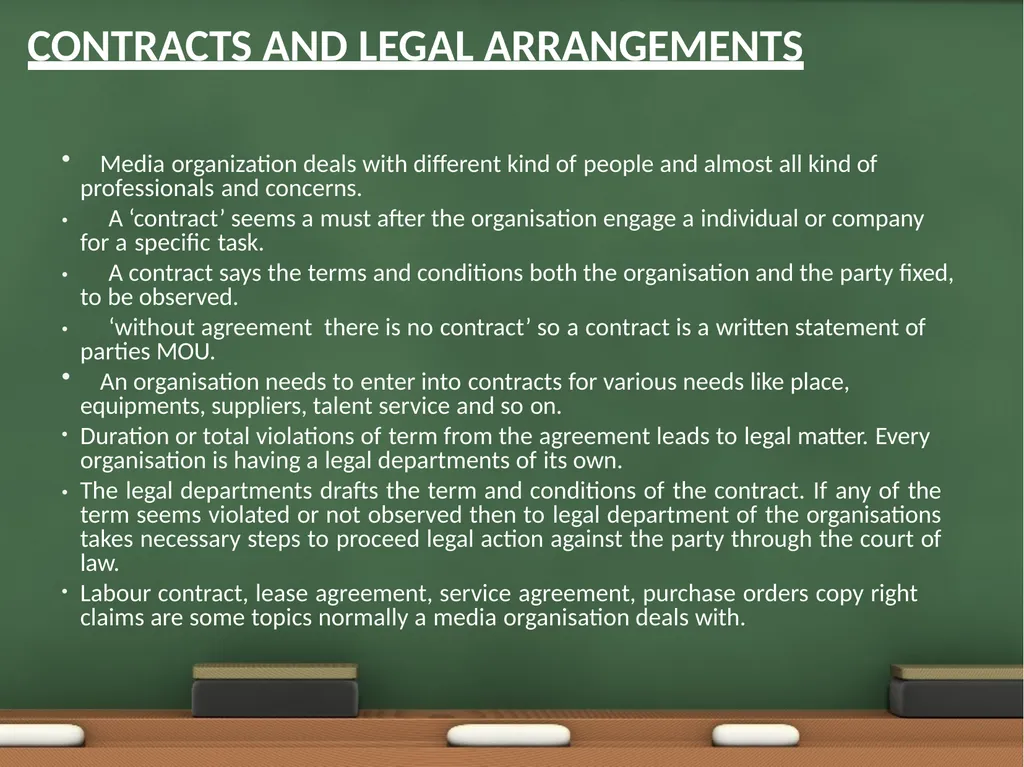
slide72. CONTRACTS AND LEGAL ARRANGEMENTS • • • • Media organization deals with different kind of people and almost all kind of professionals and concerns.
A ‘contract’ seems a must after the organisation engage a individual or company for a specific task.
A contract says the terms and conditions both the organisation and the party fixed, to be observed.
‘without agreement there is no contract’ so a contract is a written statement of parties MOU.
An organisation needs to enter into contracts for various needs like place, equipments, suppliers, talent service and so on.
Duration or total violations of term from the agreement leads to legal matter. Every organisation is having a legal departments of its own.
The legal departments drafts the term and conditions of the contract. If any of the term seems violated or not observed then to legal department of the organisations takes necessary steps to proceed legal action against the party through the court of law.
Labour contract, lease agreement, service agreement, purchase orders copy right claims are some topics normally a media organisation deals with.<br>
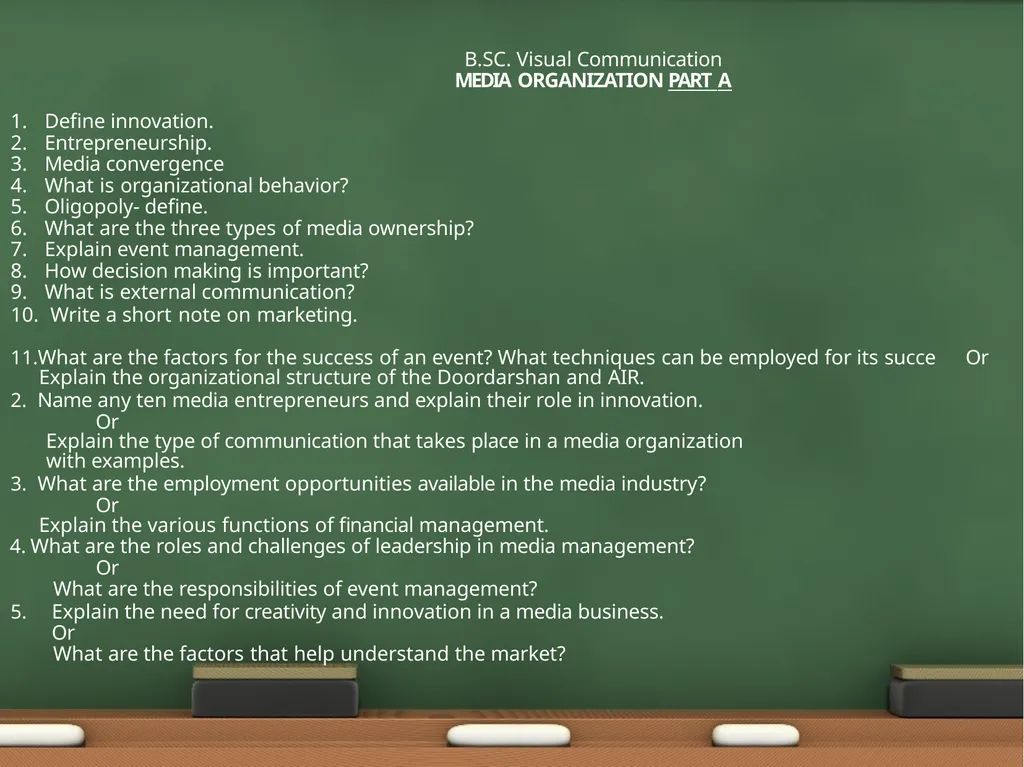
slide73. B.SC. Visual Communication MEDIA ORGANIZATION PART A
Define innovation.
Entrepreneurship.
Media convergence
What is organizational behavior?
Oligopoly- define.
What are the three types of media ownership?
Explain event management.
How decision making is important?
What is external communication?
Write a short note on marketing.
What are the factors for the success of an event? What techniques can be employed for its succe Or
Explain the organizational structure of the Doordarshan and AIR.
Name any ten media entrepreneurs and explain their role in innovation. Or
Explain the type of communication that takes place in a media organization with examples.
What are the employment opportunities available in the media industry? Or
Explain the various functions of financial management.
What are the roles and challenges of leadership in media management?
Or
What are the responsibilities of event management?
Explain the need for creativity and innovation in a media business. Or
What are the factors that help understand the market?<br>
slide2. • • • Unit I
Media Organization and Design: Some Conceptual Issues. Media as Business and Social Institution. Media entrepreneurship, Greiner's Development Model of a company.
Unit II
Behavior in media Organization and Organizational Behavior. Nature and Structure of different Media Organizations-AIR/DD, Private Satellite Channels, Production Houses, employment opportunities in Indian Media industry, Group Behavior, Innovation and Creativity, Culture of organization
Unit III
Economics of Media-Relationship between supplier and buyer, Leisure time activity, Cost Factors, Revenue Models, Market Factors, State of the Industry today.
Unit IV
Project Management in Media-Production Project Cycle (PPC), Management themes in production Process, Project Planning, Production Strategies, PPC in Practice-Initiation (Ideas, Evaluation and Assessment), Risk and Impact Assessment, Pre-production, Production Team, Project Specification, Project work plan, Sources of Funds, Budgeting (tols etc.) Project Responsibility, Production Process (status Report, Assessment, Negotiation, Completion, Follow-up.
Unit V
Programming Strategies, Audience Rating-Analyzing Programming and Audience Trends Marketing Programs arid selling space and time. Different kinds of contracts and legal arrangements, Project Management. Syllabus<br>
slide3. UNIT I Media Organization and Design: Some Conceptual Issues. Media as Business and Social Institution. Media entrepreneurship, Greiner's Development Model of a company.<br>
slide4. MASS MEDIA Mass media is a term used to denote the section of the media specifically conceived and designed to reach a very large audience such as the population of a nation state. It was coined in the 1920s with the advent of nationwide radio networks, mass-circulation newspapers and magazines
Media (the plural of "medium") refers to those organized means of dissemination of fact, opinion, entertainment, and other information, such as newspapers, magazines, out-of-home advertising, cinema films, radio, television, the World Wide Web, books, CDs, DVDs, videocassettes, computer games and other forms of publishing<br>
slide5. ORGANISATION An organization is a social arrangement which pursues collective goals, which controls its own performance, and which has a boundary separating it from its environment. The word itself is derived from the Greek word “organon” meaning tool.
"organization" is understood as planned, coordinated and purposeful action of human beings to construct or compile a common tangible or intangible product. This action is usually framed by formal membership and form (institutional rules).<br>
slide6. Some views of organisation:
Organisation is a system of structures and function.
Organisation is structure in action over time.
Organisation is an input/output system.
Organisation is a cultural product.
Organisation is a processing system.
Organisation is a structure of sub-groups.
Organisation is an exchange agent with its environment.<br>
slide7. MEDIA ORGANISATION The organisation involved in production, distribution and exhibition of content through mass media constitute a media organisation
It could be film production unit, television production company, advertising agency, PR agency, News paper agency, television channels, web portals etc.
These organisations are mainly involved in producing content for their audiences.<br>
slide8. Types of media Based on technology
electronic media, print media, new media
Based on reach National, regional, local
Based on function
News, entertainment, advertising<br>
slide9. WHO CONTROLS MEDIA ORGANIZATION
Media owners
The state and the law
Self regulation by media
Economic determinants
Advertisers
Audience
Media personals
Media sourses<br>
slide10. • MEDIA OWNERSHIP
Cross media ownership
different media(TV + Radio + News paper) owned by one owner( Eg: sun network – sun TV, Suryan FM, Dinakaran, Kungumam.)
Horizontal concentration
same media( Eg: news papers, magazines) owned by the same owner( Eg: times of india + economic times + navbharath times etc.) Vertical concentration
Where ownership control various media institutions like production houses, channels and distribution channels( Zee TV, Zee Telefilms, Zee City-cable)<br>
slide11. ORGANIZATION DESIGN
The term organizational design refers to the different parts of the organization and the separate elements that are brought together to create it, and considers how these fit together and ways in which they may be analyzed and improved. The design aspects include how the organization is structured the typed and numbers of jobs, and the process and procedures used to:
handle and pass information.
Make decisions.
Produce results.
Manage quality.
Communicate information.
Plan, develop and manage resources.
Innovate and handle crisis.<br>
slide12. Internal structure and dynamics
There are different sources of division within the boundaries of the organization.
One impact is the diversity of function like news, entertainment or advertising. Each section has different interests and they compete for status and finance.
Secondly, the personnel of M.O belong to different socio – economic backgrounds.<br>
slide13. Media organizational relationship
The M.O has some kind of relationship with the following
Society
With owners, suppliers and clients
Pressure groups (religious, political bodies)
Internal public
audience<br>
slide14. MEDIA AS BUSINESS OR SOCIAL INSTITUTION
Utilitarian organizations aims to produce or provide material goods or services for financial ends
Normative organizations aims to advance some value or achieve a valued condition, based on the voluntary commitment of its participants.<br>
slide15. Organization structure • Structure refers to the way the organization is organized and in particular to the grouping of function and lines of communication and control. It is the frame work which explain how an organizations resources are allocated and managed. These are usually shown as lines on an organization chart, commonly called a ‘family tree’ or an ‘organ gram’. This formal structure lays down who has the authority to make decisions and to whom individuals report. The informal structure is what happens in practice. Individuals may sometimes bypass the person they are supposed to report to or vice versa. The main purpose of the structure is to ensure that the organization is designed in the best way to achieve its goal and objectives. While structure exists in organization of all sizes, issues relating to its design become significant when a certain size and complexity are reached, this can happen even at a very early stage.<br>
slide16. Purpose of the organization structure
To support the organizations strategy.
To organize resources in the most efficient and effective way.
To provide for the effective division of tasks and accountabilities among individuals and groups.
To ensure effective coordination of the organization’s activity and classify the decision making processes.
To enhance the clarity of the lines of communication up, down and across the organization.
To allow for the effective monitoring and review of the organization activities.
To provide mechanism for coping with change in markets products and the intervals external environment.
To facilitate the handling of crisis and problems.
To help to motivate, manage and give job satisfaction to individual members of the organization.
To provide for management succession.<br>
slide17. Effects of poor organization structure:
Poor motivation and morale.
Ineffective decision – making
A lack of co-ordination and control.
No adherence to corporate objectives
Poor communication
Divisiveness & lack of co-ordination, with everyone trying to protect their own domains.
Higher costs and inefficiency
An ability to respond effectively to changing conditions or to innovate
Duplication of certain activities & possibly failure to undertake others.
Failure to provide suitable opportunities for the development of future manager.<br>
slide18. Media organization levels of analysis:
The main levels and associated sources of influence are:
Supra national (international, multinational)
Society(Govt, social institution)
Media industry (competing media business)
Intra organizational (departments in organization)
Individual (role, social background, attitude, gender)<br>
slide19. MEDIA AS BUSINESS Media organisations are established mainly to make money by the following ways:
Selling space and time
Through circulation and distribution
By creating content for media
Through advertisements and advertorials
By creating the advertisements itself<br>
slide20. Media As Social Institution
The social institutional aspect of media is concerned with the distribution of power in society and the domination of certain interests over others. Clearly, the media are a major player in this ideological struggle.
Most critical communication theories are concerned with mass media primarily because of the media’s potential for disseminating dominant ideologies and theirs potential for expressing alternative and oppositional ones. For some critical theorists, media are part of a culture industry that literally creates symbols and images that can oppress marginalized groups.<br>
slide21. OBJECTIVES OF MEDIA AS A SOCIAL INSTITUTION Promoting national integration
Safeguarding citizens rights
Paying special attention to field of education
Contributing to the growth of agriculture
Providing environmental exposure
Adequate coverage to Rural development
Health and family welfare
Science and technology
Culture and heritage
Empowerment of marginalized communities<br>
slide22. Media entrepreneurship
Media entrepreneurship is “the creation and ownership of a small enterprise or organization whose activity adds at least one voice or innovation to the media marketplace.”
The basic notion is that entrepreneurs entering media markets cause media innovation and ensure a diversity of viewpoints, a key element in the “marketplace of ideas.”
In measuring the incidence of media entrepreneurship, in comparison to other industries, media often enjoyed greater rates of entrepreneurship over time<br>
slide23. Media Entrepreneurs<br>
slide24. GREINER’S DEVELOPMENT MODEL OF A COMPANY
The growth phases model of Larry E. Greiner suggests that organizations go through 6 stages of growth and needs appropriate strategies and structures to cope.
It is a descriptive framework that can be used to understand why certain management styles, organizational structures and coordination mechanisms work, and why some don't work at certain phases in the development of an organization. The 1972 Growth Phases model of Greiner describes five phases of organizational development and growth:<br>
slide25. Greiner’S 6 phases of organizational development and growth: • • • 1. Growth through creativity. Start-up company, entrepreneurial, informal communication, hard work and low earnings.
2. Growth through direction. Sustained growth, functional organization structure, accounting, capital management, incentives, budgets, standardized processes.
Growth through delegation. Decentralized organizational structure, operational and market level responsibility, profit centers, financial incentives, decision making is based on periodic reviews, top management acts by exception, formal communication.
Growth through coordination and monitoring. Formation of product groups, thorough review of formal planning, centralization of support functions, corporate staff oversees coordination, corporate capital expenditures, motivation through lower-level profit sharing.
Growth through collaboration. New evolutionary path, team action for problem solving, cross-functional task teams, decentralized support staff, matrix organization, simplified control mechanisms, team behavior education programs, advanced information systems, team incentives. More recently Greiner added a sixth phase to his Growth Phases model:
6. Growth through extra-organizational solutions (mergers, holdings, networks of organizations)<br>
slide26. COMMUNICATION IN MEDIA ORGANIZATION
Vertical communication
upward communication
downward communication
Horizontal communication
Diagonal communication<br>
slide27. UNIT II<br>
slide28. BEHAVIOR IN MEDIA ORGANIZATION
The chairman – calm, coordinating and controlled
The shaper – directive, creative and a balance to the chairman.
The plant – creative, often an “ off the wall thinker; sometimes a little tangential to the needs of the team at that time.
The monitor/evaluator – the person to bring the plant down to earth and provide some critical thinking.
The company worker – the back bone of a good team, providing stability and solid work for the team’s function, gets the jobs done
The team worker – good at bringing the team together, but may not be a good decision maker.
The completer/finisher –keeps the team focused on what has to be done.
The resourcer/investigator – a great starter, full of enthusiasm, an extrovert keen for a challenge who, once the challenge is met, often loses interest in the work that needs to be completed.<br>
slide29. Behavioral models – JOHARI WINDOW<br>
slide30. ALL INDIA RADIO<br>
slide31. DOORDARSHAN<br>
slide32. MEDIA CONGLOMERATE<br>
slide33. AD & PR AGENCY<br>
slide34. BROADCASTING COMPANY<br>
slide35. NEWS DEPARTMENT<br>
slide36. RADIO<br>
slide37. NEWS PAPER AGENCY<br>
slide38. INNOVATION AND CREATIVITY
The members should be given opportunity to work in an innovative and creative environment.
One major threat to innovation is a sense of job security and lack of safety at work.
Not all the members are ready to take risk. The entrepreneur could be seen as the individual who manages the risk on behalf of the creative team.
They do different things and most of the time do things differently.<br>
slide39. ROLE OF THE INNOVATOR • It might be suggested that the role of the entrepreneur / proxy / project manager / producer in fostering innovation is; To identify the staff who are likely to be innovative
To establish an innovative climate
To promote innovation amongst all staff
To promote innovation among teams<br>
slide40. THE CULTURE OF THE ORGANISATION
Organizations have a definable culture
In addition to any national, regional, social culture there is a unique business culture relating to that organization
The behavior, the dress code, the rules, the code of ethics, the communication system, the policies, the objectives, the working atmosphere of the organization etc., determines the culture of that organization.<br>
slide41. TYPES OF ORGANIZATION CULTURAL FORMS
The power culture
There is a central figure who controls the whole organization
The role culture
Different departments are considered as pillars which support the leader
The task culture
The control is maintained by managers through resource allocation. the managers have a high degree of power and autonomy
The person culture
Made of group of individuals who need some form of administrative and management support to enable them to do their professional tasks.<br>
slide42. UNIT III<br>
slide43. MEDIA ECONOMICS Media economics are the economic polices and practices of media companies and disciples including journalism and the news industry, film production, entertainment programs, print, broadcast, mobile communications, Internet, advertising and public relations.
Deregulation of media, media ownership and concentration, market share, intellectual property rights, competitive economic strategies, company economics, "media tax" and other issues are considered parts of the field.
Media economics has social, cultural, and economic implications.<br>
slide44. Pressures on media
Media institutions are at the centre of three overlapping kinds of pulls and pushes Media institutions economics technology politics<br>
slide45. ECONOMICS OF FILMS
Ticket sales
network TV rights
foreign distribution
sales to independent TV stations
pay and pay-per-view TV rights
airline rights for in-flight movies
college rights for campus screenings
music sales for film soundtracks
film-related merchandise (toys, etc.)
book publishing rights (when a book follows the movie)
and product placement (money received for clearly showing certain products in scenes.)<br>
slide46. Sources for news paper and magazine revenue<br>
slide47. Typical News paper production expenses<br>
slide48. Expenses for television production Traditionally, the expenses as falling into two broad areas: above-the-line and below-the-line.
Above-the-Line and Below-the-Line
Although the "line" blurs at times, above-the-line expenses generally relate to the performing and producing elements: talent, script, music, and others.
Below-the-line elements refer to two broad areas:
the physical elements: sets, props, make-up, wardrobe, graphics, transportation, production equipment, studio facilities, and editing
the technical personnel: stage manager, engineering personnel, video recording operators, audio operators, and general labor<br>
slide49. SUPPLIER – BUYER RELATIONSHIP WITH REFERENCE TO INNOVATION
innovation and R&D-employment intensity will decline in buyer concentration if supplier markets are low concentrated,
buyers' pressure on input prices reduces suppliers' innovation expenditures and their incentive to develop new products,
a small number of competitors in domestic and foreign suppliers markets and a large stock of customers stimulates innovative behavior,
small and medium sized suppliers invest more in their innovation activities but have lower probabilities to realize innovations than larger firms, and
higher technological capabilities lead to a higher innovation input and output transaction between buyer and supplier.<br>
slide50. LEISURE TIME ACTIVITIES The importance of leisure-time activities in the psychological, cognitive and physical development of young people is recognized in all societies.
Leisure-time activities include
games,
sports,
cultural events,
entertainment and community service.
Excursions
Appropriate leisure programmes for youth are elements of any measure aimed at fighting social ills such as drug abuse, dowry system, untouchability
While leisure programmes can contribute greatly to the development of the physical, intellectual and emotional potential of young people, they should be designed with due care and concern so that they are not used as a means for excluding youth from participating in other aspects of social life<br>
slide51. COST FACTORS
Film production expenses
1. script and general preproduction costs
2. location scouting/travel expenses
3. studio and office rental
4. sets and set construction
5. on-location site expenses
6. equipment rental
7. film stock and processing
8. production crew
9. producer, director, and associated personnel
10. actors and extras
11. makeup and hair
12. clothes and costumes
13. insurance, shooting permits, contingencies, etc.
14. editing and special effects
15. food/catering
16. police, safety, watchmen and crowd control
17. materials, supplies, and miscellaneous expenses<br>
slide52. Costing out a production 1. preproduction costs
2. location scouting and related travel expenses
3. studio rental
4. sets and set construction
5. on-location expenses
6. equipment rental
7. videotapes and videotape duplication
8. production crew costs
9. producer, director, writer, creative fees
10. on-camera talent costs
11. insurance, shooting permits, contingencies, etc.
12. on-line and off-line editing
13. advertising, promotion, and publicity
14. research and follow-up
15. materials, supplies, and miscellaneous expenses<br>
slide53. Revenue models
The time or space is sold to a programme producer as per the rates, and the producer takes the advertisement revenue.
The time is given for free to the producer and the media takes the advertisement revenue.
The media pays the producer for the programme and takes the advertisement revenue<br>
slide54. UNIT IV<br>
slide55. Project: • • • • • • Normally a project is a task which is a tiny part of a magazine, newspapers, radio or television. Too many small and completed projects form a newspapers issue, or a days radio or television programme
As we know a days issue of a normal newspaper contains at least 10 to 12 pages and almost all the radio stations and television channels have 24 hours non stopping broadcasting everyday.
To make the articles for the news paper or to produce program for the radio/ television for a day is not an easy job. It needs proper planning and execution to ‘run’’ the media.
The skillful planning for the making of various segments to the print media or electronic media is known as ‘project management’.
As we described earlier not the entire pages are formed by a single man or a single group and also not al the 24 hours programme are produced by a single unit.
The tasks of making materials or programmes are classified and the responsibilities of making the parts are given to different people and units.
Planning, organising, directing and overall making of the projects are done after Departmentation.
The projects are classified in to (a) topic wise, (b) page wise (c) theme wise (d)time wise (e) day wise and so on…<br>
slide56. STEPS INVOLVED IN VIDEO PROJECT MANAGEMENT
1.Clearly identify the goals and purposes of the production.
2. Identify and analyze your target audience.
3. Check out similar productions done in the past
4. Determine the overall value of the production
5. Develop a treatment or a production proposal
6. Develop A production schedule
7. Select key production personnel
8. Decide on locations
9.Decide on talent, wardrobe and sets
10.Decide on the remaining
11.Production personnel
12.Obtain permits, insurance and clearances
13.Select video inserts,
14.Still photos and graphics
15.Moving to rehearsals and shooting
16.The editing phase
17.Do postproduction follow-up<br>
slide57. PRODUCTION PROJECT CYCLE • • • • In print media as well as in electronic media, since the publication of news papers and magazines , radio and television programmes are non stopping in their publishing and telecast respectively the plan and making the materials need to be a cyclic one.
Most of the media Organisations have particular topic for a particular time or particular day for its publication or telecast.
So the organisations plan to make these projects continuously. Hence their infrastructure and day to day activities are designed in such a way to produce the programmes to be published for all the 365 days in a year.
So the script writers, sub editors, column writers, producers and all the creative crew repeatedly produce programmes allotted to them.
Other then the ‘hot news’ or ‘the current affairs’ topics of all other programmes are planned well in advance and made in such a way so that the editorial department can have too many episodes in their hand as ‘ready to fit’ the space of the book publication or telecast of electronic media.
PPC- production project cycle keeps an organisation active and it is a continues process which yields employment to too many.<br>
slide58. PRODUCTION STRATEGIES AND WORK PLAN • • • ‘Strategy’ is defined as ‘skillful planning’.
Programmes are planned according to the expectation of readers or viewers. Programmes are planned on basis of viewers age group, states, inherent time of publication, day of publication, season of publication and so on. For example in a well planned TV channel, mid day programmes are planned for house wife’s and elders; the evening time programmes are meant for children and late evening and late night programmes for adults and grown ups respectively.
Production strategy also includes cost cutting and making programmes. Eg: a creative crew sent for the coverage of a current affairs programme may do some short stories as bi-products.
Like wise a huge set and settings which are made for a expensive show may be used for some other programmes after having a slight modification.
By planning (PPC) production product cycle properly the efficiency in production can be achieved.
Spending comparatively a lesser amount of money and man power for proper planning, achieving good results is called efficiency in production.
Efficiency at all the three levels of production namely pre production, production and post production means production strategy altogether.<br>
slide59. PROGRAMME STRATEGIES • • • • • • Though the media is making programmes for the common public the readership or viewer ship differs according to the content of the project. Elders like to see more of news, current affairs and spiritual programmes where as youth like mostly entertainment.
So programmes must be planned according to the audience viewerships at a particular time. The opinion poll and audience survey (television rating points) TRP give us the need of the mass or response of the public.
As said earlier skill planning while programming, increases the viewerships, then the flow of advertisements and the revenue of organisation ultimately.
Continous marketing survey and TRP rating are carefully monitored and discussed to plan the importance in existing programmes, and to form new suitable concepts for the new programmes
Utilizing the current style and fashion, programmes are designed to create a sensation which will make a swap and be a box office hit. While marketing the programmes the audience and the advertiser views to be considered and adopted to make programmes of new trend.
Inserted of planning too-many programmes, concentration and efforts must be focused on a selective few programmes, so that the presentation can be ‘complete at perfect’.<br>
slide60. Approaches to Attributing Costs Once the cost for a production is figured out, you may need to justify it, either in terms of expected results or cost effectiveness.
There are three bases to measure cost effectiveness: cost per minute, cost per viewer, and cost vs. measured benefits.
Cost Per Minute
The cost per minute is relatively easy to determine; you simply divide the final production cost by the duration of the finished product. For example, if a 30-minute production costs 120,000, the cost per minute would be 4,000.
Cost Per Viewer
Cost per viewer is also relatively simple to figure out; you simply divide the total production costs by the actual or anticipated audience.
Cost Per Measured Results
The last category, cost per measured results, is the most difficult to determine.
For this we must measure production costs against intended results. In commercial television we might sell 300,000 packages of razor blades after airing one 60-second commercial. If our profit on 300,000 packages was 3 lakhs and we spent 2lakhs producing and airing the commercial, we might question whether it was a good investment.
Of course, once produced, most ads are aired more than once. (Sometimes endlessly, it seems!) This means that the cost of future airings simply centers on buying air time. If the cost of TV time was<br>
slide61. 1) MEDIA PLANNING
A systematic method of determining which media to use
how to use
when to use
where to use
To ensure cost effectiveness, more reach, efficient usage of media and effective delivery of message or information.<br>
slide62. Managing costs Some tips Stay on schedule
Simplify the design
Keep a close eye on animation and special effects costs
Reduce the complexity of editing and other post production activities
Reduce the amount of film or video shot.
Proper budgeting<br>
slide63. What affects the content The structure, policy and working condition in a media organization will affect the content.
* constraint Vs autonomy
* routine production Vs creativity
* commerce Vs art
* profit Vs social purpose<br>
slide64. Types of budget
Excess budget
Anticipating additional expenses and quoting extra amount.
Deficit budget
Quoting less than the expected amount and working towards cutting down the costs
Zero budget
Professional way of making budget where the actual expenses will be the same as that of the expected one<br>
slide65. PROJECT RESPONSIBILITY AND PRODUCTION PROCESS • • • • • A project is normally proposed by the management of the organisation.
A project after being developed by a creative team, adding all the needs of the marketing team and updating according to the audience taste is taken for the production process.
Since making a project is a long process of different peoples contribution to the overall completion and betterment, a great responsibility is needed at all the levels of its formations.
Care should be taken to bring the original ‘aroma’ even if we continuously change the color and shape of the project.
Budgeting and planning should be proper and should accommodate each and every tiny segment that is going to shape the form.
Quality control at every level must be monitored for the unique and standard presentation.
The talents and technical crew must be taken care for their needs concerned with the product.
Genuine and standard materials should be used to get the accuracy in the appearance.
Manpower and mechanism should be blended to yield good results. A good presentation with the clear cut content message in the correct format will make the production process a successful one.<br>
slide66. according to Production process
Status report / proposal
Assessment / budgeting
Negotiation / client meet
Completion / finished product
Follow – up / response, changes the feedback<br>
slide67. UNIT V<br>
slide68. TELEVISION AUDIENCE MEASUREMENT Methodologies
Telephone – making calls to the viewers and recording/documenting the response
Diary – all the persons in a household keep a record of their viewing habits. But now it is very difficult to do in a multichannel television scenario
The household meter (audimeter)
The viewers should input the details everytime
People meters – somebody has to program them before starting to watch. Then the machine will record what is being watched, who watches, and the duration of each session.
Passive people meters – a sensor will automatically begin to record the viewing details.
For radio a device similar to people meter called as ARM Actual Radio Measurement and diaries are used for listener ship surveys.
In case of printmedia its very easy because the audience measurment can be done with the circulation details. For minute details like demographics can be had by conducting readership surveys and audience surveys.
Some agencies like ABC, IMRB etc conducts the study for the media<br>
slide69. Audience rating
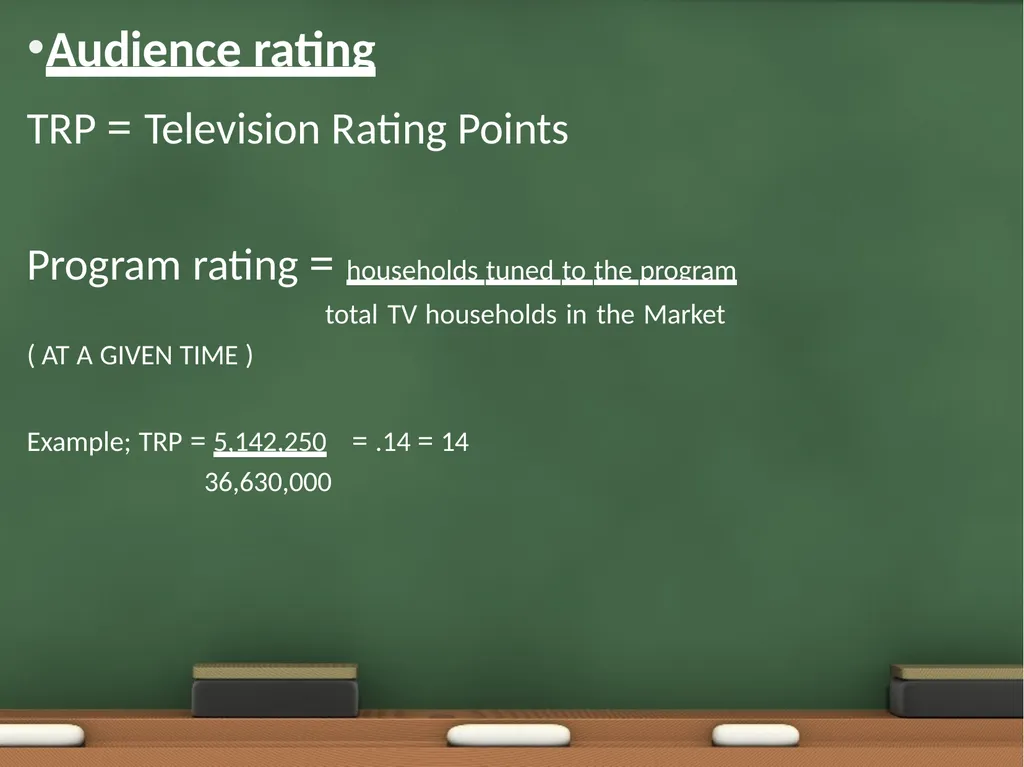
TRP = Television Rating Points
Program rating = households tuned to the program
total TV households in the Market
( AT A GIVEN TIME )
Example; TRP = 5,142,250 = .14 = 14
36,630,000<br>
slide70. SHARE OF AUDIENCE
Share of audience = house holds tuned to the program
house holds using television
If 60% of house holds in a market are watching a given program and 300 house holds are using TV at that time, the program’s share is 20.<br>
slide71. SELLING SPACE AND TIME • • The main income of newspaper in through the advertisements where as the income to the electronic media comes form the advertisement and selling time slots. Space selling in a news papers is providing the space to advertise their commercials. The space thus sold is in square cms. Time selling in television media is providing a specific time to telecast the specified programme made by the advertiser with the commercials. There the time sold is called ‘time-slot’. Time slot can be broken by the manufactures to telecast their advertisements directly or by the advertising agencies who process advertisement from different parties and place them in the programme according to the ‘Release orders’ by the advertisers.<br>
slide72. CONTRACTS AND LEGAL ARRANGEMENTS • • • • Media organization deals with different kind of people and almost all kind of professionals and concerns.
A ‘contract’ seems a must after the organisation engage a individual or company for a specific task.
A contract says the terms and conditions both the organisation and the party fixed, to be observed.
‘without agreement there is no contract’ so a contract is a written statement of parties MOU.
An organisation needs to enter into contracts for various needs like place, equipments, suppliers, talent service and so on.
Duration or total violations of term from the agreement leads to legal matter. Every organisation is having a legal departments of its own.
The legal departments drafts the term and conditions of the contract. If any of the term seems violated or not observed then to legal department of the organisations takes necessary steps to proceed legal action against the party through the court of law.
Labour contract, lease agreement, service agreement, purchase orders copy right claims are some topics normally a media organisation deals with.<br>
slide73. B.SC. Visual Communication MEDIA ORGANIZATION PART A
Define innovation.
Entrepreneurship.
Media convergence
What is organizational behavior?
Oligopoly- define.
What are the three types of media ownership?
Explain event management.
How decision making is important?
What is external communication?
Write a short note on marketing.
What are the factors for the success of an event? What techniques can be employed for its succe Or
Explain the organizational structure of the Doordarshan and AIR.
Name any ten media entrepreneurs and explain their role in innovation. Or
Explain the type of communication that takes place in a media organization with examples.
What are the employment opportunities available in the media industry? Or
Explain the various functions of financial management.
What are the roles and challenges of leadership in media management?
Or
What are the responsibilities of event management?
Explain the need for creativity and innovation in a media business. Or
What are the factors that help understand the market?<br>