04
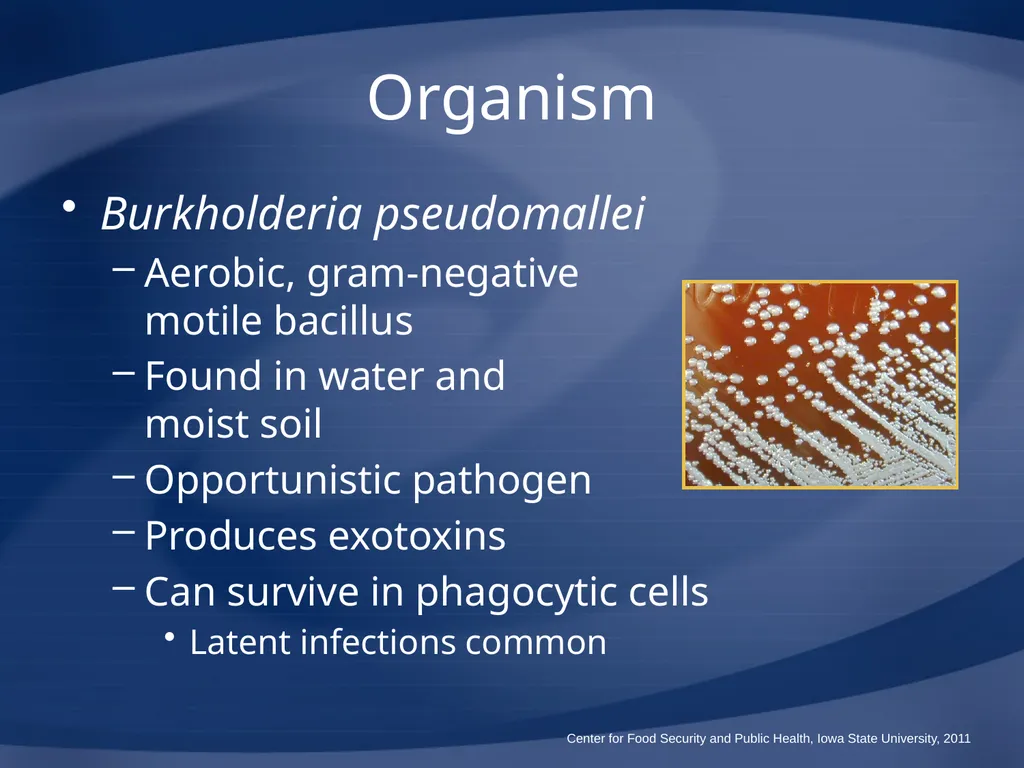
Organism Burkholderia pseudomallei
Aerobic, gram-negative �motile bacillus
Found in water and moist soil
Opportunistic pathogen
Produces exotoxins
Can survive in phagocytic cells
Latent infections common Center for Food Security and Public Health, Iowa State University, 2011<br>
06
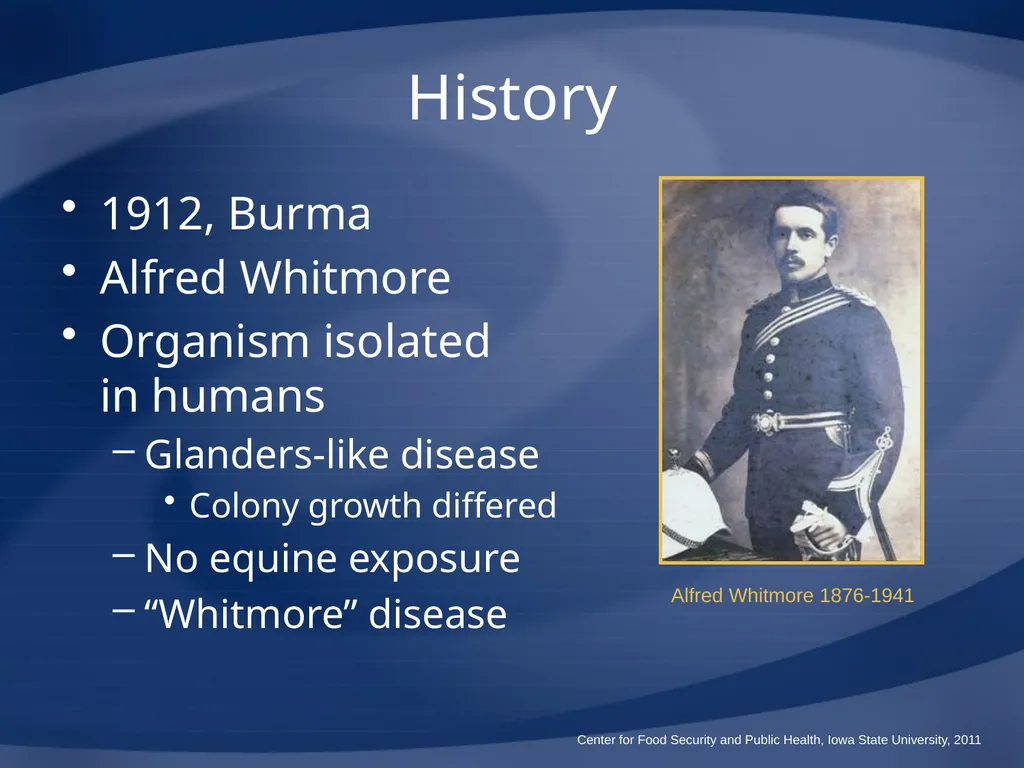
History 1912, Burma
Alfred Whitmore
Organism isolated �in humans
Glanders-like disease
Colony growth differed
No equine exposure
“Whitmore” disease Center for Food Security and Public Health, Iowa State University, 2011 Alfred Whitmore 1876-1941<br>
07
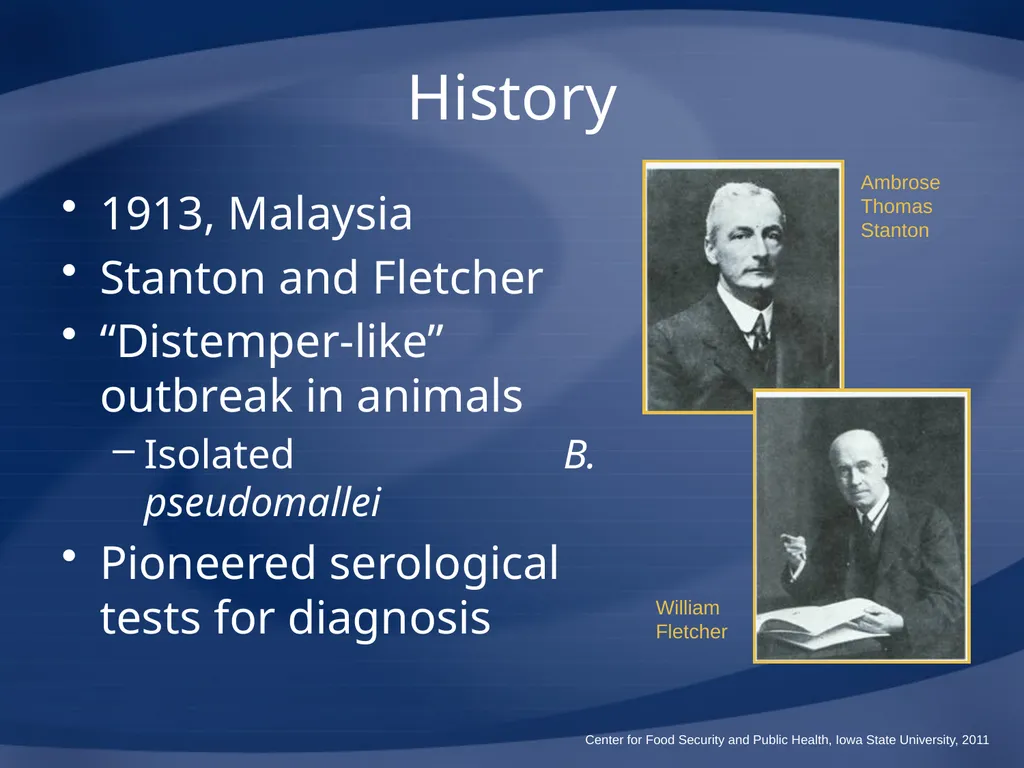
History 1913, Malaysia
Stanton and Fletcher
“Distemper-like” outbreak in animals
Isolated B. pseudomallei
Pioneered serological tests for diagnosis Center for Food Security and Public Health, Iowa State University, 2011 Ambrose
Thomas
Stanton William Fletcher<br>
08
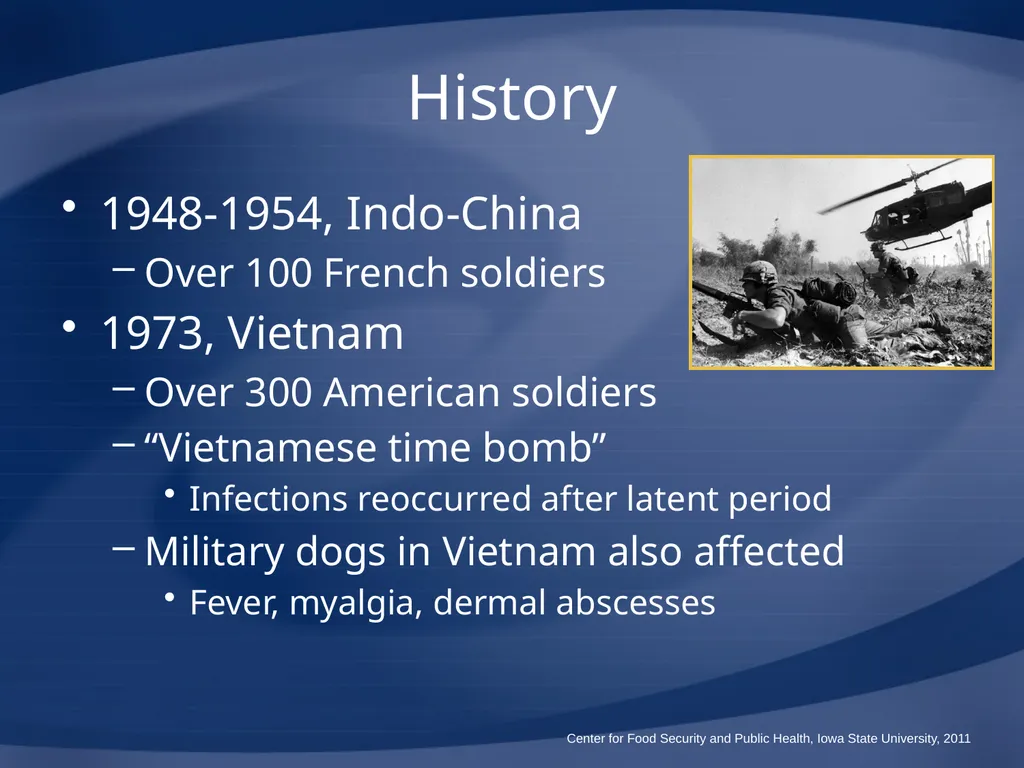
History 1948-1954, Indo-China
Over 100 French soldiers
1973, Vietnam
Over 300 American soldiers
“Vietnamese time bomb”
Infections reoccurred after latent period
Military dogs in Vietnam also affected
Fever, myalgia, dermal abscesses Center for Food Security and Public Health, Iowa State University, 2011<br>
09
History 1970s, France
Numerous horses and zoo �animals affected
Melioidosis in temperate climates
1989
Effective antibiotic treatment identified Center for Food Security and Public Health, Iowa State University, 2011<br>
11
Transmission Wound infection
Contact with contaminated soil or water
Ingestion
Contaminated water
Inhalation
Dust from contaminated soil
Rarely
Person-to-person
Animal-to-person Center for Food Security and Public Health, Iowa State University, 2011<br>
13
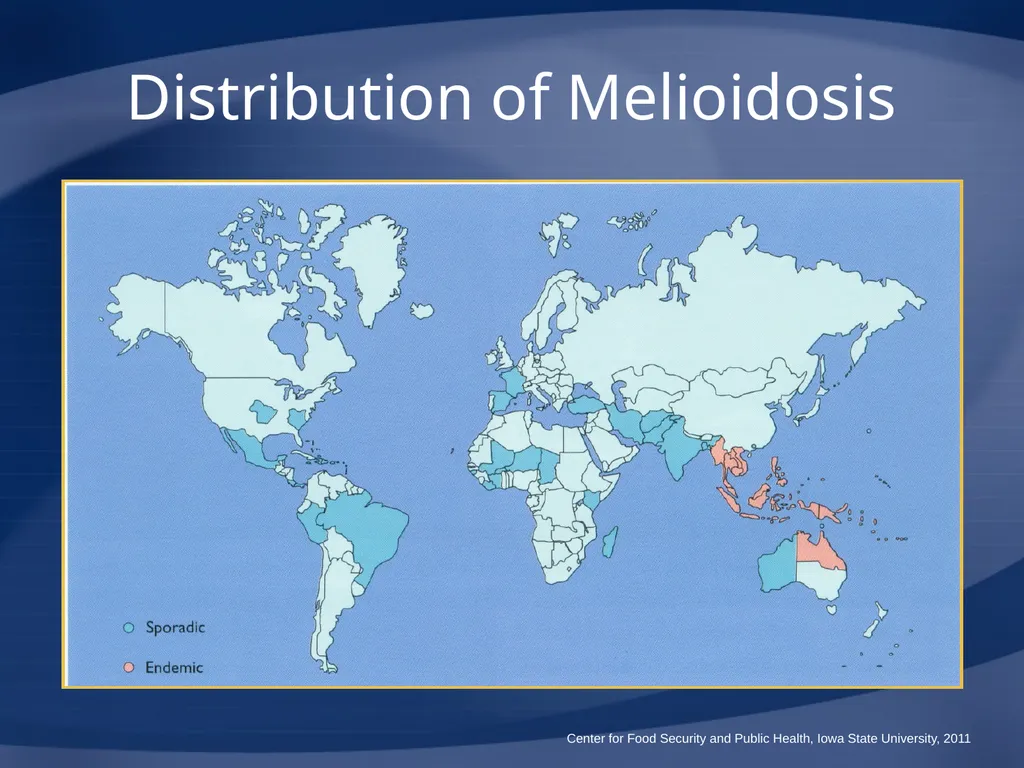
Epidemiology Endemic in tropics and subtropics
Southeast Asia, China, India, parts of Australia
Also reported in:
Caribbean, Middle East, South America, Singapore, Taiwan
May be present in Africa
U.S. cases linked with travel abroad Center for Food Security and Public Health, Iowa State University, 2011<br>
14
Distribution of Melioidosis Center for Food Security and Public Health, Iowa State University, 2011<br>
15
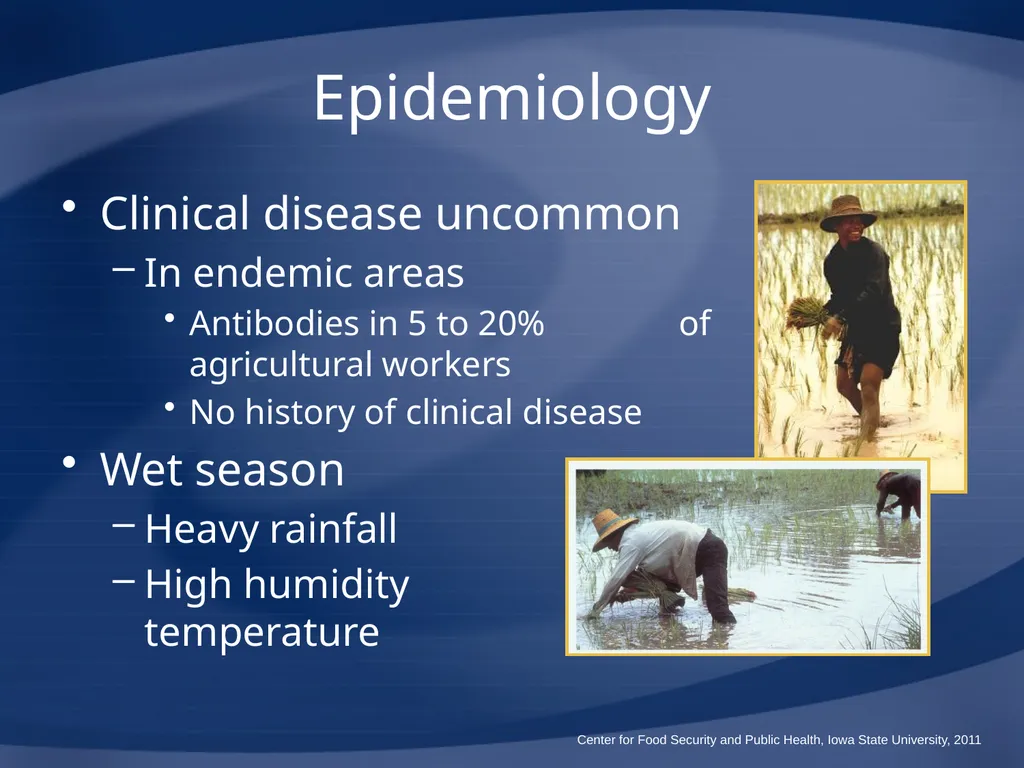
Epidemiology Clinical disease uncommon
In endemic areas
Antibodies in 5 to 20% of agricultural workers
No history of clinical disease
Wet season
Heavy rainfall
High humidity or temperature Center for Food Security and Public Health, Iowa State University, 2011<br>
17
Human Disease Incubation period: <1 day to years
Latent infection
Most infections asymptomatic
Clinical forms
Acute pulmonary infection
Most common
Focal infection
Septicemia
Neurological (rare) Center for Food Security and Public Health, Iowa State University, 2011<br>
18
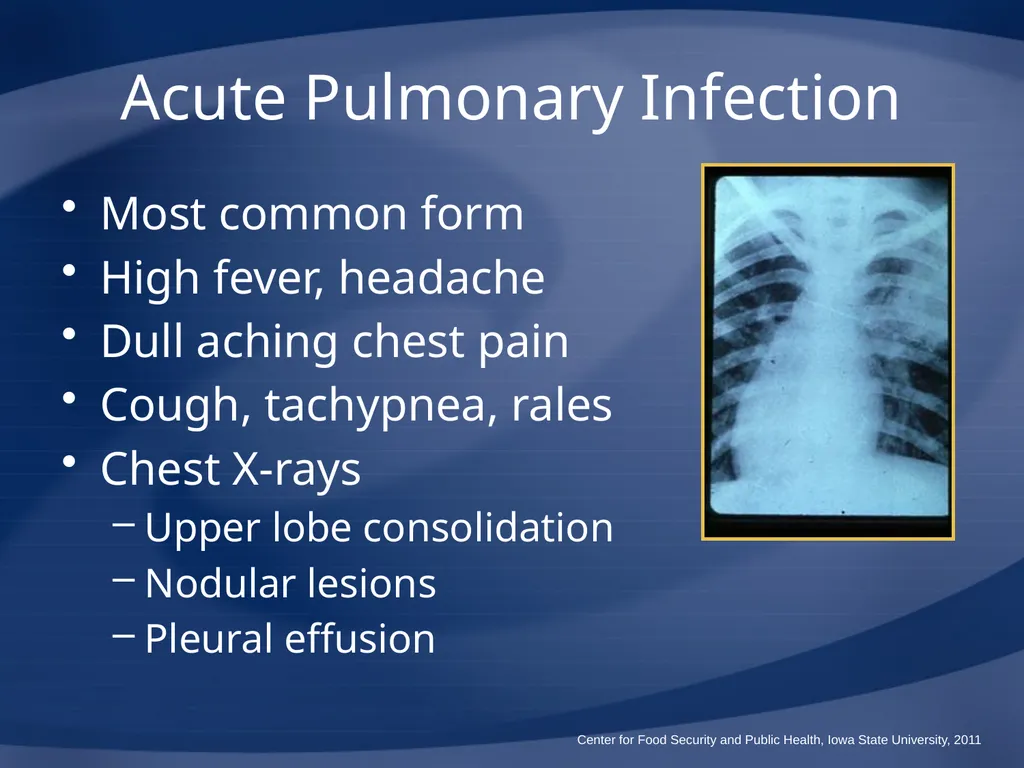
Acute Pulmonary Infection Most common form
High fever, headache
Dull aching chest pain
Cough, tachypnea, rales
Chest X-rays
Upper lobe consolidation
Nodular lesions
Pleural effusion Center for Food Security and Public Health, Iowa State University, 2011<br>
19
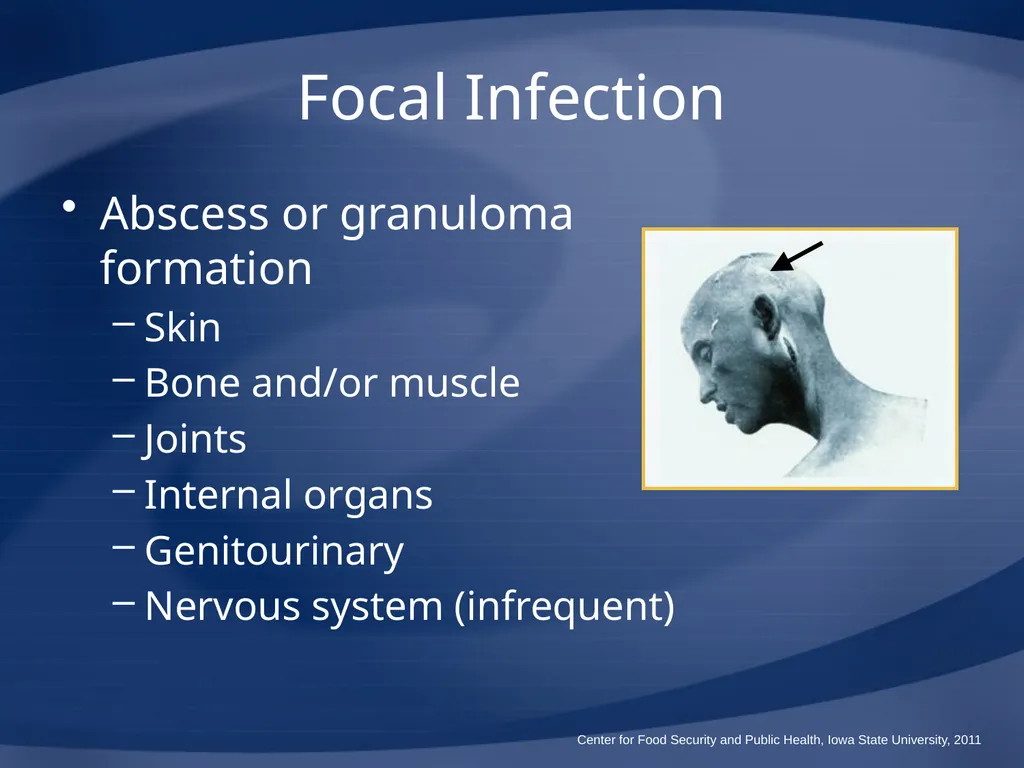
Focal Infection Abscess or granuloma formation
Skin
Bone and/or muscle
Joints
Internal organs
Genitourinary
Nervous system (infrequent) Center for Food Security and Public Health, Iowa State University, 2011<br>
20
Septicemic Melioidosis Acute onset
High fever, tachypnea, dyspnea, myalgia, hepatosplenomegaly, �septic shock
Concurrent disease
Mortality
90% without treatment
50% with treatment Center for Food Security and Public Health, Iowa State University, 2011<br>
21
Diagnosis and Treatment Diagnosis
Isolation of organism
Various serological tests
Treatment
Systemic antibiotics
Trimethoprim sulfa
Ceftazidime
Surgical drainage of skin wounds
No vaccine available Center for Food Security and Public Health, Iowa State University, 2011<br>
22
Animals and Melioidosis<br>
23
Species Affected Severe disease in sheep, goats
Pigs (chronic form)
Occasional infection
Cattle, horses, dogs, cats, buffalo
Monkeys, rodents, camels, alpacas
Birds, tropical fish
Incubation period
Variable, days to years Center for Food Security and Public Health, Iowa State University, 2011<br>
24
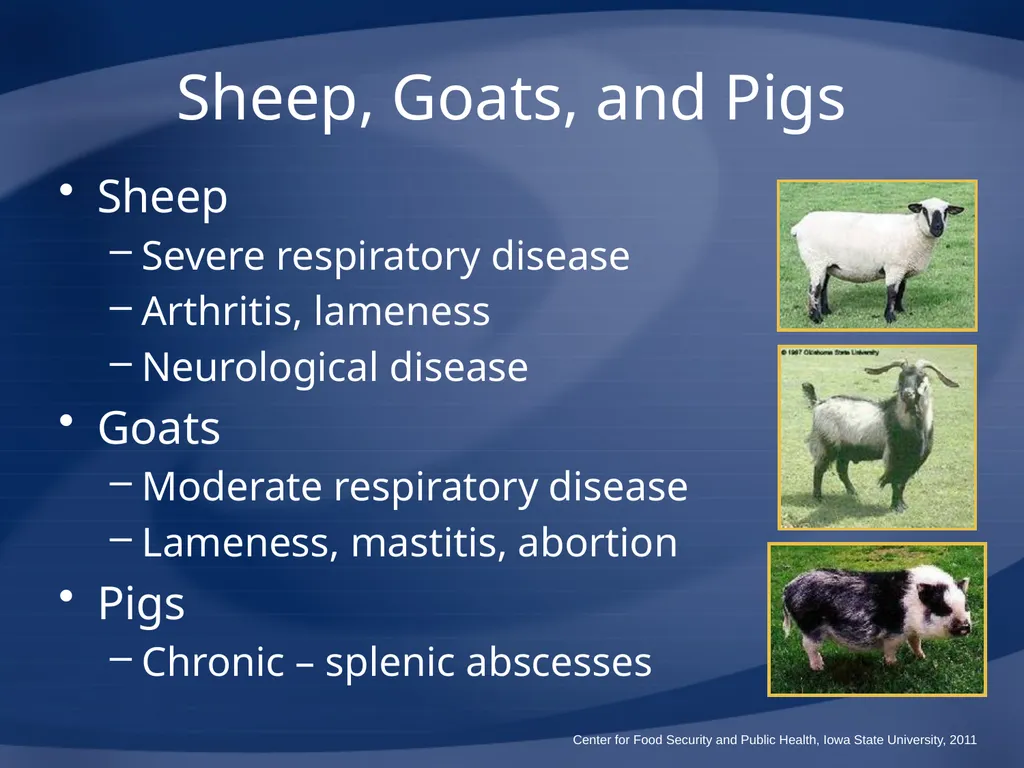
Sheep, Goats, and Pigs Sheep
Severe respiratory disease
Arthritis, lameness
Neurological disease
Goats
Moderate respiratory disease
Lameness, mastitis, abortion
Pigs
Chronic – splenic abscesses Center for Food Security and Public Health, Iowa State University, 2011<br>
25
Other Species Horses and cattle
Neurologic signs
Respiratory disease
Dogs (rare)
Dermal abscesses, epididymitis, lameness, �leg swelling
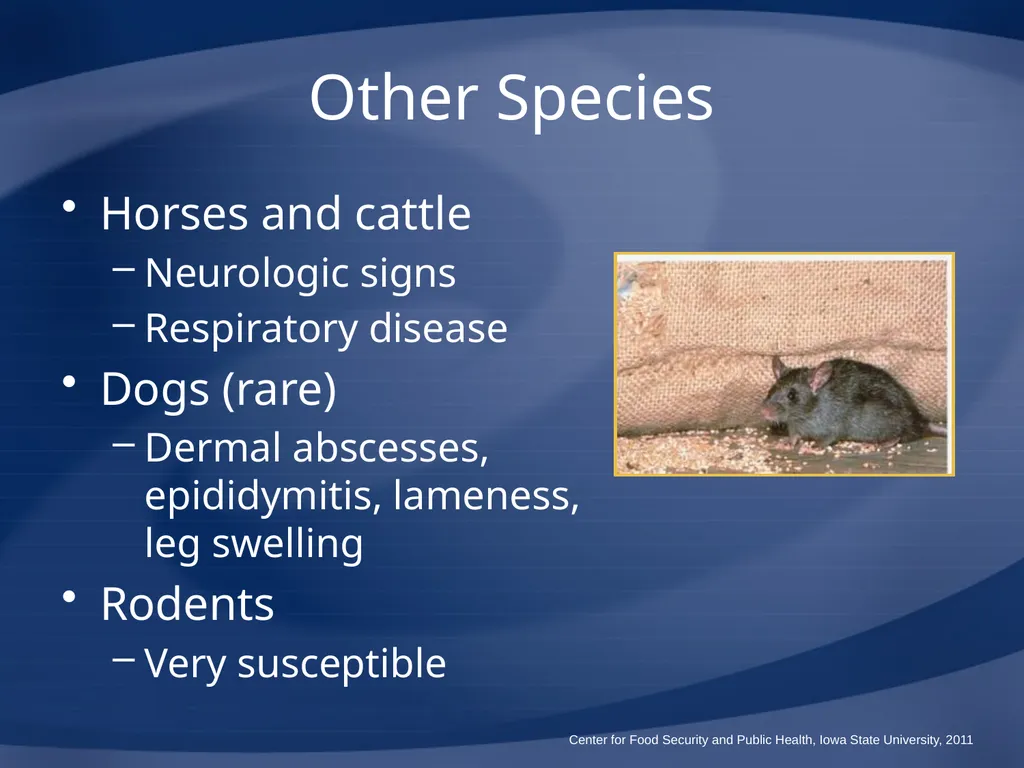
Rodents
Very susceptible Center for Food Security and Public Health, Iowa State University, 2011<br>
26
Prevention and Control<br>
27
Control and Prevention Avoid contact with soil and water �in endemic areas
Husbandry practices
Drinking water
Use fresh sources
Chlorination effective
Use care during necropsies
Thorough cleaning of wounds
No vaccine available Center for Food Security and Public Health, Iowa State University, 2011<br>
28
Melioidosis as a Bioweapon CDC Category B Agent
Moderately easy to disseminate
Moderate morbidity
Low mortality
Specific diagnostics required
Very stable in the environment
Killed very easily by heat Center for Food Security and Public Health, Iowa State University, 2011<br>
29
Additional Resources CDC
National Center for Zoonotic, Vector-Borne, and Enteric Diseases
http://www.cdc.gov/nczved/divisions/dfbmd/diseases/melioidosis/ Center for Food Security and Public Health, Iowa State University, 2011<br>
30
Additional Resources World Organization for Animal Health (OIE)
www.oie.int
U.S. Department of Agriculture (USDA)
www.aphis.usda.gov
Center for Food Security and Public Health
www.cfsph.iastate.edu
USAHA Foreign Animal Diseases�(“The Gray Book”)
www.usaha.org/pubs/fad.pdf Center for Food Security and Public Health, Iowa State University, 2011<br>
31
Acknowledgments Development of this presentation�was funded by grants from
the Centers for Disease Control and Prevention, the Iowa Homeland Security and Emergency Management Division, and the Iowa Department of Agriculture and Land Stewardship �to the Center for Food Security and Public Health at Iowa State University.
Authors: Glenda Dvorak, DVM, MS, MPH, DACVPM; Radford Davis, DVM, MPH, DACVPM
Reviewers: Gayle Brown, DVM, PhD, Bindy Sornsin, BA; Jared Voge, MS; Kerry Leedom Larson, DVM, MPH, PhD Center for Food Security and Public Health, Iowa State University, 2011<br>