MELT Class 1 Driver Training Defensive and cooperative driving Lesson overview Use defensive and cooperative driving strategies Identify hazards and conflicts Communicate effectively with other road users Understand how driving conditions
"MELT Class 1 Driver Training Defensive and" is the property of its rightful owner. Permission is granted to
download and print the materials on this website for personal, non-commercial use only, and to display it
on your personal computer provided you do not modify the materials and that you retain all copyright
notices contained in the materials. By downloading content from our website, you accept the terms of this
agreement.
Presentation Transcript
01
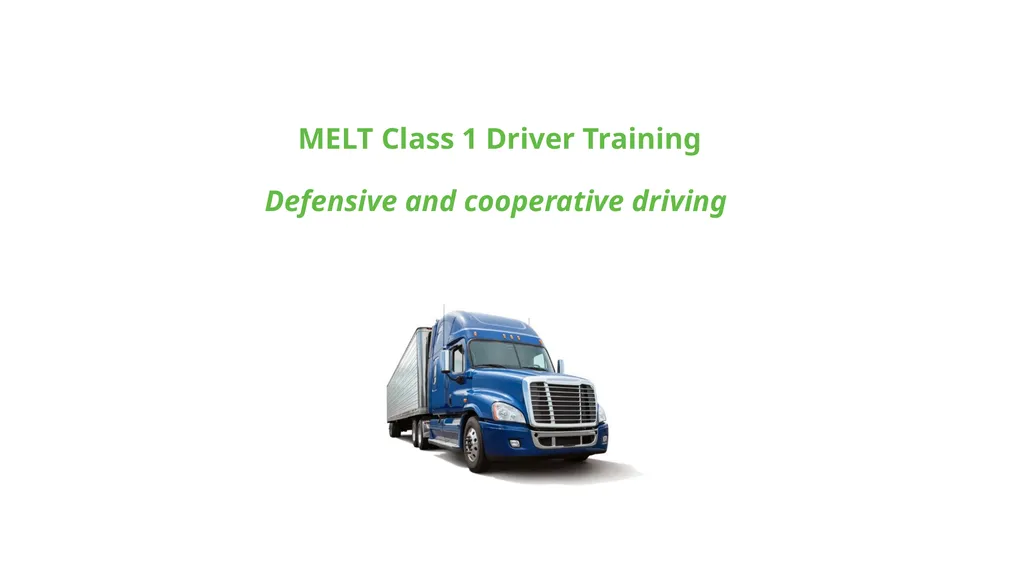
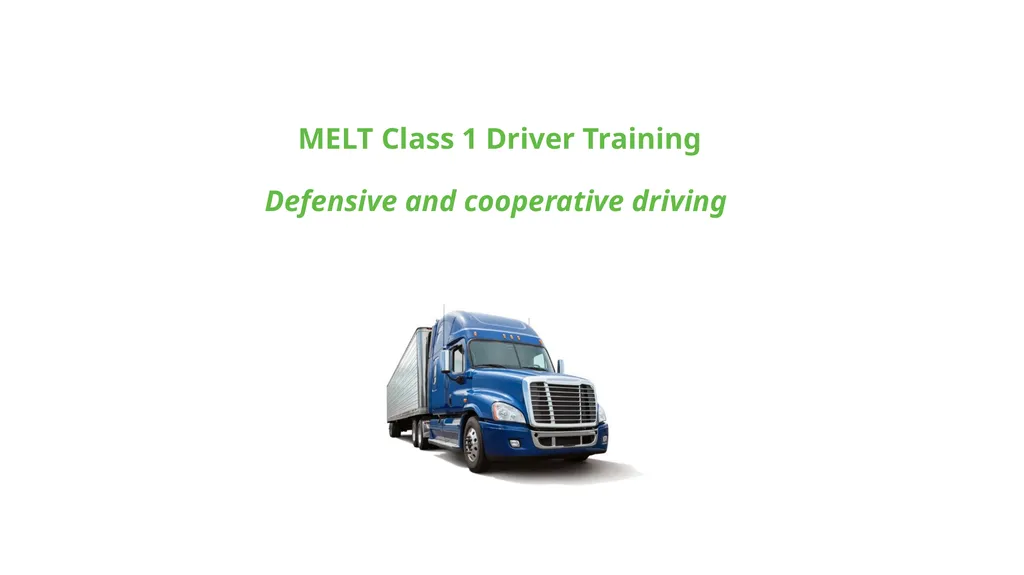
MELT Class 1 Driver Training Defensive and cooperative driving<br>
02
Lesson overview Use defensive and cooperative driving strategies
Identify hazards and conflicts
Communicate effectively with other road users
Understand how driving conditions affect safety
Appreciate how the size and weight of a tractor-trailer affects other road users
Recognize common situations that lead to crashs and explain strategies to avoid them
Understand that personal attitudes and good driving habits are key to preventing crashs
Understand the challenges of driving in adverse conditions. 2<br>
03
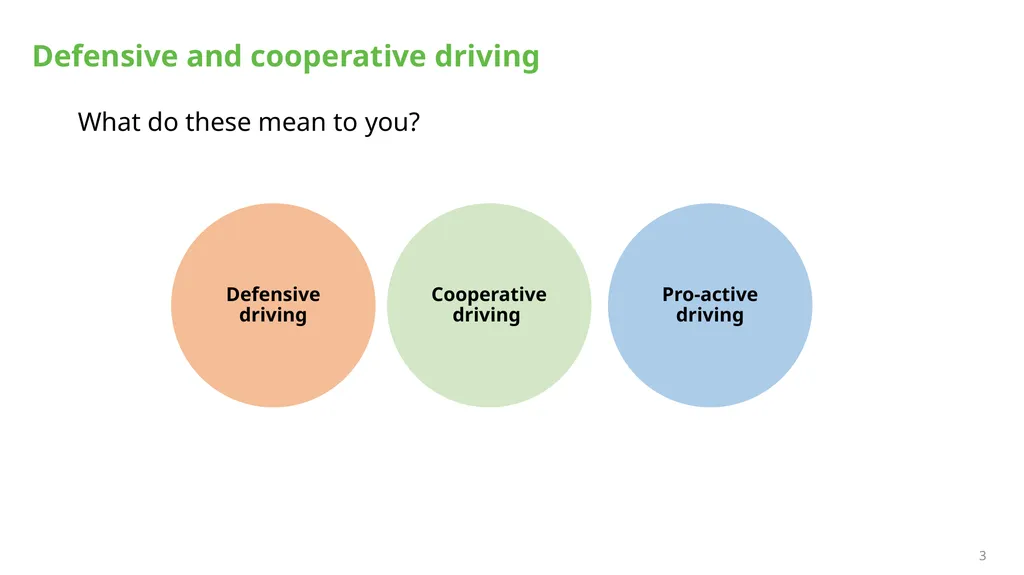
Defensive and cooperative driving What do these mean to you? 3<br>
04
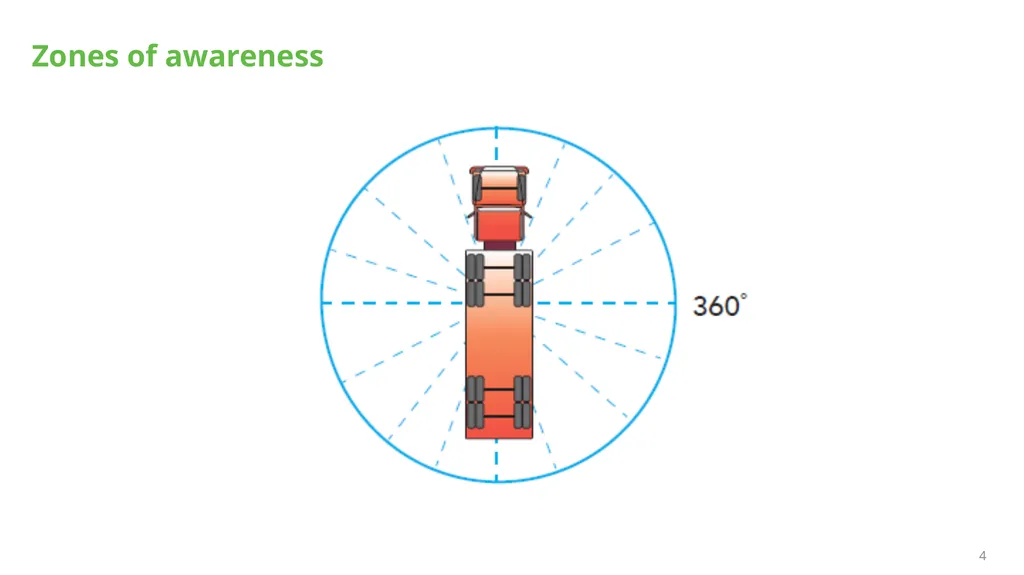
Zones of awareness 4<br>
05
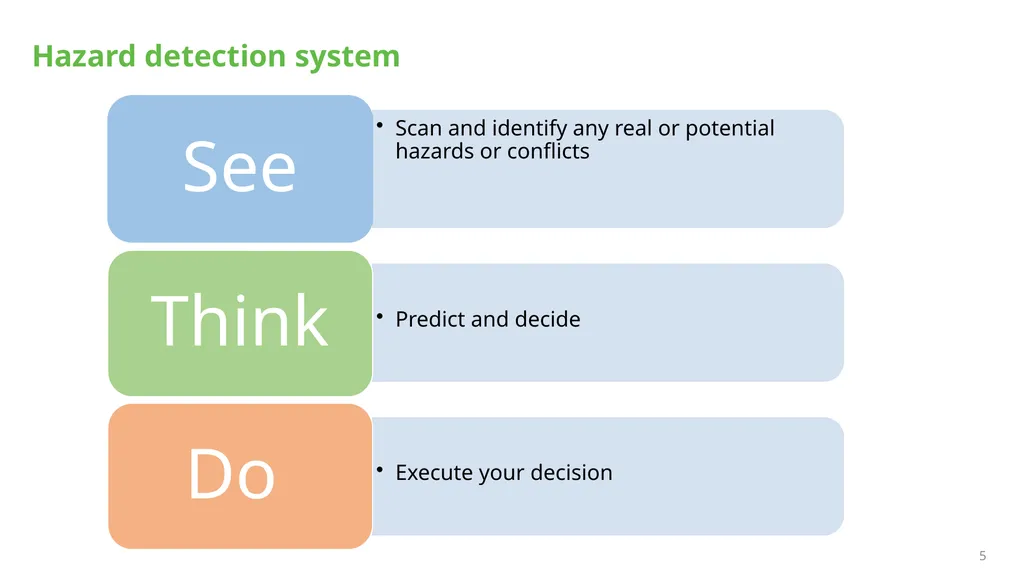
Hazard detection system 5<br>
06
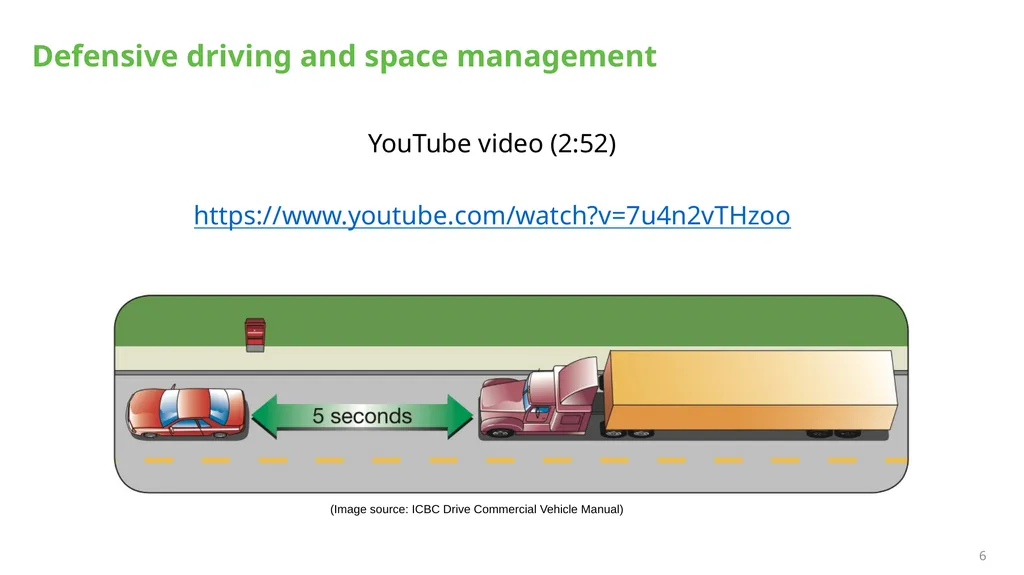
Defensive driving and space management YouTube video (2:52)
https://www.youtube.com/watch?v=7u4n2vTHzoo 6 (Image source: ICBC Drive Commercial Vehicle Manual)<br>
07
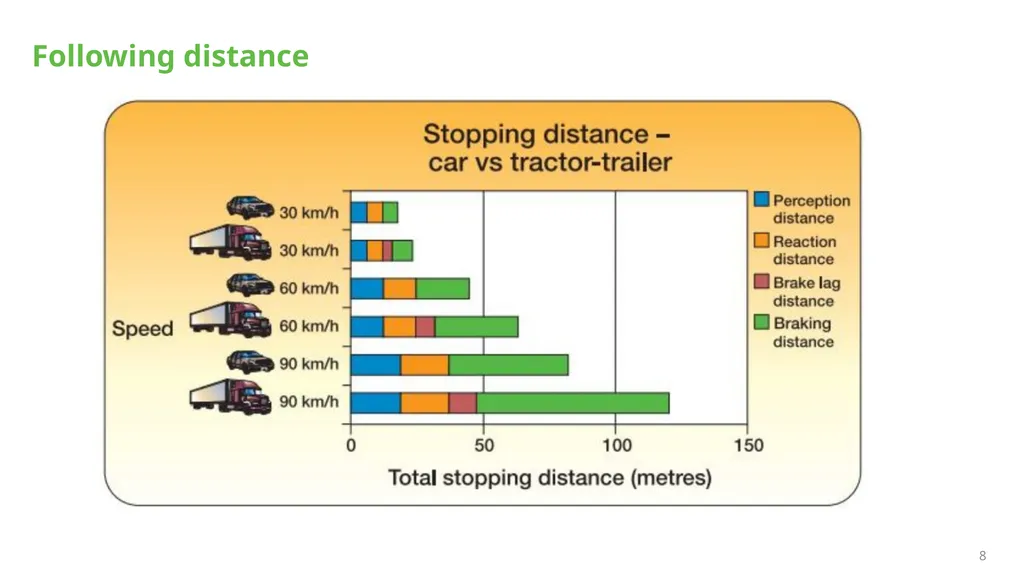
Stopping distance and stopping time Total stopping distance is the distance your vehicle will travel from the moment you:
See — a hazard
Think — decide to stop
Do — place your foot on the brake pedal until you stop
It takes about 3/4 of a second of perception time to see the problem (see-think) and another 3/4 of a second to react (do).
Only then will your vehicle begin to slow down. 7<br>
08
Following distance 8<br>
09
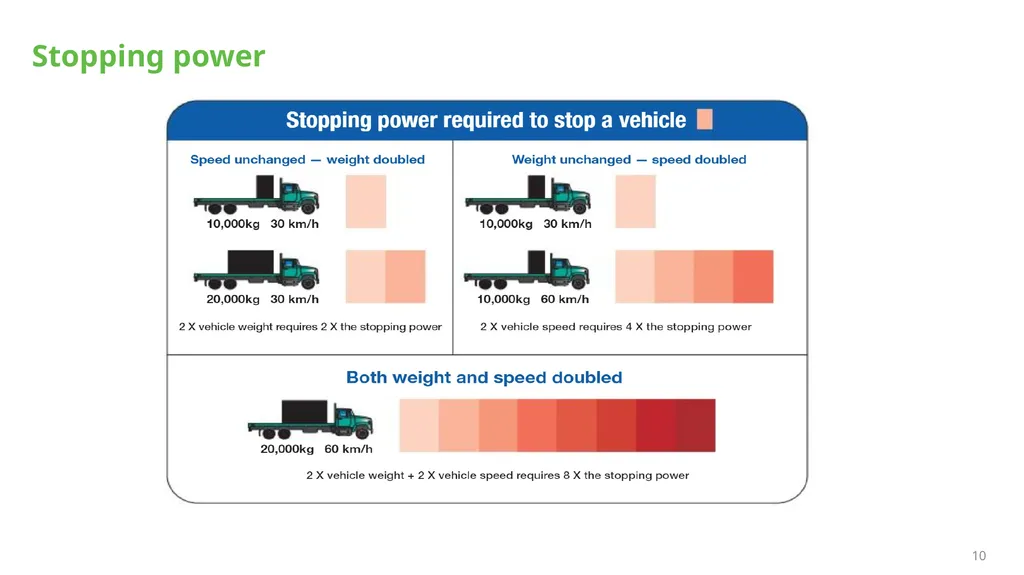
Speed and weight effects on stopping Speed and weight affect the stopping power required to stop any vehicle, and how far it will travel before it stops.
You need more stopping power when the speed you’re travelling, and/or the weight of your vehicle, increases:
2 ✕ vehicle speed requires 4 ✕ the stopping power,
2 ✕ vehicle weight requires 2 ✕ the stopping power, and
2 ✕ vehicle speed and 2 ✕ vehicle weight requires 8 ✕ the stopping power. 9<br>
10
Stopping power 10<br>
11
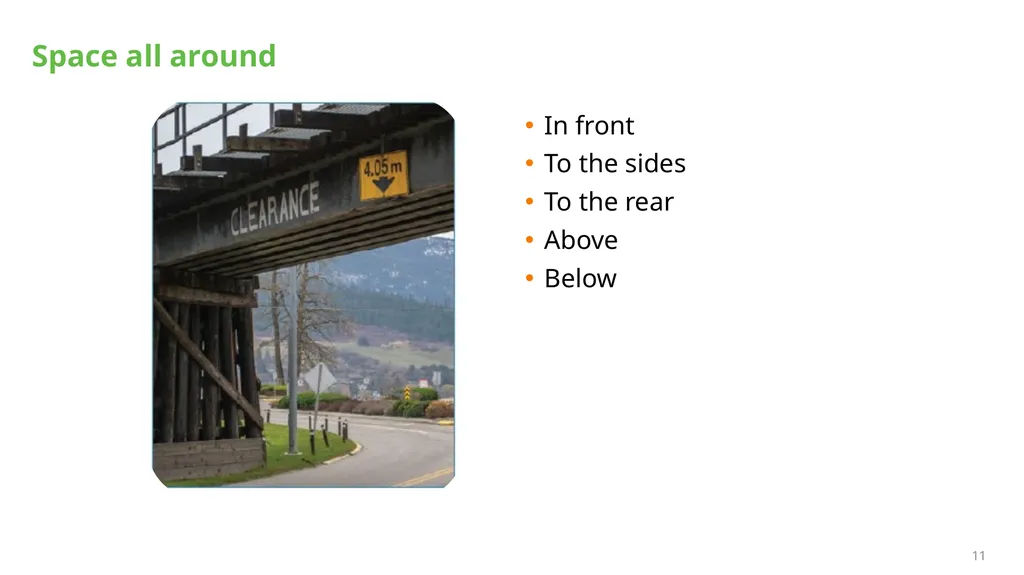
Space all around In front
To the sides
To the rear
Above
Below 11<br>
12
Developing good visual habits 12 Keep your eyes moving
YouTube video (41 seconds )
https://www.youtube.com/watch?v=2INaqewU518<br>
13
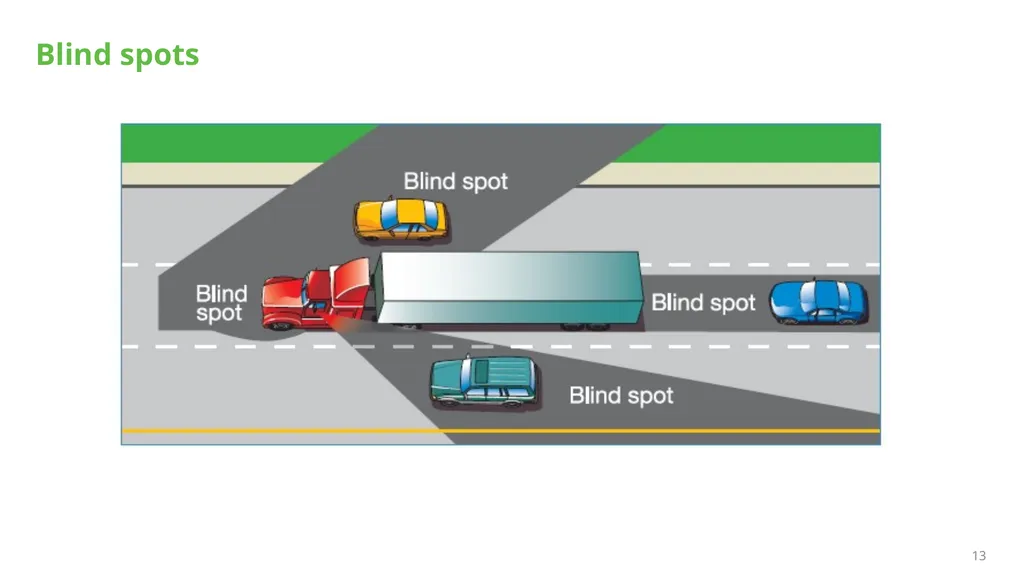
Blind spots 13<br>
14
What can these other senses tell you? What would you pay attention to?
Have you had an experience with this in your own vehicle?
Discuss in your groups. 14<br>
15
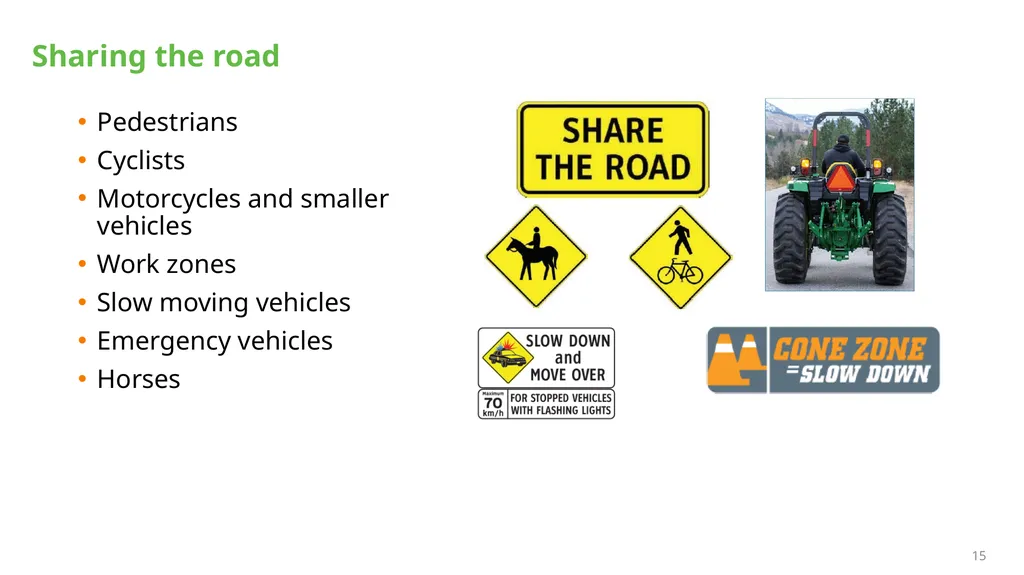
Sharing the road Pedestrians
Cyclists
Motorcycles and smaller vehicles
Work zones
Slow moving vehicles
Emergency vehicles
Horses 15<br>
16
Driving conditions – watch for surprises! Frozen snow from truck smashes car window
YouTube video(1:08)
https://www.youtube.com/watch?v=jGNDPHqUslg 16<br>
17
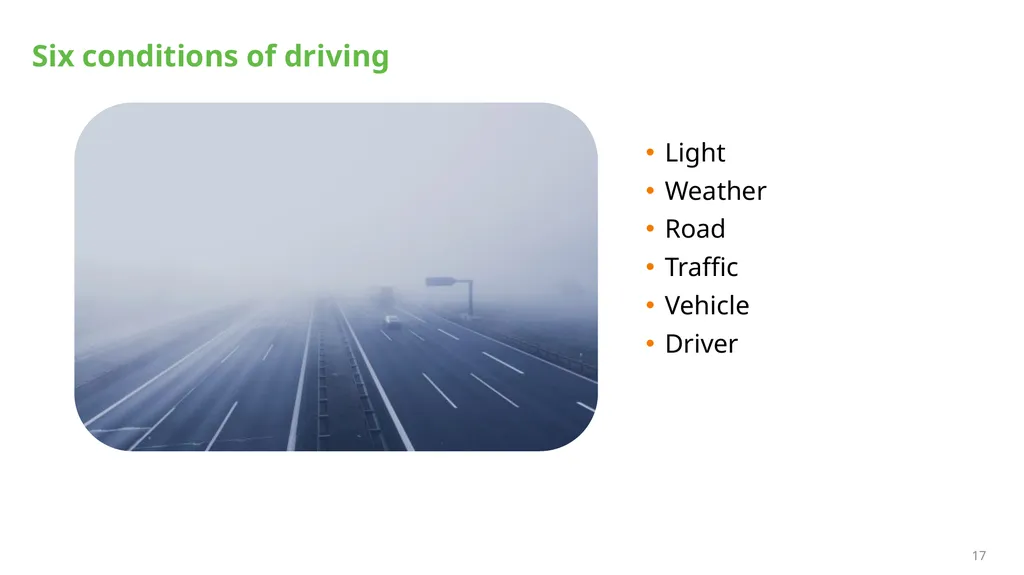
Six conditions of driving Light
Weather
Road
Traffic
Vehicle
Driver 17<br>
18
Crash avoidance Vehicle ahead – travelling in same direction
Another vehicle passing you
Ground clearance such as railway crossing
Vehicle behind – travelling in same direction
Vehicle approaching intersection or at an angle
You passing another vehicle
Someone driving beside you
Oncoming vehicle
Overhead objects
What risks or situations could happen when driving under these situations?
How could you reduce your risk or the risk to others? 18<br>