
Memory testing methodologies For embedded memory

Description: Memory testing methodologies For embedded memory Minghuan Zhao 1 2 Fault Characteristics Address-Decoder Fault (AF) Stuck-At Fault (SAF) Transition Fault (TF) Coupling Fault (CF) 3 Traditional solution Walking Pattern-Complexity 2N2 Sliding
Related Topics
Download Presentation
"Memory testing methodologies For embedded memory" is the property of its rightful owner. Permission is granted to download and print the materials on this website for personal, non-commercial use only, and to display it on your personal computer provided you do not modify the materials and that you retain all copyright notices contained in the materials. By downloading content from our website, you accept the terms of this agreement.
Presentation Transcript
slide1. Memory testing methodologies For embedded memory Minghuan Zhao 1<br>
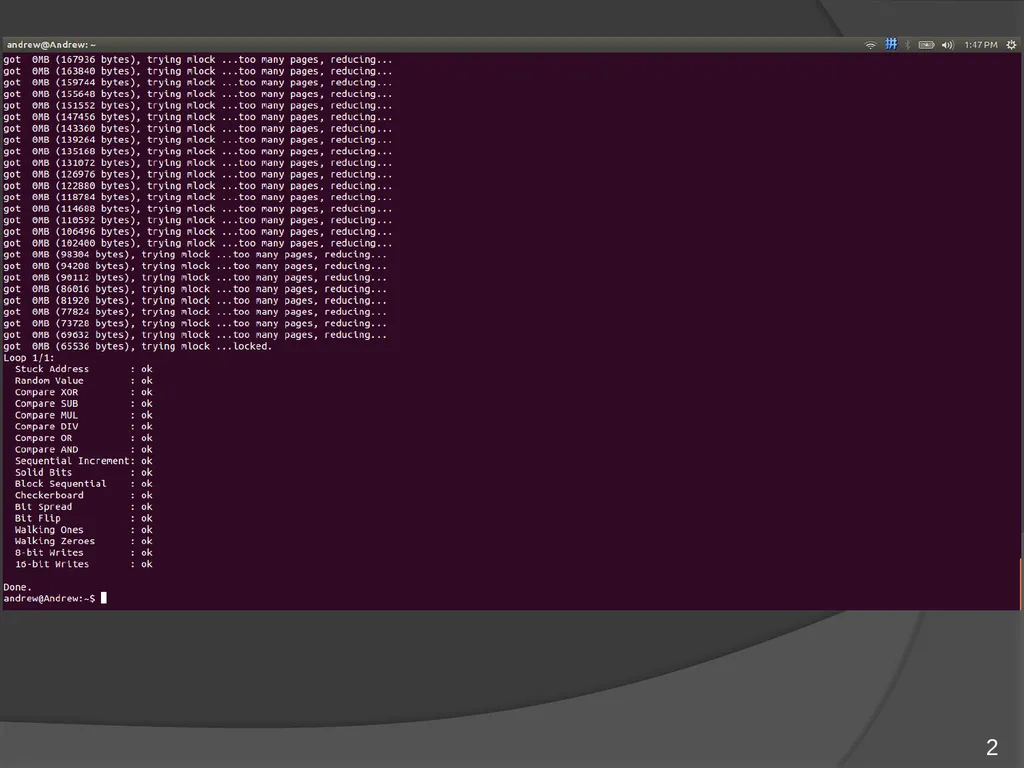
slide2. 2<br>
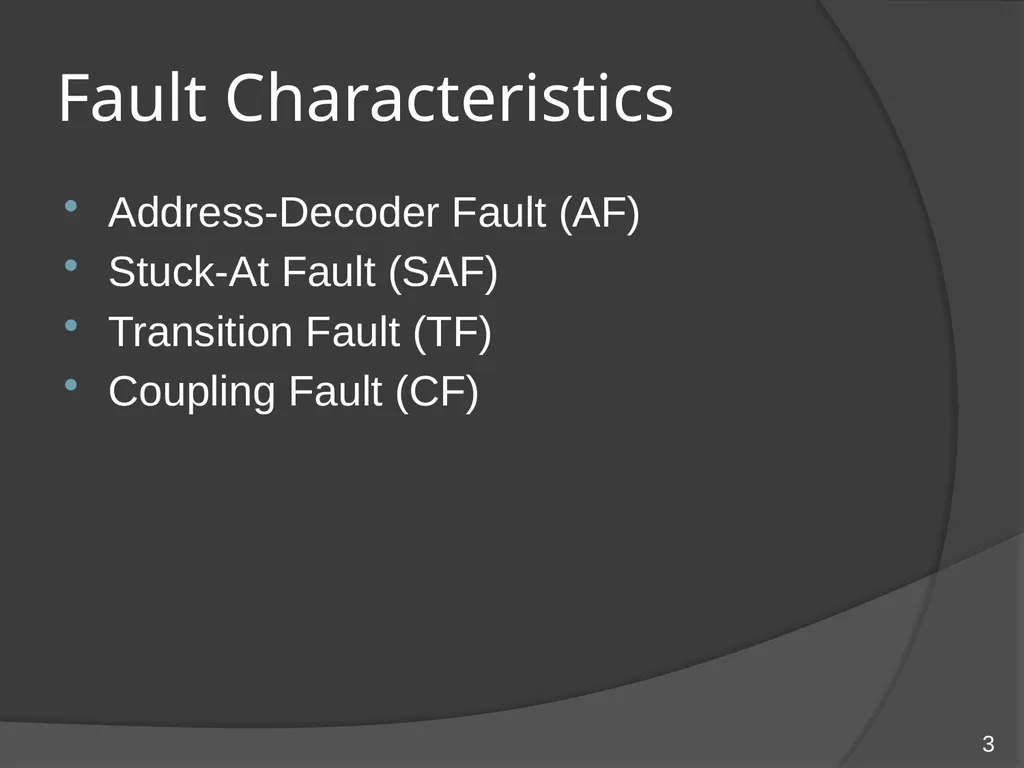
slide3. Fault Characteristics Address-Decoder Fault (AF)
Stuck-At Fault (SAF)
Transition Fault (TF)
Coupling Fault (CF) 3<br>
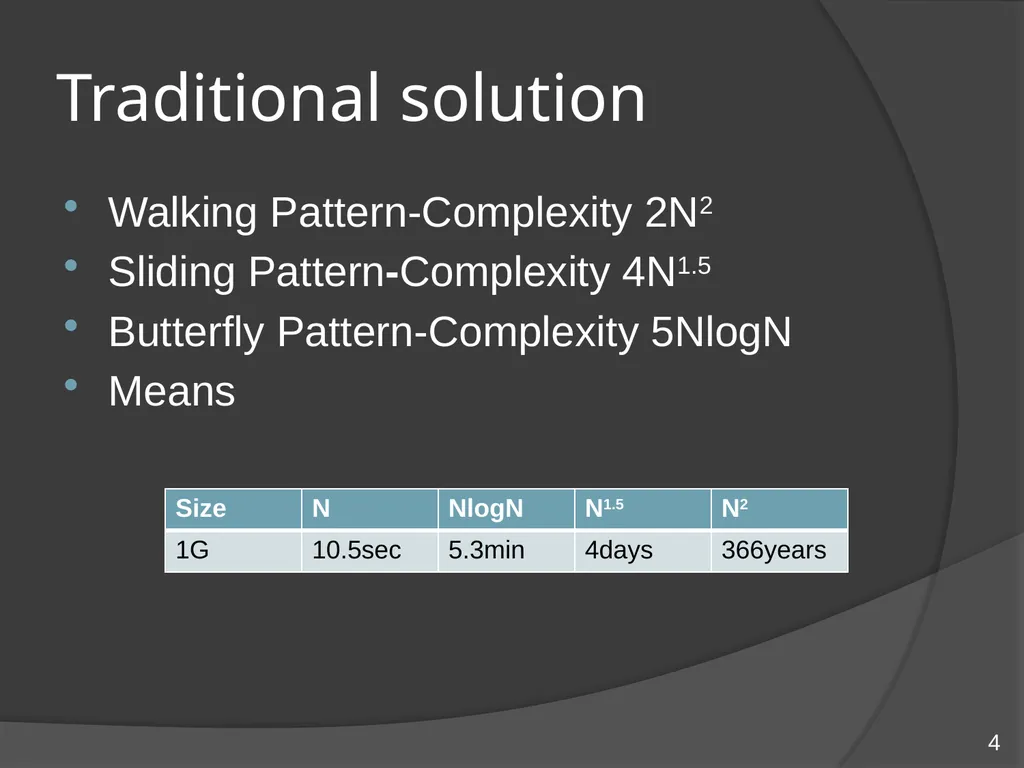
slide4. Traditional solution Walking Pattern-Complexity 2N2
Sliding Pattern-Complexity 4N1.5
Butterfly Pattern-Complexity 5NlogN
Means 4<br>
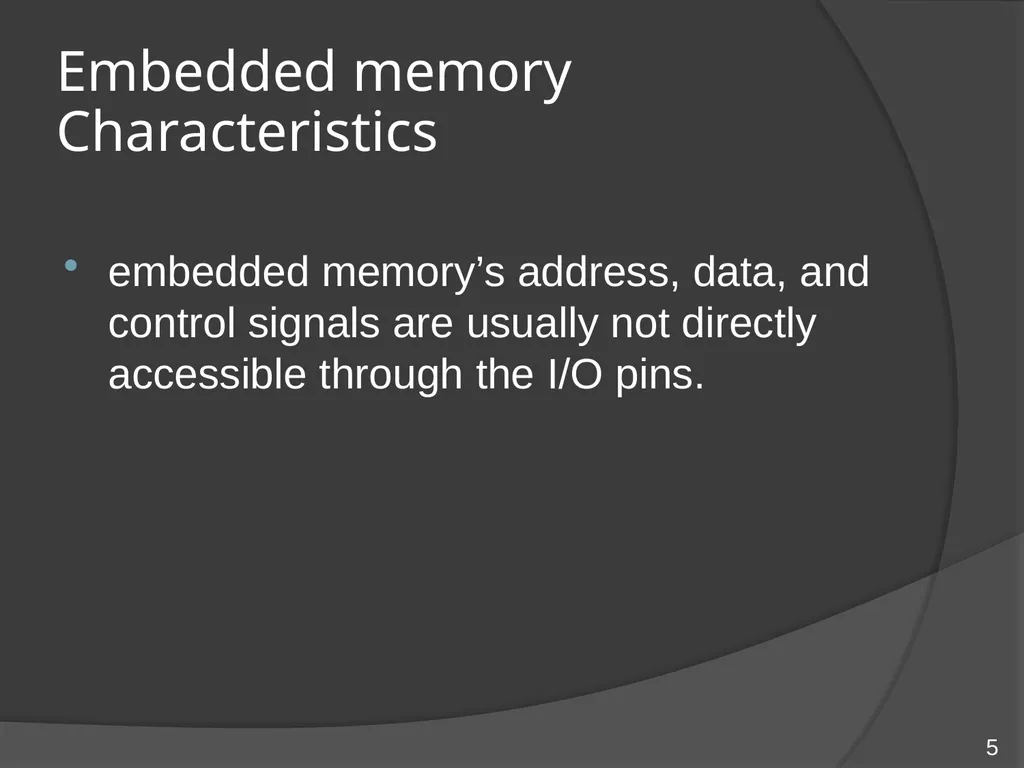
slide5. Embedded memory Characteristics embedded memory’s address, data, and control signals are usually not directly accessible through the I/O pins. 5<br>
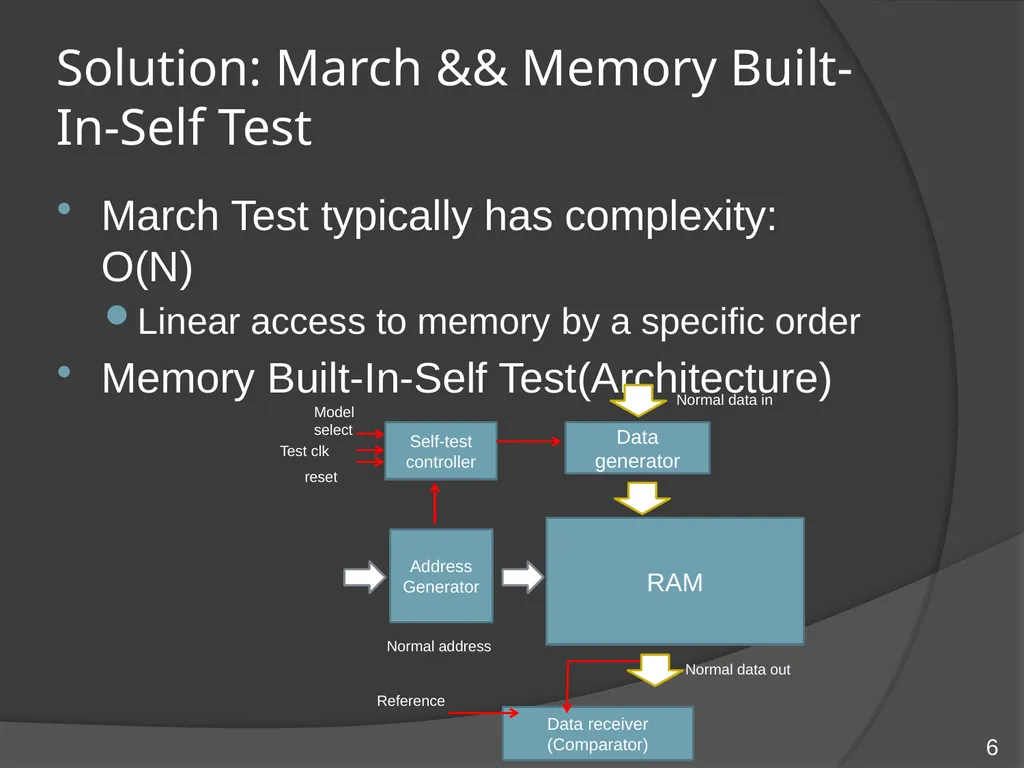
slide6. Solution: March && Memory Built-In-Self Test March Test typically has complexity: O(N)
Linear access to memory by a specific order
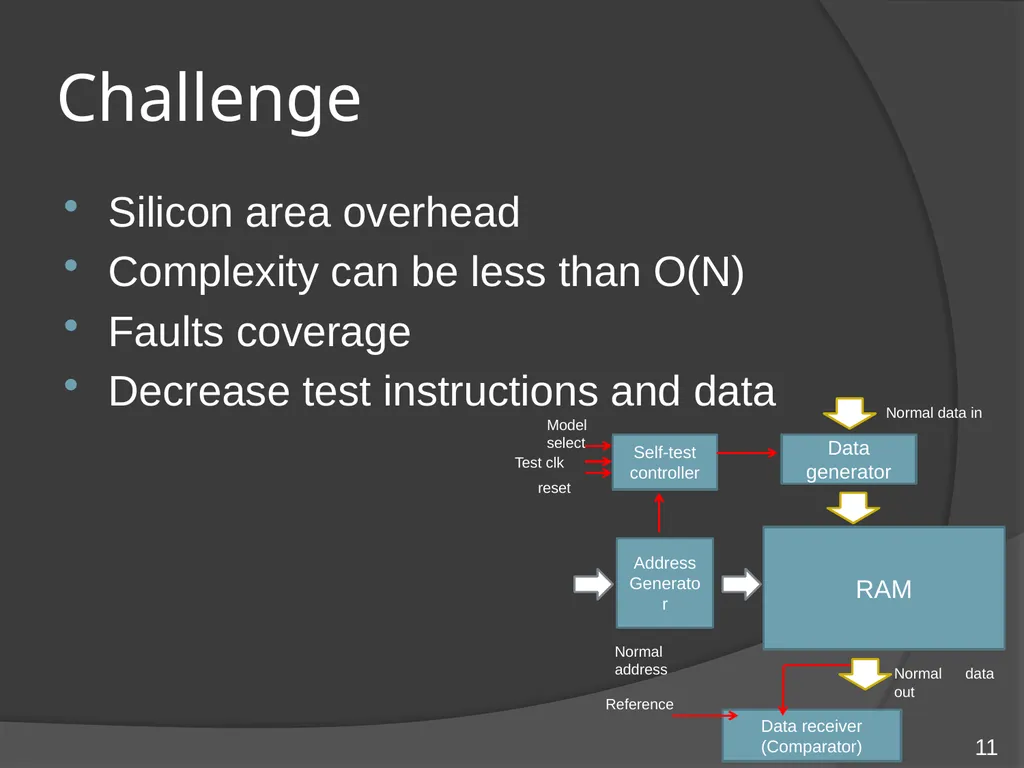
Memory Built-In-Self Test(Architecture) 6<br>
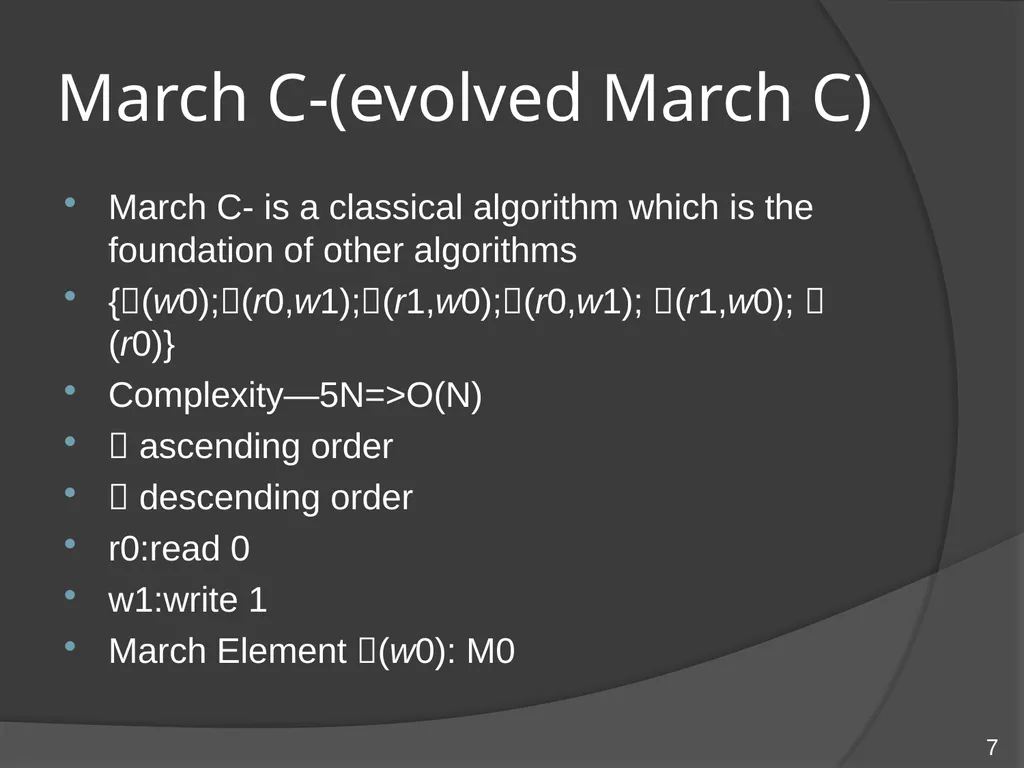
slide7. March C-(evolved March C) March C- is a classical algorithm which is the foundation of other algorithms
{(w0);(r0,w1);(r1,w0);(r0,w1); (r1,w0); (r0)}
Complexity—5N=>O(N)
ascending order
descending order
r0:read 0
w1:write 1
March Element (w0): M0 7<br>
slide8. {(w0);(r0,w1);(r1,w0);(r0,w1); (r1,w0); (r0)} M0 M1 M2 M3 M4 M5 Address Fault, Transition Fault: M2 and M3
Stuck-At Fault: overwrite 0’s and 1’s 8<br>
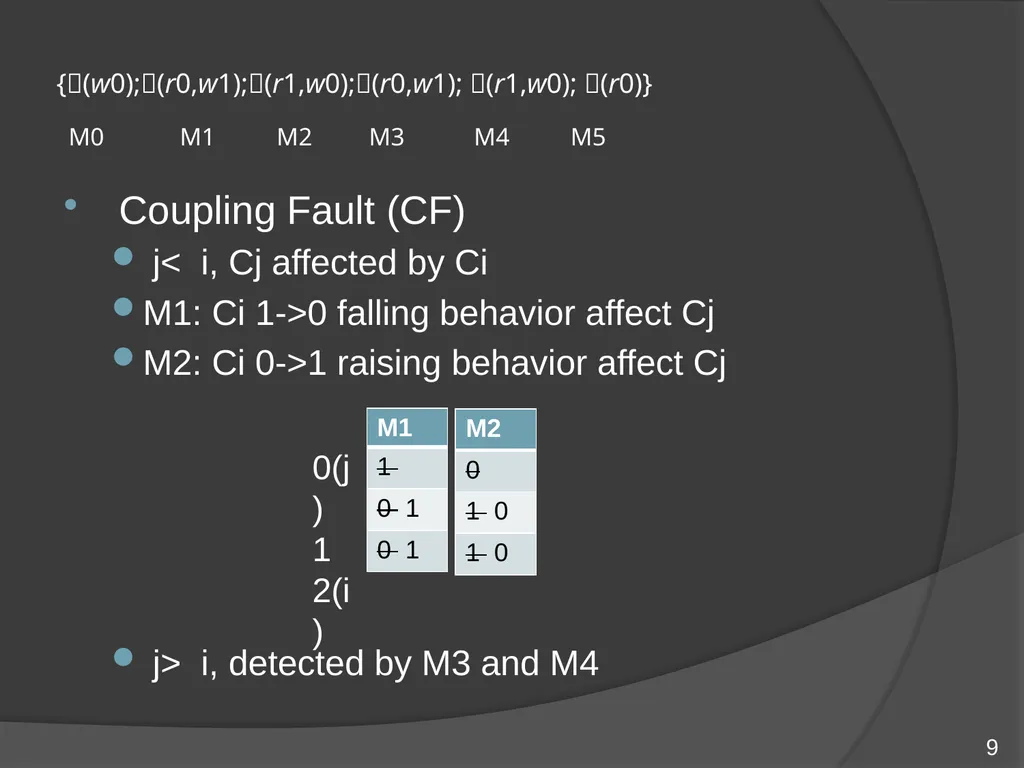
slide9. Coupling Fault (CF)
j< i, Cj affected by Ci
M1: Ci 1->0 falling behavior affect Cj
M2: Ci 0->1 raising behavior affect Cj
j> i, detected by M3 and M4 {(w0);(r0,w1);(r1,w0);(r0,w1); (r1,w0); (r0)} M0 M1 M2 M3 M4 M5 0(j)
1
2(i) 9<br>
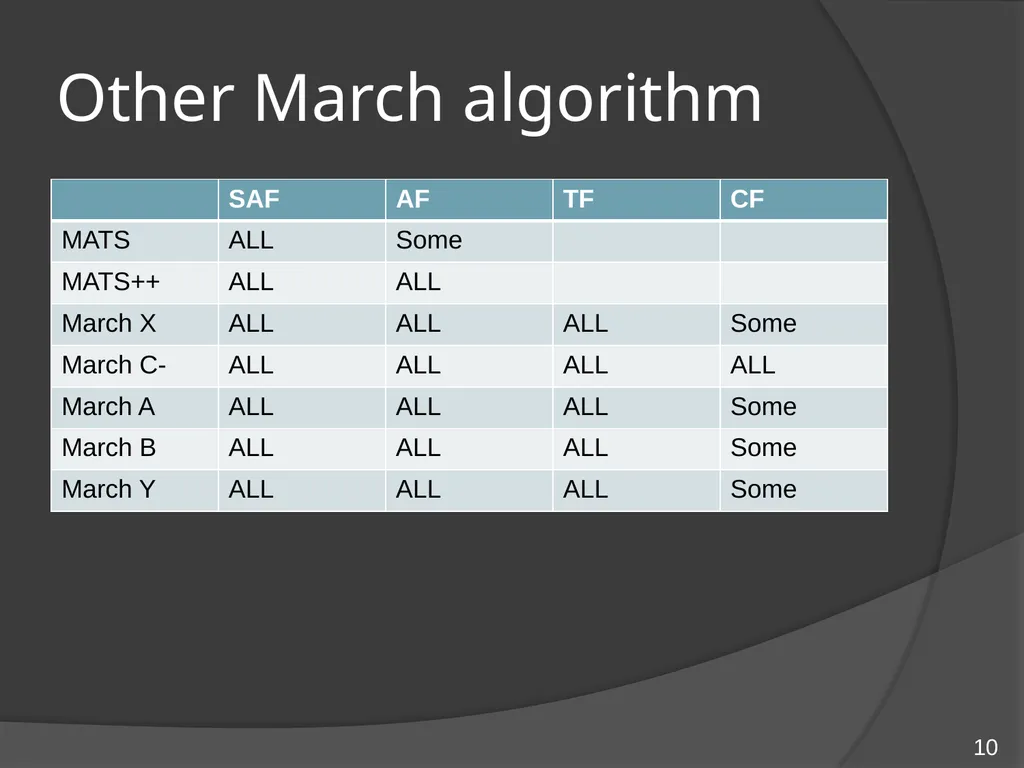
slide10. Other March algorithm 10<br>
slide11. Challenge Silicon area overhead
Complexity can be less than O(N)
Faults coverage
Decrease test instructions and data 11<br>
slide2. 2<br>
slide3. Fault Characteristics Address-Decoder Fault (AF)
Stuck-At Fault (SAF)
Transition Fault (TF)
Coupling Fault (CF) 3<br>
slide4. Traditional solution Walking Pattern-Complexity 2N2
Sliding Pattern-Complexity 4N1.5
Butterfly Pattern-Complexity 5NlogN
Means 4<br>
slide5. Embedded memory Characteristics embedded memory’s address, data, and control signals are usually not directly accessible through the I/O pins. 5<br>
slide6. Solution: March && Memory Built-In-Self Test March Test typically has complexity: O(N)
Linear access to memory by a specific order
Memory Built-In-Self Test(Architecture) 6<br>
slide7. March C-(evolved March C) March C- is a classical algorithm which is the foundation of other algorithms
{(w0);(r0,w1);(r1,w0);(r0,w1); (r1,w0); (r0)}
Complexity—5N=>O(N)
ascending order
descending order
r0:read 0
w1:write 1
March Element (w0): M0 7<br>
slide8. {(w0);(r0,w1);(r1,w0);(r0,w1); (r1,w0); (r0)} M0 M1 M2 M3 M4 M5 Address Fault, Transition Fault: M2 and M3
Stuck-At Fault: overwrite 0’s and 1’s 8<br>
slide9. Coupling Fault (CF)
j< i, Cj affected by Ci
M1: Ci 1->0 falling behavior affect Cj
M2: Ci 0->1 raising behavior affect Cj
j> i, detected by M3 and M4 {(w0);(r0,w1);(r1,w0);(r0,w1); (r1,w0); (r0)} M0 M1 M2 M3 M4 M5 0(j)
1
2(i) 9<br>
slide10. Other March algorithm 10<br>
slide11. Challenge Silicon area overhead
Complexity can be less than O(N)
Faults coverage
Decrease test instructions and data 11<br>