
Menopause an Integrative Approach Deidre Arms,
LO
Published · 50 slides · 0 views

1 / 1





Description
Menopause an Integrative Approach Deidre Arms, BC-APRN, FNP Disclosures Co-owner Functional medicine practice Speaker bureau Astellas Learning Objectives Learn Menopause and perimenopausal transition Learn steroid pathway and hormone roles
Related Topics
Share
Embed code
Download this presentation From Below
"Menopause an Integrative Approach Deidre Arms," is the property of its rightful owner. Permission is granted to download and print the materials on this website for personal, non-commercial use only, and to display it on your personal computer provided you do not modify the materials and that you retain all copyright notices contained in the materials. By downloading content from our website, you accept the terms of this agreement.
Presentation Transcript
01
Menopause an Integrative Approach Deidre Arms, BC-APRN, FNP<br>
02
Disclosures Co-owner Functional medicine practice
Speaker bureau Astellas<br>
Speaker bureau Astellas<br>
03
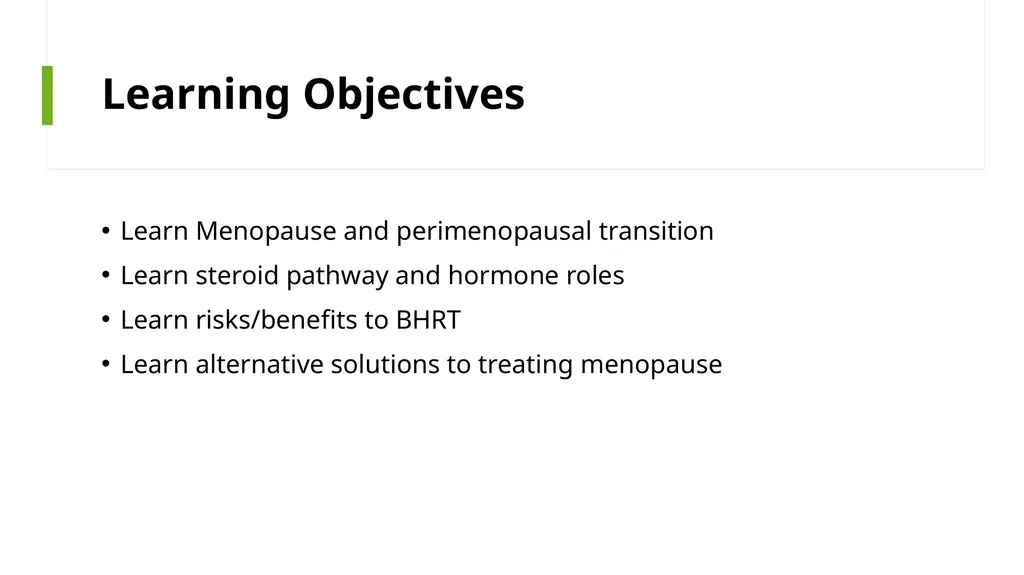
Learning Objectives Learn Menopause and perimenopausal transition
Learn steroid pathway and hormone roles
Learn risks/benefits to BHRT
Learn alternative solutions to treating menopause<br>
Learn steroid pathway and hormone roles
Learn risks/benefits to BHRT
Learn alternative solutions to treating menopause<br>
04
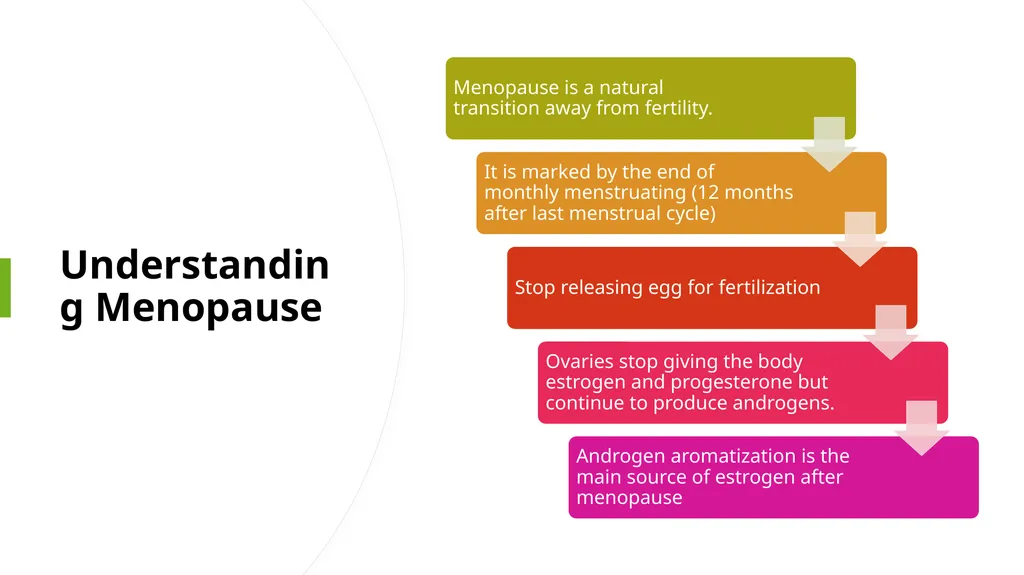
Understanding Menopause<br>
05
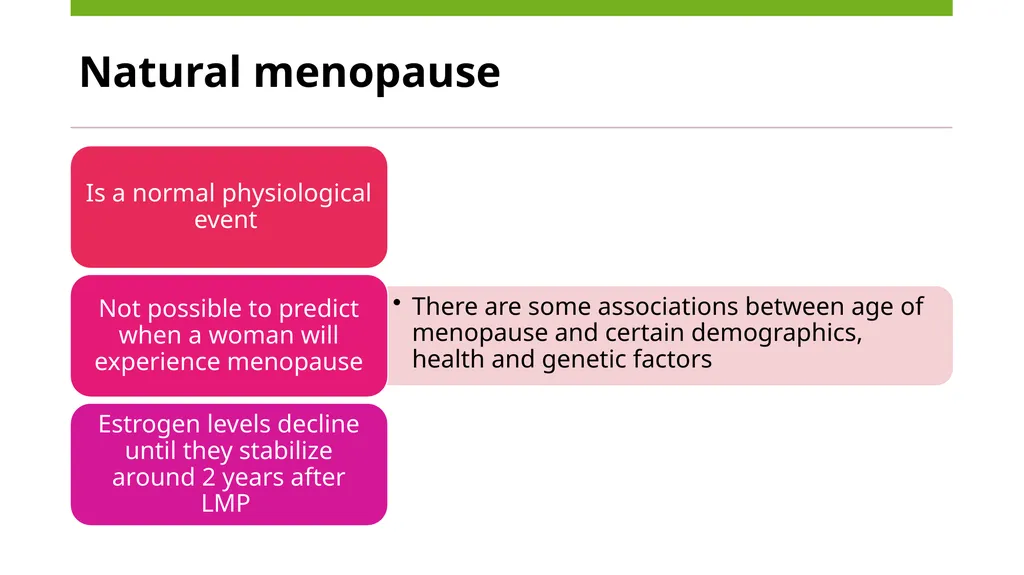
Natural menopause<br>
06
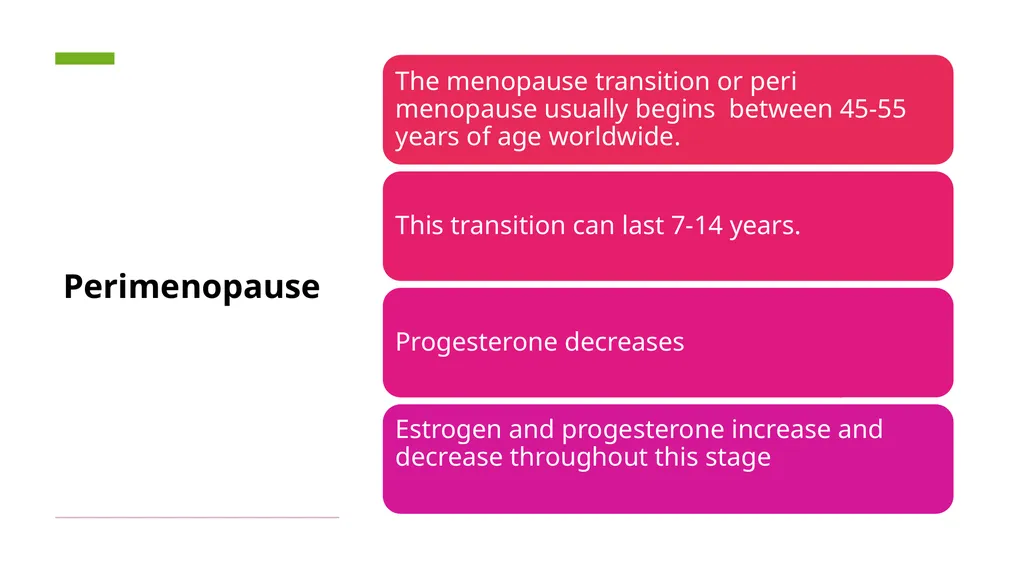
Perimenopause<br>
07
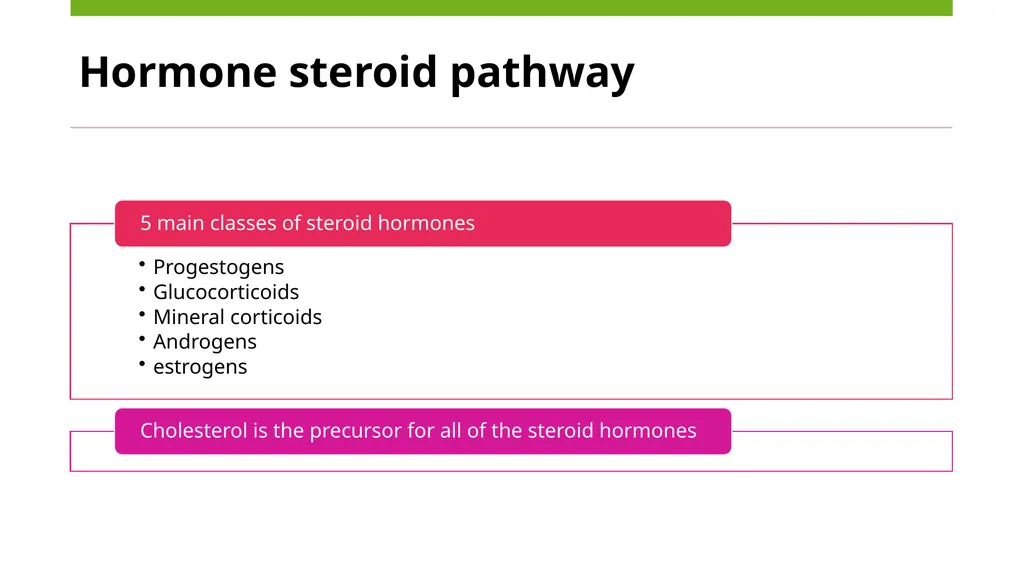
Hormone steroid pathway<br>
08
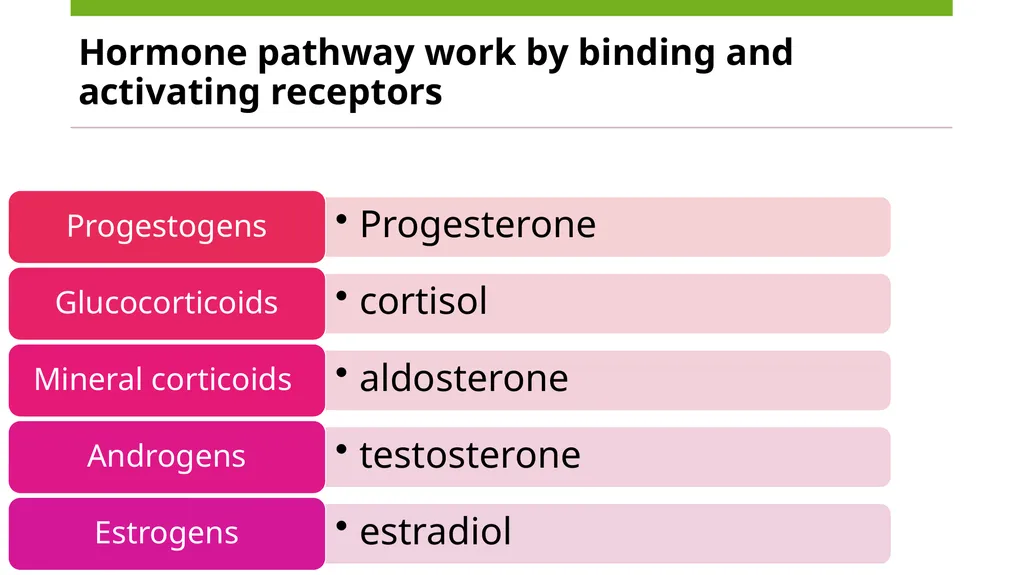
Hormone pathway work by binding and activating receptors<br>
09
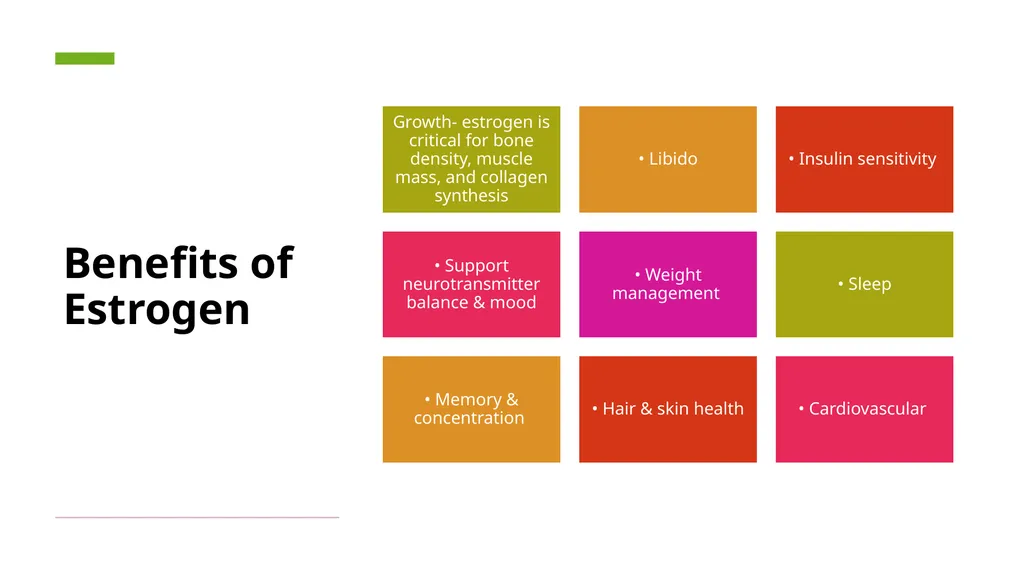
Benefits of Estrogen<br>
10
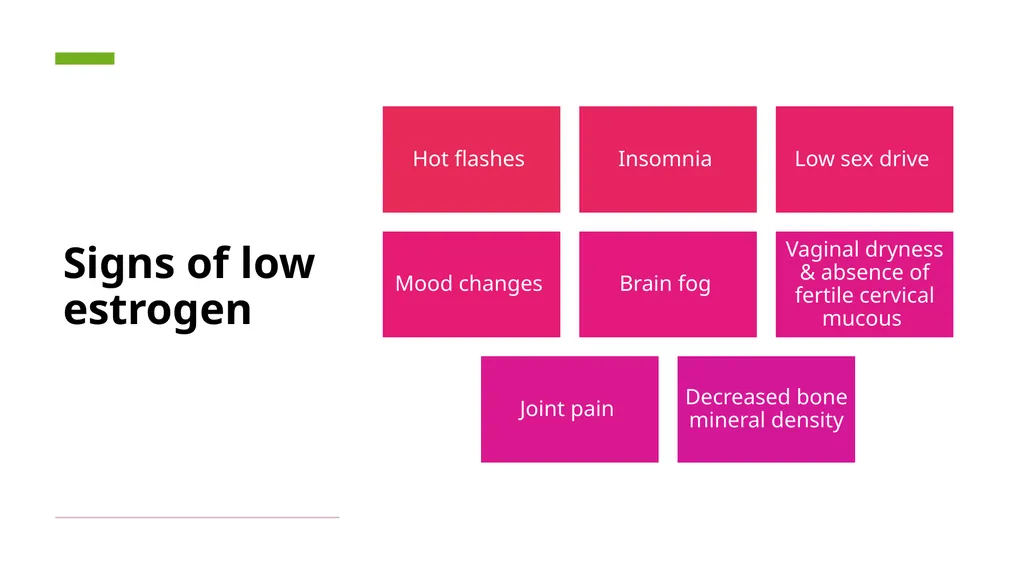
Signs of low estrogen<br>
11
Vasomotor symptoms most common and bothersome symptoms of menopause Hot flashes
Sudden, intense sensations of heat in the upper body
Lasting 1-5 minutes
Includes sweating, anxiety, heart palpitations
Night sweats
Hot flashes during sleep
May disrupt sleep<br>
Sudden, intense sensations of heat in the upper body
Lasting 1-5 minutes
Includes sweating, anxiety, heart palpitations
Night sweats
Hot flashes during sleep
May disrupt sleep<br>
12
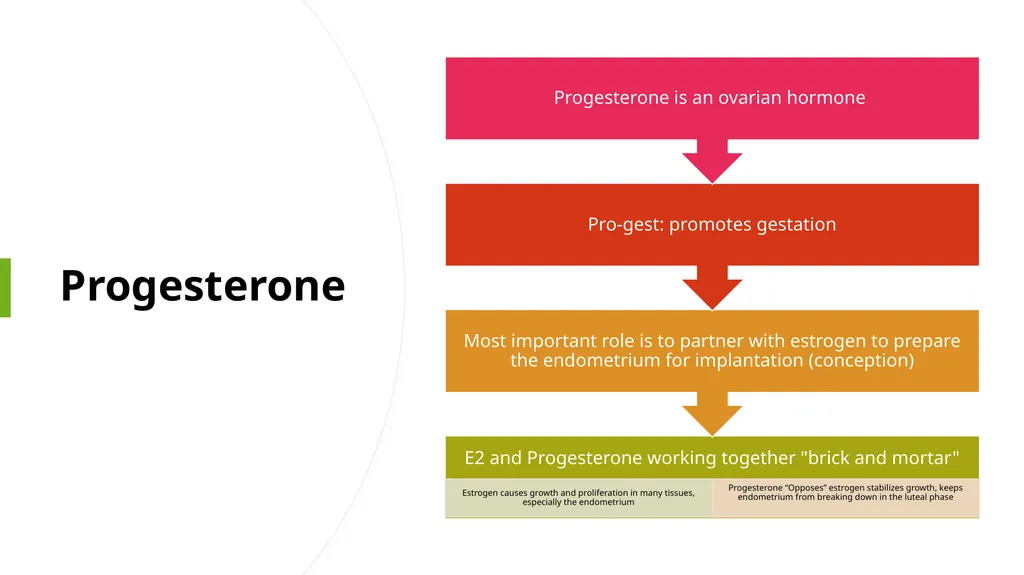
Progesterone<br>
13
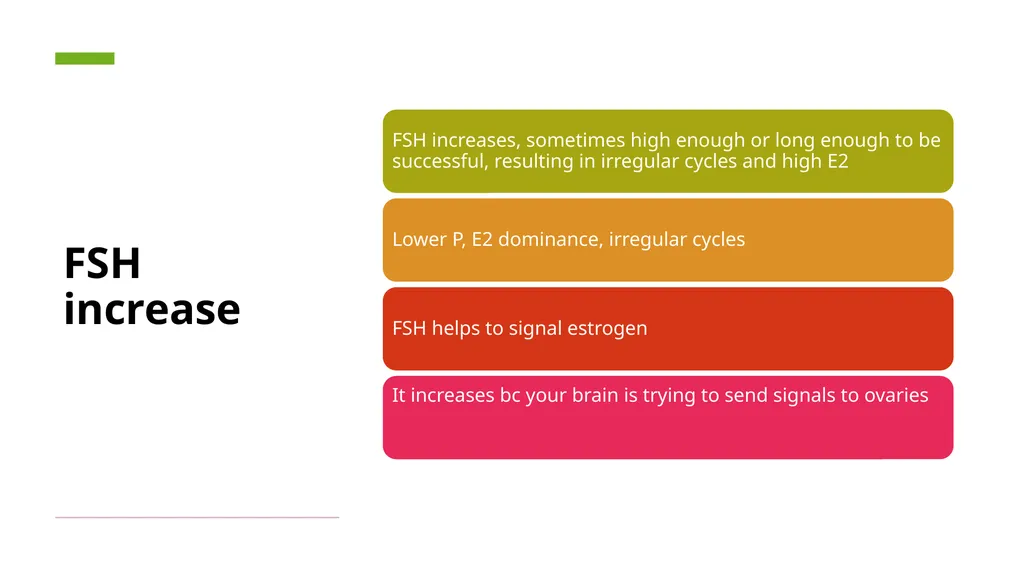
FSH increase<br>
14
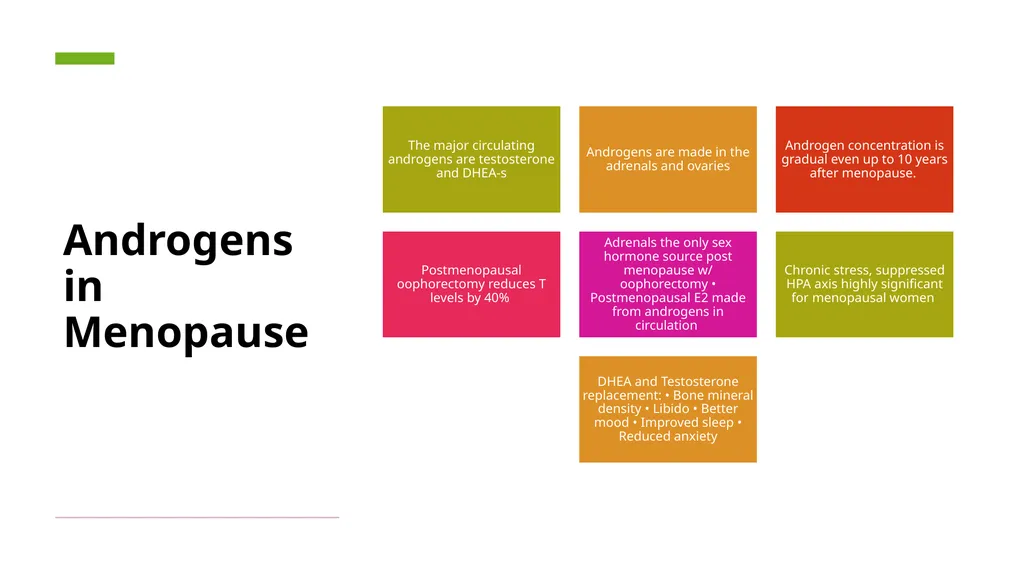
Androgens in Menopause<br>
15
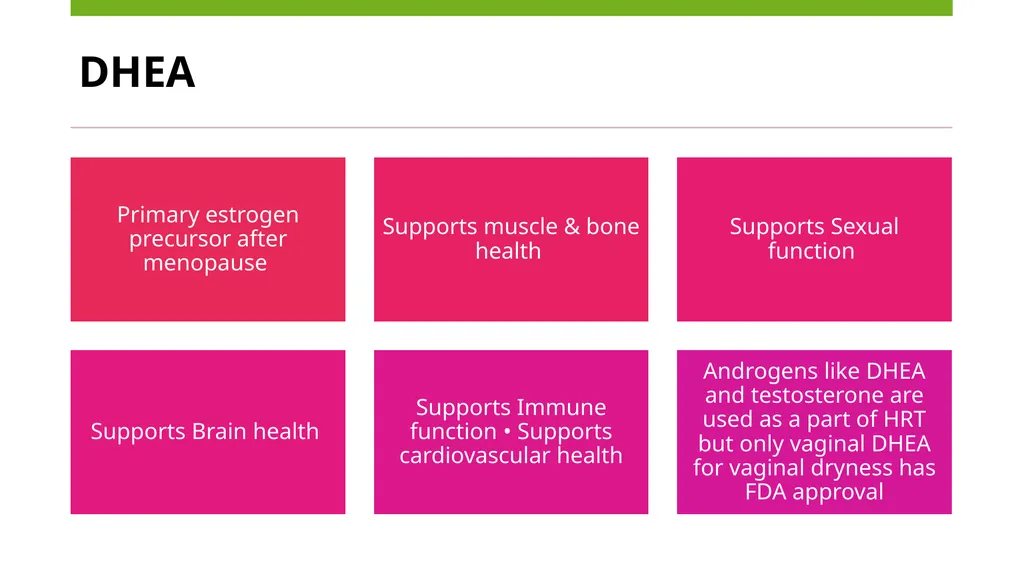
DHEA<br>
16
Testosterone Secondary estrogen precursor after menopause
Growth- muscle mass & stamina • Libido & sexual function
Healthy weight • Healthy bone • Skin, hair health • Mood & memory • Cardiovascular health<br>
Growth- muscle mass & stamina • Libido & sexual function
Healthy weight • Healthy bone • Skin, hair health • Mood & memory • Cardiovascular health<br>
17
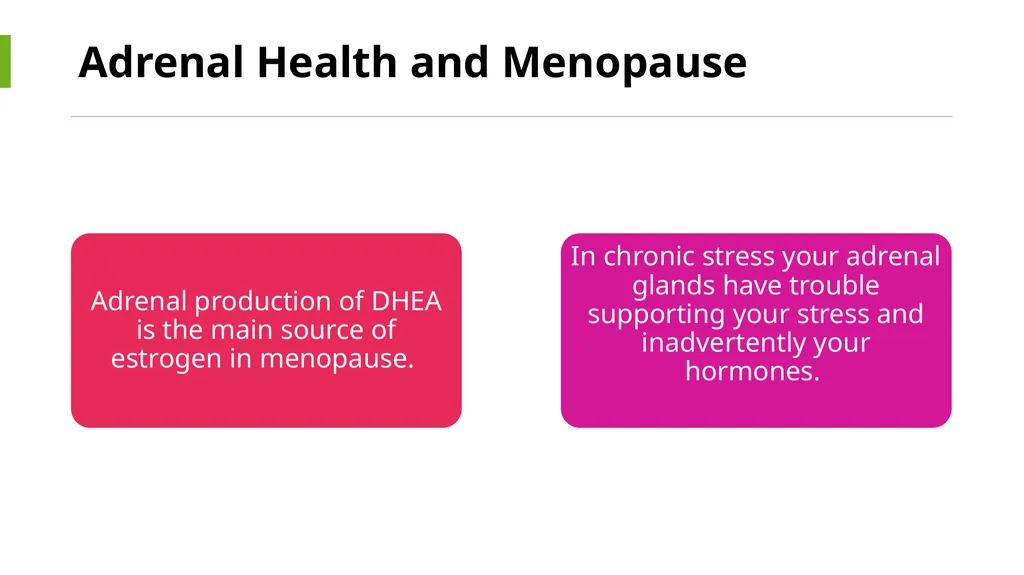
Adrenal Health and Menopause<br>
18
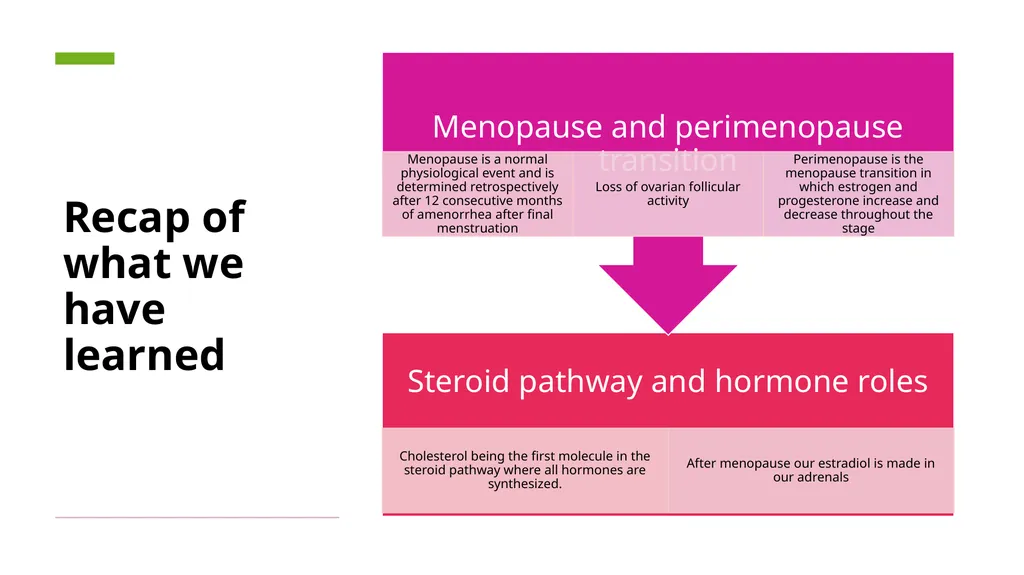
Recap of what we have learned<br>
19
Menopause affects multiple body systems<br>
20
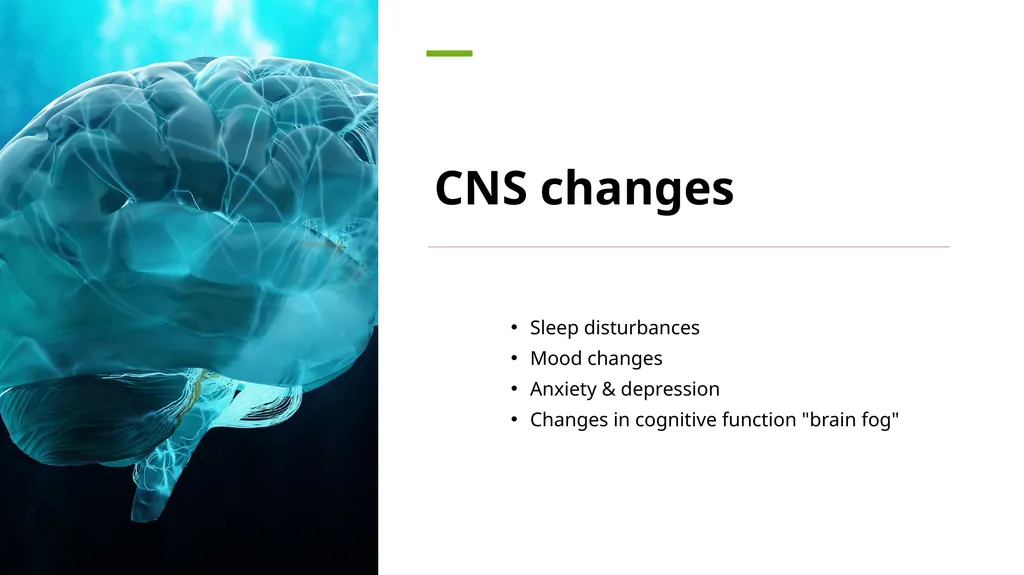
CNS changes Sleep disturbances
Mood changes
Anxiety & depression
Changes in cognitive function "brain fog"<br>
Mood changes
Anxiety & depression
Changes in cognitive function "brain fog"<br>
21
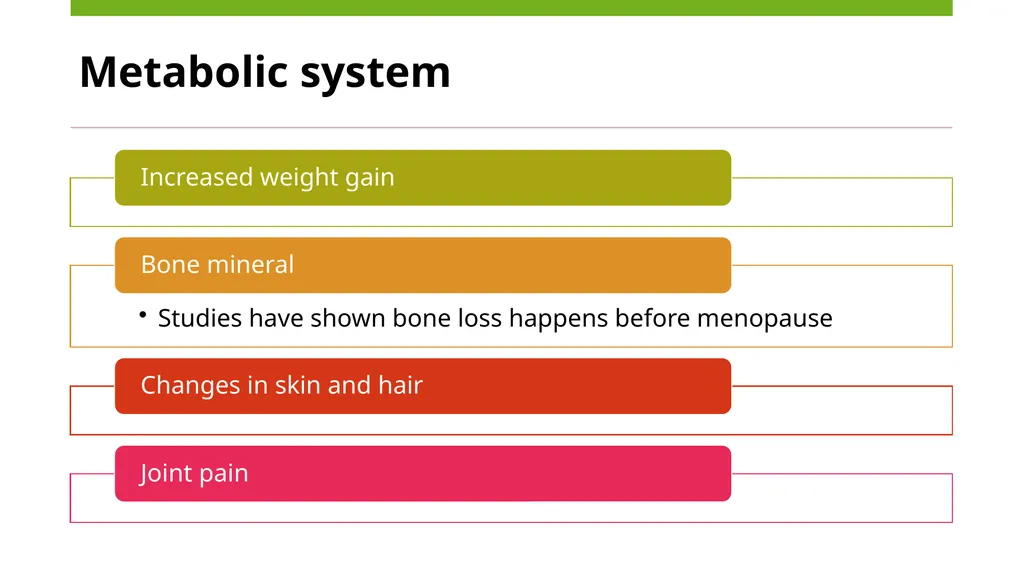
Metabolic system<br>
22
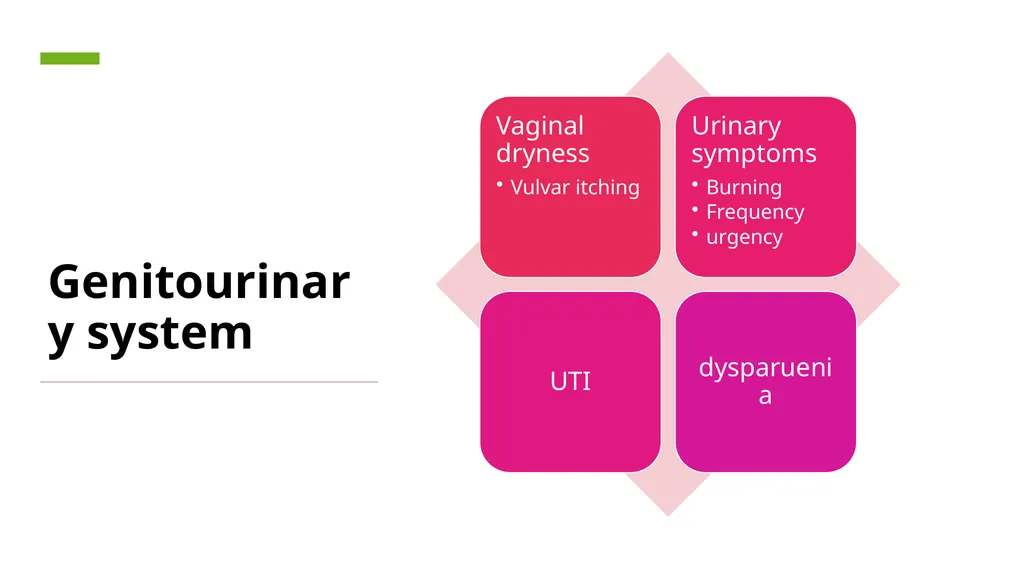
Genitourinary system<br>
23
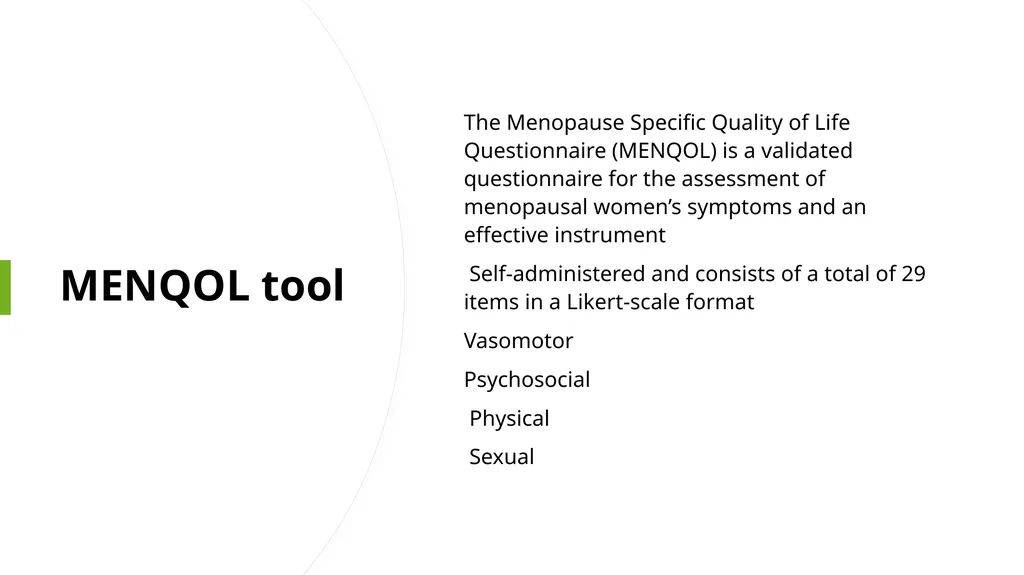
MENQOL tool The Menopause Specific Quality of Life Questionnaire (MENQOL) is a validated questionnaire for the assessment of menopausal women’s symptoms and an effective instrument
Self-administered and consists of a total of 29 items in a Likert-scale format
Vasomotor
Psychosocial
Physical
Sexual<br>
Self-administered and consists of a total of 29 items in a Likert-scale format
Vasomotor
Psychosocial
Physical
Sexual<br>
24
Testing hormones Foundational basis of basic hormones via serum
Estradiol
Testosterone
Progesterone
Dhea (S)
Cortisol (1 time)<br>
Estradiol
Testosterone
Progesterone
Dhea (S)
Cortisol (1 time)<br>
25
Comprehensive overview of hormones Dried urine testing
Estrogen metabolites
2-OH
Preferred pathway protective
4-OH
Toxic, DNA damaging
16-OH
Proliferative
Androgen metabolites
DHT
5a/5b testosterone<br>
Estrogen metabolites
2-OH
Preferred pathway protective
4-OH
Toxic, DNA damaging
16-OH
Proliferative
Androgen metabolites
DHT
5a/5b testosterone<br>
26
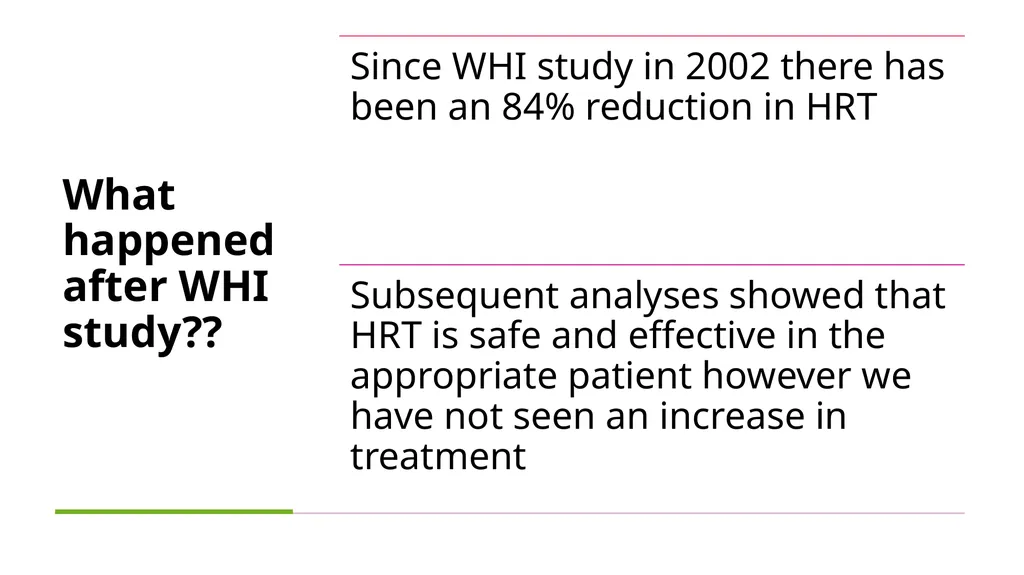
What happened after WHI study??<br>
27
Understanding bio identical HRT: The Endocrine Society has defined bioidentical hormones as “compounds that have exactly the same chemical and molecular structure as hormones that are produced in the human body.” This broad definition does not address the manufacturing, source, or delivery methods of the products and thus can include non–FDA-approved custom-compounded products as well as FDA-approved formulations.
HRT considered safe for healthy women <60yr. Who are within 10 yrs menopause<br>
HRT considered safe for healthy women <60yr. Who are within 10 yrs menopause<br>
28
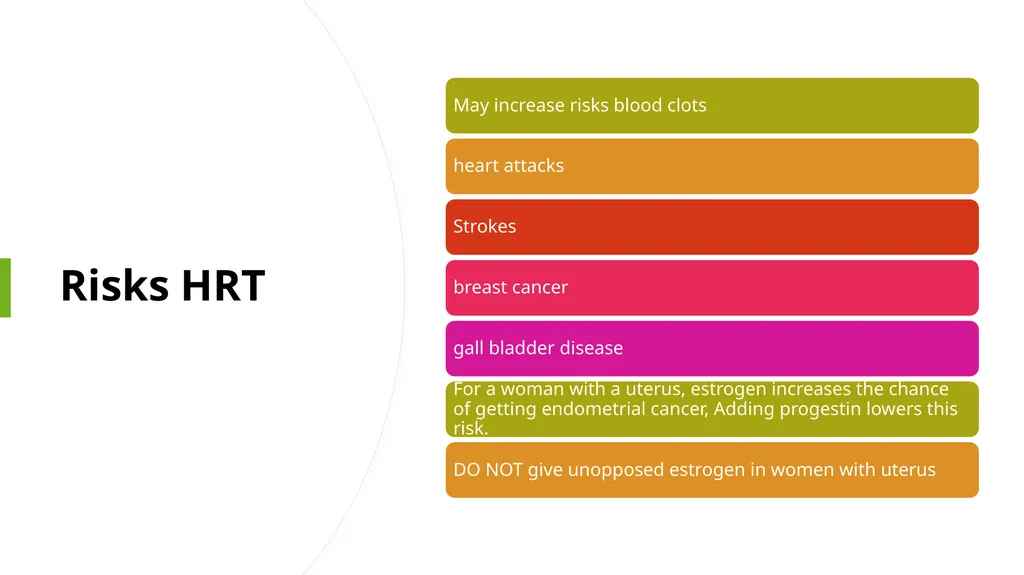
Risks HRT<br>
29
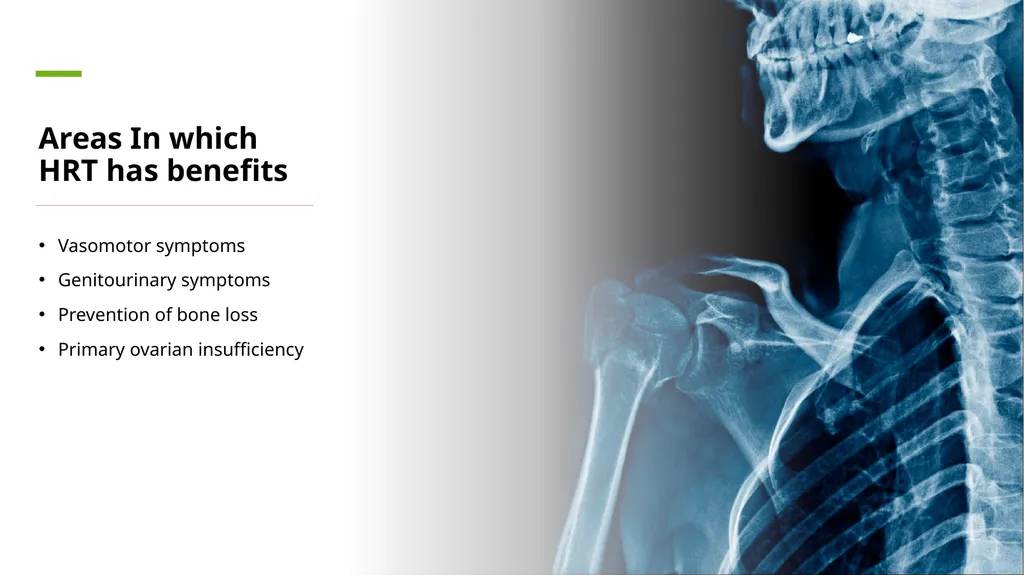
Areas In which HRT has benefits Vasomotor symptoms
Genitourinary symptoms
Prevention of bone loss
Primary ovarian insufficiency<br>
Genitourinary symptoms
Prevention of bone loss
Primary ovarian insufficiency<br>
30
NAMS hormone positions statement 2022<br>
31
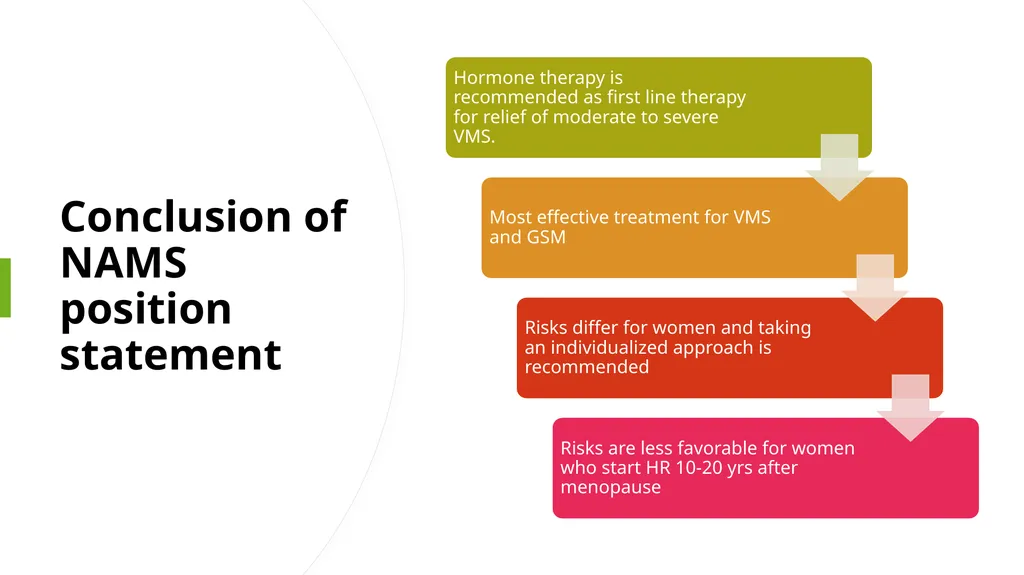
Conclusion of NAMS position statement<br>
32
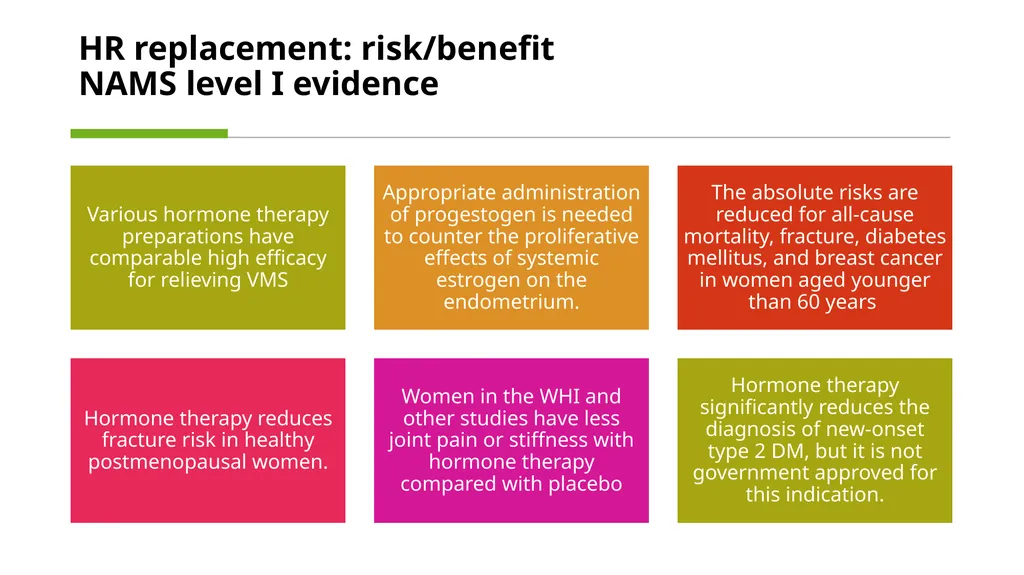
HR replacement: risk/benefit
NAMS level I evidence<br>
33
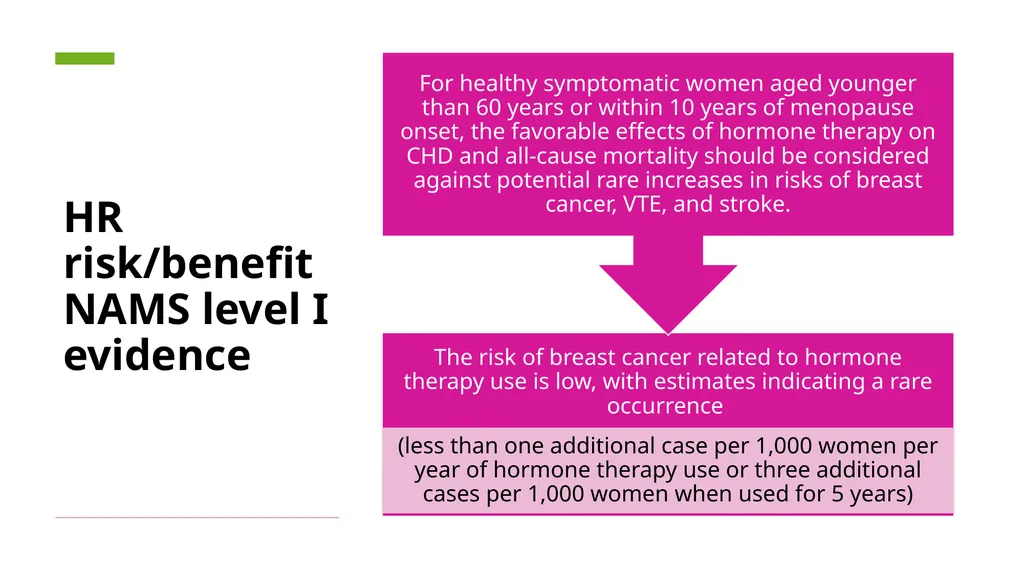
HR risk/benefit
NAMS level I evidence<br>
34
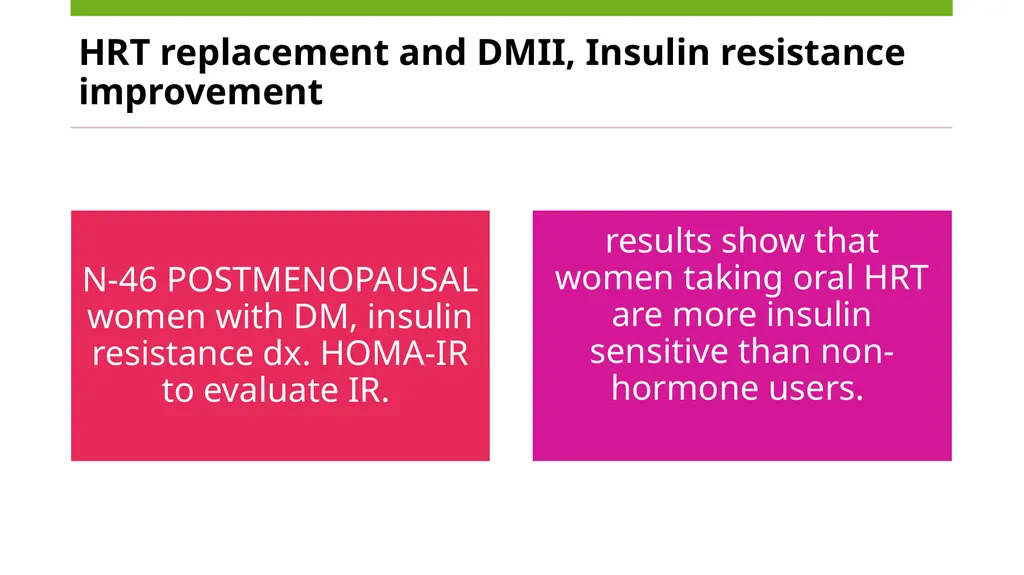
HRT replacement and DMII, Insulin resistance improvement<br>
35
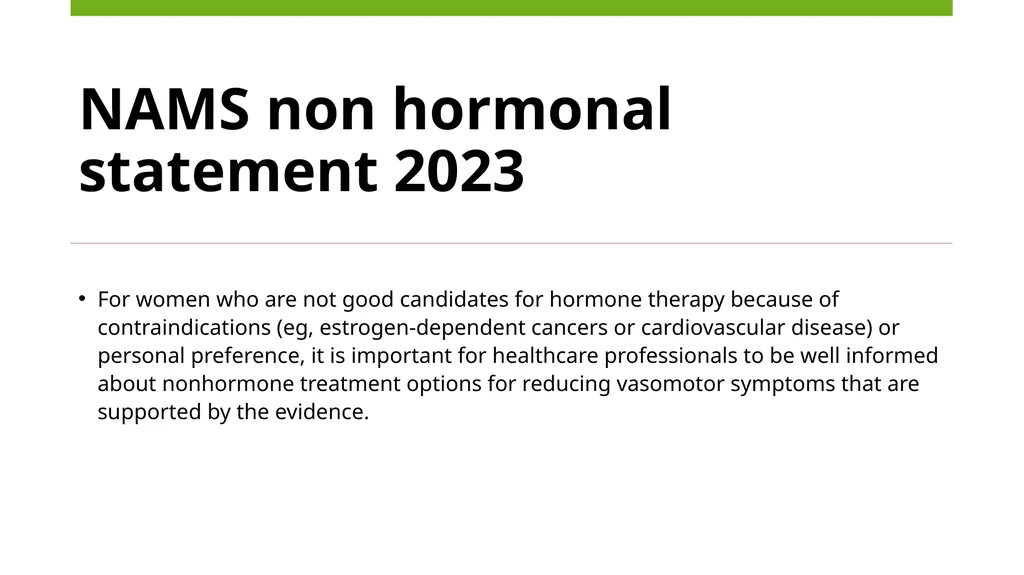
NAMS non hormonal statement 2023 For women who are not good candidates for hormone therapy because of contraindications (eg, estrogen-dependent cancers or cardiovascular disease) or personal preference, it is important for healthcare professionals to be well informed about nonhormone treatment options for reducing vasomotor symptoms that are supported by the evidence.<br>
36
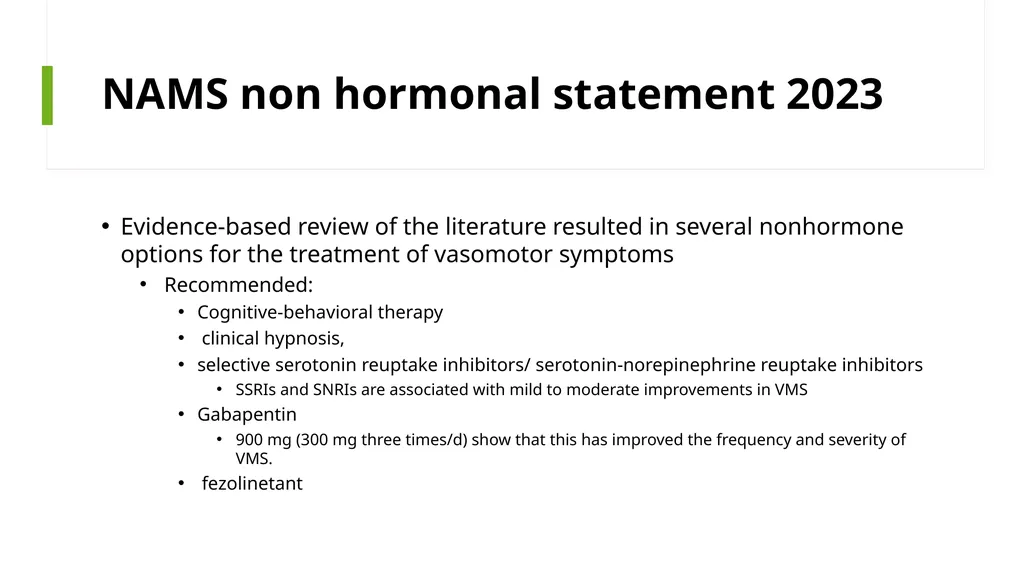
NAMS non hormonal statement 2023 Evidence-based review of the literature resulted in several nonhormone options for the treatment of vasomotor symptoms
Recommended:
Cognitive-behavioral therapy
clinical hypnosis,
selective serotonin reuptake inhibitors/ serotonin-norepinephrine reuptake inhibitors
SSRIs and SNRIs are associated with mild to moderate improvements in VMS
Gabapentin
900 mg (300 mg three times/d) show that this has improved the frequency and severity of VMS.
fezolinetant<br>
Recommended:
Cognitive-behavioral therapy
clinical hypnosis,
selective serotonin reuptake inhibitors/ serotonin-norepinephrine reuptake inhibitors
SSRIs and SNRIs are associated with mild to moderate improvements in VMS
Gabapentin
900 mg (300 mg three times/d) show that this has improved the frequency and severity of VMS.
fezolinetant<br>
37
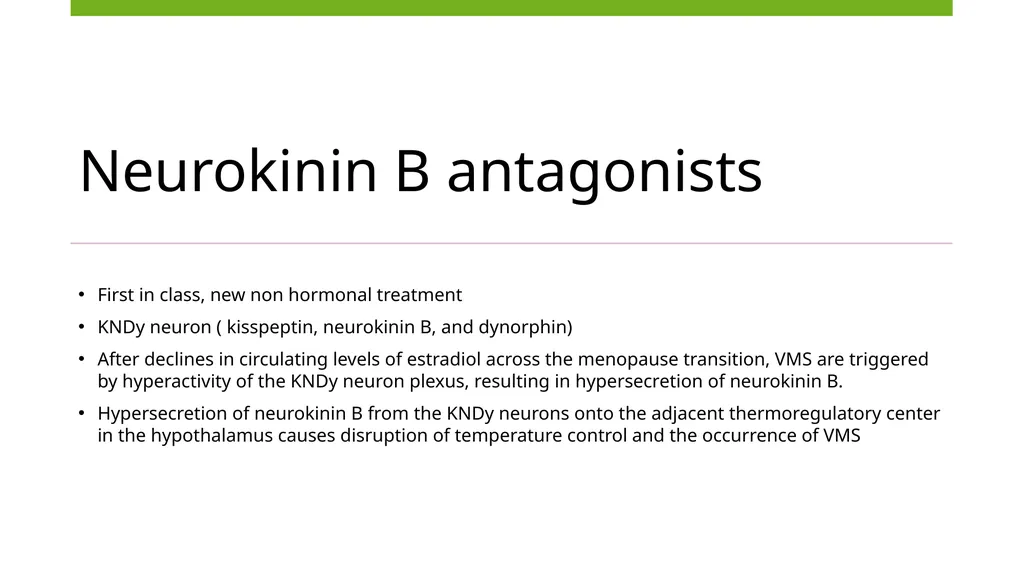
Neurokinin B antagonists First in class, new non hormonal treatment
KNDy neuron ( kisspeptin, neurokinin B, and dynorphin)
After declines in circulating levels of estradiol across the menopause transition, VMS are triggered by hyperactivity of the KNDy neuron plexus, resulting in hypersecretion of neurokinin B.
Hypersecretion of neurokinin B from the KNDy neurons onto the adjacent thermoregulatory center in the hypothalamus causes disruption of temperature control and the occurrence of VMS<br>
KNDy neuron ( kisspeptin, neurokinin B, and dynorphin)
After declines in circulating levels of estradiol across the menopause transition, VMS are triggered by hyperactivity of the KNDy neuron plexus, resulting in hypersecretion of neurokinin B.
Hypersecretion of neurokinin B from the KNDy neurons onto the adjacent thermoregulatory center in the hypothalamus causes disruption of temperature control and the occurrence of VMS<br>
38
Non hormonal modalities Acupuncture
Stellate ganglion blockade has emerged as a potential treatment option for VMS
exact MOA of stellate ganglion blockade on VMS remains unclear
CBT has been shown to reduce the bother and interference associated with VMS.
Clinical hypnosis has been shown to reduce VMS frequency and severity.<br>
Stellate ganglion blockade has emerged as a potential treatment option for VMS
exact MOA of stellate ganglion blockade on VMS remains unclear
CBT has been shown to reduce the bother and interference associated with VMS.
Clinical hypnosis has been shown to reduce VMS frequency and severity.<br>
39
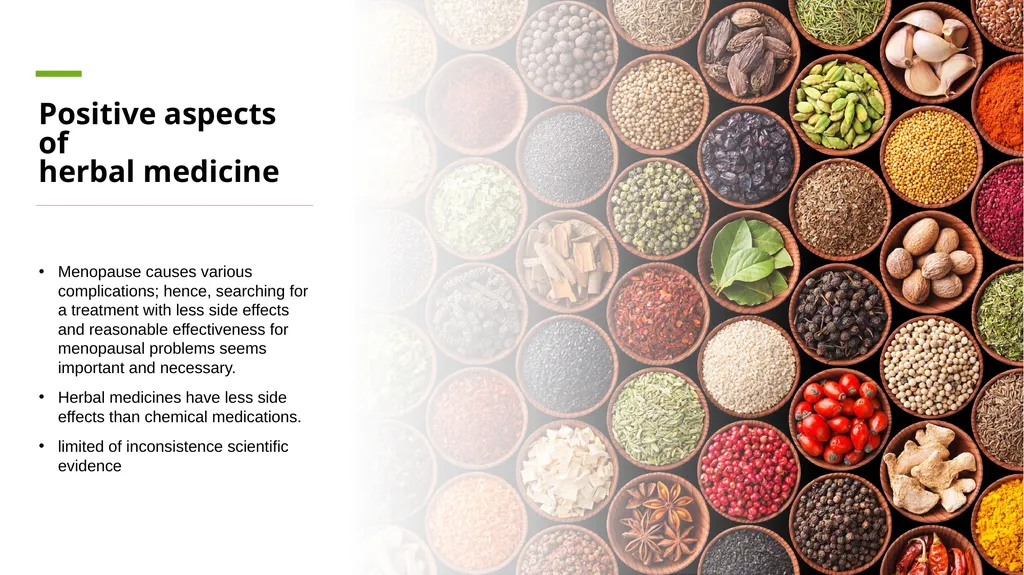
Positive aspects of herbal medicine Menopause causes various complications; hence, searching for a treatment with less side effects and reasonable effectiveness for menopausal problems seems important and necessary.
Herbal medicines have less side effects than chemical medications.
limited of inconsistence scientific evidence<br>
Herbal medicines have less side effects than chemical medications.
limited of inconsistence scientific evidence<br>
40
Menopausal tips Natural therapies can help ease the transition into menopause
Keep alcohol to a minimum (red wine worst, vodka least)
Increase fiber: flaxseed 2tbsp/day can support healthy estrogen
Maca: mood and sex drive 3g/day for libido
Ashwagandha: sleep, stress various dosages up to 6g/day
Adaptogens
Pueraria mirifica: hot flashes, atrophy.<br>
Keep alcohol to a minimum (red wine worst, vodka least)
Increase fiber: flaxseed 2tbsp/day can support healthy estrogen
Maca: mood and sex drive 3g/day for libido
Ashwagandha: sleep, stress various dosages up to 6g/day
Adaptogens
Pueraria mirifica: hot flashes, atrophy.<br>
41
Black Cohosh (Actaea Racemosa): Research supports the potential for black cohosh to help during
A long-standing hypothesis is that the triterpenes in black cohosh may have mild estrogenic activity with the potential to selectively inhibit LH secretion without affecting FSH
40 mg/day dosing
most purchased botanical for menopause symptoms<br>
A long-standing hypothesis is that the triterpenes in black cohosh may have mild estrogenic activity with the potential to selectively inhibit LH secretion without affecting FSH
40 mg/day dosing
most purchased botanical for menopause symptoms<br>
42
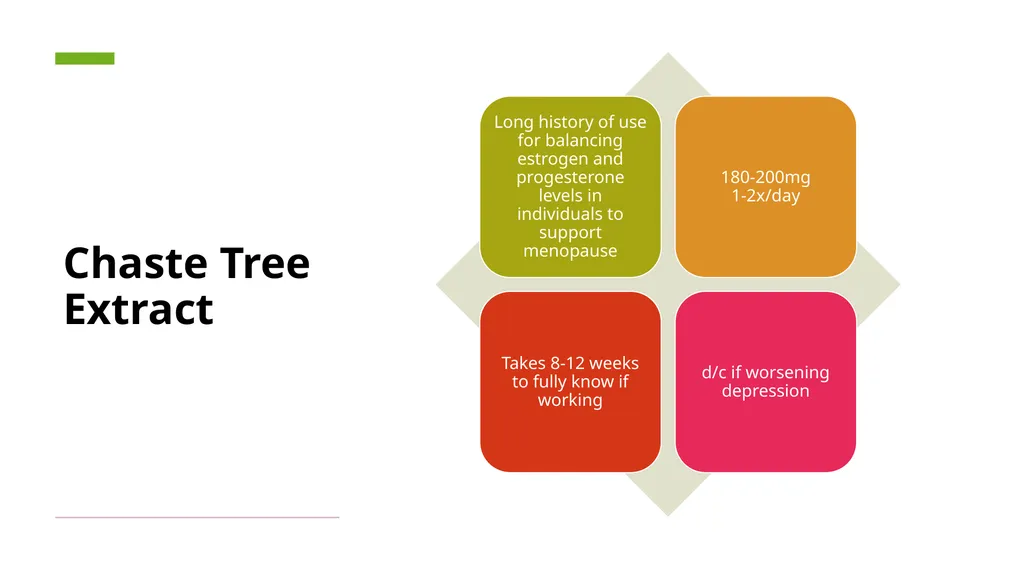
Chaste Tree Extract<br>
43
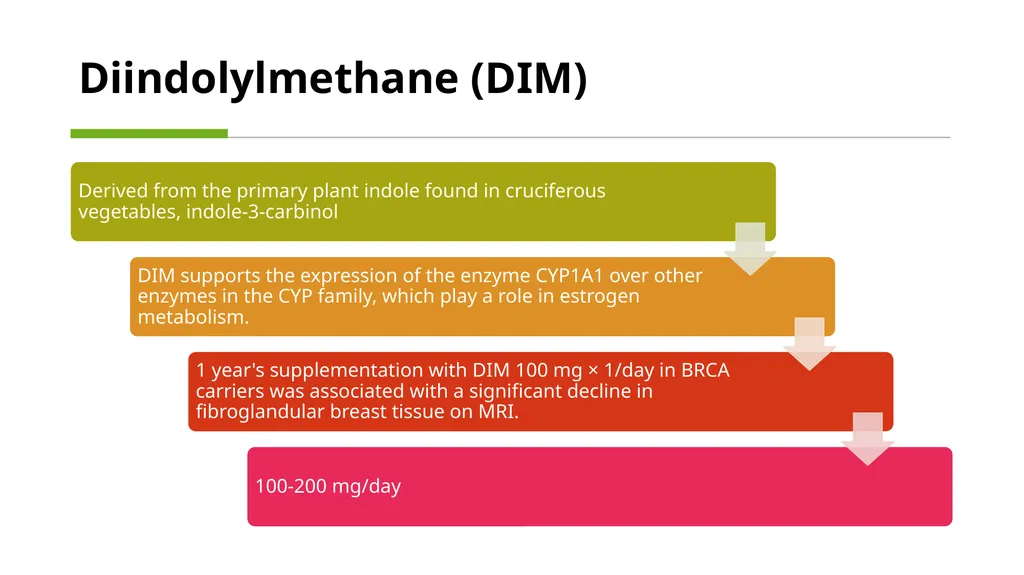
Diindolylmethane (DIM)<br>
44
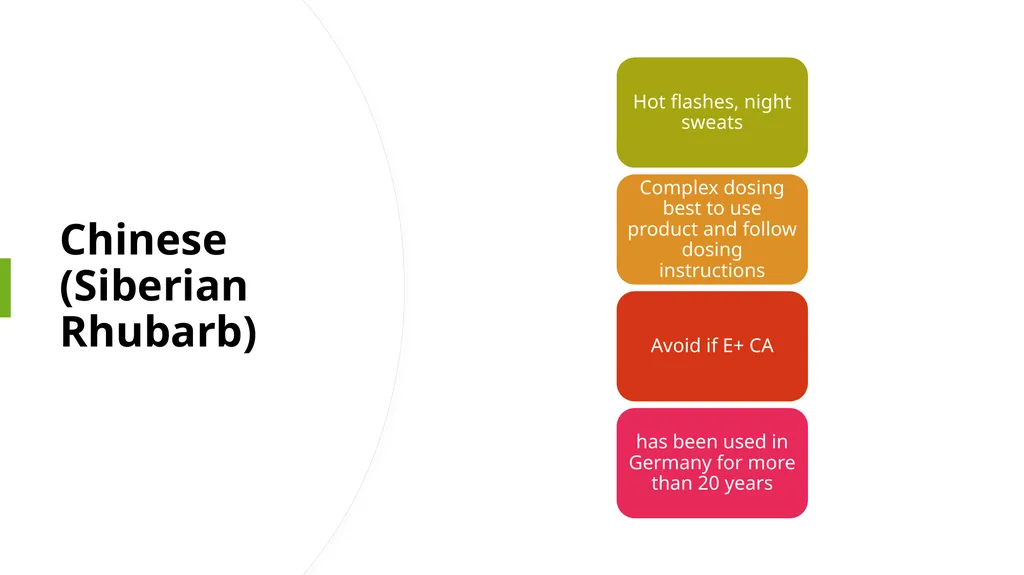
Chinese (Siberian Rhubarb)<br>
45
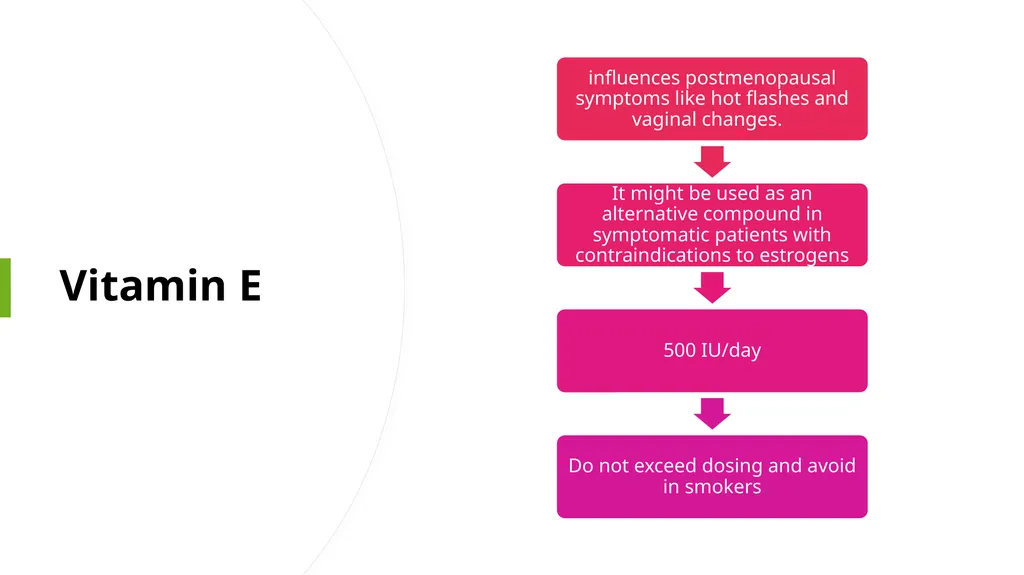
Vitamin E<br>
46
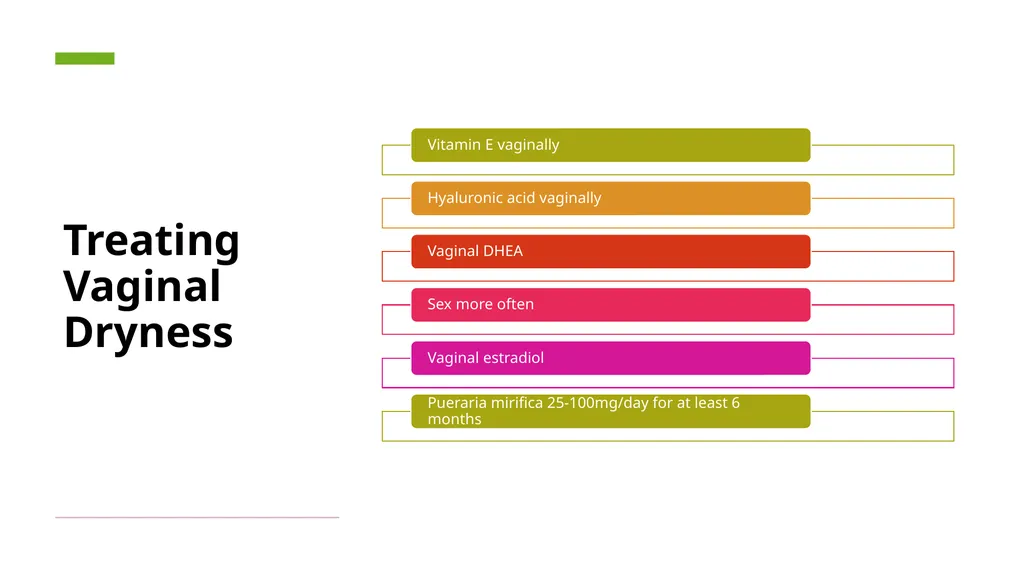
Treating Vaginal Dryness<br>
47
Undertreatment of menopausal symptoms Menopause symptoms can disrupt a women’s overall quality of life and last a mean duration of 7 to 9 years, longer in some women
Despite safety and efficacy of treatments women remain undertreated<br>
Despite safety and efficacy of treatments women remain undertreated<br>
48
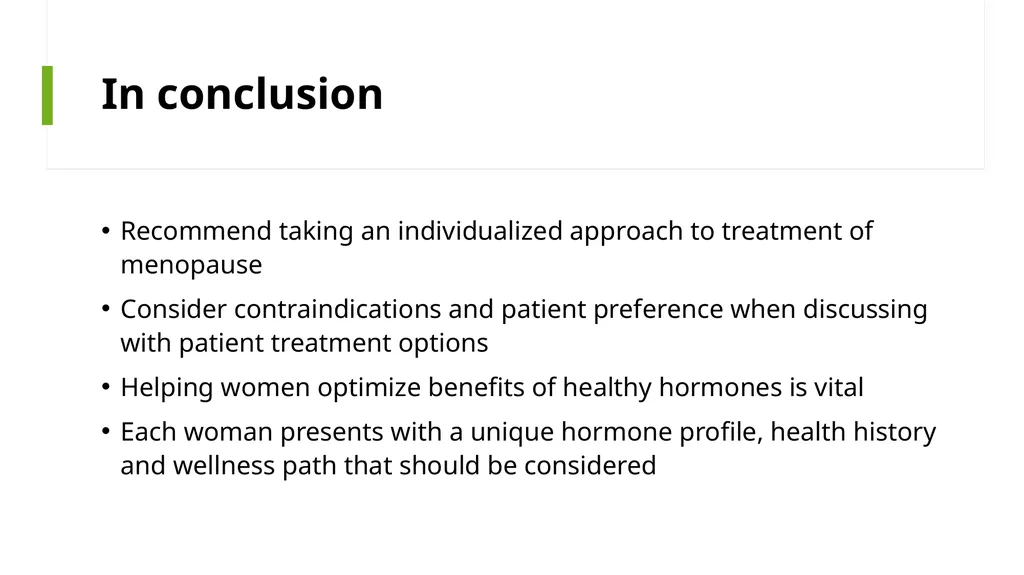
In conclusion Recommend taking an individualized approach to treatment of menopause
Consider contraindications and patient preference when discussing with patient treatment options
Helping women optimize benefits of healthy hormones is vital
Each woman presents with a unique hormone profile, health history and wellness path that should be considered<br>
Consider contraindications and patient preference when discussing with patient treatment options
Helping women optimize benefits of healthy hormones is vital
Each woman presents with a unique hormone profile, health history and wellness path that should be considered<br>
49
"The changes, the highs and lows and the hormonal shifts, there is power in that"
Michelle Obama This Photo by Unknown author is licensed under CC BY-SA.<br>
50
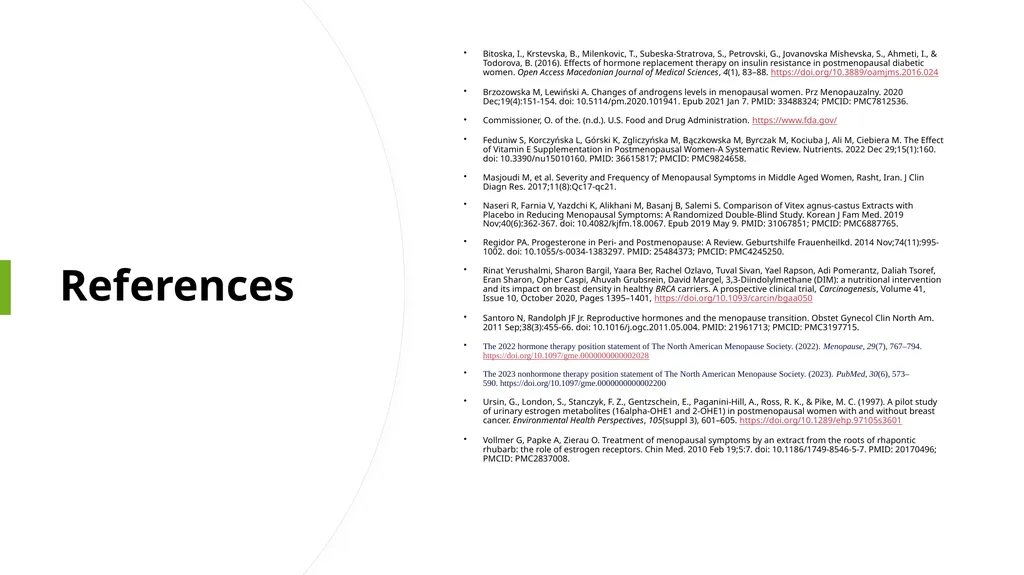
References Bitoska, I., Krstevska, B., Milenkovic, T., Subeska-Stratrova, S., Petrovski, G., Jovanovska Mishevska, S., Ahmeti, I., & Todorova, B. (2016). Effects of hormone replacement therapy on insulin resistance in postmenopausal diabetic women. Open Access Macedonian Journal of Medical Sciences, 4(1), 83–88. https://doi.org/10.3889/oamjms.2016.024
Brzozowska M, Lewiński A. Changes of androgens levels in menopausal women. Prz Menopauzalny. 2020 Dec;19(4):151-154. doi: 10.5114/pm.2020.101941. Epub 2021 Jan 7. PMID: 33488324; PMCID: PMC7812536.
Commissioner, O. of the. (n.d.). U.S. Food and Drug Administration. https://www.fda.gov/
Feduniw S, Korczyńska L, Górski K, Zgliczyńska M, Bączkowska M, Byrczak M, Kociuba J, Ali M, Ciebiera M. The Effect of Vitamin E Supplementation in Postmenopausal Women-A Systematic Review. Nutrients. 2022 Dec 29;15(1):160. doi: 10.3390/nu15010160. PMID: 36615817; PMCID: PMC9824658.
Masjoudi M, et al. Severity and Frequency of Menopausal Symptoms in Middle Aged Women, Rasht, Iran. J Clin Diagn Res. 2017;11(8):Qc17-qc21.
Naseri R, Farnia V, Yazdchi K, Alikhani M, Basanj B, Salemi S. Comparison of Vitex agnus-castus Extracts with Placebo in Reducing Menopausal Symptoms: A Randomized Double-Blind Study. Korean J Fam Med. 2019 Nov;40(6):362-367. doi: 10.4082/kjfm.18.0067. Epub 2019 May 9. PMID: 31067851; PMCID: PMC6887765.
Regidor PA. Progesterone in Peri- and Postmenopause: A Review. Geburtshilfe Frauenheilkd. 2014 Nov;74(11):995-1002. doi: 10.1055/s-0034-1383297. PMID: 25484373; PMCID: PMC4245250.
Rinat Yerushalmi, Sharon Bargil, Yaara Ber, Rachel Ozlavo, Tuval Sivan, Yael Rapson, Adi Pomerantz, Daliah Tsoref, Eran Sharon, Opher Caspi, Ahuvah Grubsrein, David Margel, 3,3-Diindolylmethane (DIM): a nutritional intervention and its impact on breast density in healthy BRCA carriers. A prospective clinical trial, Carcinogenesis, Volume 41, Issue 10, October 2020, Pages 1395–1401, https://doi.org/10.1093/carcin/bgaa050
Santoro N, Randolph JF Jr. Reproductive hormones and the menopause transition. Obstet Gynecol Clin North Am. 2011 Sep;38(3):455-66. doi: 10.1016/j.ogc.2011.05.004. PMID: 21961713; PMCID: PMC3197715.
The 2022 hormone therapy position statement of The North American Menopause Society. (2022). Menopause, 29(7), 767–794. https://doi.org/10.1097/gme.0000000000002028
The 2023 nonhormone therapy position statement of The North American Menopause Society. (2023). PubMed, 30(6), 573–590. https://doi.org/10.1097/gme.0000000000002200
Ursin, G., London, S., Stanczyk, F. Z., Gentzschein, E., Paganini-Hill, A., Ross, R. K., & Pike, M. C. (1997). A pilot study of urinary estrogen metabolites (16alpha-OHE1 and 2-OHE1) in postmenopausal women with and without breast cancer. Environmental Health Perspectives, 105(suppl 3), 601–605. https://doi.org/10.1289/ehp.97105s3601
Vollmer G, Papke A, Zierau O. Treatment of menopausal symptoms by an extract from the roots of rhapontic rhubarb: the role of estrogen receptors. Chin Med. 2010 Feb 19;5:7. doi: 10.1186/1749-8546-5-7. PMID: 20170496; PMCID: PMC2837008.<br>
Brzozowska M, Lewiński A. Changes of androgens levels in menopausal women. Prz Menopauzalny. 2020 Dec;19(4):151-154. doi: 10.5114/pm.2020.101941. Epub 2021 Jan 7. PMID: 33488324; PMCID: PMC7812536.
Commissioner, O. of the. (n.d.). U.S. Food and Drug Administration. https://www.fda.gov/
Feduniw S, Korczyńska L, Górski K, Zgliczyńska M, Bączkowska M, Byrczak M, Kociuba J, Ali M, Ciebiera M. The Effect of Vitamin E Supplementation in Postmenopausal Women-A Systematic Review. Nutrients. 2022 Dec 29;15(1):160. doi: 10.3390/nu15010160. PMID: 36615817; PMCID: PMC9824658.
Masjoudi M, et al. Severity and Frequency of Menopausal Symptoms in Middle Aged Women, Rasht, Iran. J Clin Diagn Res. 2017;11(8):Qc17-qc21.
Naseri R, Farnia V, Yazdchi K, Alikhani M, Basanj B, Salemi S. Comparison of Vitex agnus-castus Extracts with Placebo in Reducing Menopausal Symptoms: A Randomized Double-Blind Study. Korean J Fam Med. 2019 Nov;40(6):362-367. doi: 10.4082/kjfm.18.0067. Epub 2019 May 9. PMID: 31067851; PMCID: PMC6887765.
Regidor PA. Progesterone in Peri- and Postmenopause: A Review. Geburtshilfe Frauenheilkd. 2014 Nov;74(11):995-1002. doi: 10.1055/s-0034-1383297. PMID: 25484373; PMCID: PMC4245250.
Rinat Yerushalmi, Sharon Bargil, Yaara Ber, Rachel Ozlavo, Tuval Sivan, Yael Rapson, Adi Pomerantz, Daliah Tsoref, Eran Sharon, Opher Caspi, Ahuvah Grubsrein, David Margel, 3,3-Diindolylmethane (DIM): a nutritional intervention and its impact on breast density in healthy BRCA carriers. A prospective clinical trial, Carcinogenesis, Volume 41, Issue 10, October 2020, Pages 1395–1401, https://doi.org/10.1093/carcin/bgaa050
Santoro N, Randolph JF Jr. Reproductive hormones and the menopause transition. Obstet Gynecol Clin North Am. 2011 Sep;38(3):455-66. doi: 10.1016/j.ogc.2011.05.004. PMID: 21961713; PMCID: PMC3197715.
The 2022 hormone therapy position statement of The North American Menopause Society. (2022). Menopause, 29(7), 767–794. https://doi.org/10.1097/gme.0000000000002028
The 2023 nonhormone therapy position statement of The North American Menopause Society. (2023). PubMed, 30(6), 573–590. https://doi.org/10.1097/gme.0000000000002200
Ursin, G., London, S., Stanczyk, F. Z., Gentzschein, E., Paganini-Hill, A., Ross, R. K., & Pike, M. C. (1997). A pilot study of urinary estrogen metabolites (16alpha-OHE1 and 2-OHE1) in postmenopausal women with and without breast cancer. Environmental Health Perspectives, 105(suppl 3), 601–605. https://doi.org/10.1289/ehp.97105s3601
Vollmer G, Papke A, Zierau O. Treatment of menopausal symptoms by an extract from the roots of rhapontic rhubarb: the role of estrogen receptors. Chin Med. 2010 Feb 19;5:7. doi: 10.1186/1749-8546-5-7. PMID: 20170496; PMCID: PMC2837008.<br>