
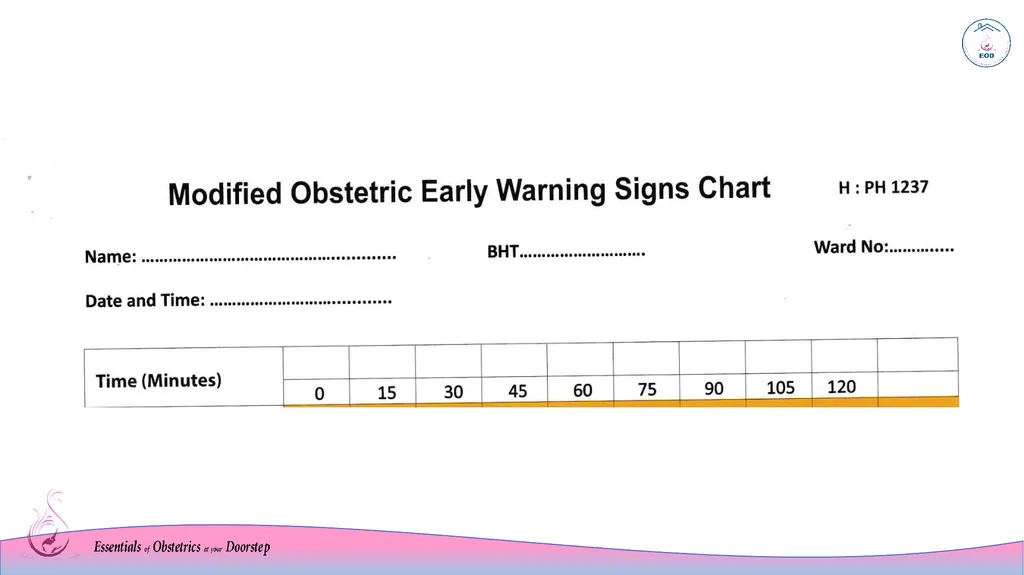
MEOWS chart Modified Early Warning System Sri
Description: MEOWS chart Modified Early Warning System Sri Lanka College of Obstetricians Gynaecologists Scientific Activities Research Committee Introduction Key factors in providing high-quality care to sick pregnant and postpartum women are:
Related Topics
Download Presentation
"MEOWS chart Modified Early Warning System Sri" is the property of its rightful owner. Permission is granted to download and print the materials on this website for personal, non-commercial use only, and to display it on your personal computer provided you do not modify the materials and that you retain all copyright notices contained in the materials. By downloading content from our website, you accept the terms of this agreement.
Presentation Transcript
slide1. MEOWS chart
Modified Early Warning System Sri Lanka College of Obstetricians & Gynaecologists Scientific Activities & Research Committee<br>
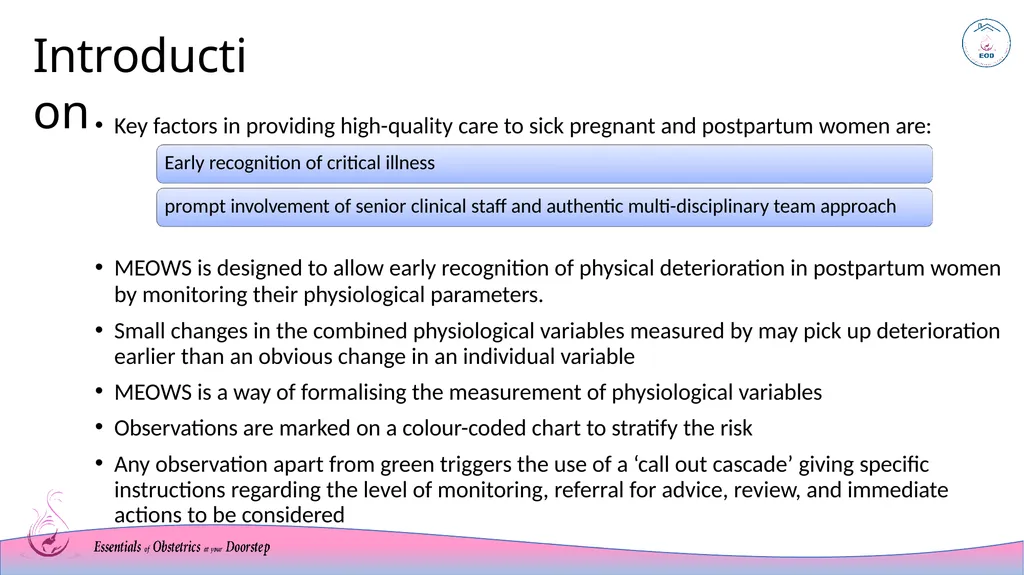
slide2. Introduction Key factors in providing high-quality care to sick pregnant and postpartum women are:
Early recognition of critical illness
prompt involvement of senior clinical staff and authentic multi-disciplinary team approach
MEOWS is designed to allow early recognition of physical deterioration in postpartum women
by monitoring their physiological parameters.
Small changes in the combined physiological variables measured by may pick up deterioration earlier than an obvious change in an individual variable
MEOWS is a way of formalising the measurement of physiological variables
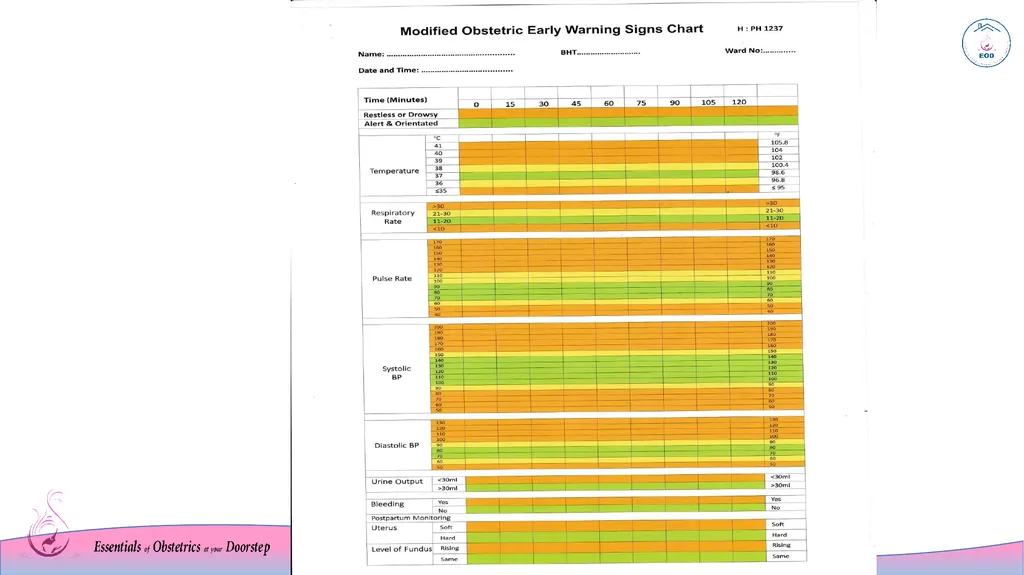
Observations are marked on a colour-coded chart to stratify the risk
Any observation apart from green triggers the use of a ‘call out cascade’ giving specific instructions regarding the level of monitoring, referral for advice, review, and immediate actions to be considered<br>
slide4. When? Postpartum
Postoperative – during and following the transfer from theatre
Special situations During/ following APH/PPH/Eclampsia/Suspected infection – SROM
Active Labour – Not needed: record observations in the partogram<br>
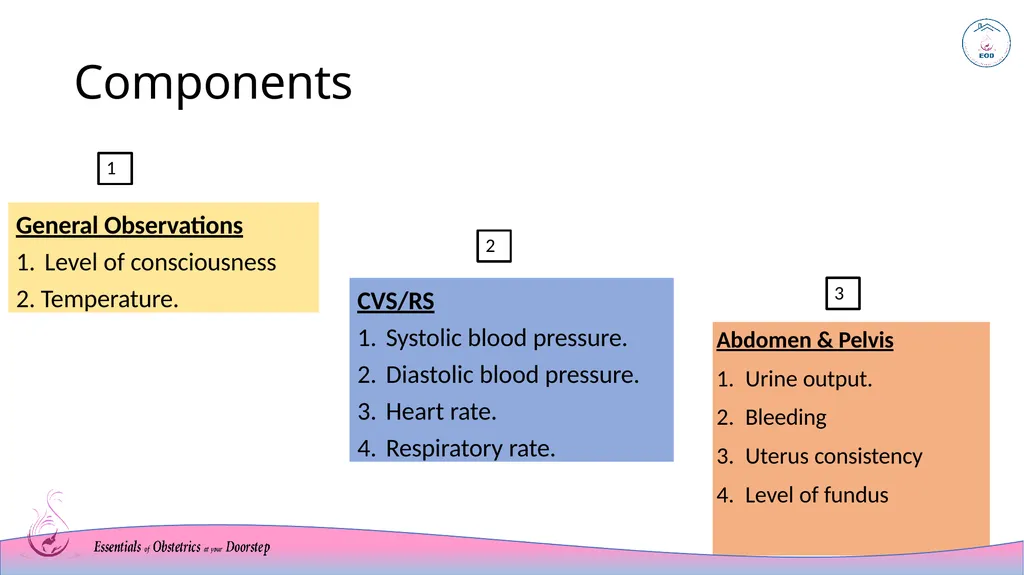
slide5. Components Abdomen & Pelvis
Urine output.
Bleeding
Uterus consistency
Level of fundus General Observations
Level of consciousness
Temperature. CVS/RS
Systolic blood pressure.
Diastolic blood pressure.
Heart rate.
Respiratory rate. 1 2 3<br>
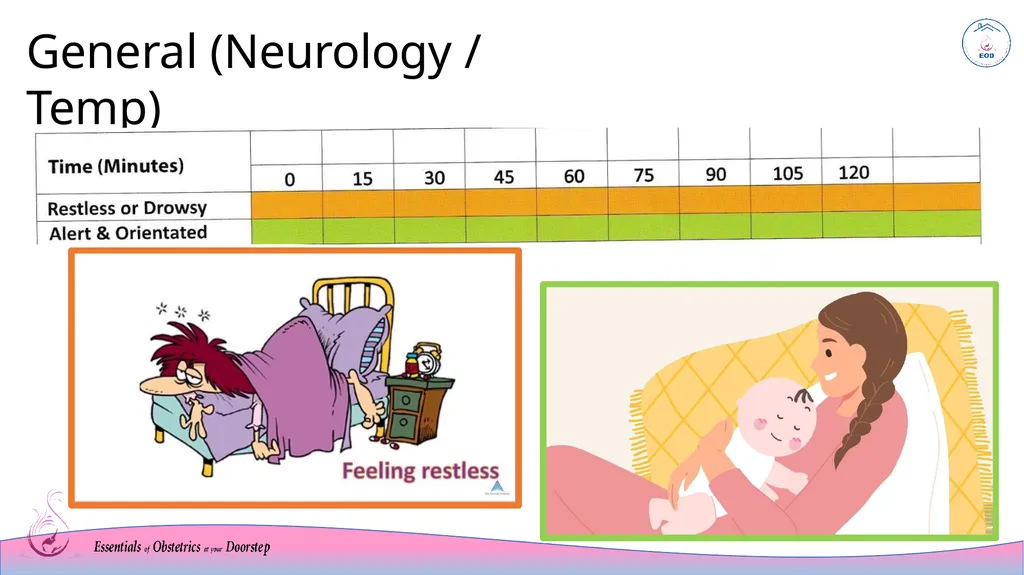
slide7. General (Neurology / Temp)<br>
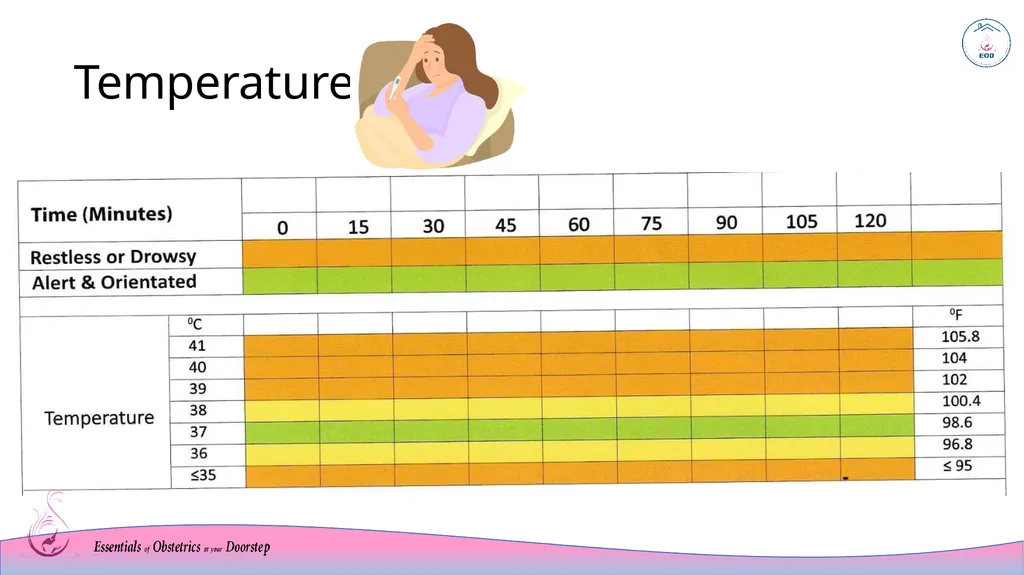
slide8. Temperature<br>
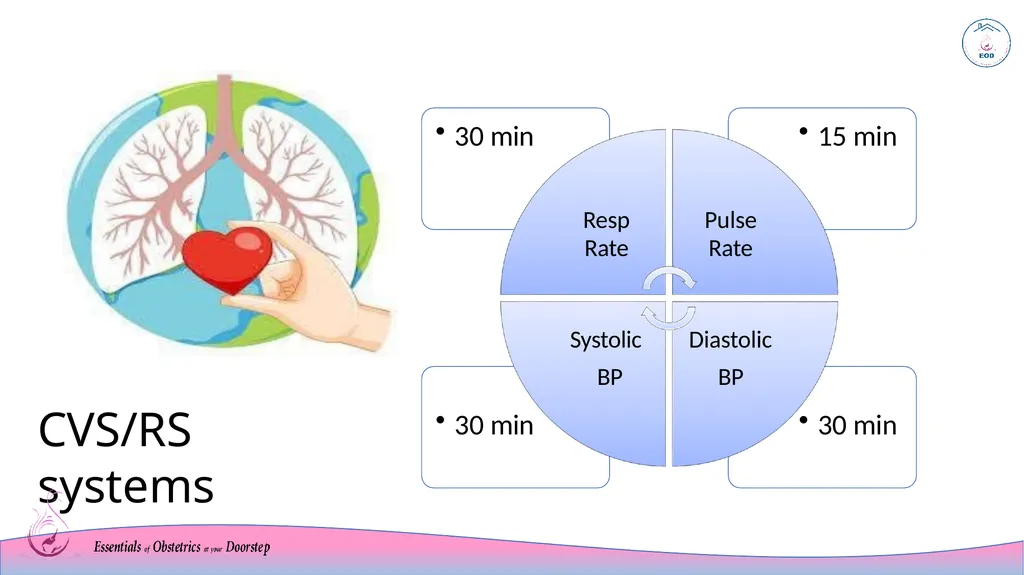
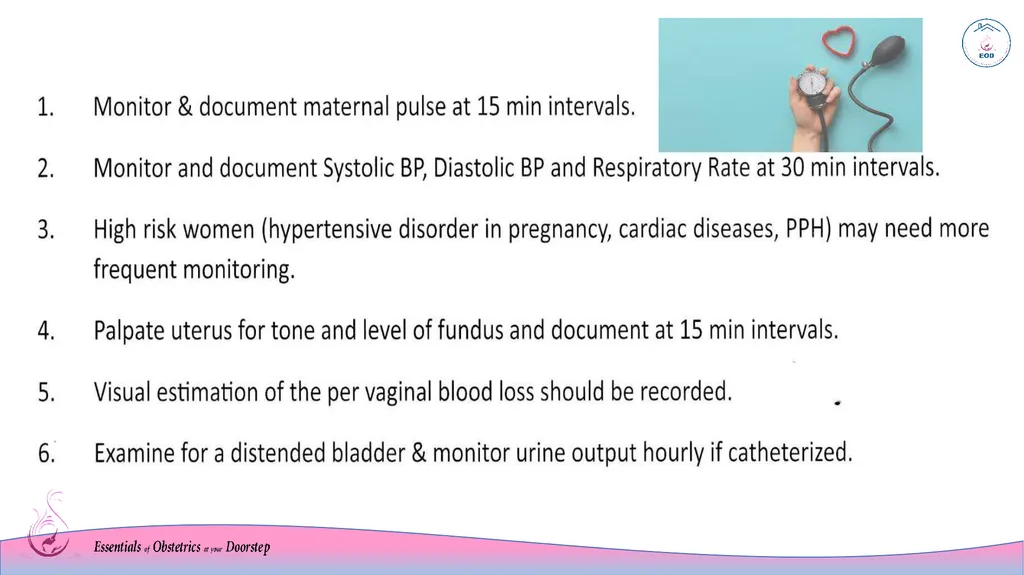
slide9. CVS/RS systems 30 min 30 min 15 min 30 min Resp
Rate Pulse
Rate Diastolic BP Systolic BP<br>
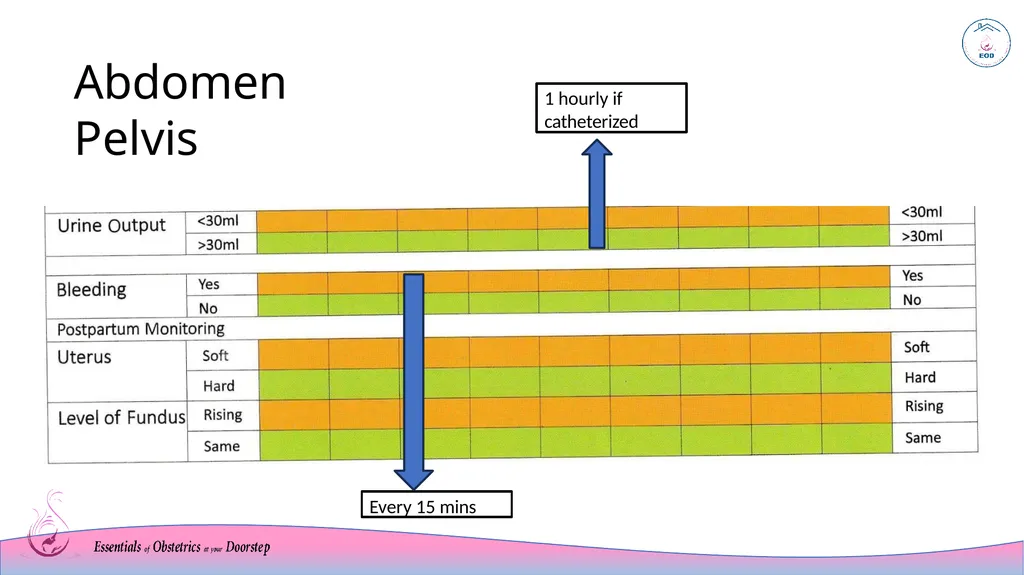
slide10. Abdomen Pelvis 1 hourly if catheterized Every 15 mins<br>
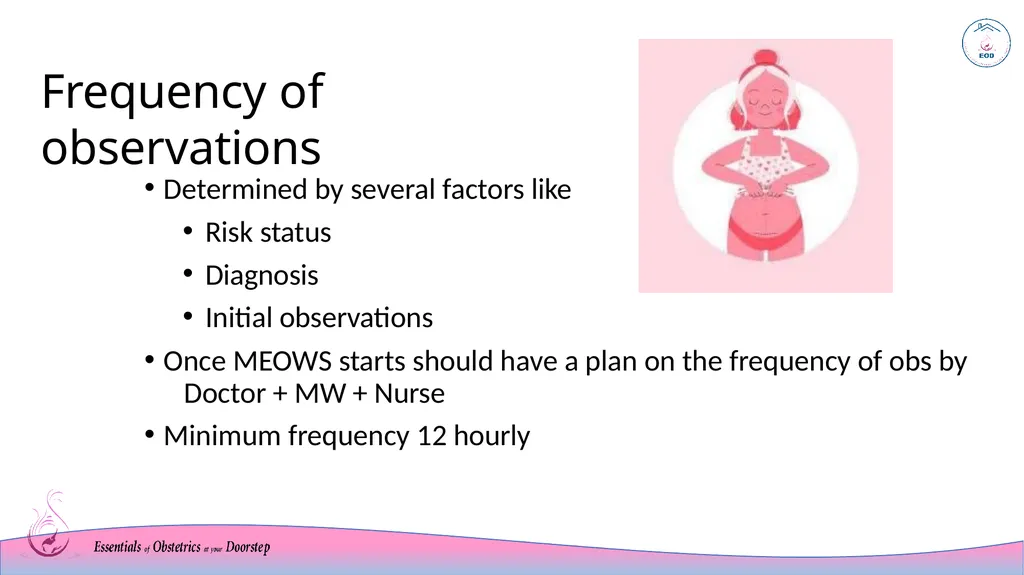
slide11. Frequency of observations Determined by several factors like
Risk status
Diagnosis
Initial observations
Once MEOWS starts should have a plan on the frequency of obs by Doctor + MW + Nurse
Minimum frequency 12 hourly<br>
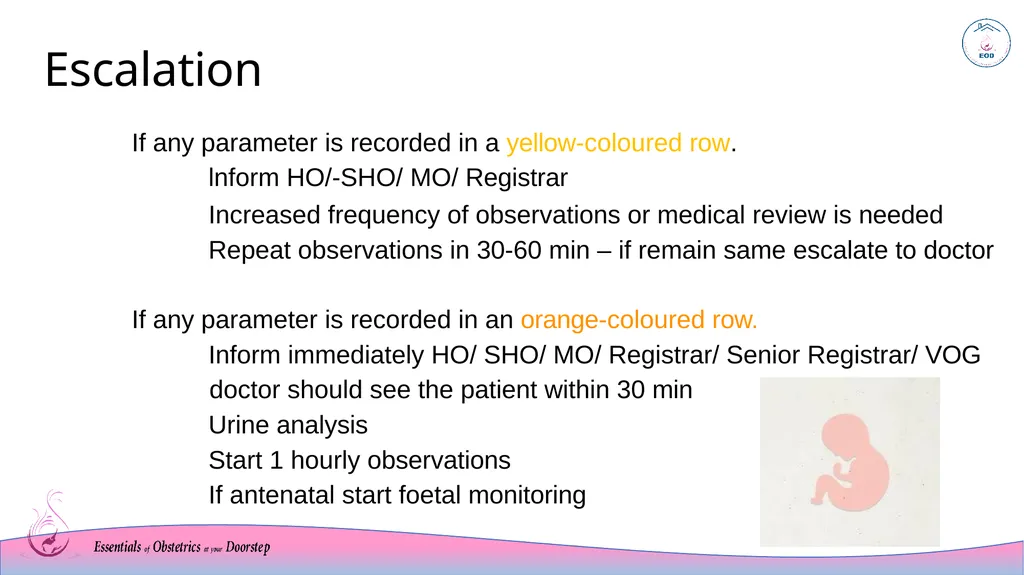
slide13. Escalation If any parameter is recorded in a yellow-coloured row. lnform HO/-SHO/ MO/ Registrar
Increased frequency of observations or medical review is needed Repeat observations in 30-60 min – if remain same escalate to doctor
If any parameter is recorded in an orange-coloured row.
Inform immediately HO/ SHO/ MO/ Registrar/ Senior Registrar/ VOG doctor should see the patient within 30 min
Urine analysis
Start 1 hourly observations
If antenatal start foetal monitoring<br>
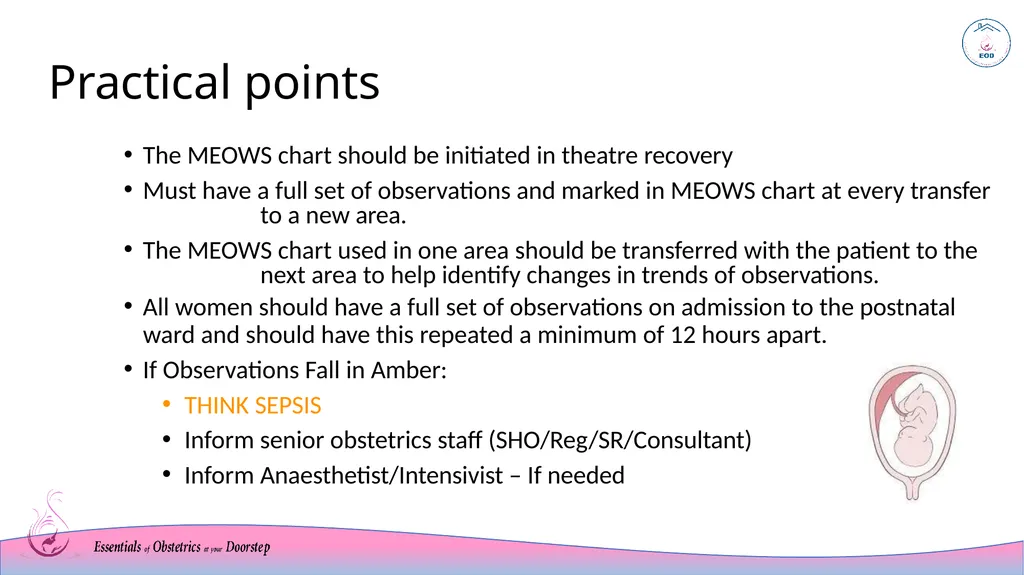
slide14. Practical points The MEOWS chart should be initiated in theatre recovery
Must have a full set of observations and marked in MEOWS chart at every transfer to a new area.
The MEOWS chart used in one area should be transferred with the patient to the next area to help identify changes in trends of observations.
All women should have a full set of observations on admission to the postnatal
ward and should have this repeated a minimum of 12 hours apart.
If Observations Fall in Amber:
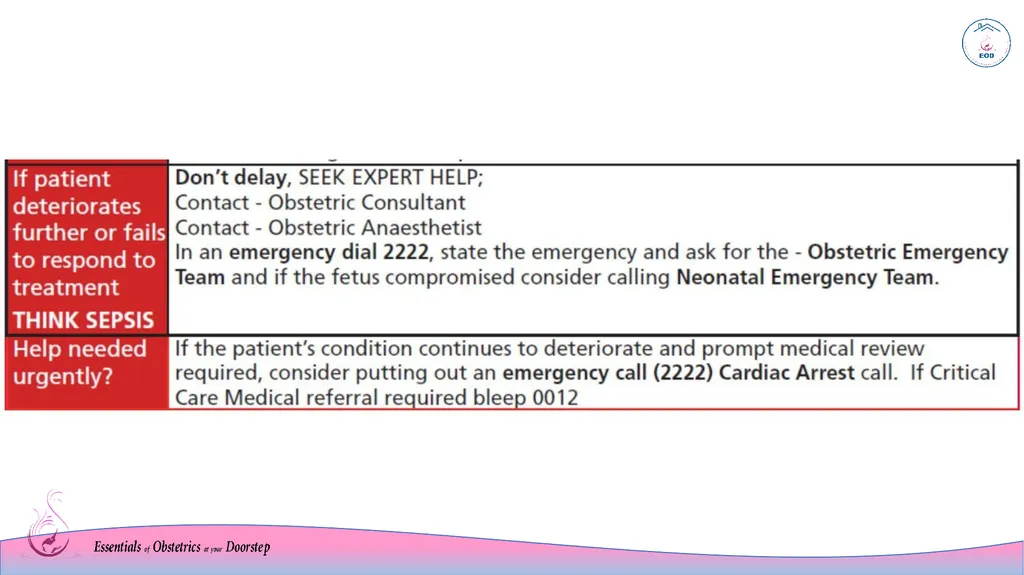
THINK SEPSIS
Inform senior obstetrics staff (SHO/Reg/SR/Consultant)
Inform Anaesthetist/Intensivist – If needed<br>
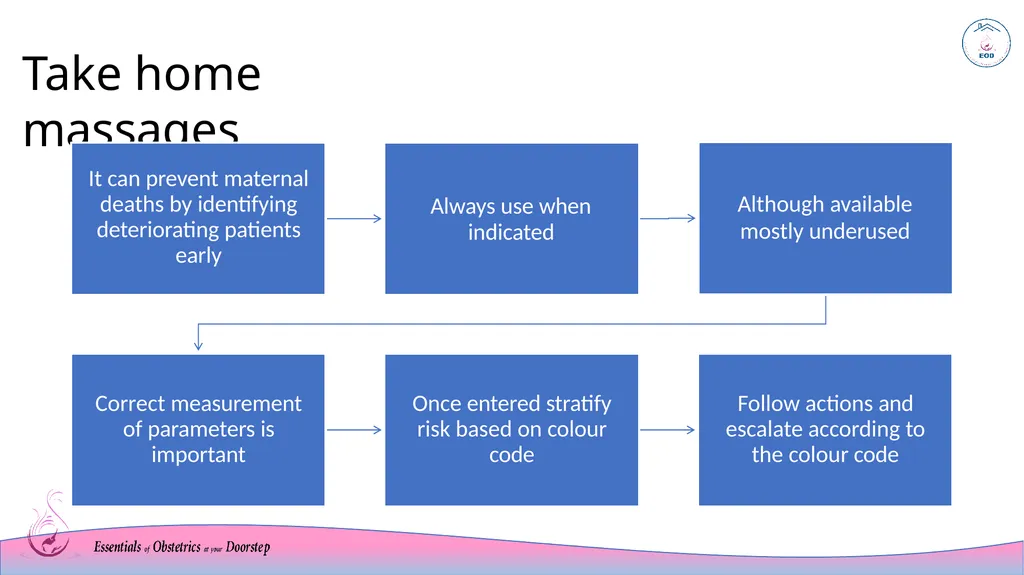
slide16. Take home massages It can prevent maternal deaths by identifying deteriorating patients early Always use when indicated Although available
mostly underused Correct measurement of parameters is important Once entered stratify risk based on colour code Follow actions and escalate according to the colour code<br>
slide17. THANK YOU! Special Acknowledgement for compiling Presentation
Dr Chinthaka Banagala<br>
Modified Early Warning System Sri Lanka College of Obstetricians & Gynaecologists Scientific Activities & Research Committee<br>
slide2. Introduction Key factors in providing high-quality care to sick pregnant and postpartum women are:
Early recognition of critical illness
prompt involvement of senior clinical staff and authentic multi-disciplinary team approach
MEOWS is designed to allow early recognition of physical deterioration in postpartum women
by monitoring their physiological parameters.
Small changes in the combined physiological variables measured by may pick up deterioration earlier than an obvious change in an individual variable
MEOWS is a way of formalising the measurement of physiological variables
Observations are marked on a colour-coded chart to stratify the risk
Any observation apart from green triggers the use of a ‘call out cascade’ giving specific instructions regarding the level of monitoring, referral for advice, review, and immediate actions to be considered<br>
slide4. When? Postpartum
Postoperative – during and following the transfer from theatre
Special situations During/ following APH/PPH/Eclampsia/Suspected infection – SROM
Active Labour – Not needed: record observations in the partogram<br>
slide5. Components Abdomen & Pelvis
Urine output.
Bleeding
Uterus consistency
Level of fundus General Observations
Level of consciousness
Temperature. CVS/RS
Systolic blood pressure.
Diastolic blood pressure.
Heart rate.
Respiratory rate. 1 2 3<br>
slide7. General (Neurology / Temp)<br>
slide8. Temperature<br>
slide9. CVS/RS systems 30 min 30 min 15 min 30 min Resp
Rate Pulse
Rate Diastolic BP Systolic BP<br>
slide10. Abdomen Pelvis 1 hourly if catheterized Every 15 mins<br>
slide11. Frequency of observations Determined by several factors like
Risk status
Diagnosis
Initial observations
Once MEOWS starts should have a plan on the frequency of obs by Doctor + MW + Nurse
Minimum frequency 12 hourly<br>
slide13. Escalation If any parameter is recorded in a yellow-coloured row. lnform HO/-SHO/ MO/ Registrar
Increased frequency of observations or medical review is needed Repeat observations in 30-60 min – if remain same escalate to doctor
If any parameter is recorded in an orange-coloured row.
Inform immediately HO/ SHO/ MO/ Registrar/ Senior Registrar/ VOG doctor should see the patient within 30 min
Urine analysis
Start 1 hourly observations
If antenatal start foetal monitoring<br>
slide14. Practical points The MEOWS chart should be initiated in theatre recovery
Must have a full set of observations and marked in MEOWS chart at every transfer to a new area.
The MEOWS chart used in one area should be transferred with the patient to the next area to help identify changes in trends of observations.
All women should have a full set of observations on admission to the postnatal
ward and should have this repeated a minimum of 12 hours apart.
If Observations Fall in Amber:
THINK SEPSIS
Inform senior obstetrics staff (SHO/Reg/SR/Consultant)
Inform Anaesthetist/Intensivist – If needed<br>
slide16. Take home massages It can prevent maternal deaths by identifying deteriorating patients early Always use when indicated Although available
mostly underused Correct measurement of parameters is important Once entered stratify risk based on colour code Follow actions and escalate according to the colour code<br>
slide17. THANK YOU! Special Acknowledgement for compiling Presentation
Dr Chinthaka Banagala<br>