
Methylene Chloride Training Objectives What is
GB
Published · 28 slides · 0 views
1 / 1
Description
Methylene Chloride Training Objectives What is Methylene Chloride Synonyms for methylene chloride include: DCM MeCl MeCl2 Methane dichloride Methylene bichloride Methylene dichloride Non-laboratory products that may contain DCM: Paint
Related Topics
Share
Embed code
Download this presentation From Below
"Methylene Chloride Training Objectives What is" is the property of its rightful owner. Permission is granted to download and print the materials on this website for personal, non-commercial use only, and to display it on your personal computer provided you do not modify the materials and that you retain all copyright notices contained in the materials. By downloading content from our website, you accept the terms of this agreement.
Presentation Transcript
01
Methylene Chloride Training<br>
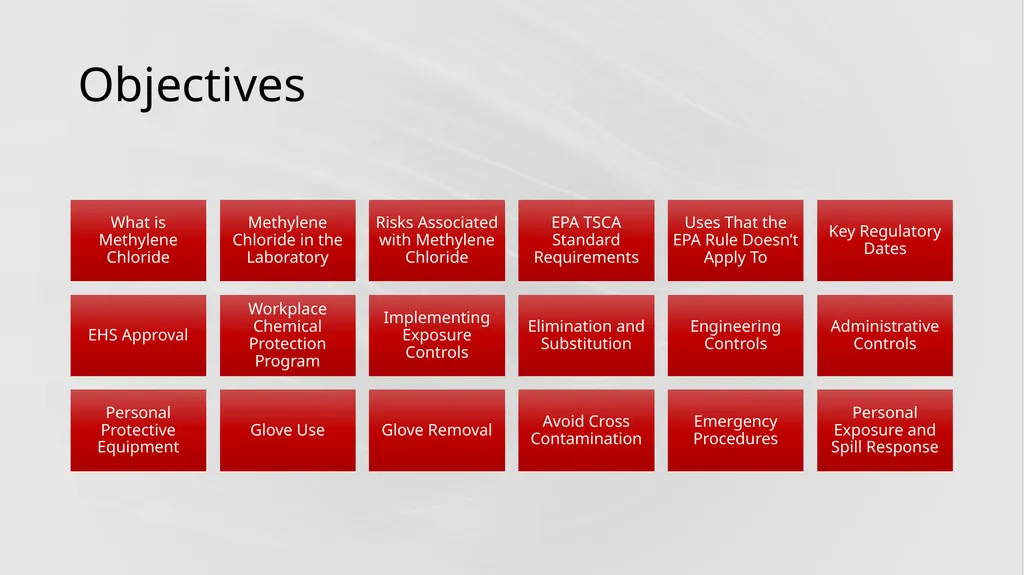
02
Objectives<br>
03
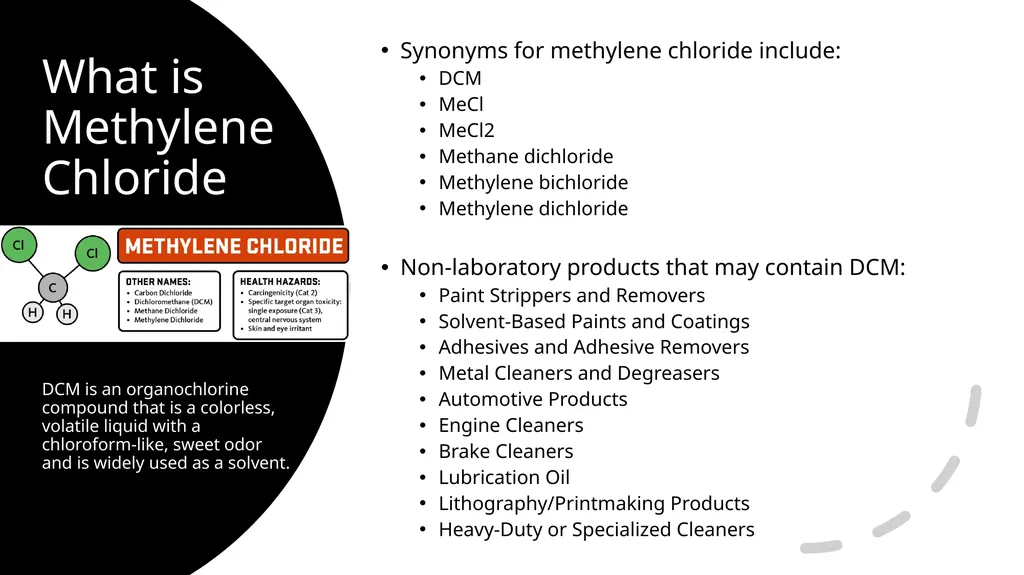
What is Methylene Chloride Synonyms for methylene chloride include:
DCM
MeCl
MeCl2
Methane dichloride
Methylene bichloride
Methylene dichloride
Non-laboratory products that may contain DCM:
Paint Strippers and Removers
Solvent-Based Paints and Coatings
Adhesives and Adhesive Removers
Metal Cleaners and Degreasers
Automotive Products
Engine Cleaners
Brake Cleaners
Lubrication Oil
Lithography/Printmaking Products
Heavy-Duty or Specialized Cleaners DCM is an organochlorine compound that is a colorless, volatile liquid with a chloroform-like, sweet odor and is widely used as a solvent.<br>
04
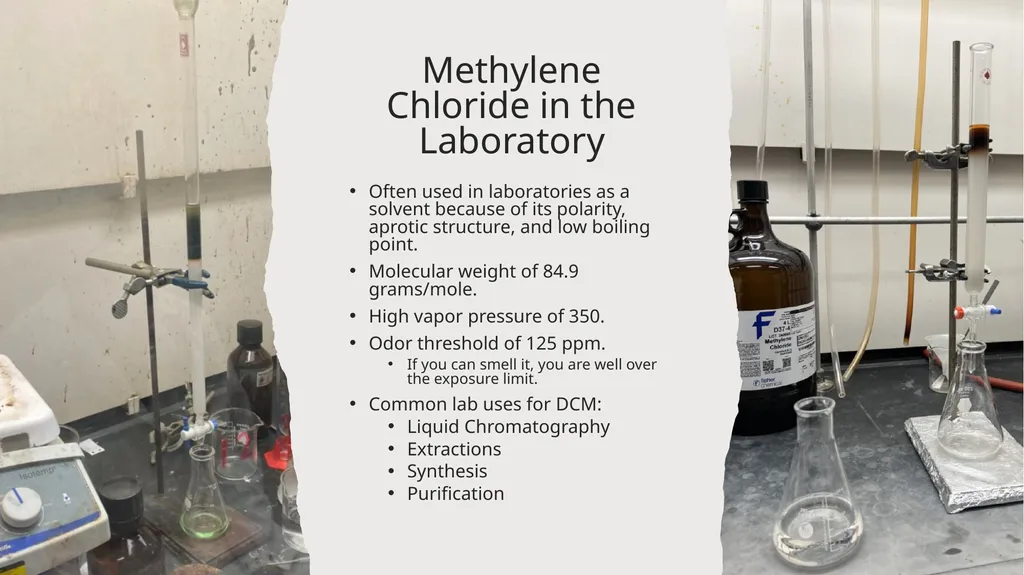
Methylene Chloride in the Laboratory Often used in laboratories as a solvent because of its polarity, aprotic structure, and low boiling point.
Molecular weight of 84.9 grams/mole.
High vapor pressure of 350.
Odor threshold of 125 ppm.
If you can smell it, you are well over the exposure limit.
Common lab uses for DCM:
Liquid Chromatography
Extractions
Synthesis
Purification<br>
Molecular weight of 84.9 grams/mole.
High vapor pressure of 350.
Odor threshold of 125 ppm.
If you can smell it, you are well over the exposure limit.
Common lab uses for DCM:
Liquid Chromatography
Extractions
Synthesis
Purification<br>
05
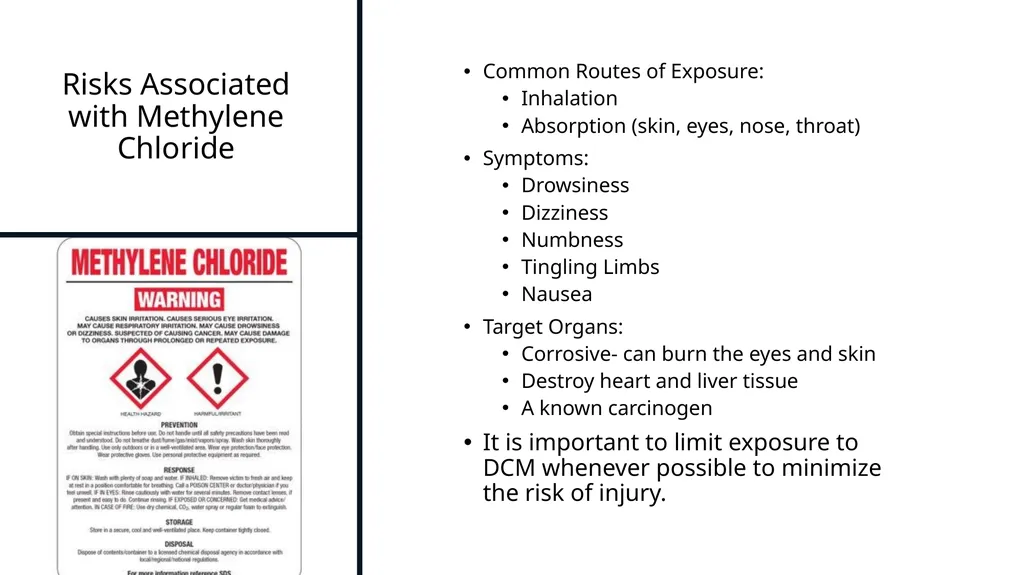
Risks Associated with Methylene Chloride Common Routes of Exposure:
Inhalation
Absorption (skin, eyes, nose, throat)
Symptoms:
Drowsiness
Dizziness
Numbness
Tingling Limbs
Nausea
Target Organs:
Corrosive- can burn the eyes and skin
Destroy heart and liver tissue
A known carcinogen
It is important to limit exposure to DCM whenever possible to minimize the risk of injury.<br>
06
EPA TSCA Standard Requirements In April 2024, Environmental Protection Agency (EPA) finalized a new rule and workplace protections under the Toxic Substances Control Act (TSCA) for methylene chloride to protect human health.
Most uses of DCM will be banned.
A few uses may continue if a Workplace Chemical Protection (WCPP) is established, including lab use and solvent welding.<br>
Most uses of DCM will be banned.
A few uses may continue if a Workplace Chemical Protection (WCPP) is established, including lab use and solvent welding.<br>
07
Uses That the EPA Rule Doesn’t Apply To The EPA rule does not apply to the following:
Materials with less than 0.1% DCM by weight are not subject to the restrictions in this regulation.
Any pesticide when manufactured, processed, or distributed in commerce for use as a pesticide.<br>
Materials with less than 0.1% DCM by weight are not subject to the restrictions in this regulation.
Any pesticide when manufactured, processed, or distributed in commerce for use as a pesticide.<br>
08
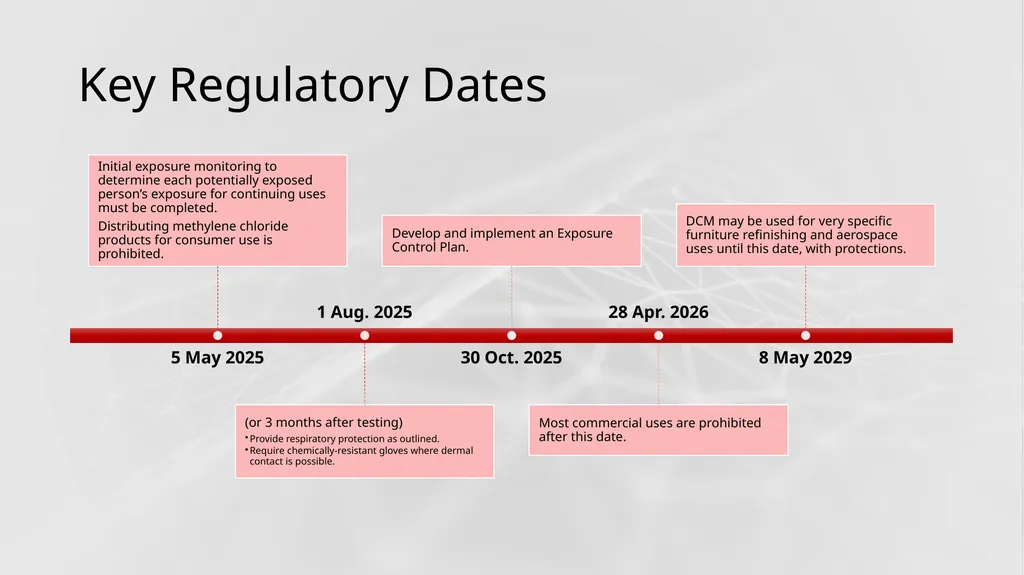
Key Regulatory Dates<br>
09
EHS Approval All uses of DCM must be reviewed and approved by EHS.
Exposure monitoring and training is required before DCM use.<br>
Exposure monitoring and training is required before DCM use.<br>
10
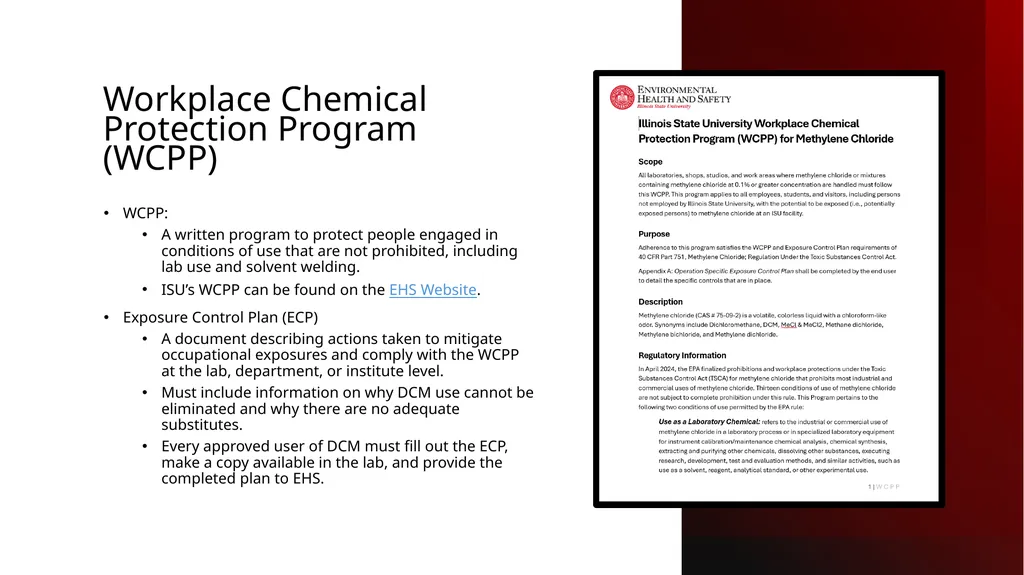
Workplace Chemical Protection Program (WCPP) WCPP:
A written program to protect people engaged in conditions of use that are not prohibited, including lab use and solvent welding.
ISU’s WCPP can be found on the EHS Website.
Exposure Control Plan (ECP)
A document describing actions taken to mitigate occupational exposures and comply with the WCPP at the lab, department, or institute level.
Must include information on why DCM use cannot be eliminated and why there are no adequate substitutes.
Every approved user of DCM must fill out the ECP, make a copy available in the lab, and provide the completed plan to EHS.<br>
11
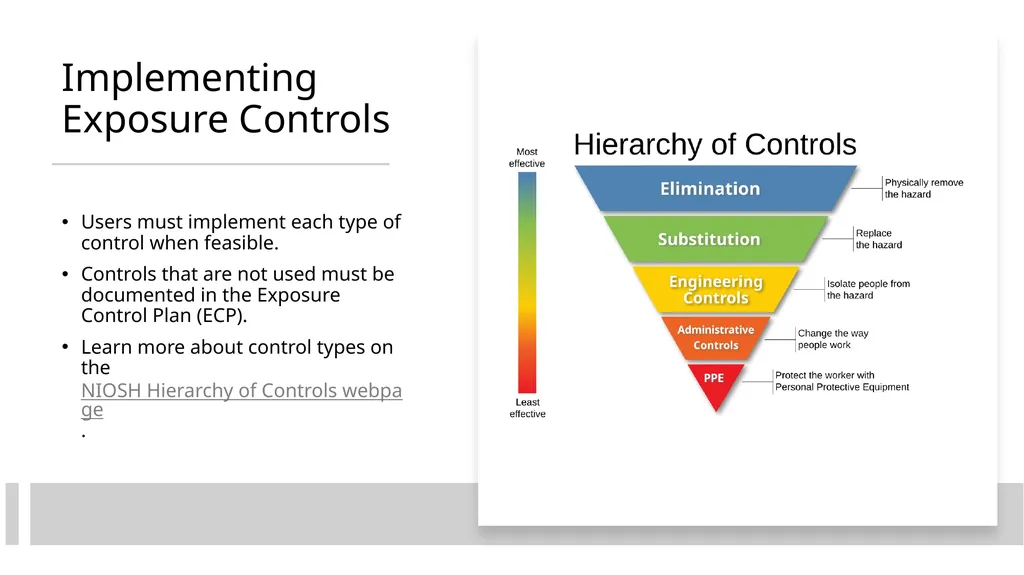
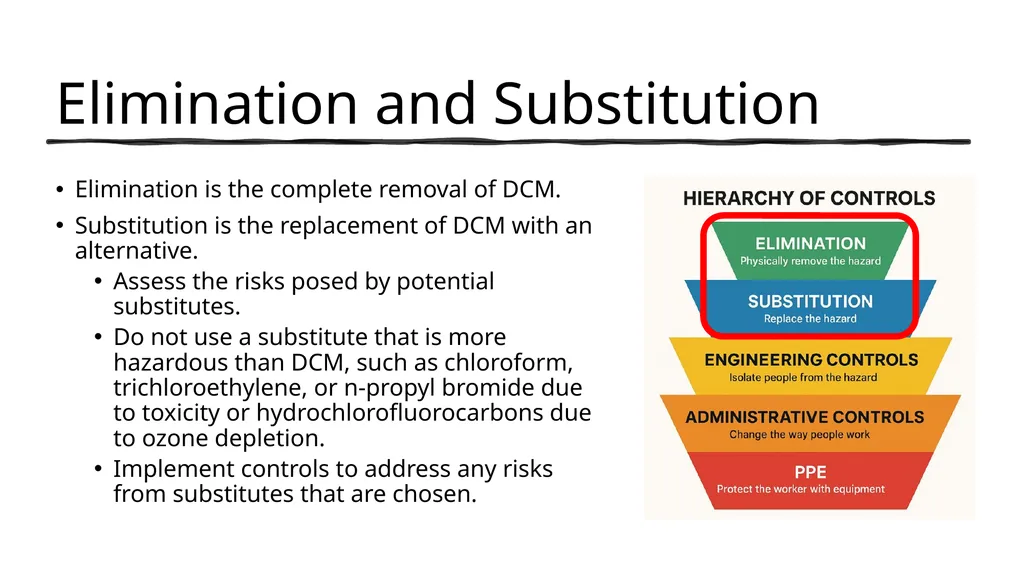
Implementing Exposure Controls Users must implement each type of control when feasible.
Controls that are not used must be documented in the Exposure Control Plan (ECP).
Learn more about control types on the NIOSH Hierarchy of Controls webpage.<br>
Controls that are not used must be documented in the Exposure Control Plan (ECP).
Learn more about control types on the NIOSH Hierarchy of Controls webpage.<br>
12
Elimination and Substitution Elimination is the complete removal of DCM.
Substitution is the replacement of DCM with an alternative.
Assess the risks posed by potential substitutes.
Do not use a substitute that is more hazardous than DCM, such as chloroform, trichloroethylene, or n-propyl bromide due to toxicity or hydrochlorofluorocarbons due to ozone depletion.
Implement controls to address any risks from substitutes that are chosen.<br>
13
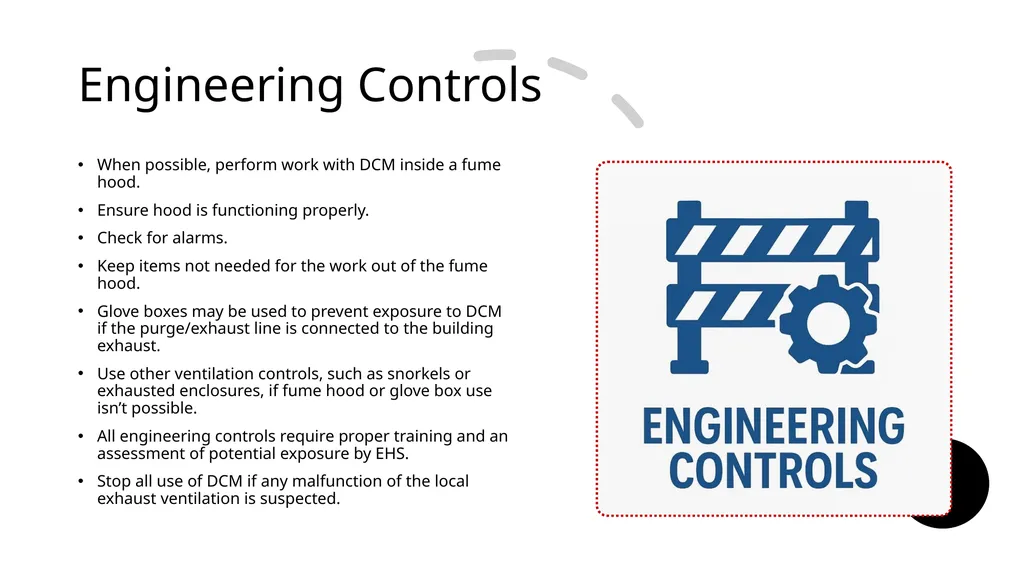
Engineering Controls When possible, perform work with DCM inside a fume hood.
Ensure hood is functioning properly.
Check for alarms.
Keep items not needed for the work out of the fume hood.
Glove boxes may be used to prevent exposure to DCM if the purge/exhaust line is connected to the building exhaust.
Use other ventilation controls, such as snorkels or exhausted enclosures, if fume hood or glove box use isn’t possible.
All engineering controls require proper training and an assessment of potential exposure by EHS.
Stop all use of DCM if any malfunction of the local exhaust ventilation is suspected.<br>
14
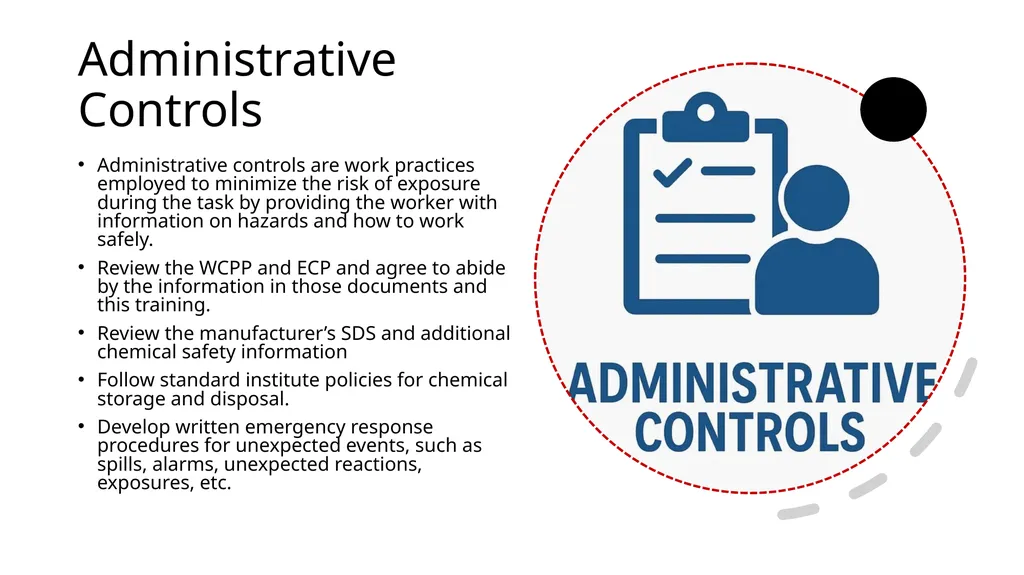
Administrative Controls Administrative controls are work practices employed to minimize the risk of exposure during the task by providing the worker with information on hazards and how to work safely.
Review the WCPP and ECP and agree to abide by the information in those documents and this training.
Review the manufacturer’s SDS and additional chemical safety information
Follow standard institute policies for chemical storage and disposal.
Develop written emergency response procedures for unexpected events, such as spills, alarms, unexpected reactions, exposures, etc.<br>
15
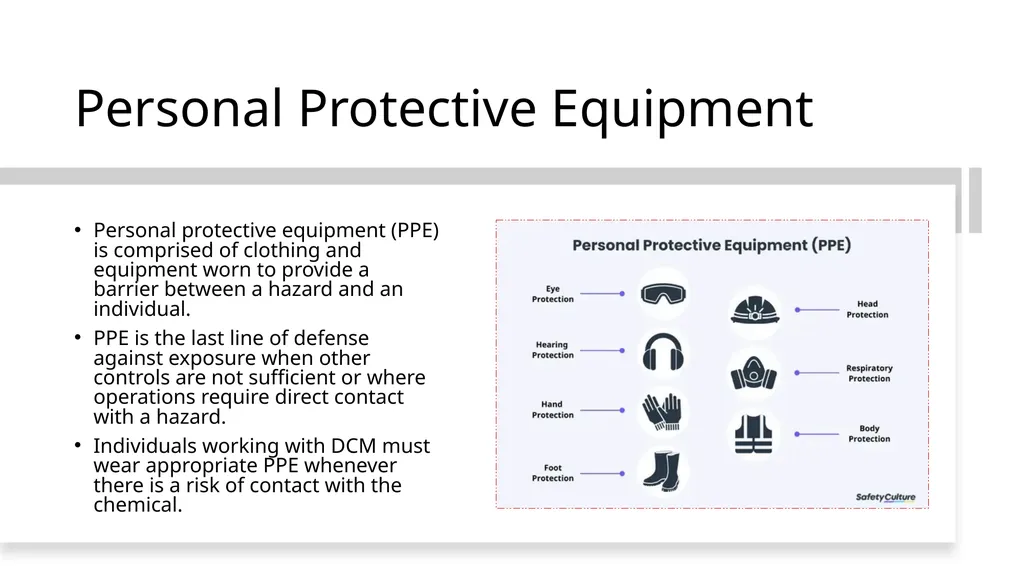
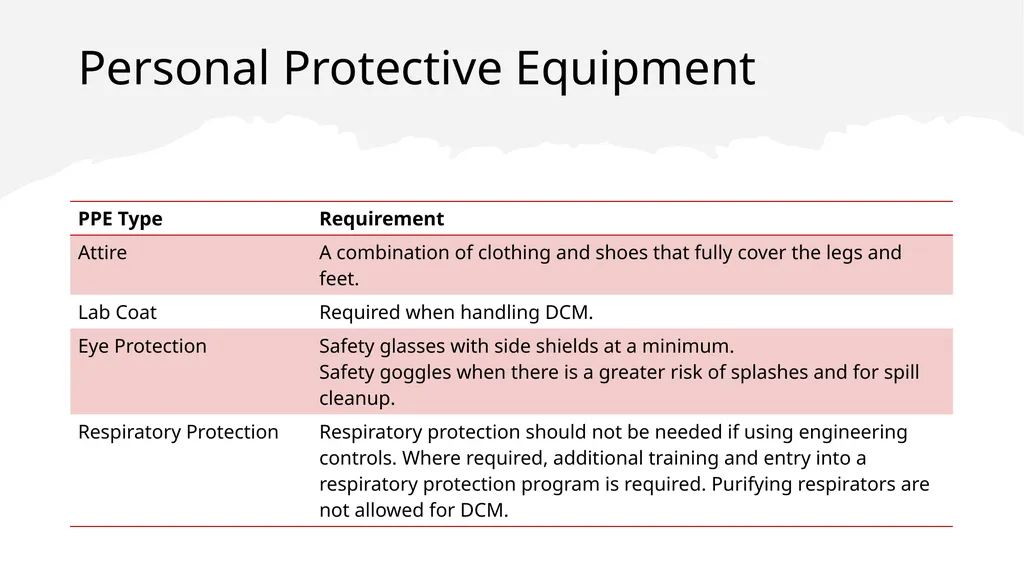
Personal Protective Equipment Personal protective equipment (PPE) is comprised of clothing and equipment worn to provide a barrier between a hazard and an individual.
PPE is the last line of defense against exposure when other controls are not sufficient or where operations require direct contact with a hazard.
Individuals working with DCM must wear appropriate PPE whenever there is a risk of contact with the chemical.<br>
PPE is the last line of defense against exposure when other controls are not sufficient or where operations require direct contact with a hazard.
Individuals working with DCM must wear appropriate PPE whenever there is a risk of contact with the chemical.<br>
16
Personal Protective Equipment<br>
17
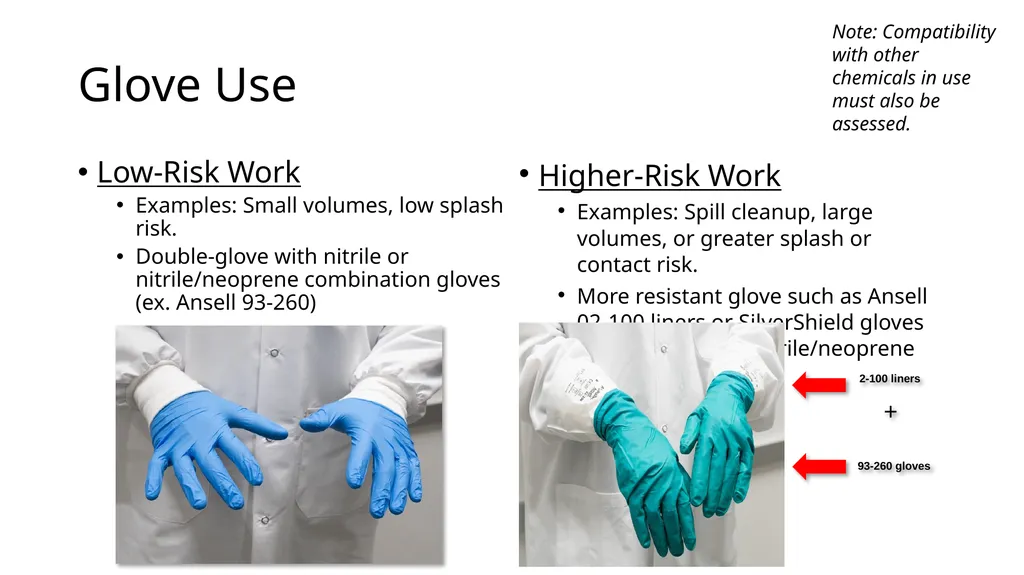
Glove Use Low-Risk Work
Examples: Small volumes, low splash risk.
Double-glove with nitrile or nitrile/neoprene combination gloves (ex. Ansell 93-260) Higher-Risk Work
Examples: Spill cleanup, large volumes, or greater splash or contact risk.
More resistant glove such as Ansell 02-100 liners or SilverShield gloves under a nitrile or nitrile/neoprene glove. Note: Compatibility with other chemicals in use must also be assessed.<br>
18
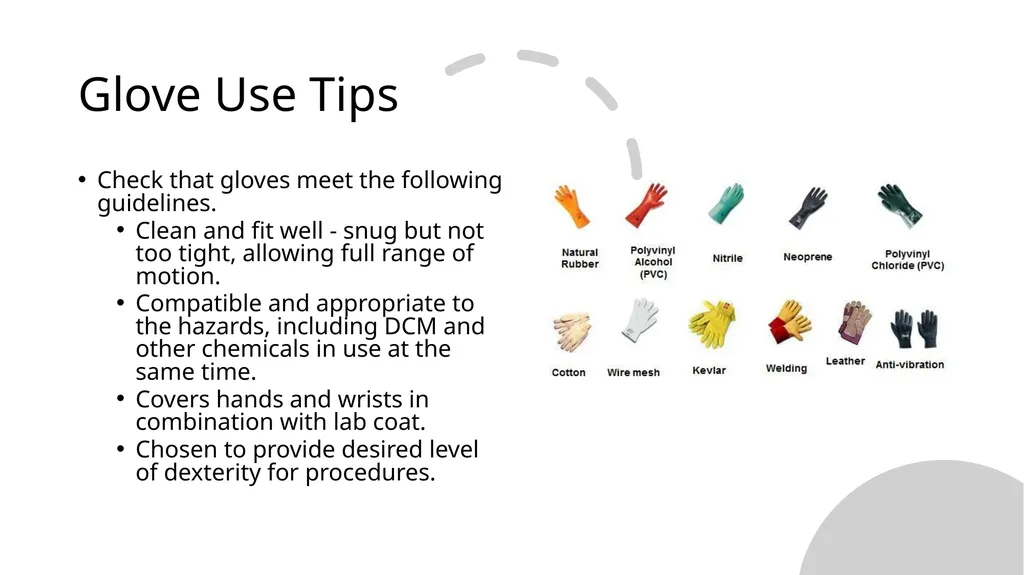
Glove Use Tips Check that gloves meet the following guidelines.
Clean and fit well - snug but not too tight, allowing full range of motion.
Compatible and appropriate to the hazards, including DCM and other chemicals in use at the same time.
Covers hands and wrists in combination with lab coat.
Chosen to provide desired level of dexterity for procedures.<br>
Clean and fit well - snug but not too tight, allowing full range of motion.
Compatible and appropriate to the hazards, including DCM and other chemicals in use at the same time.
Covers hands and wrists in combination with lab coat.
Chosen to provide desired level of dexterity for procedures.<br>
19
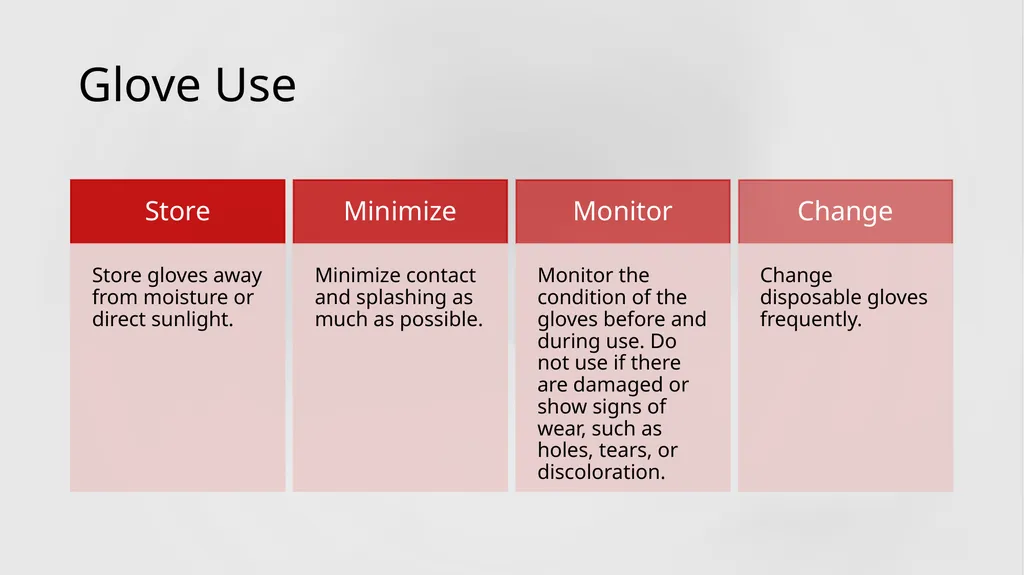
Glove Use<br>
20
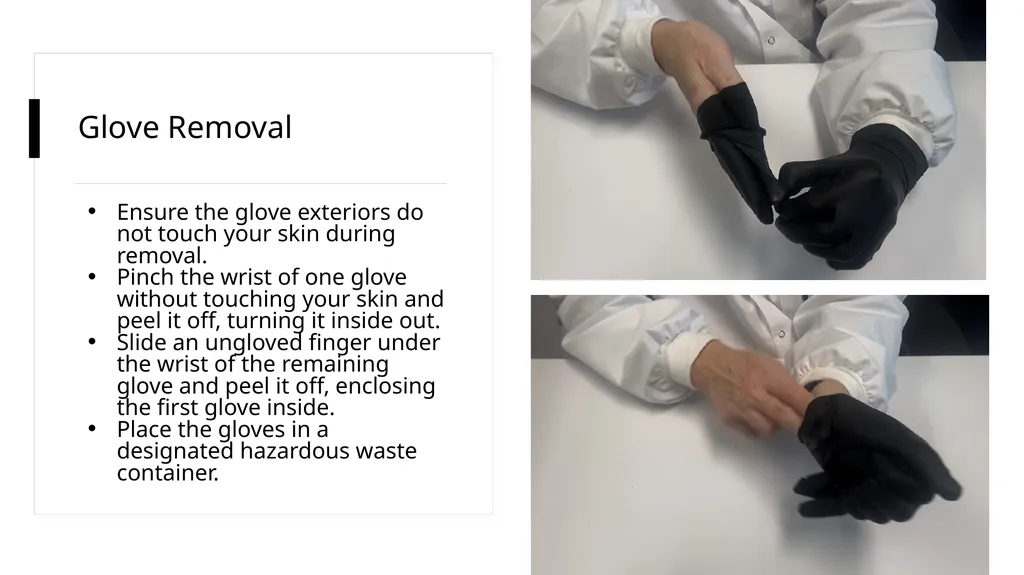
Glove Removal Ensure the glove exteriors do not touch your skin during removal.
Pinch the wrist of one glove without touching your skin and peel it off, turning it inside out.
Slide an ungloved finger under the wrist of the remaining glove and peel it off, enclosing the first glove inside.
Place the gloves in a designated hazardous waste container.<br>
Pinch the wrist of one glove without touching your skin and peel it off, turning it inside out.
Slide an ungloved finger under the wrist of the remaining glove and peel it off, enclosing the first glove inside.
Place the gloves in a designated hazardous waste container.<br>
21
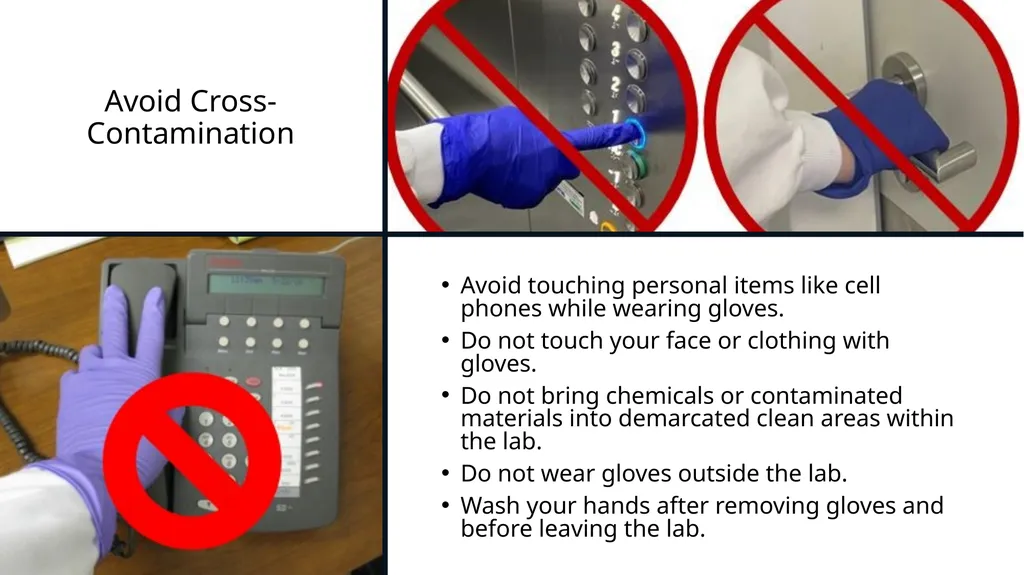
Avoid Cross-Contamination Avoid touching personal items like cell phones while wearing gloves.
Do not touch your face or clothing with gloves.
Do not bring chemicals or contaminated materials into demarcated clean areas within the lab.
Do not wear gloves outside the lab.
Wash your hands after removing gloves and before leaving the lab.<br>
Do not touch your face or clothing with gloves.
Do not bring chemicals or contaminated materials into demarcated clean areas within the lab.
Do not wear gloves outside the lab.
Wash your hands after removing gloves and before leaving the lab.<br>
22
Emergency Procedures<br>
23
Emergency Procedures<br>
24
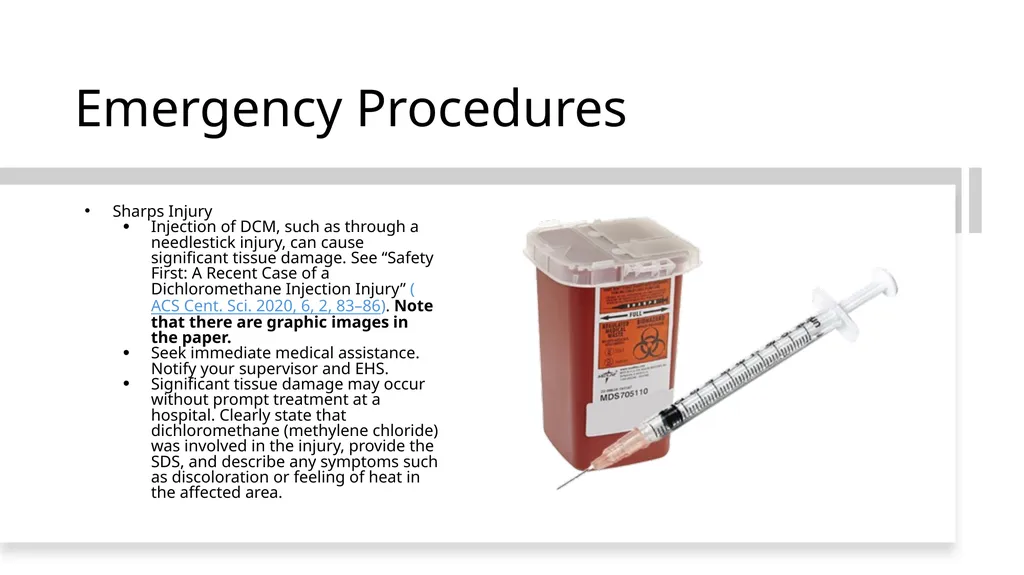
Emergency Procedures Sharps Injury
Injection of DCM, such as through a needlestick injury, can cause significant tissue damage. See “Safety First: A Recent Case of a Dichloromethane Injection Injury” (ACS Cent. Sci. 2020, 6, 2, 83–86). Note that there are graphic images in the paper.
Seek immediate medical assistance. Notify your supervisor and EHS.
Significant tissue damage may occur without prompt treatment at a hospital. Clearly state that dichloromethane (methylene chloride) was involved in the injury, provide the SDS, and describe any symptoms such as discoloration or feeling of heat in the affected area.<br>
25
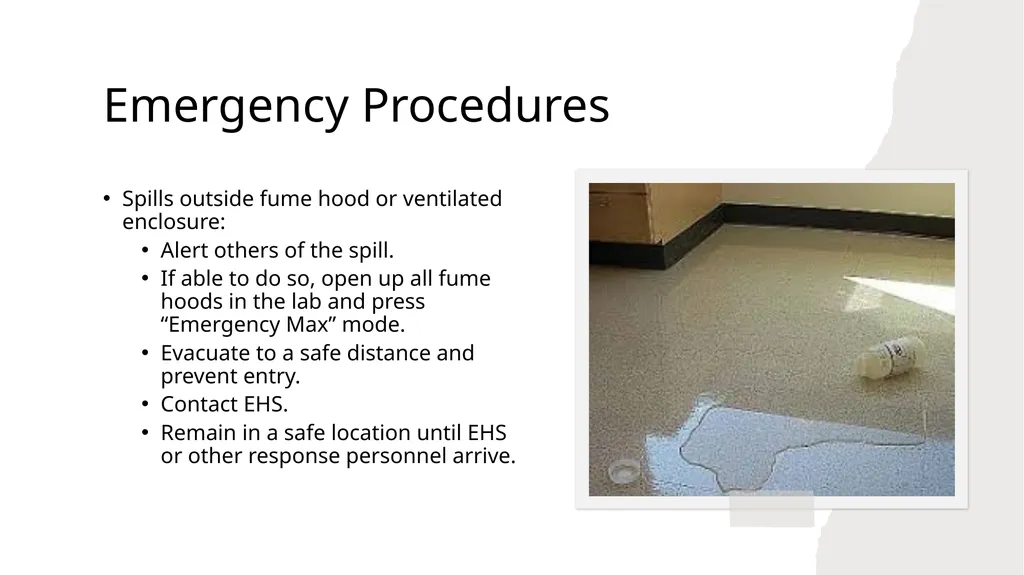
Emergency Procedures Spills outside fume hood or ventilated enclosure:
Alert others of the spill.
If able to do so, open up all fume hoods in the lab and press “Emergency Max” mode.
Evacuate to a safe distance and prevent entry.
Contact EHS.
Remain in a safe location until EHS or other response personnel arrive.<br>
Alert others of the spill.
If able to do so, open up all fume hoods in the lab and press “Emergency Max” mode.
Evacuate to a safe distance and prevent entry.
Contact EHS.
Remain in a safe location until EHS or other response personnel arrive.<br>
26
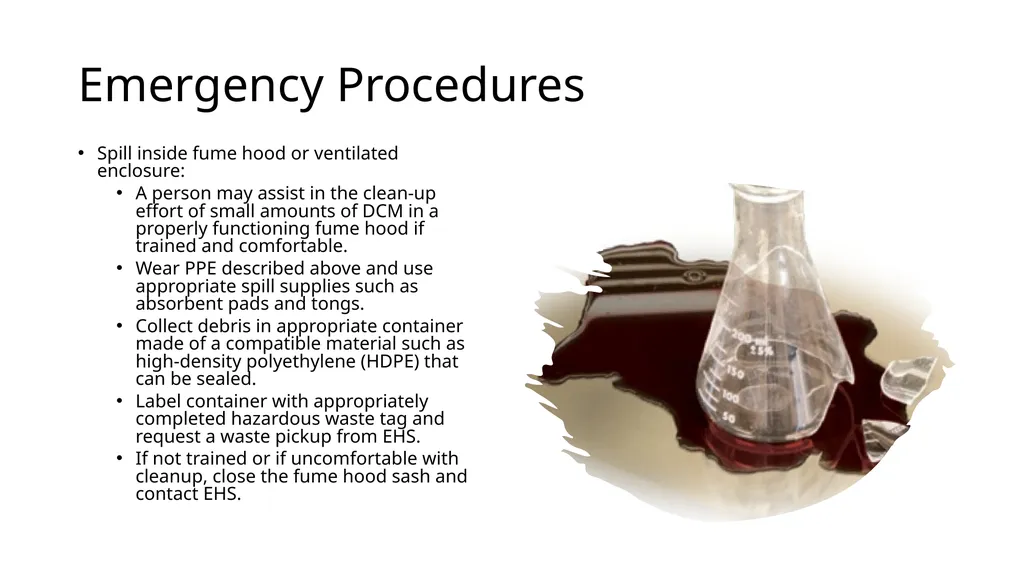
Emergency Procedures Spill inside fume hood or ventilated enclosure:
A person may assist in the clean-up effort of small amounts of DCM in a properly functioning fume hood if trained and comfortable.
Wear PPE described above and use appropriate spill supplies such as absorbent pads and tongs.
Collect debris in appropriate container made of a compatible material such as high-density polyethylene (HDPE) that can be sealed.
Label container with appropriately completed hazardous waste tag and request a waste pickup from EHS.
If not trained or if uncomfortable with cleanup, close the fume hood sash and contact EHS.<br>
27
Thank you to CSHEMA for the materials used in this training.<br>
28
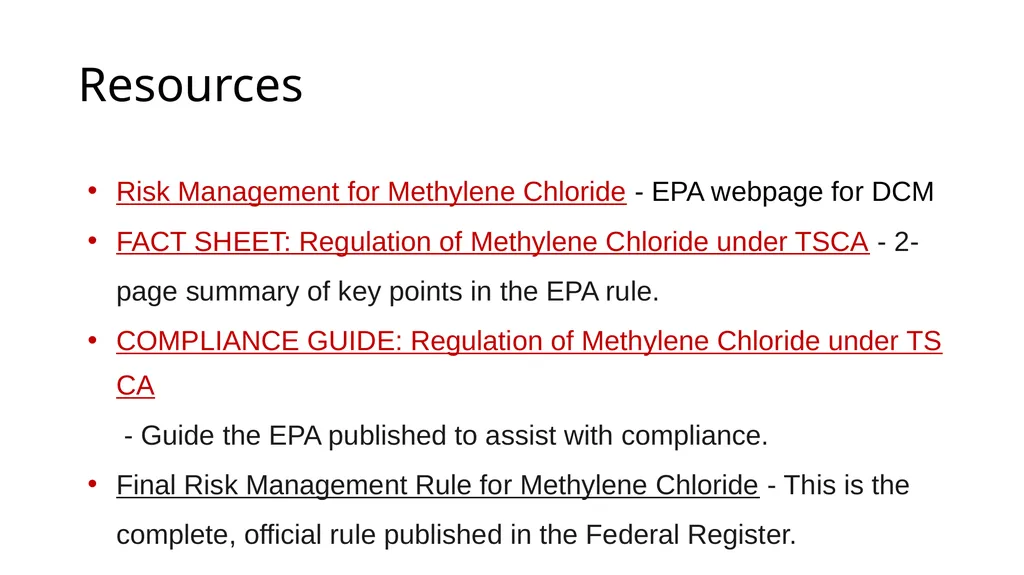
Resources Risk Management for Methylene Chloride - EPA webpage for DCM
FACT SHEET: Regulation of Methylene Chloride under TSCA - 2-page summary of key points in the EPA rule.
COMPLIANCE GUIDE: Regulation of Methylene Chloride under TSCA - Guide the EPA published to assist with compliance.
Final Risk Management Rule for Methylene Chloride - This is the complete, official rule published in the Federal Register.<br>