Microbial analysis of air There are two methods of monitoring the microbial quality of air. Passive monitoring- settling or sedimentation plate technique Active sampling- Andersen air sampler Passive monitoring or settle plate technique:
"Microbial analysis of air There are two methods of" is the property of its rightful owner. Permission is granted to
download and print the materials on this website for personal, non-commercial use only, and to display it
on your personal computer provided you do not modify the materials and that you retain all copyright
notices contained in the materials. By downloading content from our website, you accept the terms of this
agreement.
Presentation Transcript
01
Microbial analysis of air<br>
02
There are two methods of monitoring the microbial quality of air.
Passive monitoring- settling or sedimentation plate technique
Active sampling- Andersen air sampler<br>
03
Passive monitoring or settle plate technique: dishes containing appropriate culture media
exposed to the air for a given period of time
incubated to allow visible colonies to develop and be counted.<br>
04
Passive monitoring Monitors viable microbes only,
Cannot sample specific volume of air so results are not quantitative ,
Vulnerable to contamination and interference by non air borne sources.<br>
05
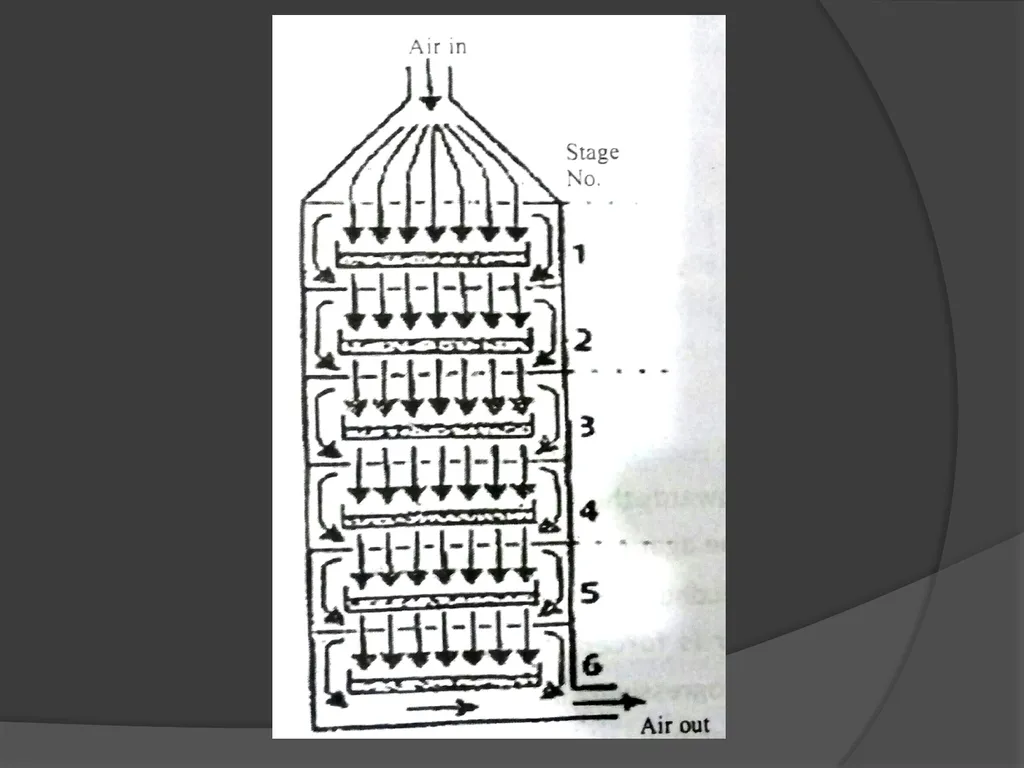
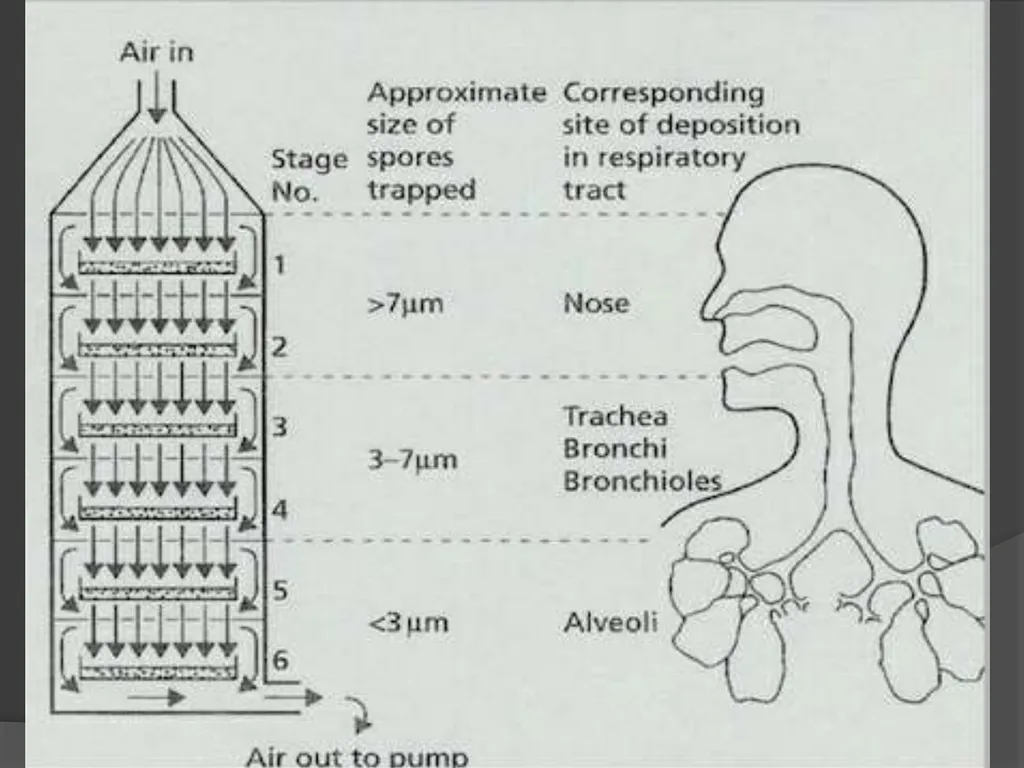
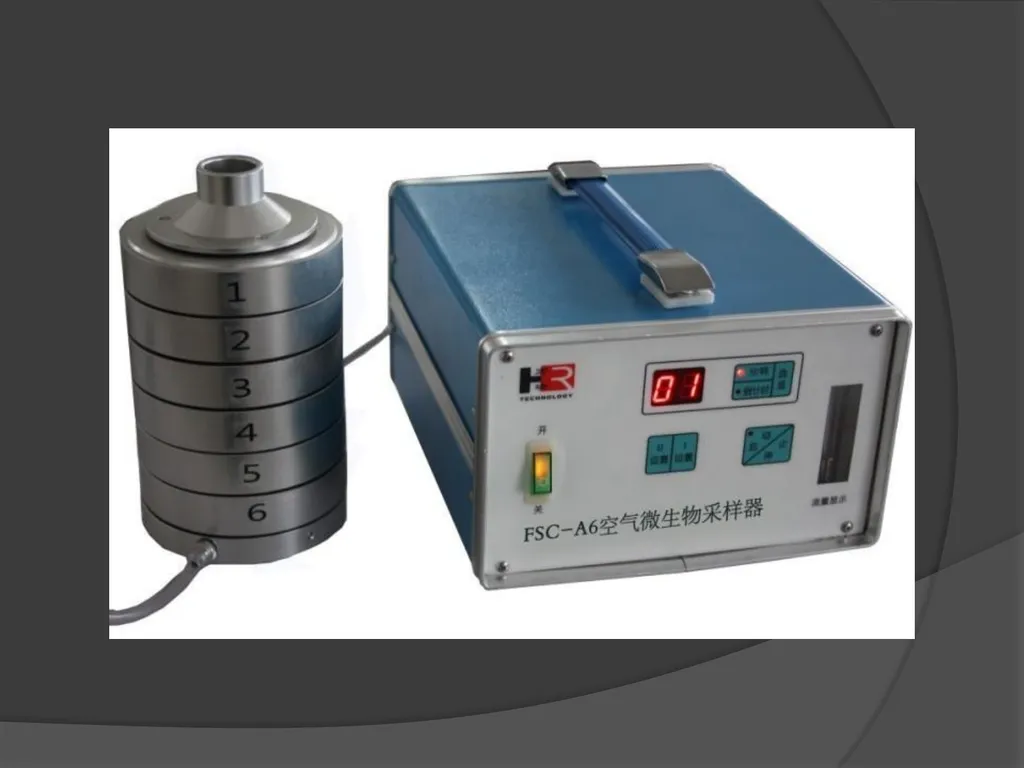
Active monitoring or Andersen sampler: use of microbiological air sampler to physically draw a known volume of air over or through a particle collection device.
a multistage cascade sieve sampler
that uses perforated plates with progressively smaller holes at each stage, allowing particles to be separated according to size.<br>
06
air is drawn into sampling head by a pump and accelerated through a perforated plate.
This produces laminar air flow onto the collection surface.
When a correct volume of air has been passed through the sampling head the agar plate(collection surface)can be removed and incubated directly without any further treatment.
After incubation counting the visible number of colonies gives direct quantitative estimate of the number of colony forming unites in the sampled air.<br>
07
Microbial Leaching<br>
08
Bioleaching or microbial leaching is a process of “the dissolution of metals from their mineral source by certain naturally occurring microorganisms”
or
“the use of microorganisms to transform elements so that the elements can be extracted from a material when water is filtered trough it”.<br>
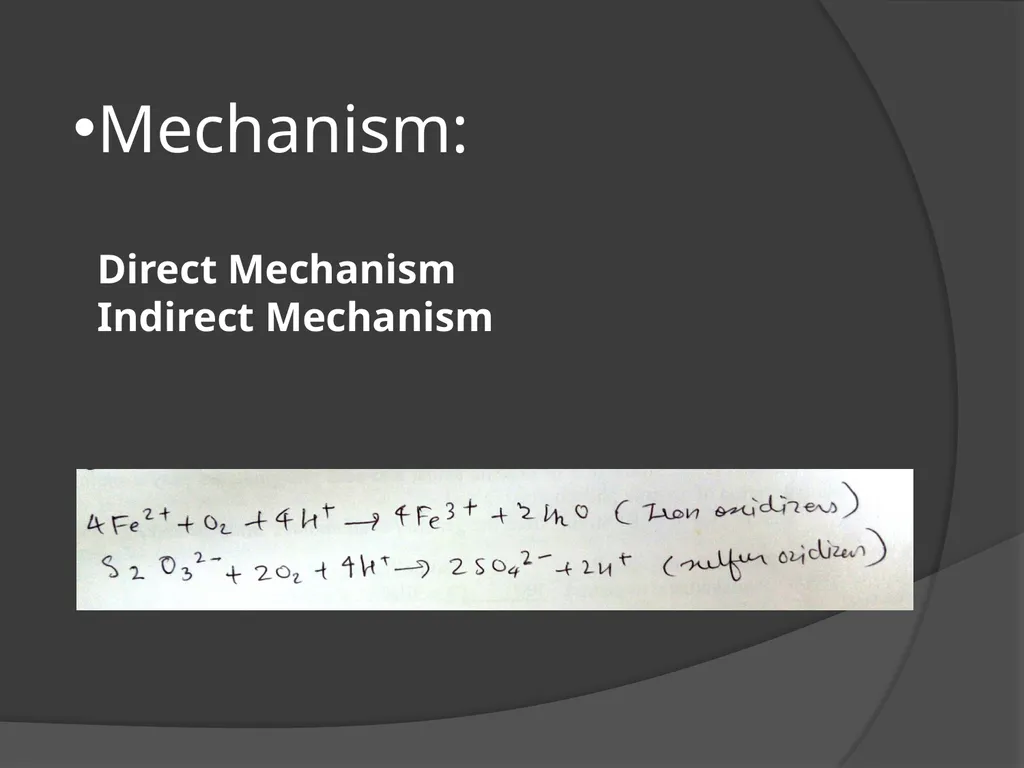
Mechanism: Direct Mechanism Indirect Mechanism<br>
11
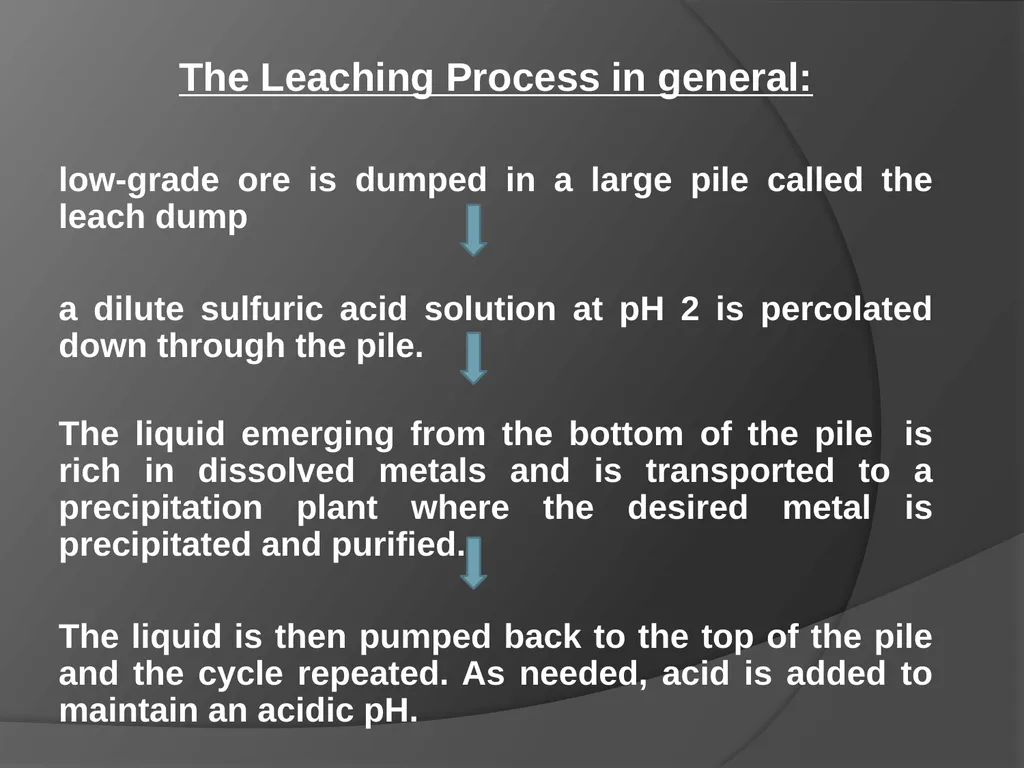
The Leaching Process in general:
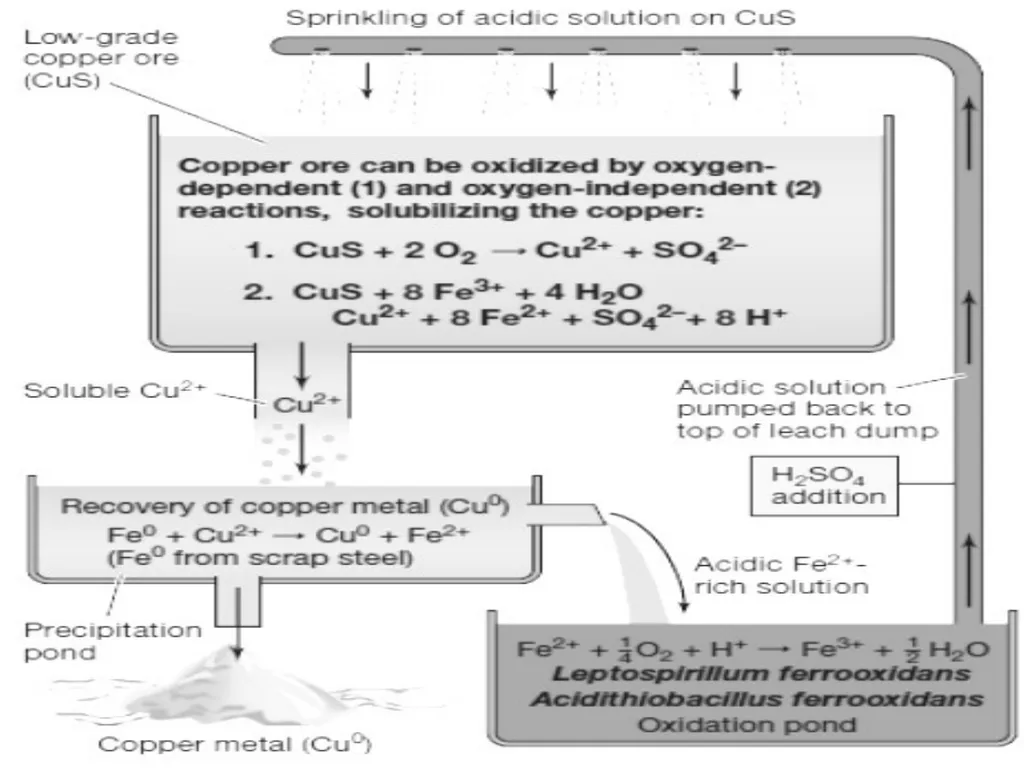
low-grade ore is dumped in a large pile called the leach dump
a dilute sulfuric acid solution at pH 2 is percolated down through the pile.
The liquid emerging from the bottom of the pile is rich in dissolved metals and is transported to a precipitation plant where the desired metal is precipitated and purified.
The liquid is then pumped back to the top of the pile and the cycle repeated. As needed, acid is added to maintain an acidic pH.<br>
12
Microbial leaching of Copper<br>
13
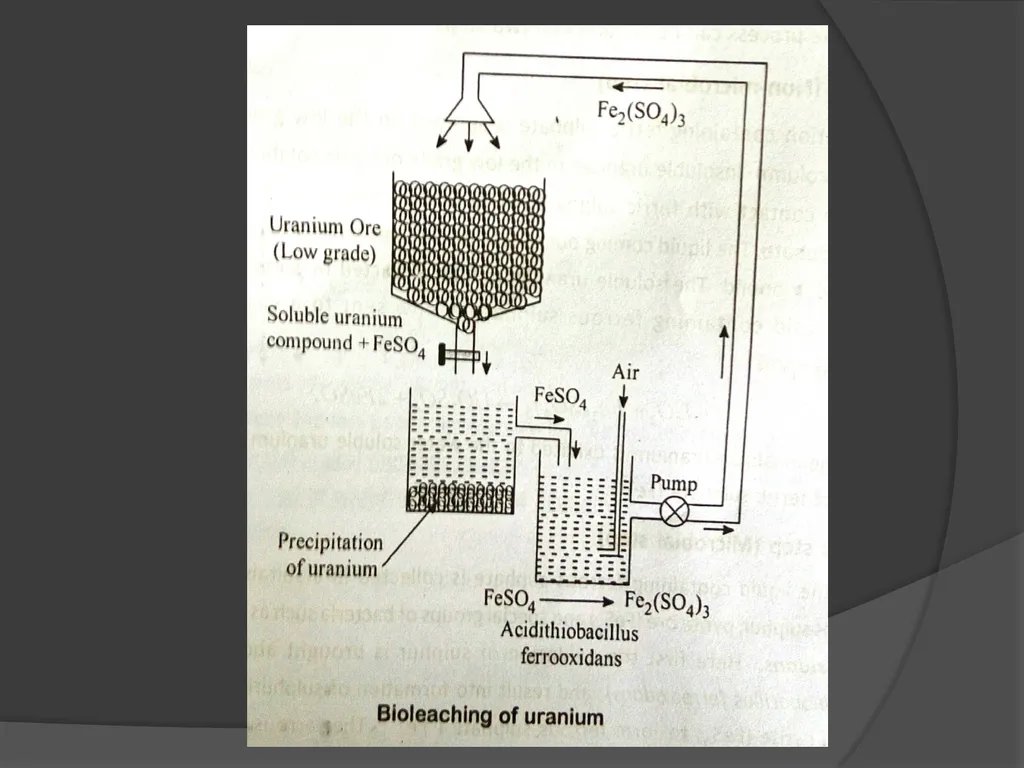
Microbial Leaching of Uranium<br>
14
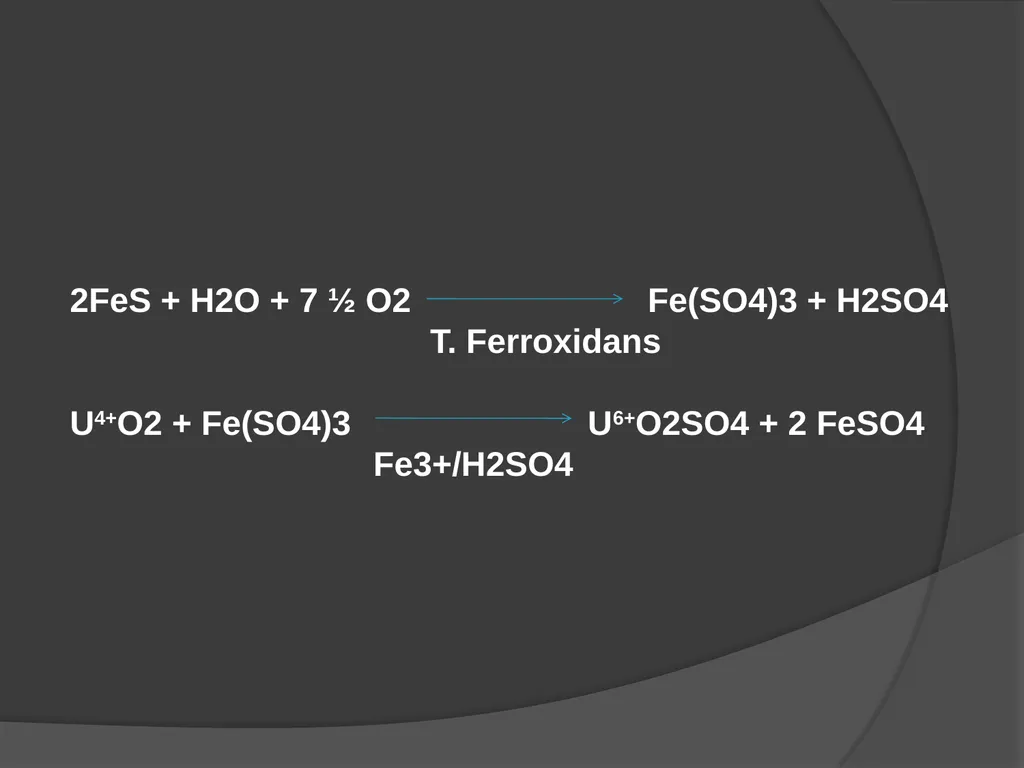
2FeS + H2O + 7 ½ O2 Fe(SO4)3 + H2SO4
T. Ferroxidans