Mind Over Metal Safety Talks Objectives After completing this chapter, you will be able to: Explain how to work safely Understand the dangers in burns associated with burns List the types of protective clothing a welder should wear Explain
"Mind Over Metal Safety Talks Objectives After" is the property of its rightful owner. Permission is granted to
download and print the materials on this website for personal, non-commercial use only, and to display it
on your personal computer provided you do not modify the materials and that you retain all copyright
notices contained in the materials. By downloading content from our website, you accept the terms of this
agreement.
Presentation Transcript
01
Mind Over Metal Safety Talks<br>
02
Objectives After completing this chapter, you will be able to:
Explain how to work safely
Understand the dangers in burns associated with burns
List the types of protective clothing a welder should wear
Explain the importance of proper ventilation and respiratory protection<br>
03
Introduction Welding and welding fabrication is a very large and diverse industry
Light welding fabrication has a number of potential safety hazards
Safety is your own responsibility<br>
04
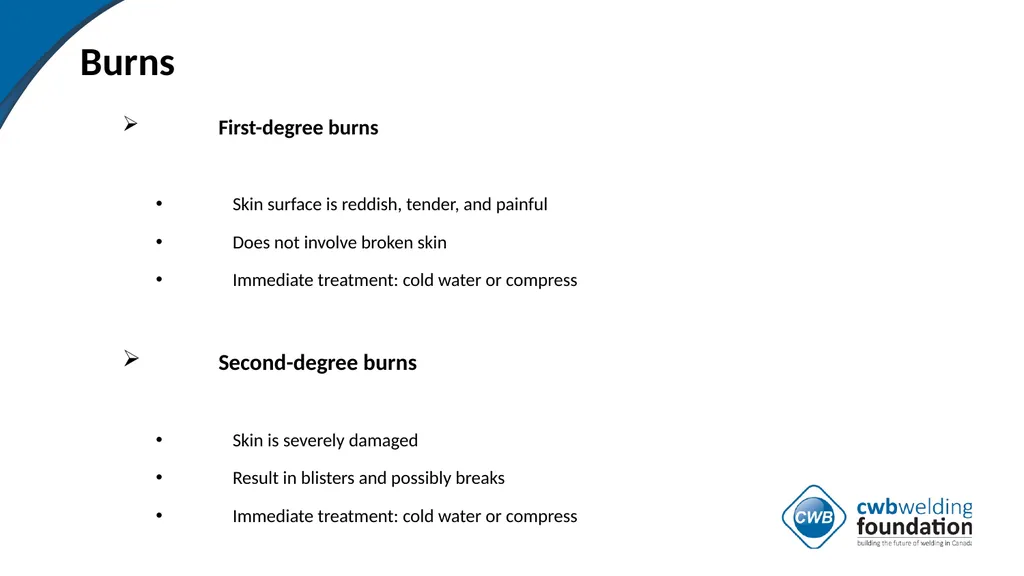
Burns First-degree burns
Skin surface is reddish, tender, and painful
Does not involve broken skin
Immediate treatment: cold water or compress
Second-degree burns
Skin is severely damaged
Result in blisters and possibly breaks
Immediate treatment: cold water or compress<br>
05
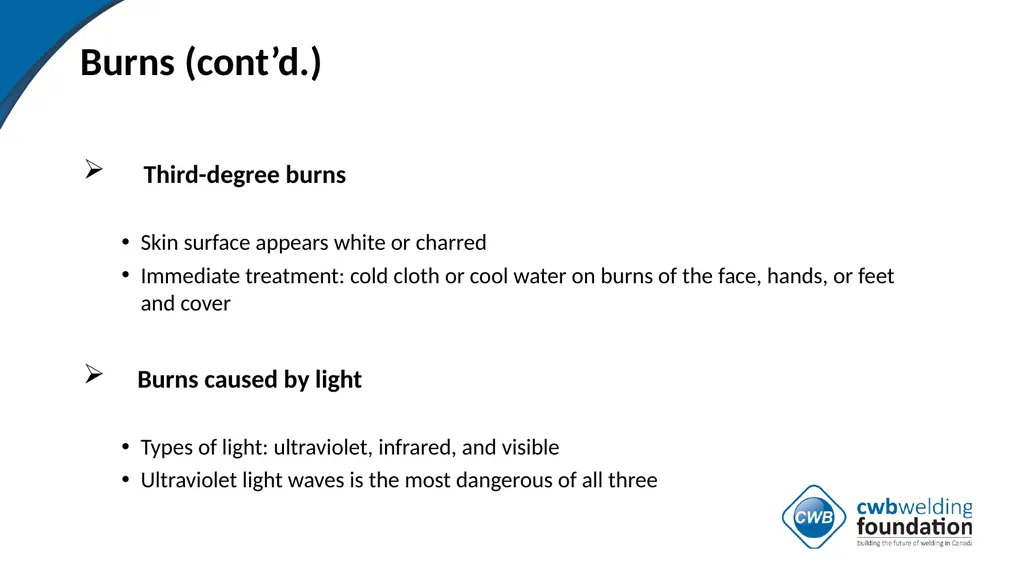
Burns (cont’d.) Third-degree burns
Skin surface appears white or charred
Immediate treatment: cold cloth or cool water on burns of the face, hands, or feet and cover
Burns caused by light
Types of light: ultraviolet, infrared, and visible
Ultraviolet light waves is the most dangerous of all three<br>
06
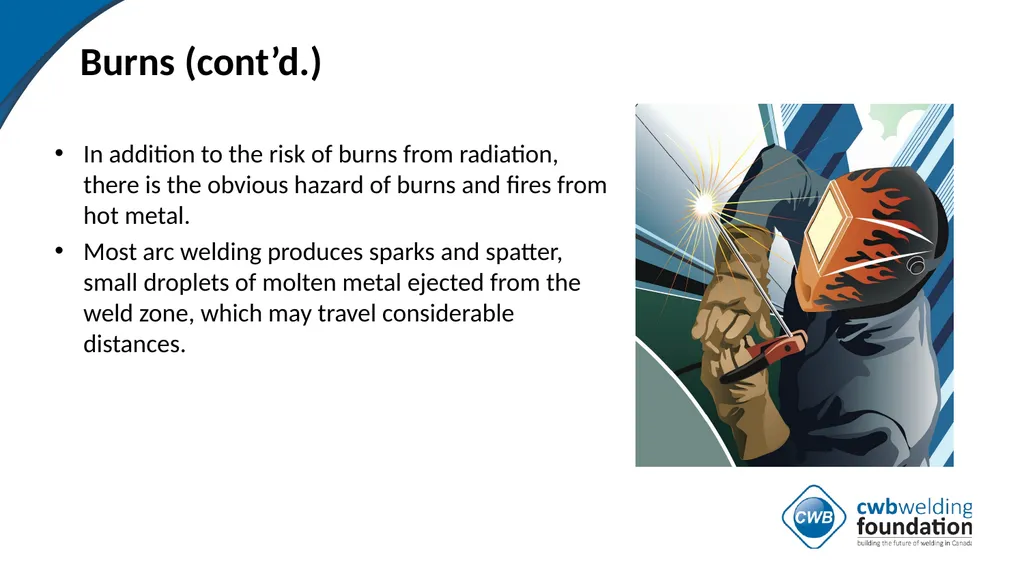
Burns (cont’d.) In addition to the risk of burns from radiation, there is the obvious hazard of burns and fires from hot metal.
Most arc welding produces sparks and spatter, small droplets of molten metal ejected from the weld zone, which may travel considerable distances.<br>
07
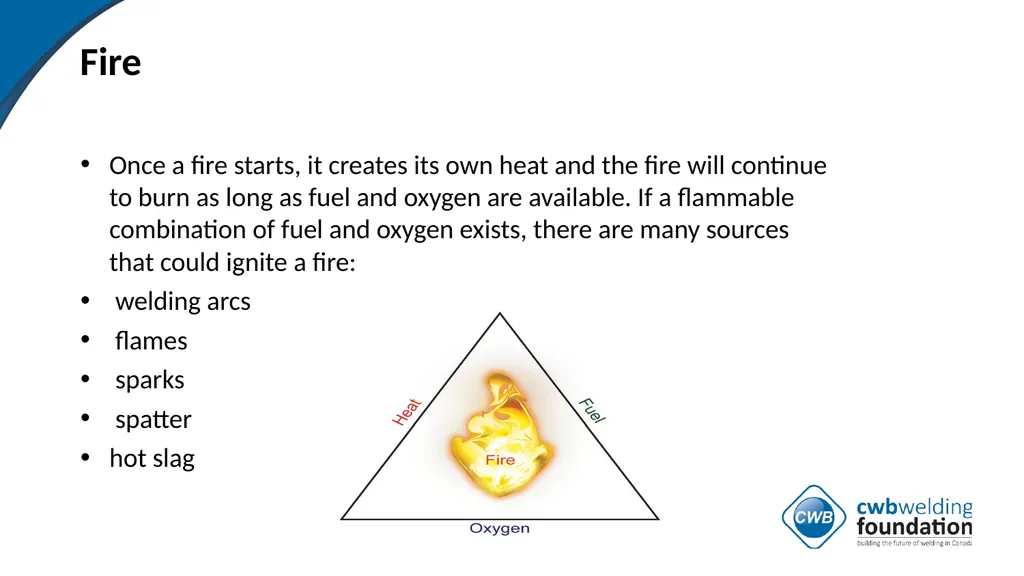
Fire Once a fire starts, it creates its own heat and the fire will continue to burn as long as fuel and oxygen are available. If a flammable combination of fuel and oxygen exists, there are many sources that could ignite a fire:
welding arcs
flames
sparks
spatter
hot slag<br>
08
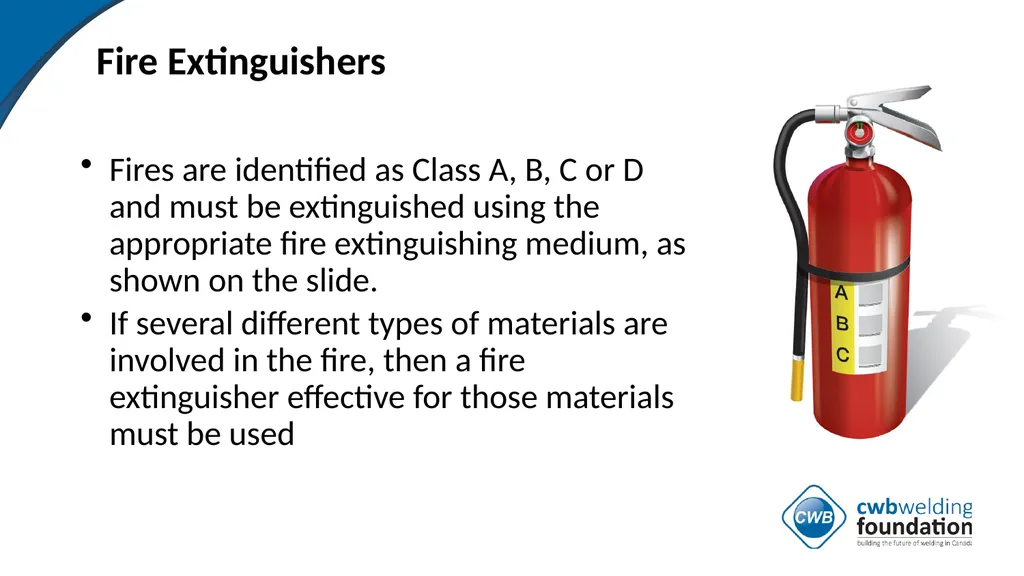
Fire Extinguishers Fires are identified as Class A, B, C or D and must be extinguished using the appropriate fire extinguishing medium, as shown on the slide.
If several different types of materials are involved in the fire, then a fire extinguisher effective for those materials must be used<br>
09
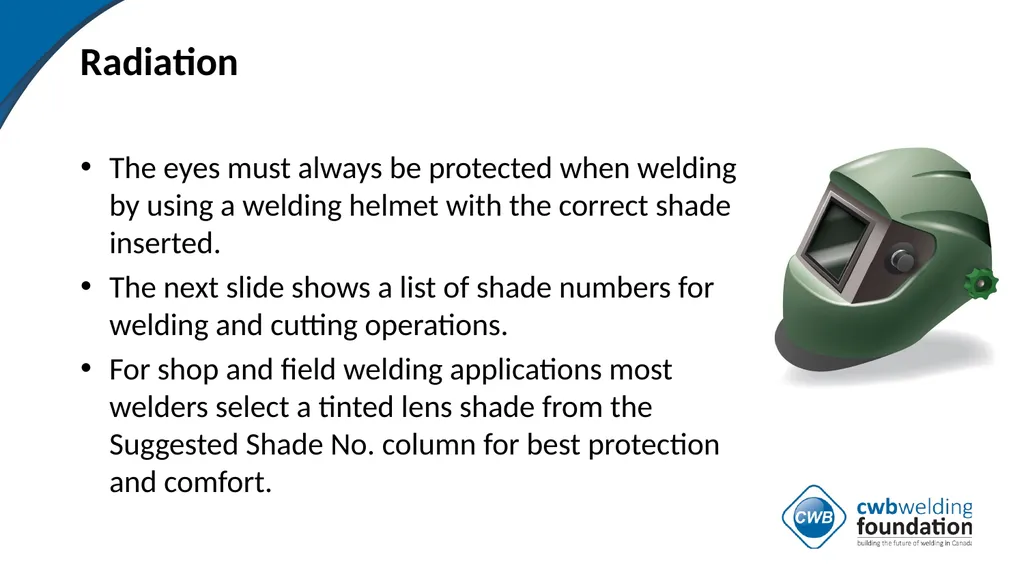
Radiation The eyes must always be protected when welding by using a welding helmet with the correct shade inserted.
The next slide shows a list of shade numbers for welding and cutting operations.
For shop and field welding applications most welders select a tinted lens shade from the Suggested Shade No. column for best protection and comfort.<br>
10
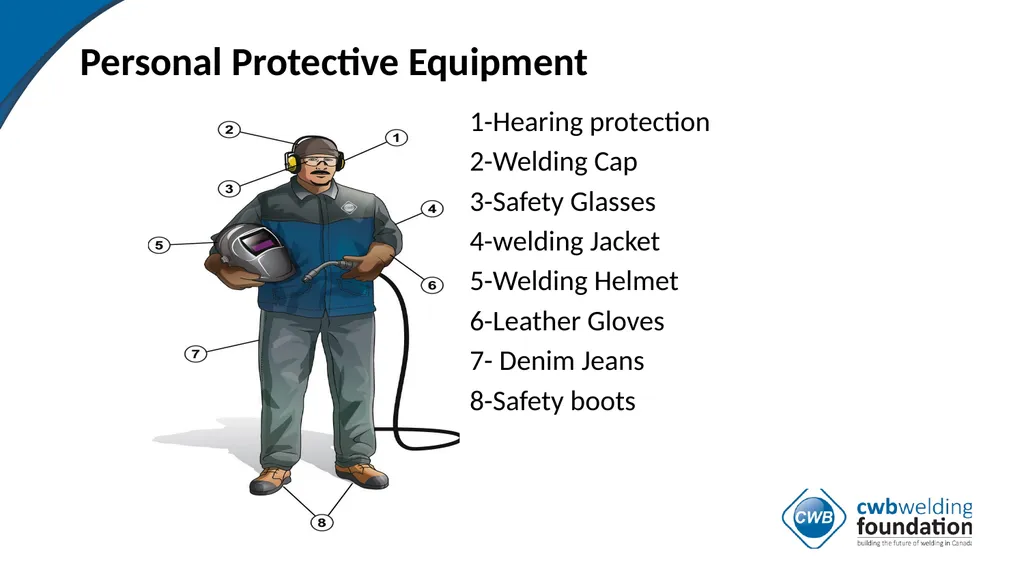
Personal Protective Equipment 1-Hearing protection
2-Welding Cap
3-Safety Glasses
4-welding Jacket
5-Welding Helmet
6-Leather Gloves
7- Denim Jeans
8-Safety boots<br>
11
Special Protective Clothing Includes:
Hand protection: all-leather, gauntlet-type gloves
Body protection: full leather jackets and capes
Waist and lap protection: bib or full aprons
Arm protection: full- or half-sleeves
Leg and foot protection: leather pants or leather aprons with leggings<br>
12
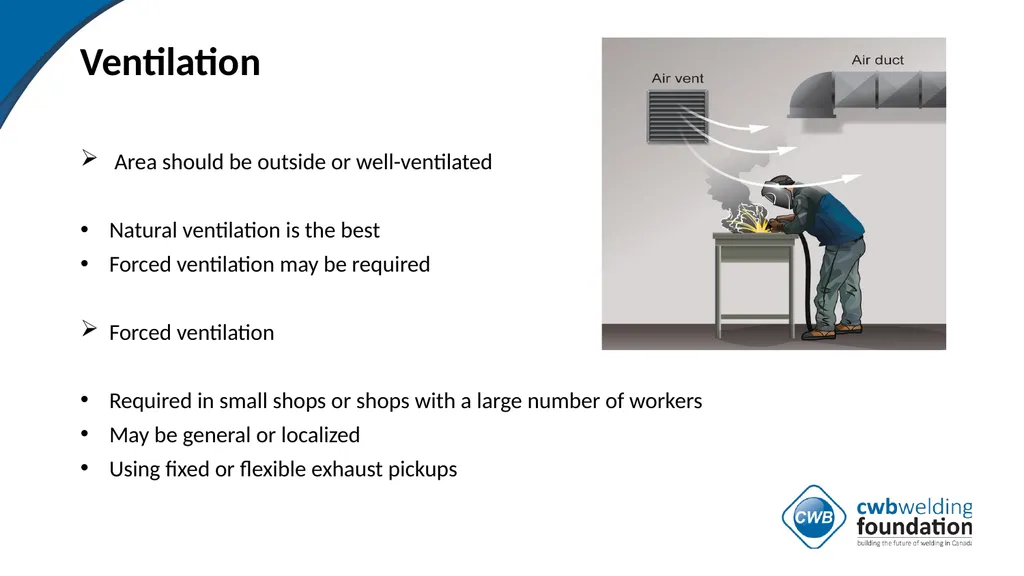
Ventilation Area should be outside or well-ventilated
Natural ventilation is the best
Forced ventilation may be required
Forced ventilation
Required in small shops or shops with a large number of workers
May be general or localized
Using fixed or flexible exhaust pickups<br>
13
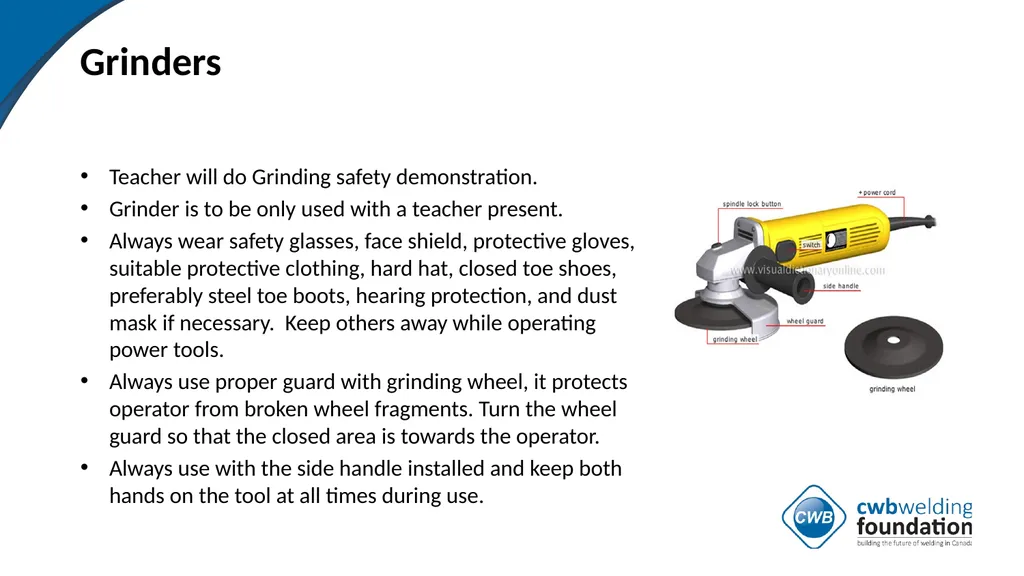
Grinders Teacher will do Grinding safety demonstration.
Grinder is to be only used with a teacher present.
Always wear safety glasses, face shield, protective gloves, suitable protective clothing, hard hat, closed toe shoes, preferably steel toe boots, hearing protection, and dust mask if necessary. Keep others away while operating power tools.
Always use proper guard with grinding wheel, it protects operator from broken wheel fragments. Turn the wheel guard so that the closed area is towards the operator.
Always use with the side handle installed and keep both hands on the tool at all times during use.<br>
14
Work Area Work area should be kept clean
Flammable materials kept away
Free of tripping hazards
Be aware of your surroundings
Hazards
Portable screens should be used whenever arc welding is to be
done outside of a designated area.
Hot metal unattended must be labelled hot
Tables
Vises
Tools<br>
15
Summary Safety is of the utmost importance
Safety officer ensures welders comply with safety rules
Wear proper clothing, shoes, and protection
Check equipment periodically
No foul play
Let’s go weld and have fun!!!<br>