MODULE 1 PART 2 Introduction and the Determinants of Health 1 The Determinants of Health Learning Objectives Explain the concepts of health and well-being Recognize the responsibility of states to uphold the health of their population
"MODULE 1 PART 2 Introduction and the Determinants" is the property of its rightful owner. Permission is granted to
download and print the materials on this website for personal, non-commercial use only, and to display it
on your personal computer provided you do not modify the materials and that you retain all copyright
notices contained in the materials. By downloading content from our website, you accept the terms of this
agreement.
Presentation Transcript
01
MODULE 1 PART 2
Introduction and the Determinants of Health 1 The Determinants of Health<br>
02
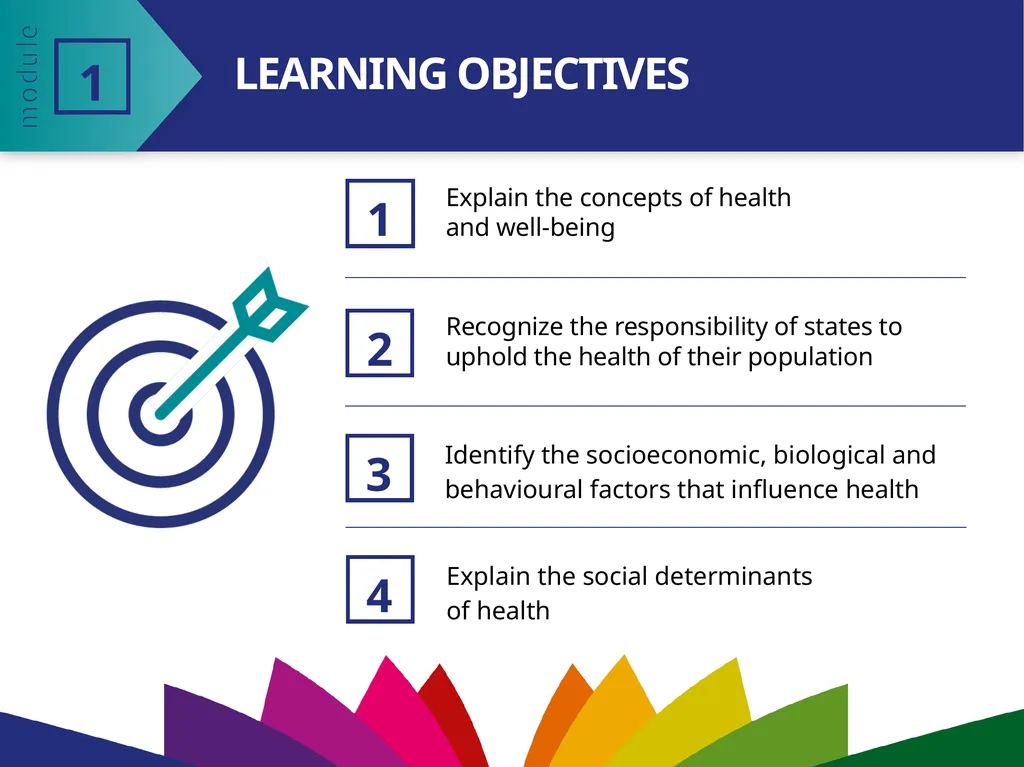
Learning Objectives Explain the concepts of health
and well-being Recognize the responsibility of states to uphold the health of their population Identify the socioeconomic, biological and behavioural factors that influence health Explain the social determinants of health<br>
03
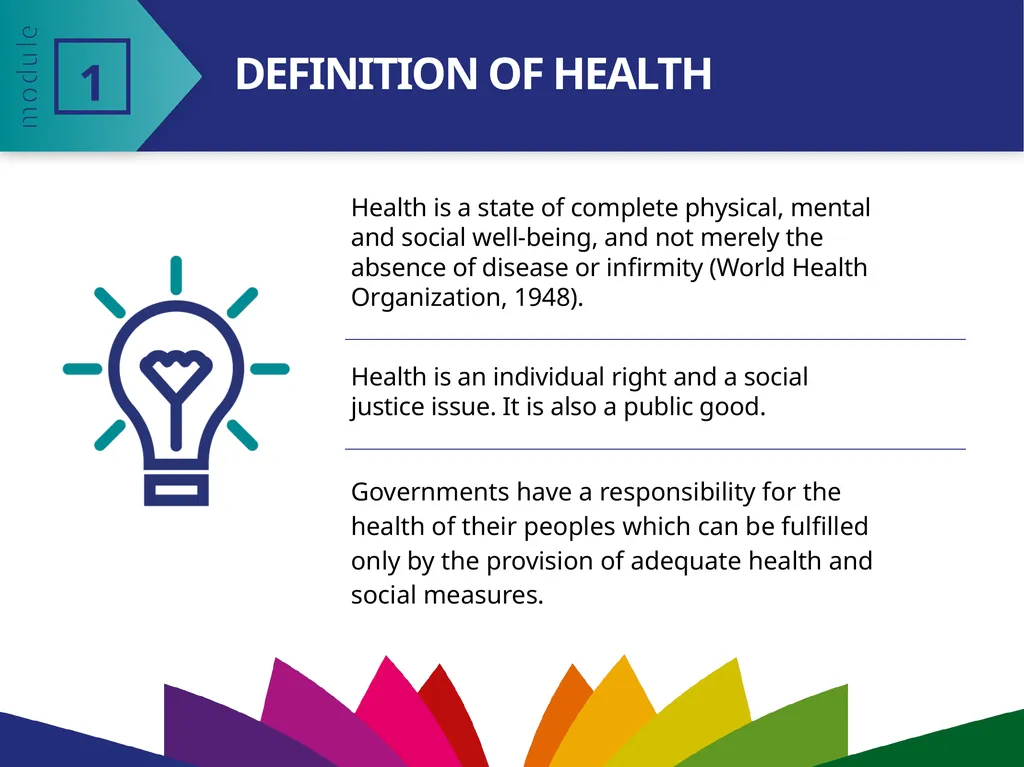
Definition of Health Health is a state of complete physical, mental and social well-being, and not merely the absence of disease or infirmity (World Health Organization, 1948). Health is an individual right and a social justice issue. It is also a public good. Governments have a responsibility for the health of their peoples which can be fulfilled only by the provision of adequate health and social measures.<br>
04
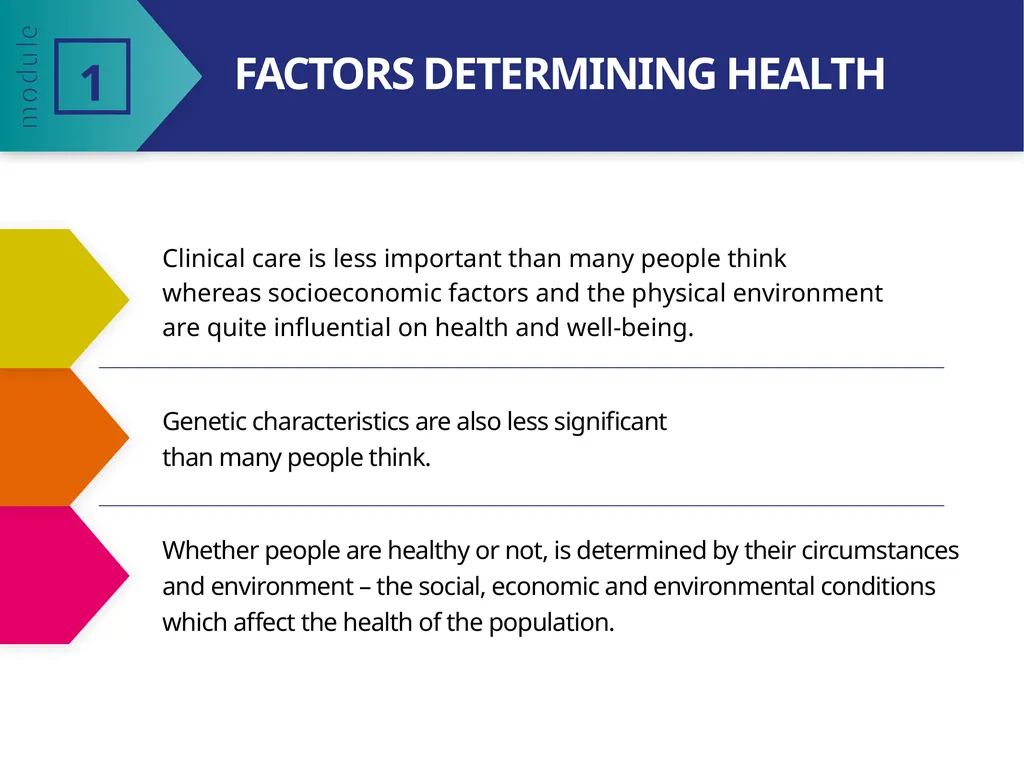
Factors Determining Health Clinical care is less important than many people think whereas socioeconomic factors and the physical environment are quite influential on health and well-being. Genetic characteristics are also less significant than many people think. Whether people are healthy or not, is determined by their circumstances and environment – the social, economic and environmental conditions which affect the health of the population.<br>
05
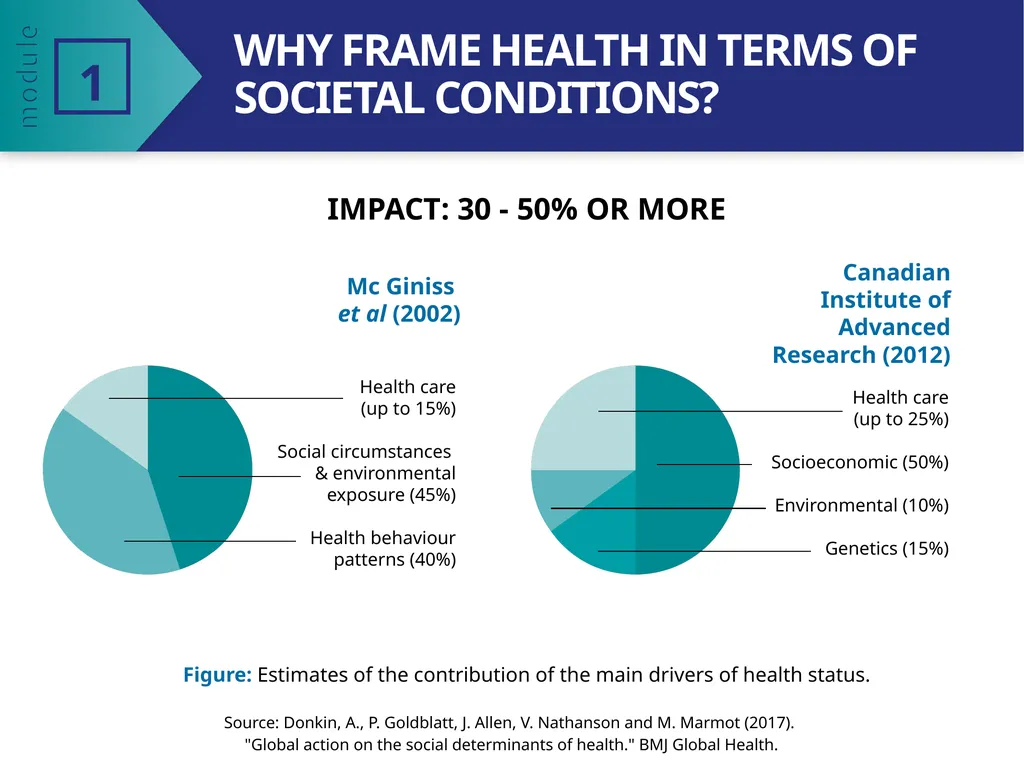
Why frame health in terms of societal conditions? Source: Donkin, A., P. Goldblatt, J. Allen, V. Nathanson and M. Marmot (2017). "Global action on the social determinants of health." BMJ Global Health. Figure: Estimates of the contribution of the main drivers of health status. Impact: 30 - 50% or more<br>
06
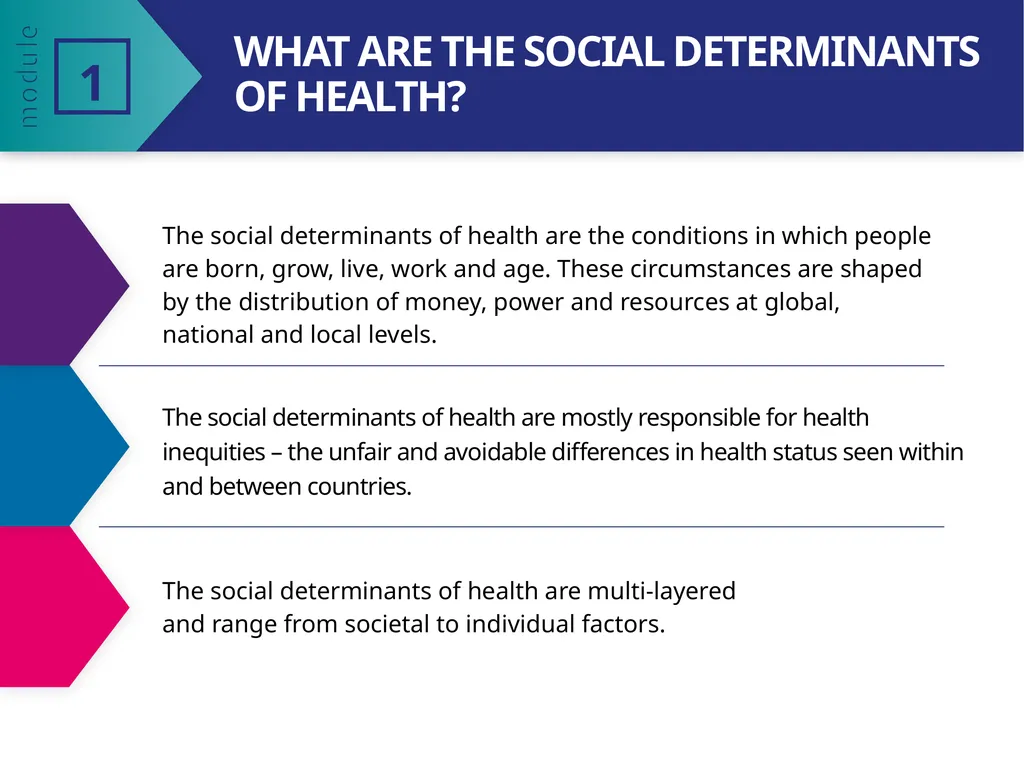
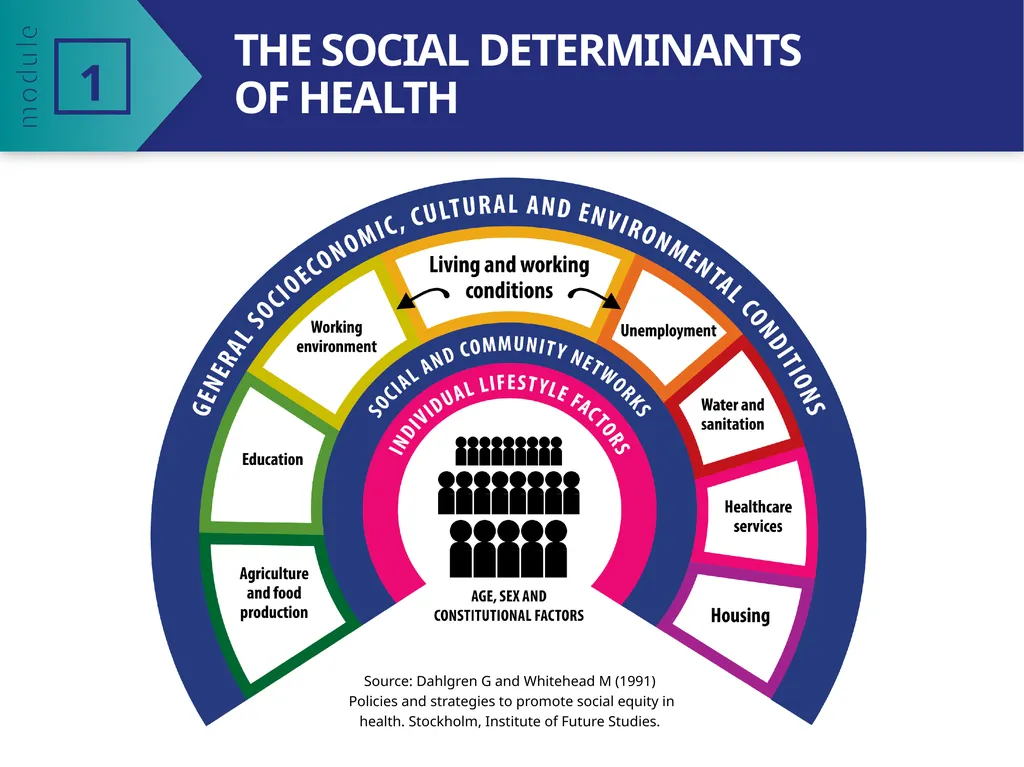
WHAT ARE THE Social Determinants of Health? The social determinants of health are the conditions in which people are born, grow, live, work and age. These circumstances are shaped by the distribution of money, power and resources at global, national and local levels. The social determinants of health are mostly responsible for health inequities – the unfair and avoidable differences in health status seen within and between countries. The social determinants of health are multi-layered and range from societal to individual factors.<br>
07
Source: Dahlgren G and Whitehead M (1991) Policies and strategies to promote social equity in health. Stockholm, Institute of Future Studies. THE Social Determinants of Health<br>
08
Social Determinants of Health
Conceptual FrameworkS<br>
09
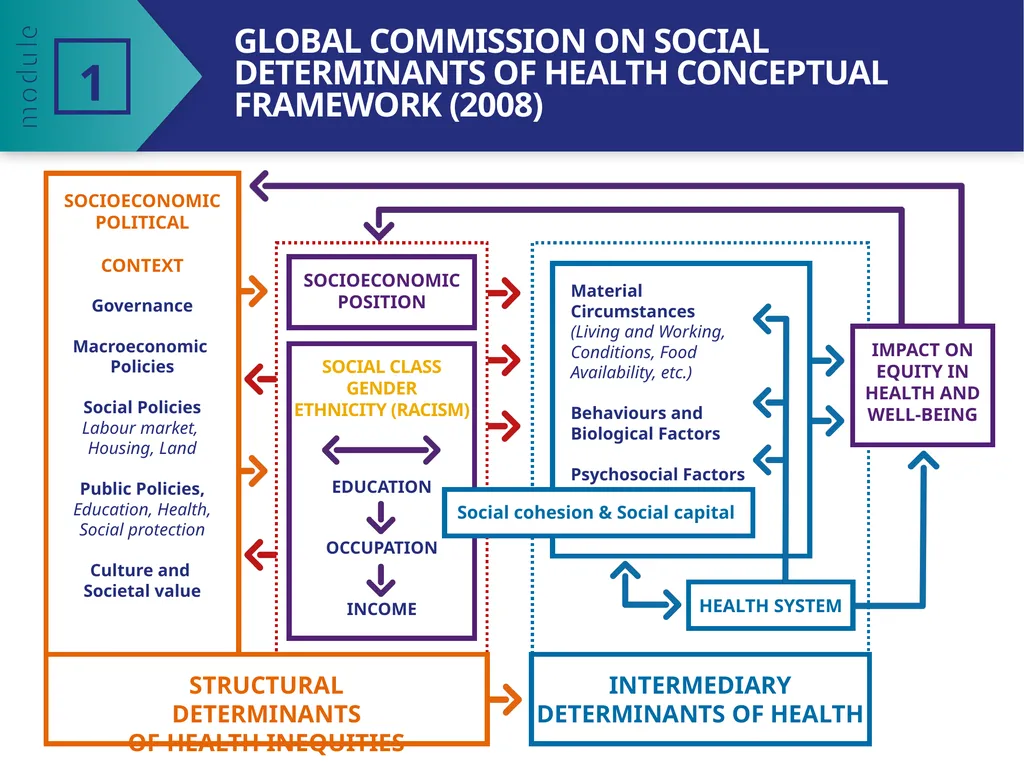
Global Commission on Social Determinants of Health Conceptual Framework (2008) SOCIOECONOMIC POLITICAL CONTEXT
Governance Macroeconomic
Policies Social Policies Labour market, Housing, Land Public Policies, Education, Health, Social protection
Culture and Societal value STRUCTURAL DETERMINANTS OF HEALTH INEQUITIES INTERMEDIARY DETERMINANTS OF HEALTH SOCIOECONOMIC POSITION SOCIAL CLASS GENDER ETHNICITY (RACISM) Material Circumstances (Living and Working, Conditions, Food Availability, etc.)
Behaviours and Biological Factors Psychosocial Factors EDUCATION
OCCUPATION
INCOME IMPACT ON EQUITY IN HEALTH AND WELL-BEING<br>
10
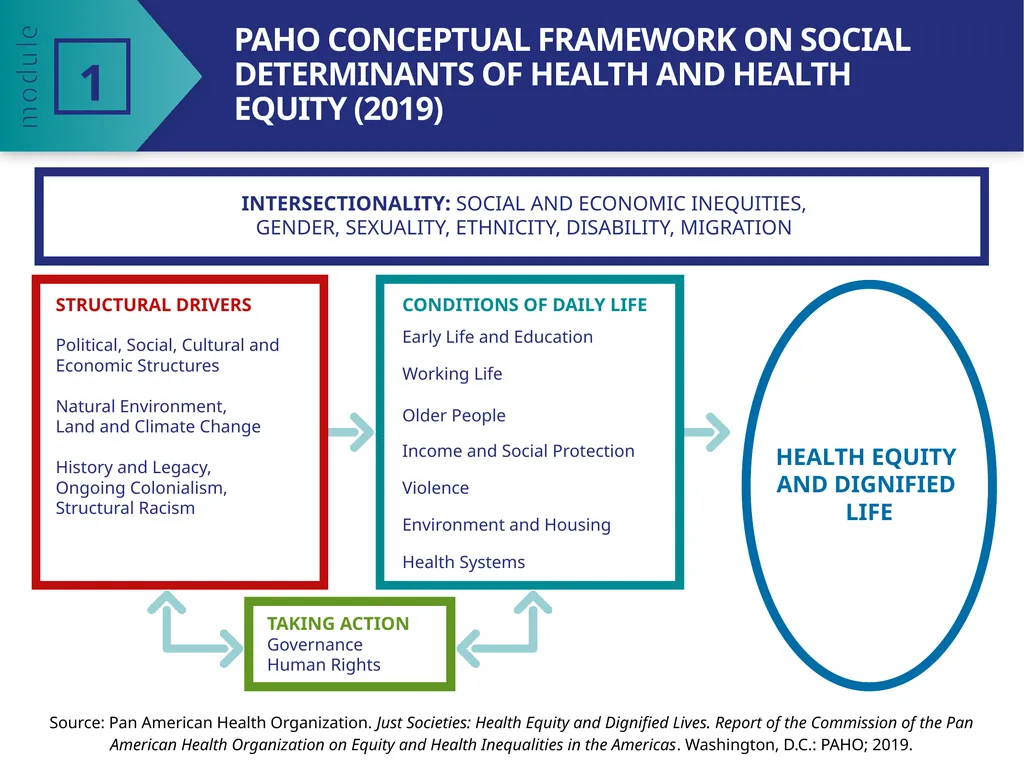
PAHO Conceptual Framework on Social Determinants of Health and Health Equity (2019)<br>
11
Action recommendations<br>
12
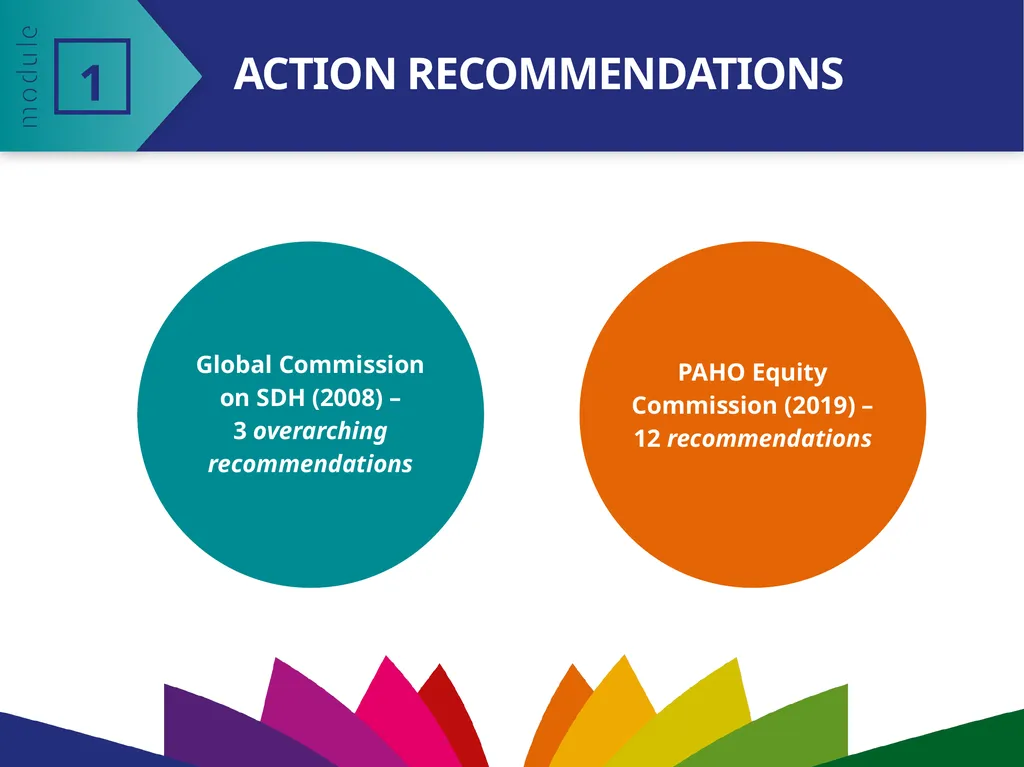
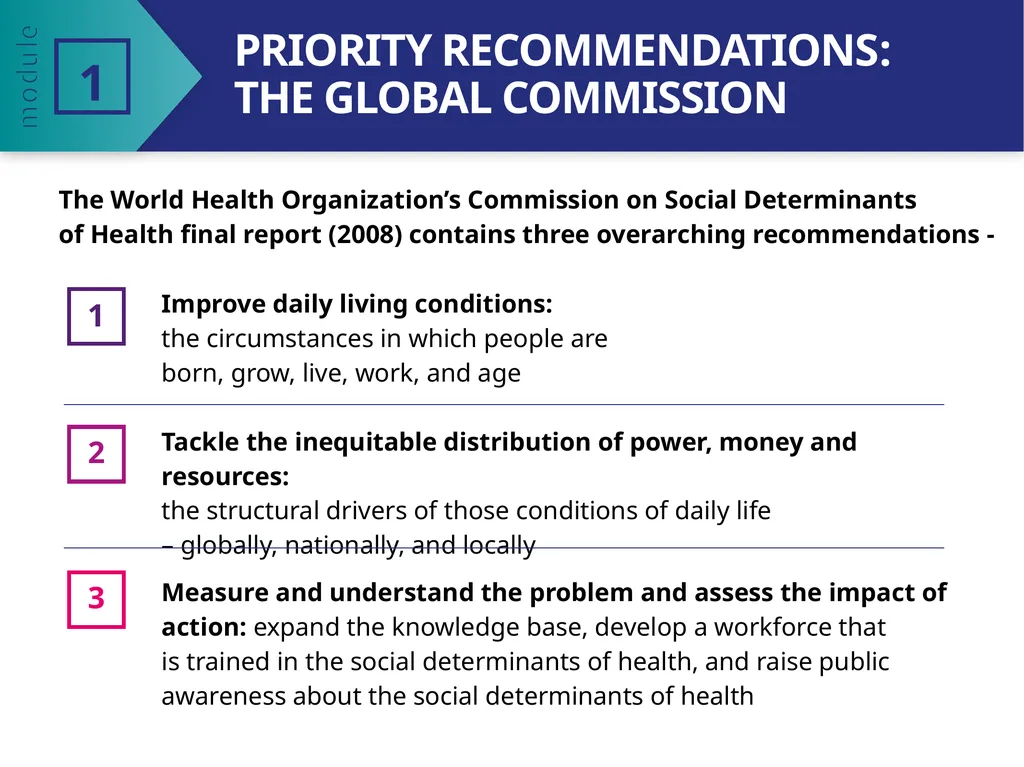
Priority recommendations: The Global Commission The World Health Organization’s Commission on Social Determinants of Health final report (2008) contains three overarching recommendations - 1 2 3 Improve daily living conditions: the circumstances in which people are born, grow, live, work, and age Tackle the inequitable distribution of power, money and resources: the structural drivers of those conditions of daily life – globally, nationally, and locally Measure and understand the problem and assess the impact of action: expand the knowledge base, develop a workforce that is trained in the social determinants of health, and raise public awareness about the social determinants of health<br>
13
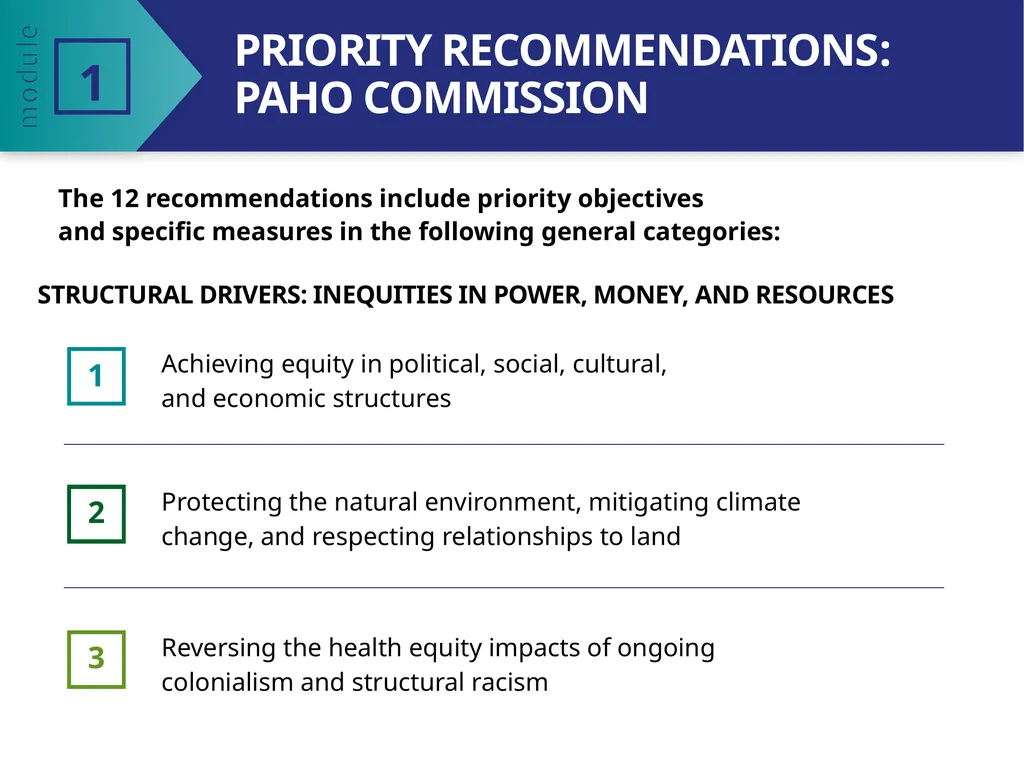
Priority recommendations: PAHO Commission The 12 recommendations include priority objectives and specific measures in the following general categories: 1 2 3 Achieving equity in political, social, cultural, and economic structures Protecting the natural environment, mitigating climate change, and respecting relationships to land Reversing the health equity impacts of ongoing colonialism and structural racism Structural drivers: Inequities in power, money, and resources<br>
14
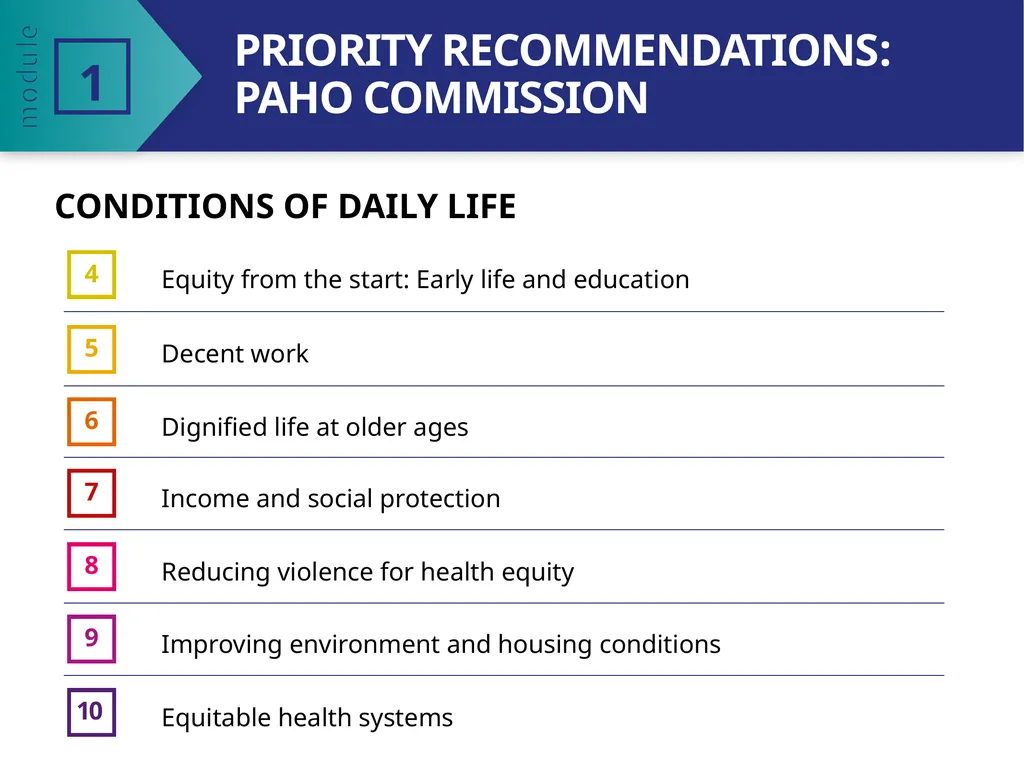
Priority recommendations: PAHO Commission Conditions of daily life Equity from the start: Early life and education Decent work Dignified life at older ages Income and social protection Reducing violence for health equity Improving environment and housing conditions Equitable health systems<br>
15
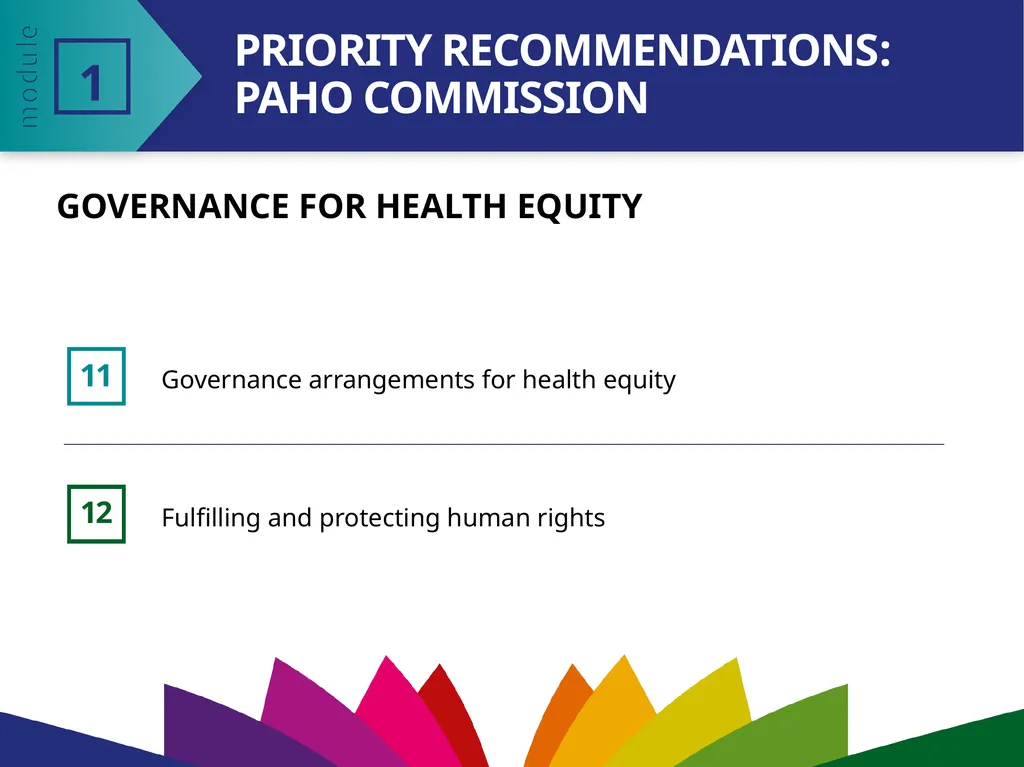
Priority recommendations: PAHO Commission Governance for health equity 11 12 Governance arrangements for health equity Fulfilling and protecting human rights<br>