Module 3: CABCDE Approach Community First Aid
Description: Module 3: CABCDE Approach Community First Aid Response Course Module 3: Learning Objectives Describe the CABCDE approach for ill and injured persons: Check for major bleeding Assess airway Assess breathing Assess circulation Assess
Related Topics
Download Presentation
"Module 3: CABCDE Approach Community First Aid" is the property of its rightful owner. Permission is granted to download and print the materials on this website for personal, non-commercial use only, and to display it on your personal computer provided you do not modify the materials and that you retain all copyright notices contained in the materials. By downloading content from our website, you accept the terms of this agreement.
Presentation Transcript
slide1. Module 3: CABCDE Approach Community First Aid Response Course<br>
slide2. Module 3: Learning Objectives Describe the CABCDE approach for ill and injured persons:
Check for major bleeding
Assess airway
Assess breathing
Assess circulation
Assess disability
Explain the importance of exposure<br>
slide3. Module 3: Learning Objectives Gather information on an ill or injured person, including the following:
History of events,
Medications,
Past medical history, and
Allergies.
Recognize the importance of documentation and handover.<br>
slide4. Key Terms CABCDE
Airway
Breathing
Circulation
Disability
Exposure
Difficulty in breathing
Shock
Altered mental status Haemorrhage
Pulse
Capillary refill time
Skin pinch test
Fontanelle
Past medical history
Handover
Higher level of care<br>
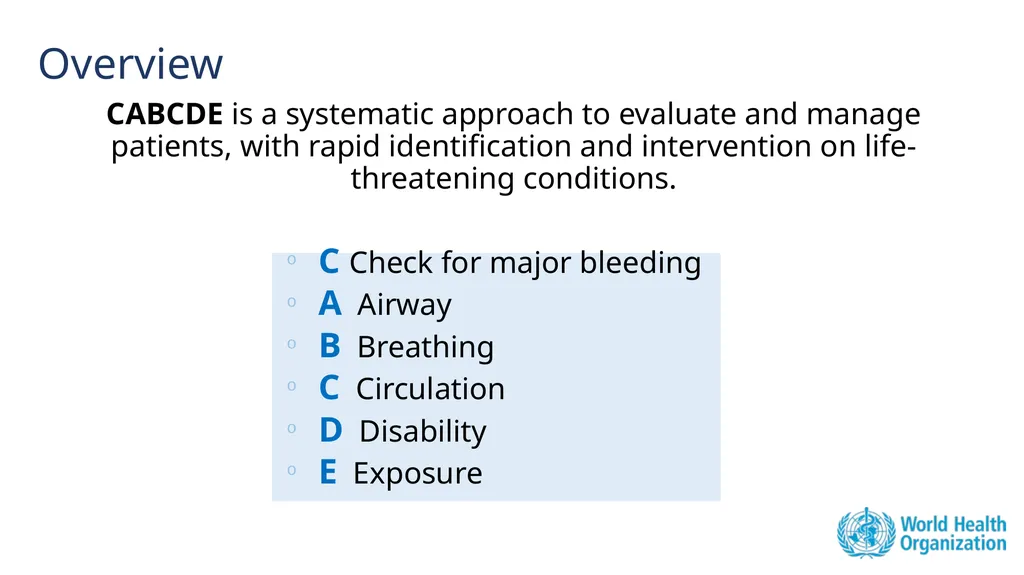
slide5. Overview CABCDE is a systematic approach to evaluate and manage patients, with rapid identification and intervention on life-threatening conditions.
C Check for major bleeding
A Airway
B Breathing
C Circulation
D Disability
E Exposure<br>
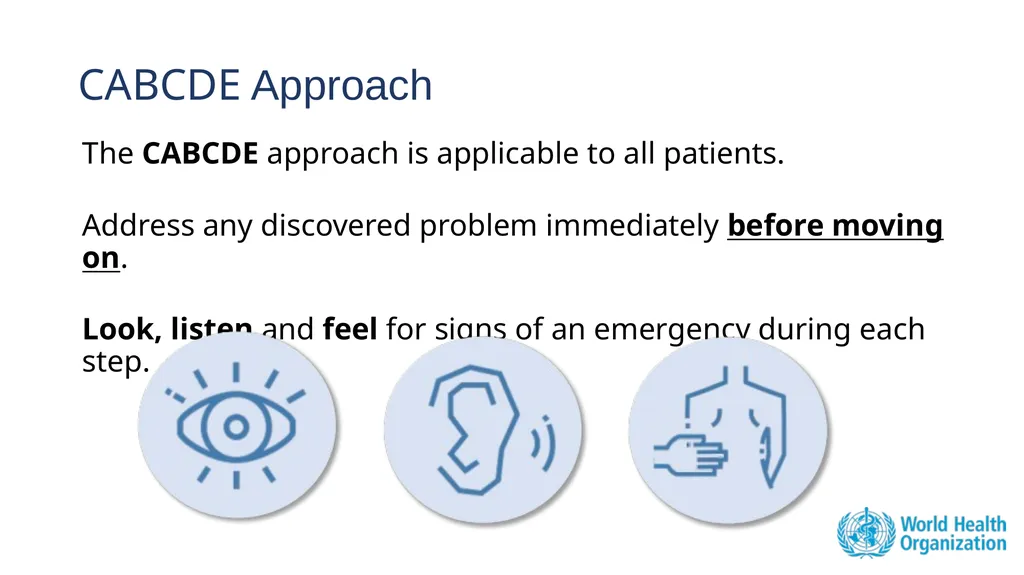
slide6. CABCDE Approach The CABCDE approach is applicable to all patients.
Address any discovered problem immediately before moving on.
Look, listen and feel for signs of an emergency during each step.<br>
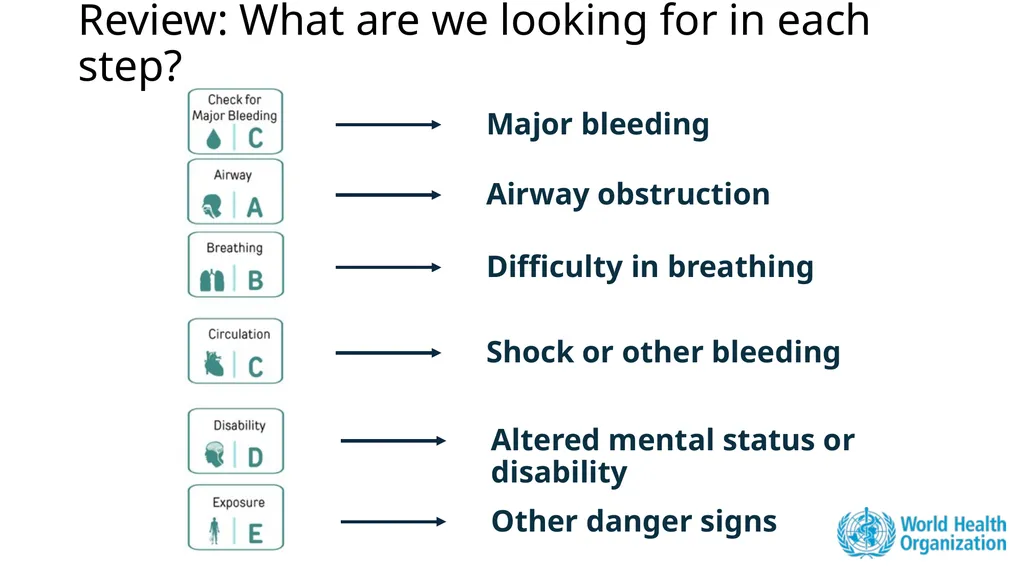
slide7. Review: What are we looking for in each step? Major bleeding Airway obstruction Difficulty in breathing Shock or other bleeding Altered mental status or disability Other danger signs<br>
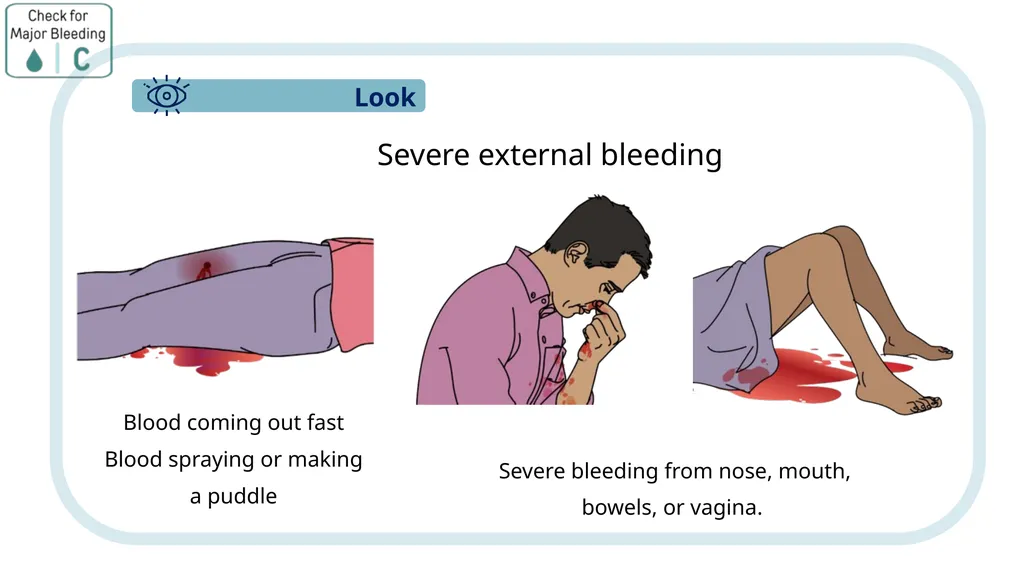
slide9. Blood coming out fast
Blood spraying or making a puddle Look Severe bleeding from nose, mouth,
bowels, or vagina. Severe external bleeding<br>
slide11. The parts of the body that carry oxygen from the air to the lungs and into the blood. Mouth Nose
` Throat Windpipe Lungs Airway<br>
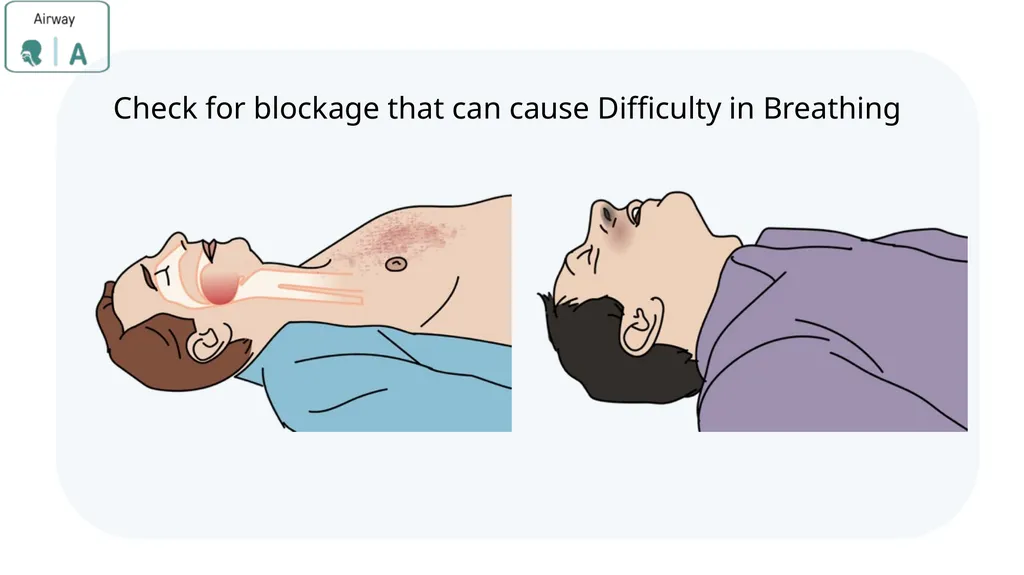
slide12. Check for blockage that can cause Difficulty in Breathing<br>
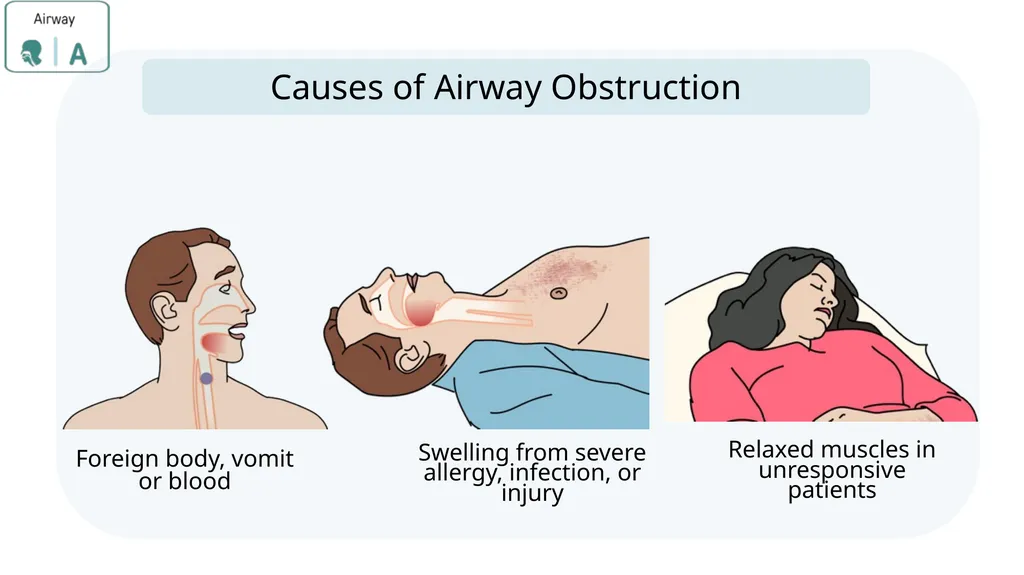
slide13. Foreign body, vomit or blood Swelling from severe allergy, infection, or injury Relaxed muscles in unresponsive patients Causes of Airway Obstruction<br>
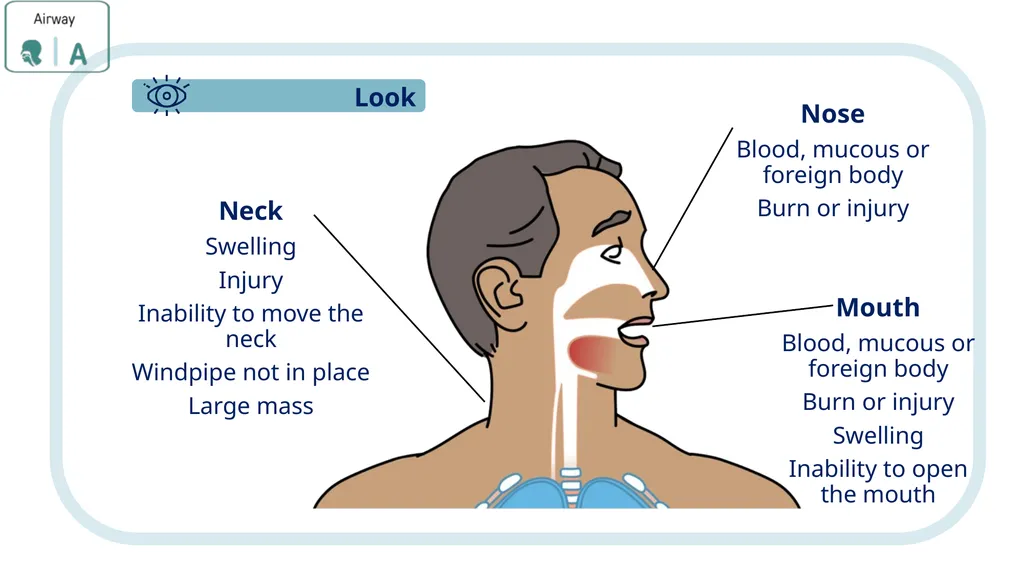
slide14. Look Nose
Blood, mucous or foreign body
Burn or injury
` Mouth
Blood, mucous or foreign body
Burn or injury
Swelling
Inability to open the mouth
` Neck
Swelling
Injury
Inability to move the neck
Windpipe not in place
Large mass
`<br>
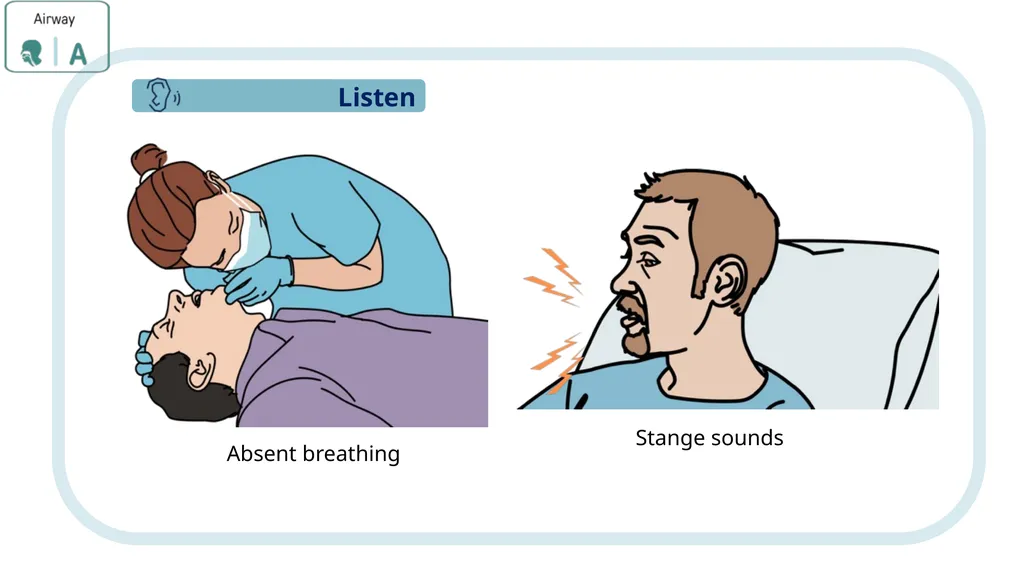
slide15. Listen Stange sounds Absent breathing<br>
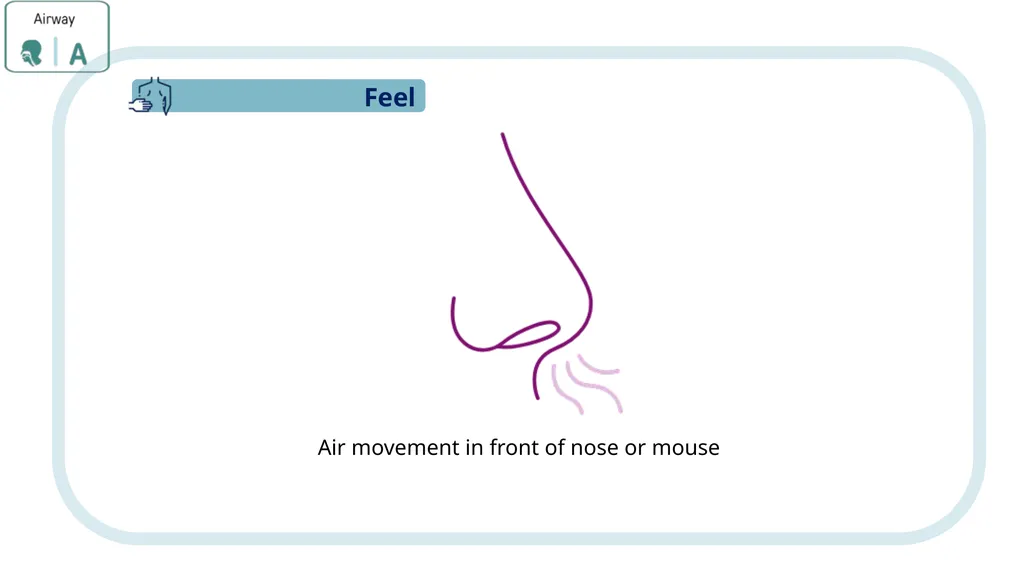
slide16. Feel Air movement in front of nose or mouse<br>
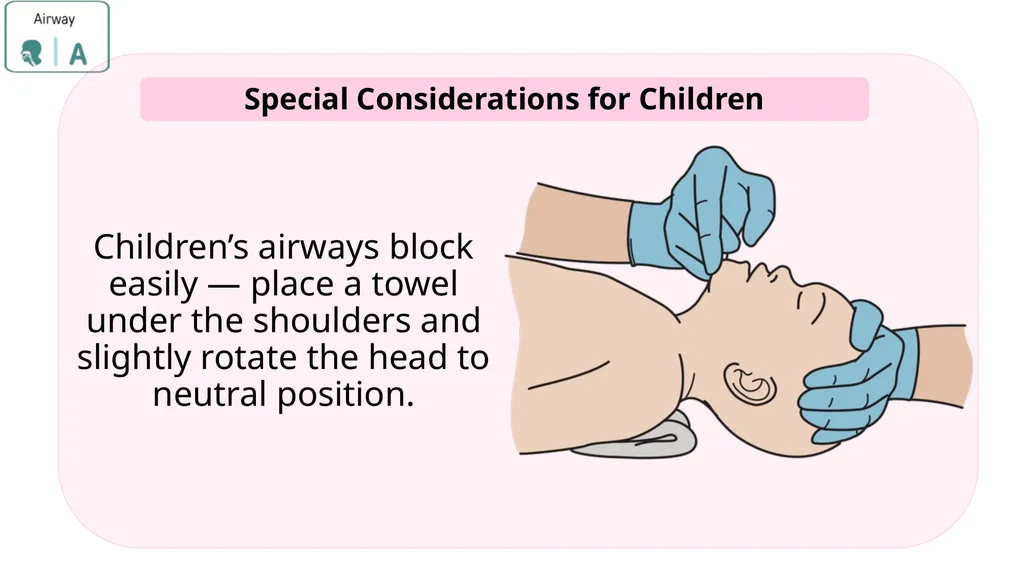
slide17. Special Considerations for Children Children’s airways block easily — place a towel under the shoulders and slightly rotate the head to neutral position.<br>
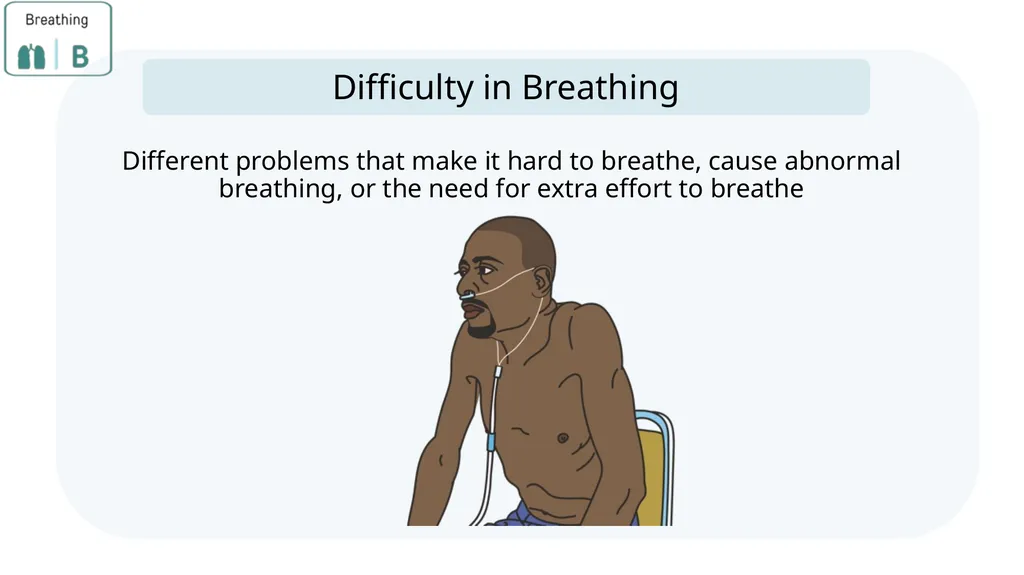
slide19. Different problems that make it hard to breathe, cause abnormal breathing, or the need for extra effort to breathe Difficulty in Breathing<br>
slide20. Fast, slow or absent Breathing Increased work of breathing
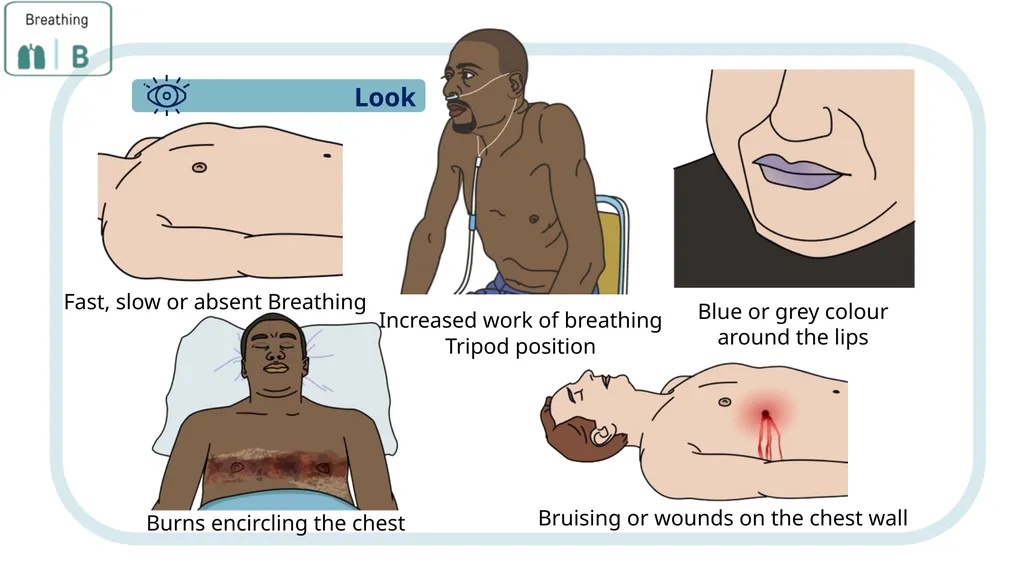
Tripod position Blue or grey colour around the lips Look Bruising or wounds on the chest wall Burns encircling the chest<br>
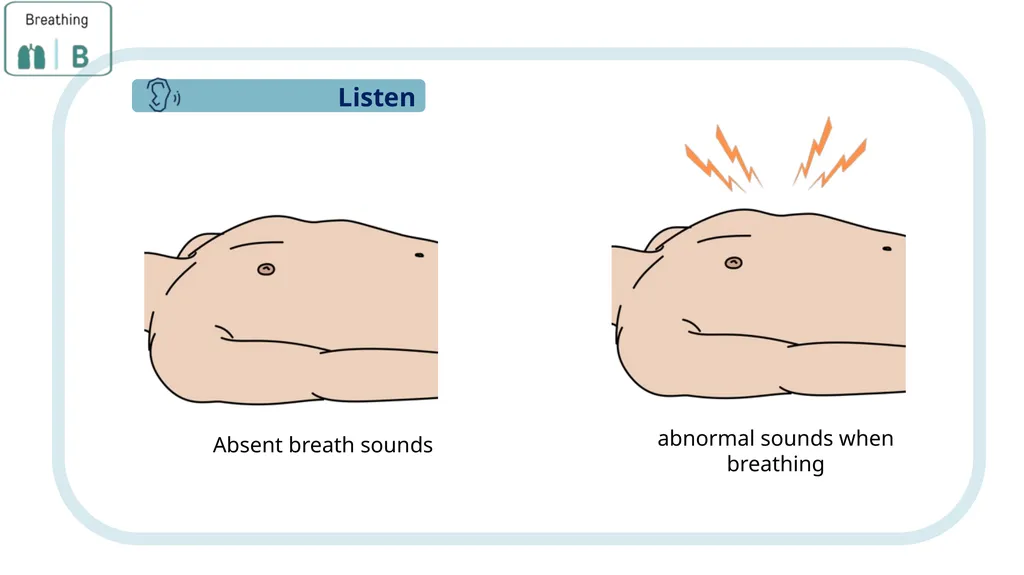
slide21. Listen abnormal sounds when breathing Absent breath sounds<br>
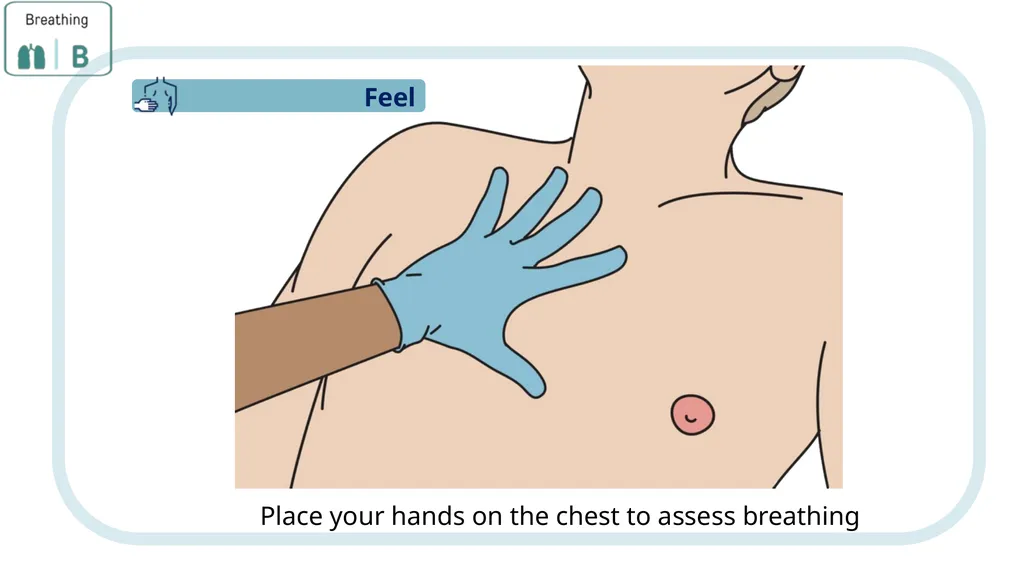
slide22. Feel Place your hands on the chest to assess breathing<br>
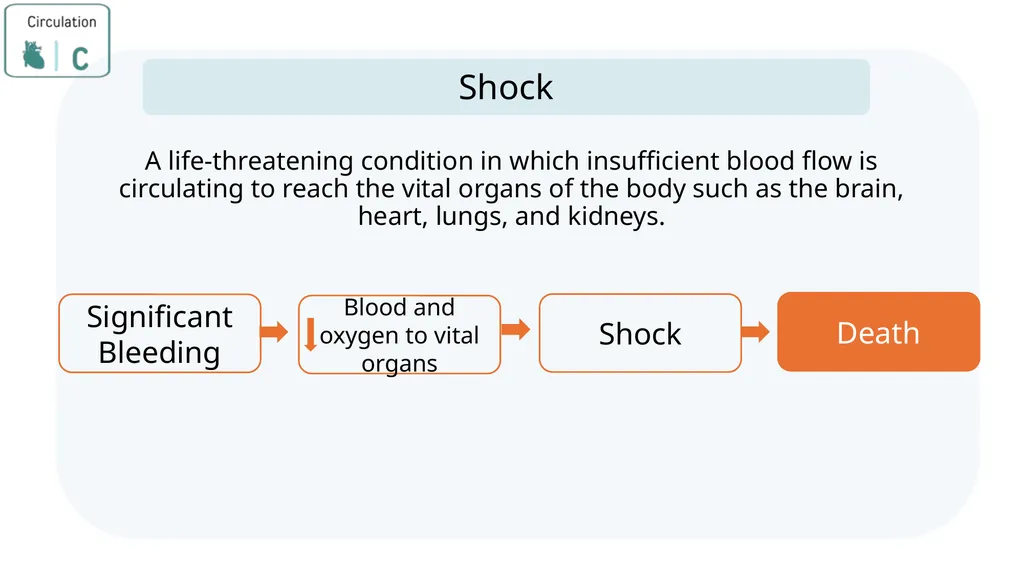
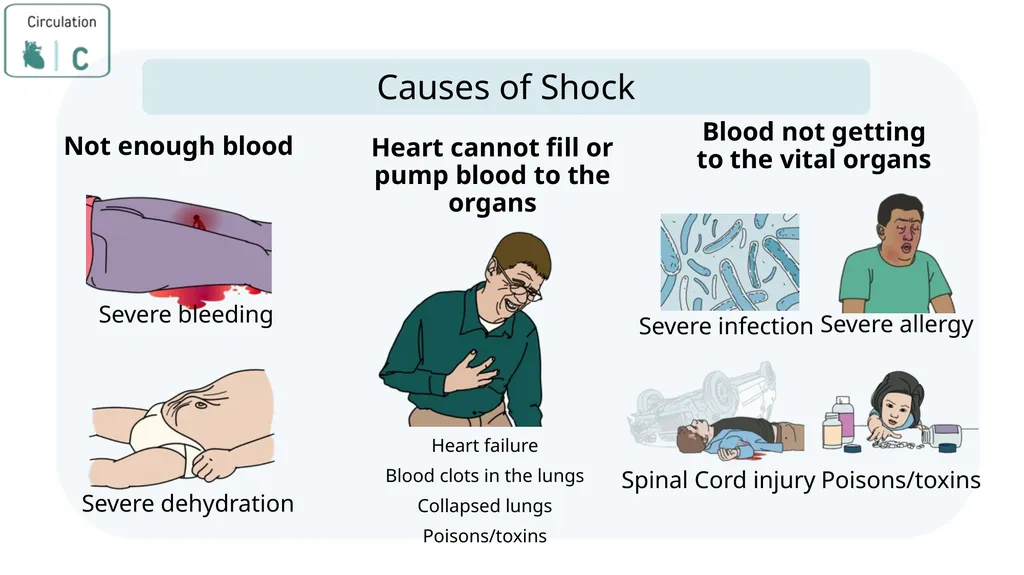
slide24. A life-threatening condition in which insufficient blood flow is circulating to reach the vital organs of the body such as the brain, heart, lungs, and kidneys. Shock Shock Significant Bleeding Blood and oxygen to vital organs Death<br>
slide25. Not enough blood Causes of Shock Blood not getting to the vital organs Heart cannot fill or pump blood to the organs Severe bleeding Severe dehydration Heart failure
Blood clots in the lungs
Collapsed lungs
Poisons/toxins Severe infection Severe allergy Spinal Cord injury Poisons/toxins<br>
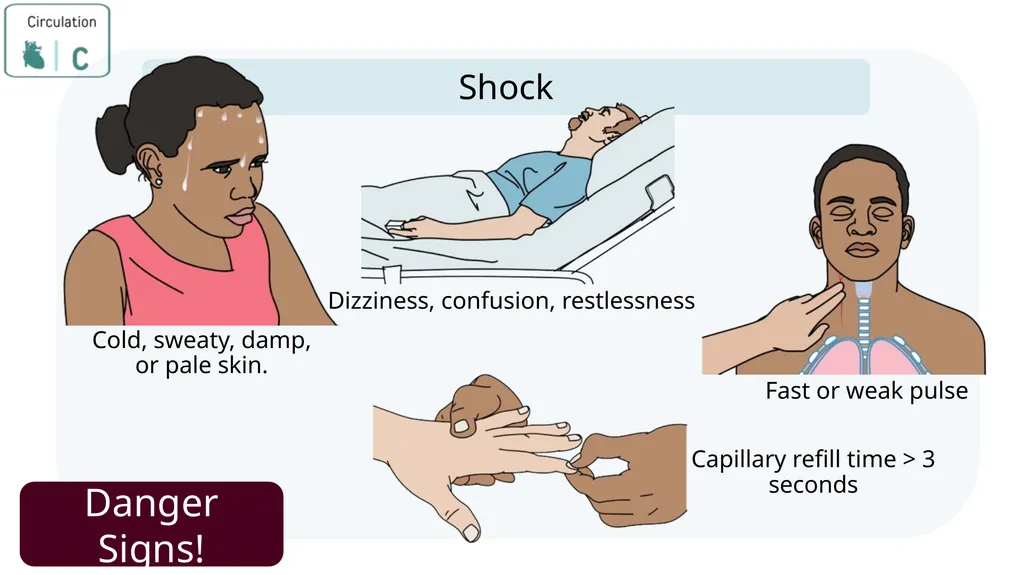
slide26. Cold, sweaty, damp, or pale skin. Shock Capillary refill time > 3 seconds Dizziness, confusion, restlessness Danger Signs! Fast or weak pulse<br>
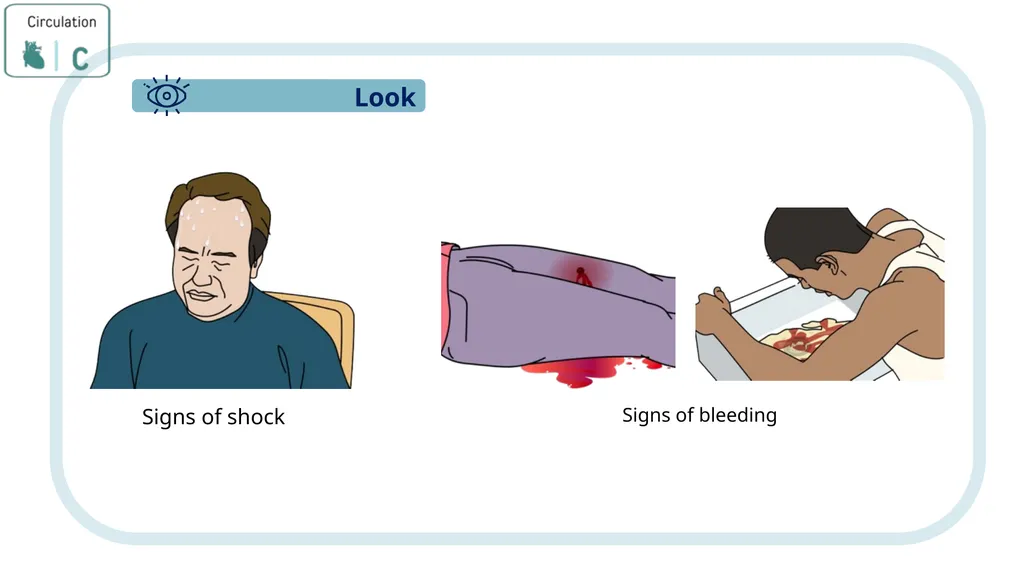
slide27. Look Signs of shock Signs of bleeding<br>
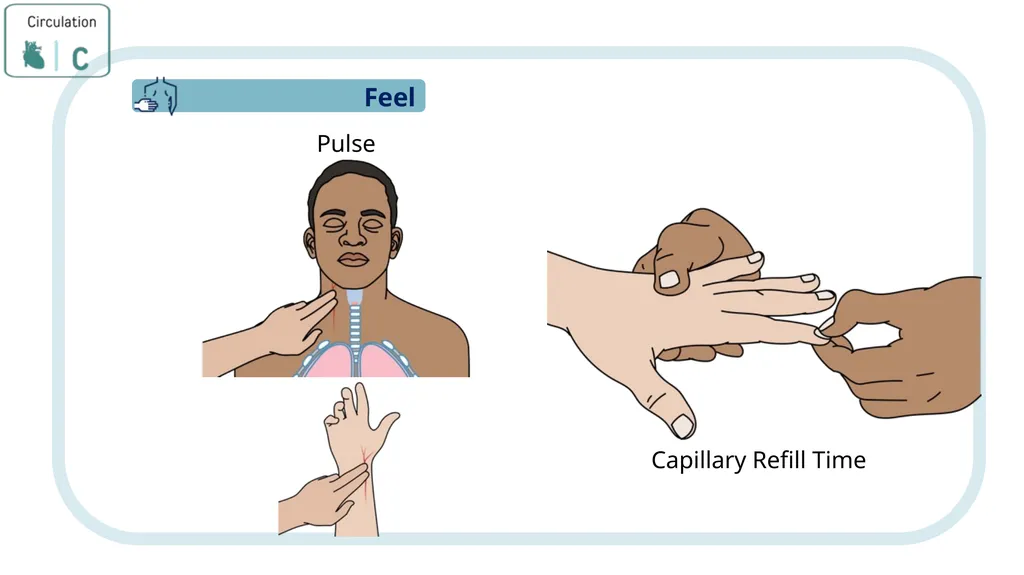
slide28. Feel Pulse Capillary Refill Time<br>
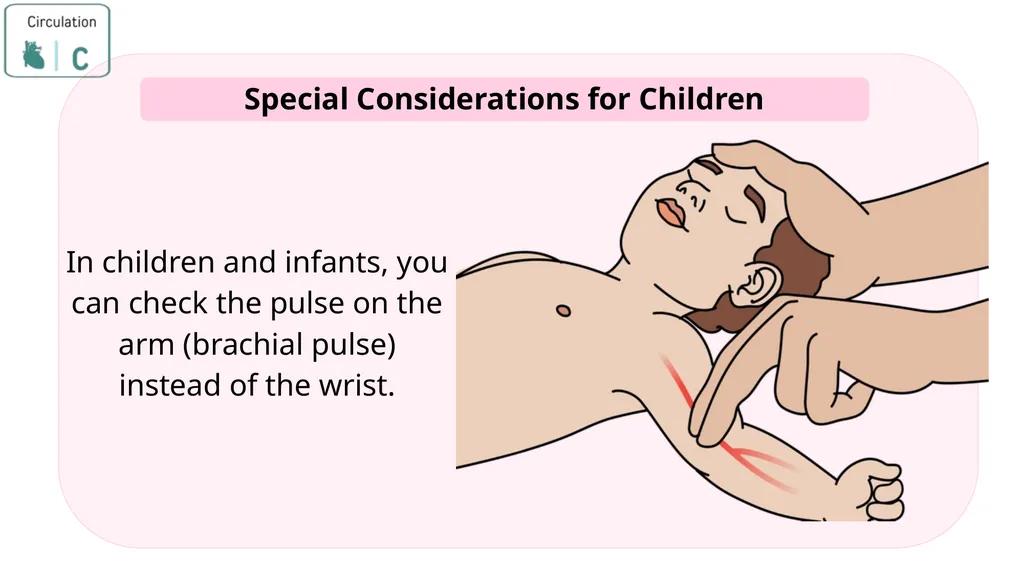
slide29. Special Considerations for Children In children and infants, you can check the pulse on the arm (brachial pulse) instead of the wrist.<br>
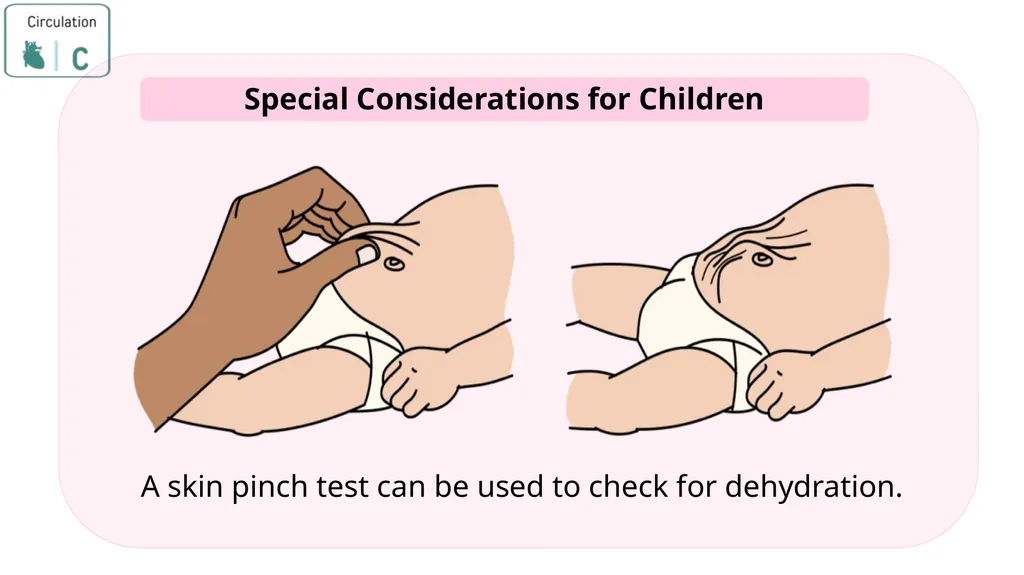
slide30. Special Considerations for Children A skin pinch test can be used to check for dehydration.<br>
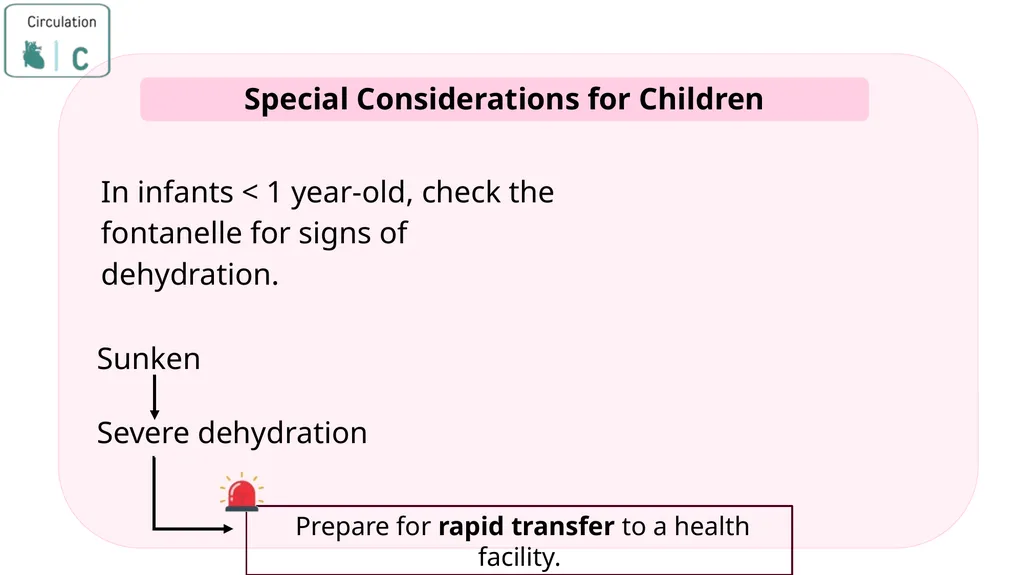
slide31. Special Considerations for Children In infants < 1 year-old, check the fontanelle for signs of dehydration. Sunken Severe dehydration Prepare for rapid transfer to a health facility.<br>
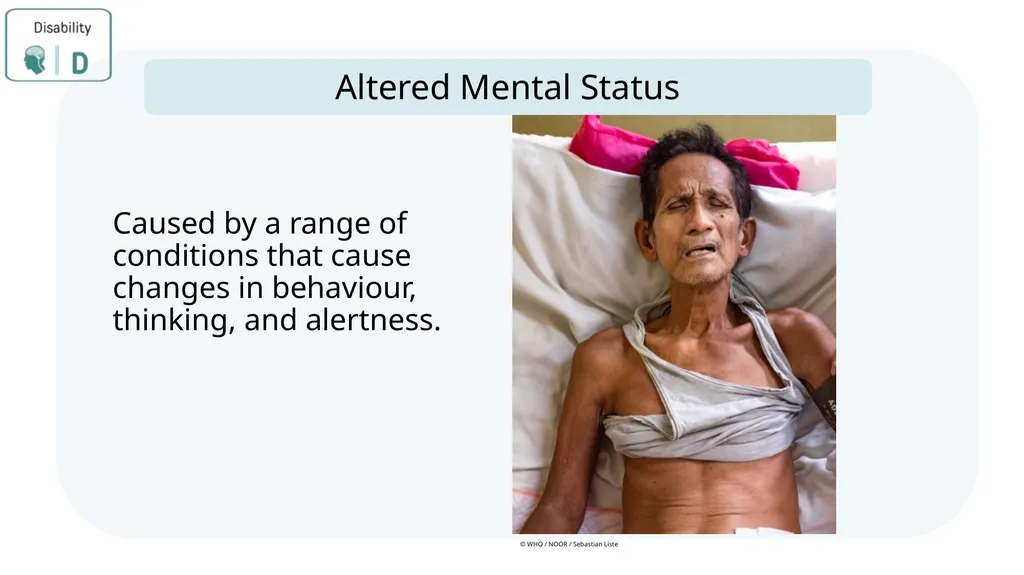
slide33. Caused by a range of conditions that cause changes in behaviour, thinking, and alertness. © WHO / NOOR / Sebastian Liste Altered Mental Status<br>
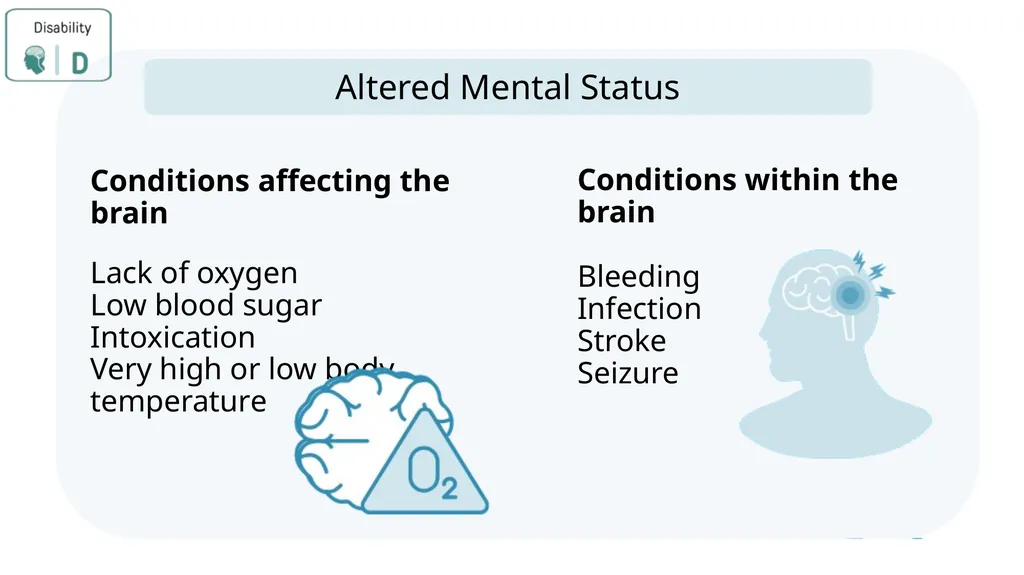
slide34. Conditions affecting the brain
Lack of oxygen
Low blood sugar
Intoxication
Very high or low body temperature Altered Mental Status Conditions within the brain
Bleeding
Infection
Stroke
Seizure<br>
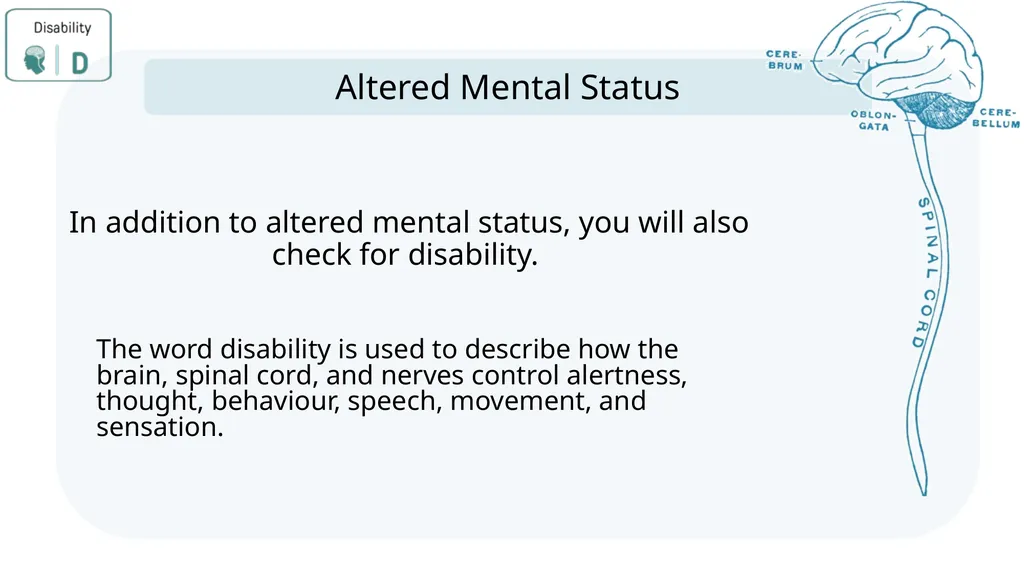
slide35. In addition to altered mental status, you will also check for disability. Altered Mental Status The word disability is used to describe how the brain, spinal cord, and nerves control alertness, thought, behaviour, speech, movement, and sensation.<br>
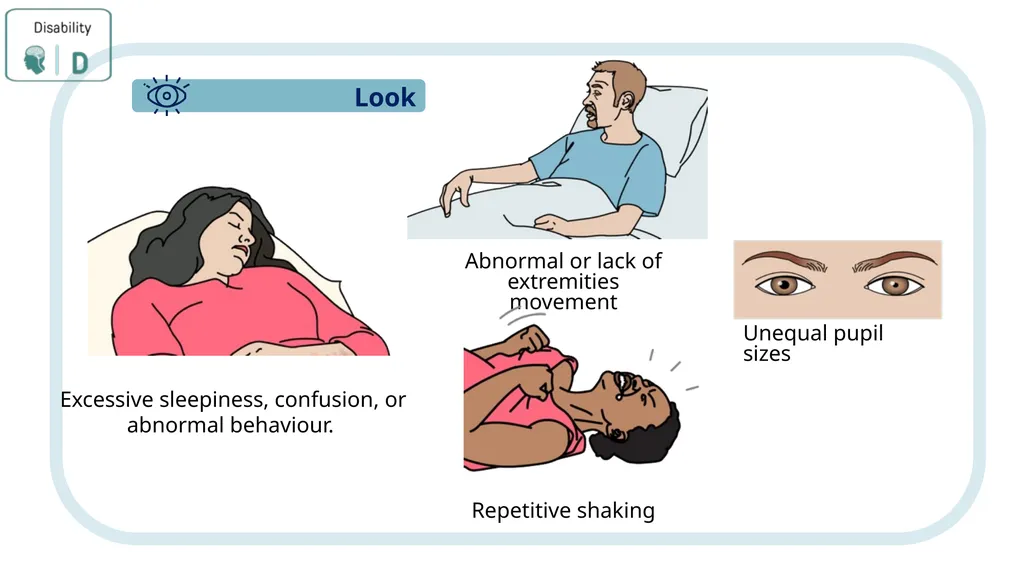
slide36. Excessive sleepiness, confusion, or abnormal behaviour. Abnormal or lack of extremities movement Unequal pupil sizes Look Repetitive shaking<br>
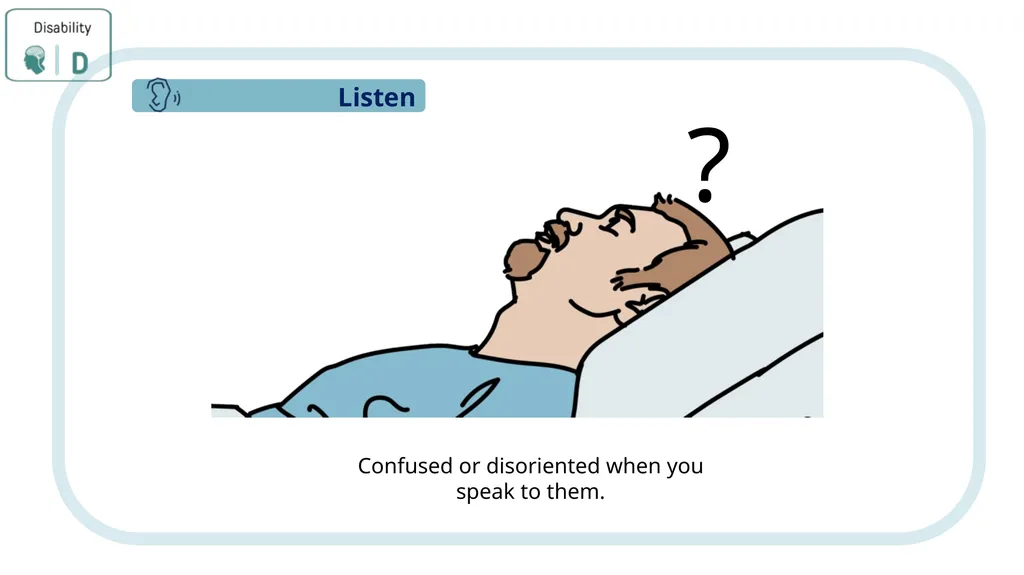
slide37. Listen Confused or disoriented when you speak to them. ?<br>
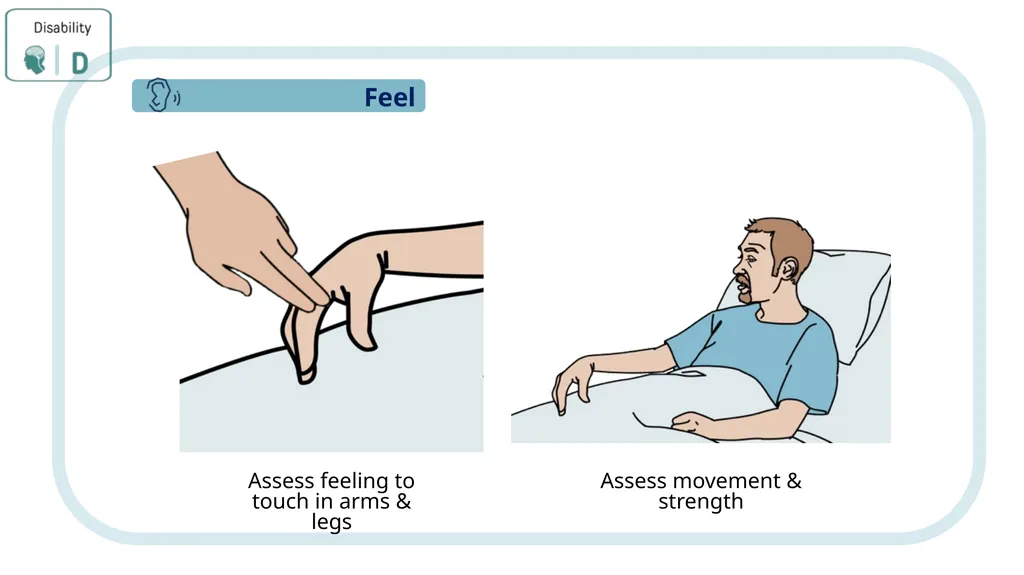
slide38. Feel Assess feeling to touch in arms & legs Assess movement & strength<br>
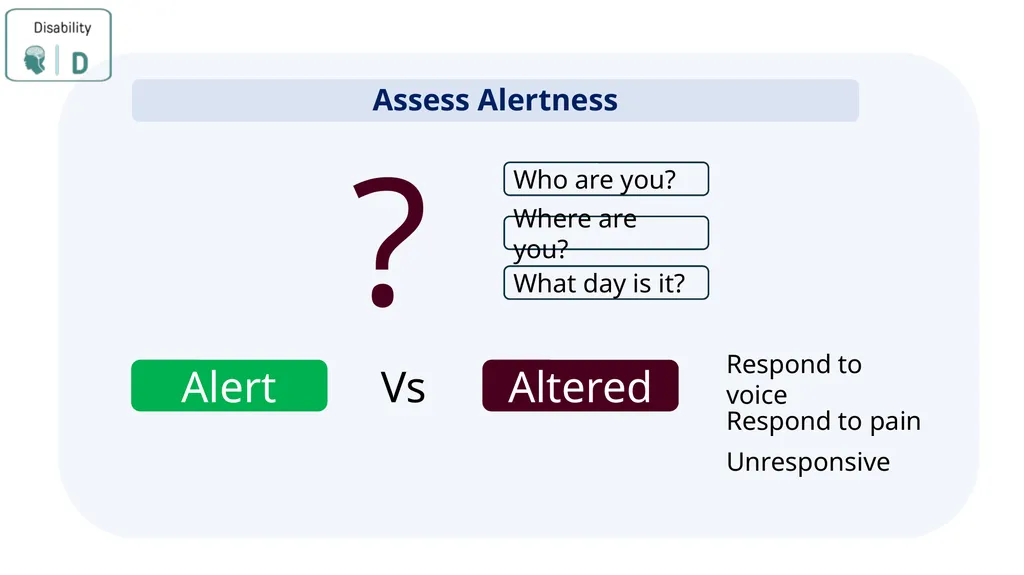
slide39. Assess Alertness Alert Altered Vs Respond to voice Respond to pain Unresponsive Who are you? Where are you? What day is it? ?<br>
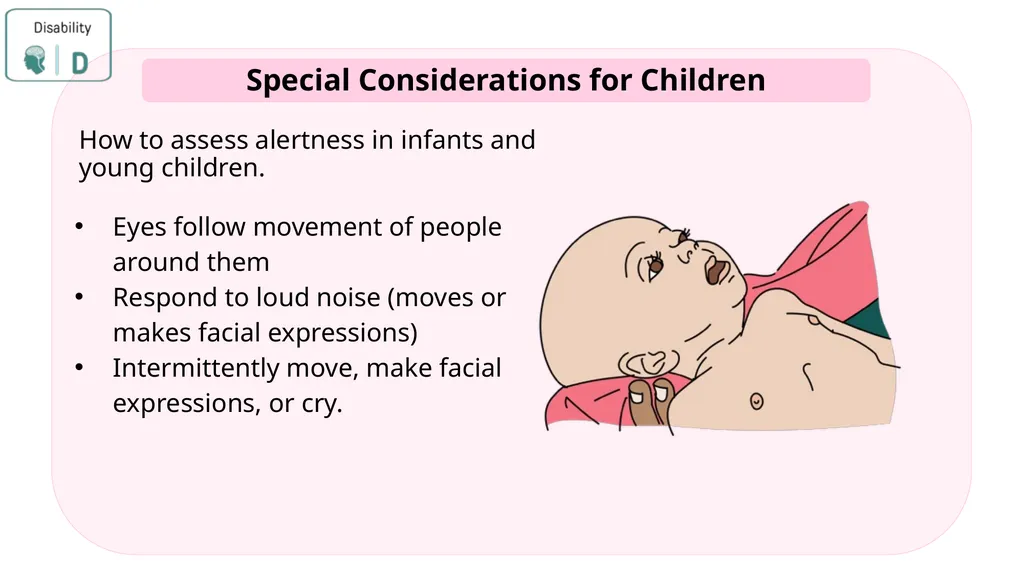
slide40. Special Considerations for Children Eyes follow movement of people around them
Respond to loud noise (moves or makes facial expressions)
Intermittently move, make facial expressions, or cry. How to assess alertness in infants and young children.<br>
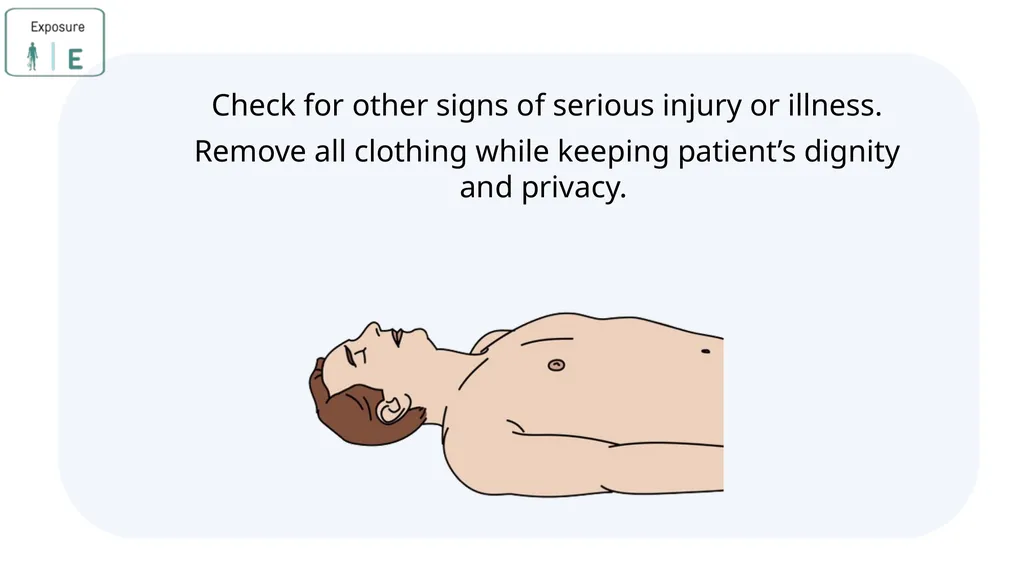
slide42. Check for other signs of serious injury or illness.
Remove all clothing while keeping patient’s dignity and privacy.<br>
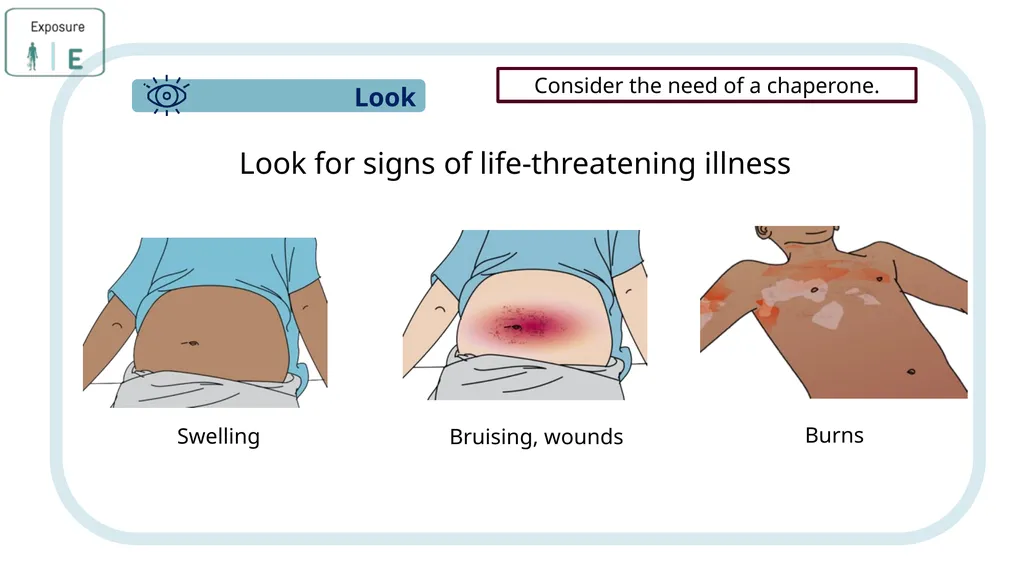
slide43. Look Bruising, wounds Consider the need of a chaperone. Swelling Look for signs of life-threatening illness Burns<br>
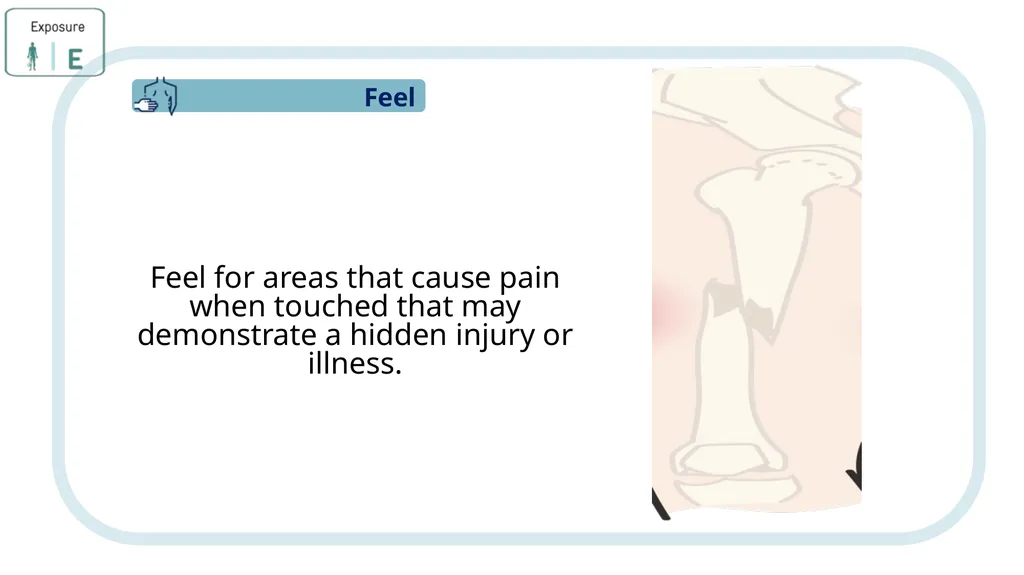
slide44. Feel Feel for areas that cause pain when touched that may demonstrate a hidden injury or illness.<br>
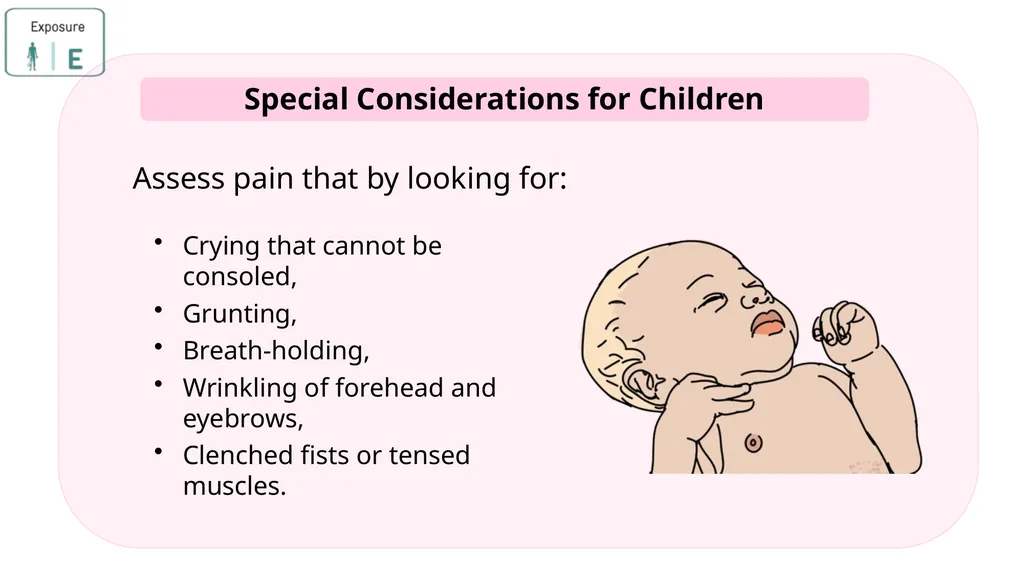
slide45. Special Considerations for Children Assess pain that by looking for: Crying that cannot be consoled,
Grunting,
Breath-holding,
Wrinkling of forehead and eyebrows,
Clenched fists or tensed muscles.<br>
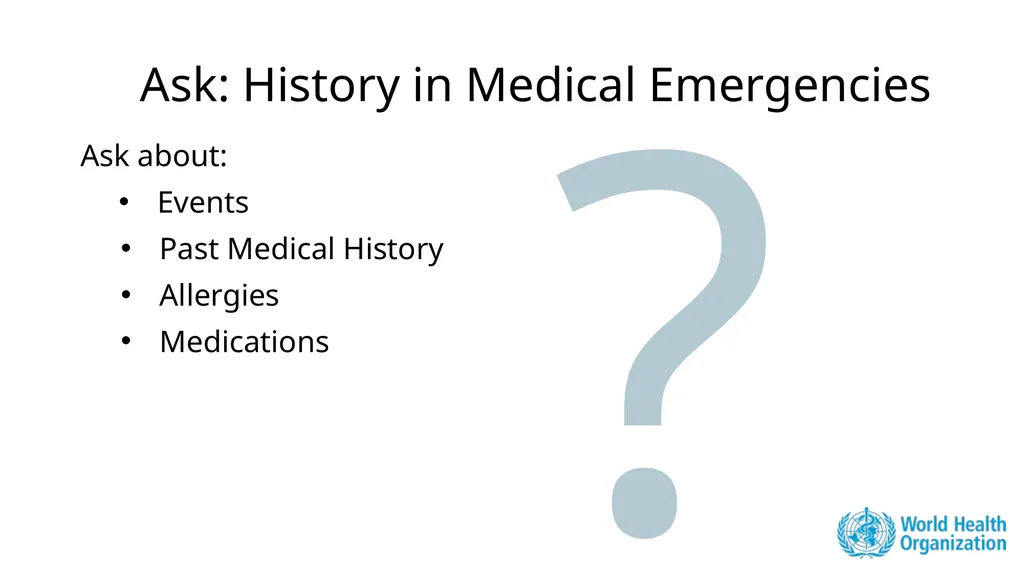
slide46. ? Ask: History in Medical Emergencies Ask about:
Events
Past Medical History
Allergies
Medications<br>
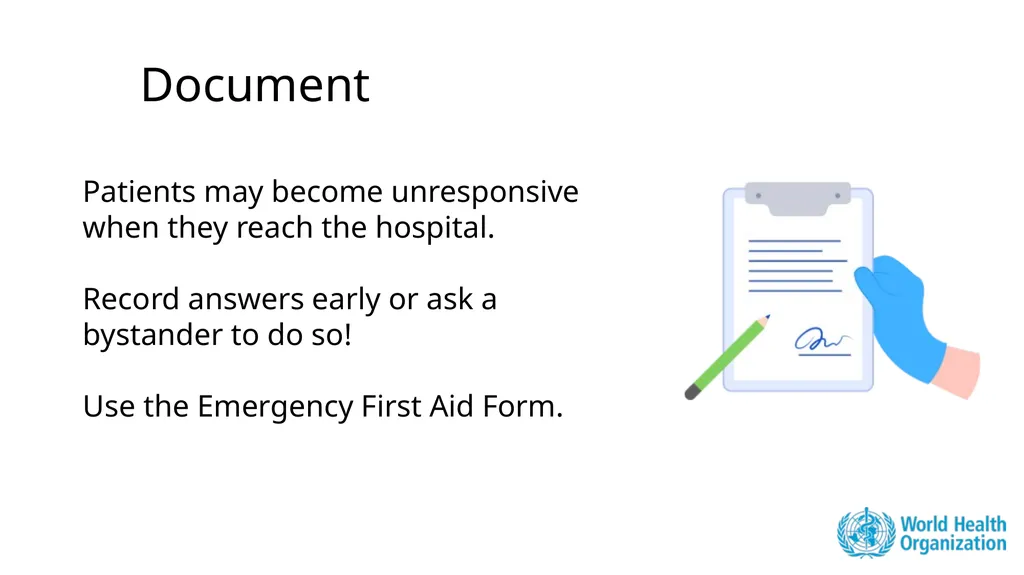
slide47. Document Patients may become unresponsive when they reach the hospital.
Record answers early or ask a bystander to do so!
Use the Emergency First Aid Form.<br>
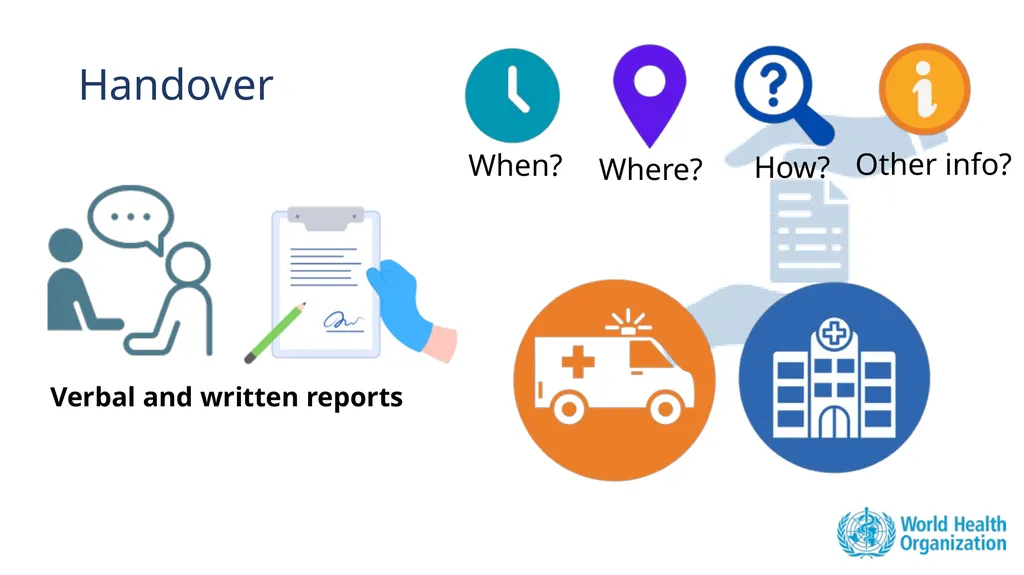
slide48. Handover Verbal and written reports When? How? Other info? Where?<br>
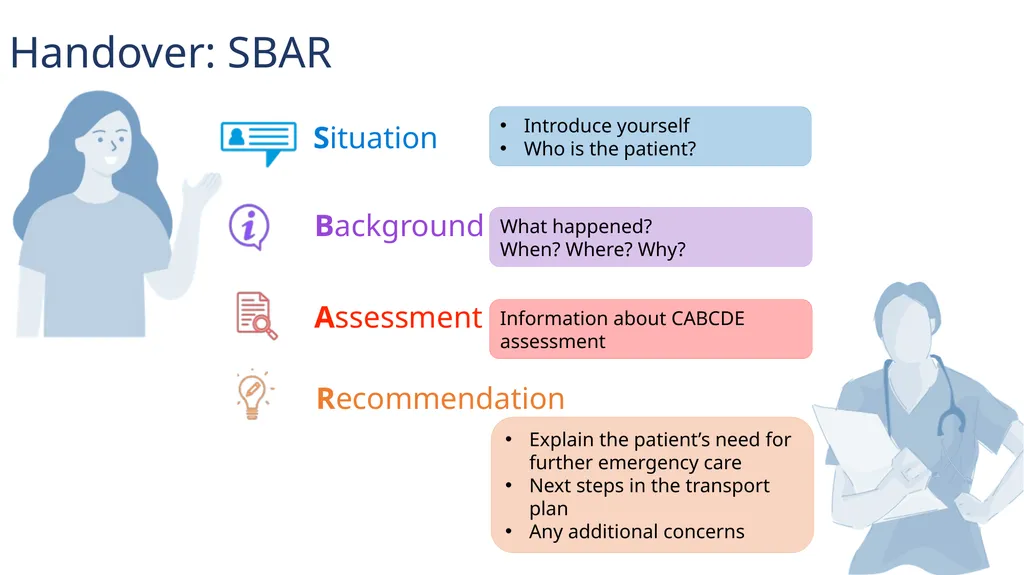
slide49. Situation Background Assessment Recommendation Introduce yourself
Who is the patient? What happened?
When? Where? Why? Information about CABCDE assessment Explain the patient’s need for further emergency care
Next steps in the transport plan
Any additional concerns Handover: SBAR<br>
slide50. Questions?<br>
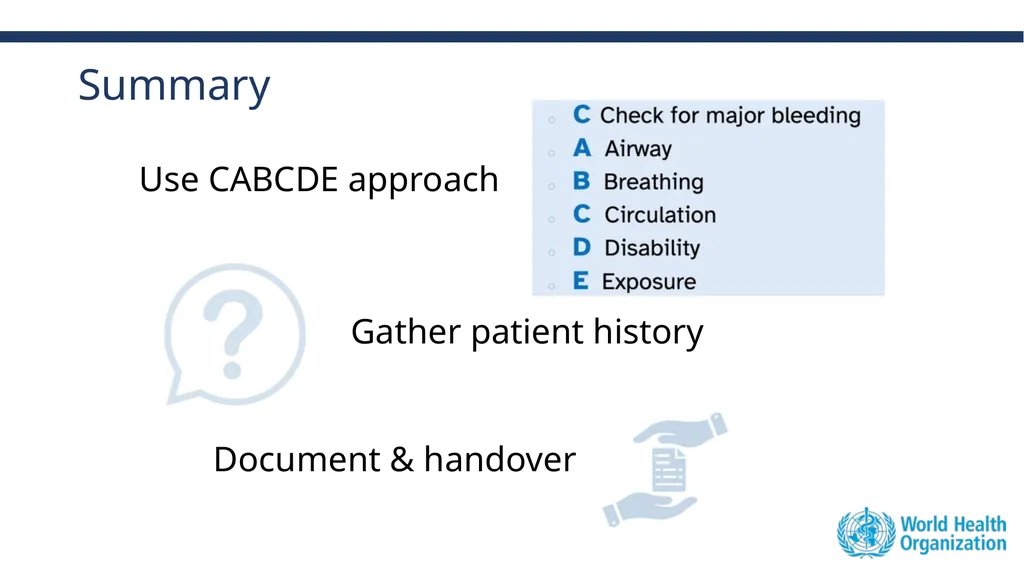
slide51. Summary Document & handover Use CABCDE approach Gather patient history<br>

slide2. Module 3: Learning Objectives Describe the CABCDE approach for ill and injured persons:
Check for major bleeding
Assess airway
Assess breathing
Assess circulation
Assess disability
Explain the importance of exposure<br>
slide3. Module 3: Learning Objectives Gather information on an ill or injured person, including the following:
History of events,
Medications,
Past medical history, and
Allergies.
Recognize the importance of documentation and handover.<br>
slide4. Key Terms CABCDE
Airway
Breathing
Circulation
Disability
Exposure
Difficulty in breathing
Shock
Altered mental status Haemorrhage
Pulse
Capillary refill time
Skin pinch test
Fontanelle
Past medical history
Handover
Higher level of care<br>
slide5. Overview CABCDE is a systematic approach to evaluate and manage patients, with rapid identification and intervention on life-threatening conditions.
C Check for major bleeding
A Airway
B Breathing
C Circulation
D Disability
E Exposure<br>
slide6. CABCDE Approach The CABCDE approach is applicable to all patients.
Address any discovered problem immediately before moving on.
Look, listen and feel for signs of an emergency during each step.<br>
slide7. Review: What are we looking for in each step? Major bleeding Airway obstruction Difficulty in breathing Shock or other bleeding Altered mental status or disability Other danger signs<br>
slide9. Blood coming out fast
Blood spraying or making a puddle Look Severe bleeding from nose, mouth,
bowels, or vagina. Severe external bleeding<br>
slide11. The parts of the body that carry oxygen from the air to the lungs and into the blood. Mouth Nose
` Throat Windpipe Lungs Airway<br>
slide12. Check for blockage that can cause Difficulty in Breathing<br>
slide13. Foreign body, vomit or blood Swelling from severe allergy, infection, or injury Relaxed muscles in unresponsive patients Causes of Airway Obstruction<br>
slide14. Look Nose
Blood, mucous or foreign body
Burn or injury
` Mouth
Blood, mucous or foreign body
Burn or injury
Swelling
Inability to open the mouth
` Neck
Swelling
Injury
Inability to move the neck
Windpipe not in place
Large mass
`<br>
slide15. Listen Stange sounds Absent breathing<br>
slide16. Feel Air movement in front of nose or mouse<br>
slide17. Special Considerations for Children Children’s airways block easily — place a towel under the shoulders and slightly rotate the head to neutral position.<br>
slide19. Different problems that make it hard to breathe, cause abnormal breathing, or the need for extra effort to breathe Difficulty in Breathing<br>
slide20. Fast, slow or absent Breathing Increased work of breathing
Tripod position Blue or grey colour around the lips Look Bruising or wounds on the chest wall Burns encircling the chest<br>
slide21. Listen abnormal sounds when breathing Absent breath sounds<br>
slide22. Feel Place your hands on the chest to assess breathing<br>
slide24. A life-threatening condition in which insufficient blood flow is circulating to reach the vital organs of the body such as the brain, heart, lungs, and kidneys. Shock Shock Significant Bleeding Blood and oxygen to vital organs Death<br>
slide25. Not enough blood Causes of Shock Blood not getting to the vital organs Heart cannot fill or pump blood to the organs Severe bleeding Severe dehydration Heart failure
Blood clots in the lungs
Collapsed lungs
Poisons/toxins Severe infection Severe allergy Spinal Cord injury Poisons/toxins<br>
slide26. Cold, sweaty, damp, or pale skin. Shock Capillary refill time > 3 seconds Dizziness, confusion, restlessness Danger Signs! Fast or weak pulse<br>
slide27. Look Signs of shock Signs of bleeding<br>
slide28. Feel Pulse Capillary Refill Time<br>
slide29. Special Considerations for Children In children and infants, you can check the pulse on the arm (brachial pulse) instead of the wrist.<br>
slide30. Special Considerations for Children A skin pinch test can be used to check for dehydration.<br>
slide31. Special Considerations for Children In infants < 1 year-old, check the fontanelle for signs of dehydration. Sunken Severe dehydration Prepare for rapid transfer to a health facility.<br>
slide33. Caused by a range of conditions that cause changes in behaviour, thinking, and alertness. © WHO / NOOR / Sebastian Liste Altered Mental Status<br>
slide34. Conditions affecting the brain
Lack of oxygen
Low blood sugar
Intoxication
Very high or low body temperature Altered Mental Status Conditions within the brain
Bleeding
Infection
Stroke
Seizure<br>
slide35. In addition to altered mental status, you will also check for disability. Altered Mental Status The word disability is used to describe how the brain, spinal cord, and nerves control alertness, thought, behaviour, speech, movement, and sensation.<br>
slide36. Excessive sleepiness, confusion, or abnormal behaviour. Abnormal or lack of extremities movement Unequal pupil sizes Look Repetitive shaking<br>
slide37. Listen Confused or disoriented when you speak to them. ?<br>
slide38. Feel Assess feeling to touch in arms & legs Assess movement & strength<br>
slide39. Assess Alertness Alert Altered Vs Respond to voice Respond to pain Unresponsive Who are you? Where are you? What day is it? ?<br>
slide40. Special Considerations for Children Eyes follow movement of people around them
Respond to loud noise (moves or makes facial expressions)
Intermittently move, make facial expressions, or cry. How to assess alertness in infants and young children.<br>
slide42. Check for other signs of serious injury or illness.
Remove all clothing while keeping patient’s dignity and privacy.<br>
slide43. Look Bruising, wounds Consider the need of a chaperone. Swelling Look for signs of life-threatening illness Burns<br>
slide44. Feel Feel for areas that cause pain when touched that may demonstrate a hidden injury or illness.<br>
slide45. Special Considerations for Children Assess pain that by looking for: Crying that cannot be consoled,
Grunting,
Breath-holding,
Wrinkling of forehead and eyebrows,
Clenched fists or tensed muscles.<br>
slide46. ? Ask: History in Medical Emergencies Ask about:
Events
Past Medical History
Allergies
Medications<br>
slide47. Document Patients may become unresponsive when they reach the hospital.
Record answers early or ask a bystander to do so!
Use the Emergency First Aid Form.<br>
slide48. Handover Verbal and written reports When? How? Other info? Where?<br>
slide49. Situation Background Assessment Recommendation Introduce yourself
Who is the patient? What happened?
When? Where? Why? Information about CABCDE assessment Explain the patient’s need for further emergency care
Next steps in the transport plan
Any additional concerns Handover: SBAR<br>
slide50. Questions?<br>
slide51. Summary Document & handover Use CABCDE approach Gather patient history<br>