MODULE 4 PART 2 The policy-making process 4 Policy-making and HiAP Define policy and describe the stages of the policy-making cycle Recognize the complex and political nature of the policy-making process LEARNING OBJECTIVES Identify the
"MODULE 4 PART 2 The policy-making process 4" is the property of its rightful owner. Permission is granted to
download and print the materials on this website for personal, non-commercial use only, and to display it
on your personal computer provided you do not modify the materials and that you retain all copyright
notices contained in the materials. By downloading content from our website, you accept the terms of this
agreement.
Presentation Transcript
01
MODULE 4 PART 2
The policy-making process 4 Policy-making and HiAP<br>
02
Define policy and describe the stages of the policy-making cycle Recognize the complex and political nature of the policy-making process LEARNING OBJECTIVES Identify the characteristics of a “window of opportunity” for policy change Frame a complex health issue and identify its policy challenges and opportunities<br>
03
What is policy? A policy is a principle or a plan to guide decisions, actions and outcomes. Policies can be laws, documents, procedures, guiding principles, statements of intent or working frameworks. Public policy refers to the policy of government. There can often be large (sometimes deliberate) discrepancy between policy as intent (what is planned, stated or written) and policy as practice (what actually happens).<br>
04
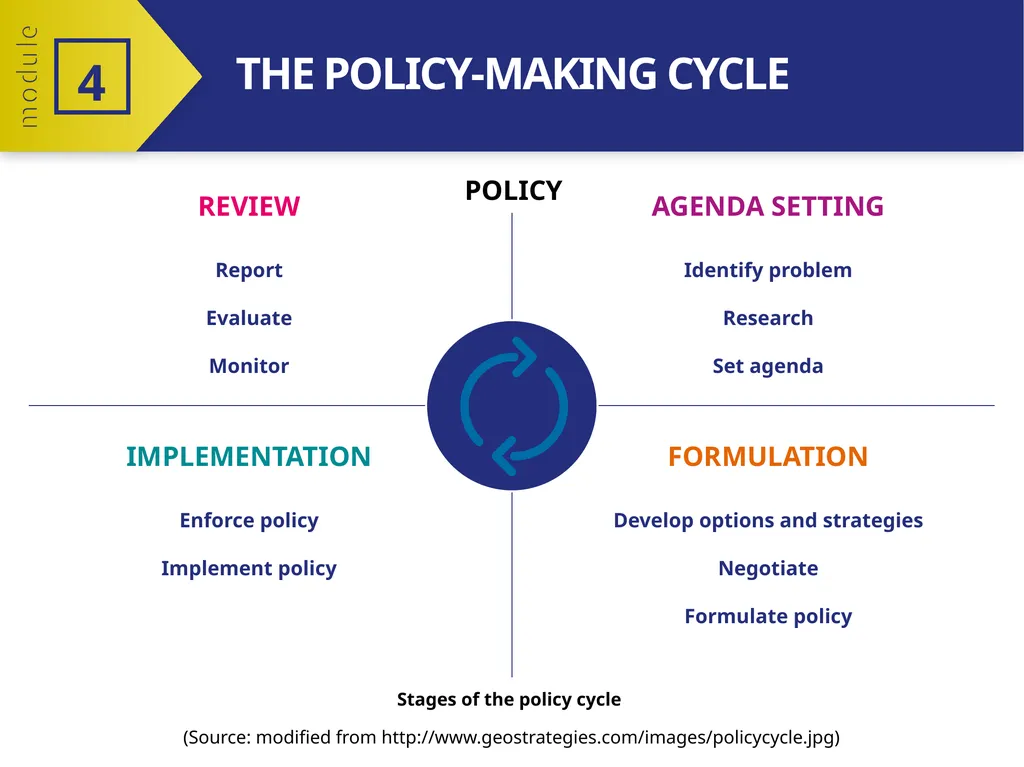
The policy-making cycle REVIEW
Report
Evaluate Monitor<br>
05
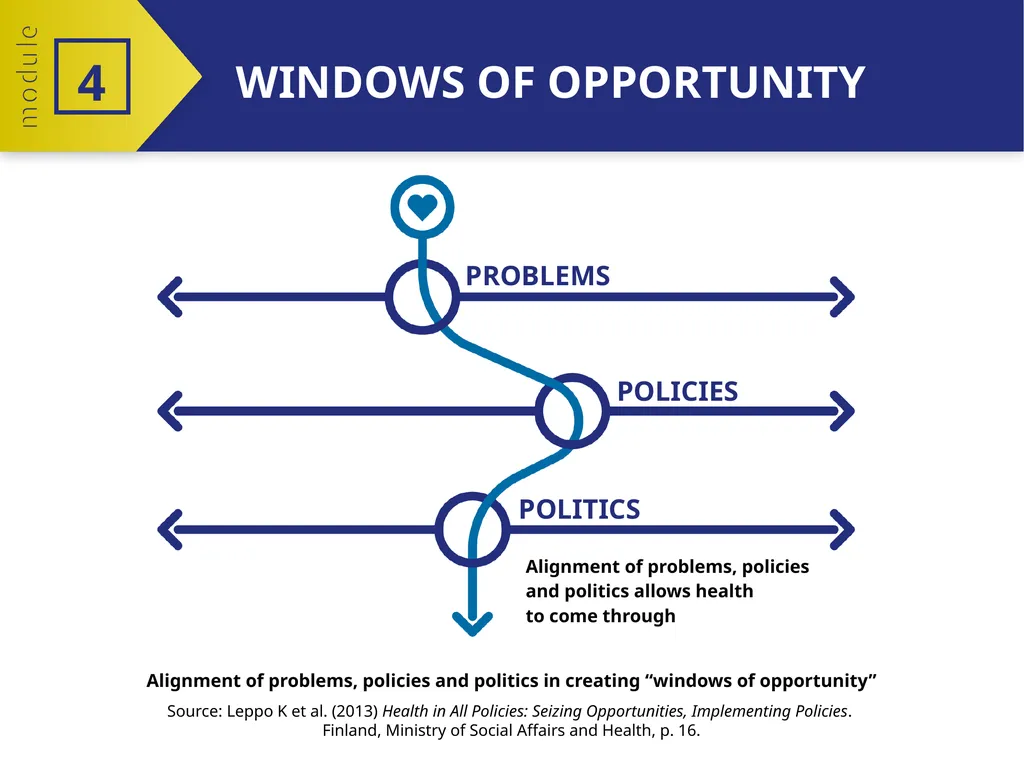
Windows of opportunity<br>
06
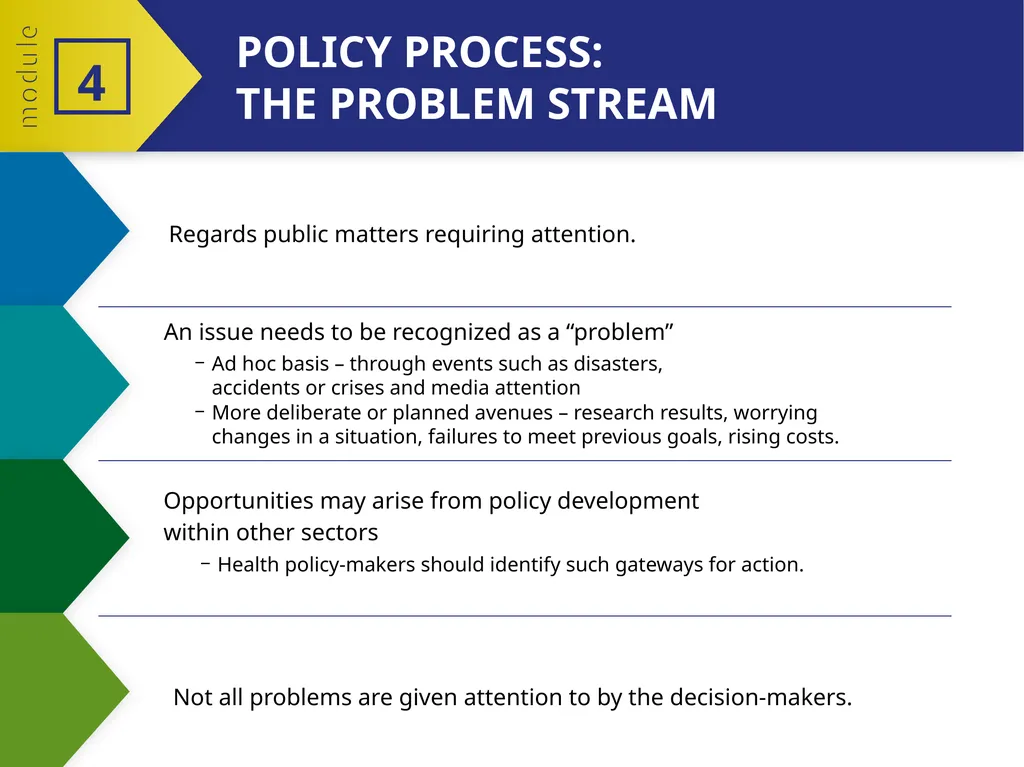
Policy process: The problem stream Regards public matters requiring attention. An issue needs to be recognized as a “problem”
Ad hoc basis – through events such as disasters, accidents or crises and media attention
More deliberate or planned avenues – research results, worrying changes in a situation, failures to meet previous goals, rising costs. Opportunities may arise from policy development within other sectors
Health policy-makers should identify such gateways for action. Not all problems are given attention to by the decision-makers.<br>
07
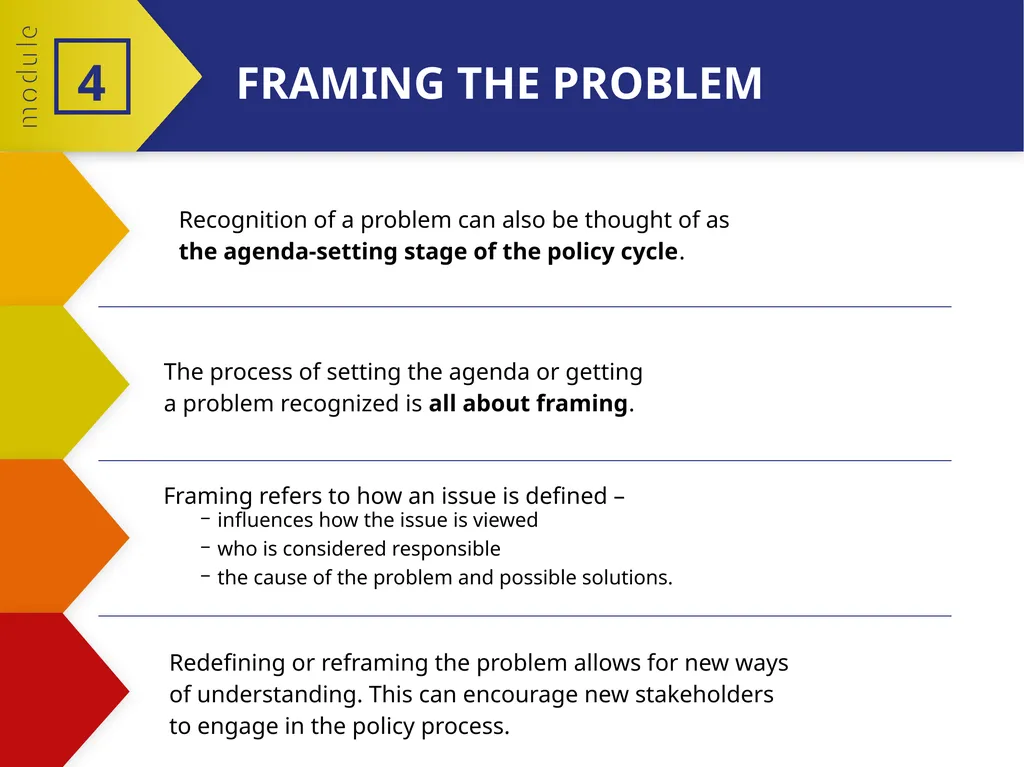
Framing the problem Recognition of a problem can also be thought of as the agenda-setting stage of the policy cycle. The process of setting the agenda or getting a problem recognized is all about framing. Framing refers to how an issue is defined –
influences how the issue is viewed
who is considered responsible
the cause of the problem and possible solutions. Redefining or reframing the problem allows for new ways of understanding. This can encourage new stakeholders to engage in the policy process.<br>
08
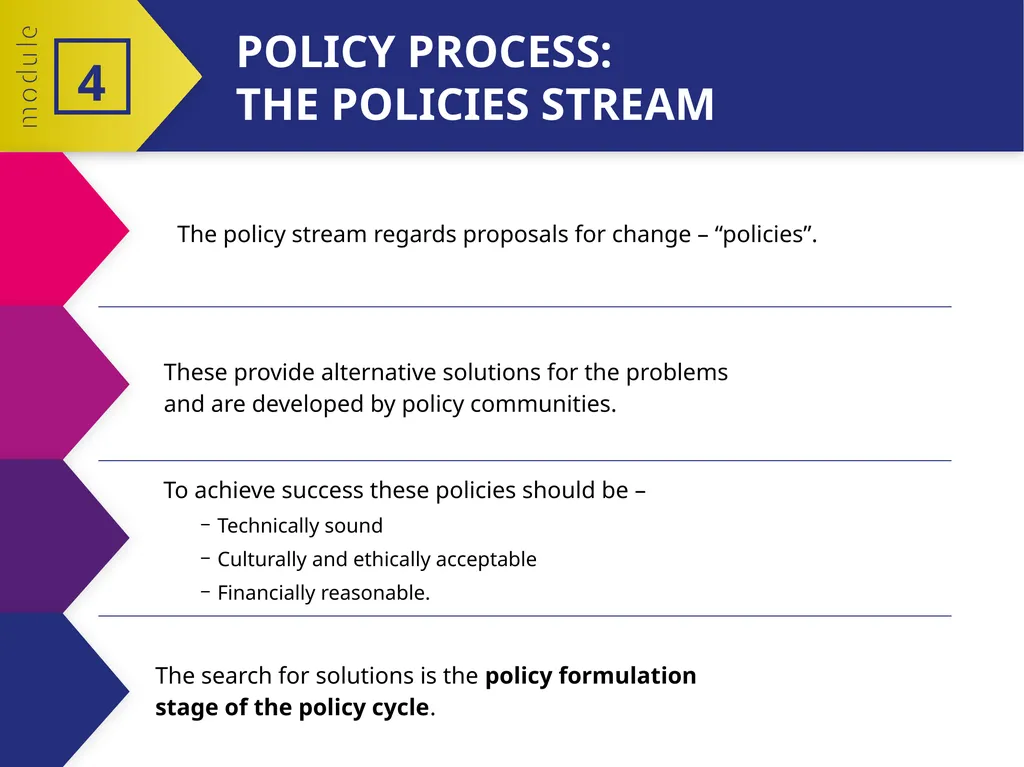
Policy process: The polICIES stream The policy stream regards proposals for change – “policies”. These provide alternative solutions for the problems and are developed by policy communities. To achieve success these policies should be –
Technically sound
Culturally and ethically acceptable
Financially reasonable. The search for solutions is the policy formulation stage of the policy cycle.<br>
09
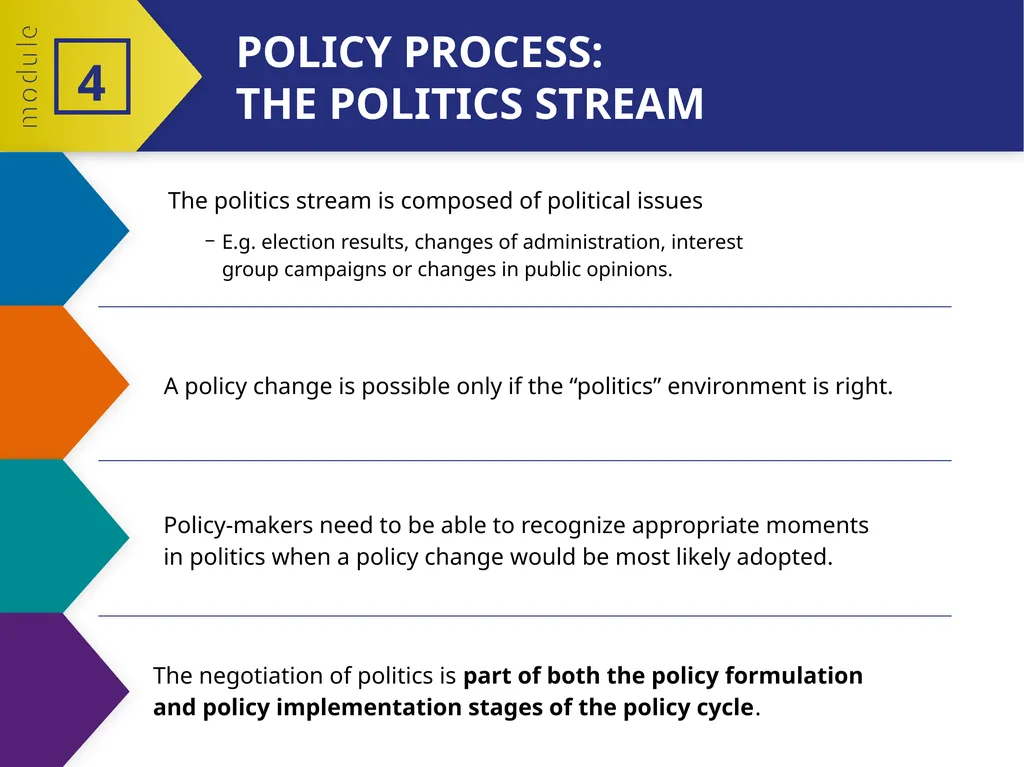
Policy process: The politics stream The politics stream is composed of political issues
E.g. election results, changes of administration, interest group campaigns or changes in public opinions. A policy change is possible only if the “politics” environment is right. Policy-makers need to be able to recognize appropriate moments in politics when a policy change would be most likely adopted. The negotiation of politics is part of both the policy formulation and policy implementation stages of the policy cycle.<br>
10
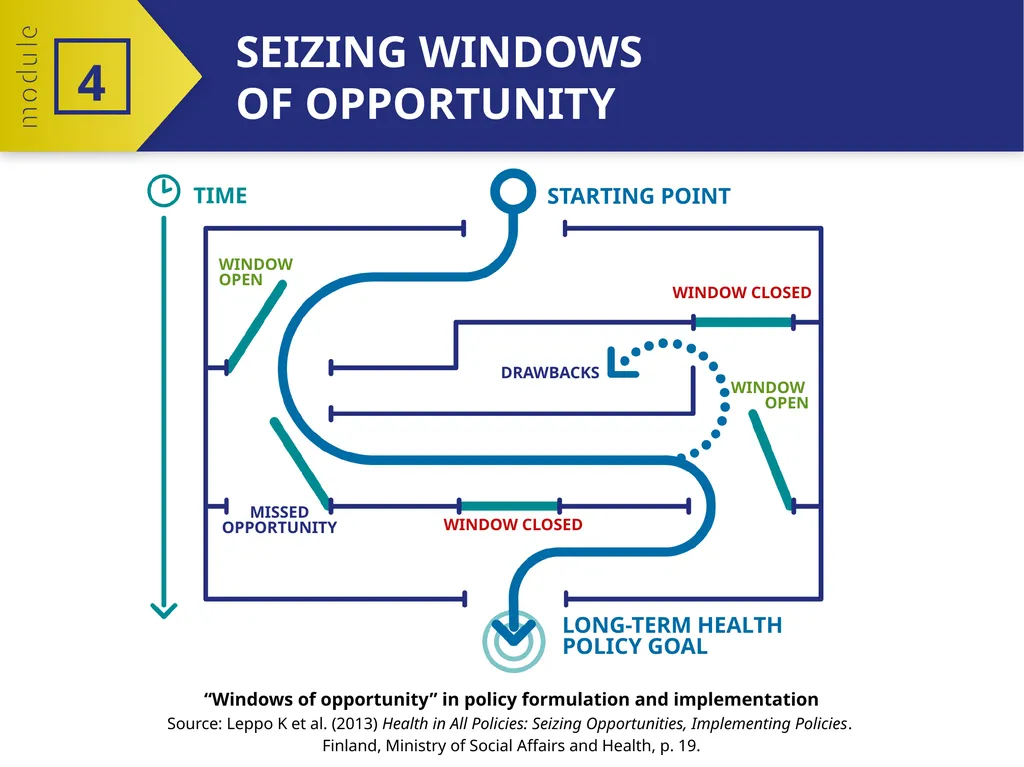
Seizing windows of opportunity<br>
11
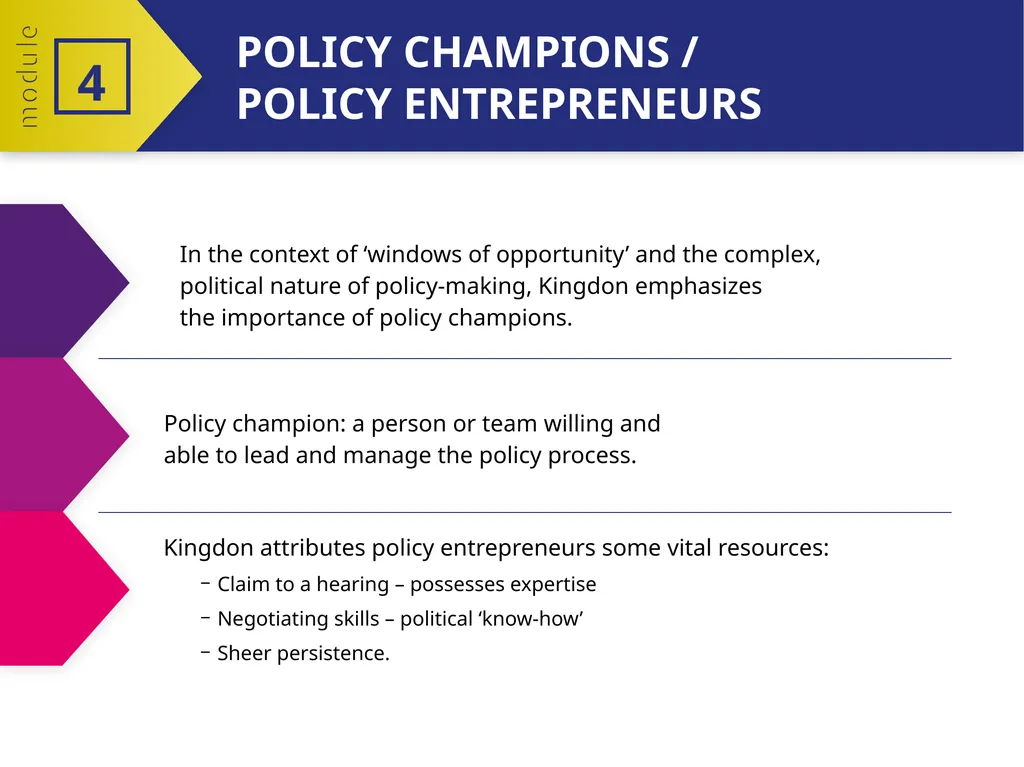
Policy champions / policy entrepreneurs In the context of ‘windows of opportunity’ and the complex, political nature of policy-making, Kingdon emphasizes the importance of policy champions. Policy champion: a person or team willing and able to lead and manage the policy process. Kingdon attributes policy entrepreneurs some vital resources:
Claim to a hearing – possesses expertise
Negotiating skills – political ‘know-how’
Sheer persistence.<br>