
MOOD DISORDERS Mood : prevailing internal

Description: MOOD DISORDERS Mood : prevailing internal emotional state Affect: external display of feelings Mood disorders are a category of illnesses that describe a serious change in mood. It is a disorder in which a person experiences long periods of
Related Topics
Download Presentation
"MOOD DISORDERS Mood : prevailing internal" is the property of its rightful owner. Permission is granted to download and print the materials on this website for personal, non-commercial use only, and to display it on your personal computer provided you do not modify the materials and that you retain all copyright notices contained in the materials. By downloading content from our website, you accept the terms of this agreement.
Presentation Transcript
slide1. MOOD DISORDERS<br>
slide2. Mood : prevailing internal emotional state
Affect: external display of feelings
Mood disorders are a category of illnesses that describe a serious change in mood.
It is a disorder in which a person experiences long periods of extreme happiness, extreme sadness, or both.<br>
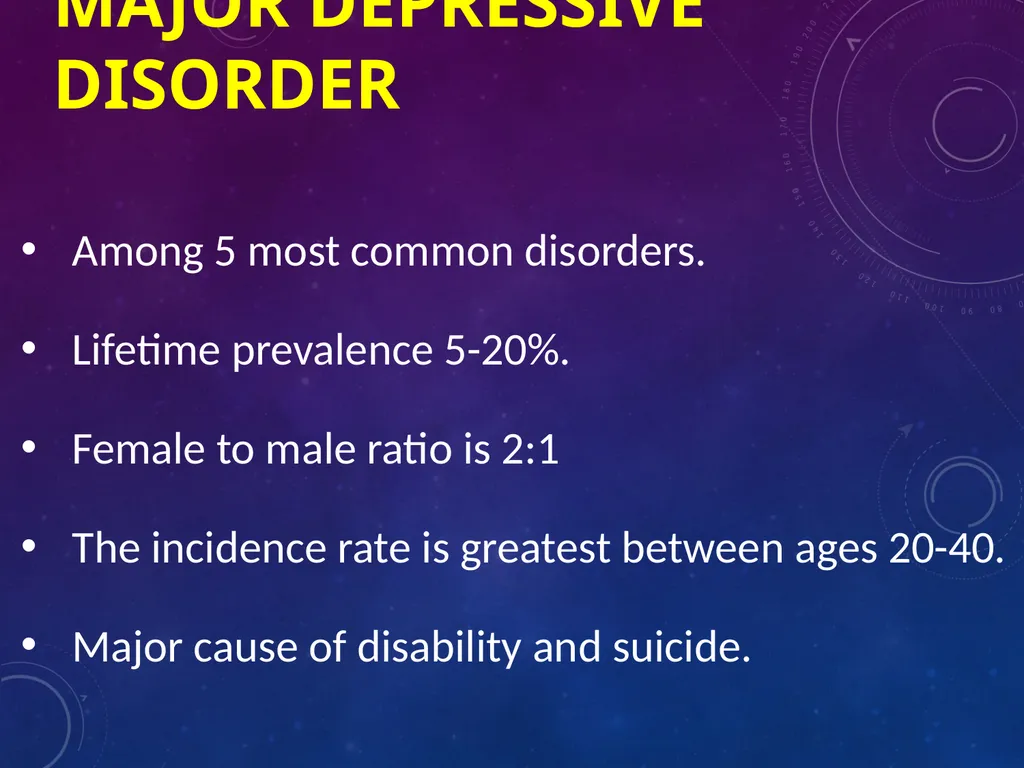
slide4. Major Depressive Disorder Among 5 most common disorders.
Lifetime prevalence 5-20%.
Female to male ratio is 2:1
The incidence rate is greatest between ages 20-40.
Major cause of disability and suicide.<br>
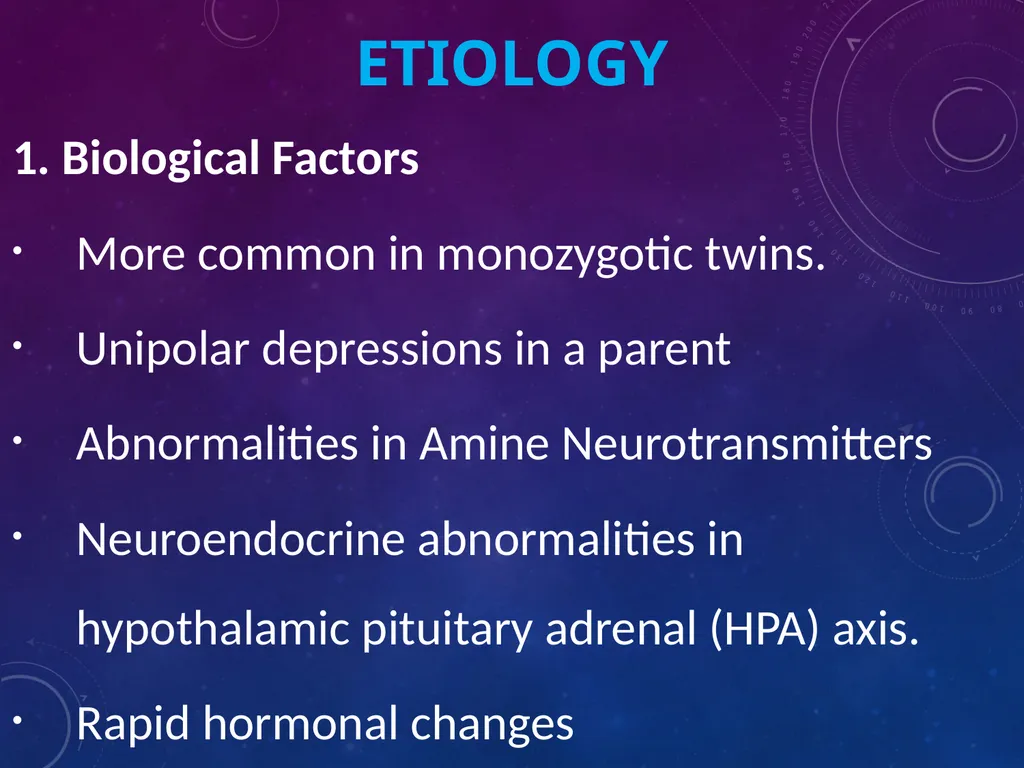
slide5. ETIOLOGY 1. Biological Factors
More common in monozygotic twins.
Unipolar depressions in a parent
Abnormalities in Amine Neurotransmitters
Neuroendocrine abnormalities in hypothalamic pituitary adrenal (HPA) axis.
Rapid hormonal changes<br>
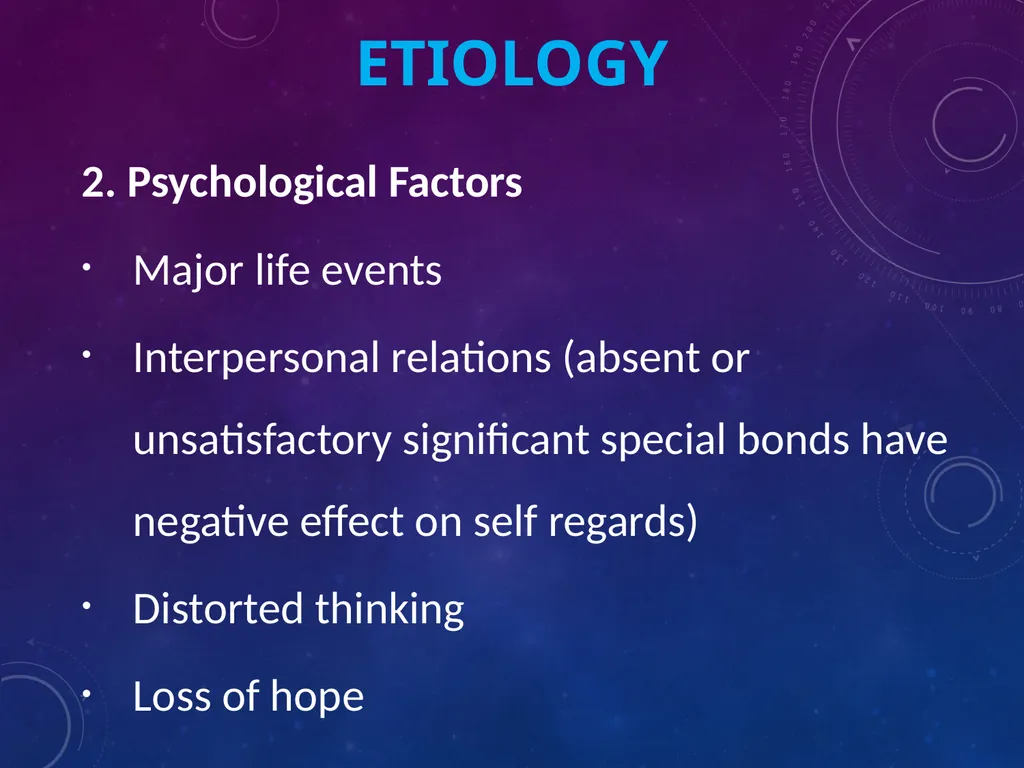
slide6. ETIOLOGY 2. Psychological Factors
Major life events
Interpersonal relations (absent or unsatisfactory significant special bonds have negative effect on self regards)
Distorted thinking
Loss of hope<br>
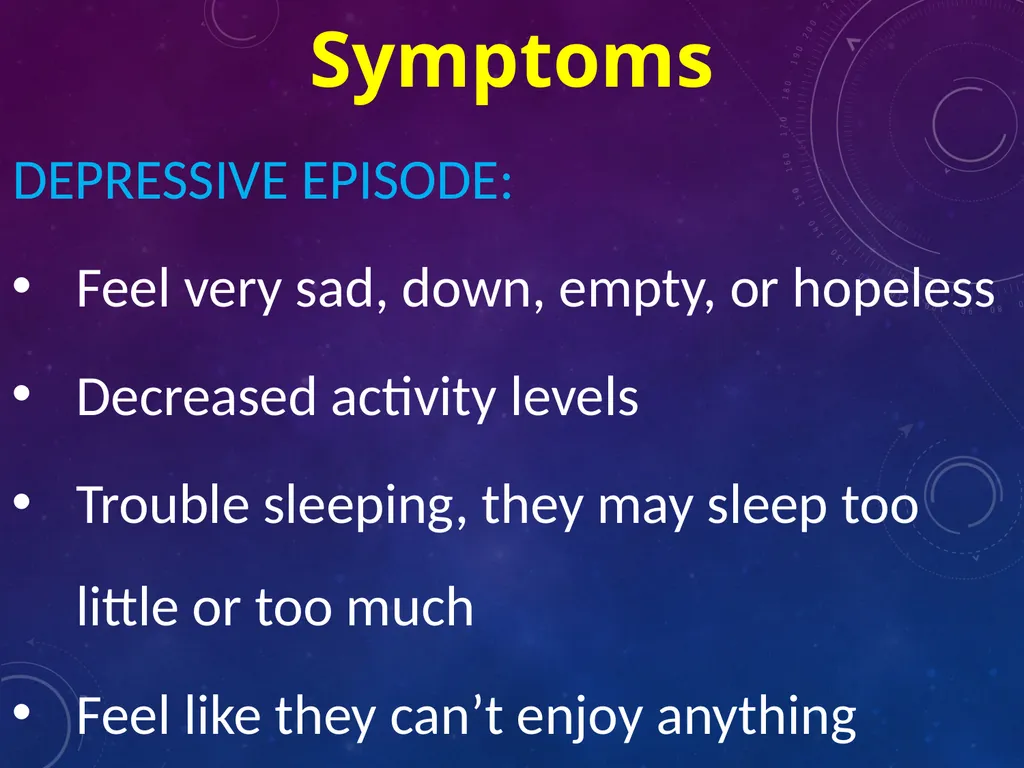
slide7. Symptoms DEPRESSIVE EPISODE:
Feel very sad, down, empty, or hopeless
Decreased activity levels
Trouble sleeping, they may sleep too little or too much
Feel like they can’t enjoy anything<br>
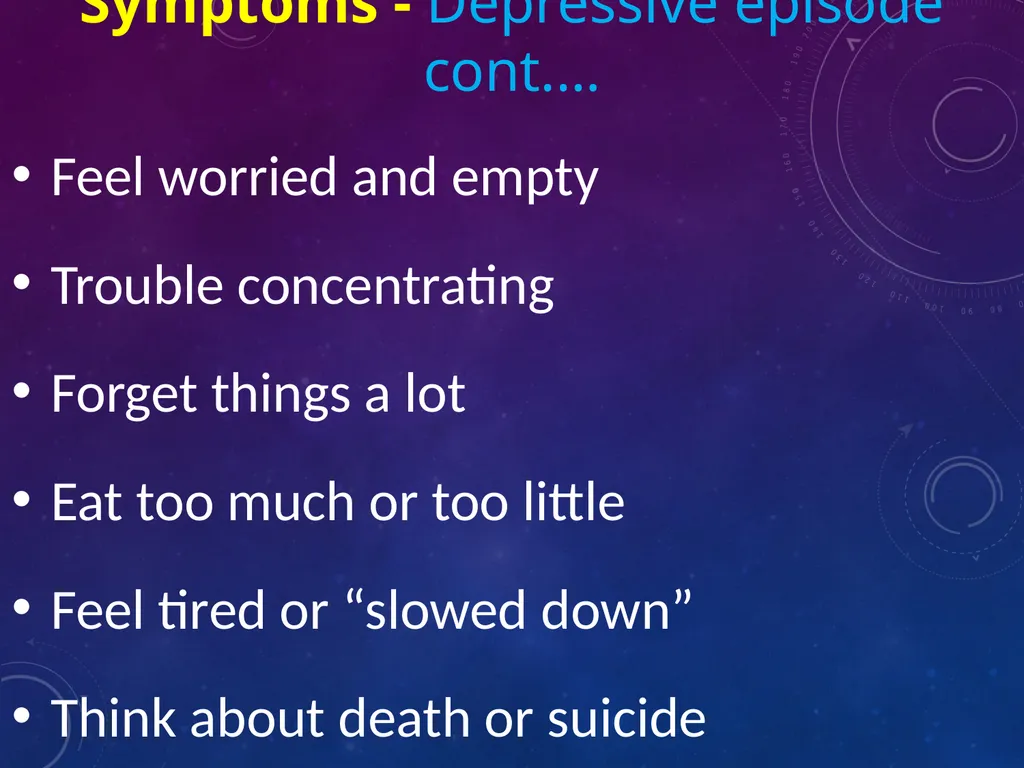
slide8. Symptoms - Depressive episode cont.… Feel worried and empty
Trouble concentrating
Forget things a lot
Eat too much or too little
Feel tired or “slowed down”
Think about death or suicide<br>
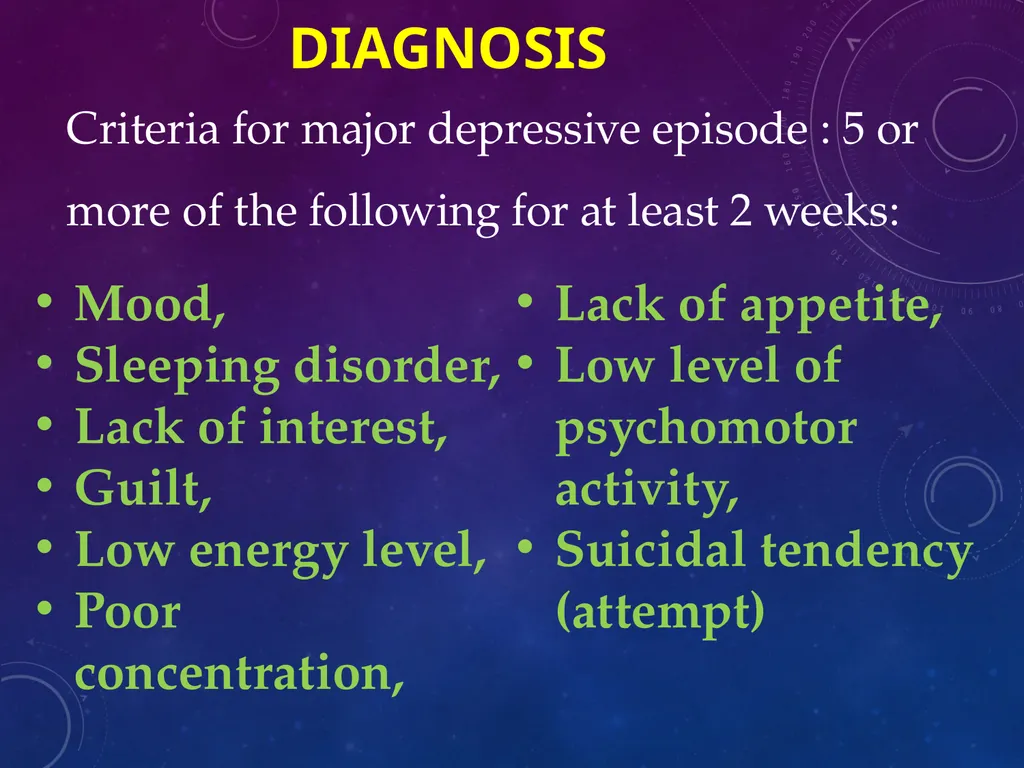
slide9. Diagnosis Mood,
Sleeping disorder,
Lack of interest,
Guilt,
Low energy level,
Poor concentration,
Lack of appetite,
Low level of psychomotor activity,
Suicidal tendency (attempt) Criteria for major depressive episode : 5 or more of the following for at least 2 weeks:<br>
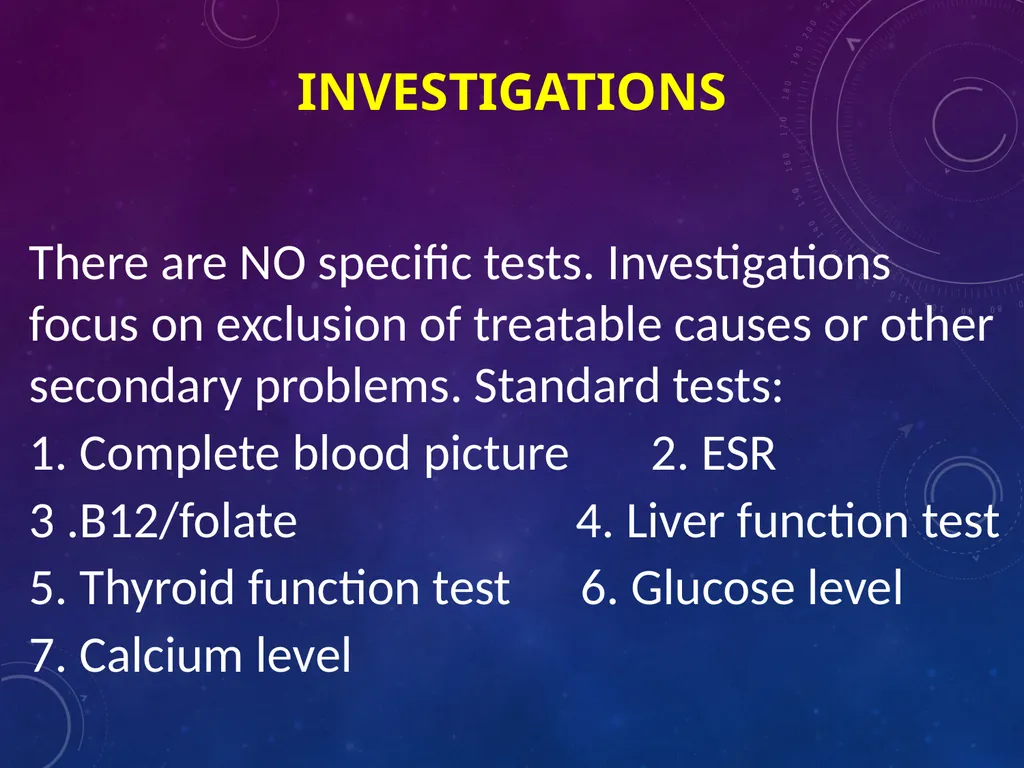
slide10. Investigations There are NO specific tests. Investigations focus on exclusion of treatable causes or other secondary problems. Standard tests:
1. Complete blood picture 2. ESR
3 .B12/folate 4. Liver function test
5. Thyroid function test 6. Glucose level
7. Calcium level<br>
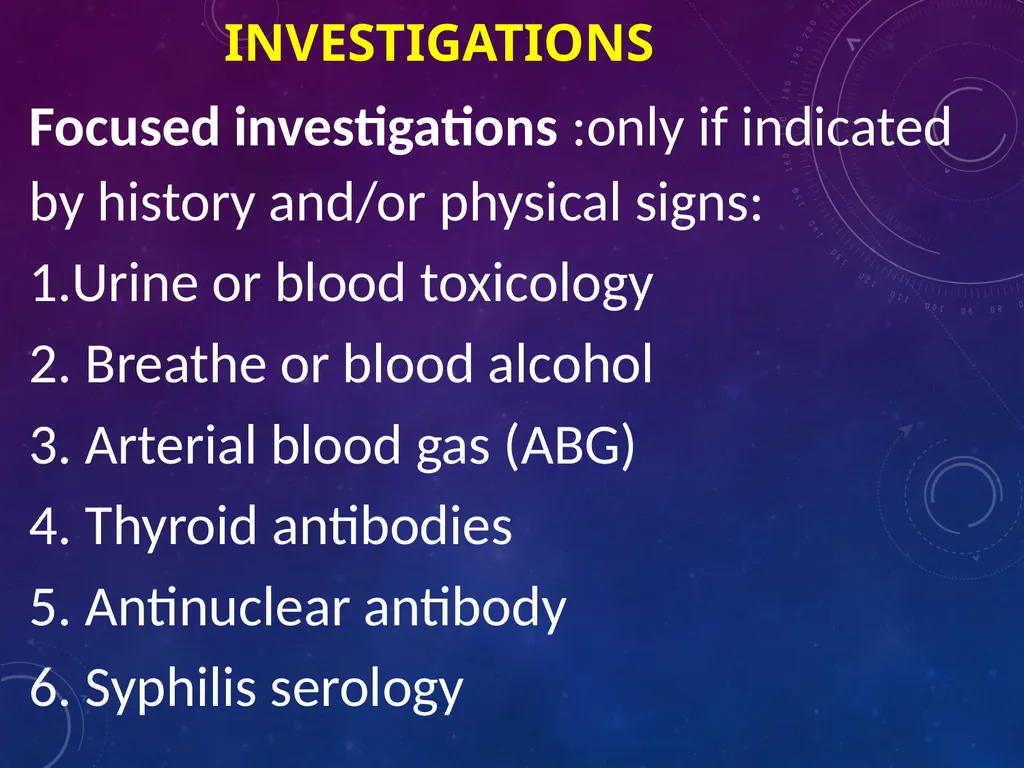
slide11. Investigations Focused investigations :only if indicated by history and/or physical signs:
1.Urine or blood toxicology
2. Breathe or blood alcohol
3. Arterial blood gas (ABG)
4. Thyroid antibodies
5. Antinuclear antibody
6. Syphilis serology<br>
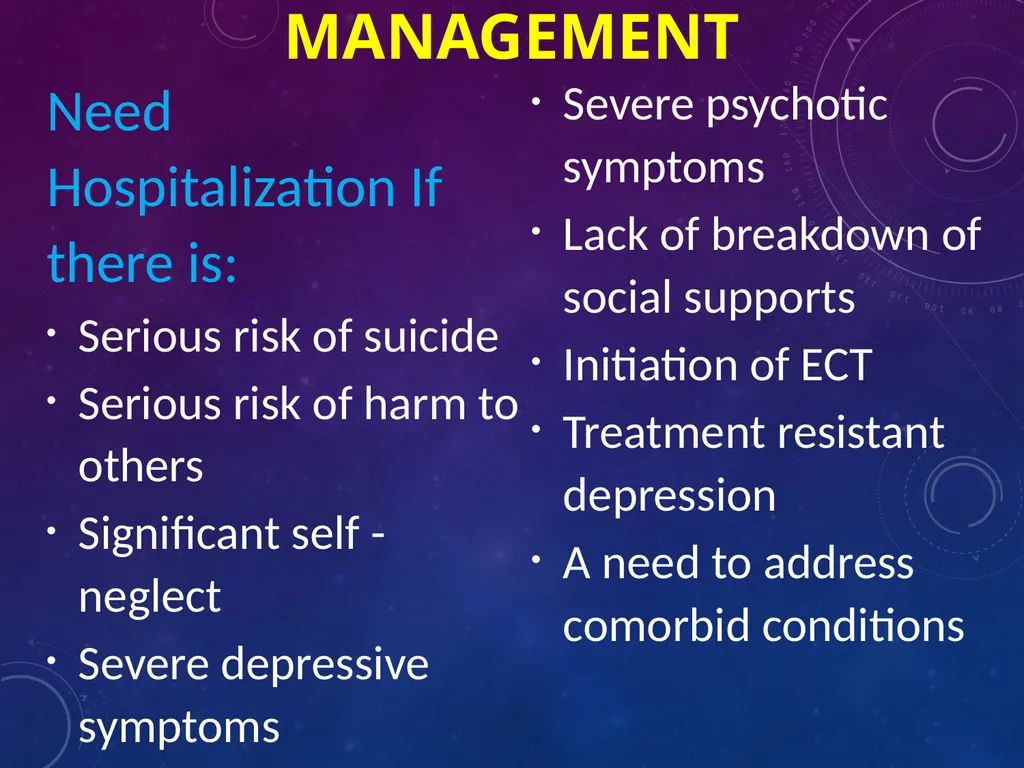
slide12. Management Need Hospitalization If there is:
Serious risk of suicide
Serious risk of harm to others
Significant self -neglect
Severe depressive symptoms
Severe psychotic symptoms
Lack of breakdown of social supports
Initiation of ECT
Treatment resistant depression
A need to address comorbid conditions<br>
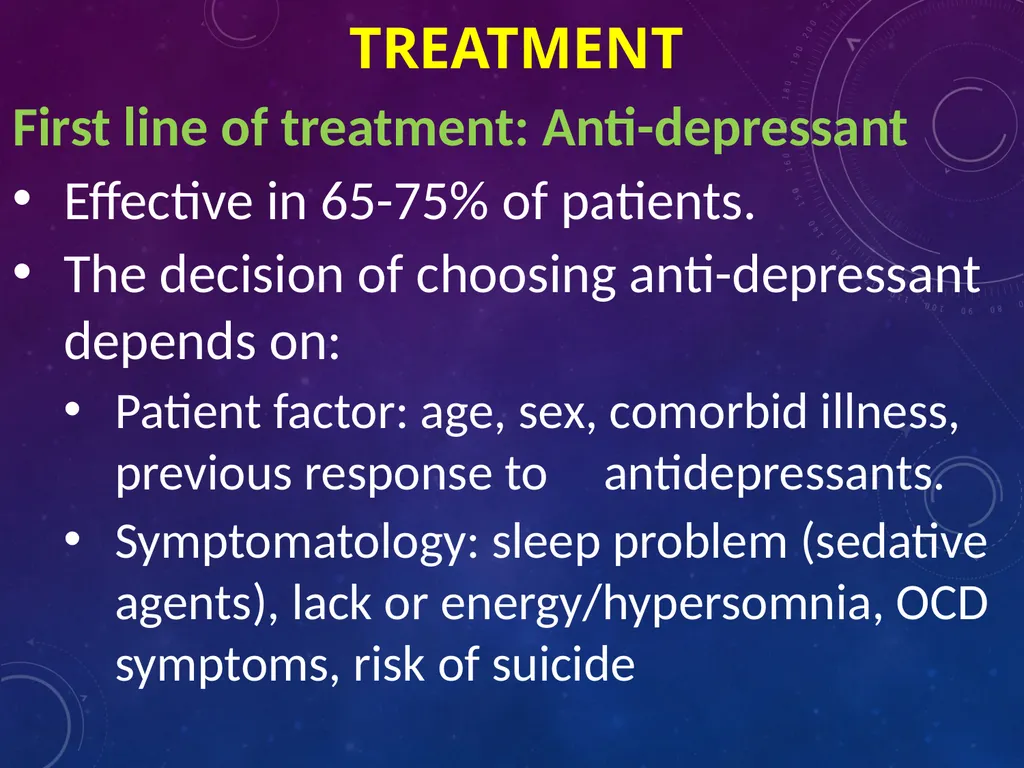
slide13. Treatment First line of treatment: Anti-depressant
Effective in 65-75% of patients.
The decision of choosing anti-depressant depends on:
Patient factor: age, sex, comorbid illness, previous response to antidepressants.
Symptomatology: sleep problem (sedative agents), lack or energy/hypersomnia, OCD symptoms, risk of suicide<br>
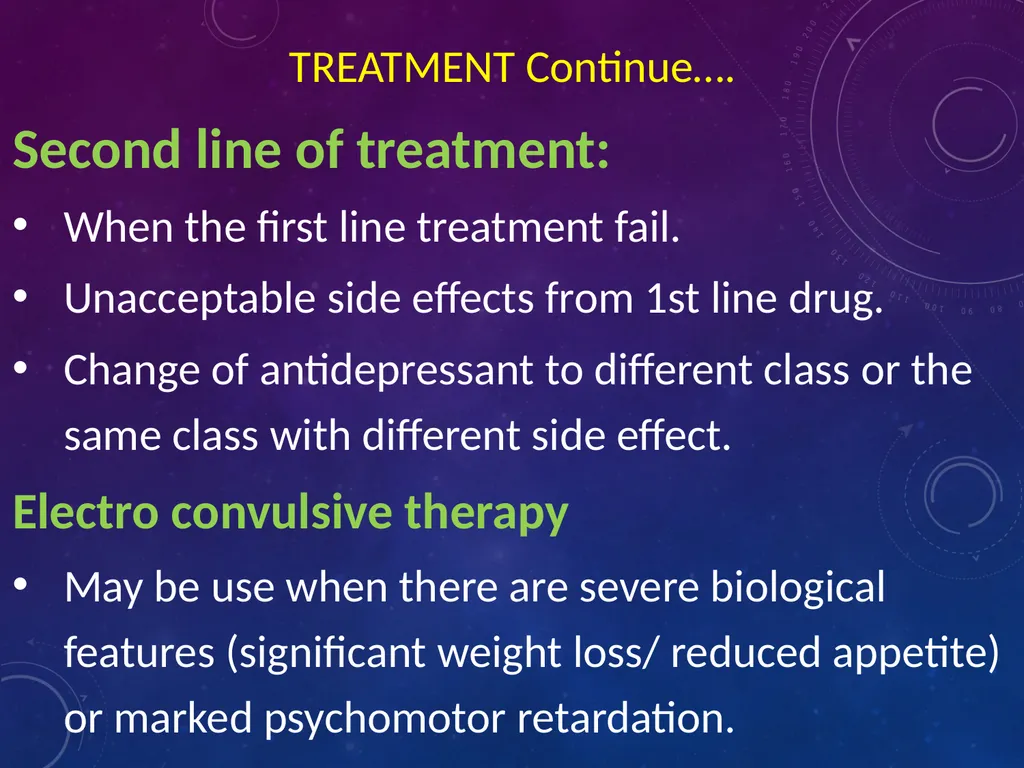
slide14. TREATMENT Continue….
Second line of treatment:
When the first line treatment fail.
Unacceptable side effects from 1st line drug.
Change of antidepressant to different class or the same class with different side effect.
Electro convulsive therapy
May be use when there are severe biological features (significant weight loss/ reduced appetite) or marked psychomotor retardation.<br>
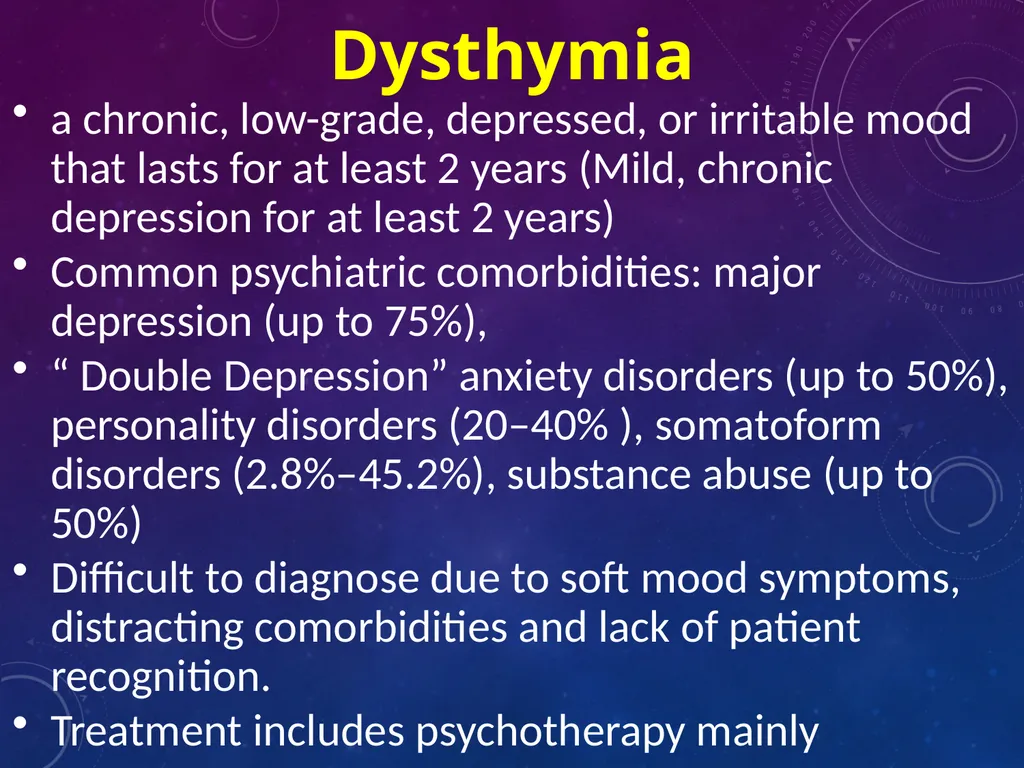
slide15. Dysthymia a chronic, low-grade, depressed, or irritable mood that lasts for at least 2 years (Mild, chronic depression for at least 2 years)
Common psychiatric comorbidities: major depression (up to 75%),
“ Double Depression” anxiety disorders (up to 50%), personality disorders (20–40% ), somatoform disorders (2.8%–45.2%), substance abuse (up to 50%)
Difficult to diagnose due to soft mood symptoms, distracting comorbidities and lack of patient recognition.
Treatment includes psychotherapy mainly<br>
slide16. BIPOLAR DISORDER known as manic-depressive illness
a brain disorder
causes unusual shifts in mood, energy, activity levels, and the ability to carry out day-to-day tasks<br>
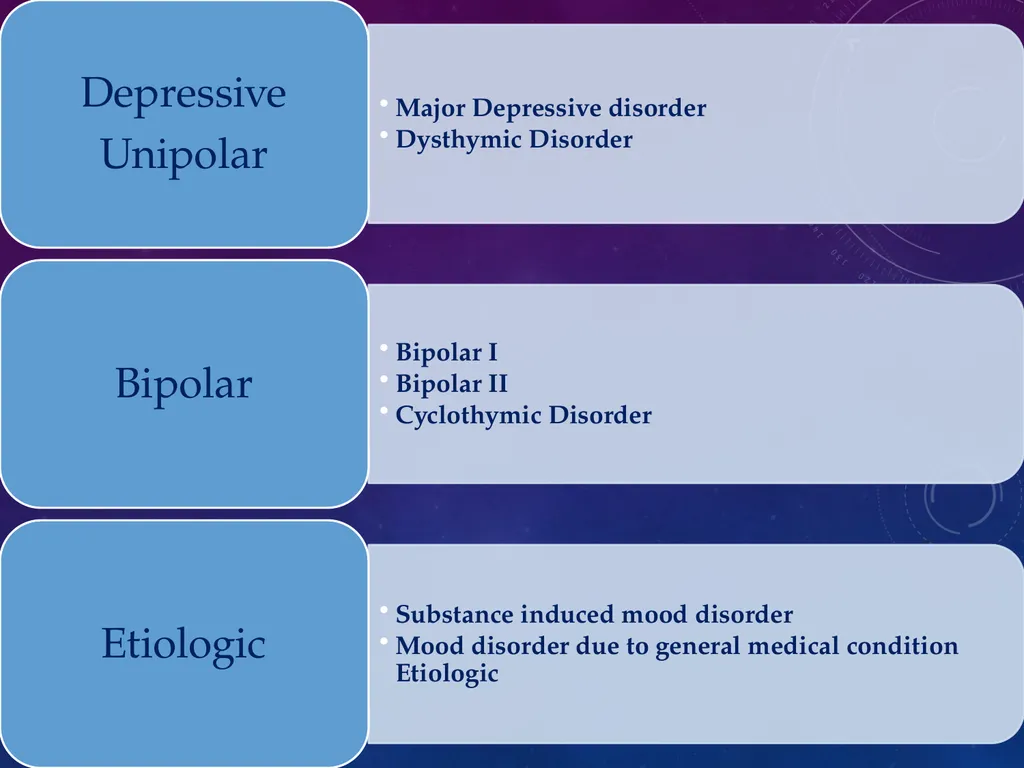
slide17. TYPES OF BIPOLAR BIPOLAR I -manic episodes that last for 7 days
BIPOLAR II -a pattern of depressive episodes and hypomanic episodes
CYCLOTHYMIC DISORDER -numerous periods of hypomanic symptoms, periods of depressive symptoms lasting for at least 2 years
OTHER SPECIFIED OR NON- SPECIFIED BIPOLAR AND RELATED DISORDER -bipolar disorder symptoms that do not match the three categories listed above<br>
slide18. Mood disorder related to another health condition. Many medical illnesses (including cancer, injuries, infections, and chronic illnesses) can trigger symptoms of depression.
Substance-induced mood disorder. Symptoms of depression that are due to the effects of medicine, drug abuse, alcoholism, exposure to toxins, or other forms of treatment.<br>
slide19. Mania is a heightened mood state that causes hyperactivity and a decreased need for sleep. Other common features of mania include:
Mood changes
Sudden increases in energy and activity
Rapid speech that is difficult or impossible to interrupt
Impaired judgment
Flighty thoughts or thoughts that jump from topic to topic<br>
slide20. Stages of Mania
Hypomania (Stage I)
Hypomania is a mild form of mania that may not be recognized as a significant symptom by those around the person experiencing it.
While hypomania affects sleep and activity and may lead to increased impulsivity, it usually doesn’t require hospitalization.<br>
slide21. Acute Mania (Stage II)
During acute mania, an individual may experience increased impulsivity that causes them to act in a way that is impatient, inappropriate or immoral.
increased energy, get little to no sleep and talk very quickly, often jumping from topic to topic.
some symptoms of psychosis, where they are not fully aware of or connected to reality.<br>
slide22. Delirious Mania (Stage III)
symptoms are similar to acute mania, with the addition of delirium, temporary confusion and a decreased ability or inability to connect with reality.
also involve a combination of mania and psychosis.
delirious mania can be profoundly disorienting, many people experiencing it need to be hospitalized to prevent injury to themselves or others.<br>
slide23. Mania Classifications
Mixed States
Mixed state mania is an episode of mania that includes either hypomania or mania and depressive symptoms.
does not usually produce the same elevation in mood that mania would produce by itself.
The depressive features of mixed state mania may increase the risk of suicidal ideation while also increasing energy and impulsivity, which further increases the likelihood of a suicide attempt.<br>
slide24. Hypomania
While hypomania is the first stage of mania, it is also a classification of mania.
changes in mood with disruptions in sleep, activity and impulsivity.
not so severe that they will significantly impact people’s normal daily activities.
does not cause symptoms of psychosis, including hallucinations or a disconnect from reality.<br>
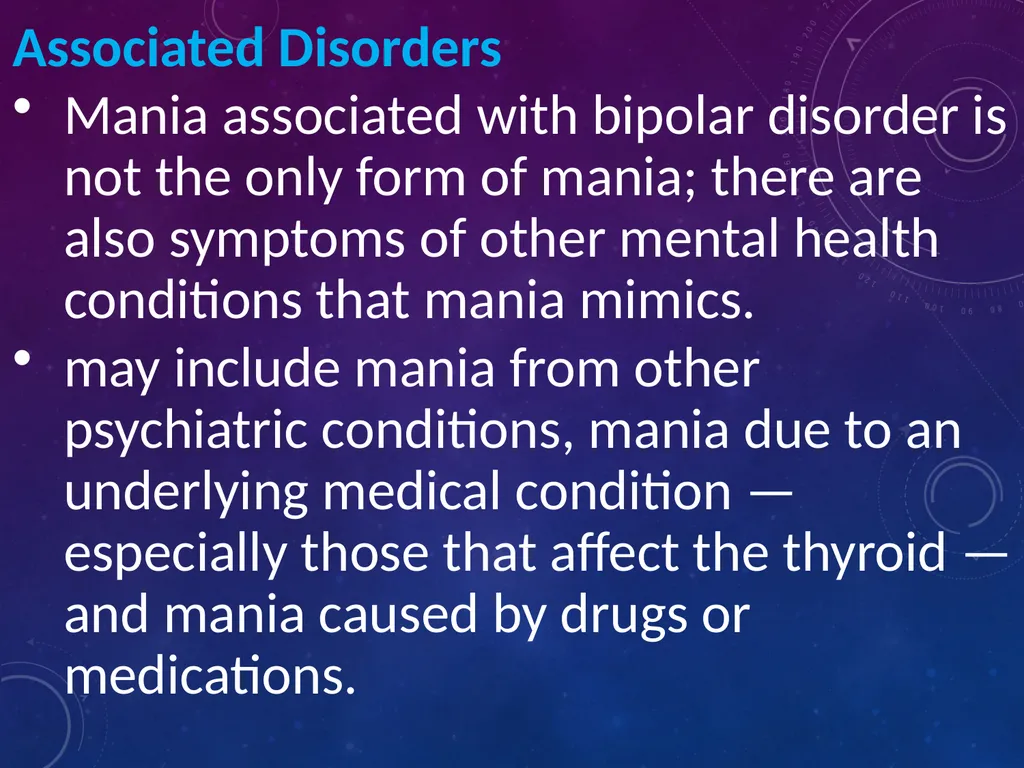
slide25. Associated Disorders
Mania associated with bipolar disorder is not the only form of mania; there are also symptoms of other mental health conditions that mania mimics.
may include mania from other psychiatric conditions, mania due to an underlying medical condition — especially those that affect the thyroid — and mania caused by drugs or medications.<br>
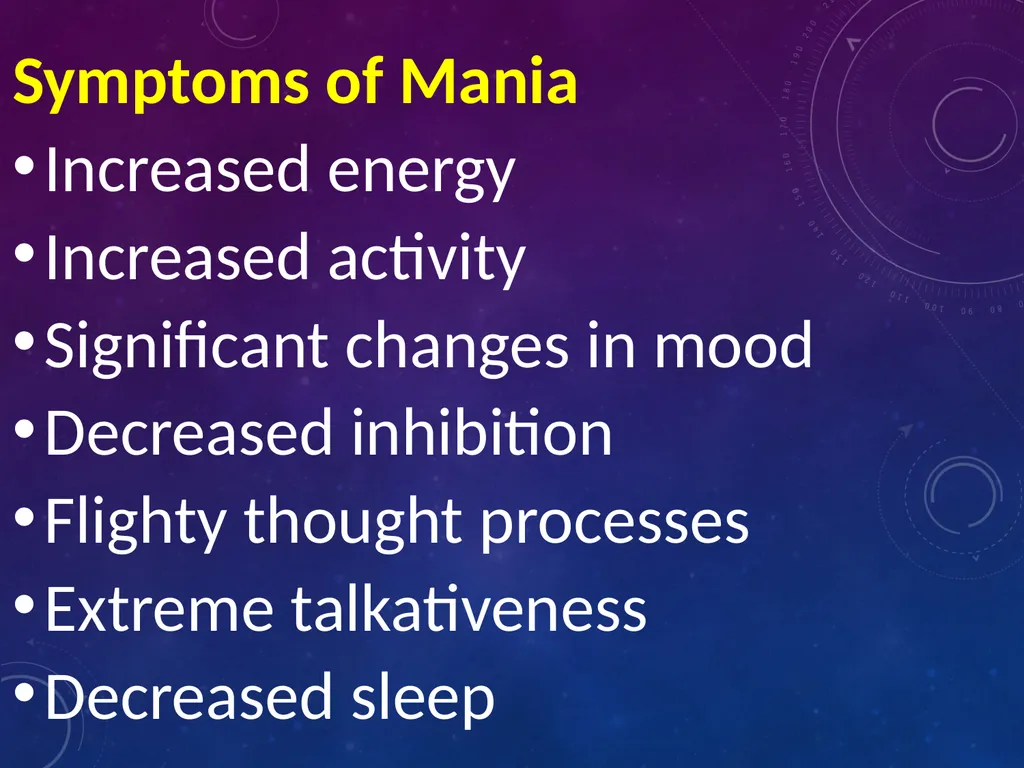
slide26. Symptoms of Mania
Increased energy
Increased activity
Significant changes in mood
Decreased inhibition
Flighty thought processes
Extreme talkativeness
Decreased sleep<br>
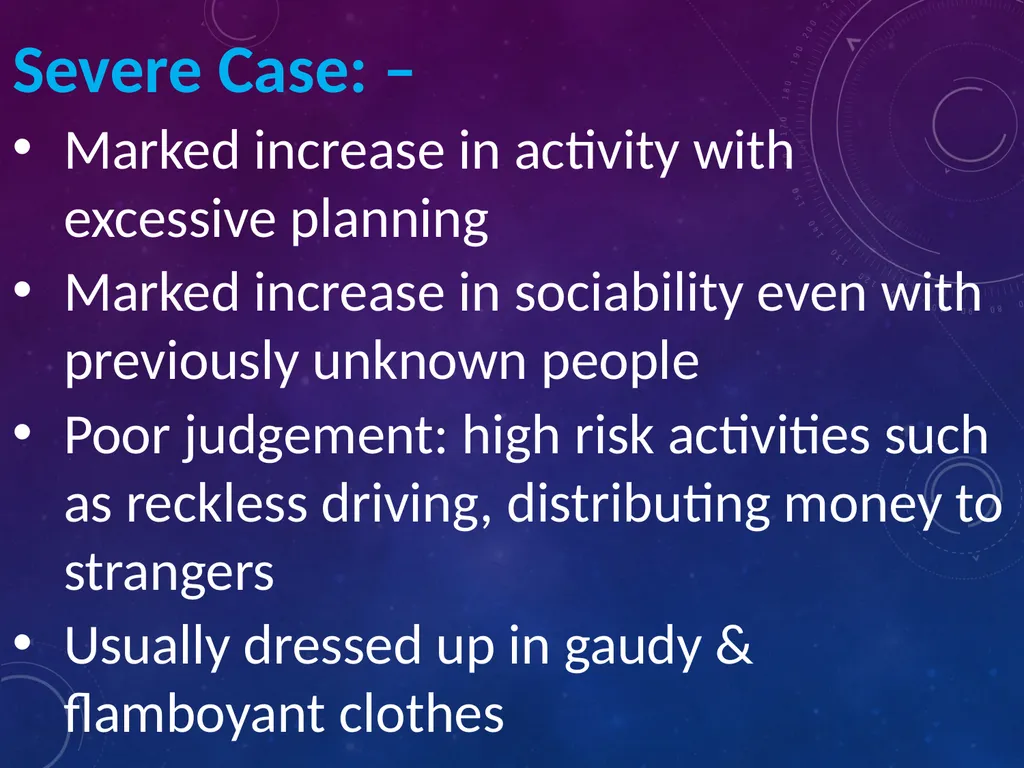
slide27. Severe Case: –
Marked increase in activity with excessive planning
Marked increase in sociability even with previously unknown people
Poor judgement: high risk activities such as reckless driving, distributing money to strangers
Usually dressed up in gaudy & flamboyant clothes<br>
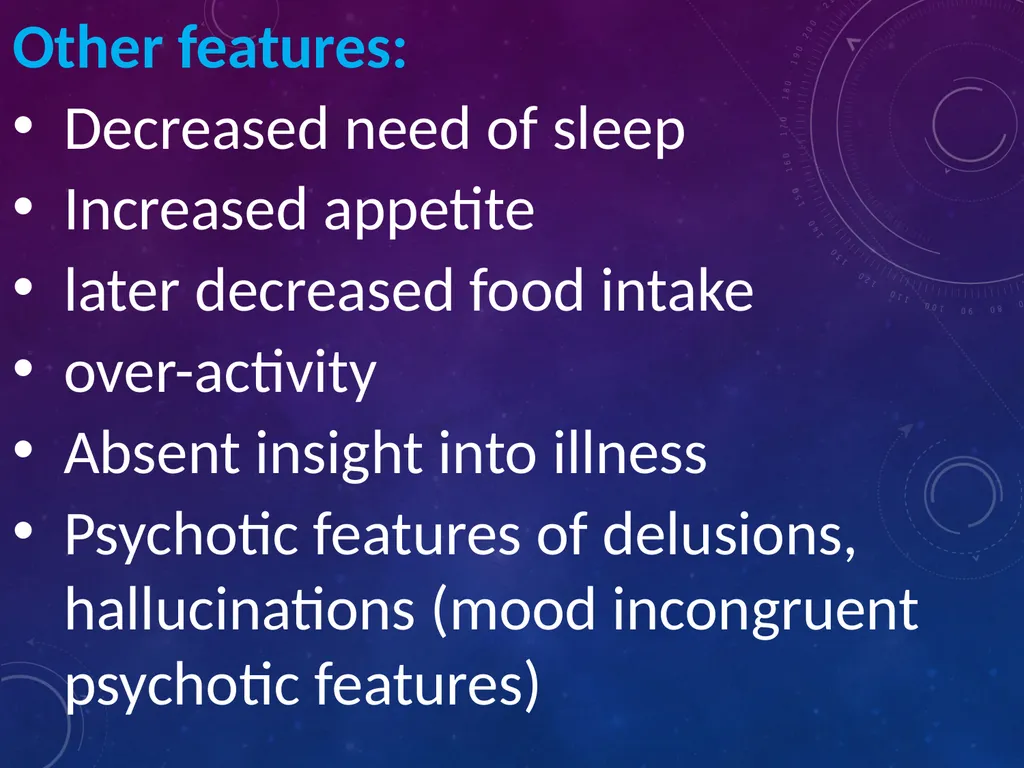
slide28. Other features:
Decreased need of sleep
Increased appetite
later decreased food intake
over-activity
Absent insight into illness
Psychotic features of delusions, hallucinations (mood incongruent psychotic features)<br>
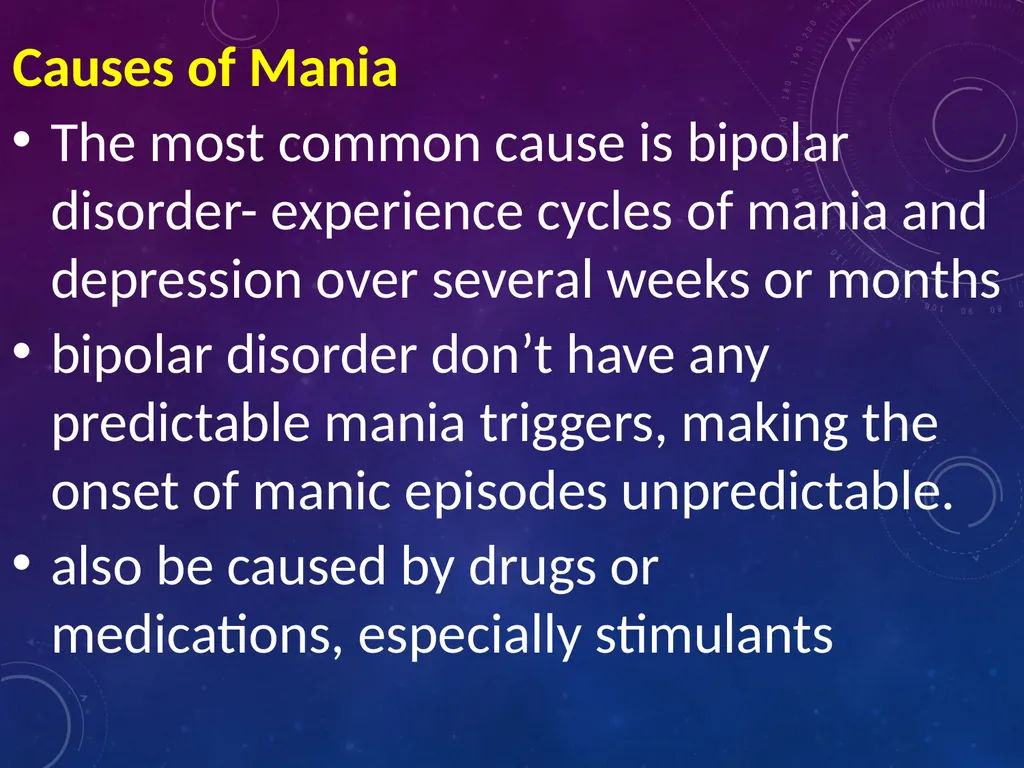
slide29. Causes of Mania
The most common cause is bipolar disorder- experience cycles of mania and depression over several weeks or months
bipolar disorder don’t have any predictable mania triggers, making the onset of manic episodes unpredictable.
also be caused by drugs or medications, especially stimulants<br>
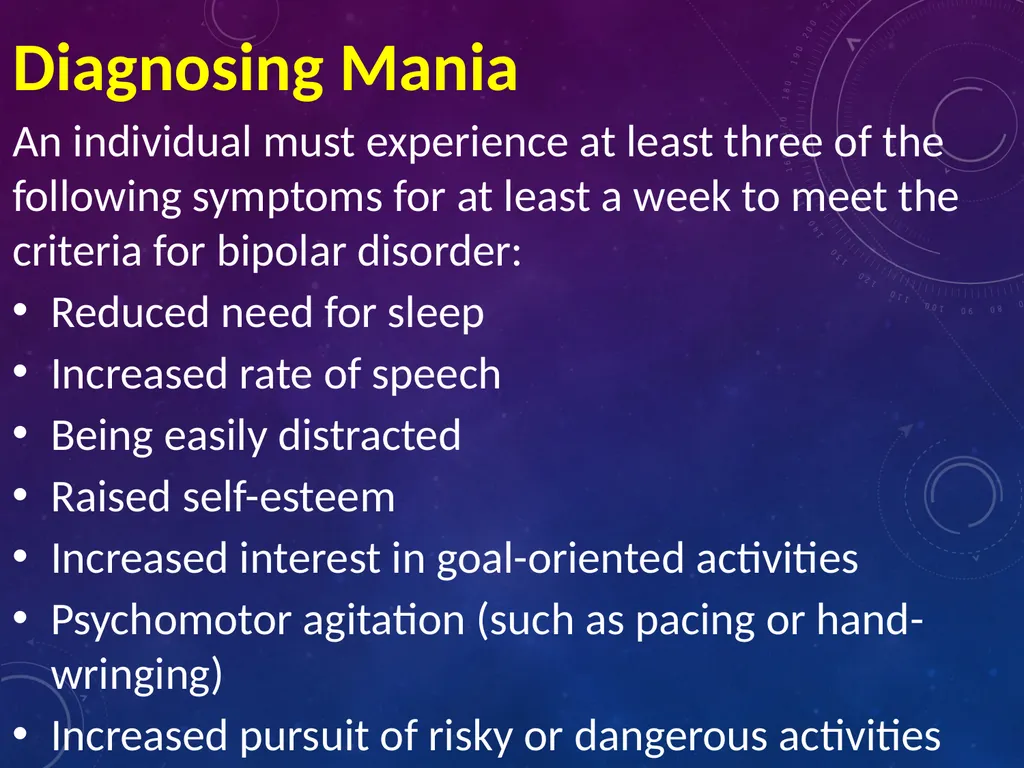
slide30. Diagnosing Mania
An individual must experience at least three of the following symptoms for at least a week to meet the criteria for bipolar disorder:
Reduced need for sleep
Increased rate of speech
Being easily distracted
Raised self-esteem
Increased interest in goal-oriented activities
Psychomotor agitation (such as pacing or hand-wringing)
Increased pursuit of risky or dangerous activities<br>
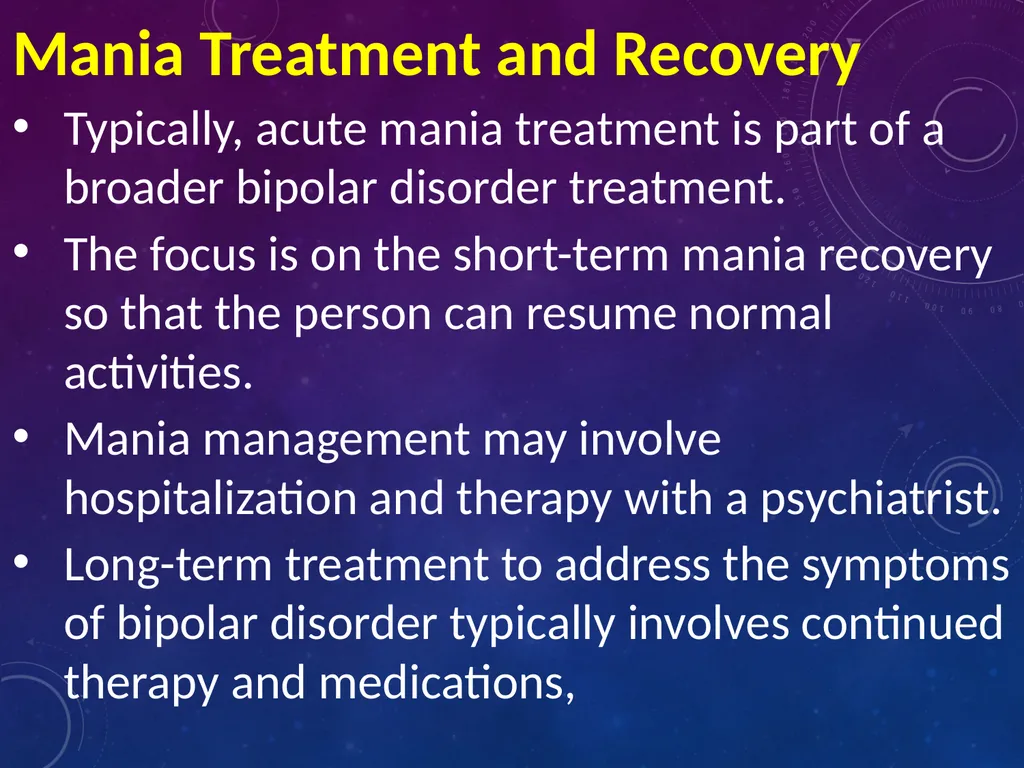
slide31. Mania Treatment and Recovery
Typically, acute mania treatment is part of a broader bipolar disorder treatment.
The focus is on the short-term mania recovery so that the person can resume normal activities.
Mania management may involve hospitalization and therapy with a psychiatrist.
Long-term treatment to address the symptoms of bipolar disorder typically involves continued therapy and medications,<br>
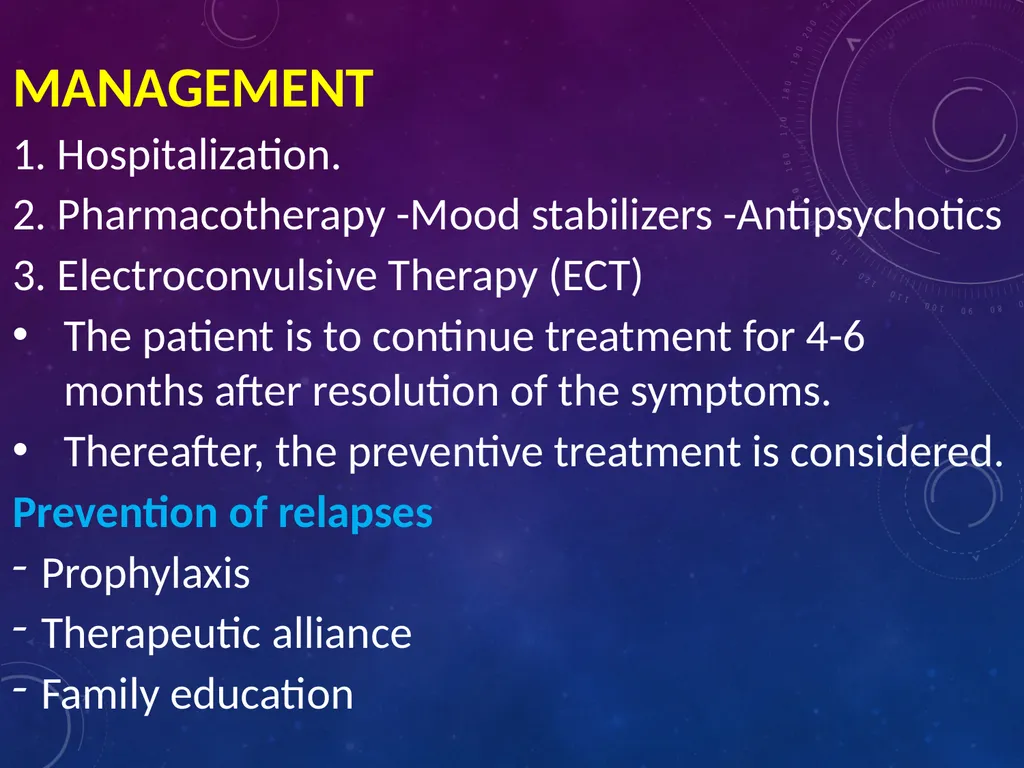
slide32. MANAGEMENT
1. Hospitalization.
2. Pharmacotherapy -Mood stabilizers -Antipsychotics
3. Electroconvulsive Therapy (ECT)
The patient is to continue treatment for 4-6 months after resolution of the symptoms.
Thereafter, the preventive treatment is considered.
Prevention of relapses
Prophylaxis
Therapeutic alliance
Family education<br>
slide33. MANAGEMENT
Psychotherapy
Cognitive behavioural therapy (CBT)
Family-focused therapy
Interpersonal and social rhythm therapy
Psychoeducation<br>
slide2. Mood : prevailing internal emotional state
Affect: external display of feelings
Mood disorders are a category of illnesses that describe a serious change in mood.
It is a disorder in which a person experiences long periods of extreme happiness, extreme sadness, or both.<br>
slide4. Major Depressive Disorder Among 5 most common disorders.
Lifetime prevalence 5-20%.
Female to male ratio is 2:1
The incidence rate is greatest between ages 20-40.
Major cause of disability and suicide.<br>
slide5. ETIOLOGY 1. Biological Factors
More common in monozygotic twins.
Unipolar depressions in a parent
Abnormalities in Amine Neurotransmitters
Neuroendocrine abnormalities in hypothalamic pituitary adrenal (HPA) axis.
Rapid hormonal changes<br>
slide6. ETIOLOGY 2. Psychological Factors
Major life events
Interpersonal relations (absent or unsatisfactory significant special bonds have negative effect on self regards)
Distorted thinking
Loss of hope<br>
slide7. Symptoms DEPRESSIVE EPISODE:
Feel very sad, down, empty, or hopeless
Decreased activity levels
Trouble sleeping, they may sleep too little or too much
Feel like they can’t enjoy anything<br>
slide8. Symptoms - Depressive episode cont.… Feel worried and empty
Trouble concentrating
Forget things a lot
Eat too much or too little
Feel tired or “slowed down”
Think about death or suicide<br>
slide9. Diagnosis Mood,
Sleeping disorder,
Lack of interest,
Guilt,
Low energy level,
Poor concentration,
Lack of appetite,
Low level of psychomotor activity,
Suicidal tendency (attempt) Criteria for major depressive episode : 5 or more of the following for at least 2 weeks:<br>
slide10. Investigations There are NO specific tests. Investigations focus on exclusion of treatable causes or other secondary problems. Standard tests:
1. Complete blood picture 2. ESR
3 .B12/folate 4. Liver function test
5. Thyroid function test 6. Glucose level
7. Calcium level<br>
slide11. Investigations Focused investigations :only if indicated by history and/or physical signs:
1.Urine or blood toxicology
2. Breathe or blood alcohol
3. Arterial blood gas (ABG)
4. Thyroid antibodies
5. Antinuclear antibody
6. Syphilis serology<br>
slide12. Management Need Hospitalization If there is:
Serious risk of suicide
Serious risk of harm to others
Significant self -neglect
Severe depressive symptoms
Severe psychotic symptoms
Lack of breakdown of social supports
Initiation of ECT
Treatment resistant depression
A need to address comorbid conditions<br>
slide13. Treatment First line of treatment: Anti-depressant
Effective in 65-75% of patients.
The decision of choosing anti-depressant depends on:
Patient factor: age, sex, comorbid illness, previous response to antidepressants.
Symptomatology: sleep problem (sedative agents), lack or energy/hypersomnia, OCD symptoms, risk of suicide<br>
slide14. TREATMENT Continue….
Second line of treatment:
When the first line treatment fail.
Unacceptable side effects from 1st line drug.
Change of antidepressant to different class or the same class with different side effect.
Electro convulsive therapy
May be use when there are severe biological features (significant weight loss/ reduced appetite) or marked psychomotor retardation.<br>
slide15. Dysthymia a chronic, low-grade, depressed, or irritable mood that lasts for at least 2 years (Mild, chronic depression for at least 2 years)
Common psychiatric comorbidities: major depression (up to 75%),
“ Double Depression” anxiety disorders (up to 50%), personality disorders (20–40% ), somatoform disorders (2.8%–45.2%), substance abuse (up to 50%)
Difficult to diagnose due to soft mood symptoms, distracting comorbidities and lack of patient recognition.
Treatment includes psychotherapy mainly<br>
slide16. BIPOLAR DISORDER known as manic-depressive illness
a brain disorder
causes unusual shifts in mood, energy, activity levels, and the ability to carry out day-to-day tasks<br>
slide17. TYPES OF BIPOLAR BIPOLAR I -manic episodes that last for 7 days
BIPOLAR II -a pattern of depressive episodes and hypomanic episodes
CYCLOTHYMIC DISORDER -numerous periods of hypomanic symptoms, periods of depressive symptoms lasting for at least 2 years
OTHER SPECIFIED OR NON- SPECIFIED BIPOLAR AND RELATED DISORDER -bipolar disorder symptoms that do not match the three categories listed above<br>
slide18. Mood disorder related to another health condition. Many medical illnesses (including cancer, injuries, infections, and chronic illnesses) can trigger symptoms of depression.
Substance-induced mood disorder. Symptoms of depression that are due to the effects of medicine, drug abuse, alcoholism, exposure to toxins, or other forms of treatment.<br>
slide19. Mania is a heightened mood state that causes hyperactivity and a decreased need for sleep. Other common features of mania include:
Mood changes
Sudden increases in energy and activity
Rapid speech that is difficult or impossible to interrupt
Impaired judgment
Flighty thoughts or thoughts that jump from topic to topic<br>
slide20. Stages of Mania
Hypomania (Stage I)
Hypomania is a mild form of mania that may not be recognized as a significant symptom by those around the person experiencing it.
While hypomania affects sleep and activity and may lead to increased impulsivity, it usually doesn’t require hospitalization.<br>
slide21. Acute Mania (Stage II)
During acute mania, an individual may experience increased impulsivity that causes them to act in a way that is impatient, inappropriate or immoral.
increased energy, get little to no sleep and talk very quickly, often jumping from topic to topic.
some symptoms of psychosis, where they are not fully aware of or connected to reality.<br>
slide22. Delirious Mania (Stage III)
symptoms are similar to acute mania, with the addition of delirium, temporary confusion and a decreased ability or inability to connect with reality.
also involve a combination of mania and psychosis.
delirious mania can be profoundly disorienting, many people experiencing it need to be hospitalized to prevent injury to themselves or others.<br>
slide23. Mania Classifications
Mixed States
Mixed state mania is an episode of mania that includes either hypomania or mania and depressive symptoms.
does not usually produce the same elevation in mood that mania would produce by itself.
The depressive features of mixed state mania may increase the risk of suicidal ideation while also increasing energy and impulsivity, which further increases the likelihood of a suicide attempt.<br>
slide24. Hypomania
While hypomania is the first stage of mania, it is also a classification of mania.
changes in mood with disruptions in sleep, activity and impulsivity.
not so severe that they will significantly impact people’s normal daily activities.
does not cause symptoms of psychosis, including hallucinations or a disconnect from reality.<br>
slide25. Associated Disorders
Mania associated with bipolar disorder is not the only form of mania; there are also symptoms of other mental health conditions that mania mimics.
may include mania from other psychiatric conditions, mania due to an underlying medical condition — especially those that affect the thyroid — and mania caused by drugs or medications.<br>
slide26. Symptoms of Mania
Increased energy
Increased activity
Significant changes in mood
Decreased inhibition
Flighty thought processes
Extreme talkativeness
Decreased sleep<br>
slide27. Severe Case: –
Marked increase in activity with excessive planning
Marked increase in sociability even with previously unknown people
Poor judgement: high risk activities such as reckless driving, distributing money to strangers
Usually dressed up in gaudy & flamboyant clothes<br>
slide28. Other features:
Decreased need of sleep
Increased appetite
later decreased food intake
over-activity
Absent insight into illness
Psychotic features of delusions, hallucinations (mood incongruent psychotic features)<br>
slide29. Causes of Mania
The most common cause is bipolar disorder- experience cycles of mania and depression over several weeks or months
bipolar disorder don’t have any predictable mania triggers, making the onset of manic episodes unpredictable.
also be caused by drugs or medications, especially stimulants<br>
slide30. Diagnosing Mania
An individual must experience at least three of the following symptoms for at least a week to meet the criteria for bipolar disorder:
Reduced need for sleep
Increased rate of speech
Being easily distracted
Raised self-esteem
Increased interest in goal-oriented activities
Psychomotor agitation (such as pacing or hand-wringing)
Increased pursuit of risky or dangerous activities<br>
slide31. Mania Treatment and Recovery
Typically, acute mania treatment is part of a broader bipolar disorder treatment.
The focus is on the short-term mania recovery so that the person can resume normal activities.
Mania management may involve hospitalization and therapy with a psychiatrist.
Long-term treatment to address the symptoms of bipolar disorder typically involves continued therapy and medications,<br>
slide32. MANAGEMENT
1. Hospitalization.
2. Pharmacotherapy -Mood stabilizers -Antipsychotics
3. Electroconvulsive Therapy (ECT)
The patient is to continue treatment for 4-6 months after resolution of the symptoms.
Thereafter, the preventive treatment is considered.
Prevention of relapses
Prophylaxis
Therapeutic alliance
Family education<br>
slide33. MANAGEMENT
Psychotherapy
Cognitive behavioural therapy (CBT)
Family-focused therapy
Interpersonal and social rhythm therapy
Psychoeducation<br>