Morality, Ethics, Arguments Ethics and Morals are intertwined Ethics - a branch of philosophy that involves systematizing, defending and recommending concepts of right and wrong conduct. Ethics Disciplined reflection and analysis on the
"Morality, Ethics, Arguments Ethics and Morals are" is the property of its rightful owner. Permission is granted to
download and print the materials on this website for personal, non-commercial use only, and to display it
on your personal computer provided you do not modify the materials and that you retain all copyright
notices contained in the materials. By downloading content from our website, you accept the terms of this
agreement.
Presentation Transcript
01
Morality, Ethics, Arguments<br>
02
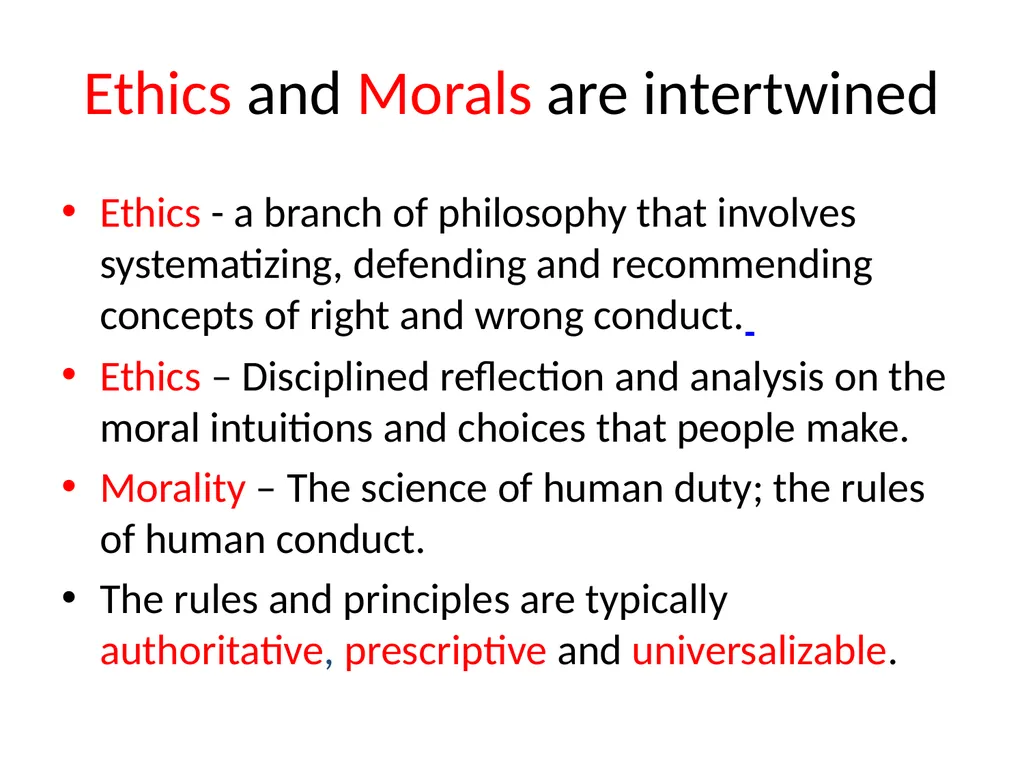
Ethics and Morals are intertwined Ethics - a branch of philosophy that involves systematizing, defending and recommending concepts of right and wrong conduct.
Ethics – Disciplined reflection and analysis on the moral intuitions and choices that people make.
Morality – The science of human duty; the rules of human conduct.
The rules and principles are typically authoritative, prescriptive and universalizable.<br>
03
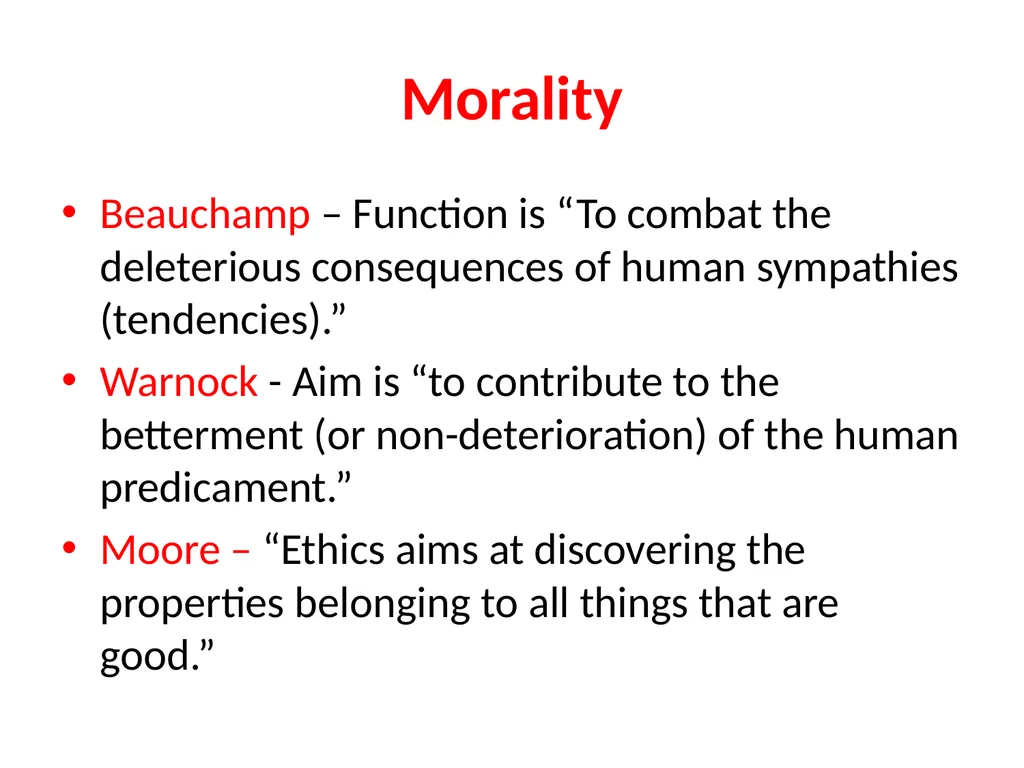
Morality Beauchamp – Function is “To combat the deleterious consequences of human sympathies (tendencies).”
Warnock - Aim is “to contribute to the betterment (or non-deterioration) of the human predicament.”
Moore – “Ethics aims at discovering the properties belonging to all things that are good.”<br>
04
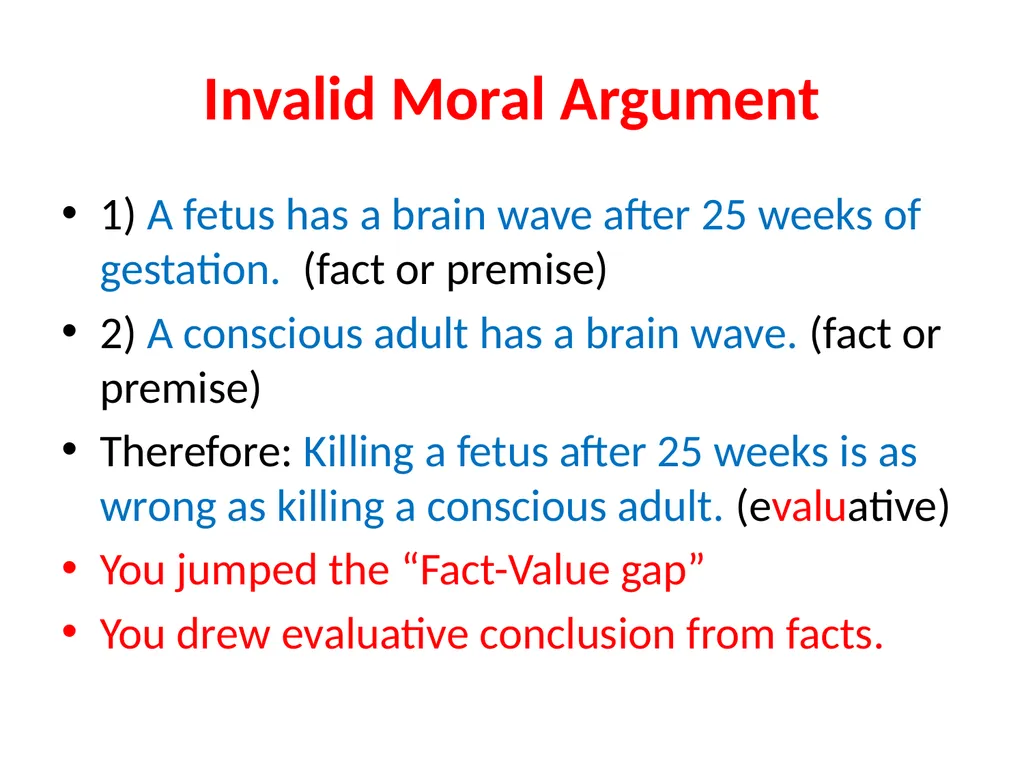
Invalid Moral Argument 1) A fetus has a brain wave after 25 weeks of gestation. (fact or premise)
2) A conscious adult has a brain wave. (fact or premise)
Therefore: Killing a fetus after 25 weeks is as wrong as killing a conscious adult. (evaluative)
You jumped the “Fact-Value gap”
You drew evaluative conclusion from facts.<br>
05
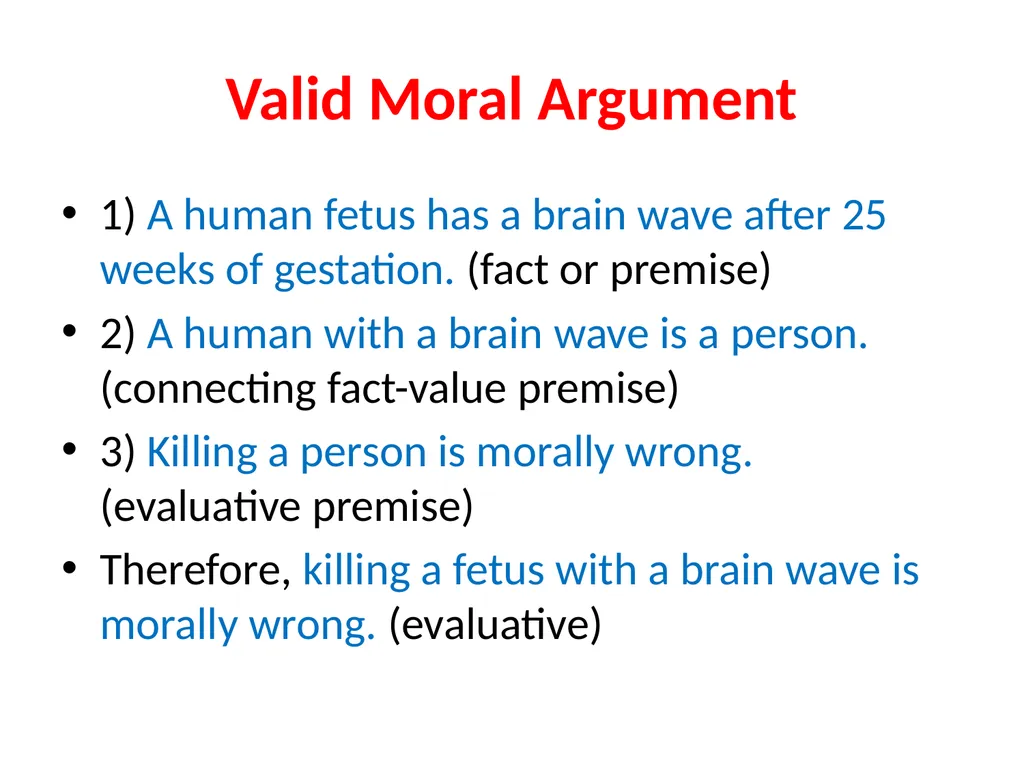
Valid Moral Argument 1) A human fetus has a brain wave after 25 weeks of gestation. (fact or premise)
2) A human with a brain wave is a person. (connecting fact-value premise)
3) Killing a person is morally wrong. (evaluative premise)
Therefore, killing a fetus with a brain wave is morally wrong. (evaluative)<br>
06
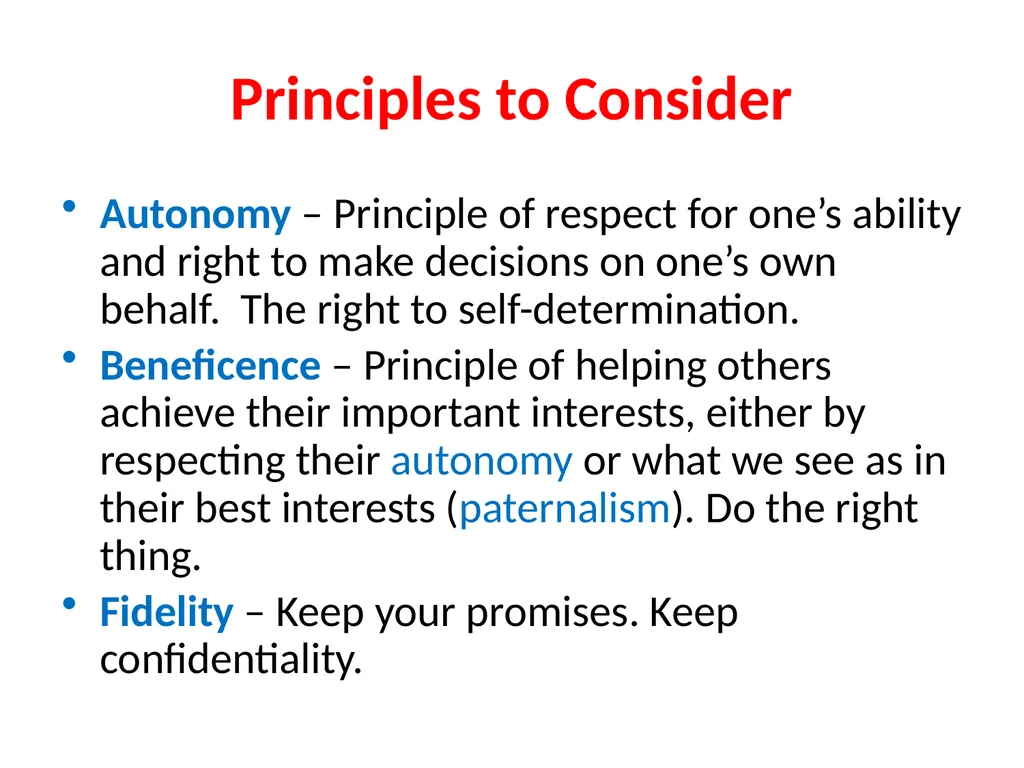
Principles to Consider Autonomy – Principle of respect for one’s ability and right to make decisions on one’s own behalf. The right to self-determination.
Beneficence – Principle of helping others achieve their important interests, either by respecting their autonomy or what we see as in their best interests (paternalism). Do the right thing.
Fidelity – Keep your promises. Keep confidentiality.<br>
07
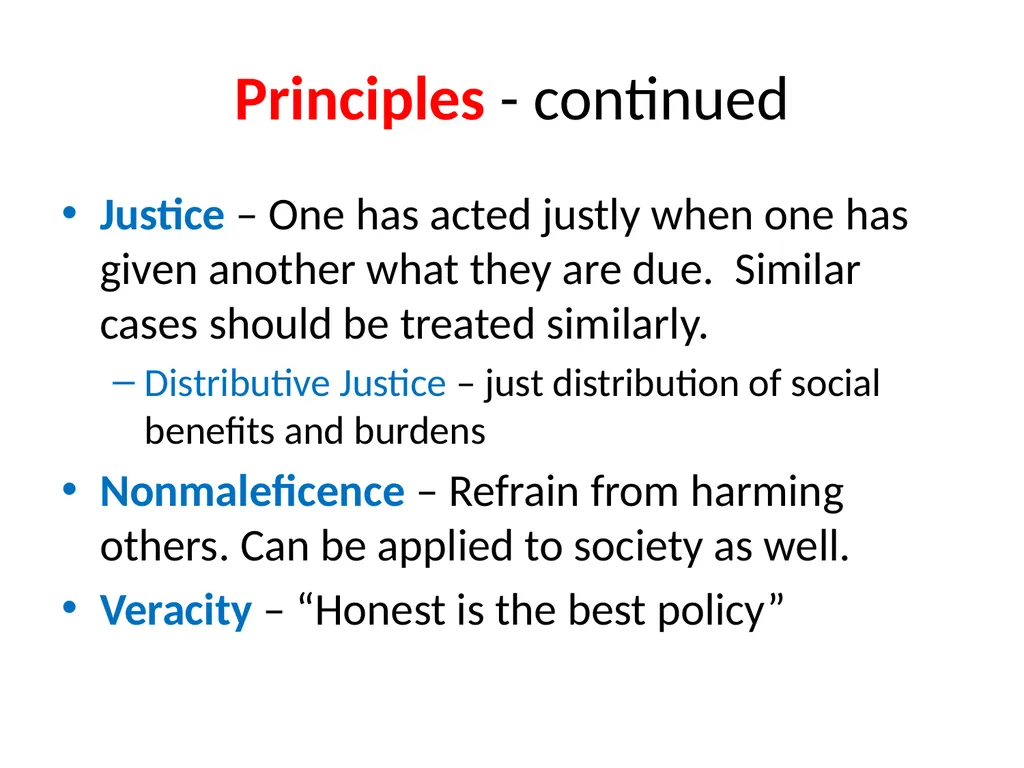
Principles - continued Justice – One has acted justly when one has given another what they are due. Similar cases should be treated similarly.
Distributive Justice – just distribution of social benefits and burdens
Nonmaleficence – Refrain from harming others. Can be applied to society as well.
Veracity – “Honest is the best policy”<br>
08
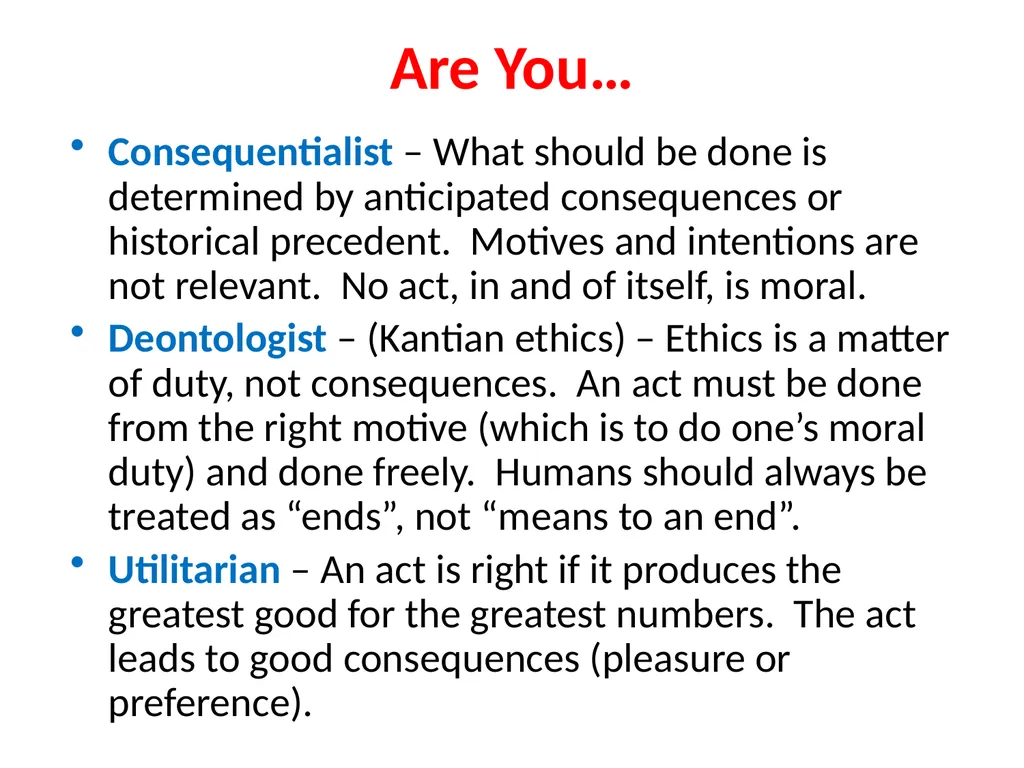
Are You… Consequentialist – What should be done is determined by anticipated consequences or historical precedent. Motives and intentions are not relevant. No act, in and of itself, is moral.
Deontologist – (Kantian ethics) – Ethics is a matter of duty, not consequences. An act must be done from the right motive (which is to do one’s moral duty) and done freely. Humans should always be treated as “ends”, not “means to an end”.
Utilitarian – An act is right if it produces the greatest good for the greatest numbers. The act leads to good consequences (pleasure or preference).<br>
09
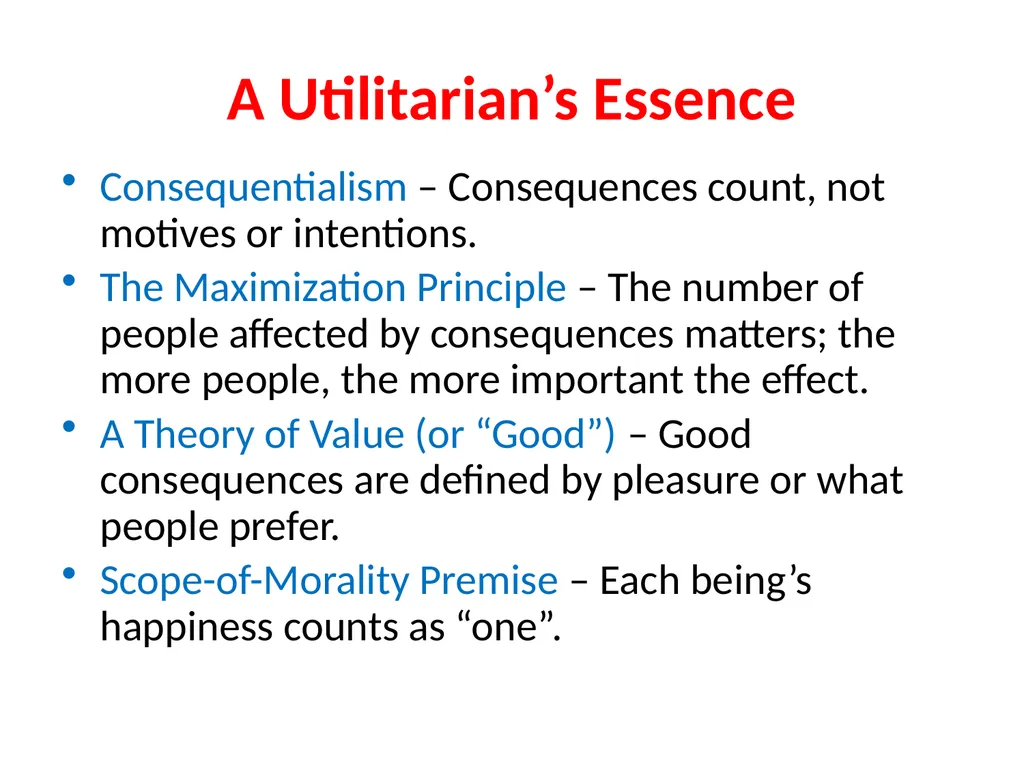
A Utilitarian’s Essence Consequentialism – Consequences count, not motives or intentions.
The Maximization Principle – The number of people affected by consequences matters; the more people, the more important the effect.
A Theory of Value (or “Good”) – Good consequences are defined by pleasure or what people prefer.
Scope-of-Morality Premise – Each being’s happiness counts as “one”.<br>