
Mycoprotein Mycoprotein Mycoprotein is a form of

Description: Mycoprotein Mycoprotein Mycoprotein is a form of protein that is derived from a naturally occurring fungus called Fusarium venenatum. It has been produced as a vegetarian, and sometimes vegan, dietary alternative to meat products. Although
Related Topics
Download Presentation
"Mycoprotein Mycoprotein Mycoprotein is a form of" is the property of its rightful owner. Permission is granted to download and print the materials on this website for personal, non-commercial use only, and to display it on your personal computer provided you do not modify the materials and that you retain all copyright notices contained in the materials. By downloading content from our website, you accept the terms of this agreement.
Presentation Transcript
slide1. Mycoprotein<br>
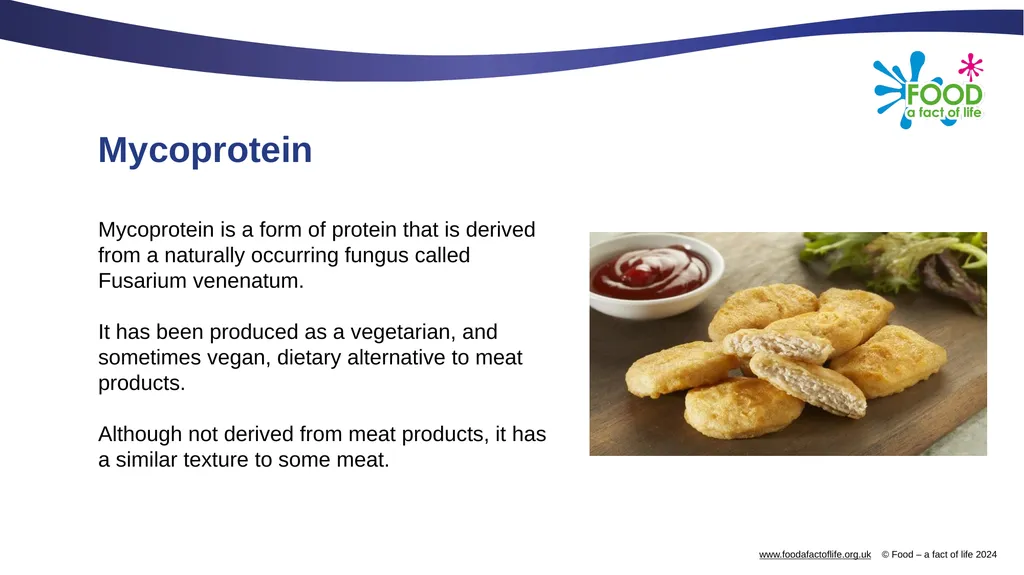
slide2. Mycoprotein Mycoprotein is a form of protein that is derived from a naturally occurring fungus called Fusarium venenatum.
It has been produced as a vegetarian, and sometimes vegan, dietary alternative to meat products.
Although not derived from meat products, it has a similar texture to some meat.<br>
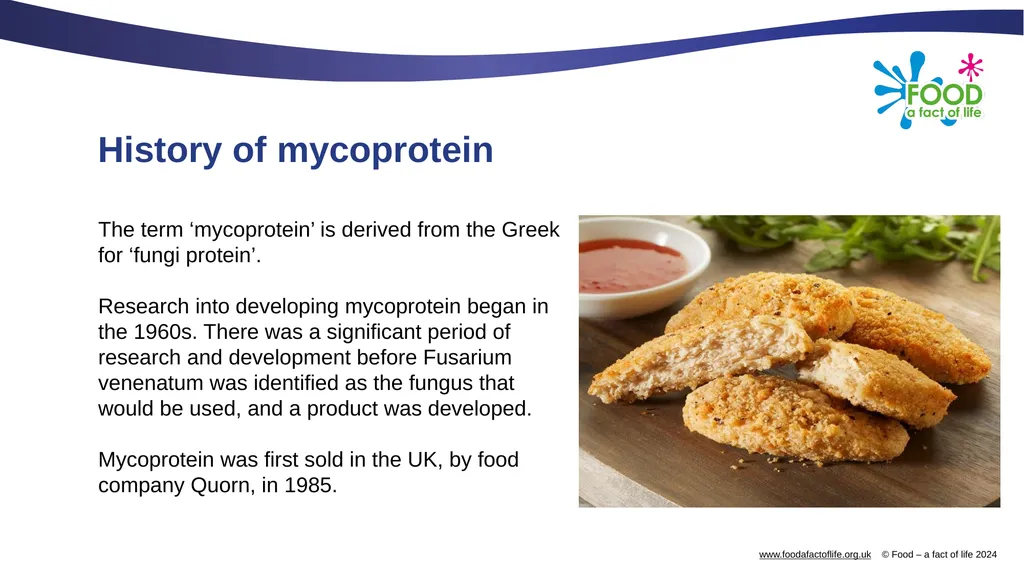
slide3. History of mycoprotein The term ‘mycoprotein’ is derived from the Greek for ‘fungi protein’.
Research into developing mycoprotein began in the 1960s. There was a significant period of research and development before Fusarium venenatum was identified as the fungus that would be used, and a product was developed.
Mycoprotein was first sold in the UK, by food company Quorn, in 1985.<br>
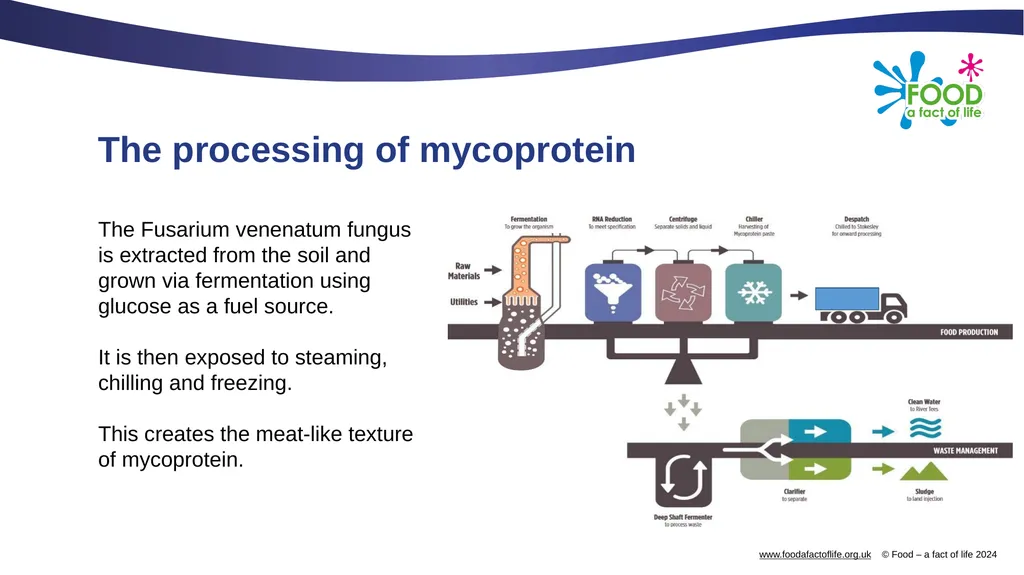
slide4. The processing of mycoprotein The Fusarium venenatum fungus is extracted from the soil and grown via fermentation using glucose as a fuel source.
It is then exposed to steaming, chilling and freezing.
This creates the meat-like texture of mycoprotein.<br>
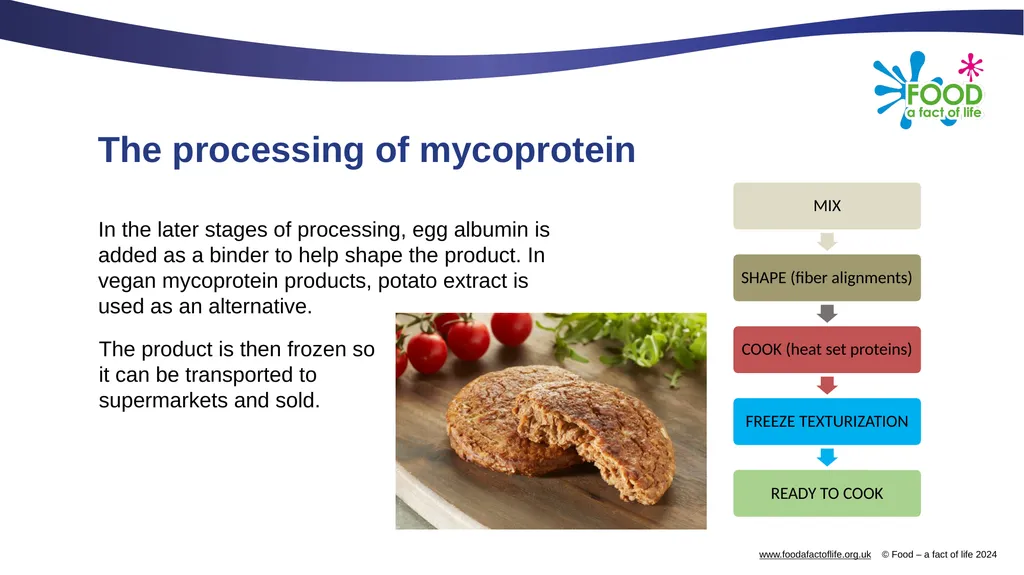
slide5. The processing of mycoprotein In the later stages of processing, egg albumin is added as a binder to help shape the product. In vegan mycoprotein products, potato extract is used as an alternative. The product is then frozen so
it can be transported to supermarkets and sold.<br>
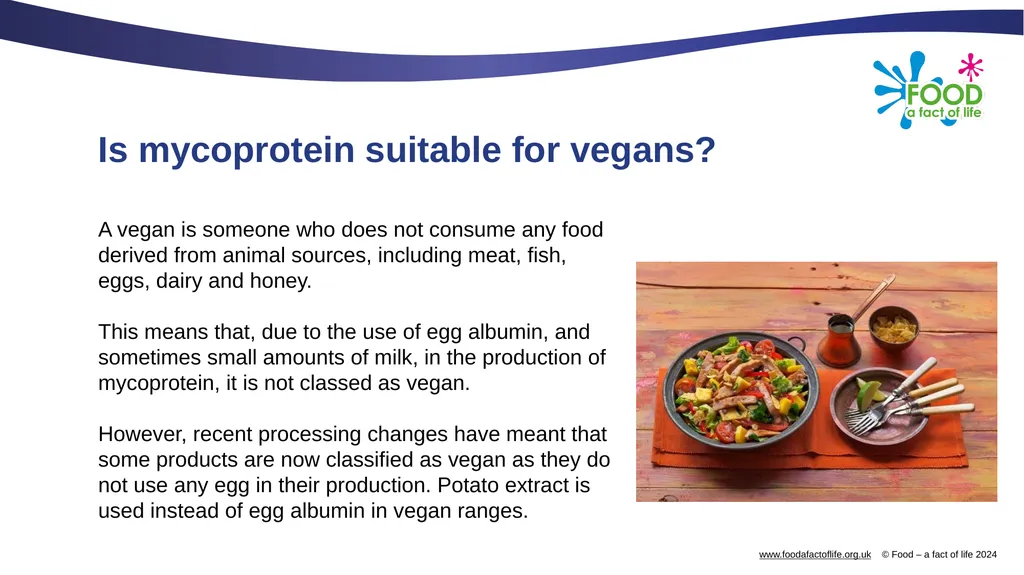
slide6. Is mycoprotein suitable for vegans? A vegan is someone who does not consume any food derived from animal sources, including meat, fish, eggs, dairy and honey.
This means that, due to the use of egg albumin, and sometimes small amounts of milk, in the production of mycoprotein, it is not classed as vegan.
However, recent processing changes have meant that some products are now classified as vegan as they do not use any egg in their production. Potato extract is used instead of egg albumin in vegan ranges.<br>
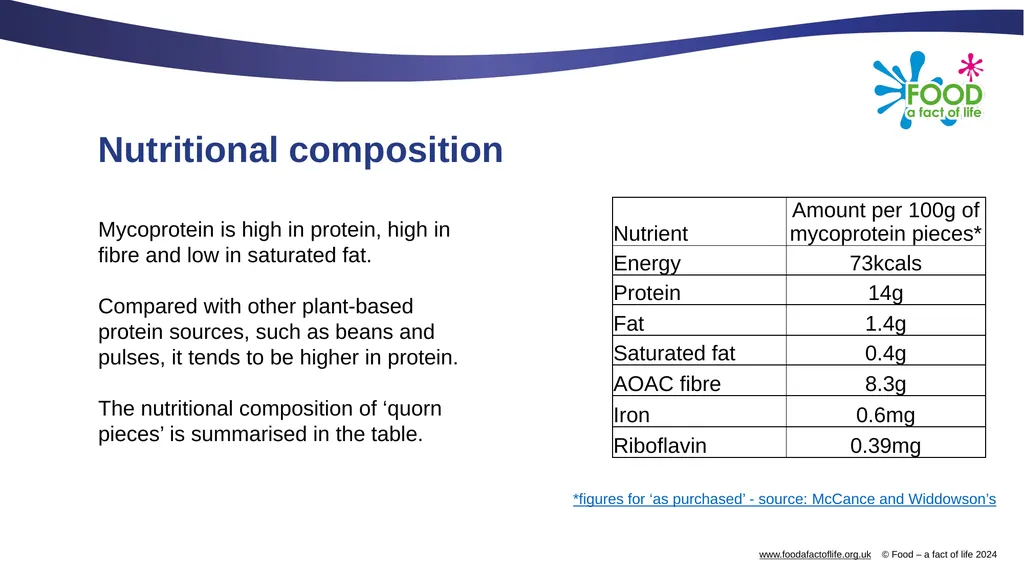
slide7. Nutritional composition Mycoprotein is high in protein, high in fibre and low in saturated fat.
Compared with other plant-based protein sources, such as beans and pulses, it tends to be higher in protein.
The nutritional composition of ‘quorn pieces’ is summarised in the table. *figures for ‘as purchased’ - source: McCance and Widdowson’s<br>
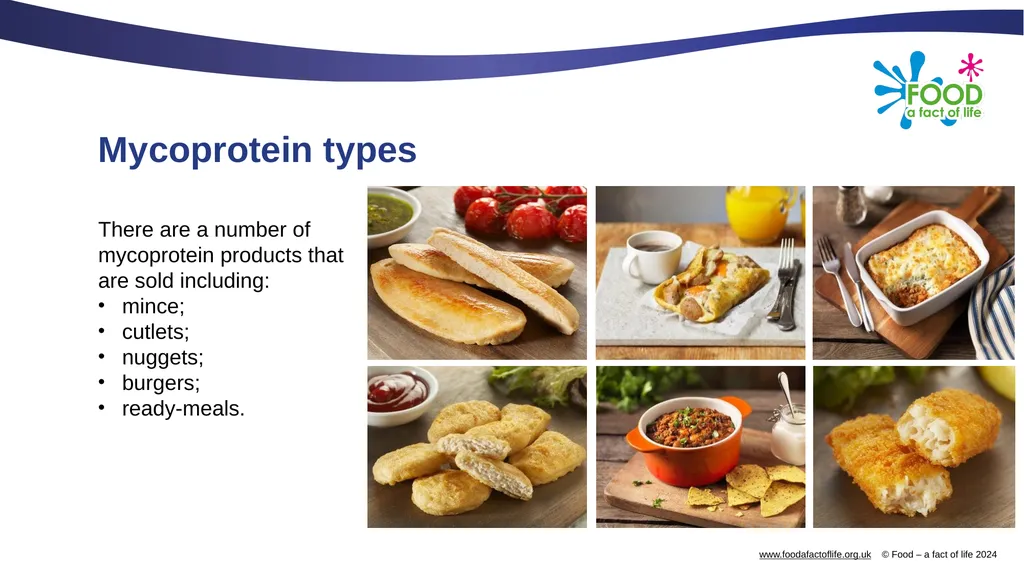
slide8. Mycoprotein types There are a number of mycoprotein products that are sold including:
mince;
cutlets;
nuggets;
burgers;
ready-meals.<br>
slide9. Mycoprotein For further information, go to:
www.foodafactoflife.org.uk This resource meets the Guidelines for producers and users of school education resources about food.<br>
slide2. Mycoprotein Mycoprotein is a form of protein that is derived from a naturally occurring fungus called Fusarium venenatum.
It has been produced as a vegetarian, and sometimes vegan, dietary alternative to meat products.
Although not derived from meat products, it has a similar texture to some meat.<br>
slide3. History of mycoprotein The term ‘mycoprotein’ is derived from the Greek for ‘fungi protein’.
Research into developing mycoprotein began in the 1960s. There was a significant period of research and development before Fusarium venenatum was identified as the fungus that would be used, and a product was developed.
Mycoprotein was first sold in the UK, by food company Quorn, in 1985.<br>
slide4. The processing of mycoprotein The Fusarium venenatum fungus is extracted from the soil and grown via fermentation using glucose as a fuel source.
It is then exposed to steaming, chilling and freezing.
This creates the meat-like texture of mycoprotein.<br>
slide5. The processing of mycoprotein In the later stages of processing, egg albumin is added as a binder to help shape the product. In vegan mycoprotein products, potato extract is used as an alternative. The product is then frozen so
it can be transported to supermarkets and sold.<br>
slide6. Is mycoprotein suitable for vegans? A vegan is someone who does not consume any food derived from animal sources, including meat, fish, eggs, dairy and honey.
This means that, due to the use of egg albumin, and sometimes small amounts of milk, in the production of mycoprotein, it is not classed as vegan.
However, recent processing changes have meant that some products are now classified as vegan as they do not use any egg in their production. Potato extract is used instead of egg albumin in vegan ranges.<br>
slide7. Nutritional composition Mycoprotein is high in protein, high in fibre and low in saturated fat.
Compared with other plant-based protein sources, such as beans and pulses, it tends to be higher in protein.
The nutritional composition of ‘quorn pieces’ is summarised in the table. *figures for ‘as purchased’ - source: McCance and Widdowson’s<br>
slide8. Mycoprotein types There are a number of mycoprotein products that are sold including:
mince;
cutlets;
nuggets;
burgers;
ready-meals.<br>
slide9. Mycoprotein For further information, go to:
www.foodafactoflife.org.uk This resource meets the Guidelines for producers and users of school education resources about food.<br>